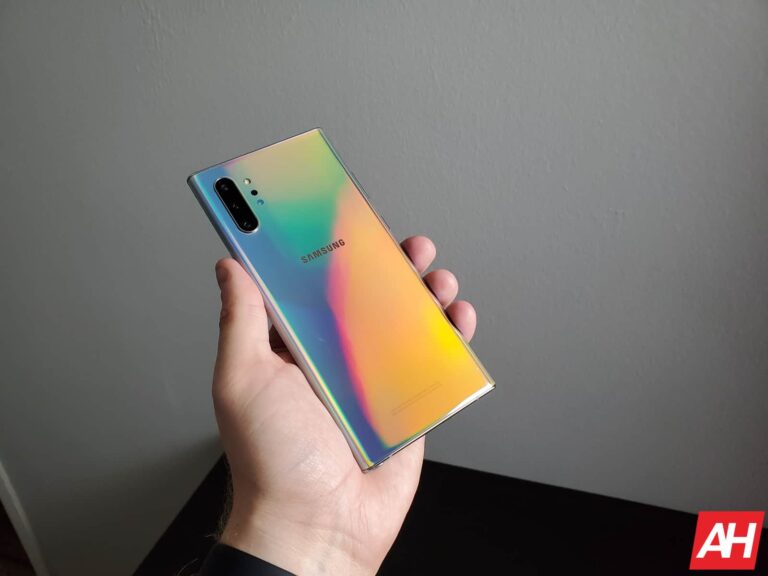
Samsung is rolling out the July 2023 Android security patch to the Galaxy Note 10 series. The latest security update is available for both 4G and 5G versions of the phones in select markets. A wider availability, including in the US, should follow in the coming weeks.
As of this writing, the July SMR (Security Maintenance Release) for the Galaxy Note 10 series is available in Europe. Users with a 4G-only Galaxy Note 10 or Galaxy Note 10+ in Switzerland are getting the update with the firmware build number N97*FXXS8HWF3. That for the 5G version of the Plus model is N976BXXS8HWF3, SamMobile reports.
The July update doesn’t bring anything apart from this month’s vulnerability fixes to the 2019 Note series phones. Samsung recently revealed that the latest SMR patches as many as 90 security issues. These include over 50 Android OS flaws and nearly 40 Galaxy-specific vulnerabilities. At least three of those were critical issues, allowing remote attackers to gain access to affected devices without the user’s knowledge.
The Galaxy Note 10 and Galaxy Note 10+ are protected against all of these vulnerabilities with the July update. Samsung has just begun the rollout, so it could take a while before the update reaches users globally. As usual, you can check for updates from the Settings app. Go to the Software update menu and tap on Download and install. If an update is available, you can download it right away. If you don’t see any updates, wait a few days and check again.
This might be the penultimate or even the final software update for the Galaxy Note 10 series. Launched in August 2019, the devices turn four next month. Samsung phones launched back then are only eligible for security updates up to four years from launch. The Galaxy S10 series, which arrived earlier that year, is already done getting updates. At best, the Galaxy Note 10 series could get one more security patch before bowing out.
Samsung will soon update more Galaxy devices to the July security patch
The Galaxy Note 10 series follows the Galaxy S23, Galaxy S22, and Galaxy A53 5G to Samsung’s July security update party. The company started rolling out the latest security patch just a few days back and is gradually picking up the pace. It will push the new SMR to more eligible Galaxy devices in the coming days. The Galaxy S21 series, Galaxy Note 20 series, the latest foldables, and many others will get the update. We will keep you posted on those updates.
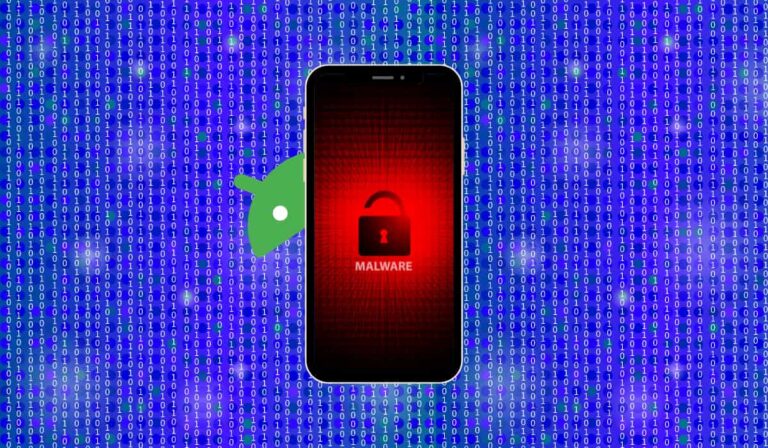
Mobile security solutions provider Pradeo’s security researchers have shared details of the spyware they discovered hiding on the Google Play Store.
According to the report authored by Roxane Suau and published on July 6th, 2023, Pradeo’s behavior analysis engine recently detected two apps (File Recovery and Data Recovery, with 1 million installations, and File Manager, with 500,000 installations) containing hidden spyware, which may have impacted up to 1.5 million users.
Interestingly, both were created by the same developer. The malicious apps appeared to be harmless file management software, but in reality, they showcased malicious behaviour. These apps can self-launch without user interaction and secretly exfiltrate sensitive user data to several malicious servers in China.
Malicious apps (Pradeo)
What Data Did These Apps Collect?
The app profiles on the Google Play Store state that they don’t collect any data from the device, but according to Pradeo’s blog post, these are false claims. Research revealed that the apps collected highly personal data from their targets and transferred it to over one hundred different destinations, all of which were in China and were malicious.
The spyware apps collected the following data:
OS version number
Device brand/model
Real-time user location
Network provider’s name
SIM provider’s network code
Mobile phone’s country code
Pictures, video, and audio content
Device’s contact lists (all linked accounts, email and social networks)
How Do the Apps Trap Users?
The hacker has used various techniques to make these apps appear legitimate. For instance, spyware shows a large user base but doesn’t feature any reviews. Researchers believe that the hacker must have used mobile device emulators or installed farms to show huge numbers and improve the apps’ ranking on the store.
Another tactic is minimal user interaction since the apps can launch automatically when the system starts. So, they can continue their malicious operations even if the app isn’t in use. Also, these apps aren’t visible on the home screen, and their icon remains hidden to prevent uninstallation.
How to Stay Safe?
Although Google has removed these apps, if you have downloaded and installed them from a third-party store, delete them immediately and never download apps without any reviews, despite having a large user base. Also, don’t forget to go through their reviews, if there are any, to detect foul play.
Organizations should automate mobile detection and response by vetting apps and determining if they comply with their security policies.
Well, it’s not quite a cage match with Elon Musk against Mark Zuckerberg, but it’s the next best thing. Threads, Meta’s answer to Twitter, is now out, and the platform is picking up some serious steam. However, according to The Guardian, Twitter might eventually sue Meta over Threads.
In case you don’t know, Threads is the new social media platform that’s basically Meta’s version of Twitter. It gives you the ability to make text-based posts. You’re also able to repost other people’s posts. It’s a very similar experience to Twitter. You can download the tap here, and sign up using your Instagram account.
Twitter might sue Meta over Threads
We all knew that this was coming. While Elon Musk is getting dragged for another change made to Twitter, Meta comes and unveils another alternative for people to migrate to. Elon Musk’s lawyers didn’t take too kindly to that, as you can imagine.
At this point, no one is in court. Meta was issued a threat of a lawsuit from Twitter, so we don’t know if Elon and his legal team will follow through.
What is the lawsuit about?
Intuition would tell you that it’s because Threads is so similar to Twitter. It’s a bit deeper than that. Elon’s team could potentially sue Meta for misappropriation of trade secrets. Remember when Elon brought the guillotine down on half of Twitter’s employees when he took over? Well, those employees had to go somewhere. We’re sure that most of them went to other places, but there’s a chance that some of them went to work for Meta.
Musk’s team alleges that Meta scooped up employees, especially those in possession of Twitter trade secrets, to work on Threads. This wouldn’t be a far-off accusation seeing as Meta was able to spit this platform out in a matter of months.
However, it hasn’t been confirmed that the ex-twitter employees that went over to Meta had trade secrets. We’ve yet to see what proof Musk’s team has.
If it turns out that the employees were in possession of trade secrets, then it could lead to a storm for almost all parties involved. Meta will be sued and take that financial hit. Also, it might be forced to make drastic changes to the platform
Also, we can rule out consequences for the employees who shared the secrets. They could possibly face prison time, as this is a legitimate crime.
Also, it could have an effect on the users who hopped over to Threads. The experience could be wildly different after the change (if it’s coming). It might negatively impact the platform. Let’s just hope that this doesn’t happen.
As we got more information on it, Carl Pei’s next phone is turning from “Nothing” into something. The Nothing Phone (2) is set to get an official announcement on July 11th, and fans are excited. Well, while we wait, we have the Geekbench scores for the Nothing Phone (2) and its confirmed processor (via GSM Arena).
In case you’re not up to date on this phone, this is the next iteration in the Nothing Phone series. We know that this phone is going to share several similarities with the first iteration and have some differences.
The Glyph Interface is slightly different, the selfie camera will be in a different spot on the screen, we expect several changes to the components on the back, and Nothing OS will be very different, to name a few.
Here are the Geekbench scores for the Nothing Phone (2)
There were two tests run on the device, and they produce very similar results. For the first test, we’re looking at 1733 for the single-core score and 4207 for the multi-core score. The second test gave scores of 1739 and 3983.
There’s nothing really significant about the scores, but one thing to remember is that the benchmark numbers aren’t a proper indicator of software performance. Day-to-day usage is a much more accurate way.
The significant thing about the Geekbench scores is that they confirm what processor the Nothing Phone (2) will have. This should come as no surprise, as we’ve seen rumors about the chip this phone will rock.
The benchmark shows that the Nothing Phone 2 will use the flagship-grade Snapdragon 8+ Gen 1. That’s not the fastest chip on the market, but there are a few things to note. Firstly, this chip is still powerful. It’s a recent flagship processor, so you’re going to get good performance.
Second, the Nothing Phone (1) was able to get really smooth performance while using a mid-range processor. This all came down to software optimization. So, there’s no doubt that Nothing will be able to optimize the software to use this more powerful chip to its potential.
Some Joe Biden officials reportedly tried to contact social media companies in order to ask them to delete posts. In light of this, a US federal judge has blocked these officials from contacting social media companies under the First Amendment.
According to a report by The Verge (via the Washington Post,) some government officials in 2017 started a systematic campaign to control speech on social media. This timeframe is four years before Biden became the president. Republican attorneys general in Louisiana and Missouri are now suing President Joe Biden, Dr. Anthony Fauci, the CDC, the Department of Homeland Security, and the National Institute of Allergy and Infectious Disease.
Judge Terry A. Doughty ruled that some federal government officials have targeted “millions of protected free speech postings by American citizens” and tried to suppress them by contacting social media companies. Most objections are reportedly about Covid-19 policies and origins, Biden government policies, and Hunter Biden’s laptop.
“It is quite telling that each example or category of suppressed speech was conservative in nature,” Doughty said. “This targeted suppression of conservative ideas is a perfect example of viewpoint discrimination of political speech. American citizens have the right to engage in free debate about the significant issues affecting the country.”
Biden administration officials are accused of censoring conservatives viewpoints on social media
Jameel Jaffer, the executive director of the Knight First Amendment Institute at Columbia University, said the government couldn’t violate the First Amendment by just contacting social media and affecting their content moderation policies. He added that this might be a “pretty radical proposition” that’s not supported by the law.
An unnamed White House official also reacted to the ruling, saying that social media platforms make independent choices about the information they present. The official noted that the Justice Department is evaluating the ruling to take further steps.
Social media companies always took criticism for favoring left-wing content and censoring conservative viewpoints. The so-called Twitter Files released following Elon Musk’s takeover confirmed this hypothesis to a large extent. The files revealed that Twitter has intentionally limited the visibility of Republicans’ and right-wing activists’ accounts. This is an apparent violation of the First Amendment.
So, you’re watching a video on YouTube, and you accidentally touch the screen and skip to the next video. It happens to the best of us, but the company is looking to fix this issue. According to Android Authority, YouTube is testing a Lock Screen function.
This feature is pretty self-explanatory. When you’re watching a YouTube video in full-screen mode, you’ll be able to disable the touch screen so that you won’t interact with the screen when you touch it.
The YouTube Lock Screen feature is only in testing
For the time being, YouTube is only testing out this feature. It’s one of the features that you can try out early, which means that it’s exclusive to YouTube Premium users for the time being. Right now, we don’t know if YouTube plans on making this feature exclusive to Premium users when/if it officially launches. Also, it’s only for those using the app.
If you’re subscribed, you can go to this page, you’ll be able to try out the feature. When you enable the function, you should be able to use it. We haven’t gotten it to work just yet, however.
If you happen to enable it, you’ll want to tap on the gear icon in the top right corner of the screen. In the resulting menu, tap on the “Lock Screen” option.
This feature is only available for select YouTube Premium users, so there’s a chance that you won’t be able to use this feature. We were able to enable the feature on the “What’s New” screen, but we weren’t able to see the actual function in a video. There’s a chance that this could happen to you.
If you were able to get the feature up and running, then you’ll be able to enjoy it until July 30th. This is when YouTube will take it down. However, if you do enjoy it, be sure to leave your feedback on the feature. Hopefully, if the company gets enough positive feedback, then it will make the feature a permanent stay.
The latest research discovered a campaign against cloud environments which is still under development.
This evolving campaign is consistent with an aggressive cloud worm designed to deploy on exposed JupyterLab and Docker APIs to deploy Tsunami malware, cloud credentials hijack, and resource hijack.
Aqua Nautilus researchers discovered this campaign when their Honeyspot with misconfigured Docker API got attacked and shared their report.
As it is still in the developmental phase and is presumed to be the notorious Team TNT which is known for attacking cloud-based resources.
Attacks Against Cloud Infrastructures
Initially, the attacker identifies a misconfigured server (either Docker API or JupyterLab) and deploys a container or engages with the Command Line Interface (CLI) to scan for and identify additional victims.
This process is designed to spread the malware to an increasing number of servers. The secondary payload of this attack includes a crypto miner and a backdoor, the latter employing the Tsunami malware as its weapon of choice.
shanidmk/jltest2 (updated: June 8, 2023): Its purpose is to detect exposed Jupyter Lab instances.
shanidmk/jltest (updated: June 8, 2023): This image is used to compile Zgrab using the make command.
shanidmk/sysapp (updated: May 25, 2023): This one seeks out and attacks exposed Docker Daemon instances.
shanidmk/blob (updated: June 24, 2023): This container image is an updated version of sysapp and is intended to find exposed Docker Daemon instances. It releases a cryptominer and includes the Tsunami malware, which acts as a backdoor.
This container image comprises three layers, one layer includes a run.sh shell script designed to initiate when the container starts up.
Initially it downloads some packages to secure the necessary utilities for the environments.
In addition to that the ZGrab application is built and relocated to the /bin library,which enables the attacker to perform banner grabbing.
This function will later assist the attacker in identifying Jupyter Lab and Docker API.
Subsequently, the masscan tool scans and pipes the IP to be utilized by ZGrab for assessing whether there is an exposed Jupyter Lab instance operating at ‘http://Currently_found_IP_Address:8888/lab’.
The resulting information is organized and stored in the JupyterLab.txt file, which is then transmitted to the attacker’s C2 server through a specific command.
Finally, according to the report shared, it activates the loop set to run whenever the C2 server returns an IP range for scanning.
The first octet of the IP address is determined by the result of a curl command to the attacker’s C2 server, which subsequently scans a CIDR range of /8, equating to approximately 16.7 million IP addresses.
It’s important to note that the HTTP_SOURCE environment variable was initially set by the attacker at the start of the container.
Through the use of NGROK, the attacker is able to conceal the infrastructure, thereby minimizing the risk of it being shut down.
Prevention
Ensure you’re not running JupyterLab without authentication, specifically make sure the token flag when running JupyterLab is not left empty.
Verify that your Docker API isn’t exposed to the world and set to accept requests from 0.0.0.0.
Properly configure Docker daemons and cloud instances and Regularly update and patch Docker and cloud platforms to address any vulnerabilities.
Apply the principle of least privilege to limit the permissions and capabilities of containers, Docker daemons, and cloud instances.
Scan the images that you use, making sure you are familiar with them and their use, using minimal privileges such as avoiding root user and privileged mode.
Investigate logs, mostly around user actions, look for any anomalous actions.
“AI-based email security measures Protect your business From Email Threats!” – Request a Free Demo.
The HONOR 90 is the company’s latest mid-ranger. It launched alongside its ‘Pro’ sibling. The ‘Pro’ model is somewhat more powerful, mainly due to its processor. That phone comes with the Snapdragon 8+ Gen 1, while the HONOR 90, which we have here, is fueled by the Snapdragon 7 Gen 1. This phone is supposed to compete with mid-rangers out there, and not high-end devices available on the market. We’re here to review the HONOR 90, and see if it delivers, or misses the mark. Having said that, let’s just in, shall we?
Table of contents
HONOR 90 Review: Hardware / Design
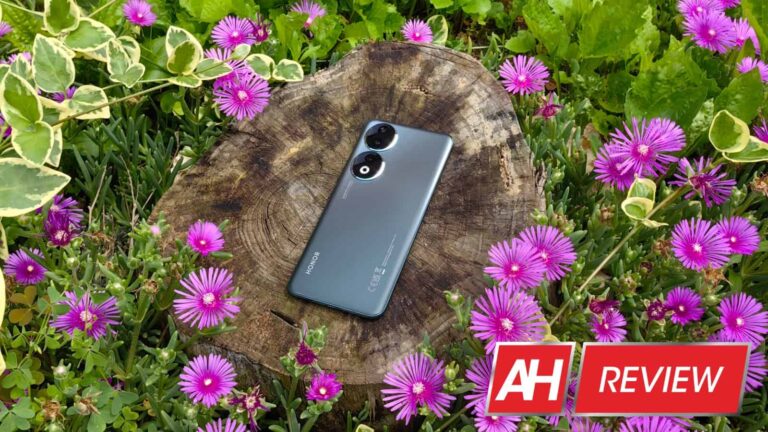
If this design looks familiar to you, there’s a good reason for it. The HONOR 90 basically continues the design trend HONOR started for this series a couple of years ago. It consists out of an aluminum frame, which is stuck between two sheets of glass, both of which are curved. The sides are proportional, and the phone feels great in the hand, actually. It is not small, but thanks to the fact it’s not heavy either, and this design, it feels really good to hold.
The HONOR 90 is slippery, no doubt about that, but I find it easier to grip and use than most other glass phones. I mentioned its weight, the phone weighs 183 grams. Most flagships with the same or similar footprint weigh over 200 grams. Some of them weigh well over 200 grams, so this was kind of refreshing to use. Mid-rangers usually weigh less, which is always a nice change. It’s not easy to use with one hand, but it’s easier than most flagships that end up being heavier.
There are two camera islands included on the back. The top one includes two cameras, while the bottom one has one, and an LED flash. The bezels around the phone’s display are quite minimal, and there’s a single camera hole here, which is centered at the top. The buttons are nice and clicky too. There’s really not much to complain about here, when it comes to design. The phone also feels solid in the hand, and could pass for a more expensive device, easily. HONOR has, once again, done a great job.
Accessories
First and foremost, let me just say that a charger is included in the box. We’ll talk more about charging later on, but I just wanted to point that out real quick. You’ll also get a regular see-through gel/soft silicone case in the box. Many Chinese OEMs do that these days, and it’s always nice to see. That case always offers good protection all around, and adds some grip to the equation. It’s good to use in general, or until you manage to get something better/different.
HONOR 90 Review: Display
The HONOR 90 boasts a 6.1-inch fullHD+ (2664 x 1200) AMOLED display. It is sharper than most displays in this smartphone segment, and it’s also brighter than most. It has a peak brightness of 1,600 nits. This panel also offers a 120Hz refresh rate, and can project up to 1 billion colors. The screen-to-body ratio is also quite high, especially for this price segment. It’s also worth noting that the display is curved a bit, but not to the degree it would be annoying to use.
I had zero issues with this panel during my usage. It not only offers very pleasant, vivid colors, but the viewing angles are great too, and the blacks are deep. It’s more than sharp enough, and more than smooth enough. HONOR also has some really nice animations thrown in there, and they’re very smooth. This company usually does a great job when it comes to animations, and even on default setting they don’t feel too slow, which is something I appreciate.
The color bleed on the sides was also a non-issue when watching content, as long as you look at the phone straight on, of course. On some phones that can be quite a considerable problem, but not here. Again, this is something I’m used to based on the HONOR 50 and HONOR 70 I’ve tested in the past.
HONOR 90 Review: Performance
Unlike its ‘Pro’ sibling, the HONOR 90 utilizes the Snapdragon 7 Gen 1 Accelerated Edition. It does not use the Snapdragon 8+ Gen 1 processor. The HONOR 90’s chip is inferior, but truth be said, you shouldn’t worry about it too much. Well, unless you’re planning to use this phone for gaming, or something of the sort, this won’t really mean much to you. This chip is manufactured by TSMC, the same as Snapdragon 8+ Gen 1, which is a good thing. It generally offers good performance, and the same is the case here. You can’t really ask for anything better considering the price tag.
Using the Snapdragon 7 Gen 2 would make more sense, in all honesty, but that chip is manufactured by Samsung, so many of you would probably opt for the Gen 1, mainly due to the battery benefits. In any case, the performance was really good. During regular usage, even with plenty of multitasking, I never felt like I’d pushed the phone too far. So even if you do tend to use your phone a lot, for various tasks, this one should hold up. I’ve been multitasking like crazy, and doing everything from browsing, listening to YouTube Music in the background, and skipping between image and video editing. The phone did just fine. There was a stutter here and there, but that’s not something most people will even notice, so it’s not something you should worry about.
HONOR’s well-executed animations did play a role here. Many OEMs consider animations to be an afterthought based on their implementations, but they’re very intentional here, and very smooth. They did not visibly bog the phone down or anything of the sort, and made the whole experience of using the device better.
Where I did notice that this phone is not running a flagship-grade chip is in gaming. The moment I ran something a bit more graphically-intensive, it was apparent I was using a mid-range phone, not a flagship one. Don’t get me wrong, you can play games with this thing, but don’t expect the most graphically-intensive titles, such as Genshin Impact, to run great.
HONOR 90 Review: Battery
The HONOR 90 includes a 5,000mAh battery on the inside. That is a slightly larger battery than the one included in its predecessor, the HONOR 70. That phone included a 4,800mAh battery. In addition to a bigger battery, and slightly larger display, the HONOR 90 also comes with a more efficient SoC. It is fueled by the Snapdragon 7 Gen 1, a 4nm chip, compared to the 6nm Snapdragon 778G+ which was included in the HONOR 70. There’s a point I’m making this comparison. The HONOR 70 offered good battery life, that’s for sure, but the HONOR 90 takes things to a whole new level.
With the HONOR 70, I was able to cross the 7-hour mark comfortably. In fact, I reached an 8-hour mark with a few perfect left in the tank once, and on several other days, I was close to it. That’s not battery life at all. With the HONOR 90, things are even better. Reaching that 8-hour screen-on-time mark is not a problem, at least it wasn’t during my usage. I never reached further than that, but when I crossed the 8-hour mark, I was left with over 28% of battery in the tank, that happened on two occasions during more intense usage days. What I’m trying to say is… you really don’t have to worry about running out of juice here.
If you do, however, end up running short… 66W charging is supported here, in addition to 5W reverse wired charging. You do get a charger in the box too, so you’re all set from the get-go. Getting to 100% from 0% takes about 40 minutes, which is not bad at all. You’ll reach 60% in half that time.
HONOR 90 Review: Camera
The HONOR 90 features a 200-megapixel main camera (f/1.9 aperture, 0.56um pixel size, PDAF). A 12-megapixel ultrawide camera (112-degree FoV, f/2.2 aperture) is also included on the back, along with a 2-megapixel depth camera (f/2.4 aperture). HONOR opted for Samsung’s ISOCELL HP3 main camera sensor here. Truth be said, I was skeptical at first, but the phone does offer a really compelling camera performance.
The photos during the day do end up looking vivid without ending up too saturated, while the details are also on point most of the time. I’ve noticed that the white balance can be a bit off sometimes, even when it shouldn’t be based on the conditions in the image. The phone did a great job with almost every shot in daytime conditions. Even when HDR was in play, it handled itself really well most of the time.
Nighttime images also turn up good, for the most part. Light flares are quite considerable, and such scenes can really mess up a shot. At times only glares are what you need to worry about, while other times the whole image ends up looking overexposed. That didn’t happen frequently at all, though, so it’s not really something that should worry you. For the most part, the phone did a good job in low light, as you can see in the provided camera samples.
Ultrawide camera handled itself well during the day, but images taken with it were clearly a step below what the main camera offers. In low light the difference is even more noticeable, I’d suggest sticking with the main camera in low light conditions. The video recording was good, on par with other offerings in this pricing sector, while the selfie camera performed great, actually. HONOR opted to include a capable selfie camera here, and it shows.
Wide & ultrawide side-by-side:
Other camera samples:
HONOR 90 Review: Software
If you’ve used a recent HONOR smartphone, you know exactly what to expect on the software side of things. Android 13 comes pre-installed here, with HONOR’s MagicOS 7.1 skin. That skin reminds us of what Huawei offers with EMUI, which is unsurprising, and it does function a bit differently than other Android skins we’re used to. The performance is outstanding though, as the software is really well-optimized to work with this hardware.
Think of MagicOS as a combination of Android and iOS, as that’s what I feel like whenever I’m using it. There are some customization options included here, but not a lot. For example, when you swipe top down across the home screen, you’ll be thrown into a search dialog aka HONOR Search. You can disable this, but cannot assign anything else to that action. So you cannot call upon the notification shade this way, as you can on many Android phones.
You’re very limited in terms of home screen layouts, while the apps are all on your homescreen by default. Luckily, you can change that. Accessing home screen settings is done by pinching, not pressing and holding. Swiping notifications away is done left to right, if you do it the other way around, you’ll be required to do it once again, as it brings up a menu after the first swipe, and so on. These are only some examples of ways MagicOS differs from many other Android OS builds.
This is something you’ll either like, or hate. It’s hard to deny that MagicOS works great, though. The animations are excellent, and not too slow either. It could look a bit less childish, but thanks to some themes, you can change that a bit. While I was using it I kept getting the same feeling. It works great, but it looks… well, not done. HONOR should spruce up the UI a bit more, and add more options to it. The performance is stellar already.
HONOR 90 Review: Should you buy it?
The HONOR 90 is actually a truly capable mid-range handset. It is a step down compared to flagships in some ways, of course, but in most of them it’s right on par with them. The battery life is really good, and so is that display. Plus it’s brighter than pretty much anything the competition has to offer. The main camera is good enough, and with some added optimizations, it could be truly good. Even the performance is good, and you don’t have to worry about it, unless you’re planning to play graphically-demanding games. Overall, the HONOR 90 is a really neat package, and a very solid offering at its price tag. There’s a lot to like here.
You should buy the HONOR 90 if:
You want a truly bright display on a mid-range phone
You like to take photos, but don’t need a telephoto camera
You don’t play graphically-demanding games
You are using your phone quite a bit during the day
The Pixel link-sharing feature is finally making its way to another Android brand. This feature is one of the exclusive features that Google Pixel users enjoy. Ever since the feature became available on Google Pixel devices, it has made sharing links across devices a bit easier.
But finally, this amazing feature is creeping into another Android brand for users to enjoy. With the launch of the ASUS Zenfone 10, some users have got to try out the Pixel link-sharing feature on their new device. This shows that finally, Google is ready to share some of its top features with other Android brands.
If you are using an ASUS device with the ZenUI software, you should be able to make use of this feature. But what exactly is this Pixel link-sharing feature, and why is it important to most users? This article will explain what this feature is and how you can make use of it if you use a Pixel or an ASUS smartphone.
Details on the impressive Pixel link-sharing feature now available on ASUS smartphones
The Pixel link-sharing feature brings an easy way to share links across your devices or to others. This feature first came to Pixel smartphones with the Android 12 upgrade a few years ago. Ever since then, this feature has remained an exclusive one for the Pixel community.
It does exactly what it says, sharing links, but it performs this task with a bit of style. Instead of using the share feature within the app where the link or URL is located, you can copy the link from the recent app page. The recent apps page or interface on your Android device shows your recently used apps.
To access it, pull up the navigation bar for a while or tap the box icon if your device uses three-key navigation. This will take you to your recent app page where you can scroll through, close, or reopen active apps. On Pixel devices, if you have a page open with a link in it, you can share the link without opening the app.
All users need to do is scroll to the app, and a link icon will pop up at the top right-hand corner of the minimized app. Tapping on that icon will reveal a few options that users can select between. These options include copying the link or sharing it using a list of options that would be listed at the bottom of the interface.
This feature makes it a bit easier to share links and finally, ASUS smartphones are getting it as well. Possibly soon, most Android brands will also get access to this link-sharing feature. Until then, if you have an ASUS smartphone, you can access this feature after installing the latest Android 13 update.
Prime Day is happening July 11-12, and that’s when you can expect to find some of the best deals on smartphones in 2023. Though quite a few of them are already available. So now’s a good time to pick up a new phone from Samsung, Google, OnePlus and many others.
Best Prime Day Smartphone Deals
Below, we have all of the best smartphone deals available for Prime Day, and we also have a few tips on how you can find the best deals on smartphones for Prime Day. Remember that you do need to be a Prime member to take advantage. Luckily, Amazon does offer a free 30-day trial, and a 6-month trial for students.
Here are a few tips for finding the best Amazon Prime Day smartphone deals:
Start planning early: The best deals tend to sell out quickly, so it’s important to start planning early. Make a list of the phones you’re interested in and set up price alerts so you’ll be notified when the price drops.
Be flexible with your budget: If you’re not set on a specific phone, be flexible with your budget. You may be able to find a great deal on a phone that’s a step down from your original choice.
Shop around: Don’t just shop on Amazon. Other retailers like Best Buy, Target, and Walmart often have great deals on smartphones during Prime Day.
Use a credit card with rewards: If you have a credit card that offers rewards for shopping online, be sure to use it during Prime Day. You can earn points or miles that you can redeem for future purchases.
Following these tips will help you find the best Amazon Prime Day smartphone deals and save money on your next phone purchase. So start planning early, be flexible with your budget, and shop around to find the best deals.




.png
)