There are a ton of wallpaper apps out there, and it’s really difficult to differentiate these days. Well, the WallReels app managed to do that, as it’s seemingly inspired by TikTok.
WallReels is an app with tons of wallpapers, which got inspired by TikTok
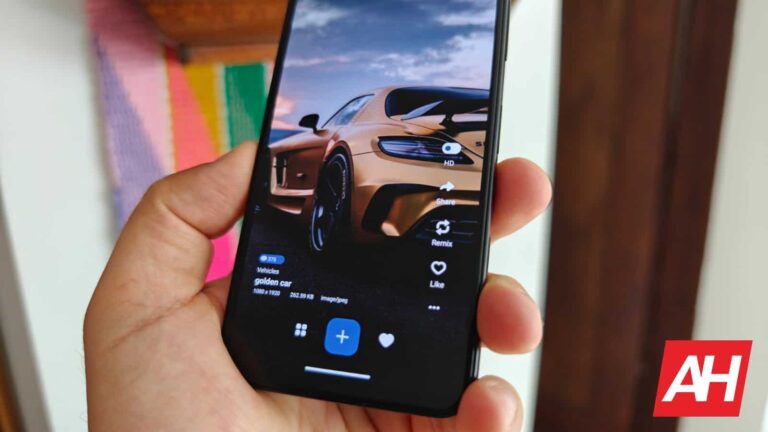
This app will show you wallpapers in a TikTok-like fashion. You’ll get a neverending vertical list of wallpapers, through which you can scroll one at a time. So it’s a paginated layout, just like the one TikTok offers.
The rest of the UI also reminds us of TikTok, actually. On the right side, you have the share button, the like button, a switch to an HD version of a wallpaper, and more.
You’ll also find some additional options at the bottom, like the ability to download the wallpaper, and even save the colors used in the wallpaper. There is also a button for different categories down there.
You can simply choose the category you’re interested in, and it’ll get loaded up on the main UI. Following that, you’ll be able to scroll through that category alone.
Those of you who love using TikTok and similar apps will probably love this approach to wallpapers. It’s a fun and interesting new way to scroll through wallpapers, that’s for sure.
The app worked well for us, while the UI also looks nice
The wallpapers on offer here are also quite good. There are tons of them included in the database, and the app also works really well, in addition to looking quite nice.
Based on the comments in the Play Store, some people are still having some issues with the functionality. The developer does seem to be very prompt with its responses, so that’ll likely get ironed out soon.
We’ve included some official images in the gallery below, if you’d like to check those out before trying the app. If you decide to try it, however, a download link is included below.
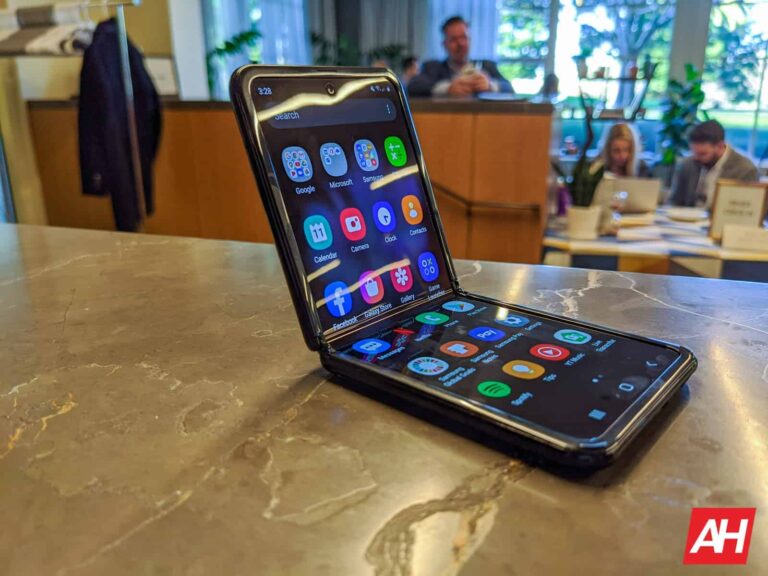
Samsung may have already released the July security patch, but a few Galaxy devices are still awaiting the June update, at least in some markets. The company is pushing the older monthly SMR (Security Maintenance Release) to a bunch of devices in the US. The Galaxy Z Flip, Galaxy Z Flip 5G, Galaxy A71, Galaxy A51, Galaxy A51 5G, Galaxy A21, and Galaxy A13 5G are all getting last month’s update.
The June security update is available for carrier-locked and unlocked variants of the Galaxy Z Flip and Galaxy Z Flip 5G in the US. The new firmware build numbers for the former model are F700USQU7IWE1 (carrier-locked) and F700U1UEU7IWE1 (unlocked). Those for the 5G version are F707USQU5HWE3 and F707U1UEU5HWE3 (via). The rollout is widely available on all networks. Samsung is pushing some revisions to terms and conditions but nothing more. Of course, that’s in addition to last month’s security fixes.
The Galaxy A71 is also widely getting Samsung’s June update in the US. The phone is picking up the new SMR with the build number A716USQU9GWF7. It could be the same changelog for this mid-range handset as well. That’s because the Galaxy A51 and Galaxy A51 5G are also getting the same changes. The rollout for these two models is currently limited to carrier-locked variants, though. The new build numbers are A515USQUAFWF3 and A516USQUDGWF1, respectively. Unlocked units should get the update soon.
Galaxy A21 and Galaxy A13 5G are also getting the June update
The Galaxy A21 is another Samsung phone that recently started picking up the June SMR in the US. Once again, the Korean firm has kept the update limited to carrier-locked units. It’s getting the update with firmware version A215USQSACWF1. For a change, this release is all about the security fixes for June 2023. There’s nothing else here. A wider rollout should follow in the coming days.
Lastly, the Galaxy A13 5G is joining Samsung’s June update party in the US. The budget handset is getting the build number A136USQU5DWF6 (carrier-locked) and the same changelog as the Galaxy Z Flip series. Unlocked units have yet to pick up the June SMR. The 4G-only Galaxy A13 received the June SMR in the US a few weeks back. If you’re using any of these Galaxy smartphones and haven’t yet received last month’s security update, watch out for it in the coming days. You can use the Settings app on your phone (Software update menu) to check for updates manually.
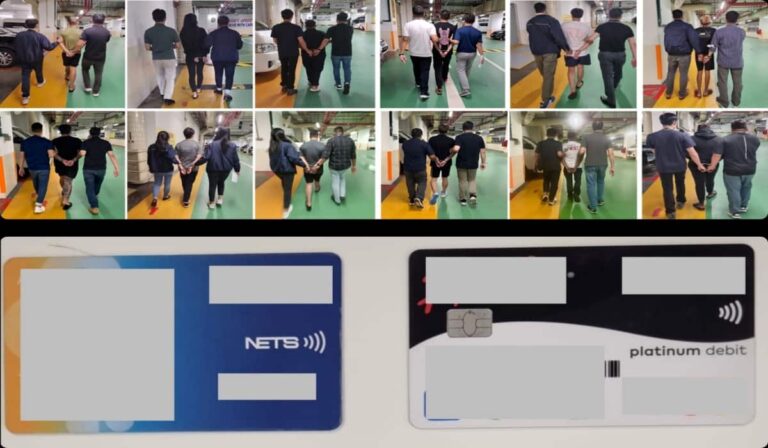
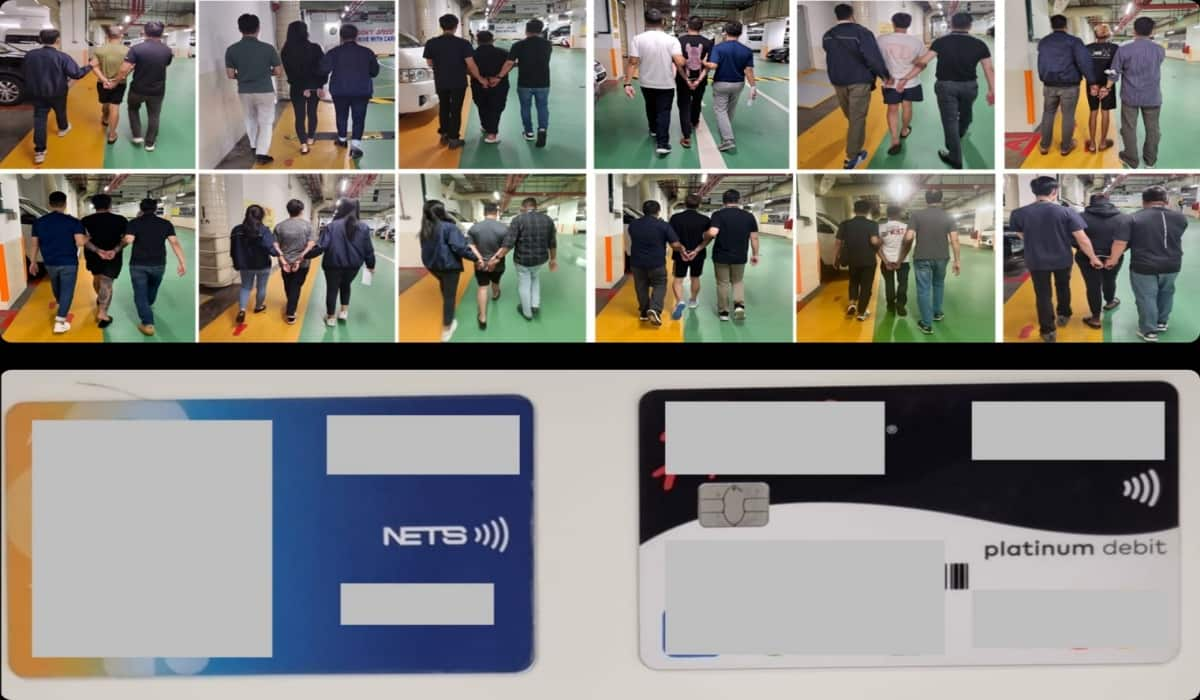
Singapore authorities have conducted a successful operation, resulting in the arrest of 13 individuals suspected of involvement in banking-related malware scams. Among those apprehended were a 16-year-old teenager and a group of 10 men and two women aged between 19 and 35.
Preliminary findings suggest that seven men, two women aged 19 to 27, and a 16-year-old facilitated the scam by providing their bank accounts, Internet banking credentials, and Singpass credentials to perpetrators for monetary gain. Three other men aged 20 and 35 are believed to have withdrawn funds from the accounts of some of the “money mules” and handed the money over to unknown individuals.
The number of victims is yet unknown. For your information, Singpass, which stands for Singapore Personal Access, is a digital identity that enables all Singapore citizens and residents to conveniently access businesses and government agencies and businesses.
Suspects and seized sim cards (Screenshot: SPF)
Modus Operandi and Scam Techniques
In a press release, the Singapore Police Force (SPF) revealed that since January 2023, they have received a rising number of reports involving malware used to compromise Android mobile devices, leading to unauthorized transactions from victims’ bank accounts. Remarkably, victims did not share their Internet banking credentials, One-Time Passwords (OTPs), or Singpass credentials with anyone.
The scam unfolded when victims responded to various advertisements on social media platforms for services such as cleaning, pet grooming, and the sale of food items like seafood and groceries. Subsequently, scammers instructed victims to download an Android Package Kit (APK) from unofficial app-store platforms to facilitate their purchases. However, these APKs contained malware that infected the victims’ mobile devices.
Once infected, scammers contacted victims via phone calls or text messages and convinced them to enable accessibility services on their Android phones. Enabling these services weakened the phones’ security and granted full control to the scammers. Keystrokes were logged, banking credentials were stolen, and scammers remotely accessed banking apps to add “money mules” as payees, increase payment limits, and transfer funds to them.
The scammers also deleted text messages and email notifications related to the fraudulent transfers to cover their tracks.
The act of benefiting from criminal conduct carries severe penalties under Section 54(5)(a) of the Corruption, Drug Trafficking, and Other Serious Crimes (Confiscation of Benefits) Act 1992. Offenders face imprisonment of up to 10 years, a fine of up to S$500,000, or both.
The July 2023 Product Security Bulletin from Taiwanese chipmaker MediaTek describes security flaws impacting MediaTek chipsets for smartphones, tablets, AIoT, smart displays, smart displays, OTT, and Wi-Fi.
This security advisory provides details on 24 vulnerabilities, of which CVE-2023-20754 and CVE-2023-20755 have been classified as ‘High’ severity.
Details of the ‘High’ Severity Flaws
CVE-2023-20754 – Integer overflow or wraparound in keyinstall
The vulnerability is tracked as CVE-2023-20754, integer overflow, or wraparound in keyinstall with a ‘high’ severity range. Due to an integer overflow, there may be an out-of-bounds write-in keyinstall.
This can result in the need for system execution privileges and local privilege escalation. Exploitation does not need user involvement.
CVE-2023-20755: Improper input validation in keyinstall
The improper input validation in keyinstall vulnerability is tracked as CVE-2023-20755, with a ‘high’ severity range where an integer overflow in keyinstall might result in an out-of-bounds write.
This could result in a local escalation of privilege with system execution rights needed. Exploitation doesn’t need user involvement.
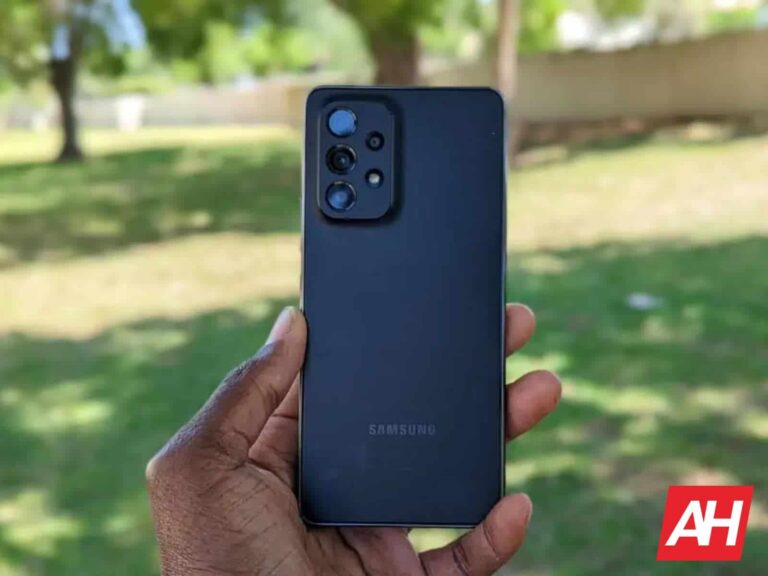
After updating the Galaxy S22 and Galaxy S23 phones to the July 2023 security patch yesterday, Samsung has released the latest security update for the Galaxy A53 5G. The rollout has begun in Latin America. The company should expand the release to other markets, including the US, over the next few weeks.
As of this writing, the July SMR (Security Maintenance Release) for the Galaxy A53 5G is available to users in Bolivia and Panama. The new firmware build number for the phone is A536EXXS7CWF6 (via SamMobile). Samsung should roll out the update in more countries in the region soon, followed by a wider release globally.
The premium mid-range phone isn’t getting apart from the latest security fixes. But neither Google nor Samsung has published the detailed content yet. Samsung will only update its security updates tracker after Google does. So we might have to wait a few more days to confirm what the July SMR brings to Galaxy devices.
As usual, we should get dozens of vulnerability fixes, including a few critical ones. The majority of those should be Android OS fixes with Samsung patching a handful of Galaxy-specific issues. Note that not every Galaxy device is affected by all of those issues. But every model is vulnerable to at least one of them. So it’s important to install the latest security patches as soon as possible.
Your Galaxy device will send a notification once a new OTA (over the air) update is available for it. You can tap on the notification and follow the on-screen instructions to install the update. Alternatively, you can navigate to Settings > Software update > Download and install to check for updates manually. Since updates are usually released in batches, they may now be available to all eligible users at the same time. Check again later if you don’t find any updates today.
The Galaxy A53 5G will get the Android 14 update
The Galaxy A53 5G is Samsung’s premium midrange phone from 2022. It debuted with Android 12 out of the box and has already received an update to Android 14, which may arrive at the end of this year. The device will also get Android 15 and Android 16 in its lifetime, while security updates will come at least until March 2027. The frequency of these updates will come down over time, though. It will not get monthly updates forever. Rest assured, we will keep you posted with every new update for the Galaxy A53 5G.
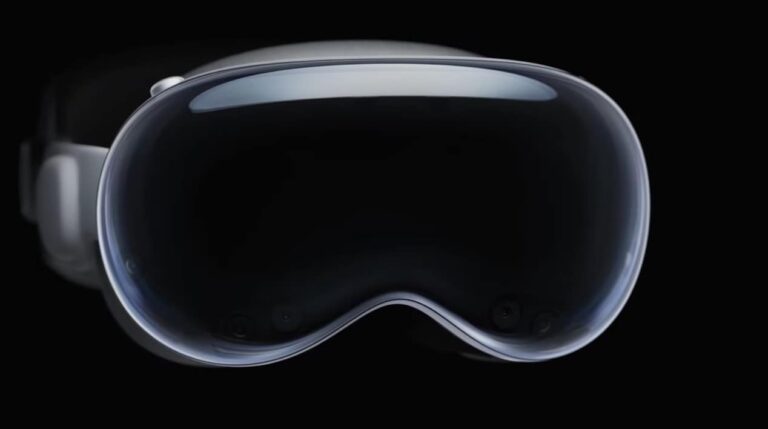
The Apple Vision Pro headset has truly pushed the boundaries of augmented reality and spatial computing, but its success is still uncertain, considering the $3,499 price tag. Now, in a recent development, Apple is reportedly facing some major issues in the production of the Vision Pro headset, leading to a significant reduction in the target number of shipments.
Apple, which originally planned to produce one million units, is now aiming for just over 400,000 units for the 2024 release, according to information from the product supply chain. Additionally, two other component suppliers have received orders for a mere 130,000-150,000 units for the next year, further undermining the production scale.
Issues plaguing the production
Although the production of the headset itself is complex, since being a first-generation product, one major issue stems from the EyeSight feature, which utilizes internal cameras to replicate the wearer’s eyes on the front of the headset. This is because the curved cover glass of the device requires precise calibration from these cameras, thus causing bottlenecks and slowing down production. Moreover, the headset’s most expensive components, two micro-OLED displays manufactured by Sony and TSMC, are also suffering from low yields, further complicating the process.
The success of the Vision Pro
Although the analyst firm Canalys recently predicted that within the first five years of its release, Apple could achieve an install base of 20 million users, the success of the headset is still uncertain as there is currently no primary consumer for the headset. Is it a computing device or is it something of a home theatre setup? These questions can only be answered once the headset is released to the public. Additionally, given the hefty price tag of $3,500, it would be unrealistic to expect the Vision Pro to achieve immediate blockbuster status.
Nevertheless, like Meta’s bet on the Metaverse, Apple remains hopeful that their investment in spatial computing will be a success as they are already preparing for future models with lower prices, featuring mini-LED displays manufactured by Samsung and LG. Furthermore, the company is also working on a second-generation flagship model of the Vision Pro.
The latest research shows Fortigate firewalls are vulnerable to remote code execution attempts.
490,000 affected SSL VPN interfaces are exposed on the internet, and roughly 69% are currently unpatched.
Bishop Fox internally developed an exploit for CVE-2023-27997, a heap overflow in FortiOS—the OS behind FortiGate firewalls—that allows remote code execution.
CVE-2023-27997 is a heap-based buffer overflow in FortiGate’s SSL VPN component, which has been demonstrated to be exploitable for pre-authentication RCE.
Fortinet Firewall Exploit
Remote code execution via CVE-2023-27997 on FortiGate FGVM64 version 7.2.4
The exploit can smash the heap, connect back to an attacker-controlled server, download a BusyBox binary, and open an interactive shell.
This exploit very closely follows the steps detailed in the original blog post by Lexfo, which runs in approximately one second.
Below query on Shodan CLI returns nearly 490,000 exposed SSL VPN interfaces issued to Fortigate Firewall.
Below, a search on Shodan for the last two months in the Last-Modified HTTP response header can find devices that’ve been patched.
In the following query, we assume that half of the devices with May-based installations are patched (there are some overlapping versions in this timeframe), and all of the June-based installations are patched.
According to the results, only 153,414 devices on the internet are patched, which leaves 335,923 / 489,337 = 69% unpatched.
FortiOS installations of versions 5,6, and 7
Further analysis of the team has revealed that there are lots of version 7 (released in early 2021) and a ton of version 6, which is gradually reaching the end of its life.
“AI-based email security measures Protect your business From Email Threats!” – Request a Free Demo.
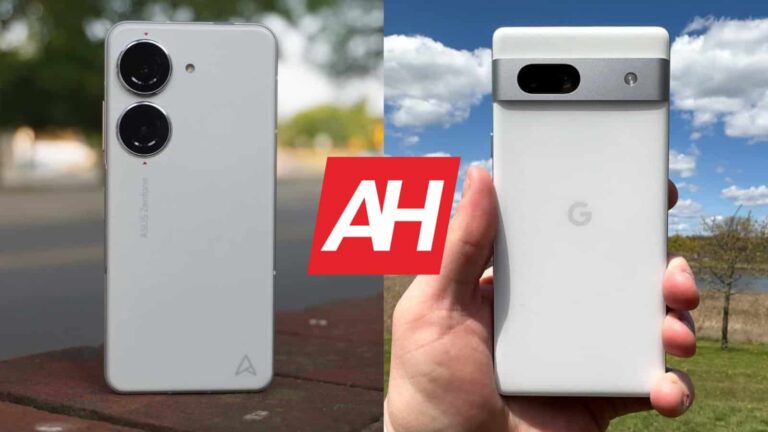
The ZenFone 10 is ASUS’ brand new compact flagship. That’s not something we see often these days, a very compact smartphone that can compete with the best offerings out there. In this article, we’ll compare the ASUS ZenFone 10 vs Google Pixel 7, with Google’s very own high-end offering. Truth be said, the Pixel 7 Pro is Google’s top-of-the-line phone, but the Pixel 7 is also a high-end device, and more compact than the Pixel 7 Pro, hence this comparison.
These two devices are also somewhat similar in the price segment. So, it makes all the sense in the world to compare them. We’ve reviewed both phones at this point, and you may be surprised by what we’re about to share in this article. We’ll first list their specifications, and then we’ll compare the two phones across a number of different categories. Having said that, let’s get started, shall we?
Specs
ASUS ZenFone 10
Google Pixel 7
Screen size
5.9-inch FullHD+ Super AMOLED display (up to 144Hz refresh rate, 1,100 nits peak brightness)
These two smartphones are easy to differentiate, as they’re sporting entirely different designs. The ZenFone 10 is more rounded, and looks different in every way, basically. One thing they have in common is the fact their frames are made out of aluminum, that’s basically it. The ZenFone 10 is considerably shorter, narrower, and a bit thicker. It’s also lighter on top of everything, and you will feel the difference.
The ASUS ZenFone 10 comes with flat sides, all around, and a flat display. It has a display camera hole in the top-left corner, while all of its physical buttons are placed on the right side. The bezels are not uniform, but they are quite thin. Two camera islands are included on the back, and each of them is housing one camera sensor. The backplate on the device is made out of soft-touch plastic, of sorts. The feel is somewhere between regular plastic, and OnePlus’ sandstone finish, the phone is quite grippy, and very comfortable to hold. That backplate sticks out towards the back, and is curved to make holding the device more pleasant.
The Pixel 7, on the other hand, doesn’t have flat sides, though it has a flat display too. It has a centered display camera hole, and its bezels are also thin, but not uniform. All the physical buttons are located on the right side, while there’s a camera visor on the back. That camera visor is covered by metal, and it attaches to both the left and right sides of the frame. The Pixel 7 has a glass back, which is slightly curved towards the edges.
Both phones feel premium in the hand, though entirely different. The ZenFone 10 is much easier to use with one hand, and it’s also much grippier than the Pixel 7. Both phones offer an IP68 certification for water and dust resistance.
ASUS ZenFone 10 vs Google Pixel 7: Display
The ZenFone 10 features a 5.9-inch fullHD+ (2400 x 1080) Super AMOLED display. That panel is flat, and it supports a 144Hz refresh rate, though it’ll only activate during gaming. HDR10+ content is supported here, while the panel goes up to 1,100 nits of brightness at its peak. It has a 20:9 aspect ratio, while the Gorilla Glass Victus protects this panel.
Google Pixel 7
The Pixel 7, on the other hand, includes a 6.3-inch fullHD+ (2400 x 1080) AMOLED display. That panel is also flat, and it supports a 90Hz refresh rate. HDR10+ content is supported here too, while the display can reach 1,400 nits of brightness at its peak. It also has a 20:9 aspect ratio, while the Gorilla Glass Victus protects it, the same as it does the ZenFone 10’s panel.
Both of these displays are good, though they’re not the very top-of-the-line. They’re more than sharp enough, and offer vivid colors, with deep blacks, and very good viewing angles. The touch response is also very good. The ZenFone 10’s panel does offer a higher refresh rate, and during regular usage, you may notice the difference between 120Hz and 90Hz, though most people probably won’t. Both displays could be brighter outdoors, as you’ll notice that under direct sunlight, if you’ve used a considerably brighter display. For all intents and purposes, they’re more than bright enough.
ASUS ZenFone 10 vs Google Pixel 7: Performance
The Snapdragon 8 Gen 2 fuels the ASUS ZenFone 10. ASUS also included up to 16GB of LPDDR5X RAM inside of this phone, and UFS 4.0 flash storage. The Pixel 7, on the other hand, comes with the Google Tensor G2 processor, 8GB of LPDDR5 RAM, and UFS 3.1 flash storage. The ZenFone 10 has better performance-related hardware, there’s no doubt about that, does that reflect actual usage, though?
Well, yes, you can see the difference. The ZenFone 10 is more snappy than the Pixel 7, and the Snapdragon 8 Gen 2 plays a major part in that. Don’t get me wrong, the Pixel 7 is not a slow phone, not at all, but when you use it next to the ZenFone 10, it is visibly slower. Both phones handle regular, everyday tasks without a problem, though. The ZenFone 10 is more prominent when it comes to gaming, though.
You can play the most demanding games on the ZenFone 10 without a problem, though do note the phone will get quite warm after a while. The Pixel 7 does a good job with gaming, but the most demanding titles will perform worse than on the ZenFone 10. The Pixel 7 wasn’t exactly made for gaming, though, and Google never claimed it was.
ASUS ZenFone 10 vs Google Pixel 7: Battery
The ASUS ZenFone 10 features a 4,300mAh battery on the inside. The Pixel 7, on the flip side, has a 4,355mAh unit. These battery sizes may not seem huge, but do keep in mind both of these phones are smaller than your regular flagships these days. In fact, the ZenFone 10 in particular offers outstanding battery life. The Pixel 7 is not bad in that regard, but it cannot compete with ASUS’ offering.
During our usage, we were able to cross the 10-hour screen-on-time mark, a number of times. In fact, the phone managed to get over the 11-hour screen-on-time mark, and keep on going. That’s incredible for a phone of that size, that’s for sure. The Pixel 7, on the other hand, will fly closer to 7-7.5 hours of screen-on-time, as it struggles to reach that 8-hour mark. Do note that your mileage may vary, though, of course. You’ll use different apps, in different ways, and with different signal strengths. One thing is for sure, though, the ZenFone 10 trumps the Pixel 7 in terms of battery life, by quite a margin.
The ZenFone 10 supports 30W wired, 15W wireless, and 5W reverse wired charging. The Pixel 7, on the flip side, supports 20W wired, 20W wireless, and reverse wireless charging. Unlike Google’s offering, the ZenFone 10 does include a charger in the box. For the Pixel 7, you’ll have to buy one separately, if you don’t already own it.
ASUS ZenFone 10 vs Google Pixel 7: Cameras
The ASUS ZenFone 10 has a 50-megapixel main camera, and a 13-megapixel ultrawide unit (120-degree FoV) on the back. The Pixel 7, on the other hand, includes a 50-megapixel main camera, and a 12-megapixel ultrawide camera (114-degree FoV). Pixels are well-known for their photo prowess, while the ZenFone 10 did a good job in our testing too. They’re quite different in terms of final products, though.
ASUS ZenFone 10
The ZenFone 10 provides noticeably brighter images than its predecessor, while it also toned down on sharpening, which was an issue on the ZenFone 9. It provides good-looking photos, with ample detail, and offers good performance in HDR conditions. The thing is, autofocus can be a hit or miss, but ASUS is expected to fix that via a software update. The Pixel 7 offers contrasty photos, which end up looking a bit unrealistic, but great overall. It rarely misses, and is one of the most reliable smartphones for taking photos.
Ultrawide cameras on both smartphones do a good job, though we’d give the end to the Pixel 7 here. The ZenFone 10 does have a wider FoV on that camera, but the photos end up looking a bit different than the ones provided by the main camera. On top of that, ASUS removed autofocus support for that camera, which destroys its macro prowess. We’re not sure why that happened, but there you go.
Video footage ends up looking good on both phones, but the stabilization is ZenFone 10’s forte. ASUS improved upon its gimbal OIS stabilization, and it truly does wonders on the ZenFone 10. If you have a tendency to film while you’re running, riding a bike, or something of the sort, the ZenFone 10 is the way to go.
Audio
Both of these phones do have stereo speakers, and offer good sound output. They’re nowhere near the loudest speakers in the market, but they do a good job. The Pixel 7’s speakers are slightly louder, while both sets are well-optimized across the spectrum.
If you need a headphone jack, however, the ZenFone 10 is your only choice here. ASUS included an audio jack at the top, while you’ll need to use the Type-C port on the Pixel 7 in order to connect your headphones via a wire. If you decide to go wireless, the ZenFone 10 offers Bluetooth 5.3, compared to Bluetooth 5.2 on the Pixel 7.
Twitter has announced the launch of a new and improved TweetDeck. The service, which can be called a power user version of Twitter, is getting a host of changes to meet the demands of power users. But the biggest and most heartwrenching change is that it will not be free anymore. You will need to pay, i.e., subscribe to Twitter Blue, to use TweetDeck.
Originally an independent app, TweetDeck was acquired by Twitter in May 2011. In July 2021, the company announced a major overhaul of the platform. But this update remained in preview for about two years as the social network saw high-profile privatization, with billionaire Elon Musk purchasing it for $44 billion last year. After a lengthy delay, the big TweetDeck overhaul is finally here.
According to Twitter Support, TweetDeck now supports “full composer functionality.” You get Spaces, video docking, polls, and much more. Teams functionality is “temporarily unavailable” but will arrive soon. Existing users will not lose their saved searches, lists, and columns. A prompt that appears on loading the new app for the first time will let them bring in their existing settings.
Unfortunately, this update adds a paywall to TweetDeck. The app will be free for the first 30 days but will require a Twitter Blue subscription after that. This is a massive letdown but in line with the company’s recent push to sell Blue to more people. It has imposed limits on the number of tweets users can see. New unverified users can see 500 tweets in a day while existing users can see 1,000 tweets. With a Blue subscription, that limit goes up to 10,000 tweets.
Twitter will force all users to the new TweetDeck
Twitter users can access the new TweetDeck on the web by visiting tweetdeck.twitter.com. While the old interface is still available, the company will force everyone to the new version. This ensures that they cannot bypass the Blue requirement after a month. “We’re working on migrating everyone to the preview version,” a Twitter employee said (via), citing that the legacy TweetDeck is having some problems.
These problems cropped up after Twitter announced the read limits. But another employee confirmed that those limits don’t have anything to do with TweetDeck issues. Instead, users are facing problems because the company has removed the legacy APIs to reduce data scraping. This change is probably blocking old tweets from showing up in Google Search results. Twitter results in web searches have dropped drastically in recent days.
In the smartphone industry, innovations are necessary and the HONOR Smart Capsule was a solid entry. Back in the year 2019, this innovative design was shown off on the HONOR V20 during its launch. The idea was to take the front-facing camera cutout and make it a functional part of the screen.
To do this, Honor assigned some software features to the front-facing camera cutout. With this, certain designs, animations and pop-ups (or notifications) could wrap around the cutout. This innovative thinking from HONOR was done back in 2019 when the V20 device came into existence.
Fast-forward to 2022 and netizens get to see a similar design on the iPhone 14 Pro series. But this time Apple calls it the Dynamic Island, and it does exactly what HONOR’s Smart Capsule did back in 2019. For this reason, the Chinese company is calling Apple out and labelling them copycats lacking innovative thinking.
HONOR calls out the Apple Dynamic Island during the MWC Shanghai event
At the MWC Shanghai event, Honor’s CEO Zhao Ming pointed out the lack of innovation in the smartphone industry. During his speech “The Future Evolution of Smartphones” he made it clear that the mobile industry is declining due to certain complications. One such complication is the lack of innovations seen among smartphone manufacturing companies.
From his point of view, some smartphone manufacturing companies are waiting to borrow the ideas of others. To solidify this point of his, he points out the Dynamic Island on the iPhone 14 Pro series. Apple has got tons of praise from netizens for introducing this feature on the iPhone 14 Pro series.
However, HONOR’s CEO points out that his brand came up with this innovation back in 2019. The HONOR V20 smartphone is built upon the idea of the front-facing camera cutout being functional while the phone is in use. For instance, during a call, the UI will display a pill-shaped design around the cutout to display the call time.
Apple took this design and made it popular with the iPhone 14 Pro series. Just a few months after another smartphone company, Realme also put this innovation to use on one of their devices. To the HONOR CEO, Zhao Ming, this lack of innovative thinking is affecting the smartphone industry.


.png
)