The Smallest and Most Powerful Flagship Smartphone yet

0
[ad_1]

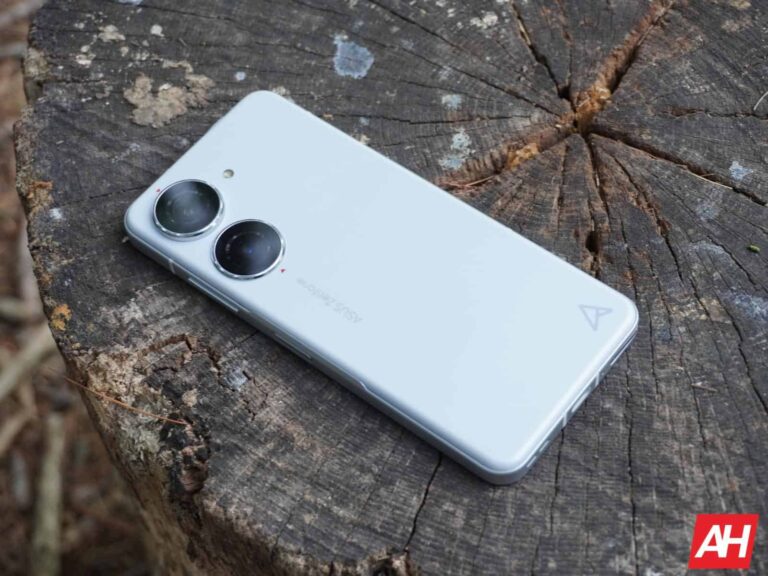
ASUS has taken the wraps off of its latest smartphone – the Zenfone 10. It’s going to look and feel a lot like the Zenfone 9, which was a brilliant phone in 2022. ASUS did make a few changes here, but for the most part it’s the same phone at the same price. Which is really good to see, as the Zenfone 9 was a very popular smartphone among those that wanted a small but powerful device.

ASUS Zenfone 10 Specs

Here are the specs of the new Zenfone 10, and how they compare to the Zenfone 9.

ASUS Zenfone 10 ASUS Zenfone 9
Display 5.9-inch FHD+ AMOLED
144Hz
5.9-inch FHD+ AMOLED
120Hz
Processor Snapdragon 8 Gen 2 Snapdragon 8+ Gen 1
RAM 8GB 6GB
Storage 256GB 128GB
Battery Capacity 4300mAh 4300mAh
Charging Speeds 30W wired
15W wireless
30W wired
5W wireless
Software Android 13 Android 13
Rear Cameras 50MP wide
13MP ultrawide
50MP wide
12MP ultrawide
Front Camera 32MP 12MP
Dimensions 146.5 x 68.1 x 9.4mm 146.5 x 68.1 x 9.1mm
Weight 172g 169g
Price $799 $799
Colors Aurora Green
Midnight Black
Comet White
Eclipse Red
Starry Blue
Starry Blue
Moonlight White
Sunset Red
Midnight Black
Available Q3 2023 July 2022

As you can see, a few things were upgraded here like the RAM, storage, display and the front-facing camera. But all-in-all, not a lot of changes here. And considering how highly praised the Zenfone 9 was, it makes sense. If it ain’t broke, don’t fix it.

ASUS is offering the Zenfone 10 with up to 16GB of LPDDR5X RAM and up to 512GB of storage, which is UFS 4.0 storage too.

Zenfone’s new cameras

There’s a few new cameras on the new Zenfone 10 this year. That ultrawide was upgraded to a 13-megapixel sensor, and the front-facing camera got a huge jump to 32MP. ASUS has also included a 6-axis Gimbal Stabilizer 2.0 with Adaptive EIS to the package. Making recording with this phone a breeze. Even the most shaky video will be nice and smooth.

On the front camera, ASUS has changed the technology a bit. Making it a RGBW camera, as opposed to a RGGB camera on the Zenfone 9. The RGBW camera adds a white sub-pixel, which will help to make the pictures brighter, especially in dark places.

Still compact and powerful

One of the big selling points for the Zenfone, since the 8 series, is that it is a pretty small and compact phone, but doesn’t sacrifice on performance. That’s the case again this year. Sporting the latest Snapdragon 8 Gen 2 processor from Qualcomm, with up to 16GB of RAM and 512GB of storage.

Now some might expect that with a 4300mAh capacity battery, that battery life might take a hit. Because it’s small, and there’s less space to dissipate the heat from that processor. If it’s anything like the Zenfone 9, battery life won’t be an issue. As it was truly incredible on that phone.

When can I get it?

ASUS says that the Zenfone 10 will be available towards the end of Q3 2023. Since the third quarter starts in just two days, that’s not as bad as it sounds. But basically, that means that it could launch anytime between July 1 and September 30. Which is still quite a large window.

The Zenfone 10 will start at $799, similar to the Zenfone 9. However, it does come with more RAM and storage this time around, so definitely an upgrade for the starting pricing.


[ad_2]
Source link

Design of the first 24GB RAM smartphone gets confirmed

0
[ad_1]

Recently, it was announced that the RedMagic 8S Pro will become the world’s first smartphone with 24GB of RAM, and its design has just been confirmed. The company itself did this via Weibo (a Chinese social media network).

The design of the world’s first 24GB RAM smartphone is now official

RedMagic shared nine images of the device, in two color options. You can clearly see black and silver color variants of the device in the gallery below the article. Surprising no one, the device will even look the same as its predecessor, the RedMagic 8 Pro.

That’s not necessarily a bad thing, not at all. The RedMagic 8 Pro was one of the most intriguing smartphones on the market as far as the design is concerned. You’ll be getting an under-display camera here, so you’ll have a clear canvas on the front. The bezels are very thin, and the black model even has a see-through back.

You’ll also notice that the sides are flat here, and that there is an audio jack on the top. There is also a toggle for Game Mode on the side, along with two touch-sensitive shoulder buttons. This is a gaming smartphone after all.

Advanced cooling will be included, and the same goes for a ton of gaming features

As expected, the phone will also support advanced cooling, and a fan dedicated to that purpose too. A ton of gaming features will be available, and there are three cameras included on the back of the phone.

This phone will be fueled by the Snapdragon 8 Gen 2, but an overclocked version of it, with a more powerful Cortex-X3 CPU core. It will essentially have the same processor as the Galaxy S23 series.

We’ll also get up to 24GB of LPDDR5X RAM here, and several storage options. UFS 4.0 storage will be used. We’re still not sure if the 24GB RAM model will be available globally, but it’s not likely.

This smartphone will become official on July 5, so we’re about a week away from its launch event.


[ad_2]
Source link

These images show all iPhone 15 design changes

0
[ad_1]

We’ve been seeing rumors and leaks regarding the iPhone 15 series for quite some time now. Plenty of info surfaced. The iPhone 15 series will also feature some design changes, and in order to help us visualize that, Phone Arena shared a bunch of concept images.

Now, do note that all the images you’ll see below are based on rumors and leaks, so chances are they’re showing a realistic look at the upcoming phones. Also, before we begin, do note that the iPhone 15 series is coming in September.

Thinner bezels for the Pros

iPhone 15 series concept image Phone Arena 2

As many of you already know, the iPhone 15 Pro and iPhone 15 Pro Max will feature thinner bezels. You can see a representation of that in the image above. These two phones will have the thinnest bezels on any iPhone to date. In fact, they could have the thinnest bezels in general on any smartphone.

The bezels on both ‘Pro’ iPhones are said to be 1.5mm thick, and yes, we’re looking at uniform bezels here. In other words, the bezels on all sides will be the same thickness. What you cannot see in images, but is worth saying, is that both ‘Pro’ iPhones are also expected to feature titanium frames.

Type-C all around

iPhone 15 series concept image Phone Arena 4

All iPhone 15 models, both vanilla and ‘Pro’ ones, will ship with a Type-C port. That change was prompted by the EU, as Apple’s hand was basically forced to ditch the Lightning port. This is great for users, though, in the long run, as you won’t need to carry a separate Lightning port cable. Pretty much everyone is using Type-C these days, even Apple, but the company wasn’t doing so on its smartphones. Well, that’s changing with the iPhone 15 series. These are also the first phones from the company that will utilize Type-C.

Dynamic Island trickles down to vanilla models

iPhone 15 series concept image Phone Arena 3

The iPhone 14 Pro and iPhone 14 Pro Max debuted something called ‘Dynamic Island’. That is a pill-shaped cutout at the top of the display, which hosts the phone’s cameras, and some sensors for Face ID. The thing is, Apple combined that with software, threw in some animations, and actually made that cutout useful. Well, the vanilla models will able to taste it too with the iPhone 15, you will no longer need to get the ‘Pro’ models in order to have this feature.

A Mute Switch becomes a thing of the past

iPhone 15 series concept image Phone Arena 5

This is another change meant only for the ‘Pro’ models. With the iPhone 15 Pro and iPhone 15 Pro Max, Apple is planning to ditch the Mute Switch. It will be replaced with something called an ‘Action Button’. That button is expected to function in a similar way to the one on the Apple Watch Ultra. It would basically serve as a replacement for the Mute Switch. This thing will be more functional, but perhaps not as satisfying to use as the Mute Switch was.

In the image provided above, you’ll also see that the volume buttons are now combined into one. You will no longer get separate up and down volume buttons, well, at least if rumors and leaks are to be believed.

The iPhone 15 Pro Max will have a Max camera bump too

iPhone 15 series concept image Phone Arena 6

The iPhone 15 Pro Max will be about the same size as the iPhone 15 Plus, but it will include a larger camera bump. Apple is looking to add a periscope camera to the phone, which will be the first-ever for an iPhone. That will result in some changes one the inside, and a larger camera bump as a result. That periscope camera will replace the 3x telephoto camera that the iPhone 14 Pro Max is sporting.

New season, new coat of paint

Every year, Apple brings new colors to the table for its brand new iPhones, and this time will be no different. The iPhone 15 and iPhone 15 Plus are rumored to be available in Midnight, Starlight, Product RED, a shade of pink, and a shade of blue colors. We, of course, don’t know what they’ll look like exactly, but some guesses are included below.

iPhone 15 series concept image Phone Arena 7

The iPhone 15 Pro and Pro Max, on the other hand, are tipped to arrive in Space Black, Silver, Gold, and Dark Red colors. Guesses for all those colors are shown in the gallery below.


[ad_2]
Source link

TikTok might soon introduce its own online store in the US

0
[ad_1]

Are you in need of more online shopping options? Well, even if you are not, TikTok might be launching its own online store in the US this July. According to Semafor (via The Verge), TikTok has been working on this move for a while, aiming to make its online store a reality in the US market.

Currently, TikTok already allows brands to sell products within the app through its TikTok Shop feature. The new plan is for TikTok to also sell products like toys and kitchen items. The company will handle the logistics and customer service and actually become a retailer.

Users would be able to browse through products, sold by TikTok from the new online store or through products sold by other companies from the TikTok shop, both integrated into the app. If this project goes through, TikTok will face stiff competition from Amazon, which currently dominates the online shopping market.

However, the rollout of the planned online store might be slow due to concerns about potential national security risks raised by lawmakers, which even led to threats of a ban.

Recently, TikTok confirmed that it is testing a shopping feature called “Trendy Beat” in the UK. This feature allows products to be sold and shipped by a company owned by TikTok’s parent company, ByteDance. Although TikTok denied testing the feature in the US, TechCrunch reported that a trademark application for Trendy Beat was filed in the US, suggesting that the company intends to expand to the US version of the app.

While TikTok faces tough competition from Amazon, Shein, and Temu in the US, it’s worth considering that with its large audience and potential customer base, TikTok might have a strong advantage. Moreover, TikTok users themselves can become excellent advertisers for its products. Users frequently test and share TikTok products, creating perfect advertising content for the shop.

Considering the trajectory of Amazon, which began as a retailer before evolving into a trusted marketplace for companies, it’s likely that TikTok’s online store is just the beginning. This indicates that TikTok might be moving in a similar direction, with plans to expand its range of offerings and services in the future.


[ad_2]
Source link

Surveillance camera insecurities argument comes to one inevitable conclusion: always update

0
[ad_1]

We take a look at a debate over who is responsible for ensuring surveillance systems are as secure as they can be.

Chinese-made surveillance cameras find themselves in a spot of controversy, after a BBC investigation uncovered flaws in devices during several brand tests.

Surveillance and webcam vulnerabilities are common, and we’ve covered them many times on our blog. What’s interesting with this story is that its being presented as some sort of potential threat to national security and infrastructure. From just one of the comments provided to the BBC:

“We’ve all seen the Italian Job in our youth, where you bring the whole of Turin to a halt through the traffic light system. Well, that might have been fiction then, it wouldn’t be now.”

All very dramatic, but we’ve yet to see The Italian Job play out in real life. Even so, many devices manufactured by one firm, Hikvision, are used by many local councils across the UK. They’re also used to monitor Government buildings. If a device is vulnerable, it’s definitely worth trying to figure out the scale of the problem. With this in mind, what kind of numbers are we talking about?

According to the BBC, a large-scale freedom of information campaign set in motion by Big Brother Watch tried to find out. No fewer than 4,510 Freedom of Information requests were filed with various public bodies between August 2021 and January 2022. 1,289 responses came back, with 806 of those confirming the use of Hikvision or, another brand mentioned by the BBC, Dahua cameras. Of the 806, 227 local councils and 15 police forces use Hikvision, with 35 local councils making use of Dahua.

That’s certainly a lot of cameras. What risk was discovered?

The BBC asked experts to try and compromise a Hikvision camera under test conditions, though specifics are hard to come by. Is “a test network with no firewall and little protection” an accurate reflection of a local council or Government network? Is it fair to assume the manufacturer would be at fault for organisations not applying updates and patches dating back 6 years?

I ask this, because the results with the tested (six year old) camera found a vulnerability from 2017. The testers claim the flaw as “a back door that Hikvision built into its own products”, with somewhere in the region of 100,000 cameras online “still vulnerable” to this issue. Which means that a lot of organisations actually are failing to update their devices.

Having compromised the camera and gaining access to visuals, testers now established if they could access the Dahua cameras by forcing their way into the software controlling them. Once again, they were able to do it and this time gained access to the camera’s microphone.

In both cases, vendors claimed to have patched both of these vulnerabilities soon after the issues came to light. In fact, Hikvision released an open letter to those responsible for the investigation. It reads:

To claim that this stunt has uncovered a security breach or an intentional backdoor in June 2023 is farcical. It sensationalises a problem that was already fixed to universally recognised CVE standards. Furthermore, this test has not been conducted on a typical network, but rather an unsecured one. This test simply cannot be characterised as representative of ‘the cameras lining our streets today’, which would be much better defended than the camera in this so-called ‘test’ the BBC have run.

It goes on:

Hikvision’s conduct with regards to this vulnerability has followed all internationally accepted standards of best practice. When made aware of the vulnerability in March 2017, Hikvision patched it in less than one week. The vulnerability – and Hikvision’s patch – were subject to further scrutiny in the US with the then-Chairman of the US House of Representatives Small Business Committee noting in a public hearing that Hikvision’s work with the US Department of Homeland Security on this vulnerability meant that any continuing issues resulting from unpatched equipment would lie with ‘small businesses that do not engage with the government or the DHS regularly’.

Going further, the Deputy Assistant Secretary for the US Department of Homeland Security Office of Cybersecurity and Communications said they ‘worked with the company’ to resolve the problem and that ‘standard practice was followed’. 

All in all, this one is a bit of a mess and likely won’t be untangled soon. Whether your own devices are brand new or a few years old, they’ll typically prompt you to perform an update. Whether you think years old devices should be taken offline for safety reasons, or that organisations are solely responsible for their security, one thing is for certain: You can feel much more reassured that your own devices are safe by hitting that update button as soon as you possibly can.


Malwarebytes EDR and MDR removes all remnants of ransomware and prevents you from getting reinfected. Want to learn more about how we can help protect your business? Get a free trial below.

TRY NOW


[ad_2]
Source link

Android TV is geting a new Shop tab

0
[ad_1]

An important part of the media streaming experience is the ability to purchase content quickly and easily. Different streaming services and operating systems give you several ways to buy your favorite content. However, Android TV introduced a new Shop tab that will let you buy content from different providers.

Android TV and other operating systems are all about curating content for you to watch. You’re given a ton of movies and shows for you to consume, and they also give you an easy way to buy them. In the case of Android TV, you’ll see a feed of content, whether it be free or paid, and if you tap on paid content, it will take you to the screen to pay for it. You can handle that all from your TV.

Android TV brings the Shop tab

While Android TV lets you buy content, the platform wants to make things a bit more straightforward. According to Engadget, Google announced this new tab in the Android TV operating system.

We see this tab right in between the Home and Discover tabs. As you can guess, this tab will have a feed of movies and shows that you can buy or rent. Instead of having to go to each movie’s respective app, you’ll just see the content all in one place.

This tab isn’t only a place to buy your movies. It’s a hub where you can access your saved content. If you buy anything across any of your Google services, you’ll be able to access it from the tab. This includes Google TV, YouTube, and mobile apps. This creates a unified experience where you can access your purchased content. If you’re using the Google TV app, then you’ll be able to download your purchased content for offline viewing.

If you’re excited about this feature, you might not have long to wait. Google is going to be rolling this feature out over the next couple of weeks.


[ad_2]
Source link

Google found violating its promised video ad standards

0
[ad_1]

Google is in hot water again for its online advertising business. Research has found that the company violated its standards when distributing video ads on third-party websites. As many as 80 percent of its video ad placements reportedly don’t meet the promised standards.

Google violated its standards for placing video ads on external platforms

YouTube, the Google-owned video platform, is one of the most lucrative platforms for brands to run video ads. But the company also offers a program called Google Video Partners through which brands can place their video ads on other websites and apps. It promises to put ads on sites and apps run by high-quality publishers that are carefully vetted and meet Google’s quality standards. The company also promises to show ads before the main video content with the audio on. Moreover, brands will only pay for ads that users watch till the end without skipping.

But Google isn’t following through on its promises, research has found. Adalytics, a firm that helps brands optimize their ad placements for the best results, claims that the company violates its standards about 80 percent of the time. It often places ads in “small, muted, automatically-played videos off to the side of a page’s main content,” The Wall Street Journal (WSJ) reports citing findings by Adalytics. On top of this, many sites where Google shows video ads of its clients don’t meet the monetization standards defined for its Google Video Partners program.

According to the new report, Adalytics observed ad campaigns from more than 1,100 brands between 2020 and 2023 during this study. Those ads cumulatively got billions of impressions. The firm worked with various ad agencies and also analyzed data collected by companies that archive the web. Johnson & Johnson, American Express, Samsung, Sephora, Macy’s, Disney +, and WSJ are among the major brands whose ads weren’t placed according to the promised standards. Google also violated its standards for ads for government agencies, including Medicare and the US Army.

Advertisers feel cheated, but Google claims innocence

WSJ independently observed similar violations from Google but couldn’t ascertain the extent of the violations. Adalytics’ research, meanwhile, highlights the opaqueness of the digital ad business. It’s difficult for brands to track whether they are getting what they paid for. Unsurprisingly, many of them are disappointed and feel cheated. “This is an unacceptable breach of trust by YouTube,” said Joshua Lowcock, global chief media officer at ad agency UM Worldwide. “Google must fix this and fully refund clients for any fraud and impressions that failed to meet Google’s own policies.”

“I feel cheated,” said Giovanni Sollazzo, founder, chairman, and chief executive of digital-ad agency AIDEM. “What I requested to buy was not what I got. This should entitle me to a refund for invalid traffic.” Since the Google Video Partners program is an optional bundle that Google sells with YouTube ads, brands don’t even know what portion of their ad purchase is going off YouTube. At least, that’s what many ad buyers claim. The research report states that more than half of the budget that the affected brands paid for video ads went to third-party websites.

However, Google disagrees. A company spokesperson said that “the overwhelming majority of the video ads it sells are served on YouTube.” Moreover, “advertisers can clearly see that their ads might run on third-party sites, and how much is spent there, and can easily opt-out.” The company also refuted the allegations made by Adalytics. It said that many claims made in the research report are inaccurate and don’t “reflect how we keep advertisers safe.” Google plans to “take any appropriate actions” based on the full report. Time will tell whether this research leads to another courtroom fight for the tech giant.


[ad_2]
Source link

Honeywell Servers Compromised by MOVEit Hackers

0
[ad_1]
Honeywell MOVEit Hackers

A flaw was discovered in Progress MOVEit Transfer, a popular third-party online transfer application. By exploiting the flaw, attackers compromised multiple organizations, including U.S. Government agencies.

Honeywell is the recent victim of MOVEit Hackers as they gained Unauthorized access to a single MOVEit server.

Multinational firm Honeywell detected data that an unauthorized third party had accessed through the MOVEit app, including some personally sensitive information. 

“Honeywell immediately launched an investigation upon learning of the vulnerability in Progress MOVEit Transfer, a third-party web transfer application used by many companies.

The investigation detected unauthorized access on a single MOVEit server”, Honeywell reports.

The company’s primary business sectors are aircraft, building technologies, performance materials and technologies (PMT), and safety and productivity solutions (SPS).

Around 97,000 workers worldwide worked for the company in 2022, down from 113,000 in 2019.

As necessary, the corporation is getting in touch with the impacted people, clients, and partners.

Unauthorized Access to Servers

“All of our systems are fully online, and this has had no impact on company operations. At this time, we do not expect that the unauthorized access on the MOVEit server we used will have a material impact on our business operations”, Honeywell said.

Additionally, the same Progress MOVEit vulnerability has affected certain Honeywell suppliers, and as a result, their data may have been affected. 

Progress MOVEIt is the top secure Managed File Transfer (MFT) software. It is used by thousands of organizations across the world to give full visibility and control over file transfer activity.

MOVEit helps to satisfy compliance requirements, effortlessly assure the reliability of key business operations, and securely transmit sensitive data among partners, clients, users, and systems whether it is installed as-a-Service, in the Cloud, or locally.

The organization assesses the issue and takes necessary action as soon as one of these vendors reports that the data has been stolen.

The business claimed that its cybersecurity safeguards prevented the damage to this server and, before resuming service, completely patched and upgraded the Progress MOVEit app as soon as the provider’s updates were available.

“Our cybersecurity defenses limited the impact to this server and we fully patched and upgraded the Progress MOVEit app as soon as the patches were made available from the provider before restoring service”, the company said.

The company mentioned that they are in touch with certain law enforcement and regulatory agencies since the inquiry is still underway.

“We will assess and respond to any impacts as part of our ongoing investigation as we receive notification from suppliers that our data has been compromised,” the company stated.

“AI-based email security measures Protect your business From Email Threats!” – Request a Free Demo.


[ad_2]
Source link

Why blocking ads is good for your digital health

0
[ad_1]

We take a look at why blocking adverts and tracking is one of the best things you can do to keep your devices healthy.

Online content is largely powered and paid for by advertising. Almost every site you visit, every forum you browse, and even the online stores you buy things from is an advert extravaganza, and they don’t just stop at showing cool offers for shirts at 50% off. The scaffolding the adverts sit on goes out of its way to track you, tie you to clicks, associations, and more. More adverts, tailored to your theoretical interests, then start to follow you around across other sites. Sometimes, it’s not very sophisticated: Ever searched for the one and only quarter height stepladder you’ll ever buy in your life? Congratulations, every advert is a stepladder.

Sadly, dozens of stepladder adverts are far from your only concern. We’re going to explain why running an ad blocker is a good thing for your digital health, and highlight all of the ways things can go wrong with ads enabled.

Adverts are the biggest of business, with billions of ad impressions per month. Individual companies can rack up billions of impressions just for their own ads, before you try and figure out overall tallies. Disney and Amazon had a total of 40bn impressions between them in the first quarter of 2020, and Google is pretty much powered by advertising:

Google is an attention merchant that – in 2022 – generated over $224 billion (almost 80% of revenues) from ads (Google Search, YouTube Ads, and Network sites.

If you want some idea of the scale of advertising you’re subjected to on a daily basis, things are only moving up. Recent research by Lunio claims that, on average, people might have seen between 500 and 1,000 ads a day in the 1970s. By 2007, when adware vendors dropping ad-spewing installers was common and ad affiliate networks in meltdown was a daily occurrence, it was estimated at 5,000. By 2021, it was an average of 6,000 to 10,000 per day.

You have adverts and pop ups on your phone. You have advertising on your video game console dashboard. There’s another batch of stepladder adverts on your desktop. Your IoT home hub either plays an occasional ad or is plugged into some other service you use to buy things from.

Your television? Well, it might be one of the upcoming models where the TV is free in return for built in adverts constantly playing on a smaller screen. This is probably as good a place as any to remind you to always read the small print, however:

Some of the most common types of advertising you’ll encounter include:

  • Pay per click (PPC). Advertisers pay publishers every time an advert is clicked.
  • Affiliate marketing. With this form of marketing, the creator of a product avoids taking up the marketing slack. Instead, it is essentially outsourced to others in the form of unique affiliate links or clickthroughs offered by apps or programs. If a sale is made, the affiliate earns commission money. There may be additional incentives on offer depending on the product.
  • Mobile ads. These are hugely popular in “free” games, where ads may be served by the app itself, or through a network being used by the app. The links may also lead to additional phone installations.

You’ll bump into others, but these are the three main areas of advertising which you’ll probably experience on a daily basis. They’re also a potential goldmine for scammers.

PPC is one of the oldest forms of advertising. Bogus ad clicking tools that artificially inflate revenue have been around forever, to various degrees of sophistication. Basic forms of malware are programmed to autoclick ads detected on websites. Other enterprising individuals concoct ways of manually clicking ads in ways which would not look suspicious to the advertisers.

Affiliate advertising is where much of the ad network chaos takes place. Back in the adware vendor days, rogue ad campaigns using malware, exploits, or fake products to make adware cash would be shut down after much outrage. The adware vendor would make a lot of noise about “rogue affiliates”, and claim it wasn’t their fault. Everything would go back to this same routine the day after and adware vendors would pretend they were somehow free of blame in all of this. Sometimes they would be sued into the ground and abandon the adware life, and other times the evidence of dubious antics were on display for all to see.

Even now, in the case of rogue advertising involving malware (malvertising) there’s often an affiliate component to the “your PC is now compromised” pipeline. You’ll encounter it in many ways:

  • Rogue sponsored adverts which sit above organic results in services like Google and Yahoo! search engines. These links may imitate brands or other services to entice you to click
  • Fake adverts embedded on websites. These also mimic popular brands to drive clicks
  • Compromised websites which may look like a familiar service, but every link offered up is potentially harmful to your PC

The ads in search engine results which look as though they resolve to legitimate sites like Amazon can also be harmful. This is as a result of advertisers being able to display a brand’s official URL within the ad snippet, even when an ad URL has nothing to do with the brand. From here you could be sent to a phishing page, a fake tech support site, or worse. Below you can see an example of a supposedly genuine sponsored ad which actually leads to a fake Amazon login.

Ad assets

Exploits are often a key component of malvertising attacks, and without the right protection on board you may realise too late that something has gone badly wrong.

On top of all this, we have the previously mentioned tracking going on under the hood. Web beacons are used to monitor activity on a website. Tracking cookies shared by multiple services constantly build up a picture of what you’ve done. So-called “shadow profiles” are used to track the activity of people who don’t even use a particular service.

Finally, we have the issue of speed. Lots of ads, tracking, and page elements being served up from different points of origin can all contribute to slowing down your browsing. You’ve almost certainly experienced the “thrill” of a website serving up the ads before the content at some point. This often happens because the ads are served from dedicated content delivery networks (CDNs). Their purpose is to get the ad in front of you as fast as possible, which can mean ads are the first thing you see. While your connection is (probably) a lot better now than it was five years ago, this can still cause issues in some cases…and who wants adverts to be the first thing they see on a page anyway?

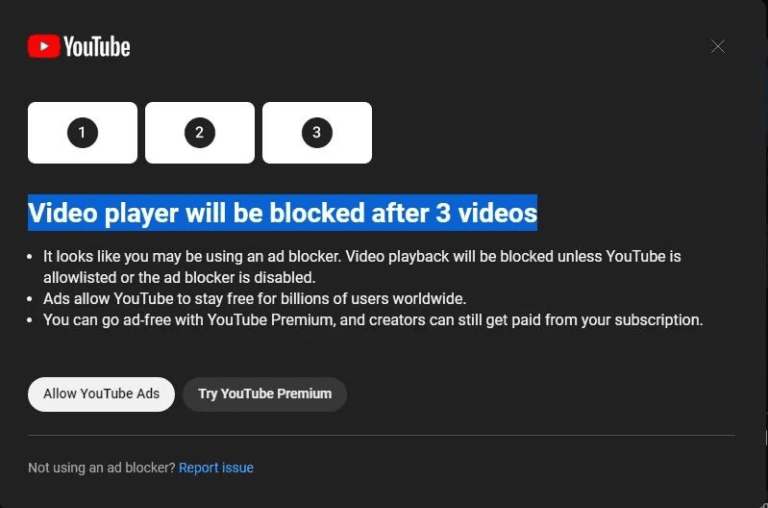
As you may have gathered, it’s the marketing Wild West out there. It’s also worth noting that sites such as YouTube are now experimenting with detecting ad blockers, and disallowing users to view videos until their ad blocker is turned off.

So what can we do about it?

  • Pick the right browser for your needs. Increasingly, browsers offer more options to specify a level of tracking and advertising that you’re comfortable with. Back in 2020, Safari started blocking third party tracking cookies by default. Firefox has gone down the path of individual cookie jars, called “Total Cookie Protection”, which prevents tracking across websites. Elsewhere, Google is still delaying the sunsetting of third party tracking cookies.
  • Extend your options. On the subject of browsers, most will allow you to install extensions to increase your blocking capabilities. Some browsers like Opera include their own ad blocker by default which can be enabled in two clicks. You can also try Malwarebytes Browser Guard, which filters out ads and scams as well as blocking trackers that spy on you.
  • Beware shady blockers. You’ll sometimes see fake blockers riding on the coat tails of legitimate products. You may also run into websites or services which claim to dodge ad blocker detection, but serve up spam or surveys. Always do some research on anything you plan to install. Reviews and store rankings can help with this.
  • Tackle the scripts. It’s not “just” ads on the surface level. You also need to consider the tracking scripts, cookies, and everything else happening invisibly. Ensure your setup allows for taking care of third party ad tracking.
  • Things will break. A note of caution: Blocking scripts or other functionality can break some websites. You’ll need to customise your settings in these situations. Some products integrate ads into the actual structure of a product, so removing or blocking will break the product. Tablet games where you’re granted a new life by watching an ad, for example. There may not be much you can do when this happens. Use the product as is, or cut your losses and move on.

Malwarebytes protects against annoying ads and scams while blocking trackers that spy on you.

TRY NOW


[ad_2]
Source link

Nothing secures $96 million to help expand into the US market

0
[ad_1]

Nothing is furthering its plans for an expansion into the US market with a freshly secured round of funding. Nothing, which makes the Phone1 and is set to launch the Phone 2 on July 11, has yet to launch a phone in the US.

It would be a big leap for the company, but also a big step up. As the US market provides the company and its co-founder Carl Pei with an opportunity to land many more customers. According to a recent report from CNBC, Nothing has secured $96 million in funding to further its US expansion goals. The money likely won’t be used just for propping up Nothing’s US operations. Which Pei said earlier this year is “off to a good start.”

It is likely though that a majority of it will be for investment into the company’s US segment. As well as helping to launch the Phone 2 in the US. Which Nothing has already confirmed would be happening.

Nothing is “confident” the US expansion will help with the Phone 2 launch

Speaking to CNBC, Nothing co-founder Carl Pei says that he and the company are confident they’ll make headway with the launch of their first phone in the US market.

With the phone launching on July 11, Nothing will be looking to ramp up production. In a tweet on June 28, the company says it’s excited to scale its product and technology portfolio. This latest round of funding, Nothing confirms, was led by Highland Europe, with funding also coming in from GV, EQT Ventures, and Swedish House Mafia.

Swedish House Mafia has also collaborated with Nothing on creating a special Glyph ringtone sound pack for both the Phone 1 and Phone 2. It’s expected to be available for users later this year following the Phone 2 launch.


[ad_2]
Source link