While biometric locks usually seem a safe device locking method, researchers have now devised a viable bypass. Dubbed “BrutePrint” the new attack method allows an adversary to brute-force fingerprint to unlock target devices like smartphones.
BrutePrint Attack Allows Fingerprint Brute-force
A team of researchers has shared details insights about vulnerabilities allowing to bypass fingerprints to unlock devices. To demonstrate the flaws in fingerprint lock technology, the researchers devised BrutePrint attack – a dedicated strategy to unlock a target smartphone by brute-forcing fingerprints.
Briefly, the BrutePrint attack exploits two inherent vulnerabilities in the Smartphone Fingerprint Authentication (SFA) framework and insufficient fingerprint data protection on the Serial Peripheral Interface (SPI) of fingerprint sensors.
The SFA vulnerabilities include Cancel-After-Match-Fail (CAMF) and Match-After-Lock (MAL). These vulnerabilities allow an adversary to evade the existing security measures – limit on the number of attempts, and liveness detection – to prevent device unlocking via non-live fingerprint images.
The concept behind this attack is to unlock a physically possessed device, such as a smartphone, locked with fingerprint scans, via hardware. Although, carefully conducting this attack requires the attacker to possess a huge library of fingerprint scans for brute-forcing. Yet, it isn’t too challenging for a keen intruder. All it takes is a $15 setup comprising a microcontroller board and an auto-clicker to hijack the data from the fingerprint sensor.
In their study, the researchers performed the attack on ten different devices from top vendors like Samsung, Xiaomi, OPPO, Apple, OnePlus, and Huawei. These devices run different operating systems (Android 8, 9, 10, and 11, iOS 14.4.1 and 14.5.1, and HarmonyOS 2).
In almost every case, the researchers could bypass the existing security measures to brute-force fingerprints and unlock the devices, except iOS ones that exhibited some resilience. That’s because the Touch ID encrypts SPI data and employs Secure Enclave TEE implementation, preventing fingerprint image hijacking. Nonetheless, the researchers could still exploit CAMF vulnerability, increasing the attempt limit from 5 to 15.
Attack Mitigations
Though the existing fingerprint lock mechanisms employ attempt limit and liveness detection to prevent forged device unlocking, the researchers demonstrated how exploiting the inherent vulnerabilities still allows malicious intrusions via brute force.
Nonetheless, the researchers have shared some mitigations for the vendors to prevent the BrutePrint attack. These include applying an error-cancel limit – a limit on the number of canceled or failed attempts – to mitigate CAMF vulnerability. Likewise, enhancing the fingerprint matching rate can help prevent MAL flaw.
The researchers have shared the technical details of this study in their research paper, aiming to help improve SFA security.
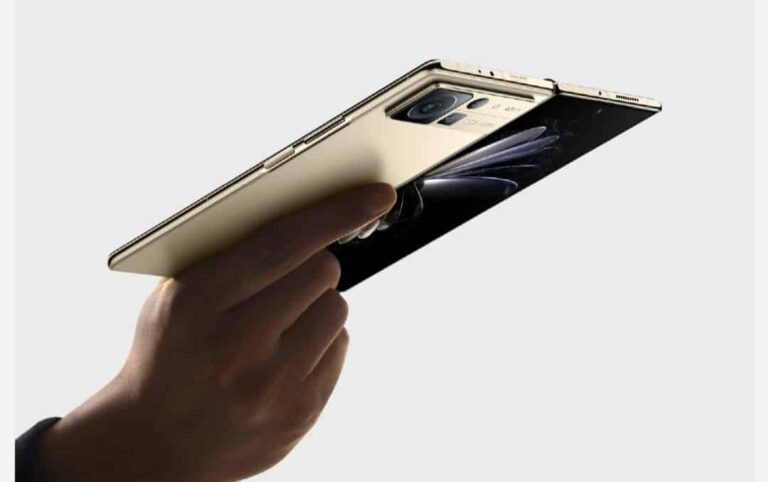
The Xiaomi MIX Fold 3 is coming this year, and a rumor claims that it will offer an under-display camera, along with a number of other improvements. This information comes from Digital Chat Station, a well-known Chinese tipster.
The Xiaomi MIX Fold 3 could offer an under-display camera, and much more
Now, the tipster claims that the phone will be fueled by the Snapdragon 8 Gen 2, as expected. On top of that, an under-display camera is tipped to be included on its main display. Xiaomi is seemingly trying to ditch the hole punch on the main display. The cover display will still have one, though, it seems.
The tipster also mentions that 50W wireless charging will be included here. The Xiaomi MIX Fold 2 does not offer wireless charging at all, so this would be a huge improvement. Let’s just hope that the phone won’t be much thicker because of it. The Xiaomi MIX Fold 2 is one of the thinnest foldables out there.
Xiaomi is also planning to include a proper IP rating here, so the phone should be water resistant. On top of all that, a periscope camera is also tipped to be included on the phone. If previous rumors are accurate, we’re looking at a 5x optical zoom capability here.
The company is also working on an ‘Explorer Edition’ concept foldable smartphone
On top of everything, it is said that Xiaomi is working on an ‘Explorer Edition’ concept folding phone, which will be shown off alongside the Xiaomi MIX Fold 3.
Many of you are probably wondering when will that happen. Well, if we had to guess, we’d say in August. Why? Well, the Xiaomi MIX Fold 2 launched in mid-August, so we’re guessing that Xiaomi will stick to its release cycle.
The Xiaomi MIX Fold and MIX Fold 2 are both exclusive to China. Xiaomi did not show off a global variant of either phone, but we’re hoping that will change with the third-gen product. It would be really nice to see more competition in the foldable smartphone segment outside of China.
Spark +AI is rolling out to users globally as a personal assistant whose job is to compose emails. This product is now joining the flock of generative AI products that are available for usage today. The company behind the launch of this product is known as Spark, and they run a mail service app.
On the Google Play Store, the Spark Mail app has amassed over 1 million downloads, making it a popular choice. It offers users the option to merge their various mail accounts under one roof for easy usage and access to emails. Asides from this, it also offers a ton of other collaborative and security features that makes it stand out from the crowd.
Spark is now taking things a step forward with their mail service as they give it a bit more power. With generative AI technology, this mail app will now be able to compose emails from scratch with little assistance from the user. This feature known as Spark +AI is now rolling out to users around the world, but there are some conditions to be met before one can use this feature.
Here is how the new Spark +AI feature works and what you need to do before you can access it
Firstly, this generative AI tool that helps users of Spark mail write emails is only available to a group of people. These are the premium users of the mail service app, paying the monthly subscription plan. This payment unlocks a ton of productivity features, which the Spark +AI feature will be a part of.
At this moment, the generative AI feature is available for all users thanks to a 7-day free trial exercise. This aims at attracting users to pay the subscription plan after 7 days and enjoy this feature. Spark is already rolling out this feature to its users on Android and iOS devices.
There are three major areas that Spark says this generative AI feature will help users. First is writing better emails faster, next is helping users communicate with confidence, and lastly, it’d help users stay in control of their email. Bringing all of this together will aid users while they compose emails using the Spark mail app.
To “write better emails faster” users can generate a draft by simply writing the information they wish to convey with the email. All the generative AI needs is the main idea of your email, and it will compose an email in seconds. To “communicate with confidence” this generative AI can help users rephrase, proofread, or rewrite certain lines within the email.
Spark assures users that this feature is secure and only aims to assist users in drafting emails. Spark +AI is here to reimagine how you create emails and even reply to emails sent to you. Are you going to give this feature a try to have a taste of generative AI?
Now there are no less than 101 (other) apps found to contain spyware-injecting modules, and just in case that number isn’t enough to send chills down your spine, here’s another: 421 million. That’s how many combined Play Store downloads the titles listed below have managed to collect (at the very least), and theoretically, that’s also how many people are at risk of being spied on.
The culprits
The issue
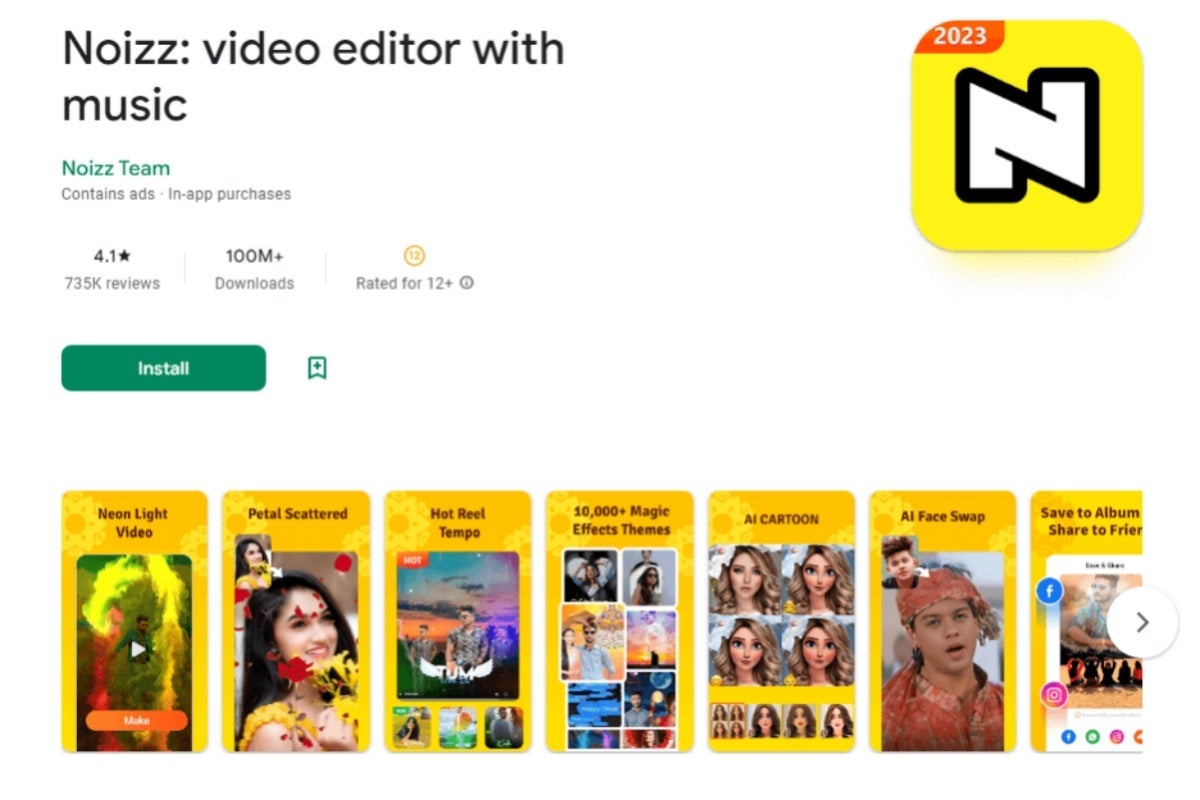
Beyond simply flooding your phone with ads and slowing down its performance or, well, ticking you off while you’re trying to have a little fun with some casual card games or video editing tools, all these apps are currently hiding or have hidden at some point in their existence the malicious ability to collect information on files stored on your devices sans user approval.
This is an incredibly popular app that you should probably delete or avoid downloading from Google Play.
Even worse, the spyware-containing marketing SDK (software development kit) attached to these apps can transfer files from your Android phone to remote servers without your knowledge, as well as gather all kinds of sensitive data related to different sensors that can then be used to track your every move, both on and offline.
The truly scary thing about the above list is that it includes many titles still available for Play Store installation, the first ten of which are hugely popular and not that poorly reviewed.
That’s because a number of apps, like Zapya, have actually gotten rid of their trojan modules with recent updates, suggesting their developers were not aware of the spyware that was added by third-party advertisers and bad actors.
While some titles were pulled by Google upon Dr. Web’s discoveries, others evidently got pardoned, which could mean they are now completely safe to use. But are you willing to take that risk and can you trust a developer that either wanted to spy on you and was caught red-handed or never had that intention yet allowed malware to spread freely through its apps?
More than 470,000 members of dark web hacking site RaidForums have had their data leaked by Exposed, another hacking forum.
Members of the forums would put the various data stolen during data breaches on the site, where it could be purchased by other members for use in other malicious activities, including phishing and social engineering campaigns and even identity theft.
In April 2022, the site shut down after its infrastructure and website were seized during an international law enforcement operation. The site then became BreachForums, a site notorious for launching a cyber attack against Australian healthcare and insurance provider Medibank and releasing and selling the personal and medical information of 9.7 million people stolen during the breach. BreachForums itself shut down in March of this year after its top admin was arrested by the FBI.
In May, a site similar to both RaidForums and BreachForums called Exposed was launched. Exposed currently functions in a similar way to both RaidForums and BreachForums – namely the release, selling and purchase of private data stolen in cyber attacks.
On May 29, one of the site’s admins who goes by the screen name ‘impotent’ made a post to the site saying that they had uploaded a database of RaidForums’ members. According to impotent, the data includes the usernames, hashed passwords, email addresses and registration dates for all members who registered between March 20, 2015, and September 24, 2020. The total number of members that registered in this period is 478,870.
Other data leaked includes relevant information regarding the forum’s software. According to cyber security news site BleepingComputer, the database contains known registration information for several accounts. Multiple Exposed users have also confirmed that their information is in the database.
Kali Linux celebrated its 10th year Anniversary on 13th March 2023 by releasing their Kali Linux version 2023.1.
Following their first quarter release, they have released their 2023.2 version with many more enhancements and new tools.
Users of Kali Linux can now upgrade to the 2023.2 version, which has many new features and enhanced capabilities.
What’s New
The Changelog of Kali Linux has listed the highlights of the new version
New Hyper-V VM image
Xfce audio stack replaced with Pipewire
i3 Desktop overhaul
Updates on Desktop
GNOME 44
Menus and icons updated
New Tools added
New Hyper-V VM Image
Kali has introduced the VM image for Hyper-V. Previously, there were only Virtual box images and Virtual machine images available.
In addition, Kali has launched a readily available VM image for Hyper-V.
This is a GEN2 image for Hyper-V with Enhanced Session mode in which xRDP over Hvsocket is pre-configured.
Users can download the image and run the install-vm.bat script for installing the Hyper-V Kali image.
Hyper-V Credits : Kali
Xfce Audio stack Replaced Pipewire
The audio stack server, which was previously PulseAudio, has now been replaced with Pipewire, which will enhance the sound experience for the users.
Pipewire was introduced in 2017 and is currently being developed can become a better sound server for most Linux Distros.
Xfce (XForms Common Environment) is Kali’s default Desktop environment which has been using PulseAudio for a long time but does not support Pipewire.
However, Kali claimed that there would be no issues relating to the audio stack server replacement. Pipewire will be running under the form pipewire-pulse daemon.
Kali users are recommended to use the sudo apt update && sudo apt full-upgrade command for fully upgrading the Kali linux. If users are facing any issues with sound, Kali has provided solutions for them.
i3 Desktop overhaul
Kali has a tiling window manager called i3. However, this tiling manager is used by advanced Kali users only.
Previously, this i3 was available under the metapackage kali-desktop-i3 along with i3-gaps under the metapackage kali-desktop-i3-gaps.
Kali claimed that they had merged these two metapackages and are under the name kali-desktop-i3, which will provide the complete i3 desktop environment.
This new i3 Desktop will have a new type of lock screen, an On/Off Menu, floating windows, and tile windows (inactive window becomes transparent).
Kali also credited the sole contributor for the i3, Arszilla.
New Lock ScreenOn/Off MenuTile Windows with Inactive as TransparentFloating Windows
Updates on Desktop
Xfce
Kali has introduced a new feature on the Xfce File manager with a new nifty extension called GtkHash.
Users can now compute hashes for files by checking the properties of the file.
There will be a tab called “Checksums” which can be utilized to check the file’s hash value on different hashing algorithms.
This eliminates the use of terminals for computing hashes.
Checksums tab available
GNOME 44
GNOME 44 has been released along with Kali’s latest version, which has new features like,
Enhanced Quick Shell Settings Panel
Quick Disconnect or connect to Bluetooth device
Settings App updated
GNOME’s file chooser with thumbnails
Kali Theme update
Enhanced Shell and Settings
Tiling Assistant Extension
Kali’s tiling experience has improved as they introduced a new extension called “Tiling Assistant”.
This tiling support is collaborative quarter tiling support found in KDE and Xfce environments.
The new tiling assistant introduces window snapping, multi-monitor support, customizable keyboard shortcuts, and personalized settings.
Slim (toolkit) – Minify your container image instead of changing it
Syft – Software Bill generating tool from container images and filesystems
Terraform – Improve, change and create infrastructure
Tetragon – eBPF (Extended Berkeley Packet Filter) based Security and Runtime enforcement
TheHive – Free and Open-Source Security Incident Response Platform
Trivy – Tool for finding vulnerabilities, secrets, misconfigurations, SBOM in container, Kubernetes, repositories, cloud and much more.
Wsgidav – WebDAV server-based WSGI (Web Server Gateway Interface), which is generic and extendable
In addition, there are several new updates on the latest version of Kali. For more information, do visit the Kali 2023.2 release page.
How to Get Kali Linux 2023.2
If you are a new user, you can download it from here. If you already have an existing Kali Linux installation, you can do a quick update using the commands.
The Pixel 7a is Google’s latest smartphone, and also its new mid-range offering. The device is actually somewhat compact, at least compared to most of its competitors. In this article, we’ll compare it to one of Apple’s handsets, actually. We’ll compare the Google Pixel 7a vs Apple iPhone 14. Granted, the iPhone 14 is considerably more expensive, so keep that in mind as we go through everything.
Both of these phones are rather compact. The iPhone 14 more so than the Pixel 7a, but they’re way more compact than the vast majority of their competitors. They’re also quite different, in so many ways. That should definitely make this comparison interesting. We’ll kick things off with their specifications, and then move to a number of other categories. So, let’s get started, shall we?
Design-wise, these two phones are vastly different. The Pixel 7a is made out of metal and plastic. Its frame is made out of metal, but it has a plastic backplate. The phone is squarish in design, and has a flat display with a centered display camera hole. Its back side curves slightly into the frame, on the sides, while there is a camera visor included on the back. That camera visor goes from the right side all the way to the left, and it’s covered by metal.
The iPhone 14 is made out of metal and glass. Its corners are way more curved than the ones on the Pixel 7a. The sides, however, are entirely flat on the iPhone 14, and that goes for all of its sides, basically. The phone has a flat display, with a display notch at the top. There are two cameras included on the back of the device, and the backplate is also entirely flat. Those two cameras sit in the top-left corner, inside the same camera island.
Having said that, the Pixel 7a is larger overall, despite the fact they have the same display sizes. The phone is considerably taller, and slightly wider than the iPhone 14. It’s also thicker than Apple’s offering. On top of everything, the Pixel 7a also weighs 21.5 grams more than the iPhone 14. They both feel really nice in the hand, albeit different. Neither phone feels cheap, not at all.
Google Pixel 7a vs Apple iPhone 14: Display
The Pixel 7a features a 6.1-inch fullHD+ (2400 x 1080) OLED display. That display is flat, and it offers a 90Hz refresh rate. It also has support for HDR content, and we’re looking at a 20:9 aspect ratio here. The display is protected by the Gorilla Glass 3, which is not exactly the latest offering from Corning. More on that later.
The iPhone 14 sports a 6.1-inch 2532 x 1170 Super Retina XDR OLED display. That display is flat, and it doesn’t offer a high refresh rate. It does support HDR10 content, and also comes with Dolby Vision support. This panel has a 19.5:9 aspect ratio, and goes up to 1,200 nits of peak brightness. The iPhone 14’s display is protected by the Ceramic Shield glass.
Now, both of these displays are good. They are vivid, have good viewing angles, and offer deep blacks. They also offer similar brightness, which is nowhere near the best flagships out there, but it does the trick. Neither display is dim nor anything of the sort. Touch response is good, by the way, on both of them. You will notice a higher refresh rate of the Pixel 7a display, though, while the iPhone 14 does offer better display protection. The Gorilla Glass 3 has a tendency to pick up microscratches, so using a screen protector may be a good idea.
Google Pixel 7a vs Apple iPhone 14: Performance
The Pixel 7a is fueled by Google’s flagship SoC, the Tensor G3. The Tensor G3 will be coming later this year, but the Tensor G2 is the best Google has to offer now. In addition to that, the company packed in 8GB of LPDDR5 RAM here, and UFS 3.1 flash storage. The iPhone 14 is fueled by the Apple A15 Bionic SoC, while it also includes 6GB of RAM and NVMe storage.
That being said, how do they compare performance-wise? Well, in regular, everyday tasks, they both do a great job. Both are quite fluid, and they do the job with ease. We did not notice any lag in that regard or anything of the sort. When it comes to gaming, the iPhone 14 is the better choice. Its SoC is more focused on gaming than the Tensor G2, even though you can play games with the Pixel 7a. Don’t expect the most demanding games to be running at full capacity, though. Still, you can play anything with the device.
Overall, the performance on both smartphones is really good, and chances are it will stay that way for quite some time.
Google Pixel 7a vs Apple iPhone 14: Battery
The Pixel 7a includes a 4,385mAh battery, while the iPhone 14 comes with a 3,279mAh battery. iPhones need less battery capacity than Android smartphones, so don’t let this difference fool you. In fact, the battery life between these two phones is comparable, that’s for sure. The Pixel 7a had rather iffy battery life at first, but things changed after a couple of weeks. It’s quite reliable now.
Having said that, both smartphones can provide above 7 hours of screen-on-time, at least that was the case for us. They even went over the 8-hour screen-on-time mark at times. Do note that we don’t really play games outside of testing, and our usage will differ from your usage. So, your mileage may vary, as you’ll have different signal strengths, apps installed, and you’ll also use your phone in different ways. Do note that we’re also connected to WiFi most of the time during the day.
When charging is concerned, the Pixel 7a supports 18W wired, and 7.5W wireless charging. The iPhone 14 offers support for 20W wired, 15W wireless MagSafe, and 7.5W wireless Qi charging. Neither phone offers particularly fast charging, and neither of them comes with a charger included in the box.
Google Pixel 7a vs Apple iPhone 14: Cameras
The Pixel 7a includes a 64-megapixel main camera, and a 13-megapixel ultrawide unit (120-degree FoV). The iPhone 14, on the other hand, has a 12-megapixel main camera, and a 12-megapixel ultrawide unit (120-degree FoV). Both of these smartphones do take really impressive images, but they do provide different results.
The iPhone 14 leans more towards true-to-life shots, while the Pixel 7a images do tend to look more processed, but in a good way. Google’s image processing is outstanding. The Pixel 7a provides more contrasty images, and it also does a better job in demanding HDR situations. The iPhone 14 tends to overexpose shots at times, though that is rarely the case. Both provide sharp and detailed images, that are also well-balanced.
In low light, the Pixel 7a has a tendency to bring in more light into shots, and makes them look great, but a bit unrealistic. The iPhone 14 likes to keep things a bit darker, but more true-to-life in most shots. Their ultrawide cameras are really good, and do a good job of keeping up with the color science of the main camera. The video recording is noticeably better on the iPhone 14, it’s less shaky, and there’s also less warping involved.
Audio
Each of these two phones has a set of stereo speakers included. Those speakers are good on both phones, but nothing to write home about. They’ll do the job for the vast majority of users, though, without a problem.
There is no audio jack on either of the two devices. You’ll need to use their charging ports in order to achieve a wired audio connection. If you prefer wireless audio, both smartphones are equipped with Bluetooth 5.3.
During the Technology Alliance’s annual State of Technology luncheon, the T-Mobile CEO, Mike Sievert, made a remarkable comment about work-from-home culture. This comment got a massive reaction from the crowd of over 700 individuals from various sectors that were present at this event. During his speech, he gave strong and clear advice to tech industry leaders, telling them to “get back to the offices.”
Well, to a certain degree, Mike Sievert is in a great position to address the actions of tech industry leaders in his region. Not only is he the CEO of T-Mobile, but he is also a member of the Challenge Seattle CEO group. This group pulls together CEOs of over 22 of Seattle’s largest employers with a mandate to ensure the region thrives in various business sectors.
But why will a man like Mike Sievert call out tech industry leaders in a bid to get them back to the office? Also, by saying tech industry leaders, is he referring to the CEOs of other tech companies? What exactly is there to benefit from bringing these tech industry leaders back to the office?
T-Mobile CEO believes tech industry leaders should ditch work-from-home
It is no longer news that the pandemic changed how lots of tech companies carried out their business. But after the pandemic and vaccines were readily available, there came the need for workers to return to the office. Ever since the pandemic, a lot of companies have opened their doors to workers, including T-Mobile and other Seattle firms.
Regardless of this, Mike Sievert notes that some workers are shying away from returning to the office. These groups of workers have gotten so used to the work-from-home style of things. From Mike Sievert’s point of view, their absence from the office is telling on the workforce, hence the need for them to return to the office.
Sievert says those that are eager to return to the office are the younger generation of workers. The older and more experienced generation of workers with years of experience is shying away from returning to the office. So by saying tech industry leaders, Mike Sievert points to the older generation of workers.
Without these in the office, the younger generation will struggle to learn how to perfectly fit into their roles. This is not to mean that the younger generation is untrained, but they need mentorship. The ones in the best position to fit in as mentors to these younger workers are the older generation which has tons of experience.
Also, there is a need for more workers on the ground for security purposes. Mike Sievert highlights this point as well during his speech, connecting the dots between crime and absence from work. For these reasons, the T-Mobile CEO, Mike Sievert, wishes that all workers get back to the office.
The exposed database contained a staggering 2,808,697 records, amounting to a massive 1 Terabyte in size.
On May 29th, 2023, security researcher Jeremiah Fowler made a concerning discovery: a non-password-protected database belonging to the e-commerce company SimpleTire, which could be accessed by anyone with an internet connection.
Despite Fowler’s efforts to responsibly disclose the issue, he received no response from the company. Shockingly, the database remained accessible for over three weeks after its initial discovery, raising serious concerns about the company’s data security practices.
It is worth noting that Fowler is the same cybersecurity researcher who recently reported on how SuperVPN, a free VPN service, leaked a whopping 360 million user records on the internet.
SimpleTire, founded in 2010, offers customers a convenient online platform for purchasing tires, aiming to streamline the tire buying process with a wide range of options at competitive prices. However, like many online businesses, it fell victim to a significant data breach.
According to a report shared by Flower with Hackread.com, the exposed database contained a staggering 2,808,697 records, amounting to a massive 1 Terabyte in size. Among the compromised records were 1,189,151 order confirmation documents in PDF format, which included highly sensitive personally identifiable information (PII) such as customers’ names, phone numbers, physical addresses, and partial credit card numbers with expiration dates.
Phone number
Customer’s name
Physical address
Partial credit card number and expiration dates
Furthermore, the breach encompassed references to installers’ information, return requests, wholesale data, and sales and promotion images, indicating a comprehensive collection of valuable and confidential data.
The exact duration of the database’s exposure remains unknown, as does whether any malicious actors accessed it during that time. In light of this breach, SimpleTire customers are strongly advised not to disclose their credit card details over the phone to anyone claiming to be an employee of the company.
Worryingly, even without resorting to social engineering tactics, potential threat actors who gained access to the compromised database could cross-reference the leaked credit card details with the vast troves of stolen credit card information available online. This raises concerns about the possibility of financial fraud and unauthorized transactions.
The screenshot shows the type of data that was exposed
Fowler highlighted previous high-profile card breaches, including those of The Home Depot, Neiman Marcus, and Target, where millions of credit card numbers and personal details were compromised. He also mentioned the alarming release of over 2.1 million stolen credit card details by the dark web carding marketplace, BidenCash, earlier this year.
This data breach at SimpleTire serves as a stark reminder of the critical importance for businesses to prioritize robust security measures, safeguard customer data, and promptly respond to security vulnerabilities.
Barracuda Networks issued a patch for a zero-day vulnerability in its Email Security Gateway that was actively being exploited
On May 20, Barracuda Networks issued a patch for a zero day vulnerability in its Email Security Gateway (ESG) appliance. The vulnerability existed in a module which initially screens the attachments of incoming emails, and was discovered on May 19.
Barracuda’s investigation showed that the vulnerability resulted in unauthorized access to a subset of email gateway appliances. A remote unauthenticated attacker could send a specially crafted archive to the appliance and execute arbitrary Perl commands on the target system. The affected versions of ESG are 5.1.3 – 9.2.
Consequently a security patch to eliminate the vulnerability was applied to all ESG appliances worldwide on Saturday, May 20. After further investigation a second patch was sent out on May 21, 2023.
The Common Vulnerabilities and Exposures (CVE) database lists publicly disclosed computer security flaws. The CVE patched in these updates is:
CVE-2023-2868: CVSS score 9.4 out of 10. A remote command injection vulnerability exists in the Barracuda Email Security Gateway (appliance form factor only). The vulnerability arises out of a failure to comprehensively sanitize the processing of .tar file (tape archives). The vulnerability stems from incomplete input validation of a user-supplied .tar file as it pertains to the names of the files contained within the archive. As a consequence, a remote attacker could specifically format these file names in a particular manner that will result in remotely executing a system command through Perl’s qx operator with the privileges of the Email Security Gateway product. This issue was fixed as part of BNSF-36456 patch. This patch was automatically applied to all customer appliances.
Barracuda says users whose appliances are believed to be impacted have been notified via the ESG user interface about the actions they need to take. It says it has also reached out to these specific customers. Updates will be posted to the product status page.
The Cybersecurity & Infrastructure Security Agency (CISA) has added the vulnerability to its Known Exploited Vulnerabilities Catalog, based on evidence of active exploitation. The due date for FCEB agencies for this vulnerability is June 16, 2023. CISA also warned that these types of vulnerabilities are frequent attack vectors for malicious cyberactors and pose a significant risks to the federal enterprise.
We don’t just report on vulnerabilities—we identify them, and prioritize action.