Google’s Project Starline simply aims to take video conferencing to an entirely new level. It does this in a way no other brand has, by bringing real-time 3D effects to the subject in the display. By doing this, the viewer will be able to feel as though the person they are talking with is sitting right in front of them.
Google first gave a look into this vision at their 2021 I/O event with the prototype of the technology. This prototype came with a rather complex design and a lot of cameras, microphones, and sensors to track the person in front of the display. Together, these items create a realistic 3D rendering of the person and capture the sounds they make and their movement impressively.
But, at the 2023 Google I/O event, the company showed off some refinements to Project Starline. These refinements simplify the technology and improve in certain areas to deliver a better real-time 3D experience. Folks like MKBHD and Abner Li from 9to5Google were able to use the new Project Starline, and they had a few things to share.
Major improvements coming to Google’s Project Starline and everything you need to know
With the new Project Starline, Google simplifies some things, hence making it smaller than the prototype. According to Abner Li, “The new Project Starline prototype is more like a digital whiteboard.” There is also a depth guard in the front of the screen and three cameras at the top, left, and right sides of the display.
These cameras improve the depth of images captured to give the viewer a more immersive experience. Well, it’s not all about cameras and a large whiteboard display, as this display also puts artificial intelligence to good use. Yes, artificial intelligence is put to use in the creation of a depth map, making the video taken seem realistic.
Both MKBHD and Abner Li praised the image depth from the camera technology on Google’s Project Starline. However, both parties also noted that the 3D effect and the depth came with some limitations. While being able to look at objects in the display from various angles, MKBHD made it known that the edges can get choppy.
Despite this limitation, both MKBHD and Abner Li gave thumbs up to Google for the improvements to the new Project Starline. But who is this technology meant for and how can it be put to use? Google’s Project Starline targets enterprises that want a more immersive video-calling experience between them and their clients or partners.
The new Project Starline is smaller and now more usable to a certain extent, but it still needs some refinement. Some enterprises are already putting this product to use, and it might gain popularity in the coming years. To get a visual idea of Google’s Project Starline you can check out MKBHD’s demo.
The cybersecurity researchers at ESET recently made a significant discovery, a previously unidentified remote access trojan (RAT) lurking within an Android screen recording app, available for download on the Google Play Store and already amassed tens of thousands of installations.
The ‘iRecorder – Screen Recorder’ app, initially introduced in September 2021, was potentially compromised through a malicious update in August 2022, utilizing its name to deceive users by requesting audio recording and file access permissions under the guise of a legitimate screen recording application.
While apart from this, the app has achieved more than 50,000 installations on the Google Play Store before its removal, raising the concern for users of exposure to malware infection.
After being notified, iRecorder was removed from the Google Play store due to its malicious behavior, but it can still be obtained from unofficial Android markets.
In addition to offering other applications on Google Play, the developer of iRecorder ensures that their apps are free from any malicious code or harmful elements.
Android Malware on Google Play
The malware known as AhRat, derived from the open-source Android RATAhMyth, has extensive capabilities encompassing device tracking and more.
Here below, we have mentioned all the capabilities it offers to its operators:-
Location
Stealing call logs
Contacts
Text messages
Sending SMS messages
Taking pictures
Recording background audio
ESET discovered that the malicious screen recording app utilized only a portion of the RAT’s functions, focusing on capturing ambient sound and stealing files of certain extensions, suggesting potential involvement in espionage.
Moreover, ESET previously exposed a case in 2019 where AhMyth-based Android malware successfully evaded Google Play’s security checks twice by disguising itself as a radio streaming app, highlighting a recurring issue with AhMyth infiltration on the platform.
AhRat initiates communication with the C&C server upon installation by sharing essential device details while simultaneously receiving encryption keys and a configuration file in encrypted form.
Following the initial communication, AhRat establishes a regular connection with the C&C server, sending periodic pings every 15 minutes to request an updated configuration file.
AhRat is designed to execute 18 commands based on the instructions received in the configuration file from the C&C server. But, the RAT can execute the six commands only exclusively that we have mentioned below:-
RECORD_MIC
FILE_LIST
UPLOAD_FILE_AFTER_DATE
LIMIT_UPLOAD_FILE_SIZE
UPLOAD_FILE_TYPE
UPLOAD_FILE_FOLDER
However, Android 11 and subsequent versions have already incorporated proactive measures such as App hibernation to safeguard against such malicious activities.
The hibernation feature resets runtime permissions of dormant apps, preventing their intended malicious activities, and the subsequent removal of the malicious app from Google Play reinforces the importance of multi-layered protection.
Europol and Dutch authorities have taken down one of the largest illegal IPTV (Internet Protocol Television) services catering to over one million users throughout Europe.
Amsterdam, May 24, 2023 – In a significant blow to the world of illegal streaming, Europol has joined forces with the Dutch Fiscal Information and Investigation Service (FIOD) to dismantle a vast illegal IPTV (Internet Protocol Television) service catering to over one million users throughout Europe.
On May 23rd, 2023, Eoropol revealed in a press release that a series of meticulously planned raids were executed across the Netherlands as part of a sweeping crackdown on illicit streaming operations. FIOD officers conducted thorough searches at multiple locations across the country, unearthing evidence that could potentially bring down this illegal enterprise.
The operation resulted in the apprehension of several individuals suspected of playing a pivotal role in facilitating the unlawful streaming of premium content. These individuals are believed to have enabled subscribers to gain access to an extensive array of over 10,000 live TV channels, accompanied by an extensive library boasting 15,000 films and TV shows.
Europol, through its European Financial and Economic Crime Centre, provided analytical support to the investigation, aiding in the identification of key targets and their illicit activities across Europe.
According to local Dutch media, FIOD also raided a data center (Globe data center) in Den Helder City for allegedly providing services to the now-seized IPTV infrastructure. A look at the Globe data center’s website shows that it has been offline and unreachable since yesterday.
A Google image that was uploaded by Global Data Center of its infrastructure back in 2021.
Illegal streaming has become a rampant issue in recent years, plaguing the entertainment industry and causing significant financial losses. These criminal networks not only undermine legitimate businesses but also deprive content creators and copyright holders of their rightful earnings.
Europol’s ongoing commitment to combating this form of organized crime highlights the need for international cooperation and coordinated efforts to address the complex challenges posed by illicit IPTV services. By dismantling this major network, Europol and the FIOD have struck a resounding blow against those profiting from piracy and protecting the interests of lawful content providers.
As investigations continue, authorities are confident that this operation will send a strong message to criminals involved in illegal streaming activities across Europe. The collaboration between Europol and national law enforcement agencies serves as a clear warning that the battle against illegal IPTV services is intensifying, leaving no safe haven for those seeking to exploit the entertainment industry.
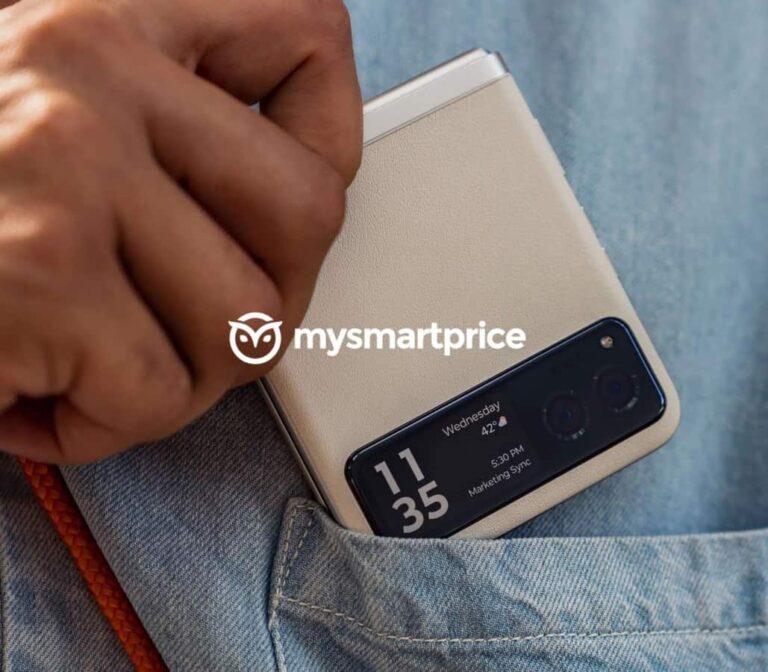
One of the most prolific tipsters in the industry has just confirmed the name of Motorola’s upcoming foldable, the Motorola Razr 40. Do note that we’re talking about the vanilla model here, not the ‘Ultra’ variant.
The Motorola Razr 40 name has been confirmed
Evan Blass went to Twitter to share the ‘Razr 40’ logo, which you can see below. That confirms the name of the device, as Motorola opted to ditch the ‘Lite’ name. It also comes just a few days after the same source confirmed the name of the more powerful model.
The Motorola Razr 40 Ultra will be the name of the more powerful version, but not in the US. Evan Blass confirmed that it will be called the Motorola Razr+ in the US. That’s very odd, especially if the Motorola Razr 40 ends up launching in the US too.
In any case, the Motorola Razr 40 will essentially be a mid-range variant of the ‘Ultra’ model. It will have a much smaller cover display, and thus lose one of the main appeals of its more powerful sibling.
The phone’s CAD-based renders surfaced not long ago
The Motorola Razr 40 did appear in CAD-based renders not long ago, in case you’d like to check out its design. Its display will be truly small, and sit next to the dual camera setup on the back.
We don’t know much about the phone’s specs at this point. We do know that it will be more affordable than the Razr 40 Ultra, and thus have inferior specs. Considering that the ‘Ultra’ model will include the Snapdragon 8+ Gen 1 SoC, the Razr 40 will likely use a Snapdragon 7 series chip.
No info leaked on that, but the Snapdragon 7 Gen 2 is a possibility. On the flip side, Motorola may opt for a MediaTek processor instead, we just don’t know which one. We’ll have to wait and see.
Both of these smartphones will become official on June 1. The company has officially confirmed that the global launch event will take place on that date.
Verizon has issued warnings about fraudulent text messages that try to scam you, also called smishing attacks. The nation’s largest wireless provider has urged its customers to pay close attention to messages coming from unknown sources. It has also shared some red flags to watch out for whenever you receive suspicious messages.
Verizon shares tips to identify a potential smishing attack
Smishing or SMS-based phishing is one of the most common forms of fraud. Similar to email phishing, where scammers send emails that look like coming from a reputed organization to trick unsuspecting recipients into giving away sensitive information such as their full name, address, social security number, and banking details, smishing attacks use SMS text messages. These attacks can only victimize people who respond. If you don’t respond to such emails or text messages, attackers cannot harm you. But how to identify a potential smishing attack? Here are some tips from Verizon.
These messages are usually random with no relevance to you or anything you have done recently. Attackers may say that “you’ve won a contest, a prize, free money, or purport that you have an issue with a package”. If you haven’t participated in any contest or haven’t placed an online order recently, it’s certainly a smishing text. Even if you have undertaken any such activity, do not respond in a hurry. Carefully check the source of the message and verify if it’s legitimate. Attackers try to play with your mind by asking you to take immediate action. If a message seems urgent, it’s likely a scam.
Scammers also often impersonate your bank or a government agency to trick you to act fast. They may say that your credit card has been blocked or charged some amount recently, and ask you to provide further information to unblock or reverse the transaction. Always remember that your bank will never ask for sensitive information such as your banking password or PIN. Also, check for any grammatical or spelling errors in such messages. “Real text messages from legitimate businesses will use proper grammar, punctuation, and spelling,” Verizon noted (via).
Look for suspicious links and email addresses
More often than not, phishing messages contain email addresses or links that redirect you to websites run by attackers. These emails and links usually look weird with long text or random numbers. Even if they look relevant to your bank or a government agency, they contain some red flags. A quick search on the internet would give you the official website of your bank. “If the text message contains a suspicious-looking link, it is a text scam,” Verizon said. “Do not click on the link or follow prompts from these fake text messages.”
Some attackers also pretend to be someone you know, like a friend or colleague, and say they are in urgent need of some money, adding that it’s their new number. If you receive such messages, first call the person on the number that’s already saved in your phonebook. You’ll immediately know the truth and can act accordingly. Always make sure to avoid giving away money or sensitive information about yourself to people you don’t know. If you have been scammed, immediately contact your bank or credit card company to stop the transaction.
If you’re using Facebook, you probably stumbled upon someone who started to annoy you. Well, if you’re done being annoyed, and you want to take care of the situation, we have good news. We’ll show you how to block or unfriend that person on Facebook, or perhaps both.
If someone annoys you on Facebook, you can unfriend, unfollow, or block them
Now, if the person in question is your ‘friend’. In other words, if he / she is on your friends list, you can choose to unfriend that person, or at the very least unfollow. If you choose the unfriend option, he / she will be removed from your list, and will be demoted to the status of any stranger you know on Facebook.
If, on the other hand, you choose to unfollow that person, their feed won’t be popping up for your any longer. That person will stay on your friends list, though, and will be able to see what you post, and your activity.
The third option here is the ‘block’ option, and it’s the most aggressive of them all. That is the best idea if you don’t want to have any contact with someone. It is the last line of defense, if you will.
That being said, let’s see how you can do all this, very easily. We’ll start with a mobile tutorial, but we’ll also show you how to do it on a desktop.
How to block or unfriend someone on Facebook (mobile app)
The first thing you’ll need to do is open your Facebook app, of course. From there, either go to your profile, and manually find one of your friends, or use the search bar (magnifier icon in the top-right corner, image below) to find that person.
Once you locate the person, open their profile. From there, you can either select the ‘Friends’ option, or tap the three dots on the right.
If you tap the ‘Friends’ option, you’ll be able to ‘Unfollow’ or ‘Unfriend’ that person. Simply choose one of the two options that are shown to you in the drop-down menu.
Alternatively, if you chose the three dots option, from there you can block the person. Simply tap the ‘Block’ option, as shown in the image below.
How to block or unfriend someone on Facebook (desktop)
The procedure is pretty much the same on desktops, once you open the Facebook website. It does look a bit different, though, of course. From the main page, use the search bar in the top-left corner to find the person you’d like to unfriend / unfollow / block.
Once you do, you’ll once again see the ‘Friends’ and three dots options, though they’re on the right side now. The procedure is the same as on mobile. If you tap the ‘Friends’ option, you’ll be able to unfriend or unfollow a person, if you choose the three dots option, you’ll be able to block that person.
Tapping the ‘Friends’ option will open a drop-down menu with ‘Unfollow’ and ‘Unfriend’ options, as shown below.
Clicking the three dots icon will open a drop-down menu with a number of options, and the bottom one is the ‘Block’ option. Click that if you’d like to block that particular person. That’s basically it.
With almost everything online, adhering to cyber laws is important since it helps safeguard your and other people’s online presence. However, hackers exploit vulnerabilities and carry out cyberattacks that damage the online property of individuals and organizations.
Therefore, having cyber laws is crucial so that order can be maintained and those responsible for data breaches of any kind should be punished. Therefore, you need to know more about what kind of cyber laws exist, how they affect the online world, and how can you benefit from them.
Thankfully, we’re here to illuminate cyber laws and give insights into some important aspects related to them. So, let’s get started:
What are Cyber Laws?
In simple terms, these are internet laws that regulate the digital distribution of information. These cover industries including e-commerce, software, information security, etc. In addition, these rules apply to a number of processes including information sharing, internet usage, freedom of speech, privacy, etc.
Even internet providers have to adhere to these regulations due to security parameters. In case of any kind of breach at your end, you have to contact your provider to notify them. However, ISPs have to follow several protocols such as prevention from widespread cyberattacks, ensuring software and hardware security of their infrastructure, taking actions for effective defense against cyberattacks, etc.
We can quote a number of ISPs that are reliable in the matter of offering robust security measures in the US such as Xfinity. You can rely on Xfinity customer service for its high-end security practices and rest assured of having a secure internet connection.
Categories of Cybercrime
With the understanding of cyber laws, it’s important to understand what cybercrimes are and their types. In simple words, any online activity going against the prescribed cyber laws is regarded as cybercrime. Within the context, here are the categories of cybercrime:
Crimes against People
Online activities including cyber harassment, distribution of child pornography, spoofing, identity theft, etc. are regarded as cybercrime against the people. Falling in any of these or related categories will result in legal action against the accused. This can further be categorized into the following:
Copyright & Patents
Copyright protection is one of the primary pillars of cyber laws. It protects individual rights over products, information, etc. present on the internet in any form. Copyright infringement is a serious crime and can land a person a heavy penalty if proven guilty.
In addition, patents are proof that someone owns an invention. Having patents in your name is a huge achievement and infringing a patent can actually initiate legal action against the accused.
Trade Secrets
Trade secrets are devices or methods a company uses to manufacture anything. In the online world, a company can use trade secrets to protect its IP addresses, infringing them can result in legal activity.
Domain Disputes
In simple words, if a domain dispute is opened, it’s to determine who owns the said web address. These mostly open because a person using it may not be the owner and the real owner can benefit from it if the site becomes a popular domain in the future.
Contracts
Most people don’t know but when you’re clicking on a checkbox that says ‘I Agree’ that means you’re entering into a contract. Anything occurring later cannot be challenged if it abides by the conditions mentioned in the contract.
Privacy
From individuals to businesses, privacy laws are established to protect their online information. That is why it’s one of the main focused laws since privacy violation occurs in almost any case of a cyberattack.
Defamation
Previously, defamation did not apply to the online world. However, with the rise in the use of the internet, allowing people to easily share information, cases of cyberbullying and defamation have widely increased. This has led to defamation protection as one of the primary cyber laws.
Employment
Employee/ employer contracts are also linked to cyber laws now. From data breach to privacy exploitation, any condition can occur which can require electronic and physical records from the parties involved.
Crimes against Property
Cybercrimes can also occur against properties including server attacks, hacking, malware attack, copyright infringement, IPR violations, and other forms. Any activity that comes under these or related terms will result in legal action.
Crimes against Government
Cybercrimes against government properties and channels including but not limited to hacking into government databases, stealing/ leaking/ selling confidential information, cyberwarfare, cyberterrorism, etc. are punishable offenses and will lead to strict legal activity against the accused.
Registered Cybercrimes
Since we’ve discussed the categories of cybercrimes, it’s time to check out some of the laws that are applicable in this domain:
“Sec. 65, Tampering with Computer Source Documents”
“Sec. 67, Publishing Obscene Information”
“Sec. 66, Hacking Computer Systems and Data Alteration”
“Sec. 70, Unauthorized Access of Protected Systems”
“Sec. 72, Breach of Confidentiality and Privacy”
“Sec. 73, Publishing False Digital Signature Certificates”
“Sending Threatening Messages by Email, Indian Penal Code (IPC) Sec. 503”
“Bogus Websites & Cyber Fraud, Indian Penal Code (IPC) Sec. 420”
“Online Sale of Arms Under Arms Act, 1959”
“Online Sale of Drugs Under Narcotic Drugs and Psychotropic Substances Act, 1985”
These are only some of the many cybercrime regulations that help maintain the integrity and safety of the online world.
Closing Thoughts
Well, this is just the tip of the iceberg but it’s enough to show the span of cyber laws on the online world. Adhering to these laws is important to protect your online presence as well as avoid any legal activity occurring against you.
About a week ago, a Korean publication, Chosun, said that Samsung will host its second Unpacked event of the year on July 26, during which it will announce its new foldables. Well, another Korean source now said the same thing, SBS Biz.
Samsung looks set to announce its new foldables on July 26
This source claims that the event will be hosted in Seoul as well, as did the first source. SBS Biz does note that the event will likely be hosted at COEX, Gangnam-gu. It is said that the preparations are already on the way.
Samsung tends to host these events in cities outside of its homeland, at least it did in the past. This time around, the company opted for Seoul, it would seem, although several other cities outside of Korea were considered.
During this event, Samsung will have plenty to say. Not only will it announce its new foldables, the Galaxy Z Fold 5 and Galaxy Z Flip 5, but the Galaxy Watch 6 is also expected. The same goes for the company’s new tablets.
July 26 is not yet set in stone as the launch date, it won’t be until Samsung officially confirms it. That could happen in the near future, as we’re about a month away from that date.
This event comes earlier than expected
Samsung usually hosts its second Unpacked event of the year in August, but this year the company decided to change things up, it seems. The Pixel Fold launch could be at least one of the reasons why.
We already have plenty of info on the Galaxy Z Fold 5 and Galaxy Z Flip 5. One of the main changes for the Flip 5 will be its cover display. It will be a lot larger this time around. Both smartphones are expected to include a better hinge, and fold without a gap.
Both devices will be quite powerful, as expected, and both will launch globally, of course. If you’d like to know more, check out our Galaxy Z Fold 5 and Galaxy Z Flip 5 previews.
Football, or soccer, is the most popular sport in the world, and it is no different in Brazil. Fans of Brazilian football are passionate about watching their favorite teams and players in action. However, traditional pay-per-view options can be expensive and inconvenient. This is where Futemax.kim’s live football streaming service comes in as a more affordable and convenient alternative.
The Rise of Futemax.kim
Futemax.kim is an online platform that provides live streaming of football matches. Having all the best features from its Asian version – Xoilac TV. It has been gaining popularity in Brazil as a cheaper and more accessible alternative to traditional pay-per-view options. The platform offers live streaming of Brazilian football league matches, as well as international tournaments like the UEFA Champions League and the FIFA World Cup.
Benefits of Using Futemax.kim
Affordability
One of the main benefits of using Futemax.kim is its affordability. Unlike traditional pay-per-view options, which can cost a significant amount of money per match, Futemax.kim offers its services for free. Users can access live streams of matches without having to pay anything.
Convenience
Another advantage of using Futemax.kim is its convenience. Users can access the platform from any device with an internet connection, whether it be a laptop, smartphone, or tablet. This means that fans can watch their favorite teams and players from anywhere, at any time, without having to worry about missing a match due to geographical or scheduling limitations.
Quality
Futemax.kim’s live streaming service also boasts high-quality video and audio, ensuring that fans can enjoy a seamless viewing experience. The platform uses advanced streaming technology to deliver smooth and uninterrupted streams, even during peak hours.
Is Futemax.kim Legal?
One of the main concerns surrounding live streaming services is their legality. However, it is important to note that Futemax.kim operates within the bounds of the law. The platform does not host any content itself but instead provides links to other websites that offer live streams of matches. This means that users are not directly accessing illegal content.
Conclusion
Futemax.kim’s and Multicanais live football streaming service is an affordable and convenient alternative to traditional pay-per-view options. Its popularity in Brazil is a testament to the benefits it offers to fans of football. By providing high-quality live streams of matches for free, Futemax.kim has revolutionized the way Brazilian football fans watch their favorite teams and players in action.
FAQs
Is Futemax.kim’s live football streaming service legal?
1. Yes, Futemax.kim operates within the bounds of the law by not hosting any content itself but providing links to other websites that offer live streams of matches.
Can I access Futemax.kim’s live streams from any device?
2. Yes, you can access the platform from any device with an internet connection, including laptops, smartphones, and tablets.
How does Futemax.kim ensure the quality of its live streams?
3. The platform uses advanced streaming technology to deliver smooth and uninterrupted streams, even during peak hours.
Are there any hidden costs associated with using Futemax.kim’s services?
4. No, Futemax.kim’s live football streaming service is completely free.
What football matches can I watch on Futemax.kim?
5. Futemax.kim offers live streams of Brazilian football league matches, as well as international tournaments like the UEFA Champions League and the FIFA World Cup.
Sony introduced a new flagship recently, and we’re here to compare it with the best Google has to offer at the moment. In this article, we’ll compare the Google Pixel 7 Pro vs Sony Xperia 1 V. Both of these phones are quite powerful, and each of them has its advantages, but they’re considerably different. That doesn’t go just for their design, even though they do look different, but their internals as well.
We’ll first list their specifications, and will then move to compare them across a number of categories. We’ll first check out their designs, as they are truly different. You’ll get a completely different experience handling these two phones. Following that, we’ll move to their displays, performance, battery life, cameras, and audio performance. So, let’s get started, shall we?
Both of these phones are made out of metal and glass, but they feel completely different in the hand. The Pixel 7 Pro has a slightly curved backplate, towards the sides, and a curved display. Its frame is quite thin on the side, as it is on many flagships these days. The Xperia 1 V takes a whole different approach. Its sides are flat, but they have vertical lines on them, carved into the frame. That goes for all of its sides. There is glass on the back of the phone, but with a dotted pattern on it. There are tons of dots back there.
The Xperia 1 V is far easier to hold, in other words, it’s far less slippery than the Pixel 7 Pro due to its design. It is also considerably less wide, and slightly taller than the Pixel 7 Pro. It’s a bit thinner, and considerably lighter. The Xperia 1 V weighs 187 grams, compared to 212 grams of the Pixel 7 Pro. The Xperia 1 V’s backplate is flat, by the way, as is its display. Speaking of which, the Pixel 7 Pro has a centered display camera hole, while the Xperia 1 V doesn’t have it at all. It has slightly thicker bezels on top and bottom, but you do get a clear canvas to work with.
The Pixel 7 Pro has a camera visor on the back, which hosts three cameras, and it’s covered by metal. That visor goes all the way from the left side of the phone, to the right, and connects to the frame on both sides. The Xperia 1 V has a way more regular-looking camera setup on the back. It also has three cameras, which are vertically oriented, and all of them are placed in the top-left side of the phone’s back side. Both phones feel like quality products in the hand, while the Xperia 1 V is easier to use with one hand.
Google Pixel 7 Pro vs Sony Xperia 1 V: Display
The Pixel 7 Pro features a 6.7-inch QHD+ (3120 x 1440) LTPO AMOLED display. That panel offers a 120Hz refresh rate (adaptive), and it supports HDR10+ content. The Pixel 7 Pro’s display goes up to 1,500 nits of brightness, and we’re looking at a 19.5:9 display aspect ratio here. This display is curved, and it’s protected by the Gorilla Glass Victus. That’s the same protection you’ll find on the back of the phone.
The Xperia 1 V, on the flip side, features a 6.5-inch 4K (3840 x 1644) OLED display. This display is flat, and it can project up to 1 billion colors. It has HDR support, and offers a 120Hz refresh rate (adaptive). This panel has a 21:9 aspect ratio, and it’s protected by the Gorilla Glass Victus 2. That’s even newer and better protection than the one on the back of the phone (Gorilla Glass Victus), even though the difference is not that big at all.
Now, the ‘4K’ part in the Xperia 1 V display specs definitely stands out. You will be using that resolution only with 4K content, though, otherwise the battery would run out rather quickly. Both displays are great, though, to be quite honest. Both offer vivid colors, and the Pixel 7 Pro’s panel is more than sharp enough. You won’t really be able to tell the difference at all. The viewing angles are also great on both phones, and the touch response is good. These are great panels, both of them.
Google Pixel 7 Pro vs Sony Xperia 1 V: Performance
The Google Tensor G2 SoC fuels the Pixel 7 Pro. The phone also includes 12GB of LPDDR5 RAM, and UFS 3.1 flash storage. The Sony Xperia 1 V, on the other hand, comes with the Snapdragon 8 Gen 2 processor. It also includes 12GB of LPDDR5X RAM, and UFS 4.0 flash storage. Both phones are well-equipped, but the Xperia 1 V does have the upper hand here, across the board.
Is that noticeable in real life? Well, yes, if you compare them side by side, otherwise, you may not even notice. The Xperia 1 V is a bit faster when it comes to regular, everyday tasks, and it also does better when gaming is concerned. Its specifications definitely have something to do with it, even though Sony’s Android software also keeps things rather close to stock Android.
The Google Tensor G2 is not really made for gaming, but you can play games without a problem. The Xperia 1 V will do better when it comes to graphically-intensive games, that’s for sure, but the Pixel 7 Pro can play pretty much anything out there. The Xperia 1 V does have more future-proof hardware, though, no matter what way you spin it. So if that’s important to you, there you go. Both phones do perform great overall.
Google Pixel 7 Pro vs Sony Xperia 1 V: Battery
You will find a 5,000mAh battery inside both of these smartphones. Both phones offer really good battery life, though the Xperia 1 V is usually capable of keeping the lights on for a bit longer than the Pixel 7 Pro. The Pixel 7 Pro, in our usage, usually provides above 7 hours of screen-on-time, but not much more than that. The Xperia 1 V should be able to go above that, at 7.5-8 hours.
Do note that these numbers don’t have to be what you’ll see, though. Your usage will be different, the apps you use, and even the signal in your area. Each of us use our phones differently, and as a result, we may get entirely different battery life. One thing is for sure, though, both smartphones do offer really good battery life. As long as you’re not expecting miracles, chances are you won’t be disappointed.
Neither of these two phones offer particularly fast charging. The Pixel 7 Pro supports 23W wired, 23W wireless, and also reverse wireless charging. The Xperia 1 V supports 30W wired, 15W wireless, and reverse wireless charging. Another thing to note is that neither phone includes a charger in the box. You’ll have to get it separately, if you don’t already own one.
Google Pixel 7 Pro vs Sony Xperia 1 V: Cameras
The Pixel 7 Pro and Xperia 1 V have an entirely different approach to smartphone photography. Let’s go over the specs before we get into it, though. The Pixel 7 Pro includes a 50-megapixel main camera, a 12-megapixel ultrawide unit (126-degree FoV), and a 48-megapixel telephoto camera (5x optical zoom). The Xperia 1 V has a 48-megapixel main camera, a 12-megapixel ultrawide unit, and a 12-megapixel telephoto camera (3.5x-5.2x continuous optical zoom).
Images from the Pixel 7 Pro tend to look processed, in a good way. Google’s image processing is great, and it makes the images pop. That’s why many people love Pixel photos so much. The phone also does a great job of optimizing pictures in pretty much all conditions. The Xperia 1 V tends to keep things closer to real life. The images do look outstanding, though. They’re sharp, detailed, and vivid, without looking processed.
The Pixel 7 Pro tends to brighten up low light shots considerably more than the Xperia 1 V. That’s great, if you like that look. The Xperia 1 V will keep things darker, so that it looks more natural. Those images still look great, though, and ZEISS does help with reflection from street lights and such. Both phones handle telephoto shots like champs, especially up to 3.5-5x zoom levels. Their ultrawide cameras are also quite good, and that goes for low light as well. One thing is for sure, very few people will be disappointed with the camera performance from either phone.
Audio
Both of these phones include a set of stereo speakers. Both sets of speakers are loud enough, and also provide detailed sound. The Xperia 1 V does sound a bit better, and has more noticeable bass output, though.
If you need an audio jack, you’ll be glad to hear that the Xperia 1 V has one. The Pixel 7 Pro, on the other hand, does not. You can always use its Type-C port, though chances are you’ll need a dongle. The Pixel 7 Pro supports Bluetooth 5.2, while the Xperia 1 V supports Bluetooth 5.3.