Flatt Security has discovered a critical vulnerability called “BatBadBut” that could allow attackers to inject malicious commands into Windows applications. The flaw, discovered by Flatt Security’s security engineer RyotaK, affects multiple programming languages. It was reported to the CERT Coordination Center and registered as CVE-2024-24576 on GitHub with a severity score of 10.0.
What’s the Issue?
Windows Rust developers are being urged to update their versions due to a critical vulnerability called ‘BatBadBut’, which could lead to malicious command injections on machines. The vulnerability affects the Rust standard library, which improperly escaped arguments when invoking batch files on Windows using the Command API.
BatBadBut vulnerability allows attackers to inject commands into Windows applications that rely on the ‘CreateProcess’ function. This is because cmd.exe, which executes batch files, has complex parsing rules and programming language runtimes fail to escape command arguments properly.
Why it Occurs?
The ‘BatBadBut’ issue occurs from the interaction between programming languages and the Windows operating system. When a program calls the “CreateProcess” function, Windows launches a separate process, “cmd.exe,” to handle the execution. This separate process parses the commands in the .bat file.
For your information, Windows by default includes .bat and.cmd files in the PATHEXT environment variable, which can cause runtimes to execute batch files against developers’ intentions. An attacker can inject commands into Windows applications by controlling the command arguments section of batch files. To do this, the application must execute a command on Windows, specify the command file extension, control the command arguments, and fail to escape them.
“Some runtimes execute batch files against the developers’ intention if there is a batch file with the same name as the command that the developer intended to execute,” ” Ryotak explained.
Impacted Applications
Haskell process library, Rust, Node.js, PHP, and yt-dlp are affected by this bug. The Rust Security Response Working Group was notified on April 9 2024 that the Rust standard library, which is used to invoke batch files on Windows, is not properly escaping arguments, allowing attackers to execute arbitrary shell commands by bypassing the escaping. Haskell, Rust, and yt-dlp have issued patches.
Ryotak reports that this isn’t an “internet breaking vulnerability” and most applications are not affected by it with several mitigations already available. Some programming languages have addressed it by adding an escaping mechanism. In addition, BatBadBut only affects Rust versions before 1.77.2, affecting no other platform or use.
Mitigation Strategies:
Researchers advise developers to exercise caution when using functions that interact with external processes, especially when dealing with user-supplied data. They recommend validating and sanitizing user input before incorporating it into commands, using safe alternatives, and staying updated with the latest security patches and fixes provided by framework and library developers.
The Google Pixel 8a floodgates seem to be wide open at this point. We exclusively shared the phone in all colors yesterday, and now the Pixel 8a has surfaced online, on a US carrier.
The Google Pixel 8a appeared on US Cellular ahead of time
Evan Blass, one of the best-known tipsters in the industry, has shared the news. He shared a screenshot of a phone on the US Cellular website. On the page, you can clearly see the phone from its front side. The screenshot Evan Blass shared is shown below.
Not much other info is given here, but you get a clear look at the phone’s home screen. The bezels won’t be as thin as some would hope, it seems. They’re not thick, but… they’re not exactly razor-thin either.
A flat display is used here, of course, and you’ll also notice a centered display camera hole at the top. This image also shows us the phone’s physical keys. The power/lock button sits above the volume rocker buttons on the right-hand side.
The device is coming in four color options
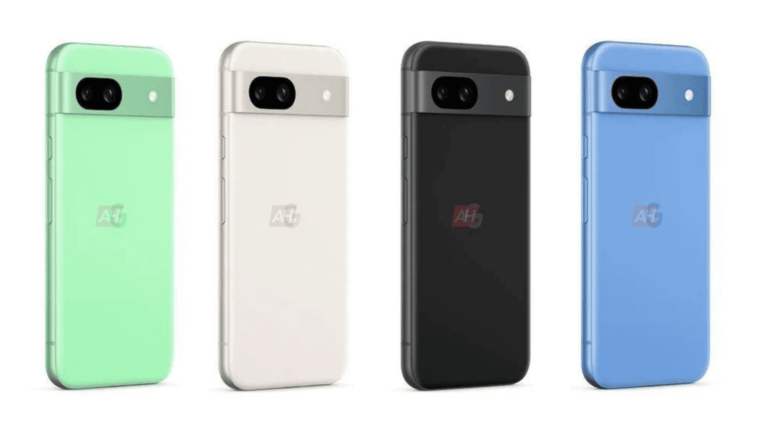
The Pixel 8a is coming in four color options, green, white, black, and blue. Google will name these colors Mint, Porcelain, Obsidian, and Bay, respectively. The Mint one is especially noticeable, and it’s bright green. All the others are well-known to Pixel users.
The Google Pixel 8a is expected to launch next month. It will almost certainly come during Google I/O 2024, which takes place on May 14 and 15. The keynote will be held on May 14, though, and that’s when the Pixel 8a is expected.
Now, the phone itself is expected to ship with the Google Tensor G3 processor. It will also include a 6.1-inch AMOLED display. Some rumors indicated that it will have a 120Hz panel this time around, though.
The camera aspect is tipped to remain the same as last year. That means we’ll likely get a 64-megapixel main camera, and a 13-megapixel ultrawide unit on the back. Android 14 will come pre-installed, but the phone will get Android 15 as soon as it becomes available.
DuckDuckGo is one of the best options in the market when it comes to private internet search tools. It has now introduced a service called Privacy Pro, giving you another reason to switch from other search tools to DuckDuckGo. But what exactly is the DuckDuckGo Privacy Pro service and how is it going to benefit you? Here’s everything you need to know.
What is DuckDuckGo Privacy Pro service?
Many browsers today, such as Opera and Mozilla, come with a built-in VPN. With the Privacy Pro service, DuckDuckGo is also joining the team of browsers that offers a built-in VPN service. However, what sets DuckDuckGo apart from other browsers is the additional two features it offers.
In addition to VPN support, the Privacy Pro service includes a Personal Information Removal and Identity Theft Restoration service. This means that with the Privacy Pro service, you will have access to a total of three features.
Detailed overview of Privacy Pro service
As aforementioned, DuckDuckGo Privacy Pro service offers three features — VPN, Personal Information Removal and Identity Theft Restoration. Let’s check out all these features in detail.
Image Credit — DuckDuckGo
The VPN service provides an extra layer of protection to your browser. The best part is that the VPN encrypts the connection for all browsers and apps on your device. This means that your location and IP address will be hidden from the sites you visit. Additionally, your ISP will also not be able to track your online activity.
You can use the VPN service on up to five devices simultaneously, and when you use it, DuckDuckGo will not log or store any data related to your browsing habits.
DuckDuckGo currently has VPN servers across the US, Europe, and Canada. They have plans to expand to more regions in the future.
Privacy Pro Personal Information Removal service
There are various people search sites like Spokeo that collect your personal information from your social media, local records, or even from other people’s search sites. The Personal Information Removal service will help you in removing all your personal information from such people’s search sites.
To use the service, you will need to set it up on your primary Mac or Windows computer. Once you have completed this step, all further processes for removing your information will be managed from that same device using the DuckDuckGo browser.
Privacy Pro Identity Theft Restoration service
Even with all the protection and safeguarding of your account, there’s still a slight chance that hackers may come up with a new way to steal your data. If this happens, the hacker may have enough information to steal your identity. This is where the Identity Theft Restoration service comes into play.
DuckDuckGo has partnered with Iris, powered by Generali, one of the top identity theft advisors in the US, to help you resolve any identity theft issues. If your identity has been stolen, Iris will assist you in this situation. The company will freeze your credit report until the issue is resolved. They will also help you cancel and replace your driver’s license, bank documents, passport, and Social Security card.
Additionally, Iris will provide travel assistance, help you inform healthcare and insurance providers about fraudulent claims made under your name, and cover out-of-pocket costs.
Cost of the Privacy Pro service
It doesn’t matter how good a service is; the number of people who start using it often depends on its price. If you were to purchase the three features that Privacy Pro offers separately from different companies, you would have to spend at least $30/month out of pocket. But DuckDuckGo’s Privacy Pro service is available for only $9.99/month.
There’s also an annual plan that costs $99.99/year. Currently, the service is only limited to the United States, but DuckDuckGo has announced that they will soon be expanding to other regions as well.
VPN by Google is on its way to the afterlife to join Google Podcasts, Hangouts, Google+ & others
Users like to poke fun at Google and use the term ‘Google graveyard’, as Google killed off tons of services thus far. Some of them were truly liked by users, which created this whole shtick with Google graveyard.
As a reminder, Inbox by Google was an especially painful cut for many Google users. Google Podcasts was also a loved service, and despite the fact that Google+ wasn’t used by as many people as Google would have liked, that one also hurt many. Then there’s Hangouts, and so on. There are plenty of services to talk about, and they’re listed here.
Now, it’s worth noting that while the VPN by Google One is going away, the Pixel VPN is here to stay. VPN by Google One will be killed off “in the coming months”, Google did not share the exact time.
As a reminder, VPN by Google One is available on both Android and iOS, as far as mobile platforms are concerned. It is also available to Windows and Mac users. It’s also quite affordable too.
It’s going away because “people simply weren’t using it”
Google told 9to5Google that they’re “discontinuing the VPN feature” because “people simply weren’t using it”. The company also added that this will allow it to “support more in-demand features with Google One”.
Google will provide its current users with third-party alternatives, of course. When it comes to the Pixel VPN, no changes have been announced. It launched with the Pixel 7 in 2022, and Google guaranteed support for 5 years. So no worries on that front.
Samsung‘s next Galaxy Unpacked event in July is expected to bring new smartwatches. Rumors suggest the company will launch three models under the Galaxy Watch 7 series. Two of those have just appeared on certification listings, confirming their existence.
Certifications confirm two Galaxy Watch 7 models
For the past few years, Samsung has launched two versions of its latest smartwatches. The standard model is paired with a Classic or a Pro model. The Classic version features its iconic physical rotating bezel, while the Pro version ditches it in favor of a bigger battery.
This year, the Korean firm is rumored to make three Galaxy Watch 7 models. There will be a standard version with model numbers SM-L300 and SM-L305, with the latter cellular connectivity via eSIM. We might also get a Classic model (SM-L310/SM-L315) and a Pro model (SM-L700/SM-L705). Rumors say the Pro will feature a 600mAh battery.
A Korean regulatory body recently certified this battery with the model number EB-BL705ABY. The same battery pack has now picked up a certification from India’s BIS (Bureau of Indian Standards). Spotted by 91Mobiles, the listing doesn’t reveal additional information. But it indicates a nearing launch of the Galaxy Watch 7 series.
Additionally, the Bluetooth SIG certified the cellular version of the base Galaxy Watch 7. The model number SM-L305U indicates it is the US variant. The listing confirms Bluetooth v5.3, the latest commercially available version of the Bluetooth technology, for the watch. As expected, it doesn’t reveal anything else, not even the product’s name. All we can see is that it’s a smartwatch from Samsung.
A new processor and more storage are on the cards
These certifications may not reveal much about the Galaxy Watch 7 series, but earlier leaks have revealed a thing or two about it. Firstly, Samsung might ship the watches with a new processor. The rumored Exynos W940 is reportedly a 3nm chip with 50% efficiency gains and 30% speed gains over the Exynos W930 used in the Galaxy Watch 6 series.
Samsung is also doubling the internal storage space from 16GB to 32GB on the Galaxy Watch 7. Since you cannot externally expand the storage space, this would allow users to store more files on their watches. This can be helpful for people who listen to music during workouts or morning runs. They can store more music on the watch and leave their phones at home. Expect more leaks and rumors about the Galaxy Watch 7 series in the coming days.
YouTube, the video-sharing platform owned by Google, has seen several changes since its inception in 2005. Some changes were received positively, like the introduction of YouTube Shorts, while others weren’t. After all, we all remember the infamous update that removed the dislike counter, right?
Google is experimenting with another potential update drastically affecting the platform’s UI. While there’s no confirmation that the change will take effect as it’s still in the testing phase, the consensus towards the change is overwhelmingly negative.
YouTube video titles & comments get boxed in the sidebar
Phrases like “Leave a comment down below” and “Smash that like button under the screen” are engraved in YouTube history. Countless videos have these phrases said or written, but a YouTube test feature for the web might make them moot.
Some YouTube users reportedly see a major change to the platform’s web video player. Every YouTube video’s title, description, and comments have been at the bottom of the video player for a while. However, an experimental UI change seemingly pushed into the sidebar. Replacing the core video details are recommendations, which previously used to be in the sidebar. Even when the video player is changed to theatre mode, the details, while under the player, are in the lower-right corner of the screen.
As expected, most users hate the UI change. Details like a video’s title, comments, and especially description are core components that many users rely on to determine whether they want to watch something, especially with autoplay turned on. However, minimizing these details and pushing them to the side to show users video recommendations under videos instead doesn’t sit right with many users, even if the change is only for the web version.
The UI test feature is especially jarring when considering that the recommendations are much larger than they used to be. This change gives users the impression that Google wants users to spend more time on the platform by being enticed by a recommended video, increasing overall watch time.
Will this feature be implemented for everyone?
It’s unknown if the UI change will be permanently implemented for everyone. YouTube confirmed on X that it’s only “an experiment/test feature,” suggesting it might not make it past the testing phase.
Interestingly, users who received this experimental feature are average users who haven’t opted to receive testing features and updates. This decision likely led to some users being blindsided by the UI update. This is without mentioning that there’s no option to revert the platform’s UI to the base version.
Fortunately, YouTube stated users can submit formal feedback to Google. Through it, they can let the tech giant know if they like or dislike the experimental UI change. With enough negative feedback, video titles and comments likely won’t go anywhere. Alternatively, the company might find a better way to implement the change, similar to the YouTube TV comment section change.
After almost a decade of operating as a separate platform, Showtime will shut down its streaming apps on April 30th. This move reflects the integration of Showtime’s content library into Paramount+, Paramount Global’s flagship streaming service.
This decision mirrors a similar one by Warner Bros. Discovery, which announced last year the merger of HBO Max with Discovery+. Consequently, the industry is experiencing a wave of consolidation as streaming services tackle rising content costs and a crowded marketplace.
What does this mean for Showtime subscribers?
Paramount+ with Showtime, a combined offering launched in 2023, will become the new home for Showtime’s programming. Existing Showtime subscribers can access Showtime’s content through the Paramount+ platform using their current login credentials. However, to continue enjoying Showtime’s shows and movies, they’ll need to subscribe to the Paramount+ with Showtime bundle, priced at $11.99 per month.
Some third-party subscribers were automatically transferred to a Paramount+ with Showtime plan, while others were not. You should have received communication from your original billing provider (Roku, Apple, etc.) clarifying this. If you weren’t transferred, you’ll need to subscribe to Paramount+ with Showtime to keep watching.
Showtime’s future as a brand under Paramount+
The shutdown of Showtime apps marks the end of an era for the network. Showtime pioneered premium cable streaming services, launching its platform in 2015. Over the years, the Showtime app gained popularity for its original series like Dexter, Billions, and Homeland.
Though Showtime’s standalone service is ending, the brand itself is not disappearing. Showtime will continue to produce content, finding a new home on Paramount Plus. This move represents a strategic decision by Paramount Global to streamline its streaming offerings and provide customers with a more comprehensive content library under one roof.
The integration of Showtime into Paramount+ will likely impact viewership and subscriber numbers, but the full effects remain to be seen. Ultimately, this decision reflects the evolving landscape of the streaming industry, where consolidation is becoming increasingly prevalent.
In addition to restricting China’s access to chip manufacturing equipment, the US is also making efforts to relocate chip manufacturing back to the US. Over the past few decades, chip manufacturing has largely shifted to Asia. To make it happen, the Biden administration is subsidizing chip manufacturing giants such as Intel, TSMC, and Samsung to build plants within the US.
Samsung has secured more than $6 billion of US government grants for the Texas chip manufacturing facility
Speaking of Samsung, the company already has a chip manufacturing facility in Austin, Texas. Alongside this, the giant is also working on another plant in Taylor, Texas. As initially reported by Bloomberg, the company has secured more than $6 billion of US government grants for this development as part of the CHIPS ACT.
It’s important to mention that Samsung has been working on the Texas chip manufacturing facility for quite a while now. As noted by Sammobile, they announced a $17 billion investment in the plant in Taylor back in 2021. Now the figure has reached a total of $44 billion, as revealed by people familiar with the development. Samsung is now reportedly preparing to reveal this $44 billion investment for the new chip manufacturing facility in Taylor.
TSMC and Intel are also focusing on manufacturing chips in the US
The CHIPS ACT allocates $39 billion in grants plus $75 billion in loans and guarantees. It has spurred well north of $200 billion in semiconductor investments. Not to mention, companies like TSMC and Intel have also opted for grants from the Biden administration to build their cutting-edge chip manufacturing facilities in the US. The report notes that the two companies have secured $20 billion and $11.6 billion in grants respectively.
It is unclear when Samsung’s new manufacturing facility in Taylor will begin mass production. It was reportedly delayed to 2025 in December last year. A report from Businesskorea notes that the mass production was initially expected to begin in 2024. The report also speculates that the delay could be due to various issues related to the US government subsidies and permissions or licenses.
TSMC’s production in Arizona is also postponed due to the same reason. A more recent report indicates that it has scheduled three of its chip manufacturing plants to start mass production in 2025, with the fourth one scheduled for 2028.
We have seen quite a few great camera smartphones this year, and the two we’ll talk about here are amongst the best. In this article, we’ll compare the Xiaomi 14 Ultra vs HONOR Magic6 Pro. Both of these smartphones arrived to global markets in the first quarter of the year. Both of them are immensely powerful, and both have outstanding camera hardware and performance.
We’ve reviewed both of these devices not long ago, so we can attest to their photography prowess. As per usual, we’ll first list the specifications of both smartphones and will then move to compare them across a number of other categories. We’ll compare their designs, displays, performance, battery life, cameras, and audio performance. This will hopefully help you make a purchasing decision.
These two handsets do look quite different in comparison. The Xiaomi 14 Ultra has a curved display with a centered display camera hole. The display on the HONOR Magic6 Pro is also curved, but the phone includes a pill-shaped camera hole. The bezels are very thin on both smartphones. The global variant of the Xiaomi 14 Ultra combines an aluminum frame with a vegan leather backplate. The HONOR Magic6 Pro is available in both glass back and vegan leather back models, while its frame is also made out of aluminum.
If we flip the two phones to the back, you’ll notice that they both feature backplates that curve towards the edges. They also have rather noticeable camera islands on the back, which are centered. The one on the Xiaomi 14 Ultra is circular, and it includes four cameras. The HONOR Magic6 Pro has a camera island with a rather interesting shape, and it includes three cameras in there.
Both of these phones are quite large. The HONOR Magic6 Pro is ever so slightly taller, wider, and thinner than the Xiaomi 14 Ultra. The global variant of the Xiaomi 14 Ultra is, however, slightly lighter than the HONOR Magic6 Pro. In China, the Xiaomi 14 Ultra does come with a glass back, so that’s a completely different story. Both smartphones are IP68-rated for water and dust resistance. They both feel great in the hand, like premium offerings, as they should. We did prefer the feel of the HONOR Magic6 Pro, as it felt thinner even though it’s not, due to its design. We used both models with vegan leather backplates, and both were grippy enough.
Xiaomi 14 Ultra vs HONOR Magic6 Pro: Display
The Xiaomi 14 Ultra includes a 6.73-inch QHD+ (3200 x 1440) LTPO AMOLED display. That display is curved, and it offers an adaptive refresh rate of up to 120Hz. It supports Dolby Vision, and HDR10+ content too. The maximum brightness this panel can offer is 3,000 nits. The display aspect ratio is 20:9, while the screen-to-body ratio is around 89%. The Xiaomi Shield Glass protects this display.
Xiaomi 14 Ultra
On the flip side, the HONOR Magic6 Pro has a 6.8-inch 2800 x 1280 LTPO OLED display. This panel is also curved, and it also offers an adaptive refresh rate of up to 120Hz. It supports HDR content and can project up to 1 billion colors. The maximum brightness, technically, is 5,000 nits, though you’ll never be able to go that high. The display aspect ratio is 19.5:9, and the screen-to-body ratio is around 91%. The Jurhino glass protects the HONOR Magic6 Pro’s display.
Both of these displays are simply outstanding and tick all the boxes. Not only are they big and sharp, but they’re also quite vivid. The viewing angles are great, the inky blacks are also present, and they’re quite responsive too. On top of all that, they get extremely bright, for any condition you can think of, and they also offer high PWM dimming to protect your eyes. You’ll have a great time regardless of the display you end up choosing.
Xiaomi 14 Ultra vs HONOR Magic6 Pro: Performance
When it comes to performance, both smartphones are outstanding. You’ll find the Snapdragon 8 Gen 3 chip inside both of these phones. The Xiaomi 14 Ultra comes with 16GB of LPDDR5X RAM (in its global variant). It also uses UFS 4.0 flash storage. The HONOR Magic6 Pro, on the flip side, comes with 12GB of LPDDR5X RAM (in its global variant), and it also uses UFS 4.0 flash storage.
Those specs, in combination with their software builds, do translate into great performance. Both of these phones launch apps very fast, they can jump between them with ease, and every intense task that you can think of… they can do. The same goes for gaming, actually. We’ve played a handful of games on each during our review period, and that included the benchmark… Genshin Impact.
After about an hour of gaming, both smartphones were warm, but the performance did not suffer, nor did either phone overheat. We did not spare either device during our review period, and both passed the performance test with flying colors. There’s really nothing we can object to in terms of sheer performance. They do great in that regard, and chances are that will be the case for the foreseeable future.
Xiaomi 14 Ultra vs HONOR Magic6 Pro: Battery
A 5,000mAh battery sits inside the Xiaomi 14 Ultra, while a 5,600mAh unit is included inside the HONOR Magic6 Pro. HONOR used a silicon-carbon battery inside its flagship, which made it possible to squeeze such a huge capacity in there. Do note that the Chinese variant of the Xiaomi 14 Ultra does include a 5,300mAh unit. For some reason, Xiaomi opted to go with a 5,000mAh battery inside the global model.
You’ll be glad to hear that both of these phones offer outstanding battery life, however. We managed to cross the 8-hour screen-on-time mark on both. The HONOR Magic6 Pro did usually offer a bit more in the battery life department, but both were excellent in that regard. Do note that we did not play games on days that we crossed the 8-hour screen-on-time mark. Plenty of usage was included, though, ranging from browsing and emails to image processing and taking pictures.
If you end up needing to charge either device in the middle of the day, don’t fret. The Xiaomi 14 Ultra supports 90W wired, 80W wireless, and 10W reverse wireless charging. The HONOR Magic6 Pro, on the other hand, supports 80W wired, 66W wireless, 10W reverse wireless, and 5W reverse wired charging. Do note that only the Xiaomi 14 Ultra comes with a charger in the box, however.
Xiaomi 14 Ultra vs HONOR Magic6 Pro: Cameras
When it comes to cameras, Xiaomi’s flagship has four on the back, while HONOR’s has three. Both smartphones do offer outstanding camera hardware and performance. The Xiaomi 14 Ultra has a 50-megapixel main camera (variable aperture), a 50-megapixel ultrawide unit (122-degree FoV), a 50-megapixel telephoto camera (3.2x optical zoom), and a 50-megapixel periscope telephoto unit (5x optical zoom). All cameras have Leica’s lenses on them.
HONOR Magic6 Pro
The HONOR Magic6 Pro includes a 50-megapixel main camera which also supports variable aperture. Its ultrawide camera is a 50-megapixel unit (122-degree FoV), and the third shooter is a 180-megapixel periscope telephoto camera (2.5x optical zoom). The hardware is somewhat different, and so are the pictures that come from these phones. The thing is, both of them do an amazing job.
Both smartphones have great main, ultrawide, and telephoto/periscope camera functionality. The images from the Xiaomi 14 Ultra tend to look a bit closer to real life, though. The ones from the HONOR Magic6 Pro do have the tendency to be a bit warmer. I personally liked both variations. The images do end up looking sharp and well-exposed, and both phones handle HDR situations with ease. The color science of their main cameras is well in line with the main ones, and the periscope telephoto shooters also do their best in that regard.
Low light performance is also great, but different. The Xiaomi 14 Ultra tends to leave images closer to real life in such situations too, making them look great, but also realistic. The HONOR Magic6 Pro is no stranger to brightening up such shots, pulling more light from the shadows. It’s all a matter of preference, really. They’re also great in terms of macro photography, amongst the top 5 (maybe even top 3) macro photo shooters we’ve used, pretty much.
Audio
You will find a set of stereo speakers on both of these smartphones. They’re basically equally loud, at least to our ears. They also provide quality output which is well-balanced, and the distortion is basically not noticeable. There’s even some bass here.
There is no audio jack on either phone, but they both have Type-C ports. You can easily connect your headphones that way. Alternatively, you can use Bluetooth 5.4 and 5.3, which these two smartphones have, respectively.
Google released Android 15 Beta 1 yesterday, and users who tested it are reporting that the NFC functionality is broken after installing it. There are also other problems related to the stability of the system.
Bugs in early betas are common or expected, so it is not the best idea to install them on your main device. However, there are people who take the risk. So, it is useful to know the main problems that you could face after installing the software. To begin with, the most important functional issue seems to be the NFC being broken or not working, but there is more.
NFC is broken on Android 15 Beta 1, but there is an explanation
Many people use the NFC on their smartphones every day for payments or quick pairing of compatible accessories. Therefore, being unable to access NFC can be a big annoyance that you should be aware of. Interestingly, one of the new features that Android 15 may bring is the updateable NFC stack through Google Play System updates. And, it seems that the bug is related to the work that Google is doing on the operation of this component.
According to Mishaal Rahman, the NFC bug is due to a coding error. More specifically, there was a route change in the NFC system app from “/system” to “/apex”. Currently, the OS is looking for the NFC system app in the old path. So, this bug should be easily fixed in a future update.
By the way, if you’re wondering why NFC is broken in Android 15 Beta 1, Google made a mistake in the migration process. The OS is still looking for the NFC system app under /system when it should be looking for it under /apex.
Android 15 Beta 1 also brought other bugs that can be annoying. For example, there are multiple reports of Play Store downloads being slow or getting stuck. Even the Play Store can get stuck while searching for available app updates. The fingerprint reader is affected too for some, since it is not working from the lockscreen or AOD.
Likewise, there are some problems regarding the stability of the system. There are reports of people getting a “com.qorvo.uwb.vendorservice.android.UwbApp has stopped” prompt constantly, which can be quite annoying. Even the keyboard’s haptic feedback is abnormally strong for some after installing Android 15 Beta 1.
For now, these are the main bugs reported by users of devices running Android 15 Beta 1. Lastly, there are some mentioning that the update is not installing for them. In this case, sideloading the ROM seems to be the fix.