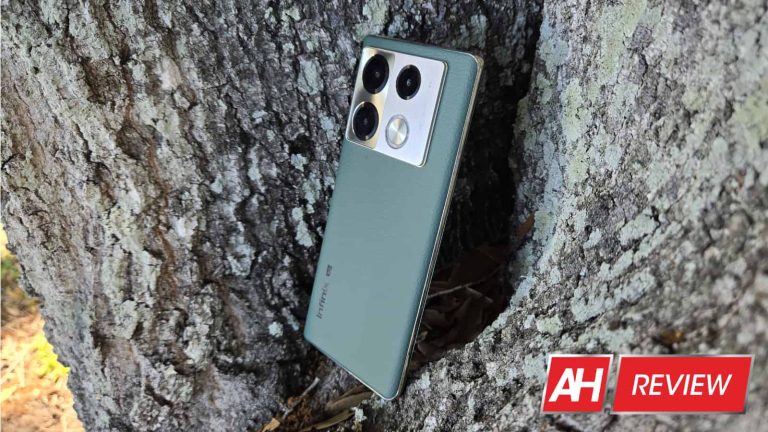
Being based in the US, I’ve basically been walking around with a blindfold over my eyes. And, who tied that blindfold? Samsung and Apple. I’d been conditioned to think that luxury phones could only be had for a luxury price, and that may have been true half a decade ago. However, the blindfold has long since been removed, and I’ve finally seen the beauty that is phones from overseas. I had the opportunity to review the Infinix Note 40 Pro+.
This is a phone from China-based Infinix, and I’ve reviewed other phones from similar companies. The closest equivalent is Tecno, as both of these companies are owned by Transsion. Phones from these companies have redefined my definition of a sub-$400 phone. All of the phones I’ve reviewed from Tecno and Infinix (with the exception of the Tecno Phantom V Flip) sit comfortably under the $300 mark, and it really shocked me just how incredible these phones can be for their prices.
Having reviewed a fair amount of these phones, I thought I’d know what to expect when I opened this box. Well, I was right… and I was wrong. Is this a good or a bad thing? Let’s find out in this review of the Infinix Note 40 Pro+.
Table of contents
Infinix Note 40 Pro+ Review: Design
There are certain aspects of this phone that stick out, and the design is one of them. It’s a massive departure from the design we saw with last year’s Infinix Note 30 Pro. That phone had a more eclectic aesthetic with its boxy design and pearlescent glass back; a beauty and beast wrapped up in one package.

This year, Infinix did a hard pivot to a completely different design category. The Infinix Note 40 Pro+ added a curved display, faux leather back, thin frame, and an overall luxurious aesthetic. I’m not going to mince words, this phone is a piece of art! It reminds me of the kinds of phones you get when companies partner with designer brands. It looks like Infinix partnered with a company like Louis Vuitton or Gucci to pull off this look. Looking at it, you’d think that this phone cost someone $1,200.
I got the green and gold colorway for this phone, and it looks gorgeous. The thing I like about this colorway is that the colors are muted a bit. So, this gives it sort of an understated beauty. Though, I would have liked it if the gold was a little more saturated.
On the back of the phone, it’s clear that the large square camera package is one of the defining features of Infinix phones. It doesn’t look bad, but to be honest, it’s a little bit off-putting. The rest of the phone is sleek and elegant. However, you turn the phone over, and you see this large and not-very-sleek block right at the top of the phone.
The Infinix Note 30 Pro also had a large square camera package, but it made sense for that phone, as it went along with the phone’s blocky aesthetic more. In the case of the Infinix Note 40 Pro+, it clashes with the overall look. I wouldn’t say it’s destructive to the look; it’s a way to keep Infinix’s identity through iterations.
Overall, however, for as dashing and debonair as this phone is, the camera package doesn’t take away from the overall look. I give it a pass because it’s a minor bother at best. Overall, I praise Infinix for developing such a gorgeous phone. It’s the kind of phone you’d want to show off.
Infinix Note 40 Pro+ Review: Build quality
When it comes to the build quality, I’m a little bit torn. Like many phones in this price range, the Infinix Note 40 Pro+ looks more expensive than it is; well, it looks more expensive than it feels as well. It doesn’t feel bad per se, and I can tell that Infinix put effort into making it feel as good as it could. However, the phone feels rather light and plasticy compared to how it looks.
Does it feel cheap? Well, it feels on the cheap side, but I wouldn’t say “cheap.” I don’t feel like I just got scammed on Wish. However, I can tell that there was a lot of plastic used in the design, and that does a lot to contribute to a cheaper feel.
When you look at the back of the phone, for instance, it looks like you’re about to grab some luxurious leather… but then you touch textured plastic. The frame of the phone is made from glossy plastic, and you’ll feel that when you grip it.
That being said, I think that the build quality overall is solid. I know that the company had to cut costs with the materials it used, but the phone’s construction is another story. I think that Infinix did a good job putting the Infinix Note 40 Pro+ together. When I applied a bit of force to the phone from the front and back, I didn’t hear any creaks or pops coming from it.

Aside from the cheaper feeling in the hand, there isn’t anything that I can complain about with the Infinix Note 40 Pro+. It’s affordable, so the feeling is to be expected, so I won’t dock points. Not only is this a mid-range phone, but it’s also not made by a financial behemoth like Samsung or Apple. These companies have the money to stack their affordable phones with metal frames and glass backs. Infinix is a smaller brand, and it’s done a great job regardless.
Infinix Note 40 Pro+ Review: Display
One thing that the Infinix Note 30 Pro, Tecno Camon 20 Pro/Premier, Tecno Pova 6 Pro, and Tecno Phantom V Flip have in common is that they all have absolutely jaw-dropping displays. Looking at them, I find myself wondering if they all secretly cost double their price. Since all of these phones are from Transsion-owned companies, I’m sure that they’re all using similar OLED panels and calibration. Well, I’m happy to report that Infinix didn’t rock the boat with the Note 40 Pro+.
Brightness
Have you ever dealt with a problem for years, got a solution to that problem, and looked back on the problem and asked yourself “How did I ever deal with that problem in the first place?!” That’s the story with bad display brightness. Even the more expensive phones from back in the day had displays that basically disappeared in the sunlight. As much as I like my reflection, I don’t want to see it while trying to look at my phone’s screen.
However, expensive phone screens have gotten brighter, and cheaper phones have followed suit. They’re not going to get up to the eye-blazing 2,400+ nits that we see with more expensive iPhones, Galaxy phones, and Pixel phones. But, the fact of the matter is that you don’t need displays THAT bright to be able to text your friend or watch a video outside.
I’d say that the aforementioned phones are at the point where they’re bright enough to be viewed comfortably outside. Well, the Infinix Note 40 Pro+ is right up with those devices and a bit brighter. It peaks at 1,300 nits of brightness, which is 400 nits brighter than the Infinix Note 30 Pro (44% brighter).
When I take this phone outside, I’m able to see everything just fine. It doesn’t matter if I’m gaming, texting, or scrolling social media, I can see the screen perfectly fine. It’s not as bright as a display on an iPhone, Galaxy, or Pixel; I admit that I see my reflection just a bit more on the Infinix than on those phones. However, it’s not an issue at all.
The only issue I have with the brightness is something that I had with the Tecno Pova 6 Pro (Review). When I’m in a darker environment, the Adaptive brightness setting overcompensates and cranks the brightness to its lowest setting. I can see if I’m in a pitch-black room, but this would happen if I’m in a dim room. I’d find myself cranking the brightness up a bit just to see the screen more comfortably.
Colors
If you’ve read my review of the Infinix Note 30 Pro, Tecno Camon 20 Pro/Premier, Tecno Pova 6 Pro, and/or Tecno Phantom V Flip, then you’ll know my affinity for these phones’ displays. One reason for this is the color calibration.
We all know that OLED displays have saturated colors, and we’ve known this for years. However, it’s not just about having punchy colors; there are other factors at play. There are factors like color temperature, color space, etc. This is why displays from different companies look different despite mostly being manufactured by Samsung.

So, I’m not just drooling over these phones’ displays because of the juicy colors. I think that Infinix calibrated the display on the Infinix Note 40 Pro+ to display colors beautifully. The phone comes with the colors set to their most saturated setting out of the box. At their most saturated setting, the colors hit a sweet spot between saturated and over-saturated. They’re notably punchy, and they make everything I’m watching pop.
Even at their least saturated setting, there’s a nice pop of color to the display. You may like this setting if you’re not into super juicy colors.
Extras
When it comes to the extra goodies, there are two things. Firstly, there are the color settings. Under the display settings, you’ll see the Color Style page. Here, you’re able to choose the level of saturation. If you want more muted colors, you can set it. Also, you can adjust the color temperature.
Lastly, this display caps out at a fluid 120Hz refresh rate. This makes all of the UI animations extremely smooth.
Overall
I wasn’t surprised that the Infinix Note 40 Pro+ has a stunning display. It’s one of the best aspects of this device. It only adds to its beauty factor. Picking up this phone and powering on the display is an experience all its own. I mark this as another homerun for Infinix!
Infinix Note 40 Pro+ Review: Speakers
So far, this review has been filled with praise for this phone, but…
Earlier in this review, I mentioned the past phones I reviewed from Tecno and Infinix. I mentioned that these phones are similar in that they offer a high value for their price and that they all have beautiful displays. Well, they’re also similar in that their speakers are mid at best.
The fact of the matter is that there are certain areas where phones like these need to be cut back. It’s the natural order of things. You can’t expect a sub-$300 phone to be great at everything. The age of the “Flagship Killer” has passed, so, corners need to be cut, and the speakers are one of them.
To test these speakers, I used six different test tracks to test out different aspects of the audio. They’re designed to test out the loudness, distortion, bass, treble, vocals, and immersion. I used these pieces along with just using the speakers in my regular usage.
Loudness/distortion
The first test piece I used was this loud rock piece to really push these speakers to their limit, and I wasn’t let down by the loudness. At their peak loudness, they were louder than I’d need for any inside scenario. There are phones that I’d have to have pushed to their highest volume to comfortably hear. This was one of the few complaints that I had about the Galaxy S24+’s speakers. I put a sound meter one foot from the phone at its highest volume, and it peaked at 87dB.

The speakers get plenty loud, and they did get a bit distorted. However, I wouldn’t call it bad. I’ve heard less distortion from phones like the Moto G Power – 2024. So, in terms of loudness and distortion, I’d say that these speakers do a good job. Unfortunately, this is where the good qualities mostly stop.
Bass
This is an area where all of the aforementioned Transsion phones fall short. And, by “short,” I mean about 12 miles behind. These speakers are about as thin and dry as a sheet of paper. The test piece that I played puts a ton of emphasis on low-end audio, so there’s a ton of bass in the piece. However, you wouldn’t know it if you listen to these speakers.
Listening to the piece, I can hear the lower instruments, the sound of them is projecting. However, there’s no depth to the audio. It’s as if someone took an EQ and cut all of the levels below 200Hz.
I will say that these speakers seem to do a slightly better job than some of the other Transsion phones. Maybe there’s a bit more of a rumble, but it’s not really noticeable if you’re not comparing these phones side-by-side.
Treble
This surprised me just a bit because the aforementioned Transsion phones usually perform nicely with higher-end audio. I usually say that they’re great for ASMR content. However, I feel that the speakers in the Infinix Note 40 Pro+ took a step backward.
When it comes to the treble, an important thing to listen for is clarity. I wanted the higher tones to project clearly, but that wasn’t what I was really getting. The higher tones in the test piece I listened to seemed to blend into the rest of the audio just a bit. Rather than coming out crisp and clear, they just started distorting the audio prematurely.
Balance
In terms of the overall balance, the audio sounds a bit lopsided. While there’s slightly more low-end compared to the aforementioned phones, the treble is still stronger. So, when I listened to the test piece, the higher-end audio seemed to take over the sound.
Vocals
Next up, I tested how good these speakers are at reproducing voices. The vocal performance is important especially if you’re going to be listening to songs with vocal tracks. I don’t want to say that this phone is bad at reproducing vocals, but I wouldn’t say that it’s great. Voices seem to blend in with the rest of the sound. So, you can’t really hear the specific texture of the singers’ voices, and that adds a lot to the listening experience.
Overall immersion
The last test piece was a section of a lush orchestral piece that would be played in a movie. It’s the kind of warm and encompassing piece of music, but the speakers on the Infinix Note 40 Pro+ just didn’t convey that. The sound overall sounded flat.
Overall
I’m not going to mince words, the speakers on the Infinix Note 40 Pro+ just aren’t anything to write home about. Sure, they get plenty loud, and they do a nice job of keeping the distortion down, but the other aspects of what makes a good set of speakers just aren’t there. You’re not going to want to get this phone for its speakers.
I was able to help the sound out a bit with the DTS Sound integration. In the Sound settings, you’ll see a DTS Sound section. Here, you’ll have Dolby Atmos-like controls that will give you different sound modes. There are the Smart, Music, Game, and Video modes. Each mode is optimized for each type of media, and the Smart mode will automatically detect the media and optimize the sound accordingly. You have the option to boost the vocals, bass, and treble in each mode, as well. However, boosting the bass doesn’t seem to do anything.
You also have a 5-band EQ that you can use to adjust the audio. You can adjust each band between -5dB and +5dB. The bands are 100Hz, 300Hz, 1kHz, 3kHz, and 10kHz. Adjusting the EQ helped a little bit, but the audio still remains sub-par.
Am I upset? No. The speakers are a part of the phone experience, so I have to factor this into my final verdict, but I understand why it has to be that way. Sometimes, mid-range companies have a harder job than premium companies. When Samsung launches the latest and greatest flagship phone, it’s a no-brainer; it’s going to have the highest-quality tech.

For mid-range companies, it’s a juggling act. They have to balance premium features with the right amount of compromises in order to create the optimal experience. They have to choose which parts of the smartphone experience are the best to prioritize and which ones to let fall by the wayside. If they implement too many compromises, they risk creating a poor experience; if they add too few, then they risk jacking up the price.
The speaker quality is just one part of the smartphone experience that the company just had to leave on the back burner.
Infinix Note 40 Pro+ Review: Camera
We’ve reached a point with camera tech where modern-day mid-rangers are starting to approach flagship phones of the past. So, phones as cheap as these are able to produce some pleasing results when taking pictures. Back in the day, a reviewer reviewing a $400 phone would say “You’d get passable results in GREAT lighting, but that’s it.”
Nowadays, things are a bit better for mid-range shooters, and they’re able to produce results that actually look good. I think that the Infinix Note 40 Pro+ falls behind some of the best phones from Tecno and Infinix. That title belongs to the Tecno Phantom V Flip (Review). While that’s the case, this camera was still able to bring some respectable performance.
Exposure/contrast
When it comes to the exposure, I don’t really have any complaints; it’s pretty balanced overall. There are some shots that I feel leaned a bit bright while some leaned a bit dark. I did see some blown-out highlights in brighter scenes. Overall, however, I think that the shots are exposed pretty nicely.

When it comes to contrast, I’ve definitely seen better. Some shots actually had nice crisp shadows like this shot of the rocks.

However, there are some shots, like this one of the grass, that have this weird and washed-out quality. It almost looks like what you get if you’re editing a photo, and you crank the highlights level to its lowest point. There are bright and dark spots, but it has a weird quality. However, that doesn’t seem to affect all of the shots.

When it comes to the shadows, this phone tends to crush them just a bit. There are spots in the shadows that fall into blackness. The image of these trees shows some spots where the shadows take over.

Colors
I’ve probably used this term a dozen times in my reviews, but I’d classify these colors as “Responsibly Saturated.” There’s a satisfying pop of color with the pictures, but they don’t go overboard. In fact, they seem a bit toned down compared to other phones. Some phones punch the colors to infinity to make the photos pop more, but it seems that Infinix focused more on balancing the colors rather than pushing them.
I feel that the color that pops the most in the pictures is green. In all of the images of green grass and leaves, the greens stand out the most. There are some shots that I feel that the greens dip into the cartoonish territory. In this shot of the trees, some of the trees pop a little too much.

However, this isn’t true for all of the pictures. In this shot of the Moses-in-the-cradles, I think that the camera did a good job of balancing the greens and violets. It was taken mid-day, so the more neutral color temperature is pretty accurate.

Video
So, remember when I said that mid-range phones are starting to get as good as older flagship phones? Well… I should have put an asterisk at the end of that statement. Video continues to be an Achilles heel of affordable smartphones, and the Infinix Note 40 Pro+ isn’t shifting any paradigms here.
The video performance isn’t the greatest. There are two resolutions to choose from, and those are 1080p and 2K. 1080p gives you the option between 30fps and 60fps, 2K only has 30fps. Also, you only get video stabilization with 1080p 30fps.
The output isn’t all that bad; the colors are a little toned down compared to most of the pictures and the contrast crushes the shadows a bit more. In 1080p, you can see the typical pixelation that makes the footage look a little blurry. However, it looks like the phone added some additional sharpening to the footage.
There was a noticeable boost to the resolution when switching to the 2K mode, but it retains the toned-down colors and contrast, so it looks sharper without looking any better.
It’s a bit disappointing that the stabilization is only on the 1080p 30fps setting. The video is decently stabilized, but it doesn’t look great with the lower resolution.
Overall
The camera on the Infinix Note 40 Pro+ is a decent performer. There were some shots that weren’t all that great, but there were definitely shots that really stood out. Video is a weak point, but that was pretty much to be expected.

The thing about these photos is that they’re processed to look the best when viewed on the phone’s screen. When viewing the images on other screens, they look okay, but when viewing them on the phone’s screen, they look amazing. This is especially true for the videos; the display picks up where the video falls short. It adds the extra contrast and color saturation.
I think that the camera isn’t one of the strongest points of this phone, but it’s not one of the weakest.
Infinix Note 40 Pro+ Review: Performance
It pains me to remember the dog days when any phone under $400 was a stuttery mess that would barely work. Well, that’s no longer the case. The cheaper mid-range processors have gotten much more powerful, and they’ve been able to catch up to the software they’re running.
Nowadays, there aren’t many sub-$400 phones I review with bad performance. The Infinix Note 30 Pro was able to glide through its software without many issues, and that’s much the same story with the Infinix Note 40 Pro+. This phone has gotten an upgrade from the MediaTek Helio G99 from last year to the MediaTek Dimensity 7020.
While using this phone. I didn’t run into any major performance issues. Generally navigating the software and using the phone is an overall smooth experience. I can tell that Infinix properly optimized the software to run on the chip.
When it comes to the thermals, this phone comes with a large vapor chamber that keeps it cool during intense usage. Thus, it doesn’t get as hot as quickly as other phones that I’ve reviewed. When phones heat up, they start to throttle, but it takes a bit of time before this phone even starts to heat up.
Render test
I, unfortunately, wasn’t able to get proper Geekbench or 3DMark scores for this phone. However, I did a test where I rendered a one-minute video in 1080p resolution in CapCut. Here at Android Headlines, we all render the same video and record how long the process is.

Many of the lower-powered phones take around 30 seconds to render it while several premium phones can have it done in under 15 seconds. The Infinix Note 40 Pro+ was able to tackle the video in 25 seconds. That’s a little on the slow side, but it’s still better than most of the other mid-rangers.
Overall
Being a mid-range SoC, I can’t say that the Dimensity 7020 isn’t weak in some areas of processing; however, it just doesn’t show in a user-facing way. This phone is a snappy performer that stays cool during use. It’s able to maintain its 120Hz refresh rate throughout.
Infinix Note 40 Pro+ Review: Gaming
Yes, I’m about to reference sub-$400 phones from back in the day again. However, they’re a good benchmark to let us know just how far we’ve come with mid-range technology. Just half a decade ago, you wouldn’t even dream of doing any top-tier gaming on a phone that didn’t sport the latest silicon; this stigma exists today.
But, there are phones out there that strive to set the record straight. I’ve been impressed with the gaming chops of many of the sub-$400 phones I’ve been reviewing. They’ve been throwing blows harder than I would have imagined, and this is with some of the most graphically intensive games on the market.
The Infinix Note 40 Pro+ was able to handle 2D games flawlessly. I tested it with games like Survivor.io, which is a game that’s not shy about having hundreds of sprites on the screen. It had no issues at all with that game.
When it came to mid-range games, the story is much the same. These are games that are still very pretty-looking while not being the most graphically intensive. I used Sky: Children of The Light, Asphalt 9, and Dragon Ball Legends.

The performance on all of these games was smooth as well. It ran the last two games flawlessly, but it did run into the occasional stutter with Sky. The stutters were few and far apart. So, this means that the Infinix Note 40 Pro+ can comfortably tackle the majority of the games on the Google Play Store and the Palm Store.
Top-tier games
You knew this was coming. I spent the 47GB of storage space to install Genshin Impact and Honkai Star Rail. These are games that will truly test a phone’s mantle.
Starting off with Star Rail, I tested this game at its highest graphical settings, and the phone was able to do an admirable job. When the game starts up and during battles, the phone is likely to drop some frames here and there, but it’s more than playable. The frame rate hovers between 15fps and 20fps, which isn’t great, but it’s not slow and laggy. And again, this is at its highest graphical settings. Bumping them down a bit will smooth out the gameplay without degrading the graphics too much.
Moving on to Genshin Impact, I was able to get some better results. At its highest graphical settings, it was able to run smoother overall. It didn’t quite hit 60fps, but it was still pretty smooth all the same. When running through towns, the frame rate took a bit of a dip, but it didn’t render the game stuttery. It was still pretty smooth. Again, you can bump the graphics down a little to smooth out the gameplay even more. Genshin runs so smoothly that you probably won’t need to knock all of the graphical settings down; you can just disable the motion blur.
Overall
Sure, I said to bump the graphics down for smoother gameplay, but you have to remember that I’m talking about games with near PS3/Xbox 360-level graphics on a sub-$400 smartphone. If you’re picking up this phone, and you’re doubting its gaming capabilities, you shouldn’t. The Infinix Note 40 Pro+ is able to tackle most of the games on the Play Store without breaking a sweat. It’s even powerful enough to handle some of the most graphically intensive games out there without many issues. This is one of the areas where this phone shines.

Infinix Note 40 Pro+ Review: Battery
The Infinix Note 30 Pro was a bit of a beefy fella, so it was no surprise that it held a large 5,000mAh battery. This time around, however, it appears that Infinix had to tighten the phone’s belt and stack it with a smaller battery. The company shed 8% off of the battery capacity.
Be that as it may, the Infinix Note 40 Pro+ was still able to endure rather nicely. To test this battery, I charged it to 100% and ran a looping video until it died. The phone lasted 11 hours and 9 minutes. That’s about half as long as some of the top flagship phones on the market like the Galaxy S24 Ultra and the iPhone 15 Pro.
While that’s the case, it’s still able to get you through the day with moderate usage. If you charge it to 100% in the morning, you’ll be able to last into the second day with some battery in the tank. This was with some gaming, social media scrolling, video-watching, and light camera usage.
Charging
The charging is a bit of a weird topic. I was sent a 100W fast charger. However, it was a European charging brick, so I wasn’t able to charge it using its full capacity. However, I used a 68W charger, and it was able to charge the phone in under an hour.
One of the most interesting additions was a wireless charger. This is a MagPad. It’s a small wireless charger that charges the phone with 20W of power. What’s neat about it is the fact that it can attach to the back of the MagSafe case that comes with the phone. It connects to the phone, but the attraction isn’t all that strong.

Sub-zero charging
One thing that differentiates the Infinix Note 40 Pro+ from most other phones is the fact that it can actually charge at extremely cold temperatures. I tested charging this phone after spending 40 minutes in the freezer, and it was able to charge just fine.
Infinix Note 40 Pro+ Review: Software
The software on the Infinix Note 40 Pro+ is pretty much the same across all of the Transsion phones that I reviewed. It uses XOS running on Android 14. This is a heavily skinned version of Android that offers a ton of customization features.
The software is a fresh take on Android, and I’ve grown accustomed to it over the year I’ve been using similar software. The only gripe that I have is the fact that the Quick Settings and the notifications are kept separate.
You swipe down on the top left side of the screen to access your notifications. To access your Quick settings, you swipe down on the right side of the screen. Also, you can swipe left and right between the sections. That’s not a big problem, but I’d prefer to be able to access both in one swipe.
Infinix Note 40 Pro+ Review: Final verdict
This is the kind of thing that we’ve been missing from bigger smartphone makers like Samsung and Google; new phones that actually feel new. The next Galaxy S phone or Pixel tends to feel exactly like the last, and the same thing goes for iPhones. However, we’ve missed the thrill and excitement of seeing new phones that breathe new life into the franchise year over year.

This is what is happening with the affordable smartphone market. There’s very little that ties the Infinix Note 40 Pro+ to last year’s phone visually, and that makes me happy as a techie. Infinix adopted a completely new design philosophy with its phone, and we haven’t seen that happen with Samsung in years.
Not only is this phone different, but it improves over last year’s handset in the performance and display brightness departments. I’m able to run the most graphically intensive games on the market with relative smoothness.
The camera performance is decent, though it could be better in spots, and the speakers are a lateral move from last year’s model. Those are the main gripes that I have on the phone.
However, Infinix managed to successfully juggle the right amount of strengths and compromises in order to create an overall great package. The Infinix Note 40 Pro+ is more than just a pretty face, and I recommend that you pick it up.
[ad_2]
Source link