Is your router outdated? Millions are at risk as a new variant of TheMoon malware infects devices in just 72 hours. Learn how to protect yourself from this cyberattack and secure your home network.
A multi-year campaign targeting vulnerable home and small business routers has come to light thanks to a recent report by Black Lotus Labs, a security research team at Lumen Technologies. The campaign leverages an updated version of a well-known malware strain called “TheMoon.”
TheMoon malware first emerged in 2014 and has a history of exploiting weaknesses in routers and Internet of Things (IoT) devices. This latest campaign, however, appears to be particularly widespread, infecting devices across 88 countries.
According to the Black Lotus Labs report, the attackers primarily focused on end-of-life (EoL) routers, meaning devices no longer receive security updates from the manufacturer. ASUS routers were the most targeted, with over 6,000 infected in just 72 hours in early March 2024.
The attackers’ goal appears to be the creation of a large network of compromised devices. By infecting routers and IoT devices, they can add them to a service known as “Faceless.” Faceless operates as a proxy service, allowing malicious actors to anonymize their online activities. This anonymization can make it difficult to track the source of cyberattacks and other criminal operations.
Jason Soroko, Senior Vice President of Product at Sectigo told Hackread.com that, “Routers and other networking equipment that use passwords have been easy victims to pray and spray attacks for years.“
“Unfortunately, stronger forms of authentication are not common. What’s new here is the usage of proxy networks for C2 traffic obfuscation. It shows that de-anonymizing Tor and VPN traffic is not only happening but has been successfully used against attackers,“ Jason added.
To protect your devices from the latest variant of TheMoon malware or similar attacks; always follow these steps:
Update your router and IoT devices regularly. Check the manufacturer’s website for instructions on how to update the firmware for your specific device.
Disable remote access to your router. This can be done through the router’s administration panel.
Use strong passwords for your router and Wi-Fi network. Avoid using easily guessable passwords or default settings.
Consider a security solution for your home network. There are several security products available that can help to protect your network from malicious activities.
There are many more technical details and aspects addressed in the Black Lotus Labs blog post.
The Google Pixel 8 Pro (Review) offers an extremely smooth experience, well, if you’re not scrolling through social media. Pixel phones have been plagued with a weird scrolling issue that ruins the experience just a bit. However, Google announced that a fix for this Pixel scrolling issue is on its way. You’re just going to have to wait quite a bit for it.
This issue doesn’t only affect the Pixel 8 Pro. In fact, it even affected Pixel 7 phones. For some reason, when scrolling feeds, the animation would be very choppy and janky at times. It makes it appear as though the phone is having performance issues. That’s not something you want to see on your new $1,000 phone.
Google announced a fix for the Pixel scrolling issue
As reported by several sources, Google has acknowledged and addressed the scrolling issue affecting Pixel phones. The company is a little late to the game, as this issue was reported back in October of last year. That was the month that the Pixel 8 series launched. So, it’s a little disheartening seeing that Google is finally addressing the issue four months later. However, better late than never.
We’ve received reports from Reddit that Google is working on the issue. We also got official confirmation. The scrolling issue was actually marked as “fixed” on the issue tracker. This doesn’t mean that the issue is fixed on actual phones. It means that Google has successfully finished the code that will fix the issue once it’s distributed to phones.
When will Google distribute this change?
That’s where most people will have an issue. According to the issue tracker, Google will officially push this fix to affected Pixel phones with the release of Android 15. That’s going to be a bummer for people waiting for this issue to be fixed. Android 15 is still in the developer preview phase of testing. After that, it will have to go through an extended period of data testing before it hits the stable channel. We are talking about months of waiting before Google fixes this issue.
So, if you’re dealing with the Pixel scrolling issue, and you’re waiting for the fix, you’re going to have to sit tight.
Simply put, MFA bombing (also known as “push bombing” or “MFA fatigue”) is a brute force attack on your patience. Cybercriminals use MFA bombing to break into accounts that are protected by multi-factor authentication (MFA).
MFA normally requires a user to enter a six-digit code sent by SMS, or generated by an app, or to respond to a push notification, when they enter a username and password. It provides an enormous increase in security and makes life much harder for criminals.
Because it’s so hard to break, criminals have taken to getting users to defeat their own MFA. They do this by using stolen credentials to try logging in, or by trying to reset a user’s password over and over again. In both cases this bombards the user with push notifications asking them to approve the login, or messages asking them to change their password. By doing this, the criminals hope that users will either tap the wrong option or get so fed up they just do whatever the messages are asking them to do, just to make the bombardment stop.
Now, according to this blog by Bran Krebs, these attacks have evolved. If you can withstand the pressure of the constant notifications, the criminals will call you pretending to come to your rescue.
In one example Krebs writes about, criminals flooded a target’s phone with password reset notifications for their Apple ID. Each notification required the user to choose either “Allow” or “Don’t Allow” before they could go back to using their device.
After withstanding the temptation to click “Allow”, and declining “100-plus” notifications, the victim receved a call from a spoofed number pretending to be Apple Support.
The call was designed to get the victim to trigger a password reset, and then to hand over the one-time password reset code sent to their device. Armed with a reset code, the criminals could change the victim’s password and lock them out of their account.
Luckily, in this situation the victim thought the callers seemed untrustworthy, so he asked them to provide some of his personal information, and they got his name wrong.
Another victim of MFA bombing learned that the notifications kept coming even after he bought a new device and created a new Apple iCloud account. This revealed that the attacks must have been targeted at his telephone number, because it was the only constant factor between the two device configurations.
Yet another target was told by Apple that setting up an Apple Recovery Key for his account would stop the notifications once and for all, although both Krebs and the victim dispute this.
Unfortunately, there doesn’t seem to be a lot you can do once an MFA bombing attack starts other than be patient, and be careful not to click Allow. If you get a call, know that Apple Support will never call you out of the blue, so don’t trust the caller, no matter how convenient their timing.
If you lose control of your Apple ID, go to iforgot.apple.com to start the account recovery process.
We don’t just report on phone security—we provide it
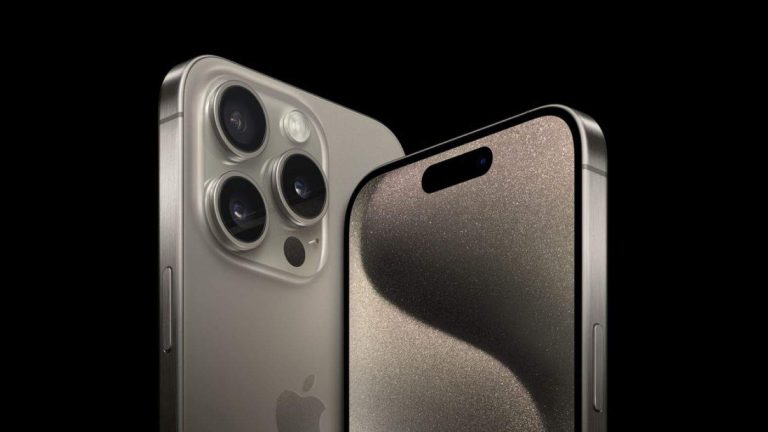
Apple will reportedly use an enhanced titanium finishing and coloring process for its forthcoming iPhone 16 Pro models. Apple started using Grade 5 titanium in its phones starting with last year’s iPhone 15 Pro and iPhone 15 Pro Max.
Titanium is no longer a jaw-dropping addition to phones
But, soon enough, many smartphone manufacturers, respecting the trend, started incorporating the titanium material in some of their latest models and the ‘titanium’ keyword in their marketing material. However, not all of them adopt the same costly Grade 5 titanium.
Nonetheless, titanium is now one of the trends in the top tear flagship space and doesn’t feel like a jaw-dropping addition anymore. For example, Samsung adopted the material for this year’s Galaxy S24 Ultra. There are also rumors about its adoption in the company’s upcoming book-style foldable, the Galaxy Z Fold 6, which might help them make it look more premium and different than the rumored Galaxy Z Fold 6 FE- if that device launches.
iPhone 16 Pro models’ titanium could get a distinctive look though
“Unlike the 15 Pro model, the iPhone 16 Pro model will use a method that improves the previous titanium processing and color processing” (machine translation).
As a result, the tipster notes that the iPhone 16 Pro models could get a more polished or “glossy” look. If true, it could potentially look similar to the previous Pro iPhones with stainless steel. Yes, a glossy finish may become more susceptible to fingerprints just like before.
In addition to the polished titanium finish, MacRumors suggests that Apple may introduce new color options for the iPhone 16 Pro series. These new colors will reportedly be “Space Black” and “Rose Gold”. The traditional Blue Titanium variant might be replaced by the Rose Gold option, while Space Black may replace the Black Titanium variant. The White and Natural Titanium colorways are also expected to undergo subtle refinements.
Currently, there’s not much information about Apple’s new and refined finishing process for titanium. But, we will update you as more information comes out, that’s for sure.
INTMAX, developer of the open-source Ethereum scalability solution Plasma Next that offers near-zero gas fees to enable nano-transactions, has announced that IdeaSoft, a member of Sigma Software Group that specializes in building fintech blockchain applications, is building a perpetual decentralized exchange on Plasma Next.
This strategic partnership leverages IdeaSoft’s vast expertise in WEB3 development across various sectors, signalling a significant leap forward in the Plasma Next ecosystem.
The perpetual DEX, called JIBx, will offer zero transaction fees, restacking, and leverage of up to 250X, and boasts an on-chain matching engine with off-chain private settlement and account layers powered by Plasma Next. Users will get the cheapest transaction cost and highest performance with programmability while retaining the security and stability of Ethereum.
INTMAX Plasma Next is the complete version of Plasma, the Ethereum scalability solution presented by Joseph Poon and Vitalik Buterin in 2017. Plasma Next solved the main problem with the fund exit (difficult online requirements and on-chain verification costs) using zero-knowledge proofs.
By ensuring constant state growth per block without individual liquidity preparations and removing the need for constant online vigilance, Plasma Next offers a practical solution to the long-standing challenge of achieving statelessness in blockchain systems.
Recently, INTMAX Plasma Next teamed up with ETH Samba to empower Brazil’s vibrant Ethereum developer community and introduced the innovative nanoMoney.js, a groundbreaking JS library that aims to reward website users for engaging actions like reading, liking, or creating content.
Through this collaboration, Plasma Next demonstrated its ability to facilitate rewards as small as $0.000000001 in DAI, which is only possible when the gas fee is almost zero. Plasma Next makes Ethereum ultra-convenient for micro- and nano-transactions at scale.
Andrey Lazorenko, the Co-founder and CEO of IdeaSoft, said, “Super excited to start using INTMAX Plasma Next with our team! It’s exactly what we need to make many of the projects faster, more convenient for users, and finally get overwhelming adoption. Can’t wait to see what we’ll build with this.”
INTMAX Co-founder Leona Hioki commented, “The IdeaSoft team is highly talented and professional, with unmatched experience in financial trading in general and virtual currency in particular. I am confident that together we will be able to create a product of exceptional quality. It is a great honour to work with them.”
JIBx leverages Plasma Next for both settlement and account layers, ensuring unmatched privacy, low trading fees, security, and scalability. Distinctively, it features a perpetual on-chain limit order book utilizing black-red tree sorting. This strategic choice significantly lowers transaction costs while simultaneously increasing transactions per second (TPS), setting a new standard for DEX technology.
This DEX is poised to be the first of its kind that combines the convenience of centralized exchanges with the integrity and security of decentralized platforms. Among its novel features are:
Near 0 transaction fees – Plasma Next allows to reduce fees to less than a cent amount
Efficient Funding Rates Model: Rewards from collateral re-staking are available immediately when you open your position.
Bootstrapped Re-staking: Utilizing stablecoins and LST-based assets, we create an intriguing multiplier effect. This enables the distribution of points for re-staking and allows us to share fees with active traders.
Stablecoin and LST Staking Pools: A stablecoin pool ensures liquidity is locked during margin trading. Meanwhile, the LST staking pool offers rewards and reduced trading commissions.
Perpetual Swaps with High Leverage: Offers up to 250X leverage, backed by innovative algorithms and an insurance fund to efficiently manage high-risk operations.
By supporting IdeaSoft in developing the JIBx platform, INTMAX not only promotes the growth of the Plasma Next ecosystem but also contributes to the broader blockchain community. This initiative underscores a commitment to innovation, open-source development, and the democratization of finance, marking a pivotal step toward a more accessible and efficient decentralized finance landscape.
Plasma Next represents a groundbreaking evolution, promising to redefine blockchain scalability and privacy for the digital age. By addressing the need for constant online presence—a significant barrier to user adoption—Plasma Next marks a significant leap forward, giving developers a platform to build secure and highly scalable dApps.
About IdeaSoft
IdeaSoft is an EU-based custom software development company with over 7 years of experience and a track record of delivering 250+ projects. The company’s primary focus is on developing blockchain & web 3.0 solutions, with a particular emphasis on CeFi, DeFi, dApps, blockchain gaming, blockchain infrastructure, RWA tokenization, security tokens, custom blockchain solutions, and smart contract development.
Additionally, the team possesses extensive experience in creating fintech and banking apps, ranging from neobanking, core banking, open banking, and embedded banking to BaaS. IdeaSoft is an official partner and member of Sigma Software Group since 2021.
About INTMAX
INTMAX is the developer of the open-source Ethereum scalability solution Plasma Next which offers constant near-zero gas fees to enable nano-transactions. It is the Stateless Ethereum Layer built for mass adoption, offering a highly efficient, secure, and scalable solution for blockchain applications.
INTMAX provides a ready-to-use solution to empower any applications and services with instant, the most secure, and near-zero cost crypto transactions. For more information, visit their website or contact: Sergei Medvedev at [email protected].
The Infinix GT 20 Pro is the company’s upcoming smartphone, and we have rather interesting news to share with you. The Infinix GT 20 Pro is coming to the US, India, and China next month. The company did not share this info just yet, we obtained it from a trusted source.
The Infinix GT 20 Pro gaming mid-ranger is coming to the US, India & China next month
If you take a look at the provided images below the article, you’ll be able to see the Infinix GT 10 Pro. The Infinix GT 20 Pro hasn’t leaked yet (aside from its front-side sketch), but it could be similar to this device. Chances are it will have a flat display, with rather thin bezels. A centered display camera hole is also expected. The image below this paragraph is actually supposed to show the Infinix GT 20 Pro, from the Google Play Console listing. So we do know that it will include a centered display camera hole and thinner bezels than its predecessor.
Infinix GT 20 Pro Google Play Console
All the physical keys will likely be included on the right-hand side of the device. The Infinix GT 20 Pro could have flat sides all around, just like its predecessor. Its backplate will likely be quite interesting too.
Three cameras are expected on the back
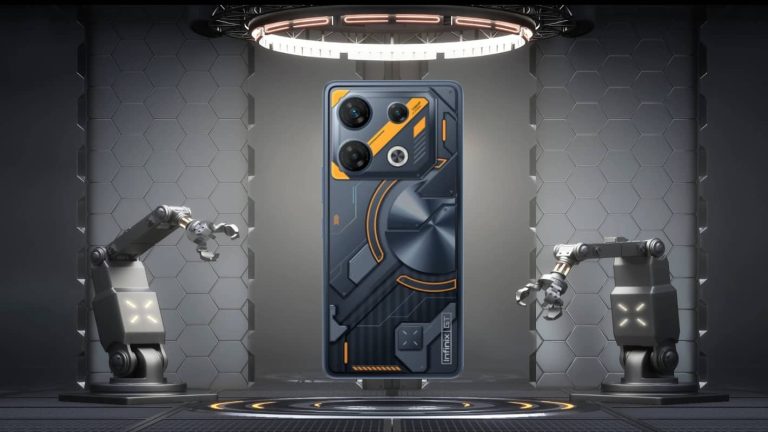
The Infinix GT 10 Pro backplate looks like the inside of a robot, or some machine, while there are also some yellow accents there. It sure does look different. We’re expecting something similar on the GT 20 Pro. Also, there will be three cameras on the back, and likely some LED lights. That’s per course for gaming devices, and this will be a mid-range gaming smartphone.
That wraps up the design portion, but what about the specs? Well, some of its specs we know, as they got revealed by various listings we’ve mentioned. Some additional ones leaked out, so we do have a good idea of what to expect.
We’ll likely get both 8GB & 12GB RAM variants
The phone will come with 12GB of RAM and 256GB of storage, based on the FCC listing. It could launch in multiple variants, but this will be one of them, that’s for sure. An 8GB RAM model is expected too. The FCC listing also revealed that the Infinix GT 2 Pro will support 45W wired charging. 5G and Wi-Fi 6 will be supported.
In regards to its other specs, well, the MediaTek Dimensity 8200 is expected to fuel it. A 5,000mAh battery is tipped to be included, while we also know that a fullHD+ (2436 x 1080) display will be in use. Android 14 will come pre-installed.
Infinix GT 10 Pro (GT 20 Pro design is still a mystery):
They say the only backup you ever regret is the one you didn’t make. Starting in Windows 10, the operating system (OS) now comes with a built-in tool to back up your files, themes, some settings, many of your installed apps, and your Wi-Fi information.
First, you’ll need to sign in with your Microsoft account
Go to Start > Settings > Accounts > Your info . Select Sign in with a Microsoft account instead. You’ll see this only if you’re using a local account. If you see Sign in with a local account instead, you’re already using your Microsoft account.
To start the backup process select Start> Windows Backup.
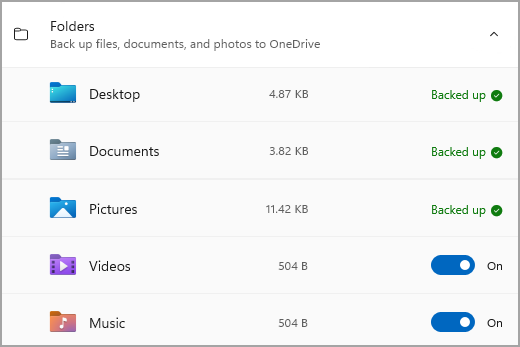
Select Folders to drop down a list, and select which of your user folders you want to back up by toggling them On or Off. The ones you have already backed up will say Backed up next to them.
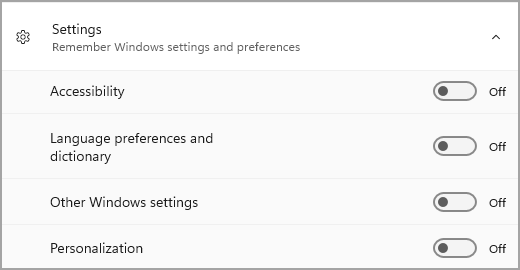
Next, you can move forward to back up your settings. You can use the drop down for each category and select the items you want to back up by setting them to On or Off.
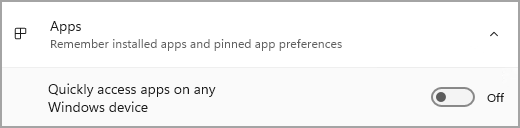
First choose your apps:
Then your settings:
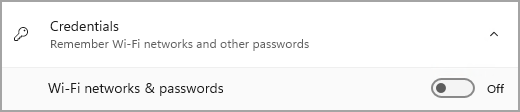
Then your credentials:
When you’ve decided on what to back up, click Back up and the backup will be made.
From this point on, Windows will synchronize these backups at regular intervals. If it’s been a while since you made your backups or changed your settings, you can check the status by going to Start > Settings > Accounts > Windows backup.
Current status
We don’t just report on threats—we remove them
Cybersecurity risks should never spread beyond a headline. Keep threats off your devices by downloading Malwarebytes today.
In case you’re wondering, yes, Sony still makes phones. Sometimes, it’s hard to tell because these phones do not get much press. They’re very much a niche product, but they still raise a bit of excitement every now and then. For example, a mystery Sony phone just crossed the FCC. However, it doesn’t seem that it’s going to be a flagship device.
Right now, we are all following rumors about the Sony Xperia 1 VI and Xperia 5 V. The former is expected to be the company’s next flagship phone. We expected to bring all the latest specs to the table.
A mystery Sony phone crossed the FCC
Right now, details about this device are very scarce. All we have to go on are two crucial bits of information. Firstly, this phone has the code name PY7-75946U. That doesn’t tell us much about the phone other than the fact that it’s a Sony product.
The other crucial bit of information that the FCC filing listed is the fact that this may not be a 5G phone. Nowhere in the listing does it state that this is a 5G phone. So, we don’t expect this to be a flagship handset. It could be the next iteration in Sony’s line of affordable phones or a new device altogether.
Sony Xperia 1 VI rumored specs
Right now, we are waiting for information about this phone to roll in. However, a lot of information about this phone has leaked. According to the rumors, the Sony Xperia 1 VI could sport the Qualcomm Snapdragon 8 Gen 3 with 12GB/16GB of RAM and up to 512GB of storage. There’s even a rumor stating that there will be a 1TB variant of the phone.
Moving on to the display, rumors point to this phone sporting a large 2K display with a 19.5:9 aspect ratio. Sony doesn’t typically put punch holes or notches in its displays. The company opts for larger bezels in order to create a more seamless display, and it appears that Sony may continue this trend.
As for the battery, we are looking at a 5000mAh cell. It could support 30W wired charging along with 15W wireless charging. Those aren’t the most impressive specs by today’s standards, but they are still decent.
One of the most important aspects of this phone will be the camera package. According to the rumors, the Sony Xperia 1 VI will come with a triple camera package. This could consist of a 48-megapixel main camera accompanied by a 48-megapixel ultrawide camera and a 48-megapixel periscopic zoom camera. It may be able to zoom between 3x and 6x.
When this phone launches, rumor has it that it could cost around $1,399. This definitely makes it a very niche and luxury product. While many casual users find it hard to justify such a high price, smartphone and Camera enthusiasts may feel differently.
Today, with so many options available and different technological features, choosing a piece of technology gets really hard. You’re faced with numerous options and the difference is usually minute. People who aren’t that familiar with technology often can’t even tell the difference. They have to do research or consult with more experienced people. It’s always a better option to talk to someone or find good information online. Of course, only if the website is a trustworthy one.
When choosing LCD screens, there are many options as well. This piece of technology has come a long way since their first beginnings. They started off as chunky and robust and today these screens are slim and elegant. Before, they were only displaying black and white images. Now, they can display a wide range of vibrant colors and nuances. Because the technology developed so much, it’s impossible to easily pick an LCD screen. You have to consider many things and the features of your device. You need to be aware of the specifications of your device before you can actually start choosing a color LCD. If you know someone who’s experienced in the area, you can always reach out to them. LCD technology is complex and you need to make sure you’re making the right choice.
Hopefully, we can also shed some light on the topic. We’ll try to tell you all the important details about color LCD screens and the technology behind them. Stick around to learn more and to choose your new screen with ease.
How do modern displays work
Technology has been on the rise in the last couple of years and displays have been changing as well. Each new model has different features and has something that the previous model lacked. Today, it’s important that each piece of technology offers top level user experience and allows the consumer to interact easily with the screen.
One type of display that’s been on the rise is the OLED display. They provide the user with really vivid colors and high-resolution images. It’s almost a cinema-like experience. With so many different options, it’s hard to pick one. It’s challenging to make an informed decision when you don’t even know where to begin deciding.
Choosing the right color LCD
Selecting the best color LCD for your application will depend on the needs of your device. You need to consider your device at all times. Have in mind the size, shape and all the other features you need. Also, you have to know where the screen will be used. It’s not the same if you’re using your device in an industrial setting or at home. So, these are some things you need to look out for:
Your application and its requirements
The easiest way to understand the requirements of your application is to write it all down somewhere. That way you’ll easily remember everything you need. Think about size, resolution and intended use. As said, you need to be clear about where the screen will be used. The environment is crucial. If your device is a medical imaging device, then you need high-contrast screens. But if you’re going to use your device outdoors, then you need a screen with good backlight.
Is color important?
When you have the basics written down, it’s time to think about one of the most important factors—the color. Try to think about whether color accuracy is important for your device and in what way. Is brightness most important or color precision? Sometimes,even with color LCDs, it’s not always super important that the colors are vibrant. Again, it all depends on the needs of your device. This can be very tricky, so do consult before making the final decision.
Take care of the environment
Being environmentally-friendly is extremely important today. We need to take care of our environment and try to lower power and energy consumption wherever possible. We should also choose durable and high-quality technology that can last for years. Luckily, color LCD screens don’t break down easily and they are an environmentally-friendly option. Of course, if you opt for a quality one, and not just the cheapest model. It doesn’t have to be the most expensive one but make sure you choose quality.
Additional features
You can also customize your color LCD screen if you want and if you feel it’s necessary. For instance, if your device benefits from a touchscreen option, then you can have it included as well. Just communicate it to the manufacturer. If you don’t need any of these special features, then you can just skip this step.
The key takeaways
As you can see, choosing a color LCD display can be quite challenging but it just requires some research and preparation. You need to discuss your decision with experts and more experienced people. With a color LCD, you get a reliable solution that’ll provide you with bright and vivid images that will give you a unique viewing experience.
Isn’t it shocking that people still use passwords like QWERTY12, 1234, or pet names for their online accounts? To make matters worse, many users tend to have the same password across multiple services. This makes it easier for hackers to access their accounts and steal sensitive information. It was one of the reasons why organizations like banks had to implement extra security measures to safeguard their customers’ data and transactions.
The importance of mobile tokens
With the advancement of mobile banking, terms such as “bank tokens” and “mobile tokens” have become increasingly relevant. These forms of authentication and authorization have become indispensable in the everyday use of mobile applications, and their significance cannot be overstated in financial security.
In this context, it is worth exploring top-notch Mobile Token solutions. As a reliable and efficient authorization method, the token provides effective protection and convenience for customers, addressing the needs of modern financial institutions.
The mechanism behind the mobile token solution
The tool generates one-time passwords (OTP). It is used to authorize various operations in mobile and online banking channels, such as transactions and data changes, or to authorize operations using a mobile PIN without rewriting the SMS code. This mechanism is also used for two-factor authentication (2FA) or mobile authentication.
The mobile token provides a range of functions that can simplify a bank’s customers’ lives. The most commonly used are operations and transaction authorization. We know firsthand that users appreciate this way of handling payments and confirmations. So, why not give it a try and experience the convenience it has to offer?
Multifactor authentication or a complicated authorization process can frustrate users, as they often don’t consider security a primary concern. If the methods are too complex or inconvenient, they seriously influence user experience. Eliminate this threat and choose a user-friendly option right away.
In addition to customer benefits, the bank gains heightened security, PSD-2 compliance, and cost-effectiveness. Not to mention, that the solution can be seamlessly integrated with the bank’s infrastructure.
To sum up
Mobile tokens offer a balance of security and convenience, ensuring that financial transactions are safe and user-friendly. A reliable Mobile Token solution exemplifies this approach, providing a reliable method for safeguarding online and mobile banking operations.
It supports various functions, including transaction authorization and two-factor authentication, enhancing the security framework without overwhelming the user. Thus, it is an essential component of modern banking security.