Google has announced a crucial update to its Chrome browser, addressing several vulnerabilities, including two zero-day exploits showcased at the prestigious Pwn2Own 2024 hacking competition.
The update, which affects Chrome users on Windows, Mac, and Linux, elevates the browser version to 123.0.6312.86/.87 for Windows and Mac, and 123.0.6312.86 for Linux, with the rollout expected to reach users progressively over the coming days and weeks.
Security Fixes and Rewards
Google’s latest security update includes fixes for seven vulnerabilities, with a special emphasis on those discovered by external researchers.
The tech giant has a longstanding tradition of rewarding these contributors for identifying and reporting bugs.
This practice enhances Chrome’s security and fosters a collaborative relationship between the company and the cybersecurity community.
One of the most critical issues addressed in this update is CVE-2024-2883, a use-after-free vulnerability in ANGLE, a cross-platform graphics engine abstraction layer used by Chrome to improve graphics performance on various platforms.
This vulnerability was reported by Cassidy Kim (@cassidy6564) on March 3, 2024, and has been rewarded with a $10,000 bounty. Use-after-free vulnerabilities can lead to arbitrary code execution, making them particularly dangerous.
Another significant vulnerability patched in this release is CVE-2024-2885, a high-severity use-after-free issue in Dawn, an open-source and cross-platform implementation of the WebGPU standard.
This bug was reported by an entity known as Fuzz on March 11, 2024.
The severity of this vulnerability underscores the importance of timely updates to mitigate potential risks.
However, the spotlight shines on two high-severity vulnerabilities, CVE-2024-2886 and CVE-2024-2887, unveiled during the Pwn2Own 2024 competition.
CVE-2024-2886, reported by Seunghyun Lee (@0x10n) of KAIST Hacking Lab, is a use-after-free vulnerability in WebCodecs, a component critical for efficient media content encoding and decoding.
CVE-2024-2887, reported by Manfred Paul, involves type confusion in WebAssembly, a binary instruction format for a stack-based virtual machine that enables high-performance applications on the web.
These discoveries at Pwn2Own highlight the event’s role in identifying and mitigating potential threats before they can be exploited maliciously.
Ongoing Security Efforts
Google also acknowledges the contributions of its internal security team, whose ongoing efforts have led to various fixes identified through internal audits, fuzzing, and other initiatives.
The company’s use of tools like AddressSanitizer, MemorySanitizer, UndefinedBehaviorSanitizer, Control Flow Integrity, libFuzzer, and AFL is crucial in detecting and addressing security bugs.
Chrome users are urged to update their browsers immediately to protect against these vulnerabilities.
For those interested in switching release channels or reporting new issues, Google provides resources and a community help forum for assistance and learning about common issues.
Stay updated on Cybersecurity news, Whitepapers, and Infographics. Follow us on LinkedIn & Twitter.
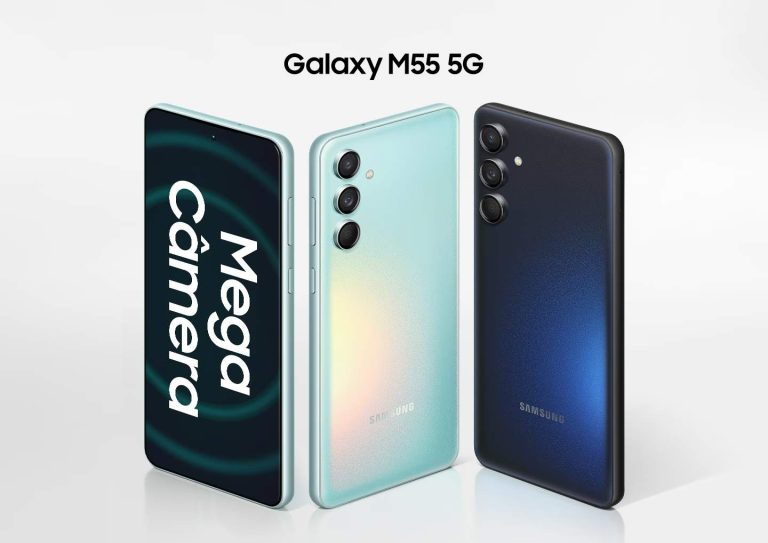
Now, the design. The Galaxy M55 looks like many of its siblings. It has a flat display on the front, with a centered display camera hole. Its bezels are not thick, but its bottom bezel is thicker than the rest of them.
All the physical buttons sit on the right-hand side, while the back side of the phone is slightly curved on the edges. There are three cameras included on the back. They’re vertically aligned in the top-left corner of the phone’s back.
It includes a flat Super AMOLED display with a 120Hz refresh rate
The Galaxy M55 features a 6.7-inch fullHD+ (2400 x 1080) Super AMOLED display. It is a flat panel with a 120Hz refresh rate, which offers up to 1,000 nits of brightness.
The Snapdragon 7 Gen 1 SoC fuels this smartphone, while you’re also getting 8GB of RAM. Samsung included 256GB of storage here, which is expandable up to 1TB via a microSD card.
Android 14 comes pre-installed on the device, along with Samsung One UI 6.1. The phone includes a hybrid dual SIM card slot. In other words, you can either use two nano SIM cards, or a nano SIM card and a microSD card combo.
A 5,000mAh battery is also included, and 45W wired charging supported
A 5,000mAh battery sits on the inside of this phone, and 45W wired charging is supported. The phone does include an in-display fingerprint scanner too, and supports Bluetooth 5.3. Dolby Atmos is supported as well.
A 50-megapixel main camera (f/1.8 aperture) is backed by an 8-megapixel ultrawide unit (f/2.2 aperture). A 2-megapixel depth sensor (f/2.4 aperture) also sits on the back of the phone. On the front, you’ll find a 50-megapixel front-facing camera (f/2.2 aperture).
The Samsung Galaxy M55 measures 163.9 x 76.5 x 7.8mm, while it weighs 180 grams. It comes in Dark Blue and Green color variants.
This smartphone was announced in Brazil, for now. It will spread to more markets soon. It is priced at 3,199 Brazilian Real ($640). So, it’s actually quite pricey considering its specs and everything, but there you go.
Comcast has simplified Xfinity Mobile’s unlimited plans. The company has introduced two new tariffs for consumers to choose from this week – Unlimited and Unlimited Plus. These are simplified versions of the Unlimited Intro, Plus, and Premium plans, which the brand introduced a couple of years ago. The new packs are cheaper and offer higher data than their predecessors.
Xfinity Mobile’s new Unlimited plans start at $40/month for one line with 30GB of data
Xfinity Mobile’s streamlined Unlimited plans now start at just $40 per month for one line. The prices go up to $60, $80, $100, and $120 for two, three, four, and five lines respectively. All these tariffs offer 30GB of monthly 5G+ high-speed data and unlimited mobile hotspots at 3G speeds.
The cheaper Xfinity Mobile Unlimited plan is quite attractive. It kicks off at $40 but falls to just $25 per line with a four-line connection. The pack offers video streaming at 480p over a mobile connection.
Looking for more data? Check out the Xfinity Mobile Unlimited Plus plan
If you are looking for more high-speed premium 5G+ data, then you can opt for the Xfinity Mobile Unlimited Plus plan. This one starts at $50 per month for a single line. You can also opt for two, three, and four lines for $80, $110, and $140 respectively. This pack offers 50GB of monthly premium data and access to HD or 720p video streaming across devices.
You also get a mobile hotspot of 15GB at up to 5G/4G LTE speeds. Post the limit, you get unlimited 3G mobile hotspot data. Both the Xfinity Mobile Unlimited and Unlimited Plus plans offer calls, text, and roaming within the US. The same to and from Canada and Mexico are also included with these tariffs at no extra charge.
The previous Xfinity Mobile Unlimited Intro, Plus, and Premium plans were available starting from $45, $55, and $65 per month respectively. Considering this, you can see that the new simplified unlimited plans can save you between $5 to $15 per line. The full breakdown of the new plans can be seen in the photo below.
The new pricing structure puts Xfinity’s service closer in line with Spectrum Mobile
Notably, the new pricing structure brings Xfinity Mobile’s service closer in line with what the users get with Spectrum Mobile. To compare, Spectrum’s Unlimited and Unlimited Plus monthly plans start at $30 and $40 respectively. However, the price per line stays the same regardless of how many lines you opt for.
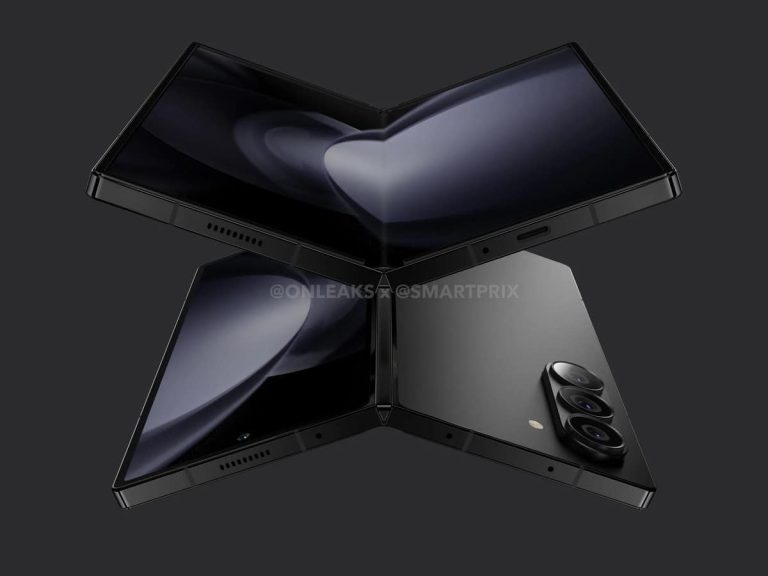
The Galaxy Z Fold 6 & Galaxy Z Flip 6 charging details have been confirmed
The Galaxy Z Fold 6 appeared with the SM-F9560 model number. The ‘Flip’, on the other hand, appeared with the SM-F7410 model number. The EP-TA800 charger (that’s its model number) is made for these devices… even though it won’t ship inside the box.
Why is this important then? Well, that is a 25W charger, so we know what charging speed will the two phones support. That is the same charging speed the Galaxy Z Fold 5 and Galaxy Z Flip 5 offer, by the way. So Samsung is not planning to improve in that regard.
When it comes to battery capacities, these certifications did not reveal such info. We do know that both smartphones will feature a dual-cell battery setup, though.
Neither smartphone will charge up particularly fast
Both smartphones should be able to charge halfway in about 30 minutes if you have the right charger. The thing is, a full charge will take considerably longer than that. It will take the Fold almost an hour and a half to reach a full charge, while the Galaxy Z Flip 6 should be able to charge a bit faster.
The Samsung Galaxy Z Fold 6 and Galaxy Z Flip 6 will launch in July. July 10 is the rumored date for their arrival. That may seem a bit soon, but there’s a good reason for that. The Summer Olympics start on July 26, which is also a Wednesday, and probably a date that Samsung was aiming for.
In addition to that, both the company’s press event and the Olympics are taking place in the same city, Paris. Well, Samsung still hasn’t confirmed that, but the rumors are pointing in that direction. The Galaxy Ring is expected to arrive alongside the two devices.
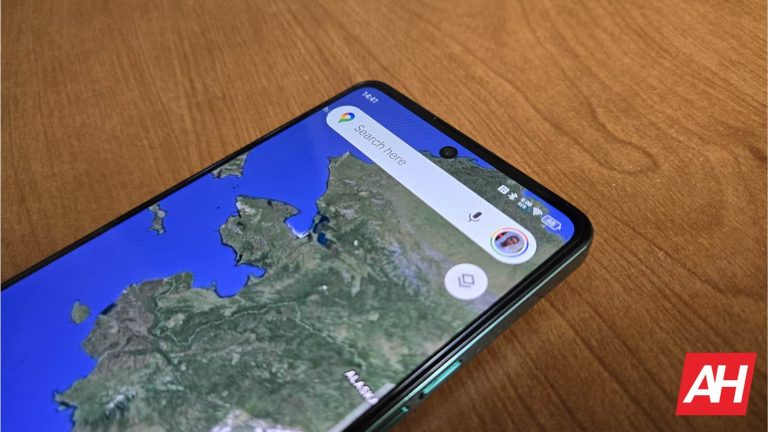
Google Maps has introduced a bunch of new features to enhance the user experience while navigating locations. One of them uses AI for a curated list of recommendations, letting you know about places you must see. Now, users not only have the ability to make simple searches or take photos but can also access many lists of locations compiled by the community or third-party sources within the app itself.
Google Maps will now list, curate, and recommend the best places to visit in an area
Meanwhile, when you search for a place on Google Maps, you can swipe up for curated lists tailored to your location such as recommendations from The Infatuation, Lonely Planet, The New York Times, or OpenTable. These lists cut across expert-curated restaurants, hidden gems, and iconic sites allowing users to get varied and trustworthy suggestions.
Equally important, Google Maps will have its own curated lists as well such as “Trending,” “Top,” and “Gems” which will help people find places they may want to visit based on general popularity or how frequently fellow members like them. The Maps community will update those lists regularly so that users can always know about the hottest spots in town, some favorites that never fade away, and some local unknowns.
This update also allows users to manually arrange their list items using the drag-and-drop method, unlike before when it was automatic. Moreover, they can share content from their social channels right inside their lists so that others can see what they think.
Google employs AI to identify food and give pricing suggestions
Furthermore, Google is employing AI to improve visual recognition capacity for pictures thus helping the app identify what dish is in the picture and give appropriate information according to the menu such as pricing, and popularity including vegetarian/vegan options.
These updates will be rolled out globally on Android and iOS platforms at the end of this month ensuring seamless personalization during place discovery journeys. By focusing more on curated lists along with AI-driven functionalities, Google Maps wants people to feel confident while navigating through different destinations.
Disney has finally launched “Hulu on Disney+” after successful beta testing. It gives Disney Bundle subscribers in the United States access to Hulu content within the Disney+ app. Furthermore, an icon for the newly updated app is now visible on Android devices and Google TV.
Hulu content arrives on Disney+ in the US
With Hulu integrated into Disney+, subscribers can now enjoy thousands of general entertainment titles along with their favorite Disney+ shows. These include recommendations, sets, and collections within the Disney+ interface, allowing users to have a more versatile content library.
According to the company statement, by integrating Hulu with its platform, Disney wants customers to explore both sides of two entirely different subsidiaries on a single platform. Albeit with separate subscriptions, users can bundle both services and access them from one app ecosystem.
For the launch of “Hulu on Disney+,” there is also a new logo and animation that plays when you open the app The new logo combines elements of both platforms; blue represents Disney+, while green represents Hulu. To honor Princess Aurora as well as pay homage to her, the color Aurora has been included in the logo design.
Hulu on Disney+ is region-exclusive with no word about its global availability
The updated Disney+ logo has been coming up gradually on Apple platforms over the past week but now, it’s also appearing on Android and Google TV devices. However, note that this changed logo still only applies specifically to US consumers who are using the application’s Hotstar version of Disney+. The traditional versions of these applications have not seen any change in their logos although they remain displayed together with Hulu integration for people living in the US.
On the whole, “Hulu on Disney+” is Disney’s big step towards enhancing its streaming services and providing clients with a more unified entertainment program. By incorporating Hulu’s library into an updated label or even rewriting the logotype anew, the company continues dominating its competition with a unique upscaled content library.
The European Union’s (EU) top court has ruled against Amazon Inc., and it must now meet the Digital Services Act (DSA) obligations. The e-commerce giant won’t get any reprieve concerning the act’s public disclosure requirements.
Amazon had fought hard to shield itself completely or perhaps delay meeting the requirements of the EU DSA. However, the EU’s top court has essentially struck down a judgment that a lower court had passed in Amazon’s favor.
Amazon Inc. loses appeal and must meet DSA obligations
The EU and American companies including Amazon have been battling new laws that aim to bring about increased transparency, accountability, and even sustainability in business practices.
EU’s Digital Services Act or DSA designates Amazon and several other companies as a Very Large Online Platform (VLOP). Hence, these mega-corporations are subjected to tougher rules. These regulations intend to tackle illegal and harmful content on these online platforms that are used by millions.
As expected, Amazon quickly challenged the DSA and attacked its multiple provisions. One of the regulations required Amazon to reveal a repository containing detailed information on its online advertising.
Simply put, the EU wanted companies like Amazon to publicly disclose their advertising algorithms or digital reasoning and serving mechanisms for advertisements. Amazon protested and asked for an interim measure, at least until the court ruled on the case.
Interestingly, a lower tribunal granted Amazon a reprieve. The lower court essentially suspended the contested obligation. Dissatisfied with the outcome, the EU approached Europe’s top court.
The Luxembourg-based Court of Justice of the European Union (CJEU) has set the suspension aside. The top court dismissed Amazon’s application for an interim relief. In other words, the CJEU has denied any exemption from meeting the obligations of the DSA.
🚨EU law, DSA & fundamental rights. Interesting order by Vice President @EUCourtPress rejecting @amazon‘s request to suspend its obligation to make an advertisement repository publicly available setting aside part of the order of the president of the GC. https://t.co/0HE9EdtaX5pic.twitter.com/zl5b7cw45G
EU’s interest outweighs Amazon’s material interests, rules top court
The judge presiding over the case declared Amazon’s arguments were invalid. Amazon had reportedly claimed that the DSA obligation, “unlawfully limits its fundamental rights to respect for private life and the freedom to conduct a business”.
However, the judge presiding over the case claimed, “Suspension would lead to a delay, potentially for several years, in the full achievement of the objectives of the Regulation on a Single Market for Digital Services and therefore potentially allow an online environment threatening fundamental rights to persist or develop.”
“The interests defended by the EU legislature prevail, in the present case, over Amazon’s material interests, with the result that the balancing of interests weighs in favor of rejecting the request for suspension.” Perhaps realizing it doesn’t stand a chance with its previous argument, Amazon appears to have trained its guns on the DSA itself. The e-commerce giant has claimed it “doesn’t fit the description of a ‘Very Large Online Platform’ (VLOP) under the DSA”. It is not immediately clear if the EU’s top court will entertain this argument.
MLex #Amazon has lost a request to suspend its obligation under #DSA to publish a repository with advertising information for its online store the EU’s interests in enforcing the DSA “prevail” over the US online #platform ’s material interests
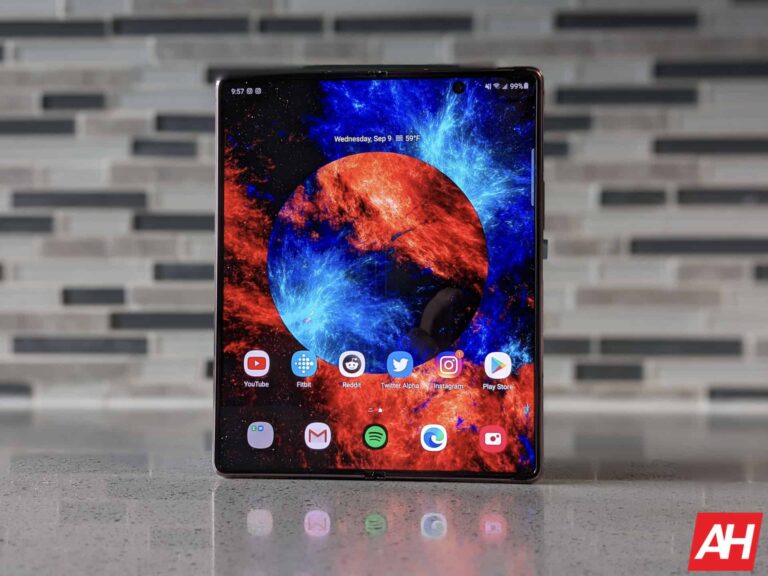
Samsung has started rolling out the March 2024 security update for the Galaxy Z Fold 2 and Galaxy S20 in the US. The international variants of both smartphones started receiving the same update earlier this month. The Galaxy Z Fold 2’s carrier-locked and carrier-unlocked versions are getting the update. At the time of writing, only the carrier-locked models of the Galaxy S20 series are receiving the March update.
The March 2024 security OTA update fixes 45 issues
The March 2024 security update for the Galaxy Z Fold 2 and Galaxy S20 fixes as many as 45 vulnerabilities. The new firmware brings 36 fixes from Google and 9 from Samsung itself. The update is being rolled out over the air in a phased manner, so not everyone will get it right away. Users of these devices can go to Settings >> Software update >> Download and install to check for the update manually.
The Galaxy Z Fold 2’s carrier-locked and carrier-unlocked versions have the model numbers SM-F916U and SM-916U1 respectively. The firmware for the former has the build number F916USQS5KXC1, while the latter has F916U1UES5KXC1. As for the Galaxy S20 series, their carrier-locked variant’s firmware has the build number G98XUSQS8HXC1.
At the moment, the new firmware is only available for the Galaxy S20 units on US Cellular’s network. The company is expected to roll out the same update for the other networks and carrier-unlocked variants in the coming days. The upgrade also offers the usual performance and stability enhancements.
The Galaxy S23 received the March 2024 security update earlier this month
The Galaxy S23 series, Z Fold 5, Flip 5, and Tab S9 will be getting the One UI 6.1 update. The new version of One UI will offer various AI features like Circle to Search with Google and Live Translate. In addition, these devices will get Interpreter, Chat Assist, and Generative Edit.
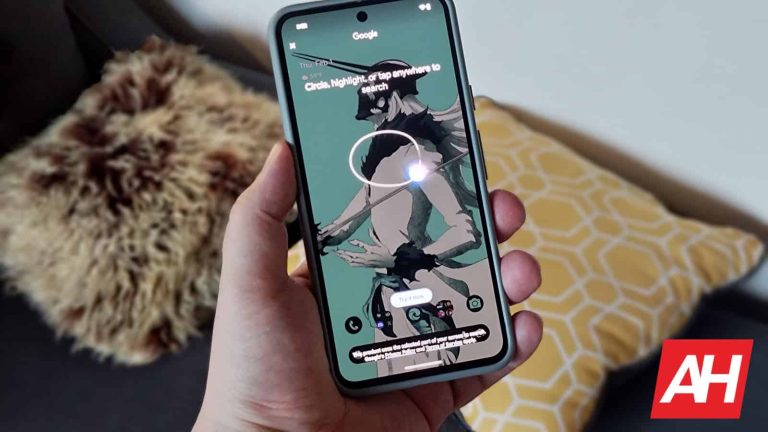
To make it easier for users to search the items on their screens, Google is expanding the Circle to Search feature into a wider range of Pixel devices. Launched earlier this year in January, the feature will soon be available on devices such as Pixel 6a, Pixel 7a, Pixel Fold, Pixel Tablet, and even older models like Pixel 6 and 6 Pro, which are now two generations old.
Circle to Search expands to more Google phones including the older Pixel 6, Pixel 6 Pro, and Pixel 6a
With Circle to Search now available on more Pixel gadgets, all a user needs to do is draw a circle around the object on their phone’s screen and initiate a Google search. This gesture is both simple and intuitive allowing users to avoid the tedious work of typing something out before searching. With its focus on AI integration into various products, Circle to Search enhances the user experience across Pixel lineups.
First launched in Galaxy S24 series phones’ Circle to Search has become popular for being an aspect of everyday life that slides into place. In other words, you can simply go around or pick any content such as texts or images without having to copy-paste or switch between apps just to look for it. Furthermore, Google adds text translation functionality into Circle To Search meaning that one can easily translate on-screen texts including restaurant menus.
This sudden increase in Circle to Search implementation follows the trend set by tech giants, who chase AI relentlessly. Google and Samsung have been quick to integrate their devices with AI features while Rabbit AI and Brain AI among others are thinking beyond what is next regarding AI’s impact on mobile device usage.
Apple will also participate in the AI rave with iOS 18
At the same time, it has been reported that Apple is mulling to integrate new AI-based functionalities in the iOS 18 update which signifies how AI is becoming increasingly important for future smartphone technology. As the cell phone industry changes, Google continues to use AI features like Circle to Search as a strategy for simpler user interaction as it enhances the usability of smart devices.
Xiaomi announced its ‘Ultra’ flagship not long ago, but it has plenty of competition on the market. Samsung’s ‘Ultra’ phone offering comes to mind, that’s for sure. In this article, we’ll compare those two phones, the Samsung Galaxy S24 Ultra vs Xiaomi 14 Ultra. These two smartphones are both excellent, but they do differ in a number of ways. If you’re in the market for a large flagship, these two are definitely worth considering.
As per usual, we’ll first list the specifications of both smartphones. Following that, we’ll compare them across a number of categories. We’ll compare their designs, displays, performance, battery life, cameras, and audio output. There is plenty to talk about, that’s for sure, so let’s get to it.
Specs
Samsung Galaxy S24 Ultra vs Xiaomi 14 Ultra, respectively
Samsung Galaxy S24 Ultra vs Xiaomi 14 Ultra: Design
These two smartphones do look very different. You’ll notice that straight away. The Galaxy S24 Ultra has sharp corners, a flat display, and an entirely different backplate. The Xiaomi 14 Ultra prefers rounded corners and a slightly curved display. You will notice that both smartphones have a centered display camera hole. They both also have very thin bezels around their displays.
The Galaxy S24 Ultra includes five separate circles on the back, four of which are its cameras. The Xiaomi 14 Ultra has a large camera oreo on the back, which is centered, and includes four cameras. That camera oreo does protrude on the back more than the Galaxy S24 Ultra’s separate camera islands. The Galaxy S24 Ultra also comes with a stylus, which is accessible from the bottom.
Now, both smartphones have physical buttons on the right-hand side. The Galaxy S24 Ultra has a titanium frame, while the global variant of the Xiaomi 14 Ultra has an aluminum frame. Samsung opted for a glass back, while both variants of the Xiaomi 14 Ultra that are available globally come with ‘eco leather’ on the back. In other words, that’s vegan leather. The in-hand feel is immensely different. The Xiaomi 14 Ultra is also the grippier of the two thanks to the eco leather back.
The Galaxy S24 Ultra is slightly taller, noticeably wider, and slightly thinner. It is also heavier than the Xiaomi 14 Ultra. It weighs 232 grams compared to 219.8 grams of the global Xiaomi 14 Ultra variant. More variants are available in China, but we’re focusing on the global one. Both devices are IP68 certified for water and dust resistance, by the way.
Samsung Galaxy S24 Ultra vs Xiaomi 14 Ultra: Display
Samsung’s flagship features a 6.8-inch QHD+ (3120 x 1440) Dynamic LTPO AMOLED 2X display. That display is flat, and it supports HDR10+ content. It also offers a dynamic refresh rate which goes from 1 to 120Hz. The theoretical peak brightness of this display is 2,600 nits. The display aspect ratio is 19.5:9, and the screen-to-body ratio is around 88%. The Gorilla Armor from Corning protects this panel.
Samsung Galaxy S24 Ultra
The Xiaomi 14 Ultra has a 6.73-inch QHD+ (3200 x 1440) LTPO AMOLED display. This display is slightly curved, and it supports both Dolby Vision and HDR10+ content. It has an adaptive refresh rate which goes from 1 to 120Hz. The theoretical peak brightness of the display is 3,000 nits. The display aspect ratio is 20:9, and the screen-to-body ratio is around 89%. The Xiaomi Shield Glass protects this panel.
Now, both of these displays are outstanding. Both of them are very vibrant and offer great viewing angles and deep blacks. The touch response is great on both as well. Both have high PWM dimming to protect your eyes, and both have very good display protection. They’re also very bright in all conditions. The Galaxy S24 Ultra’s panel does have one advantage, the Gorilla Armor protection. Not because it’s much stronger in terms of impact or anything like that, but because of its ability to fight reflections. It’s beyond anything that is currently offered on the market at the moment.
Samsung Galaxy S24 Ultra vs Xiaomi 14 Ultra: Performance
The Samsung Galaxy S24 Ultra is fueled by the Snapdragon 8 Gen 3 for Galaxy SoC. It also comes with 12GB of LPDDR5X RAM and UFS 4.0 flash storage. The Xiaomi 14 Ultra, on the flip side, comes with the Snapdragon 8 Gen 3 processor, along with 16GB of LPDDR5X RAM and UFS 4.0 flash storage. In other words, they’re basically on par when it comes to performance-related specs.
You’ll be glad to hear that they both deliver in the performance department too. Both of these smartphones can handle a lot in regards to performance. They can multitask with ease, while every single regular task is very easy for them, even when you really try to push them. Browsing, taking pictures, image processing, video processing, they both do all that without a hitch. The animations are also spot-on, and there’s no lag to speak of.
The same can be said for gaming as well. Even when we pushed them really hard with Genshin Impact, both smartphones did a fantastic job. They both did get warm, but not hot nor did the performance suffer. Other games are no issue either, everything runs perfectly fine. So you should be fine with either phone when it comes to performance, at least for the time being. Their fingerprint scanners also perform really well.
Samsung Galaxy S24 Ultra vs Xiaomi 14 Ultra: Battery
Both smartphones include a 5,000mAh battery. The Chinese variant of the Xiaomi 14 Ultra does come with a slightly larger battery, but we’re focusing on the global model. Their displays are similar in terms of size, and they have similar SoCs too. The software is different, though, of course, and thus is the optimization that the two companies did to them. Both phones provided us with very good battery life, but the Galaxy S24 Ultra had more to offer in that regard.
Getting to around the 7.5-8-hour screen-on-time mark with the Xiaomi 14 Ultra was not a problem for us. The Galaxy S24 Ultra was able to push well beyond that, though. It also lasted considerably longer in our battery drain test, in case you’re wondering. We did use both of them on WiFi most of the time, though, and gaming was not included in those days. Your mileage may vary, of course, so keep that in mind. Both phones do offer great battery life, though.
When it comes to charging, the Xiaomi 14 Ultra simply destroys the Galaxy S24 Ultra. It supports 90W wired, 80W wireless, and 10W reverse wireless charging, while a charger is included in the box. The Galaxy S24 Ultra supports 45W wired, 15W wireless, and 4.5W reverse wireless charging, and it comes without a charger. Xiaomi’s 80W wireless charging is much faster than the Galaxy S24 Ultra’s 45W wired charging, by the way.
Samsung Galaxy S24 Ultra vs Xiaomi 14 Ultra: Cameras
The Samsung Galaxy S24 Ultra features a 200-megapixel main camera, a 12-megapixel ultrawide unit (120-degree FoV), a 10-megapixel telephoto camera (3x optical zoom), and a 50-megapixel periscope telephoto unit (5x optical zoom). The Xiaomi 14 Ultra, on the flip side, has a 50-megapixel main camera, a 50-megapixel ultrawide unit (122-degree FoV), a 50-megapixel telephoto camera (3.2x optical zoom), and a 50-megapixel periscope telephoto camera (5x optical zoom). Xiaomi’s flagship also comes with Leica lenses and expertise.
Xiaomi 14 Ultra
Both smartphones do a great job in terms of photography, but we prefered the results from the Xiaomi 14 Ultra most of the time. During the day, both smartphones do a great job. The Galaxy S24 Ultra does lean towards warmer tones, and some images do look a bit more processed, and more sharpening is noticeable. Both phones handle HDR situations really well, though very different at the same time.
When the light goes away, the Xiaomi 14 Ultra prowess comes to light. Low-light pictures from the phone are outstanding. The balance that the phone provides is top-of-the-line. The Galaxy S24 Ultra also does a fine job, but we did prefer the Xiaomi 14 Ultra’s output most of the time. The same goes for its secondary cameras, by the way. Do note that we used the Leica Vibrant option on the Xiaomi 14 Ultra most of the time. Macro shots from both smartphones looked very nice, but once again, we did prefer the Xiaomi 14 Ultra’s output in most cases. It’s hard to deny that both do a great job in terms of photography.
Audio
You will find a set of stereo speakers on both of these smartphones. They’re both more than loud enough, though the Galaxy S24 Ultra’s setup is slightly louder. Their output is great on both, and well-balanced.
Neither phone includes a 3.5mm headphone jack, though. You can always use their Type-C ports for wired audio connections, though. Alternatively, both smartphones support Bluetooth connectivity. The Galaxy S24 Ultra comes with Bluetooth 5.3, while the Xiaomi 14 Ultra offers Bluetooth 5.4 support.