iPhone is basically in denial over Pixel’s Circle to Search feature in Google’s new ad
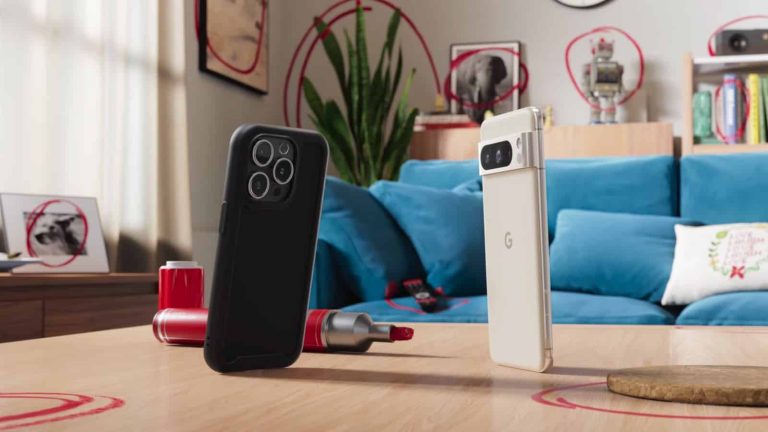
The ad starts with the two devices being placed in an apartment setting, the iPhone’s apartment, to be exact. The thing is, the entire apartment is covered in red circles. It turns out the iPhone circled various objects it wants to search later.
The Pixel is in shock as to what happened, while the iPhone refers to it as its Circle to Search feature. As many of you know, Pixel phones now have a very neat Circle to Search feature, as this is Google’s way of promoting it.
The ad itself has a runtime of less than a minute, and it’s embedded below the article. This is one of many #BestFriendsForever ads that Google released thus far. They’re basically always used to promote some of the Pixel’s features.
If Google plans on releasing these ads in the future, we’ll basically get a new one every time a major Pixel feature launches. Some of these ads end up being quite entertaining, that’s for sure.
More Pixel phones have started getting the feature quite recently, by the way. So Google apparently saw a great opportunity to release this ad and promote that new feature.
It’s actually rather useful. You can basically circle anything on the screen in order to fire up a Google search, as the name of the feature says. There’s no word whether this feature will ever see the light of day on iOS.
Despite Apple’s recent decision to reinstate Epic Games’ developer account in the EU, the conflict between the two tech giants continues to escalate. This time, Epic has taken a bold step by filing a lawsuit against Apple, accusing the iPhone maker of not fully complying with a court order issued in 2021. The order allows developers to bypass the App Store’s 30% commission by introducing alternative links.
In a pivotal moment of the legal battle in 2021, Judge Yvonne Gonzalez Rogers issued an order that Apple must allow developers to direct users to payment systems other than the App Store. This significant move enables developers to avoid the 30% commission to Apple. At the time, the judge concluded that Apple’s existing payment policies violate California’s Unfair Competition law.
Apple still wants a commission from payments not made through its App Store
In a significant turn of events, Apple’s appeal was denied by the US Supreme Court in January, compelling the tech firm to revise its App Store guidelines to align with the court order. However, Apple’s announcement that it still intends to collect a commission from payments made through alternative gateways underscores the gravity of the situation.
Developers entitled to the App Store Small Business must pay a 12% commission, while others should pay 27%. At the time, Epic CEO Tim Sweeney said these new policies were “anticompetitive.”
Epic’s filing with a federal court on Wednesday argues that Apple is not complying with the court order as it still charges developers a commission for payments not made through the App Store.
Apple said it had complied with the court order, denying Epic’s allegations
The gamer maker is demanding the court to keep Apple accountable for “failure to properly comply with a court order to open its App Store to outside payment options.” And its new policies that make those alternative links “commercially unusable.
In response, Apple said it had complied with the injunction by letting developers add alternative payment gateways. It also said developers can now “communicate with customers through points of contact obtained voluntarily from customers through account registration within the app.”
For the past few years, ASUS has been a pretty quiet name in the Android world. Basically, they only release two phones each year. Two niche phones. There’s the ROG Phone, which is really popular among gamers. Then there was the Zenfone which was a small and compact model. The Zenfone 9 and 10 were both 5.9-inch smartphones with impressive battery life and performance. As you might expect, that small and compact phone did not sell well. Now, ASUS is pivoting a bit and going “Ultra” with a new 6.78-inch FHD+ display on the Zenfone 11 Ultra. A far cry from what the Zenfone 9 and 10 were.
I had been saying for the past two years that ASUS needed a phone that would appeal to the masses, as neither the ROG Phone nor the Zenfone was doing that. It appears they heard me. If Apple couldn’t make a compact phone a top seller, then ASUS had no way of doing that, especially in the West.
Enter the Zenfone 11 Ultra. It looks like a really incredible phone and looks very similar to the ROG Phone 8 that launched in January of this year. It’s got a big display, which is what people want. As well as the latest and greatest processor, plenty of RAM and storage, and a pretty large 5,500mAh capacity battery inside.
So, the real question now is, does ASUS have a hit on their hands? Let’s find out in our full review.
Table of Contents
ASUS Zenfone 11 Ultra Review: Hardware and Design
While we’ve all been crying about phones keeping the same design year after year, ASUS decided to switch things up this year. The Zenfone 11 Ultra looks quite a bit different from the Zenfone 10 but it still looks like an ASUS smartphone. It sports a curved glass back that is now matte, and it feels terrific in the hand. It has the new ASUS logo etched into the glass, as well as “ASUS Zenfone” towards the top of the phone. You really don’t notice this in a lot of lighting, at least on the gray model that I have here. It is pretty subdued.
There is a camera bump this year, with three cameras. So ASUS has finally added a telephoto camera this time around, which we’ll talk a bit more about later. The camera bump itself is a rectangle, with the primary camera on the left side and the ultrawide and telephoto to the right, they are also much smaller. It’s a weird-looking camera bump, but it works.
The frame is made of metal and painted black. It looks great, especially in contrast with the Misty Grey backside. On the right side is your volume rocker and power button. There’s nothing on the top or left side, with the charging port, SIM card tray and speaker being on the bottom. The USB-C port is off to the left side, and not centered, a lot like the ROG Phone 8. It’s a bit weird, but you get used to it. Of course, if you don’t like that, you can always utilize wireless charging.
The front is almost entirely screen. There are some bezels here, definitely thicker than what the Galaxy S24 Ultra has, but it looks good. It gives you loads of screen without accidental touches, which can become an issue with screens that have very small bezels.
All in all, I absolutely love the build and design of the Zenfone 11 Ultra. If you’ve ever used ASUS laptops, desktops, or any other hardware designed by ASUS, then you know exactly what to expect here. And you’ll feel right at home.
ASUS Zenfone 11 Ultra Review: Display
ASUS has never really put the most pixel-dense or highest-quality displays into their smartphones. So we’re not looking at crazy specs here like a 4,500nit peak brightness display or Quad HD+ resolution. Instead, ASUS likes to use a lower resolution display that can help with battery life. Since most QHD+ displays default to FHD+ resolution anyway, sticking with an FHD+ resolution display is a smart choice. It conserves battery while still offering a stunning picture quality.
This isn’t a bad display by any means. This is a 6.78-inch FHD+ display that has a 144Hz refresh rate and a peak brightness of 2,500 nits. It’s also LTPO, so it can go from 1 to 120Hz. The 144Hz is only available in supported games, as you might expect.
It is rated for 2,500 nits of peak brightness, and in our testing, we were able to get it to hit 2,202 lux, which is pretty close. Of course, the vital thing to remember with peak brightness is that you’ll likely never hit that exact number. That is a higher number than we got with the Galaxy S24 Ultra and the OnePlus 12, both of which have higher peak brightness numbers.
Now as for the colors of this display, it looks incredible. It’s an AMOLED display, so that’s kind of expected. Using this phone to watch movies and videos on YouTube was an incredible experience. Especially when tied in with the stereo speakers. It’s hard to find fault with this display, and to be honest, I don’t miss the QHD+ resolution at all on this display panel. Mainly because I almost never turn it on with other phones.
ASUS Zenfone 11 Ultra Review: Performance
Inside the Zenfone 11 Ultra, ASUS has included top-of-the-line specs. This includes the Snapdragon 8 Gen 3 processor, 12GB of RAM and 256GB of storage. Or 16GB of RAM and 512GB of storage, which is the model we have. As expected, everything runs nice and smooth with this hardware, especially while playing games. However, one thing we did notice is that the thermal system isn’t as good as it probably should be. We’ll touch more on this in the benchmarks.
In day-to-day usage, the Zenfone 11 Ultra was as snappy as basically any other Snapdragon 8 Gen 3 phone we’ve used in the past few months. But one thing we did notice is that the phone doesn’t appear to be as optimized as it probably should be. Hopefully, ASUS does push out an update in the near future that will take care of this. Because right now, the phone can get very, very hot. And battery life can really take a hit while doing certain things. And with a massive 5,500mAh capacity battery, that should not be the case.
Benchmarks
For benchmarks we run quite a few different benchmarks that help us see how good (or bad) the hardware really is. We run Geekbench 6, which measures the CPU single- and multi-core, as well as the GPU’s raw performance. Then there’s 3D Mark Wildlife Extreme Stress Test, which pushes the phone to its absolute limit in a benchmark that loops 20 times. The final performance-based benchmark is one that we created ourselves. Using Capcut, we export the same 60-second video, and time how long it takes. You’d be surprised at how long it takes on different devices.
First up is Geekbench 6. Here, we are comparing it to the HONOR Magic6 Pro, ASUS ROG Phone 8 Pro Edition, and the Samsung Galaxy S24 Ultra. All of these sports the Snapdragon 8 Gen 3 processor, so scores should be very similar, and the differences would come down to margin of error and software optimization.
As you can see above, all four devices scored pretty close together. However, the Zenfone 11 Ultra did manage to squeak out the highest score in each test. But not by much.
Next up is 3D Mark Wildlife Extreme Stress Test. Now, this is where ASUS’ lack of thermals really comes into question. It had a best loop score of 5,200, a lowest loop score of 4,386, and a stability of 84.4%. That’s just a tad below the ROG Phone 8 Pro Edition, but it does have a higher stability score. That stability score is actually quite high. But so is the temperature after running that test. We clocked it at 131.8 degrees Fahrenheit. That is the highest temperature we’ve ever clocked in our thermal testing. Generally, phones clock in around 110 degrees.
Finally is Capcut. All four devices were able to export the 60-second video in under 9 seconds. That’s quite good and what we’d expect from Qualcomm’s latest silicon. The Zenfone 11 Ultra came in second place among these four phones, only behind the ROG Phone 8 Pro Edition. It had a score of 6.88 seconds, which is the third fastest score we’ve ever tested, actually.
Thermals
To put it bluntly, the Zenfone 11 Ultra did not do well in our thermal testing. We run three (technically four) thermal tests on every smartphone we review. The first is running the 3D Mark Wildlife Extreme Stress Test, which pushes the phone to its absolute limit, and it also pushes the Zenfone 11 Ultra to its hottest temperature. It hit 131.8 degrees Fahrenheit once the test was over. Now the good news here is that it did drop from that temperature pretty quickly. After about five minutes, it was down to the 80s. But that is the hottest temperature we’ve ever recorded in this test. Typically, phones reach around 110 degrees in this test.
The next test involves Genshin Impact. Obviously, it’s a viral game, but also a very graphically demanding test. We run this game for an hour at the highest graphics settings and at the highest brightness. The Zenfone 11 Ultra faired a little better here, at 99.2 degrees. That’s within a degree or two of almost every other phone we’ve reviewed.
The third and fourth tests involve recording video at 4K60. We checked the temperature for 5 minutes and again for 10 minutes. At the five-minute mark, the Zenfone 11 Ultra was at 98 degrees and 104.1 degrees 10 minutes in. These aren’t so bad, but again, they are higher than most other phones. Most phones struggle to go above 90 degrees at the five-minute mark, and most do not hit 100 degrees at the ten-minute mark.
The conclusion that I’ve drawn from these benchmarks and the thermal tests is that the Zenfone 11 Ultra isn’t as optimized as it should be. And the thermal system isn’t as good as it should be. This could be “fixed” with software by limiting the processor a bit, but we’re not sure if ASUS will do that or not.
Audio
For audio testing, we have five different tracks that we play from the speakers on the phone. Each one of these tracks specializes in a different area of the audio. That’s Loudness and Distortion, Bass, Treble, Overall Balance, and then the vocals. This is a subjective test since it will sound different to each person.
In my testing, I found that the loudness and distortion were quite good, along with the bass. However, the bass can be a bit overpowering when it comes to the overall balance. The higher-ends in the Treble test were crisp and clear, as were the vocals in that test.
The only real complaint I have with the audio coming from the stereo speakers on the Zenfone 11 Ultra is actually the fact that it does not have Dolby Atmos. It does have DIRAC for doing its audio, but I feel like Dolby Atmos is just better for watching videos and listening to music.
ASUS Zenfone 11 Ultra Review: Battery life and Charging
The battery life definitely seems like a step down from the Zenfone 10. Then again, that could also be because the Zenfone 10 was so tiny, with such a large battery that it surpassed everyone’s expectations. The Zenfone 11 Ultra does have a 5,500mAh capacity battery – that’s bigger than both the Galaxy S24 Ultra and OnePlus 12. And it does get you through a full day with ease. I was usually getting about a day and a half out of a single charge.
But in our battery life test, which we have the phone play a video on YouTube at full brightness from 100% down to 1%, the Zenfone 11 Ultra did not perform as well as expected. Which leads me to believe that video playback on battery life is not optimized enough. Once again here we are comparing it to the HONOR Magic6 Pro, ASUS ROG Phone 8 Pro Edition and the Samsung Galaxy S24 Ultra.
The Zenfone 11 Ultra finished with the second lowest time for a non-folding smartphone. The only phone with a worse time was the Sony Xperia 1 V, at 12 hours and 27 minutes. The ASUS Zenfone 11 Ultra had a time of 16 hours and 27 minutes. That’s an hour less than the ROG Phone 8 Pro Edition and about 10 hours (!) less than the HONOR Magic6 Pro, which is the current battery life champ.
Charging
Unfortunately, this year, ASUS decided to take the charger out of the box. It’s unfortunate, but we all saw this coming. Just about every other phone has done the same thing. This means that we’re on our own to test out the charging speed here. Luckily, the ASUS Zenfone 11 Ultra does use 65W charging with USB-C PD and PPS, like most other products. So, any 65W or faster charger that has PD and PPS should work just fine. We tested this out with a 100W UGREEN charger and a USB-C cable that shows you the current speed. We were only able to get up to about 35W and were able to charge the phone in just over an hour – officially, one hour and one minute – from 1% to 100%.
It’s not bad, but we were expecting to see 65W. Of course, there are a lot of variables involved with charging speeds. It could be the electrical system in my home, it could be the phone wanting slower speeds, or something else. There is no option to enable faster charging. In fact, the only options are for slower charging. However, with this phone lasting a full day on a charge, the slower charging isn’t a bad thing. As long as it can fully charge overnight, which it can.
But, when you compare this to other phones coming out of the East, it’s quite slow. We have several phones launching with over 100W charging these days.
ASUS Zenfone 11 Ultra Review: Software
ASUS has been going with a pretty minimal software approach over the last few years. The company used to have a really heavy skin, but they’ve paired it back to be AOSP with a few additions from ASUS basically like the ability to change system preferences to their own versus using Google’s. I actually prefer ASUS’ version of the quick settings here, whereas Google uses these large tiles, so you can’t use as many quick settings from one swipe; ASUS just makes them all circles. They are making it much cleaner and easier to adjust a bunch of things.
This year, there are even more options for the system preferences. So you can now change the way the volume adjustment mode looks, as well as the volume panel switching options, volume key option for incoming calls, incoming call display, clock appearance on the lock screen, Quick settings panel style, and the power button menu. Now, what’s interesting here is that the quick settings now have a third option called “Enhanced”. This option looks a lot like the one used by ColorOS/Oxygen OS, Xiaomi’s Hyper OS, and many other Chinese smartphones. With the large WiFi panel, a larger slider for brightness and toggles for vibrating, off, and sound on. So there’s really something for everyone here.
Now, this wouldn’t be a 2024 smartphone release without some AI features. And ASUS has those, too. But not quite as many as other smartphone makers these days. The one that I used the most was the Generative AI wallpapers. It lets you do everything you can do on the Galaxy S24 and the Pixel 8 series. When you pick a prompt, fill in a few other prompts, and it will provide you with some spiffy wallpapers. You also can use the ASUS logo in these wallpapers, which can look pretty impressive.
ASUS has also added AI Noise Cancellation for voice calls. This helps to reduce the noise in the environment while you’re on a call. I did test this out a couple of times, calling someone from a bar, and it worked incredibly well. It wasn’t perfect, but it was easy to hear me on the Zenfone 11 Ultra while in a noisy bar. So there’s that.
The only downside to the software is that ASUS does not mention how long they will update the Zenfone 11 Ultra. We’d expect about four years of OS updates and five years of security updates, but that was not mentioned to us in our briefing. So it’s hard to say. At least it is running on Android 14 out of the box, however.
ASUS Zenfone 11 Ultra Review: Camera
The weak part of the previous Zenfones has been the camera, and unfortunately, that remains true again this year. ASUS did move to a triple-camera setup this year, with a 50-megapixel primary sensor, a 13-megapixel ultrawide, and a 32-megapixel telephoto sensor. On paper, the two additional sensors look okay, nothing crazy like what the HONOR Magic6 Pro or Xiaomi 14 Ultra have, but they should be adequate. And that’s probably the best way to describe them.
So, the telephoto lens is able to take up to 3x shots with optical zoom and up to 30x with digital zoom. The 3x zoom looks pretty good. It could be a bit sharper, but for the most part, it looks great. When you do 30x optical zoom, it’s actually surprisingly good for that much digital zoom. I took a photo of a box with the 30x zoom, and I was able to actually read what was on the box – which was a label about it having a battery inside. It’s not insanely sharp, but you can read it well enough. I took a second picture of the side of my photography light box. It wasn’t quite as far away and had less light, but it’s still readable. Again, it is not crazy sharp, but it is readable. And to be honest, I don’t know when I’d ever take a photo at 30x that I would want to post on social media. This would also be used to see stuff that’s far away. This sensor is pixel-binning, down to 8 megapixels, so it’s essentially using four megapixels as one, which does help with providing more details.
The wide-angle lens does its job. There’s not much else to say about it since ASUS did not include any type of Macro mode on the Zenfone 11 Ultra, which is unfortunate. It’s a mode I use quite a bit on other phones.
Then there’s the main sensor. This sensor is actually really good. It has an aperture of f/1.9, so it’s got a great depth of field. Providing some great bokeh on shots that are not in portrait mode. Focusing on this lens is also really good and quick. That’s not something I’ve been able to say about previous phones from ASUS.
Finally, we tested the Zenfone 11 Ultra through the control test that we performed on each phone. Below, you’ll see the same picture (relatively speaking) taken with the HONOR Magic6 Pro, ASUS Zenfone 11 Ultra, and Samsung Galaxy S24 Ultra. As you’ll see the white background is a bit more “white” in the Zenfone 11 Ultra picture, and the Rubik’s cube is also a bit more sharp there.
The conclusion I’ve come to for this camera on the Zenfone 11 Ultra is basically, you’re only going to want to use the main lens. The Telephoto is okay, but not something you’d likely use all that often, and the same goes for the ultrawide.
Should you buy the ASUS Zenfone 11 Ultra?
After spending two weeks with the Zenfone 11 Ultra, I came away quite underwhelmed. Compared to a lot of the other phones I’ve reviewed this year, there’s just not a lot here from ASUS. It’s like a base model phone, with all of the special features being saved for the ROG Phone 8 series. A lot of what made Zenfone so popular in the tech community in the past couple of years is gone. The small size, the great battery life, and the impressive price tag are all gone.
The Zenfone 10 started at $699 here in the US last year. The Zenfone 11 Ultra will start at €999 in Europe (we don’t have a US price just yet, but expect it to be similar). That’s a massive $300 bump for a phone that’s losing out on a lot of things compared to its predecessor. And that makes it challenging to recommend this phone.
For $999, the Zenfone 11 Ultra is competing with the Galaxy S24 Plus, the OnePlus 12 (which is only $799), and even the Google Pixel 8 Pro. All of which, I feel, are much better options for a thousand bucks. And many of which you can get for far less with different trade-ins and deals going on. It pains me to say all this because I love ASUS’ hardware and their products, but I do feel that the Zenfone 11 Ultra did miss the mark.
You should buy the ASUS Zenfone 11 Ultra if:
You don’t care about an ultrawide or telephoto camera
You want a phone that no one else will have.
You want a stock Android phone that doesn’t have a Tensor chipset.
Microsoft Copilot for security was a generative AI solution that can help security and IT professionals handle their security operations much more efficiently.
This was claimed to be the industry’s first generative AI solution for strengthening an organization’s security expertise.
However, Microsoft has announced that Microsoft Copilot for security will be available worldwide by April 1, 2024.
Microsoft also stated that Copilot’s threat intelligence comprises 78 Trillion security signals that are processed by Microsoft every single day.
This is combined with Large language models (LLMs) to deliver the best possible insights and guidance towards the next steps.
Microsoft has recently introduced PyRIT, a Red Team tool designed to assist in the creation of generative AI systems. This tool’s capabilities enable it to identify weaknesses in AI systems and identify potential vulnerabilities that can be exploited.
PyRIT utilizes a combination of automated techniques and expert knowledge to create a more efficient and effective Red Team process for generative AI systems.
Microsoft Copilot for Security
According to the reports shared with Cyber Security News, Copilot for Security’s economic study reveals that experienced security professionals could perform complex security functions swiftly and more accurately.
In addition, Microsoft specified that experienced security analysts could work 22% faster by using Copilot for security.
Studies of Copilot for Security (Source: Microsoft)
Moreover, 97% of the users mentioned wanting to use Copilot when doing the next task.
This study focused on experienced security professionals and a randomized controlled trial published last November.
Both of these studies combined showed that people with any level of experience and expertise can use Copilot effectively.
Pay-as-you-go Model & Global Availability
Alongside this new public availability, Microsoft has also launched its pay-as-you-go Licensing model for Copilot for Security, enabling access to a wide range of organizations.
Microsoft mentioned, “With this flexible, consumption-based pricing model, you can get started quickly, then scale your usage and costs according to your needs and budget.”
Copilot is described as multilingual and capable of processing prompts in eight languages.
Furthermore, the interface contains 25 different languages, making it readily available and usable across major regions, including North America, South America, Europe, and Asia.
As Copilot becomes available worldwide, Microsoft has also added additional capabilities, such as
Custom promptbooks – Create and save self-made Natural language prompts for common security tasks.
Knowledgebase Integrations – Integrate Copilot for security with business logic and perform tasks based on step-by-step guides.
Multi-language support – Process prompts and respond in eight different languages with 25 supported interfaces
Third-party Integrations – Integrate with global partners that work on developing integrations and services.
Connection with External Attack Surface from Microsoft Defender ASM – Identify and analyze the most recent information from external attack surface risks.
Microsoft Entra Audit Logs and Diagnostic Logs – Gather additional insights for a security investigation or IT issue analysts of audit logs associated with specific user/events summarized in natural language.
Usage reporting – Dashboard insights on how teams are using Copilot and identify more opportunities.
This AI-powered Copilot for Security is available as two rich user experiences: an immersive standalone portal or embedded into security products.
Integrating Copilot with Microsoft Security Products is even easier for IT and security professionals, as it offers the advantages of speed and accuracy demonstrated in the Microsoft study.
Furthermore, Copilot still has many more features and capabilities in an organization’s security infrastructure.
Microsoft has also mentioned additional features that are coming soon, such as a unified security operations platform, Copilot in Microsoft Entra, Copilot in Microsoft Purview, and Copilot in Microsoft Intune.
Some of these features are currently available, and others have yet to be made available.
With Perimeter81 malware protection, you can block malware, including Trojans, ransomware, spyware, rootkits, worms, and zero-day exploits. All are incredibly harmful and can wreak havoc on your network.
Stay updated on Cybersecurity news, Whitepapers, and Infographics. Follow us on LinkedIn & Twitter.
Best Buy is currently running a Father’s Day sale, where you can save pretty big on the Sonos Beam (Gen 2). It’s currently on sale for $399.20, which is about $99 off of its regular price. This does mark an all-time low, which is typically around $429.
Sure, here are 300 words on why someone should buy the Sonos Beam Gen 2:
The Sonos Beam Gen 2 is a great soundbar for anyone looking to improve the sound quality of their TV. It’s compact and easy to set up, and it offers a wide range of features, including Dolby Atmos support, voice control, and Trueplay tuning.
Here are some of the reasons why you should buy the Sonos Beam Gen 2:
Dolby Atmos support: The Sonos Beam Gen 2 supports Dolby Atmos, which creates a more immersive sound experience by adding height channels to the soundstage. This can make movies and TV shows sound more realistic and engaging.
Voice control: The Sonos Beam Gen 2 can be controlled using voice commands with Amazon Alexa or Google Assistant. This means you can change the volume, play music, or control other smart home devices with your voice.
Trueplay tuning: Trueplay tuning uses your smartphone’s microphone to measure the acoustics of your room and adjust the sound of the Sonos Beam Gen 2 accordingly. This ensures that you get the best possible sound quality, regardless of the size or shape of your room.
In addition to these features, the Sonos Beam Gen 2 is also built to last. It’s made with high-quality materials and is designed to withstand everyday use. It also comes with a one-year warranty, so you can be sure that it’s covered if something goes wrong.
If you’re looking for a great soundbar that offers a wide range of features and excellent sound quality, the Sonos Beam Gen 2 is a great option. It’s compact, easy to set up, and packed with features that will make your TV viewing experience even better.
Here are some additional benefits of owning a Sonos Beam Gen 2:
Multi-room audio: You can connect multiple Sonos speakers together to create a whole-home audio system. This means you can listen to music in every room of your house, or watch a movie with surround sound.
Works with other smart home devices: The Sonos Beam Gen 2 can be integrated with other smart home devices, such as smart lights and thermostats. This means you can control your home’s entertainment and climate with your voice.
Easy to use: The Sonos Beam Gen 2 is very easy to use. You can control it using the Sonos app, your voice, or the included remote control.
Overall, the Sonos Beam Gen 2 is a great soundbar that offers a lot of value for the price. It’s perfect for anyone looking to improve the sound quality of their TV and create a more immersive home entertainment experience.
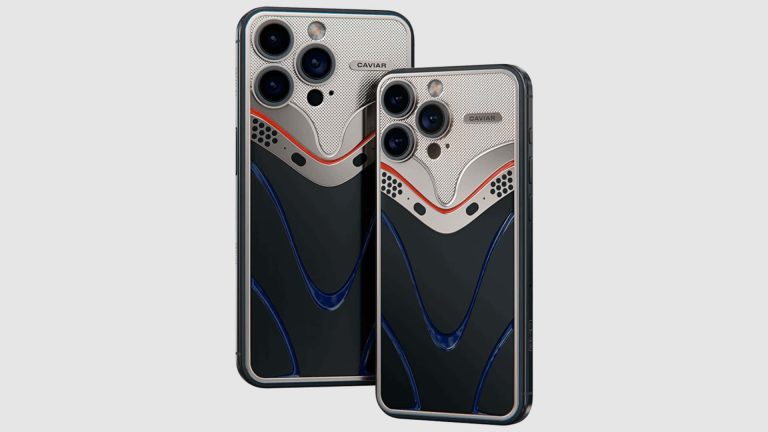
Caviar, a company specializing in luxury customization of flagship smartphones, has unveiled its latest collection. The firm modified the iPhone 15 Pro and iPhone 15 Pro Max to match the aesthetics of the Apple Vision Pro. The devices come in limited quantity (99 units each) and carry a hefty price tag.
Customized iPhone 15 Pro and 15 Pro Max look like the Apple Vision Pro
Caviar has been customizing smartphones for over a decade now. Originally a Russian company, it formed an independent division for international markets in 2022. Caviar International is based in Dubai and operates separately from the Russian brand. It has already launched dozens of customized iPhone 15 versions with a unique luxury design and expensive materials.
However, its latest collection is somewhat different from others. Caviar’s new iPhone 15 Pro and iPhone 15 Pro Max customizations are inspired by the Apple Vision Pro. The firm has slapped the aesthetics of the revolutionary XR headset, which Apple calls a spatial computer, on the back of the phones. Everything from its curves and circular vents to orange highlights and blue shades can be seen.
According to Caviar, the modified iPhone 15 Pro and iPhone 15 Pro Max feature aerospace-grade titanium, likely better than what Apple used. The company used colored accents and laser engravings to carefully craft a design that reminds you of the Apple Vision Pro. The devices come with an international certificate of authenticity, a personal certificate, and a one-year warranty.
As far as the prices are concerned, Caviar doesn’t sell its phones cheaply. The iPhone 15 Pro starts at $8,060 for the 128GB variant. It costs $8,340 for 256GB, $8,700 for 512GB, and $9,060 for 1TB. If you pick the Pro Max model, you will have to shell out $8,840 for the 256GB variant, $9,200 for 512GB, and $9,560 for 1TB. Caviar offers a 15% discount when paying with cryptocurrency.
The devices won’t function any differently
These hefty prices don’t make the devices any better in terms of functionality or performance. On the inside, they are still the same iPhone 15 Pro and iPhone 15 Pro Max that you can buy at around $1,000. Caviar charges a massive premium for its luxury modification and materials used. If you are willing to pay even more, the firm offers more personalization options.
You can have personal engraving on the side edges of the phones, apply your logo or initials, and even modify some design elements. Additionally, you can ask Caviar to replace the material or add custom shapes and elements to its body. You can also ask for custom packaging. This personalization will cost more. Head to Caviar’s website to check the Apple Vision Pro-inspired iPhone 15 Pro and iPhone 15 Pro Max.
Threat actors have been observed hosting phishing documents on legitimate digital document publishing (DDP) sites as part of continuous session harvesting and credential attempts.
Since DDP sites are unlikely to be blocked by web filters, have a good reputation, and could give visitors the impression that they are trustworthy, hosting phishing lures on these sites increases the chance of a successful phishing attack.
“Digital Document Publishing sites” are online platforms that let users upload and share PDF files in a browser-based flipbook format.
Users can read a PDF in its entirety by turning pages without downloading the file, and certain DDP websites have functionality that enables additional document interaction.
Publuu, Marq, FlipSnack, Issuu, FlippingBook, RelayTo, and SimpleBooklet are a few DDP sites involved in the campaign.
Attackers Leverage DDP Sites For Ongoing Credential And Session Token Theft
Recently, as part of continuing credential and session harvesting attempts, threat actors have been hosting phishing documents on legitimate digital document publishing sites like Publuu and Marq.
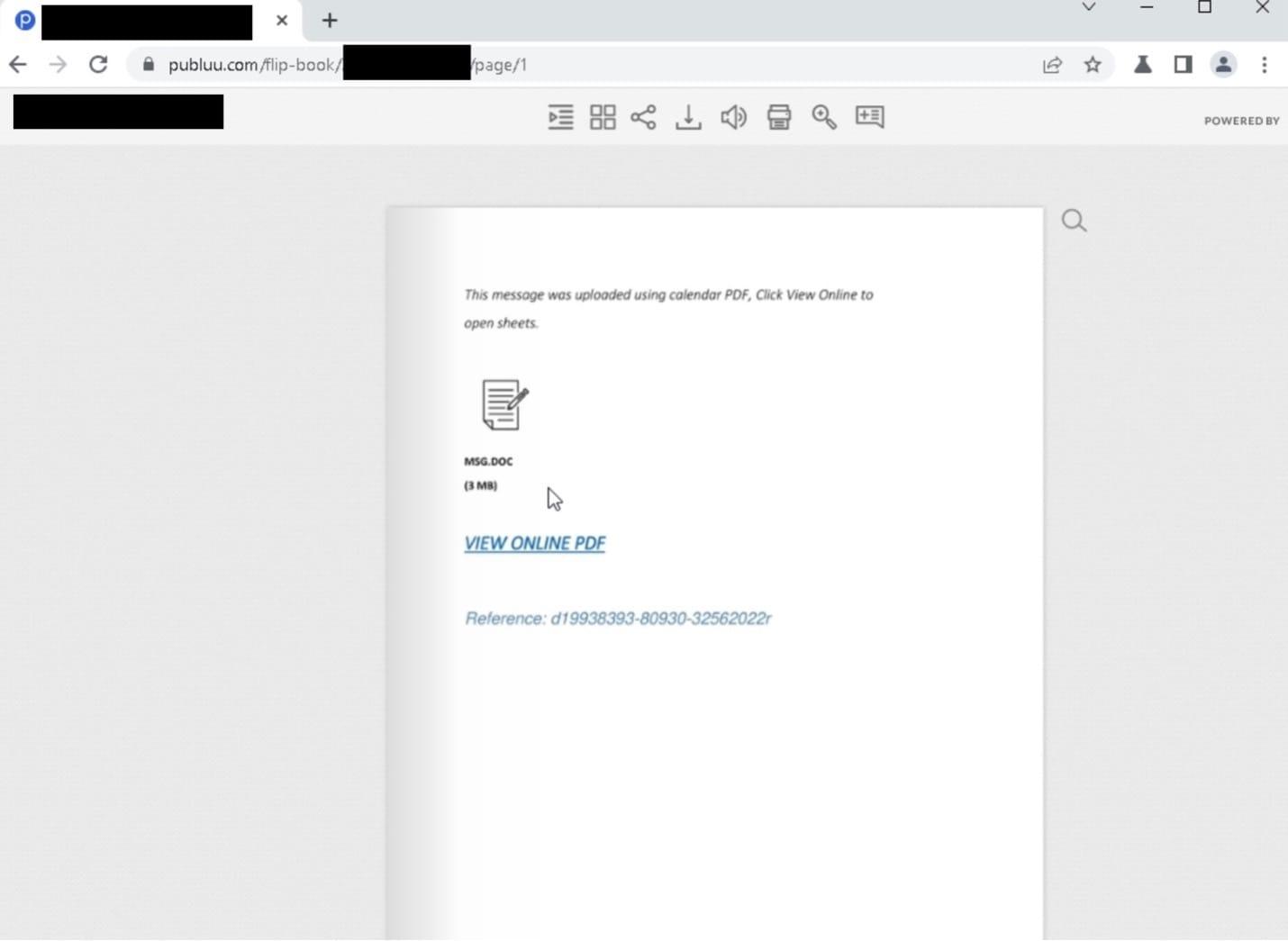
In the Publuu case, phishing emails with the subject “New Document from [third-party vendor]” were sent to several people at the targeted company using a compromised email account that belonged to a reliable third-party vendor. The email’s body contained a link that opened a Publuu flipbook.
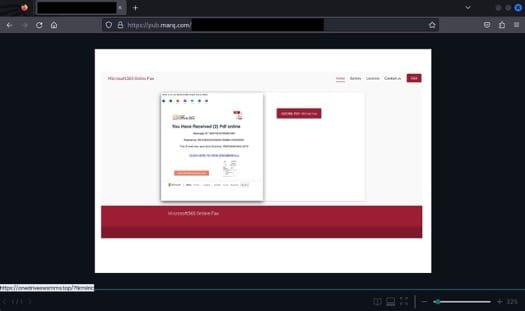
“The phishing document was a generic, widely used file observed in similar attacks on other DDP sites.
However, while the phishing document was reused, the adversary had modified the Publuu page with the sender organization’s name to lend authenticity to the document”, Talos researchers shared with Cyber Security News.
The phishing document
The user was redirected to a Cloudflare CAPTCHA after clicking the “VIEW ONLINE PDF” link.
Using the CAPTCHA probably serves two purposes: it shields the credential harvesting page from automated access and presents a genuine website to users who click on the phishing link.
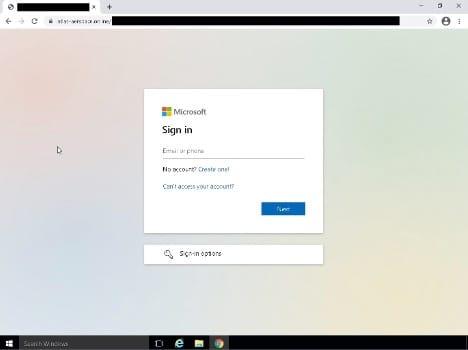
“After completing the CAPTCHA, the victim is directed to a convincing replica of a Microsoft 365 authentication page. The URL for the page contains a lengthy alphanumeric string, which may act as an identifier for the visitor”, researchers said.
Replica of a Microsoft 365 authentication page
In the case of Marq, every page was set up with a distinct URL utilizing the top top-level domain, in contrast to some activity clusters on other DDP sites. The URL query string tkmilric was another feature shared by all URLs incorporated in the phishing document.
Marq page hosting the phishing document
These features most likely point to a campaign that uses the same lure and customized or DGA-generated domains to collect session tokens for Microsoft 365 components.
Mitigations
Block common DDP sites via border security devices, endpoint detection and response (EDR) like Cisco Secure Endpoint, web content filtering, and/or DNS security controls.
Set up email security settings to recognize and notify recipients of links in emails that contain common URLs for DDP sites.
Utilize threat intelligence to detect recently established websites associated with recognized dangers promptly.
Keep an eye out for any changes in behavior in the internal environment of the company.
Include information on DDP sites and other cloud-hosted phishing attack techniques in user security awareness training.
With Perimeter81 malware protection, you can block malware, including Trojans, ransomware, spyware, rootkits, worms, and zero-day exploits. All are incredibly harmful and can wreak havoc on your network.
Stay updated on Cybersecurity news, Whitepapers, and Infographics. Follow us on LinkedIn & Twitter.
In a continuous effort to optimize the Google Message application, Google has now introduced a new emoji reaction feature to it. The brand has been adding features like emoji reactions to messages, theme options, and screen effects to the app lately. The new emoji reaction feature not only enhances the overall user experience but also improves user conversation.
Telegram-like Emoji reaction is now available on Google Messages
The cool-looking emoji reaction is one of the most popular features of Telegram, and it is now available on Google Messages as well. The competitor Apple’s iMessage already had it for a long time. First reported by 9to5Google, the new feature will add an animated effect to the message or text whenever you react with the selected emojis. Currently, only a handful of emojis will support the reaction feature. But that’s not the point of worry since almost all the majorly used emojis are there.
A total of ten emojis are supported and they are; thumbs up emoji, smile face, red heart, thumbs down, face with a tear of joy, enraged face, a pile of poo, party popper, angry face, crying face, and the face with open mouth. If you react to a text using any emojis, you will see an animated effect on the screen. For reference, if you react with a thumbs-up emoji to any text, it will display multiple thumbs-up emojis dancing around the text.
Users are free to turn and turn off the animations by going to settings, then accessibility, and then colors and motion. Now simply enable or disable the “Remove animations” option according to your preference.
It can also display iMessage reactions as text
Yes, you heard it right. If you are chatting with any of your friends who are using an iPhone to chat with you using RCS, and they react to any of your texts or messages, you will be able to see it in the text format. As of right now, the feature is only available for text messages and not the sent media or files.
Moreover, the US market is currently the only one that has the iMessage reaction display feature limited to it. The user can turn on the feature by going to settings, then advanced settings, and turn off “Show iPhone reactions as emoji.”
TikTok CEO, Shou Chew, has responded to the newly passed bill that could ban the social media app in the US. He said the legislation is unconstitutional and built on misinformation. Chew urged TikTok users to speak up and make their voices heard as the company prepares to exercise its legal rights.
TikTok will challenge the bill designed to ban the app in the US
US lawmakers have been mulling banning TikTok nationwide for the past few years. They see the platform as a national security threat because of its Chinese ties (parent company ByteDance is based in China). Lawmakers have expressed concerns about the firm potentially leaking user information to the Chinese government. Several US states and government agencies have already banned the app on official devices.
Yesterday, the House of Representatives passed a bill that, if passed into law, would force ByteDance to sell the US unit of TikTok or cease operations in the country within six months. Unsurprisingly, the firm doesn’t agree with the decision. TikTok’s global CEO came down hard on this “disappointing vote.” Chew said banning TikTok, which is the primary goal of the bill’s sponsors, would give more power to other social media platforms.
The TikTok CEO also tried to clarify the “misinformation” about the platform in a video addressed to US users. He reiterated what the company has been saying all this while, that the user data is safe and “free from outside manipulation.” According to Chew, TikTok currently has 170 million users in the US, including 7 million businesses. A nationwide ban on the app will put more than 300,000 American jobs at risk.
TikTok plans to fight and wants its users to help it. “We will not stop fighting and advocating for you and we will continue to do all we can, including exercising our legal rights,” Chew said in the video posted to X. “We believe we can overcome this together.” He encouraged users to keep sharing their stories with friends, families, and senators. “Protect your constitutional rights. Make your voices heard. Love you all,” Chew signed off.
TikTok has challenged state-level legislation in the past
It has been a rough ride for TikTok in the US in recent years but the firm has held its own. The firm previously challenged state-level bans and won. A federal judge temporarily blocked the proposed statewide ban on the app in Montana last November. However, troubles keep mounting, making it more challenging for the company. It remains to be seen whether TikTok survives under ButeDance’s ownership in the US.
Google Maps integrates social media posts from platforms like Instagram, Facebook, YouTube, and X into Google Business Profiles.
Business owners can link their social media accounts to their Google Business Profile, allowing their posts to automatically appear on their profiles.
This feature is currently available in specific regions, with plans to expand availability.
Every brand is relying more and more on online marketing to boost its visibility among consumers. With the help of Google Business Profiles, for example, a company appears in Search results and Maps, offering people quick access to information like its location, contact details, opening hours, ratings, and photos of its retail locations. And now, Google is introducing even more ways for you to engage with various businesses directly in Maps.According to Search Engine Journal (via Android Police), Google has launched a feature that automatically showcases social media posts from platforms such as Instagram, Facebook, and X directly on Google Business Profiles (GBP). The goal of this update is to give customers a more complete understanding of a business’s online presence and engagement.
Check out this example of the feature in action (via Darren Shaw and Krystal Taing on X):
Is Google going to kill Google Posts?
Yesterday, @StefanSomborac shared a screenshot from an updated Google support doc, stating: “some businesses may find their social media posts surfaced on their Business Profile automatically.”@krystal_taing posted a video on LinkedIn… pic.twitter.com/yU6HnF9DvC
If you are a business owner, you have the option to add one link from each of the following platforms to your GBP: Facebook, Instagram, LinkedIn, Pinterest, TikTok, X (formerly known as Twitter), and YouTube. According to a Google help page, businesses that have linked their social media profiles with their GBP may now see their social media posts automatically appear on their profiles.
To start using the new feature, go to your Business Profile, then:
Head to the “Edit profile” section
Click on “Business information”
Select “Contact”
Choose “Social profiles” to add, update, or remove links to your social media accounts.
This update not only makes it easier for customers to find businesses they follow on social media but also gives brands more space to market themselves effortlessly once they’ve set up the integration.
It’s worth mentioning that this feature is currently available in specific regions and might not be accessible to all Business Profiles yet. We will make sure to keep you updated on any changes in availability.
In other news, Google is stepping up its game on Google Maps by adding not only social media posts but also showing entrances to buildings right on the map.