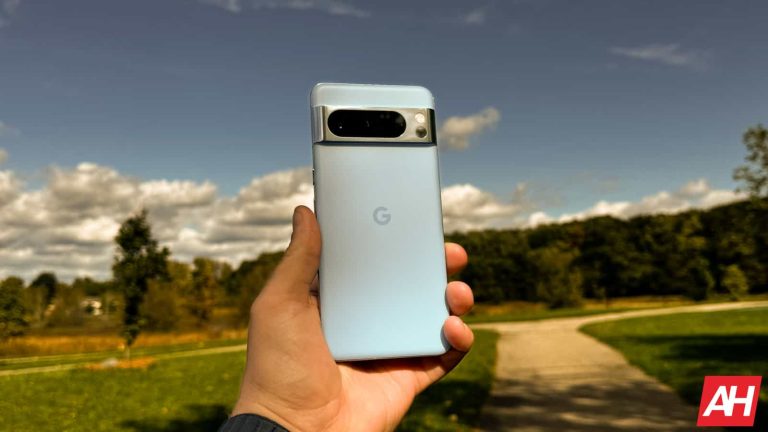
You’re using an app with a Google Pixel Fold (Review) while it’s open, but it’s time to switch to a more sleek form factor. You close the phone, but you then see a blank screen. Wouldn’t it be great if you could immediately continue using the app on the cover screen? Well, the Pixel fold might bring a feature to let you continue using your apps on the cover screen when folded.
The Google Pixel Fold is a great handset, but it still has a little bit of growing to do if it wants to match the feature set introduced by other foldable phones. One thing that kind of annoys users is the fact that, when you close the phone while an app is running, you have to unlock your phone again to continue using it on the cover display. Sure, that’s technically more secure, but it’s not as seamless as people would want it.
The Pixel Fold may let you continue using apps on the cover screen when it’s folded
Fortunately, it appears that Google wants to change this. Mishaal Rahmen, via Android Police, discovered some code within the latest Android 14 QPR update. In case you don’t know, Google just released the Android 14 QPR3 Beta 1 update for Pixel users. It brings the Circle to Search feature for beta testers.
At launch, when you closed the Pixel Fold while an app was running, the screen would just shut off. However, in the Android 14 QPR1 beta, Google brought the ability to choose whether the screen shuts off when you close it or stays on. The setting was called “Continue using apps on fold”, and it was something that Pixel Fold users really loved. However, Google has since taken that feature away.
Hidden within the code for the Android 14 QPR3 beta 1, it looks like Google wants to bring this functionality back, but with a Twist. In the code, there are some strings that allude to a feature we see with the OnePlus Open (Review). One string is:
<string name=”stay_awake_on_lockscreen_title”>Swipe up to continue</string> .
This implies that your phone will remain awake when the phone is closed. The next string reads:
<string name=”stay_awake_on_lockscreen_summary”>Fold your phone and swipe up on the front display to continue using the app, or wait a few seconds for the screen to lock</string>.
What the strings mean
The note within the last string tells us that you will simply have to swipe up on the cover screen when the phone is closed to resume the app you are using. Otherwise, you’ll just have to wait for the screen to time out or manually lock the phone.
This gives you more flexibility when deciding whether to continue your apps on the cover screen. You’ll continue them on a per-app basis. Unfortunately, we don’t know when Google is going to push this feature. No one has been able to enable the future yet, so it is still under production. Hopefully, it will launch soon.
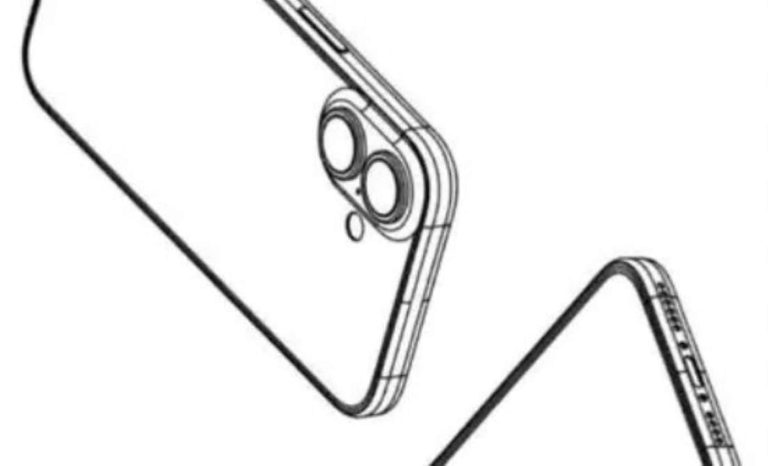
Apple‘s latest prototype of the iPhone 16 has surfaced featuring a vertical camera arrangement with a “pill-shaped raised surface”. Notably, the design looks a lot similar to the iPhone X’s camera module. According to AppleInsider, this design update could be due to the inclusion of “Spatial Video”, a feature that is currently exclusive to the iPhone 15 Pro, iPhone 15 Pro Max, and the more recent “spatial computing” platform, the Apple Vision Pro.
To help readers better visualize the design changes, MacRumors has created mockups based on internal designs. The pill-shaped camera bump showcases two separate camera rings for the Wide and Ultrawide lenses, reminiscent of earlier prototype designs. Despite this alteration, Apple has maintained consistency in the position of the flash and camera lenses. These findings are in line with schematics recently leaked by Majin Bu on X (formerly Twitter), further confirming the updated design.
The revamped camera design draws inspiration from previous iPhone models, particularly the iPhone X, which featured a similar pill-shaped camera setup. While the iPhone 12 series also adopted a vertical camera layout, it had a wider square bump housing additional components like the flash and microphone. With this vertical arrangement, expectations are high for Apple to introduce Spatial Video recording to the base model iPhone 16 and iPhone 16 Plus.
iPhone 16’s Action Button and Capture Button are also undergoing some redesigns
In addition to the camera bump redesign, recent iPhone 16 prototypes have undergone slight modifications to the Action Button and the rumored Capture Button. Apple has scaled down the Action Button to resemble the one found on the iPhone 15 Pro, while the Capture Button now boasts a pressure-sensitive design flush with the device’s frame, notes MacRumors.
However, a new leak says that Apple has returned to the previous mechanical design for the Action Button. These adjustments signify Apple’s commitment to refining the user experience and ergonomics of its devices during the prototyping phase. It’s essential to note that the information shared here is based on pre-production data and may not accurately reflect the final design of the mass-produced units set for release later this year.
Google is taking proactive steps to protect Android users from the rising tide of online scams. Targeting people’s money and personal info, scammers these days employ clever software tricks to bypass security. According to a credible source, there’s a new anti-fraud security feature underway to counter the issue and it will work through Google Play Protect. Here’s how Google’s new system protects you from scams.
Google’s Anti-fraud Security Feature and How it Works
In last year’s iteration of Play Protect’s real-time scanning for third-party apps, scammers often tricked users into disabling the option. Doing so leaves their finances and personal data vulnerable. Cybercriminals frequently use social engineering tactics and convince Android users to turn off security features voluntarily.
Google acknowledges that a major portion of malware installation (almost 95%) originates from sideloading third-party apps such as messaging or web browsers. With a solution at hand, Google has collaborated with the Cyber Security Agency of Singapore (CSA) to launch a pilot program for an advanced anti-fraud system.
Google’s anti-fraud system is exclusive to Singapore for now. It will automatically analyze and block the installation of apps requesting sensitive runtime permissions often abused for financial scams. Specifically, the system targets apps sideloaded from external sources. It will scrutinize if the app has four specific runtime permissions — RECEIVE_SMS, READ_SMS, BIND_Notifications, and Accessibility — commonly exploited in scams.
With the pilot program working, sideloaded apps declaring those specified permissions will be blocked. And users will receive a notification informing them that Play Protect has automatically blocked the app’s installation. Google’s partnership with the CSA seems productive, enhancing user protection by tackling the risks associated with sideloading.
Pilot Program’s Duration and Future Plans
The duration of Google’s anti-fraud pilot program in Singapore remains undisclosed. No one knows for sure when it will officialize in other regions. But one thing is certain; Google is putting a lot of effort into fortifying Android security. Their collaboration with a cybersecurity agency shows how bad online scams have become. After the pilot program ends, users worldwide should expect the feature’s rollout via an update. Google aims to create a safer environment for Android users as soon as possible by leveraging expertise from more security agencies.
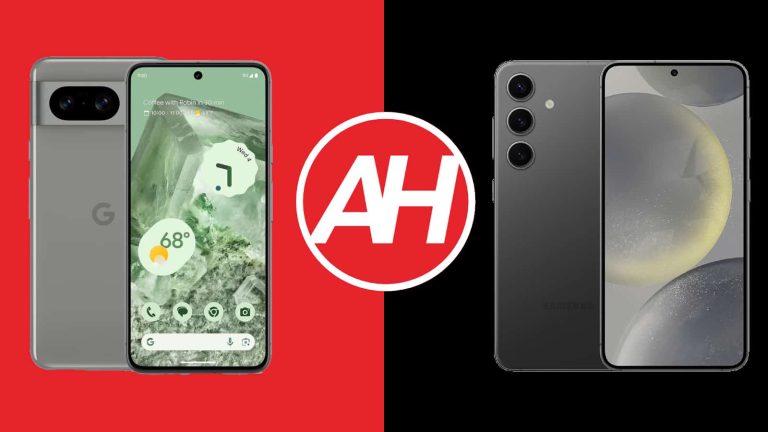
Both Google and Samsung have somewhat compact high-end smartphones to offer. We’re here to compare those two smartphones, the Google Pixel 8 vs Samsung Galaxy S24. These two phones are considerably different, actually. They’re both running Android, and they’re both quite compact, but they’re still quite different. Not only do they have different internals, including the SoC, but they do feel different to hold and have different camera performance, amongst other things.
Having said that, we’ll first list their specifications, and will then move to compare their designs, displays, performance, battery life, cameras, and audio performance. Their price tags start well below $1,000, which could be an ideal higher-end smartphone choice for someone who doesn’t want a huge phone. Let’s see what they have to offer, shall we?
Specs
Google Pixel 8 vs Samsung Galaxy S24, respectively
Both of these phones are made out of metal and glass. They both use aluminum, and they both have rounded corners. You’ll also find flat displays on both smartphones, with a centered display camera hole. Now, both of them do have very thin bezels, but the ones on the Galaxy S24 are thinner. Also, the Galaxy S24 has uniform bezels, unlike the Pixel 8, even though the bezels on that phone are close to being uniform as well.
The frame on the Galaxy S24 is flat all around, with slight curves towards the edges. That’s not the case with the Pixel 8, as the sides are a bit rounded. That, and the fact the Galaxy S24 is about 20 grams lighter, makes Samsung’s handset a bit more pleasant to hold and use, at least that was the case for us. The Galaxy S24 is also slightly shorter, and thinner than the Pixel 8, despite the fact they have the same display size.
If we flip them over, you’ll notice considerably different camera implementations. The Pixel 8 has a camera visor with two cameras. That visor connects to the phone’s frame on the left and right sides. The Galaxy S24 has three cameras on the back. Those cameras are not part of a camera island, but each of them protrudes separately on the back. Both phones include physical buttons on the right-hand side.
They’re both compact enough to use with one hand, at least that’s our opinion. They are both quite slippery, though, so using a case may not be a bad idea despite the fact it’ll add some bulk to both devices.
Google Pixel 8 vs Samsung Galaxy S24: Display
The Google Pixel 8 features a 6.2-inch fullHD+ (2400 x 1080) OLED display. That panel is flat, and it’s a 120Hz panel. HDR10+ content is supported on this display, and the panel goes up to 2,000 nits of brightness at its peak. We’re looking at a 20:9 display aspect ratio here, in case you were wondering. The Google Pixel 8’s display is protected by the Gorilla Glass Victus from Corning.
Google Pixel 8
The Galaxy S24, on the flip side, includes a 6.2-inch fullHD+ (2340 x 1080) Dynamic LTPO AMOLED 2X display. That panel is also flat, and it supports a 120Hz refresh rate. HDR10+ content is supported here as well, and this display goes up to 2,600 nits of brightness at its peak. The display aspect ratio is 19.5:9, and this panel is protected by the Gorilla Glass Victus 2, also from Corning.
There is not much to complain about here when it comes to displays, not at all. Both panels are quite vivid and have great viewing angles. The touch response is good, and they’re also both sharp enough. The blacks are also quite deep in both of them. The Galaxy S24 display can technically get a bit brighter than the Pixel 8’s panel, but the difference is not that big during regular use, though. Both of them are bright enough to use outdoors, so that’s not something that should bother you. You can’t go wrong either way.
Google Pixel 8 vs Samsung Galaxy S24: Performance
Google’s handset is fueled by the Google Tensor G3 processor. That is Google’s third-gen chip, and it is a 4nm processor. That chip is paired with 8GB of LPDDR5X RAM, and UFS 3.1 flash storage. The Galaxy S24, on the flip side, is fueled by the Snapdragon 8 Gen 3 for Galaxy in some markets, while the Exynos 2400 is used in other markets. Both of those are 4nm chips. Samsung also includes 8GB of LPDDR5X RAM (up to 12GB in a couple of markets), and UFS 4.0 flash storage (UFS 3.1 for the base 128GB storage model).
The performance is actually really good on both phones. The Galaxy S24 does offer more sheer power and is the better choice for gaming. That’s the case not only because of its SoC and storage but also because it has better cooling than the Pixel 8. The Pixel 8 can handle some more demanding games, but not as well as the Galaxy S24, that’s for sure. It also does get hotter than the Galaxy S24 in such instances.
During regular, everyday use, both smartphones do a great job. The difference in opening apps, jumping between them, and so on, is not that big. Sure, if you compare them side by side you’ll see a tiny difference, but in general, they’re both very fast regardless of what you do. In other words, you shouldn’t worry about that. They both deliver in that regard.
Google Pixel 8 vs Samsung Galaxy S24: Battery
Google’s handset comes with a 4,575mAh battery, while the Galaxy S24 features a 4,000mAh unit. The Pixel 8 does have a bigger battery, and it actually does deliver better battery life, at least that was the case for us. Getting around 6.5-7 hours of screen-on-time on most days was easily possible for us. That’s not bad battery life at all. It’s not great, that’s for sure, there are better phones for that out there, but it’s good.
The Galaxy S24, on the other hand, can deliver over 6 hours of screen-on-time, depending on what you do, but not much more than that. It also tends to fall under that mark, depending on your usage. Your mileage may vary, of course, there are simply too many factors involved. Do note that we didn’t play games on most days, but we do use our phones for various other tasks that you’d expect, such as browsing, messaging, taking pictures, image processing, and so on.
If you do run out of battery ahead of time, the Pixel 8 supports 27W wired, 18W wireless, and 5W reverse wireless charging. The Galaxy S24, on the other hand, supports 25W wired, 15W wireless, and 4.5W reverse wireless charging. So, neither smartphone offers particularly fast charging. Also, you’ll need to get a charger separately for both of them, as neither includes one in the retail box.
Google Pixel 8 vs Samsung Galaxy S24: Cameras
The Google Pixel 8 features a 50-megapixel main camera, and a 12-megapixel ultrawide unit (126-degree FoV). The Galaxy S24 sports three cameras on the back, a 50-megapixel main unit, a 12-megapixel ultrawide camera (120-degree FoV), and a 10-megapixel telephoto camera (3x optical zoom). The Pixel 8 is clearly missing that telephoto camera that the Galaxy S24 has. Let’s see how they compare.
Samsung Galaxy S24
If you love pictures that Google’s Pixel phones provide, you’ll be right at home with the Pixel 8. You’ll get that contrasty look that people love so much. The images do look great, even though a bit unrealistic. They do pop and provide plenty of detail. The Galaxy S24 toned down on saturation compared to its predecessors. That’s a difference that you’ll notice, and it’s a move in the right direction. The images still provide plenty of detail, and look good overall. In low light, the Galaxy S24 is actually attempting to keep things closer to real life, which is the opposite of what the Galaxy S23 was doing. The Pixel 8 tends to brighten up the scene a bit more. Images from both phones look really good in such conditions, though.
Ultrawide cameras on both devices do a good job of keeping the color profile of the main cameras. Still, depending on the scene, neither is perfect. Also, the quality drop-off is noticeable. In terms of zoomed-in shots, the Galaxy S24 takes the win, easily, as the Pixel 8 doesn’t have a telephoto camera. It’s worth saying that Google’s digital zoom is actually processed, and it’s not bad, but it can’t compete with a dedicated telephoto shooter.
Audio
Each of these two phones has a set of stereo speakers. They’re both quite good, and loud enough. The Galaxy S24 speakers do get slightly louder, but most of you won’t even notice that. Both sets are well-balanced, by the way.
What both of these smartphones lack is an audio jack. That’s the case with the vast majority of higher-end devices these days, though. You can always utilize their Type-C ports. If you prefer to go wireless when it comes to audio, you’ll be glad to know that both smartphones come with Bluetooth 5.3.
China is aiming to create next-generation smartphone chips using new fabrication technologies as early as this year, according to a report from the Financial Times. Although the U.S. has tried to slow down China’s chipmaking efforts, China is exceeding expectations in chipmaking growth. That is in part due to Semiconductor Manufacturing International Corp (SMIC) and Huawei working together to make next-gen processors. While the companies have been able to produce processors using the 7nm process, getting past that hurdle has been a struggle. China can’t import new machinery due to the sanctions, so it has to work with the equipment it has now.
According to the report, Huawei is designing 5nm chips to be produced by SIMC. Production lines in Shanghai are being reconfigured to utilize the 5nm process, which is more advanced. However, China must use its older equipment to make 5nm chips, and it will be costly. SIMC will use deep ultra-violet (DUV) fabrication technology. Across the world, chip manufacturers are switching to extreme ultraviolet (EUV) technology with newer equipment. China, barred from importing equipment from U.S.-aligned countries, cannot do the same.
How China will continue chipmaking growth with old equipment
Lithography is used in microprocessing chip wafers to make integrated circuits in processors, which is where DUV and EUV come into play. The two technologies use different types of light for chip manufacturing. Light used in DUV fabrication has a wavelength of 248 and 193 nanometers. By comparison, the light used in EUV production can be as little as 13.5 nanometers in wavelength. This is why it is harder to make smaller chips with China’s existing equipment.
It will also be more expensive. In order to manufacture 5nm chips with DUV processes, China will need to sacrifice efficiency and cost. More photomasks will need to be used for production, driving up the total cost. However, SIMC is backed in part by China’s government. Which will likely help SMIC continue its chipmaking growth despite U.S. sanctions.
China is still falling behind
China is exceeding expectations with its chipmaking growth. However, it is still falling behind when compared to the rest of the world. In South Korea, Samsung is planning its roadmap to the 2nm process, which will begin production in 2025. In Taiwan, TSMC has already mass-produced 3nm chips for Apple. Eventually, it stands to reason that China will hit a wall with its aging equipment. At some point, it will need to find a way to create or acquire new manufacturing technologies.
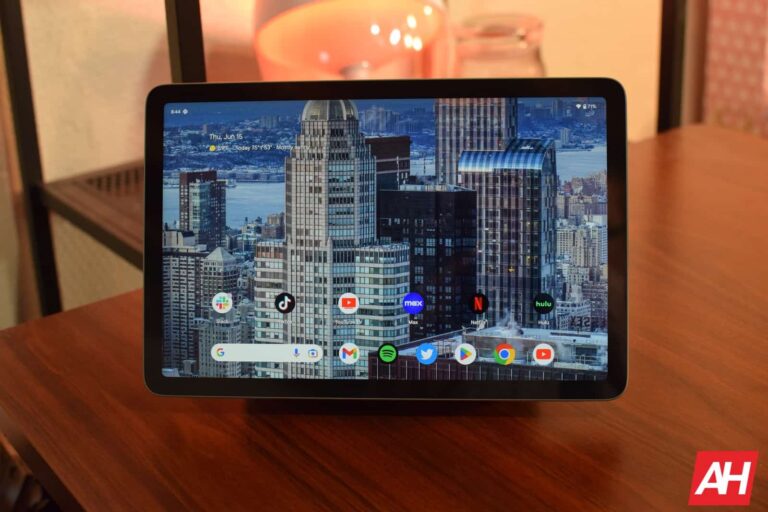
Google appears to be working on a Pixel Tablet 2 based on the discovery of new device codenames. As you may know, device codenames can be a hint into what Google has cooking in its hardware department. Even if things are only in research and development, these codenames can signify that Google is working on and actively testing an upcoming device. Just like with Android software, Google’s hardware devices each have a codename associated with them. For instance, the Pixel 8 is codenamed Shiba and the Pixel 8 Pro is codenamed Husky.
The Pixel Tablet meanwhile, is codenamed Tangorpro. So how do those old codenames lead to the possibility of Google working on a Pixel Tablet 2? It’s all based on some codenames found in the code of the recent Android 14 QPR3 beta.
New citrus-themed codenames suggest a Pixel Tabet 2 is in the works
If you’re unfamiliar with where the citrus theme comes from allow us to explain. Tangor is a citrus fruit. But not just any citrus fruit. It’s a hybrid between a mandarin orange and a sweet orange. This is where the new citrus-themed codenames come in. 9To5Google has been digging through the recent Android 14 QPR3 beta 1 and found references to two new device codenames — Clementine and Kiyomi — two more hybrid citrus fruits. Obviously, the presence of a codename doesn’t mean Google is actually working on these new devices. Or that the company will ever release them if it is working on them.
It’s also possible that the codenames in use do end up as available consumer products but with different codenames when all is said and done. There are a lot of possible scenarios here. But Google is always using the same types of codenames for specific products. Phones for example use the codenames of animals. This year it’s dogs, last year with the Pixel 7 series it was big cats — Cheetah and Panther.
With the tablet, so far, it’s been citrus. So this very likely points to Google working on a new version of the Pixel tablet. Or at the very least, putting things through a conceptual stage.
The data breaches, originating from SIM-swapping attacks, occurred in November 2023 and have since sparked widespread concerns about data security.
A recent notification has revealed data breaches at insurance giants Washington National Insurance Company and Bankers Life and Casualty Company, both of which are subsidiaries of the CNO Financial Group. The breaches, originating from SIM-swapping attacks, occurred in November 2023 and have since sparked widespread concerns about data security.
What is a SIM-swapping attack?
For your information, SIM-swapping attacks involve fraudulently obtaining control of a victim’s mobile phone number by convincing the victim’s mobile carrier to switch the SIM card linked to the number to one in the possession of the attacker.
Once the attacker gains control of the victim’s phone number, they can intercept incoming calls and text messages, allowing them to bypass security measures such as two-factor authentication (2FA) that rely on codes sent via SMS.
This enables the attacker to access sensitive accounts, such as banking or cryptocurrency wallets, and carry out fraudulent transactions or steal personal information. SIM-swapping attacks exploit vulnerabilities in the verification processes of mobile carriers and can have severe consequences for victims, including financial loss and identity theft.
Over 66,000 users impacted
Washington National Insurance Company is reaching out to 20,360 individuals affected by the breach, whereas Bankers Life and Casualty Company is contacting 45,842 individuals. The compromised data potentially contains customers’ names, Social Security Numbers, dates of birth, and customer account numbers.
According to the data breach notification filed with the Office of the Attorney General of California on January 26, 2024, Bankers Life promptly initiated an investigation to assess the extent of the compromise. Thereafter, the company began the process of notifying affected individuals through data breach notification letters, outlining the breach’s implications and offering guidance on protective measures.
Receiving a notification letter from Bankers Life and Casualty Company emphasises the urgency for affected individuals to understand the risks posed and take appropriate actions to safeguard their information. Failure to uphold data protection obligations can render companies liable, opening the possibility for legal recourse through data breach lawsuits.
Experts warn of possible ransomware attacks
For insights, we reached out to Rebecca Moody, Head of Data Research at Comparitech, who emphasized that SIM-swapping attacks involve more than just identity theft or taking over someone else’s SIM card; they can also be used to carry out ransomware attacks.
“For example, Advarra’s ransomware attack in October 2023 was carried out after one of its executives was the victim of a SIM swap. ALPHV/BlackCat claimed the attack and said it had stolen 120GB+ of data. This included sensitive data belonging to employees, patients, and customers,“ Rebecca said while discussing potential consequences.
Rebecca also emphasized the specifics of the data breach notification (PDF), indicating that threat actors conducted SIM-swapping without proper authorization or verification. “The data breach notifications suggest the attacks were enabled as “a retailer for one of the top nationwide wireless carriers, without proper authorisation or appropriate verification from the senior officer, allowed the senior officer’s phone number to be swapped to what we believe was the threat actor’s phone,“ Rebecca explained.
Rebecca cautioned and advised users that “to prevent SIM-swapping attacks, users should use secure authentication apps instead of their phone number for two-factor authentication, add additional layers of security to their mobile phone number accounts (e.g. pin codes and security questions), avoid linking accounts to their phone number, and be generally wary of any requests for personal data.“
On Going Investigation
The FBI is aware of the issue. The root cause of the breach is yet to be fully elucidated, with ongoing investigations expected to shed more light on the matter. However, initial reports suggest that the incident may have originated from a cyberattack targeting one of Bankers Life’s vendors, emphasising the substantial risks associated with third-party breaches.
Victims of the breach are advised to remain alert against potential fraudulent activities, such as identity theft. As investigations continue, affected individuals can expect further updates on the breach and its implications.
The breach at Bankers Life and Casualty Company highlights the ongoing importance of addressing challenges in data security, emphasizing the need for businesses and consumers to prioritize strong cybersecurity measures to reduce risks and protect sensitive information.
Telegram is one of the most popular messaging platforms out there next to Slack and WhatsApp. It eventually revealed its premium-tier subscription plan, and it brings some neat features to make the money worth it. These features range from useful to decorative, and they should appeal to avid Telegramers.
The thing is, if you don’t know what this service is all about, it can be hard to know if it’s worth the money. So, what does Telegram Premium have to offer, and, better yet, do you need it? Here’s everything you need to know about it.
What is Telegram Premium?
This is the premium subscription for Telegram users to get more from the platform. It comes with additional features that you can’t get with a free plan. Telegram is a platform that’s used by both business professionals and casual users, and the features in Telegram Premium can appeal to both groups.
How much does it cost?
Telegram Premium costs $4.99/month in the US. The price may vary by market, but it will hover around that area. If you want to get a yearly plan, it will cost you $39.99/year.
How do I subscribe to Telegram Premium?
Signing up is really simple. Just go into the Telegram app and tap on the hamburger-style menu on the upper-left of the screen. There, go down to Settings. In your settings, scroll down until you see the Telegram Premium button close to the bottom. You’ll see the purple star right next to it.
When you tap on it, you’ll see the list of features that you get with the plan along with a Subscribe button on the bottom. From there, you’ll use your preferred payment method to subscribe.
What features do you get with a Telegram Premium subscription?
Now, let’s get down to the fun stuff. Telegram Premium comes with a host of fun features that make using the app more enjoyable.
Little features
For starters, you’ll get No Ads at all throughout the interface. This next feature isn’t as useful as the others. If you’re a premium member, you’ll get a New Profile Badge next to your username. It’s the purple star icon.
Along with that, there are some Premium App Icons. You’ll see these icons on your device’s home screen. One of them is the star icon while the others are special versions of the regular Telegram icon. They don’t add any additional functionality to the platform, but they do add to the visuals.
If you want more visual clarity with your stories, you can now watch High-Quality Stories. This will show stories with a higher resolution.
Upping the limits
Starting with uploads and downloads, you’re able to Upload Files up to 4GB. Without Premium, you’re capped at 2GB per item. As for the downloads, you’ll have Faster Download Speeds across the board.
The subscription doubles most of the limits that you have across the platform. You’re able to follow up to 1,000 Channels, pin up to 10 Chats, reserve up to 20 t.me/username links, and save up to 400 GIFs in your favorites.
Adding visual flair
If you want to add more flair to your chats, then you’ll love the animated emojis and stickers. Starting off with the Animated Emojis, you’ll have access to a ton of the classic emojis with fun looping animations. You’ll see all of the emojis looping their animations whether you send them in a chat bubble with text or separately.
If you want to add some additional flair to your status, then you’ll be able to add an Emoji Status. When you add an emoji status, you’ll see an animated emoji right next to your name on your profile. It could be another way to express your mood.
Moving onto the Stickers, these are like the animated emojis, but they really go big. You’ll have a selection of stickers with looping animations. The stickers’ animations fill up the entire screen. They’re really meant to show emotions at their most extreme. They usually have some sort of particle effect that shoots out.
You’ll have access to Infinite Reactions for messages. In case you don’t know, when you receive a chat, you’re able to directly react to that message with an emoji. With the subscription, you’ll be able to react to the same message with multiple reactions. Telegram Premium also grants you 10 new reactions.
The next feature allows you to use Profile Videos. These are short clips that you can use as your profile picture. You’ll see these little clips looping in the chat list and in the actual that.
Chat features
If you like to record a lot of video messages, then this feature will be for you. With the subscription, you’ll be able to use Voice-to-text Dictation on your video messages. You’ll see the video message and transcription show up as a chat button. This is perfect if you’re in an environment where you can’t hear your messages. Also, you could be in a place where you need to remain quiet.
[Updated Feb 7th, 2024] If you’re a person who typically sends voice messages in your groups, then you’ll love this feature. Telegram Premium gives users access to Voice Message Privacy Settings. This is a menu that lets you adjust who can hear your messages. You have the option between letting everyone hear your messages and letting no one hear them. There’s also a setting that will only let your contacts hear your voice messages.
This menu also lets you add exceptions. This lets users and groups override the above settings.
If you don’t want just anyone messaging you, you can set it so that only certain people can message you. With Private Message Permissions, you can choose who can send you messages out of the blue. You can set it so that everyone can message you, only your contacts can message you, or only Premium users can message you. This can help cut down on unwanted messages.
There are new Chat Management tools with the subscription. You’ll be able to set which folder you want to be your default folder. Say, you don’t want all of your new chats to go directly into the “All Chats” folder. Well, you can simply drag a custom folder to the front of the line. Then, that custom folder will become your default.
If you have a busy chat, then you may like this feature. In the Privacy and Security section, you can set it so that all new chats are Muted and Archived. This will make chaotic chats easier to manage.
A premium membership gives you the ability to Translate an Entire Chat with one press of a button. The translate button will be right above that. On the right side of the screen, you’ll see a three-dot menu where you can choose which language to translate to. You’ll even see a neat animation pop up when you do.
Will these features trickle down to free users?
Other premium services like Twitter Blue and Snapchat+ are basically glorified beta programs. They allow you to try out experimental features before they make it down to free users. However, that’s not the case with Telegram Premium. There are no plans to make these features available for free users.
The Android 14 beta program is still underway, and Pixel users have been eagerly awaiting the next QPR release. Well, you need to wait no more. The Android 14 QPR3 Beta 1 just released, and Google is currently rolling it out.
What do we need to know about the Android 14 QPR3 Beta 1?
This is the latest update for Pixel phones that brings the build number up to AP21.240119.009. It’s currently available for the Pixel 5A, 6, 6 Pro, 6a, 7, 7 Pro, 7a, 8, and 8 Pro (Review). It’s also arriving for the Pixel Tablet and the Pixel Fold. Unfortunately, the regular Pixel 5 has lost compatibility.
So, what’s new?
The latest beta version of Android doesn’t bring any notable software editions, changes, or features. According to the report, there’s only really one major change that comes with this version of Android. Until now, the Circle to Search feature, which was unveiled during Samsung Galaxy Unpacked last month, was not available to beta users.
The feature launched earlier this month, and only stable Android 14 users could use it. Apparently, that was unintentional, and Google is rectifying this. Other than that, there don’t seem to be any other major changes. We can’t rule out minor software additions like security fixes and stability fixes. However, Google did not point to those.,
How to sign up for the beta
Signing up for the Android beta program can be fun, but it’s not for the faint of heart. If you’re a person who wants to experiment with new features and understand that beta software can be unstable, then you should do so. However, if the device you’re using is your work phone, and you need it to be as stable as possible, then you may want to skip the beta program.
Also, if you feel like you will need to leave the beta program promptly, then you may want to pass it up. There are certain windows when you can leave the beta program. If you try to leave the beta program while outside of those windows, then you will lose all the data on your phone. This means that your phone will be wiped clean and you have to start anew.
To sign up for the beta, go to the Android beta website. Make sure you sign in, and you will see a page. On this page, you will see a list of the devices associated with your account. These devices are eligible devices.
When you find the device you want to add to the data program, click on the add button and select the version of Android you want to be on the program. Be sure to read the warning message that pops up. Google is laying out the potential risks. If you want to accept the risks, you can join the program.
Once you join the program, your phone will automatically download an update. Install the update, and you will be on the latest version of the Android beta.
Online gaming is an ever-evolving industry where user experience (UX) plays a vital role, especially in what concerns mobile casinos and mobile apps. A smooth and successful UX will guarantee player satisfaction, and it has the power to attract and retain users.
That being said, this article will explore key elements that bring success to a mobile app. Some of them are user interface and design, game variety, security and more.
Whether you’re a developer, a business owner, or a gambling enthusiast, stick around and explore the main parts of a successful app in this challenging industry. So, let’s discover some key factors that describe a successful user experience!
Design and User Interface
The first impression always matters, especially in a field where everything relies on appeal. Regardless of the app, a user is more likely to interact with a platform which offers a seamless experience.
Not to mention, it also has to be pleasing. A good interface must be intuitive and also attractive to meet user satisfaction and create a positive feel for the overall app. This is also the case with online casinos.
A responsive app design is a must nowadays as devices become more and more demanding.
The app creators must consider its optimisation as the app has to adapt to various screen sizes and different devices to offer a perfect experience across all platforms. This means that it has to accommodate all user preferences and cater to the technology landscape, which is more dynamic than ever.
Another vital aspect is navigation, which is a cornerstone of excellent design. This element is what allows the user to explore the casino apps effortlessly. Basically, the seamless navigation is what encourages the user to spend more time with mobile gaming.
App development is about constant improvement. That’s why the user feedback is so valuable.
Regular feedback from different users will help the developers identify issues, preferences or pain points. When this happens, the developers will adapt the app to the requests according to the online gambling audience.
Focusing on Game Variety
An excellent casino app has more than just one type of game. Game variation is as important as quality, so providing diverse games is vital in meeting user preferences.
Obviously, the quality of graphics and animation can’t be left out. They are also vital to creating user-friendly apps. Excellent visuals have the power to immerse the user into the mobile gambling world without an effort.
Security Matters
The main concern when it comes to online and mobile betting is the safety of data and financial activities. To ensure security, most casino owners and developers rely on strong encryption protocols that safeguard user data. The same protocols also apply to the app security level, protecting the user and sensitive data.
Another factor that helps in enhancing security is adhering to industry standards and regulations. If a company or an online casino complies with the industry’s regulations, it will definitely operate after the best practices, and it will also protect players/ users from potential risks.
Best practices with Secure Login Methods and Account Protection Features
Keeping an account safe is, most times, a real challenge. Thus, it involves using secure login methods and extra features.
One is the Two-factor authentication feature, which will ask you for two ways to prove your identity. This means that you will receive a password or a code directly to your phone or use biometric recognition (using a fingerprint) for identification.
Top-Notch Customer Support
An important aspect many overlook when designing an app is the customer support service. Way more important than casino technology is the responsiveness of a reliable customer support team with excellent knowledge of the casino and its perks.
An excellent team will always help with a brand’s good reputation if they offer fast solutions and provide assistance whenever needed.
Accessibility is another key factor for an effective customer support service. Diverse support channels, like live chat, email, or phone support for urgencies and preferences, are needed.
Younger generations will prefer to interact using social media, so some support channels aiming at these platforms are also a plus.
The essence is to allow the user to choose the best methods to get in touch that match personal preferences.
Conclusion
As you can see, a successful mobile casino app includes a lot of factors that spin around the user. Some of the most important ones are the user-friendly interface, a diverse game selection, excellent app security, and great customer support.
A great app is also constantly improving, as it should always consider user feedback and keep up with the latest trends. This way, developers have the chance to not only meet users’ preferences but also exceed their expectations.