Google could be working on an option to choose between fonts in Gboard. Currently, the Google keyboard app only displays characters in its default font, ignoring the font set in the device’s settings. That said, the new feature may be somewhat limited in terms of functionality for many devices.
Android Authority found references to the potential new option in the code of the latest Gboard app beta (v14.4.06.646482735). According to the report, the Gboard settings may get a new “Font” option soon. Currently, the latter is not available by default, but the source could enable it to offer an early preview.
The potential Gboard’s option to choose between fonts would be limited
Sadly, the feature may not offer everything you would expect. Apparently, it will not let you freely set the font you want, but rather it will allow you to choose whether you want Gboard to display the keyboard’s app default font or the device’s system font. Natively, Android does not yet allow you to switch between different font styles for the whole OS. However, there are custom skins, like One UI or OxygenOS, that let you do so.
So, if implemented, the new Gboard option will not be useful for Android users whose devices do not include a custom skin with the option to choose between multiple system fonts. However, the devices that allow this kind of customization will offer a more cohesive experience by matching the keyboard font to that of the OS.
Currently, the feature is still under development, but is functional once enabled. Google’s plans regarding the implementation of the Gboard’s font change feature are unknown. In any case, let’s hope that it is the first step towards a future where the company allows you to change the font of both the keyboard app and the whole Android OS without resorting to third-party apps, mods, or custom skins.
It looks like T-Mobile’s acquisition game isn’t over just yet. The company is reportedly planning to buy Metronet, a fiber internet service provider (ISP) based in the United States. Unlike Mint Mobile’s sole acquisition earlier this year, T-Mobile plans to join hands with global investment firm KKR to acquire Metronet.
T-Mobile is reportedly planning to acquire Metronet through a joint venture with KKR
The news comes via PhoneArena which spotted a paywalled report from TMT finance hinting at the possible acquisition. According to the report, T-Mobile and KKR will have an equal stake in Metronet following the acquisition.
For the uninitiated, Metronet is America’s largest privately-owned fiber company headquartered in Evansville, Indiana. This renowned fiber-optic company has a user base of 2 million and currently offers services in over 300 communities across 17 states.
Apart from the Metronet acquisition, T-Mobile has already shown interest in buying fiber internet provider Lumos. And, the company plans to do so by forming a joint venture with global investment company EQT.
T-Mobile would still be far from reaching all American households
In the past, T-Mobile has stated that it couldn’t fulfill the broadband demand solely through its wireless services. It also acknowledges that fiber is considerably faster than 5G home internet. That’s the main reason why it is currently offering fiber services in a few markets. The smartphone carrier giant has been able to do so through partnership agreements with some fiber ISPs.
Now that T-Mobile is planning to acquire Lumos and Metronet through two joint ventures, it can tap into more US households than it did previously. However, Vikash Harlalka, an analyst at New Street Research, notes that the Metronet deal would help T-Mobile cover only 1.5%of American households.
Whereas, the Lumos deal would help it access 2% to 3%of total households, that too, by 2028. In short, this also means T-Mobile would still be far away from covering all American households following the planned acquisitions.
We got a new video showing off the Pixel 9 Pro, and guess what, it’s not a leak! After we’ve seen this device leaked like it was nobody’s business, Google finally showed off a teaser for the Pixel 9 Pro. Needless to say, it confirms the new design with the Bender-style camera bump and flat sides.
We’re not far off from the company’s latest Pixel event. We all had our calendars marked for October earlier this year, but the company surprised us. Google is going to have an event in August, right between Galaxy Unpacked and Apple’s iPhone event. We appreciate Google adding some excitement to the annual mid-year tech news lull, but we’re wondering if this is a good move. In any case, the event will go down on August 13th.
Google’s AI teaser had a Pixel 9 Pro play a cameo
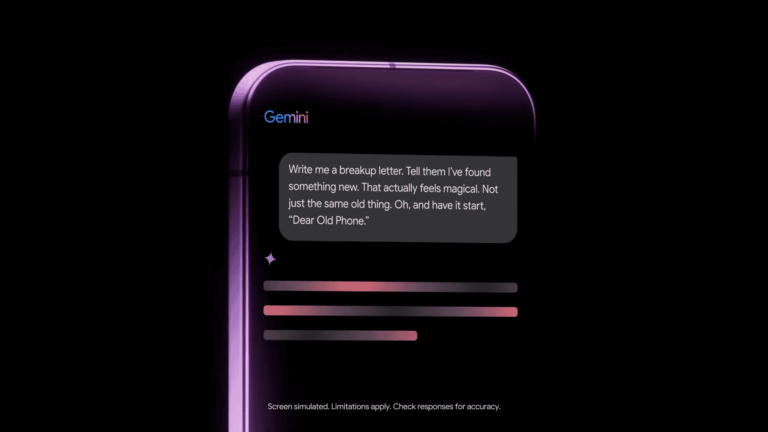
After all of the leaks, we finally have an official look at the Pixel 9 Pro. In the teaser, we see some text being put into Gemini. The “person” is generating a break-up letter to their old phone. We don’t see any text as the result. Rather, we see the Pixel 9 in all its Googly glory.
We see three cameras in the visor along with the flash and what we think is the next-generation temperature sensor on the right side. We also see that the camera visor does jut straight from the phone’s back. We’re not sure how it’s going to look in real life. It might be like the camera visor on the Pixel 6 or even the Nexus 6P. Those looked much more significant in pictures/videos than they actually were.
While this is a nice teaser, Google seems to have made it more about AI. We know that the company is an AI company, but the phone was only visible for about 5 seconds in the 30-second ad. Even when the phone is visible, we see the text “Oh hi, AI.”
In any case, we’re less than a month away from the official announcement, so mark your calendars!
Samsung has acquired Oxford Semantic Technologies, a UK-based startup specializing in artificial intelligence (AI), data processing, and knowledge graph technology. The Korean conglomerate plans to use the firm’s technologies to improve Galaxy AI. It has been already collaborating with the startup on various projects since 2018.
Oxford Semantic Technologies will help Samsung elevate Galaxy AI experiences
Founded in 2017 by three Oxford University professors, Oxford Semantic Technologies offers cutting-edge technologies in the areas of knowledge representation and semantic reasoning. “Transform data and knowledge into fast and accurate answers to complex questions,” the firm’s official website says on the home page. “Rules-based artificial intelligence powered by human-like reasoning and the highest performing knowledge graph technology.”
Knowledge graph technology organizes information as a web of related ideas, similar to how humans think and remember. It integrates and connects data, improving the understanding of how people use a product or service. This enables quick information retrieval and better recommendations. It is a key technology for realizing sophisticated and personalized AI solutions. Unsurprisingly, developing and implementing this technology is challenging.
The technology requires complex computations to convert extensive real-world data into usable knowledge graphs. Oxford Semantic Technologies has developed and commercialized this technology. Its AI-centric engine, RDFox, is already used by organizations globally. It offers optimized data processing and advanced reasoning for both cloud and on-device services. The firm has customers from various sectors, including finance, manufacturing, and e-commerce.
Samsung says it acquired Oxford Semantic Technologies the firm to gain deeper access to its technologies and solutions. “With this acquisition, Samsung will secure advanced core engines for personal knowledge graphs, the company said in a press release. “These graphs integrate information and context dispersed across various services and apps, crafting a user experience that is tailor-made by becoming increasingly familiar with users’ preferences and usage.”
The Korean firm aims to combine Oxford Semantic Technologies’ solutions with on-device AI technology. It believes this combination will facilitate hyper-personalized AI user experiences for Galaxy users while keeping sensitive personal data secure on the device. Samsung says the goal is to expand personal knowledge graph technology and Galaxy AI beyond mobile devices. It also plans to bring hyper-personalized AI experiences to TVs, home appliances, and more.
Samsung has already brought AI to a wide range of mobile devices
Introduced with the Galaxy S24 series in January, Samsung’s Galaxy AI suite of AI features is now available for high-end smartphones, foldables, tablets, smartwatches, and wireless earbuds. The company plans to supercharge over 200 million Galaxy devices with AI by the end of 2024. With the help of Oxford Semantic Technologies, we might soon see AI capabilities on other Samsung products. The two firms didn’t reveal the terms of the acquisition.
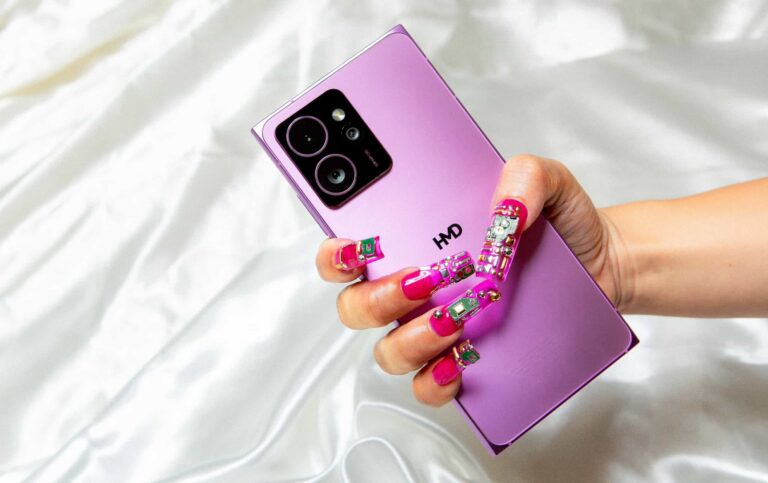
Human Mobile Devices, popularly known as HMD and the maker of Nokia phones, has launched a new mid-range Android phone. The HMD Skyline resembles Samsung’s Galaxy S24 Ultra thanks to its sharp corners but isn’t as powerful. However, it has some specialties. First, the device has a user-removable back plate for enhanced repairability. It is also the world’s first Android phone to support Qi2 wireless charging.
HMD Skyline launched with a 108MP camera and Qi2 wireless charging
Powered by Qualcomm’s Snapdragon 7s Gen 2, the HMD Skyline packs some amazing specs for a mid-range phone. It sports a 6.55-inch Full HD+ OLED display (1080×2400 pixels resolution) with 1,000 nits of brightness, a 144Hz refresh rate, and Corning Gorilla Glass 3. The phone is available in 8GB and 12GB RAM variants with 128GB and 256GB storage options. It supports 1TB microSD cards.
Cameras are one of the HMD Skyline’s strengths. Its 108MP primary rear camera boasts OIS (Optical Image Stabilization) and supports 4K video recording with spatial audio capture and wind noise reduction. The phone also has a 13MP ultrawide lens and a 50MP telephoto camera with up to 4x optical zoom. You don’t often see a zoom camera on a mid-range phone. There’s a 50MP selfie camera on the front.
This 5G-ready HMD phone boasts Wi-Fi 6E, Bluetooth v5.2, NFC, and GPS connectivity options. It is fueled by a 4,600mAh battery with 33W wired charging, 15W Qi2 wireless charging, and 5W reverse wireless charging. The latter two technologies are a rarity in this segment. Other highlights include a side-mounted fingerprint scanner, a programmable custom button, an IP54 rating, and Android 14.
With a thickness of 8.9mm, the HMD Skyline is quite bulky, particularly when you consider the battery capacity. It appears this is a compromise we must make for a removable back plate. A screw holds the back cover, so you don’t need a heat gun, pry tool, and other equipment to remove it. If you aren’t comfortable opening it up yourself, HMD has partnered with iFixit for easy repairability of the phone.
Price and availability
HMD’s Skyline comes in Neon Pink and Twisted Black colors. It is currently available in the UK at £399.99 for the 8GB+128GB model and £499.99 for the 12GB/256GB model. The phone will also come to the US but the company hasn’t revealed prices yet. Replacement parts and repair kits are available from iFixit for the display, back cover, sub-board/charging port, and battery. It’s unclear if HMD plans to release this phone outside of the US and Europe.
The iPhone 16 series is close, and Apple wants to reduce the iPhone 15 series stock, but the sales figures do not match those expectations. Instead, previous-generation models are still capturing the interest of users. The only exception is the iPhone 15 Pro Max.
Lower sales of the current generation of iPhones are normal when there is little left until the launch of a new one. However, the drop in iPhone 15 series sales seems more pronounced than estimated. CIRP published its latest market research on the commercial performance of iPhones during the third quarter after the launch of the previous generation. The report shows that even the iPhone 13 outsold one of the iPhone 15 models.
iPhone 15 sales during its third quarter were disappointing; users turned to older models
For the period studied, the iPhone 14 and iPhone 14 Plus took 17% of Apple’s smartphone sales. This is the same as the iPhone 15 Pro sold (17%) and only 2% less than the sales of the vanilla iPhone 15 (19%). The Plus model was the least sold in the iPhone 15 series during its third quarter of existence, reaching only 8%. On the other hand, sales of the iPhone 15 Pro Max showed better performance, reaching 22% of the total.
However, it is interesting that models even older than the iPhone 14 series have a notable presence on the list. More specifically, the vanilla iPhone 13 captured 10% of iPhone sales during the period studied. This is more than what the most modern iPhone 15 Plus sold. The latest iPhone SE (5%) and the iPhone 13 Mini (1%) also appear in the ranking.
Lack of innovation would be one of the reasons behind
As mentioned before, the drop in sales of current-gen iPhones is normal when the new ones are close. However, there are more factors that could be behind users’ greater interest in older models. For example, the conservative line in terms of innovation that Apple has been following in its devices. Meanwhile, the iPhone 15 Pro Max’s healthier sales could be due to its tetraprism periscope camera. Apple is said to keep the same sensor on the iPhone 16 Pro Max, so there are users who will turn to the previous model to save some money.
Meanwhile, Apple wants to attract users to the iPhone 16 series by adding Gen-AI capabilities with its Apple Intelligence suite. The company would even implement the latest Bionic Pro chips in the vanilla and Plus models as well. The report claims that Apple has ordered the production of 90 million iPhone 16 devices by 2024 alone. So, sales expectations seem quite high.
Russian businessman sentenced to 3 years for smuggling military-grade microelectronics to Russia via Hong Kong. Maxim Marchenko used shell companies to illegally procure OLED displays for Russian military applications.
A Hong Kong-based Russian national, Maxim Marchenko, has been sentenced to three years in prison for his role in a sophisticated scheme to illegally procure US-made military-grade microelectronics and funnel them to Russia.
Marchenko, 52, operated a network of shell companies that disguised the true destination of sensitive OLED micro-displays, crucial components used in advanced weaponry like night vision goggles and rifle scopes. He and his co-conspirators, also Russian nationals, deceived US distributors by falsely claiming the microelectronics were destined for legitimate uses in China, Hong Kong, and other countries.
According to the U.S. Department of Justice’s (DOJ) press release, The scheme, which ran from May 2022 to August 2023, saw Marchenko’s shell companies, including Alice Components, Neway Technologies Limited, and RG Solutions Limited, purchase over $1.6 million worth of these sensitive technologies. The microelectronics were then transshipped through third countries, ultimately reaching Russian end users.
“This sentence sends a clear message that we will not tolerate the illicit procurement of US technology that ultimately ends up fueling Russia’s aggression,” said Assistant Attorney General Matthew G. Olsen of the Justice Department’s National Security Division.
The FBI, the Commerce Department’s Bureau of Industry and Security, and the State Department’s Diplomatic Security Service collaborated on the investigation, with assistance from the Justice Department’s Office of International Affairs.
This case was prosecuted by the Southern District of New York and the National Security Division’s Counterintelligence and Export Control Section. It was coordinated through the Justice Department’s Task Force KleptoCapture and the Disruptive Technology Strike Force, both dedicated to combating Russia’s efforts to acquire critical technology.
Italy has launched an antitrust investigation into Google and its parent company Alphabet. The Italian Competition Authority (Autorita Garante della Concorrenza e del Mercato or AGCM) has accused the tech titan of unfair business practices, including misleading its consumers. If found guilty, the company faces a fine of up to €10 million (approx. $10.9 million). Google says it will cooperate with the authorities.
Google faces antitrust investigation in Italy
According to Italy’s competition agency, Google resorted to unfair business practices for its benefit in the country. Among other things, the government agency overseeing consumer rights accused the company of misleading its consumers with incomplete information about how it uses their data. AGCM said Google’s request for consent for users to connect its multiple services “could constitute misleading and aggressive commercial practice.”
The search giant allegedly provides users with “incomplete and misleading” information that doesn’t properly clarify how the consent may impact the use of their personal data. The Italian watchdog said Google doesn’t give users freedom of choice when sending requests for consent. As reported by Reuters, the company limits users’ choices “by inducing them to agree to a combined usage of personal data by different Google services.”
“Indeed, it appears to be accompanied by inadequate, incomplete and misleading information and it could influence the choice of whether and to what extent consent should be given,” AGCM’s official complaint says about Google’s consent requests. The company offers a wide range of online products, including YouTube, Gmail, Maps, and a search engine. It requests consent from users to aggregate and use their personal data across all products.
AGCM also accused Google of using “techniques and methods for requesting consent, and also for setting up the mechanisms for obtaining consent itself, which could condition the freedom of choice of the average consumer”. If the investigation finds the company breaching Italy’s consumer rights rules, it faces fines ranging from €5,000 to €10 million. Google said it will “analyze the details” of the case and “work cooperatively with the authority.”
Italy has previously fined the internet giant
This isn’t the first antitrust case against Google in Italy. AGCM has previously fined the internet giant. In 2021, the Italian watchdog fined Google and Apple €10 million each for similar violations. It said the firms failed to properly inform users about how they use their data for commercial purposes. AGCM also fined Google €102 million for unfairly barring EV (electric vehicle) charging station finder JuicePass from Android Auto.
Hackers exploit open-source tools to execute attacks because they are readily available, well-documented, and often have extensive community support, making them easy to modify and deploy.
Besides this, open-source tools can be customized to evade detection, automate tasks, and leverage existing vulnerabilities, enabling threat actors to conduct sophisticated attacks efficiently.
Recorded Future’s Insikt Group uncovered a new cyber-espionage campaign, dubbed TAG-100, targeting high-profile organizations globally.
The group takes advantage of internet-facing appliances and employs open-source tools such as Pantegana backdoor, a trend that features weaponized PoC exploits combined with open-source frameworks.
Protect Your Business Emails From Spoofing, Phishing & BEC with AI-Powered Security | Free Demo
Such an approach simplifies entry for less capable actors and enables more advanced groups to hide their tracks.
However, they remain attractive to attackers since only a few security measures have been put in place despite global efforts to fix vulnerabilities on internet-facing devices.
Researchers discovered the victim organizations in the following countries:-
Cambodia
Djibouti
The Dominican Republic
Fiji
Indonesia
Netherlands
Taiwan
The United Kingdom
The United States
Vietnam
Geographical breakdown of TAG-100 targeting and victimology (Source – Recorded Future)
Some of the recommendations made to organizations include operationalizing intelligence-led patching, increasing attack surfaces, and enhancing defense-in-depth measures.
Open-source tools will continue to be used more frequently by state-sponsored actors who may contract out to proxy groups, leading to rising cyber threats overall.
Since February 2024, TAG-100, a group of cyber spies, has been attacking organizations from ten countries ranging from governments to intergovernmental and private sectors.
The researchers found that the gang uses various internet-facing appliances, including Citrix NetScaler, Zimbra, and Microsoft Exchange.
Overview of TAG-100 operations (Source – Recorded Future)
Noteworthy targets include Southeast Asian and Oceanian intergovernmental organizations, foreign ministries, embassies, religious groups as well as semiconductor companies.
By March TAG-100 was in at least fifteen countries with a major focus on Cuban Embassies. Overlapping with the CVE-2024-3400 exploit release in April they targeted Palo Alto Networks GlobalProtect appliances.
This group’s reliance on publicly available exploits like those used for Zimbra (CVE-2019-9621) reveals their initiative in the domain of cyber espionage.
TAG-100 combines open-source post-exploitation frameworks like Pantegana, SparkRAT, LESLIELOADER, Cobalt Strike, and CrossC2 with various public exploits.
This is evident in their targets’ profiles, which include national governments, religious institutions, and intergovernmental agencies.
Besides utilizing CloudFlare CDN for C2 communication and ExpressVPN to manage its services, the group has been seen employing self-signed TLS certificates.
Although some of the targets tended to overlap with previous China-sponsored operations, TAG-100 makes it difficult to attribute using off-the-shelf tools and unique modes of operation.
The activities linked to this group’s attacks that have been observed since at least November 2023 are indicative of the changing cyber threat landscape where basic operational security strategies fuse with easily accessible tools.
Mitigations
Here below we have mentioned all the mitigations:-
Configure IDS/IPS to alert on and potentially block connections to known malicious IP addresses and domains.
Implement robust monitoring for external-facing services and devices.
Watch for post-exploitation activities like web shells, backdoors, or lateral movement.
Prioritize patching high-risk vulnerabilities, especially RCE in external-facing appliances.
Implement network segmentation and multi-factor authentication for sensitive information.
Use threat intelligence to detect and block malicious infrastructure in real-time.
Monitor third-party vendors and partners for potential intrusion activity.
Utilize Malicious Traffic Analysis to monitor communications with known C2 servers proactively.
Threat actors often attack VMware ESXi servers since they accommodate many virtual machines, which link to a variety of systems via one breach.
Compromising an ESXi server can bring the targeted services down. Additionally, valuable resources and data are stored in the ESXi servers, which makes them lucrative targets for hackers.
Cybersecurity researchers at Microsoft Threat Intelligence recently discovered that Octo Tempest, which is known for Attacking VMWare ESXi servers, has recently added RansomHub and Qilin to its arsenal.
In early to mid-2024, the ransomware group Octo Tempest expanded its harmful activities. This group, which the cybersecurity researchers at Microsoft Threat Intelligence watch very closely, started using two new types of ransomware called RansomHub and Qilin.
Protect Your Business Emails From Spoofing, Phishing & BEC with AI-Powered Security | Free Demo
Octo Tempest is known for several dangerous tactics, such as using clever tricks to fool people into giving away information, stealing people’s online identities, finding ways to stay hidden in computer systems for a long time, often attacking VMWare ESXi servers, frequently using ransomware called BlackCat.
In the second quarter of 2024, financially motivated threat actor Octo Tempest, our most closely tracked ransomware threat actor, added RansomHub and Qilin to its ransomware payloads in campaigns. pic.twitter.com/iS3nnnoxSm
— Microsoft Threat Intelligence (@MsftSecIntel) July 15, 2024
Octo Tempest is responsible for many cyber attacks researchers have investigated and helped fix. Their new use of RansomHub and Qilin makes them an even bigger threat than before.
RansomHub, a rapidly growing ransomware-as-a-service (RaaS) payload, is becoming one of the most widespread ransomware families.
It’s being adopted by various threat actors, including those previously using other ransomware like BlackCat.
Manatee Tempest deployed RansomHub following Mustard Tempest’s initial access via FakeUpdates and Socgholish.
Other active ransomware families include:-
Qilin
BlackSuit
LockBit
Medusa
Black Basta
Play
Besides this, a new ransomware, Fog, emerged this quarter, and was used by Storm-0844, which previously favored Akira.
Storm-0844 is a group of malicious actors that first enter through VPN clients with potentially breached accounts.
They do so via their employed open-source tools such as ADFind, Rubeus, and Advanced IP Scanner for network surveillance, lateral movement, and stage data exfiltration rclone.
The new ransomware called “FakePenny” can be traced back to the North Korean group Moonstone Sleet associated with. This actor also uses an insidious tank game as one of its tactics.
The Octo Tempest and Storm-0501 concentrate mainly on identity compromise. The latter has been using open-source platforms such as “AADInternals” in its attempts to establish domain federations, culminating in Embargo ransomware.
Different hackers use several tactics and tools, which demonstrates how this cyber-threat environment has become more sophisticated across many actor groups.
Ransomware actors misuse remote management tools, such as Storm-1811’s exploitation of Quick Assist, leading to Black Basta attacks.
To combat this growing threat, users should stick to security best practices like credential hygiene, least privilege, and Zero Trust.





.webp)
.webp)
.webp)