Giving gamers what they need

0
[ad_1]

When it comes to gamer-centric products, we tend to see a lot of Over the Top and RGB light-riddled products. That’s one thing that adds a lot of fun to being a gamer, and pretty much anything can be a gaming product with the right flare. If you’re in the market for some TWS earbuds with gamers in mind, then I have an over-the-top and RGB-riddled item for you. I was given the opportunity to review the Hecate GX05 gaming earbuds.

When it comes to earbuds, one would wonder what will make them great for gamers. Well, there are a couple of things that a company can do to make headphones great for gamers. The company that owns Hecate, Edifier, is the company known for giving customers amazing audio experiences. So, this company providing gamers what they want should be a guarantee.

But, does it actually give gamers what they want? Sure, being over the top and adorned in RGB lights is one thing, but what’s also important is providing those core usability features and gamer-centric goodies. So, are the Hecate GX05 the perfect earbuds for the gamer and you? Let’s find out in this review.

Hecate GX05 Review: Design

When it comes to gamer Hardware, design is pretty much half of the experience. These are devices that should look great being shown off in a Twitch stream. In terms of the design of the Hecate GX05, the company really took things to a new level.

Charging case

Starting off with the charging case, this is definitely a device that looks like no other. The charging case is rather large. In it, we see the slots for the two earbuds and the USBC dongle. Above those, you’ll see a little triangular gate that rotates. This is a nice aesthetic touch. It definitely has a no-holds-barred high-octane look to it. Honestly, it looks like something out of a sci-fi movie.

Hecate GX05 6

Once you rotate the gate, you’ll see another standout feature of this case. Along each Edge, you see an LED strip that lights up. This is where we get the RGB light goodness. These lights will turn on, flash, and pulse based on the setting you assign. On the bottom of the case, there’s a multi-function button.

When you single press the button, you will change the lighting mode. You’ll be able to cycle through multiple colors. There’s cyan, green, red, blue, and purple. There are also different light modes. One mode has the lights stay on consistently, another mode has the light breathe, and the last mode has a rainbow of colors circling around clockwise.

The charging case is cool, futuristic, and angular. It’ll definitely catch people’s eyes.

The earbuds

The design of the actual earbuds is also pretty unique. It has a curvy ergonomic design that contrasts with the angular design of the case. However, this helps them fit inside of your ear. On the outside of the earbud, we see a gray bit of plastic that resembles brushed metal. That adds to the overall futuristic aesthetic.

Also on the outside of the earbuds, there are small LED strips. These will also light up. They light up when you place them inside of the charging case to indicate that they are charging. Also, the color of the earbuds’ light will reflect the colors of the case. The earbuds’ lights will also flash, breathe, or stay solid along with the case’s lights. Overall, both the case and the lights are very pretty. They make an amazing combination, and they’ll definitely make them stick out.

Hecate GX05 Review: Build Quality

When I said that these earbuds are over the top, I didn’t only mean in terms of design. When I first took the charging case out of the box, I was immediately shocked. I didn’t expect the case to be so hefty. The case is very heavy, and it gives it an extremely premium feeling. Basically, it does not feel like I’m holding a cheap plastic set of earbuds trying to look more expensive. I actually feel like I’m holding an expensive and premium set of earbuds.

That’s just going by the case, but the individual earbuds also have a nice quality to them. They said pretty heavily in the hand, and they all look very well built. They’re made from plastic, but that’s not an issue. I would say that these are very quality-made earbuds, and I’m sure that they will last you a long time if you get them.

Hecate GX05 Review: Audio Quality

The audio quality for these earbuds is a story with layers to it. I definitely have my reservations about the quality itself, but it’s completely justified because of one of the core gaming features of these earbuds.

Hecate GX05 8

Overall sound quality

So, this is something that did surprise me a bit at first until I realized what kind of earbuds I was dealing with. Again, this company is owned by Edifier, and Edifier makes some very high-quality Equipment. With these earbuds, especially with the Neo Buds Pro 2, I always got crisp and clear audio with amazing balance. I’d hear awesome clarity with a good emphasis on the low end. This is the kind of performance I expected from the Hecate GX05.

For the most part, that’s what I got. I hear a certain emphasis on the treble, which doesn’t surprise me. Many of Edifier’s earbuds that I reviewed have the same Focus. Also, the treble is supported by some very powerful and extremely clear bass. So, they pretty much lived up to my expectations. However, I could hear that the actual quality of the audio is a bit diminished compared to others. It sounds like the audio coming through the earbuds it’s just slightly lower quality.

However, this is very understandable because of a very important feature of these earbuds. That is the latency.

Latency

If you know about using Bluetooth audio equipment, then you would know about the latency (the amount of time between when the action occurs on your device and when you hear it). Bluetooth technology has not evolved to the point where there’s zero latency. Sending a high-quality signal over the air and converting it into an audio signal that you can hear takes time.

This is why Bluetooth earbuds aren’t quite great for gaming. You do not want to have a large delay between when you perform actions and when you hear them in the game. It just throws everything off, and there are some games that pretty much require you to react to actions in a split second. So, this is why many gamers stick with wired headphones… Well, with companies dropping the 3.5mm headphone jack, you can see how that could be frustrating.

However, these earbuds are advertised as ultra-low latency earbuds, and I agree with that claim. Listening to the audio from these earbuds, I could hear a significantly diminished latency compared to other earbuds. I don’t hear the sound instantaneously, but it’s pretty darn close, and it narrows the gap.

Hecate GX05 1

So, in order for the audio to be this low-latency, it has to be of a slightly lower quality. The lower quality makes it easier for the audio to be converted from a digital signal to an analog signal.

Imagine bumping a video down from 4K to 480p in order to have it stream smoothly on a slower connection.

Hecate GX05 Review: Touch controls

You can control your media and other functions using the touch controls. Tapping on the sides of the earbuds performs different actions. Starting off with media controls, double-tapping on either bud will play/pause the media. Holding your finger on the left earbud for two seconds will restart your current track, and doing so on the right bud will skip to the next track.

A quadruple tap on either earbud will activate/deactivate the lights for the respective bud. Lastly, triple-tapping on the right earbud will switch between Game mode (where the audio is best tuned for gaming) and music mode (the best mode for music).

Hecate GX05 Review: Balance of Bass and Treble

The balance of the base and trouble with these earbuds is another area where I had a bit of an issue with these earbuds. However, just like with the audio quality, I understand because these are made for gamers. I found that the audio had a strong focus on high-end audio. It wasn’t too bad, as it didn’t sound tinny at all. However, it just lacked some of the depth that I’ve heard with other Edifier earbuds. The audio is not as warm and immersive as I would have liked.

Listening to orchestral music like classical won’t be as immersive as with other earbuds, unfortunately. Listening to more modern and bass-heavy music, I found that the Hecate GX05 performed a bit better. The treble and bass seem to balance out more nicely, but I still wanted more depth.

I’d have to listen to very bass-heavy music to really feel the low-end audio. For example, I listened to some 90s R&B, and I think that music with that level of warmth makes these earbuds really shine.

But, there’s a good reason

Remember, these are gaming earbuds. Music and video games require different kinds of optimizations to sound their best. When you’re playing video games, immersion isn’t quite as important as with music. With video games, you’re going to want some of the higher-pitched sounds to be emphasized like voices, creature noises, footsteps, etc. If you’re playing something like Fortnite or Call of Duty, you’ll want to hear how close your enemies are, so you’ll be listening for footsteps.

Hecate GX05 2

So, the Hecate GX05 are designed to give gamers the edge when they’re gaming, and I found that they do. I played games like Fortnite, CoD Mobile, Genshin Impact, Dragonball Z Dokkan Battle, and more. I found that they perform incredibly with these games. Every sound was punchy and impactive.

If you’re planning on using these earbuds as your primary gaming earbuds, you won’t have any issues doing so. I think that these perform much better than traditional earbuds.

Hecate GX05 Review: Battery

It doesn’t matter how good the sound quality is if your earbuds are dead. You’ll want earbuds that can last through extended gaming sessions. Admittedly, the Hecate GX05 aren’t the best in the battery department. They’re behind some other earbuds that I’ve reviewed in the past. Using these earbuds, I was able to get north of four hours on a single charge. I feel that’s a bit below average compared to other earbuds I reviewed from Edifier. Others usually last more than an hour longer.

Using the charging case, I started to approach a full day of battery life. They ran for about 20 hours before dying on me. That’s still behind much of the competition, but I didn’t think that it was too bad. I just wish that they had more juice in them because people game for a long time each gaming session. Sometimes, four hours is just scratching the tip of the iceberg.

Charging

As with most earbuds, the charging is very fast. If you need to do a quick top-up, you’ll be able to get more than an hour of power on a short 10-minute charge. The earbuds charge completely in under an hour, so if they die on you, you won’t be out of the game for too long.

Hecate GX05 Review: What’s missing?

So, it’s obvious that these earbuds have a lot to offer. However, there are a few things that I wish the company added to these earbuds. For starters, these don’t integrate with the Edifier Connect app. This is the app interface that allows you to customize the experience for your audio devices. Since it’s not connected with the app, you don’t have access to the in-depth EQ and other tools that you can quickly access.


There’s no ANC present in these earbuds. That’s unfortunate because Edifier’s earbuds have amazing noise cancelation, and I think that these earbuds could greatly benefit from it.

Hecate GX05 9

Next, you can’t change the touch controls. Other earbuds allow you to customize the touch controls through the Edifier Connect app, Unfortunately, you’re stuck with the controls that are built-in.

Hecate GX05 Review: Final verdict

It’s always nice having audio equipment made specifically for gamers. Sure, they look nice with their lights, but it goes deeper than that. These earbuds are built to be great companions to gamers who are looking for a great overall experience. I think that the Hecate GX05 deliver that experience.

The audio quality is very nice, so you know that the listening experience is going to be nice. The audio quality is good, and it’s great considering the compromises made for the lower latency. Speaking of the latency, it’s very low. I got an SS tier on a rhythm game with these on. Now, that’s saying a lot!

The only issues that I have is that the battery life could be better, it’s not connected to the Edifier Connect app, and there’s no noise cancelation. These are definitely missing a few lifestyle features, but I think that they deliver a great fundamental gaming earbuds experience. I recommend that you pick these up.


[ad_2]
Source link

Google Pixel 8 Pro vs Sony Xperia 1 V

0
[ad_1]

In this article, we’ll compare the very best of Google and Sony in 2023. We’ll compare the Google Pixel 8 Pro and Sony Xperia 1 V, the two flagship smartphones that launched this year. The Sony Xperia 1 V was announced back in May and released towards the end of July. The Pixel 8 Pro was both announced and released in October. They’re both quite powerful smartphones but very, very different.

We’ve recently compared the Google Pixel 8 vs Sony Xperia 5 V, in case you’re interested in more compact devices. Having said that, we’ll first list the specifications of the two smartphones, and will then compare them via a bunch of other categories. Those categories include design, display, performance, battery, cameras, and audio. So, without further ado, let’s get going.

Specs

Google Pixel 8 Pro vs Sony Xperia 1 V, respectively

Screen size:
6.7-inch Super Actua AMOLED display (flat, 120Hz LTPO, HDR10+, 2,400 nits)
6.5-inch OLED display (flat, 120Hz LTPO, HDR)
Display resolution:
2992 x 1344
3840 x 1644
SoC:
Google Tensor G3
Qualcomm Snapdragon 8 Gen 2
RAM:
12GB (LPDDR5X)
12GB (LPDDR5X)
Storage:
128GB/256GB/512GB/1TB (UFS 3.1)
256GB/512GB (UFS 4.0)
Rear cameras:
50MP (f/1.68 aperture, 82-degree FoV, 1.2um pixel size, OIS), 48MP (ultrawide, f/1.95 aperture, 125.5-degree FoV, 0.8um pixel size), 48MP (telephoto, f/2.8 aperture, 0.7um pixel size, 5x optical zoom)
48MP (f/1.9 aperture, 1.12um pixel size, Dual Pixel PDAF, OIS), 12MP (ultrawide, f/2.2 aperture, Dual Pixel PDAF), 12MP (f/2.3 aperture, Dual Pixel PDAF, 2.5x-5.2x continuous zoom)
Front cameras:
10.5MP (f/2.2 aperture, 1.22um pixel size)
12MP (f/2.0 aperture, 1.25um pixel size)
Battery:
5,050mAh
5,000mAh
Charging:
30W wired, 23W wireless, reverse wireless (charger not included)
30W wired, 15W wireless, reverse wireless (charger not included)
Dimensions (unfolded):
162.6 x 76.5 x 8.8mm
165 x 71 x 8.3mm
Weight:
213 grams
187 grams
Connectivity:
5G, LTE, NFC, Wi-Fi, USB Type-C, Bluetooth 5.3
Security:
In-display fingerprint scanner (optical) & Face Unlock
Side-facing fingerprint scanner
OS:
Android 14
Android 13 (upgradable to Android 14)
Price:
$999+
$1,399.99 (often discounted to around $1,000)
Buy:
Best Buy
Amazon

Google Pixel 8 Pro vs Sony Xperia 1 V: Design

The design differences between these two phones are easily visible at first glance. The Pixel 8 Pro has very thin bezels, a centered display camera hole, and is rather curvy. The Sony Xperia 1 V doesn’t have a display camera hole or notch, but it has a bit thicker bezels at the top and bottom, even though they’re still rather thin. The frame is also flat all around on this phone, which is not the case on Google’s flagship.

The in-hand feel with these two devices is entirely different due to all this. They’re both quite slippery, but the Pixel 8 Pro kind of feels more ergonomic due to all the curves. Both devices do have three cameras on the back, though their camera modules are different. The Pixel 8 Pro features a camera visor on the back, which spans from the left side of the frame to the right. Oh, and it’s covered by metal.

The Sony Xperia 1 V has a more regular-looking camera island, which is also smaller. It sits in the top-left corner of the phone’s back. It’s not exactly inferior just because it’s smaller, though, not at all. The Xperia 1 V also has a physical shutter button on the right-hand side. The Pixel 8 Pro is considerably heavier in comparison, as it weighs 213 grams, compared to 187 grams of the Xperia 1 V.

In terms of dimensions, the Pixel 8 Pro is slightly shorter, quite a bit wider, and slightly thicker. The Xperia 1 V does have a slightly smaller display and a different display aspect ratio, it’s very tall and narrow. Both smartphones do offer an IP68 certification for water and dust resistance, by the way. They both also feel like premium devices, as they should.

Google Pixel 8 Pro vs Sony Xperia 1 V: Display

There is a 6.7-inch 2992 x 1344 LTPO OLED display included on the Pixel 8 Pro. That display is flat, and it supports a 120Hz refresh rate. HDR10+ content is also supported on this panel, and the display goes up to 2,400 nits when it comes to brightness. It has a 20:9 display aspect ratio, and around 87% screen-to-body ratio. The Gorilla Glass Victus 2 from Corning is included to protect this panel.

Google Pixel 8 Pro Review AM AH 14

The Sony Xperia 1 V, on the other hand, has a 6.5-inch 4K (3840 x 1644) OLED panel. That display is not operating at 4K at all times, though, of course, only when you’re consuming content in 4K. This panel also supports a 120Hz refresh rate, and HDR content as well. The display aspect ratio is 21:9, and Corning’s Gorilla Glass Victus 2 is included here for protection purposes. The screen-to-body ratio on the Xperia 1 V is around 84%.

Both of these displays are great in basically every way. The colors are vivid, the viewing angles are great, and the blacks are deep. They offer great touch response, and both displays are plenty sharp. Of course, the Xperia 1 V’s panel is sharper, and some people may be able to tell the difference, but truth be said, it’s not that easy on this display size. One advantage that the Pixel 8 Pro has is the fact its display does get brighter. The Xperia 1 V is bright enough, though, so… well, you’ll be good to go with either of these two panels, in all honesty.

Google Pixel 8 Pro vs Sony Xperia 1 V: Performance

The Google Pixel 8 Pro is fueled by the Google Tensor G3 SoC. The company also included 12GB of LPDDR5X RAM here, and UFS 3.1 flash storage. The Xperia 1 V, on the flip side, comes with the Snapdragon 8 Gen 2 processor, 12GB of LPDDR5X RAM, and UFS 4.0 flash storage. Sony’s flagship technically has a more powerful processor, and it also has faster and more efficient storage.

Do note that the Tensor G3 has been crafted especially for Pixels, and it has a ton of AI capabilities. What I’m trying to say is, that both of these phones do offer outstanding performance. The Xperia 1 V is slightly faster when it comes to opening apps, multitasking, and so on, but the difference will only be noticeable if you’re using them side by side. Both smartphones offer great performance.

One area where you may notice a difference is in gaming. The Xperia 1 V is definitely the better phone for that, even though the Pixel 8 Pro can handle pretty much anything out there If you’re planning on playing the most graphically-intensive titles from the Google Play Store, the Xperia 1 V is the better choice though. Overall, however, not many people will have complaints about either device.

Google Pixel 8 Pro vs Sony Xperia 1 V: Battery

When it comes to battery capacity, the Pixel 8 Pro includes a 5,050mAh unit, while the Sony Xperia 1 V comes with a 5,000mAh battery. Those are good battery capacities for these two phones, but is the battery life any good? Well, yes, it is, on both smartphones. At first, we didn’t exactly have great battery life on the Pixel 8 Pro. The battery life jumped from 6 to 7.5 hours of screen-on-time. After a few weeks, however, things got much better and we were able to get over 7 hours of screen-on-time consistently.

The Sony Xperia 1 V, on the other hand, offers great battery life too. Getting over 7-7.5 hours of screen-on-time is doable if you’re not a gamer. Gaming will, of course, lower these numbers quite a bit, when it comes to both devices. Your mileage may vary, but even with considerable use in a single day, you can pull out great screen-on-time, consistently. Neither phone disappoints in that regard.

In terms of charging, they’re not all that different. Both smartphones support 30W wired charging (PD3.0, PPS), which is not particularly fast considering the industry standard these days, but there you have it. When it comes to wireless charging, the Pixel 8 Pro does have the upper hand. It offers wireless charging up to 23W, compared to 15W charging on the Xperia 1 V. Yes, both smartphones also support reverse wireless charging, albeit very slow. A charger is not included in either retail box, you’ll need to get one yourself.

Google Pixel 8 Pro vs Sony Xperia 1 V: Cameras

Both smartphones include three cameras on the back. The Pixel 8 Pro has a 50-megapixel main camera, a 48-megapixel ultrawide unit (126-degree FoV), and a 48-megapixel telephoto camera (5x optical zoom). The Xperia 1 V, on the other hand, features a 48-megapixel main camera, a 12-megapixel ultrawide camera, and a 12-megapixel telephoto unit (3.5x-5.2x continuous optical zoom).

Google Pixel 8 Pro Review AM AH 30

Are they any good? Well, yes, in fact, these are some of the best smartphones for taking pictures and videos in the market. The Pixel 8 Pro images do end up looking more contrasty and processed, in a good way, while the Xperia 1 V does keep them a bit closer to real life, but they still pop. They’re very detailed during the daytime, and both smartphones managed to keep everything sharp and well-balanced. They both shine in the HDR department as well. The Pixel 8 Pro is capable of providing a bit more details with its ultrawide and telephoto cameras, but the difference is not that big. They both do a great job.

In low light, the Pixel 8 Pro tends to brighten up scenes a bit more. The Xperia 1 V does keep things a bit darker, but that’s something some people will prefer, as the pictures end up looking a bit more realistic. There are plenty of details, though, in low light, from both smartphones. They both balance things out well. The quality drops off with secondary and tertiary cameras, but all three shooters do a great job in low light, on both smartphones. There’s really not much to complain about here.

Audio

You will spot a set of stereo speakers on both smartphones. The sound quality coming from them is good in both cases, but the Xperia 1 V’s speakers are a bit louder. The difference is not that big, but it’s worth noting.

When it comes to an audio jack, if you need it, the Xperia 1 V is your only choice. The Pixel 8 Pro doesn’t include it, but you can always use its Type-C port for audio connections. Bluetooth 5.3 is an option on both smartphones, for wireless audio connectivity.


[ad_2]
Source link

Warner Bros Discovery eyeing Merger with Paramount

0
[ad_1]

After merging with (then) WarnerMedia in 2022, the combined company of Warner Bros Discovery is reportedly eyeing a merger with Paramount next.

Warner Bros Discovery CEO David Zaslov reportedly met with Paramount Global CEO Bob Bakish on Tuesday in New York City. Axios is reporting that multiple sources say the meeting was about a possible merger between the two companies.

The meeting reportedly lasted several hours and took place at Paramount’s headquarters in Times Square. The two discussed ways that their companies could complement one another, which would obviously include merging Max and Paramount Plus together, to better compete with Disney Plus and Netflix.

Currently, it is unclear whether Warner Bros Discovery would buy Paramount Global or its parent company, National Amusements Inc (NAI). However, sources have said that both options are on the table. Currently, National Amusement Inc is worth around $479, however it is not a publicly traded company. Paramount, however, is. And its current market cap is set at $10 billion. Paramount’s stock did spike about four percent on this news but has since retreated.

Why would WBD want to merge with Paramount Global?

It wasn’t that long ago that we were shocked to see WarnerMedia (under AT&T) merge with Discovery, and it was actually AT&T selling WarnerMedia to Discovery after spending $85.4 billion (plus a court case against the DOJ) to buy Time Warner, and then it sold off all of what they bought just a few years later. But now that WBD is looking to buy Paramount Global, what’s the end game?

Well, to put it simply, consolidation. During the pandemic, every studio was launching their own streaming service. They saw everyone subscribing since everyone was stuck at home and needed stuff to watch. But now that most are back to work, that’s not quite the same story. Most streaming services need to raise rates because subscribers are fleeing to save money. That’s leaving the big streaming services thriving while smaller ones – like Paramount Plus – hurting for revenue.

There have been reports recently that Paramount was looking to work with Apple to bundle TV Plus and Paramount Plus together. Now it looks like they might just sell the whole company to David Zaslov.

The two companies actually complement each other quite well. WBD could use its international distribution footprint to help boost Paramount’s franchises, like Top Gun. Paramount’s children’s programming, like Nickelodeon and Nick Jr, could be big assets to WBD’s long-term streaming goals. Seeing CBS News and CNN combine would be pretty interesting, as well as NCIS and Criminal Minds combined with Investigation Discovery and TruTV.

This isn’t just talk either, as WBD has reportedly hired bankers to explore the deal. But for now it’s just talk, and no deal has been finalized just yet.


[ad_2]
Source link

WhatsApp audio screen sharing coming to Android soon

0
[ad_1]

According to the newest beta release notes, it looks like WhatsApp audio screen sharing will be coming to Android in addition to iOS. WhatsApp implemented screen sharing not too long ago, allowing users to stream their device’s screen during video calls. Now, as WhatsApp rolls out one feature after another, the screen share function is about to be improved.

What is WhatsApp audio screen sharing?

Whenever a video call is made over WhatsApp, users have an option to share their screen. This option is not available on audio only calls. If this option is chosen, WhatsApp notifies the user that they’re about to start broadcasting their screen. If the user proceeds, the other person in the call can now watch a stream of the caller’s device’s display and everything happening on it. This does not, however, work for apps like YouTube or video games.

Screen sharing with audio will enhance this feature by letting WhatsApp broadcast the audio of the shared display as well. Which means if the person sharing their screen is watching something with audio, the other caller will hear it too. Though YouTube and similar apps do not work, this will nevertheless drastically improve the screen sharing on WhatsApp. It will be more convenient, more useful, and generally, more fun.

Work meetings will be more convenient with users being able to share visual data alongside its respective audio. Group calls between family and friends will also be more engaging now that they can so easily watch videos together. Another field this might be very useful in is tech support. Technicians will no longer have to rely on the customer to relay auditory clues to them.

When is this feature coming?

This feature is currently under development, as noted by WABetaInfo. The audio screen sharing feature was first spotted in a beta for the iOS version for WhatsApp. As it is currently still in development, it is unavailable to users. However, it should be rolling out in a few months time at best. WABetaInfo learned about the audio screen sharing from WhatsApp’s Android beta version 2.23.26.18, which has just gone live.

WhatsApp audio screen sharing will be one of many recent updates WhatsApp has made to improve its user experience. WhatsApp Channels for instance, have seen multiple updates in recent months. Privacy is another factor WhatsApp has been focusing on recently, following in the footsteps of competitors like Telegram. If Channels received multiple updates in a row, it’s possible the same might now be the case for calls going forward, which leaves a lot to look forward to.


[ad_2]
Source link

Data Leak Exposes 1.5 Billion Real Estate Records, Including Elon Musk, Kylie Jenner

0
[ad_1]

From Elon Musk and Kylie Jenner to Britney Spears, Donald J. Trump, and Floyd Mayweather, real estate records of top celebrities and common homeowners were exposed online without any security authentication or password.

Cybersecurity researcher Jeremiah Fowler discovered and alerted VPNMentor to an unprotected database associated with the New York-based online platform Real Estate Wealth Network. The exposed database held 1.5 billion records, including real estate ownership data for millions of individuals.

With a size of 1.16 TB (1,523,776,691 records in total), the database featured organized folders containing information on property owners, sellers, investors, and internal user logging data. It encompassed daily logging records spanning from 4/22/23 to 10/23/23, revealing internal user search data.

Founded in 1993 by Cameron Dunlap, Real Estate Wealth Network provides education and resources for real estate investing. The platform charges an annual, non-refundable fee of $1,450, granting access to an extensive collection of data, including online courses, training materials, a community, and mentorship/coaching from experienced professionals.

Upon examination, Fowler discovered that the purported property ownership data of well-known individuals such as Kylie Jenner, Blake Shelton, Britney Spears, Floyd Mayweather, Dave Chappelle, Elon Musk & Associates LLC, Dolly Parton, Donald J. Trump, Mark Wahlberg, and Nancy Pelosi was included in the exposed database.

The online exposure of celebrities’ home addresses could pose various risks, including threats to their safety, invasion of privacy, stalking, and harassment by fans or malicious individuals.

“The data was organized in various folders according to property history, motivated sellers, bankruptcy, divorce, tax liens, foreclosure, home owner association (HOA) liens, inheritance, court judgments, obituary (death), vacant properties, and more,” VPNMentor’s blog post read.

Whether famous or not, everyone is at risk because real estate tax data, containing details on property ownership, assessed property values, tax assessment history, and property tax payment history, can be exploited by criminals to collect personal information about property owners.

Threat actors can leverage the data to target users through social engineering or phishing attacks, aiming to acquire financial or other personal information. The exposure of records indicating whether an individual purchased their house with cash, without a mortgage loan, or if they have fully paid off their mortgage, may heighten the risk of financial fraud.

Property and mortgage fraud continue to be pressing concerns, with the FBI reporting 11,578 cases resulting in $350 million in losses within a single year, reflecting a 20% increase since 2017. Property fraud typically involves stealing a homeowner’s identity and forging ownership documents.

Although the exposed database has been secured from public access, a representative from Real Estate Wealth Network has confirmed ownership. The duration of the exposure and potential unauthorized access remain unclear. Only an internal forensic audit could ascertain whether the records were accessed, extracted, or downloaded.

This incident serves as a stark reminder of the potential misuse of readily available information for fraudulent activities. Property owners should exercise caution when sharing personal information, particularly in response to unsolicited requests for property details. Understanding the risks associated with semi-public data is crucial for safeguarding assets.

  1. Cigna Health Data Leak: 17 Billion Records Exposed
  2. 7TB of Healthcare Data Leak Affects 12 Million Patients
  3. Researcher Exposes Crypto Scam Network of 300 Domains
  4. Database Leak Exposes 500K Irish Police Vehicle Seizure Records
  5. Data Leak Exposes 572 GB of Student, Faculty Info from Accreditation Org

[ad_2]
Source link

Some Google Home Mini gets bricked after a firmware update

0
[ad_1]

The once-popular Google Home Mini, known for its affordability and Google Assistant integration, is facing a potential issue that has left some users with bricked devices. The reason is reportedly a recent firmware update.

Over the past few weeks, users on Google’s forum and Reddit have shared their experiences of the Home Mini suddenly failing to turn on, even after attempting a hard reset. The four lights on the device illuminated, but it didn’t go any further, rendering the speaker non-operational. While the problem is related to a recent firmware update, it’s important to note that the update didn’t affect all units.

According to a Google community manager, the company is investigating the problem. Affected users can to submit feedback reports with the “Send device usage data and crash reports to Google” option enabled to help Google diagnose the issue. Some users have reported a temporary resolution where their bricked units started working after being plugged in overnight. However, it’s not consistent for all affected devices.

Users with a working Google Home Mini may prevent installation of the firmware causing the issue until it gets a fix

As the Home Mini is now a few years old, users facing this issue are ineligible for replacements through Google’s support, as the standard one-year warranty has expired. This leaves affected users in a somewhat precarious position, dependent on Google’s efforts to resolve the bug and issue a corrective update.

This isn’t the first time Google has faced a firmware-related problem with the Home Mini. A similar incident occurred in September 2019, leading to Google offering free replacements to affected customers. However, the current situation is unique as the Home Mini is no longer officially on sale. Users may disconnect their working Home Mini units from the internet to prevent automatic updates that might trigger the reported bricking issue until Google provides a resolution.

We will update the story as Google shares more information or hopefully a fix. Affected users and the broader tech community will observe Google’s response to this issue, especially considering the device’s age.


[ad_2]
Source link

Samsung Galaxy A55 spotted with Exynos 1480 SoC, AMD GPU

0
[ad_1]

Last week, Samsung launched the Galaxy A15 and Galaxy A25. It has a couple more A-series phones in the pipeline, namely the Galaxy A35 and Galaxy A55. Leaks have already divulged a lot of information about the devices. They are expected to be powered by Samsung’s Exynos 1480 processor featuring a custom AMD GPU. A new benchmark listing has pretty much confirmed that, at least for the Galaxy A55.

Samsung will ship the Galaxy A55 with its in-house Exynos 1480 SoC

The folks over at MySmartPrice recently spotted an unannounced Samsung smartphone with the model number SM-A556B on the popular benchmarking site Geekbench. Based on previous leaks, it is none other than the Galaxy A55. The listing shows the device with an octa-core processor bearing the model number s5e8845, which is the Korean firm’s next-gen mid-range SoC, the Exynos 1480.

The Galaxy A55 scored 1,127 in single-core CPU tests and 3,090 in multi-core CPU tests on Geekbench v6. The scores are higher than what the Galaxy A54 achieved with its Exynos 1380 processor. A previous Geekbench v6 run for the upcoming Exynos chipset yielded even better scores—1,185 and 3,558, respectively. Samsung seems to have improved the CPU performance of its new processor.

Speaking of the CPU, the Exynos 1480 has four high-performance CPU cores clocked at 2.75GHz and four efficiency cores at 2.05GHz. Digging deeper into the new benchmark listing, the publication discovered that Samsung has paired the CPU with the Xclipse 530 GPU. It is the first mid-range custom GPU the Korean firm has developed in collaboration with AMD. The company already uses AMD-powered GPUs in flagship chipsets.

We can also see that the Galaxy A55 has 8GB of RAM and runs Android 14 out of the box. Samsung may also offer the phone in a 6GB RAM variant. Early evidence suggests the phone will deliver a better overall performance as compared to the current model, i.e. the Galaxy A54. The company could improve the chipset with further optimizations ahead of the phone’s launch.

The new A-series phones may launch in the first quarter of 2024

Samsung is gearing up to launch the Galaxy S24 series flagships in January 2024. The company would prefer to keep the device in the limelight for at least a couple of months. So it might not unveil the Galaxy A55 and Galaxy A35 before March next year. The 2023 models debuted in March too. We should get to learn more about the upcoming A-series Samsung smartphones in the coming months.


[ad_2]
Source link

Samsung Health update adds medication feature to the app

0
[ad_1]

Samsung has just announced that its Health app is getting a very important new feature in the latest update, which should help those on medication. A new tracking feature will be added to the Samsung Health app to make it easier for users to manage their health more comprehensively.

With the Medications feature, Samsung Health users will be provided with detailed info, including general descriptions and possible side effects. In addition, the Medication feature will also offer information about adverse reactions that could occur from drug-to-drug interactions or if taken alongside certain food and substances such as caffeine and alcohol.

Samsung Health aims to help people better understand and manage their health through a holistic platform by connecting devices, services and people. With the addition of the new Medications tracking feature, we believe users will be able to more conveniently manage their medications, improve adherence and ultimately maintain better health overall,” said Hon Pak, Vice President and Head of Digital Health Team, MX Business at Samsung Electronics.Another useful functionality of the feature makes it possible for users to set up alerts to remind them to take their medications and when they should consider refilling them. According to Samsung, the alerts are fine-tuned to the individual user so the feature can prioritize medications depending on their importance.

It’s also important to mention that Samsung Galaxy Watch users will receive reminders right on their wrist. The new Medications tracking feature will be initially available on Samsung Health app in the United States via the app updates rolling out later this week.


[ad_2]
Source link

Galaxy S24 base model could offer 12GB RAM in some regions

0
[ad_1]

There are still four weeks to go before Samsung unveils the Galaxy S24 series flagships. However, fans have already started lamenting some of its decisions. People are particularly disappointed about the amount of RAM the company is providing on the base model. A recent leak showed that the Galaxy S24 comes with just 8GB of RAM. Thankfully, that might not be the end of the story. A 12GB RAM variant of the phone might exist too.

Samsung may be readying a Galaxy S24 variant with 12GB of RAM

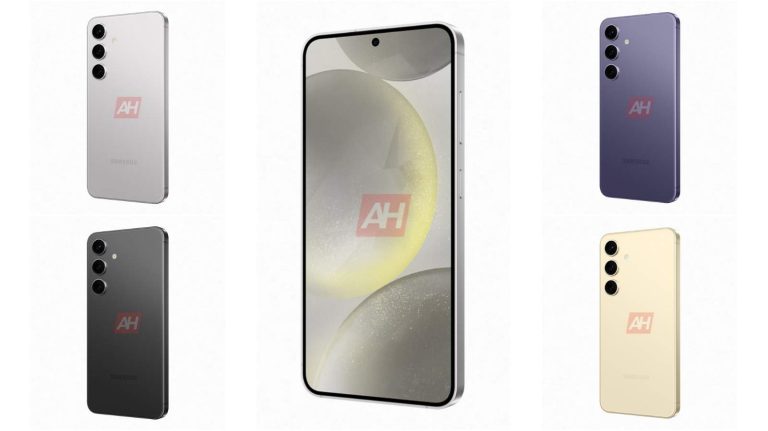
If you have been following Galaxy S24 rumors since the early days, you might remember that the entire lineup was said to get a RAM boost of 4GB. To be specific, the base and Plus models were expected to ship with 12GB of RAM instead of 8GB RAM. Likewise, the Galaxy S24 Ultra would jump from 12GB  to 16GB RAM. Rumors said the company can afford this without increasing the price thanks to the switch to the in-house Exynos chipset.

However, once the Galaxy S24 phones started appearing in more detailed leaks, it became evident that the base model doesn’t have a 12GB RAM variant. Various online listings showed it with just 8GB of RAM. Noted X tipster Revegnus recently posted photographs detailing the RAM, storage, and color options for the entire Galaxy S24 lineup. It also showed 8GB RAM for the base model, though the Plus has 12GB RAM (Ultra has 12GB too).

Another tipster has now chipped in with an interesting piece of information. Ice Universe, as we know them on X, says it is “very possible” that the Galaxy S24 has 12GB RAM in some regions. They aren’t “100% sure” about the markets where Samsung could offer more RAM but their source appears confident that the phone will have two RAM options in a few markets. We might get more details soon.

The phone still starts at 128GB of storage

Early rumors also hinted at 256GB of base storage for all three Galaxy S24 models. However, it appears the base model will still start at 128GB of storage. If a 12GB RAM variant exists, Samsung may pair it with 256GB storage as standard. The other two models start at 256GB, with the Ultra going up to 1TB of storage. The Korean firm is expected to unveil the new flagship lineup on January 17, 2024, so it isn’t a long wait now.


[ad_2]
Source link

Nomad announced its first Qi2 Wireless Charging Stand, and it costs $100

0
[ad_1]

Nomad has just announced yet another new wireless charger, which is a Qi2 wireless charger. That’s going to be the new wireless charging standard going forward, and we’re already starting to see some phones launching with Qi2 support. And it’ll be available in both black and white like Nomad’s other wireless chargers.

This new Qi2 Stand is able to support 15W wireless charging on Qi2 devices, which includes the iPhone 13, 14, and 15 models. So far, there are no available Android phones that have Qi2 support. But we do expect that to change in 2024.

Nomad confirms that a 20W adapter is needed for this charger to work, and unfortunately, it is not included in the box. That’s something we’ve seen the accessory makers starting to do, as well as the phone makers. It’s unfortunate, especially when this charger is $100. For iPhone users, this will work fully with StandBy mode, which was added in iOS 17 earlier this year. There’s nothing special to make that work, of course, but Nomad does make it possible by not having anything in the way.

What exactly is Qi2?

You may or may not have heard about Qi2 over the last few months. It’s pronounced as “chee two”, and it’s the next iteration of wireless charging, as standardized by the Wireless Power Consortium.

With Qi2, the WPC is incorporating the magnetic charging alignment that Apple introduced with MagSafe, and basically making it available to all devices with wireless charging. And it will also support up to 15W wireless charging, which is double what the current Qi standard supports.

The big advantage for Qi2 when it comes to iPhone users is that manufacturers like Nomad won’t need to license the MagSafe charging functionality from Apple. Those that aren’t officially licensed from Apple, are limited to 10W of charging, which might not sound like a big difference from 15W, but it can be a huge difference.


[ad_2]
Source link