Google to Delete Inactive Gmail Accounts From Today

0
[ad_1]

According to Google, once your Gmail account is deleted, it will not be possible to recover photos, files, emails, contact information, or purchases such as music, apps, movies, or books that you may have acquired using your Google account.

Google has officially released its inactive account policy according to which it will delete free Google accounts that have not been signed into for two years and do not have any active subscriptions. This policy applies to personal Google Accounts, not those not set up through school, work, or other organizations.

However, this policy doesn’t apply to paid Google Workspace accounts or accounts with an active subscription. For instance, if you have subscribed to Google One, your account will remain active even without regular sign-ins. If you maintain any paid subscriptions within an app via Google Play, this will also be considered an activity.

A Google Account is necessary to access the different Google products, including Gmail, YouTube, and Google Ads, with a single username and password. The updated policies were announced in May 2023 and will be implemented starting 1st December 2023.

So, if it’s been two years since you used your free Google account, Google may delete it. Per the policies, if deleted, it won’t be possible to recover photos, files, emails, contact information, or purchases such as music, apps, movies, or books you may have acquired using your Google account. If you want to keep your Google account active, sign into it at least once every two years and perform any activity.  

For your information, Google considers a Google account active that is regularly used. This is indicated by several activities, such as watching a YouTube video, Google search, downloading apps, using Google Drive, or checking Gmail.

The account tracks Google account activity, and not the device, so any actions taken on a device while being signed into a Google Account will be an activity. You must also sign in to Photos at least once every two years to maintain access to Google Photos and any photos uploaded from your free account. To sign in, you can use Google Photos web or mobile version.

It is possible to maintain access to your Google account and its content because Google lets you choose people who can access your account if you cannot do so yourself. Before deleting the account, Google will notify the account owner via emails sent to the Google Account and to the recovery email (if applicable).

If you don’t want or need a Google account, you can allow it to be deleted after a period of inactivity or delete it yourself. However, make sure to export any stored data using Google Takeout.

To delete a Google account, sign in with the account you want to delete, go to the Data & Privacy page, scroll to the bottom, and select Delete Your Google Account. Follow the prompts to authenticate and confirm that you want to delete the account.

Keeper Security’s VP of Security and Compliance, Patrick Tiquet, shared the following comment on this newly implemented policy with Hackread.com.

“Inactive accounts can present significant cybersecurity risks, as these accounts may retain weak or unchanged passwords, creating vulnerabilities for unauthorized access and potential misuse by cybercriminals for phishing attacks or data exposure. When you combine the personal information stored in these accounts and potential interconnections to other services, there is a heightened risk of identity theft and unauthorized access to linked accounts. Additionally, the lack of monitoring for inactive accounts increases the likelihood of users being unaware of suspicious activities, allowing bad actors more time to exploit the compromised accounts.”

Synopsys Software Integrity Group’s associate principal security consultant, Ben Hutchison, also shared his thoughts on this development.

“Continuing to maintain a large number of inactive accounts is a little bit like not replacing those old, cracked windows on your property and in essence the potential attack surface of the system. Inactive accounts provide a means of potential ingress or compromise for attackers to take advantage of, and since they have by definition gone unused for long periods of time, they may be protected by weak locks (passwords) and their owners (users) are unlikely to notice signs of compromise or unauthorized activity.”

“Compromising one account may lead to a cascade if the account compromised enables access to other platform services, the user reuses their password for other accounts or in the specific case of email compromise, providing attackers with the opportunity to abuse account reset workflows for other systems/services in combination with compromised credentials in the hope that the compromised account is linked to one of these, leading to further eventual takeovers,” Hutchison added.

  1. Google offers Dark Web monitoring for US Gmail users
  2. Google will ‘auto-delete’ your location & web activity data
  3. How to Delete Your Facebook Account Permanently – Guide
  4. Is It Possible to Delete Yourself From the Internet Altogether?
  5. Facebook Messenger to offer Unsend feature to delete sent messages

[ad_2]
Source link

Samsung’s Galaxy A35 and A55 to elevate mid-range build quality

0
[ad_1]

Samsung‘s Galaxy A35 and Galaxy A55, which will lead its mid-range smartphone lineup next year, may feature a more premium build than their predecessors. A rumor passed through X says both models will upgrade from a plastic frame to metal. The devices may arrive in the first quarter of 2024.

Galaxy A35 and Galaxy A55 switching to a metallic frame

Since the big overhaul in 2019, Samsung has produced some of the best “value smartphones” in its A5x lineup. This year’s Galaxy A54 kept the tradition going, offering an appealing set of specifications—including a 120Hz Super AMOLED display, HDR10+, 5nm SoC, 50MP camera with PDAF and OIS, 4K video recording with front and rear cameras, stereo speakers, and under-display fingerprint scanner—without breaking the bank.

However, to keep the price low, Samsung has always resorted to a plastic frame for these phones (the Galaxy A51 5G had an aluminum frame). The handsets don’t necessarily feel cheap but not premium either. It appears the company is preparing to give the lineup a much-needed quality enhancement next year. X tipster Revegnus claims the Galaxy A55 will feature a metallic frame, likely aluminum.

The source adds the Galaxy A35 will get the same upgrade too. This is a pleasant surprise as no model in this lineup has ever featured a metallic frame. Earlier leaks have revealed that the next-gen A3x model will get a major camera upgrade and a punch-hole display design. If all of these rumors turn out to be accurate, Samsung’s 2024 premium mid-range lineup could be more appealing than before.

While we have little hope, Samsung could make the Galaxy A55 and Galaxy A35 stronger propositions in the sub-$500 and sub-$400 segments with glass back panels. It hasn’t happened before, but nor a metallic frame. Maybe the company plans to offer a stripped-down version of Galaxy AI on these phones too. The Korean behemoth is said to be readying powerful AI features for the Galaxy S24 flagships.

The new A-series phones will arrive after the Galaxy S24

Samsung will launch the Galaxy S24 flagship lineup in January 2024. The company may not bring new phones to the market in February but the Galaxy A35 and Galaxy A55 may debut the following month, i.e. in March. History indicates we will see more leaks and rumors about the phones in the coming months. Samsung may officially announce the Galaxy S24 launch date in a few weeks.


[ad_2]
Source link

Samsung in contention to manufacture Snapdragon 8 Gen 5

0
[ad_1]

Qualcomm will launch its first 3nm flagship smartphone chipset next year. The Snapdragon 8 Gen 4 will be reportedly manufactured by TSMC using its second-gen 3nm process (N3E). Samsung was also in contention to manufacture the chip (a portion of the total volume) but Qualcomm decided to exclusively use TSMC’s process. While it is a massive blow to the Korean firm, there is some good news. It could get orders for the Snapdragon 8 Gen 5 in 2025.

Samsung and TSMC may split Snapdragon 8 Gen 5 production

Qualcomm periodically switches between Samsung and TSMC for manufacturing its flagship chips. It used TSMC’s process between 2013 and 2015 before switching to Samsung in 2016. Qualcomm went back to TSMC in 2019 but returned to Samsung in 2021. The Korean firm manufactured its Snapdragon 888 (5nm), Snapdragon 888+ (5nm), and Snapdragon 8 Gen 1 (4nm) in 2021.

The following year, TSMC got orders for the Snapdragon 8+ Gen 1 and Snapdragon 8 Gen 2, which are 4nm chips. The Taiwanese firm also manufactured this year’s Snapdragon 8 Gen 3 (4nm). Next year, Qualcomm was rumored to split the production of Snapdragon 8 Gen 4 between its two foundry partners. However, the Taiwanese media recently reported that TSMC has walked away with the entire production volume.

Another local report has now reiterated this. Taiwanese publication Technews states that Qualcomm was impressed by TSMC’s rapidly improving 3nm production capacity and yield rate. The firm will close this year with a monthly production volume of 60,000-70,000 wafers. Next year, its capacity may exceed 100,000 wafers per month. Its yield rate is said to be around 60%.

Qualcomm reportedly found Samsung a bit lacking or conservative in both areas. Since the Korean firm hasn’t received major 3nm orders from any other company, it was a massive loss of opportunity. However, the new report says it is still in contention to get a big order from Qualcomm. Not next year, but in 2025. The American chip giant reportedly plans to dual-source the Snapdragon 8 Gen 5 from Samsung and TSMC.

A lot will depend on the yield rate and production capacity

Qualcomm chose TSMC for producing the Snapdragon 8 Gen 4 because it saw a competitive edge in its yield rate and production capacity. If Samsung drastically improves its 3nm process over the next year and leapfrogs its Taiwanese rival, at least in Qualcomm’s eyes, it could win the whole manufacturing contract for the Snapdragon 8 Gen 5. But if it fails to impress Qualcomm, TSMC might still walk away with the entire order. Which firm comes out on top, time will tell.


[ad_2]
Source link

Explained: Domain fronting | Malwarebytes

0
[ad_1]

Domain fronting is a technique of using different domain names on the same HTTPS connection. Put simply, domain fronting hides your traffic when connecting to a specific website. It routes traffic through a larger platform, masking the true destination in the process.

The technique became popular in the early 2010s in the mobile app development ecosystem, where developers would configure their apps to connect to a “front” domain that would then forward the connections to the developer’s backend. This way, the developer could expand their backend to deal with growing traffic and new features without constantly having to release app updates.

But as is true or many good things, it also comes with a flipside. Domain fronting allows malicious actors to use legitimate or high-reputation domains which will typically be on the allow-lists of defenders. The legitimate domains often belong to Content Delivery Networks (CDNs), but in recent years a number of large CDNs have blocked the method. The list includes Amazon (banned in 2018), Google (2018),  Microsoft (2022), and Cloudflare (2015).

A CDN is basically a large network of proxy servers and data centers and it can be used to host multiple domains. They are also known as content distribution networks. It’s what companies like Netflix use to deliver the requested content from a server near you.

For a “normal” connection to a website, a Domian Name System (DNS) finds the IP address for the requested domain name. As I explained in the blog DNS hijacks: what to look for, DNS is the phonebook of the internet to the effect that the input is a name and the output is a number. The number that belongs to what or who you want to reach.

With two domains hosted on the same CDN, HTTPS can be used to make it seem as though the user is connecting via a website that is unrestricted. HTTPS protocols are encrypted, so it can be used to discreetly connect to a different target domain. So an attacker can hide an HTTPS request to a restricted site inside a TLS connection to an allowed site.

In domain fronting, the process is the same but it will make an HTTPS request that appears to be from a different domain. It does so by mimicking the secondary domain’s DNS and TLS requests which makes it seem as though the user has connected from another domain. This method is popular as a means to evade online censorship and bypass restrictions.

The technique was adopted by online services like Tor, Telegram, and Signal to bypass internet censorship attempts in oppressive countries. When both Amazon and Google blocked domain fronting on their platforms, some suspected the Russian government was behind it because at the time, the Russian government blocked 1.8 million AWS and Google Cloud IP addresses in an attempt to frustrate access to Telegram’s instant messenger.

Because of the ability to hide backend infrastructure, domain fronting has also gained popularity within malware operations. They can use domain fronting to set up a command and control (C2) channel on a seemingly legitimate domain to bypass defensive techniques. The owners of good reputation sites cannot prevent their hostnames being abused for this activity.

The best defense against domain fronting in an enterprise organization is a cloud-based SWG (Secure Web Gateway) service with unlimited TLS interception capacity. A secure web gateway (SWG) is a network security technology that sits between users and the internet to filter traffic and enforce acceptable use and security policies. With an SWG or other tools with similar functionality, you can detect mismatches between the TLS Server Name Indication (SNI) and the HTTPS host header, and get a warning about domain fronting.


Our business solutions remove all remnants of ransomware and prevent you from getting reinfected. Want to learn more about how we can help protect your business? Get a free trial below.


[ad_2]
Source link

The Google Pixel 8 Pro

0
[ad_1]

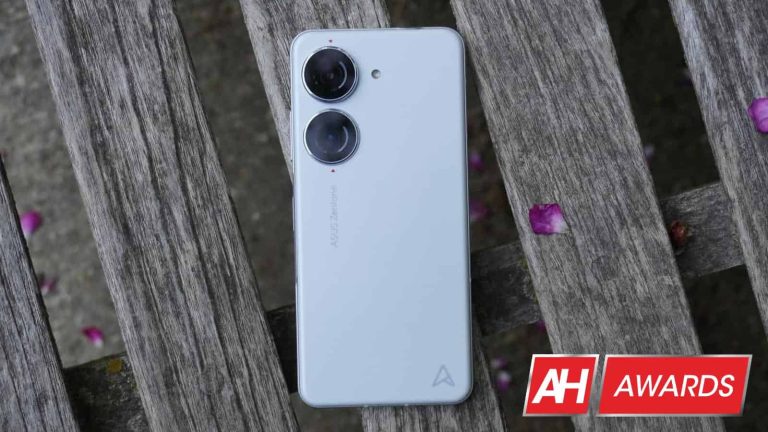
Google’s Pixel 8 Pro improved in all of the right areas, making it the Best Smartphone of 2023

It’s December, so it is time to start handing out some end-of-the-year awards. First up is the Best Smartphone of 2023. The staff at AndroidHeadlines has decided that the Google Pixel 8 Pro has earned the honor of being called the Best Smartphone of 2023. It’s unsurprising after Google Pixel 7 won the award last year.

With the Google Pixel 8 Pro, the company made some slight changes to the phone, but summing those changes up makes it a massive upgrade compared to last year’s model. For instance, the outside of the phone now has a matte finish. This is perhaps my favorite feature of the phone, making it much easier to hold onto. It looks so much better, as my fingerprints aren’t all over the phone now.

Google has also made some significant changes to the display. The company debuted its Super Actua Display on-board the Pixel 8 Pro, which can bring the brightness up to 2400 nits. That makes it one of the brightest displays on the market. And let me say you will not have any trouble seeing this phone outdoors. I’ve been using it since it came out in October, and even outdoors in the snow, with direct sunlight, which makes everything even brighter, it’s still very easy to see. It is so bright that it doesn’t even get to 100% brightness all the time, as I mentioned in my review.

The display didn’t stop there either. It’s simply stunning, with super-accurate colors and bright SDR content.

Google brought in useful AI features, too.

Google has been the year of artificial intelligence. If you launched a tech product this year, you likely used the word “AI” or “Artificial Intelligence” when describing at least one aspect of the product. Or, you’re Apple. Google is no stranger to AI. The search giant has been using AI in its phones for many years already. However, this year, Google added more Generative AI features.

Some of my favorite AI features on the Google Pixel 8 Pro include Magic Editor. This is a camera feature that I can’t stop using. It takes the Magic Eraser that debuted on the Pixel 7 series last year and really puts it on steroids. Magic Editor is able to replace the sky in landscape photos, replace other backgrounds, remove objects and recreate that area, and even stylize your photos. A lot of Google Photos became popular around 2015.

Google also used Generative AI for things like the new AI Wallpaper feature. With the Pixel 8 Pro, you’re able to create your own wallpapers with AI. It’s sort of like a MadLibs style of creating wallpapers, but it does make some truly incredible wallpapers. My only complaint is that I cannot export these wallpapers to use on other devices.

That’s really just scratching the surface of what Google has brought to the table with the Pixel 8 Pro, so it’s really not hard to see why it has earned our Best Smartphone of 2023 award.


[ad_2]
Source link

State investment fund is helping Huawei build its chip network

0
[ad_1]

Beleaguered Chinese tech giant Huawei, which experienced major setbacks in recent years due to US sanctions, is back with a renewed focus and determination. China’s powerful local smartphone supply chain, particularly the chip industry, has helped the firm stand up and fight. It is aiming to double its smartphone sales in 2024. According to Bloomberg, a state investment fund has backed Huawei as it builds a robust self-sufficient chip network.

Huawei is using a state investment fund in its efforts to bypass US sanctions

In May 2019, the US government added Huawei to the Entity List, a list of foreign persons, entities, and governments under trade restrictions. A revision in May 2020 further tightened sanctions on the Chinese firm, cutting off its access to the latest smartphone technologies, including advanced semiconductor chips. For a few years, it couldn’t make competitive phones. However, it created a self-sufficient chip network and is fighting back.

Bloomberg investigated Huawei’s role in China’s chip industry and found that it is working closely with several smaller local firms to strengthen its network. The firm provides them with engineering expertise and financial support. “It often does this without disclosing its involvement — which would trigger US restrictions,” the publication reports. A Shenzhen city government investment fund is helping its endeavor.

According to the report, Huawei has already received a $30 fund from the state. However, state support for the company has ended. In fact, it has reached “unprecedented levels” as the firm works with other local companies. Huawei is leveraging the funds to improve local semiconductor technologies and expand the production of chips, including image sensors, RF chips, memory chips, logic chips, and everything in between.

Among the firms that Huawei has ties with are three subsidiaries of SiCarrier with expertise in developing lithography machines. US sanctions don’t allow the company to import advanced lithography equipment from abroad, so it has to develop them locally. SiCarrier was founded in 2021 and has quickly formed a “close, symbiotic relationship with Huawei.” The latter has transferred about a dozen patents to the former. They have exchanged staff too.

Huawei hired former ASML employees to help develop chipmaking machines

Huawei and SiCarrier’s relationship is so close that their staff can work directly on each other’s sites. The firm has hired several former ASML employees as it sets out to develop powerful chipmaking machines locally. ASML is a Dutch firm with a monopoly on extreme ultraviolet (EUV) lithography machines. A handful of those hirings took place following US sanctions in 2019.

Of course, it takes years of hard work to develop the most advanced semiconductor technology from scratch. SMIC (Semiconductor Manufacturing International Corporation) has been around for over two decades but still only makes 7nm chips when firms like TSMC and Samsung have begun 3nm mass production. However, Huawei appears determined to turn the tide over the next few years.

Its Mate 60 flagship lineup and the Mate X5 foldable are all powered by SMIC-manufactured Kirin 9000S 7nm processor. Industry experts believe the chip is roughly five years behind the current most advanced technology globally. The Biden administration’s export ban in 2022 aimed at keeping China’s semiconductor industry at least eight years behind the rest of the world. So China and Huawei are already making rapid progress.

Not just the chips, China has a robust local supply chain of other smartphone components too. For example, the Huawei Mate 60 used cameras made by OFILM (a former supplier to Apple), BOE displays, and batteries from Sunwods, Apple’s main battery supplier. Considering all this, Huawei may soon bypass US sanctions and make a grad return to the global tech scene.


[ad_2]
Source link

Cactus Ransomware Exploiting Qlik code execution Vulnerability

0
[ad_1]

A new Cactus Ransomware was exploited in the code execution vulnerability to Qlik Sense for initial access.

Qlik Sense is a data discovery and analytics platform that allows you to visualize and analyze data from various sources. It has a modern interface, a relational analytics engine, and advanced artificial intelligence.

Document
Protect Your Storage With SafeGuard

StorageGuard scans, detects, and fixes security misconfigurations and vulnerabilities across hundreds of storage and backup devices.

Cactus Ransomware

Cactus is ransomware that encrypts data, provides a ransom note (” cAcTuS.readme.txt “), and appends the. “CTS1 ” extension to filenames.

They exploit via the combination or direct abuse of (CVE-2023-41266, CVE-2023-41265). Reported by Articwolf.

CVE-2023-41266 Path traversal in Qlik Sense Enterprise for Windows. The severity range is high(8.2). An unauthenticated, remote attacker generates an anonymous session, which allows them to perform HTTP requests to unauthorized endpoints. 

CVE-2023-41265 HTTP Tunneling vulnerability in Qlik Sense Enterprise for Windows, severity range is critical (9.6). Allowing them to execute HTTP requests on the backend server hosting the repository application. 

Notably, the code was consistent between all intrusions identified and involved the Qlik Sense Scheduler service (Scheduler.exe), spawning uncommon processes.

Cactus Ransomware

The threat actors downloaded more tools to ensure remote control and persistence via PowerShell and the Background Intelligent Transfer Service (BITS). These tools included:

  • Renamed ManageEngine UEMS executables that appear to be Qlik files but have a ZIP extension. After being downloaded and used for quiet installation, these files underwent another renaming.
  • AnyDesk downloaded directly from anydesk.com
  • A Plink (PuTTY Link) binary, downloaded and renamed to putty.exe

Also, the threat actors observed:

  • Use msiexec to uninstall Sophos via its GUID
  • Change the administrator account password
  • Establish an RDP tunnel via Plink

The evidence of these actors include:

  • Used RDP for lateral movement
  • Downloaded WizTree disk space analyzer 
  • Leveraged rclone (renamed as svchost.exe) for data exfiltration

Further technical data will be provided when available, but the incident response (IR) investigation is still underway.

Experience how StorageGuard eliminates the security blind spots in your storage systems by trying a 14-day free trial.


[ad_2]
Source link

Flow Productivity Launcher simplifies smartphone usage

0
[ad_1]

There are a ton of different launchers available for Android. Niagara Launcher has been extremely popular for a while, and Nova Launcher even longer than that. Then there’s Smart Launcher, Microsoft Launcher, and so on. There are all types of launchers available, and Flow Productivity Launcher is a rather interesting one that many of you are probably not familiar with.

The Flow Productivity Launcher simplifies smartphone usage, and helps you focus

This launcher tries to simplify smartphone usage, basically. It keeps the home screen very simple, and intentional. There is some customization here, but not as much as on many other launchers out there.

So, the home screen is separated into a couple of sections in this launcher. In the top-left corner, you’ll see the time, date, and your upcoming calendar entry. In the middle portion, you’ll see your favorite apps. You can select 5 by default, and 10 max, though anything over 5 belongs in the paid model. More on that later.

In the bottom-left section sits ‘Focus Mode’, and in the bottom right you’ll see your SMS and phone call icons. That’s it as far as the home screen is concerned. If you swipe from right to left, however, another new section opens up.

The ‘My Feeds’ screen contains various widgets

That screen is called ‘My Feeds’, and includes a calendar widget, a tasks widget, and your screen time (and a comparison to yesterday’s screen time). There are also some big icons included at the bottom by default, but you can add more widgets here, if you want.

If you swipe up from the home screen, you’ll be able to access the app drawer, which looks different. It’s basically just a one-column list of all your apps, and an alphabet on the right edge of the display, so that you can quickly scroll between them.

This app does offer some customization. You can hide app icons, change icon shapes, use different colors (black and white are used by default), change the icon pack, and so on.

Many customization features are hidden behind a paywall

Do note that many of the customization features are locked behind a one-time payment, though. That’s the usual business model for launchers, though. For example, if you want to set more than 5 app shortcuts on the home screen, you’ll have to pay for it (10 is max). The same thing goes if you want to use double tap to lock, wallpapers, hide icons, and so on.

All in all, this is a rather interesting launcher, and it may suit some of you. It may help you use your smartphone less, and be more aware of how much you use it in general. Also, it may help you focus on work.

Flow Productivity Launcher (Google Play Store)


[ad_2]
Source link

Stealthy Chinese hackers stole info from NXP Semiconductors

0
[ad_1]

The Chinese hacking group, known as “Chimera,” operated undetected within one of the world’s largest semiconductor manufacturers, NXP, for an extended period. NXP, a prominent Dutch company, specializes in creating chips for various sectors, including automotive, industrial, and communication. The breach might have gone undetected if not for the investigation of another Dutch company following a cyberattack. While inside the network, the hackers sought intellectual property, potentially including NXP chip designs.

NXP stands as a global semiconductor manufacturing giant, offering a diverse array of advanced electronics solutions. Their product portfolio encompasses microcontrollers, sensors, chips, and automotive electronics. As a publicly traded company, they have a significant market presence.

The revelation by NRC regarding NXP’s security lapse in allowing Chinese hackers prolonged access to their internal network was indeed a major surprise. The shock intensified as details emerged about the breach methodology. The attackers exploited regular employee accounts through simple brute force techniques. Leveraging information from previous data breaches on social media sites, the hackers successfully guessed passwords. Although NXP had implemented multi-factor authentication as a preventive measure, the attackers circumvented it by altering phone numbers.

According to NRC’s investigation, the hackers stole NXP mailboxes and specifically targeted chip designs

The assailants quietly elevated their access rights within the system and covered any traces they left behind. Their chosen method of exfiltration involved leveraging cloud storage solutions. They used a process that entailed compressing, encrypting, and subsequently exfiltrating files through platforms such as Google Drive or viable alternatives. Yes, these straightforward techniques were able to breach the system of a multi-billion-dollar company.

The cybersecurity firm Fox-IT came into the spotlight when called upon to investigate a breach within Dutch airline Transavia. Fox-IT addressed and uncovered the vulnerability that allowed the attackers to steal information from over 80,000 Transavia passengers. Notably, the firm traced malicious network traffic to an IP address near NXP’s headquarters.

Upon hearing the news, NXP enlisted the expertise of Fox-IT to conduct a thorough investigation. The result confirmed that a breach had transpired. NXP has maintained quiet regarding specific details, acknowledging only “a hack.” Luckily, Fox-IT has exposed some information, claiming that intellectual property was indeed compromised, albeit without a precise estimate of the extent.

In the fiercely competitive chip industry, where China plays a prominent role, significant investments have been made to retain chip manufacturing within its borders. Companies consider chip designs invaluable assets, so they take great care to protect their technological secrets. Chimera, a Chinese backed group, has previously targeted several Taiwanese semiconductors with similar intentions of stealing chip designs. There are clear indications of a trend wherein China is trying to gain a competitive edge over its semiconductor competitors.


[ad_2]
Source link

TikTok ban in Montana blocked by federal judge

0
[ad_1]

For months now, TikTok, owned by the Chinese company ByteDance, has been in a legal showdown with the state of Montana. State lawmakers dropped the hammer by passing a bill to ban the app with the argument that the ban is necessary to shield residents’ data from the Chinese government, adding fuel to the national movement to kick TikTok off government-owned devices.In a recent development reported by The New York Times, a federal judge in Montana, Donald W. Molloy, temporarily halted the statewide TikTok ban set to take effect next year. Judge Molloy emphasized Montana’s role in protecting its residents but stressed the importance of acting within constitutional legal boundaries.

He granted a preliminary injunction, asserting that the ban on the Chinese-owned app likely violated the First Amendment and a clause empowering Congress to regulate commerce with foreign nations.

Judge Molloy expressed skepticism about Montana’s motivations, stating that the Legislature and attorney general seemed more focused on addressing China’s perceived involvement in TikTok than on safeguarding Montana consumers. He cautioned against the state’s intervention in foreign affairs, suggesting that it clashed with the current US foreign policy interests.

TikTok welcomed the judge’s decision, with Alex Haurek, a company spokesman, stating that the company was “pleased the judge rejected this unconstitutional law and hundreds of thousands of Montanans can continue to express themselves, earn a living, and find community on TikTok.”

Montana’s Department of Justice, represented by Emilee Cantrell, said that Judge Molloy had “indicated several times that the analysis could change as the case proceeds.” Cantrell expressed anticipation in presenting a complete legal argument to defend the law, emphasizing its role in protecting Montanans from potential data misuse by the Chinese Communist Party.

TikTok, maintaining its stance of not sharing US user data with Beijing officials, deemed the law as overly broad and unconstitutional. The company had sought the preliminary injunction, making this legal battle a focal point of attention for free speech advocates, Big Tech groups, and policymakers exploring similar restrictions in other states and at the national level.

[ad_2]
Source link