Iran’s MuddyWater Group Targets Israelis with Fake Memo Spear-Phishing

0
[ad_1]

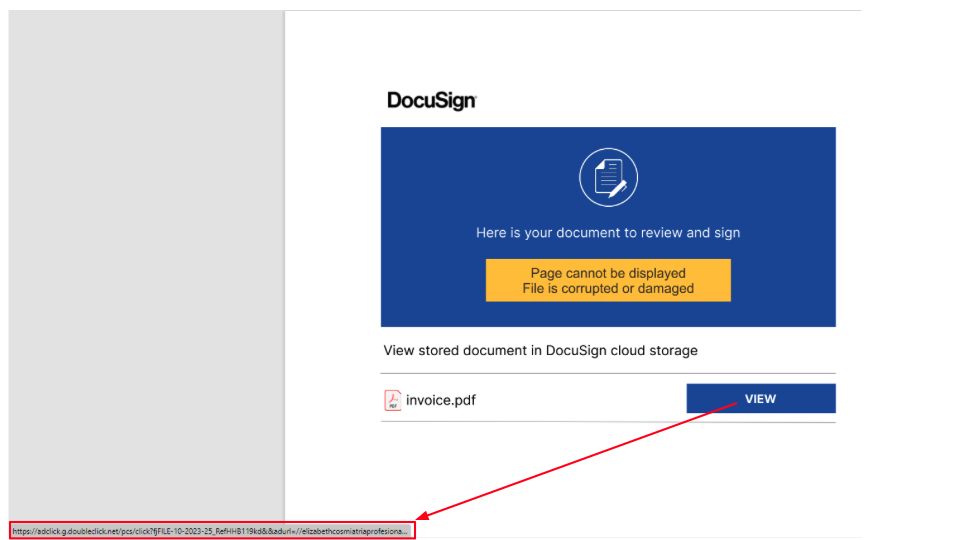
MuddyWater is using a fake memo from the Israeli Civil Service Commission as a lure to trick victims into downloading a RAT.

Iranian state-sponsored threat group MuddyWater is targeting Israeli entities in a spear-phishing campaign, reports cybersecurity firm Deep Instinct.

According to Deep Instinct’s treat intelligence researcher, Simon Kenin, MuddyWater is using a fake memo from the Israeli Civil Service Commission as a lure to trick victims into downloading a remote administration tool called Advanced Monitoring Agent (AMA).

This malware lets hackers remotely access their victims’ computers to steal data, disrupt their systems, and perform spying. The threat actor is targeting two Israeli entities to deploy the AMA, a legitimate remote administration tool from N-able.

Iran's MuddyWater Launches New Spear-Phishing Campaign Against Israel
The fake memo used by MuddyWater hackers (Credit: Deep Instinct)

In their blog post, researchers noted updated TTPs (techniques, tactics, and procedures) in this campaign compared to the group’s previous activities. For instance, the group has used similar attack chains in the past and focused on distributing remote access tools like ScreenConnect, Syncro, RemoteUtilities, SimplyHelp, etc.

However, in this spear-phishing campaign, MuddyWater has used a new technique called ‘eN-Able,’ which is a new type of phishing email designed to evade standard email security filters because the emails combine HTML and JavaScript and appear legitimate. These emails contain malicious code to exploit vulnerabilities in operating systems and email clients.

Another new tactic is called ‘spray and pray.’ This technique is akin to a phishing attack in which a large number of phishing emails are sent to a large number of targets. However, through the spray and pray technique, the chances of success increase dramatically, even if a fraction of the targets fall for the lure.

Furthermore, the group has used a new file-sharing service called Storyblok to launch the multi-stage infection vector containing hidden files, an LNK file that initiates the infection, and an executable to launch the malware. After the victim is compromised, the attacker connects to the infected host using the legit remote administration tool and starts reconnaissance.

In addition to these new TTPs, Deep Instinct notices that the group is leveraging a new C2 framework called Muddy2Go. Using new TTPs indicates that MuddyWater is trying to improve its modus operandi. These findings have been confirmed separately by another cybersecurity firm, Group-IB.

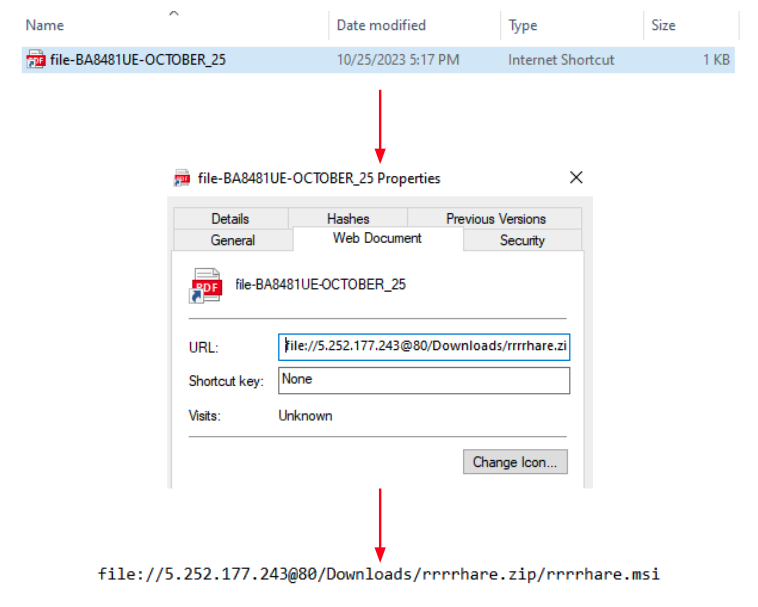
Iran's MuddyWater Launches New Spear-Phishing Campaign Against Israel
Campaign overview (Credit: Deep Instinct)

MuddyWater (aka Mango Sandstorm and Static Kitten) is a cyberespionage group that’s believed to be active since 2017. It represents a unit of Iran’s Ministry of Intelligence and Security (MOIS), like other groups, including Agrius, OilRig, and Scarred Manticore.

It is worth noting that this campaign is the latest in a series of targeted cyberattacks against Israeli entities by MuddyWater. In fact, since the escalation of tension between Israel and Palestine, many state-sponsored actors have become active in targeting Israel.

Recently, Hackread reported that Hamas hackers have developed a dangerous new malware dubbed BiBi-Linux to target Israeli systems. This malware can overwrite critical system files, making it impossible to boot up infected systems. The malware was distributed via spear-phishing emails designed to be from legitimate Israeli organizations.

Another spyware campaign was detected in October 2023 in which pro-Palestine hackers delivered malware to unsuspecting Israeli citizens using the rocket alert app.

  1. Israel’s Channel 10 TV Station Hacked by Hamas
  2. Hamas hacked the smartphones of over 100 IDF soldiers
  3. Hamas posed as women to con IDF into downloading malware
  4. Iranian Hackers Posed as Israelis in Targeted LinkedIn Phishing Attack
  5. Iranian Hackers Posed as Israelis in Targeted LinkedIn Phishing Attack
  6. Hamas hacked phones of IDF soldiers with seductive phones of women

[ad_2]
Source link

CVSS v4.0 Released with New Supplemental Metrics, and OT/ICS/IoT Support

0
[ad_1]

IN SUMMARY

  • FIRST has released the fourth instalment of the CVSS standard.
  • CVSS v4.0 offers superior applicability to OT (Operational Technology), ICS (Industrial Control Systems), and the IoT (Internet of Things) technologies.
  • The new version boasts many new tweaks and features to help security experts accurately assess vulnerabilities’ severity.
  • Version 4.0 has finer granularity in base metrics, eliminates downstream scoring ambiguity, and simplifies threat metrics.
  • FIRST has also added supplemental metrics for vulnerability assessment and safety metrics for Supplemental and Environmental metric groups.

The non-profit collective Forum of Incident Response and Security Teams (FIRST), has released the new version of their Common Vulnerability Scoring System (CVSS), CVSS 4.0. Its first look was unveiled at the 35th Annual FIRST Conference in Montréal. Canada.

CVSS is a standard that security experts use to measure the severity level of software vulnerabilities. It is used to capture the key characteristics of a security flaw. It indicates its severity level with a numerical score reflecting whether it is a low, medium, high, or critical severity flaw. This helps alert government agencies, businesses, the general public, and service providers to implement protective measures accordingly.

 The key changes in CVSS v4.0 include:

Finer granularity in base metrics for consumers:

CVSS 4.0 offers customers more granular control over the way they score vulnerabilities so that they can tailor the scoring system to their specific needs and assess vulnerabilities in real time.

Removal of downstream scoring ambiguity:

CVSS 3.0 and earlier versions weren’t foolproof, and there was some potential for ambiguity in scoring when downstream vulnerabilities were to be scored. However, the new version eradicates the possibility of ambiguity by offering extensive guidance on scoring downstream vulnerabilities.

Simplification of threat metrics:

The new version combines threat metrics into a single metric to simplify them and make it easier for consumers to understand/use the scoring system.

Supplemental metrics for vulnerability assessment:

CVSS v4.0 offers additional supplemental metrics for assessing vulnerabilities. These include Automatable, Value Density, Recovery, Provider Urgency, and Vulnerability Response Effort. These new metrics offer extended information about vulnerabilities so that security experts can make informed decisions about remediation efforts.

Increased applicability to OT/ICS/IoT:

The new CVSS version is more applicable to OT/ICS/IoT systems due to the addition of Safety metrics and values to Supplemental and Environmental metric groups. This helps in the accurate scoring of flaws found in these systems.

Base score:

The new version calculates the base score with a new formula that examines certain factors, including the vulnerability’s impact on integrity, confidentiality, availability, exploitability, and scope (which means the number of systems and users a vulnerability can impact).

Temporal score:

The temporal score will now consider the vulnerability’s age and availability of exploits. Through CVSS 4.0, it is possible to check the current threat status of any vulnerability and accordingly modify protection measures.

Another notable feature is the modification of nomenclature as CVSS will not just be the Base core now. Here is an overview of the new nomenclature.

  • § CVSS-B: CVSS Base Score
  • § CVSS-BT: CVSS Base + Threat Score
  • § CVSS-BE: CVSS Base + Environmental Score
  • § CVSS-BTE: CVSS Base + Threat + Environmental Score

Overall, CVSS v4.0 is a powerful package offering considerable improvements compared to earlier versions and provides organizations with a more accurate and comprehensive mechanism to assess software vulnerabilities.

“This latest release marks a significant step forward with added capabilities crucial for teams with the importance of using threat intelligence and environmental metrics for accurate scoring at its core,” FIRST said.

More details on the new version are available here.


[ad_2]
Source link

Facebook is bringing A/B testing for Reels

0
[ad_1]

Facebook and Instagram have been pushing Reels on their users in an attempt to keep up with TikTok, and they’ve seen varying degrees of success. The company just unveiled some new features targeted at creators, and one of them will be great for people looking to maximize exposure. Facebook will bring A/B testing for its Reels, according to a new report.

A/B testing is when a creator tests different versions of their content on different sections of their audience. This is to see which version performs better. If you launch a video with two different thumbnails, you can see which one leads people to click on the video more often.

Facebook will bring A/B testing for Reels

If you’re making Reels, you’ll want to make sure that they’re reaching as many eyes as possible. Well, if you post a Reel that doesn’t do well, it might be because of one detail or the thumbnail. This is what Facebook wants to help you fix.

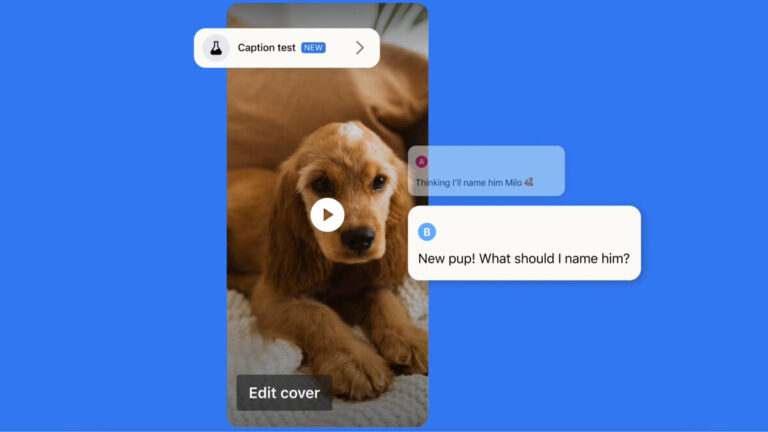
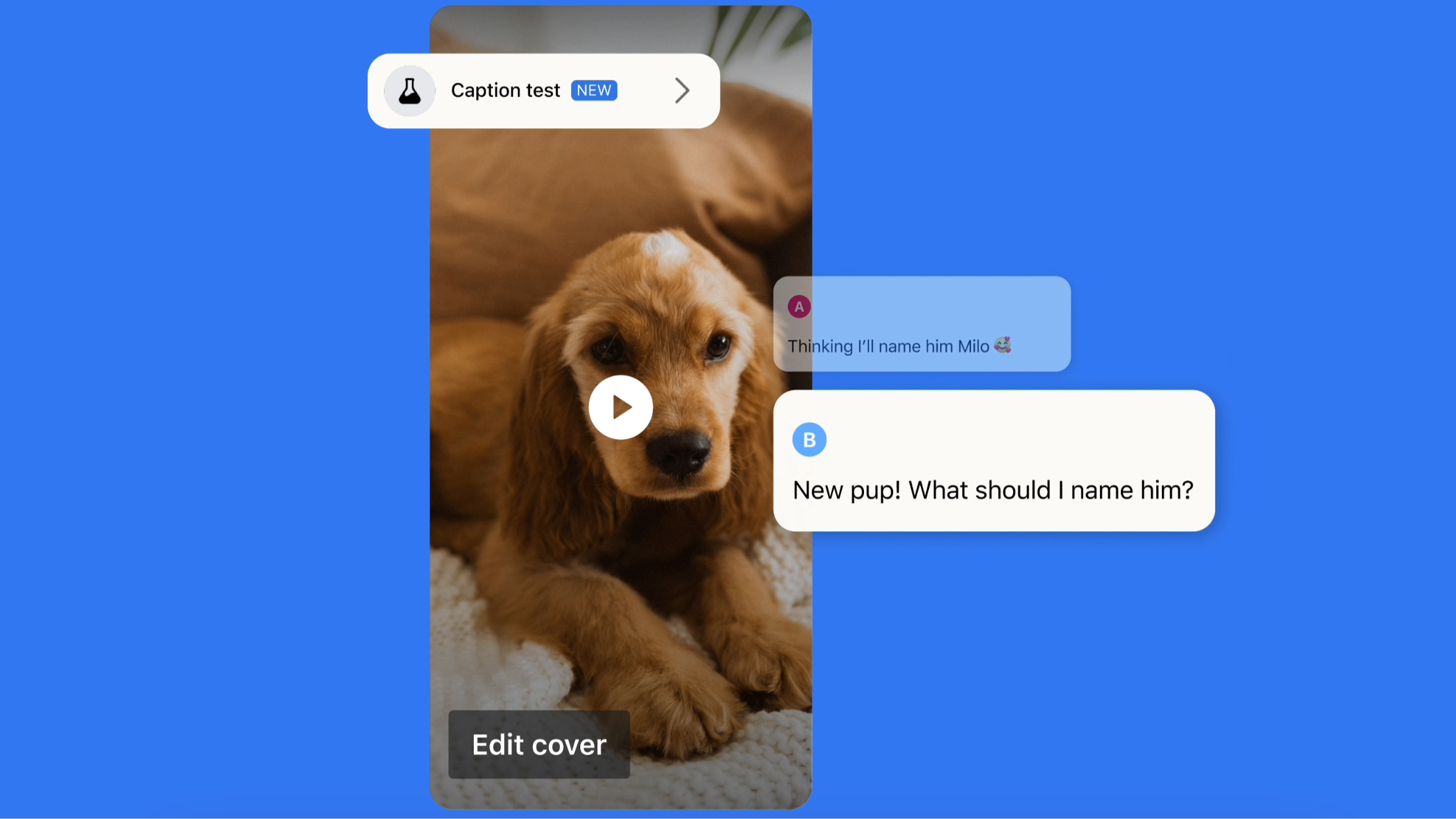
It’s bringing A/B testing to Reels… well, it’s more like A/B/C/D testing. When you make a Reel, you’ll be able to upload up to four different thumbnails for your videos and type four different captions. Once you post it, Facebook will show each version to separate sections of your audience for 30 minutes.

After that, the app will choose the version that got the highest engagement and make that the official video on your timeline. It’s a way to learn which types of thumbnails and captions tend to find favor with your audience.

After the testing period is up, you’ll see a report of how each version did. This way, you’ll be able to learn what works and what doesn’t.

Other additions

Facebook is also bringing some other additions to Reels for creators. The platform will show you how your Reels are doing on your dashboard. The dashboard will let you take actions like deleting or hiding your posts.

Lastly, the app will extend the analytics view from 28 days to 90 days. So, you’ll be able to see how your Reels performed over the past roughly three months. These changes are rolling out now.


[ad_2]
Source link

Tubi TV: Everything You Need To Know About This Free Streaming Service

0
[ad_1]

Who says you need to pay to watch streaming content? Tubi TV doesn’t believe you need to. Tubi is similar to Netflix, Hulu, YouTube TV, HBO MAX and others, but there is one big advantage that Tubi has, it’s free.

Fox bought Tubi in 2020 for around $440 million, so the “free” aspect of Tubi could change in the future. However, for now, it continues to be completely free.

What is Tubi?

Tubi is an interesting streaming service, similar to Pluto TV and Xumo, Tubi TV is completely free. Pluto TV was bought up by ViacomCBS and Xumo by Comcast, while Fox bought Tubi.

There’s no paid option for Tubi, none whatsoever. So how does Tubi make money? You’ll have to watch some ads while you watch its content. And yeah, ads apparently make up enough for Tubi to stay in business. Part of this is because Tubi is not showing Live TV. So you aren’t seeing ads on shows that are on CBS, CNN, or any other channel. Instead these are Tubi’s own ads.

Additionally, Tubi doesn’t have any exclusives and for the most part, it’s older content. So as the saying goes “you get what you pay for” and that’s true with Tubi.

How much is Tubi?

$0.

While you’re paying $17 for Netflix, $15 for HBO MAX and more for a live TV service, Tubi is charging their customers absolutely nothing.

Tubi is basically using Google’s old business model. Where they get you in using their service, and then show you ads to pay for the business. But keep in mind that “you get what you pay for” when it comes to Tubi. So don’t expect to see Game of Thrones, 90 Day Fiance, The Bachelor or many other top TV shows and movies on Tubi. At least not right away.

Ads will run before and during a movie or TV show. They are typically 15 to 30 seconds, so they aren’t tough to get through. And we’re not looking at 3 minutes straight of ads like Hulu does on its ad-supported plan. They are unskippable, as you might expect, so it’s a lot like watching YouTube.

cross device wave

What movies & TV shows are available on Tubi?

Tubi has a relatively small catalog of titles, compared to the competition. There’s around 20,000 movies and TV shows available on Tubi.

It has partnered with around 250 different providers, providing you with a great selection of content to watch. That includes content from Paramount, Lionsgate and MGM. As well as TV content from A&E, Complex Networks and others.

When it comes to movies, you won’t find any of the more recent hits. Most of the movies available on Tubi are quite a bit older. You’d be lucky to find something released in the last five years, on Tubi. There are a lot of good classics available though.

Though, with TV shows, it’s a bit of a mixed bag. You see, we do have some very popular shows available here like Hell’s Kitchen, Duck Dynasty among many others.

What’s really cool on Tubi, though, is the “Not on Netflix” category. Which is exactly what it sounds like. This is a collection of movies and TV shows that are not on Netflix. But don’t expect blockbuster hits in this category. As with the rest of the Tubi platform, these are mostly older programs, though you may find a hit or two in there.

What features are available?

Not many. It’s basically the basics, and since this is a free service, we aren’t totally surprised.

You can add content to your list to watch, but if you switch to another platform, your list won’t switch, unless you create an account.

There are some parental controls available, but those are also very limited. Basically, you can limit content based on the rating. But you can’t limit specific genres, or specific shows.

It’s free, so you can’t expect to have every feature and the kitchen sink included.

What does Tubi lack?

As with any “free” service, there are some things that are missing, or lacking with Tubi. First up is video quality. It’s just 720p. Which, it’s fine, but on a 4K TV, it doesn’t really look great. And there is nothing available in 1080p. Not to mention a lot of the content on Tubi was shot before the industry moved to HD, so you may not even get a 720p stream here. Depending on the platform, there is an option to adjust the quality, but not available on every platform.

Closed Captioning is also limited to just English. Which, for most of us in the US, that is probably not a problem. But not everyone speaks english. So being able to get closed captioning and/or the audio in other languages would be a nice feature to have.

You don’t need to create an account to use Tubi, which is nice. It means you can just download it and get started watching content. But if you want to use parental controls, you will need to create an account. The parental controls are there, but not that robust. Basically, you can only limit what kids can watch, based on the rating for the program.

What’s a bit strange, is that the interface of Tubi does differ quite a bit from app to app. So if you use it on Fire TV and then move to Android TV or even to your Android smartphone, you may find a vastly different interface.

One of the bigger lackings of Tubi is no sports or live programming. Of course, Netflix doesn’t have that either – Hulu does have some live stuff, but it’s somewhat rare. Again, considering the price tag here, and the fact that this is not a live TV service, that is not a big surprise.

Don’t get us wrong, this is a pretty decent streaming service, especially for the price. But it would be nice for Tubi to offer a paid subscription to get some of these features and newer video content.

What platforms support Tubi?

Currently, Tubi supports most of the popular platforms. It’s available on Android smartphones and tablets, Chromecast, Android TV, iOS, Apple TV, Amazon Fire TV, Amazon Fire Tablets, Roku, PlayStation 5, Xbox One, Xbox Series S, and Xbox Series S. Which covers most of the bases.

Screen Shot 2021 02 08 at 2 23 10 PM

So no matter where you are, you can stream Tubi on your TV, or your smartphone or tablet. And enjoy some free content.

Where is Tubi available?

Surprisingly, Tubi is not limited to just the US. Tubi TV is available in a few other countries as well.

Tubi TV is available in North America – the United States, Canada and Mexico. As well as Australia. And it expects to launch in more regions in the coming years.

Should I download and use Tubi TV?

Tubi is not the streaming service that is going to serve all of your needs. But it is a nice compliment to the many others that you might have. Including some titles that you may not have on other services like Netflix, Hulu, YouTube TV, Sling TV, HBO MAX and others. And since it’s free, you might as well add it to your collection of streaming services.

For a free streaming service, it’s pretty decent. Just don’t expect it to be amazing for this price. Though it’s going to be interesting to see what Fox does with it in the coming years, after paying nearly half a billion for the service.


[ad_2]
Source link

Google Chat’s new conversation screen might look familiar

0
[ad_1]

Google Chat is the search giant’s answer to apps like WhatsApp and Telegram. Being a Google app, it’s subject to “Material You-ification”, and other UI redesigns, and that’s what happened just now. According to a new report, Google Chat just got a big revamp to its conversation screen, and it looks pretty familiar.

The change makes it look pretty much like Google Messages. It should come as no shock that the company opted to model Chats after Messages. This way, there’s a unified look to them.

In case you’re confused about what these apps are and what makes them different, here’s a quick rundown. Google Chat is Google’s internet-based message platform that lets you communicate with other people with Google accounts. So, it’s similar to WhatsApp, Telegram, Facebook Messenger, etc. Google Messages is the standard SMS/RCS messaging app that lets you communicate with your contacts.

Google Chat gets a revamp to its conversation screen

This is a welcomed change to the app, and it makes chatting with the app easier. Before, you’d see all of the messages hovering above the background. with each of them justified to the left of the screen. After the revamp, each message will have its own bubble, and all of the messages you send will be on the right of the screen. Also, all of the other people’s messages will be gray while yours will be colored to match your color palette.

Google chat revamp

In Google Messages, you’ll see a squiggly line stretch across the screen to show unread messages. Well, Google Chat adopted that as well. So, it’s easier to know what messages people haven’t read yet.

This now makes Google Chat and Google Messages look extremely similar which gives them a more unified look. Right now, we don’t know when this new look will roll out for the apps. It’s currently live on the web version of Google Chat.


[ad_2]
Source link

Samsung set to transform mobility with its first wearable robot in 2024

0
[ad_1]

Samsung has been working on an assistive wearable robot for the past few years. It obtained an international safety certification for the device in September 2020. Called the GEMS Hip (GEMS stands for Gait Enhancing and Motivating System), the company planned to launch it this year. However, the Korean media reports that the launch has been delayed. The robot will now arrive in early 2024, likely at CES 2024, with a different name—Bot Fit.

Samsung’s wearable robot Bot Fit is coming in early 2024

According to a new report coming out from Samsung’s homeland, the Korean behemoth has completed the development of the Bot Fit. It has also completed field testing of the product with its executives and has sent sample units to its partners for further testing. However, the company no longer plans to proceed with its original plan of releasing the device in 2023.

Samsung co-CEO and the head of the company’s device experience division, Jong-hee Han, has confirmed that the Bot Fit will go official in early 2024, South Korean publication Financial News reports. While the executive didn’t reveal a precise launch date, industry experts believe the firm is looking to unveil the wearable robot at CES 2024. The 2024 edition of the annual electronics show will take place in Las Vegas from January 9-12.

“We have already completed a pilot test with executives and employees,” the report quotes an official familiar with the matter. “We understand that the product will be released in the first half of next year.” The official’s words suggest the Bot Fit won’t be available for purchase immediately after its unveiling in January. We might hear more about it in the coming weeks as Samsung puts the final touches on the product.

Bot Fit will assist older people or those with limited mobility

Bot Fit is a walking assistance robot that will help older people or those with limited mobility move around easily and more comfortably. It offers two modes: Booster and Aqua. The Booster mode is for people with difficulty in walking because of leg or back injuries. The Aqua mode recreates the effect of walking in water and is ideal for use for rehabilitation purposes.

The wearable robot can connect with Samsung smartphones, watches, and earbuds for easy control. You will get instructions and advice through the paired Galaxy Buds. It automatically records any physical changes resulting from its use, giving you an insight into your progress. Some Samsung executives have reportedly already purchased the product, so it may be quite effective at the job it’s set out to do. We will have to wait a few more months for the public validation.


[ad_2]
Source link

Why Storage & Backup Are Cybersecurity’s Weakest Links?

0
[ad_1]

A lot of money is being spent to protect the enterprise against intrusion. Ransomware protection is currently in the spotlight – and with good reason.

But organizations also invest heavily in technologies such as Zero Trust Network Access (ZTNA), Secure Access Service Edge (SASE), Next Generation Firewalls, and AI-based threat detection tools.

These defenses add value. However, given the numerous security flaws in storage and backup systems that cybercriminals are actively attempting to exploit, they might be unable to stop attacks.

Here are five reasons why storage and backup are cybersecurity’s weakest links and why organizations need to prioritize the security of these systems to thwart ransomware and prevent attacks:

For the first time, discover how to eliminate blind spots in your storage & backup systems. Complete the form to instantly watch a 40-second tour of StorageGuard.

1. Complacency About Storage And Backup Security

It is a popular misconception that storage and backup systems such as Dell EMC, NetApp, or Rubrik are buried too deep in the enterprise for the bad guys to reach. This is not the case.

In incident after incident, criminals have gained administrative privileges and managed to find their way into storage systems or have been able to cripple backup systems.

From there, they have no trouble compromising sensitive information, exfiltrating data directly off the backup targets (thereby completely evading Data Loss Prevention tools), and holding the organization to ransom.

Despite abundant press about the consequences of such breaches and the apparent holes in storage and backup systems, the misconception persists.

Part of the reason may be the knowledge gap. Many security professionals lack understanding of storage and backup, while storage and backup managers often have insufficient understanding of security principles.

Whatever the reason, storage and backup systems remain among the most poorly protected in the enterprise.

2. Perimeter Obsession

The security picture today could be likened to a home where the owners build a huge fence install cameras, alarms, and sensors at the front but leave a bathroom window open.

Thieves can then enter via a neighbor’s yard, enter via the bathroom, and take what they want. Despite the owners spending a fortune to keep criminals out, the bad guys could slip in and out with ease.

The homeowner’s obsession with incursions from the street led them to miss an obvious point of weakness.

It is the same in storage and backup. When cybercriminals find data protected all along the perimeter with various security tools, they look for an easier way in.

Storage and backup vulnerabilities and security misconfigurations are becoming the go-to tactic to exfiltrate data and compromise the ability of an organization to recover from an attack.

Document
14 Days FREE Trial

Safe Guard Your Storage by Continuously Scan Your Storage Systems to Detect Security Risks, CVE and Insecure Configurations with StorageGuard.

3. Storage And Backup Misconfigurations Are Rife

A 2023 study of over 400 high-end storage devices detected over 6,000 discrete storage vulnerabilities, backup misconfigurations, and other security issues among storage and backup systems.

At the device level, the average enterprise storage device has around 15 security vulnerabilities, with at least three meriting a high or critical risk rating.

This is evidence that storage and backup systems have a significantly weaker security posture than the compute and network infrastructure layers – and the bad guys know it.

There are a great many patch management and vulnerability management tools out there. They continually inventory and scan networks and systems for potential issues.

They do a fine job with operating systems (OSes) and enterprise applications. However, they often miss Common Vulnerability and Exposures (CVEs) related to storage and backup.

Perhaps this is due to the complacency factor mentioned earlier. There are currently thousands of active CVEs out there that related to storage and backup.

Some of them can be used to exfiltrate files, initiate denial-of-service attacks, take ownership of files, and block devices, and delete data. Overall, about 20% of storage devices are exposed on average and can be attacked successfully by ransomware.

5. Storage Security Features Not Implemented

Enterprise storage systems are increasingly offering ransomware detection and come with many other prevention capabilities. Some include the capability to lock retained copies, protect critical data from tampering and deletion, or air gap data.

However, in breach after breach, such features were found to either not be implemented or were misconfigured, exposing the organization to the threat of ransomware.

How To Harden Storage And Backup Security

When malware gains entry, storage and backup systems are the last line of defense. They need to be fully secured to protect data and ensure recoverability.

Continuity’s StorageGuard ensures that storage and backup systems will not be the weakest link in cybersecurity.

It provides a comprehensive approach to the scanning of data storage, storage management, and backup systems to detect and remediate vulnerabilities and security misconfigurations.

Watch a 40-second demo of StorageGuard, to see how to securely configure your storage & backup environment


[ad_2]
Source link

Facebook and Instagram are forbidden from using targeted ads in the EU

0
[ad_1]

The European government is cracking down on how companies use its citizens’ data. Companies like Meta and TikTok have had to make sweeping changes to comply with regulations and policies. In the case of Meta, Facebook and Instagram are still forbidden from using targeted ads, according to a new report.

In order for platforms like search engines, video-sharing platforms, and social media sites to deliver personalized ads. The companies behind them need to collect data on your habits. This way, they can funnel the most relevant ads with the highest chance of getting you to click on them. This has been the practice for years.

The European government has been cracking down on this and smacking the wrists of large companies doing this. This is why TikTok gives people the option for a chronological feed in Europe. It’s banned from collecting users’ data to deliver them algorithmically curated video feeds.

Facebook and Instagram can’t use targeted ads in Europe

A few months ago, Norway’s DPA (Data Protection Authority) issued a temporary ban on Facebook and Instagram. The authority forbade the companies from using users’ data to focus their ads. This happened in July, and we’re sure Meta was looking forward to it being lifted.

However, Ireland’s (DPC) Data Protection Commission came down as well and extended this ban. Not only is it in effect for longer, but it covers the entire EEA (European Economic Area) and countries like Norway, Iceland, and Liechtenstein.

Meta, a while ago, said that it believes in an ad-supported internet. This is why people are subject to seeing ads across Meta’s platforms along with others. With its ad business handicapped by European regulations, Meta had to turn to establishing a subscription service.

Recently, Meta unveiled a new subscription service for European users that will completely remove ads from Facebook and Instagram. If you sign up through the web, it will cost you €9.99/month, if you sign up through the app, it will cost you €12.99/month. Since this is in response to the European regulations, we don’t expect these to come to the States.


[ad_2]
Source link

Benchmarks surface to support Apple’s claims about M3

0
[ad_1]

Earlier this week, Apple debuted three new chipsets, along with new Macs powered by them. It’s the M3, M3 Pro and M3 Max chipsets, all of which are about 20% faster their predecessors. Now it’s one thing to say that on stage, with Apple’s vague graphs, it’s another to see this performance in real-life.

Thankfully, benchmark scores have started to surface already. There’s a new benchmark result on Geekbench which show that the base M3 chip had a single-core score of around 3,000 while the multi-core was roughly 11,700. Now if you compare that to the base M2 chip, which had 2,570 for single-core and 9,600 for multi-core, that comes out to being about 16% faster on single-core and right at 20% for multi-core. Backing up Apple’s claims that the M3 is 20% faster than M2.

Now when we compare this to the M1, it’s closer to about 50% faster, according to these benchmarks. That’s not quite what Apple promised, but that is still pretty good for three years of silicon. Something to keep in mind here is that benchmark scores are not always the same, and these Macs are likely not on final software yet, since they don’t go on sale until Tuesday.

Apple compared to M1 and Intel because of customers

During and after Apple’s ‘Scary Fast’ event, there was a lot of talk about why Apple decided to compare the new M3 chips to its M1 and the Intel-based Macs, versus M2. Saying that it was all because the numbers look bigger that way. And while that might be true, I believe there was a bigger reason for this.

It’s said that about 50% of Mac users are still on an Intel-based Mac. The last Intel-based Mac was announced over four years ago. And the M1 was first announced in 2020, so those with those Macs are more likely to be getting ready to upgrade versus those on an M2 Mac. Unlike Intel, AMD and even Qualcomm, Apple is not selling these chips to their partners. They are selling directly to the consumer. So while others will compare it to their previous generation, Apple comparing to older chipsets makes a lot more sense. Target those that are almost ready to upgrade, versus those that bought a MacBook Pro in the last 9 months.


[ad_2]
Source link

YouTube Premium prices are on the rise across multiple countries, including Australia

0
[ad_1]

YouTube and several other streaming services like Netflix and Disney+ are no strangers to price hikes. With over 2.7 billion monthly YouTube users, a significant chunk of the 80 million Premium subscribers is about to experience another increase in subscription fees. This déjà vu occurred last year, hit the US earlier this summer, and is now going global.Reports on Reddit (via 9to5Google) reveal YouTube Premium and YouTube Music Premium users in Germany, Australia, Argentina, Chile, Poland, and other countries received emails about a substantial price hike. The new rates kick in on November 1 for individual, family, and student plans.

Previously, YouTube Premium in Australia cost AU$12 per month. After an AU$5 bump, it will now be AU$17 monthly. The family plan takes a hit, too, soaring from AU$23 to AU$33 monthly. For those on the grandfathered plan, the increase is even steeper, jumping 83% from AU$18 to AU$33 monthly.

Existing subscribers will witness the new pricing in their next billing cycle. In its email announcement, YouTube states the company does not “make these decisions lightly” and argues that the price hike will aid in “continuing to improve Premium and support the creators and artists you watch on YouTube.”

For long-term subscribers in Australia, the higher rate won’t apply until April 2024, giving them an additional three months at the existing rate as a nod to their loyalty.

In Germany, YouTube Premium gets a €1 increase, going from €12 to €13 monthly. The family plan takes a steeper climb, rising by €6 to €24 monthly. New users will feel the impact immediately while existing subscribers will see the changes 30 days after their next billing cycle.

This global price adjustment follows YouTube’s recent move to block users employing ad-blockers, indirectly nudging users towards paying for the service. YouTube Premium offers an ad-free experience, among other premium-only features like audio-only playback for videos and content download for offline viewing.


[ad_2]
Source link