What was Announced at the Apple Event Today?

0
[ad_1]

Today was arguably, Apple’s biggest event of the year – the iPhone event. However, Apple announced more than just iPhones at this event. So in this article, we’re going to round up everything that Apple announced, including some new USB-C accessories.

Apple iPhone 15

iphone 15

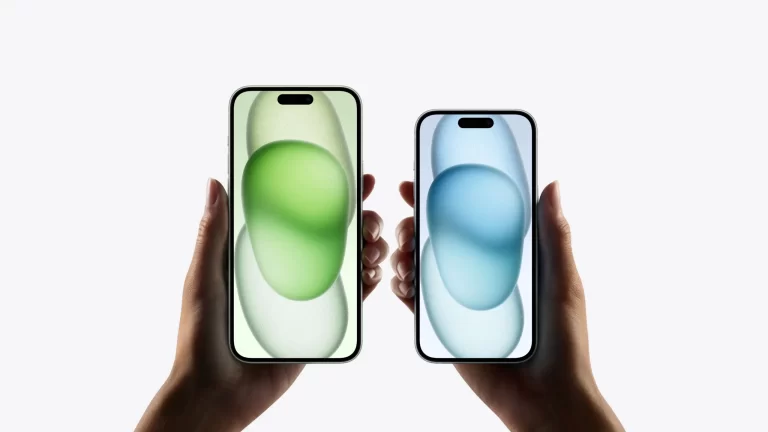
First up, we have the new iPhone 15 series. As has been the case for the last few years, there’s four new models here: iPhone 15, iPhone 15 Plus, iPhone 15 Pro and iPhone 15 Pro Max. The entire lineup moved over to USB-C this year. So you’re going to need to buy some new cables this year.

On the iPhone 15 and iPhone 15 Plus, Apple brought over the Dynamic Island. So now the notch is gone from all new iPhones. It also brought in the A16 Bionic chipset. Now this might sound familiar, and that’s because it was on the iPhone 14 Pro series last year.

iphone 15 pro finish select 202309 6 7inch GEO US

Over to the iPhone 15 Pro and Pro Max. These phones got much bigger updates. Starting with the A17 Pro chipset. Apple appears to be moving away from “Bionic” here, and offering a huge upgrade in terms of performance here. In fact, it’s bringing some console games onto the iPhone. Which is huge news.

Let’s not forget that these are made of Titanium as well. Which makes them more durable, yet lighter. Apple also ditched the mute switch this year, only on the Pro models. And instead is giving us an Action Button, similar to the Apple Watch Ultra. This new button will still work as a mute button, if you press and hold. But you can also use it to do other things, like the flashlight, and even using the  Shortcuts app.

The cameras also got a nice upgrade this year, particularly on the Pro Max model. Which now uses a 12-megapixel periscope lens. This is capable of doing 5x optical zoom. On both models, it has adjusted the punch in on the main 48-megapixel sensor, so you’re getting a low more focal lengths on these cameras.

iPhone 15 pre-orders will start on Friday, September 15. The iPhone 15 starts at $799, iPhone 15 Plus at $899. While the iPhone 15 Pro starts at $999 and the iPhone 15 Pro Max at $1,199. The iPhone 15 Pro Max is the only one that starts at 256GB and the only one that got a price increase.

iPhone 15 FineWoven Cases

MT4Q3

Apple is ditching all of its Leather products, and instead going with a FineWoven case. Which looks a lot like suede, and actually looks really good. Surprisingly, it’s cheaper than the leather cases were, coming in at $59. For all four iPhone 15 models, they come in five colors: Taupe, Mulberry, Evergreen, Pacific Blue and Black.

Apple says that these cases are made from “durable microtwill, the material has a soft, suede-like feel. The FineWoven material was also designed with the earth in mind – it’s made from 68% post-consumer recycled content and significantly reduces carbon emissions compared to leather.”

iPhone 15 Silicon Cases

MT1L3

Despite many rumors in the past few days of Apple ditching the silicon cases too, they are still here. Coming in at $49 for the iPhone 15 series, they come in eight colors this year: Winter Blue, Orange Sorbet, Cypress, Storm Blue, Guava, Clay, Light Pink, and Black.

Apple Watch Series 9

Apple Watch Series 9 (1)

Next up is the Apple Watch Series 9. The big thing that Apple talked about here is that the Series 9 is now carbon neutral. Thanks to making the casing from 100% recycled materials, as well as remaking the watch bands with recycled materials and also ditching leather. Apple did debut new FineWoven bands for the Apple Watch.

Apple is also debuting its biggest performance boost in years here, with the new S9 SIP. This is going to make the Apple Watch faster and possibly give it better battery life. It has also refreshed the health sensors, which should be more accurate, as well as a new U2 chip for Find My. Apple also upped the peak brightness here to 2,000 nits to match the original Apple Watch Ultra.

Pre-orders for the Apple Watch Series 9 are open right now, starting at $399 for the aluminum and $699 for stainless steel.

Apple Watch Ultra 2

Apple Watch Ultra 2

The Apple Watch Ultra 2 still comes in only one color – natural titanium. So those rumors about a space black model appear to have been wrong. Instead, Apple decided to up the screen brightness here, to 3,000 nits peak brightness. Which is just insane. It’s also getting on-device processing for Siri. So you can use Siri even when you are not connected to the internet. Which, if you’re hiking, that might happen rather often.

The Ultra model is made from 95% recycled titanium this year, which is a huge difference from the original Ultra, which was all fresh titanium. Apple has added a new Modular Ultra watch face, which provides a ton of data on the watch face, including the left and right sides. Finally, Apple has also added more Alpine Loop, Trail Loop and Ocean Band colors.

Pre-orders for the Apple Watch Ultra 2 are already available, and will start shipping on September 22. It’s priced at $799.

USB-C AirPods Pro 2 & Earpods

MTJV3 AV4

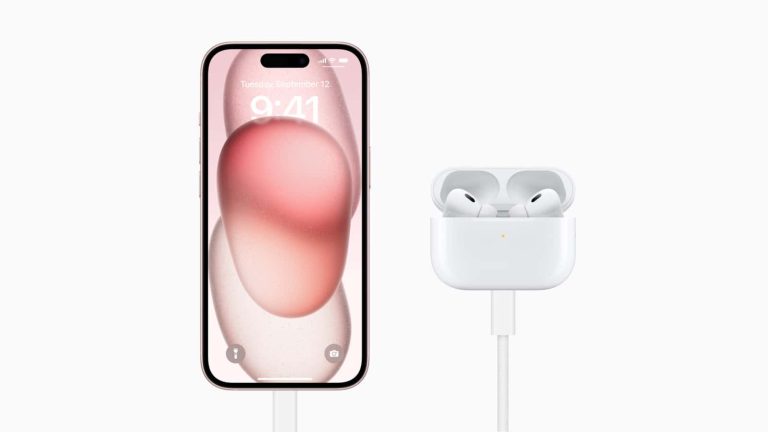
Apple also announced a new version of the Earpods and the AirPods Pro 2. Both now come with USB-C. The AirPods Pro 2 are basically the same as before, but the port has changed over to USB-C. They will cost the same $249, and you will be able to buy just the case. Though that’s not yet appearing on Apple’s website.

The EarPods are essentially what you’d expect. It’s Apple’s wired earbuds now with USB-C. And these cost $19. They are available to buy now, and will be available in store on Friday.


[ad_2]
Source link
Apple won’t give you much for your old Watch Ultra

0
[ad_1]

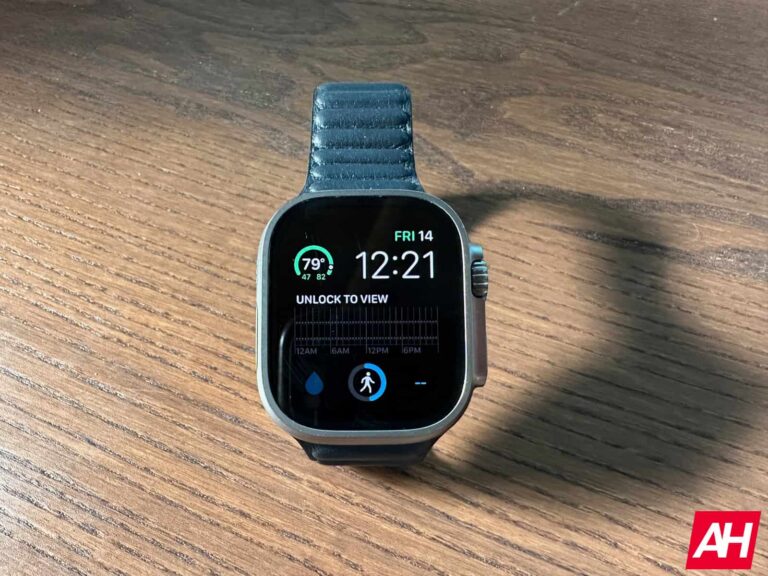
Apple announced a couple of new watches today, as well as the new iPhone 15. And if you’re like me, you might be wondering how much Apple will give you on a trade-in for your old Apple Watch? Well, it’s not much, for the Apple Watch Ultra.

Apple will give me $380 for the Apple Watch Ultra. A watch that cost me $799 a year ago. Not a huge surprise since watches don’t hold their value as long, at least smartwatches don’t. But if you were thinking about upgrading your Watch Ultra to the Ultra 2, it might not be worth it.

Trading in your Apple Watch used to be pretty lucrative during the pandemic, but the values have started to drop a lot quicker recently. However, still getting $380 for a $799 watch is not bad, that’s a little less than half of what you paid for in just under a year. But is it worth upgrading to the Apple Watch Ultra 2?

Should you upgrade to the Apple Watch Ultra 2?

The Apple Watch Ultra 2 does bring along some new upgrades for the watch, but they are pretty few and far between. The biggest visual upgrade we were expecting, did not happen. Apple decided to keep the natural titanium look here. Which, I quite like, though many others were expecting it to be available in black.

Apple did give it a brightness boost on the display. So now it has a peak brightness of 3,000 nits. It is also carbon neutral, as it is made from 95% recycled titanium. Which is a big change from the original Apple Watch Ultra, which was almost all new titanium, not recycled at all.

The company has also debuted some new bands for the Ultra. The Alpine Loop, Trail Loop and Ocean band now come in new colors, and are made from recycled materials as well.


[ad_2]
Source link

Two Apple issues added by CISA to the catalog of known exploited vulnerabilities

0
[ad_1]

CISA has added two recently discovered Apple vulnerabilities to its catalog of known exploited vulnerabilities.

The Cybersecurity & Infrastructure Security Agency (CISA) has added two new vulnerabilities to its Known Exploited Vulnerabilities Catalog, based on evidence of active exploitation. This means that Federal Civilian Executive Branch (FCEB) agencies need to remediate this vulnerability by October 2, 2023 in order to protect their devices against active threats. We urge everyone else to take these seriously too.

Apple released security updates for several products to address these vulnerabilities on September 7, 2023.

An overview of the updates that are available at the time of writing:

 Name and information link

 Available for

 Release date

 iOS 15.7.9 and iPadOS 15.7.9

 iPhone 6s (all models), iPhone 7 (all models), iPhone SE (1st generation), iPad Air 2, iPad mini (4th generation), and iPod touch (7th generation)

 11 Sep 2023

 macOS Monterey 12.6.9

 macOS Monterey

 11 Sep 2023

 macOS Big Sur 11.7.10

 macOS Big Sur

 11 Sep 2023

 macOS Ventura 13.5.2

 macOS Ventura

 07 Sep 2023

 iOS 16.6.1 and iPadOS 16.6.1

 iPhone 8 and later, iPad Pro (all models), iPad Air 3rd generation and later, iPad 5th generation and later, and iPad mini 5th generation and later

 07 Sep 2023

 watchOS 9.6.2

 Apple Watch Series 4 and later

 07 Sep 2023


The updates may already have reached you in your regular update routines, but it doesn’t hurt to check if your device is at the latest update level. If a Safari update is available for your device, you can get it by updating or upgrading macOS, iOS, or iPadOS.

How to update your iPhone or iPad.

How to update macOS on Mac.

The Common Vulnerabilities and Exposures (CVE) database lists publicly disclosed computer security flaws. The CVEs added to the Catalog of Known Exploited Vulnerabilities are:

CVE-2023-41064: A buffer overflow issue was addressed with improved memory handling. This issue is fixed in macOS Monterey 12.6.9, macOS Big Sur 11.7.10, macOS Ventura 13.5.2, iOS 16.6.1 and iPadOS 16.6.1, iOS 15.7.9 and iPadOS 15.7.9. Processing a maliciously crafted image may lead to arbitrary code execution.

A buffer overflow is a type of software vulnerability that exists when an area of memory within a software application reaches its address boundary and writes into an adjacent memory region. In software exploit code, two common areas that are targeted for overflows are the stack and the heap.

The heap is an area of memory made available use by the program. The program can request blocks of memory for its use within the heap. In order to allocate a block of some size, the program makes an explicit request by calling the heap allocation operation.

CVE-2023-41061: A validation issue was addressed with improved logic. This issue is fixed in watchOS 9.6.2, iOS 16.6.1 and iPadOS 16.6.1. A maliciously crafted attachment may result in arbitrary code execution.

At the time of the patches being released, Apple said it was aware of a report that these issues may have been actively exploited.

The vulnerabilities were discovered as zero-days by CitizenLab, while checking the device of an individual employed by a Washington DC-based civil society organization with international offices. Together, these two vulnerabilities were found to be used in an attack chain dubbed BLASTPASS. The exploit chain was capable of compromising iPhones running the latest version of iOS (16.6) without any interaction from the victim and was reportedly used by the NSO Group to deliver the Pegasus spyware.


We don’t just report on threats—we remove them

Cybersecurity risks should never spread beyond a headline. Keep threats off your devices by downloading Malwarebytes today.


[ad_2]
Source link

Galaxy S23 is widely getting September update in the US

0
[ad_1]

Samsung‘s September update for the Galaxy S23 series is now rolling out widely in the US. The company began the rollout last week but initially only covered carrier-locked units. The update is now available for factory-unlocked units as well.

The latest update for the Galaxy S23, Galaxy S23+, and Galaxy S23 Ultra brings nothing more than this month’s security fixes, which we will discuss in more detail below. Samsung first pushed this release to carrier-locked units on Verizon’s network. It came with the firmware build number S91*USQS1AWHD.

The update has since reached the phones on other networks as well, including T-Mobile, Comcast, Dish, and Xfinity Mobile. While it’s the same build number for most of them, Galaxy S23 users on T-Mobile and Metro networks are receiving the September security patch with firmware version S91*USQU1AWHI. Despite a notably different build number, the changelog remains the same. Samsung isn’t pushing anything more than the latest security fixes.

This expansion also covers unlocked units, which are picking up the build number S91*U1UES1AWHD (unchanged for T-Mobile and Metro users as well). The update is already live on most networks, with the remaining few expected to join the action soon. If you’re using a Galaxy S23 in the US and have yet to receive the September update, watch out for a notification in the coming days. You can also manually check for new updates from the Settings app.

The September update brings over 60 security fixes to Galaxy devices

This month’s security update for Galaxy devices contains patches for more than 60 vulnerabilities. Samsung’s updated monthly security bulletin mentions 23 Android OS patches from Google and other partners, with at least four of them confirmed to be critical issues.

Additionally, the Korean firm is pushing 35 Galaxy-specific patches. These issues don’t affect Android products from other brands. Samsung hasn’t detailed all of them yet due to security reasons, but none of the detailed ones are critical. The September SMR (Security Maintenance Release), as the company calls these updates, also contains four patches from Samsung’s semiconductor division.

These security fixes will soon reach the Galaxy S23 series in international markets and gradually make their way into more eligible Galaxy devices. Since Samsung’s software team is busy with the development of One UI 6.0, which brings Android 14 to Galaxy devices, it could take longer than usual for the latest SMR to be available for everyone. We will keep you posted with the updates.


[ad_2]
Source link

Apple AirPods Pro and EarPods now use USB-C

0
[ad_1]

Apple has shifted its AirPods Pro and EarPods accessories to using USB-C. The company announced the change during its big Apple event where it also announced the Watch Series 9 and other devices. It’s a change that’s been a long time in the making after the company slowly began changing to USB-C for its laptops back in 2015. And with these changes, nearly all of the company’s mobile products use USB-C. Including today’s newly announced iPhone 15 series.

For the longest time Apple used a proprietary cable for most of its products. But it made the commitment to switch and has done just that. This means anyone buying the new versions of these products can now use old USB-C cables and phones. Though you’ll still need to use Apple’s cables if you’re on the iPhone 14 series or earlier.

There are some unfortunate downsides to these changes though. At least initially. And depending on how you look at things.

Apple’s AirPods Pro now come with a USB-C charging case

Here’s the downside. The AirPods Pro come with a USB-C charging case now. But Apple does not sell the case separately.

It is likely that the company will offer it as a standalone buy for those who already own a pair of AirPods Pro earbuds. But for now, only a new pair will have the USB-C case. That being said, we wouldn’t recommend spending that money just to charge the case with USB-C. It would be a better idea to simply wait for the case as a separate purchase option or until your earbuds actually need to be replaced.

On the EarPods side of things, they now come with a USB-C plug. But that also means you won’t be able to plug them into your older iPhones. Since those don’t use USB-C. So the new EarPods aren’t really worth it either unless you’re upgrading to the new iPhone 15 series devices. If you’re interested in picking either of these new accessories up, they’re both available right now on Apple’s website. The AirPods Pro (2nd Gen) with USB-C case retail for $249, and the EarPods USB-C retail for a measly $19.


[ad_2]
Source link

Microsoft Teams used to deliver DarkGate Loader malware

0
[ad_1]

Researchers have found a new distribution method for the DarkGate Loader which circumvents the security features in Microsoft Teams.

Researchers have found a new method by which cybercriminals are spreading the DarkGate Loader malware. Until now, DarkGate was typically distributed via phishing emails. The malspam campaign used stolen email threads to lure victims into clicking a hyperlink, which downloaded the malware. But Malwarebytes also found DarkGate reloaded via malvertising and SEO poisoning campaigns.

A cybercriminal who goes by the handle RastaFarEye has been advertising DarkGate Loader on cybercrime forums since June 16, 2023. Once active, the malware can be used for several malicious activities like remote access, cryptocurrency mining, keylogging, clipboard stealing, and information stealing.

What’s new is that the researchers found evidence of a campaign using Microsoft Teams to deliver the DarkGate Loader.

“On August 29, in the timespan from 11:25 to 12:25 UTC, Microsoft Teams chat messages were sent from two external Office 365 accounts compromised prior to the campaign. The message content aimed to social engineer the recipients into downloading and opening a malicious file hosted remotely.”

The distributed link initially points to a traffic distribution system (TDS). If the requirements set by the attacker are met, the TDS will redirect the victim user to the final payload URL for the MSI download. When the user opens the downloaded MSI file, the DarkGate infection is triggered.

The download locations observed in the Teams attacks were sharepoint.com URLs hosting .zip files with names like “Changes to the vacation schedule.zip.”  The ZIP file contains a malicious LNK file (shortcut) posing as a PDF document: “Changes to the vacation schedule.pdf.lnk.”

Clicking the shortcut executes a command line which triggers the download and execution of a renamed cURL (a command-line tool for getting or sending data including files using URL syntax) to download and execute Autoit3.exe and a bundled script. The pre-compiled AutoIT script hides the code in the middle of the file and, on execution, drops a new file that contains shellcode.

When the shellcode is run, the first thing it uses is the “byte by byte” technique aka called stacked strings, to create a new file: a Windows executable identified as DarkGate Loader.

Protection

Current Microsoft Teams security features such as Safe Attachments or Safe Links failed to detect or block this attack. BleepingComputer reported in June of 2023 that security researchers had found a simple way to deliver malware to an organization with Microsoft Teams, despite restrictions in the application for files from external sources. Microsoft Teams has client-side protections in place to block file delivery from external tenant accounts. But the restriction can be circumvented by changing the internal and external recipient ID in the POST request of a message, which ends up with Teams treating an external user as if it was an internal one.

The only way to prevent this attack vector within Microsoft Teams is to only allow Microsoft Teams chat requests from specific external domains. This may be troublesome in some environments since this means that all trusted external domains need to be whitelisted by an IT administrator.

Malwarebytes customers are protected against this attack as Malwarebytes blocks the C2 server hosting the downloaded files. Malwarebytes detects the LNK file and the scripts as Trojan.DarkGate.

Malwarebytes blocks 5.188.87.58

Malwarebytes blocks 5.188.87.58


We don’t just report on threats—we remove them

Cybersecurity risks should never spread beyond a headline. Keep threats off your devices by downloading Malwarebytes today.


[ad_2]
Source link

Samsung pushes September update to Galaxy A52 5G & Xcover 5

0
[ad_1]

Samsung‘s September security update rollout has been a tad slower by its standards. This is likely because its software team is busy with the development of Android 14-based One UI 6.0. However, the company is still finding time to push the latest SMR (Security Maintenance Release) to eligible models. After the Galaxy S23, Galaxy S22, and Galaxy A14 5G, the Korean firm has now released the update for the Galaxy A52 5G and Galaxy Xcover 5.

The Galaxy A52 5G is currently receiving the September SMR in Canada. According to SamMobile, which first reported this rollout, the 2021 premium mid-range handset is picking up the latest security patch with the firmware build number A526WVLSAEWH1. The update is already live on most carriers in the country, including Bell Mobile, Cahatr Mobile, EastLink, Fido, Globalive, Koodo, Rogers, SaskTel, Tbaytel, Telus, Videotron, and Virgin Mobile.

This update doesn’t bring anything notable to the Galaxy A52 5G. Well, there are plenty of important security fixes here, but there’s no user-facing change or new features in the tow. Samsung will likely expand this release to more markets in the coming days, including the US. The 4G version of the Galaxy A52 may also receive the September update later this month. This phone is an enterprise model and is eligible for monthly security updates.

The Galaxy Xcover 5 is also an enterprise offering from Samsung. The rugged phone is now getting the September update as well, with users in Argentina, Chile, Guatemala, and Mexico leading the pack. Other Latin American countries may follow soon, with a global rollout to come next. The new firmware version for this phone is G525FXXS8CWH3, the same source reports. Once again, the update is all about the latest security fixes.

The Galaxy A52 5G and Xcover 5 are getting over 60 security fixes

Samsung has already revealed the content of the September SMR for the Galaxy family. This month’s security update patches more than 60 vulnerabilities across various system apps, components, and services. Four of the 23 Android OS patches provided by Google are classified as critical flaws.

All of these vulnerability patches will soon reach the Galaxy A52 5G and Galaxy Xcover 5 globally, while Samsung simultaneously expands the coverage to more eligible models. If you’re using a Galaxy smartphone or tablet, you can always check for new updates from the Settings app. You’ll find the option to “download and install” the updates under the Software update menu.


[ad_2]
Source link

PayPal now supports Apple Pay for its credit and debit cards

0
[ad_1]

PayPal credit and debit cards have added support for Apple Pay. You can now add these cards to your Apple Wallet app and use them for mobile payments.

Last year, PayPal announced its plans to adopt Apple Pay and Tap to Pay on iPhone. The partnership will allow both companies to expand their reach and provide customers with more options for payment. As a result, you can now connect your PayPal credit and debit cards to the Apple Wallet app for payments.

Most banks and card issuers have added support for Apple Wallet and Apple Pay years before, and PayPal finally joined the bandwagon to catch up with the competition. This has been one of the most anticipated partnerships in the mobile payment industry.

PayPal credit and debit cards now support Apple Pay for mobile payments

There are two ways to add PayPal credit and debit cards to your Apple Wallet app. First, open the PayPal app on your iPhone and look for a banner that says “Pay with your iPhone.” The Apple Wallet app opens by tapping on this banner, and you can add your PayPal credit or debit card.

The second way is even more straightforward. If you can’t find the banner on the PayPal app, open the Apple Wallet app instead and tap the “+” icon in the upper-right corner. Here, you can add one or both of your PayPal cards and choose one for accomplishing transactions. Finally, it’s worth noting that Apple keeps 0.15% of each transaction, which equates to 15 cents out of a $100 purchase.

The PayPal-owned Venmo might also add support for Apple Pay for its debit and credit cards. The move isn’t yet confirmed, but it will likely happen soon.

Over 55 million people in the United States are currently using Apple Pay. The number is expected to grow to 67 million by 2026. The tech giant reported that its payment system had generated $4 billion in revenue this year and is the fifth-most widely used payment method worldwide after PayPal, Visa, Mastercard, and American Express. PayPal is also one of the most popular online payment gateways, with over 435 million users globally.


[ad_2]
Source link

Update Chrome now! Google patches critical vulnerability which is exploited in the wild

0
[ad_1]

Chrome users are being urged to patch a critical vulnerability for which an exploit is available.

Google has released an update for Chrome Desktop which includes one critical security fix. There is an active exploit for the patched vulnerability, according to Google, which means cybercriminals are aware of the vulnerability and are using it.

If you’re a Chrome user on Windows, Mac, or Linux, you should update as soon as possible.

The easiest way to update Chrome is to allow it to update automatically, which basically uses the same method as outlined below but does not require your attention. But you can end up lagging behind if you never close the browser or if something goes wrong—such as an extension stopping you from updating the browser.

So, it doesn’t hurt to check now and then. And now would be a good time, given the severity of the vulnerabilities in this batch. My preferred method is to have Chrome open the page chrome://settings/help which you can also find by clicking Settings > About Chrome.

If there is an update available, Chrome will notify you and start downloading it. Then all you have to do is relaunch the browser in order for the update to complete.

up to date Chrome

After the update, the version should be 116.0.5845.187 for Mac and Linux, and 116.0.5845.187/.188 for Windows, or later.

The vulnerability

Google never gives out a lot of information about vulnerabilities, for obvious reasons. Access to bug details and links may be kept restricted until a majority of users are updated with a fix. However, from the update page we can learn a few things.

The Common Vulnerabilities and Exposures (CVE) database lists publicly disclosed computer security flaws. The zero-day patched in this update is listed as:

CVE-2023-4863: a heap buffer overflow in WebP, also described as a vulnerability that resides in the WebP image format which could lead to arbitrary code execution or a crash.

A buffer overflow is a type of software vulnerability that exists when an area of memory within a software application reaches its address boundary and writes into an adjacent memory region. In software exploit code, two common areas that are targeted for overflows are the stack and the heap.

The heap is an area of memory made available use by the program. The program can request blocks of memory for its use within the heap. In order to allocate a block of some size, the program makes an explicit request by calling the heap allocation operation.

Credit for reporting the vulnerability was given to Apple Security Engineering and Architecture (SEAR) and The Citizen Lab at The University of Torontoʼs Munk School on 2023-09-06. The fact that this happens to coincide with a report by CitizenLab about two Apple vulnerabilities that used by the NSO group to drop the Pegasus spyware, seems too much to be a coincidence.

Add the fact that both Apple CVE-2023-41064 and  Chrome CVE-2023-4863 are based on image processing and we feel comfortable saying that these two vulnerabilities are very, very likely to be related.


We don’t just report on threats—we remove them

Cybersecurity risks should never spread beyond a headline. Keep threats off your devices by downloading Malwarebytes today.


[ad_2]
Source link

iOS 17 and iPadOS 17 will drop next week

0
[ad_1]

Alongside announcements for the Watch Series 9, Watch Ultra 2, and iPhone 15 series today, Apple announced the release date for iOS 17 and iPadOS 17, coming to iPhones and iPads in the near future.

The details were announced today during Apple’s ‘Wonderlust’ event. Those eagerly awaiting the new software won’t have to wait much longer to install it on their devices. Apple has confirmed that the update will be rolled out to users next week. Specifically on September 18. This release date will apply to iOS 17 as well as iPadOS 17 for both iPhones and iPads. Although that probably not surprising as Apple tends to release its software all simultaneously.

Technically iOS has already been available for months now though. As it’s been in beta since June and has been steadily installed by more users in the beta format over the following weeks and months. That being said, the stable software rollout will give new users the chance to check out the improvements. And those on the beta should get a more reliable build.

The biggest changes with the iOS 17 release

iOS 17 is coming with quite a few new features and if you’d like to read about every single one of them, you can find them in our dedicated post here. But for those who want the cliff notes, we though it would be a good idea to highlight some of the bigger changes in this post now that there’s an official release date.

One of the bigger changes is the inclusion of the ‘Leave a message’ feature. A new video voice mail feature that’s designed to help you catch missed FaceTime calls. Just like with a phone call, if you FaceTime someone and they miss the call, you can leave a message for them. This will support both video messages and voice messages. It’s your preference.

Another big feature is the ability to turn your phone into a smart display. The ‘StandBy’ feature will display various things on your screen while docking and charging it via MagSafe chargers. The phone will need to be in landscape mode though.


[ad_2]
Source link