A leaked spec sheet of the Pixel 8 Pro last month suggested that the new Google flagship may lack a 512GB storage variant. Turns out, it won’t. Reliable sources have confirmed to WinFuture that you will be able to buy the device with half a terabyte (TB) of storage space.
According to the new report, Google isn’t changing anything in the storage department for either Pixel 8 model. The vanilla Pixel 8 will be available in 128GB and 256GB storage options, while the Pro model will add a third 512GB option. Though not confirmed, we should be looking at the UFS 4.0 storage solutions here. It’s the latest mobile storage standard. The Pixel 7 series features the previous-gen UFS 3.1 storage chips.
This upgrade likely won’t add to the devices’ price. The report states that Google is keeping the base storage at 128GB to ensure a low entry price. Last year, it priced the 128GB Pixel 7 at $599, while the Pixel 7 Pro started at $899. We are expecting similar price tags this year, though there are rumors of a minor price hike in some markets, including the US and Europe.
The new Pixels are said to cost $50 more, or at least the base model is. Higher storage variants may see bigger hikes. This is due to a rise in component cost, effectively increasing the total manufacturing cost of the devices. Flagship phones have gotten more expensive in recent months because of increased manufacturing costs. It remains to be seen if Google can keep the Pixel 8’s entry price unchanged.
Pixel 8 leaks have started coming more frequently
Leaks and rumors about the Pixel 8 series have been getting more frequent in recent weeks. If anything, that’s a sign of a nearing launch. By nearing, we don’t mean it’s just around the corner. The new Pixels are still a couple of months away. We aren’t expecting Google to take wraps off its latest flagships before October. The same launch event should also bring the Pixel Watch 2.
Google’s second-gen smartwatch is rumored to address many shortcomings of the original model. We are reportedly in for a much-improved processor, a jump from a 10nm chip to a 4nm solution with twice as many CPU cores, which operate faster too. The wearable is also rumored to bring a bigger battery, UWB (ultra-wideband) support, faster updates, improved display, and more upgrades. We will keep you posted with the latest information about all upcoming Pixel devices as Google prepares for the launch.
Technology, in one form or another, has gone hand in hand with the education process for as long as technology has existed. The tools available in a particular time go on to shape how those that grow up in that time develop their understanding of the world. This makes sense, as anyone who is striving to make a name for themselves in their chosen field will need to ensure that they have a strong understanding of any advancements that may be required to work effectively, but it’s more than that.
As technology has connected us with each other, so too has it expanded the number of options we have in learning from others and gaining a more robust understanding of the world around us. It has been a vital piece of the puzzle in terms of transforming our society and allowing us to reach levels of comprehension and understanding that would have been impossible in years past.
So, with the understanding that technology has enormously impacted the world of learning and education, let’s take a closer look at what that impact has actually been.
The Advancement of Geographical Accessibility
Issues with access to information and learning opportunities continue to exist in our society to this day, but one thing we rarely associate with inaccessibility is geography. In a time before the internet, if you happened to not live near a highly-ranked university, and didn’t have the high level of funding required to move for several years and dedicate yourself to your studies in a new place, your options were quite limited. However, as time has gone on, internet access has become the norm for many countries and areas. This has allowed for a swell of online learning opportunities to arise, giving those that were once unable or not wanting to physically attend a university a chance to take on many potential educational pathways from anywhere in the world.
More theoretical and information-heavy courses such as an online MBA, or a master’s in education, have translated flawlessly to online platforms, with the best online MBA courses offering a streamlined approach to learning practices that don’t necessitate the more hands-on approach often associated with traditional academia.
Advancements in Disability Accessibility
Inevitably, face-to-face lectures within study halls can prove far more difficult for some than for others. Whether this be due to large lecture halls posing issues for hearing-impaired individuals or those with near-sightedness, or due to older buildings being poorly equipped for those with mobility issues, there are many reasons that certain students may experience difficulties that others don’t.
Online learning has, over the years, found ways to tackle these accessibility issues in ways that are unique to the platform of digital resources. Lectures can be subtitled, either manually or by auto-generated text, students with mobility needs can access learning without having to navigate spaces that don’t meet their needs, and especially in the time of COVID-19, those with preexisting immuno-compromising conditions are not put at risk by being placed in densely populated learning spaces.
None of this is to say that the online learning process has been made perfect for those with particular needs. However, given the alternatives that have historically been available, access to online learning has provided a more reliable means for those who struggle in classroom environments to seek higher education and learning resources.
The Archival of Information
In a time before the easy sharing of data, especially audio and video, lectures were often one-off talks that were unlikely to have a genuine record once they had ended. Cut to 2023, and the internet has allowed for the archival and storage of thousands of lectures from across the world, providing information that spans fields, disciplines, methodologies, and even eras, with recordings from as far back as the 1800s now digitised for people to learn from and discover.
For academics, this is an invaluable source of learning and reference, allowing students to compile ideas from some of the great minds of history and develop a far more complex understanding of the world from the perspectives of innumerable people throughout the last several hundred years. Whilst digital archival is still an ongoing issue and one that has become far more pressing at a time when remnants of the early internet are beginning to disappear, we must be able to appreciate the amount of information we now have compared to every other time in history.
~
Technology has changed everything for academia, and with online learning effectively becoming the norm as of the 2020s, we are sure to see more advancements to better cater to this growing body of remote students. Everything is shaped by accessibility, and for those of us that benefit from these movements towards a higher availability of information, nothing could be more exciting.
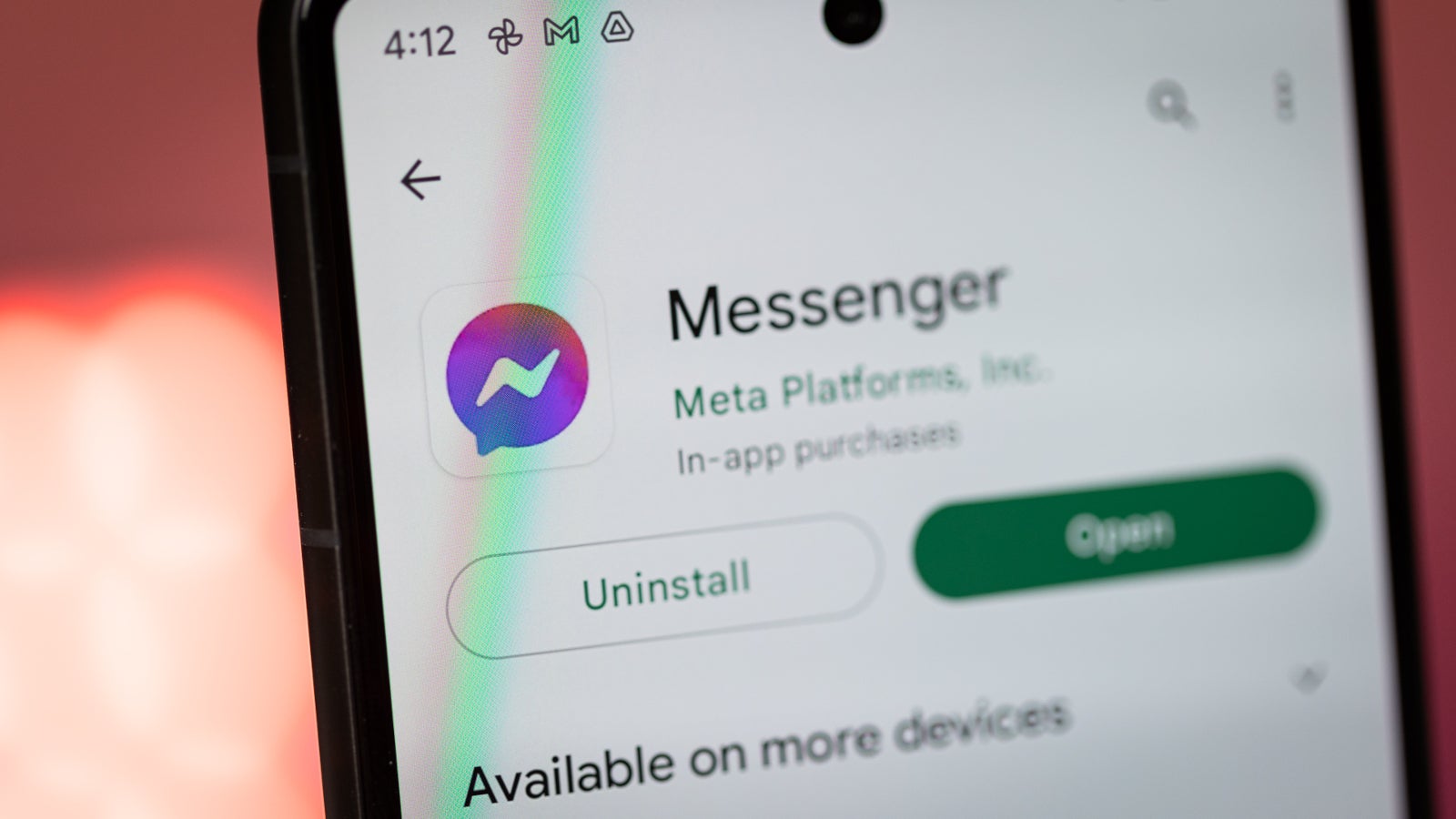
Meta has started to notify users that Messenger will no longer support SMS come September. If you’re relying on Meta’s app for SMS, you’ll have to replace it with something else or simply use Android’s default app for this particular feature.
Messenger users who’ve already received notifications have taken to Reddit to complain about the change. Not to mention that Meta did not give them any reason for why it’s dropping SMS support. Perhaps it’s Google that suddenly decided that Meta’s Messenger should no longer support SMS and we should wait for the search giant to announce some sort of replacement.
Here is Meta’s support page regarding the upcoming changes: “if you use Messenger as your default SMS messaging app for your Android device, please note you will no longer be able to use Messenger to send and receive SMS messages sent by your cellular network when you update your app after September 28, 2023.”
Keep in mind that even if Meta’s Messenger will no longer support SMS, you will still be able to send and receive SMS messages through the cellular network through the phone’s default messaging app.
More importantly, even if you don’t choose another messaging app to redirect your SMS, they will automatically go to your phone’s default messaging app.
According to Meta, SMS will no longer be available on Messenger as early as September 28, 2023. An update should implement the change around that timeframe, so if you see a new version in the Google Play Store and download it, then you’ll no longer receive SMS in your Messenger app.
A Critical vulnerability was discovered in the widely used PaperCut MG/ NF print management software running on Windows prior to version 22.1.3.
As of the July 2023 security bulletin, patches have been released by PaperCut to fix this vulnerability. PaperCut is a widely used print management software that has two different software as, MG and NF.
PaperCut is a printing management and control tool, while NF is a versatile solution that offers printing, copying, scanning, and specialty printing capabilities.
CVE-2023-39143: Chained Path Traversal in Authenticated API
On certain configurations, this vulnerability enables an unauthenticated attacker to potentially read, write and upload arbitrary files resulting in remote code execution.
The CVSS Score for this vulnerability is yet to be confirmed.
Configuration Required Exploitation
As reported, servers running on Windows platforms that have the external device integration setting enabled are vulnerable to this remote code execution through file upload.
This setting is enabled by default on certain PaperCut installations such as PaperCut NG Commercial version or PaperCut MF.
Detection
This vulnerability can be detected using the following command, which checks if the server is patched and whether it is running on Windows.
A 200 response to this command indicates that the server is not patched and vulnerable, and a 404 response states that the server is patched and not vulnerable.
Users of these products are recommended to upgrade to the latest version of PaperCut NG/MF, version 22.1.3. As a workaround, users can also configure an allowlist of IP addresses that are permitted to connect with the PaperCut server.
What can the routinely exploited vulnerabilities of 2022 tell us, and what do we think will make it on to next year’s list?
The Cybersecurity and Infrastructure Security Agency (CISA), National Security Agency (NSA), Federal Bureau of Investigation (FBI), and international partners have released a joint Cybersecurity Advisory (CSA) called the 2022 Top Routinely Exploited Vulnerabilities.
We went over the list and it felt like a bad trip down memory lane. If you adhere to the expression “those who ignore history are doomed to repeat it” then you may consider the list as a valuable resource that you can derive lessons from. Unfortunately as George Bernard Shaw said:
“We learn from history that we learn nothing from history.”
But since that’s a self-contradicting expression, let’s assume there are lessons to be learned.
Last year’s top vulnerabilities
First let me show you the bad memories. The Common Vulnerabilities and Exposures (CVE) database lists publicly disclosed computer security flaws. We will use the CVE codes to uniquely identify the covered vulnerabilities.
CVE-2021-44228, aka Log4Shell, is a vulnerability in Apache’s Log4j library, an open-source logging framework incorporated into thousands of other products. Malicious cyber actors began exploiting the vulnerability after it was publicly disclosed in December 2021, and continued to show high interest throughout the first half of 2022.
CVE-2018-13379 is a vulnerability affecting Fortinet SSL VPNs, which was also routinely exploited in 2020 and 2021.
ProxyShell is a combination of three vulnerabilities in Microsoft Exchange Server (CVE-2021-34473, CVE-2021-31207, and CVE-2021-34523) that can be chained together to allow a remote attacker to break in, take control, and then do bad things on an unpatched server. Proxyshell also made it into the top 5 routinely exploited vulnerabilities of 2021.
CVE-2021-26084 is a vulnerability affecting Atlassian Confluence Server and Data Center which could enable an unauthenticated cyber actor to execute arbitrary code on vulnerable systems. This vulnerability quickly became one of the most routinely exploited vulnerabilities after a proof-of-concept (PoC) was released within a week of its disclosure. Attempted mass exploitation of this vulnerability was observed in September 2021 and also made it into the top 5 routinely exploited vulnerabilities of 2021.
Looking at the above, it looks like Shaw was at least partly right. We are not learning from history. It also indicates that we should be able to predict some of the vulnerabilities that will show up in next year’s list. Let’s take a stab at that. So we’re looking for easy to overlook and/or hard to patch vulnerabilities in the 2022 list that we haven’t already covered above.
This year’s top vulnerabilities?
These are the ones that I think will make it to the top 10 next year, maybe together with the ones that have already been around for years.
CVE-2022-22954, CVE-2022-22960 are two vulnerabilities that can be chained to allow Remote Code Execurion (RCE), privilege escalation, and authentication bypass in VMware Workspace ONE Access, Identity Manager, and other VMware products. Exploitation of these VMware vulnerabilities began in early 2022 and attempts continued throughout the remainder of the year.
CVE-2022-26134 is a critical RCE vulnerability that affects Atlassian Confluence and Data Center. The vulnerability, which was likely initially exploited as a zero-day before public disclosure in June 2022, is related to an older Confluence vulnerability (see CVE-2021-26084 above), which cyber actors also exploited in 2022.
CVE-2022-1388 is a vulnerability in the F5 BIG IP platform that allows attackers to bypass authentication on internet-exposed iControl interfaces, potentially executing arbitrary commands, creating or deleting files, or disabling services.
CVE-2022-30190, aka Follina, is a Microsoft Windows Support Diagnostic Tool RCE vulnerability. An attacker can send you a malicious Office document that will compromise your machine with malware when you open it.
So I was hoping we can strike a deal. I’ll check next year how well this prediction does and you all patch these vulnerabilities real quick, so I can write about some new ones next year.
We don’t just report on vulnerabilities—we identify them, and prioritize action.
Samsung is rolling out a big new update to the Galaxy S23 series. Weighing in at about 1.4GB, it’s a massive OTA (over the air) firmware release for the flagship trio. However, the official changelog is short of details. It doesn’t mention anything apart from the latest security patch (August 2023). The company has yet to detail the content of the new security release.
The new update for the Galaxy S23, Galaxy S23+, and Galaxy S23 Ultra started rolling out recently in some Asian countries with the firmware build number S911*XXU3AWGJ. First spotted by Twitter user @tarunvats33, we can currently confirm the availability of the update in Indonesia, Thailand, Malaysia, and the Philippines. Samsung should soon expand the release to other markets, including the US.
As said earlier, the official changelog supplied by the Korean firm doesn’t mention anything notable apart from the August SMR (Security Maintenance Release). It’s the generic stuff such as some device stability and reliability improvements and updates for first-party Samsung apps. However, the build number and the size of the OTA file suggest there’s plenty more.
Unfortunately, with the rollout limited to a few Asian countries, we can’t confirm what the new Samsung flagships are getting with the August update. The company recently announced that the Galaxy S23 trio will get some of the new camera features introduced with the Galaxy Z Fold 5 and Galaxy Z Flip 5 foldable last month. Maybe a few of them are part of this package if not all.
The Galaxy S23 series and other models will get new camera features
As we wait for confirmation about the changes brought by the latest update for the Galaxy S23 series, here’s a quick reminder of what new features Samsung has been readying. The company says the new flagships will get the ability to copy editing effects such as filters and color tones from one photo and apply them to another. They will also pick up improvements for digital zoom, the built-in video editor, and the Photo Remaster tool.
Some of these features will also roll out to the Galaxy S22 and Galaxy S21 series, as well as all recent Samsung foldables. The latter group of devices is also in line for improved Pro/Pro Video mode. The Galaxy S23 series, meanwhile, will get improved document scanning with the Android 14-based One UI 6.0 update. So plenty of goodies are in store for Galaxy users. Stay tuned and we will keep you posted with all the latest updates as they arrive.
With the trend towards digitalisation of commerce picking up steam in the wake of the pandemic, and new technologies with marketable applications abound the opportunities for entrepreneurship on the internet are only becoming more enticing. The freedom to work surrounded by the comforts of home, freedom from the drudgery of daily commuting and office life, and the flexibility to take work with you anywhere you wish are enough to pique anyone’s interest.
But it’s not all scrolling social feeds while sipping flat whites on Bondi Beach. Acquiring the skills needed to become an online entrepreneur takes time, patience, and serious preparation. Not everyone needs a degree, but if you don’t feel like enrolling in an MBA online course to get a leg up on the competition, you’ve still got a lot of research ahead of you!
If You Build It, They Will Come
The first step to getting yourself out there and letting the world see your products or services is a website. Nobody can have an internet business without having a website – it acts a bit like your digital business card and office front combined. Your website conveys your brand identity to the world and acts as a portal to your products and services that anyone, anywhere in the world can access with ease.
Building a website is easier than ever. Tools like WordPress, Squarespace, and Wix make it possible for anyone to build a website with little to no experience. They also include powerful SEO tools that allow you to optimize your site for the best search engine results, helping you rank higher on search engine results pages.
With that said, the DIY approach isn’t for everyone; if you can’t get the hang of these tools, there’s no shame in hiring a graphic designer to do the job for you. If you’ve got the budget for it, professional design firms can often be a big help in ensuring that your website looks clean, runs smoothly, and shows up high enough on search results pages to help you start moving the needle.
Crafting Your Digital Presence
Perhaps the most important skill for an internet entrepreneur to master is marketing. If you don’t put in the work to spread the good news and get the word out, you could be a master of your craft, or build one of the most incredible products ever, and still slide slowly into obscurity.
A marketing campaign should never be one-dimensional. Successful marketing campaigns normally include some combination of search engine optimisation (SEO), pay-per-click (PPC) ads, social media marketing, email marketing, and text message marketing. Attacking your target market using multiple vectors ensures that people of different demographics all receive exposure to your ads.
Each of these requires a unique skill set, and a deeper understanding of how best to utilize each medium, if you want your campaign to be executed properly (and effectively). It sounds like a lot to learn, but there are more resources for learning about these techniques available online, for free, than anyone could ever exhaust: free and paid online courses, YouTube tutorials, blogs – the list goes on. If you’re not ready to take that task on yourself, and you’ve got the budget, you may want to think about retaining a digital marketing agency to help you get your head around the process.
Closing the Deal
When most people hear sales, they think of cold-calling, door-knocking, or guys in overpriced suits with fancy watches. The digital marketplace is a bit different.
Curating a customer journey that leads to sales is a nuanced process that begins with marketing, ends at checkout, and, ideally, leads to repeat business. Moving customers along the “funnel” and into your checkout isn’t easy – it takes time and practice to know exactly who is looking for your product, and why they might choose you over another brand.
New digital sales platforms like WooCommerce, BigCommerce, Shopify, and Squarespace make it easy to build a store, make your product as attractive as possible, and create a simple, pleasant buying experience for your customers. They can also help you understand your customers using analytics: by collecting and giving you access to valuable data about your customers, these platforms can help you understand who is buying your product, how they are arriving at their decision, and how you might be able to get them back for another round.
Fulfilment is a crucial part of sales. If you’re selling a service, having good communication and getting deliverables in by the deadline might be the most important parts of your business. If it’s a product you’re selling, you may want to start off shipping by hand, but if your business scales, you may need to look into fulfilment services, the availability of which will depend on where your business is located.
Know Your Machine
If you want to run a successful business online, you’re going to need to understand the medium you’re working in, and that means understanding computers. You don’t need to learn Python to run an online store, but you will need to understand the basics of how to navigate the software that your business runs on.
First and foremost should be basic office apps: Microsoft Office, Google Workspace, Adobe Acrobat, and basic accounting software like Quickbooks should all be in your wheelhouse. If you want to in-source your website and marketing material production, you’re also going to need to learn graphics software, like Adobe Creative Cloud apps, Canva, or, if you’re especially thrifty, an open-source alternative like GIMP.
You’ll also want to understand, at the very least, the basics of the software that your website and store are built on. Even if you outsource all of your IT, you’re going to have regrets if you start making sales and still have to call your web designer to do something like change the price in your Shopify store. It’ll cost you, too!
If your business begins to grow, you will definitely benefit from understanding some basic project management software. Unless you want to build your own Gantt charts in MS Paint and send emails to follow up on every little task, you’ll want to invest in something like Trello or Asana to assign and manage tasks. If you want to keep it really simple, Google Keep and Microsoft Tasks can at least help you build and share to-do lists to track and communicate progress on tasks that you assign.
This is a taste of what you’ll need to do if you are serious about becoming an online entrepreneur. Working from home sounds great, but even if you’ve already got a great product, or are a master of your trade, you don’t start at the top – you have to build from the ground up, and that means mastering the basics. Mastering these skills will give you a solid foundation upon which to build an online business, and, if you work hard, they may just help set you down the pathway to financial independence.
That sound you are hearing on your Android phone is the sound of the Spotify app crashing. The most recent beta update for the music streamer on the Android platform is causing the app to quickly come crashing down right after the app is opened. As noted by 9to5Google, not every attempt to open the app results in a notification that it has crashed, but the bottom line remains the same. On Android, those running the Spotify app using the latest beta version of the streamer’s software cannot open it.
Most Spotify users complaining on Reddit and X are saying that they are experiencing the issue while using a beta version of Spotify’s software. One X subscriber with the user name @melkor486 said, “I’m having problems with Spotify in Android. The app just won’t open. Cleared the cache and data, reinstalled, updated, and restarted the phone multiple times but nothing works. I’m on a Galaxy S21ultra, Android 13, Spotify beta channel.”
9to5Google noted that the Spotify app is crashing on a Pixel Fold and a Galaxy Z Fold running on v8.8.60 which is only available now on the beta channel. A Pixel 7 with v8.8.58 of Spotify installed had no issues whatsoever. So that means one thing-unsubscribing from the beta channel and installing the current non-beta build will solve this issue. Here is how you can do this.
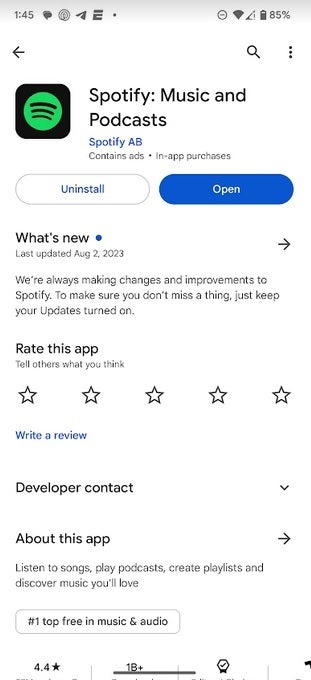
If Spotify is crashing when you try to open the app on Android, you need to leave the Spotify beta and re-install the app
Open the Play Store and go to the Spotify listing where you can leave the app’s beta program with a single tap. After doing this, uninstall the app and after waiting several minutes, reinstall it. You should be good to go. You won’t be subscribed to the Spotify beta program anymore, but at least the app won’t be crashing every time you try to open it. Every follow-up message on Reddit made after this solution was posted came from Spotify users saying that following the above directions stopped the app from crashing.
So if you’re sick and tired of Spotify crashing on your Android phone whenever the urge to hear some streaming music hits you, follow exactly what it says to do at the top of the preceding paragraph. Let us know if it solves your issue with the app.
A robocall network makes use of automated software diallers to spam out large numbers of cold calls to unsuspecting recipients. These calls promise much but give very little. Anyone taking the bait stands a good chance of losing control of their personal data or suffering from all manner of dubious payments leaving their bank account.
Cold calling has been associated with scam tactics for decades, and the growing number of ways to combat these techniques (like Do Not Call lists) are routinely ignored by the robocallers. This has, inevitably, brought us to our eye-wateringly large $300m fine aimed squarely at one of the most persistent robocalling operations yet seen.
The Federal Communications Commission today issued a record-breaking $299,997,000 fine for auto warranty scam robocalls made by the largest illegal robocall operation the agency has ever investigated. An international network of companies violated federal statutes and the Commission’s regulations when they executed a scheme to make more than five billion robocalls to more than 500 million phone numbers during a three-month span in 2021, including violating federal spoofing laws by using more than one million different caller ID numbers in an attempt to disguise the true origin of the robocalls and trick victims into answering the phone.
The enterprise violated a multitude of robocall prohibitions by making pre-recorded voice calls to mobile phones without prior express consent, placing telemarketing calls without written consent, dialing numbers included on the National Do Not Call Registry, failing to identify the caller at the start of the message, and failing to provide a call-back number that allowed consumers to opt out of future calls. The calls also violated spoofing laws by using misleading caller ID to disguise the enterprise’s role and prompt consumers to answer.
Insurance, claims, and compensation are all robocall topics you should avoid when the phone inevitably rings. This kind of call will never quite go to plan for anyone other than the individuals operating the robocalling software.
In this case, the bait being used was the claim of auto warranties in return for the collection of personal data from call recipients.
TechCrunch notes that the robocalls “exhibited the standard robocall characteristics” of failing to identify the caller, spoofing area codes, and ignoring various consent laws like the Do Not Call list.
No fewer than an astonishing five billion calls were made by the companies responsible for this operation. Members of the FCC themselves received some of these calls, which on reflection seems like a very poor decision made by the robocalling technology.
The FCC explains the sheer scale of the operation, alongside some of the tactics used to shut it down permanently:
Since at least 2018, this enterprise operated a complex scheme designed to facilitate the sale of vehicle service contracts under the false and misleading claim of selling auto warranties. Two of the central players of the operation, Roy M. Cox and Aaron Michael Jones, were under lifetime bans against making telemarketing calls following lawsuits by the Federal Trade Commission and State of Texas. The multi-national enterprise did business as Sumco Panama, Virtual Telecom, Davis Telecom, Geist Telecom, Fugle Telecom, Tech Direct, Mobi Telecom, and Posting Express.
Last year, to stop this then-ongoing telemarketing campaign in its tracks, the FCC directed all U.S.-based voice service providers to cease carrying traffic associated with certain members of the enterprise. As a result, these illegal auto warranty robocalls dropped by 99%. That enforcement action was taken in coordination with the Ohio Attorney General’s Office, which brought a lawsuit under the Telephone Consumer Protection Act against several entities and individuals associated with the enterprise. The Commission also proposed a fine and offered the parties a chance to respond, which they did not do, resulting in today’s unprecedented fine. Should the parties not pay the fine promptly, this matter will be referred to the U.S. Department of Justice for collection.
Sadly it remains to be seen whether the eye-watering fine will be enforced and those responsible made to pay up. Robocalling is so popular that even with such massive fines being thrown around, people making use of it will not simply abandon ship. We’ll be stuck with all manner of robocalling technology for some time to come.
Back to the FCC:
What happens next? Under the law we will refer this Forfeiture Order to the Department of Justice to collect payment. I hope, however, that Congress will consider giving the FCC authority to go to court and collect these fines ourselves. In the meantime, we will keep using the tools we have to hold those behind fraudulent calling schemes accountable. In fact, just this week the Enforcement Bureau identified another source of illegal robocalls and we have put all phone companies on notice they can block these calls. We know the scam artists behind these calls are relentless—but we are coming for them and won’t stop until we get this junk off the line.
Sounds good! In the meantime though, you’ll have to take some action of your own to help ward off the threat posed by robocallers. Entities such as the FCC can and will go into battle on your behalf, but we can speed things along by doing our part too.
What you can do to stem the tide of robocalling
Report the call to the FCC, Federal Trade Commission (FTC), and your attorney general. Doing so will help the collective efforts of regulators and phone companies in blocking these numbers.
Do not give out your number online or post it publicly in your social media profiles. They will likely be collected by scammers.
Some apps can help analyse the calls you receive and respond or reroute the call effectively. Your mobile provider may already include this technology in their network, so it’s worth asking before opening up your iOS or Android store. Additionally, the FCC passed a rule that gives phone companies the power to proactively block numbers that do not or cannot make outgoing calls.
Go old-school by turning off your landline’s ringer and then feeding the call to an answering machine with a caller ID. You can always return the call if you have determined that the caller is using a legitimate number or has actually left a message worth returning.
If you happen to pick up a call from a robocaller, hang up immediately and don’t say anything down the line because it’s almost certainly being recorded.
We don’t just report on threats—we remove them
Cybersecurity risks should never spread beyond a headline. Keep threats off your devices by downloading Malwarebytes today.
Samsung is rolling out the August security patch to a bunch of foldable smartphones in the US. The Galaxy Z Flip 3, Galaxy Z Fold 4, and Galaxy Z Flip 4 are all getting the latest security update stateside. The company hasn’t pushed the update to the devices anywhere else, though the Galaxy S23 series and Galaxy S20 FE have picked up the August SMR (Security Maintenance Release) in some regions.
As of this writing, Samsung’s latest update is only available for the factory-unlocked variants of the aforementioned foldable devices. The Galaxy Z Flip 3 is widely picking up the update on all networks. The new firmware build number for the 2021 clamshell foldable is F711U1UES5FWG7. The device doesn’t seem to be getting anything apart from the latest security fixes, which are yet to be detailed by the Korean firm.
It’s a similar story for the Galaxy Z Fold 4 and Galaxy Z Flip 4 as well. The unlocked variants of the two 2022 foldables are getting the August update with firmware build numbers F936U1UES3CWG4 and F721U1UES3CWG4, respectively. Since the sixth-to-last character is “S” in both cases, it should be nothing more than a security patch. Feature updates have “U” in place of the “S.” It’s the same for the Galaxy Z Flip 3’s new build number as well.
Samsung will push the August update to more Galaxy devices
The fourth-gen Samsung foldables are also widely receiving the August update on all networks. The company should soon expand the release to carrier-lock variants and push the update in markets outside the US. The build numbers may vary, but the changelog should mostly remain the same. The August SMR will also soon reach more eligible Galaxy devices, including the remaining foldables.
Speaking of more devices, SamMobile reports that the Galaxy Z Fold 3 is also picking up the August update in the US. However, the firmware build number provided in this report corresponds to the June update for the foldable. There’s no sign of the availability of the latest security patch for the device on Samsung’s servers. We will let you know when we have more details.
Meanwhile, if you’re using any of the other three Samsung foldables mentioned above (unlocked), you may check for updates from the Settings app. Go to the Software update menu and tap on Download and install. Your phone will connect to the internet to look for available updates. If it doesn’t find any today, wait a few days and check again. These foldable smartphones are in line for some new camera features in the coming months.