One of Twitter’s co-founders, Jack Dorsey, has been criticizing Threads since it launched on Wednesday night. Claiming that it is just a “Twitter clone” and that it “lacks any originality”. Which is pretty rich since his own new app looks exactly like Twitter – that’s Bluesky.
Dorsey tweeted about his complaints, which is kind of ironic since he started Bluesky, but I guess there’s not enough people over there to listen to his complaints. Dorsey stated that “we wanted flying cars, instead we got 7 Twitter clones.” Which, Dorsey is not wrong, but this is also partly his fault.
A user did criticize Dorsey, saying that he made two of the seven clones. In which Dorsey replied that “no. Bluesky and nostr are protocols that Twitter can build upon. Would remove some constraints and burden. Not competitive.” What Dorsey is forgetting is that Threads is going to be built on the ActivityPub protocol, the same protocol that Mastodon uses.
Twitter’s owner, Elon Musk has already sent a cease and desist letter to Zuckerberg
The heat between Musk and Zuckerberg continues to get hotter. After the two agreed to a cage match (which is actually happening!), now the two are going at it over Twitter and Threads. Musk had his lawyers send a cease and desist letter to Meta over Threads. Claiming that Zuckerberg hired former Twitter employees (which Musk laid off), and used stolen intellectual property to create this app. Which is also not true, as no former Twitter employee is working on Threads.
Meanwhile, Threads is still coming in hot. With over 70 million sign ups in over 48 hours, and it shows no signs of slowing down. Is Musk worried that Threads is going to have more users than Twitter has ever had in 15 years of existence? Probably. But he’s doing a good job of driving them away too.
So you signed up for Threads to check it out, and now you want to deactivate your account? Well, luckily, Instagram and Meta allow you to deactivate your Threads account, even if you can’t delete it entirely. While you can delete it, you have to delete your Instagram account as well, because they are so tied together.
So today, in this article, we’re going to show you how you can deactivate your Threads account. It’s actually quite simple, and only takes a couple of steps.
How to deactivate your Threads account
Open your Threads app on your smartphone. This works the same on iOS and Android.
Tap on the icon in the upper-right hand corner. It looks like two lines.
Now, tap on Account.
Then tap on Deactivate profile.
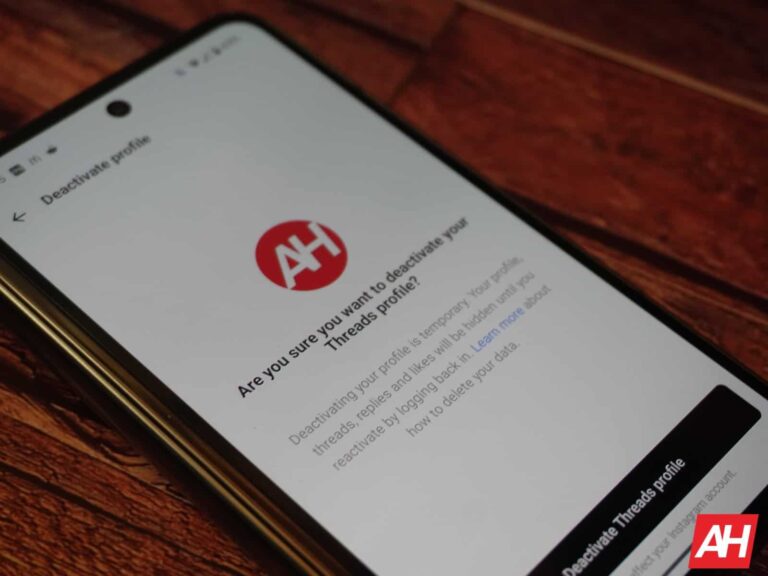
On this next page, it will ask you if you’re sure you want to deactivate your account. Tap on “Deactivate Threads profile”.
Now your profile will be deactivated, and you can come back and activate it again whenever you want. Remember, you can’t actually delete your Threads account without deleting your Instagram account too.
How to delete your Threads account
Since Threads and Instagram are so closely tied together, you unfortunately cannot delete just your Threads account.
According to Meta, to delete your Threads account, you would need to delete your Instagram account. So the best way to do this is going to be deactivating your Threads account, or creating a dummy Instagram account for Threads and then deleting it if you decide you don’t want to stick with Threads.
This is unlikely to change in the future, as this is described in the privacy policy for Threads. Though, if there’s enough pushback, Meta could make the change in the future. But since its tied so closely to Instagram, that might never happen actually.
Samsung has announced a breakthrough in 5G upload/uplink speed. The company teamed up with MediaTek for a successful test run of an industry-first three-transmit (3Tx) antenna transmission system to improve upload speeds on 5G networks.
The two firms combined 5G Standalone Uplink 2CC Carrier Aggregation with C-Band Uplink MIMO (Multiple Input Multiple Output) to reach a top uplink speed of 363Mbps. They believe it’s a “groundbreaking achievement in wireless mobile capabilities” that can usher the industry “in an era of enhanced connectivity for consumers worldwide.”
Samsung and MediaTek conducted this test in the former’s lab in Suwon, Korea. They used Samsung’s extensive set of 5G network solutions, including its C-Band Massive MIMO radios, virtualized Distributed Unit (vDU), and core. MediaTek, on the other hand, provided the test device, which features its new M80-based CPE chipset.
The firms began with “one uplink channel apiece at 1,900MHz and 3.7GHz.” But as the test progressed, they added “an extra uplink flow using MIMO on 3.7GHz.” The result is a record-setting upload speed of 363Mbps. Samsung says this speed is near the theoretical peak that the 3Tx antenna system can ever deliver.
According to Samsung, the 3Tx antenna system have greater benefits than just faster upload speeds. It can also enhance the spectrum and data transmission efficiency, helping deliver a better overall network performance. Current smartphones and other 5G-enabled consumer devices can only support 2Tx antennas.
Commercial 5G networks can’t deliver an upload speed anywhere near this
Of course, it’s just a test run conducted in a lab. We are far, far away from such high upload speeds on commercial 5G networks. Samsung achieved a peak download speed of over 8Gbps in a similar lab test conducted with Qualcomm in January 2022. But commercial networks only deliver a fraction of those speeds.
Recent research by Opensignal showed that T-Mobile has the fastest 5G in the US, and its average download speed is 195.5Mbps. That’s far lower than the upload speed achieved by Samsung and MediaTek. The average upload speed delivered by US wireless carriers is below 20Mbps.
“The demands on uplink performance are increasing with the rise of live streaming, multi-player gaming, and video conferences, Samsung said in a press release. “As more consumers seek to document and share their experiences with the world in real-time, enhanced uplink experiences provide an opportunity to use the network to improve how they map out their route home, check player stats online and upload videos and selfies to share with friends and followers.
Amazon is currently offering a pretty sweet deal for the Pixel 7a. Right now, you can pick up the Pixel 7a for its regular price of $499, but they are throwing in a pair of Pixel Buds A-series too. That’s a value of $99, and makes the lack of a headphone jack a bit easier to handle.
The Google Pixel 7a is the best mid-range phone of 2023. It offers a great balance of features and performance at a very affordable price.
Here are some of the reasons why you should buy the Google Pixel 7a:
It has a great camera. The Pixel 7a has a 64MP main camera that takes amazing photos and videos, even in low light. It also has a 13MP ultrawide camera that’s perfect for capturing landscapes and group shots.
It’s fast and responsive. The Pixel 7a is powered by the Google Tensor G2 chip, which makes it fast and responsive. You can easily switch between apps, browse the web, and play games without any lag.
It has a long-lasting battery. The Pixel 7a has a 4385mAh battery that easily lasts a full day on a single charge. You can even get more out of it with features like Adaptive Battery, which learns your usage patterns and optimizes battery life accordingly.
It’s affordable. The Pixel 7a is priced at just $499, which is a great value for a phone with this many features.
If you’re looking for a great mid-range phone, the Google Pixel 7a is the best option on the market. It offers a great balance of features and performance at an affordable price. Order yours today!
Here are some additional reasons why you should buy the Google Pixel 7a:
It has a clean and simple design. The Pixel 7a has a clean and simple design that’s both stylish and functional. It’s available in three colors: Kinda Coral, Sorta Seafoam, and Stormy Black.
It has a water-resistant design. The Pixel 7a is water-resistant up to IP67, which means it can withstand being submerged in water for up to 30 minutes. This makes it perfect for taking with you on outdoor adventures.
It has a long-term software support commitment. Google promises to provide software updates for the Pixel 7a for at least 3 years. This means you can be sure that your phone will stay up-to-date with the latest security patches and features for years to come.
If you’re looking for a great mid-range phone with a long-term software support commitment, the Google Pixel 7a is the best option on the market.
Meta, the parent-company of Facebook, Instagram, WhatsApp and Oculus, launched its Twitter clone on Wednesday, after a ton of hype. A lot of that hype was manufactured by Twitter owner, Elon Musk, as he continues to tear apart the site. The latest straw in favor of Threads was actually limiting how many tweets people could read in a day.
That got a lot of people interested in alternatives. If you take a look at this image from Google Trends, you’ll see a huge spike for alternatives like Bluesky, Mastodon and Threads.
This forced Meta to push up their launch of Threads, and it officially launched on July 5. It’s pretty bare bones right now, but that will change over time. In the first 30 hours, Threads had over 55 million users sign up. Which is pretty incredible, compared to Twitters 450 million users that took nearly 15 years to sign up.
In this article, we’re going to share with you everything that you need to know about Threads, and why it’s tied to Instagram.
What is Threads?
Threads is a new micro-blogging app, set to rival Twitter. This has been a popular thing on the internet ever since Elon Musk took over Twitter back in October of 2022. However, if there’s a company that can dethrone Twitter, it’s likely Meta.
With Threads, users are able to post messages that are up to 500 characters long. You can include text, pictures, GIFs, emojis and more. Though there are some workarounds for these. Like having to copy/paste a GIF from another app to get it to work. You can also post videos up to 5 minutes long, and it even supports 4K resolution.
Meta does allow users to keep their Threads account public or private if they wish. Even if their Instagram account is the opposite.
Mark Zuckerberg, Meta’s CEO, stated that “the vision for Threads is to create an option and friendly public space for conversation. We hope to take what Instagram does best and create a new experience around text, ideas, and discussing what’s on your mind.”
Why is Threads tied to Instagram?
Threads is tied very closely to Instagram, and it’s not hard to see why. Facebook has kind of been tainted over the years, especially after the past few presidential elections. Which has kept the younger generation off of Facebook. But for Instagram, it’s the opposite. The younger generation prefers Instagram, and so tying Threads to Instagram was the perfect way to go.
By tying it to Instagram, Meta made it super easy to sign up for Threads. And it’s also super easy to gain thousands of followers right off the bat. As you can follow everyone you followed on Instagram, on Threads now.
But there are also some downsides to it being tied to Instagram. For example, you can’t change your handle on Threads, and it is the same handle as Instagram. You also can’t delete your Threads account (you can deactivate it though), without deleting your Instagram account.
How do you sign up for Threads?
Because Meta made Threads so closely tied to Instagram, signing up for Threads is a breeze. Firstly, you’ll need to download the app (App Store and on Google Play).
Next, open the app. You should see your Instagram account there. Tap on the button that says “Log in with Instagram [account name]”.
Next, you’re going to create your profile. It will automatically bring over your name and username, but you can opt for a different bio and link. Or you can tap on the “Import from Instagram” button to bring that over as well.
Threads will now ask you if you want your profile to be public or private. Similar to how it works on Instagram.
The final step is going to be deciding if you want to follow everyone you follow on Instagram. You can pick and choose who you want to follow, or just mass-follow everyone.
The final step is telling you more about Threads and the Federverse. Remember, Threads does use the ActivityPub protocol, a lot like Mastodon does. So this will allow you to take your profile to other services if need be. Just click “Join Thread” and in a few seconds you’ll be on-board.
Where is Threads available?
Meta has launched Threads in over 100 countries, and it’s available in over 30 languages on both iOS and Android.
The major caveat here is that it is not available in the European Union right now, due to the privacy issues it poses. That will likely change. It’s also available in China for now, that will likely change as every other US-based app has been banned in the country.
Are there ads?
Surprisingly, Threads is ad-free, at least for now. Both Mosseri and Zuckerberg have stated that ads aren’t the priority right now. Zuck went on to talk about how they want to build out this platform and get it to a billion users before they put ads onto the platform. So this could be ad-free for quite some time. Though at the rate that Threads is growing, that really might only be a couple months away.
However, this being ad-free has made the service a lot nicer to use, as well as much better on battery compared to Facebook and Instagram.
What data is Threads collecting?
When Threads was first showing up on the App Store and Play Store, there was a lot of talk about what data this app is collecting. And it seems like it’s collecting everything. Here’s what the listing looks like on the App Store, for the data it’s collecting:
The data looks pretty similar on the Android side of things as well. Threads is literally collecting everything here. And the permissions look the same on other Meta apps too like Facebook and Instagram. So it really shouldn’t be a big surprise.
Can I be verified on Threads?
Yes! You can be verified through Meta Verified. It will carry over from your Instagram account to Threads. Keep in mind that Meta Verified does cost $14.99 per month, so it is more expensive than Twitter Blue, and doesn’t offer as many features, honestly.
What features are missing from Threads?
As mentioned before, there’s quite a few features missing from Threads right now. It’s still a pretty bare bones product, but that will change over time. As Instagram’s head, Adam Mosseri has repeatedly stated on Threads, many things have been added to the list of things to add. That includes a web-based app that you can use on desktop. As well as a following feed, instead of the jumbled mess that we currently have.
No real Search
Currently, there’s no real search available for Threads. There’s a search tab, but it’s only for searching for accounts. This means you can’t search for specific posts, nor see trending topics. Something that is a key part of Twitter, and how Twitter has been synonymous with being real-time news.
However, it is on the way, so it should arrive sooner rather than later.
No desktop version
In what really makes it look like this was rushed, is the Threads.net website. It’s up and running, but pretty useless. If you go to threads.net right now, you see a splash screen telling you to download the app with a QR Code. You can follow direct links to profiles and posts, but all you can do is view them.
Threads really needs to give us a desktop version for it to take off. Most people spend a lot of time at their computer, on Twitter, and their web app is actually the most used Twitter app. Threads says that it is on the way.
There’s plenty more missing from Threads, but we’ll leave it at this for now. As things are likely to change very quickly here.
A newly found Truebot Malware targets both US and Canada-based organizations to exfiltrate sensitive information by exploiting vulnerabilities in the Netwrix Auditor application(CVE-2022-31199).
Truebot malware is a botnet that is delivered through phishing campaigns to attack victims, now exploiting the vulnerability to gain access to the machine.
CISA and FBI jointly issue warnings about the increased activity of this new malware variant.
Truebot Malware Attack:
Increased activity of truebot has been observed since May 31, 2023, and it is presumed to be used by CL0P Ransomware Gang.
The delivery of the payload is achieved either through phishing attempts or through exploiting the vulnerability.
The payload has been concealed as a legitimate software update notification and was delivered through emails to trick the users into executing.
Once the user executes the email, it redirects to a malicious domain, and script files will be executed to collect the information.
Exploit:
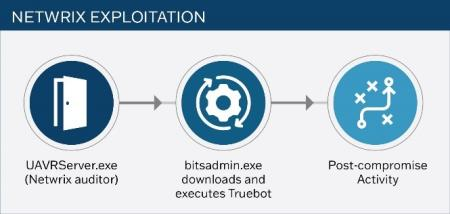
Netwrix Auditor is software used for on-premises and cloud-based IT system auditing. Attackers utilize the remote code execution vulnerability (CVE-2022-31199) in this software for lateral movement.
It employs various tools and techniques to achieve persistence; initially, it loads Flawed Grace, a remote access tool to store payloads and inject additional payloads on scheduled tasks to establish the connection to the C2 server.
Later it uploads Cobalt Strike beacons into memory in dormant mode for further operations.
Through POST requests, it establishes bilateral communication with the C2 server, which downloads additional payloads and self-replicates across the environment.
The best practice to mitigate this attack is to patch the vulnerability and update the applications and software used. And apply controls to prevent remote execution attempts.
If you’ve been looking to get your hands on the new Echo Dot (5th Gen) at a lower price, then today is the day. Today you can pick it up for just $27.99, which is going to save you $22 off of its regular price. This does match an all-time low for this particular generation of the Echo Dot. The Echo Dot with Clock and the Echo Dot Kids Edition are also discounted today.
Why should I buy the Echo Dot (5th Gen)?
There’s quite a few bundles with the new Echo Dot models. Which are a pretty big upgrade over the previous Echo Dot. This includes better WiFi and better audio performance. Allowing you to have a better listening experience when playing music over your Echo Dot. When it comes to WiFi, it actually acts as an eero satellite, so you can improve your WiFi coverage in your home with the Echo Dot. Of course, you need to have an existing eero in your home.
Now with the Echo Dot with Clock, the LED display has been improved here. Allowing you to display messages, and other things. So it’s more than just a clock now. This is still one of my favorite Echo speakers because of the clock. It’s great to have next to your bed and use as an alarm, if you don’t want to use your phone or smartwatch for that.
This is a great smart speaker to pick up, especially if you are already very invested into the Alexa ecosystem. Since it does work with pretty much everything. And will tell you when you get a package delivered from Amazon, which is definitely neat.
You can pick up these new Echo Dot smart speakers from Amazon by clicking the links down below.
According to beta testers, a new feature is coming to WhatsApp and will improve the user experience. This new feature is known as the WhatsApp sticker suggestion and has popped up for beta testers. Since this feature is already in its testing phase, it is okay to expect its global launch anytime.
At the moment, the ability to suggest stickers for users is only available on the WhatsApp Android beta testing version. This feature popped up with one of the latest updates to the beta testing app. Once available to the global community, lots of users will find this feature very useful while chatting with others.
The interesting part of this suggestion is that WhatsApp will use your emojis to find the perfect stickers for you. So users might not need to open the sticker section on the keyboard before getting suggestions. Do you find this intriguing, and is it a feature that you would actively use once available?
WhatsApp will soon use stickers to give sticker suggestions to you
Stickers have become a major part of WhatsApp as it is put to use between conversations. Ever since it was introduced to the platform, the amount of collections available to users has grown. Also, some users have taken it upon themselves to make their sticker packs from popular memes and images.
Sometimes while chatting with others, throwing in a sticker or two might add to the fun. WhatsApp knows this fact and they are testing a new feature to suggest the best stickers for you. This will make finding the best stickers to use while replying while chatting a bit easy.
To make this suggestion feature work, WhatsApp is linking emojis with stickers. So when a user starts a message with an emoji, WhatsApp will pull up stickers in the same category as that emoji. For example, if you start a message with a laughing emoji, you’d get laughing sticker suggestions.
This will make it a bit easier to find stickers to use while chatting with others. However, not all emojis have stickers that are in the same category as they are. So, only a few emojis would be able to pull up sticker suggestions.
It is also important to note that WhatsApp won’t account for some stickers you got from other sources. The main focus of this feature would be stickers users get from the WhatsApp sticker collection. This feature will make its appearance for use by the public in the coming weeks.
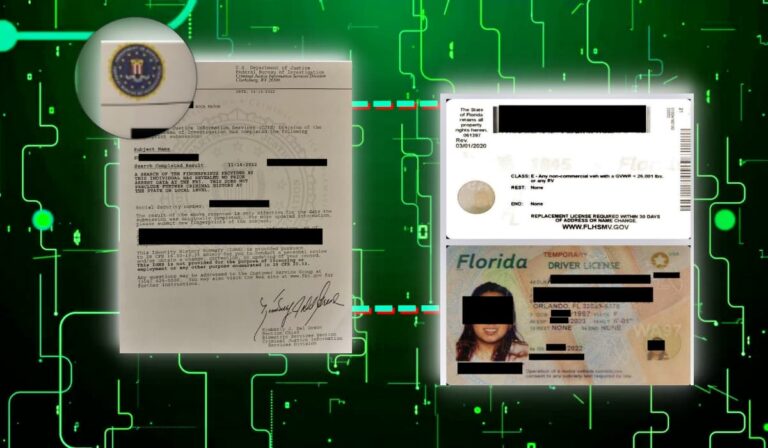
Among the trove of exposed documents were a Florida driver’s license, a letter from a Ukrainian ambassador, and an FBI background check document.
People think that offline paper documents would never pose an online data risk. However, this is a mere assumption because the latest research suggests that compromising these documents is possible.
Website Plant‘s security researcher Jeremiah Fowler has discovered a non-password-protected database that contained over 25,000 records, all publicly exposed, including ‘highly sensitive’ documents. The database reportedly belonged to a global translation service provider, Kings of Translation.
This was revealed by Fowler to Hackread.com. It is worth noting that Kings of Translation is a New York-based company that claims to be a premium translation service provider in the country, facilitating the translation of over 120 languages.
Database Contents
Fowler’s research, published on Websiteplanet, revealed that the exposed data contained PII (personally identifiable information), internal screenshots of the source code, and customer documents stored in the uploads folder, including the following:
Passports
Driver licenses
Business documents
Denied visa petitions
Birth and Marriage records
US Federal and State tax filings
These files belonged to customers from across the globe. There were around 25,601 records contained in the database.
How was the Database Owner Discovered?
Fowler found invoices and references linked to the NYC-based Kings of Translation. This is how the researcher identified the database’s owner. Kings of Translation allows customers to upload documents and transfer payments through its developed technology automatically.
Fowler claims that this is the first time he has come across data from a translation service and its customers in his career. He also noted that this was the first time such versatile documents were part of a database.
Possible Security Risks
It was an alarming discovery since it involved a business that collected all sorts of documents. Usually, businesses store data related to their industry. But this case was different. Since the database belonged to a translation service, the documents were sensitive, as many of them were required by educational institutions or foreign governments.
Moreover, the documents revealed crucial personal details such as birth, marriage, divorce, death certificates, etc. Fowler also shared screenshots with Hackread.com of some of the exposed documents, which included a Florida driver’s license, a letter from a Ukrainian ambassador, and an FBI background check document.
An FBI document and a Florida driving licence are among the trove of leaked documents (Image: Hackread.com via Website Planet)
Further, many legal documents were also part of the leak, for instance, court documents, contracts, certificates requiring translation to ensure compliance with legal requirements, and visa or immigration-related documents.
Such documents, if exposed, can make impacted people vulnerable to tax fraud or identity theft, or cybercriminals may file false tax returns, claim for a refund on behalf of the victim, or obtain credit in their name. Government documents and correspondence letters may reveal business trade secrets, leaving the victim liable for debts, fees, or penalties.
Fowler notified the company immediately, and public access to the database was restricted on the same day. The researcher couldn’t identify for how long this database had remained publicly exposed before access was restricted and has not received any response from Kings of Translation yet.
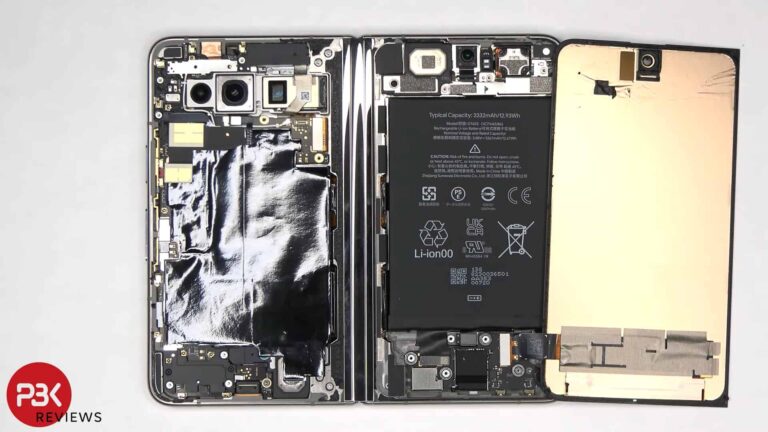
The first teardown video of the Google Pixel Fold is here. YouTube channel PBKreviews recently put the new foldable under the knife to show it inside out. The video gives us a look from the other side at everything apart from the flexible display.
The YouTuber begins by removing the SIM tray and applying heat to the glass back plate to lift it off. The heat softens the glue and makes it easy to cut through it using a plastic pry tool. The back panel has some cables attached to it, so it should be removed carefully. The best way to do it is to lift the plate off partially and detach the cables before fully peeling off the Pixel Fold’s rear side. The camera bar comes off with it.
The cover display can be removed similarly while being careful about cables underneath it. We now get to see most of the Pixel Fold’s internal components, including the big battery under the cover display. It has a typical capacity of 3,332mAh and comes with pull tabs. But before pulling it out, the YouTuber removes the vibrating motor, top speaker, selfie camera, and other components one after the other.
We finally get to the battery. While Google has included pull tabs, the YouTuber uses isopropyl alcohol to dissolve the glue and pry off the power unit. The Pixel Fold has a secondary battery on the other side. Its typical capacity is 1,489mAh, giving us a total battery capacity of 4,821mAh. This unit also comes with pull tabs, and they do their magic. The battery comes off relatively easily without needing isopropyl alcohol.
We then move to other components like the bottom speaker, 5G antennas, and the rear camera system. The three cameras come off as part of the main board, which also has the USB Type-C charging port soldered to it. This makes repairing the port difficult, but Google doesn’t care—no wonder the Pixel Fold achieved a repairability score of just 6.5 out of 10. The screens and batteries are easy to replace, but some other parts aren’t.
The Pixel Fold failed a durability test
Before this teardown video surfaced, the Pixel Fold went through a durability test on the YouTube channel JerryRigEverything. Sadly, it didn’t pass the test. The device gave up during the bend test. The hinge survived, but the rest of the phone couldn’t keep up. It broke along multiple antenna lines.








.png
)