From which, we can decipher the following, very intriguing info:
Those who pay finally got their money’s worth
No one gets limitless scrolling
And while someone unlike myself would stir the pot further by implying that this has anything to do with money which — let’s face it, without context — is a pretty easy conclusion to reach, I’m actually here to share with you what I uncovered in a post over at Twitter’s blog (which I am obviously an avid reader of).
To address extreme levels of data scraping & system manipulation, we’ve applied the following temporary limits:
– Verified accounts are limited to reading 6000 posts/day – Unverified accounts to 600 posts/day – New unverified accounts to 300/day
Ahem, — “To ensure the authenticity of our user base, we must take extreme measures to remove spam and bots from our platform.” — Why do I feel like I’ve read this one before? Anyway — “That’s why we temporarily limited usage so we could detect and eliminate bots and other bad actors that are harming the platform.”
So basically, this was the next step in the grand-master-plan? Well, I could’ve told you that much. But then again, I vowed not to make predictions regarding Twitter anymore.
The blog post then goes on elaborating that, since Twitter users are basically online rioters at least 70% of the time, the company — as in, Musk — decided not to let anyone know that these limitations are being put in place.
The reinforcement behind this very radical decision yet again involved “Shush, it’s part of the plan!”, as Twitter claims that if said bad actors knew, they’d find a way to circumvent the limitation.
Over the past few days, we’ve taken action to keep making Twitter a great place for everyone. And we want you to know why https://t.co/sJuhSbmmzN
— Twitter Business (@TwitterBusiness) July 4, 2023
So Twitter just postponed the problem by staying silent for a while? Said a while being a very insignificant amount of time, because — again — Twitter users are rioters in 70% of their time. Sure?
Naturally, with the company needing those tasty advertisements in order to stay afloat, the blog addresses any concerns by stating that this limitation only affects a “minimal” amount of users.
Let me get this straight: Twitter decided to not tell anyone about the limitations out of fear that they’d be circumvented, but everyone found out about them anyway (because they are limitations?) and then said limitations are only affecting a very small percentage of users on the platform.
Well, if that’s the case, why have the limitation at all?
Twitter seems to be talking in a way that implies that there is a master plan, but that final line of “We will explain later, trust us” feels off in a very Big Brother kind of way. And speaking of which, that may very well be the next step in Twitter’s… Whatever we can call this route.
The Barracuda Email Security Gateway (ESG) appliance has a remote command injection vulnerability that affects versions 5.1.3.001–9.2.0.006.
This vulnerability was identified to be CVE-2023-2868, with a CVSS score of 9.8. It has been actively exploited since October 2022.
The flaw stems from a failure to comprehensively sanitize the processing of .tar files (tape archives).
Incomplete input validation of a user-supplied[.]tar file concerning the files’ names inside the archive leads to the vulnerability.
As a result, a remote attacker can construct these file names to enable remote system command execution using Perl’s qx operator and the Email Security Gateway product’s capabilities.
As part of the BNSF-36456 patch, this problem was resolved. All appliances owned by customers had this patch deployed automatically.
Exploit For Barracuda Flaw
According to the Rapid7 reports, researchers used secondhand Barracuda ESG 300 with firmware version 8.0.1.001 for analysis. They quickly verified successful command execution against the actual device using ping and dig commands using the PoC and some basic fuzzing.
They instantly validated that these commands functioned by using dnschef and wireshark on all traffic! The following payload, which was also stated in the Mandiant alert, was utilized to obtain shell access:
“We found references to amavisd in the filesystem. amavisd is part of amavisd-new, an interface between mailers and content checkers such as virus scanners (and the source of several Zimbra vulnerabilities last year, including the exploits for CVE-2022-30333 and CVE-2022-41352”, says the report.
All this, according to researchers, is crucial for processing .tar files.
Code Snippet of Perl file
Barracuda ESG is a service that filters inbound and outgoing emails while also securing customer data. ESG can be implemented as a physical or virtual appliance and on the public cloud on AWS or Microsoft Azure.
Barracuda has provided a comprehensive overview of the issue thus far, including significant signs of penetration, new vulnerability details, and details on the backdoored module for Barracuda’s SMTP daemon.
Reports say that based on a known ESG appliance that runs the “Barracuda Networks Spam Firewall” SMTP daemon, it looked to be around 11,000 appliances on the internet as of June 8 (Barracuda Networks Spam Firewall smtpd).
Hence, Barracuda Email Security Gateway users who have physical appliances should immediately update to the newest firmware.
“AI-based email security measures Protect your business From Email Threats!” – Request a Free Demo.
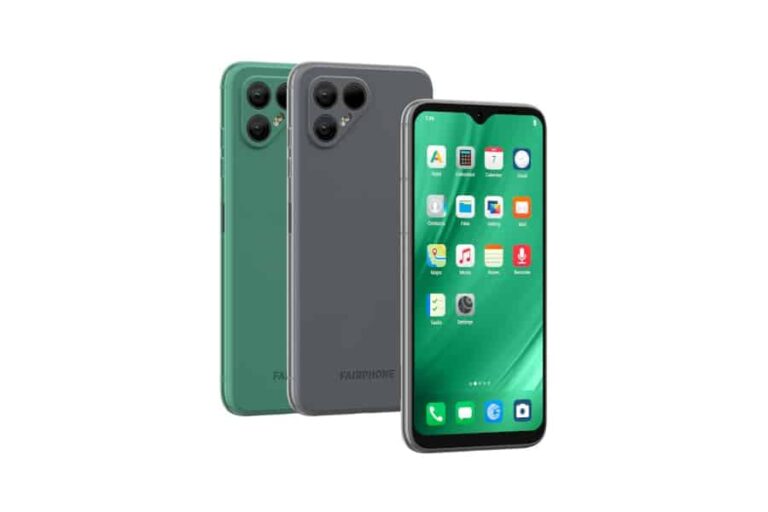
Nearly two years after its European debut, the Fairphone 4 has finally landed in the US. It comes with a privacy-oriented twist stateside thanks to a partnership with Murena, a firm specializing in de-Googling Android phones. Instead of Android OS, the US version of the Fairphone 4 runs Murena’s Google-free Android software called /e/OS.
Murena Fairphone 4 specs and features
The Murena Fairphone 4 is a 5G-ready handset featuring a 6.3-inch FHD+ display (2340 x 1080 pixels resolution) with Corning Gorilla Glass 5 protection. Powered by Qualcomm’s Snapdragon 750G processor and Adreno 619 GPU, the phone comes with up to 8GB of RAM and 256GB of storage. It supports microSD cards of up to 2TB capacity.
The device has a 48MP primary camera and 48MP ultrawide camera on the back, while the selfie camera uses a 25MP sensor. There’s also a ToF (time of flight) 3D sensor at the back. A 3905mAh removable battery fuels the Fairphone 4 with support for 20W fast charging. Other highlights include Bluetooth 5.1, dual-band Wi-Fi, USB Type-C port, NFC, dual-SIM support via eSIM, and a side-mounted fingerprint scanner.
These specs are good enough for a decent mid-range smartphone. But the Fairphone 4 is more about privacy, repairability, and sustainability than specs. The /e/OS is an Android 11-based privacy-focused platform that doesn’t suck your data. It offers open-source alternatives for most utility apps and also supports existing Android apps. You can check the privacy score of each app before installing it.
Moreover, the device is modular, with no parts glued shut. You can easily swap out the battery or the display on your own using a standard screwdriver. Other parts are also repairable at home. The Fairphone 4 achieved a score of 10 out of 10 for repairability from iFixit, which is extremely rare. Despite a modular setup, the device boasts an IP54 rating for dust and water resistance. It is the first modular phone with an IP rating.
In the name of sustainability, Fairphone isn’t giving you a charger or headphones in the box, not even a cable. But hey, you get up to five years of warranty with the Fairphone 4. That’s if you purchase it within 2023. Starting in 2024, the warranty coverage will drop to three years. It’s still better than what you get with other smartphones, though. Just bear in mind that the added privacy, warranty, and repairability come at a price.
Price and availability
The Murena Fairphone 4 is now available to buy carrier-unlocked from Murena’s official website in the US. The 6GB+128GB variant of the phone is priced at $629.90 and is available in Grey. The 8GB+256GB option, which comes in Grey and Green colors, costs $699.90. The device ships within a week.
Today is the day that Threads, Meta’s answer to Twitter, rolled out, and the beginning is quite impressive.
The app, which some say could be the next Twitter, is now available in more than 100 countries, including the US and UK. According to Meta’s owner, Mark Zuckerberg, 10 million users have already signed up for Threads just seven hours after the launch.
Threads is an app tightly connected to Instagram. If you want to try it, you can either download it from the Apple App Store and Google Play or search for “Threads” in the Explore Tab on Instagram. The “friendly” rival of Twitter, as Zuckerberg refers to Threads, comes out at a time when Twitter is facing problems in keeping its users on the platform, but more about that later.
What exactly is the Threads app?
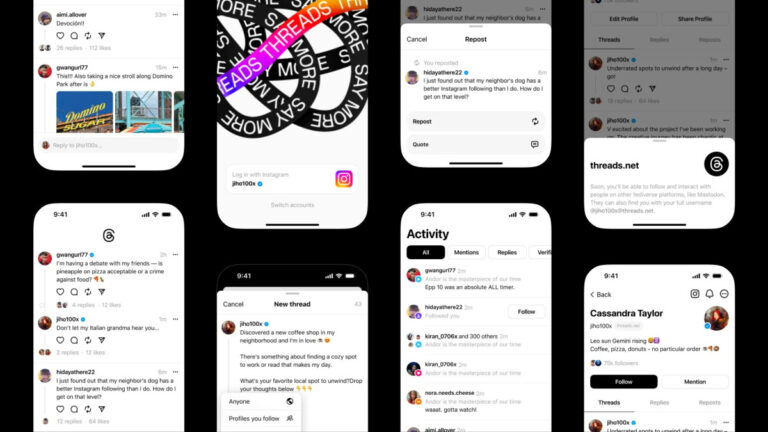
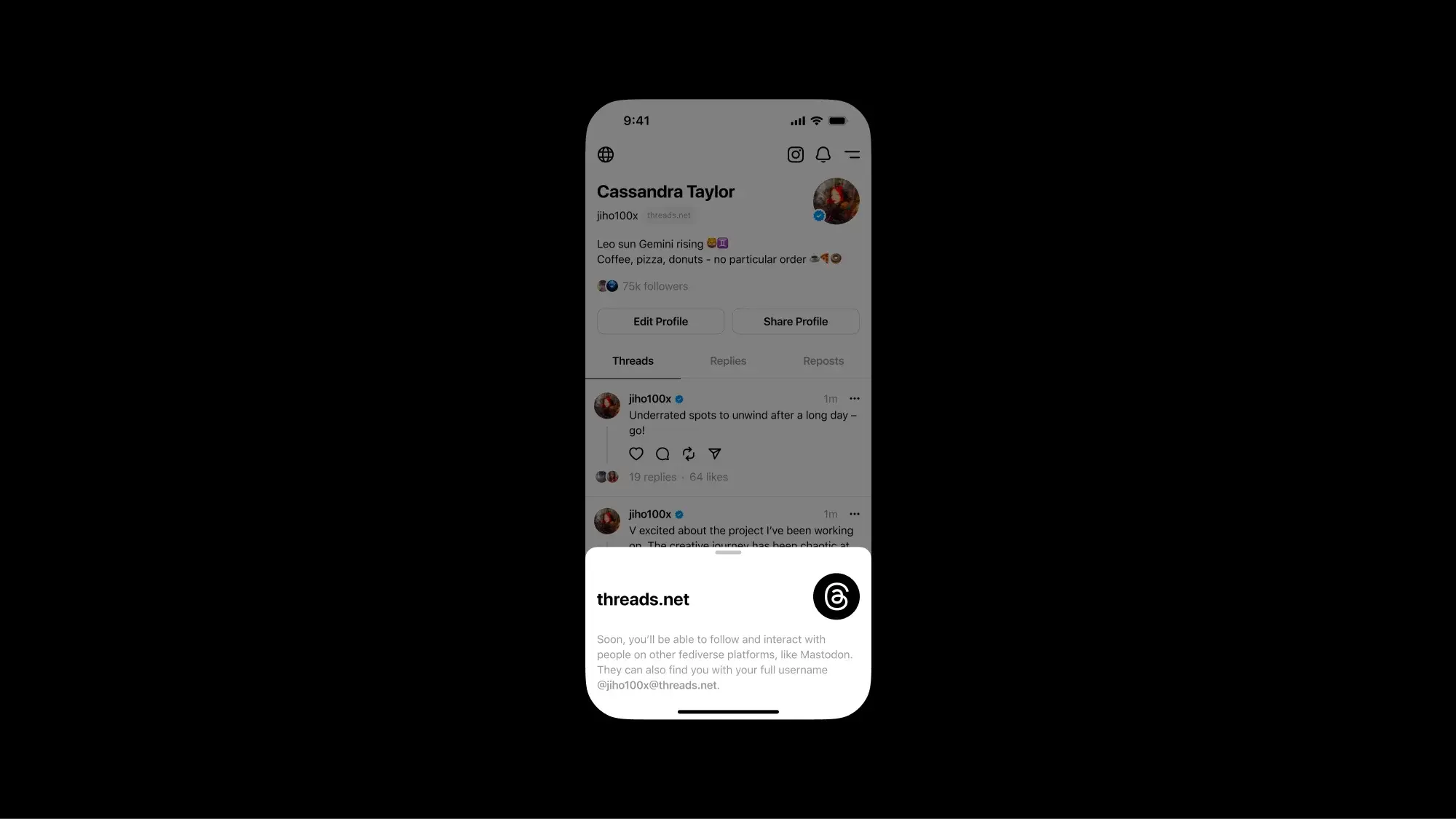
Threads is a new app built by the Instagram team, designed for sharing updates with your friends in the form of text and engaging in public conversations. It allows you to log in using your Instagram account and share posts up to 500 characters long, including links, photos, and videos. Threads is working to connect with other apps like Mastodon and WordPress through ActivityPub, an open social networking protocol, which Meta believes is the future of the internet. This will allow for unique connections and give you more control over your audience, including the option to transfer your content to other services. Threads is the first Meta’s app to be compatible with an open social networking protocol.
Image Credit–Meta
The Threads app’s idea is to give users the opportunity to connect with friends, followers, and like-minded people outside Instagram. And it seems like people are liking the idea, at least for now. In many ways, the app reminds of Twitter with a focus on short texts whose goal is to start a conversation. With Instagram having more than 1.5 billion users across the globe, Twitter might finally have found real competition.
How to use Threads?
To use Threads, you simply log in with your Instagram account. After that, you can personalize your Threads profile to your liking. For users under 16 (or under 18 in specific countries), joining Threads automatically sets them up with a private profile. You have the option to follow the same accounts as on Instagram and discover like-minded individuals. Threads also supports core accessibility features, such as screen reader support and AI-generated image descriptions.
Your Threads feed displays posts from people you follow, as well as recommended content from new creators. You can create posts up to 500 characters long, including links, photos, and videos up to 5 minutes in duration. Sharing a Threads post to your Instagram story or any other platform is effortless with the provided options.
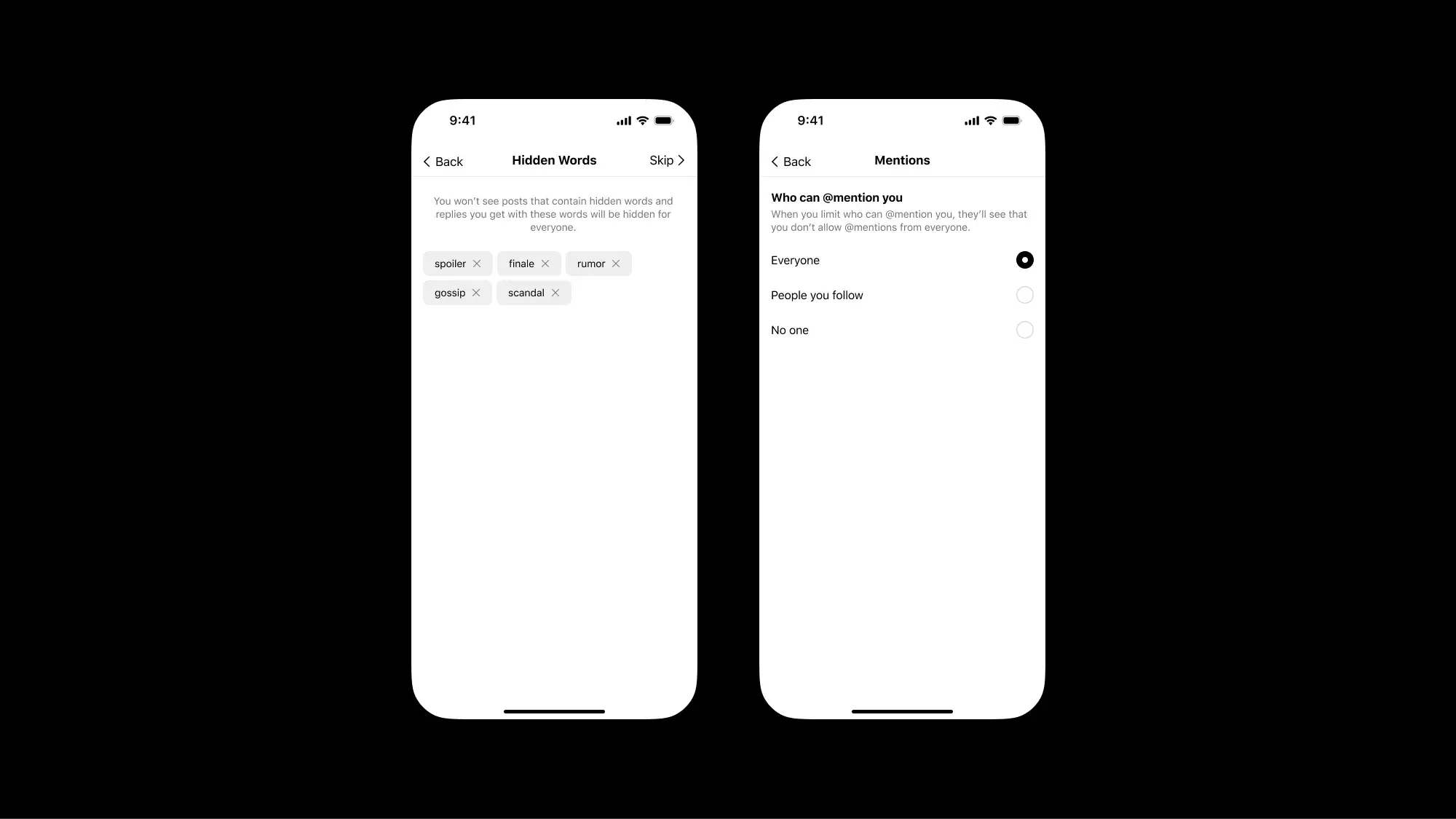
You can also decide who can mention or reply to you in the app. Just like on Instagram, you can filter out replies with specific words. Unfollowing, blocking, restricting, or reporting a profile is simple through the three-dot menu. Accounts blocked on Instagram are automatically blocked on Threads too.
Image Credit–Meta
What’s the deal with Twitter and Threads?
Recently, Twitter’s owner, Elon Musk, made yet another push to try to turn free Twitter users into paid Twitter Blue subscribers. This push was not well received by users, and Meta decided to act at the right time with the Threads announcement and launch.
Not too long ago, the two most famous technology billionaires had an online fight, ending in an agreement for a cage fight between them. Sounds a bit ridiculous, but who knows if they are being serious or just having some fun by goofing off online.
Today, after the launch of Threads, Mark Zuckerberg posted a tweet for the first time in almost 12 years, and the tweet is definitely referring to the cage fight. Musk, of course, responded with a tweet himself about the new Threads app, somewhat questioning the friendliness of the supposed Twitter rival.
It is infinitely preferable to be attacked by strangers on Twitter, than indulge in the false happiness of hide-the-pain Instagram
The “battle” between Twitter and Threads, as well as between their owners, might just be starting, and I suppose it would be fun to watch if nothing more. If Twitter continues to make unpopular changes to the platform, the battle might not be long, considering the quite successful start of Threads.
For the moment, Threads is available in more than 100 countries globally, but it has not yet launched in the EU, since the app does not meet the privacy and data protection requirements of the EU.
The OnePlus Nord 3 arrived, and alongside it, the OnePlus Nord CE3 launched as well. The thing is, the Nord CE3 launched in India, and its availability will be more limited than the Nord 3’s. It likely won’t be available in as many regions as the Nord 3. OnePlus could yet surprise us, though, as this is just an assumption based on the initial launch.
The OnePlus Nord CE3 is here with a 120Hz display, three cameras, and more
Still, the Nord CE3 does seem to be a compelling phone, though, and worth noting. Its design resembles the Nord N30, which we reviewed recently, but its specifications are different.
The phone has a flat display with rather thin bezels. It also includes a centered display camera hole, and two camera islands on the back. One of those two camera islands does host two cameras, as there are three cameras included, overall.
The OnePlus Nord CE3 features a 6.7-inch fullHD+ (2412 x 1080) AMOLED display with a 120Hz refresh rate. The phone also offers a 240Hz touch sampling rate.
The Snapdragon 782G SoC fuels this phone, while OnePlus also included 8GB/12GB of LPDDR4X RAM here. Those two RAM models come with 128GB and 256GB of UFS 3.1 flash storage, respectively.
A 5,000mAh battery is included, and 80W wired charging supported
A 5,000mAh battery is also a part of the package, and the phone supports 80W SuperVOOC charging. Android 13 comes pre-installed here, along with OnePlus’ OxygenOS 13.1.
A 50-megapixel main camera (Sony’s IMX890 sensor, f/1.9 aperture, OIS) is included on the back. In addition to that, you’ll find an 8-megapixel ultrawide unit (120-degree FoV, Sony’s IMX355 sensor) back there. The third camera on the back is a 2-megapixel macro unit (f/2.4 aperture).
A 16-megapixel front-facing camera (f/2.4 aperture) is also a part of the package here. This phone comes with two nano SIM card slots, and it supports Bluetooth 5.2.
The OnePlus Nord CE3 comes in Aqua Surge and Gray Shimmer color variants. Its pricing starts at INR26,999 ($327), and it will become available in India starting from next month.
Keeping a straight thought process while writing an article or text is a skill every writer wishes to have. Luckily, diverse Android apps enable you to achieve this goal. However, if you want to benefit from the app, ensure it meets your needs. Outlined below are examples of apps you could use depending on your niche.
1. Scrivener
Scrinerver is comprehensively developed to be used by professionals and authors. Unlike most options in this list, Scrivener is a paid-for application. It allows users to organize their projects and structure their ideas (note-taking). It also offers additional flexible functions and research tools.
2. iA Writer
iA Writer is a minimalistic writing app with dedicated features to enhance your productivity. For instance, the focus mode lets you tweak your content’s visibility.
The typewriter-scrolling feature lets you stay focused longer. Given its features, it might answer concerns, especially if you were wondering, is there an app to write my essay for me?
Other notable features such as:
Markdown support
Seamless syncing
Light or dark theme
It has an inbuilt tool to pinpoint writing errors.
3. MyStory.Today
MyStory.today is curated explicitly for novel writing. It divides your writing into sections, making it easy to attend to specific areas independently. It also has these additional features:
Pre-built templates to help you write your text with the required outlines.
An inbuilt editing function with multiple customization options to enhance your text’s appearance.
A straightforward and beginner-friendly user interface.
An in-built editing function.
Multiple options for exporting work into diverse file formats.
4. LivingWriter
LivingWriter is meant explicitly for story writing. It comes with templates that make your writing process more manageable. Using templates also makes you think clearly and your ideas well communicated.
Notable features that LivingWriter has include save-the-story and drag-and-drop. The straightforward story outline import feature helps keep your writing organized. The other key features you will enjoy include:
A dark or light mode.
Storage on the app guarantees the safety of your project and ease of access to previous work.
5. Writecream – AI Content Writer
Writecream creates content in diverse forms like blogs, ad copies, and emails. It is a resourceful tool that generates high-quality and accurate content. These features make Writecream a preferable option:
A dark and light theme that allows you to select your preference while ensuring you are productive.
Cloud storage integration to ensure the safety of your work and access to previous projects.
Command options for ease of access to previous projects.
A tool for customization and organization.
AI features guarantee to save time and improve your productivity.
6. AI Writer – Write Better
This application is precisely structured and developed to provide access to content. Its mechanism sifts out misleading information. Therefore, you can generate content for diverse categories. Download the app to enjoy the following features:
It has an in-built to pinpoint and fix errors.
It has voice and text commands for ease of use.
It provides reliable and resourceful customer care support.
7. JotterPad
This application is the simplest writing app. It also has a straightforward user interface that lets you decide how to portray your text. It is embedded with a statistics function to keep tabs on the length of the text and its readability while working on your project. The other additional features of the app include:
The ability to export content in multiple formats.
An inbuilt dictionary function to correct spelling errors.
A function for taking screenshots.
Diverse light modes for your comfort and productivity.
8. Novelist
As the name suggests, Novelist is curated explicitly for writing novels by providing a distraction-free platform. This app allows you to create and publish your work in one place. It is also a trusted option that does not let you worry about your work’s quality. It also performs complex functions, as highlighted on the essaywriter.org review page.
9. YouTube Video
Unlike the other apps mentioned above, YouTube Video is a graphical app that makes writing content easier. It provides users with video tutorials, outlines, editing, and a scheduling option. These features help make your experience seamless.
You will enjoy these additional features by downloading the app:
A preview mode function to check your work while and after working on it.
It enables you to create and organize the different parts of your writing while tracking your progress.
It offers cloud storage; hence, you can access previous projects easily.
10. Pluot
Pluot is an app precisely meant to be a story-writing planner. As the name suggests, it is a platform to jot down the bits and pieces of your story. The app lets you work on individual elements of your writing without juggling them; hence, it promotes creativity. Pluot does not limit you to English as the primary language; it understands more than 25 languages.11.
11. Lyric Notepad
As the name suggests, Lyric Notepad is a dedicated songwriting app. It provides a “notepad” to randomly jot down musical lines and lyrics. If you are creative, you should download it to enjoy these additional features:
The chance to participate in weekly competitions held on the app.
Flexibility in adding more locations and characters to your story while working on it in bits.
A dedicated storage option on the app.
12. Google Docs
This list would be incomplete if Google Docs failed to feature. Google Docs’ operations are saved in a powerful cloud. It also allows the user to edit and create documents they can access at their convenience. The best part is you do not have to worry about saving your work since the app has an auto-save function. Another unique feature that makes it preferred is you can integrate it with other Google apps.
13. Microsoft Word
Microsoft Word is a straightforward app. It allows users to access and create documents using its numerous functions easily. It also supports very many formatting styles and options. Its interface is also easy to navigate.
The above apps have distinctive features that cut across different niches and serve diverse needs. They are worth considering, especially if you wish to better your skill. They also aim to help you spend quality time using them while ensuring productivity.
The Pixel 4 was arguably one of the worst phones Pixel phones, thanks in part due to the company’s poor implementation of the hands-free gestures and all the gimmicks surrounding it. However, it looks like Xiaomi might be working on a new solution that brings back the concept of hands-free gestures.
As reported by MIUI Polska writer Kacper Skrzypek, Xiaomi is currently developing a tablet equipped with a 3D Time of Flight (ToF) camera, which would enable hands-free gestures such as automatically locking the tablet when the sensor detects that the user has walked away. Additionally, it would allow users to manage tasks such as media playback, volume adjustment, track skipping, page-turning, and even answering or ending phone calls.
However, unlike the Pixel 4, which faced regulatory issues in many countries due to its reliance on the Soli radar chip, Xiaomi’s approach utilizes an optical system. This approach would enable users to control the tablet by placing their hands approximately 15 to 40 centimetres away from the screen, using gestures designed for Xiaomi’s MIUI interface.
Furthermore, Skrzypek also found references to a “Hover” or “Flex” mode for an upcoming device, which would allow users to partially fold the device and control it using gestures. This suggests that the upcoming Mix Fold 3 could feature a free-stop hinge, thus significantly improving upon previous models.
It all depends on the implementation
While this development is undoubtedly intriguing as it would provide a new way for people to interact with their devices, its success will depend on two things: the effectiveness of the technology and whether users will find air gestures preferable to touchscreen interaction. This is because the Pixel 4 also promised similar features but failed to deliver when users discovered the limitations of these gestures. Therefore, Xiaomi will need to address these concerns and demonstrate substantial improvements in accuracy, responsiveness, and user experience to regain users’ trust and persuade them to use hands-free gestures in their everyday lives.
In the fast-paced digital era, mobile applications have become an integral part of our daily lives. We rely on them for communication, entertainment, productivity, and even shopping. To enhance user experiences and stay competitive, developers are constantly exploring cutting-edge technologies. One such transformative technology that has gained significant momentum is artificial intelligence (AI). By harnessing the power of AI, mobile applications are becoming smarter, more intuitive, and capable of delivering personalized experiences. In this article, we will explore the latest trends in AI development within mobile applications and examine how they are reshaping various industries.
Additionally, optimizing online stores and streamlining the checkout process is crucial in the vast landscape of e-commerce. The checkout stage plays a pivotal role in conversion rates and overall customer satisfaction. That’s where the importance of Magento 2 Checkout comes into play. With its powerful features and flexibility, Magento 2 Checkout empowers businesses to create seamless and user-friendly checkout experiences.
The integration of artificial intelligence (AI) in mobile applications has revolutionized the way we interact with our smartphones. From voice assistants to image recognition and personalized recommendations, AI technologies have enhanced user experiences and opened up new possibilities. This article explores the current trends in AI development within mobile applications and their impact on the industry.
One prominent trend is the integration of AI-powered chatbots in mobile applications. These intelligent virtual assistants provide personalized customer support, automate tasks, and streamline user interactions, thereby improving overall customer satisfaction.
Another significant trend is the use of AI for image recognition and augmented reality (AR). Mobile applications can now identify objects, places, and even emotions from images captured by the device’s camera. This technology has transformed industries such as retail, allowing customers to try on virtual clothes or visualize furniture in their homes before making a purchase. It has also facilitated advancements in healthcare, enabling remote diagnosis based on images captured by patients.
AI-driven recommendation systems have become an integral part of mobile applications as well. By analyzing user behavior, preferences, and past interactions, these systems provide personalized suggestions for movies, music, or products. E-commerce platforms utilize AI algorithms to offer tailored product recommendations, resulting in higher conversion rates and increased customer engagement.
Moreover, natural language processing (NLP) has significantly improved voice assistants like Siri, Google Assistant, and Alexa. These voice-activated AI applications can perform a wide range of tasks, from setting reminders and sending messages to controlling smart devices. NLP advancements have made voice assistants more accurate, enabling natural and intuitive interactions between users and their devices.
Conclusion:
As AI continues to evolve, mobile applications are set to become even more intelligent and capable. The integration of AI technologies such as chatbots, image recognition, recommendation systems, and NLP is reshaping the mobile app landscape, enhancing user experiences, and driving innovation across industries. From improving customer support to enabling immersive AR experiences, AI in mobile applications is transforming the way we interact with our smartphones.
In conclusion, the trends in AI development within mobile applications present exciting opportunities for businesses and users alike. As technology progresses, we can expect further advancements in AI capabilities, making our mobile devices smarter and more intuitive than ever before. With the added benefits of Magento 2 Checkout, businesses can create seamless and user-friendly checkout experiences, enhancing customer satisfaction and boosting conversions.
US Navy, one of the red team members, recently released “TeamsPhisher,” a tool that exploits the Microsoft Teams’ security flaw that is not fixed to bypass the incoming file restrictions from external tenants.
This new tool allows attackers to deliver malicious files to specific organization’s Teams users automatically, and it’s currently available on GitHub.
By altering the ID in a POST request, the application’s client-side protections can be deceived, enabling external users to be perceived as internal, which makes this possible
This tool operates seamlessly in environments permitting communication between internal and external Teams users.
Attackers leverage this tool to deliver the payloads to a victim’s inbox directly, bypassing the need for traditional tactics like:-
TeamsPhisher (Source – Github, Octoberfest7)
TeamsPhisher is a Python3 program that is completely based on the Python programming language and is mainly designed to give the operator the ability to perform automated attacks.
Combining Jumpsec researchers’ attack concept, Andrea Santese’s techniques, and authentication/helper functions from Bastian Kanbach’s ‘TeamsEnum‘ tool; it integrates a unique approach.
Max Corbridge and Tom Ellson, cybersecurity researchers at JUMPSEC, discovered a simple workaround that is dubbed the “IDOR” technique.
Varonis, a security vendor, highlighted the potential of IDOR and how it empowers attackers to manipulate web apps via direct object references like:-
Database key
Query parameter
Filename
Before proceeding with the attack, TeamsPhisher validates the target user’s presence and their capacity to receive external messages, a crucial prerequisite.
Next, with the target, it generates a fresh thread, and then a message containing a Sharepoint attachment link is dispatched by it.
For successful utilization of TeamsPhisher, a valid Teams and Sharepoint license is mandatory for users, typically found in the Microsoft Business account (MFA supported), a widespread requirement in numerous prominent organizations.
While the tool includes “preview mode” for target list verification and message appearance check. Additional features and optional arguments in TeamsPhisher enhance the attack with the following capabilities:-
Secure file links for the intended recipient only
Transmission delay to bypass rate limiting
Log file output
Despite Microsoft being informed by Jumpsec researchers, the issue exploited by TeamsPhisher remains unresolved as Microsoft affirmed that it was not immediately eligible for the fixing criteria.
While originally this tool was intended for authorized red team operations, TeamsPhisher can be exploited by threat actors to deliver malware to target organizations, evading detection discreetly.
Moreover, in the absence of Microsoft’s action, it is highly recommended that organizations disable external tenant communications unless necessary.
“AI-based email security measures Protect your business From Email Threats!” – Request a Free Demo.
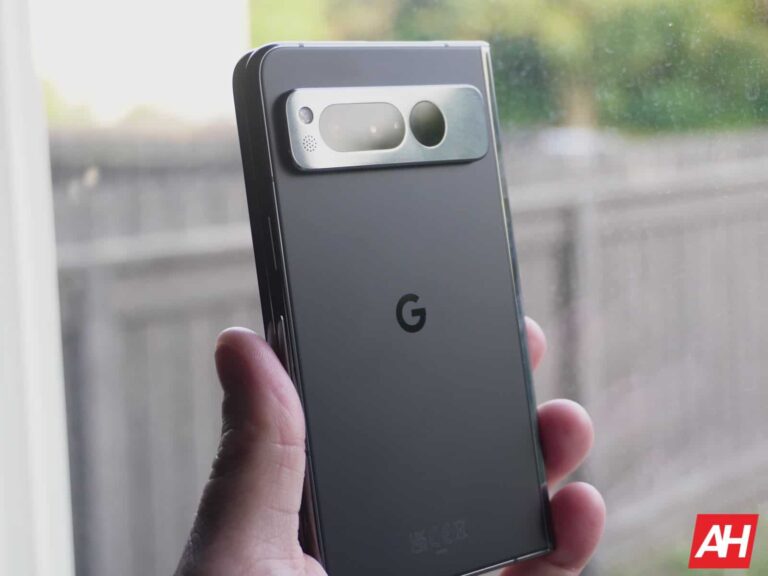
The Google Pixel Fold has been on ad banners, commercials, and people’s wishlists. Now, it’s about time that this phone finds itself on the chopping block. The Pixel Fold just went through a durability test. You might want to brace yourself, as this one gets a little gorey.
This test, as you could guess, was conducted by Zach Nelson on his YouTube channel Jerryrig Everything. It was put through his classic line of tests. The poor phone had to endure a flame, scratches on its screen, a dirt bath, and the bend test.
The Pixel Fold goes through a durability test
The phone took these tests in stride. The flame test caused the phone to shut down due to the heat, but it turned back on. The outer display scratched at a level 6 (you know the rest of that line), and the inner display started scratching at a level 2. Foldable screens are still soft enough to be scratched by fingers.
As for the dust tes, the Pixel Fold survived that without any issues. So, it seems that the phone is in good shape so far.
But…
The phone completely bombed the bend test. Google boasts that this phone has the strongest hinge there is, and that’s technically true. The phone didn’t fail at the hinge. One of the separate sides of the phone broke. It snapped at the antenna line, which tends to be the issue most of the time.
Undoubtedly, this is going to cause several people to look at the phone differently. While most people aren’t going to bend their phone backward at an extreme angle, it still stains the visage that the Pixel Fold presents a bit. Looking at the phone, we see a refined and nice-looking device. Folks are also enjoying it so far.
However, Zach is a respected figure in the tech industry. If he snaps a phone, people will take notice. This is unfortunate, as the phone is experiencing issues with its shipping. People aren’t going to be getting their units until late August in some cases. Now, with the durability test, you can bet that potential Pixel Fold buys will move over to the next Galaxy Foldables that will be announced later this month.




.png
)