HTML files are among the most popular attack vectors attackers use for phishing and other frauds.
More than 50% of malicious attachmentsare HTML files, according to Check Point’s telemetry.
Many such files pose as login pages for well-known services and companies, including Microsoft, Webmail, etc., to trick the user.
Process Of Harvesting Credentials
It has been noted that continuing efforts involving tens of thousands of emails use reputable services like EmailJS, Formbold, Formspree, and Formspark to collect these stolen credentials.
Many developers use these online form builders to design unique forms for their websites or web applications.
To help to gather user data systematically, they could include a variety of form field kinds, including text input fields, radio buttons, checkboxes, dropdown menus, and more.
After a user submits the form, the service will perform data processing and gather these compromised credentials.
Credential Harvesting Process
A type of hack known as “credential harvesting” allows criminals to get sensitive information such as usernames and passwords to gain initial company access or sell it online.
Dark web forum selling stolen credentials
According to the report shared with Cyber Security News, attackers increasingly use legitimate services, making it more difficult to fight against and may result in credential theft.
“This new method of using a legitimate form service’s API, which many developers also use, makes malicious HTML files harder to block,” researchers explain.
“By using this API, the credentials can be sent to wherever the attacker chooses. It could even be in his mailbox”.
Phishing page using EmailJS
One of the ongoing campaigns that the Check Point Research team found begins with a phishing email that makes the recipient feel pressured to open the attachment.
The campaign used many versions of the email and several HTML templates.
The victim’s email address is already filled out in the form by the campaign author since it is hardcoded in the HTML file, giving the sign-in page a more trustworthy appearance.
The attacker receives the victim’s login and password as soon as the victim submits his credentials and tries to log in since they are sent directly to his email inbox.
To effectively defend against phishing attempts, an organization must implement security awareness training, email filtering, scanning for malicious attachments, checking for spelling and grammar, and anti-phishing solutions.
In March, Dashlane announced that its password manager app for Android devices will get passkey support starting with Android 14. Now that the new Android version is nearing its public release, the company has begun rolling out support for passkeys. If your device is running on Android 14, you can use Dashlane to manage your passwordless login credentials.
Passkeys are a more secure and convenient replacement for the traditional passwords that we use to sign into our online accounts. Unlike passwords, you don’t need to memorize passkeys or store them securely somewhere. They aren’t stored in the cloud either. So any data breach on the vendor’s side won’t compromise your account, nor there be a risk of losing access due to a forgotten password.
If the app or website you’re trying to sign into supports this modern authentication method (many already do, including Google, eBay, Adobe, PayPal, Apple, BestBuy, and more), you will be able to generate and store the passkey for it on your device locally. Passkeys make use of cryptographic keys that are unknown to anyone. Every time you need to log in, just go to the app and use your phone’s existing unlocking options, like a PIN or fingerprint.
Dashlane is getting passkey support with Android 14
Until Android 13, passkeys were managed by the Google Password Manager. But starting with Android 14, the company is allowing third-party services to do that too. Dashlane is leveraging this expanded support to let users manage their passkeys on Android devices. Competing password manager service 1Password has also announced that it will add passkey support later this year.
To use Dashlane as your passkey provider on Android, go to Settings > Password and Identity on your phone and select Dashlane in the list of Passwords, passkeys, and data services. The app will now automatically generate and store your passkeys where supported. The company says that you will soon be able to share your passkeys with anyone. This allows you to give other people access to your account, like how you can share passwords.
Note that you can also create passkeys using the Google Chrome Canary build. Dashlane, meanwhile, currently only supports passkeys on Android and the web. You cannot manage your passkeys from the web extension, though this ability is “coming soon”. The company will also bring the feature to iPhones with the release of iOS 17 later this year. The new version of the iPhone platform is expected to arrive in September.
As the world opens up to live events again, there’s a rush to grab tickets for your favorite artist’s concert. In the era of smartphones, your Android device is an excellent tool for purchasing concert tickets. This article guides you through the seamless process of buying concert tickets using your Android phone.
Research Upcoming Concerts:
a. Keep an eye on the artists’ official websites and social media. b. Sign up for newsletters or follow venues for upcoming event notifications. c. Download apps like Bandsintown or Songkick to stay informed.
Create Accounts on Ticketing Platforms:
a. Download popular ticketing apps like Ticketmaster, Barrystickets.com, StubHub, or Eventbrite from Google Play Store. b. Create accounts using your email ID and set up payment options. c. Set up profile details for a quicker checkout process.
Pre-sale Access:
a. Some concerts offer pre-sale tickets. Join fan clubs or mailing lists for early access codes. b. Use credit card promotions. Sometimes, credit card companies offer exclusive pre-sale access for cardholders.
Set Reminders:
a. Set a reminder on your phone for the ticket release date and time. b. Ensure you have a stable internet connection and that your payment method is accessible.
The Purchasing Process:
a. Open the ticketing app a few minutes before tickets go on sale. b. As soon as tickets are live, select the concert, choose your seats, and proceed to checkout. c. Keep your focus on the app; sometimes tickets get held up and may become available after a few minutes.
Checkout:
a. Review your tickets and seating. b. Enter payment details, and complete the purchase. c. An e-ticket or confirmation will be sent to your email or the app.
Protect Your Tickets:
a. Take a screenshot of the e-ticket or save it in a cloud-based note app like Google Keep or Evernote. b. Never share your ticket barcode or QR code publicly to avoid scams.
Plan Your Concert Day:
a. Set a reminder for the concert date. b. Keep your e-ticket accessible on your phone or print it if required. c. Make travel plans and check the venue’s rules and restrictions beforehand.
Troubleshooting:
a. In case of app crashes or errors, close and reopen the app. b. If the issue persists, try a different ticketing app or browser. c. Reach out to customer support for any ticketing issues.
In terms of ticket availability, BarrysTickets.com strives to offer a comprehensive selection for both popular and niche events. This allows customers to secure tickets even for high-demand shows or games that may be sold out through other channels. The website also supports the option for individuals to sell their tickets, providing a platform for both buyers and sellers to connect.
Whether you’re a dedicated sports fan looking for tickets to a championship game, a music enthusiast eager to attend a sold-out concert, or a theater lover seeking tickets to the latest Broadway hit, BarrysTickets.com aims to cater to your needs. With its broad selection, user-friendly interface, and commitment to customer satisfaction, BarrysTickets.com has established itself as a reputable online destination for event tickets.
Buying concert tickets is an exhilarating experience, especially for an event you eagerly await. By utilizing your Android phone’s power and convenience, you can easily and efficiently secure tickets to your favorite concerts. So gear up, make sure your device is ready, and let the musical journey begin!
WhatsApp users have been spoiled lately, as Meta’s acquisition rolled out several important updates in the last few months, something that doesn’t happen too often. Today’s update introduces a couple of privacy features that we’re pretty sure users will find extremely useful.
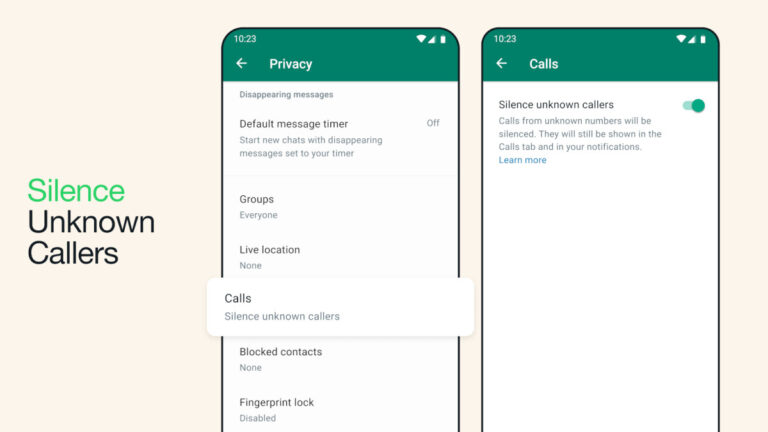
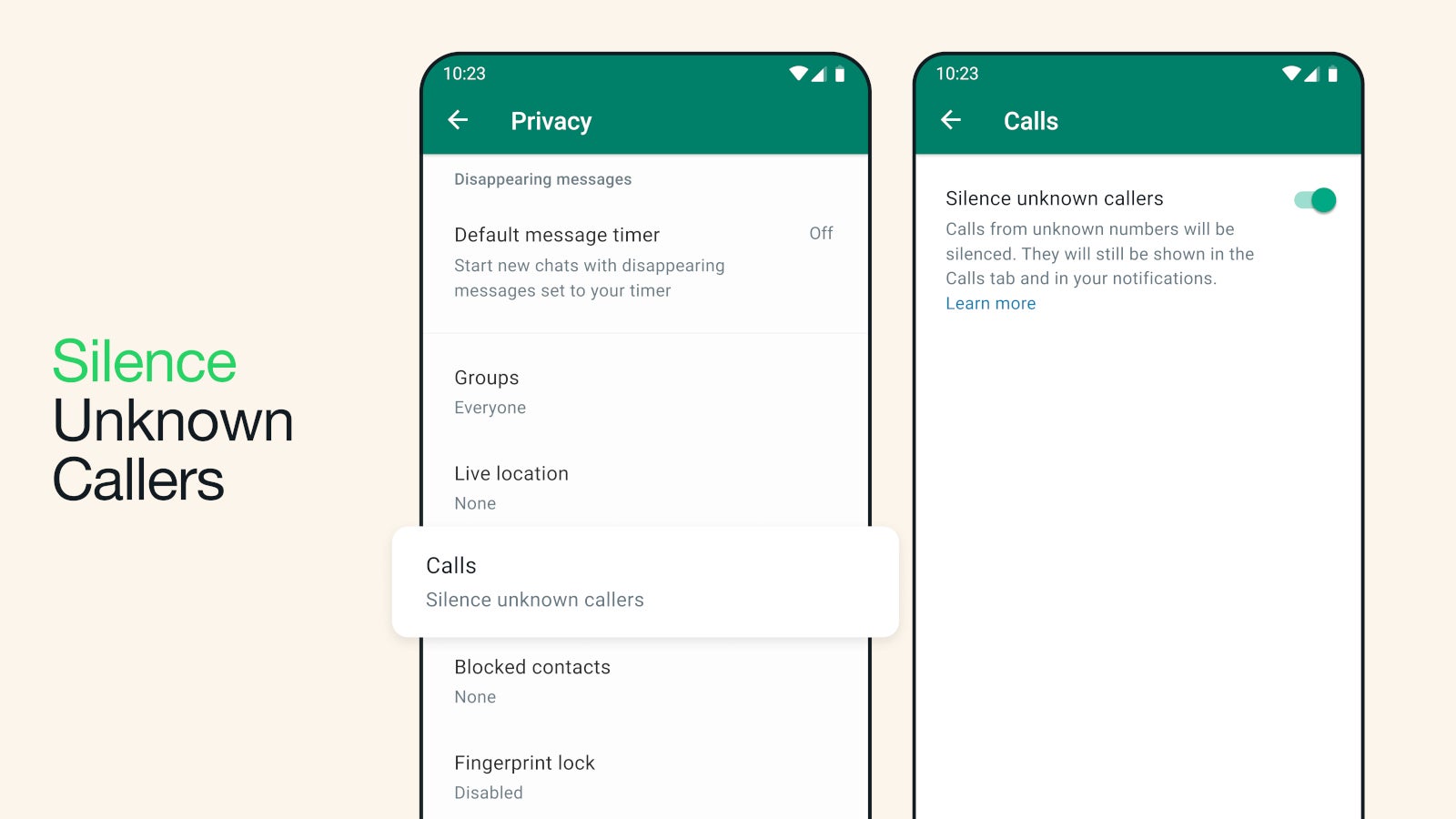
As the title says, a new option to automatically silence unknown callers is now available for WhatsApp users. Specifically designed to prevent spam, scams, and calls from unknown people, the new feature provides increased protection and peace of mind.
The new feature can be enabled from the Privacy tab / Calls and while all calls from unknown numbers will be silenced, they will still be shown in the Call list just in case you recognize one of the numbers or you know it’s coming from someone important.
In addition to the Silence Unknown Callers feature, WhatsApp announced that it’s bringing Privacy Checkup to its app. It’s a step-by-step feature meant to guide users through important privacy settings and familiarize them with certain levels of protection.
WhatsApp users can now select “Start checkup” from their Privacy settings to browse through multiple privacy layers that increase the security of messages, calls and personal information.
These two new features should be available globally for all WhatsApp users, but make sure to update to the latest version of the app before trying to use either of them.
Google has made its long awaited return to Tablets. And it comes just a few years after Google said it was giving up on tablets. Google has made some of the best, but also some of the worst tablets, in the past decade or so. Many of us loved the Nexus 7 tablets that were made by ASUS. But then, Google’s own Pixel C tablet was one many of us want to forget. So where does the Pixel Tablet fall?
With the Pixel Tablet, Google decided to change approaches. While most companies making tablets are looking to make them a “laptop replacement”, Google on the other hand isn’t trying to do that. Instead, the Pixel Tablet comes with a speaker dock that allows it to turn into a smart display, just don’t tell Google that. Google keeps telling us that it is not a smart display replacement, even though it is basically almost one.
So the real question here is, whether that is enough to get customers to buy one over a Galaxy Tab or an iPad? Let’s find out in our full review.
Google Pixel Tablet review: Hardware
When Google first teased the Pixel Tablet about a year ago, many of us though that it looked like a cheap tablet. Due to the backing looking like it was made of plastic. It’s not actually plastic. Instead, it is made of premium quality aluminum that does have a nice nano-ceramic coating. Which does feel really great in the hand, though I feel like most of us will keep it in a case anyways, to protect the tablet.
We have the Hazel model here which looks and feels really nice in the hand. Somehow, Google has managed to keep the Pixel Tablet fairly lightweight. Now it’s not the most lightweight tablet on the market, but for its size, it does feel very light. This is one you can hold in your hands for hours on end without it becoming super heavy in the hand. Unlike some other tablets on the market these days.
On the back, it’s a pretty clean design. Basically only having the Google logo in the center, with pins below it for the speaker dock. And the camera is in the corner. On the left side, you’ll find the power button/fingerprint reader, along with the volume rocker. The bottom houses the USB-C port, along with a couple of speakers on each side. And that’s it. It’s a pretty clean design, which is honestly really impressive for Google here.
And with the speaker dock, you’ll probably never use that USB-C port. In my time testing out the Pixel Tablet, I can say I used it twice. And I probably won’t use it again, because I just slap it on the dock to charge when needed.
The speaker dock is small but powerful
When Google announced the Pixel Tablet, quite a few of us were relieved to see that the dock was included in the box. Now the dock can be purchased by itself for $130, which really brings down the price of the tablet to a technicial price of around $370. Which does make it easier to forgive some shortcomings.
But the speaker dock is really powerful. Without changing the volume, you can immediately hear the difference of the speakers on the Pixel Tablet versus the speaker dock. It’s louder and full of more bass. Which given that it has more space, that makes a ton of sense. We’ll talk more about the dock in the software section, as it is a big part of the software here.
With the Pixel Tablet, Google is hoping that everyone will dock it when it is not in use. This is because the majority of us only use a tablet for a few hours a day, and then it sits idle on a table, desk or somewhere else. So Google is wanting to train us to remember to put it on the dock when we’re done with it. Making battery life less of a problem. It makes sense, but will it catch on, is another thing.
Pixel Tablet Case
Along with the Hazel Pixel Tablet, Google also sent over a Porcelain colored Pixel Tablet Case. This is the soft-touch TPU case that has the built-in stand. Now, I’ll be honest here, I’m not a huge fan of the design of this case. Having that big metal ring on the back so it can dock without removing the case, is not my favorite thing. But I do think it’s the most functional way to do this.
On my iPad Air, I have the Nomad Leather Folio case. Which is great, because it folds on the back to give me a nice stand. Making it easy to watch movies in bed, on a plane, and really anywhere. But, it’s only available at one angle. With the Pixel Tablet Case, that metal ring is strong enough to be used in almost any position. And, it’s not in the way when you go to dock the tablet. Unlike the Folio case for my iPad Air, which covers the front of the tablet.
The ring on the back does also make it a little easier to hold onto the tablet, since it is a fairly large tablet, coming in at about 11-inches.
There’s really only two issues I have with this case, and they are things I can kind of work around. One is the power button. That power button is the fingerprint sensor, so it’s pretty important, and it can sometimes be tough to use, with the case on. The other thing is, this is a soft-touch plastic case. And that means it attracts everything. And in this porcelain color, you definitely see all the dirt, dust, and pet hair on it. On top of that, it’s pretty tough to get off of the case.
But it is a good, and not too expensive case. It is $79, which for many, might seem like a lot, but if we compare it to Apple and Samsung. Apple charges $79 for it, and Samsung charges at least $79 for a similar case. It’s actual Book Cover case is $199. So it fits right in with the competition.
Google Pixel Tablet review: Display
This display is actually really impressive. I have an iPad Air, which retails for $599, and the Pixel Tablet for $499. I honestly did not expect the Pixel Tablet to have a better display than the iPad Air.
The display is basically the same size as my iPad Air. Both are 10.95-inch displays at a 16:10 aspect ratio. But the Pixel Tablet’s display seems to be more responsive, with better color reproduction, and all around it just looks better. Whether I’m watching YouTube on it, using it as a photo frame and listening to Spotify, or actually interacting with it on Twitter and Instagram, it just screams premium.
With a tablet, the brightness isn’t that big of a deal, as you’re less likely to take it outside, but at 500 nits of brightness, I would like it to get a bit brighter in some circumstances. But for most things, it does get plenty bright.
This is a 2560×1600 resolution display, giving you about 276 pixels per inch here. That’s going to make it super tough to find individual pixels on this display. Making the video watching experience even better.
Google Pixel Tablet review: Performance
Happy to report that the performance on the Pixel Tablet is actually really good. In reviewing Pixels since the move to Tensor, I’ve been pretty unhappy with the performance. It seems to be pretty sluggish, and battery life is also typically pretty poor. It was really evident on the Pixel 7a that I reviewed last month. But somehow, on the Pixel Tablet, it’s the opposite.
It’s tough to say whether Google made some changes to the Tensor G2 chipset on the Tablet, or maybe its due to a different group of apps being installed on the Tablet, or something else. But it feels much more snappy than my Pixel 7 Pro and Pixel 7a.
Along with that Tensor G2 processor, it also has 8GB of RAM included. While some tablets do come with more, most in this price range are closer to 6GB. So this is a good move by Google. And it does help to keep apps in memory a bit more than on the Pixel 7 Pro.
Google Pixel Tablet review: Battery life and portability
With the Pixel Tablet, Google wants us to use the tablet, and put it on the dock when we’re done with it, so it’s fully charged and ready to go once we want to use it again. So how well does that work? Well, quite well. Now, I have been keeping the dock on my desk in the basement, and using the tablet upstairs at night to watch Netflix and YouTube – basically what my iPad Air does currently. And it works quite well. Charges during the day, and then discharges in the evening into the night.
But what if you’re traveling and aren’t taking the dock with you, how well does the battery last? Over the weekend I used it for streaming, browsing Twitter and Instagram, as well as some TikTok, and was quite happy with it lasting the full weekend and about 7 hours of screen on time. With still having about 45% left. That’s pretty good for a tablet.
Try not to compare this battery life to the Pixel 7 Pro or even the Pixel 7a, because it’s not a phone. Phones have to use battery for other things like finding a mobile signal, and cellular standby. Plus they typically have more apps on-board, versus a tablet.
In the gallery above, you’ll see a few battery cycles, including one where I was in a Google Meet meeting for about two hours. And it hilariously used 75% of the battery (that was used, around 39%). That’s pretty common for Google Meet though, on a tablet.
This doesn’t charge super fast, limited to 15W over the USB-C port or via the dock. But that’s plenty fast for a tablet. Since it’s something you’re likely keeping longer than a couple of years, this is a good move to protect the battery. When you dock it, the dock will only charge the tablet to 90%. That is to keep the battery in tip-top shape. But if you go into Settings and tap on Battery, you can opt to have charge to full for that particular charging session. After that, it’ll go back to charging to 90% the next time you dock it.
Google Pixel Tablet review: Software
The software on the Pixel Tablet is Android 13, it doesn’t have support for the Android 14 beta just yet. But it will get updated to Android 14, as well as Android 15 and 16. Google has promised three Android updates, and four years of security updates.
We have reviewed the software on Android 13 quite a few times already, so what we’re mostly going to focus on here is going to be the tablet-optimized part of the system. And how Google has changed Android to take better advantage of this larger display.
After it introduced Android 12 back in 2022, it then started development on Android 12L. It was a feature drop update that was bringing in some new features to make Android take better advantage of larger screens on foldables and tablets. And a lot of those features are available here too.
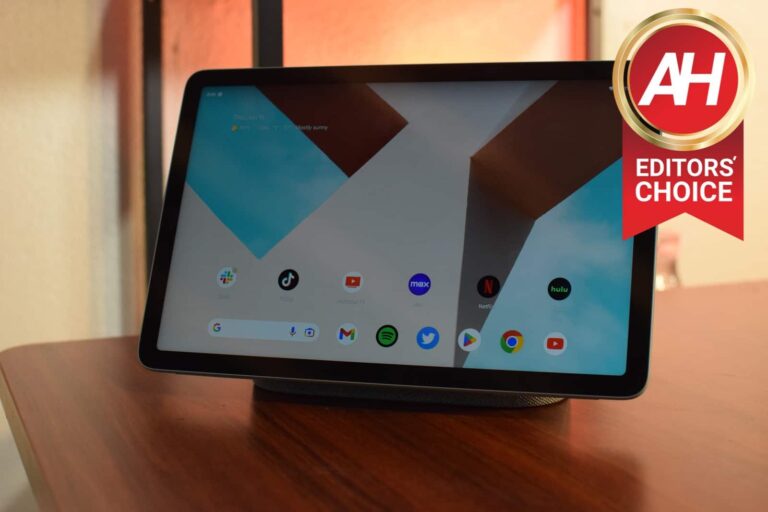
First off, on the home screen. The home screen has a Google search bar on the left of the dock. This is not removable, at least not without installing a third-party launcher. There’s still room for six apps to the right of the search bar. And of course, another six per row above the dock.
When you jump into the recents screen, you’ll see the currently active app front-and-center. With the usual options below for screenshot, select and split screen. There’s also a floating dock below it with the apps from your dock, as well as a button to bring up the app drawer. Now to the left of the currently active app, you’ll find your more recent apps that you can easily switch to.
To enter split screen, just tap on the “Split” option from the recents menu. It’ll select that app and then have you select another. So you could do like TikTok and Twitter in split screen. Now you can tap the bar in the center to swap the apps, or drag the bar to adjust how much screen each app uses up.
Google also has a number of widgets that do support tablets. Like the Google TV widget is a lot larger and offers more information here. Google Calendar also has a widget that shows your entire calendar for the month. Though Google Calendar still hasn’t launched its Material You widgets just yet.
Many apps aren’t tablet-optimized
Now, before the Pixel Tablet, I had already known that there weren’t many tablet-optimized apps, but this really put things in perspective. Apps like Twitter and Instagram just show up as a phone app in the center of the screen in landscape. And you can tap to bring it to the left or right. It’s okay in landscape, but this really tells me that you should only use it in split screen in landscape. Now in portrait mode, they are stretched out, so you just have a massive tweet across your screen.
Some Google apps are optimized for tablets, but many are not. Like YouTube Music. It’s not optimized, so instead, you’re getting a super stretched out app. But in a music app, I don’t think that’s as big of a deal, since it’s just a scrolling list of music, playlists and more anyways. Spotify and Apple Music are better optimized however.
The important apps, though, like Gmail and Chrome are optimized for tablets. Which is really good to see. And those are apps you’ll likely use more than some of the others, but not as much as a streaming app.
Pixel Tablet dock is a great addition
So the dock for the Pixel Tablet is a really great addition to this tablet. And I wish more tablets would add this hardware to their tablet. But the software is also really good. There’s a new software section inside the Settings app for the Hub. Right below the “Network & Internet”, there’s a new “Hub Mode” available.
Within the Hub Mode Settings, you’ll be able to adjust what screen saver it shows. This includes art gallery, full screen clock, weather and the weather frog. There’s also Google Photos available. So you can choose photos and/or albums to show on the screensaver. I’ve used it to show an auto-updating album of my dog. Which is really cool to have here.
There’s also options to show At a Glance things like reminders, alerts and more from the Google Assistant. There’s more settings for Cast, Google Assistant, the Lock Screen and much more. And at the bottom, you can find the option for software updates for the dock.
Chromecast built-in is such a clutch feature
When the Pixel Tablet was announced, the feature I was looking forward to more than the dock was, Chromecast. Chromecast is a feature that Google developed well over a decade ago, and it still works so seamlessly. And it’s surprising that it never made it into a tablet before now. But basically, with the Pixel Tablet, you can Cast virtually anything from another device to your tablet.
What I tend to use it for, is casting YouTube and Disney+ to the Tablet. Even though I could simply open the app and do it on the tablet itself. It’s nice to know, I don’t need to.
Casting works just as you’d expect it to on the Pixel Tablet. Just tap on the Cast button, and choose your Pixel Tablet, and it’s ready to go. That’s how Cast has always been meant to work, so this should come as no surprise, really.
It’s not a feature that a tablet needs to have, but if you plan to use it for streaming, or as a second display on a desk, it can be super useful. And it really doesn’t cost a company like Google, anything to add it into the tablet. Hopefully we see this come to more and more tablets.
Google Pixel Tablet review: Camera
Google didn’t focus a lot on the cameras of the Pixel Tablet, and honestly, they shouldn’t. The company doesn’t want to talk people into using a tablet to take photos at a soccer game. On a tablet, the front-facing camera is more important, in my opinion. That’s the camera you are going to use for video calls with Google Meet, Zoom and others. And that camera is pretty good. I’ve used it for a few Google Meet video calls, and it looked pretty good. Obviously, users could tell it wasn’t my 4K Razer Kiyo Pro webcam, but it wasn’t a potato cam like most laptops have.
The rear camera is also a 8-megapixel sensor, and it takes okay pictures. Obviously, the Pixel 7 Pro is going to take better photos. The only real advantage the Pixel Tablet has is the fact that it does have that huge display to use for the viewfinder, which can be really nice to have.
Just please don’t use the Pixel Tablet as your camera. Use it for video calls, and maybe the occasional picture.
Should you buy the Google Pixel Tablet?
It’s easy to say that the Pixel Tablet is also a smart display, but according to Google, it is not a Nest Hub replacement. A key reason for that is because it does not have Thread or Matter support in the dock. So, if you are thinking of buying this tablet, buy it for the tablet and as a secondary smart display or smart home hub. As a tablet, it’s a really impressive product, and will only get better with more updates.
You should buy the Google Pixel Tablet if:
You want a good Android tablet.
You are heavily invested in the Google or smart home ecosystem.
You like the idea of having a smart display that you can take with you.
You shouldn’t buy the Google Pixel Tablet if:
You want the most powerful Android-powered tablet.
A new threat has emerged that exploits a vulnerability in Microsoft Teams. This attack, known as the GIFShell attack, allows threat actors to execute commands and steal data using GIFs. This blog post delves into the details of this vulnerability, its implications, and the response from Microsoft.
What is the GIFShell Attack?
The GIFShell attack is a novel technique that allows threat actors to abuse Microsoft Teams for phishing attacks and covertly executing commands to steal data using GIFs. The attack exploits a series of vulnerabilities and flaws in Microsoft Teams, using the platform’s legitimate infrastructure to deliver malicious files and commands, and exfiltrating data via GIFs. The data exfiltration is done through Microsoft’s own servers, making the traffic harder to detect by security software that sees it as legitimate Microsoft Team’s traffic.
How Does the GIFShell Attack Work?
The main component of the GIFShell attack is a reverse shell that delivers malicious commands via base64 encoded GIFs in Teams, and exfiltrates the output through GIFs retrieved by Microsoft’s own infrastructure. The attacker first convinces a user to install a malicious stager that executes commands and uploads command output via a GIF URL to a Microsoft Teams web hook. The stager continuously scans the Microsoft Teams logs for messages with a GIF, extracts the base64 encoded commands, and executes them on the device. The output of the executed command is then converted to base64 text and used as the filename for a remote GIF embedded in a Microsoft Teams Survey Card that the stager submits to the attacker’s public Microsoft Teams webhook.
Implications of the GIFShell Attack
The GIFShell attack has serious implications for cybersecurity. As the attack uses Microsoft’s servers for data exfiltration, it can bypass detection by security software. Furthermore, as Microsoft Teams runs as a background process, it does not even need to be opened by the user to receive the attacker’s commands to execute. The attack can also be used for phishing, with attackers able to send malicious files to Teams users but spoof them to look as harmless images.
Microsoft’s Response to the GIFShell Attack
Microsoft has acknowledged the research into the GIFShell attack but stated that it would not be fixed as no security boundaries were bypassed. They noted that while the research was valuable, the issues identified were post-exploitation and relied on a target already being compromised. However, Microsoft left the door open to resolving these issues in future versions of their software.
As always, users are advised to practice good computing habits online, including exercising caution when clicking on links to web pages, opening unknown files, or accepting file transfers.
Google’s Pixel Fold is officially coming to Verizon Wireless and you’ll be able to pre-order it soon. Really soon in fact. Verizon has confirmed that you can pre-order your own Pixel Fold starting on June 20.
Which as it happens, is today. Google officially announced the Pixel Fold at its annual Google I/O event back in early May. After years of rumors and speculation that the device might be real, Google finally made it real. And the company is almost ready for everyone to get their hands on the device to check it out for themselves.
The Pixel Fold will be available at Verizon stores locally when it launches, but you can pre-order it online if you don’t want to wait till then to pay for it. It’ll be available in two configurations for Verizon customers. A 256GB model, and a 512GB model for those who want or need more storage space.
Prices will start at $49 a month for a total of 36 months for qualifying subscribers. Or you could just pay for the whole thing outright if you prefer. That’s a bit more costly though, since it’ll set you back $1,799. Also worth keeping in mind is that the $1,799 price will be for the 256GB model.
Pre-order the Pixel Fold while switching to Verizon and save money
The Pixel Fold is going to be a costly phone. There’s no dancing around that fact. But there is a way for you to save money on it. Verizon is running a promo where you can save $1,100 on the phone if you switch from your current carrier. That brings the cost of the Pixel Fold down significantly.
It’s also not the only promotion the carrier has going. If you’re already an existing customer, you can still shave some of the price off. If you upgrade, Verizon will take $900 off the phone’s price. However, there are some caveats. Both promotions require you to be on an Unlimited Plus plan and have a phone to trade in. Verizon doesn’t list what trade-ins are compatible with the promotion though.
Lastly, Verizon has one more promotional offer. If you add a new line to an existing Unlimited Plus plan, you can get a Pixel 7a for free. This should also apply to additional lines on new Unlimited Plus plans for customers that are switching over.
EHRs are gaining popularity around the globe. The health industry is changing as technology and innovation are introduced. Governments and organizations are focused on improving health services for the public.
We’ll examine the importance of EMRs in the modern world of health care.
EHRs and health care quality
EHRs and EMRs have been transforming the healthcare industry for years with their interoperability and fast-paced functionality. EHRs have different functions and are designed to be used for a variety of purposes. They also offer the advantage of storing and retrieving patient medical records in an electronic format.
EHRs include a variety of variables at the patient level, including diagnoses, demographics and vital signs. They also contain problem lists, medication information, and laboratory results. This is a tool that has a wide range of functions, including health information capture, clinical decisions support, health data exchange, patient support and electronic communication.
Electronic Health Records provide the necessary information and meaningful data to help improve health outcomes. Doctors and clinics can better treat patients today and will be able to meet their expectations. The EHR system provides valuable data to make clinical decisions easier.
Improved analysis and information
EHRs provide better and more detailed patient information than paper charts. Primary care providers are able to obtain accurate analyses by printing or viewing graph values, such as cholesterol, blood pressure and weight, by tracking the changes over time. EMR and medical billing software‘s data can help primary care providers develop better plans for chronic disease management, screening, and prevention. EMR data collected at the point-of-care can be used for research and to improve practice. When used in a meaningful way, EMR data can provide valuable information to physicians at the practice level. This includes standardizing and ensuring data entry into specific fields.
Positive effects on workflow
EMRs allow clinicians to treat more patients because they have better access to patient records that contain clinical data. This could save physicians valuable time in searching for reports and results. The EMR is perceived to have many benefits, including remote access to patient charts and improved laboratory results. It also has medication error alerts and reminders for preventive care.
Helps physicians focus on prevention of care
EHRs that are more advanced have allowed healthcare providers to better manage diseases. EHRs can be used to send patients electronic templates that prompt them to make appointments for procedures like mammograms and colonoscopies. These precautions may help detect potentially deadly diseases such as breast cancer early. Doctors should be on the lookout for patients who haven’t had screening tests.
EHRs provide caregivers with the tools to identify patient behaviors and risks, which leads to better prevention care. This allows doctors to concentrate on the patient rather than on numbers, improving treatment outcomes and quality of care.
Better Patient Outcomes
Doctors are often the only ones who can help patients in the emergency room. Data fragmentation and misinterpretation can occur when data is not recorded and made available to all staff. Administrators can virtually monitor the health of a patient with EHRs. It improves the patient’s outcomes by improving healthcare data access and care coordination.
The positive impact of EHRs on the healthcare industry
Electronic health records (EHRs) are transforming the healthcare sector. They contain patient-centered medical records that only authorized users can access.
Its safe and compatible features and detailed reports make it an ideal tool for labs and health practitioners to get a comprehensive view of a patient’s treatment.
How do EHRs improve quality of care?
EHR systems go beyond the clinical data that is collected by a doctor’s office.
These are the main benefits that EHRs bring to the healthcare and medical field.
Improved Patients care
They not only make the lives of healthcare providers easier, but also improve patient safety and care. EHRs provide more data to healthcare providers and help with clinical data management. EHRs also streamline time-consuming and complex clinical processes.
Patients can see multiple doctors, from dermatologists to cardiologists. Each doctor that a patient visits must be equipped with the same information. EHRs make sure that all providers in the patient’s care network are aware of any treatment plans and medications. EHRs offer convenience by allowing electronic prescriptions to be sent to pharmacies, and eliminating the need to complete the same forms each time a doctor visits.
EHRs provide providers with accurate and complete data about the health and medical histories of patients. EHRs allow caregivers to provide the best care possible at the point-of-care. It can lead to a better experience for patients and, most importantly, improved patient outcomes. EHRs can improve patient care through high-quality treatments.
Increase Patient Participation
EHRs allow patients and providers to collaborate and share electronic health information. It is important to involve patients in the treatment of chronic conditions like diabetes, obesity, and asthma.
Patient portals that are EHR-enabled give patients critical access to healthcare information. EHR give patients access to their current medical records, allowing them to view notes or results of treatment in real time. Some EHRs allow patients to communicate with providers via a secure system.
If patients and providers are able to communicate easily and quickly, they may be able identify symptoms sooner. This can help providers be more proactive with their outreach to patients. Patients can also get information from their EHR systems via their patient portals.
Improved Care Coordination
Medical and technological practices have evolved over time. It is now more important than ever to provide better coordinated care. The healthcare team consists of primary doctors, specialists, nurses and technicians as well as other clinicians.
Each team member has unique perspectives on patients based on their area of expertise. The view of a patient by the healthcare team can be muddled with disconnected facts and symptoms clusters.
Electronic health records (EHRs) can improve care coordination and reduce fragmentation. EHRs can integrate and organize health information about patients and make it accessible to all authorized healthcare providers in real time.
As stated previously, a patient can see multiple providers, from primary care to specialist. EHRs are useful for care coordination. EHRs will help improve care, whether patients need a large team of providers or just one. Increased productivity and reduced workload near the patient can help to resolve obstacles.
Improved Diagnostics & Patient Outcomes
Patients benefit from improved medical care when healthcare providers are armed with accurate and complete information. EHRs help diagnose diseases more accurately and reduce medical errors. This leads to better outcomes for patients. EHR provide doctors and nurses with access to the entire medical history of a patient. This comprehensive picture can help the healthcare team diagnose patients’ issues faster.
EHRs alert healthcare providers to potential safety concerns, which can help them avoid serious consequences and improve patient outcomes. An EHR can keep track of a patient’s allergies and medications when a new prescription is given. It will also alert the clinician if there are any potential conflicts. EHRs store information about a primary provider, for instance. It alerts an emergency room clinician to a life-threatening allergic reaction, which allows caregivers make better decisions.
Cost Savings and Efficiencies of Medical Practice
EHRs help improve medical practice management through increased efficiencies and lower costs. Improved patient care and health was a result of better disease management and patient educational programs. The electronic health record has proven to be an effective tool in reducing costs for healthcare providers.
Among the many efficient medical practices made possible by EHRs,
Scheduling systems have been integrated to link appointments with progress notes and automate coding. They also manage claims.
You can save time by using centralized chart management and condition-specific queries.
Accessible public health systems such as registries, communicable diseases databases and other similar resources are available.
Access to patient information is available from anywhere.
Tracking electronic messages sent to hospital staff, other clinicians and other entities.
The formulary check for health plans is automated.
Diagnostic images and lab tests are ordered.
The ability to meet regulatory requirements, such as, also led to significant medical cost savings.
Physician quality reporting initiative (PQRI), alerts doctors when key regulatory data are missing.
The time and resources needed for manual charge entry is reduced. This results in more accurate billing, and fewer charges are lost.
Reduced charge lag days, vendor/insurance denials and late filing.
Charge Review Edits inform doctors that a particular test can only performed at a certain frequency.
A few words on the success of electronic health records (EHRs).
It has been proven that electronic medical records improve workflow efficiency. They reduce the time required to retrieve charts and provide better access to patient data. They also help with prescription management, appointment scheduling, as well as remote access to patient charts. More institutions will use EHRs in the future to provide a comprehensive and inclusive level of care for patients.
Recently, the cybersecurity researchers at CYFIRMA found that hackers are actively using “Mystic Stealer Malware,” a new information stealer.
It’s been claimed that in an underground forum, this new information stealer is actively advertised by the threat actors, and for their operations, they use a Telegram channel.
More than 50 active C2 servers were detected during the OSINT investigation, and this count depicts the rapid growth of this threat and how increasingly it’s becoming common.
Mystic StealerMalware
In renowned underground forums, the ‘Mystic Stealer‘ appeared for the first time in late April 2023.
With the following key things that are advertised, this info-stealer managed to attract huge attention:-
Exceptional features
Robust capabilities
Competitive Pricing
As time went by, the information stealer was shared with the forum’s skilled members for them to try it.
They tested it, confirmed it worked well, and also gave useful suggestions to its developers for making it even better.
The threat actors carefully integrated these recommendations into the stealer, leading to continuous updates and enhancements.
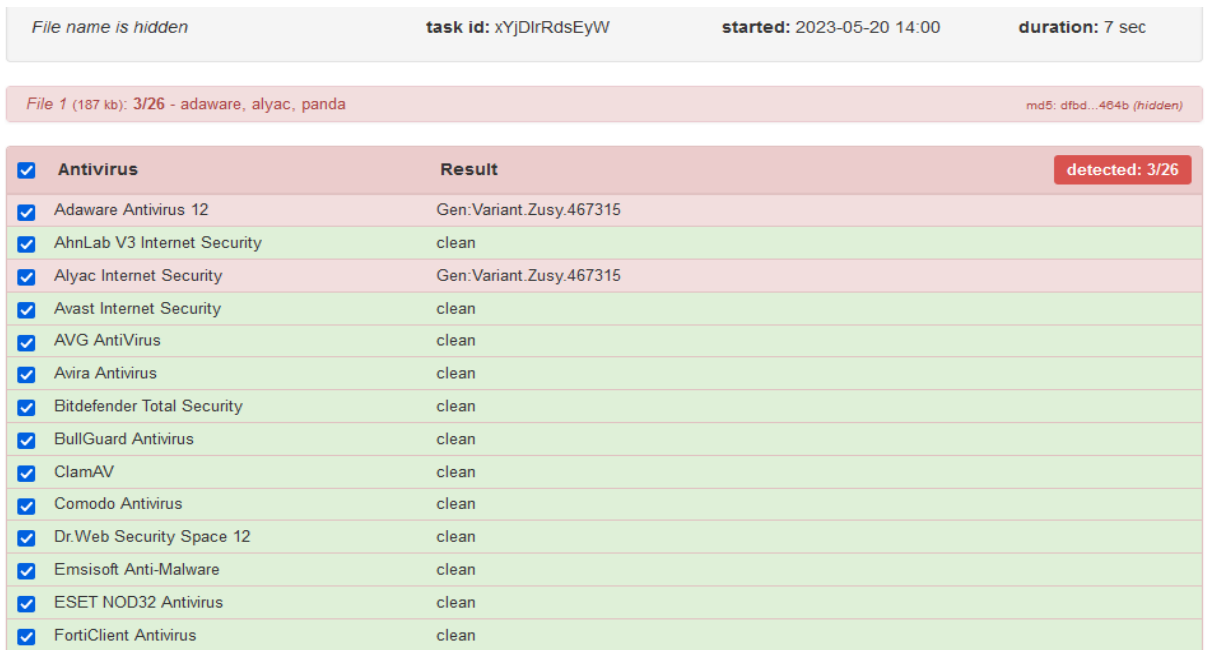
Using code manipulation techniques to outsmart most antivirus products, Mystic Stealer achieves a low detection rate according to AV checks.
Here below, we have mentioned the subscription charges for the Mystic Stealer:-
For a single-month subscription, it will cost you $150.
For a three-month subscription, it will cost you $390.
The malware can target all Windows versions and is compatible with both x86 and x64 platforms.
Here below, we have mentioned the Windows versions that could be targeted:-
Windows XP
Windows Vista
Windows 7
Windows 8
Windows 8.1
Windows 10
Windows 11
To avoid detection, researchers said it operates within the computer’s memory and exploits system calls to compromise targets, ensuring that no evidence is left behind on the hard drive while stealing data.
The malware is designed to operate independently, without needing external libraries, and for improved performance, it includes its own custom browser database parser.
Capabilities of stealer
Here below, we have mentioned all the capabilities of the Mystic Stealer:-
Steals Passwords from Mozilla and Chromium browsers
Steals cookies from Mozilla and Chromium browsers
Steals autofill data from Mozilla and Chromium browsers
Steals credit card details from Mozilla and Chromium browsers
Steals history from Mozilla and Chromium browsers
Support for over 70 Cryptocurrency wallet extensions
Outlook password collection
Files according to user settings
Gathers System Information
Take Screenshot
Targetsof Stealer
Mystic Stealer mainly targets companies that handle sensitive data, such as:-
Personally identifiable information (PII)
Financial records
Intellectual property
Mystic Stealer might focus on industries like healthcare, finance, and technology because of the significant value associated with the data they hold.
Not only that, but even Mystic Stealer also targets the users actively involved in cryptocurrency transactions.
Recommendations
Here Below we have mentioned all the recommendations:-
Make sure to implement robust security measures.
Threat Intelligence and Monitoring is completely an essential exercise.
Make sure to train and be aware employee about the current threat scenario and necessary security measures.
Incident Response and Recovery Planning are a must.
The company Nothing is a relatively new brand, but it already has an established aesthetic. We’re all familiar with the company’s transparent devices like the Nothing Phone (1) and the Nothing Ear (1). At this point we’re all wondering what other transparent devices Nothing will come out with. Well, it appears that Nothing is going to come out with a transparent charger.
We’re all anticipating the Nothing Phone (2), the latest smartphone from the company. It’s set to launch in late July, so there’s not much more time to wait for it. This phone is expected to be much more powerful than the Nothing Phone (1) because it will use a Snapdragon 8+ Gen 1 processor. Along with that, we expect to see other upgrades.
Nothing shows off its transparent charger cable
As expected, Nothing CEO Carl Pei is giving us teasers of what to expect with this upcoming device. We’ve already gotten a video teaser of the Nothing Phone (2), and it shows a similar Glyph Interface to the first phone. Also, it shows an octopus for some reason.
Now, our attention is turning toward the bundled accessory with the phone. The picture is pretty simple, and it’s not as elusive as the other leaks. It shows the tips of the charger cable that will most likely come bundled with the phone. The charger cable will be made with transparent plastic.
Looking at the image, we see that there may be a slight divot in the plastic. Under the plastic, we see the metal tip that will protrude from the charger. On the outside of the plastic, we see the Nothing logo written.
One thing to note is that this charger might be a USB-C to USB-C adapter. If that’s the case, then you will need a USB-C wall adapter to use this charger.
This could possibly point to some good news
It’s not a huge stretch to assume that a person will have a USB-A wall adapter, but assuming that they have a USB-C wall adapter is a bit optimistic. This is why it’d seem a bit weird for Carl Pei to make this choice in charging cables.
However, it may lead one to think that the company could provide you with a USB-C wall adapter. It would make sense seeing as that would make using this cord more accessible. This is only speculation at this point, so you’ll want to take this with a grain of salt. Only time will tell.


.png
)