The OnePlus Pad launched back in February, and it was released for purchase at the end of April. Zack from the JerryRigEverything YouTube channel managed to get his hands on one, and we all know what that means. Spoiler alert, the OnePlus Pad actually did well in a series of durability tests.
The OnePlus Pad did well in a series of durability tests, though not perfect
Zack has a usual set of tests that devices get submitted to, the devices he manages to get his hands on. So, he did the same in this video, though he check out OnePlus’ stylus first. We won’t really talk about that, but you can check out what lies inside by watching the video embedded below the article.
Having said that, the first test the OnePlus Pad was submitted to was the screen scratch test. As per usual when it comes to modern smartphones and tablets, the scratches were visible when he scratched the screen with a level 6 pick, with deeper grooves at a level 7.
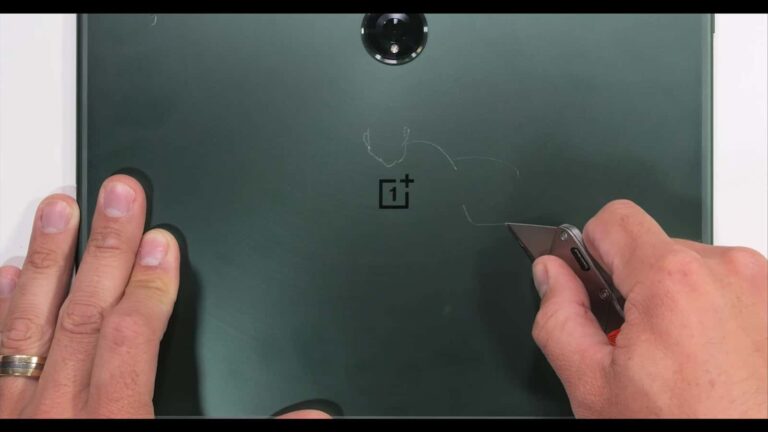
This tablet is made out of metal, which Zack proved with his razor. Its backplate is made out of metal, sides, and even the buttons. There is a 5G antenna portion on the side that is covered by plastic, though, of course.
Both the front and the back cameras are covered by glass. The OnePlus Pad’s display managed to last about 10 seconds under direct flame from a lighter. At that point, the pixels turned off. The display did recover soon after, though. Speaking of which, this is an IPS LCD display.
It did not break in half, but…
And now for the test that many of you are most interested in, the bend test. The OnePlus Pad managed to survive that test too, it did not snap in half, but it did not pass with flying colors. The display did pop out of the frame a bit when the tablet got bent, even though it remained fully functional.
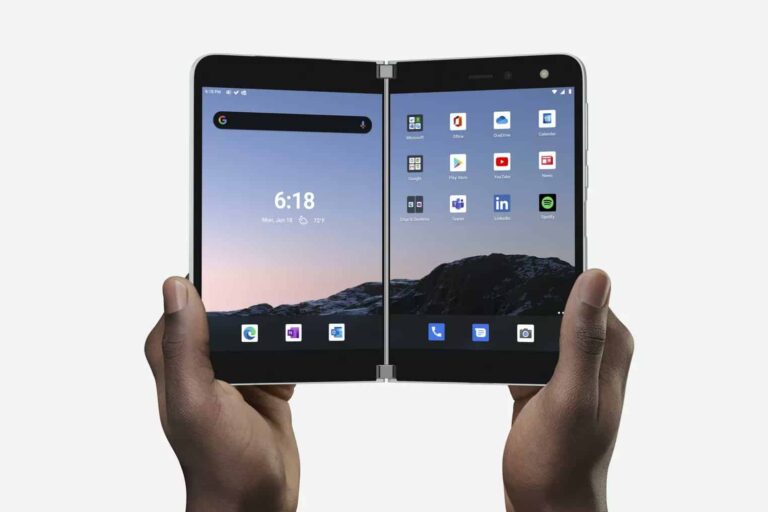
Microsoft recently pushed a new update to its dual-screen Android smartphones Surface Duo and Surface Duo 2. The update brought the latest May 2023 Android security patch to the devices. But it appears the company has messed something up here. Several users have reported that the new patch is causing random reboots on their Surface Duo.
According to user reports on Microsoft’s community forum and Reddit, the affected Surface Duo and Surface Duo 2 units shut down abruptly with no apparent cause known to them. Upon restart, the devices ask users whether they’d want to reboot again or perform a hard reset. Selecting the former option works fine, but only for a while. The device reboots randomly again.
As mentioned in a Reddit thread, the affected build number for the Surface Duo is 2022.829.13, while that for the Surface Duo 2 is 2023.425.15. The same thread also states that turning off Wi-Fi fixes the problem as long as you don’t turn on Wi-Fi again. You must rely on cellular data (4G or 5G) for internet connectivity. At least a few of the affected users have found respite with this workaround. Others are out of luck, unfortunately.
Meanwhile, resetting all connections appears to be a more effective solution. You can do that by navigating to Settings > System > Reset options > Reset Wi-Fi, mobile & Bluetooth. Note that this may erase your downloaded SIMs. More importantly, there’s no guarantee this will permanently solve the problem. Some have found this workaround worthless while it worked for others. Microsoft has yet to release an official fix.
Microsoft is investigating this reboot issue on the two Surface Duo models
Shortly after users started reporting the new-found issue on the Surface Duo and Surface Duo 2 on Microsoft’s community forum, a company representative responded by saying that the concerned team is “actively investigating” the cause of the problem. Unfortunately, they didn’t proving any further details. It’s unclear how long it will take Microsoft to fix this issue.
Meanwhile, when reached out for a comment on the matter, the company gave the following statement to Android Authority: “Microsoft is aware and is looking into it. For additional information please refer to our Microsoft’s Q&A community page”. It statement contained a link to the aforementioned community forum thread. Hopefully, a fix will land soon. Watch out for a notification on your Surface Duo or Surface Duo 2. Meanwhile, if you haven’t installed the May security patch yet, hold off on it for the time being.
As with all other headphones categories, there are a lot of options to pick from when it comes to choosing the best noise-canceling headphones. But, as with most things, not all such devices are created equal. Some headphones simply do noise-canceling better than others.
In fact, despite advances in audio technology, over-or on-ear headphones perform better here by design. Earbuds, for instance, do a good job of blocking out noise on their own. But noise cancellation doesn’t typically do as much for those listening devices as it does for the aforementioned gadgets. And, conversely, the best audio to be had overall comes from on- or over-ear devices.
Bearing all of that in mind, here are the Android Headlines picks for the best noise-canceling headphones you can buy right now.
Top 8 Best Noise-Canceling Headphones
Now, it’s worth noting that the best audio gadgets around are typically more expensive. Coming in, more often than not, well over $100. But that doesn’t mean that all gadgets even in that category are operating at the same level. Or that you necessarily need to spend that much — or much more than that.
That also doesn’t mean that you need to spend more than $500 — after which point the improvement-to-cost ratio begins to diminish. All of the headphones here fall between the $70 to $500 range. So there’s plenty here to choose from if you’re looking for the best of the best in noise-canceling headphones. Regardless of your budget.
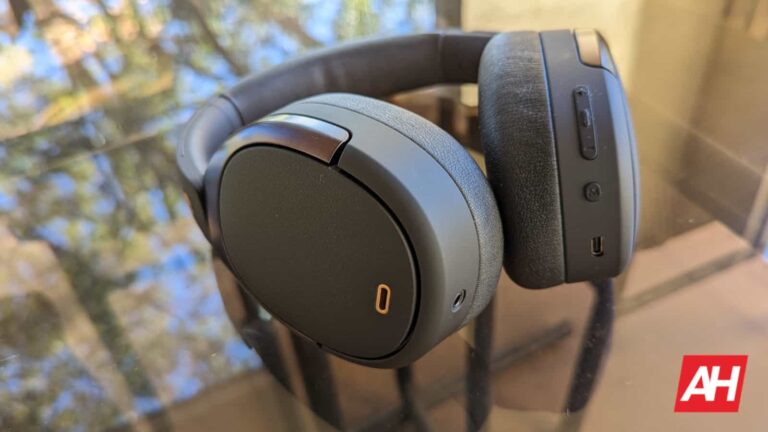
Edifier is known for its top-of-the-line speakers, but the company is no stranger to wearable audio. The Edifier WH950NB is a pair of over-the-ear headphones that give you some really nice audio. These headphones have a pair of 40mm audio drivers that deliver a full and powerful sound. Not only is the audio powerful, but it’s also high-quality. This is for several reasons.
The first reason is the audio codec. You’re able to access the codec settings from the Edifier Connect app. You have the option to set it to the LDAC codec. This is a Hi-Res audio codec that delivers high audio quality for those who really want the most from their music. The second reason is the superior noise canceling that’s made possible by the four microphones on them.
There are a great pair of headphones, and if you want to know more about them then you can check out our full review of them here. Android Headlines gave them a 5-star rating.
The name is well suited for these headphones because you’ll want to wear them every single day. These are a pair of high-quality headphones from the popular brand Raycon. They have a nice and premium design that’s really nice for the price. Along with the looks, these headphones can deliver Hi-Res audio through their powerful 40mm drivers. They offer an immersive audio experience with amazing bass.
As for the battery life, you can expect about 38 hours of playback time on a single charge. If you need to quickly make it through a movie or a podcast, you can get a full 2 hours of battery life on a short 15-minute charge. That’s great if you’re in a pinch. If you can’t use them while powered, they come with a 3.5mm headphone jack. These are great headphones for the price.
Lenovo is most known for its line of premium laptops, but this company does make other types of devices. These headphones share the same branding as some of its more popular computers. The ThinkPad X1 headphones are a pair of premium headphones to go with your computer. They have a sturdy and premium design that looks sleek. They gave a brushed metal look to them with glossy chamfered edges to give them a nice look.
These headphones are designed for comfort with their multi-layered earcups. This means that you’ll be able to use them for hours on end without feeling any discomfort. If you need to use them for hours, you can get up to 14 hours of playback on a single charge. That’s more than a full workday for most people.
If you’re in the Lenovo ecosystem of devices, then you’ll most likely like these headphones. They pack quite a punch for their price. They have a powerful sound and hybrid noise canceling technology.
These are some of the more affordable headphones on this list, and that’s one of their best qualities. While they aren’t expensive, that doesn’t mean that you won’t have a great experience with them. These are from a company that can give you a really good bang for your buck.
These headphones come with a modest yet sleek design. The large cups sit on your ears, and you can wear them for an extended period of time without feeling any discomfort. Speaking of extended periods of time, you can get up to 27 hours of playback time with the ANC turned on. With it off, you can add an additional 10 hours. These are great headphones for someone looking for great audio with great value.
From a brand like Sennheiser, you may expect to pay over $300 or $400 for the best noise-canceling headphones around. But that’s not going to be the case if you choose Sennheiser PXC 550-II. In fact, these are currently on sale for a price starting at $209.98. That’s down from their usual $349.95 price point.
That already makes them some of the highest-value headphones around. But with smart pausing, 30+ hours of battery life, touch controls for everything from playback to volume, and one-touch AI access, these headphones have it all.
What’s more, it offers great audio quality in calls, in addition to the world-class Sennheiser audio. Meaning that these aren’t just a great value for the price or features. It’s also easily the best value for those seeking audiophile sound joined with the ability to make calls. All with some of the best noise-cancellation in the business, reducing surrounding sounds so you can immerse yourself in the music, podcast, or movie that you really want to listen to.
Now, AKG N60NC is going to be the only headphone on our list that’s an on-ear style device. That means that the earcups rest on your ears rather than over them. And it comes at a reasonably high value too, costing less than $90.
What sets these apart from other offerings is not only the quality of the noise-cancellation but also their compact size and decent battery life. The latter of which is rated at around 15-hours. That’s lower than other gadgets on the list. But, given that these headphones were built by AKG, the sound quality is top-notch as well. Complete with ANC that can be turned on or off as needed.
At under $120, for headphones that offer brilliant audio and a near-all-day battery, it’s going to be hard to go wrong with N60NC from AKG.
Tribit isn’t going to be the first brand most think about when it comes to high-quality on-or over-ear headphones. But it makes one of the best noise-canceling headphones on the market in its Tribit QuietPlus 78. And it does so at a price that’s under $80.
Costing just $79.99 via Amazon, Tribit QuietPlus 78 is unbelievably good for its asking price. And that’s not just in terms of dual-level ANC and Ambient Mode. It also delivers brilliant audio, to begin with, via 40mm drivers. With a premium, comfortable design and on-device multi-function controls. Albeit, without the option for touch controls.
Additionally, battery life with Tribit QuietPlus 78 is upwards of 40-hours under the right conditions. And a 3.5mm audio jack means that the listening doesn’t have to stop there either. The included carry case, cables, and plush material choices are just icing on the cake. Making QuietPlus 78 an obvious choice when it comes to affordable ANC headphones.
One of the big selling points of Bang & Olufsen Beoplay HX is its dedicated on-device assistant button for easy access to the device’s assistant. And that’s because the inclusion means that AI assistants are available at a tap or via voice effectively regardless of which assistant you use. But that’s hardly the only big selling point for these best-in-class noise-canceling headphones either.
These are also the most expensive headphones on this list. With good reason.
The use of lambskin in the design, for instance, means that Beoplay HX is easily one of the most comfortable over-ear headphones available. And the up to 30 hours of battery life help drive a great listening experience regardless of whether you’re using the AI, for as long as your ears can stand it.
There’s also a 3.5mm audio jack for when the battery life just isn’t long enough. Or for when you forget to charge up. But the real showcase here is the audio quality itself. And we’d be remiss not to include this particular headphone in our list of the best when it comes to ANC. Two mics on each cup also assist with ensuring voice and video calls are as crystal clear as the ANC-assisted audio. Which itself is driven by four dedicated MEMS mics.
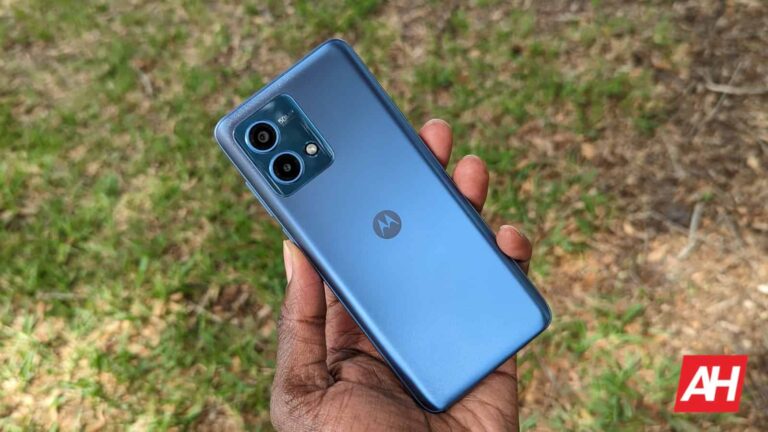
You just got your new Motorola Moto G Stylus 2023, and you’ve been cracking into it. Good for you! Now, let’s talk about something important: battery life. This phone has a large 5000mAh battery, but there are ways to push it further. Here’s a guide to help you conserve battery life on your Moto G Stylus 2023.
If you want to know more about this phone, then don’t forget to check out our full review. It dives into aspects of the phone such as the display, speakers, performance, ETC. It will help you get some more context on how this phone behaves as a daily driver. You can click the link below to read the review.
How to conserve battery on your Moto G Stylus 2023
As stated before, this phone has a large battery. That lent to its endurance during our testing. We were able to get about eight hours of screen-on-time during moderate to heavy use. This involved hours of gameplay, video-watching, and social media with the screen at full brightness. This means that using these tips will help stretch the battery power even further.
Adjust screen brightness
So, if you look at any phone’s power usage, you’ll notice a theme: the screen takes up most of the battery power. So, the first step to saving power is cranking down the brightness just a bit. Turn it down to where you can comfortably view it in your environment. People tend to have their phones’ screens turned up to 100%, and that weighs heavily on the battery.
Swipe down twice on the home screen to access the notification panel. At the very top of the screen, you’ll see the brightness slider stretched across the screen. Drag it to the left to adjust the brightness to your liking.
There’s also the option to use Adaptive Brightness. This feature will automatically adjust the screen’s brightness according to how much light is in your environment. So, if you’re in a dim location, the software will turn down the brightness. You can access this setting in the display settings.
Also, change the refresh rate
One thing about this display is that it can run at a relatively smooth 90Hz refresh rate. The screen refreshes 50% more times a second than regular 60Hz displays, and that requires more energy. If you want to help save a little bit of power, you’ll want to lower it.
Go to your settings and tap on the Display section. There, scroll down to the Display refresh rate section. It’s near the bottom of the page. Tap on it, and tap on the 60Hz option. The display will look a little choppier, but it’s worth it.
Use dark mode
There’s an aesthetic feature baked into Android that will also lead to more power saving. A lot of people love to apply the dark mode to their phones. This will turn all of the bright elements in the UI darker. The white backgrounds in menus will turn a dark gray. The themed app icons will invert so that they’re mostly dark gray. Overall, the theme will be darker.
This also affects the apps on the phone. The backgrounds in your apps will also turn darker. In apps like Google Docs, the background will turn completely black while the text is white, etc.
Since the UI is darker overall, the screen won’t be using as much power. That can definitely be used in tandem with lowering the screen brightness for more battery savings.
Manage the apps’ background usage
Behind the display, apps’ background activities are another culprit draining your battery. The thing is that some apps need to run in the background in order to properly perform their functions. Digital assistants need to be on in the background to listen for commands. Music streaming apps need to be on in the background so that you can play your music while not in the app.
However, not all apps necessarily need to be on in the background to perform their core tasks. If you’re using a social media app, then it’s only really useful when you’re scrolling your feed. There’s no need for it to be on while you’re asleep. Also, that match-3 game you downloaded does not need to be on while you’re at work.
So, it’s crucial that you know which apps need to be on in the background. One app running in the background won’t run your battery dry, but several apps running at the same time will have a significant effect on it.
Take a look at the apps you downloaded and assess whether you need them to run in the background. Most apps don’t really need to run in the background, so you might wrack up a long list.
Restricting the apps
Now comes the time when you start taking action. To restrict an app, find it on the home screen or app drawer. Hold your finger on the app until you see a little dropdown menu. Tap on the App Info button (the “i” in a circle).
In the App Info screen, scroll down to the Battery section. When you tap on it, you’ll see some useful settings and information. Firstly, right under the app’s name, you’ll see how long the app has been active in the background since your last full charge.
Under that, you’ll see three options for the app’s background usage. The Unrestricted option will allow the app to run in the background as it pleases. The Optimized option will have the system manage its background usage based on how often you use the app.
The option that you’re looking for is the Restricted option. This will completely restrict the app from running in the background.
Also, if you go to the Battery section in your settings, you’ll see which apps are taking up the most power. You’ll want to restrict those.
Use Power Saver mode
So, we’ve shown you ways that you can manually adjust your battery usage. But, wouldn’t it be nice to have the system handle all of it for you? Well, it can. If you want a one-and-done solution to extend the battery life of your phone, you can activate the power saver mode.
Go to your settings and tap on the Battery section. You’ll see the Battery Saver option. When you turn it on, the system will do a combination of the aforementioned tips. The screen’s refresh rate will lower, the theme will go dark, performance will dip, and apps’ background processes will be restricted.
There you have it! With these tips, you’ll be able to stretch the battery in your Moto G Stylus 2023 to great lengths.
Meta has officially unveiled the follow-up to its popular Quest 2 VR headset, the Quest 3. You can technically count the Quest Pro as the first follow-up but the Quest 3 is an actual successor. Whereas the Quest Pro was meant as a more high-end option than the Quest 2.
The headset was officially announced by Mark Zuckerberg on his personal Instagram account on the morning of June 1. It comes with some big upgrades to the hardware and thereby, will be able to deliver an improved experience. Though, the experience on the Quest 2 was already very good. The new headset, Meta says, comes with higher resolution displays in a slimmer and more comfortable design.
It’ll retail for $499 and arrive later this year with a Fall launch. Meta hasn’t mentioned an exact date, but the company says there will be more to share about the headset when Meta Connect returns on September 27. So chances are it’ll launch on or sometime soon after the date of that event.
Meta Quest 3 will come in a more expensive version
The headset will start at $499, but Meta will offer a more expensive model. This will come down to more storage, while everything else should be the same. For the $499 version, you’ll get 128GB. Which is probably plenty for most people.
Meta says however, that it will “offer an additional storage option for those who want some extra space.” While Meta doesn’t say how much extra storage there will be, expect this second sku to be 256GB just like with the Quest 2.
Speaking of Quest 2, with the Quest 3 coming out Meta is dropping the price of its predecessor. From June 4, Quest 2 will go back down to the $299 price for the 128GB model. And just $50 more will let you bump to 256GB of storage.
Quest 3 will come with a next-gen Snapdragon chipset
There’s still plenty to discover about the upcoming headset that Meta has yet to share. But that doesn’t mean there’s nothing more to know right now.
Without getting into too many specifics, Meta says that the Quest 3 will come with a next-generation Snapdragon chipset from Qualcomm. This will allow the headset to produce twice the graphical performance of the Quest 2, the company claims. So prepare for a big upgrade in terms of visuals when it comes to new games and apps.
In addition to this, the headset now has “a 40% slimmer optic profile compared to Quest 2.” Other upgrades include the newly redesigned Touch Plus controllers which will support hand tracking out of the box. Meta removed the outer tracking rings on these new controllers as well. Which the company says makes them feel more like a natural extension of your hands. Overall the headset seems to be a huge improvement.
Samsung is expected to release a major camera update for the Galaxy S23 series this month. The said update may bring some new features, improvements, and a few bug fixes. Among them could be a fix for the so-called “blurred banana” issue on the Galaxy S23 and Galaxy S23+. It is a focusing problem that produces images with blurry patches.
Reports about this focusing issue on the Galaxy S23 and Galaxy S23+ first surfaced in March. Several users noticed that the new Samsung flagships are struggling to keep the entire scene in focus when capturing photos with the 50MP primary rear camera. Photos come out with curved patches of blurriness. These patches are often in the shape of a banana, thus the name.
This problem is particularly noticeable in photos of text or documents. However, some users could reproduce the issue in outdoor photos as well. The closer the subject is, the more visible the blurriness is. Despite the issue being fairly widespread, Samsung has been mum about it all this while. It has finally spoken, albeit through its regional community forum for Poland (via Reddit).
Samsung finally acknowledges the focusing issue with the Galaxy S23 camera
According to Samsung, this issue on the Galaxy S23 and Galaxy S23+ is because of a larger aperture (the opening in a lens through which light passes to enter the camera). A larger aperture or opening allows more light to pass, thus helping capture brighter pictures even in dark environments. The 50MP camera of these phones has an f/1.8 aperture, which is relatively large.
Unfortunately, this is resulting in a “more noticeable selective focus” that is making the background of photos look a bit blurry. Samsung says “a future software update” for the phones will improve this behavior, which should mean removing or at least reducing the blurriness. Meanwhile, it advises users to avoid taking photos with the 50MP camera if the subject is closer than 30cm (approx. 12 inches). “Move back a hand’s width,” the company says.
Moreover, Samsung suggests keeping the phone in a vertical orientation while taking photos. “If you hold the phone horizontally or diagonally, the background may appear blurred,” the community post stated. The company didn’t reveal when the fix for this issue will roll out. However, as said earlier, it is preparing to release a major update for the Galaxy S23 series this month. The update adds features like a 2x zoom option for portrait shots and is also expected to fix a long-standing HDR problem. We will let you know when the rollout begins.
Samsung Display’s near monopoly on Apple’s display supply chain may take a hit this year. According to the Korean media, LG Display will supply more than half of LTPO OLED panels for the iPhone 15 Pro and iPhone 15 Pro Max. Since the two premium models account for over 60% of all iPhone sales, this will put a massive dent in Samsung’s earnings.
Samsung will suffer from LG’s increased LTPO OLED display manufacturing capacity
Apple uses two different types of OLED displays on its iPhones. The base and Plus models feature LTPS (Low-temperature Polycrystalline Silicon) type screens, while the Pro and Pro Max models get LTPO (Low-temperature Polycrystalline Oxide) solutions. The latter is technically more difficult to manufacture than the former. The company obtains the majority of the displays from Samsung, while a small portion is sourced from other manufacturers.
Last year, Apple went to LG for manufacturing a portion of the LTPO displays for the iPhone 14 Pro Max. Unfortunately, the Korean firm suffered yield issues at the last minute and was only able to deliver ten million units. This caused shipping delays for the phone. Meanwhile, Apple turned towards Samsung for the remaining LTPO panel demand for its new flagships. Samsung had to deploy extra production equipment to meet this urgent need. As such, it overcharged Apple and sold the displays at a higher price.
Apple had no choice but to buy the overpriced OLED panels from Samsung. But, this year, LG has already expanded its LTPO production capacity and it appeared to meet Apple’s demand. And, the iPhone maker has trusted it again and has reportedly awarded the company with a major LTPO order for the iPhone 15 Pro and iPhone 15 Pro Max. Korean publication The Elec says LG will manufacture more than half of the displays for these two models. Samsung will supply the remaining LTPO demand from Apple.
Samsung will supply the LTPS screens for the base iPhone 15 and 15+
Along with LTPO panels for the two Pro models, Samsung will also supply the LTPS screens for the base iPhone 15 and iPhone 15+. So, its overall share in Apple’s display supply chain for the new iPhones will still be higher than LG’s. But, Samsung’s compatriot is making a big dent in its earnings from display sales to Apple this year. The iPhone 14 Pro and iPhone 14 Pro Max have accounted for more than 60% of all 2022 iPhone sales so far. It should be no different for the next-gen models, which means a bigger share for LG.
Cloud storage services have managed to become quite popular over the years, for a good reason. They allow you to store various files online, and easily access them from wherever you want, as long as you have access to the Internet. It’s also immensely easy to share such files with other people, without the need to be on one particular device. In this article, we’ll show you how to do just that, share a Google Drive folder / file.
We’ll show you how to do that from both your personal computer (its browser), and an Android smartphone application. The application part applies to iOS as well, as the UI looks very similar. This process is immensely simple, but just to be thorough, we’ll also include some screenshots to guide you along the way.
How to share a Google Drive folder from a browser
The first thing you’ll need to do, of course, is open the drive.google.com website. Make sure you’re logged in, and you can see your files. Once you locate the file you want to share, simply right-click on it.
Once you do that, a floating menu will pop up. There you’ll see a couple of sharing options. The first one is called ‘Share’, while the other is called ‘Get a link’. Both serve a similar purpose, but not the same one.
The ‘Share’ option will allow you to add other Gmail users as collaborators for a specific folder / file.
The second option, ‘Get link’, can provide you with a unique link that you can share with whomever you want. The person on the other end can access the provided file without a problem. You can restrict this further, though, and lock the link to only be accessible to people you’ve added as collaborators. It’s up to you.
How to share a Google Drive folder from an Android app
The procedure is quite similar when you do it from an app as well. Open the app, and locate the folder / file you’d like to share. You can either long-press on it, or tap the three dots next to the name of the folder.
Once you do that, you will see three different sharing options. The ‘Share’ and ‘Manage people and links’ options are the main ones, while there’s also a ‘Copy link’ option, in case you’d like to quickly provide someone with access.
In the ‘Share’ menu, you’ll be able to add people or groups of people. It’s essentially the same option as the one we’ve explained in the previous section.
The ‘Manage people and links’ menu is the main menu, and it gives you various options. You have some link options here, as in you can choose whether people who are not added by you can see the folder / file you’ve shared. That’s basically it.
ASUS has announced that it’s bringing Dirac Virtuo audio to some of its laptops. If Dirac Virtuo sounds even a little familiar, that’s because ASUS is using it inside of the ROG Phone 7 and ROG Phone 7 Ultimate. The latest gaming smartphones that the company announced earlier this year. We reviewed the ROG Phone 7 Ultimate and found the audio to be even better than on past devices.
But it’s only the tip of the iceberg when it comes to the partnership between ASUS and Dirac. In fact ASUS has been using Dirac-tuned speakers on its ROG Phone for a few years. And now it’s extending that partnership to two of its leading laptop series.
ASUS is adding Dirac Virtuo audio to the ExpertBook and Vivobook laptops
This is the first time ASUS has worked with Dirac to add the company’s high-quality tuning and audio technology to its laptops. Making this a pretty big deal for the future of its laptop market. Because if it does well in the laptop space for ASUS, there’s a chance it’ll expand the partnership further and add the audio tech to even more laptops. Perhaps some in its ROG line.
Why is this a big deal? Because in short, Dirac Virtuo adds spatial audio for a more immersive experience. Whether you’re watching movies, listening to music, or playing games. According to Dirac, Virtuo “compensates for small speakers by enhancing their acoustic performance dramatically.”
With its ExpertBook and Vivobook laptops, the Dirac Virtuo audio will have multiple sound modes designed for specific use cases. This includes music mode, movie mode, game mode, and voice mode. ASUS doesn’t announce specific models of laptops from each series that will have this audio tech. But for those looking at gaming phones, you can experience it in the ROG Phone 7 and ROG Phone 7 Ultimate when the device is available to purchase later this year.
is not as popular as it once was, and the company has been out of the mainstream for a while. However, it doesn’t seem to be venturing outside of the budget and mid-range phone market. The company just launched three new devices, and one is pretty unique. The Nokia XR21 launched, and it’s touted as being nearly indestructible, according to XDA Developers.
Along with that phone, Nokia also launched two other budget-friendly phones. These are the Nokia C100 and the Nokia C300. These won’t win points for durability, but they should prove to be useful handsets to keep in contact with your loved ones.
Nokia launches the Nokia XR21
Durable phones are nothing new, but the XR21 does bring some neat specs to the table. Let’s start off with what makes it so tough. This phone comes with a die-cast aluminum build, and the display uses the sturdy Gorilla Glass Victus. It has a MIL-STD-810H certification, which is a certification given to military-grade equipment to survive harsh environments.
The Nokia XR21 has an IP69k water and dust resistance rating. If you’re unfamiliar with this, the “9k” means that it can survive water at very high pressure (like water from a power washer) and water at very high temperatures.
It’s sporting a 6.49-inch display with a 1080p resolution. What’s neat is that this display has a 120Hz refresh rate. It uses the very capable Snapdragon 695 5G SoC backed up by 6GB of RAM and 128 GB of internal storage.
Other specs include a 64-megapixel main camera accompanied by an 8-megapixel ultrawide camera and a large 4800mAh battery. It’ll be available in the States for $500.
The Nokia C100 and Nokia C300
These two phones are more budget-friendly, and they’re just meant to get you through the day. The Nokia C100 has a 6.3-inch 720p+ display and it uses the MediaTek Helio P22 SoC. It has 3GB of RAM and 32GB of onboard storage. It has a 13-megapixel main camera, a 5-megapixel selfie camera, and a 3000mAh battery.
This phone costs only $99, and it will be available at Walmart, Best Buy, Target, Consumer Cellular, and TracFone Wireless retailers.
As for the Nokia C300, this phone has a slightly bigger 6.52-inch 720p+ display, a more powerful Snapdragon 662 SoC, 3GB of RAM, and 32GB of storage. It will have a triple-camera setup with a 13-megapixel main camera, a 2-megapixel depth sensor, and a 2-megapixel macro camera.
The C300 will have a larger 4000mAh battery, and it will cost $139. This phone will be at the same locations as the C100.