While Motorola did announce the Razr and Razr+ today, pricing for the regular Razr was not announced. Motorola did tell us that it would be “considerably cheaper” than the Razr+, and the spec sheet points to it being much cheaper. Which makes me believe that Motorola could launch the cheapest foldable yet, in a few months.
With the Motorola Razr+ being priced at $999, and the Razr having a much smaller Cover Display, a lower-end processor (Snapdragon 7 Gen 1 vs Snapdragon 8+ Gen 1), and a lower-end main camera sensor.
So how much do I think the Motorola Razr could retail for? I would expect it to retail for around $799. However, I would not be surprised to see it launch closer to $699. That would put it in a very unique spot in the market. Making it $100 less than the iPhone 14 (soon to be 15). Allowing it to really be appealing to more and more people.
The case for a cheap foldable from Motorola
A few years ago, Samsung cut some corners on the Galaxy Z Flip 3 and got the price down to $999. Putting it in-line with regular, non-folding flagship smartphones. That helped to really expand the foldable market, and earned Samsung a big chunk of the market share for foldables. The same could happen to Motorola if they are able to severely undercut the Razr+ with the Razr.
Motorola is already the #3 smartphone OEM in North America, and bringing in a cheaper foldable could help them move to #2. But of course, that means competing with Samsung and Apple, which is a tall order.
So why do we need a cheap foldable? Just like we need cheap smartphones, cheap foldable phones are also important and Motorola is the one to do it. It already owns the prepaid market in the US, so they are in perfect position for this as well.
Motorola has had a rocky few years under Lenovo’s ownership. But in the past year or so, Motorola has really changed its approach, at least in the US. Motorola has really been focusing on the prepaid market, and cheaper phones. Say, phones under $700. Which is not a saturated market at all, but a big market. That has helped Motorola to become the third largest smartphone OEM in North America. That equates to about 24% of the market share in North America.
Now, a big part of this is, LG leaving the smartphone market back in 2020. As well as the ban on Huawei, which is also keeping other Chinese brands out of the US. Though this does put Motorola above the Google Pixel for now.
That’s pretty incredible for Motorola, a brand that many thought was all-but dead just a few years ago. And it’s continuing to push further for more market share. Now having phones in just about every price range from the Moto G, Moto Edge and now the Moto Razr lines.
Motorola is the second largest prepaid brand
When it comes to prepaid, Motorola is the second largest smartphone maker. Likely behind Samsung. That doesn’t sound like a big deal. Since prepaid phones typically have a smaller profit margin and definitely are cheaper. But this does help Motorola’s brand. It helps put their name front-and-center, and of course, Motorola has been around forever, so it’s a name that everyone knows. And that’s going to help bring their market share up even more.
Motorola is also touting being the second largest Android brand in North America. Behind, of course, Samsung. This is good news for Motorola, but it also shows us that the US really needs more competition with phones. We’re basically down to four OEMs, which includes Apple, Samsung, Motorola and Google Pixel.
Good for Motorola, and maybe they can overtake Samsung in the near future.
The cat’s out of the bag, after many, many leaks of the new Razr foldables from Motorola, they are now official. We got a chance to spend a couple of hours with the new Razr’s, ahead of today’s unveiling, and honestly, they are pretty impressive.
Let’s keep in mind that the Razr and Razr+ are basically the same phone. The biggest difference is the processor (Snapdragon 7 Gen 1 on the Razr and Snapdragon 8+ Gen 1 on the Razr+), as well as the outer display. And because of the smaller outer display, the Razr is able to hold a larger battery. Otherwise, they are the same phone. So keep that in mind as we talk about them here.
Industrial, yet stunning, design
Motorola said that with the Razr and Razr+, they are looking to target designers and content creators. Stating that those markets are about 80% of the market, and they are also the most influential over the entire market. So design here was a big deal, and you can see that in a number of choices Motorola made here.
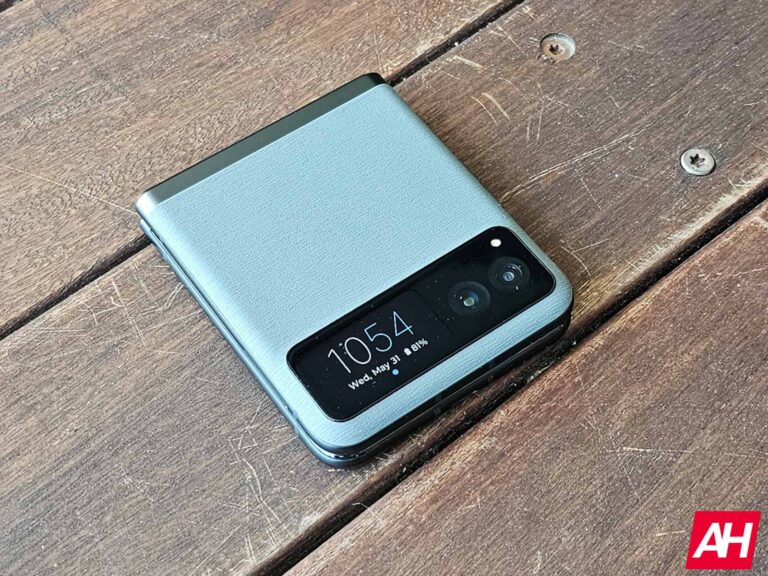
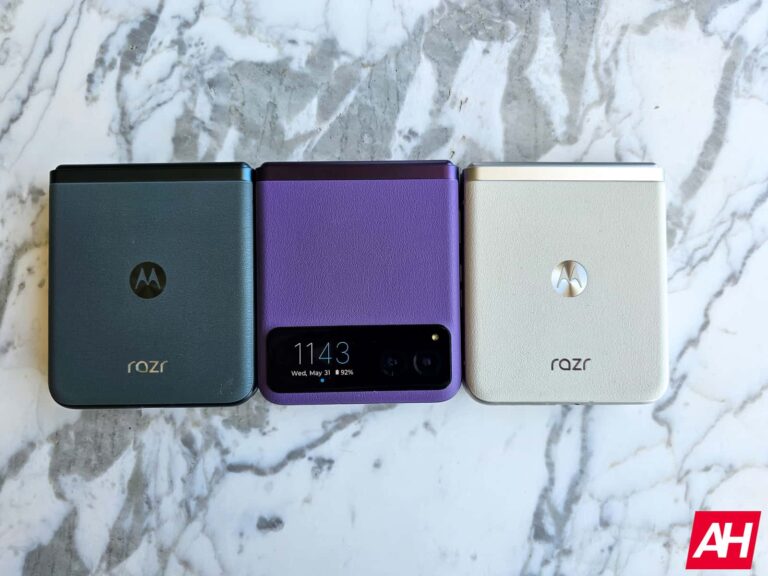
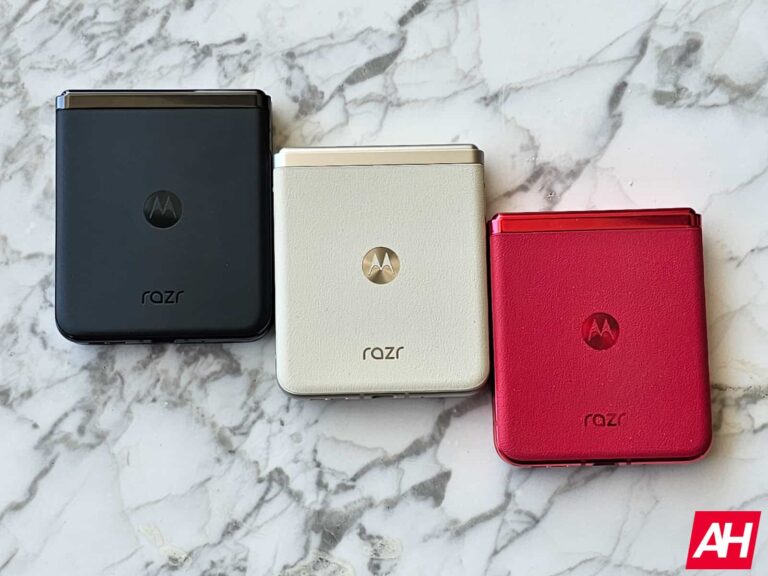
Let’s talk about the colors. On the Razr, Motorola has Sage Green, Vanilla Cream and Summer Lilac. All of which are pretty stunning and don’t look like any other phone on the market. Then there’s the Razr+ in Infinite Black, Glacier Blue and Viva Magenta. And to be honest, the Viva Magenta is stunning, but unfortunately it is exclusive to T-Mobile.
Now let’s talk about that back material. On all colors of the Razr, and the Viva Magenta color of the Razr+, Motorola is using vegan leather. Which looks and does feel amazing. While the infinite black and glacier blue colors use a frosted glass backside. They look great, but nothing beats that vegan leather look and feel, unfortunately.
Motorola has always been pretty well-known for their industrial design, which is great because it means their phones are more durable. But on the other hand, that also means they aren’t as beautiful. But I think Motorola hit a good middle ground with the Razr family 2023. There’s some curves here that make the Razr beautiful, while also keeping it fairly durable.
That huge cover display on the Razr+
You’ve no doubt seen that huge display on the Razr+, I mean, how could you not? It’s literally the entire backside of the phone. It comes in at 3.6-inches and it’s basically a square, at a 1:1 aspect ratio. That’s similar to foldables like the Galaxy Z Fold 4, but on its main display. And it’s one of the things that I dislike about the fold-style foldables. However, here, I think it works. As this is on the outer display, and not likely something you would use exclusively all-day long. But if you need to handle some notifications, fire off a quick email, or pay attention to navigation while in a new city, it works.
What’s cool here is that you can use literally any app on that cover display. There’s no limitations here, and Motorola has told us that every app they’ve used has worked. This is thanks to how Android works in general. But Motorola was able to optimize the operating system to work with each app.
In fact, I tried apps that often times give me issues on the Galaxy Z Fold 4 and Flip 4, like Instagram, and it worked. Now is it the best way to experience Instagram? Of course not. But the thing here is that, it works.
Should you buy the Motorola Razr?
It’s hard to say after only spending a little over an hour with the two devices, but I did come away really impressed here. Now of course, we still have Samsung and the Galaxy Z Flip 5/Fold 5 coming later this Summer, so that’s something to keep in mind. But Motorola did just take a giant leap ahead of Samsung here.
The pricing on the Motorola Razr+ is also pretty impressive. Despite this very large, cover display, and super high-refresh rate displays here, Motorola was able to keep it to $999. With the regular Razr set to be considerably cheaper than that, when it launches in a few months. While Samsung was the one to push foldables below the $1,000 price point, I think Motorola might be the one to push it below $700. Making it even more accessible to consumers.
Web server pentesting is performed under 3 significant categories: Identity, Analyse, and Report Vulnerabilities such as authentication weakness, configuration errors, and protocol Relation vulnerabilities.
1. “Conduct a serial of methodical and Repeatable tests “ is the best way to test the web server this to work through all of the different application Vulnerabilities.
2. “Collecting as Much as Information” about an organization Ranging from the operation environment is the main area to concentrate on the initial stage of web server Pen testing.
3. Performing web server Authentication Testing, using Social engineering techniques to collect information about Human Resources, Contact Details, and other Social Related information.
4. Gathering Information about Target, use whois database query tools to get the Details such as Domain name, IP address, Administrative Details, autonomous system number, DNS etc.
5.Fingerprint webserver to gather information such as server name, server type, operating systems, an application running on the server etc use fingerprint scanning tools such as Netcraft, HTTPrecon, ID Serve.
6. Crawel Websiteto gather Specific information from web pages, such as email addresses
7. Enumerate web server Directories to extract important information about web functionalities, login forms etc.
8. Perform Directory traversal Attack to access Restricted Directories and execute the command outside the Web server root directories.
9. Performing vulnerability scanning to identify the weakness in the network, use the vulnerability scanning tools such as HPwebinspect, Nessus . and determine if the system can be exploited.
10. Perform a cache poisoning attack to force the web server’s cache to flush its actual cache content and send a specifically crafted request which will be stored in the cache.
11. Performing HTTP response splitting attack to pass malicious data to a vulnerable application that includes the data in an HTTP response header.
12. Bruteforce SSH, FTP, and other services login credentials to gain unauthorized access.13. Perform session hijacking to capture valid session cookies and IDs, use tools such as Burb suite and Firesheep, hijack to automate session hijacking.
14. Performing a MITM attack to access sensitive information by intercepting the communications between the end-users and web servers.
15. Use tools such as Webalizer and AWStats to examine the web server logs .
Essential Checklist Suggested by Microsoft
Services
Unnecessary Windows services are disabled.
Services are running with least-privileged accounts.
FTP, SMTP, and NNTP services are disabled if they are not required.
Telnet service is disabled.
Protocols
WebDAV is disabled if not used by the application OR it is secured if it is required.
TCP/IP stack is hardened
NetBIOS and SMB are disabled (closes ports 137, 138, 139, and 445).
Accounts
Unused accounts are removed from the server.
Guest account is disabled.
IUSR_MACHINE account is disabled if it is not used by the application.
If your applications require anonymous access, a custom least-privileged anonymous account is created.
The anonymous account does not have write access to Web content directories and cannot execute command-line tools.
Strong account and password policies are enforced for the server.
Remote logons are restricted. (The “Access this computer from the network” user-right is removed from the Everyone group.)
Accounts are not shared among administrators.
Null sessions (anonymous logons) are disabled.
Approval is required for account delegation.
Users and administrators do not share accounts.
No more than two accounts exist in the Administrators group.
Administrators are required to log on locally OR the remote administration solution is secure.
Files and Directories
Files and directories are contained on NTFS volumes
Web site content is located on a non-system NTFS volume.
Log files are located on a non-system NTFS volume and not on the same volume where the Web site content resides.
The Everyone group is restricted (no access to \WINNT\system32 or Web directories).
Web site root directory has denied write ACE for anonymous Internet accounts.
Content directories have deny write ACE for anonymous Internet accounts.
Remote administration application is removed
Resource kit tools, utilities, and SDKs are removed.
Sample applications are removed
Shares
All unnecessary shares are removed (including default administration shares).
Access to required shares is restricted (the Everyone group does not have access).
Administrative shares (C$ and Admin$) are removed if they are not required (Microsoft Management Server (SMS) and Microsoft Operations Manager (MOM) require these shares).
Ports
Internet-facing interfaces are restricted to port 80 (and 443 if SSL is used)
Intranet traffic is encrypted (for example, with SSL) or restricted if you do not have a secure data center infrastructure.
Registry
Remote registry access is restricted.
SAM is secured (HKLM\System\CurrentControlSet\Control\LSA\NoLMHash).
Auditing and Logging
Failed logon attempts are audited.
IIS log files are relocated and secured.
Log files are configured with an appropriate size depending on the application security requirement.
Log files are regularly archived and analyzed.
Access to the Metabase.bin file is audited.
IIS is configured for W3C Extended log file format auditing.
Server Certificates
Ensure certificate date ranges are valid.
Only use certificates for their intended purpose (For example, the server certificate is not used for e-mail).
Ensure the certificate’s public key is valid, all the way to a trusted root authority.
Confirm that the certificate has not been revoked.
Motorola announced the new Razr family on June 1, 2023. The family includes the Razr and Razr+. It also represents the biggest upgrade for the Razr since its reincarnation a few years ago. Motorola decided to revive its iconic “Razr” branding for its foldables back in 2019. It didn’t see many updates, in terms of hardware until now. And it’s a big one.
In this article, we’re going to tell you everything you need to know about each device, and which one you might want to buy. So without further ado, here’s everything you need to know about the Motorola Razr and Razr+ for 2023.
Motorola Razr Family 2023: Specs
Here are the specs for both of the new Razr models.
Open: 73.95 x 170.82 x 7.35mm Closed: 73.95 x 88.24 x 15.88mm
Open: 73.95 x 170.83 x 6.99mm Closed: 73.95 x 88.42 x 15.1mm
Weight
188.6g
184.5g
Price
To Be announced
$999
Colors
Sage Green Vanilla Cream Summer Lilac
Infinite Black Glacier Blue Viva Magenta (T-Mobile exclusive)
Available
To Be announced
June 23
What’s the difference between the Razr and Razr+?
So, Motorola says that both devices were built on the same platform, so they do share a lot of the same specs and features. The biggest differences here are the cover display, and processor.
On the regular Razr, it has a much smaller cover display, coming in at 1.5-inches, which is basically just large enough to give you information like notifications, quick settings for controlling media playback and more. It also runs on the Snapdragon 7 Gen 1 processor, and since the cover display is quite a bit smaller, it does have a larger battery at 4200mAh.
The Razr+ has a huge cover display, coming in at 3.6-inches, which does allow it to run full apps, at a 1:1 aspect ratio. This is going to allow you to do all sorts of things without having to open the phone. Which can be a real annoyance if you use your phone a lot.
The other major difference is going to be in the main camera sensor. On the Razr, there’s a 64-megapixel main sensor, and the Razr+ has a 12-megapixel main sensor. While on paper it would sound like the Razr has the better camera, but that’s not entirely accurate. The Razr has more megapixels, but the Razr+ has larger megapixels. Both have pretty good cameras, however.
How much does the Razr cost?
As of right now, there’s no pricing on the Razr, Motorola has said that this particular phone will launch in the “coming months” so pricing and availability is not yet available. We will update this post once it is announced.
Now, the Razr+ does have pricing and availability. The Razr+ will cost $999 in the US, $1299 in Canada, and €1,199 in Europe as the Razr 40 Ultra. That makes it pretty competitive with the other flip-style foldables on the market, like the Galaxy Z Flip 4 which also has an MSRP of $999.
When does it go on sale?
Motorola has announced that pre-orders for the Motorola Razr+ will start on June 16, with the device being available on June 23. As mentioned above, there’s no release date for the regular Razr just yet.
Where can I buy the new Motorola Razr?
The Motorola Razr will be available virtually everywhere. Here’s the full list for the US:
AT&T
T-Mobile
Spectrum Mobile
Google Fi
Optimum Mobile
Amazon
Best Buy
Motorola.com
It’s worth noting that the pricing at carriers could be different than the unlocked pricing found at Amazon, Best Buy and Motorola. Additionally, Verizon is not selling the Motorola Razr+ this year, and that is likely due to it not supporting mmWave 5G. But rest assured, it will still work on Verizon’s network with Sub-6 and C-Band 5G access.
What colors does the Motorola Razr come in?
The Motorola Razr comes in some pretty stunning colors. For the Motorola Razr, it’s Sage Green, Vanilla Cream and Summer Lilac. While the Motorola Razr+ comes in Infinite Black, Glacier Blue and Viva Magenta.
The Viva Magenta color of the Razr+ is going to be exclusive to T-Mobile. Considering it is a magenta color, that’s not a huge surprise.
What features does the Motorola Razr have?
The new Razr brings in a number of new features, but the biggest new features are on the Cover Display, as you might expect. Motorola has also added some features to make using both screens much easier. Here’s a few of the new features on the Razr this year.
Cover Display Panels & Customization
The Cover Display is much larger this year, about as large as it could possibly be. It’s a 3.6-inch display on the Razr+, which allows users to actually run apps, and add shortcuts that you can swipe between. Motorola is allowing users to add panels to the Cover Display. These panels include shortcuts to contacts for making calls, shortcuts to apps to run on the Cover Display, Google Fit information, Google News information, Weather, and a few more things. These can be turned on and off at will, as well as rearranged.
Full apps can be opened on the Cover Display, and you can even get a full keyboard on the cover display. So many might be wondering, what apps work with this? Well, they all do. Motorola optimized the Cover Display so that all Android apps will work automatically on the Cover Display. During our hands-on, we also tried apps that are notoriously bad with different aspect ratios, like Instagram. And it did work, it wasn’t the best experience, but it did work.
Motorola is also allowing you to customize the look of the lock screen on that Cover Display. This includes using different live wallpapers, different clock styles, and much more.
There are also a few games you can play on the Cover Display. Nothing to crazy, but simple games like Snake and Pong work.
Flex Mode with Camera
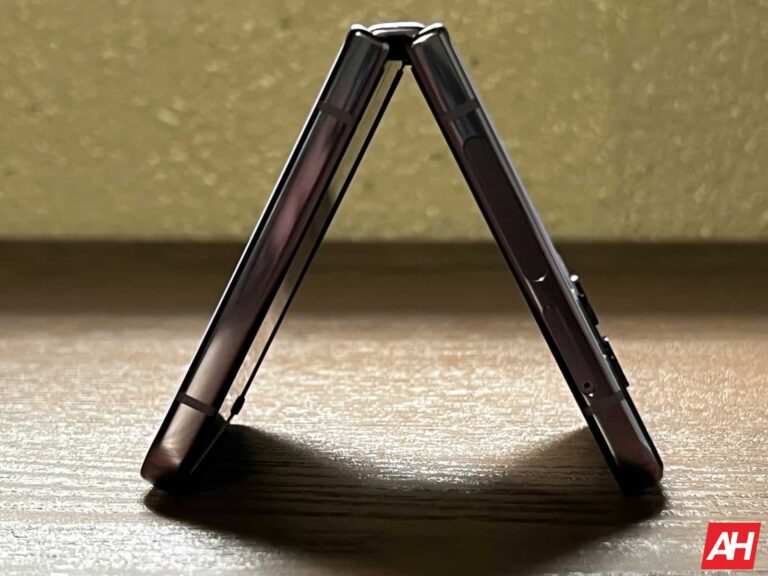
Flex Mode isn’t really new for foldables, nor new for Motorola. But Motorola has improved the hinge quite a bit here, so it can now sit at any angle. And one of the new features is, being able to use the camera in flex mode, and show the shutter on both screens. This makes it easier to take a selfie with the rear-cameras (which are better than the in-display camera on the front of the phone). It also allows you to take photos of others easier, as they can see how they look.
This is also going to make live streaming a whole lot better here. As you won’t need a tripod, the phone can do it all by itself.
Should you buy the Motorola Razr?
It’s still early and we haven’t reviewed the device yet, but the Motorola Razr+ is looking like one of the better foldables to come out this year. Solving one of the biggest annoyances with flip-style foldables, where you need to open the phone every time you want to do something more than check notifications. The pricing here is quite good too, even though it does have an older processor inside.
You do have a few weeks to decide on whether or not you want to buy the Razr+, as the phone doesn’t go up for pre-order until June 16 and goes on sale on June 23.
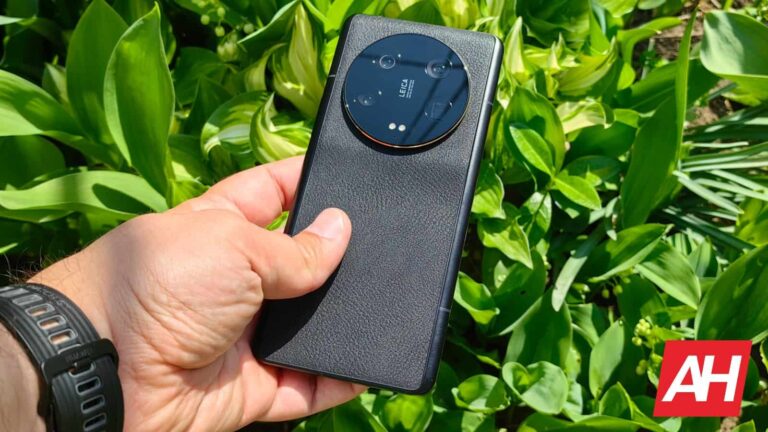
It seems like the global Xiaomi 13 Ultra variant will launch on June 8. We’re still not entirely convinced, let’s see why. The countdown timer appeared on Xiaomi’s Hong Kong website, and it points to a June 7 launch date (in CET time, at least).
The global Xiaomi 13 Ultra could launch on June 7
The countdown timer, at the time of writing this article, stood at 5 days and 10 hours. That translates to June 7 at 6 PM CET time. This is odd, because Hong Kong is 6 hours ahead of CET time, so that would mean midnight in Hong Kong.
Xiaomi won’t be holding an event at that time, locally. So, what gives? Well, this could be just a launch of the device for that region, and not an actual global event, despite the fact some sites jumped at a chance to confirm it.
Having said that, Xiaomi’s official social media accounts still didn’t confirm anything. They could, later today, or in the near future, but as of now, nothing has been confirmed.
Xiaomi is, however, expected to announce the Xiaomi 13 Ultra for global markets soon. The company promised that the global variant is coming, and the users are waiting patiently.
The phone originally launched back in April
The Chinese variant of the phone launched in April. We’ve already reviewed it, and definitely has a lot to offer. For global markets, however, a global version of the software is recommended, just so you avoid some of the quirks of the software build made for China.
The device, once it launches, is rumored to be considerably more expensive in Europe, however. In the best case scenario, based on the rumors thus far, it will cost €450 more than in China.
Needless to say, that’s a considerable price gap. We’re still hoping that the rumors are wrong, of course. If you’d like to know more about the Xiaomi 13 Ultra, as we’re waiting for Xiaomi’s confirmation for a global event, check out our review.
Samsung has confirmed the event location for the Galaxy Z Fold 5 and Flip 5 launch. Based on a recent report, the company was choosing between Seoul and New York, and it seems like a decision has been made.
Samsung confirmed the event location for the Galaxy Z Fold 5 & Flip 5 launch
Samsung will host its global launch event for its next-gen foldables in Seoul, South Korea. In other words, the event will be in Samsung’s homeland. The company usually does this event in the US or Europe, so this is interesting.
The confirmation came from the President of Samsung DX’s Global Marketing Center, Lee Young-hee. When he was asked for the reason behind this, he said: “Because Korea is meaningful and important”.
Truth be said, he could have elaborated a bit more, but there you have it. Based on his comments, Samsung really wanted to host this event in its homeland.
Lee Young-hee did not disclose the date nor the venue of this event, however. Based on rumors, the event will take place on July 26 at COEX in Gangnam-Gu, Seoul.
The company will also announce the Galaxy Watch 6 during the show
The Samsung Galaxy Z Fold 5 and Galaxy Z Flip 5 will definitely be the stars of the show. Those are not the only devices Samsung will announce, however. The Galaxy Watch 6 will also get introduced, and perhaps a mixed reality headset, or at least a teaser for it.
The Galaxy Z Fold 5 and Flip 5 have leaked a number of times thus far. Samsung is expected to offer an improved hinge, and the Flip 5 will feature a noticeably larger cover display.
Those two devices will, however, in many ways, be very similar to their predecessors. The Motorola Razr 40 Ultra aka Razr+ launched yesterday, and it will provide ample competition for the Galaxy Z Flip 5, along with some other clamshell foldables.
The competition is increasing in the book-style foldables market too, even though China still gets a lot more such devices than other markets. The Galaxy Z Fold 5 will definitely have some competition, however, and more devices are coming to global markets.
A few weeks ago the U.S. banking system saw three banks, Silicon Valley Bank, Signature Bank, and First Republic Bank, all fail after runs on these financial institutions from customers with uninsured deposits who pulled their money out as quickly as possible. And late last week a report issued by the Consumer Financial Protection Bureau (CFPB) warned those with cash stored in nonbank payment apps such as Venmo or PayPal to pull that money out because it might not be safe in the event of a crisis.
You might retort that the Federal Deposit Insurance Corporation (FDIC) insures bank accounts up to $250,000 and you’d be 100% correct. But the money you have in Venmo or PayPal is typically not in a bank account and is most likely not covered by FDIC insurance in the case that something bad takes place. For example, if there is a run on Venmo and Paypal and your money cannot be obtained, most likely you’ll be out of luck.
Some consumers are not aware that the funds they have in their payment app account are not insured
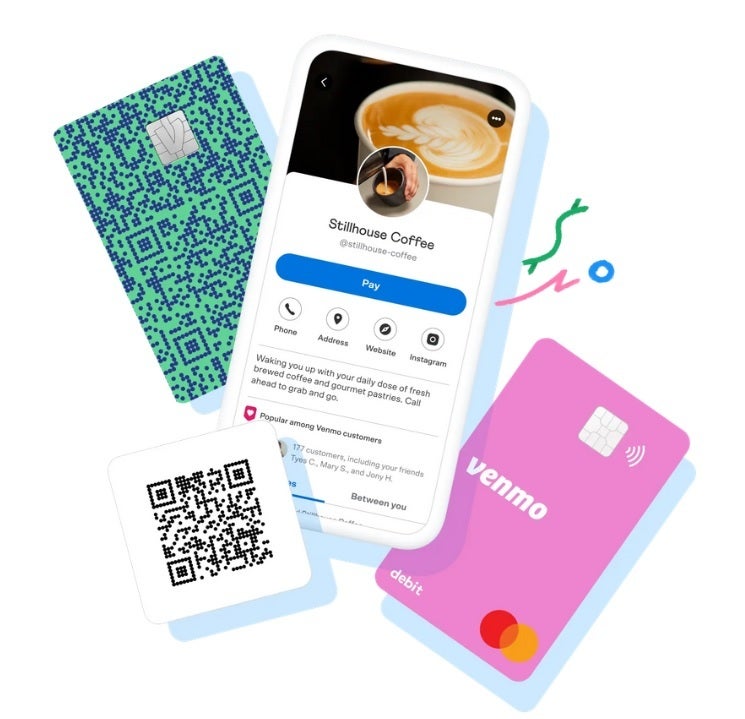
The CFPB does say that there are some options offered by Venmo and PayPal that will result in your funds being insured. For example, if you open a PayPal Savings account through the company’s banking partner Synchrony Bank, funds in that account would be covered by the FDIC. With Venmo, you might qualify for FDIC insurance if you deposit money to your account via direct deposit, use the “cash a check” feature, or use your Venmo account to buy or receive some cryptocurrency assets.
Funds you have stored on your payment apps like Venmo or PayPal are most likely not insured
In its report, the CFPB wrote, “We find that stored funds can be at risk of loss in the event of financial distress or failure of the entity operating the nonbank payment platform, and often are not placed in an account at a bank or credit union and lack individual deposit insurance coverage. Consumers may not fully appreciate when, or under what conditions, they would be protected by deposit insurance.”
Some payment apps make money by investing the funds you leave in those apps. Since they are not paying you any interest on this money, interest earned on the bonds and other debt they invest in goes right to their bottom line. Payment apps that do this have no incentive to get you to transfer your funds to your linked bank or credit union leaving you holding all of the risk while they reap all of the reward.
If you’re not sure if you have coverage, your best bet is to pull the funds out and deposit them in an insured account until you can speak with someone at your payment app to verify whether your account is insured.
Funds stored in a payment app are at higher risk than funds deposited with an insured bank
While there is no option for holding an insured balance in Google Pay, in Apple Pay funds are eligible for pass-through insurance if the customer registers the Apple Cash account with Green Dot Bank. Note that the CFPB says that funds kept in a payment app are at a higher risk for loss than if the funds were kept in an insured bank account or credit union.
As the agency says, “Funds stored in a payment app may be at significantly higher risk of loss for a consumer than if it is deposited in an insured bank or credit union account. For instance, nonbank payment apps that invest customer funds in securities or other non-deposit products expose the company to the risk of insolvency if the investments’ value declines. The companies are also exposed to risk if customers demand their funds all at once.”
The CFPB is merely trying to alert you, not scare you. “Consumers should be aware of these risks if they choose to leave a balance on these nonbank payment apps. To minimize these risks, consumers may choose to transfer their nonbank payment app balances back to their federally insured deposit accounts, where they have a direct relationship with an FDIC-insured bank or NCUA-insured credit union,” it says in its report. You might want to take the agency’s advice as soon as you can.
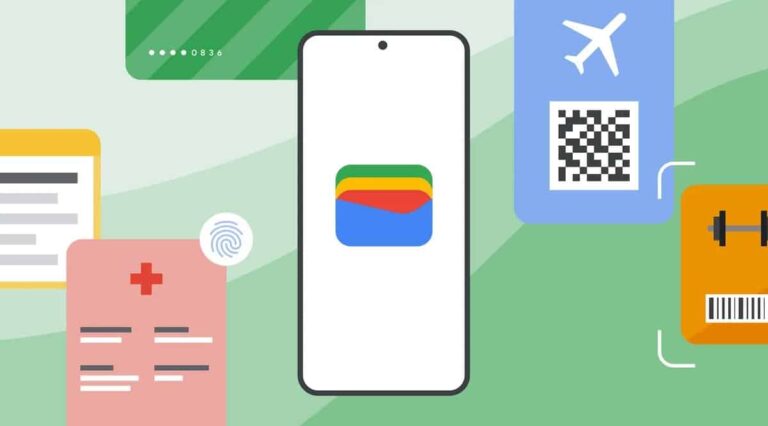
Google has announced a host of new features for its rebranded and much-improved Wallet app that debuted in May 2022. It’s adding support for state IDs and driver’s licenses, as well as the ability to create digital versions of some physical passes.
Google Wallet has let you store different types of cards, keys, digital IDs, passes, and more since the beginning. Over the past year, the company has added several new abilities to the app. The latest update now gives you more reasons to stop carrying a physical wallet. Once the update rolls out, you can create digital versions of any physical pass that has a barcode or QR code, like a gym membership card or transit QR tickets. Simply click a picture of the physical card and you have a digital version that goes with you wherever you take your phone. Not only it’s convenient, but you also have a backup of the pass in case it gets misplaced.
In August last year, Google was spotted working on bringing TSA-compliant digital IDs to the Wallet app. The company is now rolling out this feature as well. It’s initially available for Maryland-issued IDs, such as a driver’s license. You can show the digital ID in Google Wallet at TSA PreCheck lines at select airports. Google says the feature will be available to residents of Arizona, Colorado, and Georgia in the coming months. The company is also working on giving users more ways to use their digital IDs, including booking a car with Turo and verifying their online accounts. Note that your phone must be running Android 8.0 or later and that has a screen lock enabled to use this feature.
Google Wallet is also adding health insurance cards and Messages integration
This Google Wallet update also brings support for health insurance cards. The company is working with Humana to develop a digital version of the latter’s insurance cards for its members in the US. Meanwhile, in the UK, the support comes through the UK government’s HMRC app. Users will be able to save their National Insurance Number from the app to their Wallet.
Additionally, Google is integrating Wallet with its Messages app. You will soon be able to save your train tickets, flight boarding passes, or restaurant reservation details received in Messages to Wallet. The company will initially roll out support for Vietnam Airlines, Spanish train operator Renfe, and restaurant reservation system TagMe. Last but not least, Google Wallet is readying corporate badges for employees of supported companies and expanding support for local transit passes to more countries, including Deutschlandticket in Germany.
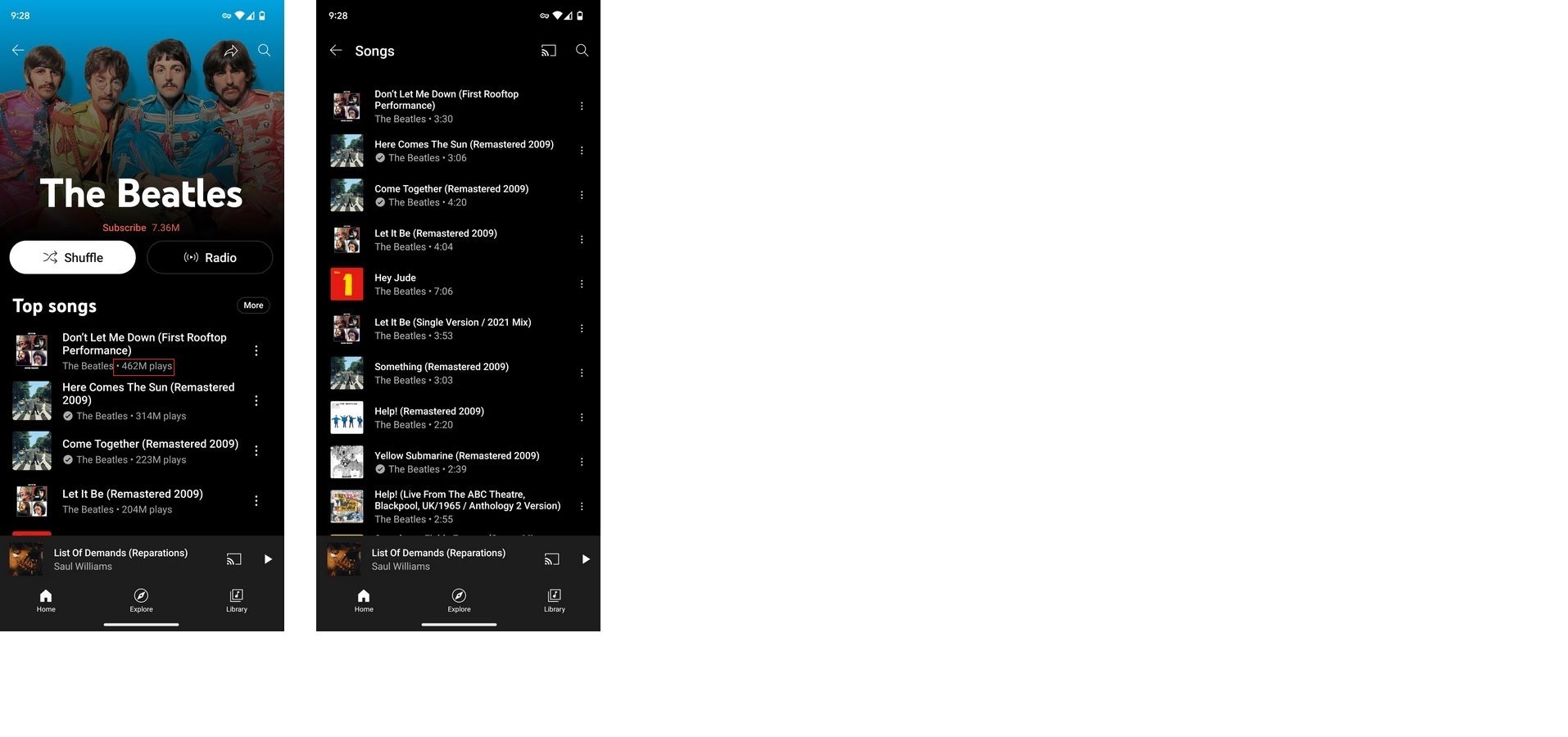
YouTube Music is adding a feature that the streamer didn’t have and while it was obviously something that needed to be offered to the platform’s users, it doesn’t make the addition of this feature any less cool. Soon, YouTube Music will show how many times a song has been played by all users. There is a caveat; the play counts only appear on an artist’s landing page and only for the top five songs.
According to some Redditors (via AndroidPolice), the play count feature has been spotted on the YouTube Music Android app and the website. The version of the Android app that includes the play count is version 6.03.51 although that is the version of YouTube Music on my Pixel 6 Pro and I do not have the play counts yet on my app. Google is probably using a server-side update to test the feature and when satisfied, it will push the update out to all Android users.
Google is testing play counts for the Android version of the YouTube Music app. Image credit AndroidPolice
Although it probably doesn’t matter considering that Google is using a server-side update, you can check to see which version of YouTube Music you’re running on your Android device by opening the app and tapping on the avatar or profile picture on the upper right corner of the display. Tap on Settings > About YouTube Music and you’ll see the App version of YouTube Music that you are using.
Keep in mind that if you are seeing the play counts under the Top Songs listing on an artist’s YouTube Music landing page, the order of the songs might not be based on the play count. That would seem like an obvious thing to do but Android Police points out that the top song listed for Outkast is Ms. Jackson with 592 million plays even though their most played song on the platform, Hey Ya!, is listed second with 708 million plays.
This is a feature that YouTube Music users have been asking for and it soon will be available for all Android users.