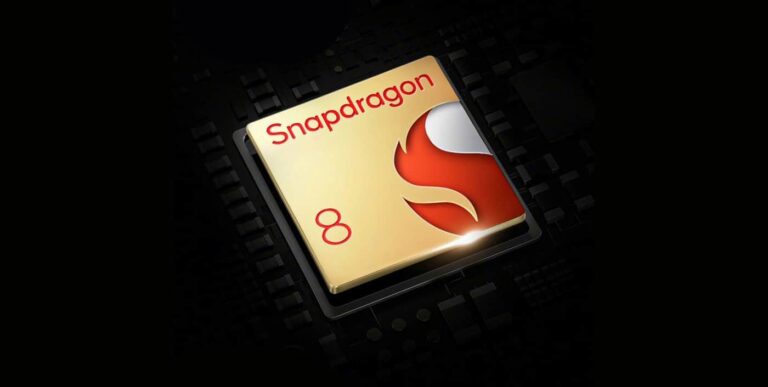
The upcoming Snapdragon 8+ Gen 2 won’t be much different than the Snapdragon 8 Gen 2, it seems. A well-known tipster has offered more insight into Qualcomm’s upcoming flagship-grade processor.
The Snapdragon 8+ Gen 2 won’t be much different than its predecessor
This information comes from Digital Chat Station, as he shared the info via Weibo. He says that the Snapdragon 8+ Gen 2 will basically just be an overclocked version of the Snapdragon 8 Gen 2.
He also notes that the chip will be considerably more expensive, though. That could result in price increases for the phones that will utilize it. The chip is already being tested by a number of Chinese smartphone OEMs, including Xiaomi, OPPO, Meizu, and iQOO.
The iQOO 11s could be the first phone to feature the Snapdragon 8+ Gen 2. That smartphone is expected to arrive in the third quarter of this year. The Redmi K60 Ultra is also rumored to include the chip.
It will just be an overclocked version of the Snapdragon 8 Gen 2
Considering that the tipster says this will just be an overclocked version of the Snapdragon 8 Gen 2, we presume that nothing else will be changed. If that’s the case, it may not be worth getting for many OEMs, considering the price.
The Snapdragon 8 Gen 2 is an outstanding SoC, with great power consumption, and it also doesn’t heat all that much compared to the Snapdragon 8 Gen 1. A higher clock speed is probably not enough to justify a major price increase.
We’ll, of course, have to wait for the chip to actually launch in order to be sure. It does seem to be on the way, though, despite the fact rumors claimed otherwise until recently. Qualcomm wants to continue its tradition of releasing two flagship-grade processors every year.
The Snapdragon 8+ Gen 2 is expected to arrive in the near future, as the Snapdragon 8 Gen 3 is expected to launch towards the end of the year.
Amazon has a great sale going on right now for the Motorola Edge (2022). It’s currently priced at $349, which is going to save you $250 off of the regular price. That does bring it down to its all-time lowest price.
The Motorola Edge (2022) is a great smartphone for anyone looking for a powerful and affordable device. It has a sleek design, a powerful processor, and a long-lasting battery. It also has a great camera system that can take stunning photos and videos.
Here are some of the reasons why you should buy the Motorola Edge (2022):
Powerful processor: The Motorola Edge (2022) is powered by the Qualcomm Snapdragon 778G processor, which is one of the most powerful processors on the market. This processor can handle even the most demanding tasks, such as gaming and video editing.
Long-lasting battery: The Motorola Edge (2022) has a large 5000mAh battery that can easily last for a full day on a single charge. This means you can use your phone all day without having to worry about running out of power.
Great camera system: The Motorola Edge (2022) has a triple-lens rear camera system that can take stunning photos and videos. The main camera has a 50MP sensor, and the other two cameras have 13MP and 2MP sensors. The front-facing camera has a 32MP sensor for taking selfies.
Sleek design: The Motorola Edge (2022) has a sleek and stylish design that will turn heads. It is made of durable materials and has a water-resistant design.
Affordable price: The Motorola Edge (2022) is very affordable, especially considering all the features it offers. You can get it for just $349.
If you are looking for a powerful and affordable smartphone, the Motorola Edge (2022) is a great option. It has a sleek design, a powerful processor, a long-lasting battery, a great camera system, and an affordable price.
Here are some additional features of the Motorola Edge (2022):
144Hz refresh rate: The Motorola Edge (2022) has a 144Hz refresh rate, which means that the screen updates 144 times per second. This makes for a smoother and more responsive experience when gaming or scrolling through social media.
6.6-inch OLED display: The Motorola Edge (2022) has a 6.6-inch OLED display with a resolution of 2400 x 1080 pixels. The OLED display provides deep blacks and vibrant colors.
Android 12: The Motorola Edge (2022) comes with Android 12, and has since been upgraded to Android 13.
Overall, the Motorola Edge (2022) is a great smartphone for anyone looking for a powerful and affordable device. It has a sleek design, a powerful processor, a long-lasting battery, a great camera system, and an affordable price.
Our mobile devices have become integral parts of our everyday lives. Today’s advanced smartphones can do absolutely everything; we use them to browse the internet, connect with colleagues and friends, watch videos, and even pay bills and manage our finances.
Digital security is more important than ever. While there are methods for protecting yourself and there is a simple way to remove your data from Google, the hardware we use must be secure to ensure that our data is safeguarded. We’ve put together a list of the most secure smartphones on the market and discussed which we feel is best. Find out more below.
Samsung Galaxy S23 Ultra
The Galaxy S23 Ultra is the latest smartphone from Samsung. This advanced model is packed full of special features and utilizes cutting-edge mobile technology, making it one of the most powerful smartphones available on the market today.
The device comes fitted with Samsung Message Guard, which is software that can identify threats sent via text message. Samsung Message Guard works with messages sent from other Android devices, but it is expected to be updated to encompass messages from chat apps such as WhatsApp as well.
The S23 Ultra also comes with the Samsung Knox service. Knox is a multi-layer security protocol used to safely manage and store sensitive user data. It separates the phone into distinct sections to allow for independent data encryption and management. These features mean that the S23 Ultra is one of the most secure smartphones on the market today.
iPhone 14 Pro Max
The latest instalment in the iPhone series, the iPhone 14 Pro Max, is Apple’s most sophisticated smartphone to date. The device offers incredible functionality and performance, with a range of modern features that make it a must-have for tech fans.
The iPhone 14 Pro Max comes with a suite of security features. The phone’s boot cycle is extremely secure and ensures that only Apple-certified apps open at launch. The device also offers encrypted messaging options and improved biometric authentication systems for password and Apple Pay management.
The iPhone 14 Pro Max also offers a feature called Lockdown, where the phone will react to incoming digital threats, such as malware attacks, by shutting down certain operations and securing potential vulnerabilities.
Purism Librem 5
Apple and Samsung may rule the roost when it comes to the mobile industry, but there are other companies out there with excellent products that you cannot afford to overlook. The Purism Librem 5 is the pinnacle of security technology. It automatically blocks all data tracking, giving users a far safer and more private experience.
The device also comes fitted with three dedicated kill switches. These allow users to quickly shut off parts of the phone that they believe could cause a threat. In addition, the phone offers extensive customization options, allowing users to tailor their devices to suit their specific needs and requirements.
Conclusion
If you want the most secure smartphone on the market today, the Purism Librem 5 could be the best option. However, all modern smartphones are exceptionally secure, so you can’t go wrong with the Samsung Galaxy S23 Ultra or the iPhone 14 Pro Max either.
YouTube announced today on a support page that it is shutting down YouTube Stories next month. On the YouTube Help page, a community manager named Meaghan wrote, “Today, there are many ways to create on YouTube – from Community posts to Shorts to long-form and Live. To prioritize these key features, Stories are going away. Starting on 6/26/2023 the option to create a new YouTube Story will no longer be available. Stories that are already live on that date will expire 7 days after they were originally shared.”
YouTube recommends that creators move over to YouTube Community posts and YouTube Shorts. The former is recommended for those who want to start conversations, share “lightweight” updates, or promote their YouTube content to their audience. YouTube notes that creators have found that between Community posts and Stories, posts get more comments and likes compared to Stories.
And there’s more. YouTube says, “We’ve recently expanded access to Community posts to millions of creators and have brought some of the popular aspects of Stories into Community posts such as rich editing tools, and the ability for posts to expire after 24 hours. Creators can strengthen connections with their audiences through new engagement features including polls, quizzes, and filters, and stickers.”
YouTube says that YouTube Shorts is the way to go if your goal is to create short video content or gain a new audience. Once again, just as it did when it compared Community posts and Stories, YouTube compared Shorts and Stories and noted that among creators who use both, Shorts get many more subscribers than Stories.
So what YouTube is saying here is that getting rid of Stories is not a big deal since creators will be better off using Community Posts and YouTube Shorts anyway. According to YouTube, “Getting started is easy. You can try out our lightweight mobile video tools directly in the shorts camera, such as adding text and filters, or try remixing your favorite content across YouTube. We’re continuing to bring more engaging features to the Shorts experience, most recently launching the ability to reply to comments with Shorts.”
The majority of Roborock’s robot vacuums also have a mopping functionality included. This means that you can use your Roborock vacuum to vacuum and then mop your floors all in one go.
How does the mopping functionality work, and how you do you set it up? Well we’ll be walking you through that today.
Which Roborock robot vacuums support mopping?
Not all of Roborock’s robot vacuums have mopping built-in, there are a few that did leave it out. Here are all of the robot vacuums from Roborock that do offer mopping functionality.
The main lineup that is missing here is the Roborock S4. Both the S4 and S4 Max do not have mopping functionality built-in, mostly to save on costs and offer a great robot vacuum at a cheaper price.
How to make your Roborock mop your floors
It’s pretty simple to setup your Roborock vacuum for mopping your floors. Firstly, you will want to attach the mopping pad to the water tank. It just clips on pretty easily.
Next, fill the water tank with water. Do not put soap in the water tank, as it will cause issues with your Roborock robot vacuum.
Now, install the water tank onto your robot vacuum.
That’s it. You will now want to move to the Roborock app on your smartphone to get started mopping. In the app, tap on the icon in the lower right-hand corner that says “Vacuum Only”. From here, you can adjust the vacuum and water level. If the mop is installed, it will automatically start mopping while it is vacuuming, but only on non-carpeted floors. You can choose your water level, based on how dirty the floors are.
Then just tap on the “Clean” button.
And that’s it, that’s how easy it is to get your Roborock robot vacuum to start mopping your home.
Tips for getting the best cleaning from a Roborock vacuum
There are a few things that you can do to make sure that your Roborock vacuum mops properly and does a good job. Firstly, in the app, you can choose where it is mopping, and choose to have it clean that area up to three times.
That can be very helpful in the winter, especially if you live in an area that gets snow. For example, the area near my front door is pretty dirty now from the snow and salt being tracked in. So running the mopping feature three times in that part of the house makes a big difference. And it is able to get up all of the stuff off of the floor.
You can also use the spot-cleaning tool in the app, to have it focus on a specific area, maybe in front of the couch in the living room, or in front of the oven in the kitchen.
Remember, do not put any soap in the water tank, as it will cause issues for your Roborock vacuum. That also means that it won’t be perfect in cleaning your floors, but it can do a really good job.
The biggest tip for mopping your floors with a Roborock vacuum, is to buy the Roborock S7. With the S7, Roborock has improved the mopping functionality quite a bit. So the mopping pad will agitate a lot more, making it able to get more of the tough and dried on messes on your floor. You can read more about the Roborock S7 here, and it’ll be on sale starting March 24.
For the past thirteen years, Bitcoin has proven to be a great investment asset. Although this digital money is a very volatile asset, volatility is what entices investors to invest because the network assures them high returns in the long run. Here is why many entities and businesses prefer this electronic currency today. Once you conduct thorough research, create an account with a reliable and genuine exchange such as bitcoin 360 ai platform.
Perfect Hedge against Inflation
Fiat currencies are subject to inflation as they have regulation and an infinite supply. On the other hand, this digital money does not suffer inflation because it has a hard limit whereby people can only mine 21 million Bitcoins. Therefore, investors prefer investing in this electronic currency to hedge against inflation.
No government or financial institution can regulate or manipulate this digital money. So, this virtual money has a higher return potential than fiat money which loses its value over time. On the other hand, this virtual currency goes through a halving process. This halving process involves the slashing of Bitcoin rewards after every four years and when people mine 210,000 Bitcoins. The halving process is vital as it limits the supply of Bitcoins, increasing demand, which leads to an increase in the value of this electronic money. Because of the halving process, the collection of Bitcoin remains scarce.
Enables Portfolio Diversification
This digital money has a higher return potential because of its limited supply and volatility. The price of Bitcoin fluctuates drastically, but this virtual money has seen a value increase with time. No asset backs this digital money, which is not similar to stocks and bonds. Therefore, this electronic currency is a perfect addition to one’s portfolio. Moreover, before investing in this digital currency, one should thoroughly consult a financial advisor and research.
Ease of Investing
Investing in this virtual currency is not as hard as it sounds. Also, there are zero barriers to entry when investing in this electronic asset. Nevertheless, investing in this electronic currency requires a few rules. For instance, you should allocate a small portion of the entire investment portfolio as a beginner. Moreover, do your research thoroughly and learn the various trading strategies, cons, and pros of investing in this virtual money.
Having created an account with a reputable dealer, you can link your account with your bank account and deposit funds. What’s more, you will have to make a Bitcoin wallet that you can access on your smartphone, desktop, or hardware device. There are Bitcoin wallets that people store in the cloud.
Increased Bitcoin Adoption
Many people assumed Bitcoin was a scam when Satoshi Nakamoto introduced it to the public. However, in the past decade, this virtual currency has been around; it has proven to be a great medium of exchange, store of value, and hedge against inflation. Private and public corporations are now investing in this digital money. Well-established businesses and industries are now adopting this virtual currency. For instance, Microsoft was the first company to accept Bitcoin payments.
In simpler terms, you should not purchase this virtual money and let it stay in your wallet. One could explore multiple passive income opportunities such as staking, mining, or lending. Also, online stores accept electronic money payments. Hence, one does not have to worry about where to spend their Bitcoins.
Blockchain Is Here to Stay
Satoshi initially introduced this virtual money to provide a better alternative to fiat money. Eventually, this digital money disrupted the traditional financial system, proving that Bitcoin and blockchain are here to stay. Bitcoin is decentralized therefore giving its users the financial freedom they deserve.
Eventually, blockchain, a public distributed ledger, is not going anywhere as it promotes transparency.
Final Thoughts
Bitcoin is one of the greatest innovations to be created globally; hence it makes sense when entities and businesses prefer this digital money. This digital money has unique attributes which make it a great coin.
Per autoevolution, Crowd-sourced navigation app Waze has been asked by authorities in Southern Shores, North Carolina to stop sending traffic through residential streets which it does to help users avoid bumper-to-bumper traffic on the main roads. The problem with doing this is that it leaves the local, residential roads overcrowded. In these quiet neighborhoods, the additional traffic causes pollution, and noise, and can lead to accidents.
While the officials in Southern Shores, North Carolina tried to find a solution including closing some roads, this led to drivers getting stuck on some other streets which caused major congestion. But the local council in Southern Shores feels that it has taken back control by passing a resolution that asks Waze to stop directing traffic to residential streets by removing these streets from the Waze routing system. This would essentially keep traffic on the main roads.
Elizabeth Morey, the mayor of Southern Shores, had a Zoom meeting with two Waze employees and they agreed to make the changes once the aforementioned resolution is adopted. While all of the details are unknown, Waze has agreed to stop drivers from “seeing where it’s faster to go through town streets.” This will probably lead Waze to remove residential areas from its routing models leading drivers to stay on the main roads. This could lead to more traffic congestion as cars would stay on the same road.
Mayor Morey also says that transitioning to residential streets does not make driving any faster although she did not cite any data that would prove this statement. The report suggests that the mayor was simply pointing out that the speed limits on residential streets are typically lower than the ones allowed on major roads. As a result, drivers usually are forced to drive slower on residential streets.
While the resolution in Southern Shores, North Carolina appears to focus on Waze, it is unclear whether it will eventually be amended to include other navigation apps such as Google Maps and Apple Maps.
We take a look at a vulnerability in a popular WordPress plugin. It’s been fixed, but you’ll need to update as soon as you can!
WordPress plugins are under fire once more, and you’re advised to update your version of Beautiful Cookie Consent Banner as soon as possible. The plugin, which is installed on more than 40,000 sites, has been impacted by a “bizarre campaign” being actively used since at least February 5 of this year.
The plugin is designed to present users with a cookie banner “without loading any external resources from third parties”. Sadly the cookie has crumbled with a flaw leaving sites open to the possibility of rogue JavaScript abuse.
The flaw was actually patched way back in January, but considering how long some folks can leave updates it’s going to take a while to have this one settle down. The best example of this update-related security drag is the fact that despite the plugin update, attacks are still in full flow. Researchers have observed:
3 million attacks against more than 1.5 million sites, from nearly 14,000 IP addresses since May 23, 2023.
The plugin exploit is a cross-site scripting attack (XSS), a type of attack that injects malicious code into otherwise benign websites. Most XSS attacks require users to click on doctored links, and only work if they do, because the malicious code isn’t retained by the site being attacked. The vulnerability in the Beautiful Cookie Consent banner allows for the more dangerous stored XSS, in which an attacker causes the site to remember the malicious code and regurgitate it to all of its users.
The potential for mischief and mayhem with this kind of compromise is large. Perhaps someone could use scripts to redirect visitors to malware, or phishing pages, or even create malicious admin users. Maybe the rogue admin could add a phishing login page to the website itself, without the real admins knowing about it.
What’s interesting with this one, and perhaps why it’s being tagged as “bizarre”, is that the attack is misconfigured with attacks containing a “partial payload”. In essence, bits of JavaScript code are missing. As the researchers put it, the misconfigured exploit…
…expects a customised payload, and the attacker has simply failed to provide one.
Even so, they note that even in its misconfigured state it still has the potential to corrupt the configuration of the plugin so it will no longer work as expected. There is also the possibility of the individual(s) responsible adding in a functional payload at a later date.
The latest version of the plugin is 2.10.2. Anything below this is at risk of attack. If your site has been impacted by this vulnerability, once you upgrade patched versions will repair alterations made by said attack. If you think you might be at risk, or you’re unsure which version you’re running, now is the time to pop over to the plugin’s WordPress page and see if an update is required.
Attacks are ongoing, and will likely continue. Numbers have ramped up dramatically over the past month, so it would be best to lock your site plugins down now. In fact, it would probably be a good idea to check the update status of all of your site plugins. Why wait until you see the name of something you use appearing in a news article next month when you can get one step ahead of the game right now?
Keeping WordPress safe
The following preventative maintenance could save you a lot of trouble:
Update existing plugins. If you use WordPress you can check if you have any plugins that need updating by logging in to your site and going to Dashboard > Updates. (The Themes and Plugins menu items will also have red circles next to them if any need updating.) Update everything.
Turn on automatic updates for plugins. By default, WordPress does not update plugins automatically. You can enable this on a per-plugin basis by going to the Plugins screen and clicking Enable auto-updates next to each plugin.
Remove unsupported plugins. Go to the Plugins screen and click View details for each plugin. This screen shows you the last version of WordPress the plugin was tested with, and when it was last updated. It will also display an alert if it thinks the plugin is no longer supported.
Remove unnecessary plugins. Check out how many plugins and themes you have installed on your site. Do you need them all? Can any of them be removed or replaced? Generally, fewer is better.
If you can’t make enough time available to keep on top of theme and plugins, it might be a good time to accept that you don’t need the risk and hand the job to an agency or hosting company.
Malwarebytes EDR and MDR removes all remnants of ransomware and prevents you from getting reinfected. Want to learn more about how we can help protect your business? Get a free trial below.
We’re here to compare two camera-centric smartphones. This time around, we’re comparing the Xiaomi 13 Ultra vs Sony Xperia 1 V. Both of these smartphones are brand new, basically. The Xiaomi 13 Ultra arrived in April, while the Xperia 1 V launched earlier this month. Do note that the Xiaomi 13 Ultra still didn’t launch globally, only in China. We did already review it, however, as the phone works perfectly fine once the Google services are sideloaded.
Now, we’ll first list the specs of both devices, and will then move to compare them across a number of different categories. We’ll compare their designs, displays, performance, battery life, cameras, and audio performance. There is plenty to talk about here, so let’s get things started, shall we?
Both of these phones feature rather unique designs, but completely different ones. The Xiaomi 13 Ultra has a vegan leather backplate. That backplate doesn’t go all the way to the edges of the phone’s back, and it also gradually climbs towards the camera oreo. The part where the camera oreo sits is actually thicker than the bottom part of the phone. You can easily notice the slope on the back. The camera bump would be even more noticeable if not for this design implementation, and it won’t really bother you during usage, it’s actually a nice point to anchor your finger when you’re holding the device.
The Xperia 1 V also has a rather unique design. It’s made out of metal and glass, but the metal on the sides has vertical lines across it, embedded into the frame. That helps with the grip, and the phone’s sides are flat all around, by the way. On the back, you’ll notice a glass backplate, but with a dotted design. Yes. you’ll feel those dots under your finger on the back, as they do protrude, every single one of them. That also helps with the grip, and makes the phone more pleasant to hold.
Xiaomi’s flagship has a centered display camera hole, and a curved display. The Xperia 1 V doesn’t have a camera hole or notch, but its bezels are a bit thicker because of it. The Xperia 1 has a lot smaller camera island on the back, and one that features a different shape. Sony’s handset is a lot narrower than the Xiaomi 13 Ultra, but it’s also slightly taller. The Xiaomi 13 Ultra does have a larger display, though, we’ll talk about that soon. Both phones do offer IP68 certification for water and dust resistance, by the way, and they do feel like quality pieces of tech (in the hand) through and through.
Xiaomi 13 Ultra vs Sony Xperia 1 V: Display
There is a 6.73-inch QHD+ (3200 x 1440) LTPO AMOLED display included on the Xiaomi 13 Ultra. That is an LTPO panel, with a 120Hz refresh rate (adaptive), and it’s curved. Dolby Vision is supported here, and the phone also supports HDR10+ content. This display gets immensely bright at 2,600 nits of peak brightness, and is actually technically the brightest display in the industry at the moment. The phone display has a 20:9 aspect ratio, and the Gorilla Glass Victus protects this panel.
The Xperia 1 V, on the flip side, features a 6.5-inch 4K (3840 x 1644) OLED display. This is also a 120Hz panel (adaptive), and it supports HDR content. This display can project up to 1 billion colors, and has an aspect ratio of 21:9. In other words, it’s very tall and narrow. The Gorilla Glass Victus 2 protects this display, in case you were wondering, and the panel is flat.
Both displays offer great viewing angles, and are more than sharp enough. The Xperia 1 V will use its 4K resolution only for 4K content, though. The colors on both displays are vivid, and the blacks are deep. The touch response is good on both of them. Do note that the Xiaomi 13 Ultra’s panel will get brighter outdoors, but the Xperia 1 V’s display is not exactly dim either. Both of these panels are excellent, as you’d expect out of Xiaomi and Sony flagships.
Xiaomi 13 Ultra vs Sony Xperia 1 V: Performance
Both phones are fueled by the same processor, Qualcomm’s Snapdragon 8 Gen 2 SoC. That is Qualcomm’s most powerful chip at the moment, a truly excellent processor. Both smartphones also utilize LPDDR5X RAM. The Xiaomi 13 Ultra has up to 16GB of it, while the Xperia 1 V comes with 12GB of RAM. You will also find UFS 4.0 flash storage inside both of these smartphones.
So, when it comes to specs, they’re really well equipped. Does that reflect on performance? Well, yes, it does. They are both very snappy, very responsive. They simply fly through regular, everyday tasks, and can also handle some intensive gaming sessions without a problem. Their software implementations are different, even though they’re both based on Android 13. The Xiaomi 13 Ultra’s MIUI build is a bit odd to use due to the fact it’s made for China, you may stumble upon some quirks, but not that many. Sony tries to keep things close to stock Android, for the most part. Both are future-proof spec-wise, and both offer outstanding performance.
Xiaomi 13 Ultra vs Sony Xperia 1 V: Battery
There is a 5,000mAh battery inside each of these two phones. Their battery life is actually quite good, and also comparable. Getting 7-8 hours of screen-on-time is easily doable, as long as you’re not running demanding games or something similar to that. Your usage will, of course, play a huge part in it, as will your signal strength. Therefore, you may get entirely different results.
When it comes to charging, it’s not even comparable. The Xiaomi 13 Ultra comes out on top. It supports 90W wired, 50W wireless, and 10W reverse wireless charging. The Xperia 1 V supports 30W wired, 15W wireless, and reverse wireless charging. Another thing worth noting is that Xiaomi’s flagship does come with a charger in the box, unlike the Xperia 1 V. The Xiaomi 13 Ultra blows the Xperia 1 V out of the water as far as charging is concerned.
Xiaomi 13 Ultra vs Sony Xperia 1 V: Cameras
The Xiaomi 13 Ultra packs in a 50-megapixel main camera (1-inch camera sensor, variable aperture), a 50-megapixel ultrawide unit (122-degree FoV), a 50-megapixel telephoto camera (3.2x optical zoom), and a 50-megapixel periscope telephoto unit (5x optical zoom). The Sony Xperia 1, on the other hand, has a 48-megapixel main camera (Sony’s new sensor), a 12-megapixel ultrawide camera, and a 12-megapixel telephoto unit (3.5x-5.2x continuous zoom).
First and foremost, do note that both of these phones are phenomenal camera smartphones. That goes for both photos and videos. The Xiaomi 13 Ultra has that recognizable Leica look if you opt for the ‘Authentic’ shooting mode, while the ‘Vibrant’ shooting mode will make photos look a bit more vibrant, and less Leica-like. Both results are outstanding. The phone provides a ton of details, the colors are gorgeous, and it also does a great job in low light. It shoots photos really fast in such conditions, and it doesn’t even require you to switch to night mode. It has a truly fast shutter speed.
The Xperia 1 V is in the same boat, but has a different look to its photos. They look barely processed, and the phone tends to keep things a bit darker in low light, to keep things looking a bit more authentic. It provides a ton of details in all shooting scenarios, and does a great job when it comes to balancing images. Both do a great job in HDR situations, and with reflections. Their telephoto cameras are also worth talking about separately. They do a phenomenal job with portraits, and keep a ton of detail in the shot. 3x optical zoom is a tossup between the two, while we prefer the Xperia 1 V when it comes to 5x zoom. Everything above 5-6x is Xiaomi’s territory.
Ultrawide cameras are really good on both phones, no complaints here, while the selfie camera is definitely better on the Xperia 1 V. The one on the Xiaomi 13 Ultra tends to ‘beautify’ photos even when you disable all those options, and the images don’t look all that great, to be quite honest. When video recording is concerned, both phones do a really good job.
Audio
There are stereo speakers included on both smartphones. The Xiaomi 13 Ultra has top and bottom firing speakers, while the Xperia 1 V has front-facing ones. Both sets of speakers are great, actually. They’re loud, detailed, and well-balanced. Both sets also offer some bass. We prefer the Xperia 1 V output, mainly because they’re front-firing speakers.
The Xperia 1 V also has a 3.5mm headphone jack, which is something you won’t find on the Xiaomi 13 Ultra. You’ll have to use the Type-C port for wired audio connections. If you opt for a wireless connection, both smartphones do offer Bluetooth 5.3.
Eric Schmidt, the former Google CEO, expresses his concerns regarding artificial intelligence. According to Eric Schmidt, the abuse of artificial intelligence can put the lives of people at risk. In his words, artificial intelligence is an “existential risk” but he doesn’t stop there, he goes on to say that it can harm or kill people.
But why would someone who once occupied a high executive position with Google be against a product it’s investing so much in? Well, to clarify, Eric Schmidt isn’t against Google’s AI model but the entire industry without proper regulations. Despite his concerns, he doesn’t feel that the threat would surface now, as it might unveil itself in the future.
He envisions a future where artificial intelligence will aid in finding software security flaws to attack organizations. Of concern is the fear of artificial intelligence helping in the generation of new biological flaws or weapons. But these two rather scary situations will only be possible if there is an abuse of the power of artificial intelligence, hence the need for strict regulations now.
Eric Schmidt joins the fight for strict regulations on artificial intelligence
Eric Schmidt isn’t the only one fighting for artificial intelligence regulations as it gains popularity. Well, artificial intelligence has always been a part of tech, but in recent months it has found its way to the doorsteps of everyday people. Lots of big tech firms are rolling out various AI models or integrating these models into their services.
This integration makes the use of artificial intelligence more common among users of such services. Ever since the roll-outs of these AI models and their integration into some products and services, there have been a lot of complaints from some end users. These complaints come as a result of people abusing the use of artificial intelligence to commit certain social vices.
Some of the vices that people have used artificial intelligence for include cheating during exams, and producing and selling fake music, among a list of others. At the time, various AI models were gaining momentum. These vices were rather basic, with students getting it to write papers for them. But now more serious vices are on the rise with the help of artificial intelligence.
Eric Schmidt and the National Security Commission on AI point out that there are no regulations guarding the use of artificial intelligence. This can pose a threat to the lives of people as artificial intelligence models advance with time. Some governmental bodies around the world are already working hard to slap restrictions on artificial intelligence and its usage.
These restrictions will go a long way to curb the fearful future that Eric Schmidt foresees. The restrictions will aim at limiting the ability of artificial intelligence models and what they can be used for. In the coming months, more regions might roll out restrictions to help them place a watchful eye on artificial intelligence.