Samsung has launched new limited edition protective cases for the Galaxy S23 series. It collaborated with the iconic Italian fashion brand Diesel for these cases. The new accessories are currently available in Italy, Malaysia, and a few other counties. The company may release them in more markets in the coming days.
Samsung collaborates with Diesel to launch limited edition Galaxy S23 cases
The Galaxy S23, Galaxy S23+, and Galaxy S23 Ultra are getting three new accessories. Firstly, we have a standard black cover made of elastic TPU-type silicone. Samsung promises an “ultra-shock resistant” solution with raised edges to protect the screen. It features the iconic Diesel logo in a white accent, along with the company’s tagline “for successful living”. The Korean firm says that the text is “printed with an exclusive rubberized effect.”
Next, Samsung is offering a Diesel-branded swappable backplate that you can use with its existing Frame Cover. It is a red plate with the Italian brand’s logo and tagline in white. The backplate is only available for the Galaxy S23 Ultra, though. Lastly, Samsung has launched a Diesel-branded strap that you can use with the Silicone Grip Cover for the Galaxy S23, Galaxy S23+, and Galaxy S23 Ultra. It “helps reduce the risk of accidental drops,” the company explains.
Samsung launched these new accessories in partnership with Diesel at an exclusive event in Milan. “By combining the innovative design of the Galaxy S23 series with the iconic Diesel logo, it is possible to fully express one’s personality, with a strong sense of authenticity and irreverence,” said Paolo Bagnoli, Head of Marketing and Retail at Samsung’s mobile division for the Italian market, in an official press release.
Price and availability
Samsung announced these Diesel-branded limited edition cases for the Galaxy S23, Galaxy S23+, and Galaxy S23 Ultra through a newsroom post in Italy. The company has priced the standard black cover at €34.90 in the country. The Ultra-exclusive swappable backplate costs €23.90, while the strap is priced at €29.90. If you want to buy the Frame Cover or the Silicon Grip Cover, both come with a price tag of €54.90.
These limited-edition accessories are available in Italy through Samsung’s online portal. You may also find the black cover in some retail outlets in select cities, though. As said earlier, the company has also released these Dies-branded cases for the Galaxy S23 series in Malaysia. However, it hasn’t revealed the pricing and availability details in the country yet. If you’re interested in these accessories, you may check their availability in your region at Samsung.com.
Since the invention of the internet, the world has witnessed five generations of impressive wireless cellular technology, each providing outstanding connection services comparable to the times. In 2009, 4G technology was launched, with Norway being the first to introduce the cellular tech for commercial use.
The onset of 4G was accompanied by other super innovations like HD streaming, virtual and augmented reality as well as artificial intelligence. So, there’s no gainsaying that emerging tech and online gaming were one of the biggest beneficiaries of hi-speed cellular technology. Gamers were able to compete with other players in real time in 4K video clarity while other tech endeavors like blockchain, smart devices and voice technology surged in operations.
Today, we now have 5G technology, representing the fifth generation of cellular connectivity. Plans for 5G started as far back as 2019, with South Korea leading the charge for the fastest internet speed ever known to humanity. According to projections, 5G offers lower latency and better bandwidth size, making it at least 20 times faster than 4G.
Dissecting the Future of Gaming and Emerging Tech with the Introduction of 5G
Not only will the introduction of 5G bring high speed load times, but it will also revolutionize and the emerging tech industry in ways than we ever imagined. Since 5G will transmit more data in record time and with greater reliability, online gamers will experience smooth virtual reality and 4K streaming levels on gaming products.
With AR/VR and 4K streaming comes a highly immersive gaming experience that was previously unattainable with 4G and 3G connection speeds. 5G promises download speeds running into 20 gigabytes per second, cutting the time spent on downloading patches and updates by more than 70%.
In addition, this means there is little to no buffering on multiplayers games and all action is caught in real-time, thanks to hi-speed internet. Game producers will also be poised to undertake new business models like cloud gaming and subscription services. Instead of download games to their PC or smartphones and taking up storage space, players can simply access them on the cloud or through subscription networks.
Fortunately, the online gaming industry is not the only beneficiary as other areas of emerging tech are already looking to take advantage of the immense benefits that 5G provides. One of such areas is the Internet of Things (IoT).
This area of tech deals with the interconnectivity of physical devices, a phenomenon that started with 4G cellular networks. Better connection speed means that individuals using interconnected devices can transmit data faster and more securely. The use case cut across multiple subindustries like software creation, smart wearables, and home appliances.
5G will also complement efforts aimed at improving the operations of robots and autonomous vehicles. These innovations are largely data-driven and require massive speed for communication with network hosts. With 5G, the infrastructure is better equipped for heavy functioning and a broad reach.
How Will 5G Change the Face of Advertisement Across Industries?
It is expected that the advent of 5G will also draw more advertisers to collaborate with efforts ongoing in the online gaming and emerging tech space. 5G provides invaluable potential for stakeholders in the advertisement industry to leverage. Most importantly, 5G will help herald interactive ads, especially through augmented and virtual reality.
What’s more? Tracking ads is quite difficult with slow internet connectivity, a problem that the launch of 5G now solves. Advertisers can monitor the progress of their ads and collect data as soon as it is available. Real-time tracking is possible, allowing stakeholders tweak their approach and generally save time and money.
Experience also shows that during launch, newer cellular technology is exclusive while older generations become available for all. This phenomenon can be a positive for advertisers if properly exploited. With 4G LTE/5G hybrid technology making its way to more rural communities, advertisers will be able expand their base and reach potential customers in rural areas, developing products until 5G infrastructure is rolled out to those remote locations.
Finally, 5G will help advertisers in the gaming and emerging tech sectors to deliver personalized products more efficiently than ever before. 5G networks transfer and analyze playing data from gamers, usage history, playing times and associated information to recommend more accurate and relevant products to consumers.
In the coming years, we can expect games to switch from mobile, PC or consoles to pure VR and AR-based gaming technologies. Advertisers can leverage 5G networks to push alternative reality product demos and immersive AI experiences that will make ads more appealing or realistic to people.
Apple co-founder Steve Wozniak, affectionately known as “The Woz,” says that artificial intelligence could make it harder to spot scams. Wozniak says that content created by AI should clearly be labeled as such and that regulation is needed or else bad actors will take control of the technology. Wozniak was talking to the BBC about this issue two months after he and other tech leaders, including Elon Musk, signed an open letter asking for a slowdown in the development of powerful AI models.
Speaking to BBC Technology Editor Zoe Kleinman, Wozniak said, “AI is so intelligent it’s open to the bad players, the ones that want to trick you about who they are.” While The Woz thinks that the lack of emotion will prevent AI from replacing humans in the workforce, he fears that it will make bad actors seem more convincing when they are trying to scam the public. That’s because conversational AI chatbots like ChatGPT can create text that sounds convincing to the layman.
As a result, Wozniak says that those who publish text written by AI have the responsibility to label it as AI-generated. “A human really has to take the responsibility for what is generated by AI,” Wozniak says. He wants regulation to hold big tech firms accountable. The Woz didn’t mention any particular firm but said that these are the tech companies that “feel they can kind of get away with anything.”
The two Steves that helped create Apple in the early days of the company
Not that Wozniak was specifically talking about the company he helped create, but Apple CEO Tim Cook said to investors during a conference call last week that when it comes to AI, Apple would be “”deliberate and thoughtful. Cook added that “We view AI as huge, and we’ll continue weaving it in our products on a very thoughtful basis.”
The Woz was not optimistic that regulators will be able to oversee the use of artificial intelligence. “I think the forces that drive for money usually win out, which is sort of sad,” he said. While he doesn’t believe that the development of AI can be stopped, he thinks that people can be educated to help them find situations where their personal data is at risk due to fraud.
This week on Lock and Code, we speak with Allan Liska about a new trend in ransomware delivery and development, and why it presents new challenges to organizations and law enforcement investigators.
Ransomware is becoming bespoke, and that could mean trouble for businesses and law enforcement investigators.
It wasn’t always like this.
For a few years now, ransomware operators have congregated around a relatively new model of crime called “Ransomware-as-a-Service.” In the Ransomware-as-a-Service model, or RaaS model, ransomware itself is not delivered to victims by the same criminals that make the ransomware. Instead, it is used almost “on loan” by criminal groups called “affiliates” who carry out attacks with the ransomware and, if successful, pay a share of their ill-gotten gains back to the ransomware’s creators.
This model allows ransomware developers to significantly increase their reach and their illegal hauls. By essentially leasing out their malicious code to smaller groups of cybercriminals around the world, the ransomware developers can carry out more attacks, steal more money from victims, and avoid any isolated law enforcement action that would put their business in the ground, as the arrest of one affiliate group won’t stop the work of dozens of others.
And not only do ransomware developers lean on other cybercriminals to carry out attacks, they also rely on an entire network of criminals to carry out smaller, specialized tasks. There are “Initial Access Brokers” who break into company networks and then sell that illegal method of access online. “You also have coders that you can contract out to,” Liska said. “You have pen testers that you can contract out to. You can contract negotiators if you want. You can contract translators if you want.”
But as Liska explained, as the ransomware “business” spreads out, so do new weak points: disgruntled criminals.
“This whole underground marketplace that exists to serve ransomware means that your small group can do a lot,” Liska said. “But that also means that you are entrusting the keys to your kingdom to these random contractors that you’re paying in Bitcoin every now and then. And that, for example, is why the LockBit code got leaked—dude didn’t pay his contractor.”
With plenty of leaked code now circulating online, some smaller cybercriminals gangs have taken to making minor alterations and then sending that new variant of ransomware out into the world—no affiliate model needed.
“Most of what we see is just repurposed code and we see a lot of what I call ‘Franken-ransomware.'”
Today, on the Lock and Code podcast with host David Ruiz, Liska explains why Franken-ransomware poses unique challenges to future victims, cybersecurity companies, and law enforcement investigators.
Malwarebytes removes all remnants of ransomware and prevents you from getting reinfected. Want to learn more about how we can help protect your business? Get a free trial below.
When Google first released its AI chatbot Bard to the public, there were a few people left out. People with Google Workspace accounts could not use Bard, which was a bummer. However, according to 9To5Google, the chatbot is now available for workspace accounts.
Google Bard is now available for Workspace accounts
If you have a Google Workspace account, you were not able to get in on the fun that was testing out Google Bard. It seemed pretty ironic because Google Bard will definitely target Google Workspace users for its generative AI prowess. It’s a tool that will definitely be able to help speed up workflow which is always great for business.
Now, things have changed. There was an update to the official Google Bard changelog today. It says that people can now add Google Bard to their workspace domains. The changelog didn’t note any specifics about what you’ll be able to do, but that seems like something users will have to find out by giving it a try.
It does say that you can use Bard to “help with work, research, or other business needs when signed into your administrator-enabled Google Workspace account.” Google also explained that the settings for Google Bard in your account will be rolling out in the coming days. But, it will still be under Early Access. This means that Bard is still an experiment. You should still expect issues with the chatbot as it grows to maturity.
Google is still feeling out this new AI-driven age, and its answer to ChatGPT is now being integrated into different services. There is even a rumor that it will be integrated into the pixel home screen. You can read more about that here.
It’s no secret that ever since the launch of ChatGPT and Microsoft’s efforts to integrate the chatbot into its various services, Google, for the first time in decades, has feared its domination. And although Google has also ramped up its efforts in language processing AI, senior engineer Luke Sernau believes that the open-source community could pose a greater threat to the company.
Sernau argues that the open-source community, which includes researchers not affiliated with tech companies, is making faster discoveries and advancements in AI than Google and OpenAI. Additionally, these open-sourced AI models are not only cheaper but also faster, more adaptable to clients’ needs, and more adjustable to different environments than AI models from larger companies.
“People will not pay for a restricted model when free, unrestricted alternatives are comparable in quality. We should consider where our value add really is. Giant models are slowing us down. In the long run, the best models are the ones which can be iterated upon quickly,” recommended Sernau.
Collaboration is key
Sernau concludes that Google’s best hope is to collaborate and learn from what others are doing outside the company. While Google’s models still have an edge, Sernau argues the gap is quickly closing, and the company won’t be able to catch up.
“Open-source models are faster, more customizable, more private, and pound-for-pound more capable. We have no secret sauce. Our best hope is to learn from and collaborate with what others are doing outside Google,” said Sernau.
While Senau’s remarks are concerning, it is important to note that this is not an official company strategy document, but rather an internal document typical at Google, where there is a culture of information sharing and debate among the engineering and tech community. However, it is clear that Google is facing increasing pressure from competitors such as Microsoft, which has already integrated its Bing AI chatbot into many of its Office products, as well as from the open-source community, which is rapidly catching up.
LockBit maintained its position as the top ransomware attacker and was also observed expanding into the Mac space.
This article is based on research by Marcelo Rivero, Malwarebytes’ ransomware specialist, who monitors information published by ransomware gangs on their Dark Web sites. In this report, “known attacks” are those where the victim didn’t pay a ransom. This provides the best overall picture of ransomware activity, but the true number of attacks is far higher.
In April, LockBit maintained its position as the top ransomware attacker and was also observed expanding into the Mac space. Meanwhile, Cl0p, which dramatically expanded its attack operations in March, has gone quiet this month, despite Microsoft observing them exploiting PaperCut vulnerabilities.
LockBit’s macOS ransomware is an interesting development in the threat landscape, showing that the group is dipping its toes into the historically ransomware-free Mac environment. The variant, targeting macOS arm64 architecture, first appeared on VirusTotal in November and December 2022 but went unnoticed until late April when it was discovered by MalwareHunterTeam.
The LockBit macOS samples analyzed by Malwarebytes seem ineffective due to being unsigned, not accounting for TCC/SIP restrictions, and being riddled with bugs, like buffer overflows, causing premature termination when executed on macOS.
“The LockBit encryptor doesn’t look particularly viable in its current form, but I’m definitely going to be keeping an eye on it,” says Thomas Reed, director of Mac and mobile platforms at Malwarebytes. “The viability may improve in the future. Or it may not, if their tests aren’t promising.”
Keep an eye out, because LockBit’s work in developing a macOS ransomware variant—plagued though it may currently be—could signal a trend toward more Mac-targeting ransomware in the future.
Known ransomware attacks by gang, April 2023Known ransomware attacks by country, April 2023Known ransomware attacks by industry sector, April 2023
Cl0p ransomware, which gained prominence in March by exploiting a zero-day vulnerability in GoAnywhere MFT, went comparatively silent with just four attacks in April. Nevertheless, the gang was seen last month exploiting vulnerabilities in PaperCut servers to steal corporate data.
PaperCut is a popular printing management software which was targeted by both Cl0p and LockBit in April using two gnarly vulnerabilities: one allowing remote code execution (CVE-2023-27350) and the other enabling information disclosure (CVE-2023-27351). Once gaining initial access, Cl0p members sneakily deploy the TrueBot malware and a Cobalt Strike beacon to creep through the network, grabbing data along the way.
Cl0p clearly has a history of exploiting platforms like Accellion FTA and GoAnywhere MFT, and now they’ve set their sights on PaperCut. So, if you’re using PaperCut MF or NG, upgrade pronto and patch these two vulnerabilities!
Vice Society, notorious for targeting the education sector, has recently advanced their operations by adopting a sneaky PowerShell script for automated data theft. Discovered by Palo Alto Networks Unit 42, the new data exfiltration tool cleverly employs “living off the land” (LOTL) techniques to avoid detection. For instance, the script employs system-native cmdlets to search and exfiltrate data, minimizing its footprint and maintaining a low profile.
Separately, the Play ransomware group has whipped up two fancy .NET tools, Grixba and VSS Copying Tool, to make their cyberattacks more effective.
Grixba checks for antivirus programs, EDR suites, backup tools to help them plan the next steps of the attack. VSS Copying Tool, meanwhile, tiptoes around the Windows Volume Shadow Copy Service (VSS) to steal files from system snapshots and backup copies. Both tools were cooked up with the Costura .NET development tool for easy deployment on their victims’ systems.
As Vice Society, Play, and other ransomware groups increasingly adopt advanced LOTL methods and sophisticated tools like Grixba, the capacity to proactively identify both malicious tools and the malicious use of legitimate tools within a network will undoubtedly become the deciding factor in an organization’s defense strategy moving forward.
As for other trends, the USA still tops the charts as the most affected country, with the services industry getting the brunt of the attacks, as both have been the case all year. The education sector has its highest number of attackers (21) since January. Meanwhile, the healthcare sector saw a huge surge in attacks (37) in April, the highest it’s been all year.
New players
Akira
Akira is a fresh ransomware hitting enterprises globally since March 2023, having already published in April the data of nine companies across different sectors like education, finance, and manufacturing. When executed, the ransomware deletes Windows Shadow Volume Copies, encrypts files with specific extensions, and appends the .akira extension to the encrypted files.
Like most ransomware gangs these days, the Akira gang steals corporate data before encrypting files for the purposes of double-extortion. So far, the leaked info published on their leak site—which looks retro and lets you navigate with typed commands—ranges from 5.9 GB to a whopping 259 GB.
Akira demands ransoms from $200,000 to millions of dollars, and it seems they are willing to lower ransom demands for companies that only want to prevent the leaking of stolen data without needing a decryptor.
CrossLock
CrossLock is a new ransomware strain using the Go programming language, which makes it more difficult to reverse engineer and boosts its compatibility across platforms.
The ransomware employs tactics to avoid analysis, such as looking for the WINE environment (to determine if their ransomware is being executed within an analysis or sandbox environment) and tweaking Event Tracing for Windows (ETW) functions (to disrupt the flow of information that security tools and analysts rely on to identify suspicious behavior).
In April, the CrossLock Ransomware Group said they targeted Valid Certificadora, a Brazilian IT & ITES company.
Trigona
Trigona ransomware emerged in October 2022 and has targeted various sectors worldwide, including six in April. Operators use tools like NetScan, Splashtop, and Mimikatz to gain access, perform reconnaissance, and gather sensitive information from target systems. They also employ batch scripts to create new user accounts, disable security features, and cover their tracks.
Dunghill Leak
Dunghill Leak is a new ransomware that evolved from the Dark Angels ransomware, which itself came from Babuk ransomware. In April it published the data of two companies, including Incredible Technologies, an American developer and manufacturer of coin-operated video games. The Dunghill Leak gang claims they have access to 500 GB of the company’s data, including game files and tax payment reports. Researchers think Dunghill Leak is just a rebranded Dark Angels.
Money Message
Money Message is a new ransomware which targets both Windows and Linux systems. In April, criminals used Money Message to hit at least 10 victims, mostly in the US and from various industries. The gang also targeted some big-time companies worth billions of dollars, such as Taiwanese PC parts maker MSI (Micro-Star International).
Money Message uses advanced encryption techniques and leaves a ransom note called “money_message.log.”
Our Ransomware Emergency Kit contains the information you need to defend against ransomware-as-a-service (RaaS) gangs.
Prevent intrusions. Stop threats early before they can even infiltrate or infect your endpoints. Use endpoint security software that can prevent exploits and malware used to deliver ransomware.
Detect intrusions. Make it harder for intruders to operate inside your organization by segmenting networks and assigning access rights prudently. Use EDR or MDR to detect unusual activity before an attack occurs.
Stop malicious encryption. Deploy Endpoint Detection and Response software like Malwarebytes EDR that uses multiple different detection techniques to identify ransomware, and ransomware rollback to restore damaged system files.
Create offsite, offline backups. Keep backups offsite and offline, beyond the reach of attackers. Test them regularly to make sure you can restore essential business functions swiftly.
Don’t get attacked twice. Once you’ve isolated the outbreak and stopped the first attack, you must remove every trace of the attackers, their malware, their tools, and their methods of entry, to avoid being attacked again.
Malwarebytes removes all remnants of ransomware and prevents you from getting reinfected. Want to learn more about how we can help protect your business? Get a free trial below.
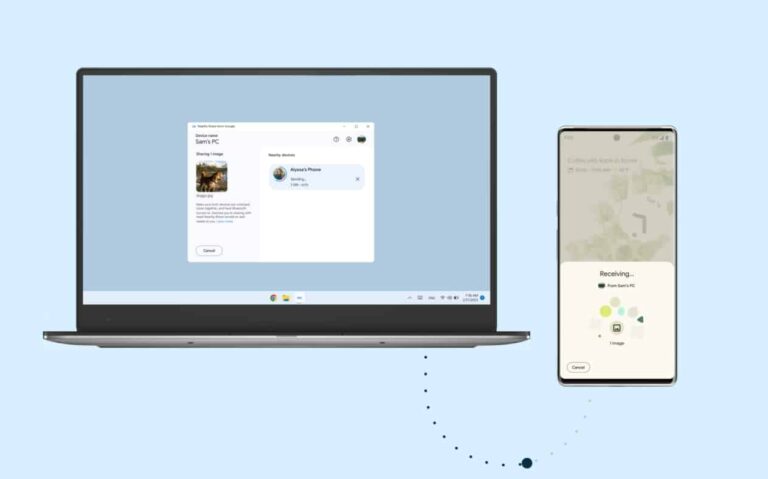
Over the weekend it was discovered that Google is expanding the support for its Nearby Share feature to Windows PCs on a global scale. The feature was already available to Android users with a Windows desktop or laptop in the US and a few other countries. Having been launched in early April in beta.
Now it looks like more countries from around the world will have access. A recent report from 9To5Google on May 6 points out that Google has added information to the support page for this feature regarding regional availability.
The support page now reads that Nearby Share is “available in the US and most countries globally.” It’s the “most countries globally” part that’s worth paying attention to. As this confirms the feature is now available pretty widely. This includes many countries in Europe and Asia, as well as parts of Africa and South America. Basically, just about any country where Android and Windows devices are available it seems.
Google doesn’t appear to give a definitive list, but it does mention that it’s still not available in Cuba, Iran, Syria, or North Korea. Which are all countries with sanctions.
Nearby Share gets global expansion
If you’ve got a Windows PC and an Android device, it might be worth checking this app out. Its main goal is to provide users with convenience. With Nearby Share, you can share files between your Windows PC and Android device wirelessly. This includes images, videos, documents, and more. So long as the two devices are close together as the name suggests.
Since the feature is still in beta there’s also a chance that you may run into bugs. It’s worth keeping in mind as many assume a release is a release, and therefore should be no bugs at all. This doesn’t mean you’ll run into any bugs of course. But it’s best to be aware of any that could potentially pop up. You can grab the beta PC app from the button below.
If you are tired of composing texts while chatting with friends, the Google Message Magic Compose is here for you. This new artificial intelligence-powered feature can do a lot more than just compose those text messages for you. It can also help you to spice up your chatting experience with family and friends.
Beta testers have already gained access to this feature ahead of its global release. This feature marks a new era in the use of artificial intelligence technology on a day-to-day basis. Over the past few months, netizens have had a taste of various artificial intelligence models.
Now it is time to let artificial intelligence do the chatting for you while you chill and enjoy the conversation. This article will cover all the details regarding this new feature that is coming to the Google Messages app. For Google, this is a new era for chatting and artificial intelligence is already playing a big role.
Details regarding the Google Message Magic Compose feature
Google Message beta testers are already making use of an artificial intelligence text composer feature. From the images sent to the sources of this information, it is clear that the name of this feature is Magic Compose and its function is very simple. Once activated, it helps generate automatic responses for users based on their conversation with the person they wish to reply to.
To better understand this feature, think a bit about the Gboard (Google keyboard) on your Android device. While typing, the keyboard helps generate the next word for your sentence. It does this by understanding your previous typing pattern and how it feels the sentence should go.
Just like Gboard, the Magic Compose feature will pick a ton of options on what your response to a chat should be. Activating this feature will let users pick the response they feel is best from the list of suggestions. To activate this feature, users will need to head over to the suggestion page under settings and toggle on the Magic Compose slider.
For now, not everyone has access to this feature as it is still in its experimental stage. There is some spice to stand this feature apart from the Smart Reply feature Google Messages already offers. The generated replies with Google Message Magic Compose come in several sections for users to pick from.
There are up to five sections, being chill, excited, lyrical, formal, and short. All sections can be put to use while chatting with friends and acquaintances, but formal is best while talking with a colleague, an employer, an employee, or even a client. The lyrical section stands out as Google picks song lyrics that can best reply to the message sent to the user.
Surprisingly, this feature is not limited to RCS messaging and can be used over MMS chats. The coming months will shed more light on this Google Message Magic Compose feature that might be rolling out globally. Do you think artificial intelligence has a role to play in chats between family and friends?
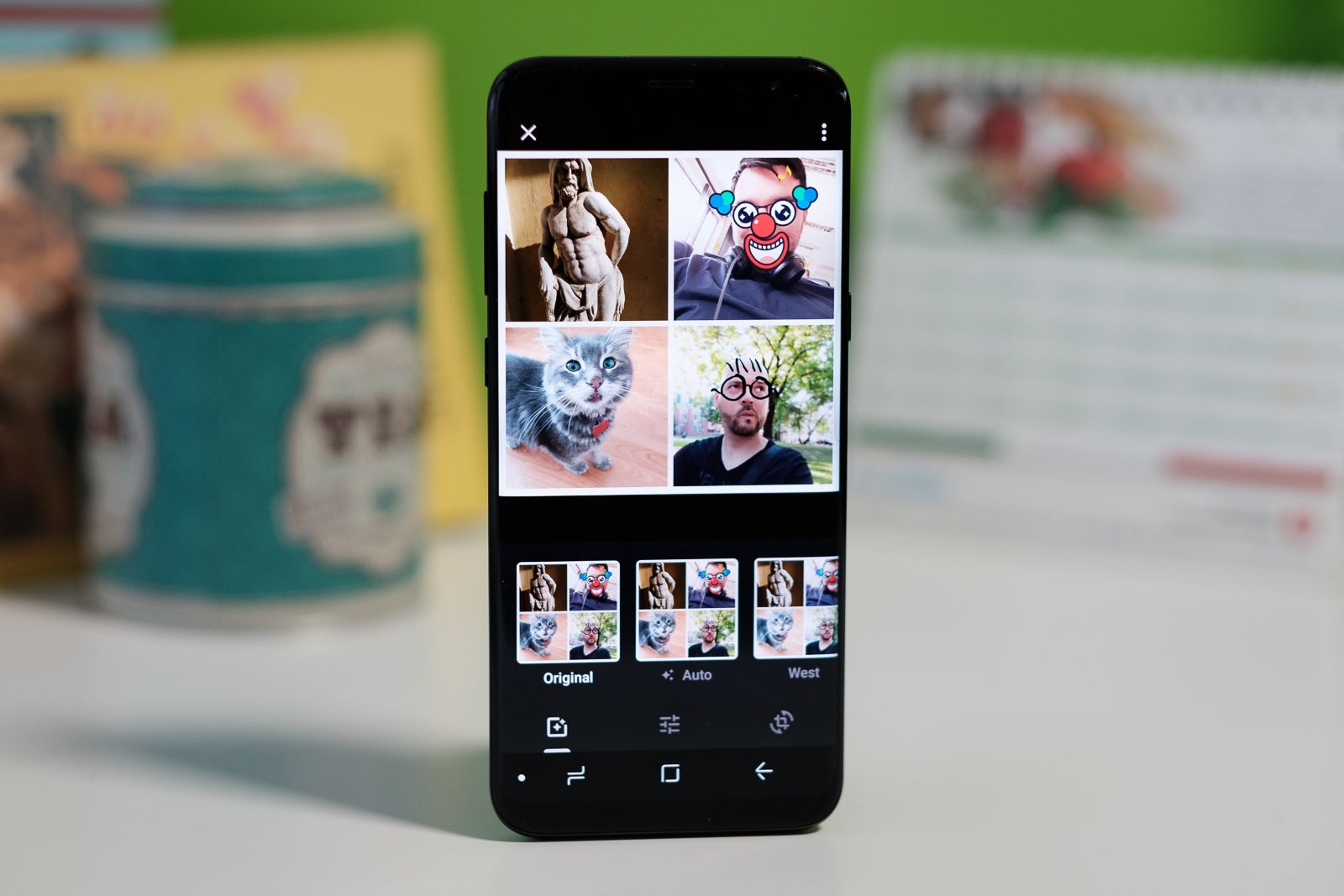
Google Photos is an incredible app for Android users that want a way to easily access their photo library from wherever they are, while also having a basic – but powerful – set of tools to edit photos and videos from their phones. Unfortunately, the way the Google Photos app works right now on tablets, and in landscape mode, is not ideal as it is just a stretched out version of the phone app.
Thankfully, according to a report on the Google News Telegram channel, this will be changing soon as a new layout has been spotted that will make Google Photos look very similar to other photo editing apps when in editing mode. Instead of all the editing tools being listed at the bottom, the new tablet interface will instead show the tools on a side panel.
Google Photos Edit tool will soon be optimized for tablets in landscape mode.
Until now, it has looked like a stretched mobile version, but Google will soon change that. The main editing tools will now be on the right, while the photo being edited will be displayed on the left. pic.twitter.com/wjEQ1Dn7mr
The tools themselves don’t appear to be changing, since as you can see in the images below, it includes the familiar enhance, crop, rotate, magic eraser, and color adjustments. However, the convenient re-positioning makes it easier to navigate and zoom in and out of your picture as needed on the left, while still keeping the tools you are working with on the right.
As mentioned by the source, this new layout has yet to roll out to the masses and is only visible in the latest version of the Google Photos app after enabling it. It is also not applicable in portrait mode, which appears to be unaffected by this change.
The new tablet editing interface is a welcome addition for users who edit their photos on tablets, as it provides a more streamlined and user-friendly experience. With the new layout, users can easily edit their photos on their tablet and share them with friends and family.