Over the past few years, data breaches and hacks have become increasingly common, with new companies falling victim every day. Western Digital recently fell victim to a data breach, which impacted both customer and company data and resulted in the company halting certain online functions. Now, WD has finally come out with an update on the situation.
According to WD, threat actors breached its systems, gained access to a crucial database and stole the personal information of customers, including customer names, billing and shipping addresses, email addresses, and telephone numbers. In addition, hackers were also able to access passwords and partial credit card numbers, but fortunately, they were encrypted and hashed, thus making it difficult for hackers to decipher the information. To limit the extent of the breach, WD says it took several steps, including the shutdown of certain online services, such as its web store.
While Western Digital has not disclosed the true extent of the breach, hackers reportedly stole over 10 terabytes of customer information and have also attempted to demand a ransom from the company based on the promise that they will not publish the data. However, WD rejected these demands, and hackers have begun publishing the stolen data on websites.
“We are working with leading outside forensic and security experts to assist with our investigation and are coordinating with law enforcement,” says WD.
WD’s advice to its customers
Until the investigation is complete, WD has advised all affected customers to be cautious of any unsolicited communications and avoid clicking on any suspicious links or downloading attachments from emails.
Moreover, WD said that while it has already restored My Cloud services on April 13th, it will restore account access by May 15th. However, it is important to note that its online store will remain closed until full restoration is complete.
The FBI has been coordinating Operation PowerOFF since 2018, aiming to disrupt the DDoS-for-hire service infrastructures worldwide.
As part of this Operation, On May 8th, 2023, the FBI seized around 13 internet domains that offered DDos-for-hire services.
The FBI has named them “Booter” services as these services result in “booting” or dropping the victim’s computers from the internet.
The seizure revealed data of hundreds of thousands of DDos-for-hire users responsible for millions of attacks against Schools, universities, financial institutions, and government websites, affecting millions of victims.
10 out of 13 domains seized were found to be a reincarnation of previously seized domains in December when the FBI targeted 48 booter service domains.
An example shown by the Dept of Justice stated that a domain named cyberstress.org was found to be a reincarnation of cyberstress[.]us, seized in December.
The investigation by the FBI
The FBI opened new accounts and renewed old accounts on these DDoS-for-hire service websites for further investigation. They paid for these services in cryptocurrency and launched an attack on FBI test systems.
As advertised by these websites, the services were able to affect the computers on a large scale severing internet connections from the systems and making them completely unavailable.
Additional investigation showed that these services could also disrupt other users’ internet connections if the attackers launched their attack on an internet service provider via a connection point.
Following these investigations, the FBI stated that four defendants arrested in Los Angeles in 2022 admitted to running these booter service operations.
Jeremia Sam Evans Miller aka “John The Dev” from San Antonio, Texas ran the botter service named Royalstresser.com (formerly Supremesecurityteam.com).
Angel Manuel Colon Jr., aka “Anonghost720” and “Anonghost1337,” from Belleview Florida who ran the booter service SecurityTeam.io
Shamar Shattock from Margate, Florida, who ran the booter service “Astrostress.com”
Cory Anthony Palmer, from Lauderhill, Florida, who ran the booter service Booter.sx
All these defendants are scheduled to be sentenced this summer, as mentioned by the Department of Justice.
Furthermore, the FBI has been coordinating this operation with international law enforcement agencies and is aiming to arrest administrators and users of these illegal services.
The time has come once again to kick back and watch the Google I/O keynote, this time to see what new stuff Google has in store for users in 2023.
This is the second year that Google is bringing the event back to the shoreline amphitheater with physical attendance after having digital-only events for a couple of years. It’s also going to be streamed online for anyone who can’t attend. And this year is definitely going to be one to watch as Google is expected to officially unveil some exciting hardware at this year’s event.
Although, most of it is stuff that’s expected because a lot of it has already leaked numerous times. Here’s what you will likely see Google show off at I/O 2023 if you watch the event. For starters, Google is expected to unveil at least two major pieces of hardware. There’s the Pixel 7a, Google’s latest iteration of the A series device, and then the more exciting of the two, the Pixel Fold.
The Pixel Fold has been rumored for years now. And it looks like we may finally get to see the device. Google is also expected to launch the Pixel Tablet at this event after showing it off at its Fall event last year.
How to watch Google I/O 2023
Now, you might be wondering how you can watch the Google I/O 2023 keynote and it’s actually quite simple to do. Google will be streaming the event live on its YouTube channel and you can actually view that video below. This is typically where Google will show off any hardware. In addition to talking about the different topics this year’s event will focus on. Such as new Android versions, beta software, new features and more.
The keynote will officially start at 10am PDT on May 10. So there’s nothing to actually watch until then. It’s also worth keeping in mind that a lot of time with these live events, there is a possibility of things getting started a few minutes late.
Though Google is usually pretty good about starting mostly on time. The keynote should last for around two hours and should end right about noon. But just because the keynote is over that doesn’t mean Google I/O is over. As there will still be more to see. At 12:15pm PDT, Google will then be livestreaming the Developer Keynote over on the Google Developers YouTube channel. And you can view that livestream video below.
This particular keynote will focus on “the latest updates to our developer products and platforms” Google says. So there’s likely to be a lot of technical stuff and it won’t necessarily be very consumer-driven. But if you’re interested in watching it either way you can do so from the video above. You can also check out the complete Google I/O schedule here.
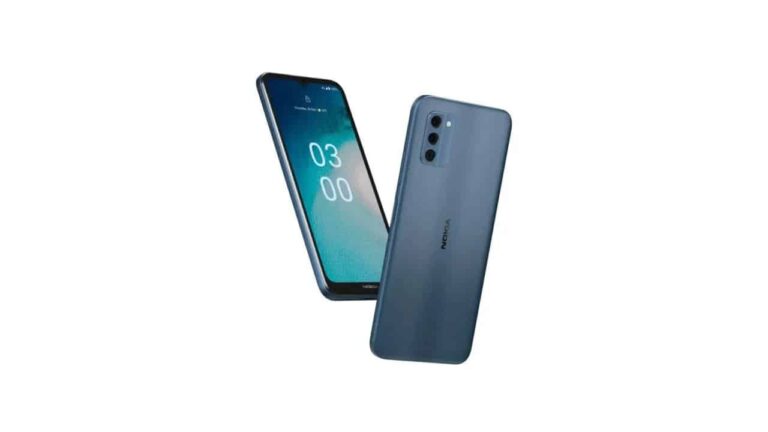
Ever since HMD Global acquired the rights to the Nokia brand and started launching phones, the fan-favorite brand has had a tough revival, with some phones performing well while others, like the Nokia 9 PureView, being a total flop. Now, Nokia is gearing up to launch two new affordable phones in the US, namely the Nokia C300 and C110, with Verizon’s prepaid carrier Tracfone.
According to sources familiar with the matter, Tracfone has already set up support pages for both the Nokia C300 and the Nokia C110, indicating that the launch is imminent. In terms of specs, both models will support 5G, with the Nokia C300 being the more advanced of the two.
It features a 4000 mAh battery, a triple camera setup on the back (comprising a 13MP main sensor, 2MP macro sensor, and a 2MP depth sensor), an 8MP selfie shooter, and 32GB of expandable storage.
Additionally, the phone is IP52 water and dust resistant. However, it comes with Android 12 out of the box, which may be a deal-breaker for some users since there is no guarantee of the phone receiving future software updates from Nokia. Furthermore, details on the chipset and display size remain unclear.
On the other hand, the Nokia C110 is the more budget-friendly option, with a single 13-megapixel camera and a secondary 5-megapixel selfie shooter. The phone has a smaller 3000mAh battery but is also IP52 water and dust resistant, like its bigger brother.
Pricing and availability
While it’s unclear how much these phones will cost, based on the specifications and reports, the Nokia C300 and Nokia C110 could be the most affordable 5G smartphones available in the US. Therefore, if you’re in the market for a budget Android 5G phone, keep an eye out for these new Nokia phones when they eventually become available.
POCO is best known as a brand under Xiaomi’s wing that releases budget-conscious devices. The company does have various different ranges of phones on offer, and the F series represents their very best phones. Well, the POCO F5 and POCO F5 Pro got announced quite recently, and we’ve been using them for a while now. POCO shipped them out early for us to check out. So, in this review article, you can read more about the POCO F5 and POCO F5 Pro, in case you’re planning to upgrade.
The ‘Pro’ model is, of course, the superior one, and they are fairly different, but have some things in common. Despite that, we’ve decided to hit both of them in the same review, to basically compare them at the same time. They do not look the same, though, nor do they come with the same processor. On the flip side, their software builds are pretty much the same, as is their wired charging, for example. Having said that, we’ll kick things off with the design aspect, and move from there. Let’s get going, shall we?
Table of contents
POCO F5 & POCO F5 Pro Review: Hardware / Design
From the design standpoint, these two phones do not look like siblings, not at all. They have a different overall shape, not to mention entirely different camera islands on the back. In all honesty, I personally preferred the POCO F5 design over the POCO F5 Pro. I’ll explain why below, but I just wanted to emphasize how different they are first.
Both phones include a flat display, albeit not the same one
The POCO F5 has flat sides, and a flat display, with a centered display camera hole. Three cameras sit on its back, each of which is a separate camera island, basically. The POCO F5 Pro does not have flat sides, not at all. Its backplate curves into the frame, it has a regular design, I’d say. It’s similar to the vast majority of smartphones with glass backplates. It also has a flat display, though, and a centered display camera hole.
The POCO F5 is less slippery in the hand due to its flat sides (all around) mostly, and it doesn’t cut into your hand as it’s not exactly heavy. It weighs 181 grams compared to 204 grams of the POCO F5 Pro. The difference is not that big, but I can definitely feel it. I’ve found that the POCO F5 Pro is more difficult to use with one hand, even though they’re similar in terms of size. Neither is exactly ideal for one-hand use, that’s for sure.
The POCO F5 is more comfortable to use
They both feel really nice in the hand, and well-built. The POCO F5 Pro more so than the POCO F5, but only because of the added weight. Once again, I do prefer the POCO F5 more due to the lack of heft. If you’re fed up with gigantic and heavy phones, and want to get one of these two, go with the POCO F5. Also, the backplate of the blue POCO F5 looks great. It glitters when the light hits it the right way, and it looks great without looking tacky. I’ve used the white POCO F5 Pro, which was rather bland in comparison. I also preferred the camera design on the POCO F5, even though it collects dust much quicker due to separate camera islands.
Cases
Each device comes with a regular gel/silicone case. It’s a soft, see-through case, that many people use. The fit is excellent, as this is an official case, and it does offer plenty of protection. All the buttons are covered, and all the sides as well. The case protects the cameras really well, and there’s also a generous lip on the front. This will do just fine until you get something else, if you don’t like this style, of course.
Both phones:
POCO F5:
POCO F5 Pro:
POCO F5 & POCO F5 Pro Review: Display
Both phones include 6.67-inch AMOLED displays, but they’re far from being the same. The one on the POCO F5 Pro is sharper, brighter, and offers a higher touch sampling rate. The POCO F5 features a fullHD+ (2400 x 1080) Flow AMOLED DotDisplay. It has a maximum brightness of 1,000 nits, a 120Hz refresh rate, and a 240Hz touch sampling rate. The POCO F5 Pro, on the other hand, features a WQHD+ (3200 x 1440) Flow AMOLED DotDisplay with a 120Hz refresh rate, and a 480Hz touch sampling rate. It gets up to 1,400 nits of brightness at its peak. Both panels are protected by the Gorilla Glass 5.
The ‘Pro’ model has a brighter display
Is there a noticeable difference between them, usage-wise? No, not really. Truth be said, most people won’t notice the difference in resolution or touch sampling rate. Where you will notice the difference is outdoors, during the day, especially if the sun is shining. The POCO F5 Pro panel does get brighter, though the difference is not huge. Both displays are more than good enough, actually. They’re vivid, the blacks are decently deep, and the viewing angles are also not bad. Overall, I don’t have any major complaints here. These are not the best panels out there, but they’re good, especially for the price.
POCO F5 & POCO F5 Pro Review: Performance
The processors used inside these phones are different, but in other performance-related hardware aspects, they’re quite similar. The POCO F5 is fueled by the Snapdragon 7+ Gen 2 SoC. That is Qualcomm’s best mid-range chip right now, basically. The POCO F5 Pro is equipped with the Snapdragon 8+ Gen 1, which is a predecessor of the Snapdragon 8 Gen 2. So, it’s basically a flagship processor for 2022. The Snapdragon 8+ Gen 1 is, needless to say, a better chip, but the Snapdragon 7+ Gen 2 performs great too.
Before we get down to the actual performance, let’s see what else is included. Both phones come with LPDDR5 RAM and UFS 3.1 flash storage. The same goes for Dynamic RAM Expansion 3.0 feature, and LiquidCool Technology 2.0. Both smartphones come in variants with 8GB and 12GB of RAM. The POCO F5 goes up to 256GB of storage, while the POCO F5 Pro comes with up to 512GB of storage. Both variants that we used include 12GB of RAM, by the way, just to give you some perspective.
The POCO F5 Pro is more powerful, though the vanilla model is no slouch either
Day-to-day performance on both phones is great, to say the least. The Snapdragon 8+ Gen 1 is not that much inferior to the Snapdragon 8 Gen 2, and offers outstanding performance. You will not exactly notice a major difference between the two during regular tasks, but the Snapdragon 8+ Gen 1 does stand apart when more demanding games are loaded. You can even use the POCO F5 Pro as a gaming phone, without a problem. The POCO F5 also handles games with ease, well the vast majority of them. It doesn’t offer the same performance as the Snapdragon 8+ Gen 1 when it comes to Genshin Impact and similar games. I did not notice any lag during my usage. A skipped frame here and there was expected, as is on almost all phones, but both have performed admirably.
POCO F5 & POCO F5 Pro Review: Battery
POCO did not skimp out on batteries either. The POCO F5 comes with a 5,000mAh battery, while its sibling includes a 5,160mAh battery. The difference in battery capacity makes sense, as the POCO F5 Pro does have a higher-res display. You’ll be glad to know that both devices offer really good battery life. Going the distance with both phones is possible, though your usage and signal will, of course, determine how good the battery life will be.
The battery life is solid
For me, personally, both phones were able to cross the 7-8-hour screen-on-time mark, depending on the day. I even had some battery left in the tank. The battery life on them is comparable, at least it was for me. I even played some games from time to time, but short sessions, and simpler games are in question, aside from the days I was testing specifically gaming, of course. Other than that, I did not really spare either phone in terms of usage. I edited images and videos on them, messaged a lot, sent a lot of emails, I was taking a lot of pictures on a daily basis, and so on.
They charge faster than way more popular Apple & Samsung flagships do
When it comes to charging, they both support 67W wired charging, and come with 67W chargers. The POCO F5 Pro also supports wireless charging, 30W wireless charging, to be exact. Needless to say, all of this is plenty fast, faster than what Apple, Samsung, and Google offer, so… I can’t complain. I had no issues with charging whatsoever.
POCO F5 & POCO F5 Pro Review: Camera
The camera setups on these two phones do not look identical, that’s for sure, but they do have the same camera hardware. Both smartphones feature a 64-megapixel main camera (f/1.79 aperture, 1.4um pixel size), an 8-megapixel ultrawide camera (f/2.2 aperture), and a 2-megapixel macro camera (f/2.4 aperture). A single 16-megapixel selfie camera (f/2.45) is also a part of the package.
Considering these two devices have the same camera hardware, and their software is so similar, you’d guess they have the same camera performance, right? Well, no, not really. In fact, believe it or not, they do look considerably different in comparison. I did my best to shoot the same scenes with both phones, only a few seconds apart, as I had both devices on me at all times. I was shocked to see how different the results were.
The POCO F5 actually provided better pictures, which is a bit odd
Believe it or not, the POCO F5 did a better job overall, at least in most situations. It provided warmer images, with better details, and far better white balance in some scenes. It even did a better job in low light. The images overall ended up looking sharp in most cases, with good colors, and they don’t look too processed. The POCO F5 Pro tended to sharpen things up way too much, and colors in some cases are way off. Look at the grass in the camera samples below, and you’ll see what I mean. It also overexposed some shots I took, unlike the POCO F5.
Low light performance is good enough
Both phones can shoot in low light without a problem. Those samples are not great, but considering the price tag, they’re good enough. In fact, low light mode is not needed for low light shots, at least you don’t have to activate it manually. Both phones will do that on their own. You can force it in some cases, if you’d like to get more light, but get ready for overexposed shots then. Simply let the phone do it on its own, well, unless you activate ultrawide mode, in which case you should always reach for the night mode manually. Low light shots with that camera are really bad unless night mode is involved. Low light shots also look more similar between the two, more similar than samples taken during daylight.
A 2-megapixel macro camera is an afterthought
There is also a 2-megapixel macro camera on the back of both phones, but that camera is not really worth talking about. OEMs should stop utilizing 2-megapixel cameras on phones, they simply don’t offer good performance. You can get usable shots under great lighting, outdoors, but for anything else, it’s not worth it. You’d be better off using the main or ultrawide cameras.
POCO F5 camera samples:
POCO F5 Pro camera samples:
POCO F5 & POCO F5 Pro Review: Software
Both of these phones run Android 13 out of the box, with Xiaomi’s MIUI 14 on top of it. They do have the POCO launcher on top of all that, of course. Now, if you’ve used MIUI 14 on any other phone, you’ll know what to expect here. There are not many changes compared to MIUI 13, most of them are under the hood. They’re performance-related,. That being said, the software on these two phones is very similar. It not only look similar, and feels similar to use, but I’ve had a similar experience with both phones.
There’s plenty of bloatware here, but almost all of it is removable
You do get a lot of pre-installed apps that you may not want to use. The good news is, you can uninstall the vast majority of that, with ease. There is even the batch uninstall option, if you’d like to get rid of it all at once. For example, the Amazon Shopping app is installed, the same goes for Netflix, a bunch of games, and more. All that can be uninstalled. Xiaomi decided to go even futher here, as it allows you to uninstall some system apps too. Calculator, for example, can be uninstalled, without a problem. What you cannot uninstall is the Camera app, of course, and apps of that nature. Everything that is not a crucial part of the experience can be removed, so don’t be alarmed by bloatware.
MIUI 14 feels great to use, from the performance standpoint
MIUI 14 felt snappy to use, and other than a single app crash across these two phones, I really didn’t have any issues with it. I’m still not a fan of some things Xiaomi is doing in MIUI, as it tends to feel considerably different to stock Android, but it works. Not only does it work, but it works really well. Unlike stock Android, the status bar icons are colored here, you cannot swipe across your bundled notifications with one finger to expand them (tap to expand does the trick), and so on. There are a ton of such small differences included here. The quick toggles section looks different by default, but you can change its appearance in the settings, the same goes for the home screen settings, and more.
MIUI-related quirks are still present, though
If you’ve used MIUI in recent past, you’ll be right at home here. And the good news is, I didn’t spot that many bugs at all. Get ready to locking apps in the background, though, as you won’t be getting notifications at times if you don’t do that. You’ll not only need to allow them to autostart manually, but you’ll need to remove battery restrictions, and lock them in multitasking in order for them to push notifications your way in a timely manner. That is to be expected when it comes to MIUI, though.
POCO F5 & POCO F5 Pro: Should you buy them?
POCO has been releasing rather compelling devices for years now. Price tags are really important when we talk about POCO devices. The company always tries to offer the best hardware for the price, and it seems like it managed to do so here, yet again. Both of these devices look very compelling on paper, though the ‘Pro’ model more so due to its processor. The Snapdragon 8+ Gen 1 is still a beast of an SoC, but the Snapdragon 7+ Gen 2 is no slouch either. Neither phone has any critical flaws, while they offer good displays with high refresh rate, really good performance, fast charging, and more. The POCO F5 Pro still needs an update or two in order for the camera to become better, as it has the same camera hardware as the POCO F5. All in all, for the price, these two phones are solid offerings. Not everyone wants to spend over $1,000/€1,000 on a phone.
You should buy the POCO F5 & POCO F5 Pro if:
You’re on a budget
You want a phone that feels like a top-of-the-line device for less
You’re tired of Samsung & Apple offerings relatively slow charging
NextGen Healthcare, which has its headquarters in Atlanta, Georgia, is a company that develops and markets software for the management of electronic health data and offers practice management services to medical practitioners.
The notification has provided the breach information that denotes data of nearly 1 million customers has been breached by an unauthorized party in which 3913 residents belong to Maine.
Threat actors have used stolen client credentials obtained from another stolen source to gain access to the NextGen database. The data stolen by the attackers are claimed to have the “Social Security Number” of customers.
As per the notification, the breach occurred between the 29th of March, 2023, and the 14th of April, 2023. However, the breach was discovered nearly 10 days later (24th April 2023).
This breach was submitted to the authorities through the “Sheppard Mullin Richter and Hamptom LLP” firm. According to the Office of the Maine Attorney General, NextGen offers threat protection services as part of their Individual Notification Letter.
“NextGen Healthcare is offering you 24 months of free fraud detection and identity theft protection through Experian’s® IdentityWorks℠ product.“ reads the letter released by NextGen as part of this breach.
NextGen stated that even though there is no evidence that the stolen personal information has been used for criminal activities, they are ready to offer 24 months of free identity monitoring, fraud consultation, and identity theft restoration service through Experian’s IdentityWorks Program.
Further information regarding this data breach is still unconfirmed, and the Forensic investigation is still under process.
According to reports, the ALPHV ransomware organization, also known as BlackCat, claimed responsibility for a ransomware attack against NextGen in January of this year.
Huawei originally announced its Huawei P60 series back in March. The company launched three devices in China, the Huawei P60, P60 Pro, and P60 Art. Out of all three of those devices, only one made it to global markets, the Huawei P60 Pro. That’s what Huawei announced today.
This is basically Huawei’s brand new flagship smartphone. It has a ‘Quad-Curve’ display, which essentially means that it’s curved on all sides. Huawei’s Kunlun Glass panel protects that panel, a panel that proved its worth on the Huawei Mate 50 Pro.
The Huawei P60 Pro reaches global markets with its interesting-looking camera island
On the back, you’ll notice ‘The Eye of Light’ camera module, as Huawei likes to call it. There is a compelling main camera back there, which we’ll talk about soon. In addition to that, ultrawide and telephoto cameras are also included.
The device features a 6.67-inch 2700 x 1220 LTPO AMOLED display. It has an adaptive refresh rate of up to 120Hz, and it goes down to 1Hz. This display is curved, as already mentioned, and has a centered display camera hole.
The Snapdragon 8+ Gen 1 fuels this smartphone, though this is a 4G variant of the chip. YOu won’t be getting 5G connectivity due to the US ban Huawei has to deal with. The phone comes in both 8GB and 12GB RAM variants, with 256GB and 512GB of storage, respectively.
This phone has truly powerful camera hardware, variable aperture included
A 48-megapixel main camera is included here, and Huawei refers to it as an ‘Ultra Lighting Main Camera’. It has an auto-adjustable physical aperture (f/1.4-f/4.0), a high transmittance lens group, and an RYYB SuperSensing sensor. This camera does have OIS support, and PDAF too.
There is a 13-megapixel ultrawide camera on the back of this phone too, and a 48-megapixel telephoto camera. That telephoto camera has an f/2.1 aperture, and supports 3.5x optical zoom. OIS is also supported, the same goes for PDAF. That telephoto camera also acts as a macro camera. A single 13-megapixel camera sits on the front (f/2.4 aperture).
The Huawei P60 Pro supports 88W wired, and 50W wireless charging
The Huawei P60 Pro includes a 4,815mAh battery on the inside. 88W wired Huawei SuperCharge charging is supported, while the phone does support 50W wireless charging too. On top of that, 7.5W reverse wireless charging is on offer as well.
An in-display fingerprint scanner is included (optical), as is Bluetooth 5.2. The phone does offer a set of stereo speakers, and ships with EMUI 13.1. Google services are, of course, not included here. The phone comes with Huawei’s mobile services.
The Huawei P60 Pro will become available in Europe starting from May 9 via Huawei ecommerce. It will also be available from selected retailers starting from May 22. The 8GB RAM model is priced at €1,199, while the 12GB RAM variant costs €1,399. Each model will be available in two colors, Black and Rococo Pearl. Well, except in the UK, where the 8GB RAM model will be available in black only, and the 12GB RAM model available in ‘Rococo Pearl’ color only.
Allegations that Apple purposely withheld information on faulty iPhone batteries have led to a potential $2 billion lawsuit in the UK. Consumer advocate Justin Gutmann filed the complaint against Apple, alleging that the company purposefully withheld information concerning the performance of its batteries from users.
The case is based on a similar case in the US when Apple settled for $500 million to end a class-action lawsuit over claims that it had purposefully slowed down older iPhones. In that instance, Apple acknowledged that it had slowed down older iPhones to preserve battery life but asserted that it had done so in the best interests of its users.
However, in the UK case, Gutmann’s lawyers claim Apple has “surreptitiously” installed power management tools on specific iPhone models to conceal their battery issues. Gutmann is now seeking compensation for the millions of UK iPhone customers affected by Apple’s actions.
Apple could face a $2 billion lawsuit over iPhone batteries issues
In response to allegations, Apple said the lawsuit is “baseless,” and there was no issue with iPhone batteries. Of course, the company confessed to iPhone battery issues in a few iPhone 6s models that were solved by free battery replacements. Apple also refers to its apology in 2017 and its offer for battery replacements to impacted customers.
As per the court filing details, Apple’s lawyer David Wolfson argues that “not all batteries could deliver the peak power demanded in all circumstances at all times.”
Additionally, Apple argued that the controversial power management tools only reduced the iPhone 6’s performance by an average of 10%. The tool introduced in 2017 to manage demands in older iPhone batteries with a low charge level.
According to Gutmann’s lawyer Philip Moser, Apple was obligated in 2019 by the UK watchdog to be “clearer and more upfront” with iPhone users in the country.
The potential $2 billion lawsuit is a serious setback for Apple, which has come under fire recently for its commercial tactics. The business has been charged with engaging in anti-competitive activities, evading taxes, and abusing supply chain workers. It is also unknown how the case will turn up. However, it is evident that the claims have harmed Apple’s brand.
Iranian hacker group ‘Mint Sandstorm’ is retaliating against recent attacks on its infrastructure by targeting critical US infrastructure, as recently discovered by cybersecurity researchers at Microsoft’s Threat Intelligence team.
Linked to the IRGC (Islamic Revolutionary Guard Corps) and believed to be working for the Iranian government, the Phosphorous hacking group now operates under the name ‘Mint Sandstorm.’
While apart from this, in 2022, a subgroup of Mint Sandstorm shifted their focus from surveillance to launching direct attacks on crucial US infrastructure.
These attacks on US infrastructure are believed to be a retaliatory response by Iran, attributing recent attacks on their own infrastructure to the US and Israel.
In June 2021, Iran’s railway system was targeted in a destructive attack, followed by a cyberattack that caused a severe blackout at Iranian gas stations in October of the same year.
Attack Chain
Microsoft believes an increase in cyberattacks is due to the Iranian government’s loosened hold and restrictions on state-sponsored threat actors offering more freedom.
This follows the sanctioning of individuals and entities affiliated with the IRGC by OFAC last year.
The newly identified subgroup of Mint Sandstorm frequently utilizes proof-of-concept exploits and N-day exploits, including known vulnerabilities such as Log4Shell, in their cyberattacks.
The hackers use a custom PowerShell script to gather information on the targeted network before using the Impacket framework to move laterally and choose between two attack chains.
The hackers’ two attack chains include stealing the Windows Active Directory database to obtain credentials for further intrusion and deploying custom backdoor malware to maintain persistence and deploy additional payloads.
Attack Chain
The .NET backdoor malware Drokbk and Soldier fetch a list of command and control server addresses from a GitHub repository controlled by the attacker.
While the former works as an installer, the latter can download extra payloads and remove itself from the system.
Alongside using exploits to breach networks, the attackers also conducted low-volume phishing attacks, including links to OneDrive accounts with spoofed PDFs containing Middle East-related security or policy information, targeting a few victims.
The phishing attacks used malicious PDFs containing links for a Word template that executed a payload on the device through template injection.
The CharmPower PowerShell post-exploitation framework was deployed for persistence and executing additional commands.
The observed capabilities in the cyberattacks attributed to the Mint Sandstorm subgroup are alarming, as they allow for concealed C2 communication, system persistence, and a wide range of post-compromise tools, with initial access potentially leading to further behaviors that could compromise the confidentiality, integrity, and availability of a system.
Attack Surface Reduction Rules
Here below, we have mentioned the attack surface reduction rules recommended by Microsoft to prevent the execution of non-compliant executables:-
Executable files must meet a prevalence, age, or trusted list criterion before they can be executed.
Disallow the creation of executable content by Office applications.
PSExec and WMI-based process creation should be blocked.
Since the vulnerabilities are a primary means of entry into corporate networks for these threat actors.
Malwarebytes removes all remnants of ransomware and prevents you from getting reinfected. Want to learn more about how we can help protect your business? Get a free trial below.