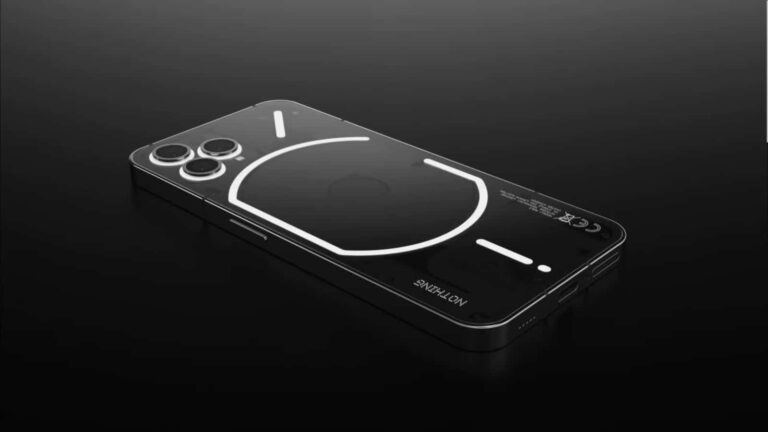
Early into the Nothing Phone (1)’s life, we got the impression that updates would come slowly to this device. However, that might not be the case. According to 9To5Google, the Nothing Phone (1) will be getting the Android 14 beta in the coming weeks.
This is pretty big, as Nothing was pretty late to the game with Android 13. That’s understandable, as this is the company’s first phone. Also, Nothing CEO Carl Pei explained why the update process was taking so long. The company was having issues securing employees to help with the software development.
That seems to be a thing that passed. The Nothing Phone (1) will get the Android 14 beta
Now that the company has been able to get the ball rolling in terms of software development, the company is preparing to test Android 14 on its device. That’s pretty surprising seeing as the phone picked up Android 13 fairly recently. Not only that, but it also means that Nothing is getting the jump on many other more established companies in terms of hopping on Android 14.
That is a big PR plus for Nothing and a reason for early adopters to have faith in the company. We’re still figuring out how Nothing performs as a phone manufacturer and a tech company in general. Seeing it jump on Android 14 so early in the game is a good sign the company is serious about creating a strong smartphone experience.
At this point, we have no idea when the Android 14 beta will land on the Nothing Phone (1). We just know that it’s landing in the coming weeks.
With Android 13, Nothing didn’t start the beta testing phase until months after the official release. So, the fact that Nothing is testing Android 14 months before its official release hopefully points to the phone getting the stable release not too long after the Pixel phones.
However, by that time, we expect the Nothing Phone (2) to be on the market. Chances are that the Nothing Phone (2) will get Android 14 before the Nothing Phone (1). In any case, it’s great to see Nothing jumping on the Android 14 bandwagon so early in the game.
Microsoft is done pushing major feature updates to Windows 10. The 22H2 update was the final major OS release for Windows 10 PCs. Going forward, they will only get monthly security updates. Those will come at least until October 2025 after which the company will pull all sorts of support to Windows 10. Microsoft ended support for Windows 7 and Windows 8.1 in January this year. It also stopped selling Windows 10 downloads around the same time.
Microsoft stops pushing feature updates to Windows 10
Windows 10 debuted in July 2015. Since Microsoft promises ten years of security updates and technical assistance for all major Windows releases, it still has some life left in it. However, for the rest of its life, Windows 10 will only get security updates. The company will no longer push new features or major changes to the last iteration of its PC operating system. In a blog post on Thursday, Microsoft announced that the current 22H2 release for Windows 10 will be the final version.
The company added that security updates for Windows 10 PCs are guaranteed until October 14, 2025. Existing Long-Term Servicing Channel (LTSC) releases will continue to receive updates beyond that date, though. The extended support for those releases will be based on their specific lifecycles. Microsoft encourages all Windows 10 users to upgrade to Windows 11 as early as possible to ensure continued feature support and functional improvements.
Microsoft has also announced the schedule for the next Windows LTSC releases. Organizations that require more time to adopt Windows 11 can look forward to Windows 11 Enterprise LTSC and Windows 11 IoT Enterprise LTSC in the second half of 2024. They can begin planning and testing apps and hardware on the current GA (general availability) channel release, i.e. Windows 11 version 22H2. The company will provide more details closer to the next LTSC release. Meanwhile, you can refer to this guide for tips on how to test your apps.
As said earlier, Microsoft has already ended support for Windows 7 and Windows 8.1. Those users must upgrade to Windows 11 for security updates and technical assistance from the company. While your computer will continue working, it is at greater risk for viruses and malware as it isn’t getting the latest security patches. Unfortunately, your Windows 7 or Windows 8.1 PC may not be compatible with Windows 11. You probably need to buy a new PC to upgrade to the latest version of Windows OS. You can use the PC Health Check app to see if a PC is compatible with Windows 11.
Atomic macOS Stealer (AMOS) is a recent information-stealing malware capable of attacking macOS to steal confidential information.
This malware was discovered by Cyble Research and Intelligence Labs (CRIL) on a telegram channel where the threat actor was advertising the malware. Its latest update was reported to be on April 25th.
The threat actor advertised additional services like web panel, meta-mask brute force for seed and private keys, dmg installer, and crypto checker. The cost of these services was $1000 a month, as posted by the threat actor.
Telegram advertisement of AMOS
Technical Analysis
The malware was found under the name “Setup.dmg, “ an extension for installing applications on macOS.
Further analysis revealed that the malware could not only steal passwords and sensitive files but also get Wi-Fi passwords, credit card information, and browser-based sensitive data like auto-fills, passwords, cookies, and other sensitive information.
Before getting on to the stealing part, the malware provides a Fake password prompt to the victim to get the system password.
KeyChain is the application used in macOS for storing all the credentials, network IDs, Wi-Fi passwords, administrative passwords, etc.; this malware is capable of Keychain Extraction (keys for all the built-in, connected network credentials, credit card details, and macOS passwords).
Key chain Extraction
Crypto Wallet Theft
The malware also can target crypto wallets and steal sensitive information from Crypto wallets like Electrum, Binance, Atomic, and Exodus. This is done with a list of browser extensions provided by the Crypto wallet vendors to their clients for easy access.
Control Panel Services
Buyers of this malware can be presented with an admin panel where they can manage all the information, which is an add-on service provided by the threat actor.
C&C Panel for AMOS
Browser-Information Extraction
Browser-based sensitive information like Autofills, Credit cards, passwords, and cookies can be stolen with this malware. It is written to target files from various browsers like Opera, Firefox, Chrome, Yandex, Edge, and Vivaldi.
Desktop and Documents File Grabbing
The malware steals files from the “Desktop” and “Documents” directories if the victim grants permission. Once permission is granted, the malware steals the files on these directories and stores them on the C&C server.
Malware asking for permission from the victim
Hardware Information
System hardware information like UUID, Device model name, RAM size, Cores, Serial number, and other information can be stolen by this malware.
Processing the Stolen Information
Once the malware collects all this information, the data is zipped and base64 encoded as part of the exfiltration. This zip file is then sent to the “hxxp[:]//amos-malware[.]ru/sendlog” which acts as the C&C server.
Configuring with Telegram
The most important functionality is that this malware can be configured with a Telegram channel which receives the logs on the malware’s activity. This includes the number of cookies, wallets, passwords, and other information.
Cyble has released a complete analysis report on this malware. Though macOS is said to have been secure and reliable, it is recommended for organizations be secure from threat actors.
Now that you’ve ordered your Samsung Galaxy S23, you might be wondering what accessories you should get to compliment your phone. And make sure you can get the best experience from your Galaxy S23. Well, good thing we have you covered here. Here, we have rounded up the very best accessories that you can get for your new Galaxy S23.
Best Samsung Galaxy S23 accessories
In this list, you’ll find things like smartwatches, chargers, cables, and so much more. What you won’t find here are cases. We already have a nice roundup of the very best cases for the Galaxy S23, which you can check out here.
If you purchased the new Galaxy S23, then this 45W wall charger is a must-buy. Even though the S23 only supports up to 25W charging, this is going to future-proof you for a bit, as future phones will work with 45W or faster. Allowing you to fully charge it in about 40 minutes. Which is really useful.
The Galaxy Buds 2 Pro are the latest pair of earbuds from Samsung. These were announced last year, and were highly acclaimed. They offer better noise cancellation and better battery life, compared to the previous “Pro” model. Samsung has also included Hi-Fi sound here, so you’re going to get some really good audio quality on these, which is always nice to see.
The PopGrip from PopSockets is a really good accessory for really any phone. And the reason why this is the best PopSocket you can buy right now is because it does allow you to swap out the top. So if you want to change the color, you can do so.
PopGrip is really great because it allows you to hold onto your phone much easier, especially for larger phones, but even works great on smaller ones like the Galaxy S23. But it also doubles as a sort of kickstand for your smartphone. Allowing you to use it on long flights to watch a movie or two, without having to hold your phone the whole time. It’s a really genius invention, and it’s something that everyone should have.
You can attach the PopGrip to your case, so that it doesn’t ruin your phone too.
This is the same USB-C cable that Samsung includes in the box of the Galaxy S23. So there’s nothing special here, it’s just an additional USB-C cable that you can pick up and have in the car, at work, or even elsewhere in your home. It’s always good to have a second USB-C cable somewhere around, for when you need to charge your phone.
The Galaxy Watch 5 is the latest smartwatch from Samsung, and many might say its the best non-Apple smartwatch on the market. It’s definitely a stunning looking watch, and it starts at only $279. It does run on Google’s Wear OS, so you’re getting all of your usual apps that you know and love here. That also includes Google Assistant, Google Wallet and so much more.
The Fitbit Versa 4 is a great fitness tracker to go along with other accessories for your Galaxy S23. Especially if you’re looking to get in shape this year.
The Versa 4 is the latest in the Versa line for Fitbit. It offers up all of the fitness tracking that you’d expect from Fitbit. Including the ability to track your steps, your workouts, calories burned and much more. It can also deliver some notifications to your wrist.
The Anker PowerPort Atom PD 1 is the perfect USB-C PD charger to use with the Galaxy S23. While it does still come with one in the box, it never hurts to have a spare somewhere in your home or at work.
This is a 30W charger – and yes, the Galaxy S23 tops out at 25W but this will work on other devices too. It also uses Gallium Nitride or GaN, which makes this charger a lot smaller than you’re probably used too. Which is why we think it is the best option. Since you can easily toss this into your bag when you’re traveling – if we are ever able to do that again.
This is one of the most interesting looking car mounts out there, and it really doesn’t even look like a car mount.
The Spigen Kuel S40 stealth Car Mount is a minimalist car mount for those that don’t want to use magnets. This is a car mount that folds down when it is not in use. Just open it up and stick your phone in the mount, in landscape mode and you are good to go. It’s a good option, because it is fairly small when it is not in use, so that it is not blocking your view of the road all that much.
Spigen offers the Kuel S40 Stealth car mount in only one color. Which is black and blue, so it can blend in with your car a bit more.
This is the new Wireless Charger Duo from Samsung, still capping out at 15W. And that is because Samsung’s phones only do up to 15W. This charger does come in both black and white, so you can choose the one that best fits in your home or office.
With this being a duo charger, you’re able to charge your Galaxy S23, as well as your smartwatch, or maybe your headphones too. Unfortunately, you can only charge one phone at a time here, as the other, secondary charger is slower. And meant for headphones or a smartwatch.
Earlier today, it was announced that the Phoenix Suns and Mercury would be leaving cable TV, in favor of local broadcast channels. The two teams had reached a deal to put all of their regular season games on local broadcast channels that are owned by Gray Television and also on a local streaming platform.
Now, Bally Sports and its parent-company, Diamond Sports Group, is not happy with that decision. Claiming that it breaches contracts and violates bankruptcy laws.
Currently, the Phoenix Suns and Mercury broadcast rights are owned by Bally Sports Arizona, who air their games, as well as on Bally Sports+. DSG is currently in bankruptcy court, and working to restructure its debt, so teams are looking for other ways to broadcast their games.
“The Phoenix Suns breached our contract and violated bankruptcy law, and Diamond Sports Group will pursue all remedies against any parties that attempt to exercise control over our property interests while we reorganize,” Diamond Sports said in a statement. “This is an improper effort by the Suns to change their broadcasting partner without permitting Diamond to exercise our contractual rights.”
The NBA renewed its contract with DSG in February, complicating things
Back in February, the NBA had renewed its contract with Diamond Sports Group, through 2025. Which complicates things here. And it’s going to put DSG and Gray Television into a nasty fight for rights to broadcast the Suns and Mercury.
Though, they need to figure things out soon, as the Mercury’s season starts on May 19. And at this point, there’s no word on where their games will be broadcast. This is likely just the beginning of a long fight between the Phoenix Suns, Mercury, DSG/Bally Sports and Gray Television.
The move to local TV is an interesting one. It’s unlikely that the Suns and Mercury would get a major payday with local channels, as they currently do with Bally Sports. But that would allow more people to see the games.
Google has announced the launching of an AI-powered platform for improved security. Dubbed the “Google Cloud Security AI Workbench,” the tool aims at improving threat detection and management to facilitate the cybersecurity community.
Google Cloud Security AI Workbench To Manage Threat Detection
According to a recent post from Google Cloud Security VP/GM, Sunil Potti, the tech giant has now decided to leverage AI for enhanced security management. Specifically, the firm has announced rolling out Google Cloud Security AI Workbench – an AI-powered security platform.
As explained, the new security suite leverages an advanced security large language model (LLM) – the Sec-PaLM. This unique model blends Google’s threat landscape visibility with Mandiant’s threat intelligence to deliver the desired security performances tailored according to different use cases.
Besides, Google has developed this suite using Google Cloud’s Vertex AI infrastructure, enabling users to have better control over the data they share with the platform.
Simply put, the Security AI Benchwork is a suite of numerous Sec-PaLM-driven features meant for helping professionals stay ahead in the security realm. Google backs these features using top-notch threat intelligence and AI-based threat detections and analyses to proactively repel future attacks. These include,
Together, these tools will not only help the professionals in effectively responding to incoming threats but also reduce the time required for securing vast attack surface areas due to the simple yet effective AI-powered tools.
Although, Google’s announcement doesn’t come first as Microsoft has already launched a similar thing recently – the Security CoPilot.
However, the two are different in that Microsoft’s Security CoPilot should facilitate the security teams in swift incident response. Whereas the Google Cloud Security AI Workbench is an inclusive security suite that assists in faster and more effective threat detection and landscape management.
Also, it has improved its Chronicle AI and Security Command Center AI solutions with Sec-PaLM to facilitate the professionals ‘do’ security with minimal friction.
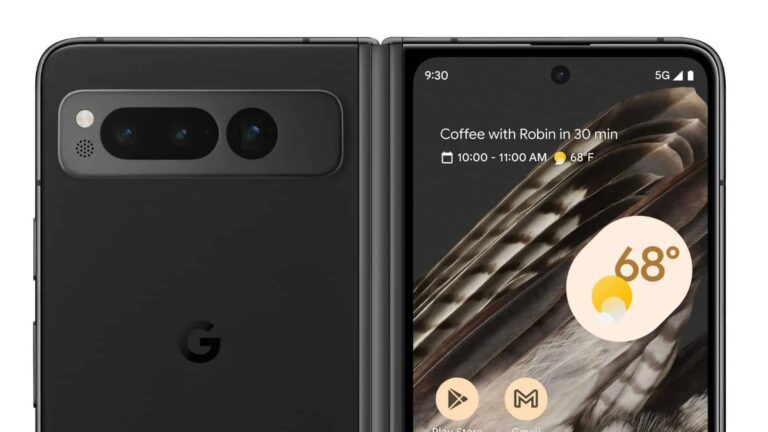
The very first official Google Pixel Fold images have just appeared to confirm the phone’s design. The Pixel Fold did surface in a very short hands-on video before, and also in CAD-based renders. The two images that appeared today seem to be officially official.
The Google Pixel Fold design gets confirmed via first official images
They come from Evan Blass aka @evleaks, one of the most prominent tipsters out there. If you check out the gallery below the article, you’ll get to see both renders he shared.
In the first image, the phone’s entire back side is shown, when the phone is in its unfolded state. That means we get to see both its cover display, and backplate. The phone basically looks like the Google Pixel 7 Pro and OPPO Find N2 had a baby.
The Find N2 form factor is obvious, add the Pixel 7 Pro’s camera visor on the back, and there you have it. The hinge is also visible here, albeit in an unfolded state.
The second image gives us another look at the phone’s cover display and hinge, but this time in a folded state. The bezels around the display don’t seem to be thick at all, and the display corners are rounded. There is a display camera hole here, and it’s centered up top.
The phone’s main display is not shown here, but we know what it will look like
What we don’t get to see in these images is the phone’s main display. Based on some previous leaks, and a recently leaked hands-on video, however, those bezels will be weird. The top and bottom bezels will be thicker than the side bezels. The good news is that there won’t be a camera hole there or anything of the sort.
The Pixel Fold will be made out of metal and glass. It will become official next month, during the Google I/O keynote, on May 10. That is also when it’s said to become available to pre-order. It is tipped to cost $1,799, and go on sale on June 27. If you’d like to know more about the device, check out our Pixel Fold preview.
Microsoft’s move to integrate ChatGPT into its Edge browser as the Bing AI Chatbot has prompted many companies to explore new ways of implementing generative AIs into their platforms. Now, during Meta’s latest earnings call, CEO Mark Zuckerberg stated that the company sees this rapid advancement in AI as an opportunity to introduce AI agents to billions of people in a meaningful way.
Although the specifics of how Meta will add generative AI to its apps are still unclear, Zuckerberg hinted that the company intends to incorporate it into chat experiences in WhatsApp and Messenger, visual creation tools for posts on Facebook and Instagram, and ads.
He also suggested that AI could greatly impact the WhatsApp customer support business, enabling tens of millions of AI agents to act on behalf of businesses and provide more efficient customer service experiences.
“I expect that these tools will be valuable for everyone from regular people to creators to businesses. For example, I expect that a lot of interest in AI agents for business messaging and customer support will come once we nail that experience. Over time, this will extend to our work on the metaverse, too, where people will much more easily be able to create avatars, objects, worlds, and code to tie all of them together,” said Zuckerberg.
Meta’s future plans
While Meta’s plans for integrating generative AIs into its services are ambitious, and it has already released an AI language model called LLaMA to researchers, the company is still yet to make a chatbot like OpenAI’s ChatGPT or Google’s Bard. However, Zuckerberg emphasized that generative AI will soon “touch every single one” of Meta’s products, indicating that the company is stepping up its efforts to develop the technology.
Furthermore, speaking on the speculations that Meta might abandon its metaverse project to focus solely on generative AIs, Zuckerberg stated that Meta has been focusing on both AI and the metaverse for years now, and they will continue to focus on both.
Google did an excellent job with a Pixel 6a, so we’re all looking forward to the Pixel 7a. This is going to be the company’s next mid-range phone that will come with a flagship processor and camera. Just weeks before its unveiling, the Pixel 7a shows up in some leaked hands-on images.
A leak of this caliber shouldn’t be surprising considering how close we are to the unveiling. We expect Google to introduce this phone during Google I/O which will take place on May 10th. We also expect Google to unveil the Pixel Tablet and the Pixel Fold during the event.
Pixel 7a was showing off in leaked hands-on images
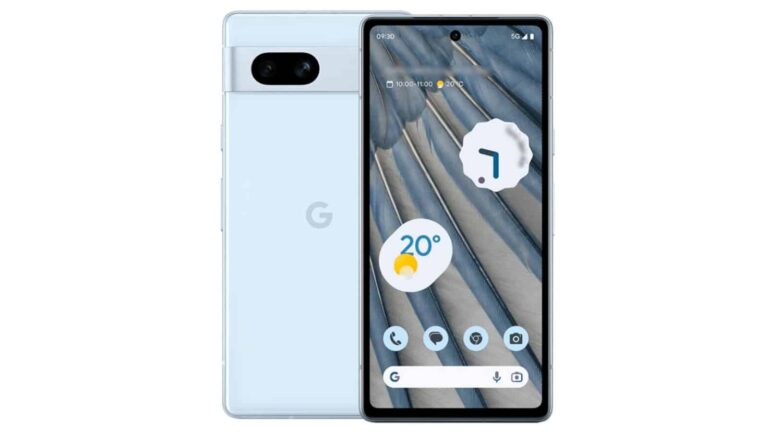
These hands-on images confirm the design of the phone and they corroborate the other massive leak that happened just recently. In this new crop of images, we see the device in the flesh, even being held by a person in one of them. These images show the blue color of the phone.
In these images, we see that the back glass has a brighter shade of blue while it’s bolder for the camera visor. The visor, just like with the Pixel 7 phones, is made from metal, and it is an extension of the phone’s frame. Just like with the Pixel 7 phones, we see the cutout for the dual camera package and the LED flash.
Breaking 🔥
Google Pixel 7a in Sea Blue color hands on images with box are here to meet u all…
The rest of the images show the Pixel 7a inside of its box, which confirms that this phone, like other recent Pixel phones, will not be coming with a charger in the box. However, that should come as no surprise.
As per the images, the Pixel 7a will look almost exactly like the Pixel 6a in terms of shape and design. So, all of the buttons will be in the same spot, and the corners will remain rather sharp compared to other phones.
When it launches, the Pixel 7a may cost $499. This is a price increase from the Pixel 6a which cost $449. The higher price may make it a bit of a harder sell, but, given the state of the global economy, we can’t rule it out. unexpected. However, this does bring in the question of whether or not the Pixel 8 series will see a price increase over the Pixel 7 Series. Only time will tell.
The hot new social network is called Bluesky, which is actually a new startup from Twitter co-founder, Jack Dorsey. It looks exactly like Twitter, but it really only has the basics right now, which is likely why it is invite only right now. But it is gaining quite a bit of momentum. So today, we’re going to show you how you can get an invite code to Bluesky.
What is Bluesky?
Bluesky is a new microblogging platform, like Twitter. Which is actually backed by Twitter’s co-founder and former CEO, Jack Dorsey. Many users have commented on how Bluesky does look like a carbon copy of Twitter, but with less mess. And having Dorsey behind it, makes plenty of sense for that.
The platform runs on the “AT Protocol” which is a new protocol that Bluesky is working on. It runs on a decentralized system, that means that people will eventually be able to use this technology to create their own applications and communities with rules and algorithms customized to their liking. The goal here is to make a system where no single person nor algorithm reigns supreme over the users experience. Which is currently a big problem over on Twitter.
Bluesky’s chief executive, Jay Graber has stated in a blog post that the technology for Bluesky is a “foundation for the next generation of social apps” that aims to bring back the “openness and creativity of the early web.”
How to get an invite code to Bluesky
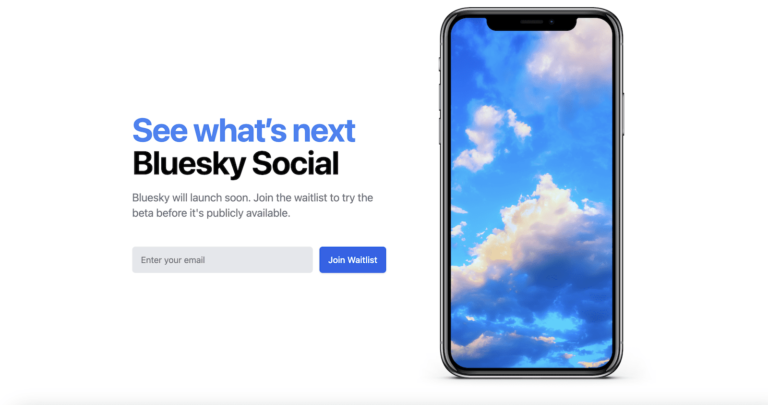
There are two ways to get an invite code to Bluesky. The first is by heading to their website here, and joining the waitlist. It’s currently unclear how long it’ll take to get off the waitlist. But there is a faster way to get an invite code.
The other way is going to be, getting a code from someone that has them. Once you get a code, you’ll be able to put into the site and start your account. Here’s what a Bluesky invite code will look like: bsky-social-xxxxx. This way you’ll know if you have a valid code or not. Keep in mind that only one person can use each code. So once it has been used once, it’s dead.
Currently, you’ll see a lot of spam on Twitter, Reddit and other social sites asking for Bluesky invites. Which means there are also scammers out there. In fact, we’ve come across a good number of users trying to sell invite codes for $50 or more. Don’t buy invite codes to Bluesky. Especially since you have no way of knowing if the invite code you’ll be given is going to be valid or not, after you’ve paid the money.
When do Bluesky users get invite codes to share?
Another hot topic with Bluesky has been, when do existing users get invite codes to share? Well, according Bluesky, users will get one invite code for every two weeks that they’ve been on the platform. So brand new users won’t have invite codes to share, but they should get some in a few weeks.
There’s no word yet on when Bluesky will launch, so it could be in this invite only phase for quite some time. The good news is, that everyone on Bluesky is commenting about how lightning fast it is. Likely because there’s no ads.