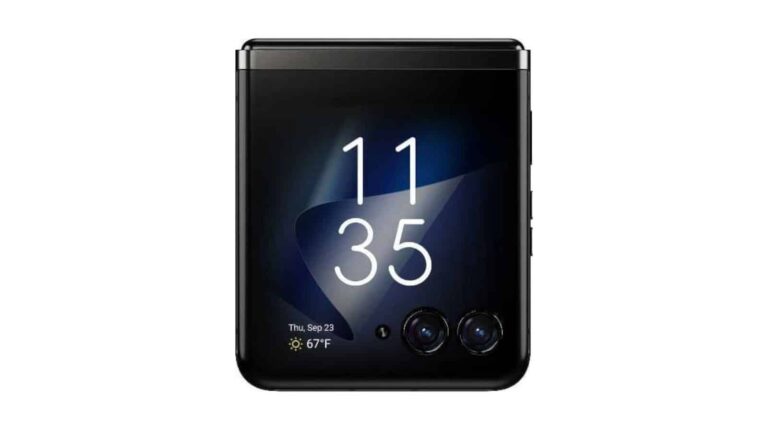
At this point in the year, there are a handful of exciting foldables that we’re waiting for. One of them is the next clamshell foldable from Motorola. The Motorola Razr 2023 broke cover in a new leak, and it gives us a look at the phone’s massive outer display.
The outer displays on clamshell foldables have gradually grown since the first one hit the market. It’s gotten to the point where people can do a lot of things without even having to open their phones. We’ve seen some pretty big screens thus far, but Motorola is really looking to take it to the next level.
Linked images show the Motorola Razr 2023 and its massive display
Samsung has gotten flack over the outer displays on its foldable phones. This goes for both the Z Fold and Z Flip phones. However, Motorola has been pretty good at bringing larger outer displays to make them more useful. We see that tradition continuing with the next batch of leaks for this upcoming phone.
These images come straight from Evan Blass, (via 9To5Google), and they give us a glimpse of just how massive this phone’s outer display is. Until now, the phone’s outer displays would cut off before they reached the front-facing cameras. The 2023 Motorola Razr will buck this trend by having the display extend and encompass the cameras.
The leaked images, which also display the phone’s amazing-looking red color, show that the majority of the front is all display. It extends all the way to the bottom with only a slight chin up top.
Another leaked image shows us something interesting. It shows the phone doing something similar to what companies like LG did with its “new second screen” back in the day. We see the display “end” right above the camera package. Then, beside the camera package, we see a row of notifications and other options. So, this will give you the impression that the screen is smaller than it actually is and that it’s uninterrupted.
This gives us a glimpse of what you’ll be able to do with this larger display. However, we’re going to need to wait until the phone actually launches to know the full potential.
As for the launch date, we expect this phone to launch sometime in June, and that will put it ahead of the Galaxy Z foldables. It might even leapfrog the Pixel Fold if Google decides to launch it.
It seems like all iPhone 15 models will cost more to make than their predecessors. This information comes from a tipster called ‘Revegnus’. He shared the information via Twitter, while sharing some percentages too.
All iPhone 15 models will cost more to make than their iPhone 14 counterparts
According to the tipster, the base iPhone 15 model will cost around 12% more to make. In other words, its production cost will increase by 12%. When it comes to the iPhone 15 Pro’s base model, we’re looking at a 20% price hike.
Why is that, though? Well, the tipster is not sure, but he guesses that the TSMC fab price hikes may have something to do with it. In fact, he believes that’s the main reason for such a notable price hike. The inflation is worth noting too, of course.
Does this mean the upcoming iPhones will cost more than their predecessors did? Well, we can’t really know that. We’ll see if Apple will decide to up the pricing a bit. If that does end up happening, it won’t be a huge price hike, at least it shouldn’t be.
Having said that, all iPhone 15 models will launch in September this year. That’s when Apple usually launches its new handsets. The company is expected to announce four models this time around, as per usual.
Four models are coming
The iPhone 15, iPhone 15 Plus, iPhone 15 Pro, and the iPhone 15 Pro Max are expected. Do note that the ‘Pro Max’ model could be called the iPhone 15 Ultra, it remains to be seen. We’ve seen some conflicting rumors regarding that.
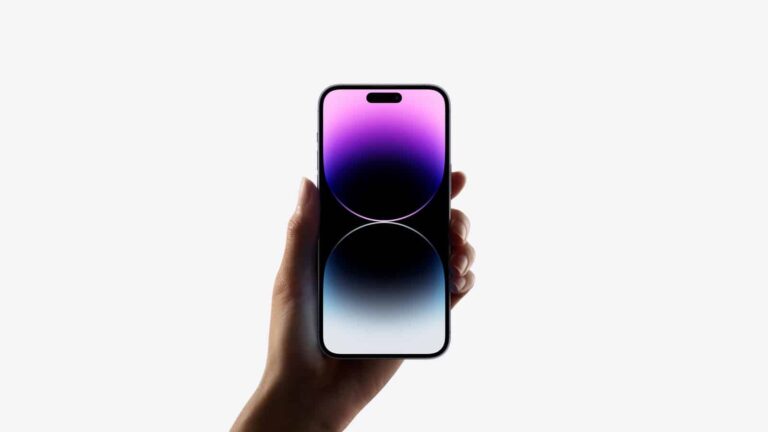
For the first time ever, iPhones will include a Type-C port. All of these models will, thanks to the EU ruling. All models will also feature a Dynamic Island cutout at the top. The iPhone 15 Pro models could include solid-state buttons, and frames made out of titanium. Well, at least according to rumors.
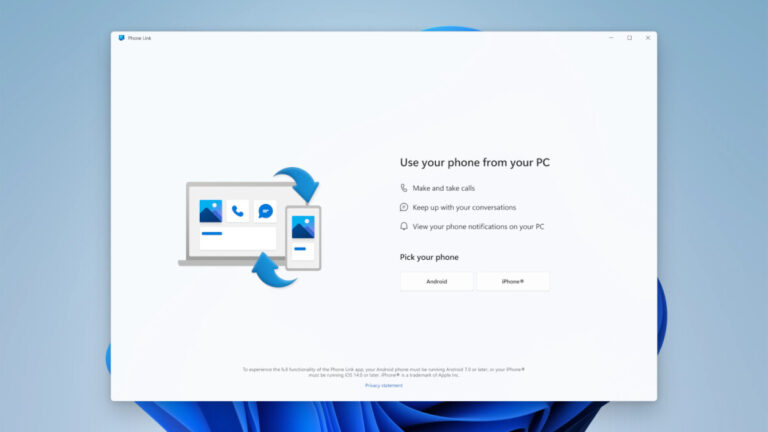
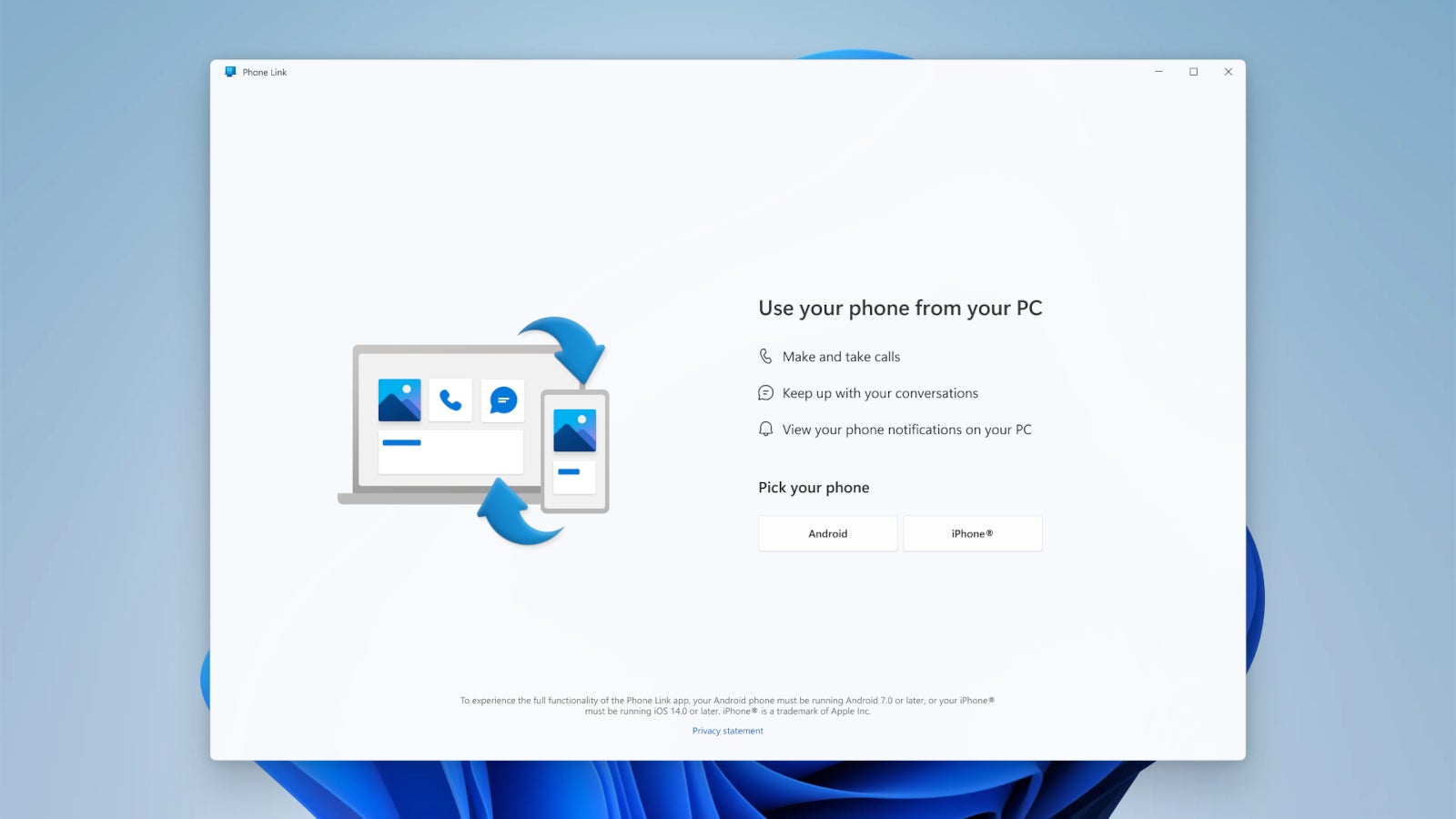
It’s been years since Microsoft supported Android users with Phone Link, the app that allows them to connect smartphones to their PCs. Starting today, the same app is available for iPhone users, Microsoft revealed in a blog post. However, the experience is quite limited and pales in comparison with the features Phone Link for Android provide users.Announced back in February, the expansion of the Phone Link app to iOS is finally happening, as Microsoft announced the app is now rolling out globally in 39 languages across 85 markets.
As per the company’s statement, once Phone Link is enabled on a Windows 11 PC, the app should provide some basic iOS support for calls, messages and access to contacts. iOS users will also be able to access their iPhone photos on their PC thanks to Microsoft’s iCloud integration with Photos. Basically, you’ll be able to see your iPhone photos in the Photos app in Windows 11.
While the rollout of the app has already begun, it may take a few weeks to be visible on all PCs. To start using Phone Link for iOS, use the Search box on the Windows taskbar to find Phone Link, and then follow the step-by-step guide to set it up.
As far as requirements go, Microsoft confirmed that Phone Link for iOS is compatible with iPhones running iOS 14 or higher. The app will only work on Windows 11 devices and requires Bluetooth connection. Keep in mind that iPads and macOS are not compatible with this version of Phone Link.
It’s also worth mentioning that the messaging feature is limited by iOS, and image/video sharing, as well as group messaging will not be supported. Microsoft notes that all messages are sessions based and will only be received when the phone is connected to PC.
In a security notification, APC has warned home and corporate users about critical vulnerabilities in the software used to monitor and control their UPS systems online.
In a security notification, APC has warned home and corporate users about critical vulnerabilities in the software used to monitor and control their UPS systems online.
APC, which started as the American Power Conversion in 1981, today is a part of Schneider Electric™. APC is an industry leader in physical infrastructure and software solutions, and one of the most popular uninterruptible power supply (UPS) brands. The company offers a range of UPS solutions, from home users to industrial control applications.
The monitoring software affected by the vulnerabilities is:
APC Easy UPS Online Monitoring Software (V2.5-GA-01-22320 and prior (Windows 10, 11 Windows Server 2016, 2019, 2022))
Schneider Electric Easy UPS Online Monitoring Software (V2.5-GS-01-22320 and prior (Windows 10, 11 Windows Server 2016, 2019, 2022))
The Easy UPS Online Monitoring Software is used to configure and manage APC and Schneider Electric branded Easy UPS products.
Users of APC Easy UPS Online Monitoring Software (Windows 10) can download a versions that includes a fix here.
Users of Schneider Electric Easy UPS Online Monitoring Software (Windows 10) can get a version that includes a fix here.
Failure to apply the remediations may risk remote code execution, escalation of privileges, or authentication bypass, which could result in execution of malicious web code or loss of device functionality.
Any users that choose not to apply the remediation provided above, should immediately apply the following general security recommendations to reduce the risk of exploit:
For Windows (10, 11) and Windows server 2016, 2019, 2022: Customers with direct access to their Easy UPS units should upgrade to PowerChute Serial Shutdown (PCSS) software on all servers protected by the Easy UPS On-Line (SRV, SRVL models).
As a general advice, it’s worth saying that online monitoring tools should be behind a firewall, and access should be restricted to those that really need it.
The Common Vulnerabilities and Exposures (CVE) database lists publicly disclosed computer security flaws. The CVEs patched in these updates are:
CVE-2023-29411 CVSS score 9.8 out of 10: A missing authentication for critical function vulnerability exists that could allow changes to administrative credentials, leading to potential remote code execution without requiring prior authentication on the Java RMI interface. Exploiting this vulnerability offers an unauthorized attacker the option to change the administrator login credentials.
CVE-2023-29412 CVSS score 9.8 out of 10: The improper handling of case sensitivity vulnerability exists that could cause remote code execution when manipulating internal methods through Java RMI interface. The software does not neutralize or incorrectly neutralizes special elements which could lead to remote code execution.
CVE-2023-29413 CVSS score 7.5 out of 10: A missing authentication for critical function vulnerability exists that could cause Denial-of-Service when accessed by an unauthenticated user on the Schneider UPS Monitor service. Generally Denial-of-Service vulnerabilities are not considered serious, but given the importance in some use cases of uninterrupted power supply, the consequences of an outage can be serious.
We don’t just report on vulnerabilities—we identify them, and prioritize action.
T-Mobile is one of the big three here in the US. Up there with AT&T and Verizon for the major carriers that Americans can use their smartphones on. It acquired Sprint not too long ago, bringing the big four down to the big three.
T-Mobile likes to cater more towards the tech nerds out there. So you’ll find a lot of phones that are only available on T-Mobile here, like the OnePlus 10 Pro and the TCL Stylus 5G among others. So you’ll see some here that are not on our other lists.
Best T-Mobile phones
T-Mobile has phones that range from around $100 up to over a grand. This list isn’t just Android smartphones – though about 90% Android. So that there is something here for everyone. Now T-Mobile does tend to discount their phones quite often, so you’ll want to check their site for whatever promos they are currently offering.
Now, unlike AT&T and Verizon, T-Mobile still does 24 months for its financing. So these prices will appear to be higher than the competitors. But it’s the same price, you’ll just actually be paying it off sooner. All of these prices are per month, for 24 months unless otherwise stated.
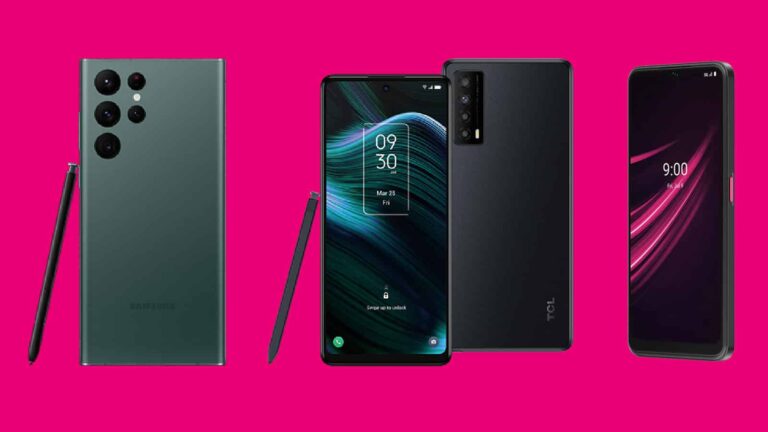
The Galaxy S23 Ultra is the latest and greatest from Samsung, and it’s available from T-Mobile as one of the best phones you can buy today.
It sports a 6.8-inch QHD+ 120Hz LTPO display, the Snapdragon 8 Gen 2 for Galaxy processor with 8GB of RAM and 256GB of storage. If you get the 512GB or 1TB size, you’ll be bumped to 12GB of RAM. There’s also a 5000mAh capacity battery inside that will keep you going all day.
The TCL Stylus 5G is the newest smartphone to land at T-Mobile. It’s a pretty cheap smartphone, that T-Mobile is actually offering for free, as long as you stick around for two years.
It has a 6.81-inch FHD+ display, a MediaTek Dimensity 700 chipset with 4GB of RAM, 128GB of storage and a 4000mAh capacity battery. There’s also a stylus built-in, as the name indicates. Making it a great phone to take notes with.
The moto g stylus 5G is one of the cheaper 5G smartphones you can buy, and it even comes with a stylus. Now it’s nowhere near what Samsung offers with the S Pen, but it is a stylus. Especially since you can get it for free right now at T-Mobile.
This sports a 6.8-inch FHD+ 120Hz display, the Snapdragon 695 5G processor with 8GB of RAM and 256GB of storage. There is also a 5000mAh capacity battery in this one.
The Galaxy S23 is one of the best “small” smartphones you can buy from T-Mobile right now. It’s not really that small, but as far as phones in 2023 go, this is about the smallest you’ll get.
The Galaxy S23 comes with a 6.1-inch FHD+ 120Hz AMOLED display. It is powered by the Snapdragon 8 Gen 2 for Galaxy processor, with 8GB of RAM and 128GB of storage. And that’s powered by a 3900mAh capacity battery. On the camera front, it does have a triple-camera setup. With a 50-megapixel main sensor, a 10-megapixel telephoto and a 12-megapixel ultrawide camera.
The moto g 5G (2022) is a pretty cheap smartphone, but still has plenty of storage for its price.
This has a 6.5-inch 720P display, powered by the MediaTek Dimensity 700 processor, with 6GB of RAM and 256GB of storage on-board. Which is quite impressive. It also has a micro SD card slot available for expanding that storage.
Finally, it is powered by a 5000mAh capacity battery that should run for a couple of days and then some.
This is the “boring” Pixel 7, but still a really good option. It sports a 6.3-inch FHD+ 90Hz AMOLED display, with the same Google Tensor G2 chipset, 8GB of RAM and 128GB of storage. It does also come in a 256GB variant. This is all powered by a 4355mAh capacity battery as well.
Google has promised three years of software updates, and five years of security updates (until 2025 and 2027 respectively) for the Pixel 7.
The OnePlus 10 Pro 5G is only available at T-Mobile (or unlocked). So if you want it, T-Mobile is the carrier to go to.
It sports a 6.7-inch QHD+ 120Hz display, it uses LTPO2 so it can intelligently go from 10Hz to 120Hz. There’s also the Snapdragon 8 Gen 1 processor inside, with 8GB of RAM and 128GB of storage on-board. Which is pretty impressive here.
The Galaxy A53 5G is a really great smartphone with flagship features without the flagship price. As you can see, this is $10 per month for 36 months (for $360 total). It offers a 6.5-inch FHD+ Super AMOLED 120Hz display – not LTPO though so it doesn’t adapt.
It is powered by the Exynos 1280 processor, 6GB of RAM and 128GB of storage. There’s also a massive 5,000mAh capacity battery inside, the same size as the Galaxy S22 Ultra, for a fraction of the price.
Rounding out our best T-Mobile phones list here, we have the iPhone 14. We chose the standard iPhone 14 out of the four models, because it’s the best value. It’s $799 full retail, and offers a faster processor than most Android flagships. That’s thanks to the Apple A15 Bionic, which is incredibly fast.
Surprisingly, there’s only 6GB of RAM here, with 128GB of storage. There are 256GB and 512GB models available too. It has a pretty small 3279mAh capacity battery but it will still last you all day, thanks to the insane software optimization that the iPhone has.
The kicker here is that this phone will likely be updated far longer than any of the other phones on this list. Apple recently stopped updating the iPhone 6S after more than six years of new iOS updates.
Ever since the launch of satellite connectivity with the iPhone 14 series, the industry has witnessed a boom like never before. The possibility of people living or stranded in remote locations being able to connect to broadband cellular networks has prompted many companies to develop new technologies.
Now, AST SpaceMobile, in collaboration with AT&T, has recently achieved a significant milestone by making the first-ever space-based voice call from AT&T’s network in Midland, Texas, to an unmodified Samsung Galaxy S22 using the BlueWalker 3 (BW3) satellite.
AST claims that this breakthrough has the potential to revolutionize cellular coverage not only in the US but also in developing countries. This is because about 50% of the world’s population still lacks access to the newest communication standards, with many of them being people in third-world countries. Therefore, by using satellite connectivity, companies can provide internet services to these underserved areas at potentially lower deployment and maintenance costs than traditional networks.
“Achieving what many once considered impossible, we have reached the most significant milestone to date in our quest to deliver global cellular broadband from space. While we take a moment to celebrate this tremendous accomplishment, we remain focused on the path ahead and pivotal next steps that get us closer to our goal of transforming the way the world connects,” says Abel Avellan, CEO and chairman of AST SpaceMobile.
The Future of Satellite Internet
While this successful space voice call test by AST SpaceMobile and AT&T brings us one step closer to universal satellite-based cellular coverage, they are not alone in the race to build their satellite networks. Verizon has partnered with Amazon for Project Kuiper, which aims to deliver broadband satellite internet to underserved housing communities and industries. Similarly, T-Mobile has also teamed up with SpaceX to test satellite mobile coverage this year, claiming that existing plans will also include satellite access.
We take a look at urgent updates needed for users of PaperCut, after two exploits were found in the wild.
PaperCut, maker of print management solutions, has urged product users to update as soon as possible. A security vulnerability which exploits unpatched servers has been seen in the wild, with serious ramifications for any organisation impacted.
Two specific vulnerabilities are at the heart of this alert, and are ranked with severity scores of 9.8 (critical) and 8.2 (high) respectively. Full information about the individual security flaws has not been revealed, in order to reduce the likelihood of more attackers making use of them.
Mitigation
At time of writing, both security issues have been addressed with patches. If you update your PaperCut application servers, you are no longer at risk. A recent check in security tool Shodan’s search functionality highlights roughly 1,700 software instances currently exposed to the internet. These flaws are quite severe, so it’s absolutely worth your time to get things updated as soon as possible.
Please follow your usual upgrade procedure. Additional links on the ‘Check for updates’ page (accessed through the Admin interface > About > Version info > Check for updates) will allow customers to download fixes for previous major versions which are still supported (e.g. 20.1.7 and 21.2.11) as well as the current version available.
If you are using PaperCut MF, we highly recommend following your regular upgrade process. Your PaperCut partner or reseller information can also be found on the ‘About’ tab in the PaperCut admin interface.
If you’re unable to upgrade
PaperCut advises those who are unable to apply the patches to follow the below steps:
Block all inbound traffic from external IPs to the web management port (port 9191 and 9192 by default)
Block all traffic inbound to the web management portal on the firewall to the server. Note: this will prevent lateral movement from internal hosts but management of the PaperCut service can only be performed on that asset.
Apply “Allow list” restrictions under Options > Advanced > Security > Allowed site server IP addresses. Set this to only allow the IP addresses of verified Site Servers on your network. Note this only addresses ZDI-CAN-19226 / PO-1219.
Exploits
The two exploits in question are:
CVE-2023-27350: This vulnerability allows remote attackers to bypass authentication on affected installations of PaperCut NG 22.0.5 (Build 63914). Authentication is not required to exploit this vulnerability.
CVE-2023-27351: This vulnerability allows remote attackers to bypass authentication on affected installations of PaperCut NG 22.0.5 (Build 63914). Authentication is not required to exploit this vulnerability. The issue results from improper implementation of the authentication algorithm. An attacker can leverage this vulnerability to bypass authentication on the system.
In both cases, compromised systems could be used to perform additional exploitation after the initial attack. Arbitrary code can be deployed, or even ransomware if that’s part of the attacker’s toolkit. The relative ease with which these exploits can be launched is just one reason for the high threat severity score. Indeed, researchers quickly discovered two types of (legitimate) remote management software being used in these attacks. These management tools are used to grant a potential form of persistent remote access to the target network. From here, they can burrow in ever deeper without the affected organisation noticing.
It will probably be a while before all possible patchable installations are running the necessary updates. If you’re potentially affected, do your part and head over to the updates page immediately.
Malwarebytes removes all remnants of ransomware and prevents you from getting reinfected. Want to learn more about how we can help protect your business? Get a free trial below.
Twitter removed the “government-funded” label from the major media accounts. The platform has come under fire for labeling news organizations and associating them with the government.
Since Elon Musk’s takeover, Twitter had multiple controversies that made the company a target for public criticism. In one of the latest cases, Musk decided to add a “government-funded” label to major news accounts like CBC, BBC, and PBS. In an interview with BBC, Musk promised to remove the label while saying he knows “BBC is generally not thrilled about being labeled state media.”
Some news organizations also stopped using Twitter to being labeled as government-affiliated media. However, the labels and “state-affiliated” descriptions are now removed from the media accounts, and plaintiff accounts can resume their activities.
Twitter removes government-affiliated label from media accounts, but there is a catch here
While some Western media may not be directly controlled by the government, there is ample evidence that Russian and Chinese media are directly affiliated with the governments. News networks like China’s Xinhua, Russia’s RT, and Sputnik, as well as Qatar’s Al Jazeera, are state-owned. So the problem with Musk’s recent move is these state-owned networks also lost the government-funded label.
Occasional changes and controversies have made media and advertisers rethink continuing to use Twitter. According to a recent report by Insider Intelligence, Twitter’s revenue in 2023 might drop 27.9% due to the reluctance of advertisers and the low number of Blue users.
Twitter is obviously striving to change its business model and switch from advertising-based to subscription-based revenues. The platform has recently removed checkmarks from legacy accounts and announced only Blue subscribers could get the badge. This move was met with many objections from previously verified accounts, and many of them said they would never pay $8 for the badge.
Businesses on Twitter can also receive a golden badge, while a gray badge is given to government and multilateral organizations. Likewise, advertisers with minimum spending of $1000 will get the blue checkmark automatically.
If you use ChatGPT, then you know that the powerful chatbot saves a log of your previous conversations. However, if you don’t like that, then this announcement from OpenAI might be up your alley. The company will disable this feature so that ChatGPT will not save your chat history.
ChatGPT is really good about saving your conversations, as most chatbots are. You’re able to go back and look at the previous conversations that you had in the past in case you want to continue from where you left off or take note of them. However, there may be people out there who don’t like the thought of that.
We also can’t rule out people who don’t want their conversations to train the OpenAI’s language model. Most users just don’t care, but OpenAI wants ChatGPT to appeal to the masses.
ChatGPT will allow you to disable your chat history
The company announced this in a short and sweet blog post. It says that this is a way for users to better manage their data. If you disable your chat history, you will no longer see your past conversations pop up on the left panel.
However, OpenAI will retain those conversations on its servers for 30 days. This is only so that it can scan those conversations for abuse. After that, the company will delete them from its service permanently.
As for conversations you had before disabling your history, those will not be deleted. Also, OpenAI will still continue to use those conversations to train the model. The setting only applies to conversations you saved after disabling the history.
How to disable your chat history
Disabling your chat history is pretty simple. First, log in to ChatGPT and go to the left panel. There, go to the bottom and click on the three-dot menu next to your profile picture and name. In the menu that pops up, click on the Settings button.
You’ll see a little popup window appear. At the bottom of the window, you’ll see Data Controls. Click on the Show button, and it will expand to show you the toggle to disable your chat history. Turn the toggle off, and ChatGPT will not save your chats.
Elon Musk has been the owner of Twitter for some time now, and things have been hectic, to say the least. However, Jack Dorsey, the creator of Twitter has come out with his own social media app called Bluesky. According to a new report, Bluesky has been gaining followers as Twitter has been struggling.
A lot of the current drama surrounding Twitter has to do with the verification checkmark and Twitter Blue. The verification checkmark is a pretty important part of the Twitter experience, but Elon Musk has felt the need to fix what ain’t broken.
Because of this drama, people are leaving Twitter in droves and walking toward other platforms such as Mastodon and Hive Social. Jack Dorsey introducing Bluesky only adds fuel to the fire.
Jack Dorsey’s Bluesky is gaining users
Bluesky has been pretty underground since it was created, but the platform did see an uptick in followers since Elon Musk took over Twitter. According to Bloomberg, the fledgling social media platform has amassed over 245,000 downloads on the iOS app store. More than half of those downloads came within the last month.
This means that people are vigorously looking for an alternative to Twitter. A few months ago, Mastodon gathered a bunch of users, and now, it’s time for Bluesky to have its moment in the Sun.
While Bluesky is just now gaining popularity, the app itself began development back in 2019. It’s a long time coming, as Bluesky is currently on an invite system. People who joined the waitlist back in last October are now being let into the app. If you are excited about joining Bluesky, just know that it will be a bit of a wait.
As for the app itself, it’s pretty simple in its execution. Just like with Twitter, you’re allowed to make text-based posts and add photos or videos to them as well. Text-based posts can be up to 300 characters long and you’re able to reply to them and repost them.
Bluesky is meant to be a more open platform than Twitter, so if you happen to use it, you will definitely see some differences between the apps. There’s also an Android app out, so if you want to download the app and wait for your invite, you can do so now.