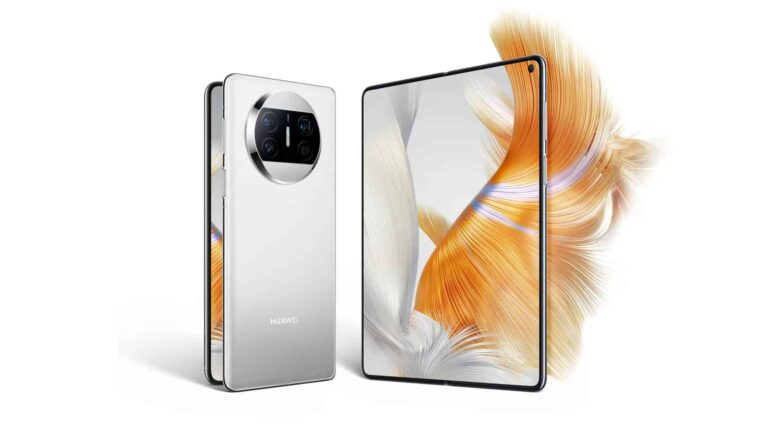
Huawei Mate X3 foldable is immensely thin and offers water resistance

0
[ad_1]

Huawei hosted a press event in China today, where it announced two new flagship smartphones, and a premium smartwatch. We’ve already talked about the Huawei Watch Ultimate, and it’s time to check out the Huawei Mate X3 foldable.

The Huawei Mate X3 looks great on paper, and it’s quite easy on the eyes too. Its rear camera island does look a bit weird at first, but this is your regular book-style foldable, in terms of layout.

The Huawei Mate X3 is the thinnest book-style foldable smartphone on the market

Now, the design of this thing will appeal to many of you, as it will likely feel like a regular, large smartphone. Why? Well, it’s immensely thin, for a foldable. It’s only 11.08mm thick when folded, which means it’s even thinner than the Xiaomi MIX Fold 2 (11.2mm), a phone which was a benchmark for thin book-style foldable devices. Do note that these measurements do not include the camera bump, though, which protrudes quite a bit.

It’s even thinner than the MIX Fold 2 when unfolded, as it measures 5.3mm, compared to 5.4mm of the MIX Fold 2. The differences are marginal, but Huawei made it there, and it didn’t omit water resistance, unlike Xiaomi.

It does offer IPX8 rating for water resistance

The Huawei Mate X3 is IPX8 rated for water resistance. Now, this is the first time a foldable smartphone with a waterdrop hinge offers water resistance, so that’s definitely something to note. Its crease will be less noticeable than the one on the Galaxy Z Fold 4, simply because of that hinge. That hinge can also stop at any time between open and closed state, and is connected to some software features.

The device is fueled by the Snapdragon 8+ Gen 1 SoC, but it’s limited to 4G connectivity due to the US ban. We’re not sure how much RAM it includes just yet, but it does come with up to 1TB of storage. Its storage can also be expanded via Huawei’s proprietary NM card.

Two 120Hz AMOLED displays are included here

The main display on the Huawei Mate X3 measures 7.85 inches. That is an LTPO AMOLED display with a resolution of 2224 x 2496 pixels, and a refresh rate of up to 120Hz. The second display measures 6.4 inches, and it’s a fullHD+ LTPO AMOLED panel. That display is protected by the Huawei Kunlun glass, which has proven to be excellent on the Mate 50 Pro.

Huawei managed to trim down the fat compared to the Mate X2, so the Mate X3 weighs only 239 grams, which is excellent for such a large foldable smartphone. It makes it considerably lighter than the Galaxy Z Fold 4.

A powerful camera setup is also a part of the package, including a periscope camera

A 50-megapixel main camera (f/1.8 aperture) is backed by a 13-megapixel ultrawide unit (f/2.2 aperture), and a 12-megapixel periscope telephoto camera (f/3.4 aperture, OIS, 5x optical, 50x digital zoom). This is also the first time we’re seeing a periscope camera on a foldable smartphone, if I’m not mistaken. Huawei’s XMAGE branding is here too. An 8-megapixel camera sits on the front (f/2.4 aperture), on both displays.

The phone also supports Bluetooth 5.2, has a side-fingerprint scanner, and an IR blaster up top. On top of all that, two-way satellite messaging is also included, via Beidou satellites. Google services are not included, of course, due to the US ban.

It launched in China, but it’s coming to more markets

The Huawei Mate X3’s pricing starts at CNY12,999 ($1,904) in China. Do note that we still don’t have any information on global pricing, but the device is expected to launch globally.


[ad_2]
Source link

Google may integrate Bard into Messages to enhance smart replies

0
[ad_1]

Google may be looking to integrate Bard into Messages. The latest beta version of the messaging app contains hints of early work on generative AI (artificial intelligence) features that will generate replies for messages. The company has already bundled Bard or similar AI tools with many of its products, including Gmail and Docs.

Google Messages may soon offer AI-generated replies

Decompiling the APK for the latest beta version of Google Messages for Android, 9to5Google discovered a familiar-looking new button in the compose box. It’s the same “sparkle iconography” that Google uses for Bard and other AI-powered features across its products. The sparkle icon appears to the left of the emoji button in the compose field above your keyboard. For the time being, it’s pretty much non-functional. Tapping it types “(TODO!)” in the compose field and that’s it.

Google is seemingly indicating that the feature is in the early stage of development and it has a lot of work “to do”. But when ready, it appears to serve as a message generator that will contextually type responses based on the last incoming message. Bard or its AI language model LaMDA (Language Model for Dialogue Applications) could power the feature. The AI-generated messages aren’t sent automatically, which is important. Tapping the button will type up the message but you can always review it and possibly edit or overwrite it before sending it.

The new AI tool could replace existing Smart Replies

AI-generated replies aren’t new to Google Messages. The messaging app already has a Smart Reply feature that suggests short responses based on the context of the most recent incoming message. The in-development generative AI feature may replace the existing solution. It’s better at generating longer, in-depth responses. Smart Reply can only suggest short phrases. Or maybe the two tools will exist side-by-side. Google could leave it to the users what type of responses they want to generate.

Unfortunately, it’s too early for us to confirm Google’s plans. But the company is certainly bringing a more powerful AI tool to Messages. We should get to learn more about the new feature in the coming months as Google progresses with its development. In the meantime, you can update the Google Messages app on your Android smartphone to receive recently-added new features such as contact photos in conversations and tweaked read receipts. You can click the button below to download the latest version of the app from the Google Play Store.

DOWNLOAD GOOGLE MESSAGES


[ad_2]
Source link

Lionsgate Exposes Over 37m Users’ Data

0
[ad_1]
Lionsgate data breach

Lions Gate Entertainment Corporation, doing business as Lionsgate, exposed users’ IP addresses and data on the content they saw on its movie-streaming service. 

According to Cybernews analysts, Lionsgate Play, a video streaming service, had exposed user information via an open ElasticSearch instance.

The platform is run by the Canadian-American entertainment company Lionsgate Entertainment Corporation, which owns several well-known film and television franchises that have become famous, including The Hunger Games, Saw, Terminator, The Twilight Saga, and The Divergent Series.

Almost 37 million people worldwide subscribe to Lionsgate, which made $3.6 billion in income the previous year.

Leak Caused By an Unprotected ElasticSearch Instance

“An unprotected 20GB of server logs that contained nearly 30 million entries, with the oldest dated May 2022. The logs exposed subscribers’ IP addresses and user data concerning device, operating system, and web browser”, explains Cybernews researchers.

There were additional leaks of usage information, including titles and IDs of the content users watched on the platform. Analysts typically utilize this information to monitor the platform’s performance and content.

Researchers also discovered unidentified hashes with logged HTTP GET requests—records of client requests often used to obtain data from a web server—and log files on the server that contained these queries.

“Hashes didn’t match any commonly used hashing algorithms. Since these hashes were included in the HTTP requests, we believe they could have been used as secrets for authentication, or just user IDs,” said researchers.

The actual purpose or use of the hashes was not known to researchers. However, the fact that all the hashes are longer than 156 characters suggests that they were designed to hold their integrity for a long time.

Researchers say the information exposed in this case is unusual for hacker networks to share. It is nevertheless still sensitive.

“It can be useful in targeted attacks, especially when combined with other leaked or publicly available information,” researchers

.Malicious actors may target specific users and deliver dangerous payloads to their devices using the combination of users’ IP addresses and data.

“Threat actors can cross-reference a user’s search queries and viewed content with their IP address to build a more comprehensive profile of the individual,” researchers said.

Hence, researchers warn that threat actors can spot behavior patterns and use this information to craft more precise, targeted phishing attacks to collect personal information.

Building Your Malware Defense Strategy – Download Free E-Book


[ad_2]
Source link

Galaxy M54 5G is official with 108MP camera, 6,000mAh battery

0
[ad_1]

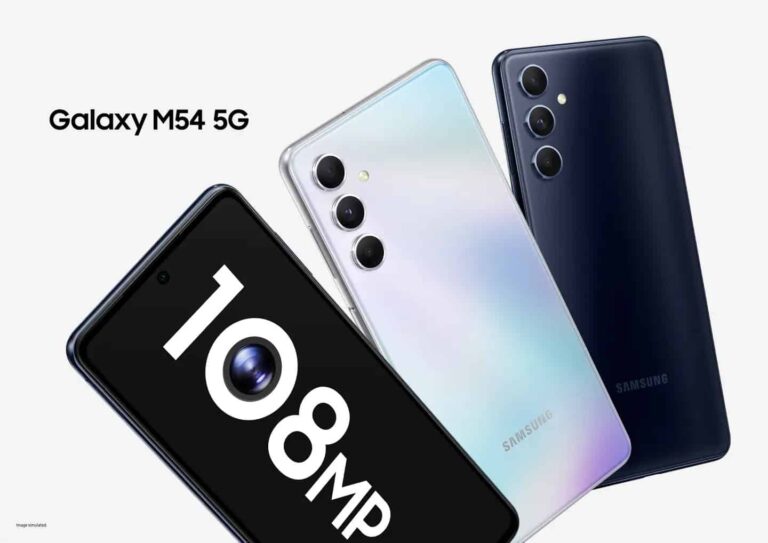
A week after unveiling the Galaxy A54 5G with huge fanfare, Samsung has quietly launched the Galaxy M54 5G. The new handset appears to be an amped-up version of the former, with a bigger screen, bigger battery, and higher-resolution primary camera. It unceremoniously debuted in the Middle East on Wednesday.

Samsung launches Galaxy M54 5G with compelling specs

The Galaxy M54 5G is a massive phone featuring a 6.7-inch Super AMOLED Plus display. The screen boasts a Full HD+ resolution and a 120Hz refresh rate. Samsung has slapped Corning’s Gorilla Glass 5 protection layer on top of the screen. But instead of an under-display fingerprint scanner, the company has opted for a capacitive solution integrated into the power button on the side of the phone.

Big size has allowed Samsung to include a 6,000mAh battery here, which still charges at 25W speeds. The Galaxy M54 5G lacks stereo speakers but upgrades the primary rear camera to a 108MP sensor. It offers PDAF (phase-detection autofocus) and OIS (optical image stabilization). The device can record 4K videos. Accompanying the primary shooter on the back are 8MP ultrawide lens and 2MP macro camera. For selfies, the tiny punch-hole on the display houses a 32MP camera.

Powering this phone is the same Exynos 1380 chipset that Samsung also offers inside the Galaxy A54 5G. The new handset comes with 8GB of RAM and 256GB of internal storage, at least in the Middle East. The Korean firm may release the Galaxy M54 5G in more memory configurations in other markets. Like most other budget and mid-range Galaxy smartphones, this device also takes in microSD cards of up to 1TB capacity. It shares a SIM slot, though.

The rest of the stuff is also largely unchanged from the device that debuted globally last week (arriving in the US in April). You’re getting Samsung’s Android 13-based One UI 5.1 software experience out of the box, sub-6GHz 5G cellular connectivity, Wi-Fi 6, Bluetooth 5.3, and NFC. The Galaxy M54 5G seemingly lacks an official IP rating for dust and water resistance, though.

Price and availability

Samsung hasn’t officially announced the launch of the Galaxy M54 5G. The company has listed the device on its website but the price and availability details are missing. The handset can be seen in silver and blue colors. Samsung will likely reveal the pricing when it brings the handset to the market in the coming weeks. We will keep you posted.

Samsung Galaxy M54 5G official 2


[ad_2]
Source link

Xiaomi 13 Ultra launch date seemingly revealed, coming next month

0
[ad_1]

The Xiaomi 13 Ultra launch date has just been revealed, it seems, as it appeared on Weibo. Do note that this is not an official confirmation. Xiaomi’s alleged poster surfaced, and it sure does look official.

The Xiaomi 13 Ultra launch date has possibly been revealed

You can check out that poster below this paragraph. It does look very similar to the company’s official materials, and it clearly states the phone’s name, and you can even see the Leica branding there.

Xiaomi 13 Ultra launch date allegedly revealed

Towards the bottom, you’ll be able to see that April 17 is mentioned. Even the event kick-off time is listed here, it says that the event will start at 7 PM (local time). Needless to say, we’re talking about an event in China here, as this poster is in Chinese.

If there’s any truth to this, Xiaomi will share this poster via Weibo in the near future. As a reminder, this handset is expected to launch globally too. Xiaomi’s CEO confirmed, a while back, that the next ‘Ultra’ phone from the company will launch globally.

A well-known tipster also confirmed that the Xiaomi 13 Ultra will be available in markets outside of China. The device itself appeared back in February, though we’re still not sure if that leak is accurate or not. It’s possible that it was only a prototype or something like that.

The Xiaomi 13 & 13 Pro launched globally about a month ago

The company’s Xiaomi 13 and Xiaomi 13 Pro arrived to the global markets about a month ago. The Xiaomi 13 Pro has almost all the bells and whistles it can have, so we’re wondering what will Xiaomi upgrade with the ‘Ultra’ model.

What the ‘Pro’ model is lacking is a periscope telephoto camera, so perhaps that will be added. Other than that, we’re really not sure. The Xiaomi 13 Pro has the most powerful SoC it could have, the best RAM and storage modules, a 1-inch main camera sensor, Leica lenses, a ceramic backplate, and so on.

Considering that Xiaomi is planning the ‘Ultra’ launch, it probably has some ideas, so… it will be interesting to see what’s coming, that’s for sure.


[ad_2]
Source link

‘aCropalypse’ exploit puts Pixel devices at a serious risk

0
[ad_1]

According to TechRadar, a vulnerability called “aCropalypse” has targeted Pixel devices. Hopefully, Google patched the exploit with the recent March feature drop, but users that haven’t received the path might be at risk.

Security researchers Simon Aarons and David Buchanan found the exploit in Pixel devices after cropping PNG files with the default markup editing tool. The vulnerability was first spotted a few years ago and was caused by an API change on Android 10.

The researchers reportedly found the issue on January 2 and informed Google on the same day. However, Google internally patched the flaw on January 24, but end users got the fix in March, nearly two months after the flaw was discovered.

The “aCropalypse” exploit mostly targets Pixel phones, but its traces are found in other Android phones and custom ROMs. The messaging service Discord is also said to have been targeted by this exploit. Discord’s previous image processing method never stripped metadata or compressed images.

“aCropalypse” exploit targets Pixel phones through a markup editing tool

While it might seem odd that a phone gets infected by a markup editing tool malfunction, some unlucky Pixel users dealt with the case. The way “aCropalypse” works is simple but very tricky. After shortening or cropping an image file, the markup tool still holds some information about the edited image and preserves the cropped pieces.

“So basically the Pixel 7 Pro, when you crop and save a screenshot, overwrites the image with the new version, but leaves the rest of the original file in its place.” Researchers Simon Aarons said.

According to Buchanan’s explanations, a PNG file holds its data in blocks. After a file is edited, one of those blocks still preserves the data about the edited part. “theoretically, an image could be made up almost entirely of back-references to missing data, but in practice, most images aren’t like this.” Buchanan added. Also, the exploit doesn’t seem to affect JPEG files due to the different methods of handling data.

Aarons and Buchanan created a tool that helps you to find exploits in your screenshots and find out if any of your screenshots are infected. The service currently supports almost all Pixel phones, from Pixel 3 to 7 Pro.


[ad_2]
Source link

Do Kwon, Founder of Terraform Labs, Arrested in Montenegro

0
[ad_1]

According to Montenegro’s minister of interior Filip Adzic, Do Kwon was suspected of being “one of the most wanted fugitives.”

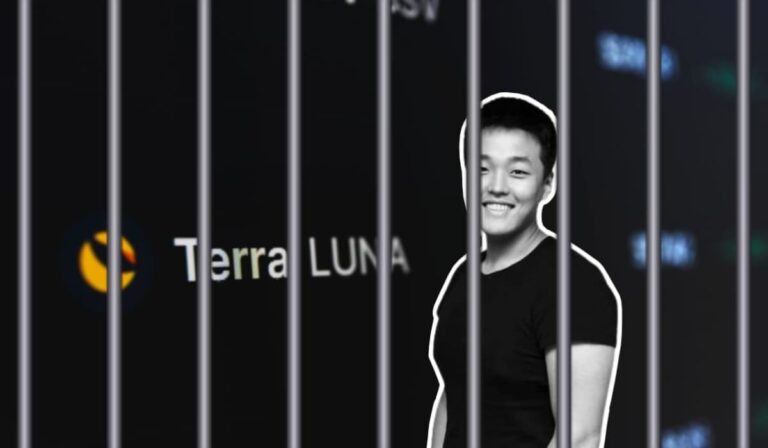
Do Kwon, the co-founder and CEO of Terraform Labs, has been reportedly arrested. Kwon had been on the run for several months before being caught using falsified documents at an airport in Podgorica, the capital city of Montenegro.

Filip Adzic, Montenegro’s minister of interior, announced the arrest in a tweet, saying that Do Kwon was suspected of being “one of the most wanted fugitives” and that authorities were awaiting official confirmation of his identity.

Interpol Issues Int. Arrest Warrant for Terra TerraUSD Founder Do Kwon
Do Kwon

Kwon’s arrest came after he was accused of playing a major role in the $40 billion Terra/LUNA collapse, which had a significant impact on the cryptocurrency markets.

“Montenegrin police have detained a person suspected of being one of the most wanted fugitives, South Korean citizen Do Kwon, co-founder and CEO of Singapore-based Terraform Labs,” Adzic tweeted.

Kwon had been under investigation for the past 11 months since the collapse of the platform, and in September 2022, Interpol issued a red notice requesting law enforcement agencies worldwide to search for and arrest him.

In mid-February, the U.S. Securities and Exchange Commission also charged Terraform Labs and Kwon with defrauding U.S. investors who purchased its crypto assets, LUNA and the stablecoin Terra.

Kwon had denied claims that he was hiding from authorities, but prosecutors refuted those claims. The fact that he was caught using falsified documents at the airport suggests that he was indeed trying to evade authorities.

According to reports, Kwon had fled Singapore, where he had been living, and had made stops in Dubai and Serbia before being arrested in Montenegro. The Korean National Police Agency has confirmed that the suspect appears to be Kwon based on checking his age, name, and nationality on his ID card.

The collapse of the Terra stablecoin had a significant impact on the cryptocurrency markets, with about $40 billion being wiped out. Kwon has been accused of financial fraud, tax evasion, and violating South Korean capital market rules. He has denied these charges and claimed that they are politically motivated.

Kwon’s arrest has been welcomed by many who were affected by the collapse of the Terra platform. As more information about the arrest becomes available, it will be interesting to see how it affects the ongoing investigations and legal proceedings against Kwon and Terraform Labs.

The arrest of his alleged aide, Han Mo, is also a significant development in the case. It is likely that more information will come to light as the investigation progresses, shedding further light on the collapse of the Terra platform and the role played by Kwon and Terraform Labs.

This news is a reminder that the cryptocurrency industry is still largely unregulated and that investors need to be cautious when investing in digital assets. It is essential to conduct thorough research and due diligence before investing in any cryptocurrency to avoid significant losses.

The collapse of the Terra platform is just one example of the potential risks involved in the industry, and investors should be aware of these risks before investing.

  1. $3.6B worth of BTC seized from 2016’s Bitfinex hack
  2. Japanese boy arrested for developing crypto malware
  3. DoJ seizes $1B in BTC linked to Silk Road marketplace

[ad_2]
Source link

Fake IRS tax email delivers Emotet malware

0
[ad_1]

We look at a current tax scam in circulation which looks to make an Emotet deposit on your PC.

Tax season is upon us and, as with every year, we’re seeing tax scammers rearing their heads.

Below, we have an example of a tax scam currently in circulation along with some suggestions for avoiding these kinds of attacks.

An IRS W-9 tax form scam

A Form W-9 is a form you fill in to confirm certain personal details with the IRS. Name, address, and Tax Identification Number are all things you can expect to fill in on one of these forms.

In this case, the Form W-9 is being used as a lure for people to download something sinister. Our Senior Director of Threat Intelligence, Jerome Segura, found an email being sent out with the title of “IRS Tax Forms W-9” which appears to have been sent from “IRS Online Center”. The email, which contains an attachment and very little text, looks like this:

Rogue malware IRS spam

The rather short message reads as follows:

Let me know if you would like a hard copy mailed as well.

Respectifully [SIC]

Barbara LaCosta

Inspector

Department of Treasure

The attachment, W-9 form.zip, is 709 KB in size.

Opening the attachment up reveals a Word document called W-9 form.doc

Bogus W-9 document

This file’s size is 548,164 KB (548 MB), which is very suspicious. You won’t find many genuine Word documents weighing in at 500MB or more. In fact, a file size of 500MB is a potential indicator that Emotet is lurking in the background. Malware authors are artificially pumping up the size of the document in order to try and fool or break security tools. This is because the large file size may prove too difficult for the tools to get a handle on and properly analyse.

Opening the document quickly becomes a game of Macro-related risk. Macros, used to automate aspects of your documents, are a tried and tested way of infecting a PC with malware. This is why you’ll almost always see a message saying that Macros are disabled when opening a downloaded document.

Malware authors know this, and will do everything in their power to make you enable them. This is no exception. When opening W-9 form.doc, you’ll see the following message:

This document is protected
Previewing is not available for protected documents. You have to press “enable editing” and “enable content” buttons to preview this document.

Rogue word document

Enabling this will result in Emotet being downloaded onto the system.

Emotet has been around since 2014. Originally created as a banking trojan, later versions added malware delivery and spam services. Mostly featuring in email spam campaigns, a big focus of fake mails helping to deliver the infection include subjects like parcel shipping, invoices, and other forms of payment.

In fact, Emotet features as one of the top five cyberthreats businesses face in our 2023 State of Malware report. Flagged by Europol as “The world’s most dangerous malware”, law enforcement has never quite been able to shut it down permanently despite its entire global infrastructure being taken offline in 2021. Emotet’s ability to push additional forms of malware onto target systems including threats like TrickBot, IcedID, and Conti ransomware make it a formidable proposition for any security team to handle.

Avoiding tax scams

Here are some of the ways you can outsmart tax fraudsters and keep one step ahead of the phishing, malware, and social engineering attacks which come around every year during tax season.

  • File early. One of the quickest ways to stumble into a trap is to leave filing your tax return until the last minute. That added pressure can mean responding to fake mails you otherwise would have ignored.
  • Be careful around suspicious refunds. Tax agencies have a proper process for issuing refunds, found on their websites. Some, like HMRC, are very clear that refunds are never issued by email. If in doubt, phone the tax office directly and ask if what you have is the real deal or a fake.
  • Beware of fake bank portals. Some tax scams will ask you who you bank with, and then open up a phishing page for that bank. Always navigate directly to your banking website, click throughs and redirects typically spell danger.
  • Avoid the pressure pitch. Tax scammers like to hurry you along to data theft and malware installs. Claims of only having 24 or 48 hours to file for a refund should be treated with skepticism. As with most solutions for these forms of social engineering, contact the tax entity directly.

Malwarebytes removes all remnants of ransomware and prevents you from getting reinfected. Want to learn more about how we can help protect your business? Get a free trial below.

TRY NOW


[ad_2]
Source link

The Google Jacquard app for smart fabrics is at its end days

0
[ad_1]

The Google Jacquard app for smart fabrics launched about 9 years ago. This news comes as a shock to the fashion industry, as Project Jacquard seemed promising. Merging the fashion industry with the technology industry was the simple aim of this project.

At its launch, Project Jacquard seemed to be the future of wearable technology. Google was giving users of this technology the ability to control their devices directly from their clothing. To prove that this unique project had a future it led Google to partner with brands like Levi, Adidas (EA Sports FIFA mobile game), Samsonite, and Yves Saint Laurent.

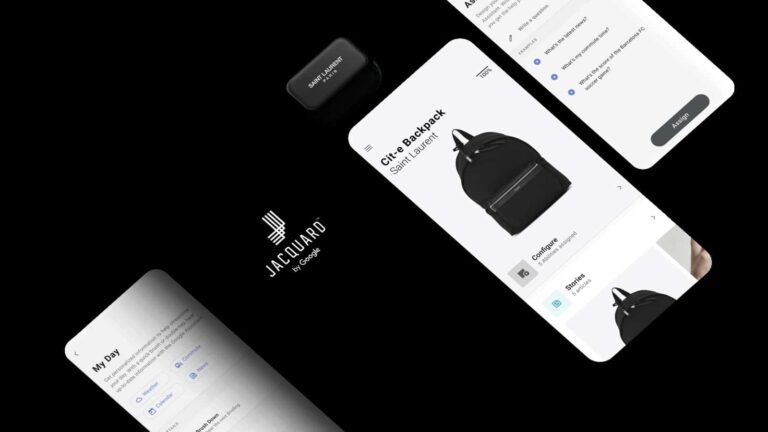
These partnerships brought some smart clothing and accessories to the fashion industry. To make use of the technology these articles brought, users need to have the Google Jacquard app installed on their devices. But that app might be coming to its last days, hence putting the future of Project Jacquard to the test.

Killing the Google Jacquard app might mean the end of the entire project

Project Jacquard brought a mini tag that could be attached to various clothes and accessories. This tag connects to the user’s mobile device wirelessly, giving them the ability to control their device with their cloth. Just swiping along the area where this tag is placed on a piece of cloth will execute certain actions on the user’s device.

With the Levi Trucker Jacket, the tag’s compartment is on the left cuff, and that area was made touch sensitive. For the popular Samsonite backpack, the tag is placed underneath the left fabric strip. This is also the case with other clothing products and accessories that launch with this tag.

With this tag on the piece of clothing, users can pick calls, control the media, take photos, and use the map without touching their smartphones. To customize these controls, users rely on the Google Jacquard app. But the folks at 9to5Google have noted that this app is coming to an end.

They back this up with their findings from the app’s latest description on Google Play Store. This update talks about notifying customers about changes to the “product support in the future” as though it will soon stop receiving support. Also, the 9to5Google APK team took a look at the app to find out more regarding its possible end.

From their findings, they could confirm that the Google Jacquard app will soon stop receiving support. But if the app shuts down, then no one will be able to make use of the Jacquard tag. Does this mean that Google is axing Project Jacquard? More information regarding this issue will be made available once an official statement from Google is made available.


[ad_2]
Source link

Nanoleaf Matter smart light series is now available for pre-order

0
[ad_1]

The Nanoleaf Matter smart light took attendees at CES 23 by surprise with some new products. Also on display was a ceiling light system that helps to add some life to your house. Another product seemed to focus on Nanoleaf’s Sense+ controls and a hands-free automation system.

But this article will focus on the products that integrate Matter’s smart home standards. With this integration, the new Nanoleaf Matter smart light series will be able to work together with the smart appliance ecosystem in a user’s house. Well, there are two smart light series that Nanoleaf launched at CES with Matter support.

These lights are now available for pre-order on the Nanoleaf official website. With these products, Nanoleaf hopes to take your living space into the future of connectivity. Let’s now take a look at the two new Nanoleaf smart light series that are currently available for pre-order.

Features of the new Nanoleaf Matter smart light series

This new series comes with smart light bulbs and a light strip, all packing impressive features. One major feature of these smart light series is the support for Matter smart home. This helps improve the connectivity of these smart lights to different devices in the household from where they can be controlled.

Thanks to Matter, these new smart lights from Nanoleaf work with everything. So whether you use an Android (Google Assistant), iOS (Siri), or Amazon (Alexa) enabled device, you can get the new Nanoleaf Matter smart light. They can be controlled via any platform and can even work perfectly over a poor wireless mesh connection.

The smart bulb series comes with various designs, with each featuring a different price tag. In this series are the A19/E29, BR30/E26, GU10, and Downlight bulb types. Buyers can pick from either of these options, with the BR30/E26 and GU10 being the most expensive.

For the light stripe, those pre-ordering can choose between the Smarter Kit (80 inches long) or the Expansion Pack (40 inches long with extendable ends). Both options come with a controller attached to one end for those that don’t want to control the lights with their voice or a smartphone. Aside from this, the new Nanoleaf Matter smart light series comes with a ton of other features.

These include Matter support, customizable schedules, automatic light adjustment to colour temperature, and screen mirroring with your TV or monitor to mention a few. They all also come with 16M colours, giving users a wide spectrum of colours to pick from, hence adding life to their environment. The other smart lights unveiled by Nanoleaf at CES will become available in the coming months.


[ad_2]
Source link