The company has criticized the cherry-picking of its app, arguing that other apps have been suspended at the same time and it’s not fair to single out their app.
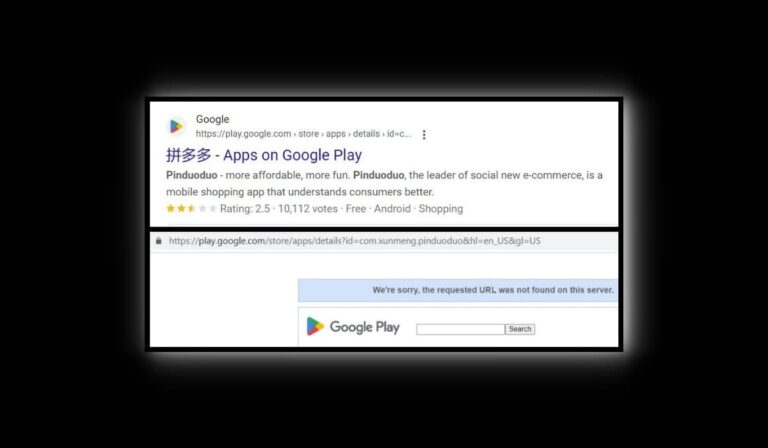
Google has temporarily suspended Pinduoduo, a leading Chinese budget shopping app, from its Play Store due to the discovery of malware in certain versions of the app.
The news of Pinduoduo’s ban came just a couple of weeks after Shein, another Chinese shopping giant, was caught copying clipboard content on Android phones of users who were using its older version.
In a statement issued on Tuesday, Google stated that it found malware in some versions of the app that were not available on the Play Store. The company has enforced Google Play Protect, which scans installed Android phone apps for malicious behaviour, on these allegedly harmful apps.
Google has set the Play Protect enforcement to block the installation of these apps and prompt users to uninstall them if they have already downloaded them to their devices.
Pinduoduo has confirmed that it is in communication with Google for further information, and it has also stated that several other apps have been suspended at the same time. Pinduoduo has over 900 million users and is one of China’s most popular e-commerce platforms.
Pinduoduo made a name for itself with its group-buying business model, which allowed users to save money by pooling together and buying items in bulk.
The app’s US-listed parent company, PDD, launched Temu, an online shopping platform in the United States last year, which has quickly become the most downloaded app in the US for both iOS and Android.
The app has been downloaded 24 million times since its launch in September and has more than 11 million monthly active users.
At the time of publication, the Pinduoduo app was unavailable on the Play Store. (Screenshot: Hackread.com)
In a statement, Pinduoduo said that “we strongly reject the speculation and accusation by some anonymous researcher and non-conclusive response from Google that Pinduoduo app is malicious.”
Malware refers to any software developed to steal data or damage computer systems and mobile devices. When hidden in apps, it can be used to gain unauthorized access to information on a user’s phone.
Google has not mentioned Temu in its statement, and the app is still available to download on the Play Store. Pinduoduo has strongly rejected the accusations of malicious activity and speculation surrounding the suspension of its app.
Amazon is refreshing its own Fire TV sets today, with a few more QLED models for its Omni lineup. Previously, it offered a 65- and 75-inch model. Now it is expanding that lineup with a 43-, 50- and 55-inch model being added. So the TVs now start at a new low of $450.
The Omni QLED Fire TVs still offer up to 96-zone local dimming. There’s also Dolby Vision IQ and HDR10+ for HDR support. As you would expect, there are far field microphones included here that work for always-listening Alexa. So you can control your TV with your voice, even when it’s not turned on.
The new Omni QLED TVs are up for pre-order today, and will be available from Best Buy starting on May 11. Here’s the pricing for the new QLED models:
Amazon is also debuting newer, cheaper Fire TV models
In addition to the refreshed Omni TVs, Amazon is also debuting the new Fire TV 2-series range. This goes alongside its 4-series that it has had for a few years now.
The Fire TV 2-series includes a 32-inch 720p and a 40-inch 1080p model. These start at $200, which is pretty competitive for the size and resolution. HDR is limited here, with just HDR10 and HLG included. But, that’s actually surprising. Most TVs in this price range don’t even have HDR included. So definitely good to see.
The Fire TV 2-series is on sale from Amazon’s website starting today. There’s no pre-order period for the Fire TV 2-series. They’ll start shipping today.
It’s an interesting time for Amazon to be launching these TVs since Roku just launched their own branded TVs. Which include some pretty inexpensive TVs from the low-end, mid-range and high-end. Good to see the competition increasing, which is only going to help the consumer get a better product for its money.
Apple TV and the MLB have announced the “Friday Night Baseball” schedule for the first half of the season. It’ll start on April 7, and the current schedule is through June 30, the second half of the season will likely be announced in a couple of months.
New this year, is that you will need to have an Apple TV+ subscription to watch these games. So that’s going to cost you $6.99 per month, or $69 for a full year. Last year, it was included for free, and you didn’t need a Plus subscription.
Apple says that there will be two MLB games each Friday night throughout the season. And they’ll be available to stream in 60 countries and regions. That’s a big bump from last year, where it was only 13 countries. Additionally, DIRECTV will make “Friday Night Baseball” available in more than 300,000 restaurants, bars, hotel lounges, retail stores and more, throughout the regular season on existing satellite TV equipment.
Some games are doubleheaders, while others are aired simultaneously
This year, some games are going to be aired as doubleheaders. But other weeks, the games will be on at the same time. Allowing you to choose which game you want to watch. Here’s the full schedule from April 7 through June 30.
Friday, April 7 Texas Rangers at Chicago Cubs 2 p.m. ET
San Diego Padres at Atlanta Braves 7 p.m. ET
Friday, April 14 San Francisco Giants at Detroit Tigers 6:30 p.m. ET
Los Angeles Angels at Boston Red Sox 7 p.m. ET
Friday, April 21 Toronto Blue Jays at New York Yankees 7 p.m. ET
Houston Astros at Atlanta Braves 7 p.m. ET
Friday, April 28 Philadelphia Phillies at Houston Astros 8 p.m. ET
St. Louis Cardinals at Los Angeles Dodgers 10 p.m. ET
Friday, May 5 Chicago White Sox at Cincinnati Reds 6:30 p.m. ET
Minnesota Twins at Cleveland Guardians 7 p.m. ET
Friday, May 12 Kansas City Royals at Milwaukee Brewers 8 p.m. ET
Chicago Cubs at Minnesota Twins 8 p.m. ET
Friday, May 19 Baltimore Orioles at Toronto Blue Jays 7 p.m. ET
Seattle Mariners at Atlanta Braves 7 p.m. ET
Friday, May 26 San Diego Padres at New York Yankees 7 p.m. ET
Chicago White Sox at Detroit Tigers 6:30 p.m. ET
Friday, June 2 Milwaukee Brewers at Cincinnati Reds 5 p.m. ET
Cleveland Guardians at Minnesota Twins 8 p.m. ET
Friday, June 9 Kansas City Royals at Baltimore Orioles 7 p.m. ET
Seattle Mariners at Los Angeles Angels 9:30 p.m. ET
Friday, June 16 Pittsburgh Pirates at Milwaukee Brewers 8 p.m. ET
Chicago White Sox at Seattle Mariners 10 p.m. ET
Friday, June 23 Pittsburgh Pirates at Miami Marlins 6:30 p.m. ET
New York Mets at Philadelphia Phillies 7 p.m. ET
Friday, June 30 Milwaukee Brewers at Pittsburgh Pirates 7 p.m. ET
Arizona Diamondbacks at Los Angeles Angels 9:30 p.m. ET
Imagine this: You open the Apple Music app on your iPhone, go to your playlists with the intent of playing something motivating to start your day, and suddenly see that you have a bunch of strange playlists in your library that you don’t remember creating. But is something like this even possible? Well, it appears it actually is.As MacRumors first reported, many users on Reddit shared that they have unknown playlists in their music libraries. In some cases, unknown songs were even added to the users’ playlists.
Some users experiencing this problem assumed that their accounts had been hacked, which is something totally logical to presume when you see that you have playlists in your library created by other people. However, the more likely cause of the problem is probably some kind of bug inside Apple’s iCloud server. Some users experiencing the problem managed to fix the issue by unsyncing and re-syncing their Apple Music app with their iCloud.
Also, it appears that the issue is only present in the Apple Music app for iPhone. The app for macOS doesn’t appear to be plagued by the unknown playlist problem, or at least, no reports suggest that the issue is present there.
At the moment, there is no official word from Apple about the unknown playlist problem. We must note that Apple released iOS 16.3.1 on February 13, 2023, and the update had a fix for iCloud. So, it is possible that the bug might have occurred as a result of the applied iCloud fix. We hope that Apple will soon resolve the issue. Meanwhile, don’t panic if you see someone else’s playlist in your music library.
Recently, Google declared its plan to reduce the maximum validity for public TLS (SSL) certificates from 398 to 90 days.
Under its “Moving Forward, Together” plan, Google intended to limit the maximum public TLS certificate validity to 90 days via “future policy updates or a CA/B Forum Ballot Proposal,” a small but crucial point that should be noted.
The maximum duration of a public SSL certificate has been reduced from three years to two years to one year, and now Google has said that it plans to shorten this duration to 90 days further.
This 90-day maximum will probably be in place by the end of 2024, while the exact date is unknown.
The ecosystem will avoid complex, tedious, and error-prone issuing procedures by encouraging automation and adopting practices that reduce certificate lifetime.
“Reducing certificate lifetime encourages automation and adopting practices that drive the ecosystem away from baroque, time-consuming, and error-prone issuance processes,” Google.
Google mentions that these changes will speed up the adoption of new security capabilities and best practices and promote the adaptability needed to switch the ecosystem to quantum-resistant algorithms quickly.
Also, less reliance on “broken” revocation checking solutions that cannot fail-closed and hence provide insufficient protection will result from shorter certificate lifetimes.
Moreover, the impact of unexpected Certificate Transparency Log disqualifications will be lessened with shorter-lived certificates.
In addition, Google intended to shorten domain validation reuse periods to 90 days.
“More timely domain validation will better protect domain owners while reducing the potential for a CA to mistakenly rely on stale, outdated, or otherwise invalid information resulting in certificate mis-issuance and potential abuse,” Google.
Automation is Essential for Reducing Risk
It will be extremely challenging to manually manage the renewal and deployment of each server certificate more than four times each year, necessitating more than four times the effort that IT security personnel already have to do for an already challenging task.
Given that most businesses do not have a small number of certificates, this is a significant increase. It involves hundreds or thousands of certificates rather than a few dozen that must be handled four times annually.
Automation becomes even more important in this situation, especially as the duration of domain validation reuse and the lifespan of TLS/SSL certificates are decreasing.
Hence, IT managers should explore certificate automation options, such as CA agnostic Certificate Lifecycle Management (CLM) platforms. These solutions can aid in automatically provisioning and installing renewal and replacement certificates and detecting certificates in enterprise environments regardless of the Certificate Authority issuing them.
Ultimately, businesses need a way to scale up the automation of digital certificate lifecycles. Automation is essential for risk reduction.
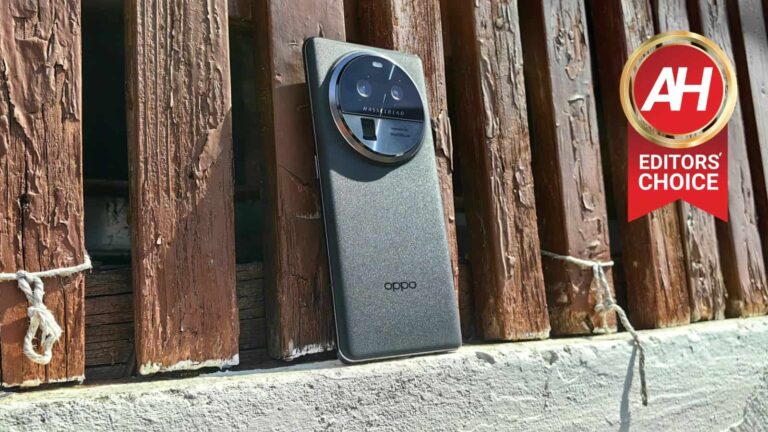
OPPO is back with a new flagship smartphone, the OPPO Find X6 Pro. The OPPO Find X5 Pro was, and still is an excellent phone, and I was quite excited to take a look at the Find X6 Pro. When I took it out of the box I was impressed, straight away. But we’ll talk about that soon, as this phone has a lot to offer, and I’m not talking only about its design. Unfortunately, though, the phone doesn’t seem to be coming to global markets. At least at the time of writing this review, OPPO doesn’t have such plans.
That is a bit disappointing, as I thought the China-based software on this phone was just a placeholder until the global model is released. I hope OPPO will change its mind, as this phone is excellent in so many ways, and it deserves to be seen by consumers outside of China. Having said that, let’s dive in, as there’s plenty to talk about. Not only is the phone meticulously designed, but this is OPPO’s first smartphone with a 1-inch camera sensor, and its specs are… top-of-the-line.
Table of contents
OPPO Find X6 Pro Review: Hardware / Design
The OPPO Find X6 Pro is made out of metal and glass. The phone has Gorilla Glass 5 on the back, and it looks stunning. Some people may not be fans of huge camera islands, but that’s the reality of today’s smartphones, basically. So I’m glad to see the one on this phone look the way it does. I’ve received the Black variant of the phone, and it has a two-tone camera island. OPPO combined black with dark gray here, and I dig this design. It did the best it could considering it had to incorporate rather large sensors here. Well, especially the main one.
The build quality is top notch
The phone is very slippery, at least this glass model that I’ve received. There is also a vegan leather variant (vegan leather + glass on the back) which is surely less slippery. It may be slippery, but the design is seamless all around. The phone feels really nice to hold, and there are no sharp portions on the side, everything is very smooth. The screen curves into the frame nicely, and the same goes for the backplate. Yes, the device has a curved display, and there’s also a display camera hole included. The bezels are very thin, though.
The camera island is large, but it fits well here
The camera island does protrude quite a bit on the back, which is to be expected. I did realize it’s a nice anchor for my index finger when I hold the phone, though. The power/lock key sits on the right-hand side, while the volume up and down buttons are on the left (and separated). A Type-C port is included at the bottom. There is no audio jack on this phone, but an IR blaster is included.
Don’t be fooled, this phone is huge
The OPPO Find X6 Pro is quite large, which is not surprising considering it has a huge 6.82-inch display. It is not too wide, though, it’s narrower than the Galaxy S23 Ultra. It weighs 216 or 218 grams, depending on the variant. The variant I’ve used weighs 216 grams, and it is hefty, but nowhere near the Galaxy S23 Ultra.
So, what’s the gist? The phone does feel premium in the hand, and it’s nice to hold, but it’s very slippery. It’s also quite large, so keep that in mind. If you’ve used newer Android flagships that are made out of metal and glass, you’ll get a similar feeling here.
A rather nice case is included
OPPO does include a case in the box, and no, it’s not one of those basic silicone cases. This is a plastic case that looks like it’s made out of leather, and has a rubbery feel to it. It’s extremely thin, and it definitely feels like a more quality offering than your regular silicone case. I like this very much, and it reminds me of the case that arrived with the HONOR Magic Vs. Anyhow, it’s nice to see a case included, especially such a nice case.
OPPO Find X6 Pro Review: Display
I’ve already mentioned that the OPPO has a huge 6.82-inch display, what I didn’t say is that this is the brightest display on the market. This panel goes all the way up to 2,500 nits at its peak, beating out the iPhone 14 Pro and Pro Max comfortably. Those two phones can reach 2,000 nits max, while the Xiaomi 13 Pro follows with 1,900 nits. That’s not all, though, of course. The display has a resolution of 3168 x 1440, and a PPI of 510. The screen-to-body ratio is extremely high, at 93.5%, and the panel does support HDR10+ and Dolby Vision. This is an LTPO panel that supports an adaptive refresh rate of up to 120Hz, and has a 240Hz touch sampling rate. It also supports 720Hz/1,440Hz PWM dimming. As if that’s not enough, it’s protected by the Gorilla Glass Victus 2.
This is probably the best-specced display in the market
This is probably the best-specced display on the market at the moment. And yes, it’s fantastic. It is color-accurate, though you can mess further with that via the settings, if you have different preferences. It’s very responsive to the touch, and the curves on the sides are not too extreme. It gets extremely bright outdoors, while it’s very sharp too. The viewing angles are excellent, and the blacks are deep. I literally don’t have a single complaint when it comes to this display. It’s well-optimized, fluid, and has outstanding image quality. OPPO nailed it.
OPPO Find X6 Pro Review: Performance
The company didn’t exactly skimp out on the performance-related hardware either. The Snapdragon 8 Gen 2 fuels the phone. That is Qualcomm’s most powerful SoC at the moment, and one of the best in the market, if not the best one. On top of that, you’ll find up to 16GB of LPDDR5X RAM on the inside, and up to 512GB of UFS 4.0 flash storage. So, the latest RAM and storage modules were used as well. Does that translate to great performance, though? Well, yes, it does. It’s a real struggle getting this behemoth to slow down, even when games are concerned. Regular tasks are a breeze, and performance is really not something you should worry about here. It’s basically on par with the Xiaomi 13 Pro, Vivo X90 Pro, and Galaxy S23 Ultra, its SoC siblings. I had a great experience with it from the performance standpoint, in terms of sheer smoothness. Not even Genshin Impact could slow it down, it powered through it.
OPPO Find X6 Pro Review: Battery
You’ll find a 5,000mAh battery inside the OPPO Find X6 Pro. The OPPO Battery Health Engine is also a part of the offering, as the company claims that the battery will keep 80% of its capacity after 1,600 charge cycles over 4 years. If you take into account that the phone supports 100W SuperVOOC fast wired charging, and 50W AirVOOC fast wireless charging, that is excellent. There are also a number of security chips in place, and everything you’d expect. It is also worth noting that a 100W charger is included in the package, so, there you go. Also, the phone supports 10W reverse wireless charging. So, how fast is its charging? Well, you can get a full charge via wired charging in only 30 minutes, while you’ll get there in 51 minutes wirelessly, according to OPPO. My experience has been rather similar, though I only tested wired charging.
The battery life is excellent
All in all, this sounds like a great package, right? Even if the battery life is not the best, with such fast charging, not many people would have issues. You’ll be glad to know, however, that the battery life has been excellent during my usage. Considering this software is made for the Chinese market, I had to sideload Google services, so that I could use it properly outside of China. That was a simple process of installing the Google Play Store, really. That being said, I was able to get over 7 hours of screen-on-time regularly, The phone still had plenty of juice to go at that point, most of the time. Usually, that was around 25-30%. It could comfortably go over the 8-hour screen-on-time mark, which I also did. There’s really nothing to worry about in terms of battery life. This phone just keeps on going.
OPPO Find X6 Pro Review: Camera
Many flagship smartphones these days have a heavy focus on the camera. Well, things are not that different with the OPPO Find X6 Pro. This phone has phenomenal camera hardware. OPPO included three cameras on the back. This setup is led by a 50-megapixel main camera (Sony’s IMX989 1-inch sensor, OIS, 1.6um pixel size, f/1.8 aperture, 23mm lens, all pixel omni-direction PDAF, 2x with in-sensor Zoom Technology). That camera is backed by a 50-megapixel ultrawide unit (Sony’s IMX890 sensor, OIS, 1.0um pixel size, f/2.2 aperture, 15mm focal length, all pixel omni-direction PDAF, minimum focus distance of 4cm, macro mode). The third, and last camera is a 50-megapixel periscope telephoto unit (Sony’s IMX890 sensor, 1um pixel size, f/2.6 aperture, 65mm focal length, all pixel omni-direction PDAF, 3x optical zoom, up to 120x digital zoom).
The OPPO Find X6 Pro’s outstanding camera hardware provides great pictures
That’s a lot of promising hardware right there, perhaps even the best combo out of all smartphones on the market at the moment. On top of that, OPPO also included the MariSilicon X NPU here, which is its imaging chip. You’ll also notice the Hasselblad branding on the back. OPPO collaborated with Hasselblad who tuned the cameras and color output. Is it any good, though? The output is great, though it has a specific style. If you’ve used cameras on OPPO phones before, you’ll know what we’re talking about. The images tend to emphasize colors in a specific way, and many images that you take in low light will have that dramatic look. The phone purposely tends to darken dark spots in lower light for that dramatic look. The details from all three cameras are great, as OPPO really did use excellent sensors and lenses here, plus rather capable software.
You’ll find a 1-inch main camera sensor here
The main camera has that natural-looking bokeh thanks to the sensor size. It’ll take you a bit of time to get used to that large sensor, though. The camera goes for the cameras from OPPO’s competitors who used the same sensor. The colors look outstanding, actually, especially during nighttime. I loved taking low light pictures with this phone. The ultrawide and telephoto cameras do a great job of keeping the same color balance with the main camera, I actually enjoyed using both of those cameras on this phone. Zoomed-in shots do look really good, even if the lighting is not great they’ll retain plenty of detail thanks to great hardware. Samsung arguably still has a better periscope camera in good lighting, but in low light, well… OPPO tends to provide better shots when it comes to zoomed in situations, at least when it comes to up to 3x-10x images. That was, at least, my experience with the camera.
It almost never misses, but HDR does need a bit of tunning
The phone also does a great job in demanding HDR situations, though some additional tuning is needed. Some spots do tend up to be brighter than they should, though such situations were very rare for me. Usually, the phone nailed the shot. It’s a completely different offering than the Vivo X90 Pro in terms of image output, but it’s great in its own way. It’s actually closer to what the Xiaomi 13 Pro offers, I’d say. The video recording is also good, there are no glaring issues with it, other than some warping in low light, but that’s something we see on more or less every camera.
The OPPO Find X6 Pro camera performance is superb
The bottom line is, the OPPO Find X6 Pro has one of the best camera setups on any phone, and it provides outstanding results. It has its own shooting style, and you can even flip the switch and use the ‘AI’ option if you’d like to get a bit more saturation in the images. At least that’s the difference that I’ve noticed in some shots. Having said that, this phone is easy to recommend if you’re looking for a camera powerhouse. I’ve included various samples below, some have been taken with AI off, and some with it on. Depending on situation, both look great, actually.
Various camera samples:
Ultrawide – 30x samples:
Wide & ultrawide side-by-side:
OPPO Find X6 Pro Review: Software
Unfortunately, at the moment, the OPPO Find X6 Pro is planned for the Chinese market only. OPPO did send us a review unit, but it came with ColorOS made for the Chinese market. It’s not the same experience as the global version, that’s for sure. For one, we had to sideload Google Play Store on the phone, and the pre-installed apps are different in comparison to the global version. Some options within the UI are also different. Once you do install Google Play Services, which is not that difficult at all, it’s as simple as sideloading an APK, things are quite good. The most annoying aspect I’ve spotted is an occasional pop-up system notification in Chinese (usually from the app store), and the fact that you can have a limited number of apps running reliably in the background. The variant of ColorOS for China has a different battery menu than the global one. You have to select apps you want to be able to auto start, and keep running in the background. You may have issues with notifications if you don’t.
The phone comes with software made for China, but…
Other than that, I did enjoy the experience. It’s worth noting that I’ve been using the OPPO Find N2 with the software for the Chinese market for months now. It really didn’t bother me all that much, but it may bother some of you. Still, everything works really well. ColorOS has been fluid, and it has improved a lot over the year. It actually looks good now, very similar to OnePlus’ OxygenOS. You do have a ton of additional options here, which include customization options. Various gestures are also included, and so on. If you’ve used a recent build of OxygenOS or ColorOS on a global OnePlus or OPPO smartphone, you’ll be right at home here. It would sure be nice if OPPO decides to launch a global model with global software on it, though.
OPPO Find X6 Pro Review: Should you buy it?
The OPPO Find X6 Pro would be truly easy to recommend if it came with global software. This way, it all depends on if you’re willing to put up with some limitations I’ve mentioned, and sideload Google Play Services. As far as Europe goes, 5G should work without issue, at least it did for me. Your mileage may vary in different regions. If we put the software side of things to the side, this is a truly fantastic smartphone. I cannot emphasize enough how outstanding the cameras are on this phone. This may be the most powerful camera hardware overall, and OPPO in collaboration with Hasselblad did an amazing job when it comes to optimization. The display is in a category of its own, it’s excellent in every way, and the brightest out of any phone. The battery life is also excellent, while you can choose if you prefer wired or wireless charging, both options will charge up the device really fast. I could go on for a long time about the positives of the device. As I said, if you don’t mind importing the device, and are willing to put up with some software shenanigans, this is a truly outstanding device. It simply screams “premium”, in every way.
You should buy the OPPO Find X6 Pro if:
You want outstanding wide, ultrawide, and periscope telephoto cameras
You spend a lot of time outside in the sun
You need extremely fast wired & wireless charging
You hate companies who don’t include charging adapters in the box
You appreciate well-executed design
You need great battery life on a phone
You shouldn’t buy the OPPO Find X6 Pro if:
You don’t want to put up with software for the Chinese market
The audio industry is preparing to welcome a new product, the Beats Studio Buds Plus. This pair of headphones will launch in the coming weeks, bringing better active noise cancellation (ANC) and transparency mode. As you might already know, this product will be available for both Android and iOS.
The actual specifications of this product are still unknown, but sources have begun digging into available information. This reveals the design that the coming pair of earbuds will take, as well as some improvements. There is a need to take all available information about this pair of earbuds with a pinch of salt.
Beats are yet to confirm these specifications, but some sources have uncovered a bit of what the public can expect. Although the sources are reputable, certain details they provide might change once the actual product is launched. This article delves into the available details about the Beats Studio Buds Plus earbuds.
The coming Beats Studio Buds Plus will compete with other budget earbuds
Beats have a ton of wireless headphone series, like the Fits, Flex, Powerbeats, and Solo and Studio (buds). Products from all these series retail at different prices, with the most expensive option being the Studio Wireless headphones. The current Beats Studio Buds retail for less than half of the Studio Wireless headphones.
This, along with the audio features and specifications they pack, makes them a solid option for lots of buyers. Users from both the Android and iOS communities find the Beats Studio Buds earbuds pretty useful. These individuals will also find the Beats Studio Buds’ coming successor to also be useful.
According to the available reports regarding this coming successor, they will pack some improvements. They will come with better active noise cancellation (ANC) which will help users to disconnect from their surroundings whenever they need to. Also, if users need to have the earbuds on and still connect with their environment, then the improved transparency mode will help them.
In terms of their design, the Beats Studio Buds Plus will look just like the Studio Buds launched two years ago. There are not many changes concerning the looks but sources show off a new black and gold color option. The coming earbuds will also support Spatial audio and easily fit into the ear without wobbling.
Being the upgraded variant, they might also step up on battery life. For its pricing, this coming pair of earbuds might retail under $200 just like their predecessor. More information on the Beats Studio Buds Plus will be made available in the weeks leading up to their launch.
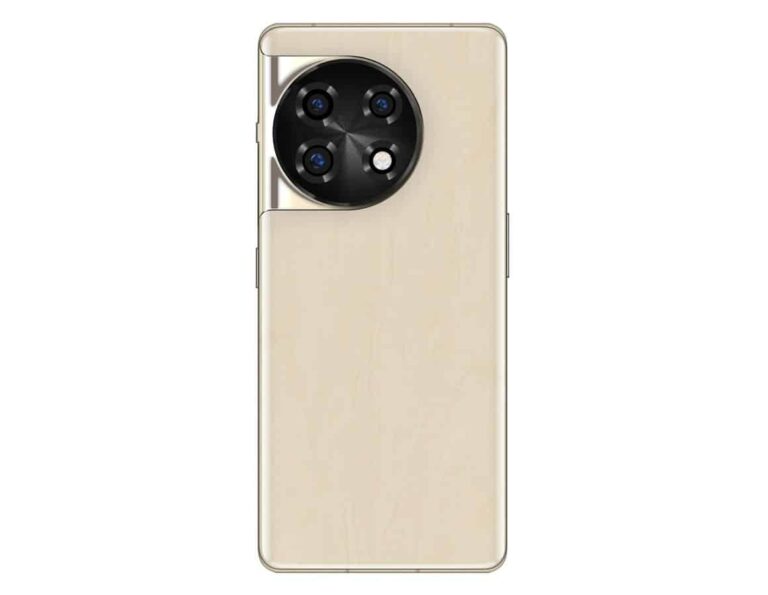
The OnePlus 11 launched globally earlier this year, and it arrived in two color options, Eternal Green and Titan Black variant. Well, a tipster has just shared an unreleased OnePlus 11 color variant for us to check out.
Take a peek at the unreleased OnePlus 11 color variant
The images you can see in the gallery below come from SnoopyTech. This phone is beige-colored, with a matching frame, it seems. The glass on its back has an interesting pattern, as if it’s wood or something like that.
We don’t know what was this variant supposed to be called, but another tipster claims it was made for the Chinese market. It never launched there either, though that doesn’t mean it won’t appear in the future.
The design of the phone is, of course, unchanged, only the paint job is different. Considering OnePlus launched only two color options, it would be nice to see at least one more on offer. This one would be a nice contrast to the black and green ones.
We’ve talked about the OnePlus 11 at length on the site, and even reviewed the device up to this point. It turns out that the OnePlus 11 is a great offering from the company, and a major improvement compared to the OnePlus 10 Pro.
OnePlus opted to ditch the ‘Pro’ moniker this time around, even though this is technically a ‘Pro’ phone. It also comes with a rather compelling price tag, at least in some markets.
The OnePlus 11 comes with a truly powerful spec sheet
The phone is fueled by the Snapdragon 8 Gen 2 SoC, while it packs in up to 16GB of LPDDR5X RAM. It also offers up to 512GB of UFS 4.0 flash storage. A 5,000mAh battery is also a part of the package, along with 100W (80W in the US) wired charging. Wireless charging is not a part of the package this time around.
A 50-megapixel main camera is backed by a 48-megapixel ultrawide unit, and a 32-megapixel telephoto camera. Hasselblad actually co-developed this camera system with OnePlus, and tuned the cameras.
Android 13 comes out of the box here, with OxygenOS 13, globally. If you’d like to know more about the device’s specs, click here.
Former president Donald Trump can now resume uploading on YouTube as the platform removed the ban on him. YouTube is the latest major online platform after Twitter and Meta that’s allowing Trump to reinstate his account.
Donald Trump has recently announced his candidacy for the 2024 presidential election. His accounts on social media were blocked after the January 6 attack on the US Capitol that was said to be done by Trump supporters. At the time, platforms like Twitter and YouTube said Trump had used this environment to encourage an attack on the Capitol.
As a result, some of the Trump videos on YouTube were removed, but his account remained in place. Twitter and Meta, however, closed all Trump accounts, and he was blocked from any activity on these platforms.
YouTube resumes Donald Trump account ahead of the 2024 election
The Google-owned video-sharing platform says the restriction was removed after they “evaluated the continued risk of real-world violence, while balancing the chance for voters to hear equally from major national candidates in the run up to an election.” Of course, Trump’s channel remains subject to YouTube policies.
Elon Musk ended the Donald Trump Twitter ban right after he took over the company. Likewise, Facebook and Instagram reinstated the former president’s accounts. Trump hasn’t yet reacted to his YouTube ban removal, and no new video has been uploaded to his account.
The former president hasn’t used his Twitter, Instagram, and Facebook accounts since they were reinstated. He prefers to use his platform, Truth Social. Trump calls Truth Social America’s “Big Tent” that encourages free speech without discriminating against political ideology. Of course, Trump is more likely to return to major social media platforms ahead of the 2024 election because he presumably doesn’t want to lose touch with his fans.
The Big Tech CEOs were recently subpoenaed by the US House Judiciary Committee Chairman Jim Jordan over censorship claims. Republicans and conservatives believe major social platforms favor left-wing content and deliberately limit right-wing activists.
After Elon Musk’s Twitter files disclosure, this hypothesis was strengthened, and it was found that former Twitter executives restricted the Republicans’ accounts. Of course, Meta reportedly exempted conservatives from some of its content moderation policies over the fear of backlash.
Russia has reportedly ordered its government officials to abandon the use of Apple iPhones by April 1, citing concerns that the devices are vulnerable to western intelligence agencies.
According to a new report by Reuters, Kremlin has informed officials involved in preparations for Russia’s 2024 presidential election that they need to switch to other devices with different operating systems. Russian officials fear that western intelligence agencies have snooping technology on iPhones. The policy was disclosed to officials during a Kremlin-organized seminar for officials, according to the report.
Kommersant, the local newspaper, reported that one of the participants during the meeting said, “it’s all over for the iPhone: either throw it away or give it to the children.” Officials have reportedly been asked to dump their iPhones this month only.
Kremlin spokesman Dmitry Peskov reportedly said during the meeting that “smartphones should not be used for official business. Any smartphone has a fairly transparent mechanism, no matter what operating system it has – Android or iOS. Naturally, they are not used for official purposes.” He, however, refuses to confirm the report.

![Amazon’s Fire TV Omni QLED lineup now includes smaller, cheaper models! [Updated]](https://h4ckers.news/wp-content/uploads/2023/03/Screenshot-2023-03-22-at-11.41.37-AM-768x497.png "Amazon’s Fire TV Omni QLED lineup now includes smaller, cheaper models! [Updated]")