Bally Sports has been in the news a lot recently, along with other regional sports networks or RSNs. That’s because Bally Sports is getting ready to declare bankruptcy, and has skipped payments to some sports leagues as of late.
Now, Scripps believes that a shutdown is expected for Bally Sports, and it could happen before baseball season starts. Scripps executive Brian Lawlor stated that “in the last two weeks, some of the leagues are suddenly in contingency mode trying to figure out what happens if Bally stiffs them – and stops production in the next month. So we’ve had quite a few conversations with the leagues and the teams, just helping them identify where we can be a solution for them”.
Scripps wants to be the home for these teams. Not just the teams on Bally Sports but on AT&T SportsNet (who is shutting down). So far, Bally Sports owes the MLB around $1 billion, which is a figure that the commissioner, Rob Manfred confirmed recently. And if Bally Sports does opt to declare bankruptcy, that could put payments to the MLB, NBA and NHL at risk.
Bally Sports is working on deals with creditors so that it can avoid bankruptcy, but they only have a few weeks left to reach a deal before they will be forced to declare bankruptcy.
The NBA has an out, if Bally Sports does declare bankruptcy
The NBA just started a new streaming deal with Diamond Sports (Bally Sports parent-company), which allows them to take back their rights if Diamond Sports declares bankruptcy. That would mean that the 16 NBA teams could start streaming their games in-market or resell the rights to a different company.
Meanwhile, the NHL and MLB have announced that they do have backup plans, if Diamond Sports is unable to complete their contract. And still allow fans to watch the NHL and MLB.
What would be great for everyone, is if all games were available on NBA TV, MLB.TV and NHL.TV. Allowing fans to watch in-market games in those apps, instead of only out of market games, that are also still subject to blackouts.
Sling TV was one of the first Live TV Streaming services on the market. Having launched back in 2015. Prior to Sling TV’s launch, there were other Live TV Streaming services, but they weren’t very popular or very good. Sling TV ushered in the era of cord-cutting without losing channels and functionality.
To this day, Sling TV remains one of the cheapest options for cord-cutting and still having live TV available.
Despite its low entry-price, Sling TV can still be quite confusing. With the many different packages, and add-ons available. So here, we’re going to explain everything about Sling TV, and tell you everything you need to know about this service.
What is Sling TV?
For those of you that might be unaware, Sling TV is actually owned by Dish Network. The name “Sling” is actually much older than the service. Dish used to sell “SlingBox” and “SlingPlayers”, which was essentially their version of TiVo. Then in 2015, Sling TV was born. Using a name that many people were already familiar with.
Dish Network doesn’t intend for Sling TV to replace its satellite service. It’s an additional service that it offers, to keep growing their customer-base, by adding cord-cutters. Something that many cable companies – like Comcast and Cox – have tried to keep on their service by offering an insane amount of channels.
Sling is the most robust streaming service on the market today, and you can get started for just $30. Which makes it so popular.
The cost of Sling TV is a huge variable. While you can get started for just $40 with the Sling Blue or Sling Orange package, you can also drive that price up over $100 pretty easily. With the many add-ons that are available for Sling TV.
Add-ons cost as low as $5, and can go up to $20. These add-ons include additional channels, as well as additional features – like Cloud DVR Plus.
Depending on what you’re watching, and what channels you want, you can definitely pay a pretty penny for Sling TV. Below, where we talk about channels and add-ons, you’ll get a better idea of how much Sling TV will cost you.
Update: On March 1, 2023, Sling TV announced that it was raising prices in five markets, after adding ABC in a few markets. In Chicago, Los Angeles, New York City, Philadelphia and San Francisco will see their price for Sling Blue going up by $5, to $45 per month. Interestingly, those in Fresno, Houston and Raleigh are not seeing the price increase, but are getting ABC.
What channels are included?
Sling TV is split into three groups, essentially. There’s Sling Blue and Sling Orange core plans, which are $30 individually or you can get both for $45/month. Then there are add-ons. Which will provide you with the less-popular channels for an added fee. Which we’ll explain more below.
Sling Blue
With Sling Blue, you’re getting 45 channels. You’re getting a ton of pretty popular channels, along with Fox Sports channels (not regional sports channels from Fox, only NBC though). For the most part, local channels are not included. Some markets will have NBC and Fox locals available, but those are very few. You can, alternatively, get an OTA antenna and get those channels without paying for a monthly service though.
Here are all the channels available with Sling Blue:
TNT
CNN
Investigation Discovery
HGTV
Nick Jr.
History Channel
AMC
A&E
Food Network
TBS
Comedy Central
IFC
BBC America
Travel Channel
Cartoon Network
BET
EPIX Drive-In
Lifetime
Viceland
AXS TV
Fuse
Newsy
Bloomberg Television
Cheddar
Local Now
Comet
Stadium
NFL Network
Fox News
MSNBC
Bravo
FOX Sports 1
USA
TLC
Discovery Channel
FX
E!
SYFY
National Geographic
truTV
HLN
NBC Sports Network
FOX (Available in Select Markets)
NBC (Available in Select Markets)
NBC RSNs
Sling Orange
The main difference with Sling Orange, is that you are getting Disney channels. Like Disney, ESPN and such.
You get 33 channels with Sling Orange:
ESPN
TNT
CNN
Investigation Discovery
HGTV
Nick Jr.
History Channel
AMC
A&E
Food Network
Disney Channel
TBS
Comedy Central
IFC
BBC America
Travel Channel
Cartoon Network
BET
EPIX Drive-In
Lifetime
Viceland
AXS TV
Fuse
Newsy
ESPN2
ESPN3
Freeform
Bloomberg Television
MotorTrend
Cheddar
Local Now
Comet
Stadium
With Sling Orange and Sling Blue combined, you get both packages, or around 50 channels.
Sling TV offers a ton of add-ons, allowing you a sort of a la carte experience here. So if you want more sports channels, you can pay $10/month for it. Or get more comedy channels for $5/month. Among many others.
Sling is continuing to add more add-ons to its service. So we urge you to check their website as this info could be outdated.
Multi-channel add-ons
You can also add on Cheddar’s multiple channels for free right now. Since they are free, you may as well add them to your package.
Comedy Extra (Orange), $5/month: MTV, TruTV, MTV2, Paramount Network, CMT, Logo, GSN, TV Land, and Revolt
Comedy Extra (Blue), $5/month: MTV, MTV2, CMT, Logo, GSN, TV Land, and Revolt
Kids Extra (Orange), $5 per month: Disney Junior, Disney XD, Nick Jr., Nicktoons, TeenNick, Boomerang, BabyTV, and Duck TV
Kids Extra (Blue), $5/month: Nicktoons, TeenNick, Boomerang, BabyTV, and Duck TV
Hollywood Extra, $5/month: Fandor, Reelz, HDNET Movies, Sundance TV, TCM
Lifestyle Extra (Orange), $5/month: VH1, BET, Cooking Channel, DIY Network, FYI, Hallmark Channel, Hallmark Movies & Mysteries, Hallmark Drama, WE TV, Lifetime Movies, Vibrant Network, ZLiving Network, Afro
Lifestyle Extra (Blue), $5/month: VH1, E!, Oxygen, Cooking Channel, DIY Network, FYI, Hallmark Channel, Hallmark Movies & Mysteries, Hallmark Drama, WE TV, Lifetime Movies, Vibrant Network, ZLiving Network, Afro
News Extra (Orange), $5/month: BBC World News, HLN, Fusion, Euronews, News18, CGTN, NDTV 24×7, RT Network, Weather 24 (new users will get a free six months of Weather 24, even without the News Extra add-on), American Heroes Channel, Destination America, Science Channel
News Extra (Blue), $5/month: Fox News, Fox Business, MSNBC, CNBC, BBC World News, TheBlaze, HLN, Euronews, France 24, News 18, NDTV 24×7, Russia Today, CGTN, Weather 24 (new users will get a free six months of Weather 24, even without the News Extra add-on)
Sports Extra (Orange), $10/month: NBA TV, ESPN SEC, ESPN SEC+, PAC 12 Network, ESPNU, ESPNews, NHL Network, BeIN Sports, ESPN Goal Line, Stadium, ESPN Bases loaded, Outside TV, and Tennis Channel, Longhorn Network, ACC Network
Sports Extra (Blue), $10/month: RedZone NFL Network, NBA TV, NHL Network, NBC Golf, BeIN Sports, PAC 12 Network, Stadium, Outside TV, Olympic Channel, and Tennis Channel
Best of Spanish Extra, $10/month: EstrellaTV, Azteca, BeIN Sports Ñ, BeIN Sports, Cine Latino, Cine Sony, History en Español, Pasiones, INTI, CBeebies BBC, VME Kids, NTN24, Baby TV Español, El Financiero Bloomberg TV, ZeeMuno, ¡Hola! TV, Discovery en Español, Discovery Familia
Premium channel add-ons
You can also add plenty of premium channels to your Sling TV subscription. HBO is no longer offered. Sling TV has not said why, but the change happened after HBO MAX launched, so there’s likely a contract dispute between the two companies. Good thing is, you can still sign up for HBO MAX elsewhere.
CuriosityStream, $6/month
UP Faith & Family, $5/month
Pantaya, $6/month
Stingray Karaoke, $7/month
Dove Channel, $5/month
Outside TV Features, $5/month
Starz, $9/month
Showtime, $10/month
Epix, $5/month
Cinemax, $10/month
ConTV, $5/month
Docurama, $5/month
Grokker, $7/month
Here TV, $8/month
Comedy Dynamics, $5/month
DOGTV, $5/month
VSiN, $4/month
International Add-ons
This is where Sling TV really shines from the rest of the pack. With the many, many international add-ons available for your TV watching pleasure. No other Live TV Streaming service comes close in this regard.
Arabic Mini, $10/month: Arabica, BBC Arabic, Al Jazeera Mubasher, MBC Drama, Melody Classic, ART Cima, Melody Hits, MBC 3, MBC Wanasah, IQRAA TV, Noursat TV, Aghapy TV
Brazilian Mini, $15/month: TV Globo Internacional
Chinese Mini, $5/month: CCTV-4, CGTN, China Movie Channel, CCTV-Entertainment, Hunan Satellite TV, Zhejiang TV, Dragon TV, ShenZhen Television, Jiangsu International Channel, Phoenix North America Chinese Channel, Phoenix InfoNews, Beijing TV
Deutsch Mini, $5/month: P7S1 Welt
Français Mini, $5/month: France 24, TV5 Monde Cinema, TiVi5Monde, Trace Urban
Hindi Mini, $5/month: Aaj Tak, Zee Cinema, SAB TV, zoOm, Food Food, Times Now, News18, B4U Movies, B4U Music, Sony Mix, Sahara Samay
Italiano Mini, $10/month: Rai Italia, Rai News 24, TV2000 Italia, La7, Rai World Premium
Google Assistant Smart Displays (currently, only the Nest Hub series)
Google Chrome
Safari
Microsoft Edge
Facebook Portal
Channel Master DVR+
Roku
Xbox One consoles
Windows 10
Xfinity X1
Oculus
Select Samsung & LG TVs
That covers just about every platform out there and then some. Sling TV is currently available on more platforms than any of its competitors.
What features are available?
Every Live TV Streaming service offers a bundle of features with its service. This is a way for them to justify their prices – particularly those that are around $65/month. And a way to differentiate themselves, seeing as almost all streaming services have the same core channels available. With really only a handful that are different. So here are the features that Sling TV offers.
The Sling TV App Redesign
On May 25, 2021, Sling TV began rolling out its new design of its app. Starting with the Amazon Fire TV, and it will be available on other platforms shortly there after. Here’s what is new:
Personalization: A new Home Screen allows users to easily discover the most relevant content. Users can now customize the Channel Guide by sorting A-Z or by favorites and filters based on what they’re looking for.
Ease of Use: New navigation makes it easier for users to discover what they are looking for, while keeping a familiar feel that users have come to know and love. Users can quickly browse through the Guide or see on-demand content. Users can easily pause, fast-forward, skip to live, or set a recording in a channel and manage all recordings with a dedicated DVR tab. The Smart Player Video Navigation gives users the freedom to go between favorite channels seamlessly with one click to see Recent Channels.
Beautiful Design: A more visual SLING TV experience features ribbons in different colors and sizes with expanded show visuals in the Guide to help users discover content faster. Users can also dive into their favorite channels by clicking on any channel logo to get more details.
Cloud DVR & Cloud DVR Plus
Sling does give every customer 10 hours of free Cloud DVR storage. Obviously, that’s not a lot, and really only enough to store a few shows a week, or even two games.
However, Sling does offer an add-on for this. For $5/month, you can get upgraded to Cloud DVR Plus, which gives you 50 hours of content. And if you have a Roku, you can get 100 hours with Cloud DVR Plus. It’s unclear as to why the difference between devices.
Like traditional DVRs, Sling TV does delete older recordings, to make space for new recordings. To prevent it from deleting shows you don’t want deleted, you can mark them as “protected” in the DVR. So you can prevent it from being automatically deleted. There are also DVR folders available for organizing the content you’ve recorded.
Cloud DVR is available on most channels. Though some of them will not be able to be recorded.
It’s also worth noting that Xfinity X1 and Samsung Smart TVs currently do not support Sling TV’s Cloud DVR service.
On-Demand content
In addition to recording content with the DVR, Sling also offers a pretty robust selection of titles available on demand. And if they are not available on demand, you can rent them. Rentals are priced at $3 for standard definition and $4 for HD. You also have 30 days to watch anything you rent. So you can watch it plenty of times.
Sling TV does break down titles that are available on demand into different categories. Making it easier to find something to watch.
Free content available
Another way that Sling really stands out from the competition is with its free content. You can watch more than 100 hours of movies and TV shows on Sling TV, without paying for the service. In fact, you don’t even need to provide a credit card number.
Sling TV started this in 2019, but it became very popular during the pandemic in 2020. With everyone being stuck at home for months, and needing some new content to watch, to stay busy.
How can I get a free device, or a discount on Sling TV?
Sling TV does routinely offer up some pretty incredible deals for getting a free device like an AirTV, or Roku. As well as getting a month free. So it’s always a good idea to check out their site to see what their current deals are.
At the time of writing this, you can get $10 off of your first month of Sling TV. Getting it for $20/month or $35/month for Blue and Orange combined.
It is also worth noting, that in order to get a free device like an AirTV, you generally do need to prepay for a month or two up-front. Which also means you won’t be able to use the free trial.
Is Sling TV worth it?
That is going to depend on what features and channels you need and watch. If all of your channels are included in the Sling Blue and/or Orange packages. Then Sling is a really great option, and pretty cheap too. But there is the annoyance of having to switch to your actual TV to get local channels – and the fact you need to buy an antenna for that. But that is one way that Sling TV is able to keep its prices pretty cheap.
If you’re a casual viewer of live TV, then Sling TV will do the trick. And the fact that you can pretty much pick and choose the channels you want to add to your package is an added bonus.
Oh, boy, the social media platform TikTok just can’t get any rest. The never ending drama ride that highlights legal dispute after ban attempt is truly challenging. Not only because the security concerns on hand are extremely relatable and natural, but also because at the end of the day TikTok is not only a business, but a business opportunity for numerous influencers that use it to earn a living. That being said, TikTok has made strides to prove its innocence through transparency and a very clever tactic: not running away from a challenge. The company outright opened its doors for state officials to explore public data to their leisure.
To continue that trend, a TikTok spokeswoman took the time to talk with the BBC regarding three of the reoccurring cyber-security concerns. Namely: the collection of “excessive” amounts of user data, the involvement of the Chinese communist party and the allegations that the app is effectively a brainwashing construct.
As much as we talk about TikTok’s popularity, it is much grander than numbers can show for.
While concerns over user data initially blew up in 2022 when an Australian cyber company published a report, which claimed that TikTok collects huge amounts of sensitive and specific data, things might not have been quite objective. Ever since that statement, other teams have stepped in — like Citizen Labs or the Georgia Institute of Technology — and conducted comparative analysis. Well, it turns out that TikTok collects pretty much the same quantity and type of data that most social platforms do. No shock there, considering the competition.
But the point is that said data may end up with China, right? Well, TikTok continues to stand firmly on the position that it is an independent company, which has not and would not supply China with user info. In all reality, even if the risk is totally understandable and fair to be concerned about, it is entirely theoretical, as no evidence of such a data transfer ever surfaced.
Hold on though — TikTok doesn’t need China in order to brainwash you. Its app is already on your phone! Right? Well, the BBC report highlights only one side of the conversation, and it is related to political misinformation. Citizen Labs compared the Chinese and worldwide versions of TikTok and concluded that political-oriented content is not being moderated outside of China. While that is ultimately a good thing, there’s tons more to be discussed on the topic of addictive habit forming and the impact on dopamine that TikTok in particular has.
Overall, while we wouldn’t call TikTok’s slate clean, we absolutely commend the company for its bravery and handling of the entire situation. This is a bumpy ride that has been going on for years and despite that, the company isn’t showing any signs of burnout. That being said, when the political side of things concludes, we’re eager to see what TikTok will do for the mental health of its astoundingly large user base.
The theft of critical law enforcement data is currently under investigation by the U.S. Marshals Service (USMS), triggered by a ransomware attack that targeted a stand-alone USMS system.
The USMS has confirmed that the compromised information is of a sensitive nature and is working to identify the culprits behind the attack.
The United States Marshals Service (USMS) is a crucial bureau operating under the Department of Justice, catering to every facet of the federal justice system.
Their functions span from executing federal court orders and seizing assets that have been acquired illegally, to safeguarding the well-being of government witnesses and their kin. Additionally, USMS provides a range of other services that are essential to the efficient functioning of the federal justice system.
As per a report by NBC, the federal law enforcement agency has confirmed that the recently stolen data contains personally identifiable information of its employees. The agency is taking immediate measures to contain the damage and has urged its employees to be extra vigilant with their personal information.
Here’s what the USMS spokesperson, Drew Wade stated:-
“On February 17th, a stand-alone USMS system was hit by a ransomware attack that resulted in a data exfiltration event.”
However, the Marshals Service immediately took notice of the situation and launched an investigation to identify the attackers behind this incident. Even they also disconnected the affected system from the network to stop the further spread.
Sensitive Information Leaked
There is sensitive information contained within the affected system that is relevant to law enforcement, including:-
Returns from legal process
Administrative information
PII related to USMS investigations
PII related to third parties
PII related to USMS employees
USMS’ Witness Security Files Information System was not accessed by the attackers, as they were unable to establish any access to the system. While this security breach has not led to any danger to anyone in the witness protection program.
The recent incident involving the USMS system is a matter of significant concern, as it involves the theft of sensitive information related to ongoing investigations by the Marshals Service.
The compromised data is of high importance to law enforcement agencies and could potentially jeopardize the safety and security of the subjects of these investigations.
The USMS is treating this matter with utmost seriousness and taking all necessary measures to contain the damage caused by the breach.
Despite the recent ransomware attack and data exfiltration event, the USMS has managed to develop a temporary solution to ensure that their operations are not affected.
The agency is working diligently to track down fugitives and suspects, even as it investigates the extent of the damage caused by the attack. While the situation remains precarious, the USMS is confident that their measures will allow them to continue their efforts until a permanent solution can be found.
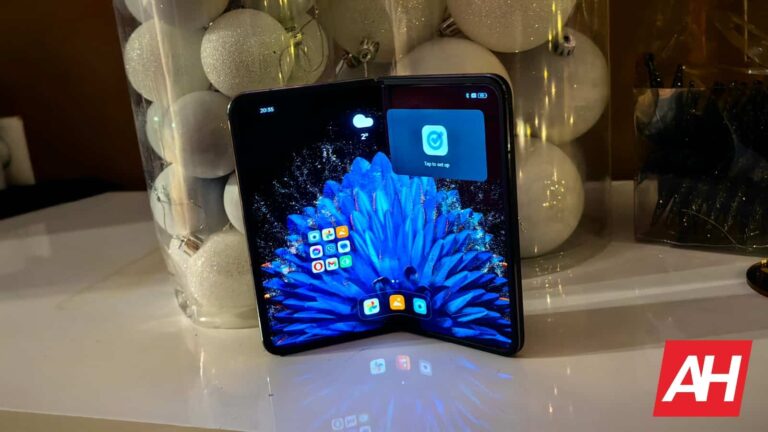
OnePlus has confirmed recently that it will launch its first-ever foldable smartphone in the second half of this year. Many people assumed that it will be identical to the OPPO Find N2, but we’ve received conflicting reports regarding that. According to some fresh info from a trusted source, however, the OnePlus Fold will have a similar form factor to the OPPO Find N2, but it won’t be identical.
The OnePlus Fold will offer a similar form factor to the OPPO Find N2
This information comes from Max Jambor, who is almost never wrong about OnePlus tips. Do note that the phone may not be called the OnePlus Fold, that’s just a guess and a placeholder name.
What does he mean by “similar form factor”? Well, it means that it will lean towards the landscape orientation when unfolded, not vertical like the Galaxy Z Fold 4. That means you won’t have to rotate it when watching video on the main display, for example, to take full advantage of screen real estate.
We’re just not sure how different will it be. There is limited width that OnePlus can use, as the phone cannot be too wide when folded. It may be wider than the OPPO Find N2, though, and thus have a larger form factor, and a larger cover display as a result.
OnePlus’ first foldable will also be a flagship-grade device
We’ll have to wait and see what exactly is OnePlus planning. It’s nice to see a different approach, though, as OPPO is the only one who decided to try out such a form factor. Also, do note that the OnePlus Fold will be a “flagship phone”, as OnePlus said.
Do note that the Google Pixel Fold is also rumored to utilize this form factor. Google’s first foldable is rumored to be considerably larger than the OPPO Find N2, though, so it will likely be quite a bit wider when unfolded.
In an effort to reduce its reliance on Taiwan and outcompete China in chip manufacturing, the Biden administration has launched the CHIPS for America funding program worth $39 billion. The program’s objective is to establish the US as the primary choice for leading chip manufacturers, with numerous cutting-edge logic fabrications and DRAM manufacturing facilities set up by the decade’s end.
Authorized under the CHIPS and Science act, the Biden administration has divided the program into several rounds of funding opportunities. The first opportunity, which opens for applications on March 31, 2023, will focus on constructing, expanding, or modernizing commercial facilities for the production of current-generation, leading-edge, and mature-node semiconductors.
Strict guardrails in place
To ensure that the companies use the funding efficiently and for the right purposes, the government has put guardrails in place. Firstly, companies cannot use the funding for stock buybacks or to pay out dividends. Secondly, payments will be tied to meeting specific milestones to ensure that funding is used in a way that aligns with the program’s vision for success. Finally, companies requesting more than $150 million in funding will need to provide childcare for their construction and factory workers and share part of their profits with the government if they make more than projected.
While the first round funding opportunity focuses on commercial facility construction, the program will introduce additional funding rounds in the spring and fall to increase investment in chip-making materials and research facilities. With Samsung and TSMC already onboard to establish factories across the US, the CHIPS for America funding opportunity is a vital step in boosting the US semiconductor industry and contributing to economic recovery and national security.
“Today’s Notice of Funding Opportunity is a crucial step to unleashing the promise of the CHIPS and Science Act to create good-paying jobs right here at home and end our dangerous dependence on semiconductors manufactured abroad,” said Rep. Frank Pallone Jr. (D-NJ).
In today’s digital age, software development is constantly evolving to meet the demands of an increasingly interconnected world. However, this progress also means that cyber threats are becoming more sophisticated and frequent. As a result, cyber security has become a top priority for software developers across all industries. In this article, we will discuss the top cybersecurity trends in software development.
Shift Left Security
Traditionally, security has been an afterthought in software development. However, the shift left security approach aims to change this by integrating security practices and tools earlier in the software development process. This helps to identify and address security vulnerabilities before they become costly problems. Shift left security involves implementing security testing, analysis, and feedback loops throughout the development process.
SecDevOps
SecDevOps is an extension of the DevOps methodology, which emphasizes collaboration, automation, and continuous delivery. SecDevOps integrates security into the DevOps process to create a more secure software development pipeline. This approach involves involving security teams earlier in the development process, automating security testing and validation, and promoting a culture of shared responsibility for security among all stakeholders.
Zero Trust Architecture
Zero Trust is a security model that assumes that no device, user, or network is trustworthy by default, and that all access requests must be verified and authenticated before being granted. Zero Trust architecture aims to provide better protection against cyber threats by enforcing strict access controls, continuously monitoring activity, and requiring multi-factor authentication.
Container Security
Containers are becoming increasingly popular for deploying and scaling applications, but they also introduce new security challenges. Container security involves securing the container images, orchestrator, and runtime environment. This includes implementing container-level access controls, using secure image registries, and ensuring that containerized applications are properly configured and updated.
Cloud Security
As more organizations move their applications and data to the cloud, cloud security becomes more important. Cloud security involves securing cloud infrastructure, applications, and data. This includes implementing access controls, using encryption to protect data at rest and in transit, and continuously monitoring cloud environments for suspicious activity.
Artificial Intelligence (AI) and Machine Learning (ML) in Security
AI and ML are becoming increasingly popular in cyber security due to their ability to quickly analyze large amounts of data and identify patterns. These technologies can be used to detect and respond to cyber threats, as well as to identify potential vulnerabilities in software code. AI and ML can also be used to improve security awareness training by identifying and targeting employees who are most susceptible to phishing attacks.
In conclusion, cyber security is a top concern for software developers in all industries. The top cyber security trends in software development include shift left security, SecDevOps, zero trust architecture, container security, cloud security, and AI and ML in security. By staying up to date with these trends and implementing appropriate security measures, software developers can help to protect their organizations from cyber threats.
Canadian privacy protection authorities have announced they will start an investigation into TikTok’s privacy practices, especially in relation to its younger users.
The privacy protection authorities for Canada, Québec, British Columbia, and Alberta have announced they will start an investigation into TikTok’s privacy practices, especially in relation to its younger users.
The investigation will include whether the company obtained valid and meaningful consent from its users for the collection, use, and disclosure of their personal information.
The investigation was initiated in the wake of now settled, class action lawsuits in the United States and Canada, as well as numerous media reports related to TikTok’s collection, use, and disclosure of personal information.
TikTok
TikTok claims to have 1 billion users, and when you look at the age distribution it’s no surprise to see that younger people take up the largest share of users.
Source: App Ape
So, it is understandable that the Canadian regulators put extra emphasis on protecting the privacy of younger users.
Since it is near impossible to determine with whom information is shared, the focus of the Canadian investigation will be to determine if the company is meeting its transparency obligations, particularly when collecting personal information from its users. It will also assess whether the organization’s practices are in compliance with Canadian privacy legislation.
Because of the suspected ties to the Chinese government, TikTok has been banned from the devices of state employees in several US states. The US Congress passed a ban on downloading TikTok for most government devices, which President Joe Biden signed in late December, and momentum is building among lawmakers to broaden it even further.
Recently, public authorities in the Netherlands were told to steer clear of TikTok. Staff working at the European Commission have been ordered to remove the TikTok app from their phones and corporate devices. In the UK, there is a call for the UK government to follow the European Commission, the EU executive, and the EU Council, and order staff to delete the app.
Last year the state of Indiana filed a lawsuit against TikTok because it found that TikTok’s 12+ rating on the Apple App Store and the “T” for “Teen” rating in the Google Play Store and the Microsoft Store are misleading, since minors are repeatedly exposed to inappropriate content generated by the app’s algorithm.
TikTok said privacy is a top priority. TikTok’s main defense consists of the fact that most of its senior staff are outside of China. In defense of the earliest accusations, TikTok clarified on its blog where its data are stored, saying the data are not subject to Chinese law.
“TikTok is led by an American CEO, with hundreds of employees and key leaders across safety, security, product, and public policy here in the US. We have never provided user data to the Chinese government, nor would we do so if asked.”
A representative for TikTok stated as a response to the announced Canadian investigation that it has tried to set the record straight regarding how the company protects Canadians’ privacy.
We’ll keep you posted on how this develops.
Have a burning question or want to learn more about our cyberprotection? Get a free business trial below.
It’s official, the Nothing Phone (2) will use a Snapdragon 8 series SoC. The company has confirmed that during the Mobile World Congress (MWC) in Barcelona.
The Nothing Phone (2) will utilize a Snapdragon 8 series processor
The company did it in an interesting way. Its CEO, Carl Pei, posed for a picture with Qualcomm’s CEO, Cristiano R. Amon. They posed with a jersey that had the name of the phone on it, and the number 8 under it.
Nothing’s official Twitter account retweeted that, and flat-out confirmed that the Snapdragon 8 series will be used. That basically means the Nothing Phone (2) will use either the Snapdragon 8+ Gen 1 or the Snapdragon 8 Gen 2 chip.
Your guess is as good as ours, but let’s try to guess. The Snapdragon 8+ Gen 1 is still an immensely powerful chip with excellent power consumption. It could enable Nothing to keep the price lower. The Snapdragon 8 Gen 2 would cost considerably more.
It remains to be seen if it will be the Snapdragon 8+ Gen 1 or the Gen 2
On the flip side, Nothing may be going for the “flagship killer”-esque phone with the Nothing Phone (2), and stuff the Snapdragon 8 Gen 2 on the inside. We do wonder what its price will be in that case.
The Nothing Phone (1) features the Snapdragon 778G+ SoC, so the Snapdragon 8 series chip will be a considerable improvement. The phone is quite affordable at the moment, at €469, but we do expect its successor to cost significantly more
If we had to guess, we’d say that Nothing will go for the Snapdragon 8+ Gen 1 for pricing reasons. There’s also a good chance it may have different plans, so we’ll see.
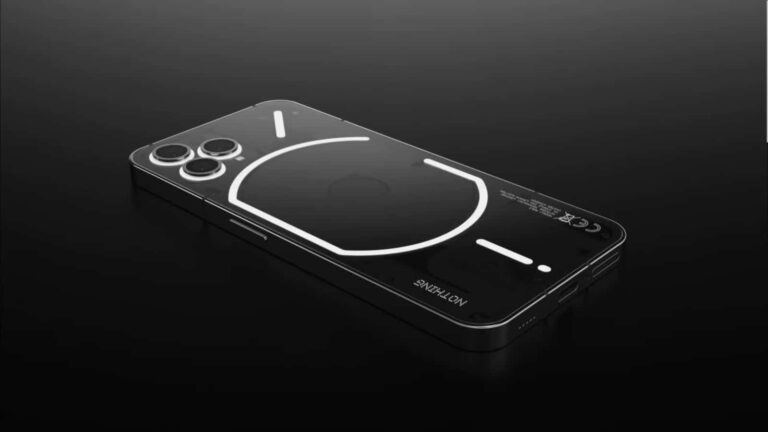
The Nothing Phone (2)’s design is still a mystery, but Nothing will likely keep to its style. LED lights on the back are expected once again, along with a see-through glass backplate.