AI is the new frontier in tech, as so many companies are investing heavily in the technology. Microsoft was quick to pounce on ChatGPT and implement it into Bing. This is to help it gain an edge over Google. Now, Microsoft is adding Bing AI to the Windows 11 taskbar, according to Engadget.
Microsoft isn’t the only company planning to use ChatGPT for its own AI venture. Snapchat is soon to launch a chatbot of its own powered by ChatGPT. It’s called My AI, and it’s a chatbot that’s supposed to play the role of a human being that you message. You can use it to summon answers to your questions or just chat with you if you need to talk.
Bing AI is coming to Windows 11
With all of the time, money, and effort Microsoft is putting into ChatGPT, it’s no shocker that the company is making it a part of its PC operating system. Windows 11 is the latest version of Windows, and the company has been sending out a torrent of updates to the software as it matures.
An update that users can expect soon is the eventual addition of Bing AI. The chatbot will be integrated into the taskbar. Looking at the screenshot, you’ll see it in the search bar right between the start menu and your pinned apps.
This means that you won’t have to go through Edge in order to access the chatbot. Just click on the search bar and you’ll be able to type in your query. This will streamline the experience a lot.
Windows is currently rolling out this feature in an update today. If you’re a part of the Bing AI preview, then you should be able to access the features. If not, then you’ll want to sign up. You can click here to sign up. You’ll be put on the waitlist to gain access to Bing AI. Microsoft says that, if you want to move higher up the waitlist, then you can use the Bing engine for general searches.
In 2022, the number of new mobile banking Trojan installers found by Kaspersky Lab’s cybersecurity researchers surged to 196,476, which is more than twice the number reported in 2021.
This alarming statistic underscores the increasing sophistication and frequency of cyberattacks on mobile devices. The proliferation of mobile banking Trojans has reached an unprecedented level, marking the highest surge observed in the past six years.
The fact that cybercriminals are actively targeting mobile users and prioritizing the theft of financial data is becoming increasingly apparent. This trend is further reinforced by the significant investments being made in the creation of new malware designed to exploit vulnerabilities in mobile devices.
The growing sophistication of these attacks poses a major threat to the financial well-being of their targets, with the potential for significant financial losses.
Newly Discovered Banking Malware
In 2022, cybersecurity experts uncovered the presence of multiple mobile Trojan subscribers on the Google Play Store. A number of banking Trojan families are still available on Google Play that is disguised as utilities, including:-
Cybersecurity researchers have identified a new mobile Trojan family, known as Harly, that has been active since 2020. This new threat has been added to the list of known mobile Trojan families, which includes Jocker and MobOk.
In 2022, a staggering 2.6 million downloads of Harly malware programs were recorded from Google Play, the official app store for Android devices. In the previous year, cybercriminals took advantage of the Google Play Store to disseminate a range of fraudulent apps that promised enticing incentives, such as:-
Welfare payments
Lucrative energy investments
The Sharkbot Trojan has been found to be actively distributing downloaders that imitate file manager apps. These downloaders are designed to request permission to install additional packages required for the Trojan to function effectively on the user’s device.
However, granting such permissions could expose the user’s device to potential security breaches, thereby putting their sensitive information at risk.
TrendsGoing Surge
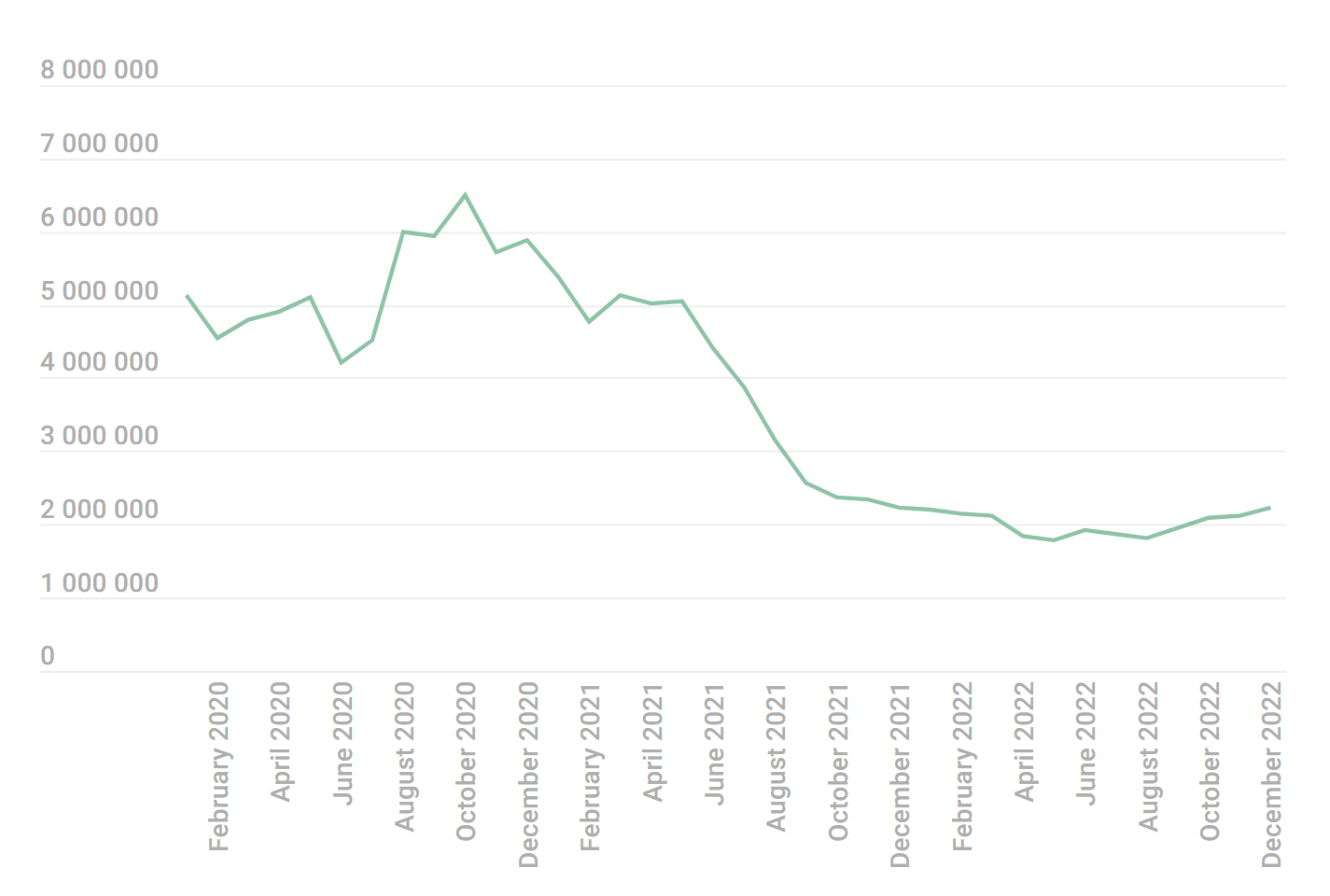
According to a recent analysis, mobile attacks experienced a gradual decline in the latter half of 2021 and throughout 2022 plateaued at approximately the same level.
In 2022, a significant decline of 1,803,013 malware or unwanted software installers was detected by experts, as compared to the previous year. A total of 1,661,743 malware or unwanted software installers were identified by experts in the past year.
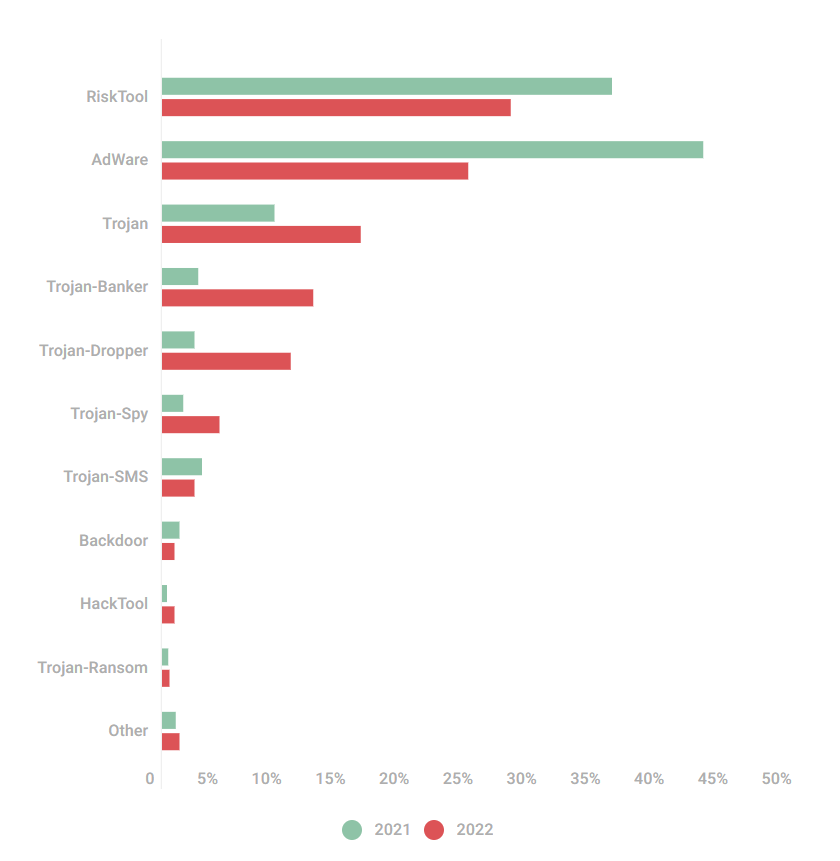
In 2022, the rankings for potentially unwanted software witnessed a shift, with RiskTool-type software taking the lead with 27.39% prevalence. Adware, which was the previous leader, has been replaced and now accounts for 24.05% of the total unwanted software detected.
In comparison to 2021, there has been a significant decrease in the share of RiskTool and adware software in 2022. RiskTool witnessed a decline of 7.89 percentage points, while adware witnessed a more significant decrease of 18.38 percentage points.
Trojan-type malware secured the third position in the rankings, accounting for 15.56% of the total malware detected in 2022. This is a notable increase of 6.7 percentage points from the previous year.
Cybercriminal activity in 2022 did not witness any significant changes, as the attack numbers remained steady after a decrease in the previous year. This indicates that the cybersecurity measures put in place by individuals and organizations are becoming more effective in preventing attacks.
Recommendations
Here below we have mentioned the recommendations offered by the security analysts at Kaspersky:-
Only download apps from official app stores if you want to ensure the safety of your device.
Before granting permission to an application, review the permissions of the app you are using.
In order to detect malicious software and adware, it is important that you use a reliable security solution.
If you believe that apps should not have access to photos, contacts, or GPS features, Apple provides some privacy controls to block them.
Ensure that your operating system as well as essential apps are always up-to-date.
When is an iPhone theft not just an iPhone theft? When the user’s Apple ID and more, goes with it.
When is an iPhone theft not just an iPhone theft? When the user’s Apple ID and more, goes with it.
That’s what the Wall Street Journal reports has been happening over recent months. The paper interviewed a handful of people who fell victim to old-school phone theft while out in a bar. But it wasn’t just the phone that was taken.. In minutes, they were also denied access to their Apple accounts and everything attached to them, including photos, videos, contacts, notes, and more.
Some of the victims were robbed of thousands of dollars in the form of drained bank accounts, money taken from Venmo or other money-sending apps, and Apple Pay charges.
Most victims have shared the same story: They are befriended by a small group of two to three people. At some point in the evening, a gang member watches the victim entering their passcode (law enforcement says sometimes members secretly film this process). Then the phone is stolen, usually without the victim noticing.
Some victims say they were physically assaulted and threatened into revealing their passcode. Others believe they were drugged and don’t remember how their phone got swiped.
Once the phone has gone, the thieves log in to the person’s Apple ID and change it to something of their own. None of Apple’s current security features—Face ID and Touch ID—can protect users from thieves who have physical access to a phone and know its passcode. Even the new security key meant to protect Apple IDs doesn’t prevent anyone from making account changes using only a passcode. Surprisingly, a passcode can be used to remove security keys from an account.
Device theft cannot be completely avoided. But, learning from the thieves’ modus operandi, iPhone users can still take steps to minimize the likelihood of them becoming successful targets.
“People forget that what they’re holding in their hand is their entire life,” says Sgt. Robert Illetschko, an investigator on iPhone theft cases in Minneapolis. “If someone has access to it, they can do a lot of damage.”
How to protect your iPhone data
1. Cover your screen in public
Thieves use various tactics to get their victim’s passcode. This includes shoulder surfing and surreptitious video recording. When you’re in public, practice keeping your passcode out of prying eyes. One way of doing this is relying on a different lock method, like Face ID and Touch ID. Think of and treat your passcode as an ATM PIN.
2. Strengthen your passcode
Make your passcode one which isn’t easily guessed (so no 1234 here!). Even better if you can use an alphanumeric passcode.
3. Add more protection to apps
It’s worth taking a look at the security settings in your banking and money transfer apps, and putting the strongest security on them as possible. Venmo, for example, lets users add a passcode—just make sure it isn’t the same as your iPhone.
4. Use a password manager
We’re not referring to Apple’s iCloud Keychain password but a third-party one like 1Password, which offers biometric authentication.
5. Delete photos and scans of important documents on the phone
Since thieves can search for “SSN”, “passport”, “license”, and other PII (personally identifiable information), it’s best to not have important files removed from the phone. If you really need to have important documents with you, store them in your third-party password manager.
6. Act quickly
If you spot your iPhone is missing, sign in to your iCloud using another device and remote wipe your phone as soon as you can. Call your carrier to deactivate your SIM, too, so thieves can’t receive any SMS verification. Finally, change the passwords of any accounts you use on the phone, and revoke all access from devices.
Stay safe!
Have a burning question or want to learn more about our cyberprotection? Get a free business trial below.
For years, we’ve been asking for Apple to bring iMessage to Android. Even tried multiple hacky methods to get it to work. But today, Microsoft decided to add it to Windows. But there’s a lot of limitations. This isn’t a big surprise, since this is Microsoft and not Apple.
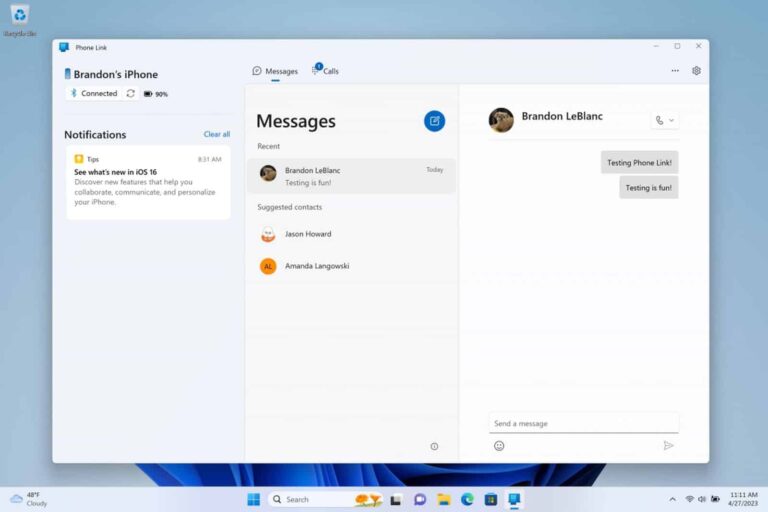
Basically, iMessage is being added to the Phone Link functionality. So you’ll link your phone to your Windows PC using Bluetooth. After you have granted it some permissions on your iPhone, you’ll be able to send and receive text messages and iMessages from your PC using Phone Link.
There is no support for group chats or sending photos or videos. On top of that, it also lacks full message history for conversations and displays all sent and received messages as gray bubbles. Which means, no more green and blue bubbles. At least when you’re on your PC.
iPhone Support in Phone link will be available in a preview this week
It’s early days for this support, as Microsoft will be releasing it in a preview this week. But we don’t expect that it will get a whole lot better in future updates. This is because Apple doesn’t want to help make it better, as they would rather you use a Mac, instead of a PC.
If you’re part of the “small percentage” of Windows Insider members enrolled in the Dev, Beta or Release channels, you’ll be able to check this out. Microsoft says that the preview will be expanded over time.
Is it perfect? No. Definitely not. But it is better than nothing. Maybe this could help Apple bring iMessage support to Windows, and cooperate a bit more. After all, Apple does have a number of apps available on PC. Like Apple Music, iTunes and much more. So there is hope here.
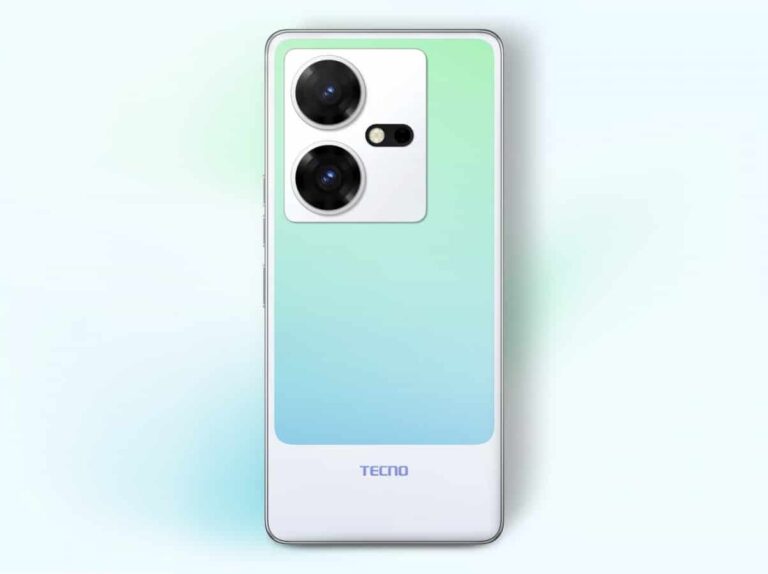
Tecno has introduced a new technology that enables you to manually change the color of your smartphone. You can pick from over a thousand different colors and apply them to your phone’s back panel at will. The company also makes it possible to automatically change the color based on activity or battery status.
Introduced at Mobile World Congress (MWC) 2023, which is currently underway in Barcelona, Tecno’s Chameleon Coloring Technology is a “full-spectrum electrically-controller prism coloring technology”. The magic is created by a grid of sub-micron prism material that changes direction upon applying an electric field. The company has devised a way to precisely control the direction of the material to achieve different colors. The prism can scatter light in different wavelengths to produce various shades.
This prism material can be embedded in the back of a smartphone to let users manually change colors at a touch of a button. According to a GSMArena report, this tech can produce a total of 1600 different shades. You can access the full spectrum on your phone and switch colors whenever you want. Tecno can also enable you to configure the system in a way that changes colors based on the battery level or activities such as music and incoming notifications. You may also be able to set a unique back color for each app on your phone.
It reportedly takes a fraction of a second for the material to switch from one color to another (just about 0.03 seconds). You can change colors up to two million times before the prism material starts losing its properties. That’s enough to outlast the device itself, though. As far as power consumption is concerned, changing colors 100 times in a day eats up “as much power as watching a 5-minute video”. So it will hardly impact the phone’s battery life.
Tecno makes it possible to manually change the color of your smartphone
Note that the material doesn’t produce light on its own. It can only scatter the natural light off its surface in multiple colors. This essentially means that the magic won’t happen in dark. Well, nobody will see the color of your phone when it’s dark, so that doesn’t matter. More importantly, it won’t require direct sunlight to change colors. That would be a little gimmicky. There already exist phones that can change colors under direct sunlight, such as the Vivo V23 series. It remains to be seen if and when Tecno applies its Chameleon Coloring Technology on its smartphones.
A misconfiguration of a database has caused a San Francisco, California, United States-based video marketing software provider to leak the personal details of its users on Shodan.
A misconfigured database has exposed test and personal data belonging to over 700,000 users of the websites getshow.io (an all-in-one video marketing platform) and animaker.com (a DIY video animation software).
It is worth noting that Getshow.io is owned by Animker.com. The server in question is registered under the domain name getshow.io, which animaker.com manages.
The database, which currently contains 5.3 GB of data, continues to grow with new data being added each day. The data exposed by the misconfiguration includes the personal data of unsuspected customers. This consists of the following information:
Full names
Device Type
Postal Codes
IP Addresses
Mobile Numbers
Email Addresses
Animaker profile details
Country/City/State/Location
However, no passwords were found in the data leak, as exclusively revealed to Hackread.com by cybersecurity researcher Anurag Sen from Clouddefense.ai. Sen said that he identified the server on Shodan while searching for misconfigured cloud databases.
The screenshot from the misconfigured server shows the type of information that is being exposed to the public without a password. This means anyone can access the server and would not need to bypass security authentication to access and download the data.
For your information, Shodan is an OSINT tool and a specialized search engine used by cybersecurity researchers to locate vulnerable Internet of Things (IoT) devices, including servers and misconfigured databases on the internet.
Moreover, a misconfigured database occurs when access controls and security settings are improperly configured or left at default settings. Nevertheless, Animker has been informed about the incident, but there has been no response so far. The company’s CEO, RS Raghavan, has been informed on Twitter.
Image provided to Hackread.com by Anurag Sen
Potential Dangers
As misconfigured database exposes sensitive data, this can result in significant financial losses, legal liabilities, and reputational damage for affected individuals and organizations.
When a misconfigured database is exposed to the public, it can be discovered and exploited by cybercriminals who use automated tools to scan the internet for open databases. Once they find a vulnerable database, they can use it to steal data, install malware, hijack it for ransom, or launch other types of cyber attacks.
The consequences of a misconfigured database can be severe, as evidenced by recent data breaches at RailYatri and U.S. No Fly List. In these cases, millions of users had their personal information stolen, resulting in significant financial and reputational damage to the companies and authorities involved.
To prevent a misconfigured database from being exposed to the public, experts recommend implementing proper access controls and security settings, including strong passwords, encryption, and regular vulnerability assessments.
Organizations should also limit the amount of sensitive data stored in their databases and ensure that it is only accessible to authorized users.
The US Marshals Service has suffered a ransomware attack in which an attacker managed to get hold of sensitive information about staff and fugitives.
The US Marshals Service (USMS) says it’s suffered a ransomware attack in which a threat actor managed to get hold of sensitive information about staff and fugitives.
On February 17, 2023, the attacker infiltrated a system that held information about ongoing investigations, including personally identifiable information (PII) of fugitives, staff, and third parties.
As with most ransomware attacks nowadays, the attacker also exfiltrated data before starting the encryption routine. Ransomware gangs threaten to disclose stolen data on so-called leak sites as extra leverage to get a victim to pay the ransom.
One of the tasks of the USMS is to assure the safety of endangered government witnesses and their families. Luckily, according to sources, the attackers didn’t gain access to any data related to the witness protection program WITSEC.
The USMS says it is using a workaround to keep its investigations going.
Major incident
The USMS says the ransomware and data exfiltration event affected a single standalone USMS system.
But even though it wasn’t connected to a larger federal network, the cyberattack was considered a major incident by officials. That’s because the breached data contains law enforcement sensitive information pertaining to the subjects of Marshals Service investigations.
Federal agencies are required to report major incidents to Congress within seven days of identification.
Investigation
According to Drew Wade, spokesperson for the USMS:
“Shortly after that discovery, the USMS disconnected the affected system, and the Department of Justice initiated a forensic investigation.”
For now it is unclear which ransomware group is behind the attack. Nor is it clear how the access was obtained or whether there has been a ransom demand. It is very unlikely that such a demand will be met. A 2020 ruling by the US Department of Treasury’s Office of Foreign Assets Control (OFAC) and the Financial Crimes Enforcement Network (FinCEN) states most cases of paying a ransom may be considered a violation of US anti-money laundering and domestic and international sanctions.
Detect intrusions. Make it harder for intruders to operate inside your organization by segmenting networks and assigning access rights prudently. Use EDR or MDR to detect unusual activity before an attack occurs.
Stop malicious encryption. Deploy Endpoint Detection and Response software like Malwarebytes EDR that uses multiple different detection techniques to identify ransomware.
Create offsite, offline backups. Keep backups offsite and offline, beyond the reach of attackers. Test them regularly to make sure you can restore essential business functions swiftly.
Write an incident response plan. The period after a ransomware attack can be chaotic. Make a plan that outlines how you’ll isolate an outbreak, communicate with stakeholders, and restore your systems.
Have a burning question or want to learn more about our cyberprotection? Get a free business trial below.
Now that the Steam Deck is finally here, it’s time to talk about the best games you can play on it. That being said, let’s also clarify a couple of things. The Steam Deck is a PC. A fully fledged gaming PC built in a portable shell you can take with you anywhere. So this is essentially very similar to a Best PC Games list. However, the Steam Deck also runs on SteamOS, which is built on Linux and uses Proton (a compatibility layer) to get Windows games to work with it.
That means not every single PC game will work on the Steam Deck. And with that in mind, we’re going to try to stick to games that are “Verified on Deck” in most cases here. Because they’ve been tested by Valve and are guaranteed to play right on the Steam Deck out of the box.
You may also sometimes find the odd non-verified game. And these are either games we’ve personally tested on the Steam Deck and know they work, or they’ve been tested by others who confirm they work. For now, the list contains games that are all verified but that may change in the future.
Where to begin. Starting out this list is Yakuza: Like A Dragon, the seventh mainline game in the franchise.
While it features many of the things players may love about the Yakuza series, it has a lot of new stuff and some changes that players have to look forward to. First off, it’s set in a brand new location that’s based on a district in Yokohama.
It also no longer features the same style of combat. Changing from the beat ’em up combat in really every other Yakuza game to a turn-based RPG style of combat. Yakuza has always been an RPG game, so this new style of combat for the series gives it a fresh coat of paint that makes things interesting and quite fun.
As it was just recently released at the tail end of 2020, it also comes with some really nice graphics. You also play a different main character, and have a range of new abilities to unleash on your foes like character summons, where you can summon things like a giant crayfish to help you attack.
You can also craft items, take on jobs, improve your life experience, and engage in legendary battles featuring more familiar characters, like Kazuma Kiryu. And of course there are a lot of other things to do in this game too. Such as new mini games.
If you want one game from this list that offers a megaton of content, Yakuza: Like A Dragon fits the bill quite nicely. And is definitely one of the best games out right now that’s verified on the Steam Deck, if not the best Steam Deck game (I might be a little biased with this one).
Elden Ring is the latest FromSoftware game coming from Bandai Namco. Which means if you’re up for a brutal challenge then this is the game for you. Those who loved previous FromSoftware games will also want to check it out if they haven’t already done so.
Like those past games, Elden Ring delivers you up to a smattering of difficult boss fights and powerful weapons and armor. Unlike those past games though, Elden Ring takes place in a massive open world environment. Which means you can explore a lot more and doing so is encouraged. Because you never know what you might find. For many, this is easily going to be 2022’s game of the year. And it would be well-deserved. As this is definitely one of the best games to play on Steam Deck right now.
The Ascent is a (sorta) brand-new cyberpunk-themed action RPG that just released for Xbox and PC last year. You can purchase it for $30. It plays a bit like Diablo since it’s an isometric action RPG, but it also feels a lot like a twin stick shooter.
In the game you play as an indent (a worker indentured to the corporations) on the planet Veles. You specifically are an indent for the Ascent Group. The largest corporation on Veles. Suddenly, the Ascent Group shuts down and no one knows what’s happening. So begins your story trying to figure out what’s going on as you simultaneously try to survive. Meanwhile everyone around is vying for power.
You can acquire a ton of loot throughout the game including different weapons, gear and more. There’s also a character creator with a handful of customization options. Best of all is that the game can be played solo, or you can play with friends via online co-op or couch co-op.
Beautiful backgrounds, awesome graphics, super cool weapons and combat all wrapped up into a cyberpunk theme. What’s not to like?
While we’re super partial to Yakuza: Like A Dragon, if there’s one game you absolutely have to get for the Steam Deck it’s Journey as this is one hell of an experience. You can play Journey solo or with a friend as you both explore the vast world of the game. Strewn out across deserts and ancient ruins and other breathtaking locales while trying to uncover the secrets laid before you.
One of the best parts about the game is that there’s no voice dialogue whatsoever. So you have nothing really guiding you throughout your adventure except your sense of adventure and eagerness to explore.
Journey also contains some of the most stunning visuals and music of any game in a long time. And at the sale price of $7.49 until March 17, it’s definitely one of the best games for the Steam Deck.
God Of War is an iconic franchise that calls the PlayStation its original home. But now that the most recent title is on Steam, PC players can enjoy the franchise too. And, wouldn’t you know it, its verified on Deck. You wouldn’t think that a game of this magnitude would be playable on a handheld, but it might surprise you how well the game plays on a portable gaming PC.
Take on the role of Kratos and his son Atreus in the world of Norse mythology and gods. Experience an amazing story and thrilling combat against some of the coolest enemies, level up your skills for new flashy attacks, and enjoy an easter egg or two from past games in the series.
If you like action games, don’t miss this one. Especially since you can play it both on the Steam Deck, as well as a gaming PC at home if you happen to have one.
Most people should be familiar with Apex Legends at this point. And understandably so as it’s one of the biggest games on the planet right now. For the uninitiated, Apex Legends is an online multiplayer first-person shooter battle royale game. Drop into one of a series of maps by yourself or with a team, and be the last person or the last team standing.
Maps start with a massive size but as the match goes on, the map shrinks to force players together. You can choose from a roster of different characters each with their own unique skills, and must scavenge for weapons around the map to gain an advantage against other players.
Horizon Zero Dawn is another one of those games that PC players are just now getting to experience as it’s a PlayStation title that was previously exclusive to the PlayStation platform. For Steam Deck owners, playing this game on PC is a great way to experience it as you get the Complete Edition, which comes with all the DLC so you get every aspect of the game in one neat package.
This is an open-world game, so there’s lots to explore. Gameplay is action role-playing. So expect to engage in some really cool battles with huge machines that look and act like dinosaurs, and level up your character with new skills to help you traverse more difficult areas or take on tougher enemies.
Scarlet Nexus is a JRPG with anime-style visuals based around the story of humanity living in an age where people have psionic abilities. This newfound power came along with a newfound threat – mutants who hunger for human brains and seek to destroy.
You play the role of one of humanity’s last hopes, a soldier with these psionic abilities that just so happen to be the only thing that can defeat these mutants. As is typical with all JRPG games, you’ll be able to level up your character to gain new powers and skills to help you in battle. All the while uncovering more about how these mutants came to be and how your powers have manifested.
Scarlet Nexus also features a really cool dual story. As you can start the game as one of two characters whose stories are linked to each other. These interwoven moments help to reveal the complete story of the game.
Stardew Valley is for many people these days, the pinnacle of a farming sim. You inherit your grandfather’s old farm plot, and you set out to create a new life for yourself turning the farm into a successful one. You can play solo or with up to four players, and as you progress you can improve various skills for your character across different categories. Including farming, mining, combat, fishing, and foraging.
This is another really cool option for people looking to pick up a casual game that won’t be too chaotic or fraught with peril. It’s also great on a handheld device, so it’s perfect for the Steam Deck and one of the best games you can spend your time with on the machine. That is, if you want something more casual.
Unpacking is an excellent casual game to play when you just want something to wind down the night or play while you sip your coffee or tea on a weekend morning. It’s a puzzle game where you’ll have to unpack a bunch of things from boxes and put them in the right spots around the home.
While there’s no voice dialogue, it still tells a great little story about the person whose stuff you’re unpacking. And how a life can be summed up by everything you can fit into boxes and transported from home to home. As you unpack you’ll learn more about the life of the main character.
This is also partly a home decoration game and most items can be placed in multiple acceptable locations that allow you to progress. If you need one of the best games on Steam Deck to be easy going, Unpacking is a wonderful choice.
Recent reports bring to light claims that stolen Activision data is currently on sale on the dark web. The security breach that made this data available to hackers happened last year. Now the hackers responsible for the breach are putting up the stolen data for sale.
Those affected by the security breach are mainly Activision employees. Their personal information such as names, email addresses, phone numbers, and private addresses was revealed after this breach. According to the available reports, this hack revealed over 20,000 employee records.
If that figure is correct, then the data breach impacted more than the already known 13,000 Activision workforce. This security compromise is a big issue and a threat to employee data protection. But, Activision claims that the security breach is not serious.
Stolen Activision data mainly comprises employee personal data
In December 2022, Activision got hit by a security breach. This gave away some personal information about the gaming company’s employees. The hackers responsible for this breach claimed that they pulled it off using the Activision content delivery network on the Azure platform.
To get Activision employee data, the hacker made use of a process that is known as smishing. This is simply an SMS phishing campaign that aims at making the target reveal their personal information. Sadly, an HR employee at Activision fell for this shady trap, hence revealing the personal information of other workers.
Through this means, the hacker made away with the personal data of over 20,000 employees. Now, these employees face the threat of their information getting into other wrong hands. This is because the hacker is currently offering this data to users of a certain hacker’s forum.
Activision has now come out to say that no employee data was stolen during this security breach. The company is still yet to respond to the hackers threatening to sell the stolen data. This is despite some cybersecurity researchers gaining access to the Activision employee data up for sale on the dark web.
These researchers claim that the hackers stole more than employee data. Information on upcoming games such as marketing material was also stolen in this security breach. Activision says that such marketing data isn’t important and assures its customers that their personal information remains intact.
The acquisition of Twitter by Elon Musk that was initiated back in April 2022 and concluded in October 2022, prompted Twitter co-founder and former CEO Jack Dorsey to promptly exit the company back in May of last year. Upon his departure, Dorsey began working on his version of a new decentralized social network that is meant to compete with Twitter, called Bluesky.
Bluesky has a homepage on the internet, but as of right now, it is just a landing page with a blog and a link to sign up for the private beta. The project itself was announced in 2019, but no updates had been given on when this venture would be officially unveiled to the public, if at all.
However, it appears that Bluesky is getting very close to opening its doors, as it now has a presence on the iOS App Store as an invite-only beta app. This means that you can go ahead and download the Bluesky Social app, but you need an invite code to create an account.
Not surprisingly, the app is so new on the App Store, that as of right now you can even install it on a Mac via the Mac App Store as I did. On a Mac, the app opens to mobile size, as it was designed for iPhone and not macOS. However, it is unclear if the app will continue to work this way or if changes are on the way.
When you open the app, you are greeted with a splash screen and options to “sign in” or “create a new account,” which requires you to have an invite code. There is currently a waitlist to sign up for the service, which you can sign up for online, but no information is available on when that round of codes will be released.
I’m quite curious how Bluesky will fare once it launches publicly and begins to compete with Twitter and the currently most popular decentralized social network, known as Mastodon. Since the app is currently in closed beta on iOS only, its hard to gauge interest unless you are behind the curtain, so for now all we can do is wait and see.