PureCrypter delivers multiple types of malware and info-stealers, including Redline Stealer, Eternity, AgentTesla, Philadelphia Ransomware, and Blackmoon.
The cybersecurity researchers at Menlo Labs discovered an unknown threat actor exploiting an evasive malware campaign operated through Discord. In their campaign, the prime victims are government entities in North America and Asia-Pacific.
According to researchers, the attackers in this campaign are delivering the PureCrypter downloader, and their primary targets are government entities. The threat actor uses a compromised non-profit organization’s domain as their C2 center to deliver a second payload.
Researchers wrote that they became suspicious after detecting that Menlo’s Cloud Security Platform had blocked archive files, which were password-protected, across numerous government customers across the North American and Asia-Pacific regions.
The attacks start with a phishing email that contains a malicious link to Discord. This URL launches a password-protected ZIP file containing the .NET malware downloader PureCrypter, which downloads a secondary payload from the attackers’ C2 infrastructure.
The sample Menlo Labs analyzed downloaded AgentTesla, a widely used RAT and info stealer that can steal browser-based passwords, take screenshots, and log keystrokes after establishing a connection with an FTP server located in Pakistan.
On the other hand, victim data is stored on this server, which was observed in another campaign using OneNote to deliver malware.
“The FTP server appears to have been taken over and the leaked credentials for the domain were found online, thus suggesting that the threat actors used these credentials to gain access to the server.”
Menlo Labs
What is PureCrypter?
PureCrypter is a malware downloader capable of distributing a wide range of ransomware, malware, and information stealers. It was first detected in June 2022. Its creator, PureCoder, offers it for $59 per month or a one-time payment of $245 for life.
The developer recently expanded its features to include PureLogs logger and info stealer, which can steal data from crypto wallets, web browsers, and email clients, for just $99 a year or lifetime access for $99.
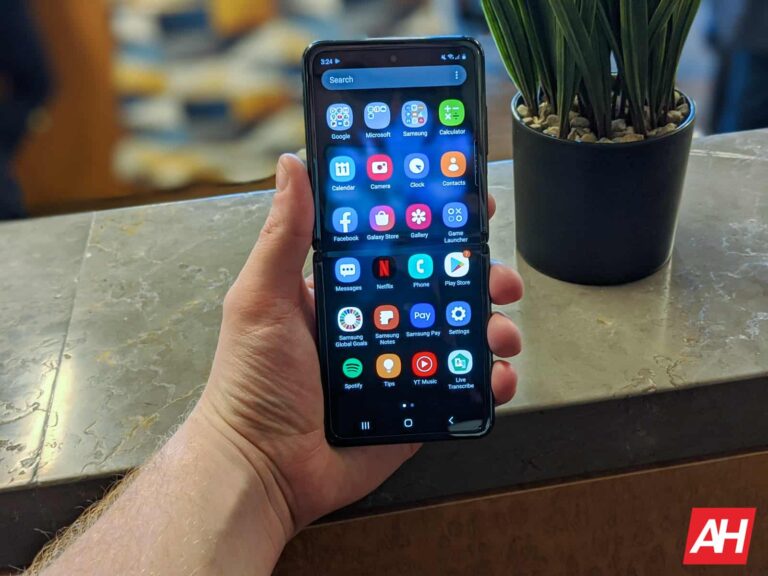
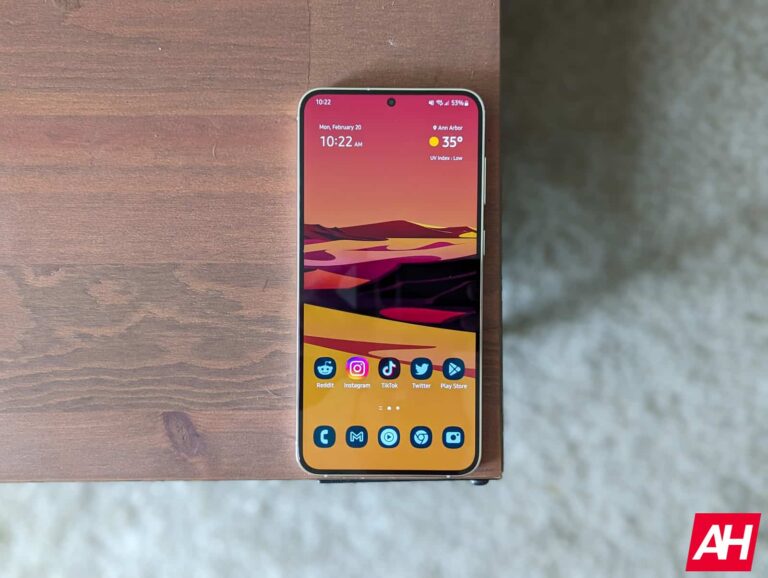
Last week, Samsung released the One UI 5.1 update for the 5G model of the original Galaxy Z Flip. The company is now pushing the new One UI version to the LTE model as well. The update is also available for the Galaxy A23, a mid-range phone launched last year.
As of this writing, Samsung’s One UI 5.1 update for the Galaxy Z Flip LTE is currently rolling out to users in Australia. The new firmware build number for the first-ever clamshell foldable Galaxy smartphone in the region is F700FXXUAJWAD (via). The Korean behemoth should globally release the update over the next few days. The handset was sold in the US too, with both carrier-locked and unlocked options. One UI 5.1 should reach all of those phones soon.
That said, even the 5G model hasn’t received the new One UI version anywhere outside Switzerland so far. Samsung released the update in the European country last week but hasn’t expanded the release anywhere else. Hopefully, it will not take much longer. the new firmware version for the Galaxy Z Flip 5G in Europe is F707BXXU7JWAD. It may vary slightly in the US and other markets, but the content will mostly remain the same.
Speaking of content, this update brings plenty of goodies to Samsung’s first-gen Flip models. Firstly, you’re getting the February 2023 Android security patch that fixes more than 50 vulnerabilities across the Galaxy ecosystem. On top of that, there are tons of new features and improvements for your phone. New selfie effects, Shared Family Album, enhanced gestures for efficient multitasking, improved modes and routines, and dynamic widgets are a few major additions. You can check out Samsung’s official One UI 5.1 changelog for the Galaxy Z Flip 5G here.
Samsung’s Galaxy A23 is also getting One UI 5.1
Samsung has also released the One UI 5.1 update for the Galaxy A23. The device is picking up the update with firmware version A235FXXU2CWB4 in Ukraine. It is getting the February security patch and a host of goodies, though not as many as the Galaxy Z Flip or other flagship models. A wider One UI 5.1 rollout for the Galaxy A23 should be just around the corner. The handset wasn’t released in the US.
This is the humblest Galaxy phone to get the new One UI version so far. Part of the 2022 Galaxy A lineup, the device follows premium models Galaxy A33 5G, Galaxy A53 5G, and Galaxy A73 5G in the party. Samsung also released a Galaxy A23 5G last year, which arrived in the US too, but it has yet to get One UI 5.1. We will let you know when the rollout begins for the 5G model of this budget handset.
Qualcomm’s CEO, Cristiano Amon was speaking at MWC Barcelona today, and talked about Apple’s rumored 5G chipset. Amon believes that their own modem will be ready in 2024, but adds that “if they do need ours they know where to find us”. Basically, Amon saying “please still use our modem”.
Since the iPhone 12 lineup, when Apple added 5G support, they have been using Qualcomm’s 5G modems in conjunction with their own in-house chipset.
Apple’s 5G modem could be used in the iPhone 16 or the iPad first. It’s possible that Apple could use it in a lower-volume product at first, like an iPad Pro. While it is a popular iPad, it’s nowhere near as popular as the iPhone. Typically, Apple will sell around 10 million units just on the launch weekend of the new iPhone.
Qualcomm has been supplying 5G modems since 2020
Apple has been using Qualcomm’s 5G modems since 2020, when it added 5G to its iPhones. That was a big get for Qualcomm, since the iPhone does sell so many units. As mentioned above, Apple does typically sell around 10 million units in a single weekend after the device launches. That’s more than most Android phones will sell in their lifetime. So while Qualcomm was only selling modems and not the entire mobile platform, like a Snapdragon 8 Gen 2, it’s still a big customer for Qualcomm.
Amon does seem to be pretty bummed about Apple opting to use its own modem in the iPhone 16 next year. Again, that’s a big time customer for Qualcomm. Which will lose a lot of money with this move by Apple. But for Apple, this gives them more control over their iPhones, it also lowers the cost to build the iPhone. And it might also improve 5G connectivity on the iPhone. Which is definitely a good thing here.
Time will tell how good Apple’s first 5G modem will truly be. But in the past, their modems have been pretty good. Way better than the Pixel 6 modem that Google had.
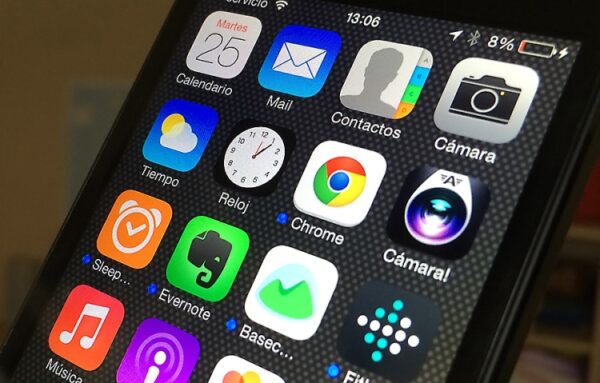
Apple silently patched a serious security vulnerability affecting iOS users that could expose data. Specifically, the flaw existed due to an improper patch for the previously known FORCEDENTRY vulnerability. An adversary could exploit the bug to access stored messages and photos in the target device.
Apple iOS Vulnerability Leaking Data
Researchers from Trellix have shared details about a new exploit affecting Apple iOS devices in a post. They demonstrated how a previously patched vulnerability could still let an adversary infiltrate iPhones.
Specifically, the researchers demonstrated bypassing the patch for the “FORCEDENTRY” bug discovered in 2021. As reported, FORCEDENTRY served as a major attack vector for the notorious Pegasus malware, targeting iOS 14.4 and 14.6 as a zero-day.
While Apple patched the vulnerability soon after receiving the bug report, it still posed a serious security risk. As Trellix explained, the second part of the vulnerability (as Google Project Zero demonstrated later) could allow sandbox escape. Exploiting this aspect could let an adversary bypass codesigning and execute arbitrary codes by abusing the “NSPredicate” class.
With this lead, Trellix researchers demonstrated how an attacker with code execution privileges could collect data from the target device via malicious NSPredicate. That includes accessing messages, calendar, location, address book, photos, and bypassing permissions.
The researchers demonstrated the exploit in the following video.
Apple Patched The Flaw
Upon discovering the vulnerability, the Trellix team contacted Apple to report the matter. They highlighted how this vulnerability affected both iOS and macOS systems alike.
Following their report, Apple developed a fix and released the patches with iOS 16.3 and macOS 13.2. The researchers further confirmed to have detected no active exploitation of the vulnerability before patching.
Hence, it means all users who updated their devices accordingly remained safe from risks. However, those who haven’t updated their systems should do so immediately to prevent any potential cyberattack.
The NSA has some advice about keeping remote workers safe from harm.
People working remotely is no longer unusual, so the National Security Agency (NSA) has produced a short Best Practices PDF document detailing how remote workers can keep themselves safe from harm. In fact, the guide can also be applied to people using computers at home generally and is written in a way that’s easy to understand.
Back to basics
The NSA’s three main executive summary points are:
Upgrade and update all equipment and software regularly, including routing devices
Back up your data and disconnecting any devices you can
Limit administration to the internal network only
You may be surprised by how seemingly basic these suggestions are given the source, but this simplicity is in its favour. Consider how many folks will only decide to start making backups once they’ve lost everything for the first time. You have to start somewhere, and not every organisation asking employees to work from home has necessarily considered these opening talking points due to budget, resources, or other factors. They may not even have a budget for work-owned devices, amd may instead be relying on employees using their own devices.
Even thinking about who has access to what on a home network is beneficial—there’s nothing wrong with limiting access to guests on the home network, for example. Some routers and packages allow you to isolate guests on their own little network, away from the main one. This can help reduce the spread and impact of an infection, and keep all of those valuable work and / or home documents safe.
Much of the NSA’s advice leans heavily into ensuring all the little things are taken care of:
Keep your software up to date. From Windows to your web browser, everything needs to be updated regularly.
Keep your router updated. This may sound odd if your router is supplied by your ISP, as many of those update automatically. But if you run an off-the-shelf router you may be fully responsible for its overall well being. This isn’t mentioned, but you should consider changing the default password when you first boot up the router. Without some hunting around on the Internet, you may never know if what’s shipped is a default applied to multiple routers, or if it’s unique to you.
Use a password manager and two-factor authentication (2FA). The guide highlights that while some form of 2FA is better than nothing, some types of 2FA are better than others.
Separate work and life activities. It’s a lot easier to figure out where a breach happened if you don’t have sensitive work documents scattered across 3 personal devices.
Connect to your office with a Virtual Private Network (VPN). Using a work-supplied VPN makes your computer part of the work network, keeping data safe as it travels over the Internet.
Getting physical about security
There’s a strong focus on physical device security of one kind or another too, which is often overlooked. Some highlights include:
Cover your webcam.
Mute microphones.
Limit sensitive conversations.
The latter is particularly interesting given the slow rise of IoT in the home alongside an increasing amount of voice activated and “always listening” hubs. As the guide notes, all of the below could potentially cause trouble if set to record:
Baby monitors
Children’s toys
Smart devices
Home assistants
Games consoles
PCs with microphones attached
This is especially the case where a poorl-secured device is recording audio and storing it (for example) on a wide-open server where anyone can grab the contents. If you have children at home, consider how many of the toys in the next room may have recording / Internet connectivity and make yourself a to-do list.
If you’re going to make backups, I would add to the NSA’s advice to place files on an external device by suggesting that you also encrypt your data. While it’s unlikely that someone will break into your home and steal a hard drive, better safe than sorry. You’re probably more at risk of taking it somewhere and accidentally losing it, so the encryption will help in any case. Finally, keeping those external devices disconnected when not in use will help lessen the device’s exposure to bad things. If you experience an infection on your PC, you don’t want it affecting your backups.
Unsocial networks
There’s quite a bit of advice in relation to social networks and social engineering. It’s easy to let your guard down when at home, and security advice from work may be a little harder to come by when not in the office.
Don’t post personal information online that can be used to reset your passwords, such as your first pet’s name or the street you grew up on.
Lock your contact list down to friends only, if you can.
Watch out for copycat and imitation profiles.
The best practices document also correctly notes that it’s worth checking both the Terms of Service and app or website settings regularly. Changes in policy can leave you exposed.
Overall, the NSA has produced a useful step by step guide covering a lot of bases, including public hotspots, email, and even user habits. Give the document a read and feel free to add in some tips you think the NSA may have missed in the comments section.
Have a burning question or want to learn more about our cyberprotection? Get a free business trial below.
Samsung is aiming to sell around 30 million units of the Galaxy S23 series globally this year. That’s more than a ten percent increase from total Galaxy S22 sales last year. While it may seem an ambitious target, the company has begun on a high note. The new flagships received record-breaking pre-orders in several markets, including India, South Korea, and France. Samsung has now revealed Galaxy S23 pre-order numbers for Latin America and Taiwan, and the story is the same.
According to Samsung, the early demand for the Galaxy S23 series is substantially higher than the Galaxy S22 in Latin America. For the first time, the company opened pre-orders for its latest flagships in Brazil on the same day as other global markets. This helped it rake up 50 percent more pre-orders for the new phones across Latin America. Last year, Galaxy S22 pre-orders more than doubled from Galaxy S21 in the region. A further increment on that bodes well for the Korean behemoth’s long-term future.
“The great momentum we are witnessing shows the excitement of customers for products that go the extra mile and give them the freedom to express themselves creatively,” said TM Roh, head of Samsung’s mobile business. Unsurprisingly, the Galaxy S23 Ultra is almost outselling the other two models combined. Nearly 60 percent of buyers picked up the most expensive model in the lineup. This has been a global trend and it’s no different in Latin America. After all, the phone is in a league of its own in terms of specs and features.
The numbers for Taiwan are even more impressive. The Galaxy S23 Ultra accounted for more than three-fourths (75 percent) of all pre-orders in the region. Overall Galaxy S23 pre-orders also grew by double digits in Taiwan. Samsung is still running some attractive promotions for its latest flagships there. Buyers get a free 45W travel adapter, silicone case, Samsung Wallet EasyCard rebates, Samsung Care+ discounts, extended free trials for Microsoft 365 Basic, YouTube Premium, Adobe Lightroom, and Adobe Express, free optional accessories, and more freebies.
Samsung may not find it difficult to achieve its Galaxy S23 sales target
Going by these pre-order success stories, Samsung may comfortably achieve its sales target for the Galaxy S23 series this year. The company had set a similar target for the Galaxy S22 series last year but fell short of it. That may not be the case this time around. A lot depends on rival products, though. Xiaomi’s new Xiaomi 13 Pro series is turning a few heads. Samsung will have to continue offering attractive promotions to keep the momentum going. We should get a clearer picture of the overall Galaxy S23 demand in the next few months.
Samsung is one of the larger TV makers in the world right now, and they make a ton of great TVs. But which Samsung TV is the best one to buy? Well that’s what we’re going to help you decide on today.
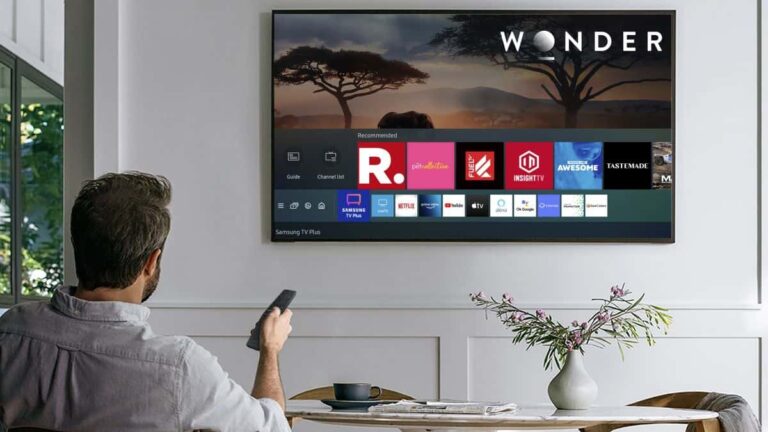
Samsung has mostly moved over to QLED for its TVs, but you’ll still find some that are LED or LCD. Those will be cheaper too, since QLED does cost more to manufacture and it’s also a newer technology. These TVs are all at least 4K, if not 8K. So you’re going to get a really great picture out of these.
Top 10 Best Samsung Smart TVs
We have listed ten of the best Samsung smart TVs that are currently on the market, down below. These range from smaller TVs, to larger ones, as low as $549, all the way up to several thousand dollars.
There’s even a 8K Samsung QLED TV available in this list. Which is going to be future proof for likely about a decade from now.
The Samsung Q80R is the best smart TV you can buy right now for a few reasons. But the biggest one is the picture quality. It’s going to give you the best looking picture, thanks to it being a QLED TV. That’s going to give you some very bright and vivid colors, and with HDR included, it’s going to look stunning.
This is partly thanks to the Quantum processor that is inside the Q80R, processing the picture to give you the best picture yet. Viewing angles on the Q80R are also pretty insane. Meaning that you can sit anywhere in your living room and still get a really great looking picture when watching the big game.
Samsung uses its own Tizen operating system for its smart TVs. It doesn’t quite have as many apps as Amazon Fire TV, Roku or Android TV, but all of the big name apps are available. Including Netflix, Hulu, YouTube, Amazon Prime Video and much more. Samsung also has support for Apple’s AirPlay 2, iTunes and even Homekit.
The QN900A is the second-generation 8K TV from Samsung, so it does have a big improvement over the Q9000R that was on this list previously. It’s also more expensive and only available in bigger sizes. Though, to really see the difference in an 8K TV, you kind of need it in at least a 65-inch model.
This has the new Samsung Neo Quantum Processor 8K which is going to provide a stunning picture on the QN900A. It will also upscale non-8K content to an 8K resolution. Which is needed since there is very few titles available in 8K right now.
It also has what Samsung calls “Infinity Screen” with almost no bezels on any of the sides of the TV. So it can melt into the wall of your home, particularly if you have it mounted.
The Samsung AU8000 series is a really good “default” TV. Basically, it’s the one you should buy if you just need a TV for anywhere in your home. It comes in many different sizes from 43-inches up to 85-inches. So it’ll be great in a smaller bedroom, or in your living room.
The AU8000 series has dynamic crystal color and a crystal processor 4K. This is going to provide a really incredible picture, and reveals true-to-life colors, all without paying for a QLED TV.
It also has three HDMI ports, however, there’s no HDMI 2.1 included here. So no 4K120 gaming on this one.
This is the 2021 release of the lower-end Neo QLED TVs from Samsung. It comes in a variety of sizes ranging from 50 to 85-inches. So there’s something for everyone here.
Neo QLED is a sort of new technology that Samsung started using in 2021. This means that it uses Mini LEDs instead of just regular LEDs. Making it a much improved picture over the older models. It’s also brighter, without appearing washed out.
Samsung has AI upscaling available here, thanks to the Neo Quantum Processor 4K. Which ensures that you always get full 4K resolution on your TV.
This Neo QLED TV is actually slightly cheaper than the QN90A series, but it also doesn’t come in the smaller size. You still get to enjoy all the benefits of Neo QLED here though, which is nice.
The Neo Quantum Processor 4K will upscale non-4K content to 4K resolution. So you can really take full advantage of this impressive looking display.
Like the rest of the Samsung TVs on this list, this does also have all of your favorite apps available. Like YouTube, HBO MAX, Netflix, Hulu and much more.
This is a rather unique QLED TV. This is what Samsung calls “The Frame”. Basically, the bezels are the same width on all four sides, and you can use this as a picture frame when you’re not watching TV. And thanks to QLED offering realistic colors, it can really look like a painting.
That is also why The Frame comes in much more sizes, and smaller sizes, like this 32-inch QLED TV. So it’s a great way to get a smaller TV, with a great looking panel.
This is another odd TV from Samsung. The Sero was announced at CES 2020, and it’s what Samsung envisions as the future for TV. Basically, the TV can rotate to landscape or portrait orientation. Allowing you to watch vertical videos on your TV. That also explains why it comes in just one size.
But this is still a QLED TV, running on Tizen. So all of your favorite apps are available on this one too. But it will take up more space than you probably expected it too. Since it needs to be able to rotate.
This is one of the higher-end QLED TVs from the 2020 release cycle. So it’s not a Neo QLED TV, and that means it is using LED instead of Mini LED for the backlight. So it’s not quite as bright, but you won’t be disappointed with this. Especially since you can get it for under $1000.
It has the same upscaling that almost every 4K TV has these days. Allowing you to watch 1080p content at 4K resolution. It also runs on Tizen, which means your favorite apps are here. Like YouTube, Netflix, Hulu, HBO MAX and more. As well as support for Bixby, Google Assistant, Amazon Alexa, Chromecast, and AirPlay.
If you’re not sold on QLED, then this is a great TV for your living room or man cave. As this is still LED, and it’s a massive 86-inch TV, which is always nice to have.
It also has a crystal processor 4K, which offers ultra fast processing and can transform everything into 4K quality. It’s powered by Tizen and brings along a ton of your favorite apps like YouTube, Netflix, HBO MAX and much more.
This is likely the cheapest 80+ inch TV that you can purchase today.
One of the biggest music streaming services, Spotify, has just announced a small yet meaningful update to its app. Typically, we don’t report on updates that involve minor changes like turning a Heart icon into a Plus, but Spotify’s update does more than just add visual changes.
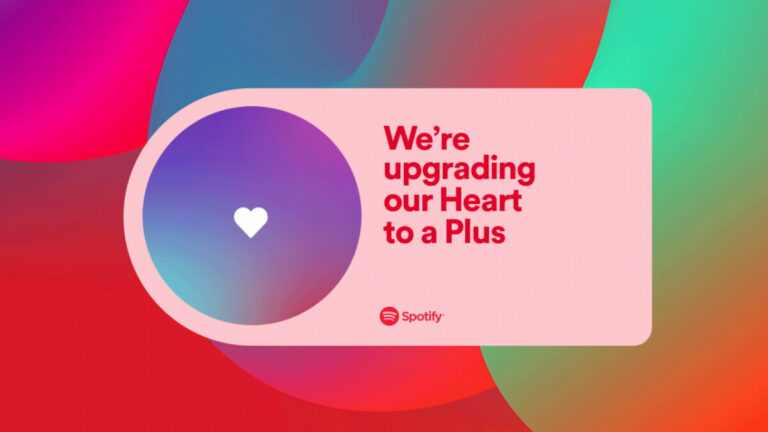
Earlier today, Spotify officialized a brand-new change that’s beneficial to all its users. The app’s iconic Heart button will be replaced with a Plus button that does more than just marking the songs you want to save.
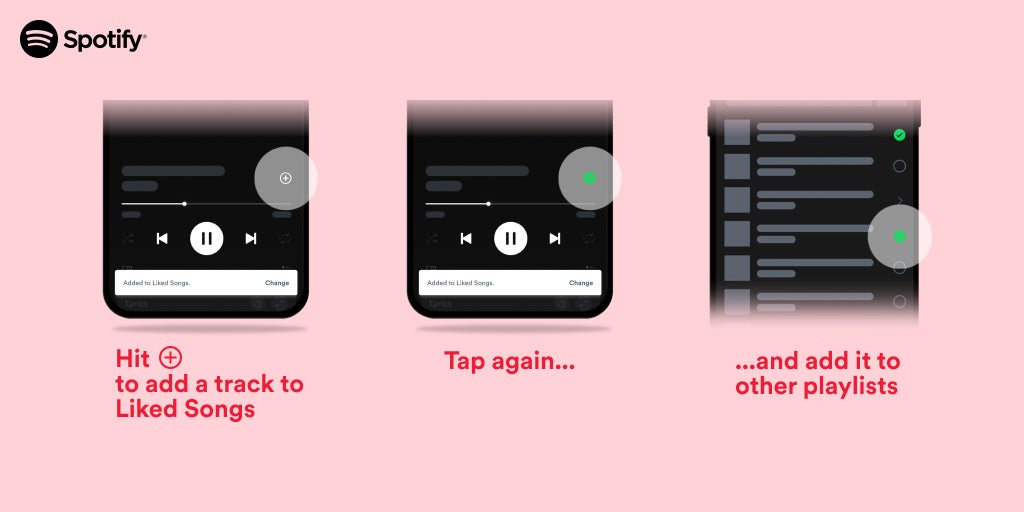
Basically, Spotify is unifying the Heart and “Add to playlist” icons into a single symbol: the Plus (+) button. This means that when you use the Plus (+) button, you will be able to save and choose the destination of any song, playlist, or podcast with a single tap.
Going forward, in order to save a song or podcast episode, Spotify users must tap the Plus (+) button positioned to the right of the song or episode title in the Now Playing view. After the song or podcast has been added to Liked Songs or Your Episodes, the Plus (+) button will become a green check. Moreover, you can even change the destination of your saved content by simply tapping the green check.
Another option at your disposal makes it possible to add an entire album to Your Library. Simply click the Plus (+) button to add your favorite album, playlist, or audiobook to Your Library. Once you see the green check, it means that it’s been successfully added.
Obviously, the reason behind the new change is a simple, more unified user experience. Having a more streamlined way to save favorite music and podcasts means a lot these days when any extra action makes us lose focus.
Unsurprisingly, this is exactly what Spotify found in its user research. On top of that, the same research found that saving songs and podcasts makes us more likely to listen to them again, which is pretty interesting.
According to Spotify, the new changes to the Heart icon will begin to roll out to all users globally on iOS and Android starting today and will become available to all users in the coming weeks.
Cybersecurity experts at Sophos recently detected multiple malicious 2FA apps in App Store and Google Play that deploy malware.
While Twitter made a recent announcement stating that it no longer considers SMS-based two-factor authentication (2FA) to be sufficiently secure.
Users who have opted for Twitter’s premium service, Twitter Blue, and have purchased a verified badge to enhance their reach and tweet length are the ones who are most affected by this significant change.
In the case of pay-to-play users, they will still be able to receive their two-factor authentication codes by text messages (SMS).
Within the next three weeks, the rest of the users must switch over to a different 2FA system before March 17, 2023. One viable solution to meet Twitter’s new security requirements is to use a specialized app that generates a unique sequence of one-time codes seeded with an encryption algorithm.
Alternatively, users can also use a physical hardware token, such as a Yubikey, which performs the cryptographic functions required to verify their identity.
Reliable 2FA Apps
For iPhone users, the built-in password manager within the iOS operating system can generate 2FA codes for a multitude of websites. This eliminates the need for users to download and install any additional software, making the process simple and hassle-free.
For Android users, Google provides its own authenticator application, aptly named Google Authenticator, which can be downloaded from the official Google Play store.
This app can generate unique codes for 2FA authentication purposes, making it a viable and reliable solution for users who are seeking enhanced security measures with proper authenticity.
It is reasonable to assume that a significant number of users may have inquired about alternative authenticator applications available for download. This curiosity arises from the need to diversify their security measures and not solely depend on Apple or Google’s cybersecurity protocols.
Numerous reputable companies offer authenticator utilities that are free, reliable, and straightforward in functionality. These authenticator applications serve the sole purpose of providing 2FA codes without any additional fees or advertisements.
This is particularly beneficial for users who prefer to use a 2FA app that is not from the same vendor as their operating system.
Malicious 2FA Apps
The issue at hand is the vast number of applications available that offer this service, which makes it challenging to determine their reliability and effectiveness.
Adding to the complexity is the fact that these apps have gained endorsement and recognition for their quality through their inclusion in the official app stores of Apple and Google, which maintain strict security protocols.
Following the discontinuation of the SMS method of two-factor authentication by Twitter, experts analyzed several authenticator apps.
When security analysts, Tommy Mysk and Talal Haj Bakry investigated authenticator applications, they discovered findings that were both alarming and surprising.
The investigation uncovered information that was previously unknown to them, and it has raised concerns about the reliability and effectiveness of some authenticator applications.
During their investigation, security analysts discovered multiple fraudulent applications that closely resemble legitimate authenticator applications. These applications are designed to deceive users into subscribing to a yearly service costing $40.
The existence of these fraudulent applications highlights the importance of careful consideration when choosing an authenticator application, as it is crucial to ensure that it is from a reputable source.
They identified four authenticator applications that have almost identical binary codes. This similarity suggests that these applications may have been developed by the same entity or group.
Furthermore, during the investigation, analysts also discovered an authenticator application that sends all scanned QR codes to the developer’s Google Analytics account, raising concerns about the security and privacy of user data.
Based on the investigation conducted by security analysts, it appears that imposter applications within this category attempt to persuade users to pay annual subscription fees ranging from $20 to $40.
Many of these suspicious authenticator apps use this technique to trick users. After you finish the welcome wizard after the first launch, you get the in-app purchase view. And the x button to dismiss the view appears after a few seconds (upper right corner)#AppStorepic.twitter.com/sgxEo5ZwF0
However, it is worth noting that this amount is comparable to the cost of purchasing a reputable hardware 2FA token, which is likely to last several years and offer greater security.
During their search on the App Store, they encountered an application with a description that appeared to be poorly written and contained numerous grammatical errors.
Interestingly, the application was developed by a company that used the name of a well-known Chinese mobile phone brand, which is likely an attempt to appear legitimate and trustworthy.
It is surprising to note that the suspected fraudulent individuals were able to obtain an Apple code signing certificate using a name that they were not authorized to use.
The highest-ranked app that appeared in a search for 2FA apps on Google Play not only charges unnecessary fees but also takes the initial secrets of the accounts set up for 2FA without authorization.
Recommendation
It is secure to use a generated code for one-time use because the seed does not have the potential to be reverse-engineered, as a result, the seed must always remain a secret.
In order to verify that the user has provided a correct code that matches the time they are trying to log in, the service they are attempting to access requires a copy of their seed.
After Twitter’s announcement, if you recently downloaded an authenticator app, it is recommended that you review your choice and ensure that you have selected a trustworthy app.
Things that you should check:-
Forced into paying a subscription for it.
App is littered with ads.
App comes with larger-than-life marketing and glowing reviews yet comes from a company you’ve never heard of.
Having second thoughts and something doesn’t feel right about it.
When switching to a new authenticator app, it is important to remember that you will need to reset all 2FA seeds for all the accounts you have associated with the previous app.
Beware of fake ROBLOX, Steam and Nintendo game cracks that may contain the ChromeLoader malware. Learn more about the threat and how to protect your device from this malicious software.
The cybersecurity researchers at AhnLab Security Emergency response Center (ASEC) have discovered a new ChromeLoader malware campaign in which hackers managed to bypass antivirus programs and other cybersecurity mechanisms. This campaign is dubbed uncommon due to the file type attackers have used to evade detection.
Hackers Using VHD Files As Popular Games Cracks
According to AhnLab researchers, the ChromeLoader malware campaign is distributed via VHD (virtual hard disk) files, which is a different choice because, usually, ISO optical disc image format files are used in such campaigns.
However, in this case, attackers have used VHD files, which are distributed with filenames that seem like cracks or hacks for Steam and Nintendo games. The objective is to modify browser settings by infecting web browsers, such as Google Chrome, and diverting traffic to bogus advertising websites. A VHD file can be easily mounted on a Windows device and works with most virtualization software as well.
One of the malicious websites (Screenshot credit: ACSE)
“When a VHD file is downloaded through this process, the user can easily mistake the malicious VHD file for a game-related program,” ASEC researchers said. “Disguising malware as game hacks and crack programs is a method employed by many threat actors,” researchers said in a blog post.
What is ChromeLoader?
ChromeLoader, also known as ChromeBack and Choziosi, surfaced first as a browser-hijacking credential stealer in January 2022. In May 2022, ChromeLoader malware was pushed into pirated games and QR codes.
Eventually, it evolved into a multi-faceted, potent threat capable of stealing sensitive user data, deploying ransomware, and dropping decompression bombs.
ChromeLoader can also conduct click fraud by leveraging browser extensions to monetize clicks. Many of its new versions can invade both macOS and Windows devices. The shift from ISO to VHD files indicates that ChromeLoader has undergone another round of upgrades.
Numerous Websites Promoting Fake Game Cracks/Hacks
Researchers noticed that several malicious websites were marketing cracked versions of famous games, including the following:
ROBLOX
Elden Ring
Dark Souls 3
Need for Speed
Mario Kart 8 Deluxe
Super Mario Odyssey
Call of Duty and more
Red Dead Redemption 2
The Legend of Zelda: Breath of the Wild
Additionally, software versions such as Adobe Photoshop and Microsoft Office are also marketed in this campaign.
Although the malicious websites hosting fraudulent game hacks and software versions have been taken offline, gamers and unsuspecting users should beware of this campaign.
Instead of downloading the game, they may receive ChromeLoader malware that can launch unwanted ads on their devices and steal credentials from web browsers and other saved data.
Users looking for pirated video game hacks and software are the key targets of attackers, who are lured into downloading VHD files from compromised websites appearing in search results.