In a recent 2023 Mobile World Congress interview, Qualcomm CEO Cristiano Amon said Apple’s 5G chip could roll out next year.
Rumors of an Apple 5G modem have swirled around the internet for a while.
In Feb 2022, the Cupertino-based tech giant was reportedly in talks with new vendors for its first-ever custom 5G modems. Indeed, the report claimed that Apple could use the new 5G chip on the 2023 iPhones.
A recent DigiTimes report in December 2021 revealed that the Qualcomm 5G Modem would power the iPhone 15 lineup. However, the publication claimed Apple was still working on an in-house replacement.
Well, Qualcomm CEO Cristiano Amon has inadvertently confirmed the report. In a recent interview with The Wall Street Journal’s Joanna Stern, Amon said Apple’s 5G modem could be ready in the coming year.
“We expect that Apple will do their own modem in 2024, but if they need ours they know where to find us,” says Amon’s comment, as shared by tech analyst Carolina Milanesi.
So which iPhone will be the first to get the custom 5G modem?
When to Expect From Apple’s 5G Chip Release
Based on Amon’s discussion with WSJ, Apple could release its 5G chip on at least one iPhone 16 Model.
That aligns with a report from Bloomberg’s Mark Gurman that Apple could launch the chip in one new product — a high-end iPhone. However, the tech giant would extend the hardware to other devices and entirely phase out Qualcomm’s modems in roughly three years.
Alternately, the in-house 5G modem could first appear on lower-volume devices such as iPad mini or iPad Air before making its way to the iPhones.
Whatever the case, the forthcoming iPhone 15 models will reportedly come with Qualcomm’s Snapdragon x70 modem. Also, the chip company recently announced a new 5G modem — the Snapdragon X75 — that future iPhones can use during the transition phase.
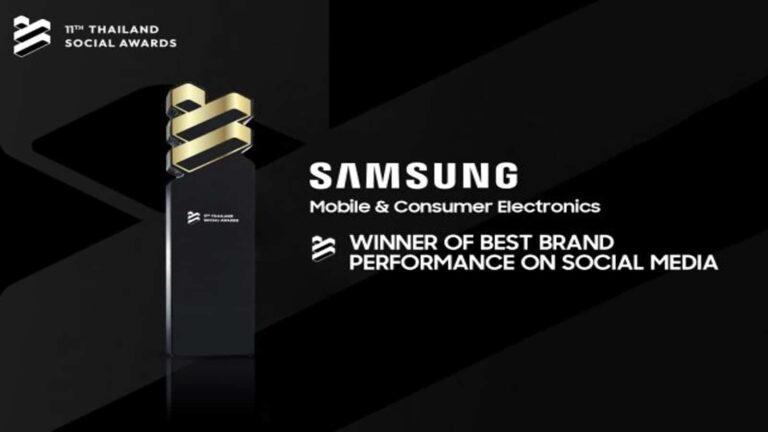
Just in, Samsung Mobile business has been bestowed with an award for their social media performance. This award is from Wisight, Thailand’s number 1 social media analytics service. The analytics firm gave Samsung this award at their 11th Thailand Social Awards event.
The award honors Samsung’s presence on various social media platforms across the country. Samsung Thailand took to its website to post this victory for its fans in and out of the country. Here is everything you need to know about the best brand performance on social media awards presented to Samsung.
Details on the Samsung Mobile business’ best brand performance on social media award
Samsung Mobile business got the best brand performance on social media award from Wisight in Thailand. This award honors Samsung’s presence on various social media platforms. Over 300 other social media performance awards were presented to other individuals and businesses present at this event.
According to Wisight, these awards reflect the voice of the public through a selection system. This system tests the performance of the various nominees on social media platforms in Thailand. How well users of these social media platforms relate with these businesses or creators is a major determining factor. The result from this selection process then goes through some evaluation before the awards get to the awardees.
The process uses a benchmark known as the “WISESIGHT METRIC” that measures the growth of the business on social media. According to Wisight, the “METRIC” system serves as a “measurement criterion.” This system has three subsystems known as Brand, Content, and Creator METRIC.
The social media accounts of Samsung Mobile business in Thailand went through the Brand METRIC evaluation system. This tested for fundamental factors (followers, reactions, comments, etc) and analytical factors (comment ratio, share ratio, and sentiment). After going through these testing phases, Samsung’s social media accounts in Thailand came in line to win this award.
There were various award categories featuring various industries for the award presentation. Samsung, along with Huawei, OPPO, Vivo, and Sony all got awards in the Mobile and Consumer electronics category. This shows the active presence of the Samsung Mobile business on various social media platforms in Thailand.
In a recent post on Facebook, Mark Zuckerberg announced that his team is working on Meta AI personas. This is an artificial intelligence system that will be made available on Instagram, Facebook Messenger, and WhatsApp. From the Facebook post announcing this feature, Mark made it clear that it will be available in the future.
That postmarks Meta’s voyage into the world of artificial intelligence. Already, some top tech companies like Google and Microsoft have made some moves to develop AI models for their businesses and customers. Bard and Bing with ChatGPT are the respective AI models from Google and Microsoft.
Meta is now working on its own AI system to help with the company’s messaging apps. Mark Zuckerberg says that this AI tool will be useful for creation and expression. This tool for creation and expression will become available first, before the Meta AI personas.
Just like ChatGPT, the Meta AI personas will aim to create content for users
The details on how this coming AI personas feature will be put to full use are still unclear. But it is important to delve into Mark Zuckerberg’s post that announced this coming feature. His announcement gives users a glimpse into the artificial world that Meta has in store.
Mark Zuckerberg is pulling together a team to work on the development of this coming AI personas feature. This will be a generative AI model, and it will be available on Meta’s messaging platforms. He goes on to say that this project will not only be beneficial to everyday users, but also to Meta’s various products.
This AI model will be similar to the ChatGPT but might differ in its usage. Being a generative AI code, the personas feature will be able to create media posts or curate messages. This feature might be put to use by enabling a business page to reply to customers without human interference.
All development stages of the AI personas will take place before users will get to use them. But in the meantime, Meta is working on a creative and expressive tool to be made available first. The Meta AI personas will take more time to get ready before rolling this feature out to the public.
During this development stage, Meta will experiment with text, images, and videos to help improve the AI persona system. Also, considering that this tool will be one of Meta’s first AI models, it needs to put in the extra effort. According to Zuckerberg, Meta will undergo foundational work to support the coming AI personas.
The launch of this feature will mark a new era for how users interact with their Meta messaging apps. Its launch date remains unknown, but the Meta AI personas will become available after the creative and expressive tools. More information about this coming AI feature will become available in the coming weeks leading up to its official launch.
The Realme Pad X was unveiled back in May of this year and has been available for sale since July 2022. Realme sent us the Glacier Blue Pad X along with the Smart Keyboard and the Realme Pencil. The entry-level Wi-Fi 4/64GB model is priced affordably at €220.
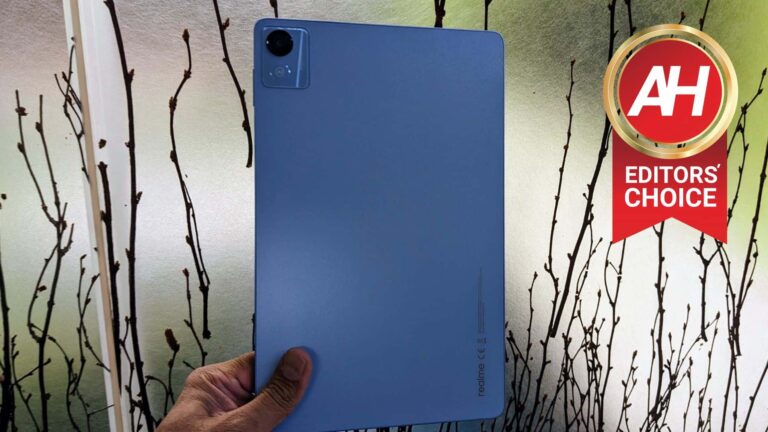
I have been reviewing Realme smartphones and wearables for quite some time now. However, this is the first tablet that I have gotten to review from Realme. And what a first impression this Glacier Blue creates. It is definitely one of the best-looking Android tablets currently available on the market.
Budget price and premium design
I have to admit that the Realme Pad X does look like it decided to emulate the iPad Pro design language to some extent. And that is not a bad thing because this tablet looks better than a lot of other Android tablets- some of which costs hundreds more than the Pad X.
On the front is an almost 11-inch display with fairly thin bezels. The video conferencing camera (who really takes selfies with a tablet camera?) is on the longer edge. Or I daresay in the correct location for video calls and chats. The tablet is quite comfortable to hold because it weighs just 500 grams and is only 7.1mm thick.
The attention to detail is excellent and you can easily mistake the overall construction to be made from aluminum. However, both the frame and the back cover are made of plastic. The Glacier Blue color and matte texture give it a really unique look. It doesn’t matter which angle you look at it, the Realme Pad X looks premium.
No headphone jack and USB-C headphones don’t work either
You will see a set of symmetrical grilles on the short edges for the four speakers onboard. There are also small cutouts for the two microphones along with a USB-C charging port. The location of the power button and volume rocker is identical to what you would see on an iPad. Realme sent us the data-capable version of the Pad X. So it has a dual-SIM tray with a micro SD card slot which is also something you don’t see nowadays.
There is no headphone jack and that is a glaring omission in my opinion. What is more egregious is the fact that USB-C headphones don’t work on this tablet – even those made by sister company Vivo. If you want to watch something without disturbing anyone around you, then you are stuck using wireless headphones/earbuds with this tablet.
The display on the Realme Pad X is actually quite good considering the price
The Realme Pad X has a 10.95” WUXGA+ (1200 x 2000 pixels) IPS LCD Display. The display has a 5:3 ratio, a 213ppi pixel density, and an 84.6% screen-to-body ratio. It has TUV Rheinland certification for ‘Low Blue Light Eye Protection’.
There are a couple of other display options that improve the viewing experience such as O1 Ultra Vision Engine and DC Dimming. Specs-wise, it has a peak brightness of 450 nits and I did not have any issues using it indoors during my review period.
In terms of daily use, I found that colors are vivid and quite accurate. Even though the max resolution is only 1080p, it didn’t seem to pose any issues watching videos on YouTube, Netflix, or Prime Video. Also interacting with the UI including the Smart Sidebar didn’t have any issues in terms of touch sensitivity.
Performance is great thanks to the Snapdragon 695
The Realme Pad X comes in Wi-Fi and 5G models. We got the top-of-the-line 5G model with 6/128GB. But, from a raw performance standpoint, I doubt the RAM and storage will make much difference across the entire range. The Snapdragon 695 5G processor is built on a 6nm wafer fabrication process. The Geekbench scores are middle of the road and about 25% less than the base 10.2-inch iPad running on the A13 Bionic processor. In other words, it’s definitely good enough for everyday tasks, watching videos, and light gaming.
There were no issues with browsing, emailing, video calls, meetings, or other productivity tasks. Running two apps side by side was also a breeze on this tablet (more on multi-tasking a bit later in the software section of this review). Ditto for watching videos on various streaming apps on the Pad X.
Playing games is not a big issue on this device from a hardware performance standpoint. The main issue is that with 213ppi and a 60Hz IPS display it is best to run games at medium settings in order to not get a lot of jitter while gaming.
The battery life is great on Wi-Fi but not while using 5G
There is a fairly large 8340 mAh battery onboard with 33W fast charging support. During my review period, on Wi-Fi, this tablet easily got 10+ hours of SoT watching videos and browsing. However, battery life takes a hit on 5G, where the SoT was around 6-7 hours. I also noticed that the standby drain was fairly hefty on 5G versus Wi-Fi. So, that is something to keep in mind while using the Realme Pad X.
The retail box does come with a USB cable and a 33W charger. Another neat feature that Realme included is reverse charging so you can use the Pad X as a power bank to charge your earbuds or even your smartphone if necessary.
The Realme Pad X has 5G Connectivity
So, here is an interesting story. A few months ago, I reviewed the Realme 9 5G smartphone which has the exact same Snapdragon 695 6G processor as this Realme Pad X. On that smartphone, I never got a 5G signal. On the flip side, I got a 5G signal as soon as I put in my SIM card in this Realme Pad X. Not exactly sure what is going on, as both of these are global devices running Android 12 and Realme UI 3.0.
I used this tablet on the road a few times and I had no issues watching movies and TV shows or sending emails or making calls on the Realme Pad X. I love the fact that most non-USA data-capable tablets let you make phone calls!
Multi-screen collaboration – a fancy term for using your phone on the tablet works great on the Realme Pad X and comes in handy in certain situations when you want to share data from the phone quickly while using the tablet with a keyboard for work emails or file sharing. You can then cut, edit, and process files on the large tablet screen, for increased efficiency.
Another option to transfer photos, videos and documents between your phone and tablet with one touch is Realme share. Other connection options include Bluetooth, Screencast, and Tethering. I think you will be very happy with the options the Realme Pad X has in terms of connectivity.
The Quad speakers on the Realme Pad X sound amazing
The Realme Pad X has four speakers – two on each side – and they sound phenomenal thanks to Dolby Atmos and Hi-Res Audio. I took the tablet on a road trip and thoroughly enjoyed the immersive sound from the quad speakers whilst catching up on multiple TV shows on Disney+ and Prime Video.
While we are on the topic of sound, the Pad X pairs very quickly and efficiently with other Realme devices. Pairing with a pair of Realme Buds Air Pro was effortless and seamless with a visual indication of the battery life of the earbuds as well as the amount of charge left in the case. Let’s say you are streaming sound on the earbuds and you get a phone call, the Buds will automatically switch to answer the phone call which is quite convenient.
Realme U1 3.0 has a lot of useful features for productivity
For the most part, Realme UI 3.0 is identical to what we saw on the Realme 9 5G smartphone. This is a custom ROM running on Android 12 with the May 2022 security patch. Most of the differences from the smartphone software are in the “Special Features” section of the settings menu. I found split screen, smart sidebar, and display size options to be the most useful ones.
Useful multi-tasking features are available on realme UI 3.0
Split screen works in an app that supports this option with a 2-finger swipe down from the top to split the screen. You can also use the recent tasks menu, tap the More button in the upper right corner (3 dots) and then tap ‘split screen‘. Another option is to drag the app that supports split screen directly from the smart sidebar.
Smart Sidebar is always available from the edge of the screen and comes in very handy to launch an app quickly. You can then resize it so it floats over whatever work you are doing or going split screen for more efficient multi-tasking.
If an app does not support fullscreen display in landscape mode, you can change its display size to mimic what you get on a smartphone and use it. This allows you to use the remaining display for another app. For example, Twitter and Gmail work quite well in this scenario.
Another very useful feature is Limelight for video calling. The front-facing camera keeps you in the center of the frame during video calls and meetings. It works really well with Google Meet and Zoom.
I do a decent amount of reading on my tablets thanks to the free books available from Prime library. The Realme Pad X has quite a few good options for reading – eye comfort mode reduces blue light, and reading mode simulates the experience of reading a book printed on paper. In addition, there is a dark mode available which offers a high-contrast option for reading without too much stress on the eyes.
A few glaring drawbacks that dampen the overall software experience
There are a couple of glaring drawbacks from a software perspective. First off there are no good note-taking or doodling (sketch) apps to take advantage of the excellent Realme Pencil. Second, I had to sideload Netflix which is a big dealbreaker. Third, the security patch is May 2022 so long-term software support seems to be lacking.
The Cameras are surprisingly very good for a tablet
The 8MP f/2.0 front-facing camera with a 105° field-of-view is really good for video via Google Meet or Zoom. The colors are spot on, the detail isn’t too bad and the best thing is the all-new ‘Limelight’ feature. The machine learning and AI onboard are extremely good at detecting your face and keeping you in the center of the frame during video calling. Selfie pictures from the FFC aren’t too shabby either.
On the rear, there is a 13MP f/2.2 camera which is quite capable. It is able to scan text from documents and books, although holding a tablet to scan is a bit unwieldy. However, it is nice to see a good camera with useful features in a tablet. Oh, and the pictures from the 13MP rear camera are quite good in daylight in terms of detail and color science.
The Realme Pad X has excellent OEM accessories to enhance the user experience
Besides the Pad X, Realme also sent us an OEM keyboard case and a Pencil for review. Both are sold separately from the tablet and are similar to what Apple, Samsung, and Huawei offer for their tablets.
The OEM Keyboard case works like a charm
I typically use cases on all my gadgets. Sometimes OEM cases are great and at other times 3rd party cases seem to work better. In the case of the Realme Pad X, the keyboard case made by Realme is excellent. Overall fit and finish are great, keys are clicky with good feedback making it effortless to type. Most of this review was actually typed using the keyboard case.
The case does fully cover the tablet offering a reasonable amount of protection. However, there is only one default position available to lock the tablet in on the case which is a bit irksome. Another thing to note is that there aren’t any pogo pins, but until the tablet is seated in the groove above the keyboard, it will not work despite being connected via Bluetooth.
The Realme Pencil works very well as a stylus
The new Realme Pencil is very stylish and looks/feels/works like a real pencil. It also charges very fast (~15 minutes) via the magnetic strip on the tablet just above the front-facing camera. Realme claims about 25 minutes of writing time with only 1 minute of charging and a full charge should last about 10+ hours. From the quick seat of the pants testing, I can vouch that these claim times should hold up in real-life use scenarios.
Realme claims that the Pencil has 4096 levels of pressure sensitivity. During my review period, it worked very well as a stylus thanks to the 240Hz touch sampling rate. I wasn’t able to use it to sketch or take notes since there wasn’t any first-party app loaded on the device. This is definitely something Realme should have addressed in terms of software on the Pad X.
The Realme Pad X is a genuine Android alternative to the base iPad
The Realme Pad X starts at INR17,999 ($225/€220) for the Wi-Fi-only 4/64GB model, and INR25,999 ($325/€320) for the 5G 4/64GB model. If you want the accessories, the Realme Smart Keyboard is priced at INR4,999 ($63/€61) and the Realme Pencil is INR5,499 ($69/€68). So for roughly the same price as the 2021 base iPad you get a 5G capable tablet and for about $130 more you can get the keyboard and the Pencil. A similar iPad setup would cost you over $1000 and even the Samsung Tab S8 would cost you quite a bit more.
For those not wanting 5G or the OEM accessories, $225 is a great price for a tablet with a gorgeous display, stellar hardware design, good battery life, great cameras, and absolutely phenomenal speakers. The software experience could be better, but I am hoping that Realme fixes that with a subsequent update.
A team of researchers has shared details about the existing security lapses in email forwarding protocols that allow email spoofing. The researchers could easily spoof domains of government, media, and other organizations.
Security Flaws In Email Forwarding
Researchers from UC San Diego, USA, Stanford University, USA, and University of Twente, Netherlands, have elaborated on the inherent security risks associated with email forwarding.
Specifically, they demonstrated the incapability of existing authentication protocols to prevent spoofing attacks.
Presently, the following three security measures exist (and are commonly used) to prevent email spoofing.
Sender Policy Framework (SPF): Specifies the IP addresses allowed for sending emails for a domain and the subsequent actions (such as marking spam) if an unauthorized IP address is used.
DomainKeys Identified Mail (DKIM): binds the email message to a sender domain via cryptographic signatures. However, it doesn’t verify the sender.
Domain Message Authentication, Reporting, and Conformance (DMARC): combines SPF and DKIM protocols to mitigate the underlying security issues that each fails to address separately.
These three protocols usually succeed in preventing email spoofing and spamming to a larger extent by appropriate sender authentication. However, the researchers observed that no security measures ensure the same for email forwarding.
Since such messages involve multiple parties, instead of the simple sender and recipient otherwise, verifying the sender gets tricky. Hence, spoofing sender email domains gets possible, even for trusted email sending domains, such as government IDs. That’s mostly because of the absence of a unified security measure for protecting forwarded emails, despite the ubiquity of this practice.
The attack exploited three security issues: relaxed forwarding validation, Authenticated Received Chain (ARC) implementation vulnerabilities, and abusing mailing lists. In their study, the researchers analyzed 20 different email forwarding services and could spoof prominent domains like “state.gov,” “washingtonpost.gov,” and more. They also delivered spoofed emails to popular providers like Gmail, Zoho, and Microsoft Outlook.
Recommended Mitigations
Besides demonstrating the security lapses in email forwarding, the researchers have also recommended mitigations to prevent such abuses. Specifically, they advise mailing services to disable open forwarding, which will prevent laundering, remove relaxed validation policies, and enhance mailing list security. Moreover, they also suggest revising RFC standards, improving UI notifications, and developing robust testing tools.
The researchers have shared the details of their study in a research paper scheduled for presentation at the 8th IEEE European Symposium on Security and Privacy.
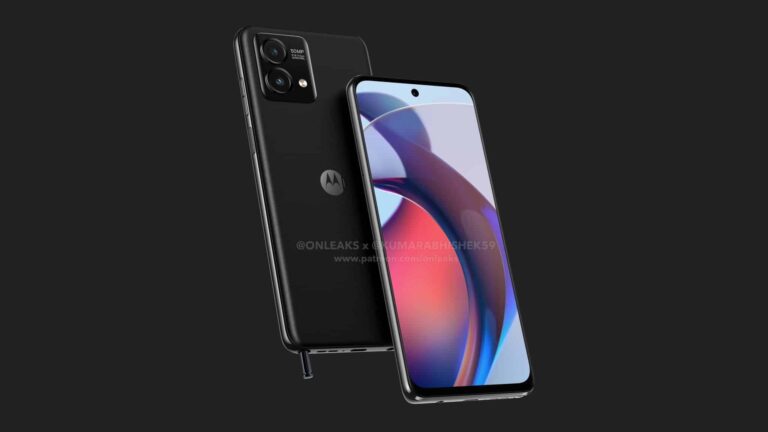
Motorola is gearing up to launch a new stylus pen-equipped smartphone. The device will debut as the Moto G Stylus 5G 2023. Leaks and rumors have already revealed its design and a few key specs. While we still don’t have an official launch date, the phone has now surfaced on the FCC website to confirm those rumors. This also suggests the Lenovo-owned company will take the wraps off the handset sooner than later.
Moto G Stylus 5G 2023 appears on the FCC website
FCC has certified the Moto G Stylus 5G 2023 with the model numbers XT2315-1, XT2315-4, and XT2315-5, which we’ve known all along (via). The documents published by the regulatory body revealed that the handset will come in both single and dual-SIM variants and boast LTE, 5G, Bluetooth, Wi-Fi, and NFC wireless connectivity options. The device appears to get a 5,000mAh battery, unchanged from last year. Motorola may sadly limit it to just 10W of maximum wired charging speed, once again unchanged from the 2022 model.
While the listing doesn’t tell us anything more, earlier leaks have suggested that the Moto G Stylus 5G 2023 will feature a 50MP primary rear camera. In fact, a leaked render earlier this month showed “50MP” printed on the camera bump, so there’s no doubt about that anymore. Last year’s model also featured a primary rear camera of the same resolution. Elsewhere, we are expecting 6GB of RAM and 256GB of onboard storage. Motorola may offer more memory and storage configurations, though.
Motorola may be keeping most of the key specs unchanged from last year, but the upcoming handset will get a minor design shift. The Moto G Stylus 5G 2023 will replace the vertical rounded rectangular camera bump on the back with a squircle housing. We may also get only two rear cameras this time around, one fewer than the 2022 model. Additionally, the company is opting for a matte look over a glossy finish this year. The back panel is still curved while we continue to get a flat screen.
Motorola may not launch an LTE model this year
Motorola’s stylus pen-equipped smartphone came in both LTE and 5G cellular variants last year. But that may not be the case this year. The company may only launch a 5G model of the Moto G Stylus 5G 2023. That’s because last year’s LTE model came in February, while the 5G model came in April. We are almost past February now and there’s no sign of a new LTE-only Moto G Stylus. The 5G-enabled version, on the other hand, appears to be on track for an April launch. You never know unless things are official, though. We will let you know as soon as we have more information.
Have you ever wondered what the average Samsung employee’s annual earning is? If yes, then this article will provide you with the answers that you need to quench your curiosity. The earnings reflected in this article show the average earnings of employees at Samsung’s South Korean office.
Included in the collation process to get the average figure are also execs with the South Korean tech giant. The estimate was curated by market tracker Korea CXO Institute, and it covers employee earnings from 2022. This firm relied on data it gathered from a recent audit report.
The audit not only revealed the average Samsung employee’s annual earnings, but also the company’s workforce. Over the past three years, the company has lost a good amount of workers. This has led to a sharp decline in the annual earnings of Samsung employees.
A report shares an annual earning estimate for Samsung employees
From the available report, the annual earning of Samsung employees clocks at $99,700. This is the average annual earning of the employees and execs at the Samsung headquarters. Market tracker Korea CXO Institute also says that Samsung’s sales-to-labor cost ratio decreased last year.
A total of $12 billion was spent by the South Korean tech giant on labor costs. The money was to over 113,604 Samsung workers, made up of employees and execs. This is less than what the company paid its workers in 2021 due to the shortage of workers and the reduction in labor costs.
Also, Samsung’s in-house board members earned an average of $3.3 million each. While the registered board members earned an average of $17.1 million collectively. Lastly, six outside directors at Samsung all earned a total of $532,749 last year.
Samsung also experienced a growth in their number of workers, with more people joining the workforce. Some staff members stopped working with Samsung last year, but they are fewer than those that joined. Among the new employees are some top players in their fields that will help grow Samsung’s business during their stay at the company.
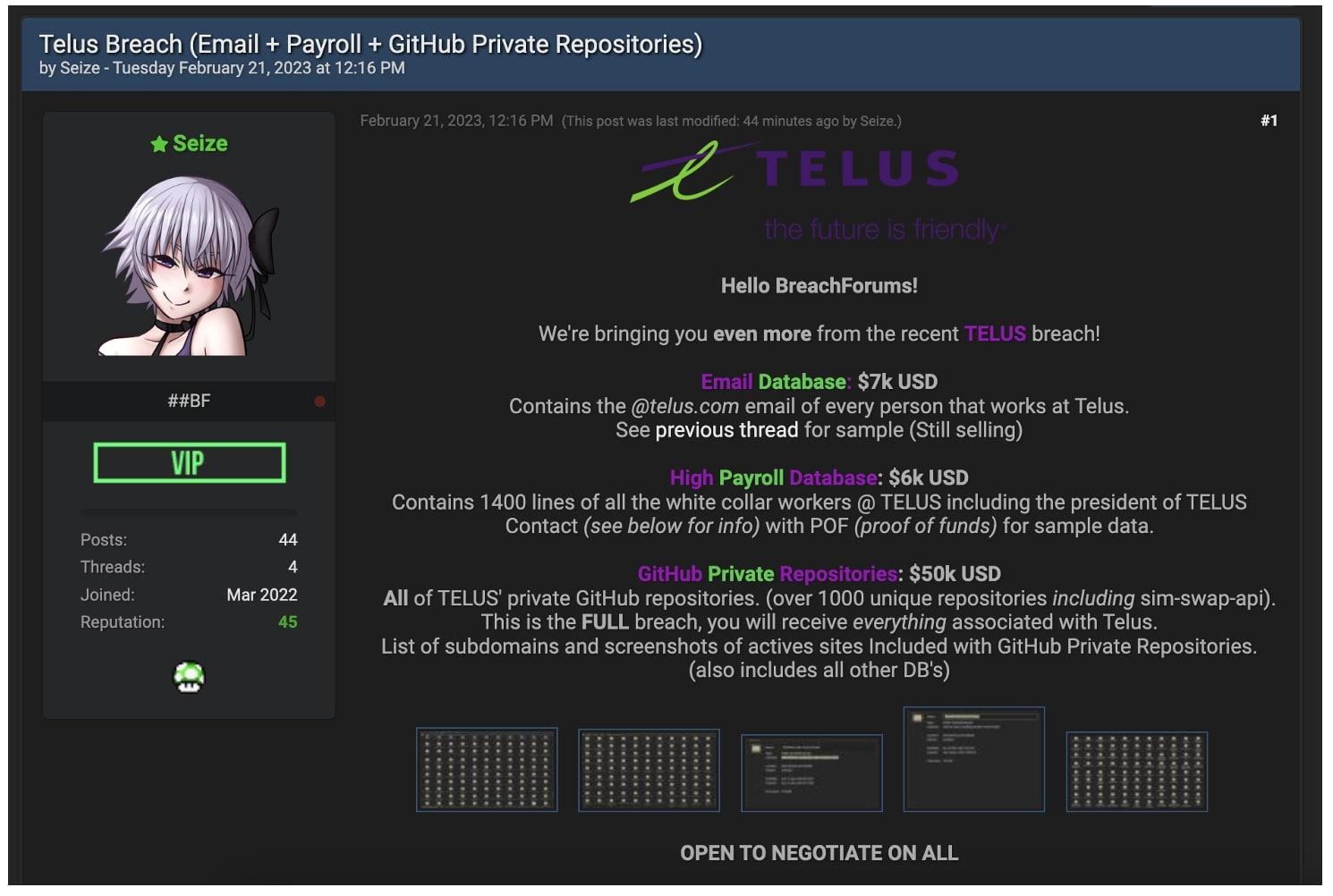
Telus, a Canadian national telecommunications company is looking into whether employees’ data as well as the source code for the system were stolen and then sold on a dark web marketplace.
Subsequently, the threat actor published screenshots that appear to depict the company’s payroll data and private source code repositories.
“We are investigating claims that a small amount of data related to internal Telus source code and select Telus team members’ information has appeared on the dark web,” Richard Gilhooley, director of public affairs at Telus said in an email.
“We can confirm that to this point our investigation, which we launched as soon as we were made aware of the incident, has not identified any corporate or retail customer data.”
Source Code, Employee Data Stolen
A threat actor offered what they claimed to be TELUS’ employee list (including names and email addresses) for sale on a data breach forum on February 17.
“Today we’re selling email lists of Telus employees from a very recent breach. We have over 76k unique emails and on top of this have internal information associated with each employee scraped from Telus’ API”, the forum post says.
The post provides what looks to be a list of email addresses for Telus employees as proof. “It isn’t known if these are the current or former staff — or even real”.
Later on Tuesday, February 21, the same threat actor published a new forum post with an offer to sell TELUS’ private GitHub repositories, source code, and payroll data.
“In the repositories are the backend, frontend, middleware [information,] AWS keys, Google auth keys, Source Code, Testing Apps, Staging/Prod/testing, and more!” says the seller’s latest post.
The claimed TELUS data and source code are posted in a second forum post
The seller also stated that the company’s “sim-swap-api,” which is supposed to allow attackers to conduct SIM swap attacks, was included in the stolen source code.
Despite the malicious attacker calling this a “Full breach” and stating that they will sell “anything related to Telus,” it is still too soon to say whether an event actually happened at TELUS or whether a breach at a third-party vendor actually occurred.
“It’s important to note that it’s not clear whether the data being sold is real”, commented Brett Callow, a British Columbia-based threat analyst for Emsisoft.
“If it is real, this is a potentially serious incident which exposes Telus’ employees to increased risk of phishing and social engineering and, by extension, exposes the company’s customers to risk”.
“The alleged exposure of the private Github repositories, supposedly including a sim-swap API, represents an additional tier of potentially significant risk.”
We just got word that YouTube Music was going to finally bring the ability to listen to podcasts. This seems in line with the company’s ongoing push into the podcast market. However, Google announced that YouTube Music Podcasts and Google Podcasts will not merge.
Since 2021, YouTube has been working on becoming a podcasting platform. The company brought in Kai Chuck to head the podcasting venture, but it took a while before we could see anything come to light. Last year, YouTube unveiled a podcasts page that showed you recommended podcasts based on what’s popular and your watch history.
Recently, we just got the news that YouTube was going to bring podcasts to YouTube Music. That’s not altogether unexpected, but it was definitely a long time coming. YouTube Music was the replacement for Google Play Music (which offered podcasts), but it didn’t bring over its ability to play podcasts. Instead, people could listen to their favorite podcasts using the Google Podcasts app released back in 2018.
Google Podcasts and YouTube Podcasts will not merge
One thing about Google is that it has a tendency to have redundant services running at the same time. It eventually merges them, and this is what we expected the company to do this time around. Since Google owns YouTube, we suspected a transition period. However, according to 9To5Google, Google announced that it’s not going to merge Google Podcasts and YouTube Podcasts.
This could be a good idea, as the transition between Google Play Music and YouTube Music was rough for some people. While YouTube Music has grown in the last couple of years, there are a bunch of people who still miss Google Play Music. The platform has some features that YouTube Music didn’t adopt.
So, moving podcast services might create the same sort of issues. While Google does own YouTube, YouTube is still its own company, and it’s going to do things differently than Google. So, keeping them separate is a good idea.
One of the most prominent tipsters out there, Ice Universe, just shared with everyone the design of the iPhone 15 Pro Max. Before we begin, do note that this phone may be referred to as the iPhone 15 Ultra at launch.
The iPhone 15 Pro Max design and the phone’s specifications have been revealed
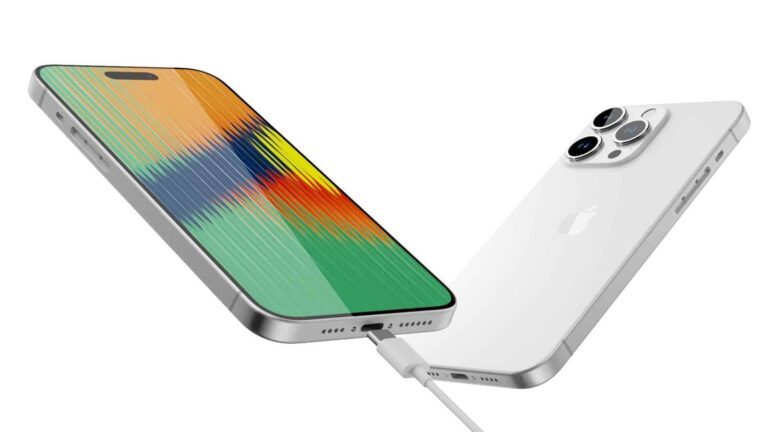
9to5Mac already shared CAD-based renders of the iPhone 15 Pro and iPhone 15, and Ice Universe is here to add to that with the iPhone 15 Pro Max. In the gallery below, you’ll not only see CAD-renders, but processed CAD-based renders that give us a better look at the phone.
Looks-wise, there’s not much changed here. At first glance, many people would struggle to tell the difference. The thing is, its bezels will be thinner, while the phone itself will be thicker than its predecessor.
On top of that, physical buttons from the past model will be replaced with solid-state buttons. Apple will also use Titanium for the phone’s frame, it seems. A Type-C USB port will sit at the bottom.
It will look similar to its predecessor, but with several upgrades worth noting
So, even though the phone will look very similar to its predecessor, there are some changes to pay attention to. The Dynamic Island is still be included on the front, and the rear camera design will remain unchanged too.
The tipster did share the exact dimensions too. He claims that the phone will measure 159.86 x 76.73 x 8.25mm (11.84mm with the camera bump). So, it will be slightly shorter, and narrower than its predecessor, but also thicker.
This will be the first iPhone, along with all of its siblings in the series, to include a Type-C USB port at the bottom. The iPhone 15, iPhone 15 Plus, and iPhone 15 Pro will also feature it.
All three of these phones will become official in September this year. Do note that Apple could release the iPhone 15 Pro Max as the iPhone 15 Ultra, or may add a 5th device to the lineup named ‘Ultra’. The latter rumor is less probable, though.