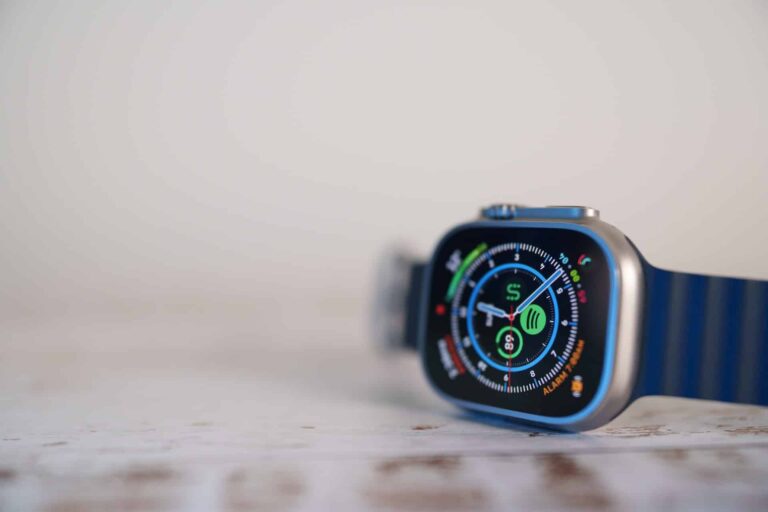
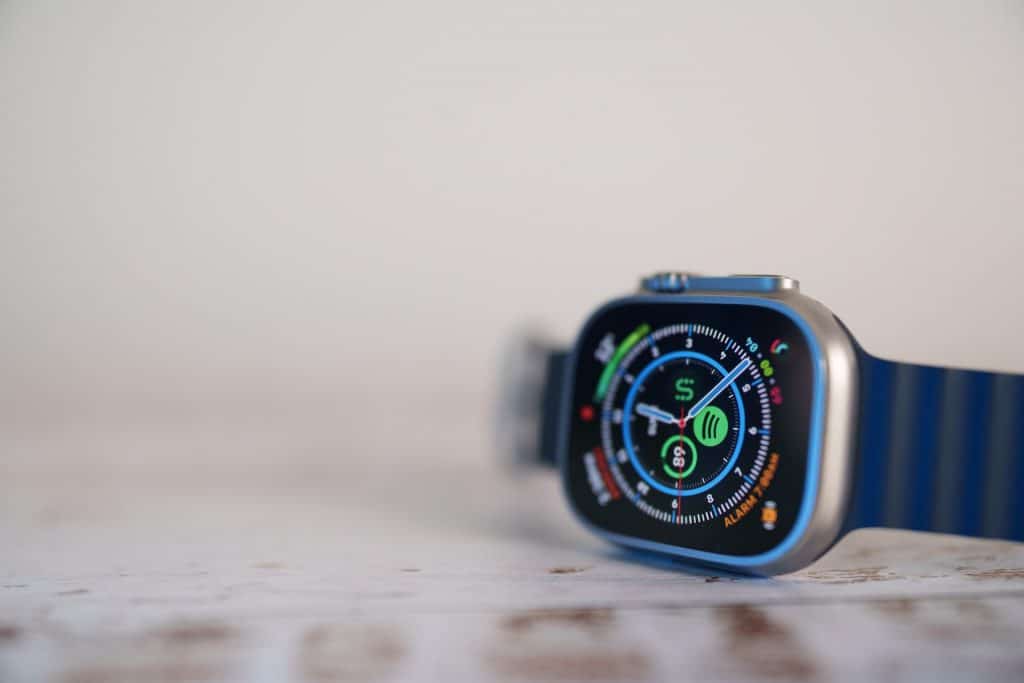
A recent report hints that the next-generation Apple Watch Ultra to be released in 2024 will get a larger 2.1-inch display.
In September 2022, Apple introduced the Apple Watch Ultra — an entirely new category of a high-end wearable device for exploration. As such, the smartwatch is perfect for athletes, divers, and adventurers.
Despite being a niche device, the Apple Watch Ultra’s rugged design seems to attract a general audience — and for good reasons.
The watch comes in a 49mm aerospace grey titanium case with a flat sapphire crystal. It also features a 1.61-inch screen that reaches up to 2,000 nits, making it the biggest and brightest display on an Apple Watch. But it’s about to get even better.
The latest report aligns with a claim by Haitong Intl tech research analyst Jeff Pu. Pu suggested that the wearable device could get a 2.1 inches micro-LED display — a slight upgrade over the current 1.92 inches OLED screen.
Now you’re wondering:
Does the Apple Watch Ultra Need a Larger Display?
The answer is maybe. Since the Apple Watch Ultra’s screen is already larger than the traditional smartwatch, a bigger display may seem unnecessary.
However, the device caters to a niche audience — buyers willing to pay extra for a larger form factor. It includes individuals in extreme conditions where that extra screen real estate is critical. So it makes sense that Apple would want to increase the screen size by 10 percent.
With that said, the Apple Watch Ultra packs more than a large screen and titanium casing. It also promises up to 36 hours of battery life during everyday use, a more precise GPS sensor, and a more advanced microphone scheme.
It’s currently unclear whether Apple intends to launch a second-generation Apple Watch Ultra in 2023.
OnePlus started out in late 2013, and launched its first smartphone in early 2014 – the OnePlus One. It was something completely different from the other smartphones on the market. A high-end smartphone, with flagship specs, and CyanogenOS on-board for just $250. It also had a 256GB model that was not seen at the time, that was a bit more money.
However, since then, OnePlus has gone from the scrappy startup that sent out invites to buy their phones, to being one of the biggest Android makers in the world. Of course, part of that is due to its parent company – BBK Electronics, which also owns OPPO, Realme, Vivo and a few other brands. But we have seen a number of great smartphones coming out of OnePlus over the years, and today, we’re going to tell you the best OnePlus smartphones that are on the market today.
Top 7 Best OnePlus Smartphones
Up until around 2020, OnePlus had mostly only launched flagship smartphones. While they were cheaper than the competition, they weren’t offering something that was even cheaper. Say in the $250-$400 range. which is a huge market in a lot of countries. And that’s where the Nord brand came in. So in the list below, you’ll see a number of flagships and mid-range phones from OnePlus.
It’s important to note, that we will only be listing phones that are still getting updates from OnePlus. And generally only going back 1-2 generations.
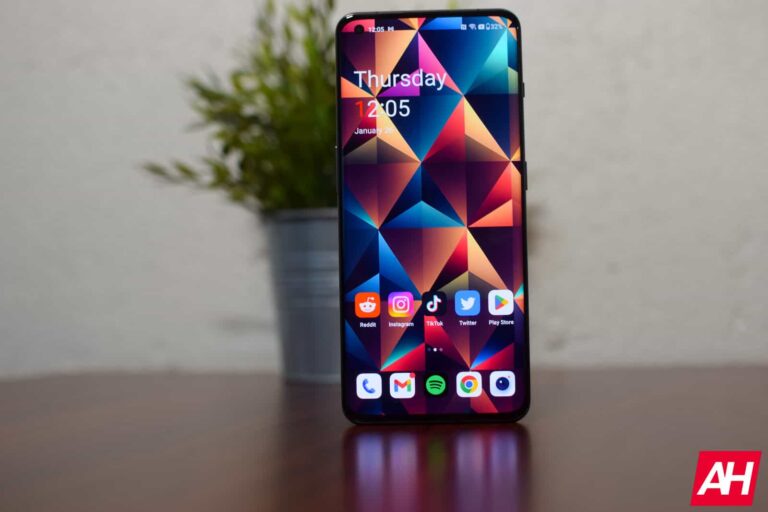
The OnePlus 11 is the newest smartphone from the company. It rights a lot of the wrongs from the OnePlus 10 Pro and 10T. Like bringing back the Alert Slider, but it also removes wireless charging. It’s a 6.7-inch QHD+ 120Hz Adaptive AMOLED display, powered by the Snapdragon 8 Gen 2, with 8GB of RAM and 128GB of storage. Or 16GB of RAM and 256GB of storage. There’s also a pretty large 5,000mAh capacity battery inside.
OnePlus is promising that the 11 will get four years of updates. So it should get updated to Android 17.
We normally don’t do this, but the OnePlus 10 Pro has been announced in China, with the device coming to more markets after the Lunar New Year. Which is a major holiday in many Asian countries.
The OnePlus 10 Pro has all of the specs that you would expect from a new flagship in 2022. That includes a 6.7-inch QHD+ 120Hz display, which is LTPO2. It is powered by the Snapdragon 8 Gen 1, up to 12GB of RAM and up to 256GB of storage. This is all powered by a 5000mAh capacity battery that should keep it going all-day long.
The OnePlus 10T was announced in August, and released in September of 2022. It’s a really impressive smartphone that starts at just $649. It sports a 6.7-inch FHD+ 120Hz display, the Snapdragon 8+ Gen 1 is inside, with 8GB of RAM and 128GB of storage. There’s also a 16GB of RAM and 256GB of storage model available. This is powered by a 4800mAh capacity battery inside.
The Snapdragon 8+ Gen 1 that is inside is very efficient, so the 4800mAh battery lasts quite a long time. And can recharge fully in under a half hour. Thanks to the 125W charging speeds.
The OnePlus Nord N200 is one of the better Nord options from the company. And you’ll be surprised that it is only $209.
OnePlus Nord N200 has a 6.5-inch FHD+ 90Hz display, powered by the Snapdragon 480 5G chipset, 4GB of RAM, 64GB of storage and a massive 5000mAh capacity battery. Obviously, this is not a high-end phone, but it is still a pretty capable phone, at just $200.
The OnePlus 9 is the non-pro 2021 flagship. It has a starting price of $729, which includes a 6.55-inch FHD+ 120Hz display, the Snapdragon 888 5G chipset, 8GB of RAM and 128GB of storage. You can upgrade to 12GB/256GB too for only $829.
Of course, the OnePlus 9 series does run on Android 11 and OxygenOS 11. And it has been updated to Android 12 already, but it’s ColorOS and a lot of users are not happy. Additionally, OnePlus partnered with Hasselblad for their cameras this time around. So you’re getting some really great cameras out of this one too.
The OnePlus Nord N100 is a much cheaper smartphone from the company, but it still doesn’t cut many corners, which is good to see.
Nord N100 comes in at around $180, with a 6.52-inch HD+ 90Hz display, with the Snapdragon 460 chipset inside. It also has 4GB of RAM and 64GB of storage. With a 5000mAh capacity battery inside. And given the HD+ display here, that 5000mAh battery should last you a few days on a charge and then some.
OnePlus Nord CE is not actually available in the US, so you’d be buying the EU variant here. It doesn’t come with a warranty but will work on AT&T and T-Mobile.
The Nord CE is one of the more higher-end smartphones that OnePlus has put out in the Nord lineup. It sports a 6.43-inch FHD+ 90hz display, powered by the Snapdragon 750 5G chipset, with up to 12GB of RAM and up to 256GB of storage on-board. That is all powered by a 4500mAh capacity battery on-board.
The OnePlus Nord N10 is another great phone from the company.
Nord N10 comes with a 6.5-inch FHD+ 90Hz display, it is powered by the Snapdragon 690 chipset, 6GB of RAM and 128GB of storage on-board. There is also a 4300mAh capacity battery on-board that is going to keep it charged all day long and then some.
The OnePlus 8T is older, but still a really solid smartphone. It sports a 4500mAh capacity battery, which is pretty decent in size. It also has a 6.55-inch FHD+ 120Hz display. Which is going to be pretty impressive for those that are looking for a really great smartphone, that can last a full day.
It also sports a Snapdragon 865 chipset, 12GB of RAM and 256GB of storage. There is a 8GB/128GB model available outside of the US.
There’s also a quad-camera setup on the rear, with a 48-megapixel main sensor, 16-megapixel ultra-wide, 5-megapixel macro lens and a 2-megapixel depth sensor included. All that for just $749, which is pretty impressive.
The OnePlus Nord N20 5G is a T-Mobile exclusive in the US, but it can also be bought unlocked now. It’s under $300, and a tad cheaper at T-Mobile if you plan to stay with them for two years.
It has a 6.43-inch FHD+ display, powered by the Snapdragon 695 5G processor, along with 6GB of RAM. There is also 128GB of storage available, along with a micro SD card slot, so there’s plenty of space for most people. There’s also a 4500mAh capacity battery inside which should work really well for most people.
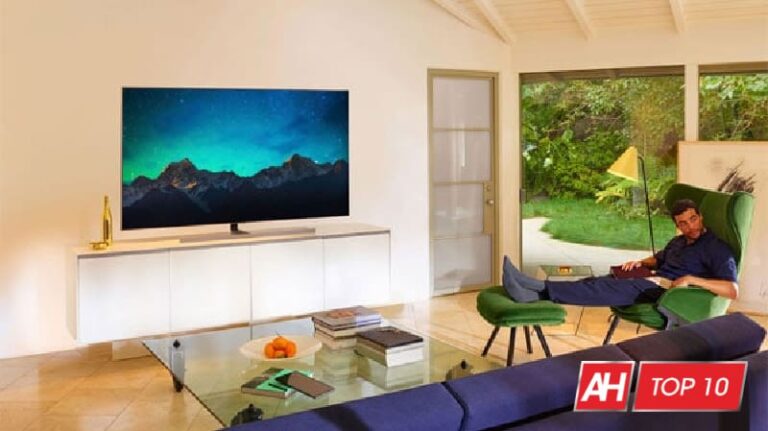
Now is a great time to buy a new smart TV with some of the latest announced at CES in January starting to become available to buy. Which means that the older (2021 model) TVs are getting discounts. While they are older, they are not “old” so to speak, so it’s great to be able to buy a cheap TV for your living room, bedroom or even a guest bedroom.
This list has the best smart TVs that are currently available in 2022. Hitting every segment of the market, including some cheaper options for those that do have a budget.
Top 9 Best Smart TVs
While most TVs are announced at CES, they don’t become available until later on in the year. And more will be announced throughout the year. So these models will change from time to time.
This list includes TVs from Samsung, LG, Hisense, Toshiba and others, and they are all TVs that are available to buy right now. Not just those that are announced, but those you can physically buy today.
The Samsung Q80R is the best smart TV you can buy right now for a few reasons. But the biggest one is the picture quality. It’s going to give you the best looking picture, thanks to it being a QLED TV. That’s going to give you some very bright and vivid colors, and with HDR included, it’s going to look stunning.
This is partly thanks to the Quantum processor that is inside the Q80R, processing the picture to give you the best picture yet. Viewing angles on the Q80R are also pretty insane. Meaning that you can sit anywhere in your living room and still get a really great looking picture when watching the big game.
Samsung uses its own Tizen operating system for its smart TVs. It doesn’t quite have as many apps as Amazon Fire TV, Roku or Android TV, but all of the big name apps are available. Including Netflix, Hulu, YouTube, Amazon Prime Video and much more. Samsung also has support for Apple’s AirPlay 2, iTunes and even Homekit.
The Sony X90J is the company’s high-end smart Android TV for 2021. It features Android TV with Google TV, so you’re getting the latest and greatest from Google here too. Additionally, there is support for Google Assistant and Amazon Alexa, so you can choose to use your favorite smart assistant.
The X90J comes in four sizes, ranging from 50 to 75-inches. So there’s something here for everyone. It also has Dolby Vision HDR, which is going to be great for those that want an incredible looking picture.
For the gamers out there, the Sony X90J also has HDMI 2.1, allowing you to game in 4K/120Hz on the PlayStation 5 or the Xbox Series X. There is also the new Bravia Game Mode available for increased frame rate and reduced input lag.
There aren’t many high-end Amazon Fire TV models out there right now, which made our choice for the best Smart TVs (2020) in this category pretty easy. The Toshiba U20. It only comes in a 50-inch size, which is a good size for most people, but it also keeps the price down.
One of the reasons why the U20 made it to this spot is because it’s one of the few Fire TVs with 4K HDR, and Dolby Vision. Which is going to give you a really good looking picture. Dolby Vision takes HDR up to the next level, providing pretty accurate and true-to-life colors. When you watch Dolby Vision content on the Toshiba U20, you’ll really see what we mean.
Of course, the Toshiba U20 is running on the Amazon Fire TV platform. Which has many of the top apps available. Including YouTube, Amazon Prime Video, Netflix, AT&T TV NOW, Sling TV, and much more. There is also Amazon Alexa support included, which makes it easy to find something to watch, control your smart home products and much more.
This is by far the best Roku TV on the market today. It’s a 4K QLED TV and part of TCL’s 8-series. Only available in two sizes: 65 and 75-inch, and that right there should show you that this is a very high-end TV from TCL.
It’s a QLED TV, which is going to provide some really impressive picture quality. QLED has a lot of the advantages that OLED also have. Including some truly blacks, and crisp colors. There is support here for HDR10, HLG and Dolby Vision, which is going to make those colors more true-to-life. This QLED technology has over 1.07 billion colors.
Obviously, the TCL 8-Series QLED TV runs on Roku. Which is perhaps the most robust operating system for smart TVs on the market right now. It sports more apps than Android TV and Amazon Fire TV. These apps include HBO NOW, Pandora, CBS All Access, YouTube TV, Netflix, Hulu, Google Play Movies & TV, Amazon Prime Video, ESPN+, Disney+ and much more. There is also support for both Amazon Alexa and Google Assistant. Both of which can be used to control your smart home products, find something to watch on TV, and get answers to questions like: How’s the weather?
The LG C1 OLED is the company’s new OLED TV for 2021. So this is the latest and greatest in terms of OLED. It sports the new α9 GEN 4 AI PROCESSOR 4K, which is able to adjust the picture and sound automatically, and give you the best experience possible.
It still runs on webOS, which gives you plenty of great apps to use. Like Netflix, Hulu, Disney+ and more. There’s also support for the Google Assistant and Amazon Alexa on-board. If you use any of LG’s other smart home appliances and products, then you’ll feel right at home with the ThinQ platform built-in. Controlling your washer from your TV.
The VIZIO P-Series Quantum X is the best QLED TV you can buy, because it offers a stunning picture, at a decent price. And somehow, VIZIO was able to calibrate this display even better than Samsung was able to, which is impressive. VIZIO claims that this is their most colorful TV yet, and that’s not hard to believe. Just look at it. The colors are simply amazing. And since it is a QLED TV, you’re going to get some deep blacks here, thanks to there being over 384 dimming zones included here.
Not only is the color on this TV incredible, it’s also super bright. This means that if you’re watching a dark TV show or movie, and you’re in a room with some sunlight, you’re still going to be able to see the TV, and not worry about it being tough to see. It will also upscale 720p and 1080p content to 4K. Which looks pretty impressive, to be honest.
VIZIO has its SmartCast 3.0 platform running on this TV. Which is going to offer up the ability to Cast your favorite content from your smartphone or laptop, to the TV. It also has support for Apple’s AirPlay 2, for doing much the same as you can do with Cast. With VIZIO’s WatchFree service, you also get free and unlimited TV, eliminating the need for using an OTA antenna. This all makes the VIZIO P-Series Quantum X one of the best Smart TVs available in 2020.
The Hisense H9F Series is a really good entry for the Best Smart TVs of 2020, as it’s an inexpensive Android TV that is actually really good. So it uses its own proprietary ULED technology, and you’ll notice it’s the only one on this list that uses ULED. But it works similarly to QLED and OLED. Where you’re getting a brighter picture, with better colors, but it doesn’t have the disadvantage of OLED and screen burn-in.
Hisense also uses artificial intelligence to improve the picture quality coming out of this TV. So it is also going to improve over time. There is also support for Dolby Vision and HDR10. This is going to improve ULED even more, giving you a picture with more dynamic range. You will really notice the difference if you watch a TV show or movie that is shot in Dolby Vision – Amazon Prime Video and Netflix have quite a few that are.
The H9F Series is also an Android TV model, which means that it does have support for Google Assistant and Amazon Alexa built-in. This is going to allow you to control your smart TV, find something to watch and ask other questions too. This is a feature that is also found on a few other this Best Smart TVs 2020 list too. Android TV also has thousands of apps like Amazon Prime Video, Netflix, Hulu, YouTube, Google Play Movies & TV and much more.
The Samsung RU8000 Series is great for those that are looking to get some gaming done as well, thanks to the Real Game Enhancer. This feature is going to help prevent tearing and stuttering, giving you smooth, lifelike visuals along with cinematic sound. It’s going to be better for console gaming – great for the new PlayStation 5 and the new Xbox when they release later this year – more than it would be for PC Gaming. Though, it does support FreeSync for PC Gamers, just not on the 49-inch and smaller TVs. So if you want FreeSync, you’re going to need a larger model, like the 55-inch version.
Samsung also has Dynamic Crystal Color on the RU8000. This is going to use even more colors than normal, offering a really incredible looking picture on this TV. Giving you a brighter and more lifelike experience that a regular TV wouldn’t be able to offer you. HDR standards like HDR10 and HLG are supported, though no Dolby Vision unfortunately.
As far as smart assistants go, Samsung does have Bixby included here. And since it’s available on its appliances and its smartphones, you’ll be able to control it all from your TV. That includes seeing your text messages and incoming calls on the TV.
The QN900A is the second-generation 8K TV from Samsung, so it does have a big improvement over the Q9000R that was on this list previously. It’s also more expensive and only available in bigger sizes. Though, to really see the difference in an 8K TV, you kind of need it in at least a 65-inch model.
This has the new Samsung Neo Quantum Processor 8K which is going to provide a stunning picture on the QN900A. It will also upscale non-8K content to an 8K resolution. Which is needed since there is very few titles available in 8K right now.
It also has what Samsung calls “Infinity Screen” with almost no bezels on any of the sides of the TV. So it can melt into the wall of your home, particularly if you have it mounted.
A phishing attack takes place when an unsuspecting victim receives an email from a company that looks genuine. It might have a company logo on it and look genuine. But these missives are attacks in disguise designed to get the victim to tap on a link which will start a process that will result in your device getting infected by malware. In the worst-case scenario, the attacker can then take control of your device and get access to your personal accounts including your bank account.
According to a Reddit post written by a Reddit spokesperson, last Sunday the company first became aware of a “sophisticated and highly-targeted phishing attack” that was aimed at certain Reddit employees. The phishing campaign copied Reddit’s internal platform and was designed to steal employee credentials. After obtaining the credentials from one employee of the social media firm, the attackers gained access to some “internal documents, code, and some internal business systems.”
Information belonging to Reddit subscribers and the platform itself were not compromised
Reddit notes that the attacker did not break into the firm’s primary production systems which is where the social media company stores most of its data and the stack that runs Reddit. The attacker did have access to contact information for a limited number of companies and current and former employees. Also exposed was limited advertiser information.
Reddit was the target of a phishing attack
The Reddit post announcing the details of this breach makes it clear that the data belonging to Reddit subscribers was not accessed by the attacker. The company spokesperson wrote, “Based on several days of initial investigation by security, engineering, and data science (and friends!), we have no evidence to suggest that any of your non-public data has been accessed, or that Reddit’s information has been published or distributed online.”
Reddit first learned about the attack from the employee who responded to the phished message. The company jumped into action by removing the attacker’s access to its internal systems and launching an internal investigation. The goal of the investigation is to understand fully what occurred so that it can’t happen again in the future.
“Similar phishing attacks have been recently reported,” Reddit wrote. “We’re continuing to investigate and monitor the situation closely and working with our employees to fortify our security skills. As we all know, the human is often the weakest part of the security chain.”
Reddit gives a couple of suggestions to secure your account
Reddit says that the best way to protect your Reddit account is to set up two-factor authentication (2FA) which adds an extra layer of security to your Reddit account as it requires you to enter a code that is sent to your phone to access Reddit. To do this, you need to go to your Reddit account on your computer and follow these directions:
Click on your username in the top right of your screen.
Select User Settings and click on the Privacy & Security tab.
Under Advanced Security, you’ll see the Use two-factor authentication control. To enable it, click the toggle to on.
Next, enter your password and click Confirm.
Follow the step-by-step instructions to set up your authentication and don’t forget to save your backup codes.
After setup, you may be asked to log out and log back in to your account. Moving forward, you’ll need to enter a 6-digit code from your authenticator app every time you log in to Reddit.
Also, Reddit suggests that users employ a password manager because it will warn them before they enter their password on a phishing site because the domains won’t match. Thus, you’ll know not to type your password on a bogus page created just to steal your login information.
If you’re worried about the security of your Reddit account, you might want to follow the aforementioned suggestions.
The Google Messages icon was updated to a fresh look late last year; however, for most users, the notification icon for the app didn’t quite follow the same design change. This now changing as the notification icon has been changing widely for more users to reflect the new style.
The reports of the new icon making its rounds initially came from the Google Pixel subreddit where users starting noticing the change overnight and was then shared by 9to5Google. It turns out that a subset of Pixel 6 and 7 series users were experiencing an issue where the old Messages icon would appear in the notification tray and on the lock screen, even after the actual app icon had changed.
The new design was announced as part of the #GetTheMessage campaign Google started in order to bring awareness to the benefits of using RCS instead of SMS and to encourage Apple to add RCS to its Messages app, complementing iMessage. On top of that, Google also announced a slew of updates to the app that would enrich the experience for RCS users that receive messages from iMessage users, particularly those involving message reactions. Unfortunately though, this campaign has had little to no success in changing Apple’s mind.
As far as the bug where the iconography is inconsistent between the app icon and the notification tray, it thankfully appears to be suddenly resolved with what appears to be an app or server-side update. This isn’t a huge deal as it doesn’t affect functionality whatsoever, but for those that prefer a more cohesive experience, it was a bit of an eye sore.
A “highly targeted” phishing attack against social media site Reddit’s internal network has seen malicious actors steal the company’s source code and internal documents.
The breach occurred on February 5, after a phishing attack was launched at Reddit employees. The site said the attack contained “plausible-sounding prompts pointing employees to a website that cloned the behavior of our intranet gateway, in an attempt to steal credentials and second-factor tokens”.
After obtaining an employee’s credentials, the malicious actors were then able to gain access to Reddit’s internal systems. This meant that the hacker accessed Reddit’s internal business systems, dashboard, documents and source code.
After being alerted to the phishing attack by the employee whose account was accessed, Reddit said it “removed the infiltrator’s access” and launched an investigation into the breach. The site noted that “similar phishing attacks” have been reported recently.
The data accessed in the breach included “limited contact information for (currently hundreds of) company contacts and employees (current and former), as well as limited advertiser information”, but Reddit confirmed that “user passwords and accounts are safe”.
The site also reported that there was “no evidence” any of its primary production systems being accessed, or that any of its users’ “non-public data” had been accessed or posted online.
Reddit has launched an internal investigation into the breach, as well as enhancing its security systems. Additionally, it urged users to enable multi-factor authentication and use a password manager both to set up complex passwords and to prevent themselves from being phished.
GitHub source code stole in phishing attack
On September 16, 2022, GitHub reported a phishing attack that involved a malicious actor posing as code integration and delivery platform CircleCI in order to harvest login credentials and authentication codes from employees and gain access to various user accounts.
The phishing site used by the hacker relayed time-based-one-time-passwords (TOTP) two-factor-authentication codes to the hacker in real time, allowing them to gain access to accounts protected by TOTP two-factor authentication. Accounts protected by hardware security keys were not vulnerable to this attack.
Throughout the attack, the malicious actor was able to gain access to and download multiple private code repositories and use techniques to preserve their access to the account even in the event that the compromised user or organization changed their password.
Mailchimp targeted in phishing attack
On January 11 of this year, marketing automation company Mailchimp reported that it was the victim of a social engineering attack-related data breach.
According to Mailchimp, the breach involved an “unauthorized actor accessing one of [the] tools used by Mailchimp customer-facing teams for customer support and account administration”.
Following this, the malicious actor launched social engineering attacks on Mailchimp employees and contractors used by the company. Through these attacks, the hacker was able to steal employee credentials and then used this login information to gain access to “select Mailchimp accounts”. Mailchimp reported that the attack was targeted and limited to 133 accounts.
In the wake of the attack, Mailchimp suspended access for those accounts compromised in the attack to protect users’ data, and notified the account owners of the suspicious activity. All those affected were notified by Mailchimp by January 12, and the company has been working with them to safely reinstate their accounts.
Over the past few years, OnePlus has sort of lost its way. It started out as an enthusiast phone. With the best specs available, a pretty stock Android experience, and a pretty cheap price. But these days, there’s not a lot that sets it apart from other flagship smartphones. However, that might change with the OnePlus 11.
Let’s find out if the OnePlus 11 is back to being an enthusiast phone this year, in our full review.
OnePlus 11 Review: Design
The design on the OnePlus 11 is fairly similar to the OnePlus 10 and 10T from last year. The biggest difference you’ll find is on the camera module. It’s now a circle instead of a square, which gives it a rather unique look. If you see someone on the street with this phone, you’ll definitely know it’s the OnePlus 11 right away.
OnePlus did keep the textured back, which isn’t quite sandstone, but feels more like a vinyl backing. It looks good, and adds texture. Making it easy to hold onto. Which I do definitely appreciate. Especially in the world of all of these very slippery glass phones.
Unlike the OnePlus 10T, the 11 does bring back the Alert Slider. Which we had expected to see. After OnePlus said that it was not gone forever. That’s a fan favorite feature, and really the only Android phone with a slider like that. The iPhone has it, and iOS users absolutely love it.
On the front, there’s still the huge 6.7-inch QHD+ AMOLED LTPO display, which is also curved. I’m not a big fan of curved displays, especially without a case. It can make it hard to hold onto the phone in landscape, without accidentally touching the screen. The sides often get covered in scratches, and can look pretty ugly after six months. But it does give you a cool waterfall effect when watching videos.
It’s a pretty good looking smartphone from OnePlus, it feels good in the hand, and doesn’t absolutely need a case. But I would rather have one on it, than not.
OnePlus 11 Review: Performance
With the OnePlus 11, this is the first time that we’ve gotten to check out the Snapdragon 8 Gen 2. Sure the Galaxy S23 launched first, but we had the OnePlus 11 well before that launch. So the big question is whether Qualcomm could follow up on the success of the Snapdragon 8+ Gen 1. Which was a phenomenal chip, with some pretty insane battery gains. And the short answer is yes.
We’ll talk about battery life in the next section. So as far as performance goes, the Snapdragon 8 Gen 2 lives up to the hype. The OnePlus 11 did not slow down, no matter what we were doing. It also held quite a few apps in memory without having to redraw them. Though that is more of a testament to the 16GB of RAM that’s included in this phone. But still really great to see.
When it comes to gaming, the OnePlus 11 didn’t disappoint. I played a few games for over an hour on the highest settings, and the battery nor processor did not get hot. Now it did get somewhat warm, but I barely even noticed it, to be quite honest. Which is rather surprising. While it’s not a dedicated gaming phone, it can definitely be used as one.
OnePlus 11 Review: Battery and charging
After reviewing the OnePlus 10T last year, and looking back at that review recently to see that I hit 10 hours of screen on time with that phone. I wondered if the OnePlus 11 could match it, or even exceed it. Well, it exceeded it.
Editor’s Note: OnePlus did not provide a SIM card, and the OnePlus 11 is not yet certified on Verizon, so I was not able to use this on a 4G or 5G network. So the battery results are going to be a bit skewed here.
I was able to hit 10 hours of screen on time a few times on the OnePlus 11. And that included some gameplay, as well as lots of video watching on TikTok and YouTube. That is quite impressive. And that is also with the default settings. So that’s FHD+ resolution and 120Hz – of course, this is LTPO so it does vary from 1 to 120Hz.
So far, the OnePlus 11 is the battery champ of 2023. However, this is also the first flagship phone we’ve reviewed this year. So we’ll have to wait and see how the others fair.
Now onto charging. Recently, OnePlus has been absolutely killing it, in terms of charging speeds. But this is a bit of a let down this year. While the OnePlus 10T had 125W charging in the US (150W in Europe), the OnePlus 11 only does 80W in the US. This is likely because they are using USB-A this time, versus USB-C on the 10T last year. That’s still not to shabby, but a big drop from the 10T, around a 40% drop. It takes about 27 minutes for the OnePlus 11 to do a full recharge. And in our testing, it was closer to about 35 minutes for 10% to 100% charge. There’s many variables at play there that can cause the phone to not charge as quickly. But still, 35 minutes for a full charge is quite nice.
And let’s not forget that OnePlus does include an 80W charger in the box.
OnePlus 11 Review: Software experience
OxygenOS 13 is basically what you would expect from OnePlus, it is a pretty familiar experience for a lot of people that have used a OnePlus phone over the years. And they continue to add in some features that make the experience even better.
With this new LTPO display that OnePlus is using on the 11, you are going to get 1Hz always-on-display. This is going to mean that the AOD is going to take up even less battery than it previously did. Since AOD usually runs at 30Hz, still lower than your smartphone typically runs at when it’s in use. But 1Hz will make a fairly large difference, since it is consuming about 30% less power.
OnePlus also has the HyperBoost Gaming Engine on the 11 this year. Which uses a machine learning GPA frame rate stabilization technology that can actively learn and adapt to the user’s game. For instance, you might want more frames when playing Genshin Impact, but you don’t really need as much when playing Candy Crush. It can also consistently achieve high frame rate during graphic-intensive action scenes, without destroying the battery.
The software experience on the OnePlus 11 is a treat. It runs buttery smooth on this new processor and 16GB of RAM. Which, should not come as a surprise. That’s a whole lot of power and RAM, and OxygenOS 13.0 runs really well here. One of my favorite features of OxygenOS is that it allows you to remove individual icons from the status bar. Something I wish more companies would allow its users to do.
OnePlus 11 Review: Camera performance
This year, OnePlus is using a new sensor on the 11. It’s the Sony IMX890, which is a 50-megapixel camera with OIS included. It’s a pretty large sensor measuring in at 1/1.56″, and a f/1.8 aperture. That’s going to allow the sensor to take in more light. And we can really see that it does make a big difference. Images taken on the mains sensor is actually really good, and a big improvement from the OnePlus 10 and 10T. The shutter is nice and quick too, so you won’t end up with blurry photos. Colors are pretty accurate, and not oversaturated like some other smartphones.
The Ultrawide sensor is a 115-degree field-of-view sensor, and its 48-megapixels. This camera is pretty good at taking ultrawide shots. Now this is also the sensor being used for macro this time around. Which, at 48-megapixels, the macro photos I’ve taken with the OnePlus 11 look pretty good. Now, I still prefer the Galaxy Z Fold 4’s macro shots, because Samsung uses the telephoto lens for macro. Allowing you to be further away, and not block light, on a macro shot.
For the telephoto, OnePlus is using the IMX709, which also uses Hasselblad’s Portrait Mode. It does pretty well too, but the main sensor still appears to be the best of the bunch. You can check out camera samples from the three cameras in the gallery below.
OnePlus 11 Review: Wrap Up
The OnePlus 11 is a great smartphone, and a great way to kick off the year for the company. Though it is facing stiff competition already, from the Galaxy S23 series that was announced last week. But OnePlus is typically cheaper than Samsung’s smartphones, so it’s still a good option. Especially given the battery life here. Now to answer the question about OnePlus returning to being an enthusiast brand. We’re not quite there, but OnePlus seems to have gotten pretty close to offering an enthusiast phone that you can also recommend to your Mom or Grandma. And that’s where OnePlus needs to be.
You should buy the OnePlus 11 if:
You want great battery life.
You want the Hasselblad camera magic.
You want a powerful smartphone that doesn’t cost a fortune.
You shouldn’t buy the OnePlus 11 if:
You bought the OnePlus 10 or 10T (it’s not a big upgrade over either of those).
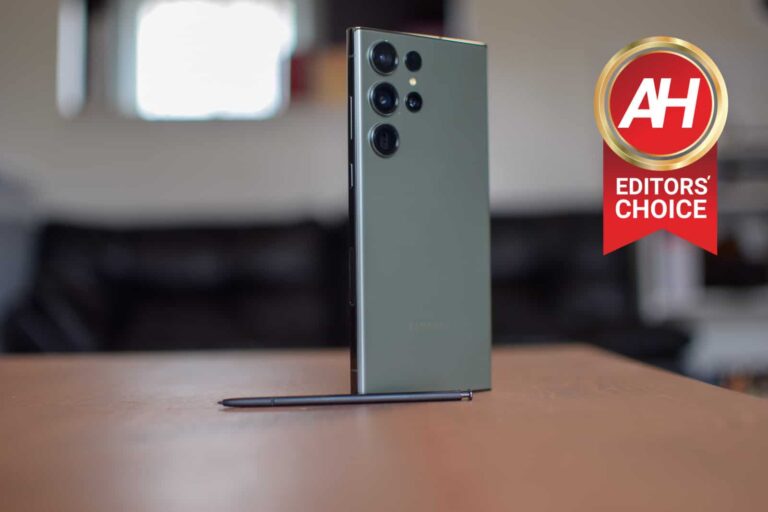
Samsung’s Galaxy S series of smartphones are so mature these days, that the differences from one year to the next are pretty small. This year, if you compare the Galaxy S22 Ultra and the Galaxy S23 Ultra on a spec sheet, you won’t see much that’s different. In fact, we’ve already done a comparison of these two, which you can see here.
There’s basically four main differences between the two. The newer processor, the newer camera sensor that’s 200MP now, larger starting storage and a 1TB model being available, and the front-facing sensor. Which, in a nutshell, isn’t a big reason to upgrade. However, all of these things make small changes that lead up to a larger upgrade, in the Galaxy S23 Ultra. Let’s talk about it all in our full review here.
Samsung Galaxy S23 Ultra Review: Design and Hardware
When it comes to the design, the Galaxy S23 Ultra didn’t change a whole lot either. Though one thing that surprised me, when I received my unit was, that the sides are flat. With the S22 Ultra, the left and right sides were curved, while the top and bottom were flat. Giving a Galaxy Note-type of vibe. Which, this replaced the Note, so that made sense. But now, the Galaxy S23 Ultra has a flat side on all four sides.
Basically, the left and right sides have the back and front curving, and then into a flat side. It’s not something I’ve seen before, but I really like it actually. At first, I wasn’t sure if I’d like it. The iPhone has flat sides, and I don’t really like it. But on the Galaxy S23 Ultra, it does make it easier to hold onto. And that’s a big deal.
The Galaxy S23 Ultra does still use Armor Aluminum for the frame, and then Gorilla Glass Victus 2 for the front and back. So it is very unlikely to shatter, and it does feel pretty premium in the hand. Though, you’ll still want to get a case for this one. Samsung has recently adopted a more of a matte finish for its smartphones, and I’m here for it. The green model that we have, still picks up fingerprints, but nowhere near as bad as a shiny backside would have gotten.
On the bottom of the phone, you’ll still find the usual ports like the USB-C port, the microphone and speaker, as well as the S Pen. The SIM card slot is also down there. Which, yes, like with the Galaxy S22 Ultra, the S Pen is included here. On the right side you’ll find the volume rocker and power button. The right and top are pretty clean here, really only having antenna bands and a microphone hole.
A brilliant display
If there’s one thing that Samsung does well, you’d have to admit that it is displays. Samsung sells its displays to almost every smartphone maker out there. Of course, Samsung does keep the new stuff for itself. So that it’s phones can have the best. And every year, Samsung puts out the best smartphone display possible. And this isn’t just me saying this, there’s proof of it. DisplayMate usually gives it the highest score ever.
So what does that mean for everyday people that are just buying this phone to use TikTok on the toilet, make some calls, send some texts, etc? Well, it’s going to look the best. The colors are super accurate, and the saturation is quite nice too.
But let’s talk about brightness. once again, the peak brightness here is 1,750nits. That’s quite bright, though the iPhone 14 Pro is still brighter at 2,000nits. But keep in mind that “peak” brightness really only lasts a few minutes. But in day to day usage, inside and out, the iPhone 14 Pro is still brighter in our experience. That’s not necessarily a bad thing. Both phones are still plenty bright, and you won’t have any issues trying to use your phone outside in direct sunlight.
Overall, this is definitely the best display you will find on any smartphone. At least until the Galaxy S24 comes out next year.
Samsung Galaxy S23 Ultra Review: Performance
There’s big news this year on the performance front. Typically, Samsung will use its own Exynos chipset and the latest Snapdragon chipset on the Galaxy S lineup. Typically, Europe and some Asian countries will get stuck with the Exynos chipset, which is just not a good experience at all. So this year, Samsung has gone all in on a Snapdragon chipset for all Galaxy S23 models around the world. But it’s not just any Snapdragon chipset, it’s the “Snapdragon 8 Gen 2 for Galaxy”. It’s basically the same as the regular Snapdragon 8 Gen 2, but it is overclocked a bit, and optimized more for the Galaxy S23 than other smartphones.
With the Snapdragon 8 Gen 2 for Galaxy, it’s being manufactured by TSMC. Instead of Samsung. Qualcomm made this change after the Snapdragon 8 Gen 1 last year, which is why we saw such a huge change from the Snapdragon 8 Gen 1 to the Snapdragon 8+ Gen 1 last year. And now, we’re seeing that in the Galaxy S23 Ultra. All of the attributes from the Snapdragon 8+ Gen 1 are here. Like better performance, better power efficiency and some pretty insane battery life.
On the performance front, it’s pretty good. Even while playing some games, the phone didn’t get very warm at all. Now, while playing some more resource intensive games like Genshin Impact, it does get warm, but not overly hot. That means that the Galaxy S23 Ultra is able to dissipate heat pretty efficiently.
The model we have here, has 12GB of RAM inside. And Samsung has gotten a lot better at handling apps in the background. It’s pretty rare that re-opening an app hours later results in the app needing to re-load. That wasn’t always the case. So the extra RAM does help here. But we can’t say yet if getting the 12GB model is better than just the 8GB model. But if you pre-order, you’ll get the 12GB model for the same price as the 8GB.
Samsung Galaxy S23 Ultra Review: Battery life and charging
The achilles heel for the Galaxy S22 Ultra last year, was battery life. Looking back at my review last year, I was typically hitting 6-7 hours of screen on time with that one. I had high hopes for the Galaxy S23 Ultra, after knowing how great the battery life was on Snapdragon 8+ Gen 1 phones last year, like the Zenfone 9, Galaxy Z Flip 4 and the OnePlus 10T. And Samsung hit my expectations pretty nicely.
I was able to hit 9-10 hours on a charge pretty easily on the Galaxy S23 Ultra. For my testing, I kept it on the default settings. That means FHD+ resolution, and Adaptive 120Hz refresh rate. Adaptive Battery was on, and the performance profile was on standard. Most people will keep it there anyways, so this is the best way to test it. I also used the phone like it was my daily driver. Using apps like Twitter, TikTok, Reddit, Amazon, YouTube and more. This was also mixed usage of WiFi and LTE/5G. And well, it performed really nicely.
I got above 9 hours twice, and I hit 7.5 hours on another day with about 24% left. So that could have definitely hit 9 hours as well. If I put this on light mode, or even just watch less video on the S23 Ultra, I’m sure it could hit 12-13 hours of screen on time. So battery life is solved here. To me, anything above 9 hours consistently, is great battery life.
Charging isn’t so great
So what about charging? Well, the good news here is, that with this great battery life, you won’t need to charge as often. But, the Galaxy S23 Ultra still charges fairly slow compared to the competition. It can charge at up to 45W wired and 10W wireless. Both of those are far behind competitors like OnePlus who is doing well over 100W wired and around 50W for wireless. Now, I’m sure that Samsung is being cautious here after what happened with the Galaxy Note 7. But I feel like they could bump this up to over 50W without any problems.
Thankfully, with this great battery life, you can just plug in your Galaxy S23 Ultra overnight and get a full charge.
Samsung Galaxy S23 Ultra Review: Software
As far as software goes, the Galaxy S23 Ultra comes out of the box with Android 13 and One UI 5.1. Both of which are the latest versions from Google and Samsung. One UI 5.1 is a nice update over One UI 5 that launched with Android 13 last fall. It brings in some pretty cool features like Bixby Text Call, which allows it to answer incoming calls for you. A lot like the Google Assistant can on the Pixel.
Samsung has also copied a few features from iOS. Like the focus modes from iOS, they are now on One UI 5.1. So you can set different focus modes, like one for sleeping, one for in meetings, and another for when you’re at the gym. These work really well, and it’s something that every smartphone needs to add. Another feature that Samsung copied is, stickers. So now, when you take a photo, you can long-press on a subject to lift that subject and turn it into a sticker. It’s another cool feature that more phones need to add.
Having said all of that, the software on the Galaxy S23 Ultra is pretty good. It runs quite nicely, and doesn’t lag at all. That’s also thanks to the 12GB of RAM and Snapdragon 8 Gen 2 for Galaxy that is included here.
Samsung Galaxy S23 Ultra Review: Camera
When it comes to reviewing the cameras on a new Samsung flagship, there’s quite a few things to test. The thing I hate the most, is testing the 100x Zoom. And that’s because, why would you ever need to use this? I can really only think of a few times where you’d use this. At a sporting event where you’re in the nosebleeds, or you’re far away from a sign or something and need to read it.
The 100x Zoom is indeed gotten better once again this year. But even outside in direct sunlight, it’s still going to look like a water color. Keep in mind that Samsung is not using the new 200MP camera for this. It’s the 10x telephoto camera, which is only a 10MP camera anyways. So if they up that to a higher-megapixel camera, that could definitely help with the way the pictures look.
The other zoom feature, which I’d use a lot more often, is 10x Zoom. Samsung has a dedicated 10MP sensor that is uses for this. It does 10x optical zoom, so as you can expect, this does come out looking pretty good. And it’s way better than cropping in on a main sensor. Here’s some pictures taken at 10x zoom.
Portrait mode is another big topic this year, and I’m quite surprised with it. The portrait mode on Samsung phones hasn’t always been great over the years. Especially on non-humans, like pets. Whereas, the Pixel can do portrait mode on virtually any subject. This year, that has changed though. Portrait mode is really good, and does a fantastic job of cutting out the subject too. That’s not something we’re used to seeing from Samsung.
Finally, that 200MP camera. How good is it? I’ve been skeptical of this new 200-megapixel sensor, since it was announced. That’s because, I remember using the first 108-megapixel sensor on the Galaxy S20 Ultra a few years ago, and it was not good. It had trouble focusing, the shutter was super slow, among other things. But that’s not a problem on the 200-megapixel sensor here. It’s pretty quick, there’s a slight stutter in the shutter, but it’s not a dealbreaker.
Now, how does the 200MP pictures compare to the pixel-binned 12.5MP pictures from the S23 Ultra? Samsung lets you take photos in the regular 12.5MP size, or you can do 50MP and 200MP size photos. With the 50MP, it’s pixel binning four megapixels into one megapixel. Versus pixel binning 16 megapixels into one for the 12.5-megapixel image. The main thing I’ve noticed between the three, is that 50MP and 200MP offers more bokeh, especially on photos with small objects in them. While the 12.5MP images may have little to no bokeh included.
Basically, it’s nice to have the ability to shoot in 200MP, but it’s not needed. If you really want more detail, I’d leave it on 50MP. You’ll get almost the same detail and bokeh, with smaller file sizes. 200MP pictures can have file sizes from 20-50MB, and that’s not even with RAW being used. While 50MP photos are usually closer to 10-20MB, and of course 12.5MP photos are even smaller at around 3-5MB in size.
Here’s the rest of the images taken with the Galaxy S23 Ultra in our review.
Samsung Galaxy S23 Ultra Review: Wrap Up
To be honest, I’m not a big Samsung fan. I’m more of a Pixel person than a Galaxy. But the Galaxy S23 Ultra has me wondering if should replace my Pixel 7 Pro? The Galaxy S23 Ultra does almost everything right. The only issue I have with it, is the size. I’d prefer a smaller phone, but then the display on this one is just so good, it’s hard not to use it. And the camera is almost better than what Google has in the Pixel. Google is really going to need to step it up this year with the Pixel 8, if it wants to keep the lead.
Samsung made a lot of incremental changes this year to the Galaxy S23 Ultra. Now if you add up those incremental changes, you’ll find that the Galaxy S23 Ultra is a lot bigger of an upgrade than you probably thought it’d be.
You should buy the Galaxy S23 Ultra if:
You have a Galaxy S21 or older smartphone.
You want the latest and greatest.
You want/need a phone with an S Pen.
You need a phone with amazing battery life
You need one of the best smartphone cameras on the market.
The U.S. Cybersecurity & Infrastructure Security Agency (CISA) has issued a new advisory regarding cybersecurity. This advisory details recent observations of TTPs used in North Korean ransomware operations.
These operations have targeted public health and other critical infrastructure sectors, highlighting the ongoing threat posed by the malicious actors.
Several agencies have compiled this report on the matter, and the agencies involved can be found here:-
NSA
FBI
CISA
U.S
HHS
The Republic of Korea National Intelligence Service and Defense Security Agency
It is believed that the funds extorted in this manner have been used to support the National Objectives and Priorities of the North Korean Government.
According to the United States Cybersecurity & Infrastructure Security Agency (CISA), North Korean hackers have not only relied on privately-developed ransomware to attack healthcare systems in South Korea and the United States but also utilized about a dozen different strains of file-encrypting malware.
This information serves as a wake-up call for organizations in the healthcare sector to step up their cybersecurity measures and be aware of the evolving tactics used by these malicious actors.
Hackers Targeting Healthcare
North Korean threat actors have developed a methodology for acquiring the necessary infrastructure for conducting cyber attacks. This is achieved by creating fake personas and accounts, which they then use to obtain cryptocurrency through illegal means.
They often rely on foreign intermediaries who can help them conceal the trail of money they have made.
Cybercriminals have found ways to conceal their true origin and location when carrying out hacking activities. They do this by using virtual private networks (VPNs) and virtual private servers (VPSs) or by routing their activities through third-party IP addresses.
This makes it difficult for investigators and security personnel to trace the source of the attack and identify the individuals or groups behind it.
The process of compromising a target system or network involves taking advantage of various vulnerabilities in order to gain access and increase the level of privileges. By exploiting these vulnerabilities, attackers can gain entry into a target network and carry out their malicious activities.
Flaws exploited:-
Once they have successfully gained initial access to a target network, North Korean hackers conduct extensive reconnaissance and lateral movement to gather information and expand their presence within the network. This is accomplished by executing shell commands and deploying additional payloads.
Observable TTPs
Here below we have mentioned all the TTPs that are observed by the security analysts:-
Acquire Infrastructure
Obfuscate Identity
Purchase VPNs
Purchase VPSs
Gain Access
Move Laterally and Discovery
Employ Various Ransomware Tools
Demand Ransom in Cryptocurrency
Mitigations
Here below we have mentioned all the mitigations recommended by the security experts:-
It is important to authenticate and encrypt connections in order to limit access to data.
On internal systems, use standard user accounts instead of administrative accounts in accordance with the principle of least privilege.
Disable network device management interfaces that are weak or unnecessary.
Through the use of cryptography, protect the stored data by masking and rendering unreadable the PAN value when displayed.
Personally identifiable information should be collected, stored, and processed in a manner that is secure.
A multilayer network segmentation strategy should be implemented and enforced.
Monitor IoT devices to determine whether there is a compromise that is causing them to behave erratically as a result.
Backups should be maintained on a regular basis, and the ability to restore the data should be tested regularly.
An incident response and communications plan for cyber incidents should be developed, maintained, and executed.
The first thing you should do is make sure the operating system, software, and firmware are updated as soon as they are available.
Secure and monitor RDP, or any other potentially risky service that you use.
Educate your users on the risks of phishing and implement phishing exercises for them.
Make sure that as many services as possible require phishing-resistant MFA
Always use strong and unique passwords.
For software to be installed, administrator credentials must be provided.
Make sure that any user account with elevated or administrative privileges is being audited.
All hosts should be equipped with antivirus and antimalware software that is regularly updated.
Ensure that you are using a secure network at all times.
If you receive emails from outside the organization, consider adding a banner to the email.
Take advantage of CISA’s Automated Indicator Sharing (AIS) program, which is being offered at no cost to all participants.
The decentralized networks Tor and I2P suffered numerous DDoS attacks, causing users to face slow browsing. The news received confirmation after Tor officially disclosed the issue following back-to-back user complaints. While they’re addressing the matter, the issue may persist as the attacks keep hitting the networks at intervals.
Tor And I2P Faced DDoS Attacks
Tor and I2P users are persistently bearing slow browsing speeds. The problem affected dark web users globally, causing trouble for privacy freaks.
While it remained an issue, Tor officials have now confirmed suffering DDoS attacks numerous times over the past few months. According to a recent post from the Executive Director of the Tor Project, Isabela Dias Fernandes, confirmed multiple attacks over the past 7 months.
For at least 7 months, several different types of ongoing denial of service (DoS) attacks have affected the Tor network. At some points, the attacks impacted the network severely enough that users could not load pages or access onion services.
Fernandes explained that Tor officials have been working hard to mitigate the issues. But the attacks keep repeatedly happening, with a different pattern each time. Perhaps, that’s why the attackers keep succeeding in disrupting Tor’s connectivity.
We have been working hard to mitigate the impacts and defend the network from these attacks. The methods and targets of these attacks have changed over time and we are adapting as these attacks continue.
For now, Tor hasn’t successfully identified the threat actor(s) behind these attempts and their possible intentions. Nonetheless, they will continue working on strengthening the Tor network.
Alongside Tor, the other popular network I2P is also facing similar threats, as confirmed via an announcement on I2P’s subreddit.
As revealed, the network is facing DDoS attacks for the past few days (unlike the months-long attempts against Tor). The attackers keep flooding the network with floodfill routers, ultimately creating a widespread denial of service. I2P has admitted the poor performance and connectivity issues that trouble its users.
Again, the exact identity of the attackers behind these attacks is unknown. Nor is it confirmed whether the two networks had been targeted by the same threat actor(s).
While the officials keep working on addressing the matter, users might have to bear with such issues meanwhile.