Google has begun testing Android 15’s automatic theft detection features, starting from Brazil. Smartphone theft is one of the major concerns in many countries including Brazil where approx. 2 phones get stolen per minute. That’s why Google tapped into Brazil as its initial ground for testing the automatic theft detection features it announced at the I/O conference last month.
Google begins testing of Android 15’s automatic theft detection feature in Brazil
The automatic anti-theft features fall under the umbrella of larger privacy and security improvements Google is planning with Android 15. Not to forget, there are some other features too like a password-locked vault which Google calls “private space.” The name itself speaks for its function, users can use it to keep their sensitive data safe and secure. However, the theft detection feature for Android that has undergone testing in Brazil as a part of Android 15 is a bit different.
The anti-theft detection feature has its Google-version name, the company terms it as “Theft Detection Lock.” So, you must be wondering what goes behind this security feature that tackles smartphone theft, right? First of all, the automatic theft detection feature uses Google’s AI. Using artificial intelligence, the new anti-theft feature detects if someone has snatched your phone from your hand. And, if the feature determines the movement associated with theft, it will immediately lock the device’s screen.
Different sensors in your Android smartphone help determine if there’s any theft attempt
One must be wondering how the automatic theft detection feature can detect all the movement and stuff. Well, all that is possible, thanks to different sensors in your Android smartphone like a gyroscope and accelerometer. Based on the changes in the smartphone’s positioning and motions, Google’s algorithm can predict that the device has been snatched.
That said, there’s another possibility to it as well. In addition to relying upon smartphone sensors, the feature can also detect theft attempts if someone tries to use the device in a different network altogether. Lastly, the new anti-theft feature is available for beta testing in Brazil.
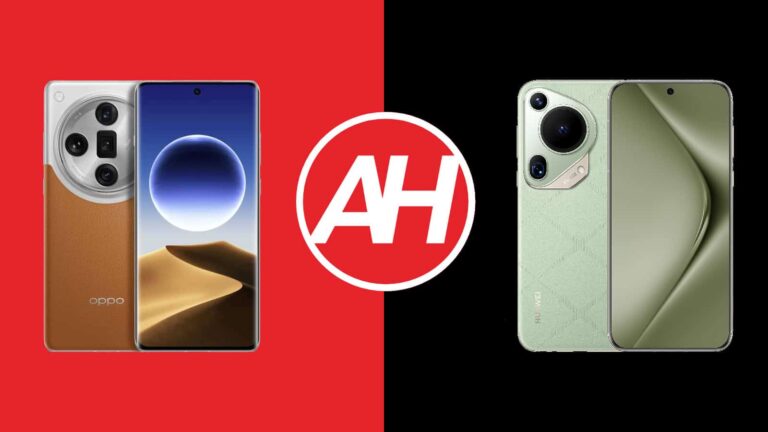
Both OPPO and Huawei launched very powerful flagship smartphones this year. We’re here to compare those phones, the OPPO Find X7 Ultra vs Huawei Pura 70 Ultra. OPPO’s handset arrived back in January, while Huawei’s launched in April. Do note that only Huawei’s phone comes in a global variant, the OPPO Find X7 Ultra does not. On the flip side, the Huawei Pura 70 Ultra does come with support for Google Play Services, it has its own services. Installing the Google Play Store on the OPPO Find X7 Ultra is easy, and once you do that you do get full support for Google services. Just in case you’re planning to import it.
Having said that, we’ll first list the specs of both smartphones and will then compare them across a number of other categories. We’ll check out the designs of both smartphones, their displays, performance, battery life, camera performance, and audio output. These two phones are both camera-focused, and both are quite powerful. They’re also very different in comparison, though. Let’s get to it!
Specs
OPPO Find X7 Ultra vs Huawei Pura 70 Ultra, respectively
OPPO Find X7 Ultra vs Huawei Pura 70 Ultra: Design
The design differences between these two phones are immediately noticeable. Both of these phones have a centered display camera hole at the top of their displays. The OPPO Find X7 Ultra comes with a curved display, while the Huawei Pura 70 Ultra has a flat display with quad-curved glass on top of it. Both devices do have very thin bezels around their displays. Their physical buttons sit on the right-hand side, while the OPPO Find X7 Ultra also has an alert slider, but it’s located on the left side.
Now, both of these devices do come with a frame made out of metal. Huawei’s handset has vegan leather aka eco-leather on the back, while OPPO’s combines eco-leather with glass. The top third of the phone’s backplate is covered by glass, while the rest is taken by eco-leather. The OPPO Find X7 Ultra has a large camera oreo on the back, and it’s centered. The Huawei Pura 70 Ultra has a camera island in the top-left corner. Its camera island sure does look unique.
The OPPO Find X7 Ultra’s backplate curves towards the sides, proportionally to its display on the front. The Huawei Pura 70 Ultra’s back side is quad-curved, proportionally to its display. The OPPO Find X7 Ultra is the more slippery one of the two phones. Not by much, but it’s worth noting. The Huawei Pura 70 Ultra’s quad-curved design actually provides plenty of grip, in combination with vegan leather.
The OPPO Find X7 Ultra is slightly taller and wider (barely), while also being a bit thicker than Huawei’s phone. The two devices are almost identical in terms of weight, as the difference is only 5 grams. The Huawei Pura 70 Ultra is slightly heavier. Both phones do come with an IP68 certification for water and dust resistance.
OPPO Find X7 Ultra vs Huawei Pura 70 Ultra: Display
The OPPO Find X7 Ultra includes a 6.82-inch QHD+ (3168 x 1440) LTPO AMOLED display. That panel is curved, and it can project up to 1 billion colors. Dolby Vision and HDR10+ are also supported, while this display has an adaptive 120Hz refresh rate. The theoretical peak brightness of this display is 4,500 nits, though you’ll never be able to go that high. The screen-to-body ratio is around 90%, while the Gorilla Glass Victus 2 protects this panel.
OPPO Find X7 Ultra
The Huawei Pura 70 Ultra, on the other hand, has a 6.8-inch 2844 x 1260 LTPO OLED panel. That display is flat. It can project up to 1 billion colors, and HDR is supported. It has an adaptive refresh rate of up to 120Hz. The peak brightness of this panel is 2,500 nits. The screen-to-body ratio is around 89%. The Huawei Pura 70 Ultra’s display is protected by the Kunlun glass (Basalt-tempered).
Both of these displays are outstanding. They’re not only well-protected, but they are also vivid and have great viewing angles. The blacks are deep, while both panels are more than sharp enough. The touch response is good on both sides, while both panels do get more than bright enough regardless of where you use them. Both devices also offer high-frequency PWM dimming to protect your eyes. You’ll be fine regardless of which panel you end up using, they’re both great.
OPPO Find X7 Ultra vs Huawei Pura 70 Ultra: Performance
OPPO’s flagship is fueled by the Snapdragon 8 Gen 3 processor. That is a 4nm chip. OPPO included up to 16GB of LPDDR5X RAM inside the device, and it’s also using UFS 4.0 flash storage. The Huawei Pura 70 Ultra, on the flip side, is fueled by the Kirin 9010 chip. That is Huawei’s 7nm processor made by SMIC. The phone includes 16GB of LPDDR5X RAM, and UFS 4.0 flash storage is also included.
The Huawei Pura 70 Ultra does come with an inferior chip. The main reason for that is the US ban. Still, the phone is really well-optimized and works really well with that processor. In fact, you wouldn’t even be able to tell that it has a noticeably inferior chip based on everyday performance. Both smartphones offer great performance, they can handle anything you throw at them. They’re great for browsing, multimedia consumption, multitasking, image processing, and anything else you can think of.
You’ll notice the difference in the gaming department. Especially if you end up playing a really demanding game. Games that are not that demanding will run fine on both phones. Those demanding ones will definitely work better on the OPPO Find X7 Ultra, mainly due to its processor. For everything else, both will do just fine.
OPPO Find X7 Ultra vs Huawei Pura 70 Ultra: Battery
A 5,000mAh battery sits inside the OPPO Find X7 Ultra. The Huawei Pura 70 Ultra, on the other hand, includes a 5,200mAh unit. You’ll be glad to know that both of these phones do offer really good battery life. In our usage, the Huawei Pura 70 Ultra did do better, though, and the same goes for our battery drain test. The OPPO Find X7 Ultra was not far behind, though, as it also provided some great numbers.
We were able to cross the 7-hour screen-on-time mark on both smartphones without much trouble. Do note that gaming was not a part of our usage on those days, but we did not baby either phone. Both of them also held their own while being connected to mobile data. Both of them also had charge left in the tank at that point, usually close to 20%. Well, the Huawei Pura 70 Ultra did have a bit more. Your mileage may vary, though, of course. In fact, it probably will. There are a ton of factors when it comes to battery life, so… keep that in mind.
The OPPO Find X7 Ultra supports 100W wired, 50W wireless, and 10W reverse wireless charging. The Huawei Pura 70 Ultra, on the other hand, supports 100W wired, 80W wireless, 20W reverse wireless, and 18W reverse wired charging. OPPO’s flagship is not easy to beat in the charging department, but that’s exactly what the Huawei Pura 70 Ultra did, technically. It offers slightly faster wired and wireless charging, while it’s also more versatile when it comes to charging. Both smartphones do come with a charger included in the retail box.
OPPO Find X7 Ultra vs Huawei Pura 70 Ultra: Cameras
You’ll find four cameras on the back of the OPPO Find X7 Ultra. The Huawei Pura 70 Ultra has three of them. A 50-megapixel main camera is backed by a 50-megapixel ultrawide unit (123-degree FoV) on the Find X7 Ultra. A 50-megapixel periscope telephoto camera (2.8x optical zoom) is also included, as is a second 50-megapixel periscope telephoto unit (6x optical zoom). Hasselblad is also a part of the package here, and it did a fine job tuning the colors.
Huawei Pura 70 Ultra
The Huawei Pura 70 Ultra comes with a 50-megapixel main camera (variable aperture, sensor-shift OIS, retractable lens), and a 40-megapixel ultrawide unit. A 50-megapixel periscope telephoto camera (3.5x optical zoom, macro) is also included. Both of these smartphones offer outstanding camera performance, and both are amongst the best camera smartphones available in the market.
OPPO’s flagship tends to provide a bit more contrasty shots, while the Huawei Pura 70 Ultra does its best to keep things closer to real life. It does add a warm tone to images. Images from both smartphones do end up looking vivid, though. They both do a fantastic job with demanding HDR shorts. They also shine in low light, as they manage to balance out images while keeping noise in check. Their secondary cameras keep up when it comes to color science. We did prefer the performance of OPPO’s ultrawide shooter in low light, though. Generally, though, these two phones both did a fantastic job and are basically on par in terms of camera performance.
Audio
You’ll find stereo speakers on both of these phones. The thing is, the ones on the OPPO Find X7 Ultra are noticeably louder. With that being said, both sets are well-balanced and offer quality sound output.
What you won’t find on either phone is an audio jack. You can always utilize their Type-C ports for wired audio connections, however. If you prefer to go wireless, however, the OPPO Find X7 Ultra supports Bluetooth 5.4, while the Huawei Pura 70 Ultra comes with Bluetooth 5.2 support.
HTC is readying the reveal of its next phone, which the company is slated to announce officially on June 12, but ahead of the event tomorrow the HTC U24 Pro design appears to have leaked. In addition to the design, all of the specs appear to be available as well.
HTC teased the coming of a new ‘U’ phone back on June 7. At the time it didn’t confirm what the model was. The company did however tease it with an image that said “All 4 U“. The key takeaway from that teaser was that the second “L” in the word ‘all’ and the “4” were squished together and they were both a separate color from the rest of the phrase. Hinting very obviously that this upcoming phone reveal is for the U24 Pro.
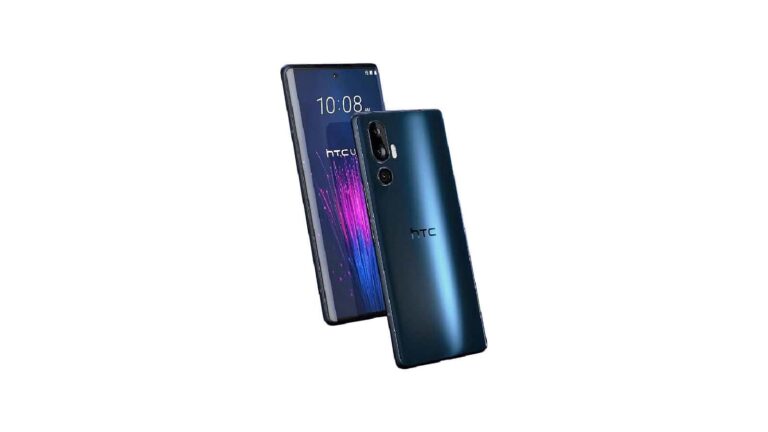
The HTC U24 Pro leak shows the phone design in a brilliant blue color
There are a few things to note about this phone’s design. It comes in a stunning blue color, it has curved glass for the display, and it’s got three cameras on the back. Some of those things may or may not make the phone stick out for you. What’s more intriguing is the pairing of the design and the specs.
GSMArena has listed what appear to be the full specifications (spotted by DroidLife). According to the specs listing, the HTC U24 Pro comes with a 6.8-inch display with a resolution of 1080 x 2400. It has 256GB of storage and comes with 12GB of RAM as well as a 5,000mAh battery. Without going any further, the HTC U24 Pro will already likely sound appealing to some based on these factors. But it gets better.
The display is also an OLED panel and it has a 120Hz refresh rate. Which means good things for both gaming and general use. Because scrolling around the phone should appear more fluid with little to no snags. As for the processor, it’s listed as coming with a Snapdragon 7 Gen 3. That’s no slouch of a chipset. It’s not a flagship mobile platform but the phone should still perform just fine.
The cameras sound somewhat impressive too. With the triple camera arrangement on the back, HTC went with a 50MP main camera in pairing with a 12MP telephoto lens that has 2x optical zoom, and an 8MP ultrawide camera. On the front, it’s using a 32MP selfie camera.
The phone will cost “about €450”
It was already rumored that HTC wasn’t bringing this phone to the US, and that may hold true. There’s no mention of availability in the specs listing but there is a brief mention of the price. It’ll cost about €450 which means it should be launching in Europe sometime in the near future. With HTC planning to unveil the phone tomorrow, chances are availability and official pricing will be announced at the same time.
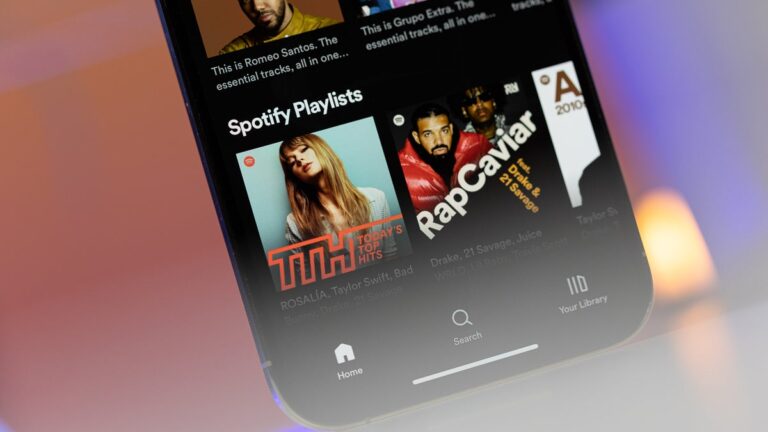
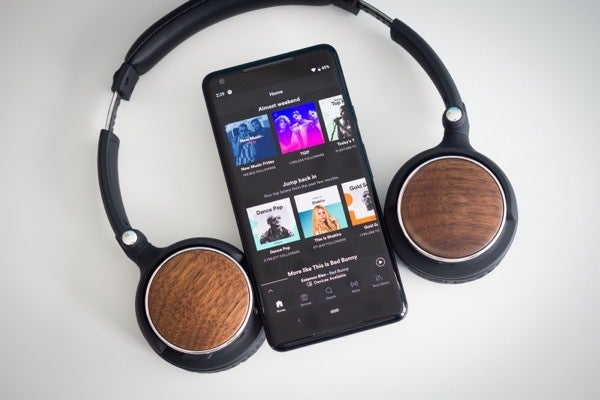
For months, it has been rumored that Spotify will launch a new plan with superior audio quality this year. Now, a new leak reveals the possible price of Spotify’s Hi-Fi tier, and it looks like it won’t be cheap.
Spotify had already officially confirmed that they would launch a Hi-Fi plan. However, the company said it in 2021, so it’s been quite some time. It is not known why the arrival of the new plan has taken so long. But it seems that 2024 will be the year when the service will receive the long-awaited tier. That said, according to a recent leak, it would cost at least $5 extra over your current plan.
Enjoying Hi-Fi audio on Spotify would cost $16–$17/month in the US
According to the Bloomberg report, Spotify’s Hi-Fi plan would actually be an add-on for the premium plans. This means that the final price you will pay depends on the base plan you have. The add-on in question would cost around 40% more than your current paid tier. The percentage may vary slightly due to price differences between different regions.
Currently, in the United States, Spotify Premium subscribers pay $11.99. So, if the leak holds true, enjoying lossless audio quality would have a monthly cost of $16–$17. Taking into account the current market, the offer does not seem too attractive on paper. There are services like Amazon Music ($9,99), Apple Music ($10,99), and Tidal ($10,99) that include Hi-Fi audio as an integral part of their premium plans.
Hi-Fi add-on would include generative AI features for playlists
Spotify would seek to justify the potentially high price of its Hi-Fi plan with AI-powered playlist creation tools. The company has already been experimenting with the Spotify DJ feature. According to the report, paying for the Hi-Fi add-on would also allow you to generate playlists or mixes for specific activities or dates. Everything would be generated according to your specific musical tastes.
The company would also seek to use the social section as a selling point. Every year, millions of users around the world share their Spotify Wrapped summary on social networks. The company would take advantage of this to make moves in favor of its Hi-Fi plan. Be that as it may, price can be a fundamental factor in its success or failure. Having a cost well above the vast existing competition would be a risky move.
It almost felt as though Apple Music wasn’t invited to WWDC yesterday, and the app may look the same following the update to iOS 18. However, Apple Music will have a couple of new features that will kick in once you install iOS 18 on your iPhone. One new feature, called Music Haptics, uses the Taptic Engine on an iPhone to produce taps and vibrations that will match the song being played on Apple Music.
This new feature is actually more important than you might think since it will help those who are deaf or have difficulty hearing “feel the music.” And that is why the feature will be found under the accessibility settings in iOS 18. After installing the latter, go to Settings > Accessibility > Music Haptics and toggle on the feature. You’ll also be able to test out Music Haptics.
The other new feature allows those without an Apple Music subscription to have control over the music heard on a SharePlay session. Instead of requiring SharePlay users to have an Apple Music subscription, users can share control of music sourced from a HomePod, Apple TV, or any Bluetooth-enabled speaker. As Apple itself notes on its iOS 18 Services preview page, “Participants do not need to have an Apple Music subscription to contribute to what’s playing.”
Create custom walking routes in Apple Maps with iOS 18
What changes are coming to the always-improving Apple Maps app in iOS 18? Suppose we told you that hikes and custom walking maps will be available. According to Apple, users will be able to browse through thousands of hikes found in U.S. national parks. These can be filtered by length, elevation, and route type and can be saved for those times when you’re offline. With just a few taps, users will be able to create a custom walking route whether it’s a local exercise route or a full-day walking tour in a city you’ve never been to before.
With the all-new Places Library, you can save your national park hikes, custom walking routes, and other places and you’ll be able to add personal notes about each one. This way you can remind yourself about certain aspects of these routes that might be important to remember. And helping Apple Maps create these hikes and walking maps will be the app’s new ability to show topographic maps. These maps show the ups and downs of an area’s terrain in 3D shown on a 2D map.
Eddy Cue, Apple’s senior vice president of Services, said about Apple iPhone users, “We’re excited to give them even more to love about our services, like the ability to explore national parks with hikes in Apple Maps…and enjoy music with loved ones through SharePlay in Apple Music.”
As you know, the iOS 18 developer beta is available now and the public beta will be available next month. The stable final version of iOS 18 will be available this September.
Spotify may finally be making good on its promise to deliver a high-fidelity audio experience, according to recent reports. After years of anticipation and speculation, a Bloomberg insider has shed light on the company’s plans for this premium tier, suggesting it will be offered as an add-on to existing subscriptions for an additional $5 per month.This news comes on the heels of Spotify’s recent price hikes, which saw the individual plan increase to $10.99 per month. With the HiFi add-on, users could potentially be paying $15.99 per month for access to higher quality audio. This is a more reasonable price point than some had anticipated, with speculation previously suggesting a potential cost of around $20. It’s possible that the recent price increase was a strategic move to make the HiFi tier seem more palatable to consumers.In addition to enhanced audio quality, the new tier is rumored to include new playlist creation features. Users will reportedly be able to generate custom playlists based on specific dates, events, or activities, and the algorithm will even attempt to predict user preferences and create playlists accordingly.
Image credit: PhoneArena
While there is still no official release date for the HiFi tier, these rumors hint that Spotify is finally ready to deliver on its long-standing promise. The company has been teasing the launch of lossless audio since 2021, and it seems that the wait may soon be over for audiophiles and music enthusiasts.
The addition of a HiFi tier could be a significant move for Spotify, potentially attracting new users and retaining existing ones who value high-quality audio. It will also put the company in direct competition with other streaming services that already offer lossless audio, such as Apple Music and Tidal. Only time will tell how successful this new tier will be, but for now, it’s safe to say that the anticipation is building among users who are eager to experience their favorite music in a whole new way.
Apple just held quite possibly its biggest WWDC to date, and Apple users are all waiting to get their hands on the new AI tools coming to iOS. However, one billionaire is not happy about this. Elon Musk threatened an Apple ban throughout his companies because of iOS 18’s ChatGPT integration.
Before hopping in, if you want to know more about WWDC 2024, you can check out our coverage. The company announced new goodies coming to iOS 18 along with additions to iPadOS 18. Also, if you want to know how to install the WatchOS 11 beta, we have a guide.
Elon Musk is not happy about Apple’s AI
Soon after Apple brought its AI tools, the internet quickly became flooded with comments about them. Many of them were positive and hopeful, but not everyone was impressed. Elon Musk voiced his anger at the company in a couple of tweets. He was not happy with the company partnering with OpenAI to implement ChatGPT into iOS.
To catch you up, iOS 18’s AI tools are powered by its own models and can also use ChatGPT when needed. Apple AI couldn’t quite develop large-scale models in time, as it was slow to jump on the AI train. So, it needed some help. The phone performs most of its AI on-device, but it will contact GPT-4o when it needs a larger language model.
Well, Musk does not like the fact that the company chose to do this. “Apple has no clue what’s actually going on once they hand your data over to OpenAI.” He’s referring to the fact that OpenAI could have access to users’ data when they need to contact the cloud. It harkens back to the age-old question “What happens to my data when I turn it over to the cloud?”
He also threw more shade at Apple by saying that it’s “patently absurd that Apple isn’t smart enough to make their own AI, yet is somehow capable of ensuring that OpenAI will protect your security & privacy!” Right now, we don’t know just how OpenAI manages data. Obviously, companies like Meta, Google, and Amazon are gluttonous for your data. So, using ANY of their products turns over your entire identity. However, we don’t know how OpenAI is.
What we do know is that the company does have a bit of a history. It’s been involved in a few security breaches. So, Musk has a point there.
Elon Musk could ban Apple products from his companies
In a separate post, Musk said that if Apple implements OpenAI’s models on the OS level, Apple products could be banned from all of his companies. The billionaire owns several companies including X, Tesla, Space X, The Boring Company, etc. So, no one within those companies would be able to use their iPhones.
That could be a bad move on his part, as iPhones are…. kinda popular. We love Android devices, but we have to admit that iPhone users make up a significant portion of any group of people. Also, any company can benefit from having a diverse collection of tech users from both sides of the OS pond. Banning Apple devices could have a negative effect on these businesses.
Elon Musk needs to think about this before making this drastic change. It will have a sweeping effect on the people working at these companies. Many jobs are already at stake because of AI and the poor economic conditions. Workers don’t need any more reason to fear for their jobs.
But, this might just be because of bad blood
As many people may not know, Elon Musk had some deep ties to OpenAI; he was a co-founder. He cut ties with the company years ago, but he has since sparked a squabble with the company. Just a few months ago, Elon moved to sue OpenAI because he feels that its current trajectory clashes with its original vision.
OpenAI was founded on the dream of creating AI for humanity, not profit. However, the company has since moved over to a for-profit model. Not only that but it’s become a bit of an AI powerhouse for Microsoft. Elon feels that OpenAI has become a for-profit subsidiary of Microsoft. He’s suing the company to force it to make its source code public.
During the case, we got some pretty damning evidence pointing to Elon himself wanting to push the company to become a subsidiary of Tesla. Also, an email confirmed that Musk also wanted to keep OpenAI’s source code behind closed doors. So, the messages point to some extreme hypocrisy on Musk’s part.
So, there’s a chance that Elon is making this decision because of his feud with the company. In any case, Musk’s opinions or Apple’s AI aren’t important in this matter. The workers’ jobs are important. Let’s hope that Musk and Apple can come to some sort of agreement that won’t lead to a rapid shake-up. Jobs are already at stake.
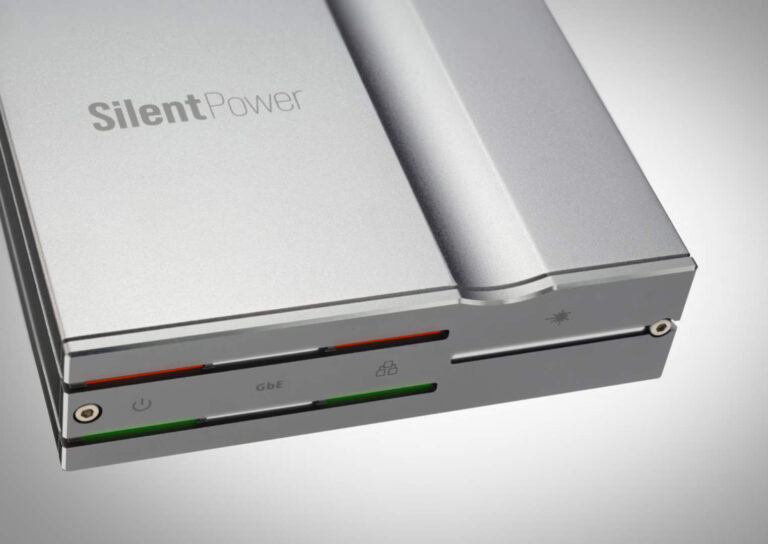
iFi is a brand that specializes in high-quality audio equipment like DACs and amplifiers. If you’re in the audio business, you’ve undoubtedly used some of its products. Today, iFi just announced a new product and an entire new sub-brand. iFi announced the LAN iPurifier Pro under its new brand named Silent Power.
Most of the time, we tend to think that the best way to get the highest-quality audio is to buy an expensive pair of headphones. However, there are more ways to get the best audio from your system. The fact of the matter is that, while streaming your music, you run the risk of introducing electrical noise into your sound. That can be distracting if you’re an audiophile. Having clear audio is always a good thing, so this is where iFi comes in with its new brand.
The brand is called Silent Power. As its name suggests, this is a brand that will bring equipment designed to reduce the noise in your audio system. If you’re a person who likes to get the most from their music, then you’ll want to give its products a look.
iFi introduces the LAN iPurifier Pro
The christening product from Silent Power is called the LAN iPurifier Pro. No, this is not a fancy-looking air purifier. Rather, it’s meant to purify the audio pushed through your network-connected audio setup.
Streaming music wirelessly can be a hassle, and noise only makes things worse. The LAN iPurifier Pro can fix that. It uses advanced optical galvanic isolation technology. This tech actually converts the LAN signal into an optical signal. Then it converts the signal back into a LAN signal. In doing this, the company can effectively isolate the electrical signals between input and output. The result is a much cleaner sound coming through your audio system. If you’re curious about some of the specs, you can check out the table below.
Are you looking forward to this device? You can pick it up for $299.99. Check out the link below to go to the official website.
It seems that YouTube is currently testing AI summaries in Shorts comments section too. The feature was originally available for long videos, helping to automatically organize comments according to topics.
From time to time, Google introduces experimental features to its services. These features are initially available to a limited audience, and are not always widely implemented. For example, last year, some users started receiving an AI-powered topic generator for comments in long videos. This feature basically analyzes the comments and organizes them into specific topics.
The feature allows you to know the main topics that people in the comments are discussing. It also helps creators know their viewers’ favorite topics, which is useful for making more engaging content. The option to filter comments by topics is placed between “Top” and “Newest.” However, the company has not yet implemented the feature en masse. That said, it seems that doesn’t mean it was scrapped. Now, YouTube is testing AI summaries for comments in Shorts.
AI summaries for YouTube comments now available in Shorts as a limited test
As with long videos, AI summaries for YouTube Shorts comments are available only through the mobile app. In addition, it is a test of very limited scope among selected users. Even those who receive the feature will not be able to use it in all Shorts. It will only be available in some Shorts with full comment sections.
AI summaries in YouTube video comments
Google allows channel owners where the option is available to delete individual comments within topic threads. The company also states that topics are generated only based on published comments. That is, those under review do not count for the system.
It is not known when YouTube will massively implement the AI summarizer. However, the fact that they are now testing the option in Shorts too is indicative that the plans are still on track. In any case, Google seems to be taking the implementation of functions related to AI-powered summaries more cautiously. The controversy surrounding the bizarre results that AI Overviews showed in Search generated a lot of noise. So, they will probably take their time before a massive rollout.
Apple just held its developer conference, revealing its developments in the field of AI and the new iOS 18 features. However, it seems that Samsung was not impressed and did not miss the opportunity to mock Apple’s announcements during this year’s WWDC.
In the smartphone segment, Android brands were the pioneers in terms of AI implementation. Google has been the main driver in the integration of AI-powered advanced features. The company then worked with Samsung to bring this experience to flagship Galaxy devices as well. Other big names, such as OPPO and Honor, are also working on it.
Samsung mocks Apple for its late AI implementation
That said, Apple officially announced its own suite of AI-powered features during WWDC24. The company used “Apple Intelligence” as its marketing name for its own AI experience. This does not seem to have pleased Samsung, who in a post in X wanted to remember that it arrived first with its Galaxy AI suite:
Adding “Apple” doesn’t make it new or groundbreaking. Welcome to AI 🍎.
— Samsung Mobile US (@SamsungMobileUS) June 10, 2024
“Apple Intelligence” offers multiple advanced possibilities to use in almost any app. However, there are also multiple features that Android users will find familiar. There are transcriptions and summaries in the Notes app, the removal of elements from photos, etc. So, Samsung makes fun of having offered features of this type before Apple.
In addition to AI features, Apple announced other more “common” ones related to customization. One of the advantages of Android over iOS has always been the customization aspect. However, Apple’s mobile OS has been catching up in recent years by integrating more possibilities. Now, with iOS 18, the company has taken another step forward.
For example, users of devices running iOS 18 will be able to freely change the placement of app icons on the home screen. While this seems pretty basic, it wasn’t even a possibility on iOS. Samsung also mocks this new feature presented at Apple’s WWDC, remembering that this has been possible on its devices for more than a decade:
Moving my icons wherever I want since 2010 … isn’t that cool?
— Samsung Mobile US (@SamsungMobileUS) June 10, 2024
There was also an unexpected guest at the party: Nothing. During WWDC, Apple announced that iOS 18 users will be able to change the color of their icons. After that, the company founded by Carl Pei posted a screenshot showing that Nothing OS allows you to apply a monochromatic tone to the icons. Additionally, Android’s Material Theming feature analyzes the colors of your wallpaper to offer you a selection of tones that you can apply to your icons.
However, to be fair, Apple allows you to freely choose a wider range of colors to theme the icons. That is, you are not limited to the base colors of your wallpaper. Will Android 15 bring a feature like this in the near future? Only time will tell. Also, some of Apple’s AI features are more advanced than what Samsung currently offers. That said, several will arrive “over the next year,” so Samsung has time to catch up.