Find My Device on empty will be exclusive to pricey phones

0
[ad_1]

Google recently launched its Find My Device network, and it rivals Apple’s Find My network. While this is definitely a boon for Android users, it’s not without its caveats. We got news that the Find My Device on empty feature will be tied to pricey phones.

Android devices have had a Find My Device function for years. However, the newly launched network is different. Rather than relying on your device being connected to the internet, the Find My Device network will use a network of Bluetooth-connected Android devices to help you pinpoint your device’s location. It’s a very convenient way of tracking down your lost phone.

In fact, popular tracker companies like Chipolo will make their trackers compatible with the network in the coming weeks. We can also expect devices from companies such as Motorola.

Find My Device on empty will be tied to pricey phones

Along with the news about this Network, Google also announced a great feature to Find My Device network. You will be able to locate your device even if it’s on 0% battery. We’re not quite sure how this technology works, but it seems likely that the phone will still be able to transmit a Bluetooth signal even when it cannot power on. When a phone is dead, there’s still a fair amount of juice in the battery. This battery juice powers the phone’s internal clock among other things.

So, if your Pixel 8 Pro is lost in a diner, and it was on 1% battery when you lost it, you don’t have to worry about it dying before you find it.  However, this feature is not without its caveats.

According to a new report, the Find My Device on empty feature will be available for your phone if it’s of the pricey category. Right now, the Pixel 8 and Pixel 8 Pro (Review) have the ability to ping other devices while powered off, but this is because of specialized hardware. So, this functionality remains inaccessible to most other phones.

But, this could change

The company plans to remedy this, as it said so in a statement. “We are working with other SoCs and OEMs on how we can bring the capability to find devices with dead batteries to additional premium Android devices,”  a Google representative told Android Authority. The unfortunate thing is that the representative mentioned “additional premium” Android devices. The term “premium” could be a bit fluid. However, we’re certain that most phones under $800 will not receive this functionality.

Being able to locate a device that is powered off is a very nifty feature, but it is not make or break for the Find My Device network. So, most people will be able to enjoy it regardless.


[ad_2]
Source link

Meta blurring nudity in Instagram DMs

0
[ad_1]

Meta will blur Instagram DMs (Direct Messages) that contain nudity. Additionally, the company will also warn teenagers about the ever-increasing danger of sextortion scams.

Meta rolls out nudity warnings and blurs DMs to protect teens

Instagram is getting a direly needed feature to protect teens from scams, exploitation, and abuse. Meta has announced that it will blur messages that have nude images.

Moreover, to protect minors on the platform from abuse and sexually exploitative scams, Meta will warn users about the dangers of exchanging sexually explicit images.

Meta is rolling out the two features globally. Users who are under 18 will have the security option turned on by default. It is not clear if Instagram will allow users who are below 18 years of age to turn the feature and warnings off. Meta will send out notifications encouraging adults to enable the prompts.

According to The Wall Street Journal, Meta has started automatically detecting nude photos in DMs. These features are aimed at protecting teens and adults from the growing menace of sextortion (sexual extortion), Meta claimed.

How will Meta recognize and blur nude images, and warn users?

Meta claims it is using “on-device machine learning” to analyze whether an image sent via Instagram’s direct messaging service contains nudity. In other words, all the processing and detection will take place on the device.

Meta has reportedly assured it won’t have access to these images. However, users can always report these images to the company.

With the setting and warnings enabled, Meta will present Instagram users, who receive nude photographs, a message telling them not to feel pressured to respond. In an announcement about the feature, Meta noted,

“This feature is designed not only to protect people from seeing unwanted nudity in their DMs but also to protect them from scammers who may send nude images to trick people into sending their (own) images in return.”

Instagram will also proactively try to prevent users who try to send a DM with a nude image. The notification will warn them about the dangers of sharing sensitive photos. Additionally, users who attempt to forward a nude image they’ve received will also receive a warning.


[ad_2]
Source link

Taxi Software Vendor Data Leak: 300K Passengers Data Exposed

0
[ad_1]

Around 300,000 taxi passengers’ personal information was left exposed on the internet, causing concern in the UK and Ireland.

Cybersecurity researcher Jeremiah Fowler discovered the breach involving Dublin-based taxi dispatch system provider iCabbi and subsequently reported it to vpnMentor.

Fowler stumbled upon a non-password-protected database containing a wealth of passengers’ personal information (PII), including names, phone numbers, and email addresses.

The breach impacted nearly 300,000 individuals whose records were exposed.

The database contained 22,745 records in .csv format, detailing contact information and user IDs of customers primarily located in the UK and Ireland.

Document
Stop Advanced Phishing Attack With AI

Trustifi’s Advanced threat protection prevents the widest spectrum of sophisticated attacks before they reach a user’s mailbox. Stopping 99% of phishing attacks missed by other email security solutions. .

The Exposed Data

The breach exposed various email addresses from various providers and private domains. The breakdown of the exposed email addresses includes 117,231 Gmail accounts, 65,060 Hotmail, 17,588 Yahoo, 18,099 iCloud, 12,798 Outlook, and 7,484 Live, among others.

The list also featured email addresses from significant media outlets such as the BBC and government agencies, including the NIH and HM Treasury, highlighting the breach’s potential ramifications.

Data Leak Sample

Upon discovering the breach, Fowler swiftly sent a responsible disclosure notice to iCabbi.

The company reacted promptly, restricting public access to the database the following day.

However, it remains unclear how long the data was exposed or if unauthorized parties accessed the non-password-protected database before the breach was contained.

iCabbi, known for its dispatch and fleet management technology, aims to modernize and manage taxi services, positioning itself as a competitive alternative to ride-hailing companies.

With over one billion bookings registered across 15 countries, the company’s influence in the taxi operation industry is significant.

In 2023, the UK’s taxi operation industry alone was valued at an estimated £8.6 billion, underscoring the potential impact of such a data breach.

As the investigation into the breach continues, the focus will likely shift towards understanding how such a significant amount of sensitive data was left unprotected, and what steps can be taken to prevent similar incidents from happening in the future.

Both passengers and industry stakeholders should prioritize data security and safeguard against cyber threats, making this breach a call to action.

Secure your emails in a heartbeat! To find your ideal email security vendor, Take a Free 30-Second Assessment.


[ad_2]
Source link

Samsung’s April update lands on Galaxy Note 20, Fold 4 & Flip 3

0
[ad_1]

Earlier this month, Samsung accidentally dropped the Galaxy Note 20 series from monthly to quarterly security updates. It has since corrected the error and now released the April security patch for the lineup. Both 4G and 5G versions of the devices are getting the latest SMR (Security Maintenance Release). It is also available for the Galaxy Z Fold 4 and Galaxy Z Flip 3.

Galaxy Note 20 series gets Samsung’s April update

Launched in August 2020, the Galaxy Note 20 and Galaxy Note 20 Ultra are expected to receive monthly security updates till August this year. However, the company sprung a surprise recently by dropping them to quarter updates. Thankfully, it was a mistake. The last Note-branded phones are back to the monthly update schedule and picking up the latest release.

Both 4G and 5G versions of the phones are currently receiving the April SMR in Latin America. The updated firmware build numbers are N98*FXXSAHXD1 and N98*BXXSAHXD1, respectively. Samsung should soon bring the update to other regions, including the US (4G versions weren’t released in the US). You should get a notification when the update arrives.

The Galaxy Note 20 series isn’t getting any new features or improvements with the April update. Samsung is only pushing this month’s security patch, which includes over 40 fixes. The Note phones are no longer eligible for feature updates Debuted with Android 10, they received updates up to Android 13. They won’t get Android 14 or One UI 6.1.

Galaxy Z Fold 4 and Flip 3 are also getting the April SMR

A few days ago, Samsung released the April SMR for the Galaxy Z Fold 4 and Galaxy Z Flip 4 in the US. The Fold model is now getting this update in international markets, starting with Latin America. The new build number for the phone in the region is F936BXXS5EXD1. The Flip model should soon join the party.

The Galaxy Z Flip 3 is another Samsung phone that recently started getting the latest security patch. Once again, users in Latin America are first to the update. It comes with the build number F711BXXS7GXD1. A global rollout for this foldable should also be just around the corner.

Neither of these foldables is getting anything more than the latest security fixes today. However, they are eligible for the One UI 6.1 update, so new features and improvements are on the way. Samsung is expected to update its third and fourth-gen foldables to One UI 6.1 in the coming weeks. We will let you know when the rollout begins.


[ad_2]
Source link

Oppo and OnePlus phones will use Gemini Ultra

0
[ad_1]

The implementation of on-device AI on smartphones surged a lot over the past couple of months. This is thanks to Google’s Gemini Nano model. Well, two more companies are implementing Google’s AI to help give their phones some AI goodness. However, there’s a catch. Oppo and OnePlus will use the Google Gemini Ultra model.

In case you don’t know, both Oppo and OnePlus are prominent Chinese smartphone manufacturers, and they are both owned by the same company, BBK. Back in 2021, the two companies finally merged after being so tightly integrated for years. As such, both companies basically go hand in hand.

So, it should come as no surprise that both are implementing Google’s AI at the same time.

Oppo and OnePlus phones will use Gemini Ultra

If you’re looking for on-device AI, the way to go is an AI model that’s optimized to fit on a smartphone’s chip. However, phones like the Pixel 8 Pro and the Galaxy s24 series use a combination of on-device and online-based AI. This means that they use a combination of Gemini Nano and Gemini Pro.

During Google’s latest Cloud Next event, the company announced that Oppo and OnePlus will be using the company’s more powerful Gemini Ultra model. Any person who knows about these three models will be able to see both the positive and negative sides of listening.

During the event, Google announced that Oppo and OnePlus phones will have features like an AI audio summary feature, an AI toolbox feature, and more. The company even mentioned a tool to generate social media posts. Oppo and OnePlus recently announced an AI object remover for photos, but that feature is running off of its own specific AI model. The audio summary and AI Toolbox will run on Gemini Ultra.

So, what is the downside to this?

Well, the beauty of Galaxy AI and Pixel phones is that they’re capable of on-device AI. This means that everything is being processed natively on the device without the need for an internet connection. However, Gemini Ultra is much too large to fit on a phone’s chip. Thus, Oppo and OnePlus’ AI tools will require an internet connection to work.

That’s a bit of a bummer, as on-device AI is all the rage. We are all used to cloud-based AI, so this implementation doesn’t seem all that special. In any case, we know that these tools will be powered by extremely powerful AI smarts.


[ad_2]
Source link

WhatsApp testing thumbnail previews for documents

0
[ad_1]
WhatsApp, the popular messaging app, continues to make improvements to the way we share files using its platform. A new update (version 2.24.9.8), available now for beta testers on Android, reveals an upcoming document preview feature. This means you’ll soon be able to get a quick glimpse of a document’s content before deciding to download it.As reported by WABetaInfo, the new feature builds upon a recently rolled out WhatsApp update: the ability to send photos and videos in their original, uncompressed quality by sharing them as files. Now, this preview functionality will streamline document sharing, allowing you to peek inside a file to make sure it’s the one you need without the hassle of a full download.

Image Credit: WABetaInfo

This preview feature can potentially help users save time and storage space. By providing a thumbnail of the file that has been sent, the recipient can make an educated decision of whether to open and download the file. It can also help when trying to find a file that had been sent before, giving users a quick way to scan through messages, so only the correct file is opened. Especially with larger files, a quick preview could be a lifesaver.


Right now, the document preview feature is in development for Android users participating in the Google Play Beta Program. Unfortunately, as I have come to realize, this is a very difficult beta to get into as it is always full. However, WhatsApp has a good history of not having its users wait too long before rolling out features that are in beta. Hopefully this rolls out widely very soon.


[ad_2]
Source link

TA547 Hackers Launching AI-Powered Cyber Attacks

0
[ad_1]

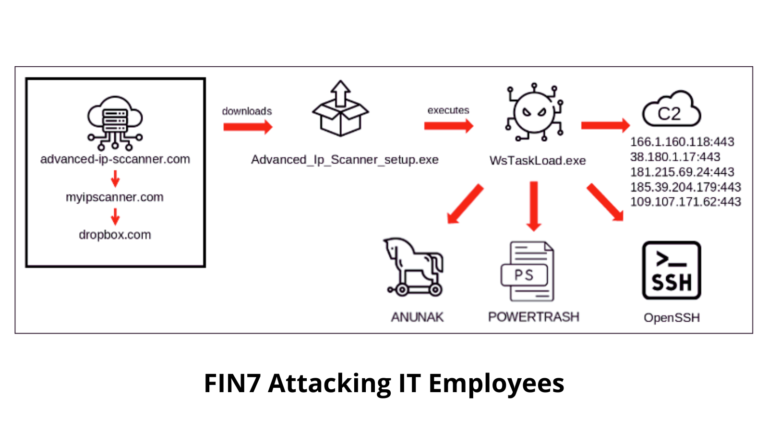
TA547 has been targeting German organizations with an email campaign delivering the Rhadamanthys malware.

Proofpoint has observed TA547 using Rhadamanthys, an information stealer that is utilized by multiple cybercriminal threat actors.

The emails, which impersonated the German retail company Metro, were crafted to appear as if they related to invoices, with subjects like “Rechnung No:31518562” and contained a password-protected ZIP file.

The ZIP file included an LNK file that, when executed, triggered PowerShell to run a remote script.

Phishing Email

This script was responsible for decoding a Base64-encoded Rhadamanthys executable file, loading it into memory, and executing it without saving it to disk, a method known for evading traditional file-based detection mechanisms.

Document
Stop Advanced Phishing Attack With AI

Trustifi’s Advanced threat protection prevents the widest spectrum of sophisticated attacks before they reach a user’s mailbox. Stopping 99% of phishing attacks missed by other email security solutions. .

AI-Powered Cyber Attacks

The use of a PowerShell script in the attack chain suggests that TA547 may have employed an AI-powered tool, such as a large language model (LLM), to write or rewrite the script.

This is indicated by the typical output patterns of LLM-generated coding content observed in the script.

The shift from previously favored JavaScript attachments to compressed LNK files in early March 2024 demonstrates TA547’s evolving tactics.

TA547, identified as a financially motivated cybercriminal threat and considered to be an initial access broker (IAB), has historically targeted various geographic regions with different payloads.

Usage of LLM

In 2023, the group predominantly delivered NetSupport RAT but has also been known to distribute other payloads, including StealC and Lumma Stealer, which share similar functionalities with Rhadamanthys.

The recent campaign against German organizations is not an isolated incident.

TA547 has also targeted entities in Spain, Switzerland, Austria, and the U.S., highlighting the group’s broad geographic focus and the potential for widespread impact.

The adoption of AI-powered tools in cyber attacks is a growing concern.

These tools can analyze targets and find techniques most likely to compromise an organization, making attacks highly targeted and difficult to detect with traditional cybersecurity solutions.

The ability of AI-powered attacks to learn and adapt to new defenses poses a significant challenge, as they can bypass known patterns and signatures that cybersecurity solutions typically rely on.

Secure your emails in a heartbeat! To find your ideal email security vendor, Take a Free 30-Second Assessment.


[ad_2]
Source link

Galaxy S23, S22, and S21 series grab April update in the US

0
[ad_1]

Samsung‘s April update is available for all recent S series devices in the US. The company has released the latest security patch for the Galaxy S23, Galaxy S22, and Galaxy S21 lineups. The Galaxy S24 series picked up the new SMR (Security Maintenance Release) at the end of March.

April update is available for the Galaxy S23, S22, and S21 series in the US

The April SMR for the Galaxy S23 series is currently rolling out in Europe and the US. The European versions of the phones are getting the update with the firmware build number S91*BXXS3CXD2. It is S91*USQS2CXCN for the carrier-locked variants in the US and S91*U1UES2CXCN for the unlocked units. Samsung should soon expand the update to other regions.

Since the Galaxy S23, Galaxy S23+, and Galaxy S23 Ultra recently received One UI 6.1 with new AI features, camera improvements, and more, the latest update is all about this month’s security fixes. Samsung’s April SMR for Galaxy devices patches more than 40 vulnerabilities, including a critical Android OS flaw and several Galaxy-specific issues.

The build numbers and official changelog suggest Samsung hasn’t included fixes for the fingerprint issues. Several Galaxy S23 users reported issues with fingerprint recognition following the One UI 6.1 update. The company said it is working on a fix. The April update was expected to bring it but that doesn’t seem to be the case. Or maybe it fixes the issues, we shall find out soon.

One UI 6.1 will also be available for the Galaxy S22 and Galaxy S21 series. But ahead of that, Samsung is updating the phones to the April SMR. The update is currently available for the carrier-locked variants of the 2022 flagships with the build number S90*USQS4DXD2. Unlocked units and the international versions should also soon pick up the latest security patch.

The Galaxy S21 series, on the other hand, has already received this update in some international markets. Users in the US are now getting it. The update is limited to carrier-locked units, though a wide rollout should be just around the corner. The new firmware build number for the phones is G99*USQSAFXD3. The April SMR isn’t yet available for the US version of the Galaxy S21 FE.

The Galaxy S23 FE is currently missing the new security patch

Alongside the flagship models, Samsung also updated the Galaxy S23 FE to One UI 6.1. However, the FE model didn’t get the April SMR alongside its siblings. Hopefully, it won’t be long before the company updates the phone to the latest security patch. You can always check for new software updates from the Settings app on your Galaxy device.


[ad_2]
Source link

The updated Sonos S2 app will reportedly launch on May 7

0
[ad_1]

Sonos is reportedly set to launch its updated Sonos S2 app with some new features on May 7, 2024. A recent report from The Verge detailed the launch date and new features coming to the updated app. He further attached screenshots of the new Sonos S2 app in the report that hinted at a major UI overhaul.

The new features are making their way to the revamped Sonos S2 app via an update

The new features will be available as an app update to the Sonos S2 app first released in 2020. Now that we have the launch date, let’s discuss some detailed features. For starters, the updated Sonos S2 app will ditch the tabbed navigation coming from the previous version of the Sonos S2 app.

Now, you’ll find a new home experience with everything taking center stage. The new app’s home interface will be customizable, allowing you to reorder your favorite Spotify playlists and audio streaming platforms.

A new search bar has also made its way to the revamped app which will be available throughout the interface. Sonos has also updated the mini-player within the app with volume controls for better user convenience. Additionally, you’ll find a new Shuffle and Repeat button with the usual media control features on the new app’s “now playing” screen.

An updated setup screen will make pairing even smoother

That’s not all, the new Sonos app will feature a redesigned setup wizard. It will make the audio accessories setup process a breeze. Once you pair the audio device, you can access all the settings related to the speakers or soundbars from a collective Your System tab. Again, that’s a worthwhile addition considering the company is launching its first-ever wireless headphones this summer.

It’s not clear whether the app will feature the ‘S2’ tag or remove it altogether. Also, there’s no mention of whether the new Sonos S2 app update will be available first for Android or iOS. However, there’s a new Sonos logo featuring a black background with the company’s name in the foreground. Earlier, the backdrop used to feature the tan color.

Moreover, if you want to use the revamped version, install the app update whenever available. Users on iOS and Android can update the Sonos S2 app from the App Store and the Google Play Store, respectively.


[ad_2]
Source link

Motorola confirms the Edge 50 Ultra with a Snapdragon 8s Gen 3

0
[ad_1]

In between Galaxy Fever and Pixel Fever, Motorola has carved out its own spot in the year to build hype for its devices. We’ve been following news of the incredible-looking Motorola Edge 50 Ultra. In fact, we exclusively leaked this phone last month. Well, Motorola just confirmed that the Edge 50 Ultra will use the Snapdragon 8s Gen 3.

We’ve been leaking information about this upcoming phone, and so far, it looks like it’ll be one of the prettiest devices of the year. Last year, Motorola launched its Edge series phones (in the US, they were called the Edge 2023 and Edge+ 2023). Those were great devices, and it looks like Motorola is looking to one-up itself this year.

Motorola confirms the Snapdragon 8s Gen 3 for the Edge 50 Ultra

Whenever we’re talking about a new phone, the processor it uses is very important. So far, there’s been a lot of news about the next Snapdragon chip. Named the Snapdragon 8s Gen 3, this SoC will be a stripped-down version of the Snapdragon 8 Gen 3. So, we don’t expect it to be quite as powerful. However, we still expect it to pack some punch.

Motorola just released a new video on X showing off a deconstructed version of The Edge 50 Ultra. In the video, several parts pop into view gradually. However, at the end of the video, we see the Snapdragon 8s Gen 3 chip subtly easing toward the camera before disappearing along with all the other parts.

This is good news, as we got the news that the Motorola Edge 50 Pro will be using a Snapdragon 7 Gen 3 processor. That’s an upper-tier mid-range processor so that phone will still be decently powerful. However, with a “Pro” moniker, you’d expect flagship-level power.

Right now, we don’t know too much about this phone. Based on leaked Geekbench scores, we know that it scored a single-core score of 1,947 and a multi-core score of 5,149. Also, at least one of the models will come with 12GB of RAM. Some rumors also point to this phone coming with a 50-megapixel main camera.


[ad_2]
Source link