While talking with CNN, Popal said that Android had a strong decline over the past few years. Therefore, it now has a lot more room to grow. That’s what CNN reported, at least, we did not see a direct quote for that part.
The iPhone 16 series is not expected to bring major design changes
Android’s growth seems to be IDC’s prediction for 2024. If we take into account reports that the iPhone 16 series won’t exactly be groundbreaking, it does make sense. The iPhone 17 series next year is expected to be a lot more exciting.
These are only predictions, of course, things could pan out differently. It will be interesting to see what will things look like at the end of the year. Based on the predictions Android could grow quite a bit.
Samsung managed to grab over 20% of the market in the first quarter of the year
It is worth noting that Samsung occupied 20.8% of the market in Q1 2024, while Apple grabbed 17.3%. The Korean giant shipped out 60.1 million devices, while Apple shipped out 50.1 million units.
Xiaomi managed to squeeze itself into third place with 14.1%. The company managed to sell 40.8 million smartphones. Xiaomi actually grew quite a bit, as it did a great job with its smartphones in the last year or so. That is especially true for the Xiaomi 14 and Xiaomi 14 Ultra.
Hackers target Apple device users because they are perceived to be of higher social classes. This leads to targets who are richer than others and who can possibly provide more money to the hackers in one way or another.
Besides this, Apple’s ecosystem is interconnected, which means it has various points from which hackers can enter, leading to the compromise of accounts and devices.
BlackBerry cybersecurity researchers recently discovered that LightSpy hackers are actively targeting Indian Apple device users to steal sensitive data.
LightSpy Hackers& Their Targets
LightSpy is a modular spying toolkit that can steal victims’ personal information, such as actual GPS coordinates or VOIP calls.
This new threat is dangerous because it allows hackers to follow targets with an exceptional degree of accuracy, expanding the potential impacts of this expansive surveillance on high-profile victims in politically sensitive regions.
LightSpy has an extensive spying capacity and can be used to monitor device data, QQ messenger content, WeChat messages, Telegram chats, and WeChat Pay history.
DocumentStop Advanced Phishing Attack With AI
Trustifi’s Advanced threat protection prevents the widest spectrum of sophisticated attacks before they reach a user’s mailbox. Stopping 99% of phishing attacks missed by
other email security solutions. .
This highly effective software program returned during escalated regional hostilities after its 2020 operations had focused on Hong Kong-oriented news websites for distribution.
The threat group, based in servers located in Russia, China, and Singapore, is very interested in monitoring victims involved in clashes of interests across South Asia.
This again highlights how even the slightest flare-ups pose a constant danger to the people involved there.
The motives behind this campaign and the geopolitical implications for Southern Asia that it has raised become sources of worry because of suspected links with China.
Hyper-targeted attacks like these may impact only a tiny fraction of individuals, such as journalists, activists, or politicians, but at the same time can be seen as a worldwide threat.
Tech companies have recently pointed out the danger of state-sponsored election tampering. According to Apple, powerful mercenary spyware is one of the most complex digital threats in existence.
When the vulnerability is detected on news websites specifically reporting Hong Kong issues, the infection usually starts.
Loader’s signature (Source – BlackBerry)
The attack advances with an initial implant, which collects device data and downloads successive stages.
These include LightSpy, which is the core implant, and special spying plugins.
The Loader starts by loading both the LightSpy kernel in encrypted form and decrypted form, BlackBerry said.
The recent campaign uses “F_Warehouse” framework that has various functionalities including file exfiltration, network reconnaissance, and audio recording.
Besides this, executing shell commands can give full control to an attacker.
While the LightSpy maintains communication with its server as well as with an administrative panel that helps enhance its probable origin.
Recommendations
Here below we have mentioned all the recommendations:-
Exercise heightened vigilance
Use of Lockdown mode
Use highly secure voice and messaging solutions
Review the latest threat intelligence
Create an incident response plan
Update your devices
Use a passcode
Enable 2FA
Beware of unofficial software
Password hygiene
Think before you click
Restart your phone often
Looking to Safeguard Your Company from Advanced Cyber Threats? Deploy TrustNet to Your Radar ASAP.
The Fitbit app recently got a redesign of its Sleep stats page, and now it is finally rolling out more widely. This way, Google continues to implement its Material You design language in all elements of the app.
Google had started implementing Material You guidelines in the Fitbit app last year. However, for one reason or another, the Sleep stats section hadn’t yet received a “facelift.” Now, the Fitbit app’s tweaked Sleep stats UI is reaching more people.
Fitbit users do not need to update the app to receive the new Sleep stats page. The change is happening through a server-side update. Once it is available, you can easily access it by tapping on the “Your sleep profile” card.
This is the new Sleep page of the Fitbit app that is reaching more people
You will notice that the new page has four tabs: “Day”, “Week”, “Month”, and “Year.” This will allow you to easily check your sleep metrics by time segments. The new design also aims to ensure that you get key data at a glance, a philosophy that Google follows in some of its apps and services. For example, now the data for parameters such as your sleep score, sleep duration, and sleep timeline are visible in the same section.
Additionally, pressing and holding on your sleep chart will allow you to “know exactly what time you woke up last night.” If you continue browsing the new UI, you will find the “More about your sleep” tab. Metrics such as your sleep heart rate, oxygen variation during your sleep, and snoring, among others, will be available there. This type of data is important even to identify possible health conditions to treat.
Likewise, there is a “see how your sleep patterns have changed over time” tab. So, basically, the new UI is designed to offer both a more appealing visual look and easy access to key data about your sleep.
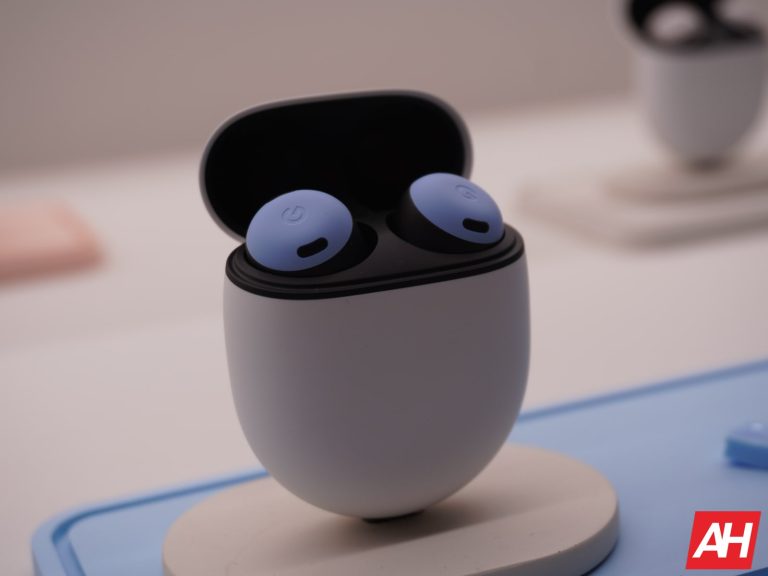
The Pixel Buds Pro 2 are not yet a confirmed pair of true wireless earbuds, but a recent leak about the battery capacity in the case suggests that they could be very soon. What’s more, it seems like the case will have a larger battery than the Pixel Buds Pro. Which in turn may hint at a larger battery in the earbuds themselves.
According to 91mobiles, the Pixel Buds Pro 2 case has shown up in a battery certification recently. Documentation found through two different organizations seems to signify that an official announcement may be imminent as well. Certification for the Pixel Buds Pro 2, or what’s thought to be the Pixel Buds Pro 2, has shown up at both UL Demko and Safety Korea. UL Demko operates out of Denmark and Safety Korea operates out of South Korea.
There’s not a lot known about the upcoming pair of true wireless earbuds. And the leak doesn’t give too much detail other than a couple of pieces of information. Specifically the capacity of the case battery and the model number. The documentation states that these earbuds have the model number listed as GH8TQ. For comparison, the original Pixel Buds Pro have a model number of either GA34L, GQGM1, or GPX4H. You could look at the loosely similar configuration of the model numbers as a significant hint that this is Google’s upcoming pair. Seeing as they start with the letter G and the number is five characters long.
With this certification popping up, it’s possible Google might be looking to reveal these at Google I/O on May 14.
The Pixel Buds Pro 2 case will have a slightly larger battery
It’s important to note that this certification documentation doesn’t mean this is what consumers end up getting. But it does give a hint at what Google seems to be working with. If the information is accurate then the Pixel Buds Pro 2 may come with a case that has a 650mAh battery. The original model comes with a 620mAh battery capacity case. So Google looks to be increasing the battery inside the case this time around. Again, while not confirmed, this could point to the earbuds having a larger battery capacity as well.
The original model had decent battery life of up to 11 hours, or up to 31 with the case. Even if the upcoming model doesn’t have longer listening time on a single charge, the case would still potentially provide more overall usage time. And that would still be a beneficial thing.
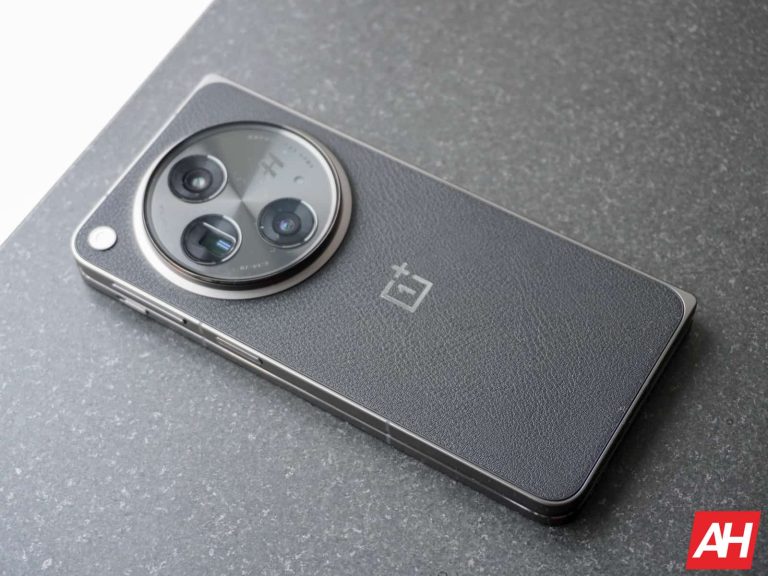
Only a handful of smartphone makers have both notebook-style and clamshell foldable phones like Samsung and Huawei. However, companies like OnePlus and Google only have one type. OnePlus is one of them; however, that may change. According to a new report, there may be a OnePlus clamshell phone in the works, and it could bring a one-of-a-kind camera addition.
The foldable phone market is gaining in popularity, and companies like Samsung basically own it. Samsung has spent years refining its foldable phone design. However, that didn’t stop OnePlus from making a splash in the market on its first try. The OnePlus Open (Review) was one of the best phones in 2023, and it shows the company’s potential to produce a compelling foldable phone.
However, there are people out there who appreciate the portability and convenience of a clamshell foldable. Well, with the foldable phone industry as it is now, there was no doubt that we would see a OnePlus-branded clamshell foldable phone at some point in the future.
OnePlus may be working on a clamshell foldable
With news like this, you’ll want to take the information with a grain of salt. Right now, we are following rumors and echoes. So, we’re going to want to wait for more information to be completely sure.
According to reports, OnePlus may be gearing up to build a clamshell foldable. For a quick recap, a clamshell foldable has the form factor of a typical candy bar phone but folds vertically just like the flip phones of old.
A Weibo post from the account named Smart Pikachu (via Android Authority) explained that Oppo is planning its next clamshell phone and that OnePlus is following suit. Oppo and OnePlus both share the same parent company named BBK. Both companies merged in 2021, so some OnePlus phones are actually rebranded Oppo phones. This was pretty much the case with the OnePlus Open. Since Oppo is making a clamshell phone, then we can expect a OnePlus-branded clamshell phone that shares much of the same DNA.
This phone could have a telephoto camera
One thing that will differentiate these two phones from the rest of the clamshell phones on the market could be the addition of the telephoto camera. This is something that we’ve yet to see on foldable phones, as these devices need to remain as thin as possible.
Well, if the leak is to be trusted, then OnePlus’ first clamshell phone could have better zoom capabilities compared to the competition. We’re not certain when/if this phone will see the light of day. Last year, the OnePlus Open launched in early October. So, if history is any indication, we should see more information about this phone and potentially get a mid-fall launch.
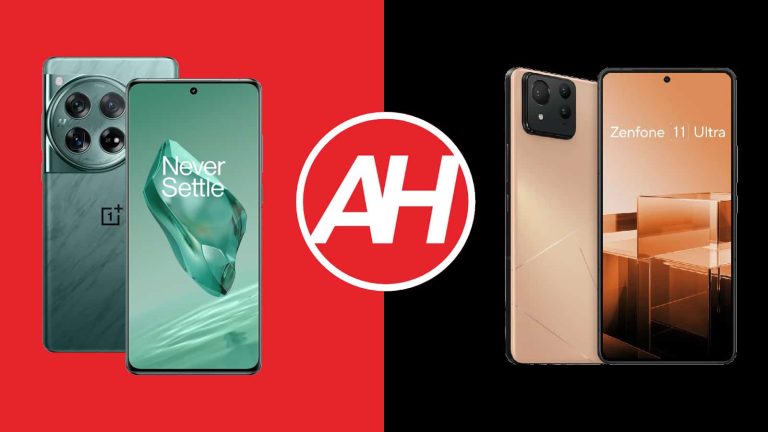
Both OnePlus and ASUS announced their new flagship smartphones this year. Well, OnePlus’ technically launched at the end of last year, but its global variant arrived this year. In this article, we’ll compare those two smartphones, the OnePlus 12 vs ASUS ZenFone 11 Ultra. The two phones do look quite different, while they also provide different camera experiences and so on. There’s a lot to talk about here.
As per usual when it comes to comparisons, we’ll first list their specifications. Following that, we’ll compare the designs, displays, performance, battery life, cameras, and audio performance of these two smartphones. If you’re in the market for a large Android flagship, both of these devices fit the bill. Both of them also start well under $1,000, which is another reason you may be interested in getting one.
Both the OnePlus 12 and ASUS ZenFone 11 Ultra are made out of metal and glass. The OnePlus 12 has a curved display on the front, while the ZenFone 11 Ultra utilizes a flat one. You’ll notice a centered display camera hole on both of those displays, along with very thin bezels. Both phones have physical buttons on the right-hand side only. The OnePlus 12 does have an alert slider on the left, though.
If we flip them around, you’ll notice immensely different camera islands. Both setups sit in the top-left corner, but the one on the OnePlus 12 is larger. It hosts three cameras, and it’s circular. The one on the ZenFone 11 Ultra is rather small in comparison, though it includes three cameras as well. Backplates on both smartphones are flat for the most part, but they do curve a bit towards the edges.
The two phones are quite similar in terms of size. The OnePlus 12 is technically slightly taller, narrower, and thicker. The difference is minimal, though. OnePlus’ flagship is also 4 grams lighter, which is not something you’ll notice. They feel similar in terms of weight when held side-by-side. The OnePlus 12 does offer IP65 certification for water and dust resistance. The ASUS ZenFone 11 Ultra comes with an IP68 certification. Both of them are quite slippery, and both feel like premium products. The build quality is very good. You’ll also be glad to know that they’re both comfortable to hold.
OnePlus 12 vs ASUS ZenFone 11 Ultra: Display
The OnePlus 12 features a 6.82-inch QHD+ (3168 x 1440) LTPO AMOLED display. That panel is curved, and it offers an adaptive refresh rate of up to 120Hz. Dolby Vision support is included, and the same goes for HDR10+ content. The maximum display brightness this display offers, in theory, is 4,500 nits. The Gorilla Glass Victus 2 protects the panel. The screen-to-body ratio is around 91%, by the way.
ASUS ZenFone 11 Ultra
The ASUS ZenFone 11 Ultra includes a 6.78-inch fullHD+ (2400 x 1080) LTPO AMOLED display, which is flat. It has an adaptive refresh rate of up to 144Hz, but do note you’ll get that high in specific games only. The display usually goes up to 120Hz. HDR10 content is supported, while the peak brightness is 2,500 nits. The screen-to-body ratio is around 88%, while the Gorilla Glass Victus 2 protects this display.
Both of these displays are great, no doubt about that. The OnePlus 12 does have the advantage of having a higher resolution and getting a bit brighter. The thing is, most people won’t even notice the difference. Displays on both ends are vivid, offer great viewing angles and deep blacks. The touch response is also very good. You’ll have a great experience with both of these panels. Just remember one is curved, while the other one is flat, plus there’s a resolution difference to consider.
OnePlus 12 vs ASUS ZenFone 11 Ultra: Performance
The Snapdragon 8 Gen 3 fuels both of these smartphones. That’s the most powerful processor Qualcomm has to offer at the moment. Both phones also offer LPDDR5X RAM, up to 16GB of RAM. UFS 4.0 is used on both ends as well. In other words, both companies used the very best performance-related components that could find, which is always good to hear. You’ll be glad to know that both phones do deliver in the performance department too.
Everything you end up doing on these two phones will be snappy, at least it was for us. They can multitask like nobody’s business, and perform day-to-day tasks without breaking a sweat. The ZenFone 11 Ultra’s software is close to stock Android in terms of look, but it has a ton of useful features on top of it. OxygenOS comes pre-installed on the OnePlus 12, and it’s quite a bit different than stock Android, but the performance is outstanding.
That goes for gaming too, actually. When we played Genshin Impact, both smartphones did a great job. The OnePlus 12 was slightly cooler after a one-hour session, but neither phone had issues with the game. They both got warm, but the performance did not suffer at all. 3D Mark’s most demanding test did manage to raise the temperature of the ZenFone 11 Ultra quite a bit, but that’s not something you should be worried about. We were not able to replicate that, not even with demanding games, so… it’s not exactly something to worry about. The OnePlus 12 does have better cooling, though.
OnePlus 12 vs ASUS ZenFone 11 Ultra: Battery
The OnePlus 12 comes with a 5,400mAh battery on the inside. The ZenFone 11 Ultra, on the flip side, has a 5,500mAh battery. Both of these phones have quite large battery packs, does that reflect on their battery life, though? Well, both of them have good battery life, but the OnePlus 12 is a level above the ZenFone 11 Ultra in that regard. It managed to outperform it during our battery test, and we’ve seen the difference during general usage too.
When it comes to general usage, we managed to get up to 9 hours of screen-on-time on the OnePlus 12. The ASUS ZenFone 11 Ultra provided a bit less, 7-7.5 hours of screen-on-time. Do note that gaming was not a part of our usage on those days. If you count that in, the usage numbers go down. Also, we’ve used WiFi most of the day, and the signal was quite good. Your mileage may and probably will differ quite a bit. You’ll be using different apps, in different ways, in different places, and so on.
The OnePlus 12 supports 100W wired (80W in the US) charging, 50W wireless charging, and 10 reverse wireless charging. The ASUS ZenFone 11 Ultra, on the flip side, supports 65W wired, 15W wireless, and 10W reverse wired charging. The OnePlus 12 not only wins the charging comparison, but it also comes with a charger in the box, unlike ASUS’ flagship. Both phones can charge up really fast, though, a lot faster than phones from Google, Apple and Samsung.
OnePlus 12 vs ASUS ZenFone 11 Ultra: Cameras
Each of these phones has three cameras on the back. The OnePlus 12 includes a 50-megapixel main camera, a 48-megapixel ultrawide unit (114-degree FoV), and a 64-megapixel periscope telephoto camera (3x optical zoom). The ASUS ZenFone 11 Ultra, on the flip side, has a 50-megapixel main camera, a 13-megapixel ultrawide unit (120-degree FoV), and a 32-megapixel telephoto camera (3x optical zoom).
OnePlus 12
The images these two smartphones provide are considerably different. The colors that the OnePlus 12 can pull off are on another level, and the phone also tends to offer more contrasty shots. The ZenFone 11 Ultra’s photos tend to look a bit more processed, and the phone also tends to brighten up low-light shots more. The OnePlus 12 is not afraid to leave such images closer to real life.
Both ultrawide snappers do a good job of keeping the color science of the main camera. When it comes to telephoto images, we prefer the OnePlus 12 across the board, and that especially goes for high-zoom situations. That’s not surprising, though, as it does include a periscope telephoto camera. The ZenFone 11 Ultra is a good camera phone, but the OnePlus 12 is a level above.
Audio
Both of these phones have a set of stereo speakers built-in. Both sets are loud enough and are actually on a similar level in that regard. The sound quality is also very good on both. The speakers are well-balanced, and there’s even some bass included.
The ASUS ZenFone 11 Ultra even includes an audio jack. That’s not something you’ll find on the OnePlus 12, but you can always use its Type-C port for wired audio connections. Both smartphones are equipped with Bluetooth 5.4.
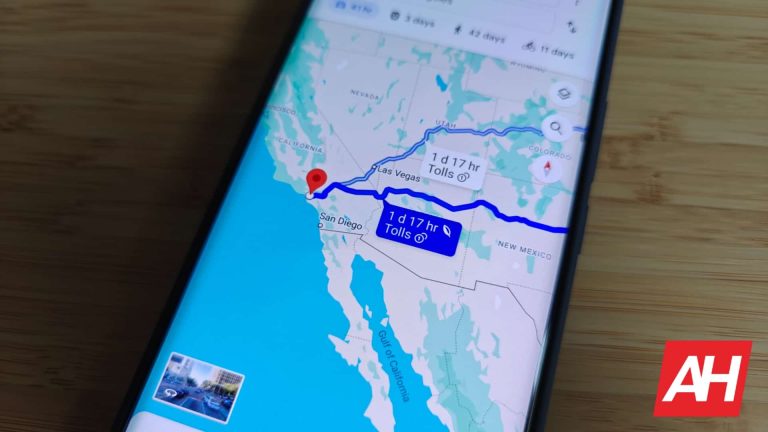
For all the Android users out there, Google Maps is releasing a fresh update that changes the toggle for 3D buildings during navigation on Android Auto. Although Google Maps has allowed 3D view on Android Auto for a while, they have now found a way to streamline that specific setting by synchronizing it with your Android smartphone.
Google Maps will now sync 3D building toggle across smartphones and Android Auto
Currently, this feature defaults across different platforms including CarPlay (iOS), Android Auto (Android), and iPhones (iOS). So far, in beta, the current version of Google Maps for Android (v125) brings a small improvement where the choice to show 3D buildings syncs between devices. If you have turned on 3D buildings on your phone, you will also find it switched on inside Android Auto.
AssemblyDebug from X discovered the update earlier. It smoothens customer experience hence enabling “Show 3D Buildings” from phone and Android Auto without any discrepancy. Previously, altering them required the user to go to settings and turn it on manually via the car’s display. Now it syncs with the Maps app on your phone.
With this update in place, users may find it easy to manage 3D settings through their mobile device thereby adjusting it automatically when starting up with Android Auto. However, users should also note that the synchronization only happens during the boot-up, and it may not happen immediately once switched on from smartphones.
Beta testing commences before wider availability
Nonetheless, after reconnecting to your car, Android Auto will take details from the Maps app on your phone. This feature used to work sometimes in previous versions but with the latest update, syncing of devices is far more reliable. Although it is a minor change, it’s a good sign as it indicates that the company hasn’t forgotten Android Auto.
The full release should occur in a few weeks but before then, the beta version is available for testing. Users can modify their 3D building preferences across various Android devices and manage them through Android Auto without any hassle.
Last month we told you how you can set your iPhone to automatically reduce the white point setting when battery life is running low and you turn on Low Power Mode. This action reduces the power draw from the display while also reducing the mail fetch and downloads in the background until the iPhone is almost fully charged. Reducing the white point setting makes the display darker but you can set the level of darkness until you find a level that you are comfortable with. This should be used only as a Hail Mary pass to try once the battery life remaining on your iPhone has dropped under 20% and you’re out without a power bank.
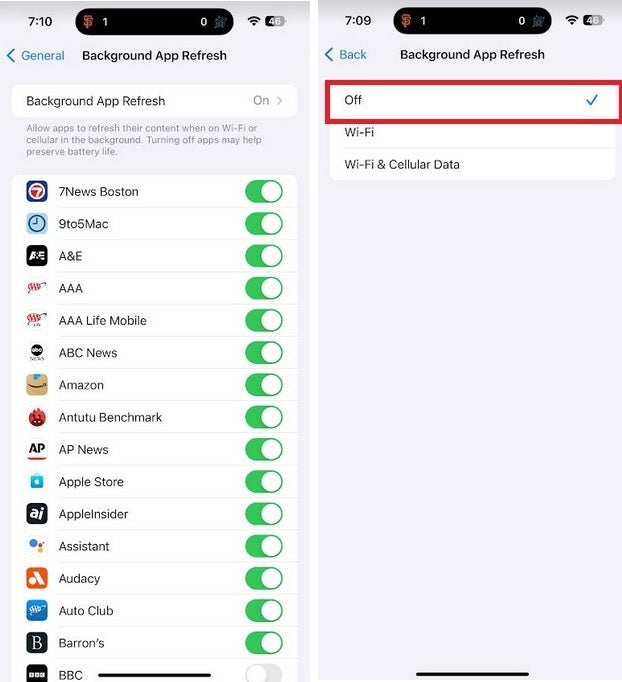
According to iMore, there is a setting you can adjust on your iPhone that will add more battery life to your handset. Called Background App Refresh, this setting is enabled by default on iOS 17 and keeps your favorite apps refreshing even when you’re not using them. This way you can open your favorite social media app and continue from where you left off when you were using the app the last time. Here’s another example; the setting also allows you to open the Mail app and not have to refresh the inbox to see the latest email you’ve received.
Disabling Background App Refresh can add some extra battery life to your iPhone
But leaving Background App Refresh on also means that you are using battery life to keep these apps open and updated in the background. One way to save battery life is to go to Settings > General > Background App Refresh > Off. This will take you to a box with three options. Select off for maximum battery savings although your apps will no longer update in the background. Select Wi-Fi to have your apps update in the background only when you’re connected to Wi-Fi. This allows your iPhone to save some battery life when out and about but will allow you to have your apps updated in the background when you’re connected to a Wi-Fi signal while at Starbicks pr other places with free Wi-Fi.
The last option is Wi-Fi & Cellular Data. If you select this option, which is the default option on iOS 17, your apps will update in the background whether you’re connected to a cellular signal or Wi-Fi. This setting will use the most battery life since apps will update in the background at all times. When you go to the Background App Refresh page, you might have noticed that you can toggle off individual apps to save some battery life.
Google Wallet could be making its way to India, a Play Store listing briefly suggested. The e-wallet had mysteriously started working on Indian smartphones a few days ago.
Google launching its NFC-based Wallet in India?
Google Wallet is one of Google’s several platforms that offer on-device payments. The company operates quite a few variants such as Google Pay in multiple countries.
According to TechCrunch, Google is expected to officially launch Google Wallet in India shortly. Google Wallet is already a popular choice in on-device payment apps for US customers.
Google Wallet needs an NFC (Near Field Communication) chip to function properly. The app allows users to add multiple credit, debit, and loyalty cards. Using Google Wallet, users can opt for “tap to pay” at payment terminals or POS (Point of Sale) machines using their smartphones.
In addition to NFC payment cards, Google Wallet can also add passes. Simply put, most of the cards that have an NFC chip, can be assimilated within Google Wallet.
Google Wallet launched in 2022. However, Google restricted the app’s availability. The Indian version of the Google Play Store has a dedicated listing. But, it does not have an install button yet.
The Indian version of Google Wallet briefly spotted on the Play Store
GPay or Google Pay is another Google e-wallet. However, this app largely depends on the UPI (Unified Payment Interface) backend. In other words, nearly all smartphones, even those without NFC, support GPay.
Google has reportedly indicated it would continue to operate GPay as a standalone app in India. The company had previously stated that GPay would continue to remain operational in India and Singapore to address the “unique needs in those countries”.
The same cannot be said in other regions where Google either shuttered GPay or merged it with Google Wallet. Google has recently indicated it would shut down GPay in the US.
Google Wallet now seems to be working in 🇮🇳 India. Can add cards and use like Gpay if your phone has NFC.
Further, wearOS watches (like OnePlus Watch 2) will probably get it too. Definitely a nice upgrade. pic.twitter.com/JZQYFp2fbK
According to 9to5Google, Google Wallet’s listing briefly carried banners and images of Indian brands such as SBI (State Bank of India), Air India, and PVR INOX (a multiplex chain). However, these images are now gone, and they have been replaced by generic placeholders.
While these now-deleted images might not be a reliable indicator, Google Wallet suddenly became operational in India for a few Android smartphone users.
Google Wallet now appears to be available in India without any hackery. Also working on Wear OS watches, including the OnePlus Watch 2 and the Galaxy Watch. https://t.co/MSK0drM2typic.twitter.com/BDTkdsS65f
After some smartphone enthusiasts sideloaded the Google Wallet app, it worked with the cards they loaded into the app. Loyalty programs still don’t work, but that’s an entirely different ballgame. Google Wallet recently started asking users to authenticate all payments, irrespective of the monetary value. It is not clear if the same security measure would be applicable in India.
Last week, Meta reintroduced the Lying Down mode to the Meta Quest 3 for uninterrupted use. Now Meta officially confirms that they are working on a new product for the Quest devices, that will make the operation of Meta Quest devices inside the classroom for education more seamless.
The Blog post by Nick Clegg, Meta’s president of global affairs, informs that the “new product” will enable educators to access a collection of “education-specific apps and features”. Meta dedicates this new product for Quest devices to education, mirroring last year’s dedication of Meta Quest for Business to the workplace.
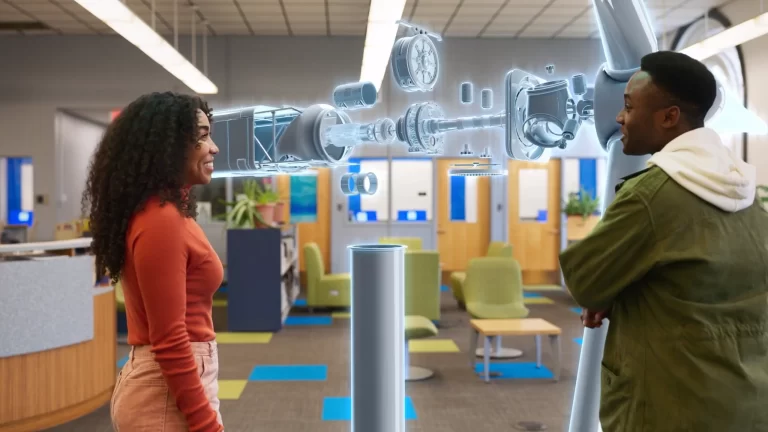
Meta wants to help teachers with its Quest devices
The goal is to come up with something that utilizes the technology to make classroom learning more intuitive and effective with Meta Quest devices. “We want it to be something that makes it easier for students to learn, apply and practice new skills; feel a sense of presence with teachers and classmates; and to visit places or experience things that would otherwise be impossible,” notes Clegg. He adds that the new product will help teachers
He previously wrote about the use of their products in transforming education. It seems that Meta is continuing to move forward in this direction. “The University of Glasgow is teaching life sciences by placing students inside virtual intestines, to see how the body battles bacteria,” he noted.
Research also shows that learning with virtual reality improves students’ performance, engagement, attendance, and satisfaction. Morehouse College reported that students who learned in VR (like the Meta Quest 3) had an average final test score of 85, versus 78 of students who learned in person in the classroom. A survey by the XR Association also shows that 77% of educators believe these technologies ignite curiosity and improve engagement in class.
The “new product” for Quest devices is coming later this year
As you can probably guess, Meta has yet to reveal the name and specific features of the upcoming product that is possibly under development at this point.
This new product is the result of Meta’s collaboration with educators, researchers, and third-party developers working in the education space around the world. Meta is committed to collaborating with educators, exploring ways to improve their Meta Quest devices, and making them the best virtual reality product in their price range.


.webp)