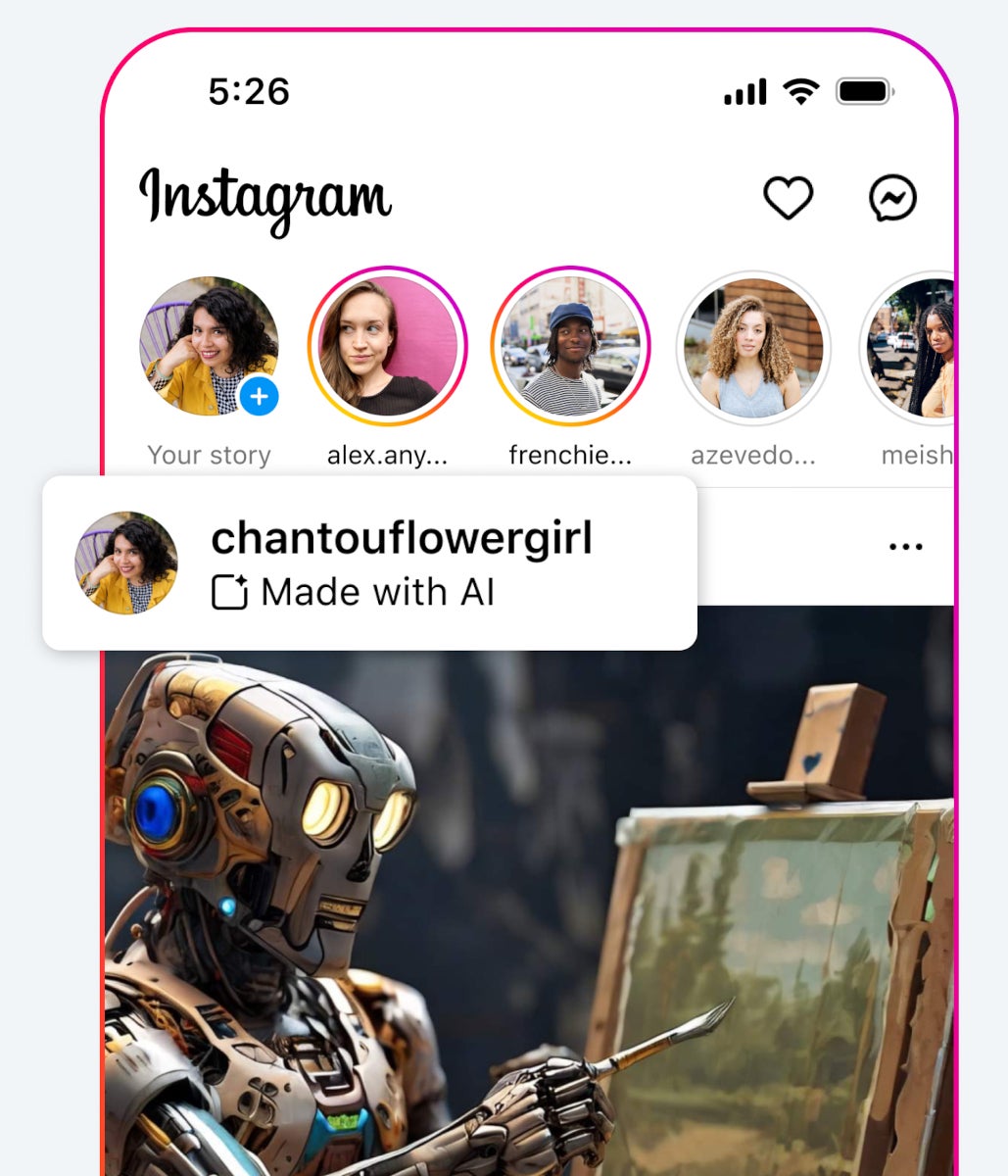
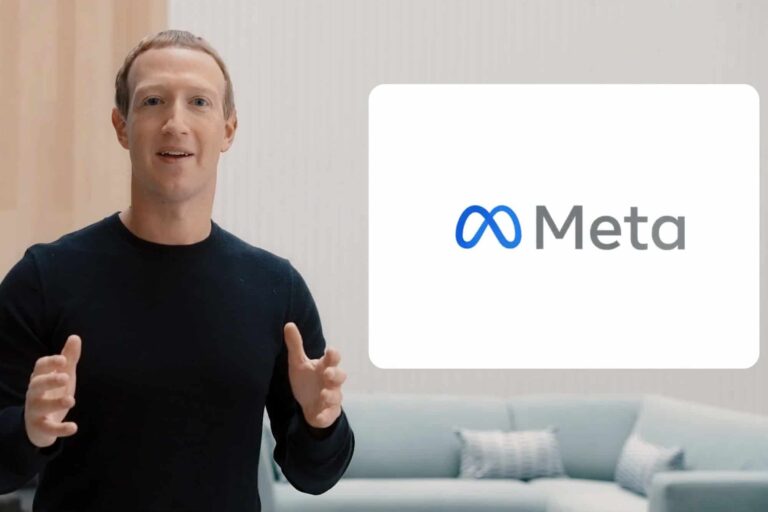
Meta is trying to please EU’s regulatory authorities and announced that will finally start labeling AI content on some of its social media platforms. The company confirmed it will make changes to the way it handles manipulated media based on feedback from the Oversight Board and its policy review process with public opinion surveys.The changes will be implemented on Facebook, Instagram and Threads and involve applying “Made with AI” labels on AI-generated video, audio and images that are detected as such by Meta’s tools.
Currently, Meta adds “Imagined with AI” to photorealistic images created using its AI feature. However, the new labels will cover a broader range of content in addition to the manipulated content that the Oversight Board recommends labeling.
If we determine that digitally-created or altered images, video or audio create a particularly high risk of materially deceiving the public on a matter of importance, we may add a more prominent label so people have more information and context.
According to Meta, users should start seeing labeled AI-generated content in May 2024. Also, the social network company announced that it will stop removing content solely on the basis of its manipulated video policy in July.
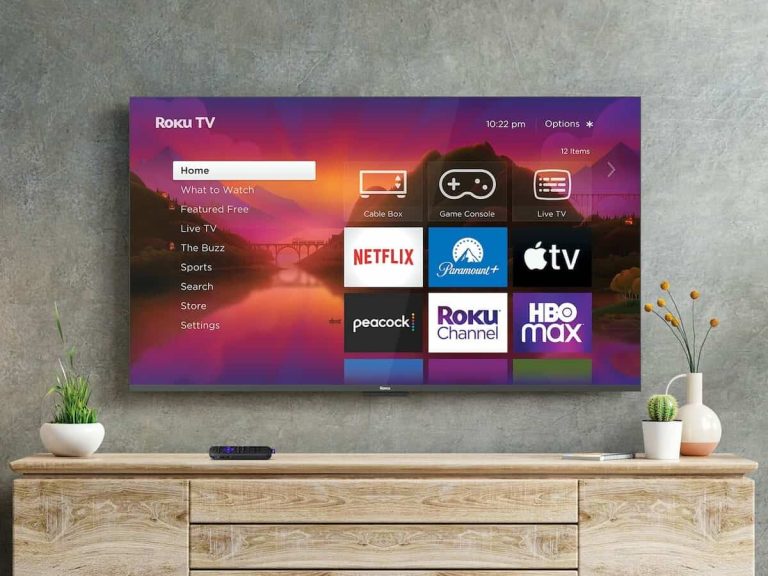
Roku, the popular streaming platform, is considering a novel approach to monetize your TV’s HDMI with Ad overlays. The company is exploring the possibility of displaying ads over content received from your HDMI signals.
Roku will overlay ads when you pause video playback on HDMI devices
Several smart TV services have a very low-profit margin when sold with the hope of income generating through advertisements. There is however a problem when external HDMI devices connect to televisions. Since they can bypass the built-in operating system entirely, they break Roku’s business model.
Roku’s proposal would involve monitoring video and audio feeds for pauses in the HDMI input stream so that commercials can be placed accordingly. The company cannot communicate directly with devices attached via HDMI. Nonetheless, they may utilize metadata and content detection in customizing adverts for specific content as implied by patent texts.
However, it remains speculative whether or not such ideas will interrupt traditional television-watching experiences with commercial breaks. Per 9to5Google, it is just a patent on possible technology but there is no evidence that Roku possesses the practical means to enact it.
Sticky ads over HDMI are possible since Roku has tried something similar before
The concept of smart TVs potentially being able to monitor our every move is indeed worrying, and it also raises concerns about sticky advertisements. Furthermore, even existing Roku TVs have some suggestions like “more ways to watch” offering over HDMI inputs, which means HDMI ads are more than possible.
However, even with all the speculations surrounding the unveiling of this new advertisement approach; there is no evidence that Roku has developed this feature yet. This application (sic) could eventually materialize into something more tangible especially if history is any indication.
It may be a fresh marketing technique in the form of an abstract presentation of top-layer ad compositions using HMDI integration (sic). With changes in how streaming takes place around us, these are vital issues for companies such as Roku who care about the shift towards ad-supported models.
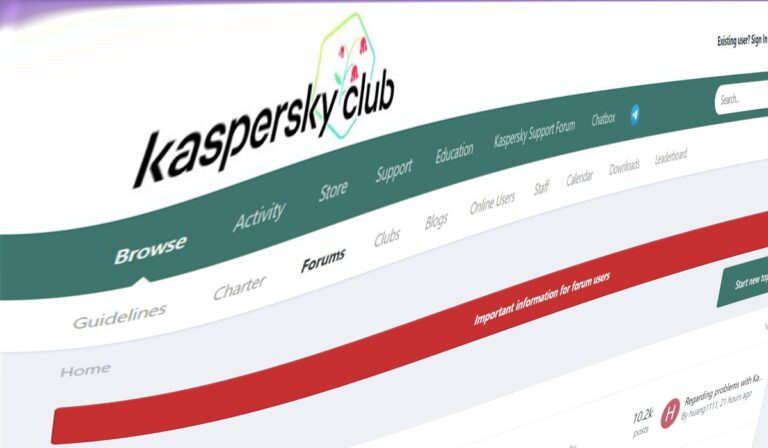
The Russian language fan club forum for the cybersecurity giant Kaspersky has experienced a data breach, during which a hacker group known as RGB leaked the personal data of 56,798 users online.
The fan club forum, forum.kasperskyclub.ru, boasts over 62,364 posts, making it a highly active platform where users can discuss Kaspersky Labs and its products, share tutorials, and seek troubleshooting assistance.
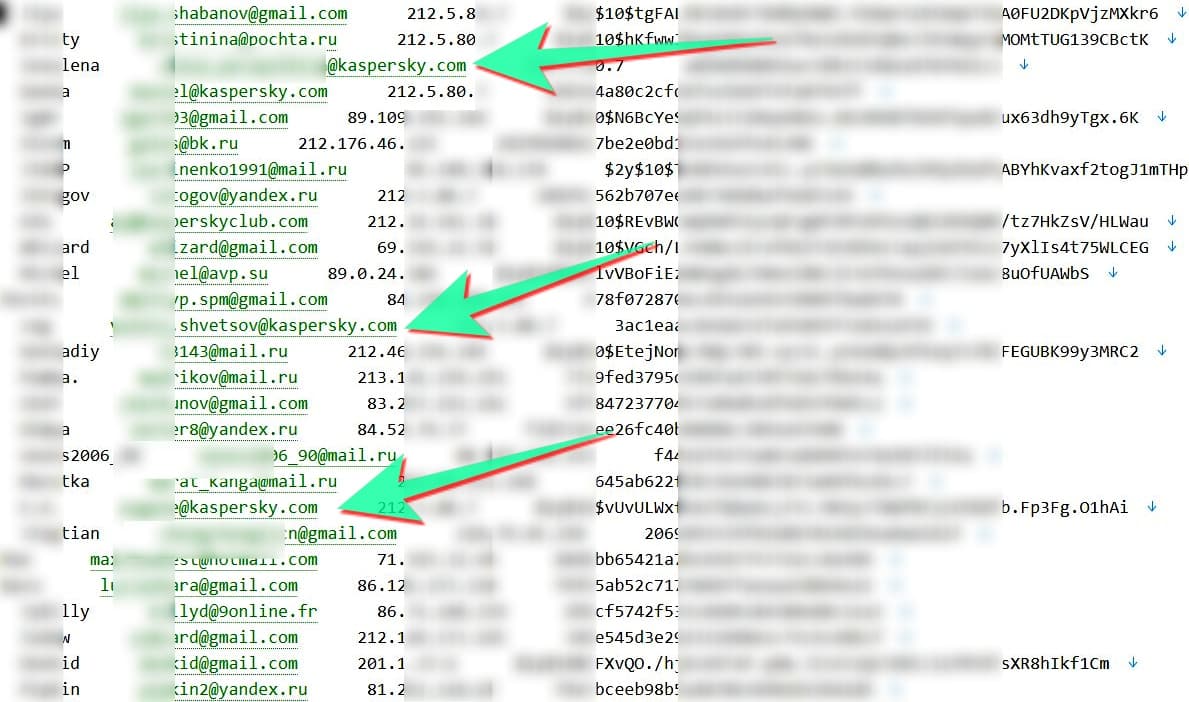
However, despite its unofficial status, the data breach of the fan club does not exclude the presence of Kaspersky employee data. Surprisingly, nearly 200 users included in the leak have email addresses hosted on the @kaspersky.com domain.
According to the information obtained by Hackread.com, the data breach occurred on March 24, 2024, but the data was not leaked until April 4, 2024. The leaked database surfaced on RGB’s official website and later on Breach Forums and Telegram. Upon analysis, it was found to contain the personal details of forum users, including the following data:
Full names
IP Addresses
Email addresses
Password Hashes
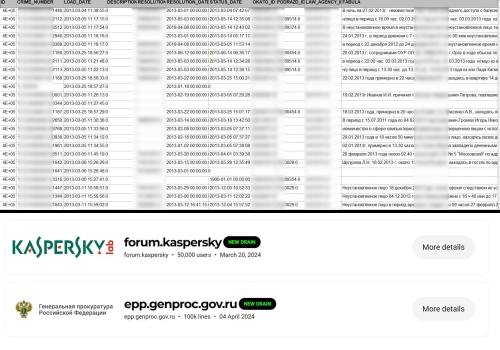
Screenshot from the leaked data (Credit: Hackread.com)
Data Breach Confirmed
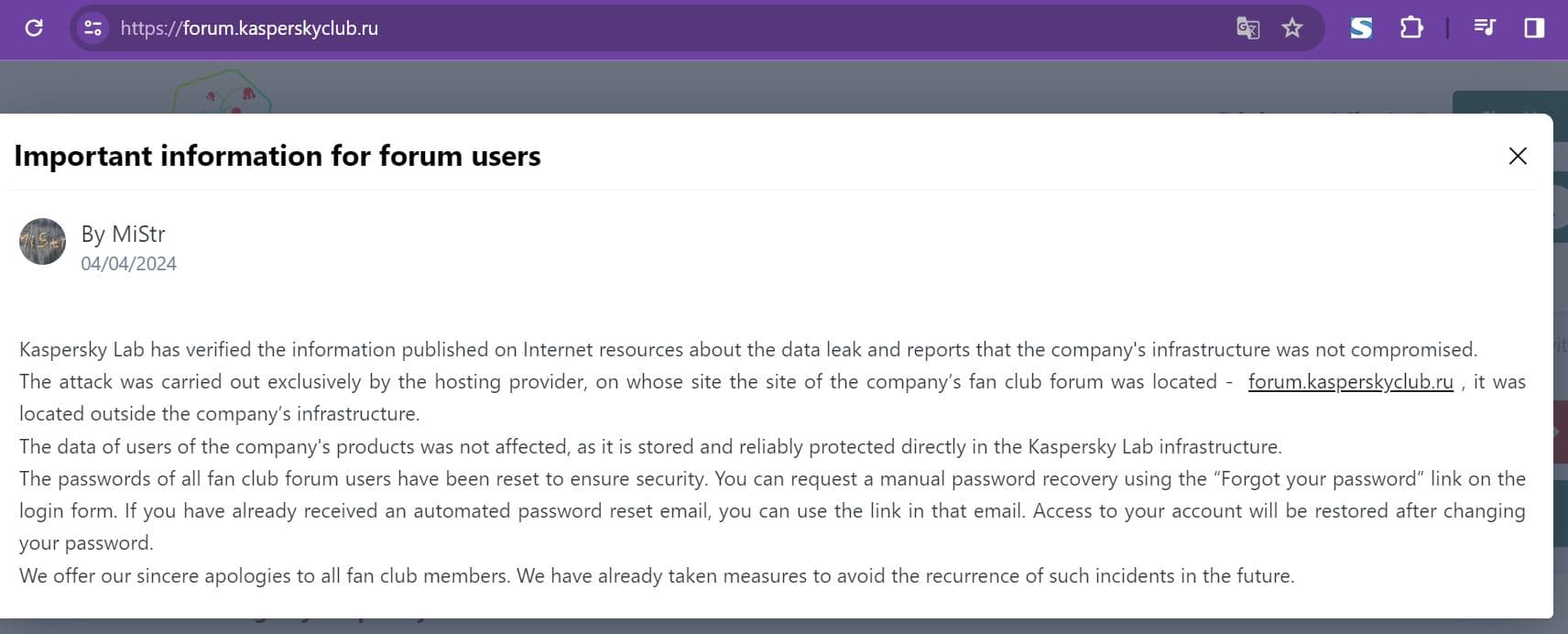
The forum administrators have officially confirmed the occurrence of the data breach. In a statement posted on both the forum and its official Telegram channel, one of the administrators, identified by the online handle “MiStr,” acknowledged the compromise of the forum’s security and announced the initiation of a mass password reset.
However, the administrator asserted that the data breach stemmed from a hack targeting the forum’s hosting services provider. Furthermore, Kaspersky Labs investigated the attack and confirmed that none of its servers, systems, or domains were affected by the breach. They emphasized that the incident was isolated to the fan club forum.
Forum administrator announcing the breach (Screenshot: Hackread.com)
The Prosecutor’s Office of the Russian Federation HACKED?
The RGB group, self-identifying as a hacktivist collective, has asserted responsibility for breaching the Prosecutor’s Office of the Russian Federation (epp.genproc.gov.ru). To substantiate their claim, the group leaked an Excel file containing precisely 100,000 lines of information about criminal cases from 2013.
Given that the file is in Russian, conducting a thorough analysis is currently unfeasible. However, sources familiar with the matter informed Hackread.com that the RGB group likely has ties to another hacking entity known as “NLB.” According to these sources, NLB previously sold a database titled “Prosecutor General’s Office of the Russian Federation,” encompassing data from January 2013 to December 2022.
In August 2023, NLB also boasted about successfully breaching several prominent Russian platforms, including SberLogistics, GeekBrains, and DIKIDI.
Screenshot from the alleged crime information stolen from The Prosecutor’s Office of the Russian Federation – Screenshot from the RBG Group’s website (Screenshot: Hackread.com)
Nonetheless, considering that the data is now publicly accessible, immediate action is imperative for users of the Kaspersky Fan Club forum. It is strongly advised to change your forum password without delay.
Additionally, it is crucial to update the password for your associated email address. Remain vigilant and scrutinize any emails requesting personal information or directing you to log in to unfamiliar platforms, as these could be phishing attempts.
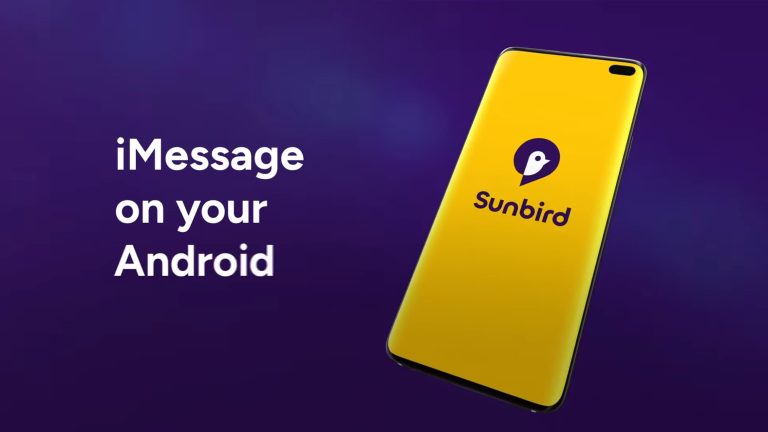
It’s an app that tried to bring iMessage to Android before but had significant security problems. With a failed attempt early in 2022, the Sunbird beta will relaunch with newly added features and better security.
Sunbird beta (iMessage for Android) will relaunch, getting a second shot with security fixes
Through a press statement issued on its website, Sunbird has revealed its desire to reintroduce iMessage for Android. Following a barrage of criticism, the service was ironically discontinued. And immense lapses in security marred its initial phase.
Sunbird debuted in early 2022 as a way for Android users to experience iMessage functionality on their devices. However, it had several setbacks when people discovered some gaps within its system like publicly accessible shared media and real-time messages among other things. After this happened, the service stopped functioning forever.
A press release says that Sunbird is returning to the market with more focus on privacy and safety precautions. The company has made significant changes in its systems such as replacing older architecture with AV2 architecture that focuses on secure messaging protocols.
According to Sunbird, this new architecture uses an MQTTS message broker that complies with OASIS standards for secure messaging. In addition, the application will also integrate with RCS via Google Messages just as it did during their previous version under Nothing Chats branding.
The firm makes changes to its staff reorienting its stance toward security
Sunbird has made changes within its organization thus strengthening its stance regarding security matters. The firm engaged CIPHER, which is an independent cyber-security consultancy firm alongside Jared Jordan who was a former Director of Engineering at Google for Gmail as one of its official advisors.
Though admitting that there were indeed security breaches in the past years leading to a loss of faith by customers, Sunbird has chosen to focus on offering security and openness while reinitiating its services. The company’s efforts to fix its flaws and tighten security demonstrate that Sunbird is keen on ensuring secure messaging systems for its users.
Users will closely watch Sunbird’s actions as it comes back into the market and make sure that it complies with strict safety regulations related to personal data and communication privacy.
Meta is fighting the FTC about the WhatsApp and Instagram acquisition, and it has hit the agency with a preemptive strike. While the FTC claims this is a monopolistic business practice, Meta is going after the legal definitions.
The Federal Trade Commission is currently engaged in a legal battle with Meta. The company, previously known as Facebook, is accused of being anti-competitive and creating a monopoly. Meta has essentially requested a Federal Court to junk the FTC’s antitrust lawsuit.
The Instagram and WhatsApp acquisition benefited consumers, claims Meta
Meta has confirmed it has filed a motion for summary judgment in its lawsuit against the US FTC. The company is essentially asking the District Court to dismiss the case because the “FTC has failed to provide evidence to support its claims.”
There are two aspects that Meta urges the court to consider. The company believes the FTC won’t be able to prove what it claims is the relevant market in the case. In simpler terms, Meta insists that it did not become a monopoly after acquiring Instagram and WhatsApp.
On the contrary, “Meta faces fierce competition from a range of platforms – from TikTok and X to YouTube and Snapchat,” laments the company.
Consumer Watchdog Group Supports Meta’s Move for Summary Judgment in Antitrust Case
WASHINGTON, D.C. – Facebook parent company Meta is moving for summary judgment in the Federal Trade Commission’s (FTC) ongoing litigation against them regarding their acquisition of Instagram and…
— Taxpayers Protection Alliance (@Protectaxpayers) April 5, 2024
Secondly, Meta insists that acquiring WhatsApp and Instagram did not hurt the market or adversely affect end consumers. The company stresses that it has painstakingly improved these social media platforms.
Meta has reportedly stated that it spent “billions of dollars” and invested “millions of hours” to make the apps, “better, more reliable, and more secure.”
Why is Meta urging the US Court to dismiss its case against the FTC?
Meta insists the FTC has no evidence establishing that the company’s conduct was “exclusionary”. What this essentially means is that Meta claims acquiring Instagram and WhatsApp did not cause harm to its competitors and consumers. In other words, Meta has implied that its actions weren’t detrimental to the competition, and they didn’t negatively affect end users.
It is important to note that back in 2021, DC District Court Judge James Boasberg had accepted Meta’s motion to dismiss FTC’s complaint. However, the judge gave the FTC a chance to file an amended one, which was allowed to move forward.
NetChoice Applauds Meta For New Motion to Halt Biden FTC’s Anti-Consumer Agenda
WASHINGTON—Today, Meta filed a motion at the U.S. District Court for the District of Columbia, pushing back against the Federal Trade Commission for its lack of evidence in its case against the… pic.twitter.com/xVUvsgdRgV
The FTC’s amended complaint is far more substantial and detailed than its previous one. However, in its appeal, Meta has targeted the FTC’s market definitions, which it claims are “unreasonably narrow”.
The FTC has excluded platforms such as TikTok and YouTube from its market definitions. Instead, in its complaint, the agency includes only Facebook, Instagram, Snapchat, and MeWe, Meta claims.
Needless to say, Meta’s platforms are way bigger than the other platforms included in the FTC’s market definitions. However, if other big web platforms and companies are included, Meta’s gargantuan stature is somewhat humbled.
Google Assistant’s “Broadcast” feature needs users to complete two steps before their message is delivered. The nifty and useful feature may have become more cumbersome. Although the added step might be a bug or a necessity, it certainly isn’t meant to improve security.
Has Google added an extra step for Broadcast?
Google Assistant includes multiple devices such as smart speakers, smart TVs, and even smartwatches. These devices, often scattered throughout a smart home, can be turned into a Public Address (PA) system.
The Broadcast feature essentially allows users to turn connected smart devices into an impromptu intercom system. To use the Broadcast PA system, users had to merely say, “Hey Google, Broadcast”, followed by the message.
Simply put, just a single instruction, followed by the intended message, was enough. Google Assistant would immediately obey with an “Alright, Broadcasting now”. However, it appears users need to add an extra step before Google Assistant delivers the message to connected devices.
Why should users wait for Home Assistant’s confirmation?
Google Assistant users have to reportedly pause after saying “Hey Google, Broadcast”. The AI system then responds with, “What’s the message?” Users can then convey the desired message that has to be sent out to connected devices.
Although not a huge inconvenience, the new method does add a few extra seconds to the process, which was once nearly instantaneous. Interestingly, Google hasn’t added a pause to boost security or prevent users from accidentally broadcasting undesired messages. In other words, Google might not have intentionally split up the process.
Several users have observed that Google Assistant has trouble understanding vocal instructions. There have been complaints about the AI assistant not grasping most “broadcast” commands that are immediately followed by the message.
There have been several instances wherein Google Assistant has initiated a Google Search instead of broadcasting the message. Incidentally, the assistant is still delivering several common messages such as “dinner is ready”, without any hiccups.
Hence, it is likely that Google Assistant needs users to split the instructions so that it understands they intend to broadcast a message. Hence, it will know that any audio that follows the “Hey Google, Broadcast” keywords will have to be delivered, and not searched.
Google had recently restricted the ability to call a device or broadcast a message to a Google Family Group. Users can only broadcast messages to devices that are on the premises where the message originated.
The gaming possibilities on your Apple Vision Pro are getting a boost thanks to the support for more 8BitDo controllers. If you’ve been looking for better controller options to play with Apple’s AR headset, you’re in luck.
8BitDo is one of the most popular gaming accessory manufacturers. Its controller options not only get the job done but also come in multiple nostalgic designs reminiscent of classic consoles. Now, a new set of 8BitDo controllers joins the list of peripherals compatible with the Apple Vision Pro. These accessories have Apple approval, which is important so that they work immediately after pairing them via Bluetooth without further complications.
These are the 8BitDo controllers now compatible with Apple Vision Pro
The list of 8BitDo controllers compatible with Apple Vision Pro now includes the following models: Ultimate 2.4G, Pro 2, SN30 Pro, SN30 Pro for Android (Xbox licensed), SN30 Pro+, Lite 2, Lite SE, and N30 Pro 2. Additionally, the company made its Retro Mechanical Keyboard compatible. This means that the new list of supported accessories will enhance both gaming and productivity.
This way, the 8BitDo controller models mentioned above join the list of current MFi accessories already compatible with the Apple Vision Pro. As of today, you can play most iPad games on Apple’s headset. In addition, it supports Xbox Cloud Gaming and Nvidia GeForce Now. Therefore, there is a good catalog of both casual and AAA titles to enjoy.
It’s noteworthy that 8BitDo had already announced in 2023 support for multiple accessories in Apple products. However, it aimed more at the segment of smartphones, tablets, and Mac computers. According to the Engadget report, this was possible thanks to both the iOS 16.3/iPadOS 16.3/tvOS 16.3/macOS 13.2 updates and new controller firmware.
It is already well known that the Apple Vision Pro is not the most comfortable AR headset in the world. This means that it would not be the best idea to use them for long gaming sessions. Even so, it is good to have support for more controller options available, also thinking about future generations.
Recent reports suggest that the Vivo X100s and X100s Pro will be the next models in the series. As their names indicate, they will be improved versions of the X100 and X100 Pro that we already know. The arrival of a Vivo X100 Ultra is also expected later.
Previously, the Vivo X100s had been detected on certification platforms, and now it is the turn of the “Pro” model. As spotted by 91 Mobiles, the Vivo X100s Pro is already listed on the Google Play Console. The listing includes some key specifications, and even a render confirming its design.
Here’s what the Google Play Console reveals about the Vivo X100s Pro
The phones in the “Vivo X” series stand out, especially for their impressive cameras, premium design, and high performance. The “s” versions usually arrive a few months later, maintaining all the elements of the original model, but offering a more powerful chip. However, this time the approach may be slightly different.
The Vivo X100s Pro was certified on the Google Play Console with model number PD2324, powered by the MediaTek MT6989 SoC. The chip model refers to the Dimensity 9300, the same hardware present in the original X100 Pro. It’s noteworthy that the base Vivo X100s would also use the same chip.
Anyway, it is also possible that it has the Dimensity 9300 Plus chipset. Previously, the device appeared in Geekbench listings with more CPU details. At that time, there was a difference in the clock speed of its main core (3.4GHz) compared to that of the standard Dimensity 9300 (3.25GHz).
Other specs revealed by the listing include a Mali G720 GPU, Android 14, 16GB of RAM, and a 1260 x 2800 px screen resolution.
This is what the new device looks like
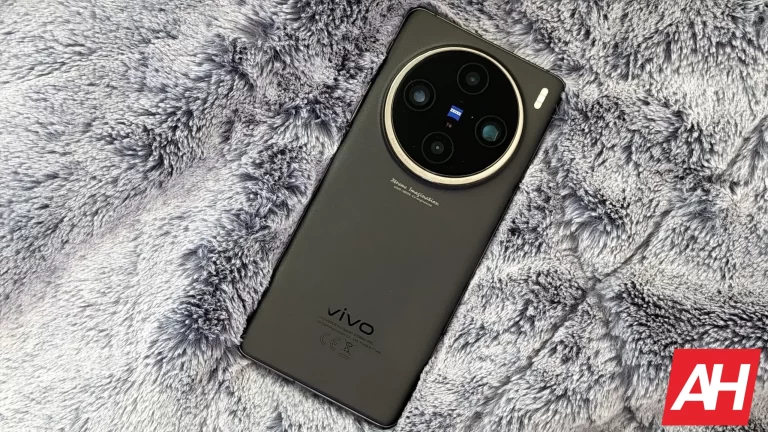
Regarding the design, it seems that it is where the brand will make the least changes. The render shows a look quite similar (or identical) to that of the current X100 series. That is, there is a prominent circular camera module in its rear area with three sensors. The module also includes “ZEISS”, highlighting the nature of its optics and the collaboration with the traditional camera company. The render shows the device in light blue, but it would arrive in at least three colors.
To top it off, there is still no official confirmation of the launch date of the series. However, the report suggests that it could be announced in India alongside the Vivo X Fold 4 and the Vivo Pad 3 this April.
Cybersecurity firm Wiz.io found that AI-as-a-service (aka AI Cloud) platforms like Hugging Face are vulnerable to critical risks, which allow threat actors to escalate privileges, gain cross-tenant access, and potentially take over continuous integration and continuous deployment (CI/CD) pipelines.
Understanding The Problem
AI models require a strong GPU, often outsourced to AI service providers similar to consuming cloud infrastructure from AWS/GCP/Azure. Hugging Face’s service is called Hugging Face Inference API.
Wiz Research could compromise the service running custom models by uploading their malicious model and using container escape techniques, allowing cross-tenant access to other customers’ models stored in Hugging Face.
The platform supports various AI model formats, two prominent ones being PyTorch (Pickle) and Safetensors. Python’s Pickle format is known for being unsafe and allowing remote code execution upon deserialization of untrusted data although Hugging Face assesses Pickle files uploaded to their platform, highlighting those they deem dangerous.
However, researchers cloned a legitimate Pickle-based model (gpt2), modified it to run a reverse-shell upon loading, and uploaded the hand-crafted model as a private model. They interacted with the model using the Inference API feature, obtaining a reverse shell and discovered that crafting a PyTorch model that executes arbitrary code is straightforward, whereas uploading their model to Hugging Face allowed them to execute code inside the Inference API.
Potential Risks
The potential impact is devastating as attackers could access millions of private AI models and apps. Two critical risks include shared inference infrastructure takeover risk, where malicious models run untrusted inference infrastructure, and shared CI/CD takeover risk, where malicious AI applications may attempt to take over the pipeline and execute a supply chain attack after taking over theCI/CD cluster.
Furthermore, adversaries can attack AI models, AI/ML applications, and inference infrastructures using various methods. They can use inputs that cause false predictions, incorrect predictions, or malicious models. AI models are often treated as black-box and used in applications. However, there are few tools to verify the integrity of a model, so developers must be cautious when downloading them.
“Using an untrusted AI model could introduce integrity and security risks to your application and is equivalent to including untrusted code within your application” Wiz Research’s reportexplained.
Hugging Face- Wiz Research Join Hands
Open-source artificial intelligence (AI) hub Hugging Face and Wiz.io have collaborated to address the security risks associated with AI-powered services. The joint effort highlights the importance of proactive measures to ensure the responsible and secure development and deployment of AI technologies.
Commenting on this, Nick Rago, VP of Product Strategy at Salt Security added that “Securing the critical cloud infrastructure that houses AI models is crucial and the findings by Wiz are significant. It is also imperative that security teams recognize the vehicle in which AI is trained and serviced is an API, and rigorous security must be applied at that level to ensure the security of AI supply chains.”
A Concerning Scenario
This discovery comes at a time when concerns are already raised regarding data safety under AI-based tools. The AvePoint survey shows that less than half of organizations are confident they can use AI safely, with 71% concerned about data privacy and security before implementation, and 61% worried about internal data quality.
Despite the widespread use of AI tools like ChatGPT and Google Gemini, fewer than half have an AI Acceptable Use Policy. Additionally, 45% of organizations experienced unintended data exposure during AI implementation.
The widespread adoption of AI across various industries necessitates strong security measures. These vulnerabilities could potentially allow attackers to manipulate AI models, steal sensitive data, or disrupt critical operations.
Gorilla Armor protection is the most game-changing upgrade on Samsung’s latest flagship phone, the Galaxy S24 Ultra. It marks a significant uptick in the toughness and optical functionality of the phone over previous flagships. And now Samsung is going over it in more detail.
Gorilla Armor: Samsung unveils the secret behind the Galaxy S24 Ultra’s glare-free screen
Despite all of its buzz, both Samsung and Corning have hidden details about the Gorilla Armor display. However, Samsung has come out recently explaining how Gorilla Armor functions, how incredibly scratch-resistant it is, and its detailing anti-reflective properties.
In a video, Samsung shows how Gorilla Armor uses an intricate layering process involving the application of nanometre-thick coatings to attain greater scratch resistance and optical clarity. This results in increased lifespan and reduced glare by 75% for better readability under different lighting environments.
Because this material incorporates layering during production, the Galaxy S24 Ultra screen shows amazing resilience to scratches. The vacuum deposition systems used in an ultra-clean environment further enhance the display’s resistance to scratches compared to traditional cover glasses by more than four times.
Corning’s Gorilla Armor is three times better at drop tests
Additionally, Samsung’s rigid tests show that Gorilla Armor is three times better at drop tests than traditional cover glass. Moreover, it blocks reflectance at the same time, which allows users to watch videos even under direct sunshine or other adverse lighting conditions.
Samsung’s inclusion of Gorilla Armor on the Galaxy S24 Ultra is a testament to the company’s ongoing innovation. It offers not only protection against scratches and drops but also improved display clarity and readability, making it easier for users to view content no matter their location.
Samsung phones are getting popular among consumers for productivity as well as entertainment; therefore features like Gorilla Armor help prolong the device’s life and enhance user satisfaction. With its advanced display technology, Galaxy S24 Ultra sets new benchmarks in durability and performance among premium phones.
Gorilla Armor, provided only by Samsung for now, is a huge step forward in display protection while giving customers peace of mind and a better viewing experience on Galaxy S24 Ultra.