If used correctly, social media can not only provide businesses with a fantastic (generally free) chance to market their product or services but also, just as importantly, allow them to engage with customers. However, as anyone with any experience on social media will testify, not all the interactions to be had are positive ones.
In this article, limited company formation specialists 1st Formations (who you will find on all major social media platforms) provide a roadmap for how your business should handle any negative feedback that you receive on social media. Let’s get started.
Make sure you see all comments
You can’t deal with negative feedback or comments about your business if you don’t see what’s being said. You need to be diligent in ensuring that you catch everything.
Whilst the platforms’ in-built alerts are relatively reliable, it’s still easy to miss important comments, or simply lose track of what’s being said. To ensure that you see everything, use your social media management system (if you’re not yet using one, you really should be) to track all the words and phrases connected to your brand, even if they’re not officially used by you.
This way, if everything has been set up correctly, you will be notified immediately whenever your name is mentioned. This will allow you to keep on top of any discussions that are happening.
Furthermore, you should also set up Google Alerts to cover the feedback that is being shared away from social media on forums and other web pages.
Deal with the feedback quickly
Your time is of course precious, and social media activity won’t always be at the top of your to-do list. However, when negative feedback does come through, whether this is a tweet or a comment on Instagram or YouTube, you must respond as soon as you can (within business hours) to prevent the issue from escalating.
If there is a specific issue, rather than a piece of fleeting feedback that you can address there and then, this does not mean that you need to fix the problem immediately. Request all the information that you need (if it’s an existing customer, we’re talking name, order reference, and contact information), and clearly state that you’re looking into the matter and will get back to them shortly.
Providing an exact timeframe in which you will be back in touch is a good idea, but make sure that the deadline you set yourself is realistic, as the customer chasing you down for an update could cause further damage.
Then, when you do get a chance, work with your team and the individuals involved to reach a satisfactory resolution. Hopefully, this isn’t a drawn-out process, but when it is a complicated matter, make sure you provide the individual with regular updates, being sure to thank them for their understanding.
Take it offline
The ideal scenario is to take the issue away from public view as soon as possible. At the same time as requesting the information you need to investigate any issue, explain to the individual that you will be in contact with them through email or if convenient, telephone.
This is a genuinely more efficient approach to resolving any issues, rather than the stagnated back and forth that social media provides, and makes sure that the situation isn’t played out in a public forum where reputational damage can be made.
This will not always be convenient for the person you are engaging with. They will generally understand that you will want to tackle the situation in private. When this occurs, simply explain how corresponding away from the social media platform will help resolve the issue quicker. This won’t always work but you must try.
Remain professional at all times
Ryanair is perhaps the well-known purveyor of the snarky social media response to less-than-happy customers. This approach works well for them because they’re a household name and it’s very much ‘on-brand’. However, this stance is probably not appropriate for you and your business.
When less than positive comments are made, you must remain professional. Under no circumstances should you partake in an online argument with anyone – even if what they say is wholly incorrect and paints your operation poorly.
Take on an apologetic tone, even if you are in the right. Thank them for the feedback, ask what a satisfactory resolution for them would be, and then do what you can, within your protocols (don’t deviate from these just because it’s on social media) to fix any issues that have arisen.
State your case, if a problem has occurred because the customer has misunderstood something or has not provided the correct information required for their order to be processed, explain this – but again, in a professional manner.
Know when enough is enough
When negative feedback oversteps the mark and turns into harassment, you should take necessary action. Certain behaviours do not become acceptable just because it’s aimed at a business account rather than a personal account.
If you are being targeted, you should publicly state your business’s policies regarding harassment. If the abuse continues, you should ignore the comments (admittedly this is easier said than done) and then consider muting or blocking the account in question.
If it continues, you should report the user to the social platform, and if the abuse is extreme, also to the police.
Try to stay calm
Anyone who has managed social media activity for business purposes will confirm just how easy it is to take negative feedback personally. Regardless of who is right and who is wrong, it is an upsetting experience. This feeling is magnified if the business that is being criticised is your own, as it does feel personal.
This is completely understandable. Nonetheless, this should not seep into how you deal with the feedback. If you are emotionally affected by what is being said, take the necessary mindful steps to calm and relax yourself, but do not allow this to cloud how the issue is dealt with.
As we stressed above, you must remain polite and professional. If you feel that you are unable to do this, move away from the situation for some time or see if there is someone else on your team who can work to resolve the problem accordingly.
Listen to the feedback
No business is perfect. Rather than baulk at the idea of negative feedback coming your way, always try to see these as an opportunity to fix issues and ultimately improve your business.
Once a specific issue has been resolved, do what you can to make sure that it doesn’t happen again. In customer-facing roles, it can be easy to lose empathy for the customer, and simply assume every problem is because of a misunderstanding or basic error on their part. It’s their problem, not yours. This is a big mistake.
Your business must have a joined-up approach. If you have a large team, when situations do occur, ensure that these are shared with all the appropriate people so that permanent fixes can be reached.
Remember, it’s a branding exercise
Every interaction you have online is a chance to demonstrate to customers and potential customers just how great your brand is, and how much you appreciate your customers.
When a piece of customer feedback has led to an update in how your service is delivered, shout about this. Publicly thank the customer in question, send them a gift, and ask other customers for their feedback and improvement suggestions.
One of the major benefits of using social media for business is that it allows you to project your brand’s personality. This is done through the tone of voice that you use, the content you share, and more so than anything – the interactions that you have with people.
Whilst negative feedback might not be at the top of your list when it comes to the type of engagement you have, it does provide you with the perfect opportunity to change someone’s impression of you. When handled correctly, even the most scathing reviews can be used to your business’s advantage.
So, there you have it
That’s how your business should deal with negative feedback on social media.
Whilst you’ll never be able to stop these comments coming in (without ceasing all social media activity, which is not advisable for a small business), follow the advice covered in this article to ensure feedback is dealt with in a way that protects your business’s reputation and even enhances it. Thanks for reading.
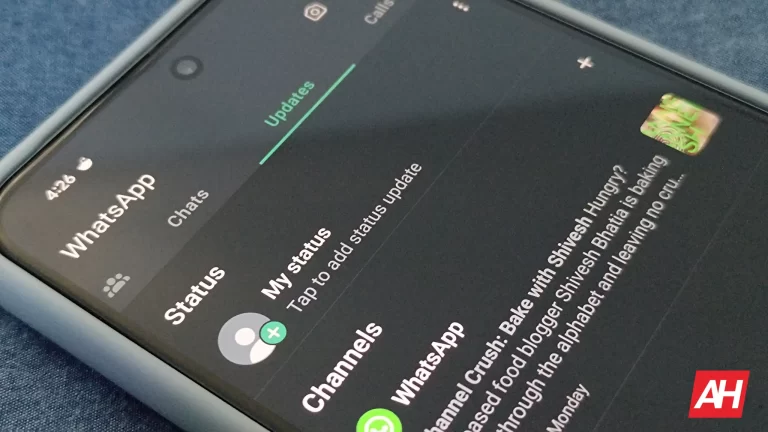
Meta has been making a lot of changes to the WhatsApp app in recent times. The team previously decided to extend the support of chat locks to linked devices. Now, it has been playing with the user interface of the app in Android for a while now. It first made some changes such as introducing the bottom navigation bar and redesigning the status feed, and now, it is reportedly working on a new colorless UI design for WhatsApp.
WhatsApp’s new colorless design is out for beta testers
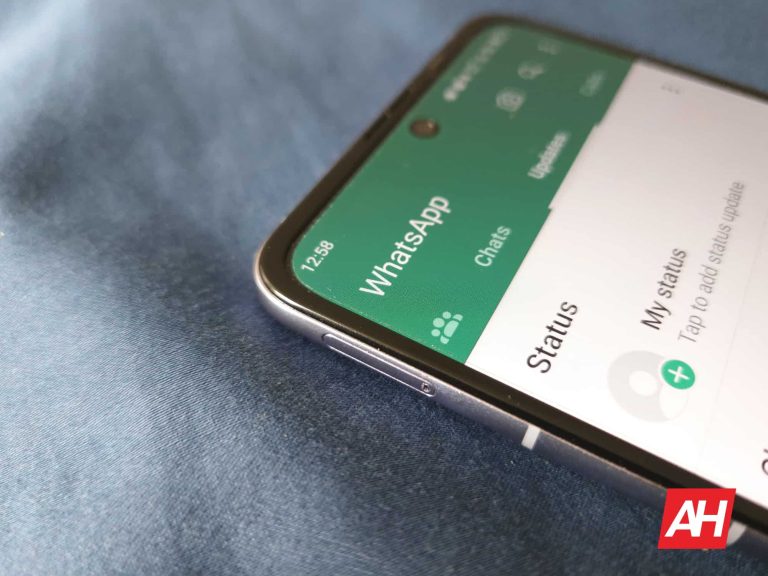
In the latest version of WhatsApp beta for Android, the team has rolled out a fresh new UI redesign to its app. The new UI looks cleaner. If we look carefully, the top bar now has a completely clean look. It has a white background with “WhatsApp” written over it in green color. Moreover, the search can also be accessed alongside the media and settings icon on the right-hand side of the top bar itself.
The overall interface now looks whiter compared to how it used to look earlier, and that’s the reason we are calling it colorless. Whether it be the profile page or quick settings, everything will now have a white and simple background. The new redesign makes the app look minimal and closer to its iOS version.
The new bottom navigation bar is also here!
A long time ago, the developers added the bottom navigation bar to WhatsApp. But now, they are further modifying it. When developers introduced the bottom navigation bar, many users complained because it didn’t support swipe to navigate.
However, it appears that they have addressed this in the newer version. Not only did they add swipe-to-navigate support, but they also redesigned the icons slightly and gave them more rounded corners, aligning with Google’s design recommendation. This adjustment fits the overall look of not just the app, but also the Android platform.
Right now, people are trying to navigate the rocky road that is the legal side of AI. Currently, companies like the New York Times are suing AI companies over potential copyright infringement. Well, the legal drama goes on, as YouTube’s CEO has warned OpenAI that training Sora using YouTube videos is against its rules.
A little while back, OpenAI announced Sora. This is an incredibly powerful video generation platform that can generate realistic-looking videos using text prompts. The results that it produces are extremely photorealistic, and it will undoubtedly be a major issue for filmmakers. Well, recently, OpenAI showed off Sora to Hollywood studios and directors. So, that’s going to be another can of worms.
YouTube’s CEO warns OpenAI that using YouTube videos is against its rules
The mass majority of services you encounter on the internet have what are called terms of service. If you want to use those services, you have to agree to abide by their terms. If not, you risk being booted off. YouTube has its terms of service, and they’ve become infamous for YouTubers over the years for sometimes being a bit heavy.
Amongst the jungle of terms, there is a section that prohibits people from using YouTube videos without the uploader’s consent. This applies to people downloading YouTube videos and re-uploading them or using them in different ways. However, it could also apply to AI companies scraping videos from YouTube and using them to train their AI models.
YouTube’s CEO Neal Mohan has warned OpenAI that training Sora or any video generation platform using YouTube videos is a clear violation of YouTube’s terms of service. This isn’t to say that Sora has used YouTube videos, and this is not an initiation of legal action. It seems that the company is just covering its bases.
In order for Sora to create such realistic imagery, OpenAI needs to train it on a metric ton of video data. Well, YouTube is one of the largest reservoirs of video data in the world. However, it appears that the company does not want OpenAI to use its videos to train Sora.
From a creator’s perspective
Speaking to Bloomberg, Mohan stated that, “From a creator’s perspective, when a creator uploads their hard work to our platform, they have certain expectations. One of those expectations is that the terms of service are going to be abided by.”
At this point, we’re not sure if YouTube is going to press this any further or go as far as to investigate. What we do know is that YouTube does not want its users’ videos being used to train an AI video generator. YouTubers can rest assured that OpenAI won’t scrape their videos.
Hackers have been found hijacking Facebook pages to impersonate popular AI brands, thereby injecting malware into the devices of unsuspecting users.
This revelation comes from a detailed investigation by Bitdefender Labs, which has been closely monitoring these malicious campaigns since June 2023.
Recent analyses of malvertising campaigns have revealed a disturbing trend.
Ads are distributing an assortment of malicious software, which poses severe risks to consumers’ devices, data, and identity.
DocumentRun Free ThreatScan on Your Mailbox
Trustifi’s Advanced threat protection prevents the widest spectrum of sophisticated attacks before they reach a user’s mailbox. Try Trustifi Free Threat Scan with Sophisticated AI-Powered Email Protection .
Unwitting interactions with these malware-serving ads could lead to downloading and deploying harmful files, including Rilide Stealer, Vidar Stealer, IceRAT, and Nova Stealer, onto users’ devices.
Rilide Stealer V4: A Closer Look
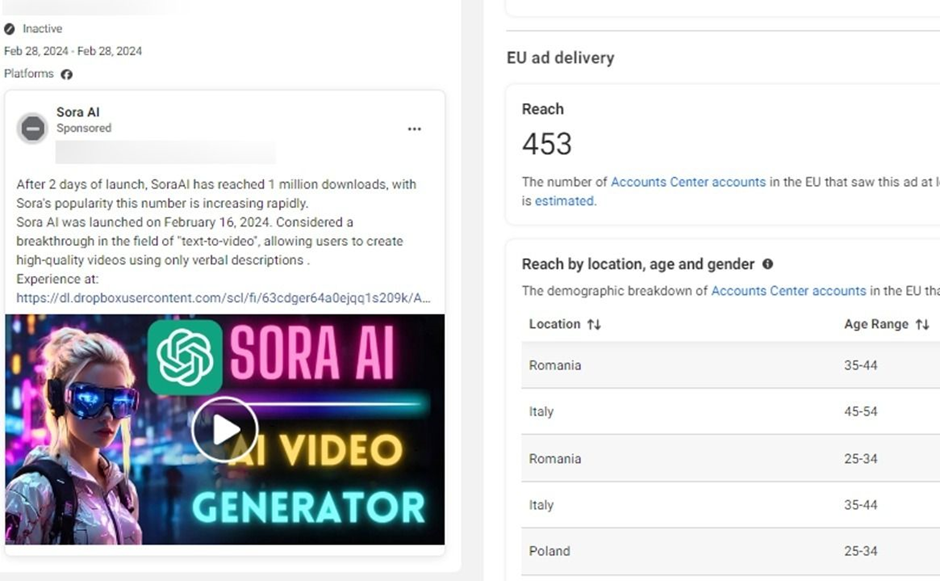
Bitdefender Labs has spotlighted an updated version of the Rilide Stealer (V4) lurking within sponsored ad campaigns that impersonate popular AI-based software and photo editors such as Sora, CapCut, Gemini AI, Photo Effects Pro, and CapCut Pro.
This malicious extension, targeting Chromium-based browsers, is designed to monitor browsing history, capture login credentials, and even facilitate the withdrawal of crypto funds by bypassing two-factor authentication through script injections.
Sora Ad campaignGemini Ad Campaign
Key Updates in Rilide V4:
Targeting of Facebook cookies
Masquerading as a Google Translate Extension
Enhanced obfuscation techniques to conceal the software’s true intent
Indicators of compromise
Malicious hashes
2d6829e8a2f48fff5348244ce0eaa35bcd4b26eac0f36063b9ff888e664310db – OpenAI Sora official version setup.msi – Sora
a7c07d2c8893c30d766f383be0dd78bc6a5fd578efaea4afc3229cd0610ab0cf – OpenAI Sora Setup.zip – Sora
e394f4192c2a3e01e6c1165ed1a483603b411fd12d417bfb0dc72bd6e18e9e9d – Setup.msi – Sora
021657f82c94511e97771739e550d63600c4d76cef79a686aa44cdca668814e0 – Setup.msi – Sora
92751fd15f4d0b495e2b83d14461d22d6b74beaf51d73d9ae2b86e2232894d7b – Setup.msi – Sora
32a097b510ae830626209206c815bbbed1c36c0d2df7a9d8252909c604a9c1f1 – Setup.msi – Sora
c665ff2206c9d4e50861f493f8e7beca8353b37671d633fe4b6e084c62e58ed9 – Setup.msi – Sora
0ed3b92fda104ac62cc3dc0a5ed0f400c6958d7034e3855cad5474fca253125e – Capcut Pro For PC.setup.msi – Capcut
757855fcd47f843739b9a330f1ecb28d339be41eed4ae25220dc888e57f2ec51 – OpenAI ChatGPT-4.5 Version Free.msi – ChatGPT
3686204361bf6bf8db68fd81e08c91abcbf215844f0119a458c319e92a396ecf – Google Gemini AI Ultra Version Updata.msi – Gemini AI
d60ea266c4e0f0e8d56d98472a91dd5c37e8eeeca13bf53e0381f0affc68e78a – Photo Effects Pro v3.1.3 Setup.msi – Photo Effects
bb7c3b78f2784a7ac3c090331326279476c748087188aeb69f431bbd70ac6407 – Photo Effects Pro v3.1.3 Setup.msi – Photo Effects
0ed3b92fda104ac62cc3dc0a5ed0f400c6958d7034e3855cad5474fca253125e – AISora.setup.msi – Sora
Vidar Stealer: Evolving Threats
Vidar Stealer, another prolific info stealer, is marketed through the same MaaS model via dark web ads, forums, and Telegram groups.
Capable of exfiltrating personal information and crypto from compromised devices, Vidar’s distribution has evolved from spam campaigns and cracked software to malicious Google Search ads and social media platforms, mainly through sponsored ads on Meta’s platform.
Despite its name, IceRAT functions more as a backdoor on compromised devices. It acts as a gateway for secondary infections, such as crypto miners and information stealers that target login credentials and other sensitive data.
Nova Stealer emerges as a highly proficient info stealer with capabilities including password exfiltration, screen recordings, discord injections, and crypto wallet hijacking.
Nova Stealer, offered as MaaS by the threat actor known as Sordeal, represents a significant threat to digital security.
Indicators of Compromise
Malicious hashes
fb3fbee5372e5050c17f72dbe0eb7b3afd3a57bd034b6c2ac931ad93b695d2d9- Instructions_for_using_today_s_AI.pdf.rar – AI and Life
6a36f1f1821de7f80cc9f8da66e6ce5916ac1c2607df3402b8dd56da8ebcc5e2- Instructions_for_using_today_s_AI.xlsx_rar.rar – AI and Life
fe7e6b41766d91fbc23d31573c75989a2b0f0111c351bed9e2096cc6d747794b- Instructions for using today’s AI.pdf.exe – AI and Life
ce0e41e907cab657cc7ad460a5f459c27973e9346b5adc8e64272f47026d333d- Instructions for using today’s AI.xlsx.exe – AI and Life
a214bc2025584af8c38df36b08eb964e561a016722cd383f8877b684bff9e83d- 20 digital marketing tips for 2024.xlsx.exe – Google Digital Marketing
53714612af006b06ca51cc47abf0522f7762ecb1300e5538485662b1c64d6f55 – Premium advertising course registration form from Oxford.exe – Google Digital Marketing
728953a3ebb0c25bcde85fd1a83903c7b4b814f91b39d181f0fc610b243c98d4- New Microsoft Excel Worksheet.exe – Google Digital Marketing
The Midjourney Saga: AI’s Dark Side
The addition of AI tools on the internet, from free offerings and trials to subscription-based services, has not gone unnoticed by cybercriminals.
Midjourney, a leading generative AI tool with a user base exceeding 16 million as of November 2023, has become a favored tool among cyber gangs over the past year, highlighting the intersection of cutting-edge technology and cybercrime.
Midjourney has been a fan-favorite among cybercriminal gangs as well over the past year.
Indicators of compromise
159.89.120.191
159.89.98.241
As the digital landscape continues to evolve, so does the nature of the threats it maintains.
The rise of Malware-as-a-Service represents a significant shift in the cyber threat paradigm that requires vigilant and proactive measures to combat.
Stay updated on Cybersecurity news, Whitepapers, and Infographics. Follow us on LinkedIn & Twitter.
Samsung‘s flagship Galaxy smartphones may soon get a new camera feature called AstroPortrait. It is a special photography mode that the company is developing within the Expert RAW app. As the name suggests, the mode combines portrait shots with Astrophotography, an existing tool to capture pictures of the night sky and astronomical objects. It will allow users to capture portrait images with the night sky in the background.
Expert RAW for Samsung Galaxy devices could add AstroPortrait mode
Expert RAW is Samsung’s professional-grade camera app for flagship Galaxy smartphones, including foldables. It offers granular control over various shooting parameters along with advanced features such as ND Filter and RAW format. The company recently updated the app to add new features. Android Authority decompiled the APK for the app to discover code strings related to an unreleased feature.
The feature in question is titled AstroPortrait. “To take an AstroPortrait, press the Shutter with the person in the frame, then have them leave the frame after the flash so the camera can capture the stars,” one of the strings reads. It pretty much explains what this mode does. It takes a shot with a person in the frame and relies on Astrophotography to capture the stars and other astronomical objects in the night sky.
Once both shots are taken, it blends them to produce a single image featuring the subject on the front and the stars in the background. Vivo added a similar feature to the Vivo X100 Pro (Review). Samsung is now preparing to bring it to Galaxy devices through the Expert RAW app. It will be interesting to see who does it better. Vivo’s X series phones offer excellent camera quality, so the Korean firm has its work cut out for it.
The new feature may roll out soon
Samsung often introduces new Expert RAW features with the launch of its latest flagship devices. The Galaxy S24 series brought an Auto mode for ND Filter, which recently rolled out to the Galaxy S23 and Galaxy Z Fold 5. If it keeps the tradition going, AstroPortrait may arrive alongside the Galaxy Z Fold 6 in August. Other compatible devices will pick it up later with an update for Expert RAW.
That’s just our assumption, though. Samsung could introduce AstroPortrait early. The code strings suggest it will be part of Expert RAW Labs where you find experimental tools that you can add to the app. Multiple exposures, Astrophotography, and ND Filter are all part of Labs. We will let you know when we have more information about the upcoming too. You can update Expert RAW from the Galaxy Store.
Android games are getting popular and people tend to ask why. Android games are simple and quick to operate, requiring little space, but you can also access more complex and sophisticated titles. The pictures and music are constantly clear, allowing users to fully enjoy the visual experience when they go online.
Android smartphones are designed to deliver enjoyment, whether through online games in mobile browsers or online casino apps that give free spins like the Rainbow Riches Casino. Games are easier to build on Android, therefore the brand can provide more games than Apple.
Because of the ease with which apps may be created, they typically launch on Android before iOS. Even gambling sites fall into this category, as Android is more suited to slot and table games than iOS. Online casinos generally create apps first for Android and may choose to skip an Apple app.
Below, you’ll find two brand new Android flagships that are great for gaming, and two older ones.
Samsung Galaxy S24 Ultra
Now let’s look at the finest Android gaming devices. First, you have the Samsung Galaxy S24 Ultra. This phone is like the Rolls-Royce of gaming phones. What about the screen? Stunning! The power is unmatched. When you’re playing games on this device, you feel like you’re right there in the action.
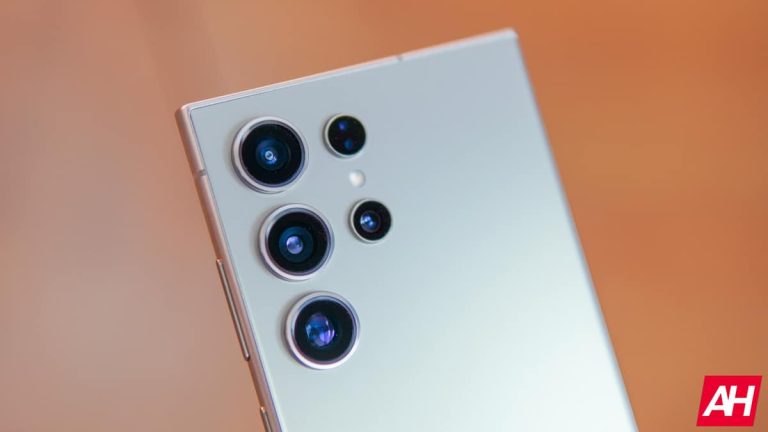
You won’t get some purist gaming features, like shoulder trigger buttons, but you will get some benefits that other gaming phones may not have. That includes a seven-year warranty on OS upgrades, a superb camera system with a suite of lenses including a primary 200MP sensor, and, of course, all the benefits of the GenAI-powered Galaxy AI.
OnePlus 9 Pro
Then there is the OnePlus 9 Pro. Many people, including myself, believed it to be one of the fastest phones on the market, and it’s still plenty fast. How about the game experience? Like nothing else. Smooth, quick, and simply fantastic. It has a cooling system that prevents it from becoming too hot and has access to intelligent technology.
OnePlus 10T
The outcome is as expected. The OnePlus 10T is powered by the Snapdragon 8+ Gen 1 processor, which can reach peak CPU speeds of 3.2 GHz while improving CPU power efficiency by 30%. The processor now includes an enhanced Qualcomm Adreno GPU with a 10% higher GPU clock speed and HDR gaming capabilities. All with a 30% boost in GPU power efficiency over the previous Snapdragon 8 Gen 1.
Doing high-end jobs, gaming, and switching between apps is quick and easy. You’ll feel the strength of the 8+ generation 1 every time you use the phone.
There is no throttling or heating issue. Without a doubt, the OnePlus 10T is a performance monster. The HyperBoost Gaming Engine in the OnePlus 10T is new to OnePlus and comes with several features for gamers to enjoy a smoother and more responsive gaming experience, including General Performance Adapter (GPA), Frame Stabilizer, GPU Load Control (GLC), and LSTouch which is a feature gamers love.
GPA Frame Stabilizer on OnePlus 10T lowers frame rate fluctuations when gaming, resulting in a smoother and more reliable gaming experience. The GPU Load Control in the OnePlus 10T is intended to improve graphics rendering efficiency and reduce rendering power consumption while playing mobile games or performing high-performance jobs.
Android devices aren’t just popular for gaming because of their hardware. No, this is the Google Play Store. The game selection is extensive, with variations between games. Whatever you’re into, it’s available. And for those who enjoy the thrill of the casino, they have you covered. There are slot machines, poker tables, and blackjack. And it can access this at any time and from any location.
OnePlus 12
OnePlus has traditionally prioritized performance in its phones, and the OnePlus 12 is no exception. The same Snapdragon 8 Gen 3 chipset seen in the ROG Phone 8 Pro and Samsung Galaxy S24 Ultra, as well as a giant twin vapor chamber, large battery, and remarkable 100W fast charging (80W in the US), making this a speedy and capable gaming phone.
OnePlus ignores the latest AI trend and instead concentrates on its performance-optimizing Trinity Engine, which keeps the processor, RAM, and storage all in top shape for as long as possible. HyperTouch and other solutions are available to improve gaming responsiveness specifically and in more general use.
Conclusion
Android gaming is rapidly gaining popularity worldwide, and it’s easy to see why. These games are basic, quick, and take up minimal space. It’s all about enjoyment, and Android smartphones offer. Whether it’s the free spins offered by online casino applications or the ease with which games can be developed for Android, it’s a win-win.
Each of these phones comes with the Google Play Store. It’s the cherry on top of an unending list of games whether you play slots, poker, or blackjack.
The Xiaomi Redmi Note 13 Pro+ is the most powerful Redmi Note 13 smartphone that the company announced. Well, at least as far as globally available phones are concerned. This smartphone stands in front of four other Redmi Note 13 smartphones. We’ve reviewed the Redmi Note 13 4G and Redmi Note 13 5G, which are technically inferior to this handset. Is the extra cash worth it? Should you get the more powerful variant instead? Well, those are the questions we’re here to help you answer, in our Redmi Note 13 Pro+ review.
In some ways, the Redmi Note 13 Pro+ managed to surprise me. Whenever I’m reviewing budget smartphones, I always have their price at the back of my mind. It’s an aspect that always has to be included in conclusions, that’s for sure. I have plenty to say about this handset, after around 14-15 days of use. So, let’s get to it. We’ll kick things off with the phone’s design, and go from there. You can easily jump to a specific category if you want, though.
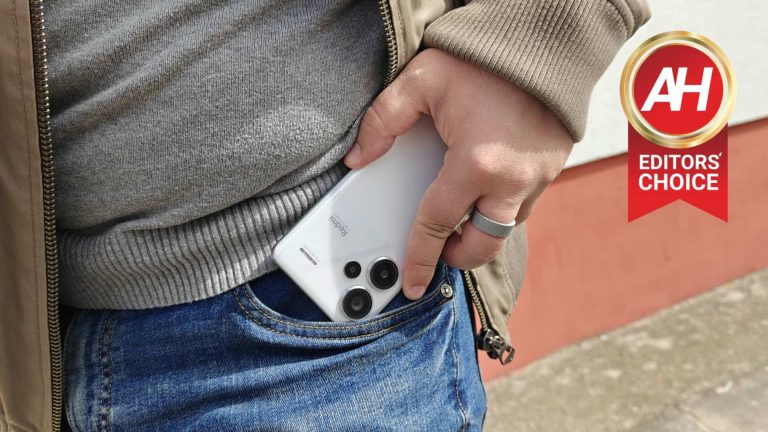
If you’ve used larger modern smartphones in the last couple of years, the Redmi Note 13 Pro+ will both look and feel familiar. Xiaomi decided to create a glass + metal slab here, which is quite comfortable in the hand. It has a curved display on the front and a curved glass panel on the back. Those two are proportional and curve into an aluminum frame. The bezels are quite thin, and the display camera hole is included, and it’s centered.
You will notice that all physical buttons sit on the right-hand side of the phone. The power/lock key is placed under the volume up and down buttons. On the back, you’ll spot three cameras in a rather interesting arrangement. The two on the left are larger and are stacked vertically. The third camera sits right next to them. All of them are placed in the top-left corner of the phone, though. Xiaomi’s logo is present on the back too.
It’s ideal in terms of weight
The Redmi Note 13 Pro+ that we reviewed has a white backplate and a metallic silver frame. All global variants seem to combine glass and metal, while in China a variant with a vegan leather backplate is also available. We’re focusing on the unit we actually had the pleasure of using, though, of course. It is quite slippery in the hand, as expected, but also quite comfortable. The phone weighs 204.5 grams, which is not that heavy, especially compared to large flagships these days. There is some heft to the phone, but not that much. It does feel premium, and yet not overbearing, and it doesn’t cut into your hand/finger or anything like that.
This color variant also hides fingerprints effectively
The backplate is glossy, but considering we reviewed the white unit, fingerprints, and smudges were not much of an issue. This phone did a great job of repelling those. The same cannot be said for its frame, though. The Redmi Note 13 Pro+ is IP68 certified for water and dust resistance, by the way. That’s always nice to see on mid-range devices, as it does give you a piece of mind. Overall, Xiaomi did a really good job designing this handset.
A charger is included, as is a case
Considering that many companies don’t include a charger with their phones, you’ll be glad to hear that a charger is included here. Furthermore, you also get a case in the box as well. It’s a nice rubber case, nothing special, but it will get you going until you get something else. I can see people sticking with this case, though, it’s nice and soft, and it does offer a decent amount of protection without being thick. We got a dark gray case in the box, which is not see-through, and chances are the same one is included with other color variants too.
Xiaomi Redmi Note 13 Pro+ Review: Display
The Xiaomi Redmi Note 13 Pro+ comes with a 6.67-inch CrystalRes AMOLED display. That panel is curved, and it has a centered display camera hole on it. The bezels around it are very thin. The display offers a refresh rate of up to 120Hz, and it supports Dolby Vision. The resolution on offer here is 2712 x 1220, which equals 446 PPI. Needless to say, this display is very sharp. Its brightness goes up to 1,800 nits, and the Gorilla Glass Victus protects the panel. You may also be interested to hear that you’re getting a 1920Hz PWM dimming here, so your eyes are being protected in the process. Three TUV certifications are in motion as well, and the display does support HDR10+ content.
The display is vivid, sharp & comes with a screen protector
Looking at it on paper, this display could just as well be used on a flagship phone. Is it that good? Well, yes, it is. I really don’t have any complaints about this display, especially in this price bracket. You’re getting an excellent display with vivid colors, deep blacks, and very good viewing angles. The touch response has been good for me, aside from something I’ll talk about in the performance section. I’m sure that had more to do with the SoC than the display. While the display is curved, the curve itself is not too aggressive, which is good to see. A plastic screen protector also comes pre-installed, which is always nice to see. You can always remove it if you don’t want it there. I also realized that the display does get bright enough, even in direct sunlight. Not as bright as some flagship phones out there, but… more than bright enough, I’d say.
Xiaomi Redmi Note 13 Pro+ Review: Performance
The Xiaomi Redmi Note 13 Pro+ is fueled by the MediaTek Dimensity 7200 Ultra. That is one of MediaTek’s best mid-range CPUs, and it’s generally a good performer. It’s backed by the Mali-G610 MC4 GPU. The Redmi Note 13 Pro+ did really well in performance-related benchmarks. It hit 1,097 points in the single-core benchmark on Geekbench 6, and 2,707 in the multi-core test. The phone managed to achieve 3,333 points in the GPU test. When it comes to 3D Mark’s Wildlife Extreme Stress Test, the device had a best loop of 1,182 points. The lowest loop (out of 20) resulted in 1,176 points. The phone did great as it had a stability of 99.5% during this testing. These are not the best results in general, as this is a mid-range CPU, but they’re quite good. The chip also didn’t throttle or anything of the sort.
The performance was very good, only the first post-update day was odd
When it comes to real-life usage, the phone did a really nice job, though I did notice something a bit odd. During the first day, post-HyperOS update, the swipe up to go home gesture was a bit laggy. It was also late to register. That was odd, but it simply fixed itself. Perhaps the system was still sorting things out in the background, or something. In general, the performance was smooth, though I did notice a stutter here and there. It was so rare that it’s not even worth noting, but I did notice it more here than on the Redmi Note 13 Pro 5G. That phone is fueled by the Snapdragon 7s Gen 2, though, so… I don’t know. Either way, it wasn’t as noticeable.
It handled multitasking really well, and even gaming
The phone did a great job of jumping between apps, opening them, and doing everything else you’d generally do with your smartphone. It handled multimedia consumption like a champ, the same goes for image processing, browsing, taking pictures, and so on. Other than occasional stutters, the phone did great. Some of you are probably wondering about gaming. Well, this chip is capable enough to handle rather powerful games, even though it’s just a mid-range CPU. Did the phone manage to handle them? Well, yes, though when I ran Genshin Impact, the temperature did go over 100F after an hour or so. The phone was very warm, but not too hot to use or anything like that. I also didn’t notice any problems with the gameplay itself. Do note that the settings weren’t tuned up all the way up, though. I tried to do that, but the lag did follow. You have to keep in mind this is not a gaming phone, and yet it can handle basically any game.
Benchmarks
We’ve talked about benchmarking results in the previous chapter and the results themselves can be seen below, compared to some other devices… including thermals.
Geekbench 6
3D Mark Wildlife Extreme Stress Test
Best loop: 1,182 Lowest loop: 1,176 Stability: 99.5%
Temperature Genshin Impact
Video export test
Export time: 33.17 seconds
Xiaomi Redmi Note 13 Pro+ Review: Battery
Xiaomi has included a 5,000mAh battery inside the Redmi Note 13 Pro+. That is a good battery size for this handset, that’s for sure. It didn’t exactly shine in our battery drain tests, it was about on par with its closest sibling, the Redmi Note 13 Pro 5G. It did worse than the HONOR Magic6 Lite, though, for example, but that’s understandable considering the mammoth battery size inside the HONOR Magic6 Lite. All that is nice and dandy, but what about actual usage?
The battery life was good, but not great
Well, the battery life was good for me, but not great. I was able to hit the 7-hour screen-on-time mark on several occasions, but when I pushed the phone a bit harder, it hit around 6 hours of screen-on-time. Gaming pushes it further down. So, will the battery life be enough for most of you? Well, yes, as long as you’re not gaming. For transparency’s sake, I did watch TikTok, YouTube, browser plenty, emailed, messaged people, and edited some images on the phone. I also conducted a couple of short calls, and had brief YouTube Music listening sessions. When I fired up some games, that did affect battery life. An hour of Genshin Impact pushed the phone down to 5+ hours of screen-on-time.
It can fully charge in only 25 minutes
If you’re wondering about charging, the phone can charge really fast. So even if you do end up needing a charge during the day, it’s not a problem at all. It supports 120W charging, and a charger does come included in the box. Do note that you’ll need to fire up ‘Boost Charge’ mode in order to reach full charging speed, otherwise the phone charges at 60-80W, which is still plenty fast. What is Boost Charge? Well, your screen needs to be off, essentially, which is not exactly a big deal. Plug it in, and at its full charging speed the phone can fully charge in only 25 minutes.
Xiaomi Redmi Note 13 Pro+ Review: Camera
The Xiaomi Redmi Note 13 Pro+ includes three cameras on the back and one on the front. A 200-megapixel main camera is used here. It has an f/1.7 aperture, 23mm lens, and it’s a 1/1.4-inch sensor. We’re looking at a 0.56um pixel size here, while omni-directional PDAF is supported, as is OIS. Samsung’s ISOCELL HP3 sensor is used here. The second camera is an 8-megapixel ultrawide unit with an f/2.2 aperture lens and a 120-degree FoV. The third camera is a 2-megapixel macro unit with an f/2.4 aperture.
The main camera is actually great considering the price
So, are the cameras any good? Well, first of all, do keep in mind that we’re looking at these cameras from the perspective of this phone’s price tag, and market position. This is a mid-range phone. That being said, the main camera does a very good job during the day. It offers plenty of detail, good contrast levels, and vivid colors. Also, you won’t really notice that much noise. The only complaint that I had was in regard to the dynamic range. It’s not bad, but it’s not great either. You’ll get a much better dynamic range on the Redmi Note 13 Pro+’s more expensive siblings, the Xiaomi 14 and Xiaomi 14 Ultra. That is to be expected, though.
There’s no telephoto camera, but 2x performance is admirable
Considering that this phone doesn’t have a telephoto camera, you need to use that main sensor for telephoto shots. 2x shots look almost as good as 1x ones, while you will see the difference at 3x, that’s for sure. At 4x, well, you’ll see a further drop in quality. By that, I mean less detail, more noise, and images that look more artificial than they should be looking. Either way, I wouldn’t go over 3x, while 2x is really good.
The ultrawide camera is good enough during the day
When it comes to ultrawide shots, they’re just fine. There’s nothing great to say about the performance during the day, but the shots do look good. There’s enough detail in them, whiel the colors are also good. The dynamic range is not the best, but then again the same can be said for the main camera too. What we did notice when it comes to the ultrawide shooter is that images can get overexposed, but that’s not surprising.
You’ll likely want to stay away from the macro shooter
When it comes to the macro camera, chances are you’d like to avoid it. You can get a useful shot when the lighting is great, but it’s a 2-megapixel camera after all… so, it’s not the best. For what it’s worth, though, it’s one of the best 2-megapixel macro shooters we’ve handled, and there are many of them out there, unfortunately.
The main camera does great in low-light too
What about low-light performance? Well, first and foremost, the phone will detect low-light scenes on its own, so you don’t really have to do anything but hit the shutter. That’s how it’s supposed to be. You’ll be glad to hear that low-light photos look very good. I was expecting much worse, to be perfectly honest. There’s plenty of detail in them, while the dynamic range is good, and so are the colors. What’s best is that you won’t really get any noise in those shots. Forget about using telephoto in low light, though, well, other than 2x, but you’ll see a drop in quality regardless.
Avoid using secondary camera in low-light situations
You can use ultrawide in low light but be warned that it’ll activate low light mode every time and that the difference in quality is quite noticeable. The images do end up being a bit noisy, and underexposed, but at least there’s enough detail in there. Using the macro camera in low light is not something you should even consider doing. It can offer usable results in great lighting only, it falls apart in low light.
Main camera samples:
Ultrawide camera samples:
Macro camera samples:
Colors sample controlled environment:
The Redmi Note 13 Pro+ does well when it comes to video recording
The Redmi Note 13 Pro+ can shoot 4K videos at 30 fps from the main camera. The ultrawide camera shoots 1080p at 30 fps max. The video content from the main camera actually looks really good, especially for a mid-range smartphone. There’s plenty of detail, and the colors are also very good. If you do end up using a zoom of any type, you’ll see a considerable drop in quality. What’s good is that the phone keeps up good video performance in low light too. You will see a bit of noise, but other than that, it’s all good.
Xiaomi Redmi Note 13 Pro+ Review: Software
This handset comes with Android 14 out of the box, and Xiaomi’s MIUI 14 pre-installed. The thing is, the moment you fire up the phone, you’ll likely have a HyperOS update waiting for you. Xiaomi ditched MIUI in favor of HyperOS a while back, and the update started rolling out to the Redmi Note 13 Pro+ a while back. I used HyperOS throughout my review, so that’s the only iteration that I’ll be talking about here.
HyperOS is similar to MIUI 14, but also an improvement at the same time
First and foremost, HyperOS is very similar to MIUI 14, that’s for sure. Xiaomi did ditch the name, but it did not change the essence of its software. Plenty of changes were made under the hood, and HyperOS did feel very responsive and reliable, but when it comes to looks and feel, you can still see MIUI. I have to say that with every iteration of Xiaomi’s software, I do see improvements to the looks of the UI itself. It looks more and more modern, despite the fact there are still some iOS-inspired elements included here.
There are hints of iOS here, still
Let’s just go over those real quick. By default, your apps will be displayed on home screens, without an app drawer. Do note that you can easily change that, however. Also, your quick toggles are in a separate place from your notifications, by default. That’s another nod to iOS, but that’s also something you can easily change. There are a number of such details in HyperOS, but the vast majority of them are customizable, so… you can get away from that look and feel easily, you’ll just have to tinker a bit.
The animations are excellent, and Xiaomi gives you choices
The animations in HyperOS are excellent. Everything is fluid and nice, and you can choose between three styles of animations, depending on how fast you want them to be. The default style was a bit slow for me, so I chose ‘Fast’, which improved things drastically. The point is, you have options. When it comes to general customizations, there are themes to choose from. Do note that you cannot easily change the accent colors in HyperOS, though, the same was the case with MIUI 14 as well. You can download a specific theme, and apply only a specific part of it to try and mess with accent colors, but it’s not as simple as choosing colors. Do note that the system will, however, pick up your wallpaper colors by default. The only problem is the manual color changing of accent colors.
All the features you’d expect are here
The Wallpaper Carousel feature is available for the lock screen if you’d like the phone to change your wallpapers every time you go to the lock screen. You can heavily edit the look of your home screen, which is a new feature of HyperOS. Always On Display (AOD) feature is also available, and it’s customizable… and so on. There are plenty of features you’ll find in HyperOS, and everything works really well, actually. HyperOS felt more responsive and stable than MIUI 14, to me at least, and it did feel different after I’ve been using MIUI 14 on the Redmi Note 13 4G & 5G.
I don’t have much to complain about when it comes to HyperOS, which surprised me a bit
When it comes to straight-up negatives, I don’t really have many to share. Xiaomi’s software finally matured, and it works really, really well. I did have a stutter here and there, and it did freeze on me on one occasion for a couple of seconds, but other than that, nothing out of the ordinary happened. The notifications also arrived in a timely manner, and so on. I can easily recommend HyperOS, that’s for sure.
Xiaomi Redmi Note 13 Pro+ Review: Audio
The Redmi Note 13 Pro+ does come with a set of stereo speakers. Xiaomi didn’t really skimp out in this regard either, the sound quality coming from those speakers is very good. The speakers are also more than loud enough. In fact, the secondary speaker at the top has two exit points, which certainly helps. One is top-facing, and the other is front-facing (from the earpiece). We’ve played our own audio tracks in order to test its sound quality, and we were quite impressed for a phone that costs this much.
The sound is well-balanced, and even the bass is good enough
The sound is well-balanced. In general, the sound quality is good, and the vocals are coming through just fine, they’re not overpowered or anything of the sort. On top of that, you’re also getting good bass with that, which is the most impressive part. It is worth noting that Dolby Atmos is present, and enabled by default. We do not recommend turning that off, as the experience is noticeably better when it’s on. You end up getting a richer sound and the speakers end up providing a louder sound.
Xiaomi Redmi Note 13 Pro+: Should you buy it?
Is the Xiaomi Redmi Note 13 Pro+ worth the money? Well, it all depends on what you’re looking for, but in general, I’d say yes… definitely. This phone is, first and foremost, really well-balanced. It provides all the basics and adds layers to them. It’s very comfortable to use, while it’s not too heavy. It feels like a quality product, has a great display, and a very solid main camera. Its speakers is also praise-worthy at this price range, and so on. Even HyperOS is an improvement over MIUI 14. This is an easy recommendation for me.
You should buy the Xiaomi Redmi Note 13 Pro+ if you:
…want the best Redmi Note 13 series device …need a good phone but don’t want to break the bank …you need a budget phone that offers good camera performance …display quality and size is important to you …get your phones wet often …don’t want to buy a charger separately …want a large phone that is not too heavy …want to see how MIUI improved via HyperOS
You shouldn’t buy the Xiaomi Redmi Note 13 Pro+ if you:
…need the very best battery life …want great ultrawide and telephoto cameras …play a lot of demanding games
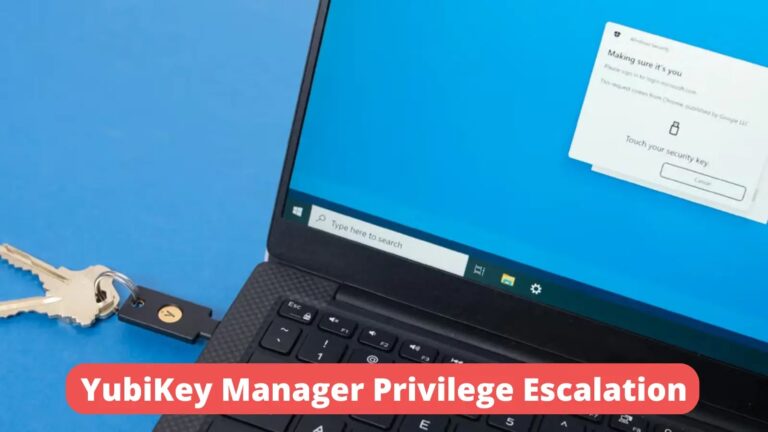
YubiKey Manager GUI on Windows before version 1.2.6 has a vulnerability that could allow an attacker to escalate privileges.
Due to a limitation in Windows, it requires administrator privileges to interact with FIDO authenticators.
An attacker can exploit this by tricking a user into running the YubiKey Manager GUI with administrator rights.
Once elevated, any web browser windows opened by the program might inherit these privileges, potentially allowing for more impactful browser-based attacks.
The YubiKey Manager GUI on Windows has a vulnerability allowing privilege escalation, in which running the Manager as Administrator opens subsequent browser windows launched by the program with elevated privileges as well.
DocumentRun Free ThreatScan on Your Mailbox
Trustifi’s Advanced threat protection prevents the widest spectrum of sophisticated attacks before they reach a user’s mailbox. Try Trustifi Free Threat Scan with Sophisticated AI-Powered Email Protection .
A local attacker could use it to gain administrator access and perform malicious actions, and some browsers, like Edge, have implemented safeguards against this, highlighting a potential security risk.
Details Of The Issue:
YubiKey Manager GUI, a tool for managing YubiKey features like FIDO, OTP, and PIV, can launch the default browser under certain conditions requiring user interaction and isn’t automatic.
On Windows, interacting with YubiKey’s FIDO functionality requires administrator privileges due to Microsoft’s OS limitations.
Consequently, running it with administrator privileges might also elevate any browser window it opens, depending on the browser, creating a vulnerability for attackers to potentially escalate local attacks and worsen browser-based attacks by exploiting these elevated privileges.
version of YubiKey Manager GUI
The YubiKey Manager GUI versions before 1.2.6 have a security vulnerability on Windows machines that don’t use Edge as the default browser.
The vulnerability arises because Windows requires administrator privileges to interact with FIDO authenticators, and the YubiKey Manager GUI might be running with these elevated permissions on vulnerable systems.
Other operating systems are unaffected, but avoiding running YubiKey Manager GUI with administrative privileges is recommended even on those platforms.
Timeline
Check the application’s “About” menu to confirm the YubiKey Manager GUI version and update to 1.2.6 or later to address this security issue.
Yubico identified a vulnerability in the YubiKey Manager GUI that allows privilege escalation on Windows if run as an administrator. A local attacker could exploit this to gain administrator access and potentially perform malicious actions through browser windows opened by it.
It also recommends updating to the latest version or running the YubiKey Manager GUI as a non-privileged user, including using Microsoft Edge as the default browser due to its built-in protections, wherein vulnerability is rated as high with a CVSS score of 7.7.
Is Your Network Under Attack? - Read CISO’s Guide to Avoiding the Next Breach - Download Free Guide
The notorious hacker IntelBroker claims responsibility for Home Depot’s alleged data breach, exposing employee names, email addresses and departments – No customer data is reported affected!
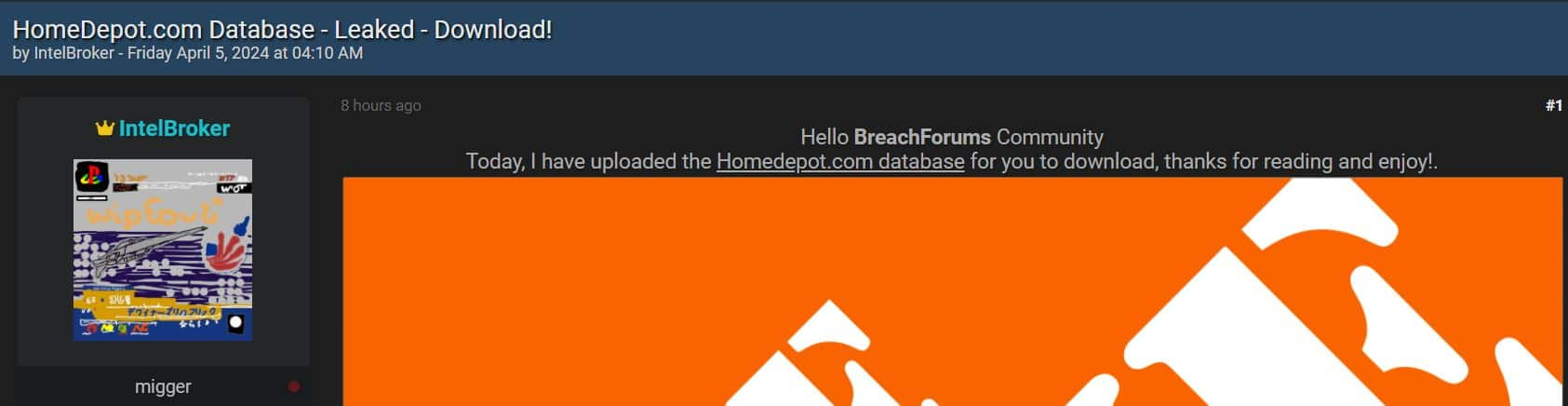
The notorious IntelBroker hacker has announced a data breach targeting The Home Depot, Inc., a leading multinational home improvement retailer. Claiming to have stolen personal data from over 22,000 employees; the hacker has leaked this information on the cybercrime platform Breach Forums.
IntelBroker on Breach Forums (Screenshot credit: Hackread.com)
The breach, allegedly occurring in April 2024, exclusively involves Home Depot employee data and does not affect the gigantic customer base spanning the United States, China, Canada, Mexico, and Puerto Rico.
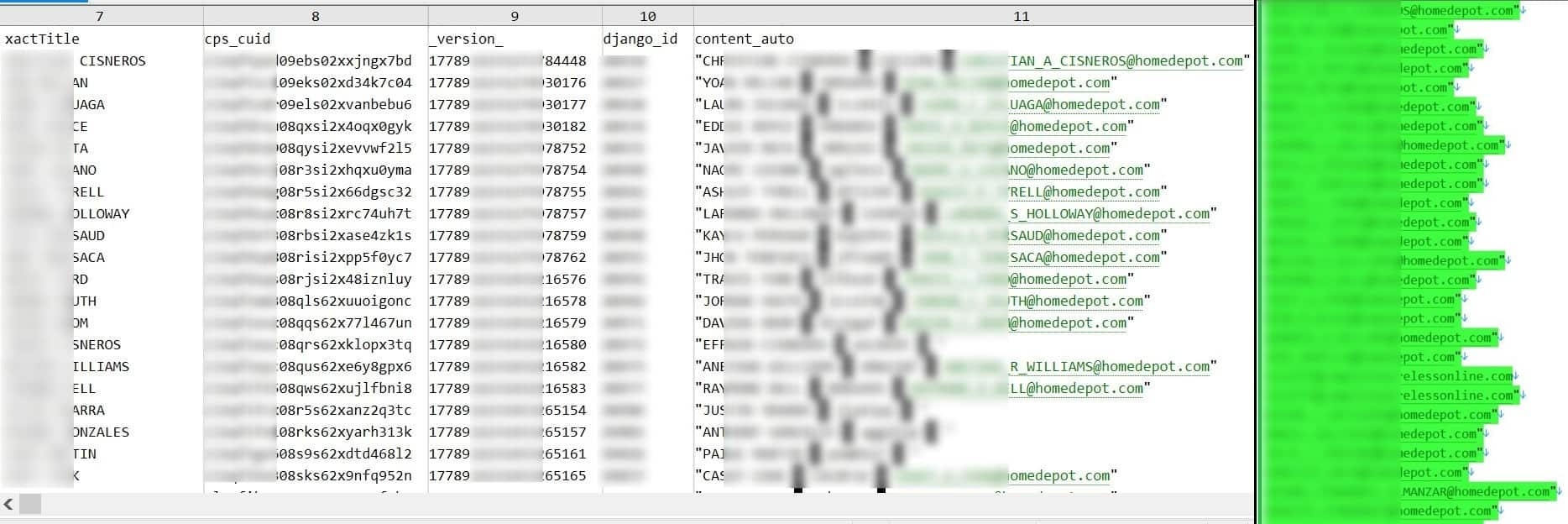
As seen by Hackread.com, the leaked records contained in an 83 MB CSV file include the following information:
Full names
Departments within Home Depot
Project UCID (universally unique identifier)
Email addresses (Most of them hosted on @homedepot.com)
Screenshot from the leaked records (Credit: Hackread.com)
The Home Depot has been informed, awaiting an official statement from the company.
About IntelBroker Hacker
While Home Depot’s customer base remains unaffected, IntelBroker has recently made headlines for its focus on high-profile targets in the United States. Their most recent alleged cyberattacks include breaching Acuity, Inc., a Federal contractor based in Reston, Virginia, and stealing highly sensitive data from U.S. Citizenship and Immigration Services (USCIS) and U.S. Immigration and Customs Enforcement (ICE).
Initially denied by the US government, the data breach was acknowledged ( but yet not verified) on April 3, 2024, when the IntelBroker hacker leaked the entire dataset to verify its authenticity. Consequently, the US Department of Justice has initiated an investigation into the matter.
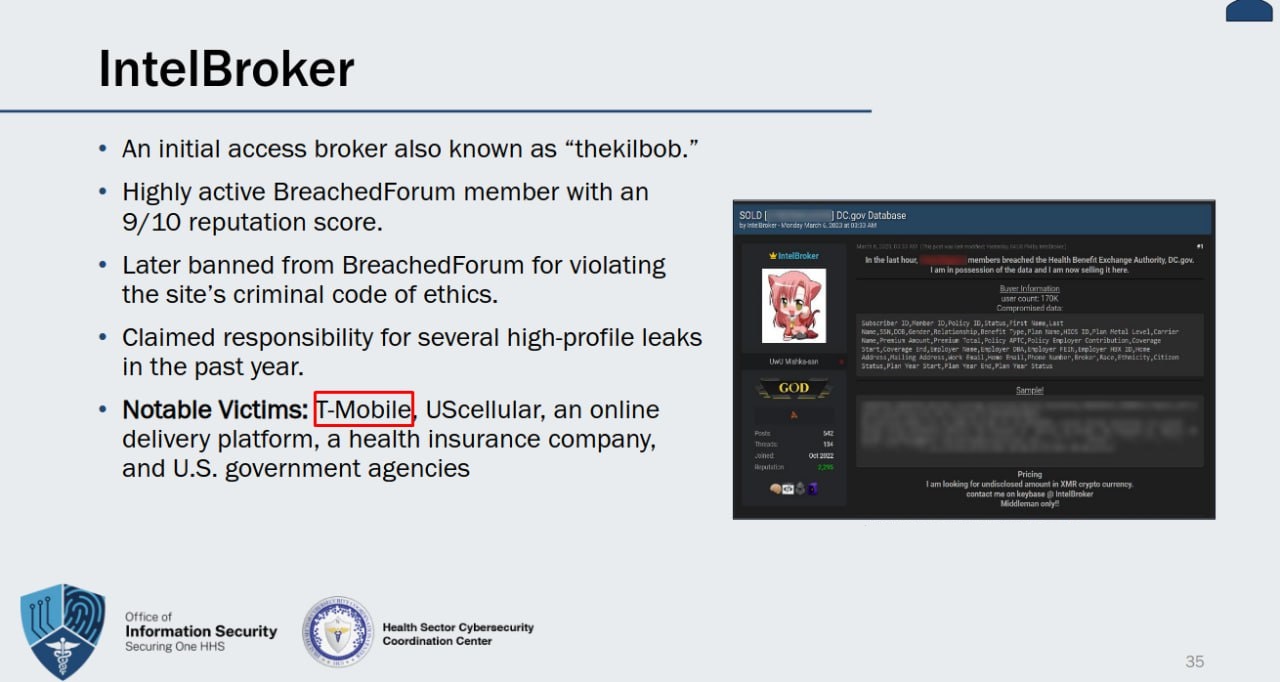
As for who IntelBroker is, the hacker’s identity and associations remain undisclosed; nevertheless, the United States government has implicated IntelBroker as the alleged culprit in one of the T-Mobile data breaches.
Furthermore, IntelBroker has a history of targeting prominent entities within the United States, with previous breaches affecting institutions such as Los Angeles International Airport, US Department of Defense documents, staffing firm Robert Half, Facebook Marketplace’s database, General Electric’s DARPA-related accesses, Weee! Grocery, and various others.
Meta regularly updates its app with security patches and new features. WhatsApp, one of the most widely used Meta apps, might receive a picture-in-picture feature for videos in a future update.
Continue using WhatsApp without compromising on video viewing
WhatsApp currently offers a picture-in-picture mode, but its functionality is quite limited. The current picture-in-picture mode on WhatsApp only works during video calls. This means you can continue your WhatsApp video calls in a small video window and simultaneously use the app to send messages and other stuff.
However, with the upcoming update, you might be able to continue watching videos on WhatsApp in a small pop-up window while using the app. Similar to video calls, WhatsApp will create a small pop-up window of the video you’re watching, allowing you to continue using other features of the app. This feature is currently in development on WhatsApp Beta for iOS 24.7.10.73.
The in-development feature will only allow you to watch videos within the app itself. This means that the feature will only work when you are using WhatsApp and will stop working when you switch to any other app.
It’ll be interesting to see when or even if WhatsApp will make its picture-in-picture feature compatible with all apps, so that you can watch WhatsApp videos in a small pop-up window not only while using WhatsApp but while using other apps as well.
WhatsApp is a bit late in introducing the picture-in-picture mode
The picture-in-picture mode is one of the most important features for any chat-based application like WhatsApp. Possibly, WhatsApp is a bit late in introducing it.
WhatsApp’s rival, Telegram, already had access to the picture-in-picture feature for a long time. You simply need to tap the relevant icon in the top-right corner of the playing video to activate this feature. However, it’s better late than never; WhatsApp is finally introducing this feature.
In addition to Telegram, this feature is available on different video streaming platforms such as YouTube and Netflix. On these platforms, you simply need to tap the picture-in-picture mode icon to continue watching videos in a small pop-up window while using your device.