TikTok has officially announced a global “youth council” made up of 15 teenagers who will offer the company insights and advice on issues affecting its youngest users. This initiative first came to light last summer as part of TikTok’s broader efforts to intensify safety features for its adolescent audience.
TikTok has formed ‘Youth Council’ in hopes to make the platform safe for youngsters
The youth council has already begun meetings with TikTok’s top brass, including CEO Shou Chew, highlighting the company’s desire to include the perspectives of their young user base in decision-making processes. The establishment of the council coincides with TikTok’s ongoing efforts to combat legislative challenges, such as proposed bills that could potentially lead to the app’s ban in certain regions.
The creation of a youth council aimed at addressing concerns about youth safety on TikTok. For example, a media literacy campaign is reportedly on the horizon by the Council which intends to fight fake news and pushback AI-generated content.
The council includes teenagers from multiple regions in the US, UK, Brazil, Indonesia, Ireland, Kenya, Mexico, and Morocco who lend their views on regional peculiarities and risks connected with Internet security. Through a collaboration with Praesidio Safeguarding (an online safety organization based in the UK), TikTok plans to fully equip its council members with adequate resources to regulate content.
The Youth Council will help shape the privacy features intended for the younger audience
The youth council will advise on various TikTok features such as the “youth portal” that has in-app privacy and security resources specially made for younger users. TikTok also adds that young people who are part of the council will receive rewards for participating. It demonstrates the company’s desire to encourage meaningful conversations among teenagers who actively watch content on the Chinese platform.
Although it is still uncertain how much power this youth council will have over TikTok policies, its establishment is a sign that the company recognizes how important young consumers are. Given that TikTok is very popular with teens globally, especially in America, the organization acknowledges that they should engage with their demographic to deal with safety concerns and maintain a steady user base.
Airbus Defence and Space plans to acquire INFODAS, a leading cybersecurity and IT solutions provider in Germany.
This acquisition marks a step for Airbus as it aims to enhance the security of its digital infrastructure amidst the growing cyber threats globally.
A Strategic Acquisition for Enhanced Cybersecurity
Airbus Defence and Space, a global aerospace giant Airbus division, has agreed to acquire INFODAS, a company based in Cologne, Germany.
INFODAS is renowned for its expertise in delivering top-notch cybersecurity and IT solutions, mainly catering to the public sector, defense, and critical infrastructures.
The completion of this acquisition is anticipated before the end of 2024, pending customary regulatory approvals.
This move is aligned with Airbus‘ strategic ambition to fortify its cybersecurity portfolio, which is a critical aspect of its operations given the increasing digitalization and connectivity of its products and systems.
Airbus has been proactively enhancing its cybersecurity capabilities in recent years to ensure the utmost protection for its products, operations, customers, and the broader ecosystem.
This includes safeguarding major programs such as the Future Combat Air System (FCAS).
INFODAS: A Pillar of Cybersecurity Excellence
INFODAS stands out in the cybersecurity landscape with its team of approximately 250 employees and an annual revenue of around 50 million euros.
The company boasts a strong presence in Germany, with offices in Cologne, Berlin, Bonn, Hamburg, Munich, and Mainz.
It has earned a reputation for excellence, underscored by its certification from the Federal Office for Information Security (BSI) as an IT security service provider.
INFODAS specializes in information system auditing, consulting, and penetration tests.
The Future of Airbus Cybersecurity
The acquisition of INFODAS by Airbus Defence and Space is a testament to Airbus’ commitment to cybersecurity.
By integrating INFODAS’ expertise and innovative solutions into its operations, Airbus is set to elevate its cybersecurity measures to new heights.
This strategic move will enhance the security of Airbus’ digital infrastructure, and offer added value to its European and global customers, ensuring they benefit from the highest cybersecurity standards in an era of escalating digital threats.
As the transaction progresses, the aerospace and defense communities eagerly anticipate the synergies this acquisition will bring.
The combination of Airbus’ global reach and INFODAS’ cybersecurity prowess promises to set new benchmarks in the protection of critical digital infrastructures, making a significant contribution to the safety and security of the digital world.
Stay updated on Cybersecurity news, Whitepapers, and Infographics. Follow us on LinkedIn & Twitter.
In a time when technology intertwines with every facet of our existence, the arrival of the Beatbot AquaSense heralds a transformative moment in the realms of pool upkeep and the adventure beneath the water’s surface. This intelligent, cordless pool-cleaning robot transcends the ordinary, emerging as a groundbreaking ally for anyone yearning for a pool-cleaning experience that’s a cut above the rest. Join me as we plunge into Beatbot AquaSense’s world, exploring how it’s redefining excellence in pool maintenance.
The Genesis of Beatbot AquaSense
At the heart of Beatbot AquaSense lies a commitment to innovation and efficiency. Equipped with a quad-core 1.8GHz processor and dual ultra-long independent roller brushes, this robotic marvel doubles the cleaning performance, ensuring every inch of your pool is immaculate. The brushless main pump motor boasts up to 5500 GPH suction power, climbs walls with agility, and cleans floors, walls, and the waterline with unparalleled efficiency. Its eco-friendly cordless design and advanced battery life for long-run floor cleaning set a new standard in the industry.
Unparalleled Cleaning Efficiency
The Beatbot AquaSense redefines what it means to have a clean pool. With its 2×2 independent roller brushes and a 150µm exemplary filtration system, it captures debris with precision, leaving behind water that’s not just clean but crystal clear. The cordless design eliminates the hassle of tangled cords, covering a maximum area of 2260 square feet and supporting continuous cleaning for up to 3.5 hours. This level of efficiency and coverage is unprecedented in the realm of pool cleaning.
Intelligent Features at Your Fingertips
What truly sets the Beatbot AquaSense apart is its intelligent path optimization – CleverNav™ Advanced Path Planning. Powered by a robust quad-core processor and equipped with 15 advanced sensors, it navigates your pool with an accuracy that’s nothing short of revolutionary. The robot’s ability to plan optimal cleaning routes, avoid obstacles, and minimize collisions ensures a thorough cleaning with no missed areas. The inclusion of industry-leading auto-return and waterline parking features further enhances the user experience, making pool cleaning a hassle-free task.
A Leap Forward in Pool Cleaning Technology
The Beatbot AquaSense doesn’t just clean; it does so with an intelligence and precision that mirrors the advancements in modern technology. Its smart app integration allows for effortless control and monitoring, offering various cleaning modes to suit different needs. OTA updates ensure that your AquaSense is always equipped with the latest features, improving its functionality over time. This level of innovation is not just about keeping your pool clean; it’s about embracing the future of pool maintenance.
The Future of Pool Care
As we look towards the future, the Beatbot AquaSense stands as a testament to the possibilities that lie in the intersection of technology and everyday life. Its cordless charging dock, high-quality safety standards, and rigorous testing for durability and performance reflect a commitment to excellence. With over 15 certifications, including ETL, CEC, and IP68, the AquaSense is not just a pool cleaning robot; it’s a pioneer in the field, promising a future where pool care is effortless, efficient, and intelligent.
Conclusion
The Beatbot AquaSense isn’t merely a gadget for keeping pools pristine; it’s a visionary leap into what lies ahead, redefining the essence of underwater adventure and upkeep. With its robust cleaning prowess, innovative functionalities, and cutting-edge design, it elevates the pool cleaning journey to unparalleled heights. As we navigate through the ever-changing landscape of technology, AquaSense is at the forefront, reshaping our interactions with and perceptions of our swimming havens. Embark on a journey with Beatbot AquaSense and be part of the transformative wave in pool maintenance.
Metasploit Framework 6.4 introduces significant improvements to Kerberos authentication. The auxiliary/admin/kerberos/forge_ticket module now supports diamond and sapphire techniques alongside golden and silver tickets and is compatible with Windows Server 2022.
A new post/windows/manage/kerberos_tickets module allows Kerberos tickets to be dumped from compromised systems, similar to Rubeus’s klist/dump.
The auxiliary/gather/windows_secrets_dump module now supports pass-the-ticket authentication with DCSync, enabling domain credential dumping using a valid Kerberos ticket.
Metasploit allows advanced configuration of DNS resolution for pivoting scenarios where rules can be defined to resolve specific domains (e.g., *.lab.lan) through a chosen nameserver, potentially reached via an established session (e.g., session 1).
Examples of manipulating the DNS configuration
It lets you control where DNS requests originate, create static host mappings, or define a fallback rule to use specific nameservers for all other domains, ensuring DNS queries are directed as needed during penetration testing.
Viewing the current configuration
Metasploit 6.4 introduced new SMB session types, allowing direct interaction with SMB shares. Sessions can be initiated by setting the CreateSession option in specific modules.
The session opened as a new SMB session type
Once a session is established, directories can be navigated, and files can be uploaded and downloaded.
Other functionalities like secret dumping and PsExec can be leveraged through the session.
Metasploit’s PsExec supports the SMB session to open a Meterpreter session
Kerberos authentication is also supported for these sessions, offering penetration testers a more streamlined approach to exploiting and managing compromised SMB servers.
New SQL Session Types Examples
It introduced new auxiliary modules that can establish database sessions of different types, including PostgreSQL, MSSQL, and MySQL, similar to SMB sessions. These sessions can be initiated using the CreateSession option.
Active sessions
For instance, the auxiliary module scanner/mssql/mssql_login can create a new MSSQL session after successful authentication.
Once a session is established, the “sessions” command can be used to list all active sessions, and “sessions -i <session id>” can be used to interact with a specific session.
an interactive prompt for running multiple multi-line queries
Within the interactive session, users can execute SQL queries using the “query” command or start an interactive SQL shell using the “query_interactive” command, which allows for post-exploitation database interaction after compromising a system.
New features in Metasploit 6.4 improve module discoverability, enable memory searching for Windows Meterpreter, and implement indirect syscalls to bypass EDR/AV detection.
The technique hides the system call by jumping to the syscall instruction within ntdll.dll.
The position of the corresponding native API function in memory, assuming sequential assignment starting from zero, determines the system call number.
Another improvement is hierarchical search, which includes searching based on module actions and aliases.
In contrast, a new API allows memory searching within a process for specific data patterns, potentially revealing sensitive information.
Stay updated on Cybersecurity news, Whitepapers, and Infographics. Follow us on LinkedIn & Twitter.
According to MacRumors, with iOS 18 installed, Apple Maps users might be able to create their own custom routes which is something that they cannot do presently. An iOS 18 file titled “CustomRouteCreation” has been pushed by Apple to the back end of the Apple Maps app and the title does give away plenty of information. But outside of the file name, all we know is that at launch, the feature will be limited to use in the U.S.
Why would you want to create a custom route? Well, you might be used to taking a specific road and would prefer to travel on it, or a particular route might be more scenic or pass more bathrooms, or be near more shopping options or restaurants. Currently, Apple’s chief rival, Google Maps, has a process to allow users to create custom routes. This requires the user to employ his/her computer and then view this route on an iPhone. It sounds like Apple’s implementation is going to be much easier to use.
Apple Maps users could get the ability to create custom routes with iOS 18
It seems that iPhone users have been hounding Apple over the years to add this capability to Apple Maps. As far back as December 2020, Apple community member cowboyf16 asked in the discussions forum, “In Apple Maps, is there a way to create a custom route? For example, we like to drive scenic drives down multiple roads with no distinct destination.”
We should get our first look at iOS 18 on Monday, June 10th during the WWDC 2024 Keynote. Shortly afterward, the public beta program for iOS 18 will start and you’ll have to decide whether to install it on your iPhone or wait until September when the final version of the software should be released. Keep in mind that beta releases are unstable and certain features that you rely on every day might not work at times if you install the iOS 18 beta.
The majority of messaging apps allow their users to send voice messages. However, one player in the game was missing this functionality. It seemed very odd that Google Chat didn’t allow you to send voice messages, but that is about to change, according to a new report from Google.
Not to be confused with Google Messages, Google Chat is Google’s internet-based chat service for people with Google accounts. It’s the equivalent of WhatsApp or Telegram. You’re able to message others through their Google accounts. It’s not as popular as WhatsApp, Telegram, or Facebook Messenger, but it does come with some nice features. If you’re interested in trying out Google Chat, you can simply go to the Google Chat website or download the official app.
Voice messages are finally coming to Google Chat
This is a feature that we’ve heard about a while back. So, we are finally getting our first glimpse of this functionality. Obviously, sending voice messages allows you to record short clips of audio and send them as messages to recipients and groups. It saves a bunch of time when you have to jot down a long message, but your hands are full.
Once you get this feature, you will see a little microphone icon next to the text bar in a conversation. When you tap on it, the app will begin immediately recording audio. You’ll simply have to say what you want to say, tap on the Stop button, and tap on the Send button to send into chat. You can also listen back to your audio clip by tapping the play/pause button right next to the recording waveform.
However, there is some disappointing news. This feature will only be available to Enterprise Essentials, Enterprise Essentials Plus, Enterprise Standard, and Enterprise Plus workspace users. These are all paid plans, so free users will be out of luck.
Samsung has just announced that One UI 6.1, which includes Galaxy AI, will begin arriving on older Samsung smartphones this Thursday, March 28.
The Galaxy S23 series, Galaxy S23 FE, Galaxy Z Fold 5, Galaxy Z Flip 5, and Galaxy Tab S9 Series will all start receiving the update later this week. Which will bring a number of great Galaxy AI features that debuted on the Galaxy S24 series back in January.
These devices have already received Android 14, so this update should be One UI 6.1, as well as the April Security update. We have actually seen the April Security update roll out to some Galaxy S24 models already in Korea and Europe.
Galaxy AI arrives on older Samsung phones
What features from the Galaxy S24 will arrive on Galaxy S23 and other 2023 smartphones? Good thing Samsung has announced the features that are coming. However, those include Circle to Search with Google, Live Translate, Chat Assist, and Generative Edit.
This means that Circle to Search with Google will be available on the Galaxy S24 Series, Google Pixel 8 Series, as well as all of Samsung’s 2023 flagship products. This feature is actually super helpful, as it allows you to circle what’s on your display to search for things. No more switching between apps to search for something that you might have found.
Live Translate will allow you to have a real-time voice and live caption translation during calls. At the same time, Chat Assist lets you rewrite text messages, Tweets, and other posts. As well as translating them for you or checking your grammar and spelling.
Finally, Generative Edit. Within the Gallery app, you’ll be able to edit your photos with Generative AI. This lets you straighten a photo and have Generative AI fill in the missing parts. Or you can erase things from the photo, as well as resizing elements of the photo. Making for a really incredible editing experience. These are all part of One UI 6.1, and will start rolling out on March 28.
The era of Arm-powered Windows laptops is swiftly approaching with Qualcomm’s Snapdragon X Elite CPU scheduled to be released by the middle of this year. However, the availability of compatible software becomes equally important.
Windows applications compiled for x86 or x64 architectures cannot run natively on ARM-based devices. While Microsoft has introduced emulation technology to enable some x86 applications to run on Windows on ARM devices, not all applications are compatible or perform optimally under emulation. And this is where comes the latest revelation from Google regarding Chrome.
Google has released Chrome for Windows on Arm
Back in January, we reported about Google working on a native version of Chrome for Arm-based Windows PCs. Google has launched a production-ready version of Chrome specifically tailored for Windows on Arm PCs powered by Snapdragon processors. Google’s initiative to optimize Chrome for Arm-based Windows laptops marks a crucial step forward in the integration of Arm architecture into the Windows ecosystem.
Users can expect a browsing experience that Google has finally tuned for their Arm-based PCs. The native version of Google Chrome is likely to perform better, thanks to the absence of the translation layer. The launch of Chrome for Windows on Arm comes amidst a broader industry shift initiated by Apple’s transition to Arm-based Apple Silicon M1 chips.
It’s important to note that the majority of software is still unoptimized for Arm-based PCs. However, the upcoming Snapdragon X Elite platform has at least influenced the development of native apps for Arm-based systems even before its arrival, which will likely happen towards the middle of this year.
Google’s announcement indicates that the release of Chrome for Windows on Arm will be rolled out this week. It will offer users immediate access to an optimized browsing experience on the platform.
Possible advantages of an Arm-based Windows PC
We have seen Intel’s new Core Ultra chips bringing power efficiency to Windows laptops. The biggest improvement in MacBooks came when Apple switched from x86 to its self-developed Arm-based M1 chip. Notably, Qualcomm acquired Nuvia, a company full of “Apple Silicon veterans” to develop something similar or even better. Well, they did it. Qualcomm’s Snapdragon X Elite chip reportedly competes with Apple Silicon in terms of performance and power efficiency.
It could mean a significant improvement in battery life for Windows laptops. This new platform might offer a ray of hope for users who complain about the fan noise of high-end Windows laptops running on powerful yet power-hungry processors.
There is also a significant demand for laptops that are not only capable but are also thin and light. The Snapdragon X Elite platform may help Windows laptops in this regard too, with a smaller battery and a less aggressive cooling system.
Xiaomi announced two very compelling smartphones this year. Well, the Xiaomi 14 technically arrived in October last year, but it launched globally alongside its ‘Ultra’ sibling in February 2024. That being said, we’ve reviewed both smartphones, and they are both very compelling in their own right. We’re here to compare those two smartphones, the Xiaomi 14 Ultra vs Xiaomi 14.
The initial reaction for most of you who have the budget for it would be to go for the ‘Ultra’ model. While that may be the best idea for many of you, the Xiaomi 14 has its own set of advantages, and a lower price tag is among them. We’ll first list the specifications of both smartphones and will then get down to comparing them across a number of categories. So, let’s get started, shall we?
These two smartphones don’t really look the same, nor do they have a similar feel in the hand. The Xiaomi 14 Ultra is a much larger smartphone, and it looks very different, especially when you look at it from the back. The ‘Ultra’ combines metal and vegan leather, while the Xiaomi 14 is made out of metal and glass in its global variant. The Xiaomi 14 is the more slippery device of the two, but considering how large the Xiaomi 14 Ultra is, the Xiaomi 14 is definitely the more comfortable device of the two.
The Xiaomi 14 Ultra is considerably taller, wider, and a bit thicker than the Xiaomi 14. It does come with a notably larger display. The display on the Xiaomi 14 is not small either, in fact, it may be the perfect size for most people. We’ll talk more about that in the next section. Both smartphones have a centered display camera hole, and both have very thin bezels around the display. The thing is, the display on the Xiaomi 14 Ultra is curved, while it’s flat on the Xiaomi 14.
On the back of the Xiaomi 14 Ultra, you’ll spot a large camera oreo. There are four cameras included in there, and it does protrude on the back quite a bit. It’s a nice anchor for your finger when you’re using the device, though. The Xiaomi 14 has three cameras on the back, and its camera island is located in the top-left corner. It’s squarish, not circular. They’re completely different.
Both smartphones do offer an IP68 rating for water and dust resistance. Both of them also feel very premium in the hand, even though the feel is completely different. These are actually aiming for completely different types of users, and that much is obvious based on the design alone.
Xiaomi 14 Ultra vs Xiaomi 14: Display
The Xiaomi 14 Ultra features a 6.78-inch QHD+ (3200 x 1440) LTPO AMOLED display. This panel is curved, and it has an adaptive refresh rate (1-120Hz). Dolby Vision is supported here, as is HDR10+ content. The display has a theoretical peak brightness of 3,000 nits, and it has a 20:9 aspect ratio. The screen-to-body ratio is around 89%, and the Xiaomi Shield Glass protects this panel.
Xiaomi 14
The Xiaomi 14, on the flip side, features a 6.36-inch 2670 x 1200 LTPO OLED display. This display is flat, and it has an adaptive refresh rate too (1-120Hz). HDR10+ content is supported, and the phone comes with Dolby Vision support too. The theoretical peak brightness is the same as on the Xiaomi 14 Ultra, as is the display aspect ratio. This phone also has a screen-to-body ratio of around 89%. The Gorilla Glass Victus protects the Xiaomi 14’s display.
When it comes to actual display use and quality, these two panels are on par. Truth be said, the Xiaomi 14 Ultra does have a higher resolution, but both displays are so sharp, that you won’t really notice the difference, not at all. The Xiaomi 14’s panel is also a bit smaller, so… it evens out. Both panels offer outstanding colors, great viewing angles, great touch response, and are very fluid in everyday performance. The blacks are very deep, and both panels get more than bright enough in any scenario. We really don’t have a single complaint on either one of these panels.
Xiaomi 14 Ultra vs Xiaomi 14: Performance
Both smartphones include the same processor, Qualcomm’s Snapdragon 8 Gen 3 chip. That is the most powerful chip Xiaomi could have placed in these two smartphones. In addition to that, the company reached for LPDDR5X RAM and UFS 4.0 flash storage. The Xiaomi 14 Ultra comes with 16GB of RAM, while the Xiaomi 14 offers 12GB of RAM. The ‘Ultra’ model includes 512GB of storage, while the Xiaomi 14 goes up to 512GB of storage.
In terms of performance, they’re basically identical. That’s not all that surprising considering the similarities in performance-related specs, and the fact that the two phones have very similar software too. They simply flew through anything we threw at them. That goes for regular everyday tasks, such as intense multitasking, multimedia consumption, browsing with many tabs open, image and video processing, and so on. They handled all that without any sort of lag or anything like that.
When it comes to gaming, both devices do a great job. Regular games are not a problem at all, and they don’t really do much to get the phones warm. If you run a more graphically intensive title, such as Genshin Impact, you will feel the heat, but the performance won’t falter, nor will either device get too warm to handle. Well, at least that was the case for us, both did a great job in the gaming department.
Xiaomi 14 Ultra vs Xiaomi 14: Battery
The Xiaomi 14 Ultra includes a 5,000mAh battery, while the Xiaomi 14 has a 4,610mAh battery on the inside. The Xiaomi 14 does have a smaller display, so that difference is expected. Both phones did a great job in our battery drain test, but that doesn’t really reflect real-life use, does it? With our usage, both smartphones did really well. The Xiaomi 14 was able to cross the 7-hour screen-on-time mark, while the Xiaomi 14 Ultra went even above that with 7.5-8 hours of screen-on-time before it died.
Do note that on those days we did not play any games, but the phones were not really used lightly. We took a bunch of pictures, watched TikTok and YouTube, messaged a lot, wrote plenty of emails, processed some images, and so on. Both phones worked for it, and they showed their endurance. Quite frankly, we’re happy with the battery life from both smartphones, there’s not much to complain about.
When it comes to charging, both devices support 90W wired charging and come with a charger in the box. They charge immensely fast, by the way. The Xiaomi 14 Ultra also supports 80W wireless charging, while the Xiaomi 14 supports 50W wireless charging. If you have the appropriate charger, the Xiaomi 14 Ultra will charge faster wirelessly, but both charge really fast. They can also serve as battery banks, as both phones support 10W reverse wireless charging.
Xiaomi 14 Ultra vs Xiaomi 14: Cameras
The Xiaomi 14 Ultra includes four cameras on the back, while the Xiaomi 14 has three. The ‘Ultra’ model has a 50-megapixel main camera with variable aperture. A 50-megapixel ultrawide unit (122-degree FoV) is also included, as is a 50-megapixel telephoto camera (3.2x optical zoom). The last camera on the back is a 50-megapixel periscope telephoto camera (5x optical zoom). The Xiaomi 14, on the other hand, has a 50-megapixel main camera, a 50-megapixel ultrawide unit (115-degree FoV), and a 50-megapixel telephoto camera (3.2x optical zoom).
Xiaomi 14 Ultra
There are no identical shooters here, between the two devices. Looking at the cameras as a whole, the ‘Ultra’ does have the edge. That goes for all cameras, either due to the sensor itself, the lens used, or something else entirely. Leica lenses are used on both smartphones, though, keep that in mind. Both of them do a fantastic job when it comes to photography, but the Xiaomi 14 Ultra does have the advantage. It is easily one of the best smartphone cameras that we’ve used to date.
Both smartphones also offer Vibrant and Authentic Leica shooting modes, for different look and feel to your photos. In daytime conditions, both smartphones do a fantastic job. The difference between them is not all that big, even though the ‘Ultra’ tends to do a slightly better job of optimizing demanding scenes, such as HDR situations. It also offers more flexibility thanks to its periscope telephoto camera, for high-zoom shots.
In low light, the Ultra’s prowess shines. Don’t get me wrong, the Xiaomi 14 does a great job, but the ‘Ultra’ raises that to a level above. It can balance out such photos extremely well, even when there are plenty of light sources included in an image. It doesn’t have a problem with neon signs either, and the noise is barely there. Xiaomi and Leica really did a fantastic job when it comes to optimizing this smartphone’s camera. The variable aperture on the main camera certainly helps.
Audio
Both smartphones include a set of stereo speakers. Those speakers are on the same level, and that goes for both their loudness and general output. The sound is good from both sets, and it’s well-balanced. There’s even some bass included.
If you need an audio jack on your phone, well, you won’t find it on either of these. You can always take advantage of their Type-C ports for wired audio connections. If not, Bluetooth 5.4 comes included on both devices.
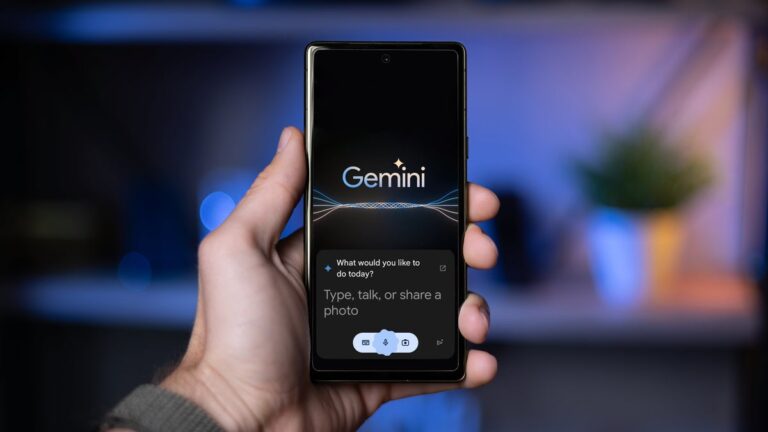
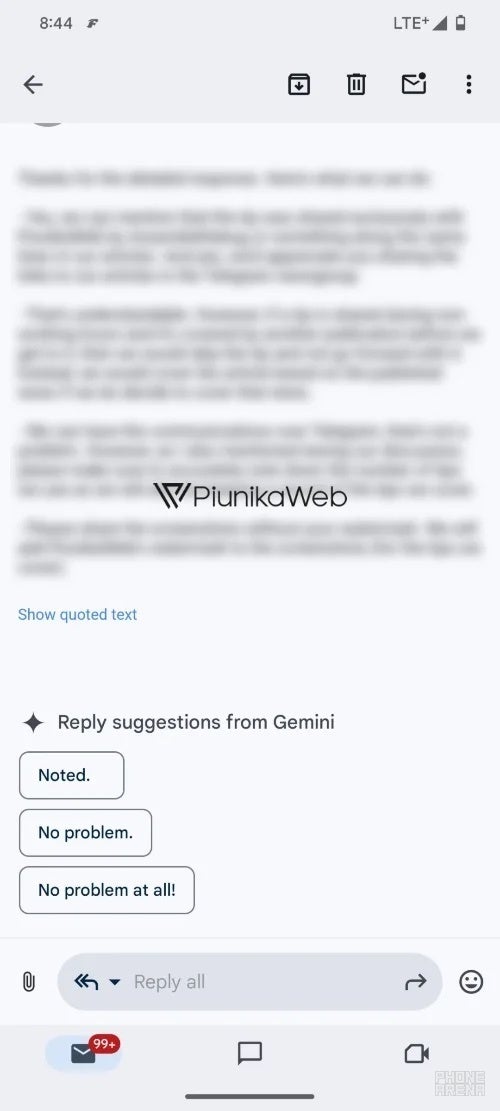
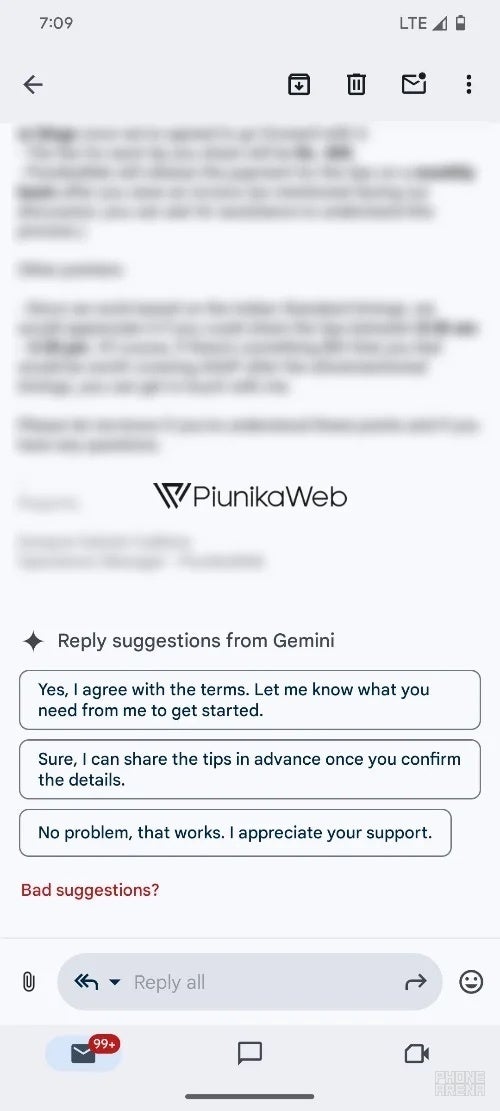
Gemini has started appearing inside Google Messages beta, following an official announcement a month ago. This new add-on means to enhance the messaging experience for users through advanced generative AI. It will help people craft messages quickly and efficiently with Gemini’s assistance.
Google is testing AI Chatbot “Gemini” in the Messages app beta
Gemini is available for users who meet certain criteria: access to the beta app, RCS enabled, and a personal Google Account with English as the default language (French available only in Canada) across over 165 countries. Additionally, one should own some of the new compatible devices like Pixel 6 or later, Pixel Fold, Samsung Galaxy S22 or later, and Samsung Galaxy Z Flip, or Galaxy Z Fold.
Users will find the Gemini contact option on their devices when they tap on the Start Chat FAB (Floating Action Button). Users get a prompt through the messaging UI by following on-screen instructions. However, voice messages are not available in FAB chat. Everything else remains familiar and users can still share photos within conversations.
According to 9to5Google, RCS underpins Gemini though it lacks end-to-end encryption. It prevents access or integration into other conversations thereby enabling direct conversations between users and LLM. However, this function is powered by a variant of Gemini 1.0 Pro that was optimized for concise responses and comes with support for Gemini Extensions giving access to Workspace, Maps, Flights, Hotels, and YouTube.
Google explains some use cases of Gemini inside Messages
According to Google’s explanation of use cases, this feature can draft short messages to reconnect with friends, suggest dinner menus tailored to dietary preferences, and generate conversation starters for social events among others.
While currently exclusive to Google Messages beta testers, reports indicate an incremental roll-out of Gemini taking place right now as part of its gradual deployment worldwide. Google plans to smoothly integrate Gemini into Google messages and streamline the experience amongst users.
It represents a major leap forward in AI instant messaging technology, simplifying communication in multiple contexts. As more people worldwide gain access to its features via the Google Messages platform, there will be a growing number of users benefiting from this innovative AI assistant.