ChatGPT, the world-changing, AI-driven chatbot, can now be accessed instantly, without the need to create an account or sign in. The OpenAI Foundation, the organization behind the popular AI engine, announced on Monday that it’s starting to make the chatbot available to users around the globe without any need to sign in.According to OpenAI, this move aims to “make tools like ChatGPT broadly available so that people can experience the benefits of AI.” There’s a hidden benefit for the company as well.
More users means more training data for the AI algorithm, and more people could potentially decide to subscribe to the premium ChatGPT-4 version once they get a taste of how powerful modern AI is.
We tested the open access here in PhoneArena and found out that it’s still not available in Bulgaria, but our good friends at Engadget confirmed that the instant access to the GPT-3.5 works in the States. We’re talking about a gradual rollout, so if you, just like us, don’t have the option available yet, try again later (as disappointing as this may sound).
There’s a safety concern with users that don’t need to sign in, and OpenAI says it takes it seriously. The company will block more prompts in suspicious and dubious categories in order to prevent misusing the AI model. “We’ve also introduced additional content safeguards for this experience, such as blocking prompts and generations in a wider range of categories,” reads part of the official announcement.
You can opt-out of training the AI model
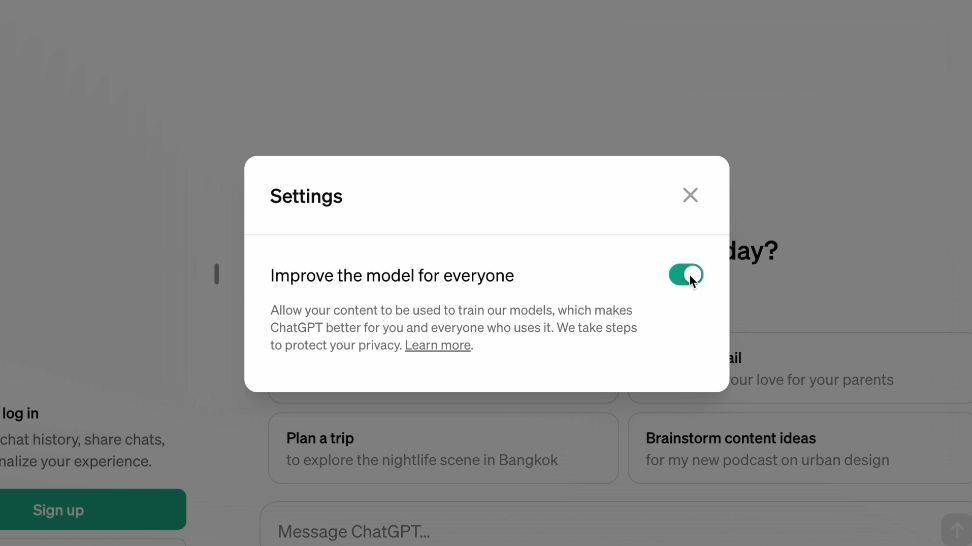
By the way, non-signed in users can also opt out of sharing their prompts for training purposes, they need to select the question mark next to the text box and go to Settings, then toggle the switch saying Improve the model for everyone.”
“More than 100 million people across 185 countries use ChatGPT weekly to learn something new, find creative inspiration, and get answers to their questions,” writes OpenAI in the blog post. We would argue that some of these use the language model to slack off and get the AI slave to do some work for them, but we don’t have enough information to predict how this would impact humanity. Just be careful how you treat your future AI overlord!
Veracode, a leading provider in the cybersecurity space, has officially announced its acquisition of Longbow Security.
This strategic move is poised to revolutionize how organizations manage and mitigate risks in multi-cloud environments, offering a unified solution to the complex challenges of today’s digital landscape.
The digital era has ushered in rapid innovation and transformation across industries, compelling organizations to adopt DevOps methodologies and leverage open-source technologies.
However, this shift towards accelerated deployment across multi-cloud environments has introduced many security challenges.
Security teams are often inundated with alerts from numerous tools, each providing a fragmented view of the risks.
This alert fatigue, coupled with the cognitive overload experienced by engineering teams, underscores the urgent need for a comprehensive solution that offers a singular view of risk.
A Unified Solution for Cloud-Native Environments
Veracode’s acquisition of Longbow Security is a game-changer in application security.
DocumentRun Free ThreatScan on Your Mailbox
Trustifi’s Advanced threat protection prevents the widest spectrum of sophisticated attacks before they reach a user’s mailbox. Try Trustifi Free Threat Scan with Sophisticated AI-Powered Email Protection .
Longbow Security, renowned for its pioneering approach to security risk management in cloud-native environments, brings to the table an innovative platform that promises to close the gap in risk visibility.
This merger synergizes Veracode’s best-in-class application security capabilities with Longbow’s expertise in cloud-native risk management, delivering a continuous, holistic view of an organization’s application security posture.
Key Benefits of the Veracode-Longbow Integration
The integration of Veracode and Longbow Security introduces a suite of benefits designed to empower security teams and developers alike:
Unified Visibility: Organizations can now gain comprehensive insights into risks across applications, code, and cloud, enabling them to address critical vulnerabilities effectively.
Orchestrated Remediation: Leveraging Veracode’s AI-driven capabilities, teams can prioritize and efficiently remediate issues from code to the cloud.
Actionable Insights: The ‘Best Next Action’ advice feature facilitates root cause analysis, guiding customers towards the most effective remediation strategies.
Continuous Monitoring and Assessment: Real-time vulnerability discovery across application portfolios and runtime environments ensures that organizations clearly understand their security posture.
Addressing the Challenge of Security Debt
In today’s fast-paced digital environment, 71 percent of organizations are grappling with security debt—flaws in applications that remain unaddressed for over a year.
The Veracode-Longbow integration offers a robust solution to this pervasive issue, enabling teams to rationalize security risk across their tools and prioritize remediation at scale.
Veracode’s acquisition of Longbow Security is more than just a merger; it’s a testament to Veracode’s unwavering commitment to advancing cloud-native application security.
By expanding its platform capabilities with Longbow’s industry-defining risk management solutions, Veracode will empower its customers to navigate the evolving threat landscape with unprecedented confidence.
Stay updated on Cybersecurity news, Whitepapers, and Infographics. Follow us on LinkedIn & Twitter.
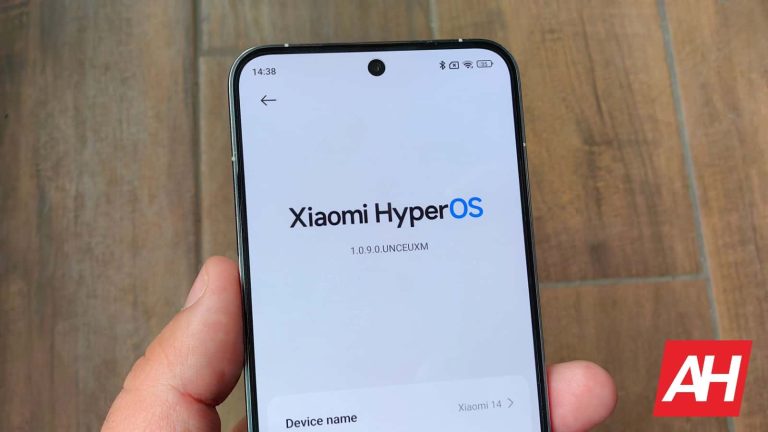
Xiaomi is planning to push out the HyperOS update to a bunch of devices in Q2 2024, and we have a full list. Do note that we’re talking about a global HyperOS update here, and the news is official.
Before we get down to it, do note that HyperOS is here to replace MIUI. This is Xiaomi’s new Android-based OS, though it is very similar to MIUI. Xiaomi is going with different naming now, however, and it did make some changes, but you’ll be right at home if you’ve used MIUI in the past.
Xiaomi’s HyperOS update is coming to a bunch of global units in Q2 2024
Xiaomi has listed 13 (series of) devices here, all but one are smartphones. The Xiaomi 11 Ultra and Xiaomi 11T Pro will be getting the update. The same goes for the Xiaomi Mi 11X, Xiaomi 11I HyperCharge, Xiaomi 11 Lite, and the Xiaomi 11i.
The update will also be rolling out to the Xiaomi Mi 10, Redmi K50i, Redmi 13C series, and Redmi 12. The Redmi 11 Price 5G will also be getting it, and the same goes for the Redmi Note 11 Series. Those were all smartphones, but the Redmi Pad 5 will also be getting the update in Q2 2024.
The update already rolled out to a bunch of global Xiaomi devices
The HyperOS update has already rolled out to a bunch of Xiaomi smartphones thus far. Those devices include the Xiaomi 13 Pro, Xiaomi Pad 6, Xiaomi 12 Pro, Redmi Note 13 5G, Redmi Note 13 Pro 5G, Redmi Note 13 Pro+ 5G, and more. You can check out the entire list below.
Once the update is available to your device, your phone/tablet will let you know. You can, of course, check manually too, if you’d like. That way you may be able to update sooner than you’d usually be able to, as the phone doesn’t ping for updates as often.
If you’d like to check manually, open the Settings on your phone, and go to About Phone. There you’ll want to tap the System updates option.
YouTube Shorts has become a major participant in the constantly changing online content creation scene by providing producers with new opportunities for engagement and revenue. According to recent statistics, many of YouTube’s paid producers are currently utilizing the Shorts feature, highlighting the tool’s expanding popularity and potential for generating income.
Furthermore, the latest statistics released by YouTube claim that Shorts is currently generating revenue for about 25% of its compensated artists. With the introduction of the short-form video format in response to the growing popularity of platforms such as TikTok, this number demonstrates the format’s quick acceptance and success.
With over 3 million producers enrolled in YouTube’s ad-sharing service, there are around 750,000 developers of Shorts overall. While YouTube does not disclose the exact breakdown of how much it has paid Shorts creators, it is clear that Shorts has contributed significantly to the $70 billion paid out to creators over the last three years.
Remarkably, the majority of YouTube Shorts producers make money from other YouTube channels. According to Taylor, around 80% of creators who were qualified for YouTube’s Partner Program through Shorts are now making money from long-form videos and fan fundraising on the site.
How is YouTube Shorts empowering paid creators?
Vertical films up to 60 seconds long, known as “shorts,” provide producers with a quick and engaging method to engage their audience. Content creators of all stripes have a lot of creative options with Shorts’ features like text overlays, filters, and music integration.
Shorts can be profitable through YouTube’s Partner Program, which allows eligible creators to earn money from advertising, channel subscriptions, and Super Chat donations. By including Shorts into this structure, YouTube has enabled creators to more effectively market their short-form content, helping them to diversify their sources of income.
Numerous elements have contributed to Shorts’ success. First off, the fact that it is integrated into the YouTube platform guarantees exposure to a wide range of users, giving producers the chance to expand their subscriber base and reach new viewers. Furthermore, short-form material is particularly enticing to both artists and consumers due to its simplicity of creation and consumption.
Additionally, YouTube has aggressively promoted the production of Shorts by launching many programs, such as the Shorts Fund, which gives money to producers of excellent material. This investment guarantees a consistent flow of entertaining and inventive material for viewers to enjoy in addition to motivating producers to prioritize Shorts.
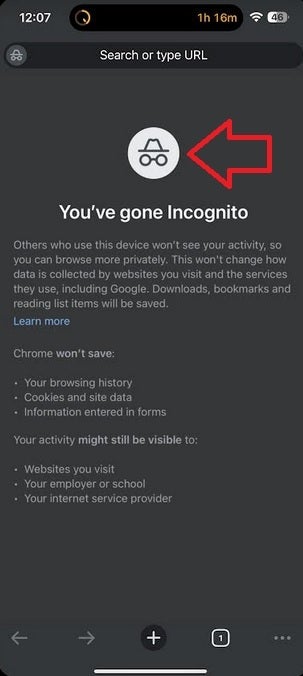
Google today agreed to settle a class action lawsuit (via TheVerge) originally brought in 2020 by Google account holders who accused the company of continuing to track their actions online even when they were browsing using Incognito mode while using Chrome. With Incognito mode, according to Google, “none of your browsing history, cookies and site data, or information entered in forms are saved on your device. This means your activity doesn’t show up in your Chrome browser history, so people who also use your device won’t see your activity.”
Here’s an example of what Incognito mode can do for you. Suppose you went online and bought your wife a present from “Yohann’s House of Very, Very Expensive Diamond Necklaces.” If you bought the gift while in Incognito mode, she wouldn’t be able to snoop around on your phone and discover that you visited Yohann’s online store while using Chrome. This way, you can really surprise her when you give her the necklace.
Google says that it never associated the data it collected from Incognito mode with individuals
While your wife or anyone else going through your phone can’t see the websites you visited on Chrome while you had Incognito mode enabled, guess who does collect some data? If you guessed Google, you got it right. Google spokesperson José Castañeda did say that the company never individualized the data it collected. He said, “We never associate data with users when they use Incognito mode. We are happy to delete old technical data that was never associated with an individual and was never used for any form of personalization.”
Google was collecting data from users browsing in Incognito Mode
Now you might be rubbing your hands with glee expecting another class action payout that perhaps you can grab a part of. Sorry guys and gals. Even though the plaintiffs had asked for $5 billion, they are receiving bupkus (zero) said Castañeda because the settlement did not include any damages for the class. However, members of the class are allowed to file individual suits against Google.
Back in December, news of the settlement was originally released but the actual terms of the settlement hadn’t yet been filed with the court and made public until now. It turns out that the Plaintiffs insisted that they keep their individual rights to sue Google for damages. That is why the settlement doesn’t include a payout to the Plaintiffs.
Google did agree to make some changes to its Incognito mode
Google did agree to rewrite its disclosures to say that the company does collect private browsing data and must include this on the splash screen that appears at the start of every browsing session in Incognito mode. The court filing also says, “Google must delete the private browsing detection bits that Plaintiffs uncovered, which Google was (twice) sanctioned for concealing. As a result, Google will no longer track people’s choice to browse privately.”
Some say that Google’s Incognito mode icon reminds them of Breaking Bad’s Walter White
For the next five years, Google must also make a change to Incognito mode that allows users to block third-party cookies by default. The settlement notes that “This change is important given Google has used third-party cookies to track users in Incognito mode on non-Google websites. This requirement ensures additional privacy for Incognito users going forward while limiting the amount of data Google collects from them.”
A hearing will be held on July 30th in front of Judge Yvonne Gonzalez Rogers of the United States District Court for the Northern District of California. If the judge is happy with the settlement, she will sign off on it at this time.
The icon used by Google to indicate Incognito mode reminds many of the Walter White character on one of the most amazing television series of all time, “Breaking Bad” which explains the headline. Of course, having to explain this takes away from some of the amusement that this writer might have normally felt otherwise.
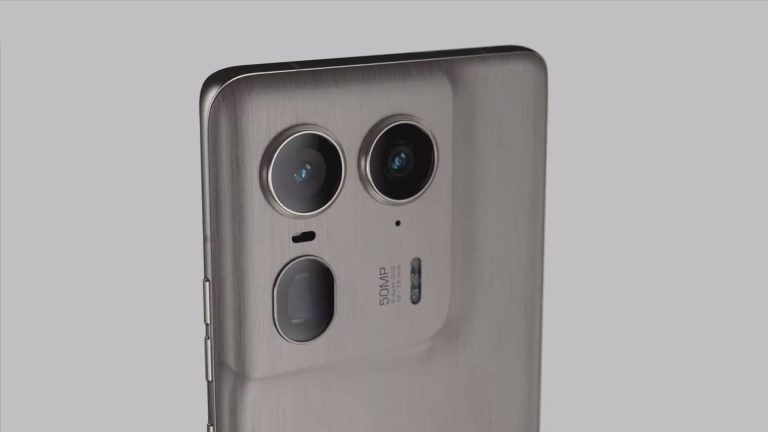
We’ve exclusively shared the design of the Motorola Edge 50 Ultra quite recently. Those images left very little to the imagination, but Evan Blass has just shared some short video clips of the Motorola Edge 50 Ultra.
The Motorola Edge 50 Ultra has appeared in 5 short video clips
These clips allow you to take a closer look at the phone’s design in the video format as well. The longest clip has a duration of 24 seconds, while the rest of them are much shorter than that. The one below, for example, gives us a good look at the phone’s back side, and how the phone’s display curves into the frame.
You can clearly see the three cameras on the back. Yes, the Motorola Edge 50 Ultra will include a periscope telephoto camera too, and it will offer a 5x optical zoom. Its max zoom capability will go way above that, though.
Take a closer look at the phone’s display
The video embedded below this paragraph shows the phone’s display. It shows it in both portrait and landscape orientations. You can clearly see how thin the bezels are here. On top of that, the screen curvature is shown, and the display camera hole, which is centered.
The Motorola Edge 50 Ultra will be water and dust resistant
You will find three videos embedded below this paragraph. They are focused on the display. The videos show off the display in general, and its display durability. One of the videos also teases the phone’s water and dust resistance.
The Motorola Edge 50 Ultra is coming in three colors, including Peach Fuzz, the Pantone Color of the Year for 2024. That color and the Black model will have a vegan leather backplate. The Beige model will feature glass on its back.
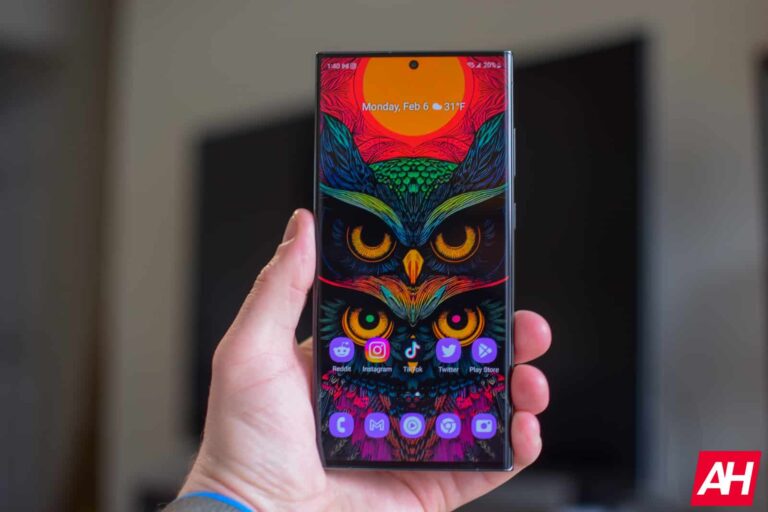
Samsung has brought back the pixel shift feature to Galaxy devices. The One UI 6.1 update, which started rolling out to eligible devices last week, has the feature. Designed to prevent screen burn-in issues on OLED displays, the feature was surprisingly missing on One UI 6.0.
Samsung re-introduces screen burn-in protection with One UI 6.1
OLED displays feature pixel shift technology that periodically moves UI elements on the screen around by a few pixels. This prevents a pixel from retaining the image permanently. Known as screen burn-in, this can permanently damage a pixel. The feature is found on large OLED screens such as TVs and monitors, as well as some smartphones, including Samsung Galaxy.
However, Samsung removed it from the Galaxy devices with the Android 14-based One UI 6.0 update, leaving them vulnerable to screen burn-in. It was unclear whether the company did it intentionally or inadvertently. Thankfully, the Korean firm has corrected the error quickly. One UI 6.1, which debuted with the Galaxy S24 series and is rolling out to older models brings the feature.
Pixel shift works as intended on the Galaxy S24 and Toranji confirmed the same on the Galaxy S23 following the One UI 6.1 update. The publication shared a GIF showing the feature in action. As you can see in the image below, the UI elements on the status bar move slightly every few minutes. This also happens with the navigation bar and other UI elements that continuously appear in the same place on the screen.
This screen burn-in protection should also be available on other Galaxy devices with the One UI 6.1 update. The new One UI version has rolled out to the Galaxy S23 FE, Galaxy Tab S9 series, Galaxy Z Fold 5, and Galaxy Z Flip 5 in some markets. Samsung will soon push the update to more flagships and mid-range models. Devices launched before 2021 are not eligible for One UI 6.1.
Older models miss out on Photo Ambient Wallpaper
The One UI 6.1 update brought several new features from the Galaxy S24 to the Galaxy S23 and other older Samsung flagships. However, a few are missing, including Photo Ambient Wallpaper. It offers dynamic lock screen and home screen animations based on the weather and time. If it is raining outside, the wallpaper is dynamically updated to reflect that. Unfortunately, Samsung didn’t bring it to the Galaxy S23 and other devices with the One UI 6.1 update. Older models get the AI-powered Generative wallpaper feature.
Samsung’s global connected living platform, Samsung SmartThings, recently announced its expanded partnership with Philips Hue, a global leader in smart lightning. SmartThings is already one of the leading smart home names while being a competitor of Apple HomeKit and Google Nest, and this partnership’s expansion can take things to the next level.
Philips Hue has lights for every occasion, so it is no surprise that they are the choice for SmartThings to go for the mood creation of their home system. While the Hue Sync TV app will be available in 2022 or later manufactured Samsung TVs and, in the Q60 and higher range, this expansion will hugely benefit users and change how users interact with their home entertainment systems.
SmartThings and Philips Hue partnership expands
In its step towards fulfilling its commitment to global smart home availability, Philips Hue is available in more countries. They include Hong Kong, Brazil, Poland, the Czech Republic, and Slovakia. The users residing in these countries can now use the Philips Hue Sync TV app on their SmartThings televisions.
“We are excited to continue our collaboration with Philips Hue to bring these transformative features to life. This partnership underscores our commitment to delivering seamless and innovative solutions that enrich the lives of our users, making their smart home experiences more immersive and enjoyable.”
The Philips Hue Sync TV app was previously only available with a one-time payment of $129.99, but now users can also subscribe to a monthly plan if they want. It depends on the choice and convenience of the users if they wish to pay once and use it or if they prefer to pay $2.99 per month to be able to use the service. However, this added choice helps those who infrequently use the app subscribe only when needed.
Finally, those using the Philips Hue Sync TV app on compatible 2024 Samsung TV models will find a new “Music Mode” feature. As the name suggests, the Philips Hue lights won’t react to what’s on the screen, but will instead react to the audio of what’s playing.
Release and compatibility
The Hue Sync TV app is already available on Samsung TVs made in 2022 or later and in the Q60 and higher range. The newer products that will be released will already have the option to activate this feature after installing the Hue Sync TV app.
As for the music mode feature, the feature will come to compatible Samsung TVs manufactured in 2022 and 2023 “later this year.” While users don’t have an exact release date, they won’t have to wait too long to get the feature. The future is exciting for SmartThing’s expanded partnership with Philip Hue, and fans eagerly await what comes next.
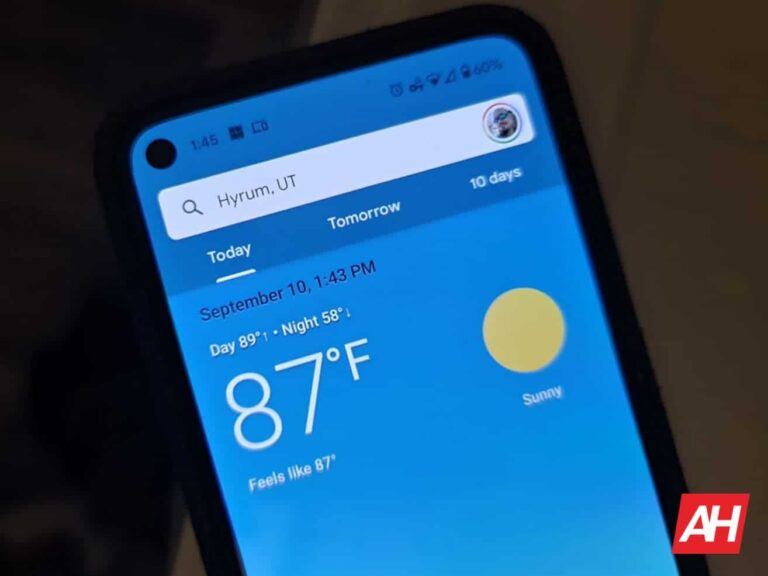
Google has developed a Scalable Ensemble Envelope Diffusion Sampler (SEEDS) as a new AI tool that can transform weather predictions by cutting down costs without losing precision. SEEDS is different from conventional supercomputers and it offers efficient medium-range weather forecasts, thereby increasing the ability to predict rare and extreme weather events.
Google SEEDS AI Tool will revolutionize weather forecasting, making it cheaper and more efficient
Google, in a recent blog post, highlights that SEEDS aims to address the increasing expenses related to traditional forecasting methods. As much as super-computers require huge investments, SEEDS can offer analogous outcomes at relatively low costs making forecasting affordable and cost-effective.
One of the significant benefits of SEEDS is its ability to generate numerous forecasts which provide meteorologists with abundant data for analysis and climate projections. The inflow of information helps experts in understanding climate patterns and their predictions hence offering more accurate forecasts.
Google AI recently posted on X touting the capabilities of SEEDS published in Science Advances journal, the article shows how this could be a game changer in weather forecasting. It becomes possible for meteorologists to predict storms or other weather conditions more accurately with SEEDS through AI technology.
SEEDS might garner a positive response with industrywide adoption
However, despite some misgivings about the integration of AI into weather apps, Google’s history with machine learning models used for predictive analyses points to a positive response. The success of GraphCast, another similar machine-learning model created by the DeepMind branch, showed how effectively AI could use historical data in predicting predicted atmospheric conditions over time.
However, the functionality as well as accuracy of AI-based prediction tools like SEEDS may eventually persuade meteorologists to embrace them fully. The possibilities for better accuracy and dependable weather predictions are becoming brighter due to advancing artificial intelligence techniques employed in weather prediction tools. This will be true especially if we consider future endeavors involving SEEDS leading into what is expected to be bright days ahead for meteorology.
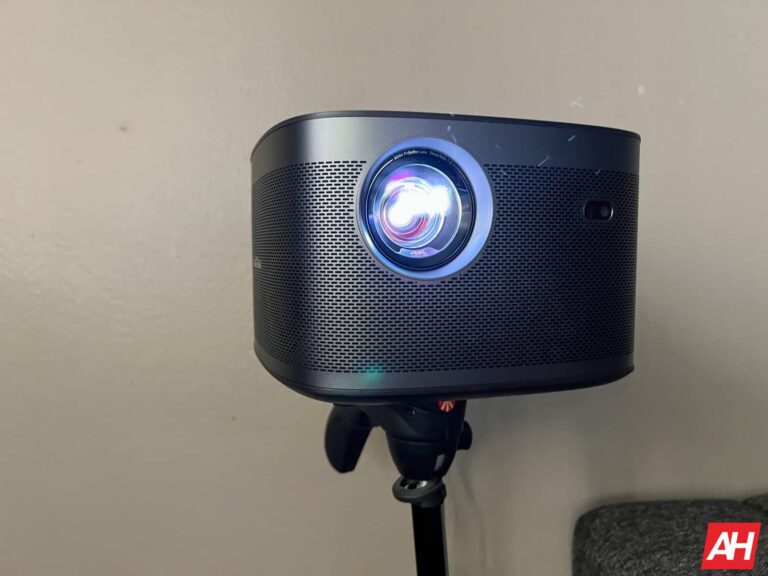
Amazon has a great deal going on right now for the XGIMI Horizon Pro 4K, which is now just $978.99. That’s going to save you over $700 off of its regular price. This also brings it down to a new all-time low price. To get this price, you’ll need to use the promo code XGIMISD979 at checkout. That will shave $400 off of the regular price.
The XGIMI Horizon Pro 4K is a long-throw projector, so you can mount it on a tripod or from the ceiling and have it bounce off of the wall. It does come with auto keystone correction, so the picture will always be nice and straight even if it is at an angle.
As the name implies, this is a 4K projector, so you’re getting a great image here. And it’s actually very bright at about 2200 ANSI Lumens. Making it great to use even in a brighter room. Android TV is running on this projector here, so you’re getting access to over 5,000 apps from the Google Play Store. That includes Netflix, Hulu, YouTube and many more.
I’ve actually used and reviewed the Horizon Pro 4K, and it is a really good projector. For the money, it’s hard to find something that’s better than this one.
You can pick up the XGIMI Horizon Pro 4K from Amazon today by clicking the link below.