Galaxy Z Fold 4 may not open flat due to internal debris

0
[ad_1]

One of Samsung‘s measures to make its foldables more durable appears to be backfiring. A Galaxy Z Fold 4 user recently found that the internal brush used to clean the hinge was breaking and preventing the device from opening completely flat. The debris is getting caught in the hinge, blocking its proper functioning.

Galaxy Z Fold 4 may develop debris internally and fail to open flat

Samsung has been making foldable smartphones since 2019. It is the only firm that has launched a foldable every year for the past five years. During this period, the Korean firm addressed numerous issues reported by foldable users. Each new generation of Galaxy foldables has come with improved hardware, design, and software features.

However, the very nature of these products makes them less durable than regular smartphones. Due to various openings and moving parts, you don’t get strong protection against dust. The dust particles can damage the hinge or disturb its function. To minimize the risk of dust damage, Samsung placed a tiny brush along the hinge on the inside of the Galaxy Z Fold 4.

This brush is supposed to prevent dust from entering into the hinge. While it likely did its job effectively, it appears the bristles aren’t strong enough to survive several years inside the foldable. As Redditor ahmed1smael discovered, they get weaker over time and break. Worse yet, the broken pieces remain inside the phone and may get stuck in the hinge, causing it to malfunction.

Many Galaxy Z Fold 4 users have reported that their foldable gradually stopped opening fully flat. Most of them speculated that dust may have entered inside the device. However, the aforementioned Redditor opened the phone to find debris developed internally. Along with broken pieces of the bristles, they also found pieces of adhesive film used to keep the brush in place.

After removing the debris, their Galaxy Z Fold 4 unfolded completely flat. This is a manufacturing defect but Samsung reportedly refused repair or replacement under warranty. The company doesn’t admit that the internal structure has failed. This is poor customer service from the Korean behemoth. Hopefully, it owes up and offers free repair for devices under warranty.

Samsung Galaxy Z Fold 4 hinge debris issue

The Galaxy Z Fold 5 may not have this issue

Following this discovery, many Galaxy Z Fold 5 users are worried that their foldable may have the same fate over time. While we can’t rule out the possibility, the newer model has a lesser chance of developing debris internally. From what we have seen so far, it doesn’t have a brush on the inside. Samsung also redesigned the hinge to push debris away instead of getting caught in the mechanism. It will be interesting to see what changes the Galaxy Z Fold 6 brings to the hinge mechanism. The new model may launch in July this year.


[ad_2]
Source link
OnePlus Ace 3V renders bare all of the phone’s design

0
[ad_1]

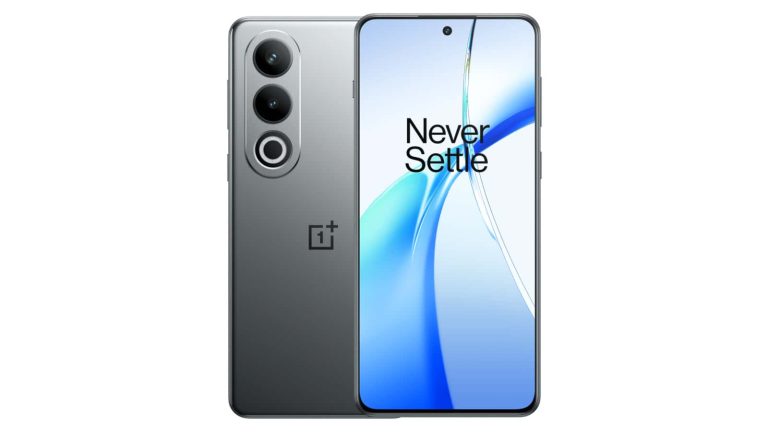
The OnePlus Ace 3V is the next device coming from OnePlus and renders that have just leaked are the best look yet at this upcoming smartphone. This isn’t the first time the phone’s design has been revealed. However, this is the first time that you can more clearly see the phone from both the front and the back, as well as both sides. So you most certainly get a better overall look at the style OnePlus was going for here.

That being said, the phone has popped up twice before. Most recently OnePlus officially teased the OnePlus Ace 3V launch date on March 18. Noting that the phone will be coming on March 21 in China. This is also going to be launched globally. However, it will be called the OnePlus Nord 4 in other regions outside of China. Specs and a single live image of the screen also appeared back on March 13.

According to the leaked specs, the phone will be powered by the Qualcomm Snapdragon 7+ Gen 3 mobile platform. It’ll also sport a 5,500mAh battery which is on par with the OnePlus 12 series. Although it has just a tad more than the OnePlus 12R.

OnePlus Ace 3V renders show the phone close up

You likely won’t get any closer to how this phone looks. Short of holding it in your hands or having someone hold it directly in front of you. With that said the renders below once again showcase that OnePlus is sticking with the same kind of design as the OnePlus 12 series for the button placements. That means the power button and volume rocker are on the right side of the phone. Meanwhile, the notification slider is on the left.

The renders are courtesy of Evan Blass on X, who is well-known for posting leaks of devices prior to their official announcements. OnePlus is also very clearly using a flat display on this device. Unlike the OnePlus 12R which has curved edges on the display. This gives way to flat sides of the phone’s frame which is a particularly good look on slim phones like this one.


[ad_2]
Source link

Texas Adult Site Age Verification Law Sparks 234.8% VPN Surge

0
[ad_1]
Texas Adult Site Age Verification Law Sparks 234.8% VPN Surge

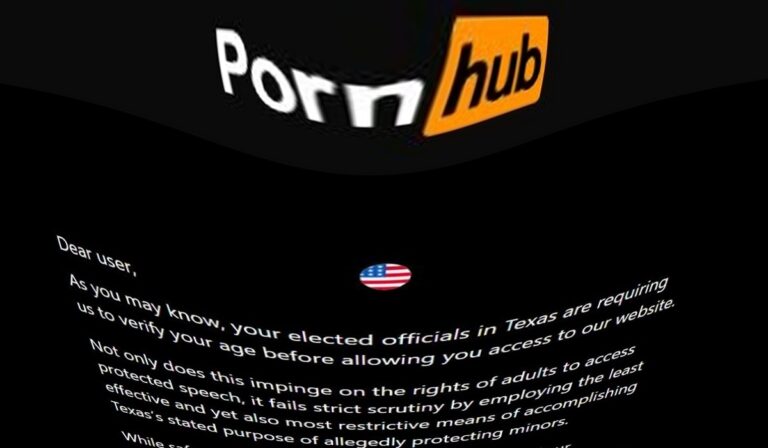
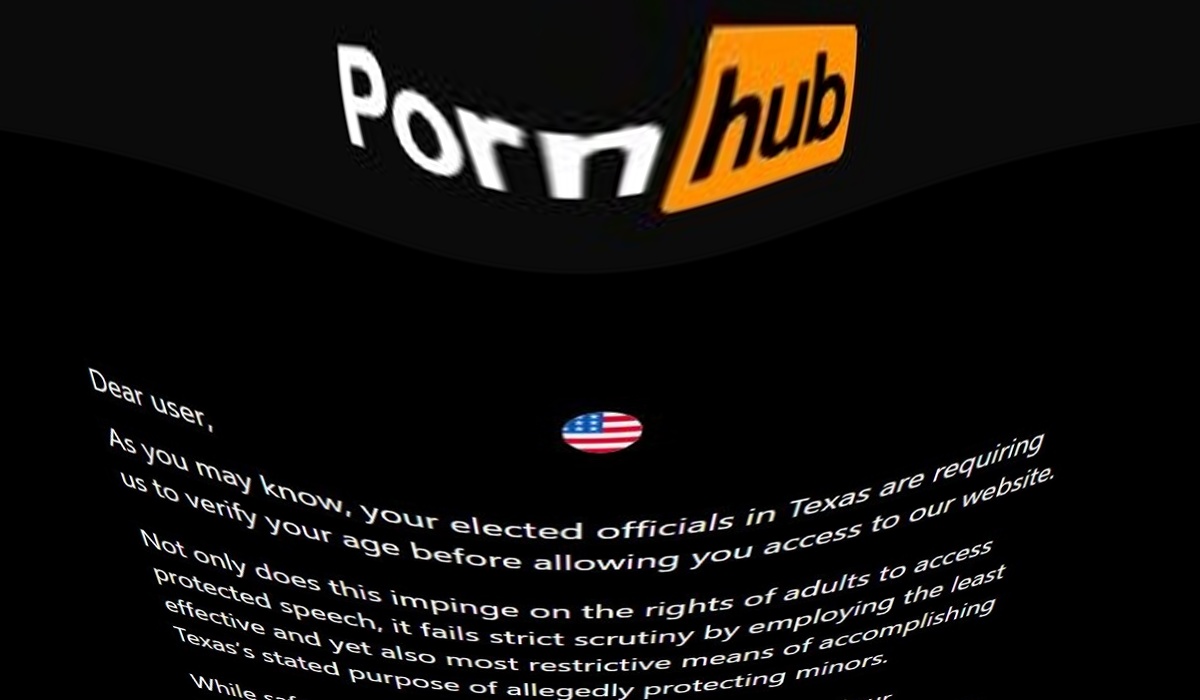
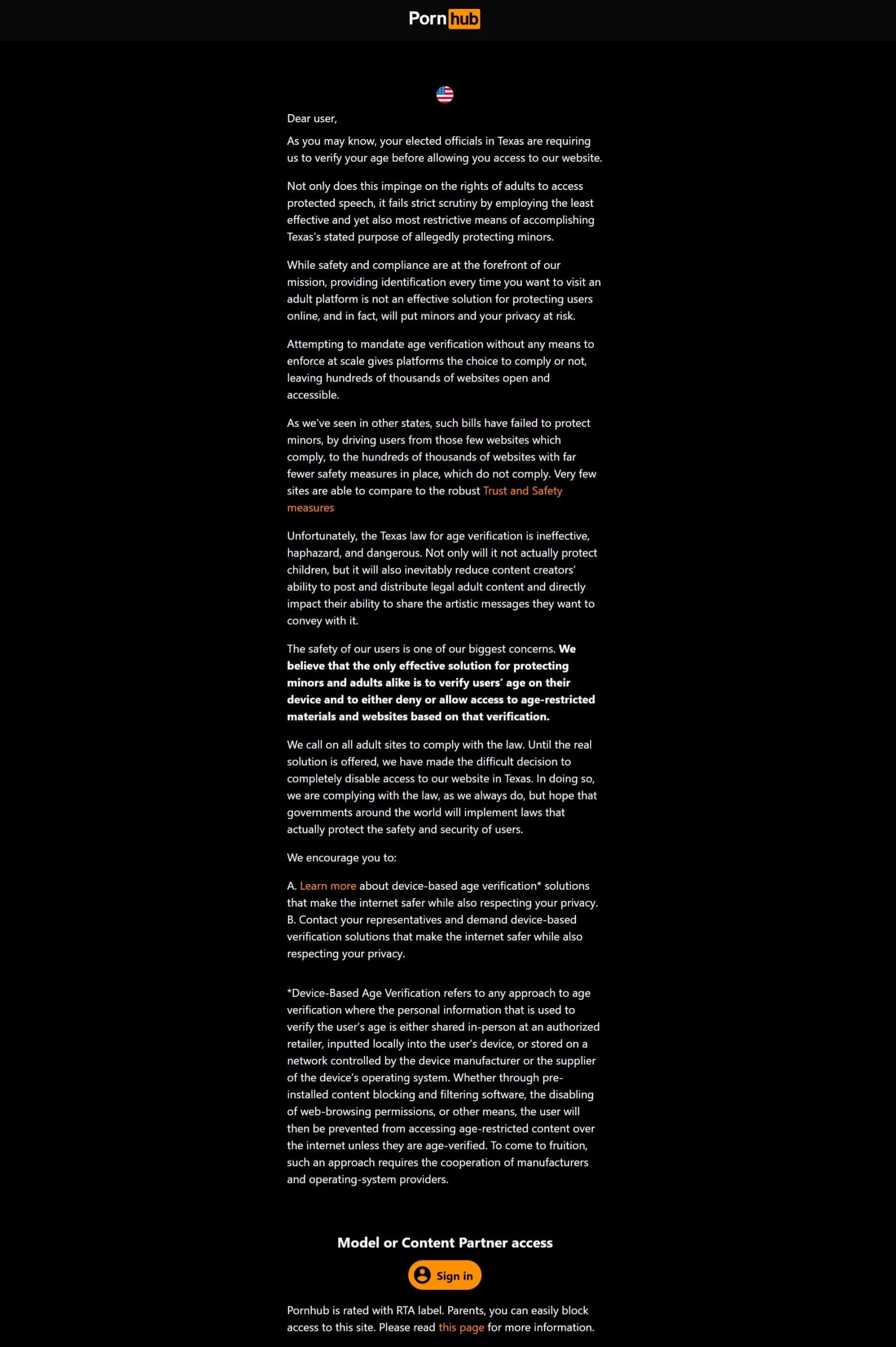
Pornhub blocks access in Texas after a dispute over the state’s new age verification law. The law requires adult websites to verify user age, but Pornhub argues the methods are ineffective and could expose user data. – Texas VPN usage surged after the block.

A recent clash between adult website Pornhub and the state of Texas has resulted in Texans being blocked from accessing the platform. This stems from a new Texas law, HB 1181, requiring age verification for websites hosting x-ratent content.

Pornhub argues that the law’s proposed methods for verifying user age are both ineffective and could potentially expose user privacy. They believe there should be a better way to achieve the goal of protecting minors from adult content.

Texes PornHub Ban Surges VPN Demand
This is what Texas users see when they visit the adult site (Screenshot credit: Hackread.com)

Following an unfavourable court ruling (PDF) upholding the law, Pornhub decided to block access to Texas users entirely. This decision has forced Texas-based users to turn to virtual private networks (VPNs) as according to vpnMentor’s report, on March 15, 2024, there was a surge in VPN demand in Texas, increasing by a staggering 234.8%.

Surprised? Don’t Be!

The surge in VPN demand is not surprising. The ban on Utah-based users by Pornhub in May 2023 resulted in a remarkable 967% increase in demand for VPN services within the state. Similarly, the introduction of age restriction laws about adult sites in Louisiana and Mississippi during the same year prompted a surge of 200% and 72% respectively in VPN interest.

Additionally, the implementation of age verification measures is not limited to the United States. The United Kingdom has been actively working on similar age check regulations. However, privacy advocates have raised concerns about the data collection associated with these measures, citing privacy-related issues.

But Should You Use a VPN?

Use a VPN whenever you’re online, particularly when connected to public Wi-Fi. Disregard the notion that “I have nothing to hide online, so why bother?” Who wouldn’t want to shield their IP address from malicious threat actors or adversaries or bypass online censorship? However, ensure you select a trustworthy VPN provider that doesn’t retain logs of your activities or share unnecessary data with law enforcement.

  1. The Differences Between Residential Proxies and VPNs
  2. Google’s Verification Badges for Security Tested VPN Apps
  3. Almost Every Major Free VPN Service is a Glorified Data Farm
  4. Russia tightens VPN regulations, further limiting internet access
  5. What is Dark Web, Search Engines, What Not to Do on Dark Web

[ad_2]
Source link

Circle to Search is not working for some Galaxy S24 Ultra users

0
[ad_1]

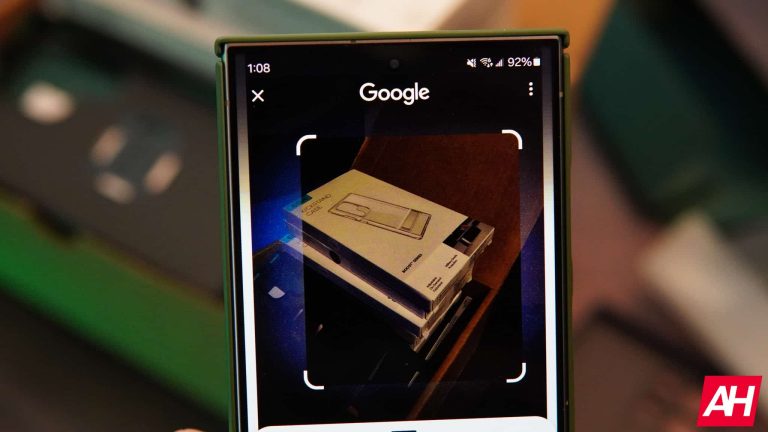
When Samsung unveiled the Galaxy S24 series of phones, the company introduced the world to Circle to Search. This is a Google-powered AI feature that allows you to simply perform a Google Lens search by circling an object on your screen. Well, it appears that Circle to Search might be broken on some Galaxy S24 Ultra models.

Circle the search was one of the headlining AI features that Samsung unveiled with the Galaxy S24 phones. Samsung calls this suite of AI features Galaxy AI. While Samsung introduced it with its phones, Google developed it. In fact, Google is going to roll out Circle to Search for more devices. However, this process is going to be rather slow, as Samsung announced that Circle to Search won’t make it to other devices until sometime in October 2024. That is still about seven months away, so people waiting for this feature will be very disappointed. If you want to use Circle to Search now, you can get a Galaxy S24 phone, Pixel 8, or Pixel 7.

Circle to Search seems to be broken for some Galaxy S24 Ultra users

Right now, we’re all wondering why the Galaxy S24 Ultra is experiencing this issue. Multiple people have reported this problem so far. When trying to perform the search, these users will get a message saying “It looks like there aren’t many great matches for your search.” After that, it would just drop the search.

We’re not certain why this issue is occurring, but, as noted by Sam Mobile, a user may have found the culprit. One user downgraded to an earlier version of the Google app, and that seems to have fixed the issue. So, it appears that the Google app’s latest update could possibly be the cause. However, we will have to wait for some sort of comment from Samsung or Google to confirm this.

In the meantime, if you are having an issue with the Circle to Search feature, then you may want to try that method.


[ad_2]
Source link

Most companies don’t use AI for coding

0
[ad_1]

Artificial intelligence can be used for a great many things, and one of them is coding. Right out of the gate, ChatGPT could generate sections of code, and that functionality has only improved across the entire generative AI landscape. However, it appears that companies don’t want to use AI for coding.

This report comes from Jfrog, a company that provides numerous software solutions for brands. JFrog did a survey on companies using AI Solutions for different purposes. The company used its own data from more than 7,000 organizations along with CVE analysis by the JFrog Security Research team along with data from a third-party survey that included 1,200 professionals from around the world. So, this data is from a wide range of companies and individuals.

A survey reveals that most companies don’t use AI for coding

With how much AI technology has advanced since November 2022, we are certain that modern AI chatbots are capable of producing some complicated and well-written code. So, it seems a bit odd that more enterprise companies aren’t jumping on the AI coding train. Many companies are all about streamlining production and maximizing productivity. However, they seem apprehensive about using AI for coding.

The data from the survey reveals that even though a ton of companies use AI/ML (artificial intelligence and machine learning) services, only a small number of them actually use the technology for coding. Only 32% admitted to doing so. So, 67% of the sample audience would rather input code the good old-fashioned way.

Security reigns supreme

This doesn’t mean that companies are not using AI/ML products at all. In fact, it appears that the majority of these companies are using AI for security. According to the survey, a scale tipping 90% of the companies revealed that they use AI/ML tools for security.

One important thing that the report brought to light is the fact that security seems to be one of the biggest things holding companies back in terms of productivity. According to the survey, 47%, nearly half of the companies and people surveyed reported that they use between four and nine security solutions. About a third admit to using more than 10 Solutions.

Also, about 40% of this survey respondents said that getting approval to use a new package or library typically takes a week. So, that seems to be a week’s worth of productivity lost.  Along with that, security teams say that they spend about a quarter of their time just remediating vulnerabilities.

So, security seems to be one of the spots where AI technology is most used. Certain tools can help automate certain tasks so that human beings can spend their time doing other tasks. So, companies aren’t using AI for coding as much, but definitely using it more for cyber security


[ad_2]
Source link

Motorola Edge 50 Pro design & features officially confirmed

0
[ad_1]

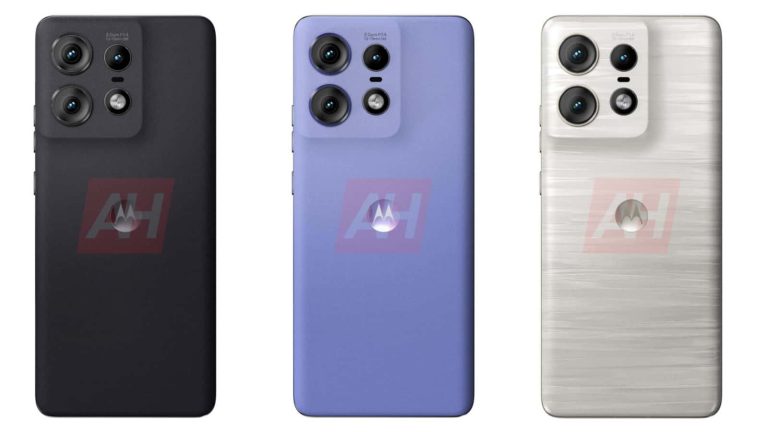
Motorola has just officially confirmed both the design and some features of its upcoming flagship, the Motorola Edge 50 Pro. That’s the device that we accurately leaked earlier this month.

Motorola shared the Motorola Edge 50 Pro design & features ahead of launch

The company shared these details via its social media channels, while some details also surfaced on Flipkart. The information comes from Motorola India social media channels, by the way.

Motorola did schedule a launch event for April 3 in New Delhi, and it’s quite obvious that this phone will launch there. The Motorola Edge 50 Fusion could join it, though, as a more affordable offering.

The company not only shared quite a few images, giving us a great look at the phone, but it also shared some of its features. As you can see, the device will feature a curved display, with thin bezels, and a centered display camera hole.

The device will have three cameras on the back, and arrive in three color options

It will have three cameras on the back, located in the top-left corner. That part of the phone will be raised a bit, but it will blend nicely with the backplate. Motorola’s logo is also noticeable on the back.

The back side will be curved towards the sides, blending nicely with the front side of the phone. Chances are that the front and back sides will be proportional. All the physical buttons will sit on the right-hand side.

Now, you’ll notice that Motorola is also using different backplates on different color options. The purple color seems to have some sort of grippy material on the back. It’s most likely vegan leather. The model that has a marble-looking finish probably has a glass backplate, but we’re only guessing. You can see both in the image below.

Motorola Edge 50 Pro promo materials image 3

Motorola is using the ‘intelligence meets art’ caption for this launch. Needless to say, this is a reference to AI, at least partially. Everything is about AI these days, that’s the buzzword that the vast majority of tech companies have been using. A “pro-grade” camera was also mentioned.

A 144Hz P-OLED display will be used here

What else do we know? Well, the phone will include a display with a 1.5K resolution, and a 144Hz refresh rate, which will support HDR10+ content. That will be a 6.7-inch P-OLED panel with a peak brightness of 2,000 nits.

A 50-megapixel main snapper will be included on the back, with an aperture of f/1.4. We hope that a variable aperture will be in play here, but we’re still not sure about that.


[ad_2]
Source link

Some Galaxy AI features could be rolled out to the Galaxy S22 series

0
[ad_1]

After we experienced Galaxy AI, one of our questions was whether Samsung would roll out these new AI features to older Galaxy devices or not. Samsung initially said that the Galaxy S23 series, Galaxy Z Fold 5, Galaxy Z Flip 5, and Galaxy Tab S9 series will get the AI features starting at the end of this month.

Today Samsung held its 55th annual shareholders’ meeting. The President of Samsung MX, TM Roh said “We are gradually preparing plans to support a fully-fledged Galaxy AI experience,”

Samsung is reviewing whether it will roll out Galaxy AI to the Galaxy S22 series

The President hinted that the company is considering rolling out Galaxy AI features to the Galaxy S22 series. “We are conducting a lot of review on the previous model,” he said.

However, he points out that some features of Galaxy AI run on the device. These features need current flagship hardware as the minimum system requirement to run the LLMs (Large Language Models). “Galaxy AI is aiming for ‘hybrid AI’ that combines not only cloud-based AI but also on-device AI technology that is greatly affected by hardware performance,” TM Roh explained. He added that running the models on devices will require more time and effort to optimize the models according to the older chips.

Regarding the lack of system resources on Galaxy S22 series devices, Newsis pointed out that if the Galaxy S23 FE runs on the same Exynos 2200 chip it powers 2023’s Galaxy S23FE. So, if Samsung manages to run the on-device Galaxy AI features on the Galaxy S23 FE, it will certainly be able to accomplish the same with the Galaxy S22 series.

Nonetheless, the company has not yet mentioned any possible timeline for the rollout of Galaxy AI features on the Galaxy S22 series. There is also no mention of any specific feature that could be available on older models. However, phones below the Galaxy S22 series won’t get any additions from Galaxy AI.

Old or incapable hardware might not be the only issue holding back the rollout

Earlier, we reported about the Galaxy S24 series’ possibility of getting a new on-device Galaxy AI feature. We also noted that the current list of on-device features (that require new and capable hardware) is quite limited. Most of the features currently run on servers and hence they aren’t actually limited by the phone’s system resources.

So, technically, the server-side features (most of the features) should run on the older devices without a problem. However, rolling out those features to older devices means serving even more users for free. It might not be sustainable for companies. This is why Samsung is deciding if it should run them on the Galaxy S23 and Galaxy S22.


[ad_2]
Source link

Google adds Predictive Back gesture to Gmail in Android 14

0
[ad_1]
Google was supposed to offer the Predictive Back feature system-wide on Android 14. With this gesture, an Android user employing the back gesture can see a preview of the page he is going back to. This has been a big deal for app developers because it turned out that many times an Android user, not knowing exactly where the back gesture would take him, accidentally backed out of an app not intending to do so. And this resulted in the app receiving some negative metrics which its developer wasn’t happy about.

As we noted, the predictive back gesture shows an Android user a preview of where he will be taken to if he uses the back gesture. There are only three possible destinations: a previous page in the same app, a previous app, or the home screen. The back gesture on Android requires the user to slowly swipe left from the right side of the screen until a left-facing arrow inside a circle appears. Once the user pulls his finger off of the display, he goes back to the previous page. The same thing is accomplished by slowly swiping to the right from the left side of the display, letting go when a right-facing arrow inside a circle shows up on the display.

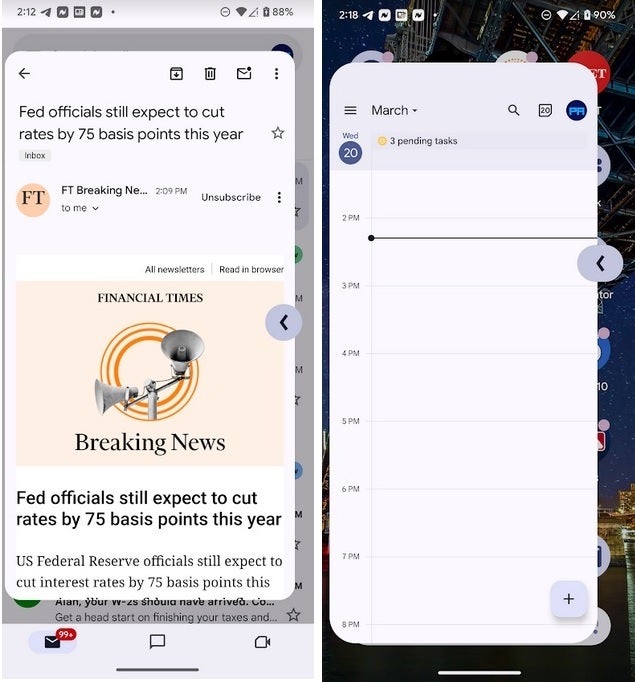
Google still has not enabled predictive back with Android 14 and it still must be toggled on by going to Settings > Developer options > Predictive back animations: Enable system animations for predictive back. 9to5 Google recently spotted the Predictive Back Gesture in version 2024.03.03.x of Gmail when closing an email. When starting the back gesture, the email you are closing shrinks to show rounded corners, and a small preview of the page you are going back to appears behind the page you’re currently viewing.
The Predictive Back gesture can also be spotted on Google Calendar’s monthly overview and the day view. Hopefully, we will see the feature appear on more system apps, and with Google asking third-party app developers to use it, we might see the Predictive Back feature eventually become available on most Android apps.

[ad_2]
Source link

Google unlocks 5G access on its Pixel smartphones in new select regions

0
[ad_1]

Google is gradually allowing its Pixel smartphones to latch onto the 5G network in select regions. The search giant hasn’t allowed all Pixel smartphones with 5G hardware to access 5G networks. Also, neither do all supported devices work with 5G networks wherever it is available.

The Pixel lineup, starting from Pixel 4a (5G), and going all the way up to the latest Pixel 8 Pro, will be able to work with 5G networks in select countries. Essentially, Google is slowly unlocking the 5G modems in these devices and it appears to be dragging its feet with the rollout.

Google Pixel Android smartphone lineup is now 5G capable in 38 countries

Google maintains a list of countries where 5G is available on its Pixel-branded Android smartphones. The company recently updated the list.

Google has added seven more countries to the list, taking the tally to 38 countries where Pixel smartphones will be able to latch on to 5G networks. Google advertises this feature as “5G on your Pixel”, and the list has the following seven new European regions: Croatia, Greece, Hungary, Iceland, Latvia, Liechtenstein, and Slovakia.

It is strange to note that Google does not officially sell its latest Pixel phones in the newly added markets. Google sells the Pixel 8 series through official Google Stores in just 20 countries. According to 9to5Google, these include Austria, Australia, Belgium, Canada, Denmark, Ireland, France, Germany, Italy, Japan, Netherlands, Switzerland, Taiwan, Norway, Portugal, Singapore, Spain, Sweden, the UK, and the United States.

Simply put, Google’s Pixel smartphones, starting from the Pixel 4a (5G), will be able to latch on to 5G networks in 18 countries where quite a few of the devices aren’t even officially available, or sold through authorized resellers.

Why is Google restricting 5G availability?

The rapidly expanding 5G networks promise blazing-fast connectivity speeds. Additionally, starting from 4G, telecom companies have been able to offer VoLTE and Wi-Fi calling on supported smartphones.

Hence, restricting the availability of 5G, especially when the hardware supports the same, doesn’t make much sense. After all, the availability of reliable 5G networks is majorly the responsibility of telecom service providers.

Google hasn’t offered any reason for the restrictive and slow rollout. Some experts argue certification and testing could be the reason behind the delay. However, this still does not explain why Google is unlocking 5G access in regions where Pixel smartphones aren’t officially available.

It is possible that Google is engaged in a complex distribution strategy and could be negotiating with telecom companies. The search giant may be expanding 5G availability after realizing several users are purchasing Pixels through unofficial channels.


[ad_2]
Source link

WhatsApp could double the length of status videos

0
[ad_1]

WhatsApp seems to have rolled out a bunch of updates in the last couple of weeks for those enrolled in the beta program. While many of these updates address various bugs, some of them introduce new features that users can test and provide feedback.

With WhatsApp beta version 2.24.7.6, the developer is increasing the length of videos users can add to their status. Currently, WhatsApp users can add videos of up to 30 seconds to their status, but the latest beta version of the up extends the length to 1 minute.

Discovered by the folks at WABetaInfo, the new feature that allows users to share videos of up to 1 minute in length via status updates seems to be only available to select WhatsApp beta testers on Android.

While this certainly isn’t a core WhatsApp feature, it’s nice to know that developers are listening to feedback and try to accommodate many of the requests that make sense.

As with all the beta features, it’s hard to say whether or not this will make it to the stable version of WhatsApp. Still, since it doesn’t seem to be that hard to implement, chances are that all WhatsApp users on Android will eventually be able to share longer videos via status updates.


[ad_2]
Source link