The foldable phone race is heating up, with new phones coming to the market each year. Microsoft was among the first companies to tap into this segment with Surface Duo series devices. The phone was later discontinued, but Microsoft might soon add a new foldable phone to its showcase.
While Microsoft canceled the Surface Duo 3 phone, the recent patent application suggests that its engineers are working on a foldable device. The device reportedly features a single spine folding mechanism. The patent, published on February 29 by USPTO, is also titled “Foldable computing device spine cover plate.”
Microsoft could release a proper foldable smartphone, with a single-spine folding mechanism
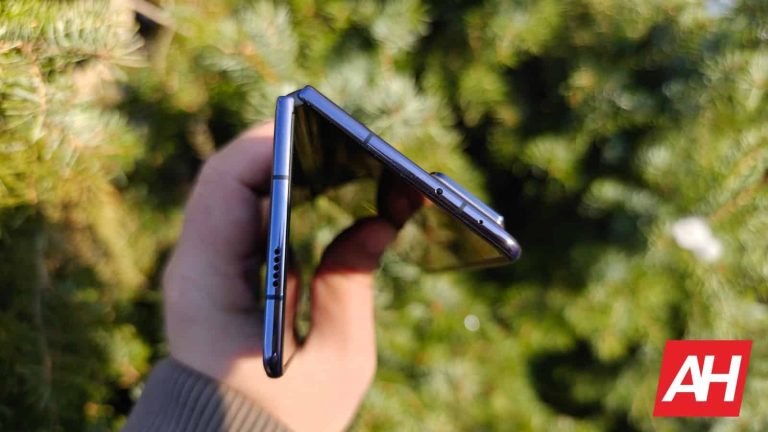
As the patent suggests, the upcoming Microsoft device opens vertically and features a flexible display. This design, similar to the Samsung Galaxy Z Fold series, is further enhanced by an innovative spine cover plate. This mechanism protects the screen and covers the gaps to prevent dust and water from damaging the device, a feature not commonly found in other foldable phones.
Adding a single spine folding mechanism to a foldable phone has two benefits. First, it enhances the device’s durability and resistance to damage. The second major benefit is that the phone will be more convenient to hold, as the crease is less visible thanks to a new flexible display and spine cover plate that can pull itself closer to the internal hinge mechanism.
Microsoft noted in the patent filing, “By retracting the spine cover plate toward the central spine as the first display-supporting frame and the second display-supporting frame are rotated into a face-to-face orientation, the width of the folded computing device is reduced, thereby enabling easier and more comfortable handling” of the device, such as with one hand.”
The durability of foldable phones is still a concern
One significant challenge for manufacturers of foldable phones is ensuring their long-term durability. Mainly due to the hinges, which can become worn with regular use. While this issue is less prevalent in modern foldable devices, it remains a crucial concern for buyers. Microsoft’s upcoming foldable phone must address this issue while promising a seamless and top-notch Android experience.
The exact release date of Microsoft’s foldable phone with a single spine folding mechanism is yet to be announced. Meanwhile, it’s worth noting that the tech firm has other exciting products in the pipeline. The Surface Laptop 6 and Surface Pro 10 are also set to make their debut, offering a range of options for tech enthusiasts and potential buyers.
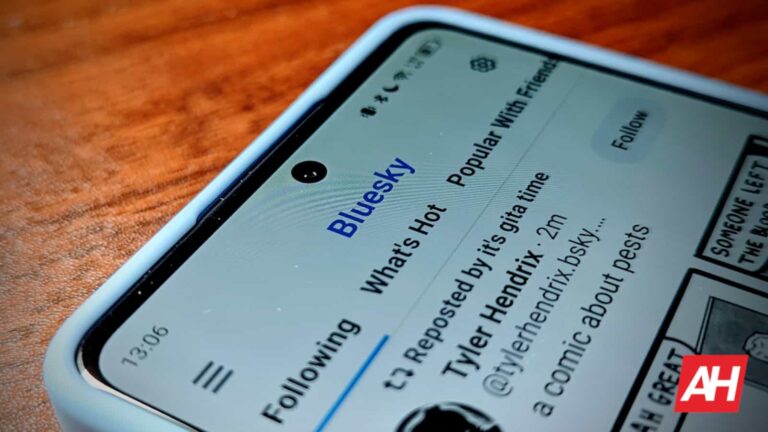
Bluesky, the Twitter alternative and an open-source platform, has introduced a stackable moderation feature that allows its users to have their own custom moderation filters. It’s a significant step forward for the budding social media platform, enlightening its users and developers on how they can create custom labeling tools.
Stackable moderation services on Bluesky will give users plenty of control
The development of new moderation tools started when Bluesky was experiencing rapid growth. The platform recently opened up to all users. With about 2 million new subscribers, Bluesky’s community now has over 5 million members.
It is envisaged by Bluesky that if it follows the philosophy of user-driven moderation, it would build an environment where communities are the main determiners of what happens in their online spaces, based on their cultural values and preferences. The platform will also enable users to set up their moderation preferences and plug into others’ custom-developed filtering systems.
These customized moderation tools, termed as labeling services, allow users to decide what kind of content they want to filter out, thereby making content less offensive or more interesting depending on individual preferences. For instance, a user might choose a service like “Spider Shield,” which eliminates any photographs showing spiders from his feed as this may help cater to personal tastes and phobias.
Credits: Bluesky
To enable these personally tailored experiences, Ozone–Bluesky’s collaborative labeling tool is now available as an open-source extension. Moderation groups can use this tool to respond to reports and apply labels to implement community-driven practices. Moreover, programmers may use Bluesky’s API to create automated labeling systems.
Users can compose stacked filters over the company’s baseline oversight
Jay Graber, the CEO of Bluesky, has adopted a “composable” or “stackable” moderation strategy. The approach may involve establishing a baseline level of oversight. Users can then customize it according to their needs and preferences. In a recent interview with Protocol.com, Graber mentioned that more partnerships with third-party moderators are coming soon to desktops. Mobile integration should come later on.
With this new moderation framework, Bluesky will change forever. The platform continues building and will soon offer a variety of content filters, customizable by each user. Developers and teams who access these tools will make the platform’s socializing experience more dynamic.
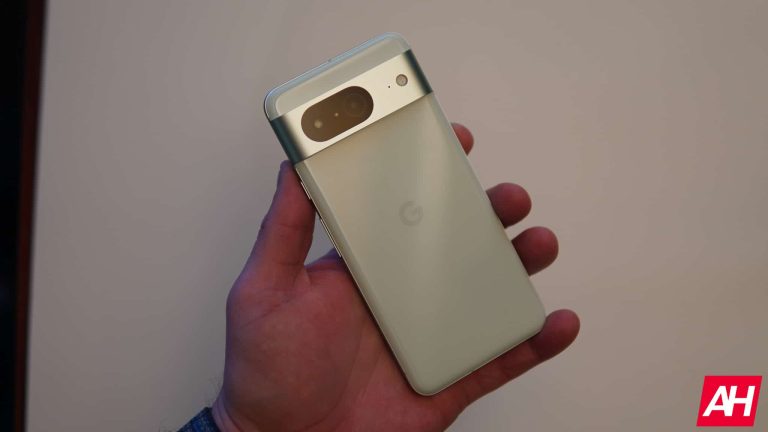
The Made by Google podcast recently released an episode where the hosts explained the engineering behind Google Pixel sound design. Google’s Pixel phones are considered some of the most well-designed Android smartphones on the market. This reputation stems especially from the attention to detail the company puts into its operating system. From the visual design, to the animations, and the sounds for every action. Each and every little aspect of a Pixel phone has months of testing and perfecting behind it.
How Google Pixel sound design is planned
Made by Google is a podcast that delves into the behind-the-scenes of how things work at Google. This includes talking to “Googlers” and asking the how and why of everything Google. Season 5, Episode 2 – Sounds Like Pixel Perfect – was a look into how sound effects are made for the Pixel phone lineup.
One aspect worth noting was that the team describes the sounds as “simple”, “human”, and “playful”. This, of course, complements the UI design of the Pixel phones. For example, the sliding bubble animation that clings to the screen until its pulled away. Another fun fact is that it’s not only sound, but also the hardware in the phones. The designers at Google make both the software and hardware work in perfect synergy, quite like Apple’s devices.
“If it’s a ringtone, I want to make sure that that’s going to sound really good in my home, but it’s also going to sound really good on the street. And then we optimize the sound for the hardware. So we make any orchestration or EQ or whatever it is, any types of changes that need to be made to get the sound sounding as good as possible on the actual device.”
AI is a “collaborative partner”
It also seems the designers at Google have already begun implementing generative AI in their work. This isn’t surprising at all given how heavily the Pixel phones use AI. The recently released Gems collection of sounds and ringtones was made with the help of AI. This doesn’t mean it’s entirely AI generated, of course.
For example, as detailed by 9to5Google, the “Amber Beats” sound started with a prompt to AI. “Behind the groovy bass line, there’s an atmospheric pad synth, which adds depth to the track. Bouncy drums are featured with a clear glass hit predominant sound. There are layers of synth sounds.”
The prompt itself showcases extensive knowledge of audio design, but that wasn’t all. From the 30-second clip that was output by the AI, a two-second excerpt was taken and altered. “I took that audio clip and began to rhythmically and melodically alter it, building an original idea that felt authentic to me.”
The entire episode is a very cool insight into how Google’s sound design team operates. As generative AI continues to improve, there might even come a time when employees are laid off and all of the above-mentioned work is handled by AI. If that time does come though, the sound design might lose its “human” descriptor.
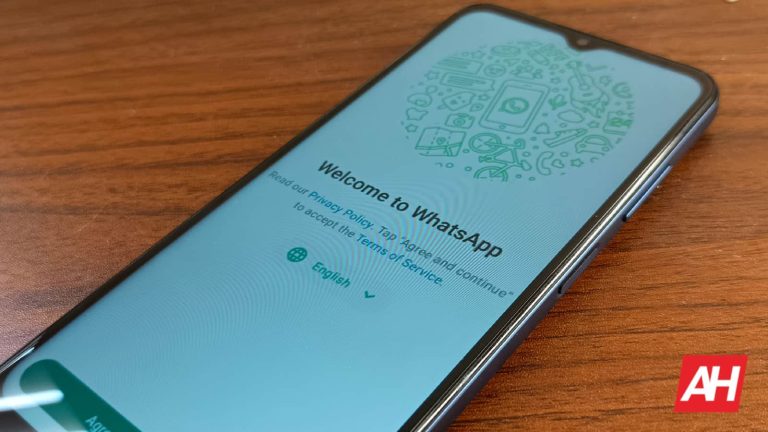
In line with bolstering privacy, WhatsApp has started rolling out a security feature preventing users from taking profile photo screenshots. The WhatsApp screenshot-blocking feature has been available since February 2024 for most WhatsApp Beta testers. Regular users have begun to see the feature according to Android Police following a server-side update push by WhatsApp.
Screenshot-blocking will be enabled by default
Upon testing the screenshot-blocking feature on WhatsApp Beta, it comes enabled by default and there’s no way of disabling it. Any attempt to take a profile photo screenshot will result in a blank screen. On the Beta version, there’s a warning message explaining why you can’t take the screenshot.
WhatsApp removed the ability to save screenshots several years ago but this proved almost pointless since anyone could easily take a screenshot of any visible profile picture. The WhatsApp screenshot-blocking feature should address this issue once and for all.
However, you can still take screenshots of profile thumbnails from a chat screen or when viewing a contact’s profile. The thumbnails will be of significantly lower resolution but may still be clear enough especially on the profile preview screen. If this is a cause for concern to you, you can always limit your profile photo’s visibility or avoid having one altogether.
A welcome feature for enhanced WhatsApp Security
The profile photo screenshot blocking update should be one more hurdle to keep WhatsApp scammers at bay. It should also enhance privacy given that profile photos are usually personal images that you may not want in the wrong hands. You’ll have more control over who gets their hands on your photo and reduce the chances of someone impersonating you or sharing it without your consent.
You can check whether this feature is available by taking a screenshot of one of your contact’s profile images. You should get a warning message alongside a blank screen. If it’s not yet available to you—keep checking over the next couple of weeks.
You don’t need to update to the latest WhatsApp version to get this feature since it’s a server-side update. It’ll also be enabled by default so no need to adjust your settings.
We’re here to compare the OnePlus 12 vs HONOR Magic6 Pro, some of the finest flagship smartphones around. These two juggernauts both come from China, and they are not that similar. They are both quite large and powerful, though, and both do come in global variants, in case you were wondering. Both of these phones also launched rather recently, well, at least their global models did.
As per usual, we’ll first go over their specifications, and will then move to various other categories. We will compare the designs of the two phones, their displays, performance, battery life, cameras, and audio performance. There is a lot to talk about here, so, let’s get started, shall we?
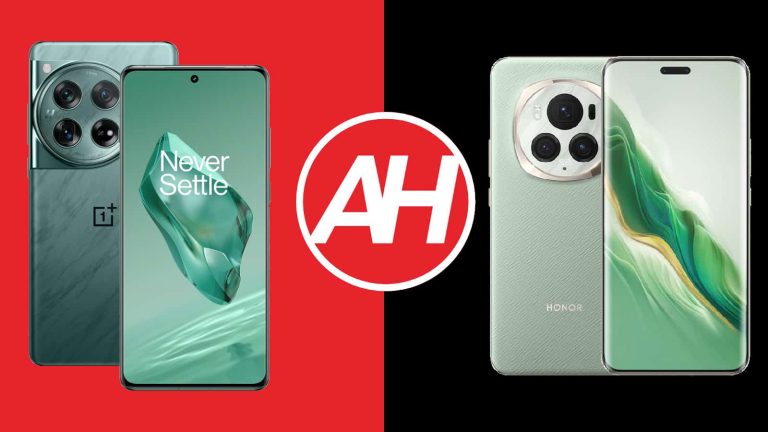
Both of these phones are large and have curved panels on the front. They also come with rounded corners, and their backplates are also proportionally curved to their front sides. The OnePlus 12 has a centered display camera hole at the top, while the HONOR Magic6 Pro includes a pill-shaped cutout that is also centered. The bezels around the displays on both phones are quite thin, but the ones on the Magic6 Pro are also uniform.
If we flip the two phones around, you’ll see considerably different camera islands there. The one on the OnePlus 12 sits in the top-left corner, and it connects to the frame with a piece of metal. The camera island itself is circular, though, and the sensors are set up in two rows (2×2). The HONOR Magic6 Pro’s camera island is centered on the back, and it is round, but it has some added design elements around that break that circular look. There are three cutouts in there, with the top one being the largest. The camera layout here is easily recognizable.
Both phones are made out of metal and glass. The thing is, the HONOR Magic6 Pro also comes in a vegan leather option. Speaking of which, that vegan leather model does add far more grip to the table, and that’s the model that we reviewed. It’s also a bit lighter than the glass model, it weighs 225 grams compared to 229 grams. The OnePlus 12 weighs 220 grams, by the way.
These two phones are fairly similar in terms of dimensions. The OnePlus 12 is slightly taller and thicker, while they are equal in terms of width. Both phones also deliver protection against water and dust. The OnePlus 12 is IP65 certified, while the HONOR Magic6 Pro is IP68 certified.
OnePlus 12 vs HONOR Magic6 Pro: Display
The OnePlus 12 features a 6.82-inch QHD+ (3168 x 1440) LTPO AMOLED display. That panel is curved, and it has an adaptive refresh rate (1-120Hz). It can also project HDR10+ content, and it has Dolby Vision support. The OnePlus 12’s panel has a theoretical max brightness of 4,500 nits, though you’ll never be able to go that high. The screen-to-body ratio is around 90%, while the display is protected by the Gorilla Glass Victus 2.
OnePlus 12
The HONOR Magic6 Pro has a 6.8-inch 2800 x 1280 LTPO OLED display. That panel is curved, and it also has an adaptive refresh rate (1-120Hz). HDR content is supported here, and the panel can project up to 1 billion colors. The theoretical maximum brightness of the display is 5,000 nits. The screen-to-body ratio is around 91%, while the display aspect ratio is 19.5:9. This panel is protected by the Jurhino glass.
The bottom line is, both of these displays are phenomenal. Both of them are vivid, sharp, and have great viewing angles. They’re also very responsive and have rather high PWM dimming. Well, the HONOR Magic6 Pro does have the advantage in that regard, but both are above most phones. Both displays are also well protected, and both of them get more than bright enough in all conditions. We really don’t have any complaints about either of these two panels.
OnePlus 12 vs HONOR Magic6 Pro: Performance
Both of these phones utilize the Snapdragon 8 Gen 3 SoC from Qualcomm. That is the most powerful processor that Qualcomm has to offer at the moment, and it’s a great choice by both companies. The OnePlus 12 comes with up to 16GB of LPDDR5X RAM globally, while the HONOR Magic6 Pro offers 12GB of LPDDR5X RAM with its global model (up to 16GB in China). Both devices also utilize UFS 4.0 flash storage.
The performance from both devices was outstanding, to say the least. They handled everyday tasks with ease, and the same can be said for gaming too, actually. Both devices have really good cooling, and that is especially true for the OnePlus 12. OnePlus managed to surprise everyone with the size of the vapor chambers (two, stacked). When it comes to regular, everyday performance, the two phones were on par. They launched apps really fast, browsing was no problem, and multitasking was handled with grace, and that goes for basically anything we did with the two devices. There was no lag to speak of.
In terms of gaming, we ran several games on both devices, in various ranges, and all of them ran without any issue. That even goes for Genshin Impact, which is usually the benchmark we use. Both phones were able to handle an hour of Genshin Impact without a problem, the performance was spot on at the highest of details. Neither phone got too hot to handle, not at all.
OnePlus 12 vs HONOR Magic6 Pro: Battery
The OnePlus 12 packs in a 5,400mAh battery, while the HONOR Magic6 Pro has a 5,600mAh battery on the inside. Needless to say, these are rather large battery packs in the two phones. Does that mean they offer great battery life? Well, it doesn’t necessarily have to mean that, but in the case of these two phones, it surely does. These are some of the best flagships out there in terms of battery life, at the time of writing this article.
We were able to cross the 9-hour screen-on-time mark on both of these smartphones. That’s not something we can say for a lot of phones out there. Do note that gaming was not a part of the package, though, but everything else, was, pretty much. Even if you throw gaming into the equation, in normal amounts, getting great battery life from both phones is quite realistic, you don’t have to worry about them dying on you in the middle of the day.
Even if you run out of juice at an inconvenient time, both phones charge really, really fast. The OenPlus 12 supports 100W wired (80W in the US), 50W wireless, and 10W reverse wireless charging. The HONOR Magic6 Pro supports 80W wired, 66W wireless, reverse wireless, and reverse wired charging. Do note that only the OnePlus 12 comes with a charger in the box, though, the HONOR Magic6 Pro does not. You’ll have to get one separately.
OnePlus 12 vs HONOR Magic6 Pro: Cameras
The OnePlus 12 features a 50-megapixel main camera, along with a 48-megapixel ultrawide unit (114-degree FoV), and a 64-megapixel periscope telephoto camera (3x optical zoom). The HONOR Magic6 Pro has a 50-megapixel main camera, a 50-megapixel ultrawide unit (122-degree FoV), and a 180-megapixel periscope telephoto camera (2.5x optical zoom). Both phones have rather compelling hardware on offer.
HONOR Magic6 Pro
Is the performance any good? Well, yes, it is. The images they provide are different in terms of style, but both phones are quite capable in the camera department. The OnePlus 12 is boosted by Hasselblad, and it simply loves contrasty shots with pronounced colors. Do note that those colors tend to look outstanding, and not oversaturated or anything like that. The HONOR Magic6 Pro likes to brighten up the scenes a bit more in low light, and it also prefers warmer tones.
Both smartphones do a great job in both daylight and low light. You’ll see more of a difference between them in low light, though, due to different shooting styles. If you like images to look closer to real life in low-light situations, the OnePlus 12 is probably the better choice. If you like brighter, warmer images, the HONOR Magic6 Pro is the one to go for. Both phones have very capable periscope telephoto cameras, but we did prefer the performance of the HONOR Magic6 Pro when it comes to telephoto shots. That camera also does a great job in low light.
Audio
Both devices do have a set of stereo speakers included, but the ones on the HONOR Magic6 Pro are a bit louder. Both sets of speakers are well-optimized and balanced, though, and the sound is good across the board.
You will not find an audio jack on either device. Both of them do have Type-C ports, however, so you can always hook up your wired headphones that way. If not, Bluetooth 5.4 is on offer with the OnePlus 12, and Bluetooth 5.3 with the HONOR Magic6 Pro.
Malwarebytes Premium earned a perfect score in the latest AVLab Cybersecurity Foundation “Advanced In-The-Wild Malware Test,” catching and stopping 100% of malware samples, outperforming multiple competitors in the field, and continuing a longstandingtradition of proven, perfectprotection for users.
In the January evaluation, Malwarebytes Premium for Windows detected and blocked 380 out of 380 malware samples, with 69% (263 samples) detected “pre-launch” and 31% (117 samples) detected “post-launch.” The time to remediation was just 41 seconds—quicker than nearly every single competitor that also blocked all malware samples in the test.
For its performance and results, Malwarebytes obtained an “Excellent” award badge from AVLab.
Comprised of a small team of cybersecurity and information security experts, AVLab Cybersecurity Foundation regularly evaluations cybersecurity vendors on the performance of their products.
To ensure that the organization’s evaluations reflect current cyberthreats, each round of testing follows three steps:
Collecting and verifying in-the-wild malware: AVLab regularly collects malware samples from malicious and active URLs, testing the malware samples to understand their impact to networks and endpoints.
Simulating a real-world scenario in testing: To recreate how a real-life cyberattack would occur, AVLab uses the Firefox web browser to engage with the known, malicious URLs collected in the step prior. In the most recent test, AVLab emphasized the potential for these URLs to be sent over instant messaging platforms, including Discord and Telegram.
Incident recovery time assessment: With the various cybersecurity products installed, AVLab measures whether the evaluated product detects a malware sample, when it detects a sample, and how long it took to detect that sample. The last metric is referred to as “Remediation Time.”
In the January evaluation, AVLab tested 12 cybersecurity products (one of which included ThreatDown, powered by Malwarebytes). Just more than half of the products blocked 100% of the malware samples tested, and of those products, only one had a quicker Remeditation Time than Malwarebytes Premium for Windows.
Notably, the default cybersecurity program that many users rely on—Microsoft Defender—failed to detect and block two malware samples.
The work conducted by AVLav and other independent, third-party testers is vital to a transparent cybersecurity market. Users should not have to rely solely on the words of cybersecurity vendors, and vendors should be willing to submit their products to external reviews.
Malwarebytes is proud to once again achieve a 100% score with AVLab’s Advanced In-The-Wild Malware Test, a trusted resource that proves our commitment to user safety.
We don’t just report on threats—we remove them
Cybersecurity risks should never spread beyond a headline. Keep threats off your devices by downloading Malwarebytes today.
The Google Pixel 8 series is the latest line of Pixel phones from the search giant. The base Pixel 8 is an extremely capable device, and it has good looks to boot. Well, we’re certain that you want your phone to look good for a long time. A quality case is the key to doing so. A good case can make sure that your phone is well protected while adding style and functionality to it. So, here’s a list of some of the best cases you can buy for the Pixel 8.
This list includes a collection of all sorts of cases that bring something different to the Pixel experience. We’re talking about clear cases, rugged cases, MagSafe cases, fashionable cases, Etc. If you’re in the market for a good case, then you may want to start here. However, if you are still in the market for a Pixel 8, you can click on the link below to put in your order.
It’s important to note that this is a list for the base Pixel 8 and not the Pixel 8 Pro. That phone is quite a bit bigger than the Pixel 8, so any case you find on this list will not fit. If you want to find some of the best Pixel 8 Pro cases, follow the link.
This piece is constantly being updated every month with new items. So, be sure to check back every so often to see what new items have been added. You never know if you’ll find your new favorite case this month or next month.
Starting off this list of incredible Pixel 8 cases, we’d be remiss not to include cases straight from Google itself. Manufacturer cases are usually pretty basic, but they offer great quality. Coming from the manufacturer, you’re always 100% certain that it will fit the phone perfectly. With the launch of the Pixel 8, Google launched a few official cases as well. These are very high quality and they come in some fun colors.
The official Pixel 8 case comes in at $49.99. That could be a little pricey in terms of cases, but the overall quality and feeling in the hand make the price worth it. Since this is straight from Google, you know that you’re getting a high level of quality.
This case is actually constructed from two different types of materials. Starting off, the bulk of the case is made from strong polycarbonate. This adds rigidity to the case. It takes most of the impact force from a drop. It’s made from 75% recycled plastic. Also, the external portion of the case’s power buttons and volume buttons are actually made from aluminum. This is 100% recycled aluminum. So, this is a very tough and well-put-together case that will keep your phone looking pristine for years to come. This is very useful because the Pixel 8 will be supported with seven years of software updates.
This case has a bit of thickness to it. That comes in handy for additional protection. Also, it comes in handy when protecting the camera package. There’s a little raised lip on the back of the case that extends ever so slightly past the camera package. So, if you drop your phone, and it happens to land on the back, the lip will make contact with the ground and not the camera package. This means that the glass above the cameras will remain protected.
While it is a thick and protective case, it is also very lightweight. It will only add 1oz of weight to your phone. So, if you’re a person who doesn’t like really bulky cases, this case is for you.
The official Google Pixel 8 case comes in several fun colors that go along with the beautiful colors that the Pixel 8 launched in. The colors are hazel, Coral, Mint, Rose, and charcoal. These all add a pop of color and personality to your phones, and they are certain to turn a few heads.
MagSafe is the technology that took the world by storm. Certain cases, grant Android phones the ability to use the technology. So, this is why MagSafe cases are in high demand. Well, here is a case that adds this capability along with another fun capability.
Costing $32.99, the TORRAS Magnetic Case for Google Pixel 8 Case costs a very reasonable amount for all the features and protection you’re getting for your phone. This is a pretty svelte case, but that doesn’t mean that it’s not protective. In fact, it protects your phone with military-grade drop resistance. It went through a ton of stress testing, and it’s safe from drops at up to 12ft. Since most drops are just from a few feet, having 12ft drop resistance is very welcome.
It’s impressive that it’s such a tough case while it’s so thin. It’s a slim case that fits snugly onto your Pixel 8. This is great for most people who don’t want a bulky case lying down in their pocket. That’s one of the biggest adjustments when adding a case to your phone. So, this is a case that almost makes it feel like you’re not using a case at all. However, you will still feel it in your hand, which is a good thing. It has a nice soft feeling on the outside. It feels pleasant in the hand.
Now, for the star of the show. On the back of this case, there’s a magnetic ring. This magnetic ring makes it compatible with MagSafe technology. This opens up a ton of possibilities for accessories, which is a major plus. We’re talking about phone stands, car mounts, wireless chargers, cardholders, Etc. The magnets are strong enough to hold the Pixel 8 in any position and orientation. So, you won’t have to worry about your Pixel 8 falling off of any accessories. If you’ve been curious about trying MagSafe for yourself, this is the perfect case to get you started.
The magnetic ring also adds another functionality to this case. It folds outward to act as a kickstand. It uses a hinge that’s powerful enough to lock into place, so when you are standing your phone up, it will not slip down. It’s strong enough to use in both landscape orientation and portrait orientation. So, this allows you to stand your phone up on a table or desk. Also, if you are using a magnetic phone stand, the wide angle of the magnetic ring gives you additional degrees of motion.
The reason why some people choose not to put on a case is because they don’t want to cover up their phone’s design. Google refined the current Pixel phone aesthetic over the past couple of years, and it shows. The Pixel 8 is a beautiful piece of hardware, and some people want to showcase that. Well, this Spigen clear case is a great way for people to show off the Pixel 8’s beauty while keeping it perfectly protected.
This case comes in at $34.99 and it’s well worth the money. Spigen is a brand that makes high-quality cases, so you know that this accessory has been well-made. It’s a crystal clear case that is made from both polycarbonate and thermoplastic polyurethane. While these are both two different materials, they are both equally transparent.
This case isn’t only visually appealing, but it’s sturdy. It’s very resilient. It will keep your phone safe during a drop. The thing is that this case has a tough outer shell. It will protect the phone during a fall. Along with the tough exterior, there’s a flexible interior that makes up the edges of the case. This will help cushion the fall in the event that the phone lands on its side or corner. In fact, the case has a technology that will add a cushion of air between the phone and the case. This will further cushion the impact. So, even though this is a clear case, there’s a lot going on with it.
The edge of the case extends just past that display. If you are familiar with cases with raised edges, you’ll know that the edge of the case will make contact with the ground rather than the display. When your phone lands face down, the display won’t make contact with the ground. The same thing goes for the camera package. The case completely covers the camera package with only a small cutout for the actual lenses. Even though the case itself is pretty thick, there’s a very slim chance that the camera package will ever make contact with the ground in the case of a fall.
This case is clear, and it also resists yellowing over time. That’s more than we can say about cheaper clear cases. The Pixel 8 is going to be supported for quite some time, so there’s a chance that you’re going to be using the Spigen Ultra Hybrid Pixel 8 Case for quite a while. It will remain crystal clear throughout the years.
One of the most sensitive parts of your phone is the display. Not only is it relatively fragile, but it’s kind of important if you want to, you know, interact with your phone. So, this is why a lot of care needs to be taken to keep it protected. Many cases come with included screen protectors, and they are extremely useful. The seacosmo Pixel 8 case is one of those cases, and it also alleviates one of the main gripes that people have with applying screen protectors.
Coming in at $13.99, the seacosmo Pixel 8 case is extremely affordable, and it offers functionality is well above its price point. For starters, this case is built like a tank. It’s a very protective case that is made from military-grade materials. The backplate adds rigidity to the case, and it’s made from tough polycarbonate. So, it will keep the back glass of your phone protected during a drop.
Surrounding the backplate, there is a flexible yet tough thermoplastic polyurethane bumper. Since it’s flexible, it’s able to absorb much of the shock from a drop. It protects the edges of the phone. Sometimes, when a phone falls on its edge, it’s at the highest risk of cracking its screen. So, the bumper greatly reduces that risk. As an added bonus, the bumper extends past the camera package. So, if the phone falls on its back, there’s a very low chance that the camera package will make contact with the surface.
The TPU bumper also adds additional grip to the phone. Since the Pixel 8 is made from metal and glass, two very slippery substances, you may want to have some additional grip so that your phone doesn’t accidentally slip out of your hand. No matter how tough your case is, sometimes, the best protection from drops is to avoid them altogether.
The seacosmo case comes with an included screen protector. This is a very sturdy screen protector. It’s made from tempered glass, which is an industry-standard. So, this is glass that’s designed to take abuse. When the screen protector makes contact with the ground during a drop, it will spare your screen by absorbing the shock. If the screen protector breaks, your screen will still be intact.
This case alleviates one of the pain points of applying screen protectors. The screen protector is attached to the frame of the case, and it locks securely in place. It’s not like adhesive screen protectors. With those screen protectors, there’s always the chance that you can put it on not perfectly aligned. So, the screen protector will be aligned every time.
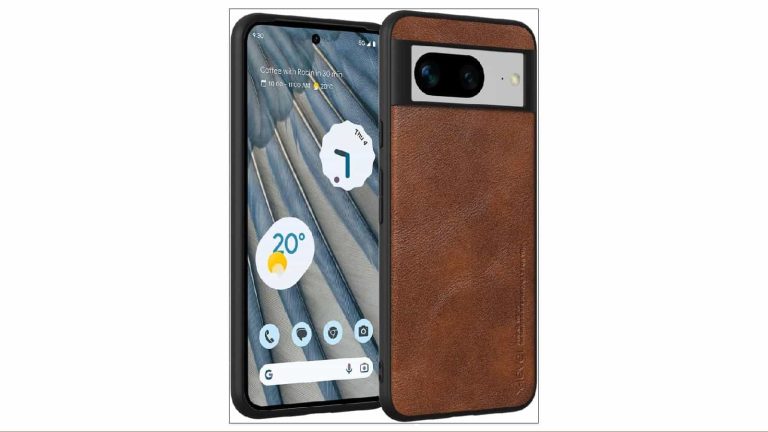
Leather is one of the most sought-after materials for accessories due to its elegant look and feel. If you are a person who likes leather accessories a leather Pixel 8 case will be the perfect thing for you. A great case to consider is the X-level Pixel 8 leather case. It checks All the boxes by adding substantial protection to your phone and looking extremely classy and elegant.
As nice as this case looks, it is very affordable. It only comes in at $13.99. Just looking at this case, it looks like it costs much more. The X-level Pixel 8 case is made with premium high-quality leather, and it looks absolutely stunning. Not only is the case very fashionable, but it is also very protective. The X-Level case is actually made from four layers of protective materials. The outermost layer is the leather, but under that, there is actually a flexible shock-absorbing material. So, if the phone falls on its back, much of the impact force will be absorbed by the second layer. That adds more rigidity to the case. All three of these layers are working in tandem to keep the back of the phone from breaking.
The fourth layer is the TPU border that surrounds the phone. So, if you drop your phone on its edges or corners, the TPU material will absorb that shock and keep the force from transferring to the display. That is how a lot of screens are broken. With that, you have four layers of protection keeping your phone looking pristine. Adding to this, the TPU border also extends past the display. So, if your phone lands on its front, a lot of the shock will be absorbed by the border.
You won’t have to give up one of your phone’s most useful features, which is wireless charging. So, if you’ve fully adapted to wireless charging, you won’t have to sacrifice that functionality just to use such a beautiful case. That’s one of the reasons why this is one of the best cases you can get for this phone. You don’t have to compromise.
The case pictured above is the brown colorway. However, the X-level Google Pixel 8 Case actually comes in several colors. Each color has its own unique aesthetic. These colors include black, blue, and green along with brown. So, if the brown color is not doing it for you, you have more options to suit your tastes.
You want to make sure that your phone is protected, but you don’t want to use a case that is bulky or weighs your phone down. That’s a dilemma that most people face. However, there are cases out there that protect your phone while keeping an overall slim profile. One example is the TORRAS Shockproof Pixel 8 case. This is a case that remains light and thin while keeping your phone protected from drops.
This case weighs in at $26.99, and it offers protection and functionality that make the price well worth it. Starting off, it’s really incredible just how thin and light this case is. It’s definitely for people who don’t really want the feeling of actually having a case on their phone. There are people who much prefer the feeling of using their phones naked. However, the Pixel 8 is a premium device that you pay a premium price for. So, you want to do whatever you can to keep it looking pristine.
While the phone case is very thin, it’ll still keep your phone very protected. It’s made from a combination of silicone, plastic, rubber, and polycarbonate. These materials all come together to create an extremely protective case. It has a tough backplate that will protect the back of the phone. The back plastic is also clear, and this allows the original color of the Pixel 8 to shine through.
Surrounding the backplate, there is a rubber bumper. This bumper protects the edges of the phone. During the drop, your phone is extremely susceptible to cracking when falling on the edge, especially on the corner. The extra padding provided by the flexible rubber bumper really reduces the risk. As with most cases, the rubber bumper extends to the back of the phone covering the camera package. So, if your phone happens to land on its back, the combination of the plastic backplate and the rubber bumper means that your phone will most likely emerge unscathed.
This case comes with MagSafe compatibility. There is an internal magnetic ring in the case’s backplate that allows your Pixel 8 to connect to MagSafe accessories. So, this opens up the possibility for many types of accessories like car mounts, magnetic charging banks, wireless chargers, phone stands, Etc.
All in all, this case adds protection, and MagSafe compatibility to your phone all while maintaining an extremely slim and slender profile.
Sometimes, a phone is just another thing to carry; another thing to take up space in your purse or pocket. It’s not a huge issue for most people, but there are folks who always want to pack light and not feel cluttered by all of the things that they have to carry on a daily basis. This is why wallet cases are a great option for people. One of the best options out there is the Spigen Slim Armor CS. This is the case that will simultaneously keep your device protected while holding on to your important cards.
Coming in at $44.99, the price is definitely reasonable for this product. For starters, this is a very protective accessory. Since this is a Spigen case, you know that all the materials are very high quality. It’s a rather thick case that’s made from polycarbonate and thermoplastic polyurethane. These are typical materials for most cases today, and they do a great job of keeping the phone safe from Impact. Polycarbonate is very sturdy, so it adds much-needed rigidity to the case itself. This is juxtaposed to a softer and more flexible thermoplastic polyurethane layer which absorbs additional force.
As with many other cases, this case has a raised lip that will extend past the display. So, if you have your phone, you don’t have to worry. The raised lip also extends to the back of the phone protecting the camera back. Since the camera package of the Pixel 8 extends so far, it can use all the protection it can get.
One of the main features of this case is the fact that you can use it to store your credit cards, ID, driver’s license, and more. It allows you to store up to two cards within it. The cards will sit inside of a compartment on the back of the case. It won’t be a full replacement for your wallet if you have a ton of cards, but it will let you leave your wallet at home if you only need to take one or two cards with you on a particular trip.
Since the cards are held at the back of the case, this adds an additional layer of protection to the back of the phone. It adds a layer of air to help cushion the force of a fall. This only makes the case that much better
There are those people who have a knack for breaking their phones. We’re probably familiar with that one person who always has a cracked phone. Well, there are cases out there for people like these. They’re extremely rugged and built like a tank. Cases like these require a substantial amount of intentional abuse in order to actually damage the phone. So, if you’re one of those people, then you should consider getting the ANTSHARE case for the Pixel 8.
This case is one of the toughest cases that you can get for the Pixel 8 at only $15.99. Just looking at it, you can tell that it’s built to take a ton of abuse and keep going. For starters, all of the materials that this case is made from are extremely resilient and high-quality. It should come as no surprise that this is using high-quality polycarbonate. Your phone will be encased in a thick layer of protection. The outer casing will take the majority of the force from a fall. Also, there’s an internal layer that will hug the device and absorb additional impact force. It’s softer and more flexible, so it will act as a soft cushion to keep your phone protected.
The edges of the case are very thick, so if your phone happens to fall on its, you won’t have to worry about the display. The same thing goes for the corners. ANTSHARE thought of everything when putting this case together.
So, you get dual layers of protection, and this means that, no matter how clumsy you are, your phone won’t be damaged. You would have to deliberately throw your phone onto the ground to get some sort of damage.
Some of the most sensitive parts of a phone are the screen and the camera package. So, these components need special care in order to survive a fall. With this case, you’re looking at 360-degree protection. It comes with a 9H hardness screen protector. It’s made of strong tempered glass that will keep your phone’s screen protected during a fall. This is glass that has been heat treated to be more resilient than regular glass.
On the back, there’s a slidable cover that protects the camera package completely. The cover is made from the same sturdy polycarbonate material as the rest of the case, so it will take a lot of force to affect the actual camera package. Also, it conveniently slides down whenever you need to take a picture.
When you buy a new phone case, you have the opportunity to add some aesthetic flair to your phone. Cases aren’t only to protect your phone, they can also be a fashion statement. Well, MOSNOVO has a case that’s perfect for you if you want to turn your phone into a fashion piece. This case comes in a myriad of different designs that all look extremely adorable and pleasing to the eye. So, if you want to make your Pixel 8 a work of art, then this is the case for you.
The MOSNOVO case is not only fashionable, but it also performs its core duty of protecting your phone. The case is made from thermoplastic polyurethane. So, it will do a great job of protecting your phone in the event of a fall. It’s sturdy enough to take the majority of the impact force. In fact, it’s actually rated to survive drops of up to 6.6ft. Most drops occur only a few feet from the ground. So, unless you are holding your phone above your head or using it on a ladder, this typical drop should not phase your phone whatsoever.
Adding to the protection Factor, the phone has a 1.5mm raised bezel. So, if your phone happens to fall on its face, the raised bezel will take the majority of the impact. Your phone’s screen will be spared. Also, the raised bezel also protects the phone’s camera. The camera and display two parts of the phone that are most susceptible to damage via a fall. So, this raised bezel is very welcome.
While being very sturdy and high quality, this case is also lightweight. Many people avoid using cases because they don’t like adding additional bulk to their phone. However, this is a very slim case. So, you’ll be able to easily use it without feeling like it’s too thick.
If you’re a person who’s completely moved over to the wireless charger side of life, then you’ll be happy to know that the MOSNOVO case is compatible with wireless charging. So, you won’t have to give up that functionality just to use this case.
Now, for the aesthetics. There are a whopping 41 different designs that you can choose from. All of the designs are printed on the case using high-quality ink. The designs cover a wide range of moods and styles. If you like flowers, cats, coffee, animals, psychedelic colors, or abstract art, you should definitely look into getting one of these cases. That’s just a small example of the type of styles you can get with it.
Google announced its fourth-generation Chromecast (with Google TV) on September 30, 2020.
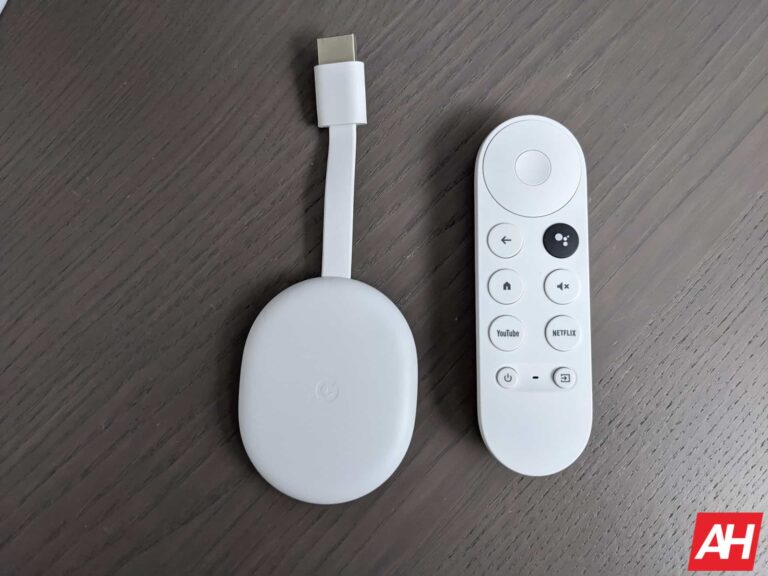
Chromecast with Google TV is a significant change in terms of features, looks, price, and more for Chromecast than the first three models. It is now a proper dongle and comes with a remote and Android TV built-in. It also features Google’s new “Google TV” interface, which will be introduced to Android TV devices in the future.
Here’s everything you need to know about the new Chromecast with Google TV.
What is Chromecast with Google TV?
Chromecast with Google TV is the fourth-generation Chromecast, which turned out to be a massive hit for Google when it was announced back in 2013. It was originally a $35 dongle that you plugged into your TV and instantly able to stream all sorts of content to your TV with ease.
Now, seven years later, it was time for Google to improve the Chromecast. So here comes Chromecast with Google TV. It now includes a physical remote control and an actual interface. Chromecast never had an actual interface. Instead, you would hit the Cast button on your phone in a specific app, and that was it. Chromecast with Google TV has Android TV baked in, so it’s not an entirely new operating system, but the Google TV launcher on top is brand new.
The Chromecast with Google TV is made entirely from recycled materials. So by purchasing the new Chromecast, you’re actually helping the environment. This is likely also why some of the parts of the Chromecast – the remote and batteries – have an interesting texture.
In 2022, Google launched a new, cheaper model of the Chromecast with Google TV. It’s called “Chromecast with Google TV HD” and it’s the same as the original, except it now only does up to HD or 1080p resolution. Google was able to offer this model for $29.99 versus the $49.99 of the 4K model.
Chromecast with Google TV: User Interface
What is Google TV?
Google TV is the new launcher that is on top of Android TV on Chromecast with Google TV. This might all sound very confusing, especially if you remember the fact that Google had Google TV up until it killed it off in 2014 in favor of Android TV.
But now Google TV is back, sort of. It’s a new launcher on Android TV, that aims to make it easier to find content to watch on your big screen. There are a few new tabs at the top, that highlight different content. So the “Live” tab will highlight what is currently on TV, if you are a YouTube TV subscriber. Movies and Shows highlight movies and TV shows you can watch from a variety of different apps that are installed – as well as Google Play. Then there is the Apps library, where you can launch your apps, like you normally would.
Google TV will come to other Android TV devices starting in 2021. Though, Google hasn’t said much about what devices will be first, or when in 2021 this new interface will be available. But it won’t be exclusive to the new Chromecast forever.
What streaming apps work with Google TV?
Anything that has an Android TV app, or works with Chromecast will work with Chromecast on Google TV. But for the new Movies and Shows tabs, Google TV only integrates certain apps. Here’s the list of the apps that are currently compatible with Google TV. Google says it’ll be adding more in the future.
ABC
Amazon Prime Video
AMC
Apple TV
A&E
CBS All Access
Crackle
Comedy Central
DC Universe
Disney NOW
Disney+
Epix Now
Fox Now
Hulu
HBO Go
HBO Max
History
Lifetime
MTV
NBC
Netflix
Peacock
Pluto TV
Showtime
Showtime Anytime
Sling TV
Starz
TBS
The CW
TNT
Tubi TV
VH1
YouTube TV
As you’ll see there are a couple of larger streaming services missing here like Peacock. Which might be surprising, but it does still work on Google TV, it just doesn’t integrate into the movies and shows tabs on Google TV. You can still open the app and watch content the old fashioned way on the Chromecast with Google TV.
Chromecast with Google TV: YouTube TV
Which Live TV services work with Google TV?
For the Live tab in Google TV, Sling TV and YouTube TV are supported. At launch this was limited to YouTube TV, and now Sling TV has been added. We will likely see more options added. Just sign into your Sling TV or YouTube TV account, and it’ll appear in the Live Tab.
For a limited time, Google is giving new YouTube TV subscribers a free Chromecast with Google TV. So if you sign up for YouTube TV for a month, you can get a Chromecast for free. A month of YouTube TV does cost you $65, so you’re basically paying for a Chromecast and then $15 for the first month of YouTube TV. It’s a great way to check out YouTube TV and get a Chromecast for free.
Update: On June 7, 2021, Google announced that Sling TV is now supported in the Live TV tab for Google TV. So if you’re a Sling TV or YouTube TV subscriber, you can see Live TV listings right on the home screen.
What HDR specs does it support?
The Chromecast with Google TV does support 4K HDR content. But just like with anything else, there are different forms of HDR available.
Currently, it only supports HDR10 and HDR10+, which should cover most people and most content.
Outside of HDR, it does also support both Dolby Atmos and Dolby Vision for great sound and picture quality.
Can you use it wired, instead of wireless?
While the Chromecast is used wirelessly and connects to 2.4GHz and 5GHz networks, you can use it wired via an ethernet cable. But, that will cost you extra.
Google does have plans to offer an Ethernet adapter for the Chromecast, but it is not yet available.
How does Google decide what content to list “For You”?
Google TV is able to access things you have watched already, as well as what you have put on your wishlist in the Play Movies & TV app – before it was rebranded to Google TV.
The recommendations “For You” are not that great in the very beginning, especially if you did not create a wishlist. But the more content you watch, the better it’ll get over time.
You can still add stuff to your wishlist (now called “watchlist”) on Google TV. Just search for a movie or show, and then add it to your watchlist.
Chromecast with Google TV: Remote
What buttons are on the new Chromecast remote?
Google kept the remote on the Chromecast pretty simple. It has the necessary buttons like a directional pad, home, back, volume controls, and Google Assistant. There is also a power button and inputs. However, Google also added two other buttons for popular streaming services.
There is a YouTube button and a Netflix button. As you’d expect, pressing either one takes you directly into those apps. This is not anything new, Android TV manufacturers, Roku and Fire TV all do something similar – though they do it based on who is paying. So depending on when you buy your Roku, you may have different buttons on your remote.
Can they be customized?
The YouTube and Netflix buttons on the Chromecast with Google TV remote cannot be customized, at least not yet. Google has hinted at the fact that it may add the ability to customize them in the future.
However, considering the fact that they have YouTube and Netflix logos on them, there’s not a whole lot of customization you can actually do here.
Can the remote control my TV too?
Yes. The Chromecast with Google TV remote can control your TV as well.
It supports HDMI-CEC, which is a protocol that allows HDMI devices to talk to each other, allowing for multiple devices to be controlled by a single remote.
The remote is able to turn on/off the TV, switch inputs (to the Chromecast input only), adjust volume, and mute.
During the setup, Chromecast will walk you through controlling your TV and soundbar if you have one. It works with most brands of TVs and sound bars, including Sonos.
This way you won’t need to use another remote to control your TV or your soundbar.
Can you play games on Chromecast with Google TV?
Chromecast with Google TV does support Stadia. But not officially until 2021. Surprisingly, you cannot play Stadia on Chromecast with Google TV, which is out of the box. That is a clear oversight by Google, obviously.
However, many users have reported being able to sideload the Stadia app and play on the new Chromecast now. So there doesn’t seem to be anything stopping users from playing Stadia now – other than it not being officially available in the Play Store to download to that device.
You can still download games onto the Chromecast with Google TV like you would on any Android TV device. But keep in mind the limited storage space on the Chromecast. Because there is so little space available, you won’t be able to download a lot of games, like Asphalt. As there’s just not enough space.
Are there parental controls available?
In March 2021, Google announced that parental controls were coming to Google TV. And on March 30, those started to roll out in the US.
With Google TV, you can set how long kids can watch TV, set the limit on ratings for the content they watch and even the apps they can watch, as well as set a profile lock so they aren’t able to make changes without the parent’s approval.
How much storage is available on Chromecast? And can you expand it?
Speaking of storage, the Chromecast with Google TV comes with only 8GB of storage. You’ll have around 5GB of space available out of the box. After installing all of your apps, you’ll likely be down to around 4GB of space.
You can technically expand the storage on Chromecast. As it plugs in via USB-C, and as we’ve seen already, USB-C hubs work on Chromecast. So you could theoretically get a USB-C hub and plug it into the Chromecast, and plug in a hard drive that way. But installing apps likely won’t be possible because they can only be installed on internal storage. But that storage is good for running something like a Plex server on your Chromecast. Or something else that plays local files.
Can I use headphones with Chromecast?
Yes, you can use a pair of Bluetooth headphones to listen to movies and shows on Chromecast.
This is a feature that Roku has made pretty popular, and it’s good to see other devices sporting it as well.
To set this up, head to the settings menu and pair a new device. You can pair another Bluetooth device to your Chromecast, whether that is a Bluetooth remote, game controller, or a pair of headphones. Unfortunately, Bluetooth is the only option for using headphones here. As there is no headphone jack on the Chromecast.
This means that you’re going to be able to watch the game without waking up your kids or significant other, as long as you don’t scream at the TV when your team turns over the ball.
Chromecast with Google TV
How much is Chromecast with Google TV?
Chromecast with Google TV is on sale now for $49.99.
It’s likely that it will be discounted during the holiday season, possibly down to $35-$40.
It’s right in-line with the competition from Roku and Amazon Fire TV. Their 4K models are also around $40-$50. Making it a lot more competitive than something like the NVIDIA SHIELD TV, which is almost as expensive as the Apple TV 4K.
Google offers the Chromecast with Google TV in three colors: snow, sand and sky. Which are basically white, kind of orange and light blue. There is no black Chromecast this year because Google made Chromecast entirely out of recycled plastics. It would have been nice to have one that blended in with the back of your TV, but a 100% recycled Chromecast is definitely a better aspect.
Where can I buy the Chromecast?
You can buy the Chromecast with Google TV from the Google Store, Best Buy, B&H Photo, The Home Depot, Target and Walmart.
Other retailers will likely start selling the Chromecast with Google TV in the near future.
What countries is Chromecast with Google TV available in?
When the Chromecast with Google TV was announced in 2020, it was available in the US and a number of European countries. On May 31, 2022, Google announced that it was coming to Belgium, Denmark, Finland, Netherlands, Norway, Sweden and Switzerland. Leaving out just one region – Ukraine, Portugal and Russia.
What comes in the box?
The packaging for the Chromecast with Google TV is pretty simple. It comes with the Chromecast, as well as the USB-A to USB-C cable and wall charger for charging. There is also the remote and two AAA batteries included. It’s quite surprising to see batteries included in the box, normally those are sold separately.
Google also went as far as to color-code the batteries that come with the Chromecast with Google TV. So the Snow model has white batteries, sky has blue batteries and so forth. It’s that attention to detail that makes Google, Google.
Is there a monthly fee for Chromecast with Google TV?
There is no monthly fee for Chromecast with Google TV. Other than the initial purchase price, you’ll only pay for the streaming services you want to subscribe to.
Can you get local channels on Chromecast with Google TV?
You can, in fact, get local channels on your Chromecast with Google TV. However, it does need to have an antenna connected to the TV. If you have a streaming Live TV service like YouTube TV or Hulu + Live TV, then you can get locals through the “Live” tab too.
OpenAI unveiled its groundbreaking text-to-video generator, Sora, last month, but it has yet to give Sora public availability. Currently, Sora is at the red teaming stage and is only available to select artists and creators who are testing the tool. For those unfamiliar, red teaming is the process where people test the tool to make sure it is safe, secure, and reliable. The goal is to identify vulnerabilities, biases, and other harmful issues.
In an interview with The Wall Street Journal (paywalled), Chief Technology Officer for OpenAI Mira Murati revealed that Sora will gain public availability “this year,” with a potential release within “a few months.” This tool, Sora, allows users to create hyperrealistic scenes from just text prompts.
Sora is mind-blowing, but not perfect yet
Sora-generated videos currently do not have audio in them. However, when asked about it Murati said that OpenAI has plans to integrate it somewhere down the line. It might not be Sora, but at least they have plans for the addition.
Just as many text-to-image generation tools, the videos from Sora will also be watermarked to avoid misuse. However, a watermark isn’t a perfect solution to the problem either. This is another reason the company has not yet released the model to the public, and reportedly won’t do it unless they consider it safe.
When asked about the CTO’s views on how it might affect jobs in the future, she stated the aim is not to replace people but to serve Sora as a tool to them that they can use to “edit and create with”. The editing of Sora-generated content can be significant, especially considering the inconsistencies in the videos. The Wall Street Journal showed some videos they have generated, pointing out some inconsistencies such as weird hands and fingers.
When questioned about the data used to train Sora, Murati remained vague, stating that it utilized publicly available or licensed data. While it remains uncertain whether videos from platforms like YouTube, Facebook, or Instagram were utilized, Murati confirmed that Sora incorporates content from Shutterstock, which is a partner of OpenAI.
OpenAI aims to make Sora available at a similar cost to its text-to-image model DALL-E
Murati highlighted one notable aspect, the increased cost of powering Sora compared to previous artificial intelligence models like DALL-E or ChatGPT. She notes that, unlike the text or image generation models, Sora is a research project at this point, which costs a lot more to operate. OpenAI will have to arrange the computing equipment it will require before serving it to the public.
Despite the higher expenses, OpenAI aims to make Sora available to the public at “similar” costs to DALL-E, emphasizing accessibility to its groundbreaking technology.
Mikhail Vasiliev was also fined $860,000 for his involvement in the LockBit gang’s attacks. This case highlights the international effort to combat cybercrime and the severe consequences awaiting perpetrators.
A Russian-Canadian citizen, Mikhail Vasiliev, has been sentenced to nearly four years in prison for his involvement in the notorious LockBit ransomware operation. Vasiliev will also pay $860,000 in restitution to his Canadian victims.
Vasiliev’s lawyer reportedly argued that he turned to cybercrime due to financial difficulties during the COVID-19 pandemic. However, Justice Michelle Fuerst rejected this justification, calling Vasiliev a Cyber Terrorist whose actions were motivated by greed and his crimes were “far fromvictimless crimes.”
Investigations revealed Vasiliev’s role as a key member of the LockBit ransomware gang, involved in a significant number of cyberattacks with ransom demands ranging between €5m-€70 million. Vasiliev took responsibility for his actions, as confirmed by his lawyer Louis Strezos.
Vasiliev, 34, was arrested in October 2022 from his residence in Bradford, Ontario where he had moved from Moscow 20 years ago. He pleaded guilty in February 2024 to stealing victims’ computer data and using it for extortion.
Moreover, according to Canadian media reports, he admitted targeting at least three Canadian organizations, encrypting their data, and seeking ransom payments between 2021-2022, making $100 million in ransom demands for the gang from around 1,000 cyberattacks on victims in the U.S. and globally,
Vasiliev primarily targeted businesses in Saskatchewan, Montreal, and Newfoundland. His attacks likely caused significant disruptions and financial losses to the targeted businesses.
In November 2022, the US Department of Justice announced separate charges for his involvement in LockBit attacks. Vasiliev is set to be extradited to the U.S. for facing these additional charges
LockBit, active since 2020, operates under a ransomware-as-a-service (RaaS) business model, where affiliates exploit intrusions and deploy ransomware in exchange for some percentage of ransom payment.
In 2023, the gang gained significant profits from targeting companies like Boeing and Allen & Overy and exploited the Citrix bleed security flaw tracked as CVE-2023-4966 (CVSS score: 9.4).
LockBit’s infrastructure was dismantledby the law enforcement authorities in February 2024 as part of Operation Cronos with the seizure of 34 servers and 200 cryptocurrency accounts. Just a week after its seizure, LockBit reemergedwith new leak sites, but RaaS is unlikely to recover. It claimed Operation Cronos was successful due to its negligence in updating PHP settings.
So far, Authorities have arrested six suspects in connection to LockBit, including Vasiliev, Ruslan Magomedovich Astamirov who was arrested in June 2023, two Russian nationals Artur Sungatov and Ivan Kondratyev, alias Bassterlord, and two others arrestedin Ukraine and Poland.
Vasiliev’s potential extradition is a sign of growing international cooperation in combating cybercrime and serves as a warning to other gangs involved in such activities.