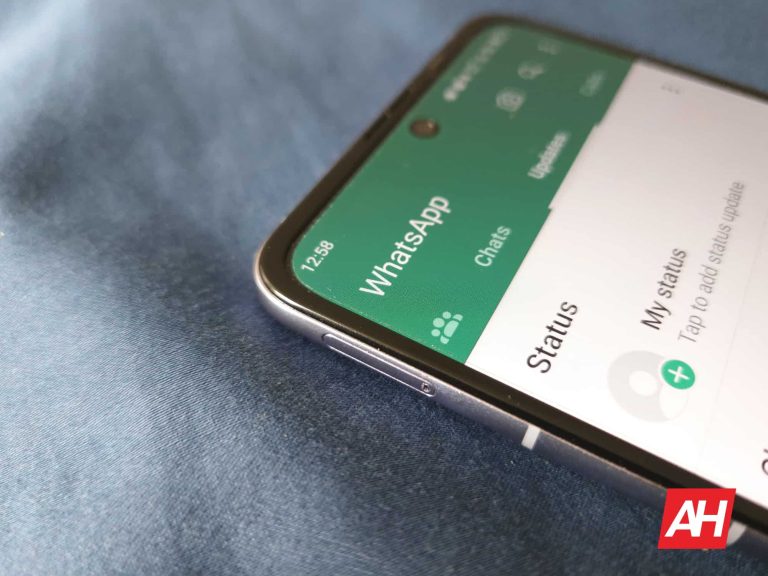
About seven years ago, WhatsApp gave people the ability to pin important chats to the top of their chat feed. This is something that greatly helps people put a spotlight on their most important chats. However, you’ve been able to pin only a few chats, and that’s rather limiting. Fear not, as WhatsApp is working on the ability to pin more chats to your feed.
As it stands, you can only pin three conversations to the top of your feed. If you are a casual WhatsApp user, then that might not be a big issue. However, if you are a more seasoned user with plenty of contacts, then three might seem a little bit cramped. In order to pin your conversations, all you have to do is go to your conversation feed, hold your finger down on one of the conversations, and tap on the Pin icon at the top of the screen. It will then stick to the top of your feed no matter which other conversations flood in.
WhatsApp will let you pin more conversations
We’re not entirely sure why WhatsApp only limited you to three pinned conversations. However, we can’t argue with progress. As spotted by the folks at WABetaInfo, in the latest WhatsApp beta for Android (version 2.24.6.13), it appears that WhatsApp is going to give you the ability to pin more chats to your chat feed. While you will be able to pin more, the increase is a bit underwhelming. According to the report, you will be able to pin up to five chats rather than three. So, you’ll be able to add two more chats to your feed.
It’s odd that WhatsApp is only adding two more chats, and it’s also odd that the company is beta-testing it. We would expect a feature as small as this to just be rolled out. Anyway, since this is such a small addition to the software, we don’t expect it to be in beta testing for too long. If you’ve been itching to pin just two more pinned conversations to your chat feed, then your chance will come soon enough.
At this point, Gemini has been implemented into many corners of Google, for better or Worse. Well, we just got the news that it made it into another Google product, and people will love this one. Gemini has been added to Google Slides, and it will allow users to remove the background from images.
Google Gemini is the company’s flagship AI model, and it’s accessible through several services. One example is the fact that Gemini Nano, the smallest version of Gemini, is available on a few smartphones. This includes a Google Pixel 8 Pro (Review). However, people wanting it to come down to the base Pixel 8 will be very disappointed. Google announced that Gemini Nano is not coming to the base Pixel 8 because of “hardware limitations.” This is a pretty big bummer and rather confusing. The Pixel 8 Pro and the Pixel 8 both use the same processor.
Google added Gemini to Google Slides, and it allows you to remove the background of images
We all like to add our own special flair to our presentations, and this may include using images with transparent backgrounds. However, that’s not always the case. People can search for PNG files online, however, there’s no guarantee that they’ll find the perfect picture.
So, if you need to have pictures for transparent backgrounds for your Slides presentation, Gemini might be able to help you. Using Google Slides, select the image that you want to remove the background from. Then, right-click the image or click on the Remove Background button on the toolbar. Then, using Gemini’s advanced computational capabilities, Slides will remove the background from the image. So, you’ll be able to freely move the image without the background.
Obviously, with any sort of background removal tool, the results will vary depending on the picture. You want to make sure that the subject is clearly in the foreground and that the background isn’t too convoluted or similar to the subject. It will be much easier to remove a black cat from a snowy-white background than to remove a green alligator from a grassy background. These are just things to keep in mind.
Availability
Unfortunately, not everyone will be able to use this feature. If you want to use this feature, you will need to have the Gemini Enterprise or Gemini Business add-on added to your workplace account. If you have a personal account, then you will need to have the Google One AI Premium plan. This will also give you access to Gemini Advanced.
Over 200,000 websites have been left vulnerable to Cross-Site Scripting (XSS) attacks due to a flaw in the Ultimate Member plugin for WordPress.
This vulnerability, discovered by a researcher known as stealthcopter, underscores the ongoing risks in the digital ecosystem and highlights the critical role of cybersecurity firms like Wordfence in safeguarding the web.
Discovery and Disclosure
During the Wordfence Bug Bounty Extravaganza, stealthcopter submitted a report detailing an unauthenticated stored XSS vulnerability in the Ultimate Member plugin.
DocumentIntegrate ANY.RUN in your company for Effective Malware Analysis
Malware analysis can be fast and simple. Just let us show you the way to:
Interact with malware safely
Set up virtual machine in Linux and all Windows OS versions
Work in a team
Get detailed reports with maximum data
If you want to test all these features now with completely free access to the sandbox:
This plugin, designed for user profile, registration, and membership management on WordPress sites, boasts over 200,000 active installations, making the potential impact of this vulnerability substantial.
Wordfence, a leading security service for WordPress websites, awarded Stealthcopter a $563 bounty for this discovery.
The company’s swift action in validating and disclosing the vulnerability to the Ultimate Member team exemplifies its commitment to securing the web. By March 6, 2024, a patch was released, mitigating the risk for millions of web users.
Technical Breakdown
The vulnerability, CVE-2024-2123, allows attackers to inject malicious scripts into web pages via several parameters in Ultimate Member plugin versions up to and including 2.8.3.
This flaw arises from insufficient input sanitization and output escaping, particularly in the plugin’s member directory list functionality.
An examination of the plugin’s code revealed that user display names were displayed unescaped in template files, making it possible for attackers to provide a name containing a malicious script during registration as an unauthenticated user.
This could lead to a range of malicious activities, including adding administrative users, redirecting harmful sites, and injecting backdoors into theme and plugin files.
The revelation of this vulnerability has highlighted the importance of regular updates and vigilant security practices for website administrators.
Websites running outdated versions of the Ultimate Member plugin were at risk of being exploited by unauthenticated attackers, potentially leading to unauthorized administrative access and further compromise.
Wordfence has been at the forefront of addressing this vulnerability, providing immediate protection to its users through the Wordfence firewall’s built-in XSS protection.
This includes customers of Wordfence Premium, Wordfence Care, and Wordfence Response, as well as users of the free version of the plugin.
The swift identification, reporting, and patching of the XSS vulnerability in the Ultimate Member plugin testifies to the collaborative efforts between cybersecurity researchers and developers in protecting the digital landscape.
Wordfence’s role in this process not only highlights its commitment to web security but also reminds us of the importance of proactive security measures and regular software updates.
WordPress site owners are urged to update their installations to the latest patched version of Ultimate Member (2.8.4) to safeguard against potential exploits.
You can block malware, including Trojans, ransomware, spyware, rootkits, worms, and zero-day exploits, with Perimeter81 malware protection. All are incredibly harmful, can wreak havoc, and damage your network.
Stay updated on Cybersecurity news, Whitepapers, and Infographics. Follow us on LinkedIn & Twitter.
The Google Pixel Fold 2 is coming as the company’s second-gen foldable handset. Much like its predecessor, this handset will be a book-style foldable. The thing is, it will be considerably different than its predecessor when it comes to design, dimensions, and even display aspect ratios. Not a lot of information surfaced when it comes to this phone at the time of writing this article, but we’ll fill in the blanks as we go.
The expectations are high when it comes to the Pixel Fold 2. The original handset had its flaws, and many are hoping Google will fix most of them with the second-generation products. In this article, we’ll show you what you can expect from the Pixel Fold 2. We’ll also do our best to keep the article updated with upcoming information.
This article will be regularly updated with new information on the Google Pixel Fold 2 (this is a preview article) — both official teasers and credible leaks, rumors, and insider claims — as it becomes available in the run-up to the release of the upcoming Android smartphone. This is the initial version of the article.
When will the Google Pixel Fold 2 be released?
The Google Pixel Fold was announced in May 2023, during Google I/O. The phone was released on June 27, almost two months after the initial launch. It’s possible Google will once again present its foldable at Google I/O. The thing is, we’re not sure, as no particular info surfaced just yet. We can only guess, and the company could change its plans for the second-gen model of the device. Even the first one was rumored to arrive with the Pixel 8 and Pixel 8 Pro, rather than in May. The phone’s chip could also play a role here. If Google plans to use the Tensor G4, and not the Tensor G3, the company may have to wait until the Fall to launch the device.
What models are coming?
The original Pixel Fold arrived in a single RAM variant and two storage flavors. Chances are the same will be the case with the Pixel Fold 2. We’ll likely see a single RAM model with several storage options. If we had to guess, we’d say that Google will stick with 12GB of RAM inside the phone, and LPDDR5X RAM will hopefully be used. Google could stick with 256GB and 512GB storage flavors, though a third one could be included, a 1TB model. The company will hopefully make a jump to UFS 4.0 flash storage, though, as UFS 3.1 was used for the first-gen model.
How much will the Google Pixel Fold 2 cost?
Google is expected to either keep the same price tag for the second-gen Pixel Fold or lower it. We don’t think the phone will be more expensive than the original was. The original Pixel Fold was priced at $1,799 for the 256GB storage option and $1,919 for the 512GB storage flavor. Chances are that Google will either stick with that price, or lower that to $1,699 as a starting price tag. We’ll have to wait for more specific information to surface, though, as we’re only guessing at this point.
What will the Google Pixel Fold 2 look like?
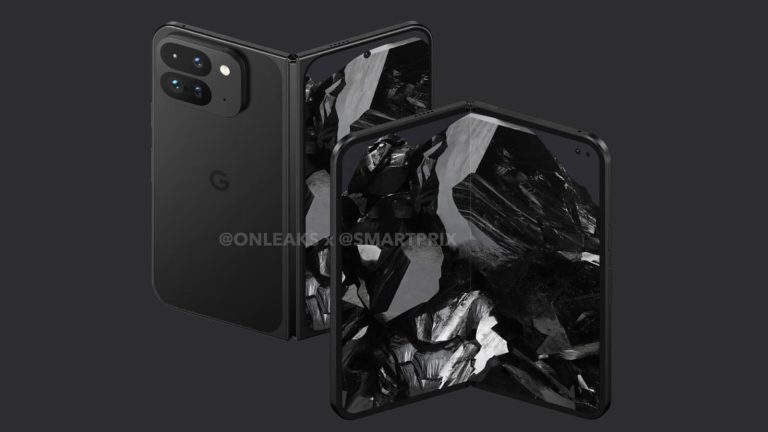
We do know what the Pixel Fold 2 will look like. The phone not only appeared in CAD-based renders already, but it also surfaced in a real-life image. You can check out those images at the very end of this section. First and foremost, Google will change the aspect ratios of the displays quite a bit, and therefore the layout of the phone too. The Pixel Fold 2 will be considerably taller and narrower when folded. It will be a lot more similar to the OnePlus Open and many other foldables in that regard. The Pixel Fold, as many of you know, was quite short and wide, as Google was aiming for a more landscape-orientated foldable when unfolded.
What that being said, the bezels will be much thinner on this model too. The original Pixel Fold had rather chunky bezels around the main display. This one will change that quite a bit, though it will also have a punch hole on both of its displays. The Pixel Fold included the selfie camera inside its bezels when it comes to the main panel, which is changing here. That camera will sit in the top-right corner of the main display. It will be centered on the cover display.
The camera island will be different
The sides of the phone will be mostly flat, but they will curve towards the sides, for comfort’s sake. The hinge will be hidden when the phone is unfolded, while the rear camera island is changing too. It will be taller this time around, and also narrower. It will be located in the top-left corner of the phone’s backside, while it was moved more towards the middle on the PIxel Fold. We have to say that this camera layout does look a bit odd, though. There are two pill-shaped cutouts for the cameras, basically.
It may initially seem like there are four cameras on the back, but chances are we’re looking at three of them. An LED flash is also included in the camera island, and that camera island does protrude quite a bit. A fingerprint scanner will likely remain included within the power/lock key on the right-hand side. The phone’s corners are rounded quite a bit, while the device seems to be made out of metal and glass, just like its predecessor. We do hope it will be a lot lighter than its predecessor. The Pixel Fold was a heavy, heavy device, even by foldable standards. Based on the CAD-based renders, the PIxel Fold 2 will measure 155.2 x 150.2 x 5.27mm when unfolded. We don’t have the information about its dimensions when folded, though.
CAD-based renders:
Real-life image:
Pixel Fold 2 leaked image (via Android Authority)
What specs will the Google Pixel Fold 2 have?
The Google Pixel Fold 2 specifications are still a mystery, well, most of them, at least. The Google Pixel Fold launched with the Google Tensor G2 chip. So, the Pixel Fold 2 should come with the Tensor G3, right? Well, it all depends on when Google ends up launching the phone. It would perhaps be a better idea to wait until the fall and include the Tensor G4 processor, the same chip that is expected in the Pixel 9 series. If Google ends up including the Tensor G3, the Pixel Fold 2 will quickly get outdated compared to its Pixel 9 siblings. One rumor even indicated that the Tensor G4 will be included.
What about the rest of the specs? Well, none of those leaked just yet. The device will likely include 12GB of LPDDR5X RAM, though, and arrive with more than one storage option. So we may end up seeing 256GB and 512GB UFS 4.0 storage flavors, perhaps even a 1TB model. We are also expecting a larger battery to be included in the package. The original model had a 4,821mAh battery, a slight increase is expected. Well, unless Google plans to use a silicon-carbon battery, in which case we may see a 5,000mAh unit. We are not expecting major charging speed increases, but both wired and wireless charging are expected. Let’s hope Qi2 charging will also be supported.
It will feature larger displays
Considering the phone’s dimensions, based on CAD renders, the device will also get a larger display. The original model had a 7.6-inch main display, this one could go all the way up to a 7.9 or 8-inch main panel. The outer display will also be larger, we’re expecting it to be larger than 6 inches, perhaps a 6.4 or a 6.5-inch panel. Both of those displays will be LTPO AMOLED panels, and both will offer a refresh rate of up to 120Hz. Let’s hope that the crease on the main display will be less noticeable this time around. That was not one of the Pixel Fold’s strong suits.
Android 14 will come pre-installed on the device, while you will also get a set of stereo speakers. We’re expecting some sort of an IP rating here. The Pixel Fold offered an iPX8 rating, so that’s the bare minimum that is expected on the PIxel Fold 2. The device will also offer eSIM support, in addition to supporting a regular nano SIM card. At least two color options will be available, but we’re still not sure what those will be.
Should you wait to buy the Google Pixel Fold 2?
Should you wait to buy the Pixel Fold 2 instead of getting the Pixel Fold now? Well, probably, especially if Google launches the successor in May. The second-gen Pixel Fold will be a huge improvement based on what we’ve seen thus far. The sheer design and build quality are expected to get a considerable boost, so… waiting a bit to see what the phone will deliver may not be such a bad idea. The Pixel Fold is definitely not cheap, and its successor won’t be either, so you may as well hold onto your money for a bit longer. The expectations are high for the Pixel Fold 2, so let’s hope that the phone will deliver.
Last November, Google Messages previewed its new custom-colored chat bubbles features for the RCS (Rich Communication Suite) chats. The search titan finally started rolling out the rich text feature for Google Messages. Users of the messaging app on Android can finally customize the color of the chat bubbles and backgrounds for different chats.
Custom Chat Bubbles are only rolling out to some beta users at the moment
According to a report by Android Police, Google has started offering Custom Bubbles and backgrounds in Google Messages. In RCS chats, the Custom Bubbles are now allegedly available in Google Messages beta version 20240228+. It appears to be a server-side update feature that’s rolling out to a few beta users at the moment.
However, since Android users have finally started seeing Custom Bubbles in Google Messages, we can expect a wider rollout very soon.
Google Messages is now offering as many as nine colors for Chat Bubbles
As per various sources, Google Messages beta users are getting as many as nine colors for Chat Bubbles and the background. These include Default (Material You Dynamic Color), Blue, Turquoise, Purple, Green, Orange, Fuchsia, Pink, and Monochrome. The custom color themes apply to almost everything in the chats. However, the text fields and voice recorder buttons still remain light or dark.
Thanks to the update, Google Messages users now have various options to change the aesthetics of their RCS chats. Interested users can tap the three vertical dots icon in their chats and select “Change colors” from the overflow menu. After pressing the button you will see a full-screen preview user interface, offering as many as nine new custom color choices.
Keep in touch with us, we will update you once the feature starts rolling out globally to all Google Messages users.
Google Messages reportedly blocking rich RCS messaging on rooted devices
Recently, several reports from Reddit indicated that Google Messages is blocking the Rich Communication Services on rooted phones. This makes sense, as Google doesn’t really like people using rooted devices as they are less secure than the regular ones. Some people using rooted Android phones are reportedly losing capabilities via Google Messages altogether. If you are facing the same issue, then your only option is to use a messaging app other than Google Messages.
Apple is introducing a new Web Distribution feature this spring, allowing developers to offer their apps for direct download from their websites.
iOS users in the EU will have the freedom to download apps without relying on the App Store or any alternative marketplace.
The changes are a response to the EU’s Digital Markets Act (DMA).
Just recently, Apple rolled out iOS 17.4, introducing big changes to the App Store landscape in the European Union. Why? To comply with the newly adopted Digital Markets Act (DMA). These changes include support for alternative app marketplaces, new business terms, in-app purchase options, and more.
Now, in response to developers’ feedback, Apple has announced a few additional tweaks, as reported by 9to5Mac. Notably, the Cupertino tech giant will introduce a new Web Distribution feature this spring, allowing developers to offer their apps for direct download from their websites.
For developers in the EU who have agreed to the Alternative Terms Addendum for Apps, the new options include the ability for app marketplaces to exclusively offer apps from the marketplace developer. This change allows a company to run an app marketplace and provide only its own apps for download.
Additionally, when guiding users to complete transactions on external web pages, developers can now choose how to design promotions, discounts, and deals, with Apple’s design templates becoming optional.
As mentioned earlier, Apple is introducing a Web Distribution feature, set to launch later this spring. This feature will allow developers to distribute their iOS apps directly from their websites. iPhone users in the EU will have the freedom to download apps without relying on the App Store or any alternative marketplace.
However, apps distributed through the web must adhere to Apple’s notarization guidelines, restricting installations to registered website domains in App Store Connect.
For EU iPhone users, this could mean a broader array of apps to choose from, potentially leading to increased competition and, thus, lower prices. Nonetheless, users may need to pay more attention when downloading apps from sources outside the App Store, and managing these apps and updates might be less convenient.
The recent changes in digital practices, including those made by Apple, are a response to the EU’s Digital Markets Act. This law targets big tech companies like Apple, Google, Microsoft, Meta, TikTok, and Amazon, instructing them to follow new rules to encourage competition and offer users more options. Apple, adapting to comply with these regulations, is even working on a tool to make it easier for iPhone users to switch to Android.
Cybersecurity experts have identified a new tool being promoted in the internet’s darker corners.
Dubbed the “FUD APK Crypter,” this software claims to offer the ability to encrypt and obfuscate payloads created by Android Remote Administration Tools (RATs), making them fully undetectable (FUD) by security systems.
Sophisticated Evasion Techniques
The FUD APK Crypter is advertised as being capable of bypassing Play Protect and even evading Chinese phone protection systems without difficulty.
DocumentIntegrate ANY.RUN in your company for Effective Malware Analysis
Malware analysis can be fast and simple. Just let us show you the way to:
Interact with malware safely
Set up virtual machine in Linux and all Windows OS versions
Work in a team
Get detailed reports with maximum data
If you want to test all these features now with completely free access to the sandbox:
This suggests a high level of sophistication, implying the tool can circumvent some of the most robust security measures currently on Android devices.
The tool has a user-friendly graphical interface, as seen in a screenshot shared on Twitter by the account @MonThreat.
🚨 FUD APK Crypter Shared
A threat actor on the forum shared a tool called FUD APK Crypter. It is claimed that this tool can run on all devices up to Android 14 and has many features.
The interface includes options for various encryption methods and the ability to change the payload’s name and icon, making it more deceptive.
Threat to Android Users
This tool poses a significant threat to Android users, as it can work on all devices up to Android 14.
The ease with which it can generate a disguised APK file in mere seconds is alarming, as it lowers the barrier for cybercriminals to execute their malicious activities.
The cybersecurity community is actively monitoring this new threat.
While the advertisement of such tools is not new, the capabilities of the FUD APK Crypter highlight the need for continuous vigilance and the development of more advanced security measures to protect users from these evolving threats.
Protecting Yourself
Users are advised to keep their devices updated with the latest security patches, avoid downloading apps from untrusted sources, and use reputable security software to safeguard against such threats.
For more information on the FUD APK Crypter and how to protect yourself from similar threats, users can refer to trusted cybersecurity resources and stay informed about the latest developments in the field.
The information’s source, a Twitter post by @MonThreat, is currently inaccessible due to JavaScript being disabled.
To view the post and any related content, users should ensure that JavaScript is enabled in their browser or switch to a supported browser.
The emergence of the FUD APK Crypter reminds us of the persistent nature of cyber threats and the importance of maintaining strong cybersecurity practices.
As hackers continue to innovate, the collective effort of the cybersecurity community and users will be crucial in combating these malicious tools.
You can block malware, including Trojans, ransomware, spyware, rootkits, worms, and zero-day exploits, with Perimeter81 malware protection. All are incredibly harmful, can wreak havoc, and damage your network.
Stay updated on Cybersecurity news, Whitepapers, and Infographics. Follow us on LinkedIn & Twitter
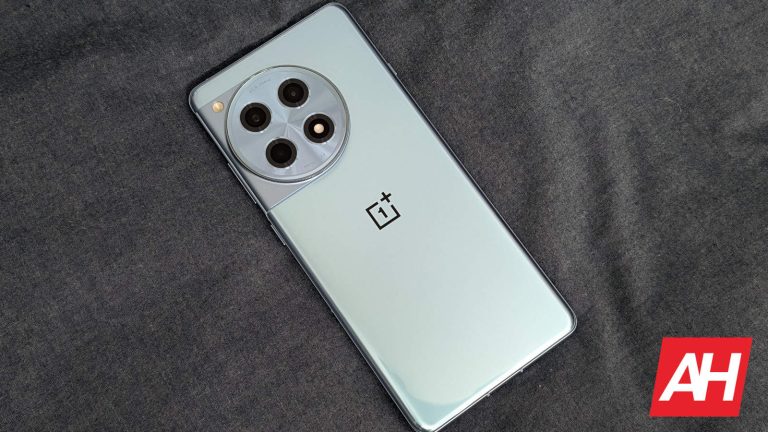
A new update has started rolling out to the OnePlus 12R with both camera and connectivity improvements. This update is rolling out to global variants of the OnePlus 12R, by the way. It’s coming in two flavors, CPH2585_14.0.0.500(EX01) for India, and CPH2609_14.0.0.500(EX01) for other markets.
The new OnePlus 12R update improves the camera & connectivity
That being said, this update does bring the Android security update for February to the table too. One would expect an update for March at this point, but there you go. The general stability and performance of the phone have also been improved, says OnePlus.
Improvements to ‘user experience’ and ‘fingerprint unlock’ have also been mentioned in the changelog. OnePlus also fixed an issue that caused some apps to crash.
In regards to the camera, there are two entries in the changelog. OnePlus improved the camera performance for a better user experience, which is a rather vague description, but there you go. The second entry states that the stability of the ‘Camera’ performance has been improved too.
The last section mentioned in the changelog is the ‘Communication’ section. OnePlus states that it improved the stability of network connections on the phone. The stability and compatibility of the NFC function have also been improved.
The update is rolling out in stages, as per usual
This update is rolling out over-the-air (OTA), of course. It is a staged rollout, as with all the updates from the company. Some of you probably already received the update, while others will have to wait a bit.
The OnePlus 12R launched at the end of January, so it’s technically still a new device. This handset has been praised by many as one of the best options at its price range, if not the best one. Us included. OnePlus is seemingly still trying to find the perfect optimizations for the device, even though the phone performed great thus far, at least for us.
Apple has reportedly started developing a new MacBook Pro model. The new notebook will be utilizing the Cupertino tech giant’s upcoming M4 chipset for MacBooks. The information comes from Bloomberg’s Mark Gurman during a Q&A session focused on the Apple car a few hours ago.
The new MacBook Pro will utilize Apple’s upcoming more powerful M4 chipset
Apple’s new M4 chipset is yet to see the light of day and there’s no tentative launch date for it. However, Gurman has revealed that the development of the new MacBook Pro already started. This indicates that Apple has almost or already finished developing its next-gen chipset for MacBooks.
Notably, the current-gen MacBook Pro that was introduced in October last year has the M3 chip under the helm. Furthermore, It was the first device from the brand to utilize the latest M3 chipset. It is a powerful processor based on the 3-nanometer technology, just like the A17 Pro chipset that powers the iPhone 15 Pro. Apart from the MacBook Pro, the MacBook Air and iMac models also have the M3 chipset. However, the Mac mini, Mac Studio, and Mac Pro haven’t received the M3 processor.
Gurman revealed this information in a short and sweet quote. “…I will snap up an M4 MacBook Pro, which by the way, just started formal development”, revealed Gurman during the Q&A session.
The next-gen M4 chip could be based on the upcoming A18 iPhone processor
As for the Apple M4, there aren’t many concrete details available about the new chipset. However, the rumor mill suggests that it could be based on the A18, the brand’s upcoming processor for the iPhones. Both are expected to provide enhanced Neural Engine cores, which will offer enhanced AI-related features. For example, the current Neural Engine on the latest A17 Pro chip can process up to 35 trillion operations every second.
We can expect the number to be much higher on the M4 and A18 processors, only time will tell. We can expect more details regarding the next-gen Apple chipsets will pop up on the interwebs soon enough, so stay tuned.
Leicester City Council grapples with a cyber attack, causing major disruption to residents. IT systems and phone lines remain down as authorities work to restore crucial services. Recovery is expected by midweek.
Leicester City Council continues to face disruption after a cyber attack forced them to shut down IT systems and phone lines last Thursday (March 7, 2024). While the nature of the attack remains undisclosed, officials are working alongside cybersecurity specialists and law enforcement to assess the damage and restore functionality.
“This incident highlights the growing vulnerability of local authorities to cyber threats,” said Richard Sword, strategic director of city developments and neighbourhoods at Leicester City Council. “Our priority is to minimize disruption to critical services and get our systems back online as swiftly as possible.”
The council anticipates a phased recovery process, prioritizing the restoration of essential services by midweek. Residents seeking urgent assistance can utilize the emergency phone lines established on the council’s website.
Limited Services and Public Frustration
The shutdown has caused significant inconvenience for residents. Essential services like council tax payments and license renewals are currently unavailable. Local Green Party councillor Patrick Kitterick expressed concern, stating the prolonged outage poses a serious challenge, especially considering the council’s role in civil emergency response.
Ransomware Attack or Not?
Since it’s not clear whether the incident was a ransomware attack or a DDoS attack, we reached out to William Wright, CEO of Closed Door Security, for his insights. Given the history of cyber attacks on local councils, William cautioned that this might turn out to be a costly and disruptive ransomware attack.
“We don’t know what type of attack Leicester City Council is suffering from but given the recent spate of ransomware attacks targeting public authorities, it’s likely to be ransomware,” William said.
He warned that the government must take action to tackle the vulnerable situation. “Earlier this week, the government responded to a report from a Parliamentary Committee on ransomware, which said it was not doing enough to keep the country safe from the threat, but the government didn’t agree with the findings, maybe this latest attack on Leicester City Council will act as a wake-up call.”
Further Developments Expected
Leicester City Council is expected to provide updates on the situation as progress is made. Residents are encouraged to visit the council’s website for the latest information and alternative contact methods.
This attack comes amidst a concerning trend targeting local government bodies across the UK. The incident also goes on to show the need for basic cybersecurity measures including employee training to protect critical infrastructure from sophisticated cyber threats.