Earlier this year, a big AT&T outage left millions of customers incommunicado for hours. The situation not only prevented normal calls, but also emergency calls. Now, an FCC report reveals that AT&T’s outage blocked up to 25000 calls to 911 while it was active.
The report comes from the FCC Public Safety and Homeland Security Bureau. In total, the outage is said to have blocked more than 92 million calls in the US, including the 25000 calls to emergency numbers. The incident occurred in February and took many by surprise.
AT&T big February outage prevented up to 25,000 calls to 911
The report reveals that the outage was the product of multiple factors. However, the main one was the failed implementation of an improvement to AT&T’s network capacity. Sadly, there was an error in the equipment configuration during the process. The error triggered the “protect mode” on the carrier’s network, which resulted in the disconnection of many customers’ devices.
In the worst cases, affected users were without mobile network service for more than 12 hours. The outage impacted both the ability to make calls/send texts and the mobile data service. Correctly reconfiguring the affected AT&T’s network equipment took about 2 hours. However, all the devices that had been disconnected were trying to connect to the network again en masse. This was one of the causes of the outage being prolonged for many hours.
Failures in AT&T’s internal protocols prolonged the outage
In addition to the failed equipment configuration, the FCC report indicates that problems in following AT&T’s protocols influenced the prolongation of the outage that blocked 25000 calls to 911. For instance, the body mentions “a lack of adherence to AT&T Mobility’s internal procedures, a lack of peer review, a failure to adequately test after installation, inadequate laboratory testing, insufficient safeguards and controls to ensure approval of changes affecting the core network.” There are several more factors included in the report.
Currently, the FCC is investigating the situation to determine potential sanctions against the mobile carrier. The Public Safety and Homeland Security Bureau referred the incident to the FCC Enforcement Bureau. New developments are likely to emerge in the coming weeks. Taking into account the potential situations arising from blocking 911 calls for more than 12 hours, the penalties could be severe.
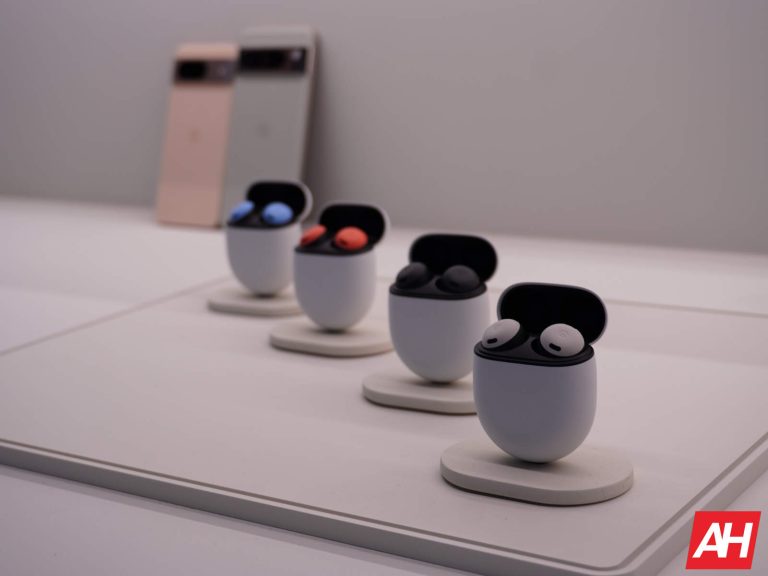
In mid-2022, Google launched the Pixel Buds Pro as its most premium and capable TWS earbuds. Now, the company seems ready to launch its new generation a couple of years later. The Google Pixel Buds Pro 2 are on the way, and a new leak reveals in images what it will look like. A previous leak revealed the colors in which it will be available.
Like previous Galaxy Buds models, the Buds Pro opted for a stemless design. However, Google will not follow the South Korean giant’s path with the Galaxy Buds 3 series in terms of design. Instead, it will maintain the same form factor for its next-gen product. A 9to5Google leak includes a set of images that confirm the appearance of the Google Pixel Buds Pro 2.
This would be the Google Pixel Buds Pro 2 new design
The leak comes from Spigen, a case provider for phones and accessories. While looking for a Pixel Buds case on Amazon, a Redditor found a case product page for the still unannounced Buds Pro 2. The site also confirms the (expected) brand name of the earbuds, and the included images reveal that, although there will not be a stemmed design, there will be some changes.
For example, the touch zone of the headphones now seems bigger and wider. This will probably make touch gestures easier to use. Also, while the sound grills of the original Pixel Buds Pro were black in all versions, the Pixel Buds Pro 2 will match the color of the earbuds. The images show the product in a pink color that could be sold as “Raspberry” or “Peony.”
The charging case does not seem to have changed much, as it maintains its oval shape, and even the dimensions seem to be similar. However, it seems there is now a cutout designed to attach accessories like Find My Device trackers. Sadly, the leak does not include details about the earbuds’ specifications or features. This is normal, as it was taken from a case vendor. Let’s hope more details emerge soon.
It seems that demand for the Galaxy Ring is exceeding Samsung’s expectations by a wide margin. Initially, the company set cautious projections, with relatively “limited” production. However, due to high public interest in the Galaxy Ring, Samsung is increasing production to one million units.
It seems that China is the market where the Galaxy Ring is generating the most interest. According to The Elec, Samsung had set an initial production of 400,000 units. After all, it is the first generation of the product, and it is not especially cheap, so the company would remain vigilant to the market reaction. If demand was as expected or a little lower, the company would maintain the same production rate. Otherwise, they would increase it.
Galaxy Ring demand exceeds Samsung’s initial expectations
However, there seems to be a lot of interest in the new device. According to the report, the initial demand is so high that Samsung has ordered the production of 600,000 additional Galaxy Ring units, reaching one million in total. This way, the company seeks to ensure that there are enough units available for all potential buyers. Apparently, the niche for smart rings is larger than expected. It is also possible that Samsung has made it grow, attracting fans of the brand’s products.
Samsung is not the first in the smart ring segment. Since 2017, Oura has been selling wearables in this format. However, since the launch of its first product, it has shipped a little over 1 million units. Therefore, if Samsung’s new expectations are met, sales would be close to those of Oura in its entire existence, which is impressive. The latest product from Samsung’s rival company in the segment is the Oura Ring 3, launched in 2017 for $299.
Leaks about the Oura Ring 4 suggest that it is already in development. We will have to wait to find out what it will offer to try to surpass Samsung’s smart ring in terms of people’s interest.
Google is offering multiple ways to watch and enjoy the Paris Olympics on YouTube TV. The search giant has partnered with official broadcasters to offer live broadcasts on Google TV and its other digital platforms.
Live coverage of the Paris Olympics on Google Search and TV platforms
Several official broadcasters of the upcoming Paris Olympics 2024 will livestream the opening and closing ceremonies on their respective YouTube channels. Hence, Google has announced a partnership with the majority of these broadcasters to stream Olympic content on Google TV and YouTube TV.
There are 329 events spread across 19 days, with a total of 10,500 athletes competing in the Paris Olympics 2024. Hence, there would be a lot of searches and online queries about the event.
Google will offer the latest schedules, results, medal counts, top video highlights, and daily recaps. The search giant will also suggest the latest top stories and social media perspectives.
Google has hinted there would be new “Google Doodles” and Easter eggs on the search page. The company will also post “Most Searched Playground”, an interactive experience for its audience to quiz them about the Olympics.
Google TV will start displaying a new Olympics hub in the “For you” tab from July 26. It will curate streams and highlights of the Paris 2024 Olympic Games.
Viewers can expect AI-powered features in Search, Google Maps, and Gemini dedicated to the Olympics. Additionally, certain broadcasts are expected to utilize Google Search’s “AI Overviews” feature to offer a snapshot of the events and results.
Google Maps Platform’s Photorealistic 3D Tiles will help Gemini and NBC’s commentators offer real-time insights in 3D. Google TV viewers should also get 3D views of Olympic venues in Paris using this technology.
Even the Google Play store for the Android OS ecosystem has been roped in. The app store will offer apps, games, and books related to the event. There’s a dedicated and official Olympics app too for staying updated about the Games.
Cybersecurity firm KnowBe4 was tricked by a North Korean hacker posing as an IT worker whose next step was to load malware on a company-issued Macbook. Learn how the hacker bypassed security measures and what steps businesses can take to protect themselves from similar attacks.
Cybersecurity firm KnowBe4 revealed today that it was successfully targeted by a sophisticated phishing scheme orchestrated by a North Korean hacker posing as a legitimate IT worker. The attacker, who managed to pass KnowBe4’s rigorous hiring process, was ultimately identified and stopped before any data was compromised.
The incident began when KnowBe4 hired a remote software engineer who cleared multiple rounds of interviews and background checks. Upon receiving a company-issued Mac, the device immediately began loading malware, triggering KnowBe4’s onboard security software.
An investigation, conducted in collaboration with the FBI and cybersecurity firm Mandiant, uncovered the shocking truth: the hired engineer was a North Korean national using a stolen US identity. The attacker’s profile picture was a convincing AI-generated image, further masking their true identity.
“This was a real person using a valid but stolen US-based identity,” wrote KnowBe4’s Chief Executive Officer & President Stu Sjouwerman. “The picture was AI ‘enhanced’.”
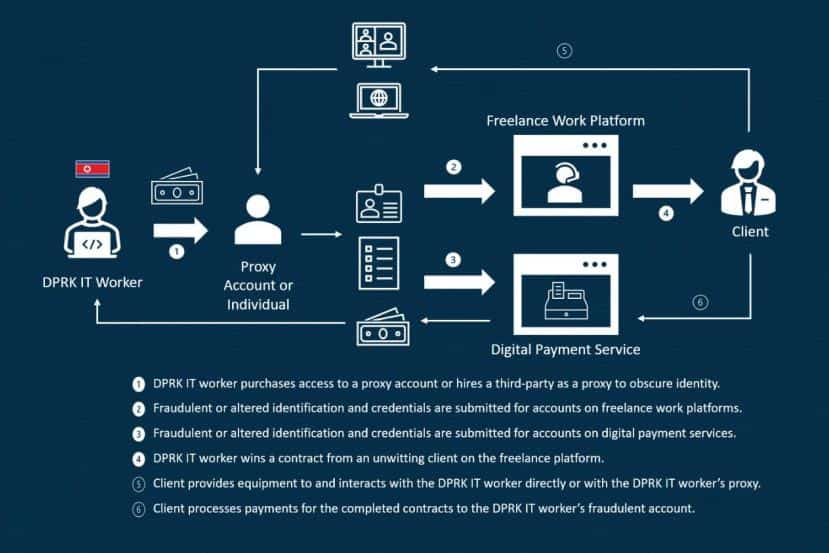
Image provided by Knowbe4
The attacker’s tactics involved manipulating session history files, transferring potentially harmful files, and executing unauthorized software. They used a Raspberry Pi to download the malware and attempted to disguise their activity as routine troubleshooting.
KnowBe4’s security team quickly contained the threat, preventing any further damage. The incident highlights the growing sophistication of state-sponsored cyberattacks and the need for robust security measures.
Experts warn that North Korean operatives are increasingly targeting Western companies, exploiting remote work trends and using sophisticated methods to bypass traditional security protocols.
“This incident reveals how state-sponsored attackers are evolving to create convincing fake identities,” said Stephen Kowski, Field CTO at SlashNext Email Security+. “It’s clear we need to rethink our approach to security.”
Callie Guenther, Senior Manager, Cyber Threat Research at Critical Start, added, “Companies can identify potential threats by scrutinizing resumes, verifying identities, and monitoring for unusual behaviour.”
You’ve Been Warned!
In May 2022, the US government warned organizations to beware of North Korean hackers in the guise of IT freelancers claiming to be non-DPRK (Democratic People’s Republic of Korea) nationals.
According to the advisory issued by the United States State and Treasury Departments and the Federal Bureau of Investigation (FBI), highly skilled mobile app and software developers from North Korea were trying to get employed by posing as IT freelancers. The advisory stated that the purpose behind this fraudulent activity was to pave the way for cyber intrusions from the North Korean government.
Protecting Your Organization: 10 Key Takeaways for HR Managers
Here are 10 points for HR managers to protect themselves from fake employee scenarios and what to do if they’ve been compromised:
Prevention:
Rigorous Vetting: Implement multi-layered background checks that go beyond basic criminal records. Utilize third-party services specializing in identity verification and social media analysis.
Video Interviews: Conduct video interviews for all candidates, especially remote positions. Pay close attention to inconsistencies between the candidate’s appearance and their online presence.
Reference Checks: Verify references thoroughly, going beyond confirming employment dates. Speak to previous supervisors and colleagues to gain a deeper understanding of the candidate’s work ethic and character.
Behavioural Assessments: Incorporate behavioural assessments into the hiring process to evaluate a candidate’s personality traits, work style, and potential for deception.
Red Flag Awareness: Train hiring managers to recognize red flags such as inconsistencies in resumes, evasive answers during interviews, and overly eager or insistent candidates.
Cybersecurity training: Make cybersecurity training a must in your organisation. Any employee with access to the company’s data or electronic device must be trained in identifying phishing scams, social engineering tactics and identifying fake profiles.
Response:
Immediate Containment: If suspicious activity is detected, immediately isolate the affected user account and restrict access to sensitive systems.
Forensic Investigation: Engage a cybersecurity firm to conduct a thorough forensic investigation to determine the extent of the breach and identify the attacker’s methods.
Law Enforcement Notification: Report the incident to the FBI and other relevant law enforcement agencies.
Data Breach Response Plan: Have a comprehensive data breach response plan in place to guide actions in the event of a security incident.
Employee Communication: Communicate transparently with employees about the incident, outlining the steps taken to mitigate the risk and protect their data.
Remember, common sense and a multi-layered approach are vital for protecting your organization from such sophisticated cyberattacks.
T-Mobile has formed a JV with investment firm KKR for the acquisition of Metronet. The acquisition adds a capable Internet Service Provider to T-Mobile’s portfolio of businesses and operations.
Specifically speaking, T-Mobile will acquire Metronet and all its broadband infrastructure. If or when the deal gets approval, T-Mobile will pay $4.9 billion to own 100% of Metronet’s residential fiber operations.
T-Mobile US puts $4.9B in fibre JV with KKR to buy Metronet: T-Mobile US plans to spend $4.9 billion for a 50 per cent stake in US-based fibre service provider Metronet through a joint venture (JV) with investment company KKR.
Metronet is a rapidly growing residential fiber ISP (Internet Service Provider). As part of the deal, all of Metronet’s existing customers will automatically become a part of T-Mobile’s 120 million subscribers.
Speaking about the acquisition, Mike Sievert, CEO of T-Mobile said, “Metronet is the perfect partner for T-Mobile as a leader in fiber solutions with an incredibly fast build pace, and a top-notch management team.”
Metronet becoming a part of T-Mobile will help the latter, “further expand the Un-carrier’s fiber footprint and deliver real value and choice to customers while addressing a growing demand for fast and reliable broadband,” added Sievert.
T-Mobile’s Metronet acquisition with KKR to help boost home internet services
The rapidly increasing 5G coverage offers high-speed wireless coverage. However, 5G is also optimized to offer fixed wireless internet to homes and offices.
T-Mobile has a growing presence in the increasingly popular “Home Internet” space. The telecom service provider currently has more than 5 million households and businesses as its subscribers. The company relies on Un-carrier’s 5G network and the company’s previously announced fiber partnerships.
T-Mobile US and KKR JV to acquire Indiana-based ISP Metronet
— RCR Wireless News (@rcrwirelessnews) July 24, 2024
T-Mobile currently operates on the “fallow-capacity model” with Un-carrier. Simply put, the telecom company relies on spectrum that is sitting unused.
Acquiring Metronet with KKR will reportedly boost T-Mobile’s presence in the “Home Fiber” or FTTH (Fiber to the Home) business. Metronet currently services over two million accounts across 17 states. It would be interesting to see how T-Mobile will leverage Metronet’s “100% fiber network [that] delivers symmetrical multi-gigabit internet service directly to homes and businesses.”
Several Google services have their own accounts on social networks, such as X. Some of the newer ones, like the Gemini assistant, were still pending. Now, Google Gemini finally has its own individual account on X.
Gemini is an advanced voice assistant powered by the latest Google’s LLMs. It is designed to be the successor to the classic Google Assistant, although they currently coexist together. This is because there are still some Assistant features not compatible with Gemini (and vice versa). However, that has been changing little by little. It’s possible that Gemini will be the only Google voice assistant available in the future.
There is already an official Google Gemini account on X
Interestingly, Google Assistant never got its own account on X. The company communicated all Assistant-related news through its own handle (@Google). However, it seems that the Mountain View giant wants to give more importance to Gemini than ever. Other Google services with their own account on X include YouTube, Gmail, Photos, Drive, and Maps, among others.
The Gemini account on X uses the handle @GeminiApp, although it includes “Google” in its name. There are just two posts at the time of writing this story, basically informing that it will be the place for all announcements related to the service. While the account has “June 2024” as its creation date, it appears that it was “hidden.” Currently, Gemini on X has just over 1,400 followers, and its first post was from a few hours ago.
It’s notable that the Gemini account in X includes “Google” in its name since the company typically refers to the service simply as Gemini. It seems that Google wants to relate it directly to its brand on social platforms. Recently, Motorola introduced the Razr+ (2024) as one of its latest foldable phones. One of its key features is being able to use Gemini while the device is folded. When the company announced the feature, it used the name “Google Gemini.” It is unknown if it was on its own initiative or due to a request from Google.
Android 15-based One UI 7 is the next big OS update for Galaxy devices. It is expected to bring some notable changes, especially in its UI. Now, new leaks show some of the new design elements that One UI 7 could bring.
Apparently, the announcement of the new update is not far away. In fact, a Max Jambor post on X states that the first One UI 7 beta will be available starting next week. However, before that, leaker Chun Bhai posted screenshots detailing some cosmetic changes. So, you won’t have to wait until then to find out what some things would look like.
This would be the One UI 7 new icon design
Samsung seems to be tweaking several UI elements to try to refresh the user experience. The most notable at first glance seems to be the shape of the icons. Now they will be more rounded than before, but maintaining a square base. In addition, the company redesigned the icons of some of its own apps. In certain cases, the new icon design seems inspired by iOS, something that is being criticized by several.
For example, the One UI 7 Gallery app icon looks like a “reinterpretation” of its iOS equivalent. On the other hand, Samsung also changed the battery icon in the status bar. Now, it is shaped like a thick pill, which is also getting some user backslash.
Easier customization and more changes
Additionally, the company is making it easier to access certain customization options that were previously hidden. For example, there is now an option to make icons bigger by removing their label. This feature was already available before but from a Good Lock module. Now, you can find this setting on the normal customization page.
Other changes mentioned in the reports include a redesigned Camera app. The new design seeks to make it easier to use with one hand. Samsung also renamed the “AR Emoji” feature to “Galaxy Avatar.” Meanwhile, Ice Universe, a Samsung-focused leaker, said that “icons and some details of the design may still be modified.” So, it’s possible the leaked items look different for the stable rollout, or even for the beta.
Spotify has joined the “Tech Coalition”, which aims to promote and preserve online safety. The audio streaming company has assured that creating a safer online environment for young people is its top priority.
Spotify will help connect vulnerable users to mental health resources
Marcelina Slota, Head of Spotify’s Platform Integrity, has statedthe company remains committed to creating a safe online environment for its listeners. The popular streaming service added that it intends to make it easier for its young audience and parents to better understand the digital world.
Spotify mentioned that it will have relevant processes in place to help users safely navigate the digital world. As part of the commitment to a safer online presence, Spotify has joined the Tech Coalition.
triggering a full-scale mental health alert at spotify head office with my latest searches pic.twitter.com/KtGv1qRamA
Apart from working with the Tech Coalition, Spotify has indicated it would monitor the content consumption patterns on its platform to spot potential issues. The company will help connect vulnerable users to appropriate mental health resources.
Specifically speaking, Spotify will look out for users who regularly search for content related to suicide, self-harm, and eating disorders. If it spots a pattern, the platform will suggest users reach out to mental health platforms. These include the US National Suicide Prevention Lifeline, the TREVOR Project, National Eating Disorders Services, and others.
Spotify to add staff and deploy Machine Learning for online safety
Spotify has previously clarified that it has a zero-tolerance policy towards exploitative content. The company already bans illegal or abusive behaviors, especially aimed at young people.
Moving forward, Spotify has stated it will add dedicated teams to review and promptly remove potentially violating or explicit content. Additionally, the company is deploying Machine Learning (ML) to quickly spot signs of potential trouble.
The company may have ML algorithms hunting for patterns in user reports to detect policy violations and content with questionable legality. Usually, automated systems monitor, detect, and flag a user or content. Thereafter, human reviewers review the content and take necessary actions, such as censoring the content, issuing warnings, or blocking a user.
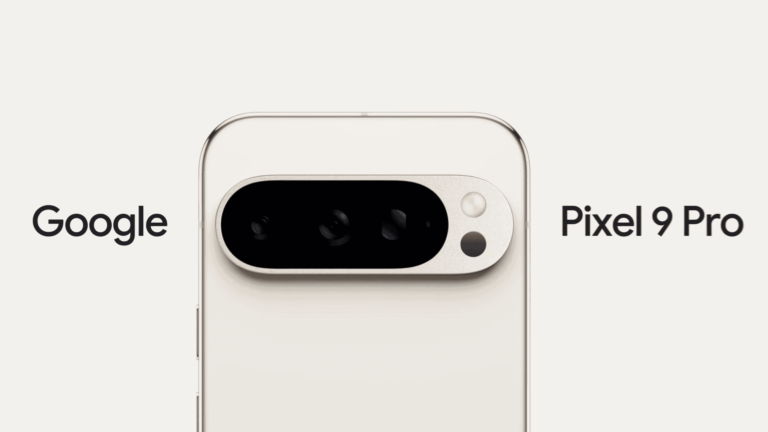
Leaks for Google’s Pixel 9 series devices continue to pour out mere weeks ahead of Google’s official reveal, and the latest revolves around a collection of display specs for the Pixel 9, Pixel 9 Pro, and Pixel 9 Pro XL. This new leak follow details about the display for the Pixel 9 Pro Fold which were leaked earlier this morning, and these new details promise some pretty exciting changes.
The key details come from Android Authority, which notes specifics about the display for each of the three Pixel 9 series phones. Minus the Fold which was reported on earlier. If the details prove to be accurate, then it looks like Google is going to be improving the displays on each device in a number of ways.
The word “improve” might depend on who you ask though. One of the main takeaways is that Google appears to be changing things up a bit with the display sizing. In part because of the third model Google is releasing this year, the Pixel 9 Pro XL. Things get a little wonky so here’s what you’re looking at if you’re going to consider upgrading to one of these devices.
The Pixel 9 series devices will all have brighter displays
The biggest improvement looks to be coming from the display brightness. Google’s Pixel 8 and Pixel 8 Pro displays were plenty bright. But they could stand to use some increased full-screen brightness. As Android Authority points out in its comparison mockup, the Pixel 8 had a full-screen HDR brightness of 1,400, and the Pixel 8 Pro‘s full-screen HDR brightness was 1,600. These are getting way bumped up on all three of the upcoming Pixel 9 phones.
The Pixel 9 goes from 1,400 to 1,800. Meanwhile, the Pixel 9 Pro and Pixel 9 Pro XL are going to have a full-screen HDR brightness of 2,050. Those are decent brightness boosts and should make a big difference. In addition to the brightness levels, the display material being used is rumored to be Samsung’s new M14 material. It’s also important to keep in mind that these values are for the full-screen HDR brightness and not the peak brightness. The peak brightness levels could be the same as last year or they might be increasing as well.
Display sizes are changing too
In addition to the brightness boosts Google is also changing the display sizes, though not by much. The Pixel 9 is now rumored to be coming with a 6.24-inch display, up from 6.2 inches on the Pixel 8. The Pixel 9 Pro is actually being made smaller. Compared to last year’s Pixel 8 Pro with a 6.71-inch display, the Pixel 9 Pro will have a 6.34-inch display. It’ll be larger than the Pixel 9, but significantly smaller than the previous Pro model Pixel. The reason for this is quite obvious. The biggest display is being saved for the Pixel 9 Pro XL.
The display on the Pixel 9 Pro XL is being bumped from 6.71 inches on the Pixel 8 Pro to 6.73 inches. Again, not a huge increase here, but an increase nonetheless. The PPI values are also changing ever so slightly. But it looks like all three phones will stick with a 120Hz refresh rate. Another minor change being made is with the resolution. The Pixel 9 is getting a small bump to 1,080 x 2,424. The Pixel 9 Pro XL will be the same as last year’s Pixel 8 Pro, which is 1,344 x 2,992. Finally, the Pixel 9 Pro will have a resolution of 1,280 x 2,856.