After opening the new year with zero-day fixes, Apple has once again addressed two more zero-days in its iOS devices, urging users to update as soon as possible. These vulnerability fixes not only arrive for iOS 17 but also come with the latest iOS 16 updates.
Recent iOS Updates Fix Two Zero-Days
As disclosed through an advisory, Apple patched four vulnerabilities, including two zero-days, with the latest iOS updates. Specifically, these include the following four vulnerabilities.
CVE-2024-23243: An information disclosure issue that could expose sensitive data to an app. Apple addressed this flaw by improving private data redaction for log entries.
CVE-2024-23225: This kernel vulnerability could let an adversary bypass memory protection and exploit the arbitrary read/write capability. The tech giant patched this vulnerability by improving validation while admitting to having detected its exploitation in the wild.
CVE-2024-23296: Another memory corruption vulnerability with similar impact as that of CVE-2024-23225, which Apple patched by improving validation. The firm mentioned this vulnerability as the second zero-day, confirming to have detected its active exploitation.
CVE-2024-23256: A logic issue that could expose a user’s locked tabs while switching groups even with “Locked Private Browsing” enabled. Acknowledging the researcher Om Kothawade for reporting this flaw, Apple confirmed patching it by improving state management.
Apple patched these vulnerabilities with iOS 17.4 and iPadOS 17.4. These updates apply to iPhone XS and later, iPad Pro 12.9-inch 2nd gen and later, iPad Pro 10.5-inch, iPad Pro 11-inch 1st gen and later, iPad Air 3rd gen and later, iPad 6th gen and later, and iPad mini 5th gen and later.
Moreover, the firm also released the fix for the kernel vulnerability CVE-2024-23225 with iOS 16.7.6 and iPadOS 16.7.6, applicable to iPhone 8, iPhone 8 Plus, iPhone X, iPad 5th gen, iPad Pro 9.7-inch, and iPad Pro 12.9-inch 1st gen.
Besides these vulnerabilities, Apple also hinted about having patched more vulnerabilities with this update, which the firm would update later. That means these updates demand immediate attention from the users as they carry numerous security fixes.
Critical security vulnerabilities patched in the Cisco Secure Client VPN application. Update now to protect your VPN connections from credential theft, unauthorized access, and potential code execution. This advisory also details unpatched flaws in Cisco Small Business wireless access points.
Network equipment giant Cisco has addressed critical security flaws impacting its Secure Client enterprise VPN application and endpoint security solutions. For your information, Secure Client is widely used to establish secure Virtual Private Network (VPN) connections. On Wednesday, Cisco announced patches for high-severity vulnerabilities CVE-2024-20337 (CVSS score: 8.2) and CVE-2024-20338 (CVSS score: 7.3).
CVE-2024-20337 is a Carriage Return Line Feed (CRLF) injection vulnerability allowing attackers to execute script code or access sensitive information in a browser if configured with the SAML External Browser feature.
The flaw affects Linux, macOS, and Windows versions of Secure Client, and can be exploited in CRLF injection attacks. CRLF injections are vulnerabilities where attackers inject CR and LF characters into web applications, adding extra headers or causing browsers to ignore original content.
Unauthenticated remote attackers can execute arbitrary scripts or steal sensitive information like users’ valid SAML authentication tokens to establish a remote access VPN session with the affected user’s privileges. However, individual hosts and services would require additional credentials for successful access, Cisco noted in its advisory.
Amazon security researcher Paulos Yibelo Mesfin discovered this flaw and it has been fixed in versions 4.10.04065, 4.10.08025, 5.0, and 5.1.2.42.
A vulnerability I found in Cisco AnyConnect just got patched. CVE-2024-20337 is a powerful vulnerability. It grants external attackers access to internal networks when network users visit a website under attacker control. Stay vigilant! 🌊🔥⛓️https://t.co/Jy3qz4HJnU
CVE-2024-20338 only affects Cisco Secure Client for Linux and its successful exploitation requires authentication. It can only be exploited by an authenticated, local attacker. The vulnerability allows the attacker to execute arbitrary code on an affected device with root privileges. They can copy a malicious library file to a specific directory and persuade an administrator to restart a specific process.
Cisco advises enterprise admins to upgrade to one of the fixed versions, as version 5.1.2.42 of the VPN application resolves the bug.
Cisco has announced patches for several medium-severity flaws in AppDynamics Controller and Duo Authentication for Windows Logon and RDP, potentially leading to data leaks and secondary authentication bypass. The tech giant also warned about two flaws in Cisco Small Business 100, 300, and 500 Series wireless access points (APs), tracked as CVE-2024-20335, and CVE-2024-20336.
These flaws allow remote attackers to execute arbitrary code as the root user. However, Cisco won’t patch them because their Wireless APs have reached the end-of-life process. Similarly, the medium-severity flaws will remain unpatched for the same reason. Moreover, Cisco notes that it is not aware of any of these vulnerabilities being exploited in the wild.
Cisco has emphasized the need for cybersecurity vigilance and adopting security best practices. These include regularly updating software, using strong passwords and multi-factor authentication, being cautious with suspicious links, and preferring trustworthy Wi-Fi networks for sensitive VPN connections.
The Xiaomi 14 was originally launched back in November last year. It launched alongside its sibling, the Xiaomi 14 Pro, in China. Fast forward a couple of months and the Xiaomi 14 is now here… for global markets. The phone arrived alongside the Xiaomi 14 Ultra, not the Xiaomi 14 Pro. Having said that, I’ve been using the Xiaomi 14 for a couple of weeks now, and have reviewed the device in preparation for its launch.
The Xiaomi 14 does not have all the bells and whistles of the Xiaomi 14 Ultra, but that’s not necessarily a bad thing. This phone is a true powerhouse on its own, and if you’re overwhelmed by huge smartphones, and still want a great-looking, powerful smartphone with a truly compelling camera setup… well, this may be just the phone for you. Things are not perfect, though, of course. So… read on.
Table of contents
Xiaomi 14 Review: Hardware / Design
The Xiaomi 14 truly is a gorgeous piece of hardware. This phone is made out of metal and glass and is also rather compact at the same time. It’s not small by any means, as it has a 6.36-inch display, but thanks to its thin bezels, it’s quite compact. Its bezels are only 1.71mm thick, and that goes for all of its bezels. Yes, they’re uniform, and the display is flat. The phone measures 152.8 x 71.5 x 8.3mm and weighs 193 grams. Do note that the vegan leather model weighs 188 grams, but that one is only available in China. The model I reviewed has a glass backplate. This phone is slightly bigger than the Galaxy S24 and iPhone 15 Pro, but it has a bigger display too.
Having said that, its sides are flat all around, but they are rounded towards the very edges. Xiaomi did a fantastic job of curving the glass backplate into the back of the phone while keeping the frame slightly protruding. I thought this was going to be a problem and cut into my hand, but it did not, at all. The frame is nicely rounded towards the edges, the company did a great job here. The model I used has a metallic silver frame, and it’s very glossy. It also picks up fingerprints very easily. The good news is it’s only the frame, not the backplate. That’s probably because the back side is white, so I never really had issues with smudges.
The buttons are clicky, and the camera island is non-obtrusive
The buttons on the phone are very clicky, they’re just right. Both sets are placed on the right-hand side, the power/lock buttons sit below the volume up and down buttons. The SIM card tray is accessible from the bottom, where the phone’s loudspeaker and Type-C port sit too. The earpiece functions as a second speaker, while there’s absolutely nothing to be found at the top. There is no IR blaster here either, which some of you may expect considering that this is a Xiaomi smartphone.
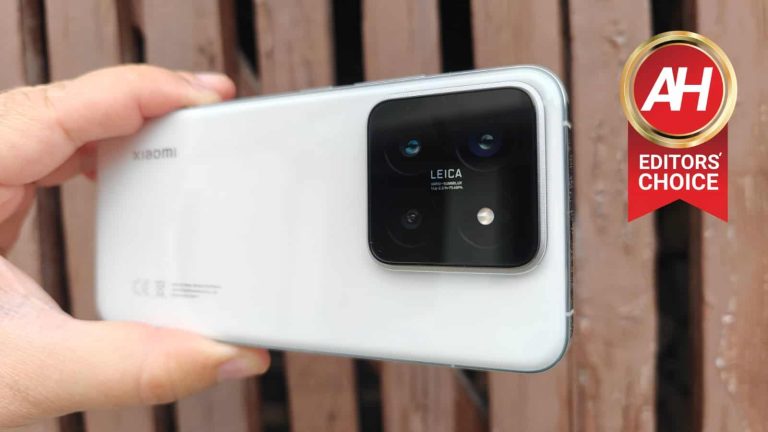
On the back, you’ll notice a rather spacious camera island. It’s located in the top-left corner of the phone’s back. It does protrude on the back, quite a bit, but it can serve as an anchor for your index finger, depending on how large your hands are. There are three cameras included in there, and an LED flash too. We’ll talk more about those cameras later on, but Xiaomi did include a capable setup here.
Very comfortable to use, while its bezels are also thin & uniform
Holding and using the phone is a really pleasant experience. Considering the way the device is shaped, it’s not as slippery as many other phones I’ve used, despite the fact it’s made out of metal and glass. Still, it’s not exactly grippy, so using a case may not be such a bad idea. There is one included in the box, it’s a regular rubber case, but it does add quite a bit of grip and protection here. You can always get some other case if you don’t like this one, but it’s nice to see one included in the box.
The Xiaomi 14 does feel like a premium piece of hardware, through and through. It’s very nice to see uniform bezels too, and I really don’t have any complaints on this hardware… well, aside from the fact the frame smudges easily, but that’s a truly minor thing.
Xiaomi 14 Review: Display
The Xiaomi 14 features a 6.36-inch 1.5K (2670 x 1200) AMOLED display. This is an LTPO panel, by the way, its refresh rate goes from 1 to 120Hz, as needed. Xiaomi refers to this panel as a ‘pro-level’ display, and its theoretical brightness goes up to 3,000 nits. In other words, it can get really bright when needed, but do note that the very highest brightness levels are reserved for HDR content on auto brightness. That’s the case for every single competitor that this phone has, though.
The display is gorgeous and it comes with TUV Rheinland EyeCare certification
This display also offers a 12-bit color depth, and support for Dolby Vision. HDR10 and HDR10+ content is supported too, and the same goes for Hybrid log-gamma. On top of everything, this panel is also TUV Rheinland EyeCare certified. It incorporates DC dimming across all brightness ranges and features a hardware-level low blue light design that produces 56% lower blue light than the previous-gen model. The phone’s display has a 240Hz touch sampling rate and features Adaptive reading mode and a Sunglight mode. There’s a lot of tech packed here, as you’d expect out of a flagship-level product.
Bezels around the display are only 1.71mm thick
The panel on the phone is flat, and it has uniform bezels. Those bezels are only 1.71mm thick all around the display, which helps keep the phone quite compact. There is a display camera hole on this panel, it’s centered at the top of the panel. A plastic screen protector comes pre-installed on the device, but you can always change that for a tempered one if you want. We’re not sure what protection is applied on top of the display, though.
Is the display any good, though, for regular use? Not only good, it’s outstanding. I never felt like the screen was too dim or anything of the sort. It’s more than sharp enough, and adaptive brightness worked very well, which is something I had issues with on some previous Xiaomi smartphones. The viewing angles here are also excellent, and the touch response is good. The display is also quite vivid, though you can tune all that in the display settings, the phone does offer some options in regards to that. The panel is also not all that reflective either, in line with its competition.
The bottom line is, this display is excellent. I have no real complaints about it whatsoever, and the uniform bezels around it are only the cherry on top.
Xiaomi 14 Review: Performance
The Xiaomi 14 includes the Snapdragon 8 Gen 3 on the inside. That is Qualcomm’s most powerful processor at the moment. In addition to that, the phone comes with 12GB of LPDDR5X RAM, and either 256GB or 512GB of storage. UFS 4.0 flash storage is used here, by the way. In other words, this phone has all the hardware prerequisites to offer great performance. Does it? Well, yes, it surely does. HyperOS comes pre-installed on the phone, on top of Android 14 I believe. I was unable to check the exact version of Android, and Xiaomi’s official info also doesn’t mention Android. Chances are it is Android 14, as it is in China, so… there you go. We’ll talk more about the software later on.
The phone handles everyday tasks with ease
The phone does a great job when it comes to regular everyday tasks. It fires up apps really quickly, multitasking is a breeze, and you can do basically everything you’d expect with ease. I really pushed this phone hard when it comes to multitasking, and it did a great job, just keep in mind that HyperOS is better than MIUI when it comes to keeping tasks in the background, but not the best. That really won’t matter all that much to you unless you’re juggling a bunch of apps at the same time. If that’s not the case, you won’t even notice anything. I did notice some stuttering while using the device, but only briefly, and far apart. At one point I did experience a slightly longer freeze, of 3-4 seconds. Considering I did review this phone by the time it didn’t even launch, though, it’s possible Xiaomi plans another software update by the time it launches, or soon after to additionally iron out these issues. Even if it doesn’t the phone does work really great.
It’s also great in terms of gaming performance
What about gaming? Well, that’s also not a problem for the Xiaomi 14. Xiaomi did include a proper cooling system on the inside, and even though the phone does get rather warm when you’re pushing it hard on the gaming side of things, it keeps up in terms of performance. It never got too hot for me, even when I was pushing it hard with Genshin Impact. It did get rather warm, but the performance did not suffer. In terms of some less graphically intensive titles, the phone did an outstanding job. It got barely warm when I was testing out Subway Surfers, for example, the same was the case with a couple of other games I’ve tried out. It never got warm during regular, everyday use. I do have a feeling Xiaomi’s cooling system is making a difference here, as the Snapdragon 8 Gen 3 does run hotter than its predecessor, the Snapdragon 8 Gen 2.
Benchmarks
With every review, we’re running a number of benchmarks as well. Below, you’ll find four separate benchmarks. The first one is temperature testing after an hour of Genshin Impact playback. That is followed by the Geekbench 6 results (single and multi-core CPU score & GPU score), and the 3D Mark Wildlife Extreme Stress Test. The last benchmark in this category has to do with video exporting. You’ll get to see how long it takes this phone to export a fullHD video at 30 FPS via CapCut. Comparisons with other phones are also included here.
Temperature Genshin Impact
Geekbench 6
3D Mark Wildlife Extreme Stress Test
The app crashed three times while we were trying to conduct a test. The temperature at the time of the crash was 110.3F. We’re guessing either it’s a bug or some sort of a failsafe. We did not have issues during usage or gaming, so we’re not really sure what happened here.
Video export test
Xiaomi 14 Review: Battery
There is a 4,610mAh battery included inside of this phone. It is slightly larger than the unit included in the Xiaomi 13, which is a good thing. The Xiaomi 14 also comes with a processor that has lower power consumption, so that should be a good pairing, right? Well, yes, actually. I didn’t have big expectations for its battery life, I expected marginal improvements (compared to the Xiaomi 13, but the phone managed to surprise me. It did not really perform as well as the ASUS ZenFone 10 for us, that phone offers outstanding battery life for a compact smartphone, but it was… up there. It’s amongst the best (rather) compact smartphones in that regard, when it comes to compact flagships.
The Xiaomi 14 offers better battery life than the Galaxy S24, noticeably better
Many of you will be comparing the Xiaomi 14 with the Samsung Galaxy S24 on the battery side of things. The Galaxy S24 doesn’t offer particularly great battery life, the Xiaomi 14 did offer more juice in our experience. Noticeably more, in fact. With my usage, I was able to get over 6.5 hours of screen-on-time regularly, without a problem. I was able to push it up to 7 hours of screen-on-time once or twice, which is not too shabby. Do note that gaming did lower those numbers, but I don’t really play games out of testing, so… there you go. Everything else did come into my usage, though, ranging from browsing, messaging, emails, navigation, image processing, multimedia consumption, and more. One thing to note is that I had two off days where I barely crossed the 6-hour mark. That was odd, but it’s worth noting.
The phone even did a good job in our battery drain test
In our battery drain test, where we left the phone to run a 4K YouTube video at the highest brightness until it reached 1%, the Xiaomi 14 did well… having its battery size in mind, of course. It did not reach the heights of the HONOR Magic6 Pro or the Samsung Galaxy S24 Ultra, but nobody expected it to. You can see a comparison chart below.
Charging
First and foremost, the Xiaomi 14 does ship with a charger in the box. It comes with a 90W charging brick, which guarantees that you’ll get the maximum charging speed this phone has to offer. It offers 90W wired charging, along with 50W wireless charging, and 10W reverse wireless charging. This charging is… fast. That goes for both wired and wireless charging, but the wired charging is faster of the two, of course. You can charge the device from dead to 100% in only 35 minutes according to the company, and that coincides with what we’ve seen. I measured it twice, and on one occasion it charged in 35 minutes, and on the other in 36 minutes.
50W wireless charging is great to have, in addition to 90W wired charging
50W wireless charging will also take well under an hour to fully charge the device. 10W reverse wireless charging is convenient when you need to charge your fully wireless earbuds on the go. Well, that, or a similar device. Perhaps even a watch if you have a compatible one. There’s really nothing to complain about in the charging department here, nothing at all.
Xiaomi 14 Review: Camera
The Xiaomi 14 may not be the top-of-the-line model in the series, but Xiaomi included truly capable cameras on the inside nonetheless. The device ships with three cameras, main, ultrawide, and telephoto units. The main camera packs in a 50-megapixel sensor. This is the Light Fusion 900 sensor, and it has an f/1.6 aperture lens with a 23mm focal length. Pixel binning is used here (4-in-1 Super Pixel), which results in a 2.4um pixel size. OIS is supported, and you’ll also find a 7P lens on top of the camera sensor. This is a 1.31-inch camera sensor, by the way.
It has a very capable camera trio on the back
Xiaomi also included a 50-megapixel ultrawide camera here with a 115-degree FoV. It has a 14mm equivalent focal length, and an f/2.2 aperture 6P lens. The third camera on the back is a 32-megapixel telephoto camera with 3.2x optical zoom. That camera has an f/2.0 aperture lens, and a 75mm equivalent focal length. It is a floating telephoto lens, with OIS support, and a 6P lens. This camera is used for macro photography (10cm).
Leica lenses are used here, and there are also two Leica shooting modes in the camera UI. You can choose between Leica Vibrant and Leica Authentic modes. I used the vibrant mode way more often, as the Leica Authentic mode is meant to be used in certain scenarios only, in my opinion. One good example is street photography. The colors end up looking different, and you’re also getting vignetting on the sides with that mode. It’s a completely different feel. You’ll have to try it out to see which mode suits you better, of course.
The photos coming out of the phone are flagship-grade
The photos coming from this phone are really, really good. This is a flagship-level smartphone after all, and it doesn’t disappoint in the camera department. During the day, the main camera offers outstanding performance. The colors are rich, the photos end up sharp, and you’re getting plenty of detail overall. It handles heavy HDR situations like a champ (though not the best we’ve seen), and so on. The same goes for indoor performance, actually. The telephoto camera also does a great job during the day, and that goes for both outdoor and indoor shots. At default 3.2x zoom everything is on point. Portrait shots do tend to be a bit on the softer side, though, and as soon as you go over the 5x level things do look worse. What surprised me is that the phone held its own up to about 10x during the day. That telephoto camera can also be used for macro photography. Its performance was really, really good, even when there wasn’t a lot of light in the scene.
The ultrawide camera is a step below the main unit, but still very good
The ultrawide camera is a level of two below the main camera, that is something you’ll notice. The images do look a bit softer, and that doesn’t go only for the detail. The same goes for the colors, even though the difference is not huge. I was expecting a bit more from this camera during the day, to be quite honest. The images could be a bit sharper, and the colors a bit richer. Also, you’ll probably want to use tap to focus if you’re capturing specific subjects with this camera, the phone itself tends to miss the mark quite often. Only with the ultrawide camera, though.
The phone activates night mode automatically
What about low light? Well, first of all, do note that you won’t need to activate the night mode, at all. The standard mode will do the job the same way, so that’s one less thing to do. The images end up looking very nice. They are sharp, rich, the colors are good, and you’re getting a really nice balance too. The phone manages to pull details from the shadows but doesn’t go overboard when it comes to brightening up those shots. We’re talking about the main camera, of course.
The telephoto camera also does a very nice job. It follows the main shooter really nicely, with plenty of detail, and it even matches the colors from the main camera. The dynamic range is also really good. When it comes to the ultrawide camera, well, things are not as great, but it did better than I thought, based on the daytime shots. The ultrawide camera is still the least impressive out of the three cameras, but it’s not bad. Things can get tricky when you’re shooting scenes with plenty of light sources, though.
Main camera samples (Leica Vibrant):
Main camera samples (Leica Authentic):
Ultrawide camera samples:
Telephoto camera samples:
Colors sample controlled environment:
TEXT
Xiaomi 14 Review: Software
Xiaomi, as most of you know, ditched MIUI in favor of HyperOS. That is the company’s new Android skin, and it does come pre-installed on this smartphone, as you’d expect. The thing is, the phone’s Android version is not mentioned anywhere. Considering how Xiaomi usually handles updates, it could be either Android 13 or Android 14. Considering that Android 14 runs on the Chinese model, we’ll assume that the same is the case here. To be quite honest, considering how different HyperOS is, you’d never notice the differences between Android versions. The same was the case when MIUI was around.
HyperOS worked really well, but we did stumble upon some annoyances
Speaking of which, HyperOS does come with some new features compared to MIUI, and many under-the-hood changes, but it looks very similar to MIUI on the surface. If nobody told me, I’d think I was using MIUI, to be quite honest. I did notice some changes in the animations, status bar, and throughout the UI, but it still feels like MIUI. I have to say that the animations have been improved here, that’s really hard not to notice. HyperOS feels very nice to use overall, despite some annoyances and unnecessary changes. I’ll get right into that as that’s at the very top of my head at all times.
Xiaomi made some unnecessary changes here
The first change, the one that immediately noticed, has to do with the status bar. You no longer see a bunch of app icons on the left-hand side, showing you unread notifications from various apps. Xiaomi thought it would be a good idea to allow you to see just one icon, the newest one, and chuck everything else under a single dot. Yes, you heard that right. If you have more than one unread notification, you’ll see a single dot next to it, and that’s it. You’ll need to access the notification shade in order to see what’s going on. Those app icons in the status bar are one of the great features Android has over iOS, in my humble opinion, so this was quite an annoyance. That is especially true considering that MIUI handled those icons just fine. I did my best to find a toggle to change this in the settings, as HyperOS has plenty of customization options, but I was unable to do so. It’s likely not an option at all.
One-hand mode is difficult to trigger
There’s also one thing that Xiaomi did not fix from MIUI, and that’s one-hand usability. HyperOS has the same gesture that MIUI offered, swipe down across the bottom navigation par. That action lowers the screen so that you can access the items that are higher up. That’s basically the same gesture that is available on Pixel phones, and various other Android devices. So, what’s the problem? Well, it doesn’t work right. It’s very difficult to trigger. There’s a really narrow activation field for it, and you have to swipe across it exactly to trigger the gesture. I’ve never encountered something like that on other Android skins. It’s always rather easy to activate, regardless of what it is. I was unable to activate it twice in a row, even though I tried a number of times. Also, I was almost never able to trigger it from the first try, which defeats the whole purpose of it.
The OS does require a bit more optimization
HyperOS also needs a bit more optimizing, as it did freeze on me once for about 3-4 seconds, while it had a bit more stutters than I’d liked. On top of that, the icons in the status bar are sometimes in the wrong color. They turn black when they should stay white so that they work well with the wallpaper. That’s not always the case, however, and that makes them very difficult to read. This is just another example of a small optimization that Xiaomi needs to make in order to elevate the HyperOS experience as a whole. Other than these problems, I did not really have any major objections to HyperOS. Well, I’d love to see the option to double-tap the background to lock the screen, which is not here, but at least a physical button can be added for the same purpose. Also, you cannot access the notification shade when you swipe down over the display, if you do it on the right side of the display. That will trigger the quick toggles screen. You have to do that same gesture on the left half of the screen, which is less convenient for righties. I’ve tried to find an option to reverse this, but I was unsuccessful. Those are not exactly problems with the OS, as much as they are preferences, though. The gesture itself works just fine.
There are quite a few positives too
There are plenty of positives in HyperOS, actually. I just wanted to get the negatives and some annoyances out of the way first. The whole Android-based OS works really well. I’ve noticed fewer stutters than I’ve seen in MIUI last year, on the Xiaomi 13 Ultra. On top of that, some elements have been visibly polished this time around. MIUI was a synonym for iOS in the past, but that is no longer the case. HyperOS has stepped away from that quite a bit. Well, previous versions of MIUI have been making steps in the right direction, and HyperOS is continuing in that direction. It’s nice to see that Xiaomi is trying to carve out its own identity, in a way. It would be nice of them not to mess around with some core functionality of Android while doing that, however.
There are quite a few customization options
You’re getting plenty of control over the look of HyperOS. You can even tweak animations directly from the settings, without messing around with Developer Settings. Changing screen layouts is also possible, and Google Discover does sit on the most-left screen if you want it to. That’s also customizable. The ‘Quick ball’ functionality is still included. It basically allows you to place a small circle on the screen, wherever you want and set various actions to it. Those actions range from launching specific apps to taking a screenshot. That icon can be automatically hidden when you’re not using it, and then you can access it from the edge of the screen, as a small portion of it sits there. You simply tap on the ball and various actions pop up. It’s a neat feature to have.
You can use floating windows, and the ‘Overview’ screen is split into two columns
HyperOS also allows you to create floating windows for multitasking purposes, while multi-window is here too, of course. The ‘Overview’ screen aka app switcher is placed in two columns on the phone. There’s a lot to like here, to be quite honest. Xiaomi dialed down on aggressive UI changes in comparison to stock Android, as that’s what people seem to want. Do note that “problems” such as one icon in the status bar and no app drawer by default are still there. You can easily switch to a mode with the app drawer included, but Xiaomi is still pushing the iOS style by default. That’s something that many other companies are doing too, though, so we can’t really fault Xiaomi. The point is… you have options here, plenty of them.
Xiaomi 14: Audio
We use our own audio tracks in order to test speakers on phones. That being said, the Xiaomi 14 has a stereo speaker setup. Its main speaker is bottom-facing, while the secondary speaker is basically the earpiece itself. We prefer to have a separate speaker at the top too, so that the two speakers are more balanced. That’s not usually the case when the earpiece doubles as a speaker. That’s why the Xiaomi 14 managed to surprise us. The two speakers are actually well-balanced, the bottom one is not that much louder.
The speakers are great
To make things even better, the speakers are great. You will notice some mild distortion at the highest of volumes if you really look for it, but it’s not that serious. The bass is really good, and it doesn’t overpower the vocals. Speaking of which, the vocals are clear, and both the low-end and high-end tones sound good, in addition to the mid-level of the spectrum. The speakers are also very loud when you need them to be, which is impressive for a phone that is not all that big. Do note that the Xiaomi 14 is a bit bass-heavy, especially compared to the competition, but most people will likely prefer that. Either way, the Xiaomi 14 has very capable speakers.
Xiaomi 14: Should you buy it?
Is the Xiaomi 14 a smartphone for you? Well, if you don’t like these giant smartphones that we’re dealing with today, and you still want a high-end phone that tries not to cut too many corners… the Xiaomi 14 may be just right for you. This smartphone offers flagship-grade performance, great build quality, very capable cameras, great performance, and so on. The only thing you’re not getting is a periscope telephoto camera, basically. Everything else is here and accounted for. The Xiaomi 14 is easily one of the best (relatively) compact smartphones available in the market. It’s definitely worth considering, even when its ‘Ultra’ sibling is in play.
You should buy the Xiaomi 14 if you:
…don’t like huge phones …want a compact phone that doesn’t cut too many corners …simply must have uniform bezels …want a compact phone with great battery life …simply hate phones that are charging slowly …don’t plan on buying a charger separately …want a great camera performance in a rather compact device
You shouldn’t buy the Xiaomi 14 if you:
…need a truly large display …can’t stand slippery smartphones …need a periscope telephoto camera
The Massachusetts Institute of Technology’s (MITRE) Aviation Risk Identification and Assessment (ARIA) software program is a powerful tool to enhance aviation safety and efficiency.
Developed by the MITRE Corporation, a non-profit organization that operates federally funded research and development centers, ARIA is a software program that provides a comprehensive approach to aviation risk identification and assessment.
Main Features
ARIA is designed to collect and analyze aircraft location data, providing real-time insights into aviation safety.
DocumentIntegrate ANY.RUN in your company for Effective Malware Analysis
Malware analysis can be fast and simple. Just let us show you the way to:
Interact with malware safely
Set up virtual machine in Linux and all Windows OS versions
Work in a team
Get detailed reports with maximum data
If you want to test all these features now with completely free access to the sandbox: ..
The software program is part of the Federal Aviation Administration’s (FAA) Safety and Technical Training Service Unit, which is responsible for ensuring the safety and efficiency of the National Airspace System (NAS).
ARIA’s main features include:
Real-time aircraft location data collection and analysis
Comprehensive risk identification and assessment
Integration with FAA’s Safety and Technical Training Service Unit
Enhanced aviation safety and efficiency
ARIA’s real-time aircraft location data collection and analysis provides a comprehensive approach to aviation risk identification and assessment.
This allows the FAA to quickly identify and address potential safety issues, enhancing aviation safety and efficiency.
Developers and users can make suggestions for improvements to OpenARIA on GitHub, which is open to the public.
This will help the FAA and the aviation community around the world improve the tool.
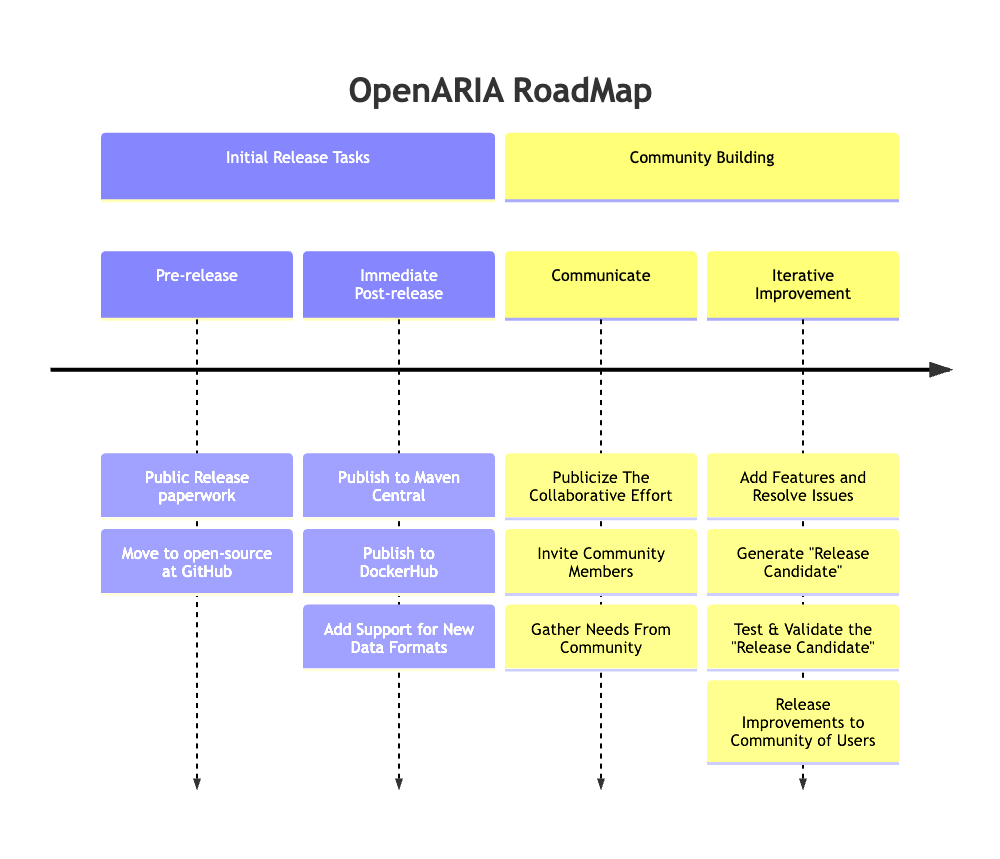
Near-Term Project RoadMap
The FAA’s Safety and Technical Training Service Unit is responsible for ensuring the safety and efficiency of the NAS.
ARIA’s integration with this unit allows for real-time data analysis and risk assessment, enhancing aviation safety and efficiency.
MITRE’s ARIA software program is a powerful tool for improving aviation safety and efficiency.
By collecting and analyzing aircraft location data in real-time, ARIA provides a comprehensive approach to aviation risk identification and assessment, resulting in enhanced aviation safety and efficiency.
You can block malware, including Trojans, ransomware, spyware, rootkits, worms, and zero-day exploits, with Perimeter81 malware protection. All are incredibly harmful, can wreak havoc, and damage your network.
Stay updated on Cybersecurity news, Whitepapers, and Infographics. Follow us on LinkedIn & Twitter.
JetBrains issued a warning on March 4, 2024 about two serious vulnerabilities in TeamCity server. The flaws can be used by a remote, unauthenticated attacker with HTTP(S) access to a TeamCity on-premises server to bypass authentication checks and gain administrative control of the TeamCity server.
TeamCity is a build management and continuous integration and deployment server from JetBrains that allows developers to commit code changes into a shared repository several times a day. Each commit is followed by an automated build to ensure that the new changes integrate well into the existing code base and as such can be used to detect problems early.
Compromising a TeamCity server allows an attacker full control over all TeamCity projects, builds, agents and artifacts. Which, depending on the use-case of your projects, could make for a suitable attack vector leading to a supply chain attack.
The two vulnerabilities are CVE-2024-27198, an authentication bypass vulnerability with a CVSS score of 9.8, and CVE-2024-27199, a path traversal issue with a CVSS score of 7.3. The Cybersecurity and Infrastructure Security Agency (CISA) has added CVE-2024-27198 to its Known Exploited Vulnerabilities Catalog, based on evidence of active exploitation. This means that Federal Civilian Executive Branch (FCEB) agencies need to remediate this vulnerability by March 28, 2024 in order to protect their devices against active threats.
These two vulnerabilities allow an attacker to create new administrator accounts on the TeamCity server which have full control over all TeamCity projects, builds, agents and artifacts.
Exploitation code is readily available online and has already been integrated in offensive security tools like the MetaSploit framework.
So, it doesn’t come as a surprise that researchers are now reporting abuse of the vulnerabilities.
Bleeping Computer reports that attackers have already compromised more than 1,440 instances, while a scan for vulnerable instances by Shadowserver showed that the US and Germany are the most affected countries.
If running JetBrains TeamCity on-prem – make sure to patch for latest CVE-2024-27198 (remote auth bypass) & CVE-2024-27199 vulns NOW!
We started seeing exploitation activity for CVE-2024-27198 around Mar 4th 22:00 UTC. 16 IPs seen scanning so far.https://t.co/zZ0iU5MD8S
The vulnerabilities affect all TeamCity on-premises versions through 2023.11.3 and were fixed in version 2023.11.4. Customers of TeamCity Cloud have already had their servers patched, and according to JetBrains they weren’t attacked.
If your server is publicly accessible over the internet, and you are unable to immediately mitigate the issue you should probably make your server inaccessible until you can.
We don’t just report on vulnerabilities—we identify them, and prioritize action.
Samsung fixed one of the worst things about its flagship smartphone cameras with the Galaxy S24 series. The new flagships exhibit no notable shutter lag when capturing photos in quick succession. The shutter button responds substantially quicker than in previous generations. The company has now revealed that the Galaxy S24 has a 30% faster shutter speed than the Galaxy S23.
The Galaxy S24 lineup has a 30% faster shutter speed
Samsung’s Galaxy S lineup has always been among the finest camera phones, particularly the Ultra. The company usually reserves its best camera hardware and software for these phones. Even foldables, which are more expensive, don’t match their camera performance. While they may not be the outright best choice for all scenarios—photos, videos, portraits, zooming, etc.—Galaxy S Ultras are excellent overall packages for your smartphone camera needs.
However, there has been a major camera-related complaint with Samsung flagships. The phones, including last year’s Galaxy S23 Ultra, lagged the competition in terms of shutter speed. There is a slight delay before the shot is captured once you tap the shutter button. This is a non-issue when shooting a stationary object but the shutter lag can mess up your photos if the subject is moving. The delay makes it difficult to perfectly time your shot.
Shutter lag also affects your camera experience when taking multiple photos in quick succession. Much to the delight of Galaxy fans worldwide, Samsung fixed this issue with the Galaxy S24 series. The improvement is big enough for anyone to notice. The company has now formally revealed just how much the shutter speed has changed. According to Samsung, the Galaxy S24, Galaxy S24+, and Galaxy S24 Ultra capture photos 30% faster than their predecessors.
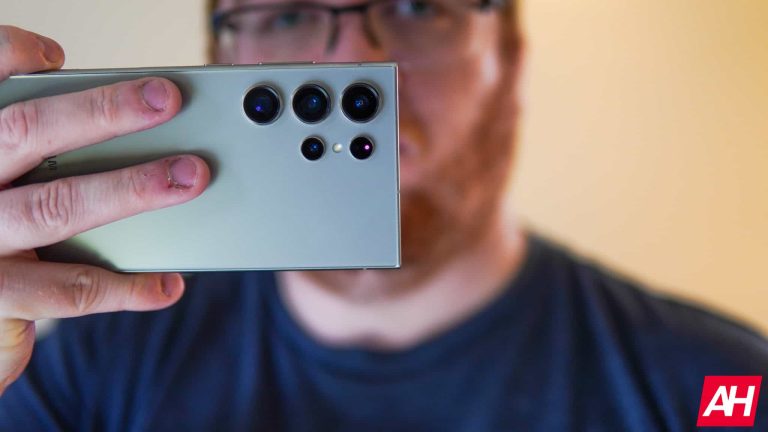
The improvement is noticeable on all cameras, not just the primary shooter. The smaller two Galaxy S24 models have a 50MP main rear camera, 12MP ultrawide lens, 10MP 3x optical zoom camera, and 12MP selfie camera. The Ultra adds a 50MP 5x zoom camera to the rear setup and upgrades the main camera to a 200MP unit. The ultrawide lens, 3x zoom camera, and selfie shooter remain unchanged across the three models.
The new flagships bring more camera improvements
Faster shutter speed isn’t the only camera improvement on the Galaxy S24 series. Samsung has also added the ability to capture 24MP photos using the Expert RAW app. The 50MP 5x zoom camera on the Galaxy S24 Ultra has a wider optical image stabilization angle compared to the 10MP 10x solution on the Galaxy S23 Ultra, enabling less blurry zoom photos. The new phones also bring AI-powered photo and video editing tools.
Meta (previously Facebook) plans to debut a prototype of its long-awaited augmented reality (AR) glasses called “Orion” at the upcoming Connect 2024 conference. According to an enthusiast publication, the launch of Orion is part of Meta’s strategic shift towards AR/VR/MR wearables that have started gaining momentum in recent years.
Orion will bridge the gap between Meta Quest 3 and Meta Ray-Ban Glasses
Reports from Business Insider predict that Meta may exhibit the concept behind the Orion AR glasses during the Connect 2024 event taking place in August later this year. Be that as it may, there has been no realizable consumer version of AR glasses on the market for many years even though internal pressure is gradually mounting.
The Orion Glasses themselves may not reach consumers before 2027 after nine years of development; nonetheless, Meta has been open about its mixed reality moves with things like Project Aria. For those out of the loop, that was the only consumer attempt ever for a pair of AR glasses in the field test since 2020.
Connect 2024, an annual August event is the best possible location where Meta can reveal all its new creations. The company has been using this developers’ conference to unveil the latest technologies like last year’s announcement of the virtual reality headset Meta Quest 3.
Meta’s next AR glasses will take center stage at Connect 2024
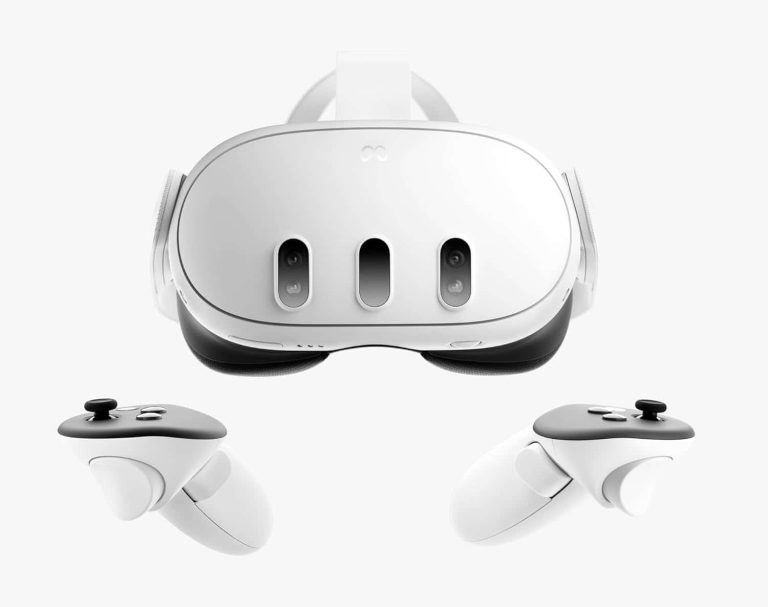
While many virtual reality headsets and smart glasses have entered the market, there are few true AR offerings available. Among others in its portfolio are Meta Quest 3 and Meta Ray-Ban smart glasses. Orion wants to bridge the gap between VR and smart glasses through a small form factor that has heavy-duty computing.
Meta will be releasing details about their AR Glasses Plan in Connect 2024, a highly anticipated tech world event that will also show us what direction they are taking with regards to augmented reality (AR) and wearable technology. The upcoming Connect conference will be held between August 27-29 and tech heads from around the world will gather there to marvel over some of the latest consumer inventions in AR/VR.
President Trump tried unsuccessfully to ban the app in 2020
TikTok has approximately 170 million users in the US
Lawmakers will vote next week to “force” TikTok to cut ties with CCP
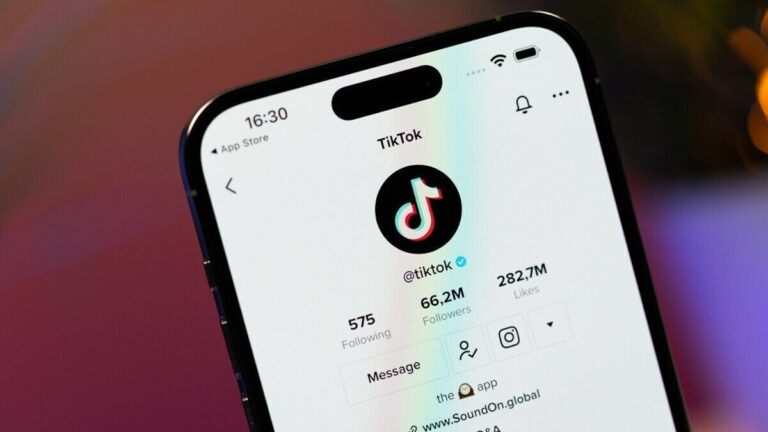
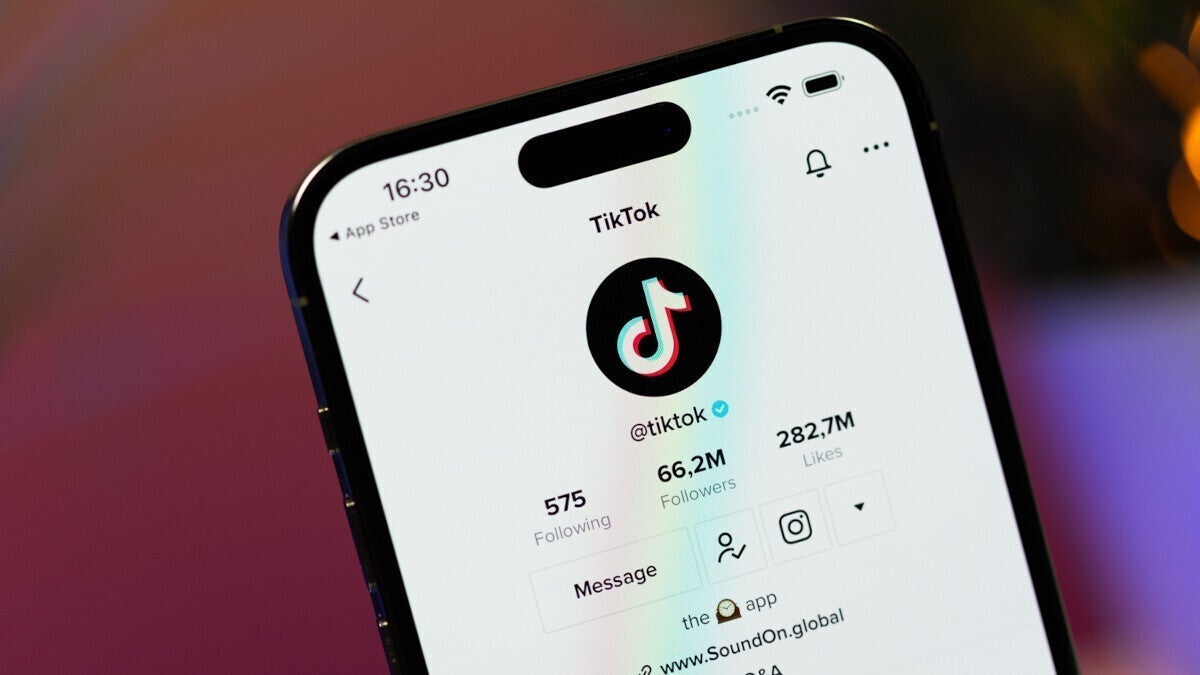
Next week, the US House of Representatives will try to force TikTok to cut ties with parent company ByteDance. The goal is ByteDance to sell its interests in the pest-like short video app within six months to avoid a ban in the US.This move comes after the Energy and Commerce Committee cast a unanimous 50-0 vote in favor of the measure, marking a significant step toward the most stringent US action against TikTok. TikTok has around 170 million users in the country, since President Donald Trump’s failed attempt to prohibit the app in 2020 (via Reuters).
Efforts to regulate TikTok had previously been hindered due to intense lobbying by the company. However, House Majority Leader Steve Scalise announced that lawmakers will vote to “force TikTok to sever their ties with the Chinese Communist Party.” TikTok contends that it has never shared, nor will it share, U.S. user data with the Chinese government, arguing that this bill essentially acts as a ban. The company criticized the legislation, claiming it infringes on the Constitutional right to free expression for 170 million Americans, negatively impacting millions of businesses and creators.
Before casting their votes, legislators received a classified briefing on the national security risks posed by TikTok’s ownership. Representative Frank Pallone voiced his hope that the legislation would lead to TikTok’s divestment, allowing Americans to use this and similar platforms without fear of foreign control. Representatives Mike Gallagher and Raja Krishnamoorthi introduced the bill to mitigate these security concerns, suggesting a restructure rather than a ban to eliminate the risks.
The proposed bill has sparked a significant response from TikTok users, who have been contacting their representatives en masse, prompted by the app’s warnings of a potential ban. The legislation gives ByteDance a 165-day deadline to divest from TikTok, after which app stores like Apple and Google would be prohibited from offering TikTok or hosting services for ByteDance-controlled apps.
Henry Onyedikachi Echefu, a 32-year-old Nigerian national, has admitted to his role in a sophisticated business email compromise (BEC) scheme and money laundering activities.
This case highlights the global nature of cybercrime and the importance of international cooperation in bringing perpetrators to justice.
Henry Onyedikachi Echefu, originally from Nigeria and residing in South Africa during his criminal activities, has recently faced the consequences of his actions in a United States courtroom.
Echefu’s journey to accountability began upon his arrival in the United States on November 30, 2023, following his deportation from Canada.
His guilty plea is pivotal in the ongoing battle against cyber fraud.
BEC Scheme
From February to July 2017, Echefu, alongside his accomplices, engaged in a BEC scheme targeting individuals and businesses.
DocumentIntegrate ANY.RUN in your company for Effective Malware Analysis
Malware analysis can be fast and simple. Just let us show you the way to:
Interact with malware safely
Set up virtual machine in Linux and all Windows OS versions
Work in a team
Get detailed reports with maximum data
If you want to test all these features now with completely free access to the sandbox: ..
By gaining unauthorized access to email accounts, the conspirators sent fraudulent wiring instructions from “spoofed” emails, tricking victims into transferring money to bank accounts under their control.
These “drop accounts” were the first step in a complex web of financial deception.
The illicit funds in the drop accounts were just the beginning. Echefu and his co-conspirators laundered the stolen money through a series of transactions to obscure its origin.
They attempted to cleanse the proceeds of their crimes by transferring funds between accounts, withdrawing cash, and using cashier’s checks.
Echefu personally managed over $22,000 of the fraudulently obtained money, showcasing his direct benefit from these illegal activities.
The US Attorney’s office has revealed that a Nigerian national has pleaded guilty to his involvement in a business email compromise scheme.
Guilty Plea and Sentencing
Acknowledging his involvement, Echefu has agreed to a plea deal with a restitution payment of at least $199,929 to the victims and a separate money judgment of $22,187.35.
He now faces up to 20 years in federal prison for each charge against him, with sentencing scheduled for May 23, 2024.
This case is a stark reminder of the severe consequences awaiting those who engage in cyber fraud and money laundering.
Investigation and Assistance
The successful apprehension and prosecution of Echefu were made possible through the collaborative efforts of various agencies, including Homeland Security Investigations (HSI) Baltimore, the U.S. Secret Service – Washington Field Office, and the Justice Department’s Office of International Affairs.
Special recognition was given to the Mid-Atlantic El Dorado Task Force and the Department of Justice Canada’s International Assistance Group for their roles in the investigation and extradition processes.
This case underscores the critical importance of international cooperation in combating cybercrime.
United States Attorney Erek L. Barron praised the dedication and hard work of all involved, emphasizing the U.S. justice system’s commitment to holding cybercriminals accountable, regardless of their location.
As the digital landscape continues to evolve, Henry Onyedikachi Echefu’s case serves as a cautionary tale for those considering engaging in cybercrime.
It also highlights the resilience and determination of law enforcement agencies worldwide to pursue justice and protect innocent victims from these increasingly sophisticated schemes.
You can block malware, including Trojans, ransomware, spyware, rootkits, worms, and zero-day exploits, with Perimeter81 malware protection. All are incredibly harmful, can wreak havoc, and damage your network.
Stay updated on Cybersecurity news, Whitepapers, and Infographics. Follow us on LinkedIn & Twitter.
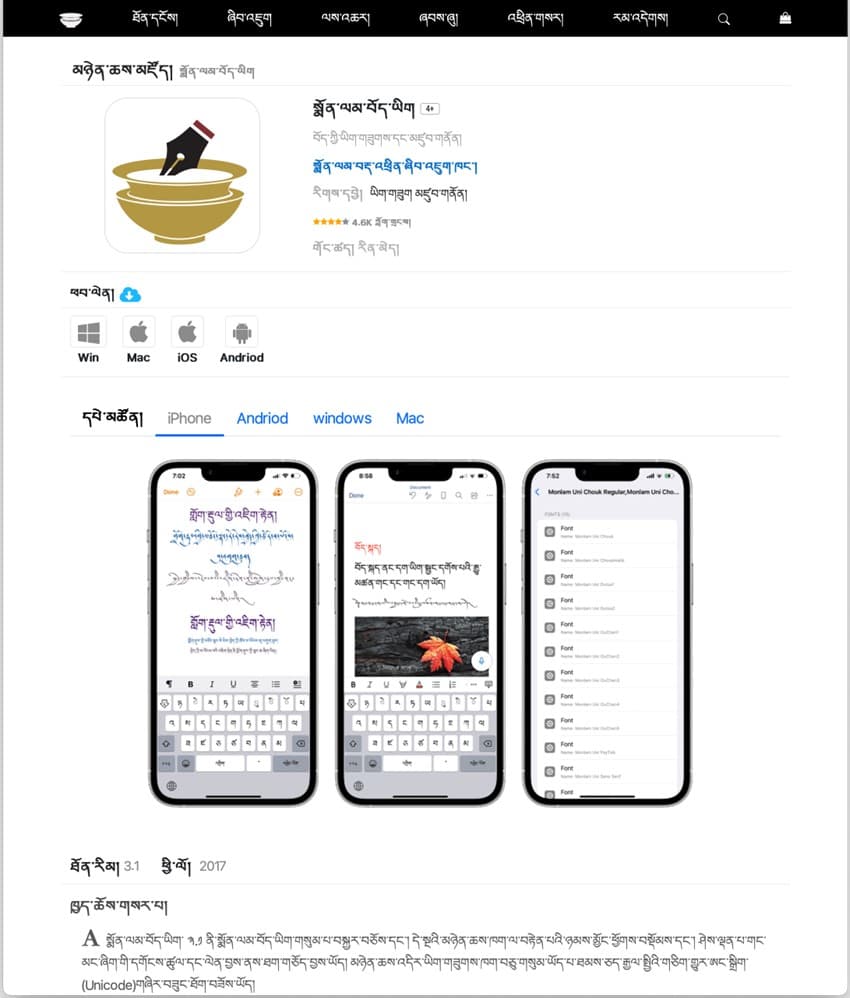
Cybersecurity researchers at ESET identified the cyberespionage campaign, highlighting how hackers compromised both the Tibetan news website Tibetpost and the website of the Monlam Festival, a significant event in Tibetan Buddhism.
A Chinese-backed hacking group, Evasive Panda (also known as BRONZE HIGHLAND and Daggerfly), has launched a cyberespionage campaign targeting Tibetans globally. The operation, detected in January 2024 by ESET researchers, began in September 2023 and uses a two-fold attack strategy: Watering hole attacks and spreading backdoor.
What is a Watering hole attack?
A watering hole attack is a cyberattack strategy where hackers compromise websites that their target victims frequently visit. By injecting malicious code into these websites, the attackers can infect the devices of unsuspecting visitors.
This tactic relies on the trust users have in the compromised websites, leading them to unknowingly download malware or provide sensitive information, making it an effective method for targeting specific groups or organizations.
Exploiting Religious Gatherings and Software Downloads
Evasive Panda capitalized on the Monlam Festival, a major Tibetan Buddhist event, by compromising the festival’s website. This “watering hole” attack tricked visitors from specific networks into downloading malware disguised as legitimate software.
As detailed in ESET’s comprehensive technical blog post, the attackers also compromised the Tibetan news website Tibetpost to distribute malicious payloads, including backdoors for Windows and unknown malware for macOS.
The attackers fielded several downloaders, droppers, and backdoors, including MgBot – which is used exclusively by Evasive Panda – and Nightdoor: the latest major addition to the group’s toolkit and which has been used to target several networks in East Asia.
ESET
Sophisticated Arsenal for Network Infiltration
The attackers used a mix of known and unknown tools, including the custom-made Windows backdoor “Nightdoor” alongside the previously linked MgBot malware. This variety suggests a well-equipped and resourceful group.
The backdoored versions of Windows and macOS applications are hosted on the download page of a legitimate website (ESET)
Targeting Specifics and Exploiting Opportunities
By exploiting software vulnerabilities and compromising online platforms, Evasive Panda aimed to infiltrate targeted networks. The campaign’s timing, coinciding with the Monlam Festival, highlights their attempt to exploit increased online activity during religious events.
The recent discovery of Evasive Panda’s cyber-espionage campaign targeting Tibetans is consistent with previous actions by Chinese hackers. These groups have a track record of targeting Tibetan communities. Additionally, similar tactics have been used in the past to target Uyghurs, employing evasive Android malware for their malicious activities.