The Federal Bureau of Investigation (FBI) has successfully seized a website associated with the ALPHV BlackCat ransomware group.
The seizure was part of a coordinated law enforcement action targeting the notorious ransomware operation.
The operation was a collaborative effort involving multiple agencies.
Impact on Ransomware Operations
Ransomware attacks have been a growing threat globally, with groups like ALPHV BlackCat responsible for numerous high-profile attacks.
According to a recent tweet by Cybersecurity Analyst Dominic Alvieri, law enforcement authorities have successfully seized the new ALPHV BlackCat leak site.
The seizure of their leak site disrupts their operations by cutting off a critical resource to pressure victims into paying ransoms.
Ransomware groups typically use leaked sites to publish stolen data from victims who refuse to pay the ransom, thereby increasing the pressure on them by threatening their reputation and compliance risks.
Ongoing Efforts to Combat Cyber Threats
This successful operation is part of ongoing efforts by law enforcement agencies worldwide to tackle the surge in ransomware and other cyber threats.
By seizing the assets of these groups, authorities aim to dismantle their infrastructure and deter future cybercriminal activities.
The image provided shows the seizure notice posted on the website, which includes badges of the various agencies involved in the operation.
The seizure of the ALPHV BlackCat leak site marks a victory for cybersecurity and demonstrates the effectiveness of international cooperation in the fight against cybercrime.
As authorities continue to track and dismantle such operations, it reminds them of the importance of robust cybersecurity measures and the need for vigilance in the digital age.
You can block malware, including Trojans, ransomware, spyware, rootkits, worms, and zero-day exploits, with Perimeter81 malware protection. All are incredibly harmful, can wreak havoc, and damage your network.
Stay updated on Cybersecurity news, Whitepapers, and Infographics. Follow us on LinkedIn & Twitter
A California federal judge has ordered spyware maker NSO Group to hand over the code for Pegasus and other spyware products that were used to spy on WhatsApp users.
Meta-owned WhatsApp has been fighting NSO in court since 2019, after Pegasus was allegedly used against 1,400 WhatsApp users over the period of two weeks. During this time, NSO Group gained access to the users’ sensitive data, including encrypted messages.
NSO Group justifies the use of Pegasus by saying it’s a beneficial tool for investigating and preventing terrorist attacks and maintaining the safety of the public. However, the company also says it recognizes that some customers might abuse the abilities of the software for other purposes.
Earlier in the court case, NSO Group argued it should be recognized as a foreign government agent and, therefore, be entitled to immunity under US law limiting lawsuits against foreign countries. NSO Group is closely regulated by the Israeli ministry of defense, which reviews and has to approve the sale of all licenses to foreign governments or entities. This is likely also the reason why NSO Group claimed to be excused of all its discovery obligations in the case, due to various US and Israeli restrictions.
NSO Group argued it should only be required to hand over information about Pegasus’ installation layer, but this was denied by the court. The judge ordered NSO Group to provide the plaintiffs with the knowledge needed to understand how the relevant spyware performs the functions of accessing and extracting data.
WhatsApp said that the decision is a major victory in its mission to defend its users against cyberattacks. This may be true if a better understanding of how the spyware works leads to improvements that can thwart future abuse.
However, this is no reason to assume that this will bring an end to NSO Group’s capabilities or willingness to spy on WhatsApp users. NSO Group doesn’t have to disclose the identity of its clients and it only has to produce information concerning the full functionality of the relevant spyware, specifically for a period of one year before the alleged attack to one year after the alleged attacks, which means from April 29, 2018 to May 10, 2020. Things have developed since then.
The US sanctioned NSO Group in 2021 for developing and supplying cyber weapons to foreign governments that used these tools to maliciously target government officials, journalists, business people, activists, academics, and embassy workers.
After that period we saw many zero-day vulnerabilities brought to light in browsers and other online applications very likely used by the NSO to compromise mobile devices.
We don’t just report on phone security—we provide it
When Microsoft unveiled Windows 11, one of the most significant announcements made was the ability to download and run Android apps. Sure, the fact that you were confined to using the Amazon app store was a bit of a turn-off, but the concept was still pretty cool. It’s just a shame that Microsoft will discontinue Android apps on Windows before it reaches the tender age of four.
This feature went through a lengthy beta testing process before it made it to the public. Today, you can simply activate the Android subsystem, and use Android apps on your Windows 11 computer. The apps will run just like how they would on an Android phone. You’re able to access them from your home screen and play them inside of a resizable window.
Microsoft will discontinue Android apps on Windows in exactly one year
The company was really proud when it announced this during the Windows 11 unveiling back in 2021. It seemed like a good idea at the time. Being able to seamlessly integrate your smartphone experience with your PC experience sounds intriguing. However, it appears that Microsoft doesn’t have as much faith in it as it did before.
According to a support document, Microsoft will discontinue support for Windows Android apps on Windows starting March 5th, 2025. That’s exactly one year from now. When that happens, you will no longer be able to download apps from the Amazon app store onto your Windows computer. However, previously downloaded apps will remain accessible on your computer. Just make sure that you don’t uninstall them if you want to continue to use it
Tomorrow (Wednesday, March 6th, 2024), you will not be able to search for Amazon apps using the Microsoft Store. You will have to use the dedicated Amazon app store to search for Amazon apps.
If you are an app developer, you won’t be able to submit your apps targeting Windows 11 after March 5th, 2024. However, if you have an app that is already on the App Store, you can continue to send updates until the official cutoff date.
This is pretty sad news for people who’ve been using Amazon apps on their Windows computers. It was a fun experiment and an ostensible home run. However, it appears that people just aren’t using them. So, this is most likely the reason why Microsoft is discontinuing this feature.
You’ve likely heard about WarnerMedia and Discovery merging, and while the merger is just about official, as it closed over the weekend. We still don’t know everything about what to expect from this combined company – which is being called Warner Bros Discovery.
WarnerMedia and Discovery announced this merger almost a year ago, which would combine HBO MAX and Discovery+. That would make it the second largest streaming service behind Netflix. AT&T sold WarnerMedia, as part of its ongoing efforts to get out of the TV-making business. It also sold DIRECTV last year. It’s interesting, after spending all that money to buy Time Warner, it has now sold almost all of it.
So what’s going to happen to HBO MAX, Discovery+ and even the newly launched CNN+? Well, in this article, we’re going to go over everything that we know right now and aim to answer all of those questions. This will be updated as we learn more, of course.
What content does this merged company (Warner Bros Discovery) own?
WarnerMedia already had Warner Bros Pictures, along with HBO, CN, TNT, TBS, TruTV and DC Comics. Discovery brings a lot of reality shows to the table with its ownership of Discovery, Animal Planet, HGTV, Magnolia Network, OWN, TLC and the Travel Channel.
That’s quite a bit of content that will be available under this merged company. And together, they’ll have content for everyone here.
Will HBO MAX and Discovery+ be merged or bundled?
Yes. But not right now.
Discovery’s CFO Gunnar Wiedenfels said that HBO MAX and Discovery+ will be bundled and then eventually merged into a single app. However, at this time, there is no word or timeline on when that will happen. However, bundling is likely to happen very soon. Which is being seen as a sort of band-aid while customers wait for the combined service to roll out.
HBO MAX’s EVP for Global Product Management, Sarah Lyons has said that the performance of its app is very important. So migrating Discovery+ content over, or HBO MAX content over to Discovery+, may not be as simple as flipping on a switch.
Don’t forget, that this new company also gets You.i. Which is a company that helps companies deliver video content across mobile, tablet, game consoles, streaming devices, set-top boxes and Smart TVs. When HBO migrated from HBO Go to HBO MAX a few years ago, it did it with You.i technology. So it’s likely it’ll be used again to migrate HBO MAX and Discovery+ together.
What will happen with CNN+?
Then there’s CNN+, which launched just last month. It’s a compliment to the cable news network channel, and not a full-on news streaming service. It’s unclear what Warner Bros Discovery plans to do with it just yet. After all, it is only a few weeks old at this point. So it’s likely that executives over at Warner Bros Discovery are giving it some time to get its footing together.
The launch of CNN+ was pretty lackluster, but that hasn’t fazed the company. As Warner Bros Discovery believes that as cable subscriptions start to become smaller in the US, it’s important to have an established streaming brand for news. People are still going to need to get their news, so having CNN+ available is going to be important. It’ll likely pick up next year and the year after as we head into the 2024 US Presidential Election. The election years are typically the biggest years for ratings and revenue for cable networks like CNN.
CNN isn’t the first news network to go streaming, there’s also Fox Nation and NewsMax. Not to mention MSNBC is available on Peacock. CNN is still the most trusted cable news network right now.
So what’s going to happen to my favorite content?
Insert shrug emoji. No one really knows. Obviously content that is already available on HBO MAX, Discovery+ and CNN+ won’t be going away. But which service it is housed on may change. And perhaps, more importantly, what content gets made in the future, is up in the air right now.
Last week, Discovery announced the leadership team that will make up Warner Bros Discovery, and unsurprisingly, it’s mostly Discovery executives. There are a few exceptions though, as Casey Bloys will maintain oversight of HBO MAX, and Channing Dungey will continue as chairman of Warner Bros Television Group. In addition to that, Toby Emmerich will remain as the chairman of Warner Bros Pictures Group.
We could be expecting some changes with content however. As Discovery CEO David Zaslav, who will become CEO of the new combined company, stated that their goal is “to compete with the leading streaming services, not to win the spending war.” That’s important, as many streaming services are spending millions on content, and likely overpaying for content as it wants to stand out from the crowded streaming war.
Zaslav continued by noting that he is not sure that adding more content to streaming services deliver much return on investment. Zaslav argues that at some point, streamers will hit the downside and get into diminishing returns to where adding more content won’t do much to move the financial needle for companies.
An example that Zaslav used was this, “If you look at what Casey (Bloys) is doing with HBO, he has ‘Euphoria’ and had ‘Succession’ and has period drama ‘The Gilded Age,’” Zaslav said. “Would HBO be doing a lot better if it had three more really successful scripted series right now? It’s not clear.”
And this is why Zaslav and many other industry watchers, believe that we will see more consolidation in the streaming industry. There are a lot of streaming services out there right now, and many are struggling to get new subscribers. That’s mostly because people don’t want to spend as much as they did with cable, for streaming services. They want one or two, and that’s it.
How does this merger impact streaming sports?
Streaming sports is a complete clusterf*** right now. Mostly thanks to Sinclair. But that’s a story for another time. WarnerMedia does own the Turner Networks, so Warner Bros Discovery does get ownership to a substantial amount of live sports rights. However, surprisingly, HBO MAX has not added any live sports to its network in the US. Though it does broadcast live international soccer in Latin America.
Turner also won the rights to the men’s and women’s US National Soccer teams. It has plans to broadcast some of the games on HBO MAX. Though that has not happened just yet. Don’t forget that Turner also has rights to NBA, MLB and the NHL now, there’s a lot of sports that Zaslav could add to this newly merged streaming service.
However, right now, the plans to add sports are not known. But if Warner Bros Discovery really wants to compete, they will want to add those sports to the service. Peacock already has a number of live sporting events on its service, Apple TV+ just announced MLB games are coming, Amazon Prime has some NFL games, and that’s just a few of the competitors.
Will we see more streaming services combining?
Most likely. Like with other industries, there’s going to be some consolidation that needs to happen. Like after 2001, the airline industry consolidated down to basically three major airlines. The same thing happened with wireless carriers, we’re also down to three of those.
What will likely happen, is it will be consolidated down to each movie studio having a streaming service, and Netflix and Hulu. So that means we’ll likely still have Warner Bros Discovery, along with Peacock (NBCUniversal), Disney+ (Disney/Pixar), Paramount+ (Paramount/ViacomCBS), and Sony will likely stick with Netflix (they used to put everything on STARZ). And that’ll be it.
We may even see some consolidation within the same company. Take ViacomCBS for example, they have three streaming services: Paramount+, BET+ and SHOWTIME. There’s really no reason for BET+ to exist. All that content could be put onto Paramount+ (which is actually cheaper than BET+). Giving everyone more content for the same price. Then keep SHOWTIME as their “premium” option that is ad-free.
It’ll be an interesting few years, as we see what happens here with the streaming industry. But I suspect many services won’t exist as they do today, either rebranded, merged, or just gone completely.
How can we separate Waze from Google Maps? After all, both services are owned by Google and when you get down to it, both are tasked with getting you from point “A” to point “B” quickly and safely. But there are some differences between the two. Google is more of a concierge navigation app as it will recommend restaurants, hotels, and landmarks, and the app also points out what passes for entertainment when you arrive at your destination.
Waze announces six new features for its iOS and Android apps
Waze is focused on the journey. Using its crowdsourced data, the app will tell you if an accident is forcing you to take a detour, or whether the weather has become a factor, and Waze will also let you know if radar-wielding police are looking for speeders along your route. Waze also likes to lighten things up during your drive by adding celebrity voices to give you directions. You can even set up the app to use your own voice to tell you when and where to turn.
New feature alerts Waze users when the speed limit is going to be changing soon
And today, Waze announced six new features that it says are aimed at making “driving safer and more predictable.”
Trying to navigate a roundabout can occasionally get nerve-wracking and you might end up taking the wrong lane and find yourself lost. But thanks to Waze community members, Waze will show you exactly which lane to enter and where to exit. This feature will be disseminated to Android users globally this month with iOS users receiving the feature later this year.
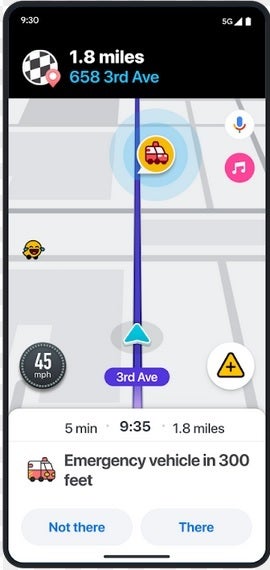
Waze is also going to start showing you when an emergency vehicle is stopped along your route which will give you enough time to make adjustments to keep yourself and first responders safe. The information comes from Waze for City partners, and the feature is available now for iOS and Android users in the U.S., Canada, Mexico, and France. It will be available in other countries soon.
Waze will soon show users when an emergency vehicle is parked along their route
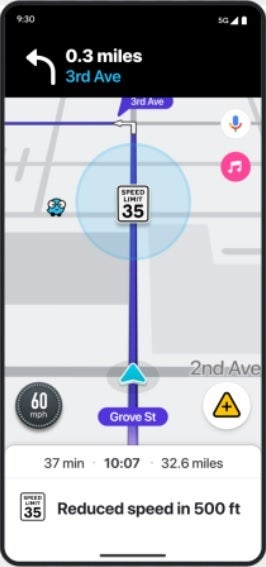
Don’t you hate it when you’re toolin’ along at 65mph and all of a sudden a sign appears that says the speed limit has been reduced to 40? Rolling out globally to iOS and Android users starting this month, Waze users will see an alert when the speed limit along their route is about to change. Now, you have no more excuses to get nabbed for speeding unless you just have a right foot made of lead.
When you’re driving in a new area, things can get pretty tough. This is why Waze will start rolling out this month to iOS and Android users worldwide a new feature that delivers early warnings alerting users to upcoming sharp curves, speed bumps, and toll booths. This combines with current alerts for potholes, railroad crossings, and bad weather to help you get around unfamiliar territory like a local.
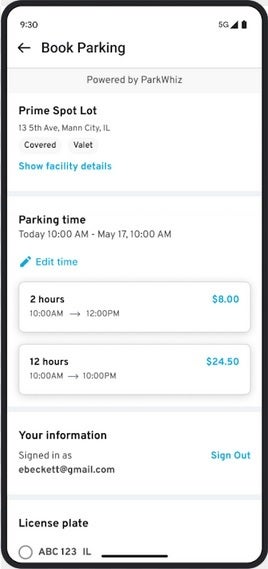
Waze users can get more information about a parking garage and reserve a spot from the app
Waze announced today that it has teamed up with Flash to offer more information about parking garages. If you’ve ever driven through a big city, like New York, you know how priceless this information is. Waze will let you know how much the garage costs, whether it is covered or just an open lot, if it is accessible to those in a wheelchair, and whether you can charge your EV while parked in the garage. Here’s the cool part: you can even reserve a spot in the garage from the Waze app.
Waze will soon allow users to reserve a spot in a parking garage from the Waze app
Over 30,000 parking garages in the U.S. and Canada will be supported by this new feature in the coming weeks for iOS and Android users. Parking garages in New York, Chicago, and Montreal will be among those included.
Sometimes your favorite route to a familiar location like home, or the office is not the fastest way to get there. But you might like a particular store you pass or a certain view. Starting this month on iOS and Android devices, Waze will show you live traffic updates and delays for your favorite routes even if they are not the fastest options. You can use this information to compare your favorite routes with alternative ones.
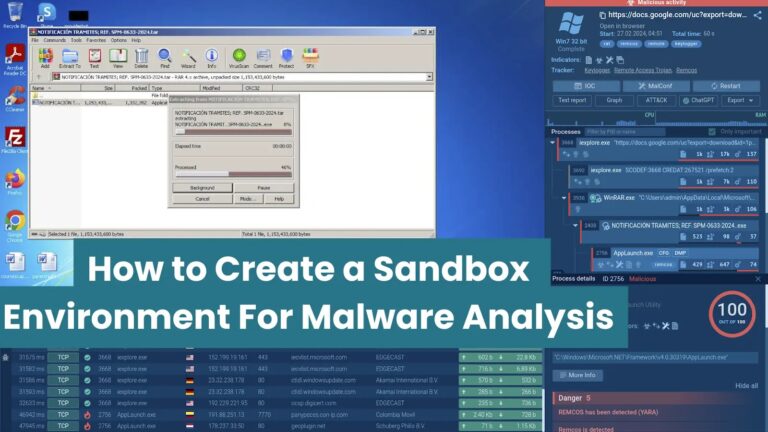
In cybersecurity, the battle against malware is critical, akin to handling dangerous pathogens.
The importance of secure environments for analyzing malware cannot be overstated, and this is where sandboxes play a pivotal role.
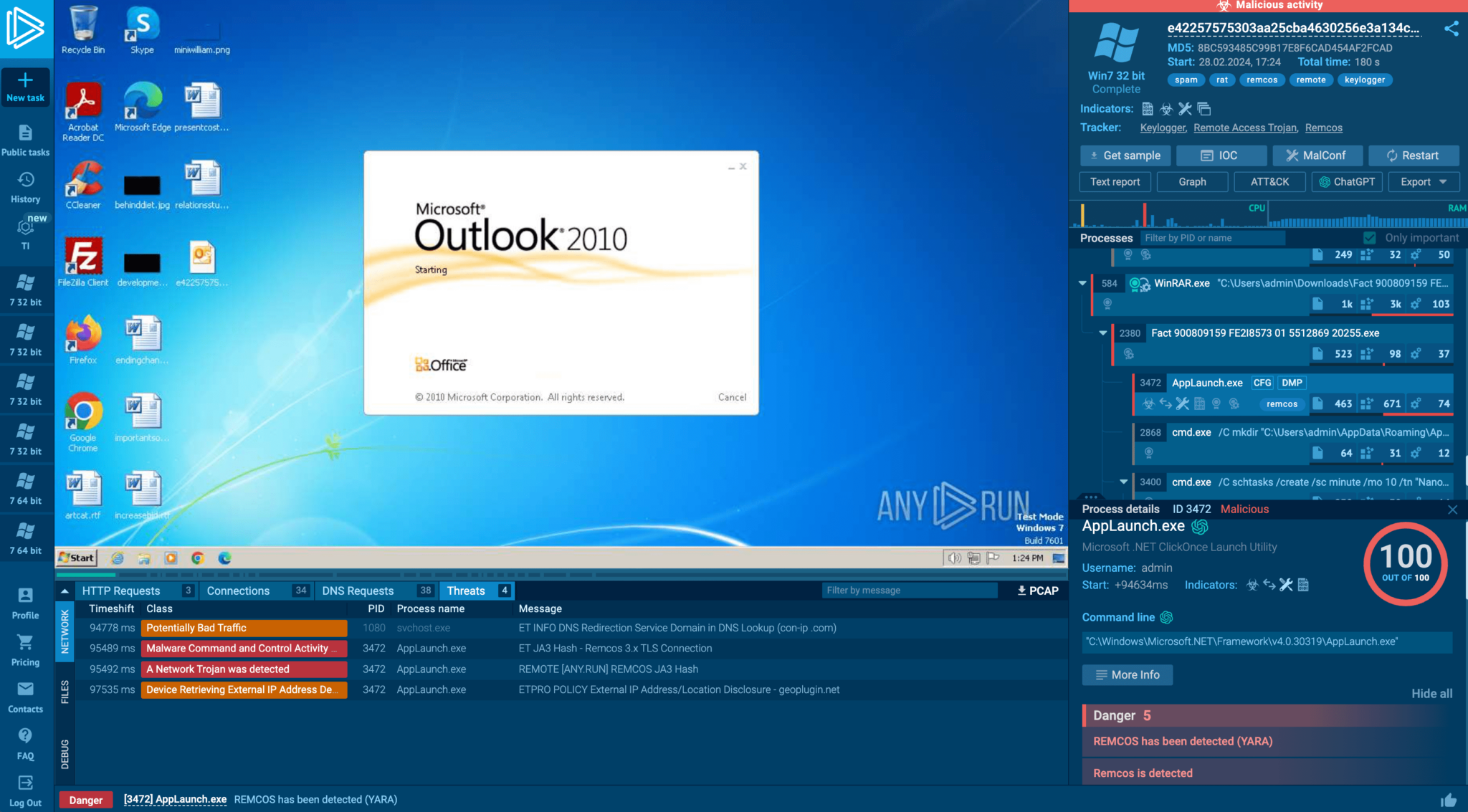
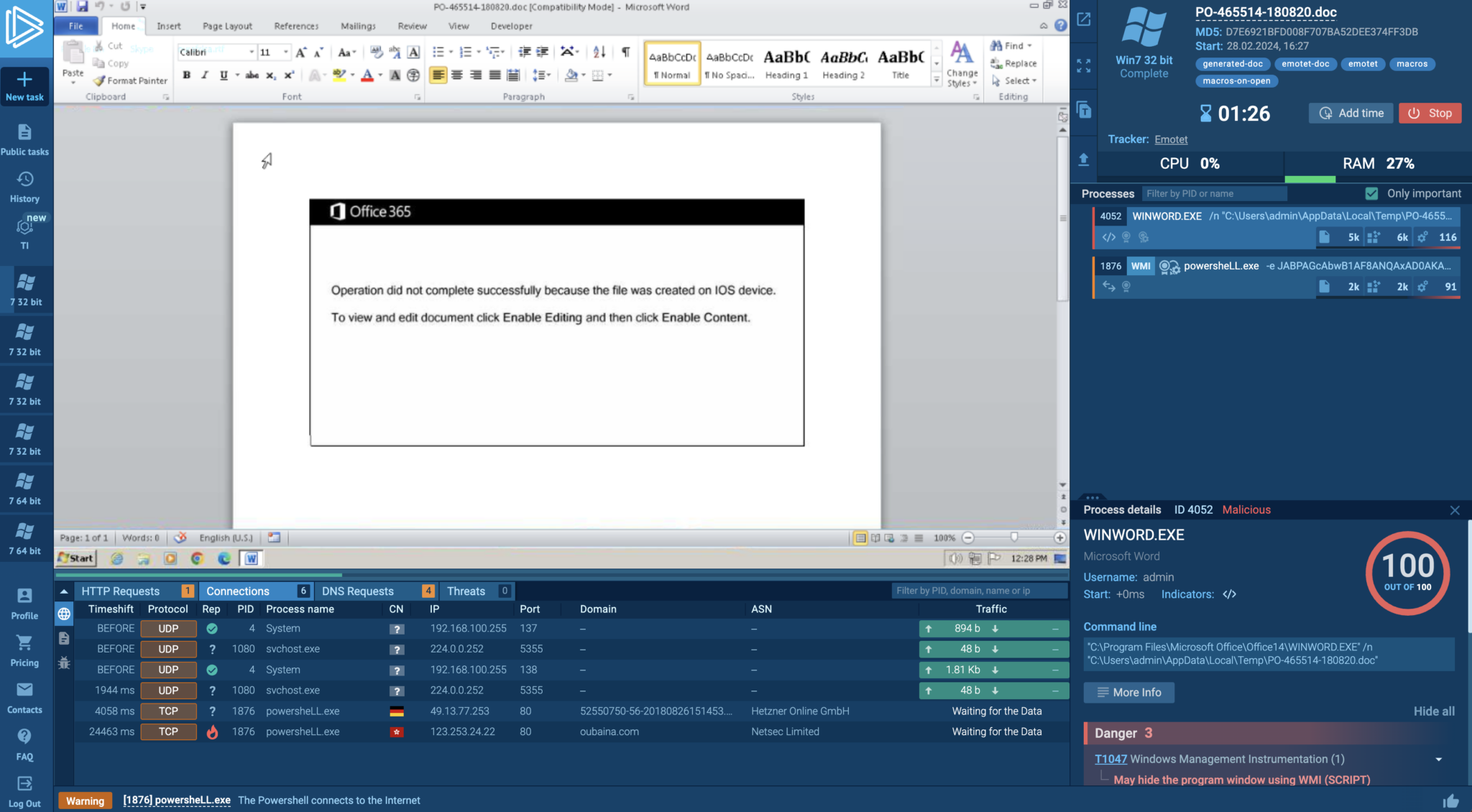
ANY.RUN, a cloud interactive malware sandbox, is transforming the landscape of malware research by offering a cutting-edge solution that replaces local setups in 95% of cases.
ANY.RUN’s cloud interactive malware sandbox
The Significance of Sandboxes in Malware Research
Malware poses a significant threat, especially with zero-day exploits where the full impact and payload are unknown.
Sandboxes provide a controlled environment for safely executing malicious code, which is crucial for understanding and mitigating these threats.
By isolating the sandbox from the host system, critical infrastructure, and personal computers are safeguarded from potential compromise.
DocumentIntegrate ANY.RUN in your company for Effective Malware Analysis
Malware analysis can be fast and simple. Just let us show you the way to:
Interact with malware safely
Set up virtual machine in Linux and all Windows OS versions
Work in a team
Get detailed reports with maximum data
If you want to test all these features now with completely free access to the sandbox: ..
Custom vs. Turnkey Solutions
According to ANY.RUN technical write-up shared with GBHackers; when creating a malware sandbox, two main approaches exist:
Building a custom sandbox from scratch
Utilizing a turnkey solution like ANY.RUN.
Custom sandboxes offer flexibility in tool integration but require extensive configuration, including setting up multiple virtual machine instances with different operating systems.
On the other hand, turnkey solutions like ANY.RUN comes pre-equipped with essential analysis tools, simplifying setup and offering a user-friendly interface for efficient analysis sessions.
Things to Consider to Build Malware Sandbox
Working with malware is like studying deadly pathogens—without sufficient protection, your sample may escape and create an infection. Malware hunters use sandboxes to securely work with malware. Let us walk you through constructing a malware sandbox now.
Streamlined Malware Research
Virtual Machine Installation: Choose a full virtualization virtual machine like VMWare or VirtualBox for optimal performance.
Resource Allocation: To handle modern, sophisticated malware, allocate a minimum of 4 GB RAM, 2 CPU cores, and at least 80 GB storage.
OS Software Population: Install applications like MS Word, Chrome, and Adobe Acrobat to prevent malware from detecting analysis.
User Activity Simulation: Mimic user actions by creating, opening, saving, and deleting files to generate logs and temp files.
Network Connection Imitation: Use tools like INetSim and FakeNet to mimic real internet connections for malware analysis.
Analysis Tools Installation: Install essential tools like debuggers, disassemblers, traffic analyzers, and process monitors for in-depth analysis.
Custom Sandbox Best Practices
Clear Naming: Use descriptive names for ISO files and malware samples to avoid accidental execution.
Separate Folder for Malware: Keep malware samples in a distinct folder on the host system for easy transfer to the virtual machine.
Secure File Transfer: Only allow zipped, password-protected archives onto the host to prevent accidental activation of malware.
Read-only Permissions: Grant read-only access to the shared folder for the virtual machine to prevent malware from writing files to the host system.
Configuration Testing: Verify the setup by creating test files and checking read/write permissions before adding malware.
VM Snapshots: Utilize VM snapshots to revert back to a safe state in case of any issues during analysis.
Advantages of ANY.RUN
ANY.RUN helps SOC and DFIR teams and 400,000 independent professionals to investigate incidents and streamline threat analysis.
Real-time Results: Rapid malware detection within 40 seconds.
Interactivity: Full engagement with the virtual machine directly in the browser.
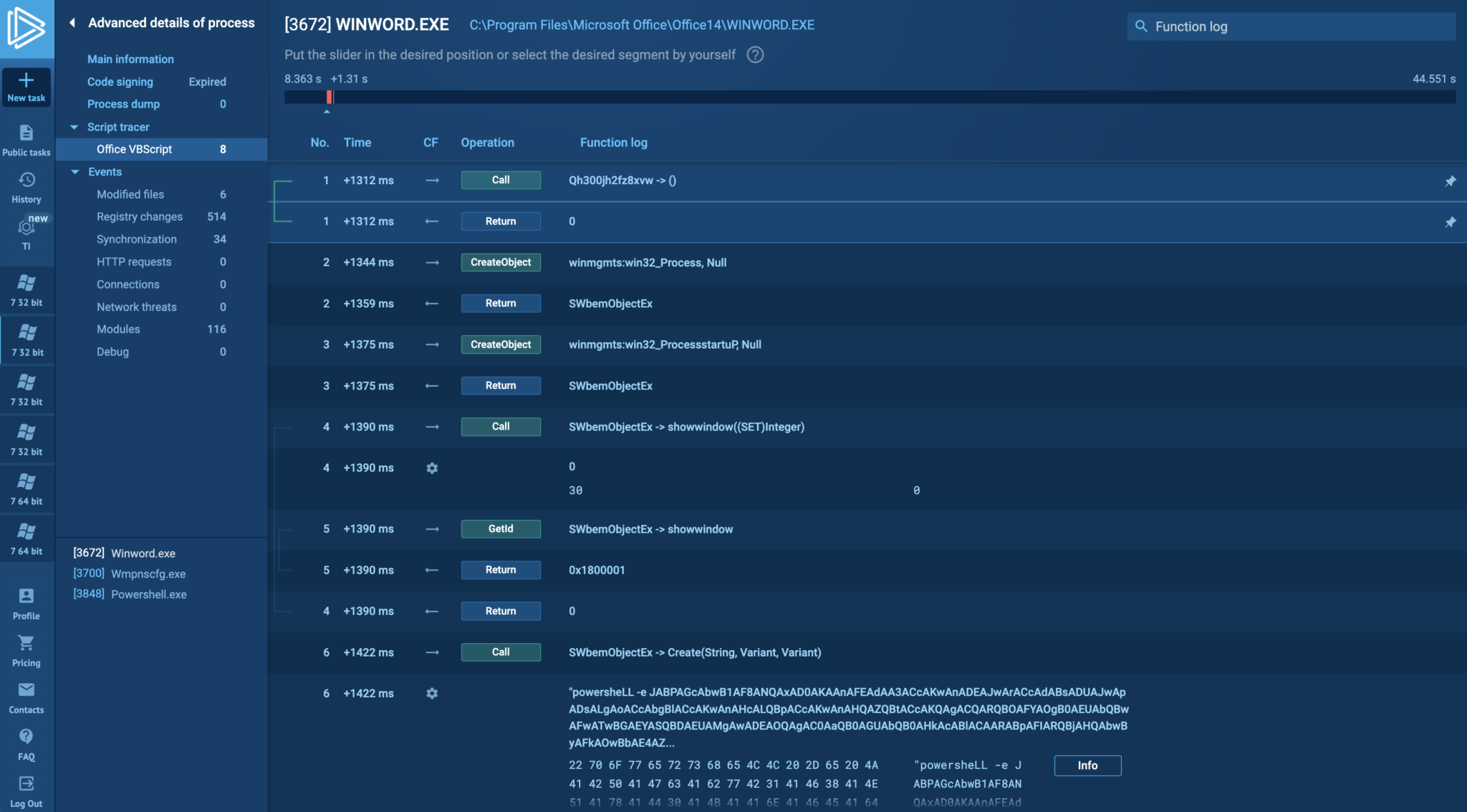
Tailored Analysis Tools: Network analysis tools, debugger functionalities, script tracer, and more.
Cost-effectiveness: Affordable solution without setup or maintenance overheads.
Efficient Onboarding: Intuitive interface for quick learning curve even for junior analysts.
Experience the power of ANY.RUN’s cloud interactive sandbox for free today and revolutionize your malware analysis process.
The Power of ANY.RUN
ANY.RUNstands out as an exemplary turnkey sandbox solution that provides an interactive virtual machine accessible directly through a web browser.
This innovative service offers a robust analysis toolkit enabling users to collect Indicators of Compromise (IOCs) from various sources like memory dumps and encrypted communications.
With features like real-time results, tailored network analysis tools, and cost-effectiveness compared to on-premises solutions, ANY.RUN empowers cybersecurity professionals to streamline malware analysis effectively.
Advantages of ANY.RUN
Real-time results: Rapid malware detection within 40 seconds.
Interactivity: Full engagement with the virtual machine directly in the browser.
Tailored analysis tools: Network analysis tools, debugger functionalities, script tracer, and more.
Cost-savings: Affordable solution without setup or maintenance overheads.
Efficient onboarding: Intuitive interface for quick learning curve even for junior analysts.
ANY.RUN’s support for both Windows and Linux operating systems, coupled with pre-installed software sets for realistic behavior simulation, eliminates the need for manual log generation or user activity creation.
For those seeking a streamlined and practical approach to malware analysis, ANY.RUN offers a free starter plan to experience its transformative capabilities firsthand. Join the cybersecurity revolution with ANY.RUN today!
DocumentTalk with expert to how ANY.RUN can help your SOC team
More than 300,000 analysts use ANY.RUN is a malware analysis sandbox worldwide. Join the community to conduct in-depth investigations into the top threats and collect detailed reports on their behavior..
Researchers at Guardio Labs have discovered that a group of spammers is using long-forgotten subdomains from established brands like MSN, eBay, CBS, and Marvel to send out malicious emails. The emails can bypass spam checks and to recipients they look like they come from a legitimate source.
A subdomain is a named sub-division of domain name. For example my.malwarebytes.com and www.malwarebytes.com are both subdomains of the malwarebytes.com domain.
Companies use subdomains for all kinds of purposes, from differentiating marketing campaigns to naming different online systems.
It’s also common practice for companies to create CNAME (Canonical Name) DNS records that alias a subdomain to another domain or subdomain.
For example, the subdomain my.malwarebytes.com is an easy to read alias for a CloudFront server called d1ok04i2z9vvoy.cloudfront.net.
When companies use these techniques and don’t clean up their records after they’re done, criminals can take advantage.
The researchers provide the example of marthastewart.msn.com, which was an alias for the msnmarthastewartsweeps.com domain.
At some point, MSN no longer needed the msnmarthastewartsweeps.com domain and stopped paying for it, but did not remove the CNAME record that alised marthastewart.msn.com to it.
Criminals discovered the link between the two and bought the msnmarthastewartsweeps.com domain.
This is bad, as the researchers explain:
This means that the subdomain inherits the entire behavior of msnmarthastewartsweeps.com , including it’s SPF policy.
The Sender Policy Framework (SPF) is an anti-spam DNS record that sets out what domains and IP addresses can send email for a particular domain.
By registering the old and forgotten alias msnmarthastewartsweeps.com, the criminals were able to add their own IP addresses to the SPF record, allowing them to send spam from marthastewart.msn.com that passes SPF checks.
Guardio Labs warns that SPF also offers criminals another way to gain control. SPF’s include: syntax can include a list of other domain names that are allowed to send emails on behalf of a domain. If any of the included domains are abandoned, criminals can buy them up and send email on behalf of the parent domain.
Once the researchers knew what they were looking for they identified thousands of instances of so-called “subdomailing”, encompassing both CNAME and SPF-based tactics and going back at least two years.
The sheer number of hijacked subdomains and available IP addresses is big enough for the criminals to cycle through them to minimize detection and depletion of their “assets.”
As an organization it is important to regularly check your domains for signs of compromise and better manage your online assets—starting with removing unused subdomains and DNS records.
Guardio Labs has created a special subdomailing checker website, allowing domain administrators and site owners to quickly check if any trace of abuse has been found. The researchers note that the checker queries a database with the latest domains impacted by CNAME and SPF-based hijacking. So, a positive result does not mean you are safe, just that you haven’t been hijacked yet.
Our business solutions remove all remnants of ransomware and prevent you from getting reinfected. Want to learn more about how we can help protect your business? Get a free trial below.
After a bowl full of requests later, Samsung is finally bringing back one of the most-requested features on Galaxy phones, the vertical scrolling app drawer. As you’d know, the vertical scrolling app drawer isn’t coming for the first time. It was there on Good Lock until Samsung pulled it off. Ever since then, we’ve seen multiple articles, forums, and videos requesting a revival. Well, it seems that the time has come.
Samsung to bring back the vertical scrolling app drawer
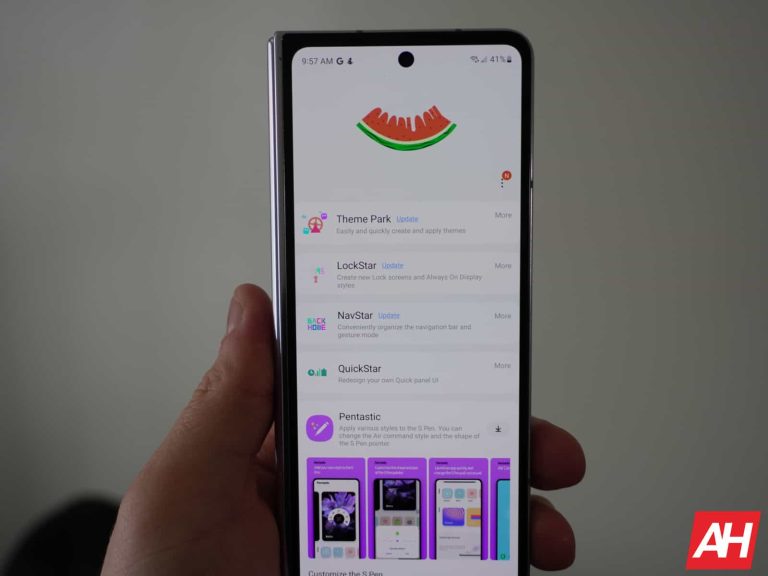
As per a Samsung Community thread shared by @theonecid on X, Home Up within Good Lock could introduce vertical app scrolling later this year. You can anticipate the rollout with the launch of Galaxy Z Fold 6 and Z Flip 6, likely as part of One UI 6.1.1.
The reasoning behind this revival might not be as simple as you’d think. Samsung decided to bring back vertical scrolling because lots of Samsung users asked for it. The Good Lock support team listened and said they’re working on adding this feature to the Home Up module. While the rollout schedule is yet unconfirmed, people are happy to know that at least this is coming. After all, vertical scrolling is more convenient.
When can we expect the One UI 6.1.1 release?
Samsung is tight-lipped about the exact release date of One UI 6.1.1. However, we may expect it to coincide with the launch event of Z Fold 6 and Z Flip 6 — as said before. SamMobile reports that the next Galaxy Unpacked event will take place in July, so we expect the update around the same time.
Other than that, it’s important to note that vertical scrolling app drawer may not be instantly available for all users. But rather the rollout will be in batches i.e. gradually. Therefore, all eligible devices could receive the One UI 6.1.1 update by the end of 2024.
Since 2020, you’ve probably seen a new spec on the spec sheet of a lot of flagship smartphones (not just Android smartphones either). And that’s UWB or Ultra Wideband. Apple was actually the first to put it in their devices, starting with the iPhone 11 in 2019. Samsung began adding it to its smartphones in 2020, with mostly only its “Ultra” devices getting this spec.
But the real question here is, what exactly is “Ultra Wideband”? Is this a must-have feature on my next smartphone? And what can I use it for?
We’re going to aim to answer all of those questions in this article. And as UWB evolves, we will be updating this post.
What is UWB?
We’re going to get pretty technical here, so be prepared.
Ultra-wideband, also called UWB for short, is a short-range wireless communication protocol. This operates through radio waves at very high frequencies, which allows it to be used to capture highly accurate spatial and directional data.
Basically, UWB can be thought of as a continuously scanning radar that can precisely lock onto an object. As well as discover its location and communicate with it.
We’ve already seen a few use-cases for UWB. For example, the new Galaxy SmartTag that Samsung announced in January 2021 uses UWB to help you find your phone, or whatever the Galaxy SmartTag is attached to. Because it works at very high frequencies, it can work a bit better than Bluetooth Low Energy (BLE) or even WiFi.
Apple has used UWB with the new HomePod Mini it announced in October 2020. Allowing you to bring your iPhone close to the speaker and it’ll automatically start playing your music, without any interaction from you. Among other things.
What devices support Ultra Wideband right now?
Currently, the Samsung Galaxy Note 20 Ultra, Galaxy Z Fold 2, Galaxy S21+ and Galaxy S21 Ultra on the Android side.
Update: The Galaxy S22+ and Galaxy S22 Ultra also offer UWB support, as announced on February 9, 2022.
The iPhone 11 and iPhone 12 series both support UWB across the entire lineup. Unlike the Galaxy Note 20 and S21 series, were only the higher-end models support it.
We expect many more smartphones to add UWB in the very near future. Since the two largest smartphone makers are already on-board with adding it to their phones.
Samsung expects UWB to be as big as Bluetooth
In a blog post published in October 2020, Samsung stated that it expects UWB to be as big, if not bigger than Bluetooth. And given the features we know it can enable, that isn’t a big surprise. And also why we’ve been seeing it crop up in more Samsung phones.
This is why Samsung has been putting UWB in its most recent smartphones. But it is not available in all of its flagships, as you likely noticed from the list above. Instead, it’s in the most expensive models only. Not the Galaxy Note 20 or the S21. That is going to change in the future. Right now, it’s likely this way because UWB is still new, and quite expensive to add into a smartphone. And thus it is only in its most expensive devices, for now.
How does Ultra Wideband work?
It’s pretty technical, the way that UWB works. But essentially, once a UWB-enabled device is near another UWB device, the two will start “ranging”. Which refers to the calculating of time of flight (ToF) between the devices.
It uses larger channel bandwidth (500MHz) and short pulses (2 nanoseconds each). Because of this, UWB is able to achieve greater accuracy. The positioning process instantaneously tracks the device’s movements in real-time. This allows UWB-enabled devices to understand both motion and relative position.
NXP, who produced the UWB chipset in Samsung devices, UWB will deliver greater accuracy in line-of-site (LoS) and strong localization in non-line-of-sight (nLoS) scenarios. Using angle-of-arrival (AoA) technology, the real-time accuracy of UWB measurements provides highly precise device location services at the centimeter level. UWB devices also are able to determine whether an object is stationary, moving closer or moving away.
This means that UWB-enabled systems know if you’re approaching a locked door and can determine if you’re inside or outside of the doorway. It can also decide whether the lock should be engaged when you reach a specific position.
Essentially, it provides a much more accurate positioning than other technologies that we currently use to do this.
How is it different from WiFi and Bluetooth?
A question you may have is, why don’t we use Bluetooth and/or WiFi to do this? Seeing as these are tried-and-true technologies we have used for quite some time.
The biggest reason is because UWB’s performance, when it comes to ranging, is far superior to Bluetooth or WiFi.
Ultra wideband operates in a separate section of the radio spectrum. Which is away from the congested bands of 2.4GHz and 5GHz, which is what WiFi uses. Additionally, UWB is able to coexist with other wireless technologies like WiFi, Bluetooth and NFC.
Finally, one of the most significant advantages that UWB has over other wireless technologies, is the physical layer (PHY) used to send and receive data packets. This layer, which is currently being specified in IEEE 802.15.4z, a critical security extension not available in other technologies, can be leveraged. This allows for security techniques like cryptography and random number generation that deter attackers from accessing UWB communications. And making things more secure is always a good thing.
Is this is the same UWB that Verizon uses?
Verizon uses the term “UWB” for its 5G network, specifically its mmWave 5G network. It is technically the same ultra wideband technology that Samsung and Apple are adding to their phones, but a slightly different flavor. And being used for a different usec-case.
Verizon is using a different flavor of ultra wideband that is used for cellular. While Samsung and Apple are not using UWB for cellular activities.
The high frequency of ultra wideband works well for 5G, because it allows carriers like Verizon to offer insanely fast wireless speeds. But the flip side of such high frequency is that the coverage is pretty poor. Which is why Verizon’s ultra wideband network is only available on very few streets and street corners in the markets it is available in. And for the most part, it is not available outdoors.
Because UWB is being used by both carriers and smartphone makers, for very different things, you can expect plenty of confusion.
UWB isn’t just branding for Verizon
While it sounds like Verizon is only using UWB for branding, that’s actually not true. It is actually using UWB in its 5G network. And calling it “5G ultra wideband” is a way to differentiate it from the Sub-6 5G network that it also has and is much slower but covers a lot more area.
5G is pretty confusing already, and Samsung and Apple adding UWB to their smartphones, but not for 5G, is only going to make it more confusing.
To keep it simple, smartphone makers say mmWave and Sub-6 5G is supported, and don’t mention ultra wideband. However, on Verizon smartphones, you will see “UWB” in the status bar if you are in range of its mmWave network.
What use-cases can we expect from Ultra Wideband in the future?
Samsung has already announced a few ways that we can use Ultra Wideband with its newest smartphones.
With the new Galaxy SmartTag, and SmartThings Find, you can use UWB to find things you may have lost. And because of how precise ultra wideband is, you will get a more precise location as to where the item is. And making the ability to find it much easier.
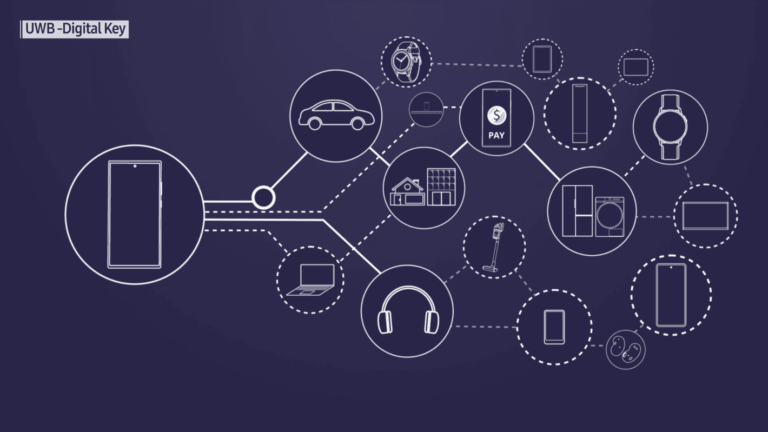
Another use-case that Samsung showed off with the Galaxy S21 series, is the ability to unlock your car doors with your smartphone. This is one that is going to take some time to go mainstream. As you’ll need a phone that supports ultra wide-band, which right now, is about ten devices. And you’ll need a car that supports UWB. So far, only BMW has announced it will support it. And only in one model so far. Anything in the car industry takes quite a while to actually happen and change. So expect this to likely take at least a decade before most cars on the market support UWB for digital keys.
We will also see nearby file sharing features like AirDrop, Samsung’s Nearby Share and even Android’s own version of Nearby Share, will get updated with UWB. This is going to allow you to more easily share larger files, quicker. And while being further away, potentially, then you would be with NFC. If you remember Android Beam from nearly a decade ago, think of that, but without touching phones to transfer files.
The future of UWB is pretty incredible. But the first step to making UWB mainstream, is getting more smartphone manufacturers on-board. That is likely to happen pretty fast, since the two biggest smartphone makers are already on-board – Samsung and Apple. Typically, competitors copy those two. So it shouldn’t be long.
UWB could be the answer to getting rid of keys
UWB could also be the answer to getting rid of physical keys. And using your phone as your key. Yes, that does sound a bit scary. Imagine how many people are going to be stuck because they locked their phone in the car. They can’t call AAA for help, since their key is their phone.
But a way it could, and likely would work, is that the car would only lock, when the phone is not inside your car. And with the super precise positioning of ultra wideband, that could actually happen. Without any real changes to the way things work.
Mixed reality can also benefit from UWB
Something many of us likely haven’t thought about, is UWB with mixed reality. It could really help bridge the gap between physical and digital worlds.
UWB could finally realize the promise of high-precision of indoor mapping based on LiDAR and/or WiFi. This could be combined with 3- or 6-DoF orientation trackers. Among many other things.
What devices support Ultra Wideband technology?
Currently, there are a number of smartphones and tablets that support UWB, as well as some smartwatches. Here’s the complete list.
Apple iPhone 11
Apple iPhone 12
Apple iPhone 13
Apple iPhone 14
Apple iPhone 15
Google Pixel 6 Pro
Google Pixel 7 Pro
Google Pixel 8 Pro
Google Pixel Fold
Google Pixel Tablet
Samsung Galaxy Note 20 Ultra
Samsung Galaxy S21 Plus and Ultra
Samsung Galaxy S22 Plus and Ultra
Samsung Galaxy S23 Plus and Ultra
Samsung Galaxy S24 Plus and Ultra
Samsung Galaxy Z Fold 2
Samsung Galaxy Z Fold 3
Samsung Galaxy Z Fold 4
Samsung Galaxy Z Fold 5
Xiaomi Mix4
Apple Watch Series 6 and later
Apple Watch Ultra and Ultra 2
How much will UWB accessories cost?
One big question mark about UWB is the accessories. How much will those cost? Considering they are going to be using new technology, which is typically not cheap.
So far, we only have a few accessories available.
Galaxy SmartTag
The Galaxy SmartTag was announced in January 2021. And is priced at $30. But this is one of the “dumb” UWB accessories that you could buy in the future. It’s just a location tracker with UWB, as well as Bluetooth and WiFi inside. Which works with SmartThings Find.
It’s a lot similar to the Tile trackers that have been super popular in recent years. But with UWB inside (and if you are using a UWB-enabled device like the Galaxy S21 Ultra), it’s going to perform a whole lot better than Tile. We wouldn’t be surprised to see Tile add UWB to its trackers in the coming years either.
Apple is supposedly launching its own location tracker, called AirTags. Which sounds like they will work much the same, and even have a similar price. However, Apple has reportedly delayed the launch of AirTags a few times now. So it’s unclear when they will launch.
Galaxy SmartTag 2
In October 2023, Samsung unveiled the Galaxy SmartTag 2 which upgraded the usability and design that gives users more peace of mind. There’s some new features and design that give users more power over their experience too.
With Galaxy SmartTag 2, Samsung made it easier than ever to find lost items. It can now show the direction and distance of the Galaxy SmartTag 2 in relation to your smartphone. This works on any UWB device, like the Galaxy S24 series.
Really the only other UWB accessory that is on the market right now is the HomePod Mini. Using the U1 chip that Apple started adding in its iPhones starting with the iPhone 11, it’ll be able to track your movements in your house (or just indoors period). This works well for Find My.
With the HomePod Mini, you can quickly transfer music to the speaker to start playing without needing to use AirPlay 2 to start playing versus from your smartphone.
Given Apple’s closed ecosystem, it’ll be able to innovate on ultra-wideband a lot faster than Google and Samsung will. But it’s still cool to see the possibilities here.
Apple AirTag
Apple announced its AirTag in 2021, which does use UWB to be found. The AirTag is pretty small and costs $29.99 or a four-pack for $100. That’s the same as the Galaxy SmartTag and SmartTag 2. The AirTag is really useful, as it makes it easier than ever to find things you might lose often, like keys or your wallet.
The only downside here is that AirTag only works on iPhones and iPads. But if you have an Android device, your phone will tell you when an AirTag has been following you.
Others are coming!
We don’t know what other products exactly are coming, though we did hear about Apple’s AirTags. We are likely to see others like the new Apple TV, possibly new Samsung TVs. Get ready for UWB to be a trendy technology in the 2020s.
You are not alone, Facebook, Instagram, Messenger and Threads are down worldwide.
Users of Meta Platforms’ services, including Facebook, Instagram, Messenger, and Threads, are currently experiencing difficulties accessing their accounts. Reports indicate a widespread outage impacting individuals globally.
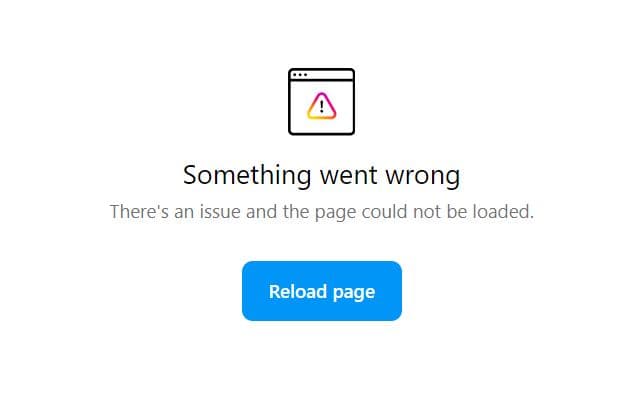
Starting around 4:30 PM GMT, a surge in user reports on Downdetector, a platform tracking online outages, signaled login issues across all four platforms. Users attempting to log in have encountered error messages, with some being logged out unexpectedly. The problem appears to be affecting users on both desktop and mobile applications.
Instagram error (screenshot: Hackread.com)
Meta Platforms has yet to acknowledge the outage on its official communication channels officially, but it’s expected that the company is actively investigating the cause of the issue.
The full extent of the outage remains unclear, but it’s evident that it’s not limited to just Facebook. Downdetector is currently swamped with user reports for all four affected platforms, suggesting a significant disruption to Meta’s services.
Here’s what we know so far:
The outage began around 4:30 PM GMT.
Both desktop and mobile platforms seem to be affected.
Meta Platforms has not yet officially acknowledged the issue.
Users across the globe are facing problems accessing Facebook, Instagram, Messenger, and Threads.
This is a developing story, and we will update this article as more information becomes available. We advise users to monitor Meta’s official channels for further updates and avoid attempting repeated logins to prevent potential account security issues.