Hackers Actively Hijacking ConnectWise ScreenConnect Servers

0
[ad_1]

ConnectWise, a prominent software company, issued an urgent security bulletin on February 19, 2024, revealing two significant vulnerabilities in its self-hosted ScreenConnect servers.

These vulnerabilities were initially reported on February 13 through a vulnerability disclosure program and were not actively exploited until February 20.

The first vulnerability, identified as CVE-2024-1708, is a path traversal issue with a high severity score of 8.4.

The second, CVE-2024-1709, is a remote code execution flaw with a maximum severity score of 10.0, indicating a critical risk.

You can analyze a malware file, network, module, and registry activity with the ANY.RUN malware sandbox, and the Threat Intelligence Lookup that will let you interact with the OS directly from the browser.

Analysis by the Shadowserver Foundation, & Shodan search engine found over 8,200 publicly accessible, unpatched ScreenConnect servers, predominantly in the United States, Canada, and the United Kingdom.

Exploits and Malware Distribution

By February 21, a proof-of-concept exploit was uploaded to GitHub, and a Metasploit module for CVE-2024-1709 was released, making the vulnerabilities easily exploitable by hackers of varying skill levels.

Secureworks researchers discovered that several of their customers’ servers had been scanned for these vulnerabilities, with some showing evidence of intrusion.

One incident involved the execution of a Cobalt Strike Beacon payload through a compromised ScreenConnect server.

Another attack involved downloading a legitimate SentinelUI.exe file, a DLL, and an encrypted file containing an encoded payload.

This malware impersonated Microsoft Windows Update network traffic for communication.

Huntress and Sophos reported similar incidents where Cobalt Strike Beacon and other malware like LockBit ransomware and AsyncRAT were distributed after exploiting these vulnerabilities.

Organizations are recommended to immediately upgrade vulnerable ScreenConnect servers and conduct forensic examinations for signs of exploitation.

They also recommend using available controls to review and restrict access based on the indicators provided in their security bulletin.

Secureworks Counter Threat shared a list of IP addresses and domain names associated with the attacker infrastructure, MD5, SHA1, and SHA256 hashes of the distributed Cobalt Strike Beacon DLLs and other malware samples; the list can be found here.

Organizations should consider the risks before opening these indicators in a browser, as they may contain malicious content.

ConnectWise’s security bulletin serves as a critical alert for organizations using ScreenConnect servers to take immediate action to protect their networks from these serious threats.

You can block malware, including Trojans, ransomware, spyware, rootkits, worms, and zero-day exploits, with Perimeter81 malware protection. All are extremely harmful, can wreak havoc, and damage your network.

Stay updated on Cybersecurity news, Whitepapers, and Infographics. Follow us on LinkedIn & Twitter.


[ad_2]
Source link
Google’s rolling out new updates to Simplify your Day

0
[ad_1]

Google has arrived in MWC Barcelona with a slew of additional updates for Android. This is on top of everything that was announced at CES last month. Google has nine new Android features that will start rolling out in the coming weeks.

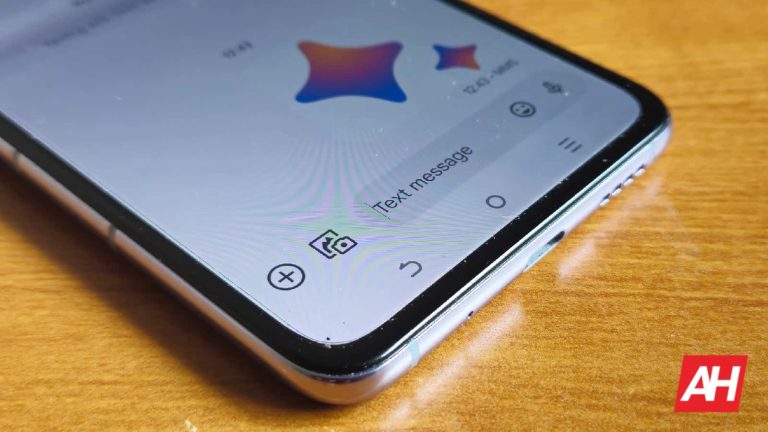
First up is Gemini coming to Google Messages. Starting this week, you will be able to chat with Gemini from within the Google Messages app. You can use Gemini to draft messages, brainstorm ideas, plan events, or have a fun conversation without leaving the Messages app.

Google is also bringing AI over to Android Auto. Thanks to AI, your messages and busy group chats can be automatically summarized and read to you while you’re driving. It is also able to suggest relevant replies and actions. Allowing you to stay focused on the road while keeping up with your messages.

On the accessibility front, Google is rolling out a new feature that will let you hear AI-generated captions for images. Thanks to image captions on Lookout, you can now listen to auto-generated AI descriptions of photos, online images, and pictures included in messages. The company says that this is designed specifically for blind and low-vision users.

Google Lens in Maps is getting a massive update

Google Lens is getting a nice update within Google Maps. You will now be able to use an enhanced screen reader in Lens, which will help you explore nearby and identify places like ATMs, restaurants, and transit stations. Just point your phone’s camera at your surroundings, and TalkBack is able to read the place’s information out loud. This includes business hours, ratings, or directions. This is great for those who are blind or have low vision but also great for those unfamiliar with the area.

Handwritten markup is coming to Google Docs as well. Allowing you to add handwritten annotations to your Google Docs from your Android smartphone or tablet. The Output Switcher on Android is also getting support for Spotify, so you can listen uninterrupted. YouTube Music was already supported, so it’s good to see this expanding to other music services.

The Fitbit app is going to allow you to bring in even more data. These days, many of us use different fitness services and devices. Whether that’s an Oura Ring, MyFitnessPal to track runs and calories, or AllTrails for your hikes, now all of that data can be pulled into the Fitbit app.

Google Wallet Passes are finally arriving on Wear OS. With Wear OS watches, you’ll be able to easily access boarding passes, event tickets, gym memberships, loyalty cards, and much more from your wrist.

Finally, transit directions on your wrist. Google is bringing public transit directions for Google Maps to Wear OS. Allowing you to quickly traverse the different subway stations around the world without pulling out your phone. You can look up departure times on your smartwatch and get compass-guided navigation directions, too.

These are all rolling out to compatible devices in the coming weeks.


[ad_2]
Source link

TECNO’s new POVA 6 Series just stole the show at MWC Barcelona

0
[ad_1]

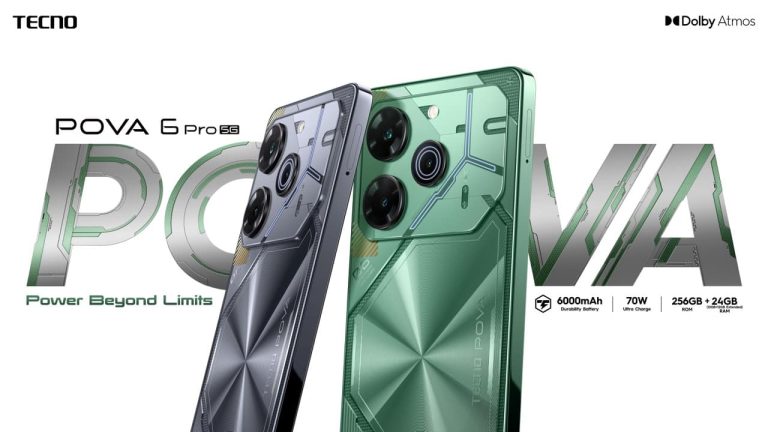
TECNO has just announced its newest smartphone, the POVA 6 Pro 5G, at MWC Barcelona. If you take a look at its spec sheet, you might be a bit confused, wondering if this is a mid-range or a flagship smartphone. It’s a stunning 6.78-inch device that comes in Meteorite Gray and Comet Green and is made for gamers and tech fans wanting “hardcore capabilities.”

The specs on the POVA 6 Pro 5G are absolutely wild, and we’re here for it. This beast has the MediaTek Dimensity 6080 processor, which is really the only qualifying factor for this being a “mid-range” phone. On top of that, it sports 8GB of RAM or 12GB of RAM and 256GB of storage. That’s powered by a 6,000mAh capacity battery, which charges at 70W. TECNO has really thrown everything into this phone.

On the camera front, TECNO includes a 32-megapixel front-facing camera with dual-tone LED flash and a 108-megapixel primary camera. It also offers 10x optical zoom, thanks to in-sensor zoom technology.

The best looking gamer-centric phone on the market

The POVA 6 Pro 5G is a stunning smartphone; whether it’s a mid-ranger or a flagship phone, it’s one that would definitely be on my shortlist for my next smartphone. As mentioned before, it does come in two colors: Meteorite Gray and Comet Green. It’s not quite a translucent design on the back, but it is pretty similar. There’s a slight camera bump, but nothing as massive as some other flagship phones these days.

It uses a dynamic light effect on the back, which includes 210 single-point controlled ultra-micro mini LEDs that create ring-shaped and propeller-shaped light effects. The phone seemingly integrates the light effect and the lens into one, bringing the scene reminder function to life. It has up to nine different modes and over 101 different user-defined effects, which can be used for calls, messages, power status, and more.

The POVA series is designed for gamers, and the POVA 6 Pro 5G does a great job with sustained performance. Part of that comes down to the SuperCooled System, which uses a 10-layer stack structure, a 5W phase-change thermal gel, a 2871.78mm VC heatsink, and 1700W graphite thermal conductivity. This helps the phone perform at its optimal temperature all day long.

The TECNO POVA 6 Pro 5G will go on sale in the Philippines, Saudi Arabia, and India at the end of February. It launched in key regions spanning Southeast Asia, South Asia, the Middle East, and Latin America following the initial launch.


[ad_2]
Source link

Google discontinues the standalone YouTube Kids app on TVs

0
[ad_1]

The so-called “Google graveyard” is about to get bigger with yet another app that the search giant plans to discontinue, YouTube Kids. Introduced a while ago as a way for kids to access YouTube on various platforms, including smart TVs, consoles and streaming devices, the standalone YouTube Kids app will be completely removed from TVs in July.Although the YouTube Kids app icon on the TV will be going away later this summer, YouTube Kids will still be available by going to a child’s profile in the YouTube app. Basically, this means that the standalone Kids app will be replaced with the main YouTube client.

It’s important to mention that a child can watch YouTube Kids even when signed out. Normally, you would enter YouTube Kids by going to a kid’s profile in the YouTube app. However, it’s also possible to watch using a “Guest Account.”

  • Open the YouTube app on your smart TV, streaming device, or game console.
  • Go to the left-hand menu.
  • Select the profile picture to open the accounts page.
  • Select Set up YouTube Kids.
  • Select Set up Guest Account.
  • Follow the steps on the screen to create a YouTube Kids profile that you can use while signed out.

Once this process is completed, a YouTube Kids profile option will appear on the accounts page or the “Who’s Watching?” screen. Selecting the profile will redirect you to YouTube Kids. The YouTube guest profile can be removed at any time from the accounts page.

[ad_2]
Source link

Xiaomi shares global HyperOS rollout timeline for coming months

0
[ad_1]

Xiaomi has shared a rollout timeline for the global HyperOS builds. This timeline applies for the coming months, right up to the end of June. So, it essentially applies for the first half of the year.

HyperOS, as many of you know, is Xiaomi’s new Android OS. It’s here to replace MIUI, even though it does resemble it quite a bit. This is a rebrand with some changes on top of it. With that in mind, let’s see which global devices will get the update.

Xiaomi has shared a rollout timeline for the global version of HyperOS

Xiaomi split this list into three sections. The first one is smartphones, the second one tablets, and the third one wearables. So, let’s talk about smartphones first, shall we? The only phones that come pre-installed with HyperOS are the Xiaomi 14 devices. So, the Xiaomi 14 and Xiaomi 14 Ultra, which got announced yesterday for global markets.

The Xiaomi 13 series is said to get the update in H1 this year, and the same goes for the Xiaomi 13T, Xiaomi 12, and Xiaomi 12T series smartphones. Redmi phones will also get some love. The Redmi Note 13 series, Redmi Note 12 Pro+ 5G, Redmi Note 12 Pro 5G, and Redmi Note 12 5G are also listed here.

In addition to smartphones, both tablets & wearables are listed here

That’s basically it as far as smartphones are concerned. Three tablets are scheduled to get the update too, the Xiaomi Pad 6 and the Redmi Pad SE. HyperOS comes pre-installed on the Xiaomi Pad 6S Pro which launched yesterday.

In regards to wearables, only two are listed here, and both come with HyperOS pre-installed. Those devices are the Xiaomi Watch S3 and the Xiaomi Smart Band 8 Pro. Both of those wearables launched for global markets yesterday.

Some of you may wonder what’s up with the Xiaomi Watch 2, which also launched yesterday. Well, that smartwatch comes with Wear OS pre-installed, it doesn’t run HyperOS.

Xiaomi HyperOS global rollout timeline H1 2024


[ad_2]
Source link

Google integrates Gemini into Messages, brings AI to Android Auto

0
[ad_1]

The MWC 2024 is officially underway, bringing us new products, services, and other announcements from tech companies worldwide. Coinciding with the event, Google announced a bunch of Android and app updates. The company introduced nine new features to help you stay productive, including AI-powered Android Auto and Gemini for Google Messages.

Google announces new features for Messages, Android Auto, and more

Gemini, Google’s generative AI tool, is now available in the Google Messages app. You can ask Gemini to draft a message for you, come up with a joke, have random conversations, and more. The AI tool can also provide answers to your questions and help you with your creative ideas. You no longer have to use a separate app or visit a website for all this.

Google Gemini Messages app

AI is also coming to Android Auto. If you are driving, AI will summarize long texts and group chats and suggest relevant replies and actions. You can simply tap a button to send your response, share your ETA, or start a call. Google originally announced this feature during Samsung’s Galaxy S24 launch last month. It is now rolling out to all Android Auto users.

Google’s Lookout app, which uses computer vision to assist people with low vision or blindness, can generate audio descriptions of photos with the help of AI. This feature was available in the US, UK, and Canada and is now rolling out globally in English. The company has also added screen reader support to the Lens in Maps feature introduced last October. It reads a place’s business hours, ratings, and directions out loud.

Android phones and tablets also now support handwritten annotations in Google Docs. You can use a stylus or simply annotate a document using your fingers. Google offers a variety of markup tools, including different pen colors and highlighters. For Spotify users, you get new casting controls to easily switch the output between your Spotify Connect devices. This feature is already available for YouTube Music.

Wear OS gets Google Wallet passes and transit directions

The latest updates from Google bring passes to Google Wallet for Wear OS. You can access your fight boarding passes, event tickets, gym memberships, loyalty cards, and more from your Wear OS-powered smartwatch. Google lets you select which passes to hide or display. This feature started rolling out last month. A wide rollout may have just begun.

Wear OS watches are also getting support for public transit directions on Google Maps. You don’t need to pull out your phone to check departure times for your bus, train, or ferry. You get compass-guided navigation directions to your destination directly on your wrist. If you want to look up things on your phone, you can mirror directions to your watch for hands-free navigation.

Finally, the Fitbit app is gaining the ability to pull up your health data from other apps. Google names AllTrails, Oura Ring, and MyFitnessPal among the supported apps. Data from the connected apps will be available next to your Fitbit data in the You tab. Data like exercise, steps, calories burned, floors climbed, and distance traveled from Health Connect-compatible apps appear in the Today tab.


[ad_2]
Source link

Galaxy A55 & Galaxy A35 may arrive with a price cut

0
[ad_1]

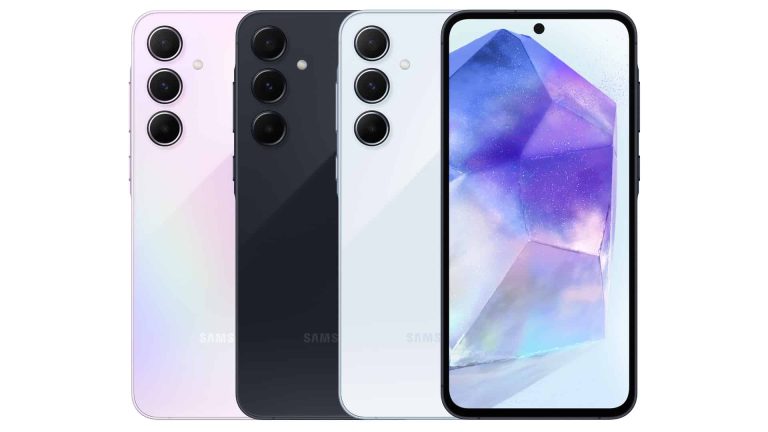
Samsung may be planning a price cut for its next-gen mid-range smartphones. Rumors say the Galaxy A55 and Galaxy A35 will see a tiny drop in prices compared to their predecessors, at least in Europe. The new A-series phones are expected to go official in March or April.

Samsung to price the Galaxy A55 and A35 more competitively in Europe

According to a SamMobile report, Samsung will price the 8GB RAM and 128GB storage variant of the Galaxy A55 at €479 in Europe. The 256GB storage variant (comes with 8GB RAM) will cost €529 at launch. The Galaxy A34 will reportedly cost €379 for the 6GB+128GB variant, while its 8GB+256GB option will be priced at €449.

If you recall, the Galaxy A54 debuted with a price tag of €490 for the 6GB+128GB variant. Its higher storage variant (8GB+256GB) was priced at €550 in Europe. For the Galaxy A34, Samsung charged €390 and €460, respectively. If the rumored prices for the 2024 models are accurate, we are in for a price drop of up to €20 in Europe this year.

It isn’t a big cut, but any price drop is noteworthy in the mid-range segment where pricing is key. The prices look sweeter when you consider the upgrades the Galaxy A55 and Galaxy A35 bring to the table. Most notably, the former is getting a metallic frame (the Galaxy A54 has a plastic frame) while the latter is switching from a notched display to a punch-hole design. Samsung will also upgrade the internals, including the camera.

Leaks have already revealed that the Galaxy A55 will feature the Exynos 1480 mid-range chipset with a custom GPU Samsung co-developed with AMD. The Galaxy A35, on the other hand, will use the Galaxy A54’s Exynos 1380 SoC. It may also borrow the 50MP primary rear camera from the 2023 model. Both phones will sport the Key Island design with a bumper on the frame around the power and volume buttons.

The new mid-range phones are a few weeks away

Samsung launched the Galaxy A54 and Galaxy A34 in March last year. The 2024 models should arrive around their first anniversary. Rumors say the company will delay the launch of the Galaxy A55 and Galaxy A35 by a few weeks. So, we might see them go official sometime in April if not in March. The official support pages for the phones are already live on Samsung’s websites in several countries. We will let you know when we have more information.


[ad_2]
Source link

Free GeForce Now users, get ready to see ads

0
[ad_1]

Advertisements, like many things in this world, are inescapable. While using many free services, you wind up paying the company in time. However, ad revenue helps fund the services that you continue to indulge in. GeForce Now is Nvidia’s cloud gaming service, and it has a limited free tier that offers you a few perks and a very basic game experience. However, the company just announced that free GeForce Now users will start to see ads before starting their games. This is a bit of a shock, seeing as Nvidia just skyrocketed to being a multi-trillion-dollar company.

If you are a free GeForce Now user, you have access to the cloud equivalent of a basic gaming rig, access to basic gaming servers, and one-hour-long sessions. You can have unlimited sessions, but they will stop after one hour. So, if you are a serious gamer, then the free membership is more of a taste of what you really want. The other memberships cost $9.99/month and $19.99/month. If you are interested in getting GeForce Now, you can go to the official GeForce Now site and check out the plans.

Free GeForce Now users will start seeing ads

This information was officially announced by the company. Nvidia just sent an email to free users letting them know that their days of ad-free gaming have come to an end. Beginning on March 5th, free users will see up to two minutes of ads before each gaming session. The fact that it said “up to” two minutes of ads means that the ad break lengths will vary.

GeForce Now ads email

Undoubtedly, this is something that is going to really upset free users. Platforms like Hulu and Disney+ display ads before content, but those ad breaks are never more than a minute and a half. Seeing two minutes of ads before each gaming session seems like a bit much. We’re just going to have to see how the players react to this news.

The email didn’t only explain that ads are coming to the free tier, but it also pushed users to upgrade to a paid plan. So, many people are going to see this as a ploy to get people to pay. Only time will tell if that tactic will work.


[ad_2]
Source link

NVIDIA hits $2 trillion market value driven by AI chip demand

0
[ad_1]

The demand for AI chips is surging and the market value of NVIDIA is going along with it. NVIDIA is very well-known among the PC community for its graphics cards. In fact NVIDIA GPUs are probably what the company is most recognizable for. But in more recent years NVIDIA has been spearheading advancements in AI. Some of these AI technologies and features do make it into its graphics cards. DLSS technology for instance uses AI to generate frames in between frames as a way of boosting the frame rate within games. It’s neat, and anyone who has a compatible GPU surely appreciates it.

But it’s less the fact that it comes up with ways to boost gaming experiences, and more the fact companies are clamoring for NVIDIA’s AI chips to pump up their own AI-fueled endeavors that have caused NVIDIA’s value to skyrocket. In less than a year NVIDIA’s market value has basically doubled. In 2023 the company reached a market value of $1 trillion, the Wall Street Journal says (via the BBC). Now, the company is worth $2 trillion as last of Friday’s closing share prices. To put things into perspective, it took NVIDIA just eight months to reach its second trillion in value, yet it took the company over two decades to reach the first. It’s the kind of meteoric rise that has your jaw dropping to the floor out of sheer awe.

NVIDIA is the world’s fourth most valuable company thanks to its new market value

All of NVIDIA’s success has led it to become the world’s fourth most valuable company. And judging from the continued excitement that surrounds AI, it wouldn’t be surprising if NVIDIA’s value kept climbing. As of now, it sits behind Microsoft, Apple, and Saudi Aramco. It’s tough to say if it will ever end up surpassing either of those three. Even with AI’s popularity of late. But it doesn’t seem entirely out of the question.

Companies like OpenAI use thousands of NVIDIA GPUs to power ChatGPT, which processes requests from more than 100 million people. OpenAI’s own success, and its use of NVIDIA GPUs to get there, popularized NVIDIA’s chips for AI uses even further. At this point, it might be harder to find a company that doesn’t use NVIDIA chips to fuel their AI projects. Meta, Google, Amazon, Oracle, and even Microsoft have made use of NVIDIA’s chips.

NVIDIA CEO Jensen Huang knows the power of what NVIDIA has, and more so, how important AI has become to the tech industry and beyond. “Accelerated computing and generative AI have hit the tipping point. Demand is surging worldwide across companies, industries, and nations,” Jensen said.

Dabbling in other forms of AI

It’s become clear that NVIDIA’s strongest and most lucrative efforts in AI have been through its GPUs powering the AI projects of other companies. But NVIDIA still finds time to put out some of its own AI technology. Earlier this month, the company released an RTX Chat bot for users of NVIDIA RTX GPUs. It functions completely offline and no data is stored in the cloud so your personal information stays safe. It’s not quite the revolution that its GPUs have become, but it’s still an otherwise useful tool for people who might have large hard drives with lots of files to sift through.

Then of course there’s the way it implements AI into its GPUs for game-related purposes. In short, NVIDIA has its hands in what seems like every corner of the AI market. Or close to it. And that’s turned out very well for the company.


[ad_2]
Source link

Netflix starts forcing grandfathered subscribers to stop paying Apple

0
[ad_1]
In 2018, Netflix stopped accepting payments for new subscriptions through the App Store, forcing new subscribers and those returning after a brief hiatus to pay Netflix through its website. It has been six years since Netflix allowed such subscribers to pay for their service through the App Store. This way, Netflix could avoid paying Apple its 15% to 30% cut on in-app transactions that go through Apple’s in-app payment processing platform.
Netflix representative Momo Zhao told The Verge that all “members on the basic plan who were using an iTunes method of payment” now must pay Netflix directly for service using a credit card or a debit card. Those who signed up for Netflix before the video streamer stopped allowing users to subscribe through the App Store were able to hold on to a good deal for years and continued to pay each renewal period through Apple. 
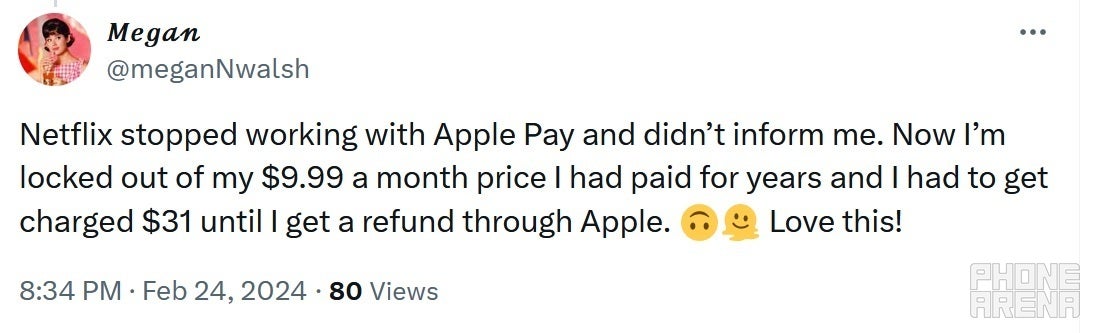
Netflix has allowed grandfathered subscribers to continue to pay each month through the App Store, but that is about to change. As one “X” subscriber wrote in a tweet, “Netflix stopped working with Apple Pay and didn’t inform me. Now I’m locked out of my $9.99 a month price I had paid for years and I had to get charged $31 until I get a refund through Apple.”

If you’re in the same shoes as the person who posted the above tweet, you’ll have to pay $5.50 more a month for the same plan you were paying $9.99 a month for or pay $3 less per month for the privilege of having your streaming interrupted by ads. No matter which plan you choose, you’ll be paying Netflix directly. 

To reiterate, if you are a long-time Netflix subscriber and have been paying through the App Store to maintain your Netflix subscription, be on the lookout for an email from the video streamer that says that if you want to remain a Netflix subscriber, you will have to stop paying your bill through Apple. And you might be paying a little more or a little less each month for Netflix service depending on whether you can live with ads running on the videos you’re watching.


[ad_2]
Source link